





Mehr Tools
Use Cases
Rechtliches



2025 stellte Influencer-Marketer vor eine Herausforderung nach der anderen – von TikToks beinahe Abschaltung in den USA über Zollandrohungen bis hin zur KI-Revolution.
Da sich diese wirtschaftlichen Unsicherheiten auf Marketingbudgets insgesamt auswirkten, standen Influencer-Marketer vor einer schwierigen Frage: Wie passt man sich mit begrenztem Budget an ständig wechselnde Bedingungen an, und ohne die Beziehungen zu Influencern zu gefährden?
Um das herauszufinden, haben wir mehr als 50 erfahrene Marketer dazu befragt, wie sie ihre Influencer-Kooperationen 2025 unter ihren Budgetbeschränkungen verhandelten und strukturierten – und was sie für 2026 planen.
Zum Vergleich werfen wir noch einmal einen kurzen Blick auf die Ergebnisse der letztjährigen Umfrage. 2024 hatten mehr als 75 % der von uns befragten Marketer ihre langfristigen Kooperationen gegenüber 2023 ausgebaut, und über 84 % gaben sogar an, diese 2025 deutlich ausbauen zu wollen.
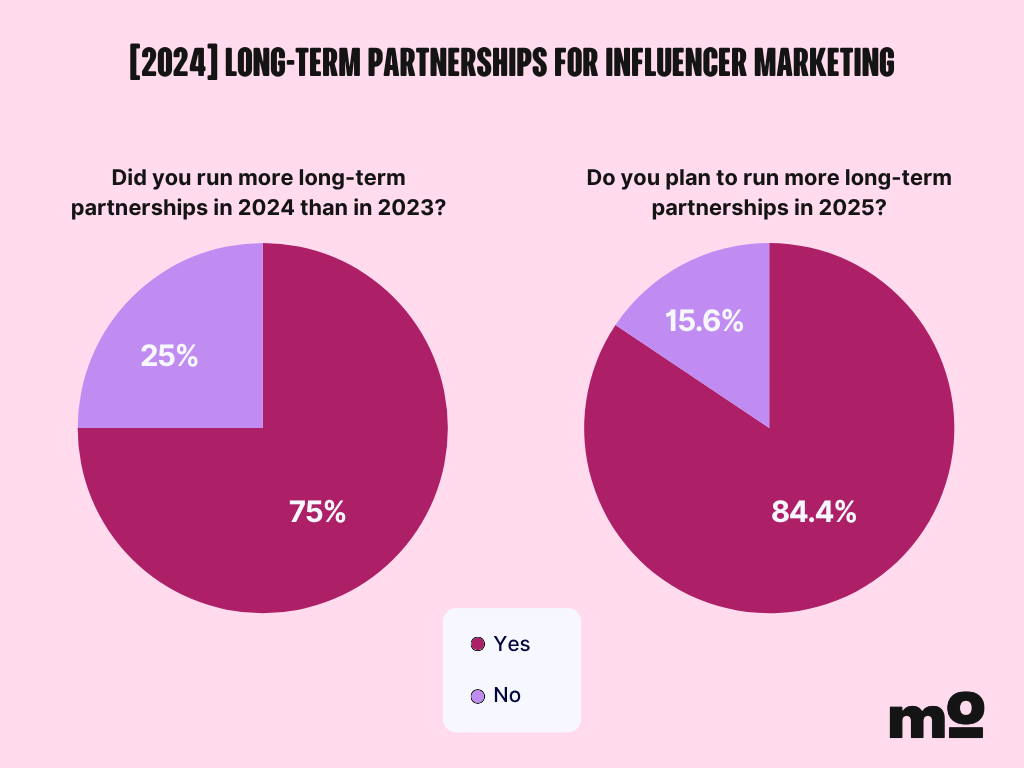
Doch 2025 war unberechenbarer als erwartet, weshalb Marketer zögerlicher waren, sich auf langfristige Kampagnen festzulegen. Das ist verständlich – sie wussten nicht, wie sich die Dinge entwickeln oder wie sich ihr Budget verändern würde. Angesichts der wirtschaftlichen Herausforderungen war es klüger, in kurzfristige Kooperationen zu investieren.
Unsere jüngste Umfrage ergab, dass tatsächlich nur 54 % der Marketer 2025 mehr langfristige Creator-Kooperationen durchführten als 2024. Und obwohl über 60 % der Marketer angeben, im nächsten Jahr mehr in langfristige Kampagnen investieren zu wollen, liegt diese Zahl noch immer etwa 23 % unter dem Vorjahreswert.
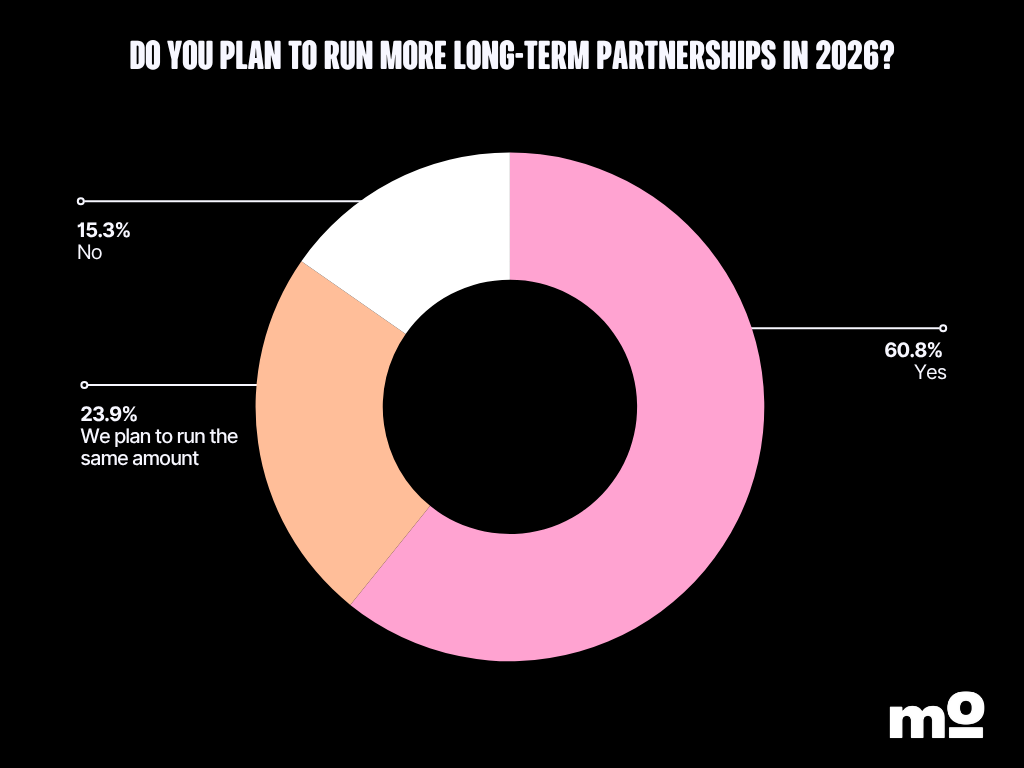
Wenn Sie planen, im nächsten Jahr mehr langfristige Kooperationen durchzuführen, helfen Ihnen diese drei Profi-Tipps dabei, das Risiko zu minimieren:
Wenn Marketer dieses Jahr also wenig begeistert von langfristigen Creator-Kooperationen sind, worin investieren sie stattdessen?
Der leichte Rückgang bei langfristigen Kampagnen führte zu einem Anstieg von Affiliate-Programmen, die sicherer sind und schnellere Erträge bieten. Mehr als die Hälfte der von uns befragten Marketer gab an, 2025 mehr in ihr Affiliate-Programm investiert zu haben als im Jahr zuvor.
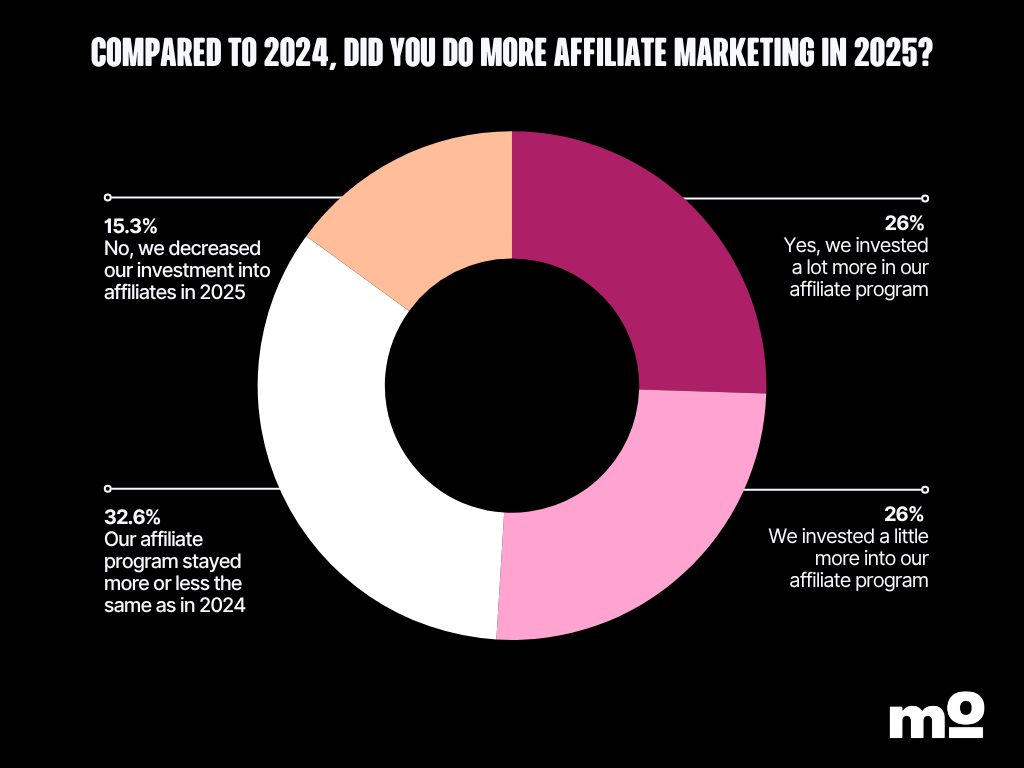
In einem risikoaversen Umfeld sind Affiliate-Programme hervorragend für Marketer geeignet. Sie lassen sich einfach nachverfolgen und liefern einen klaren ROI – Sie sehen genau, welche Affiliate-Partner die meisten Umsätze/Klicks erzielen, und können jeden Influencer entsprechend vergüten. Tamara Torrecillas Gutiérrez sagt, dass leistungsbasierte Vergütungsmodelle zum neuen Paradigma des Influencer-Marketings werden:
Influencer-Marketing bewegt sich rasant in Richtung leistungsbasierter Modelle. In den nächsten Jahren werden Creators, die tatsächlich keine Verkäufe oder messbare Wirkung erzielen können, Schwierigkeiten haben, denn Reichweite allein wird für viele leistungsorientierte Marken nicht ausreichen.

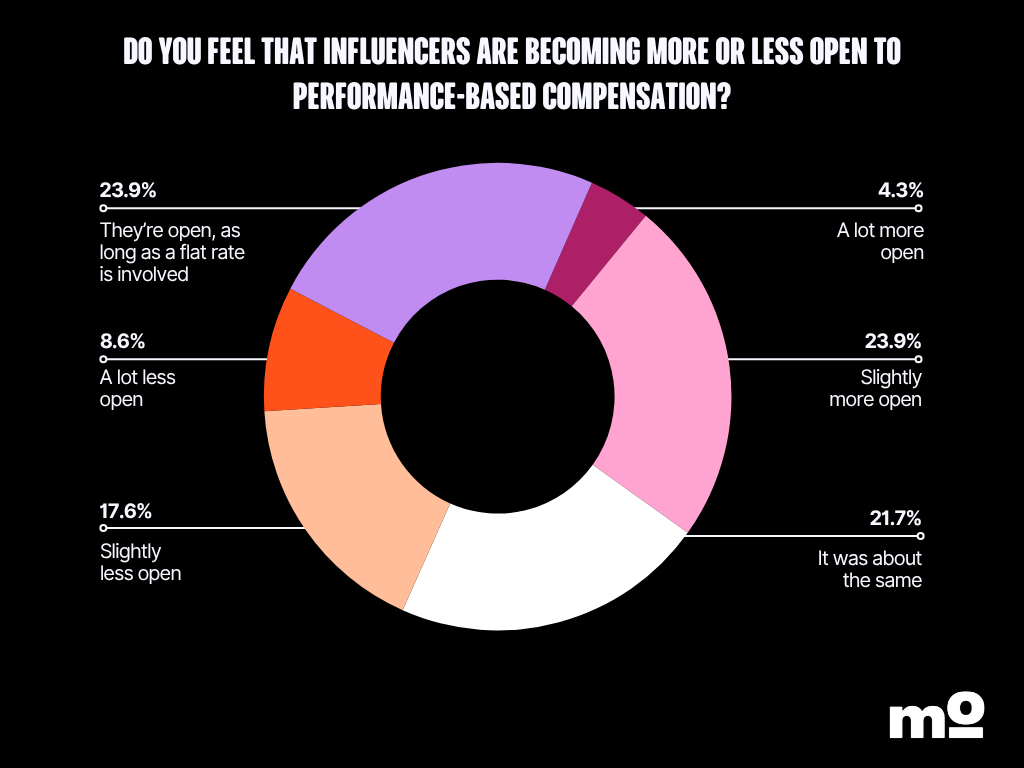
Doch es gibt auch eine Kehrseite: 2024 gaben mehr als 63 % der Marketingverantwortlichen an, dass Influencer zunehmend offen dafür seien, Affiliate-Partner zu werden. In diesem Jahr sank dieser Wert auf 26 %. Tatsächlich sagen über 45 % der Marketingverantwortlichen, dass Influencer weniger offen dafür sind, Affiliate-Partner zu werden.
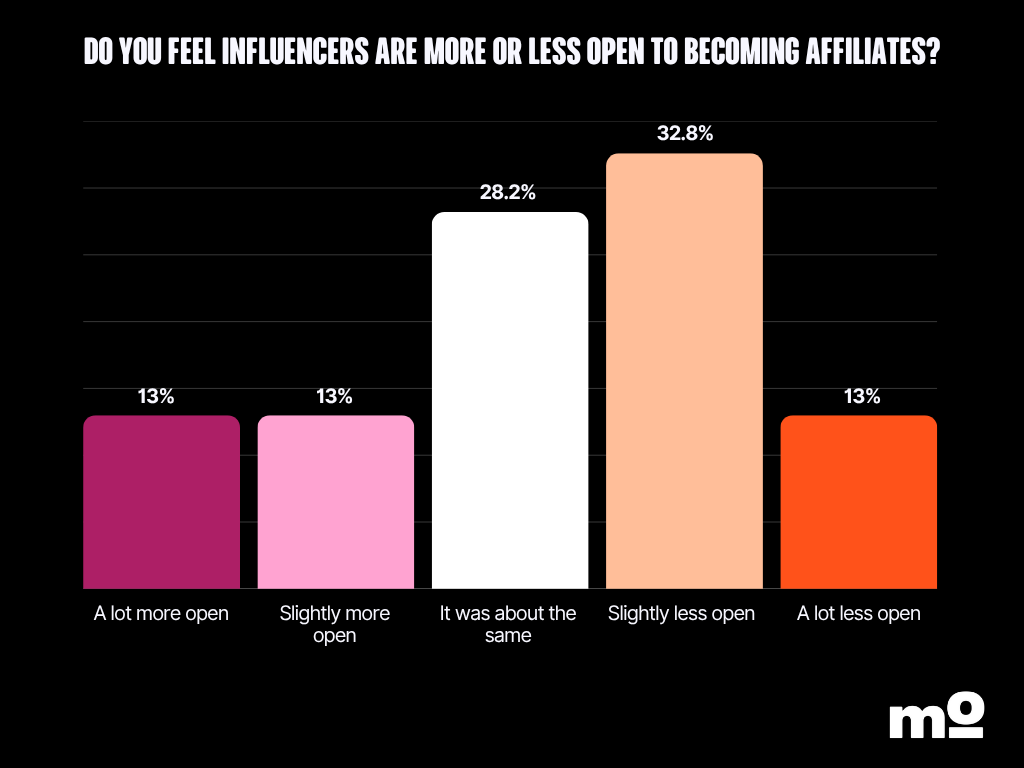
Auch wenn Affiliate-Partnerschaften für Marketingverantwortliche eine sichere Wahl sind, ist aus der Perspektive von Creators nachvollziehbar, warum sich die Stimmung verändert hat: Ein reines Affiliate-Modell bietet Influencern keine Sicherheit. Viele Faktoren bestimmen, wie erfolgreich der Beitrag eines Influencers ist – viele davon, etwa Algorithmusänderungen, liegen außerhalb der Kontrolle des Creators.
Wird ein Influencer nur pro Klick oder Verkauf bezahlt, sind seine Einnahmen weniger vorhersehbar als etwa bei einem Pauschalhonorar. Die wirtschaftlichen Turbulenzen haben auch Creators getroffen, daher überrascht es nicht, dass sie mehr Stabilität suchen.
Das bedeutet jedoch nicht, dass Influencer nicht offen für leistungsbasierte Vergütung sind – ganz im Gegenteil.
2025 nutzten 61 % der Marketingverantwortlichen eine Form leistungsbasierter Vergütung, um Influencer zu bezahlen.

Und die Kombination leistungsbasierter Vergütung mit einem Pauschalhonorar bietet Ihnen das Beste aus beiden Welten: Sie können Creators Sicherheit bieten und gleichzeitig sicherstellen, dass Sie eine positive Rendite auf Ihre Investition erzielen. Leslie Belen prognostiziert, dass diese hybride Vergütungsstruktur 2026 nur noch beliebter werden wird:
Der mit Abstand größte Trend wird die vollständige Verlagerung hin zu leistungsbasierten Vereinbarungen sein. Jede Marke steht unter so großem Druck, den ROI nachzuweisen, dass wir 2026 fast vollständig auf Modelle mit niedrigem Grundhonorar und hoher Provision umschwenken werden – ein Zeichen für das Ende der Dominanz des Pauschalhonorarmodells.

Das hybride Vergütungsmodell hält Creators bei Laune und stellt gleichzeitig sicher, dass sie am Erfolg beteiligt bleiben. Über 23 % der Marketingverantwortlichen gaben an, dass Influencer 2025 offen für leistungsbasierte Vergütung waren – allerdings nur, wenn im Voraus ein Pauschalhonorar gezahlt wurde.
Wenn Sie ein hybrides Modell vorschlagen, denken Sie daran, transparent zu erklären, wie Sie gesponserte Inhalte eines Influencers nachverfolgen werden. Das wird ihre Bedenken darüber zerstreuen, wie ihre Leistung gemessen (und vergütet) wird.
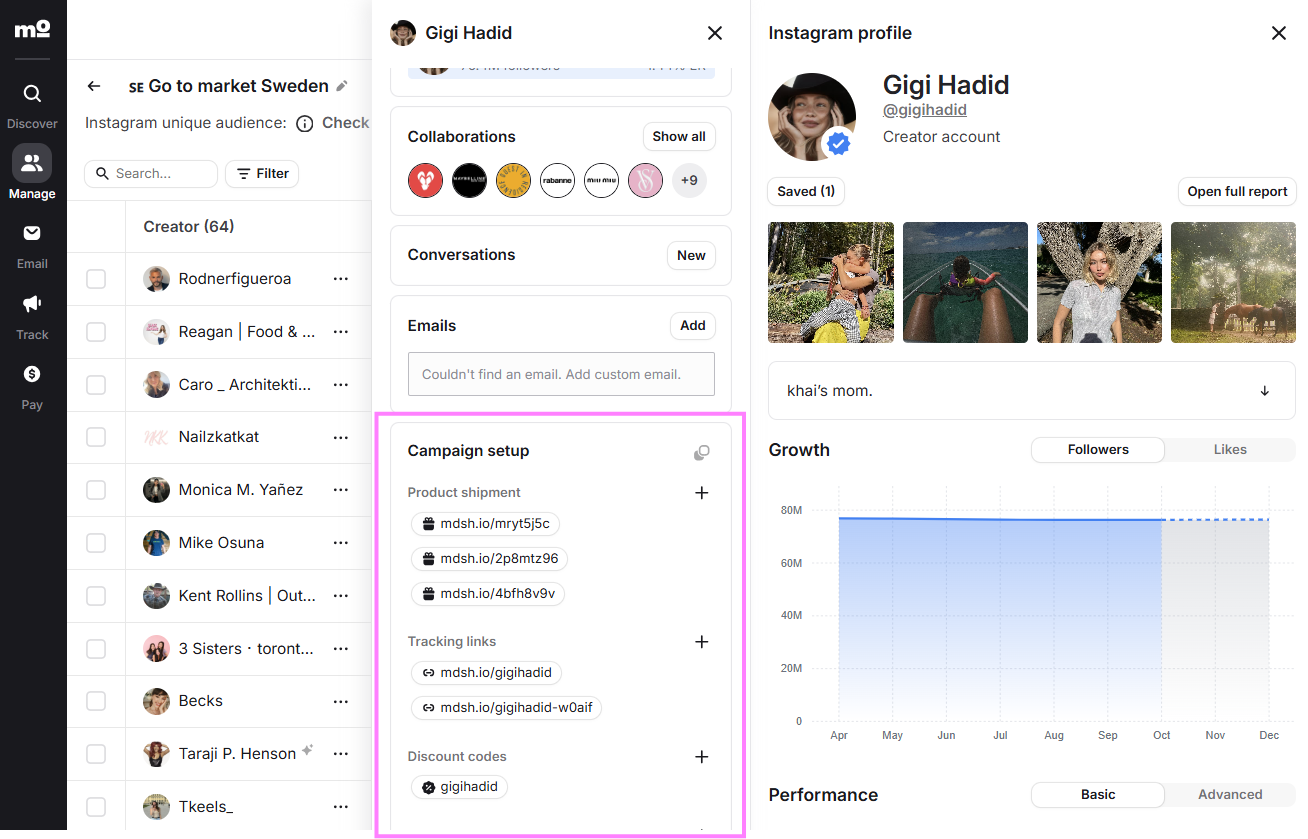
Legen Sie beispielsweise fest, nach wie vielen Tagen Sie die gesamten Interaktionen, Klicks oder Verkäufe aus dem Beitrag des Influencers berücksichtigen und wie genau diese Kennzahlen die Vergütung bestimmen. In Modash können Sie jedem Influencer einzigartige Rabattcodes oder Links zuweisen, um genau nachzuverfolgen, wie viele Verkäufe darüber erzielt wurden.
Wenn Influencer:innen Bedenken gegenüber dem hybriden Modell äußern, versuchen Sie, datenbasiert zu verhandeln.
Zeigen Sie Influencerinnen und Influencern zunächst ihr Verdienstpotenzial. Creatorinnen und Creator könnten einer erfolgsabhängigen Vergütung skeptisch gegenüberstehen, wenn sie nicht wissen, wie viel sie zusätzlich zum Pauschalhonorar verdienen können. Schaffen Sie einen Orientierungswert für potenzielle Einnahmen, indem Sie Beispiele dafür nennen, was andere Creator-Partnerinnen und -Partner in früheren Kampagnen verdient haben.
Sie können auch versuchen, eine höhere Provisionsstufe anzubieten, wenn Sie sich das leisten können, ohne Ihre Margen zu sehr zu schmälern. Und wenn keine dieser Taktiken funktioniert, machen Sie das Angebot mit nicht-monetären Anreizen attraktiver.
Die Marktbedingungen (sprich: unfassbare Herausforderungen) im Jahr 2025 schufen ein Spannungsfeld zwischen Marken und Creators. Ein zusätzlich zur erfolgsabhängigen Vergütung gezahltes Pauschalhonorar gab beiden Seiten mehr Sicherheit. Doch Marketer wurden auch kreativ und führten zusätzliche Anreize ein, um Abschlüsse mit Creators zu erzielen und gleichzeitig den ROI zu schützen.
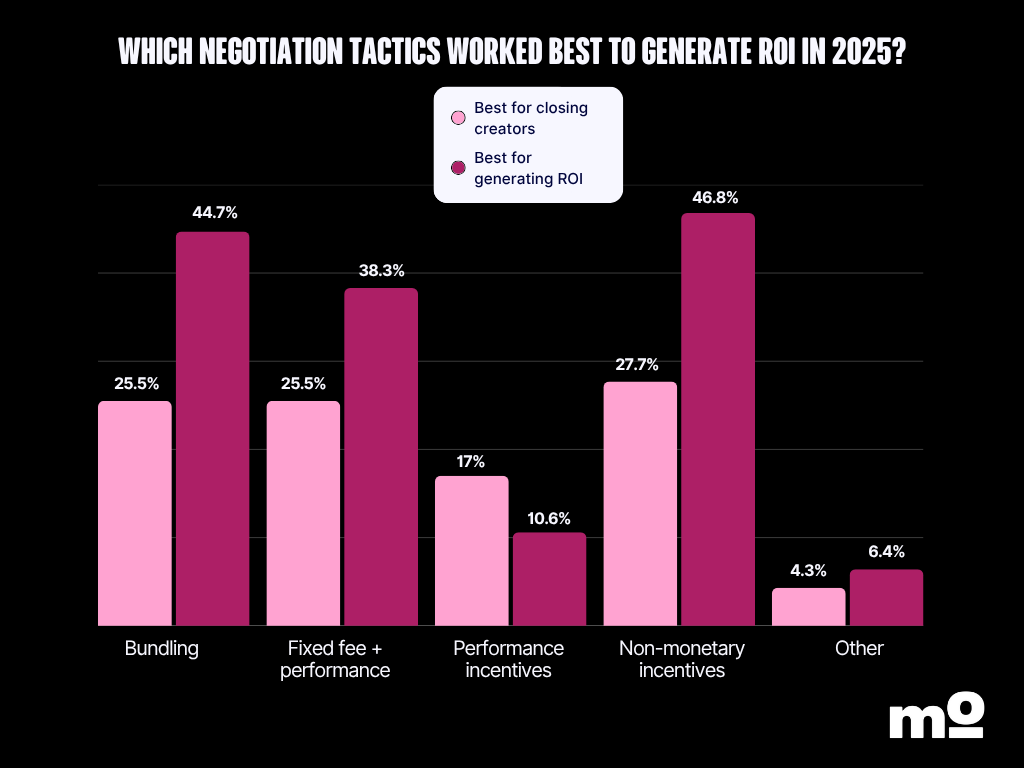
Nicht-monetäre Anreize anzubieten war 2025 die beliebteste Verhandlungstaktik, dicht gefolgt von Bündelungen und dem hybriden Zahlungsmodell.
Wir wollten wissen, wie nicht-monetäre Anreize konkret aussehen und wann welcher am besten eingesetzt wird. Anna Jędrzejewska gewährte uns einen tiefen Einblick in ihre eigene Anreiz-Toolbox:
| Anreiz | Warum es funktioniert | Am besten geeignet, wenn |
|---|---|---|
| Früher Zugang zu neuen Produkten | Weckt echte Begeisterung und das Gefühl, privilegiert zu sein, weil man zu den Ersten gehört, die etwas besitzen | Das Produkt, das Sie einführen, tatsächlich neu/exklusiv ist (sonst verliert es seinen Reiz) |
| Langfristige Kooperationen | Verlagert den Fokus von einer rein geschäftlichen hin zu einer beziehungsorientierten Zusammenarbeit | Sie werden künftig tatsächlich Arbeit anbieten (nutzen Sie dies nicht bloß als Druckmittel, denn Creators werden es herausfinden) |
| Einladungen zu Events oder in Showrooms | Stärkt die Markentreue und emotionale Bindung, da Creators sich als Teil des inneren Kreises fühlen | Sie arbeiten mit Creators mittlerer bis hoher Reichweite zusammen (kleinere Influencer benötigen möglicherweise eine Reisekostenerstattung, um teilzunehmen) |
| Gratisprodukte oder Produktpakete | Einfachste und greifbarste Möglichkeit, Wohlwollen aufzubauen | Du arbeitest mit Micro-Creator:innen zusammen; bei größeren Creator:innen musst du möglicherweise einen weiteren relevanten Anreiz bieten* |
| Leistungsabhängige Boni | Spricht ergebnisorientierte Creator:innen an und wirkt für beide Seiten fair | Du verfügst über Systeme für ein klares Tracking und Performance-Reporting |
| Einzigartige Rabattcodes für Follower:innen | Bietet der Community eines Creators einen Mehrwert und sorgt für messbaren ROI | Du kannst einen Rabatt anbieten, der sich wirklich exklusiv anfühlt (kleine Rabatte bewirken möglicherweise weniger) |
| PR-Reichweite (Teilen der Inhalte von Creator:innen auf deinen eigenen Kanälen) | Bietet Sichtbarkeit und ermöglicht dir häufig, diese Inhalte ohne zusätzliche Gebühren für Nutzungsrechte weiterzuverwenden | Du arbeitest mit Micro-Creator:innen zusammen, die von der Reichweite profitieren können (größere Creator:innen möchten möglicherweise mehr PR, als du bieten kannst) |
| Kreativer Input/gemeinsame Content-Erstellung | Sorgt dafür, dass Creator:innen sich emotional eingebunden fühlen und stolz auf das Ergebnis sind | Du führst kleine Kampagnen durch (bei größeren Kampagnen könnte dies zu zeitaufwendig sein) |
*Außer du nutzt Influencer-Marketing für ein hochpreisiges Produkt.
Einzigartige und kreative nicht-monetäre Anreize geben Influencer:innen das Gefühl, etwas Besonderes zu sein, und oft gehen sie für die Kampagne deiner Marke die Extrameile. Scheue dich nicht, über den Tellerrand hinauszudenken – wie Marketingteams in der Modebranche, die ihren Creator:innen maßgeschneiderte Kleidung schenken. Auch Marken aus der Hotel- und Reisebranche hatten einzigartige Anreize im Ärmel, darunter kostenlose Übernachtungen, kostenlose Mahlzeiten und die Übernahme von Flugkosten.
Welche Anreize finden Creator:innen am attraktivsten? Anna sagt, dass es zwar einige klare Favoriten gibt (frühzeitiger Zugang, langfristige Kooperationen, Einladungen zu Events), es aber auch von den Bedürfnissen der Influencer:innen abhängt:
Die größten Favoriten waren frühzeitiger Zugang (alle lieben es, etwas als Erste zu präsentieren) und das Potenzial für eine langfristige Zusammenarbeit. Leistungsabhängige Boni und Rabattcodes funktionieren am besten für unternehmerisch denkende Creator:innen, die klare KPIs schätzen, während Gratisprodukte bei kleineren Profilen, die das Produkt wirklich nutzen und lieben, weiterhin sehr gut ankommen.

Kostenlose Produkte, PR-Reichweite und Rabattcodes sind für dich als Marketer:in möglicherweise die am einfachsten anzubietenden Anreize, da sie wenig bürokratischen Aufwand erfordern. Andere Anreize, etwa langfristige Verträge, brauchen länger, um umgesetzt zu werden, da sie von internen Teams genehmigt werden müssen. Halten Sie eine Liste nicht finanzieller Anreize bereit, die Sie während Verhandlungen anbieten können.
Doch 2025 hatten Marketer noch eine weitere Verhandlungstaktik im Ärmel: Bündelung. Als hervorragende Verhandlungstaktik ermöglicht Ihnen die Bündelung, mehr Influencer-Content zum gleichen Preis zu erhalten. Für die Bündelung gibt es drei mögliche Ansätze:
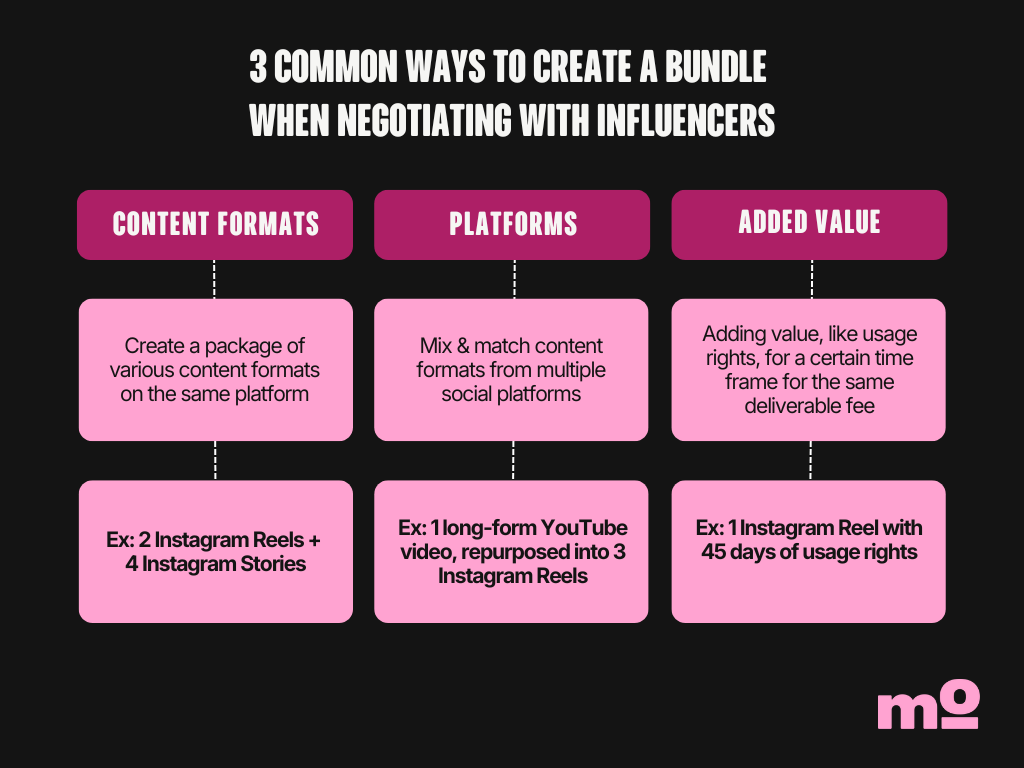
Da die Bündelung laut unserer Umfrage die zweitwichtigste Verhandlungstaktik war, wird sie auch 2026 weiterhin relevant bleiben. Dabei ist es jedoch entscheidend, dass Ihre Forderung fair ist: Liegt der Preis eines Creators beispielsweise für Instagram Reels über Ihrem Budget, können Sie ihn bitten, ein paar Instagram Stories hinzuzufügen – aber nicht um ein neues TikTok-Video.
Das Wichtigste ist, kreativ zu denken und zu verstehen, was der Influencer braucht – insbesondere, wenn Sie nicht finanzielle Anreize anbieten. Ist einem Creator Sicherheit wichtig, könnten langfristige Verträge für ihn besonders attraktiv sein. Wenn der Influencer hingegen eher daran interessiert ist, seine Vergütung zu erhöhen, könnten leistungsabhängige Boni der bessere Anreiz sein.
Denken Sie daran: Diese Verhandlungstaktiken sollen nicht dazu dienen, Influencer unterzubezahlen. Nutzen Sie sie, um mit Ihren Creator-Partnern eine gemeinsame Basis zu finden, damit beide Seiten mit der Vereinbarung zufrieden sind.
Und wenn ein Influencer die Erwartungen übertrifft, bieten Sie ihm zusätzliche Anreize, um Ihre Wertschätzung zu zeigen. Anna bietet beispielsweise ausgewählten Creatorn Rabattcodes mit überdurchschnittlich hohen Rabatten und zahlt bei herausragenden Ergebnissen manchmal einen Bonus im Affiliate-Stil.
Diese Gesten mögen klein erscheinen, tragen aber wesentlich dazu bei, Ihre Beziehungen zu Influencern zu stärken, die Markentreue aufzubauen und Creator für künftige Kooperationen zu motivieren.
Influencer-Marketer sahen sich 2025 mit einer sich rasant verändernden Landschaft konfrontiert. Das nächste Jahr könnte noch mehr Veränderungen bringen. Die gute Nachricht ist: Die Grundlagen bleiben gleich: Konzentrieren Sie sich darauf, was Ihre Influencer-Partner brauchen, und geben Sie Ihr Bestes, um sie dort abzuholen, wo sie stehen.
Hier sind die drei wichtigsten Erkenntnisse aus dieser Umfrage:
Und wie immer: Geh mit Daten im Rücken in Verhandlungen mit Influencern. Du erhältst detaillierte Einblicke in den Creator – seine Zielgruppe, Performance, sein Wachstum und mehr. Klare Zahlen erleichtern es, Erwartungen festzulegen, Preise abzustimmen und langfristige Beziehungen aufzubauen.
Wenn du Daten ganz einfach detailliert analysieren möchtest, ist Modash genau das Richtige für dich. Sichere dir eine kostenlose 14-tägige Testphase (keine Kreditkarte erforderlich), wenn du dich noch heute anmeldest.