Funciones
Integrations






Casos de uso
Funciones
Integrations
Casos de uso
To risk or not to risk? That is often the question influencer marketers increasingly face – whether it's partnering with an unconventional creator or experimenting with a bold creative collaboration.
Risk-taking is clearly on marketers’ minds: in a previous survey, marketers told us they're becoming more willing to take risks. But what does “taking risks” actually mean in practice? We dug deeper and asked:
Here's what we found.
Okay, so marketers say they’re more willing to take risks. But are they actually walking the walk? Mostly, yes – as long as the risk doesn’t put their company’s reputation in jeopardy.
71% of marketers we surveyed had run campaigns that scared them a little in the last quarter itself.

These risky campaigns – even if frequent – don’t eat a lot of the budget pie. Marketers tread carefully when it comes to putting money in uncertain collabs. When we asked about the highest percentage they've ever invested in a risky creator, the average was 15.9% of their monthly budget.

And marketers take risks only when they’re sure the bet isn’t gonna put their brand’s reputation in jeopardy. A hit to the brand image is the ultimate risk – one marketers want to avoid at all costs.
58% of participants in our survey say harming brand reputation is a higher risk than wasting their budget.
And 63% of marketers even say they’d risk losing budget to protect their brand reputation.

The verdict: brand reputation always wins – whether that’s against budget or ROI. And it makes sense, too – you can always explain a disappointing ROI or make-do with a tight budget. But dealing with a PR nightmare is a long and hard battle. Plus, it’s hard to shake a bad image in the market once it catches on.
While brand risk might be the ultimate boogeyman for marketers, the real risk calculation isn't always about the influencer – it's also about the marketer's own constraints. Turns out, risk appetite has less to do with the creator and more to do with what marketers have to work with (and what they have to lose).
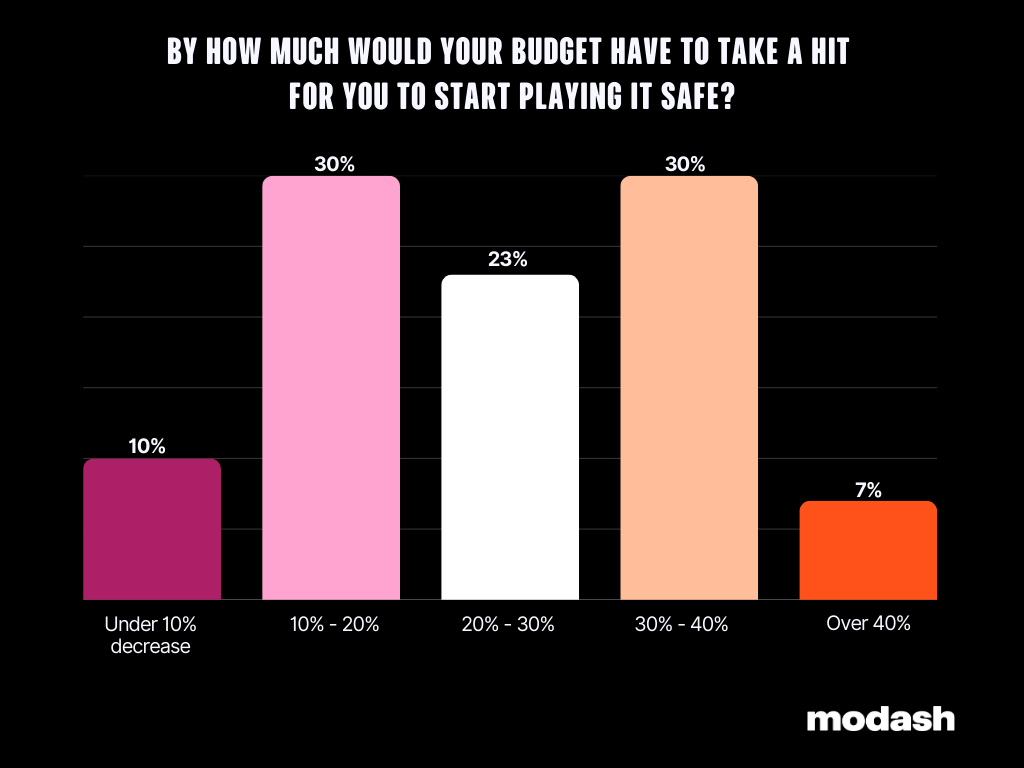
It’s not surprising that a higher budget provides more room for taking risks and a budget cut slashes risk appetite.
But the surprising element is the ratio: you need to add 30% to your budget to make marketers willing to experiment, but only a 24% decrease to send them running back to safe territory.
And budget works hand-in-hand with KPIs to influence a marketer’s risk appetite. On average, marketers face a 14% KPI bump quarterly – manageable pressure that allows a little experimentation. But if you were to crank that dial to a 27.5% KPI bump – nearly double – marketers will take risky collabs off the table.
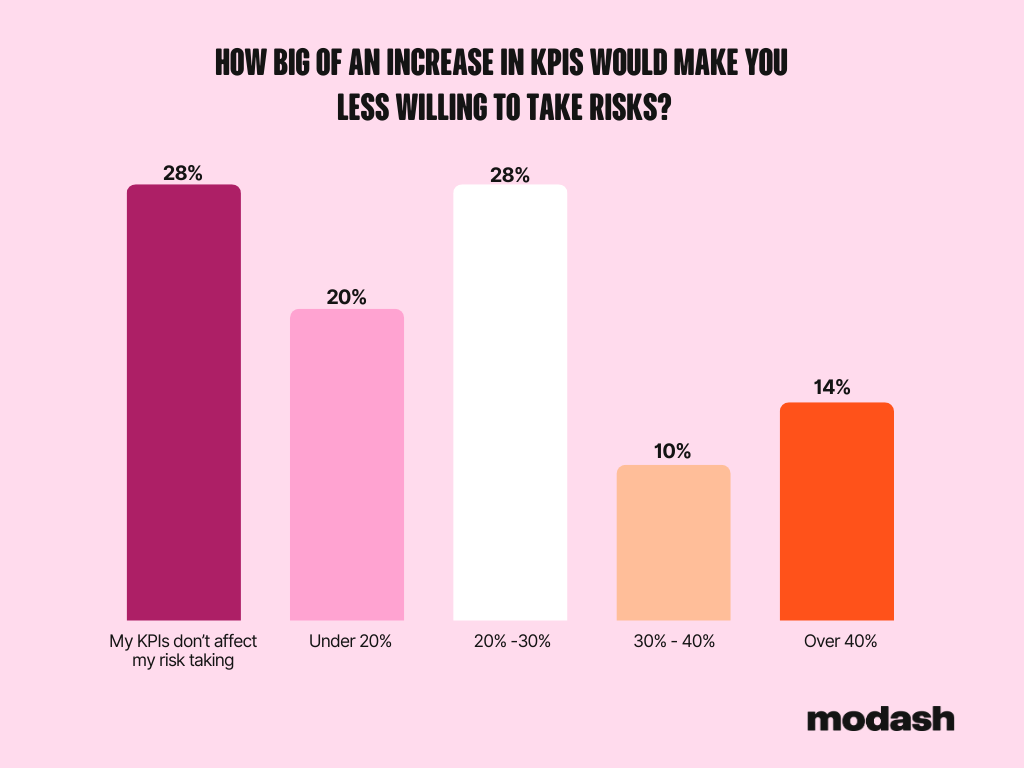
It’s tempting to think of budgets in a vacuum – more money would open the doors for more bets, right? But if you get more money and your KPIs double, you’ll not be willing to swing for the fences. Budget increases only unlock experimentation when KPI expectations stay realistic.
The worst-case scenario is when budgets shrink and KPIs increase. In such scenarios, you want to have ironclad processes to ensure you’re taking calculated risks. The reality is most marketers are navigating risk taking without clear systems.
(This is not because marketers don't care, but because structured risk assessment often takes a backseat to just getting campaigns out the door.)
When vetting a risky creator, marketers turn to the usual suspects: who's in their audience, whether their audience looks authentic, what collabs they've done before, and whether similar influencers have actually delivered results.
What about…intuition? (Also known as a marketer’s best friend.)
Here's an interesting contradiction: 55% of marketers say their gut feeling gives them the most confidence in predicting campaign outcomes.

Yet when actually vetting creators, only 37% lead with intuition – most check the data first, then do a gut check.
Why the disconnect? Maybe marketers feel more comfortable trusting their instincts after data validates what they already sensed. Or maybe we've been trained to justify our gut with spreadsheets before we can act on it.
Another reason why marketers might not be leading with gut is because their risk evaluation process is unstructured. 75% of marketers don’t have a documented risk assessment process. It’s either a mental checklist or an informal check on a case-by-case basis. And 80% of marketers aren’t happy about it.
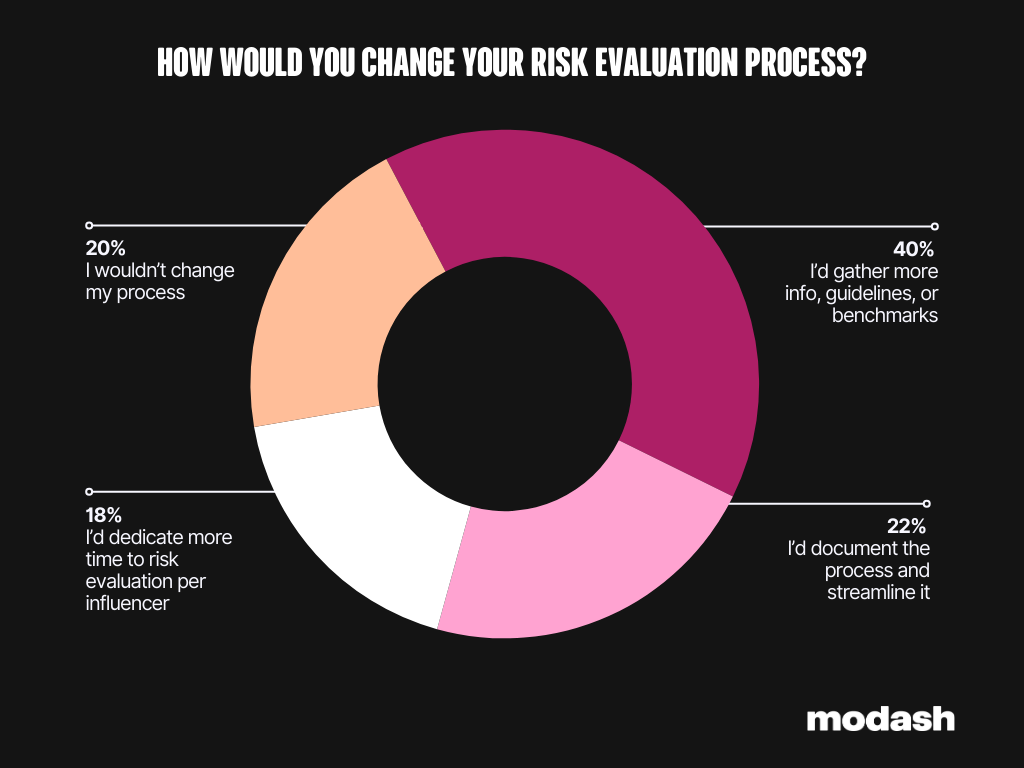
So, here is a quick risk assessment checklist if you are thinking about incorporating more experiments into your influencer marketing strategy:
A pro tip for background checks from Fiorella Picado:
One of my must dos when I run a background check is to check Reddit. Many times, I have found out about scandals or even how people perceive a certain influencer thanks to Reddit.
If this sounds like a lot, remember that a thorough vetting process is one of the best safeguards against risky influencer collaborations. 38% of marketers rate it as the most effective way to reduce risk.
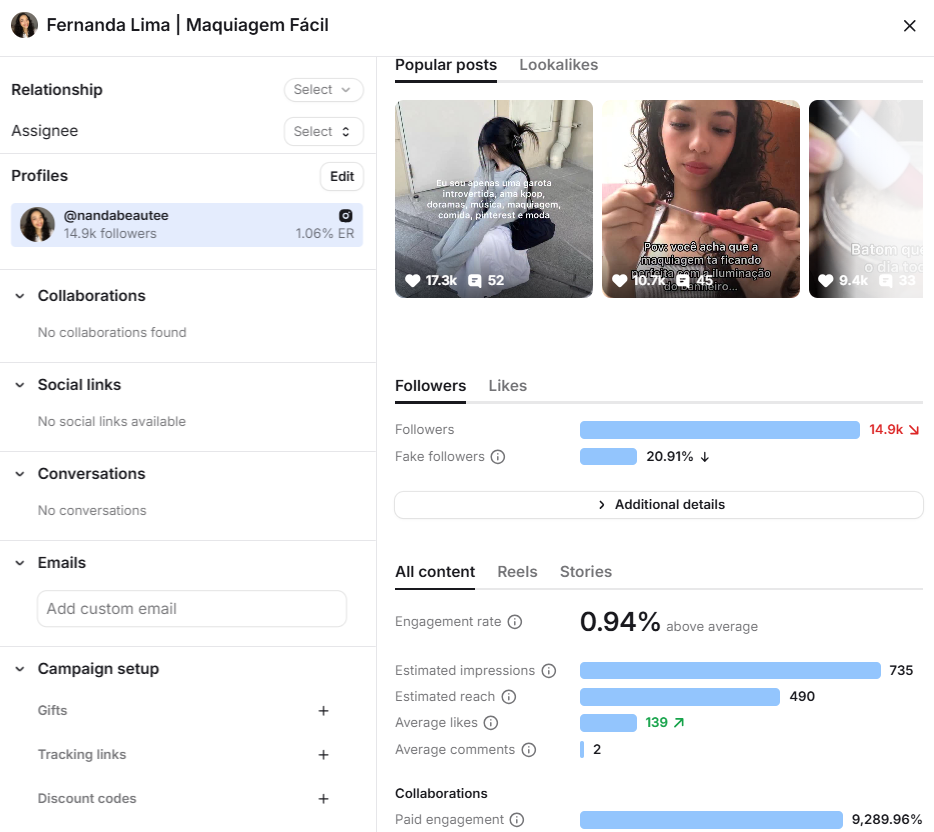
And tools like Modash can help you cut the vetting time in half (if not more). You can assess an influencer’s past collaborations, popular posts, benchmark their engagement rates, fake followers, monitor their follower growth rate, and a lot more.
Now you know how to assess risk. But which types of collabs, influencers, and campaigns should be on your “proceed with caution” list? The next section will share more details about what triggers alarm bells for influencer marketers.
Marketers say paid one-off or short-term collaborations are the most risky of them all. And affiliate partnerships pose the least threat.
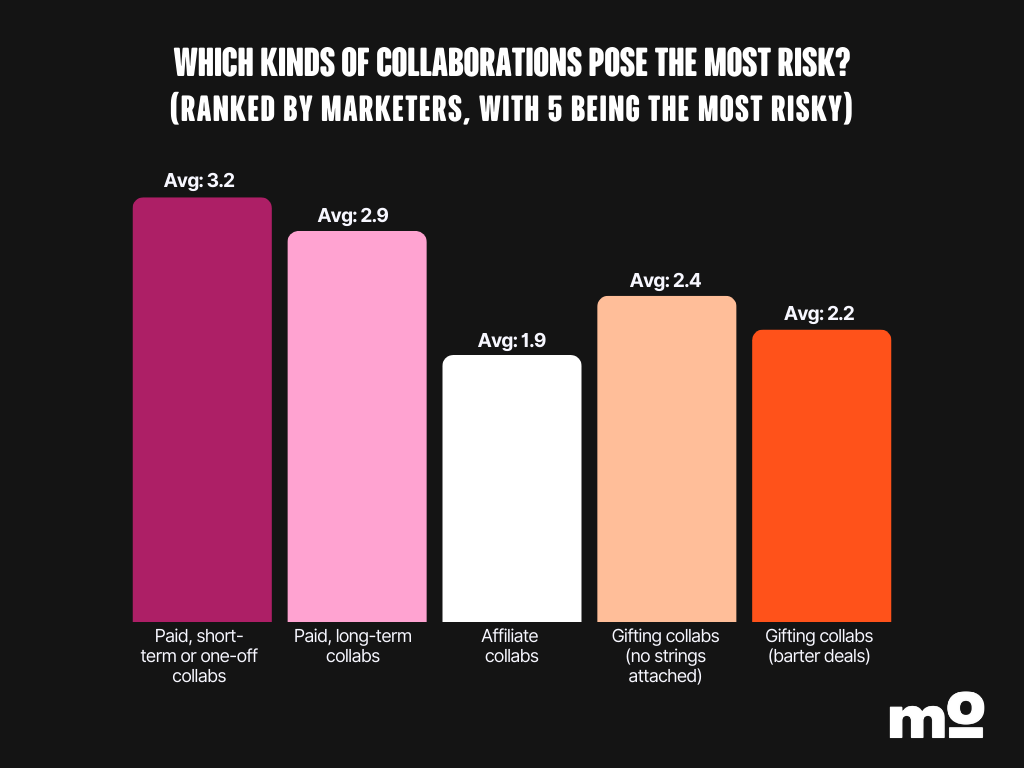
It makes sense: in long-term collabs, you have the safety net of testing various messaging angles, offers, and value propositions with an influencer’s audience. Short-term collaborations don’t offer that same luxury.
Similarly, affiliate partnerships are less risky because you aren’t investing any (or little) flat fee into the collaboration. If an influencer makes a sale, you pay. If the partnership proves to be a bust, you have no (or little) loss.
When it comes to campaigns, sales-focused campaigns are deemed the more precarious by marketers.

This is probably because sales-focused campaigns have a more difficult KPI to achieve than brand awareness campaigns (aka, sales). It’s easier to gain visibility than drive sales.
Plus, ROI measurement in influencer marketing is notoriously messy. Many customers might discover or buy your product after seeing an influencer’s post, but not use their UTM link or discount code. Influencer marketing wouldn’t get the credit despite being the cause of such sales.
We also talked about influencers: many marketers shared that bigger influencers are more unpredictable than smaller influencers – especially for sales-focused campaigns. This is because of two reasons:
Another common risky influencer type are the creators outside your niche. Their content style and audience expectations are different from what you’re used to. But such storyfit influencers can actually be a refreshing addition to your creator family because of their risk – they bring a fresh way to promote your products and help you reach a new audience when done right.
We also asked marketers if there’s a particular content type that’s riskier than others. Participants gave different answers based on their experience and industry.
For example, one marketer said Stories aren’t risky because they usually cost less, but another marketer said they can be risky because you only have 24 hours to make an impression.
Broadly, multiple marketers say short-form video content – like Reels and TikToks – pose a higher risk than long-form content because you can’t go in-depth in these videos. Plus, the algorithms for these content types are fickle – some videos might go viral unexpectedly, while others might underperform.
Zia Ur Rehman Awais also explains how sponsored content and product reviews can be risky:
Sponsored content and product reviews pose a higher risk, as they heavily rely on the influencer's credibility and audience trust. If the message doesn't align with the audience's values or if the promotion feels inauthentic, it can lead to backlash and damage to both the brand and the influencer's reputation.

It’s best to experiment with various content types and figure out which formats pose a higher risk for your niche. Sometimes, what might be risky for one brand might be a safe bet for you.
Look, it’s hard to have fun in influencer marketing (and in life) if you don’t take a little risk. It’s inevitable you’d want to partner with an unconventional influencer or flex your creative muscles. Don’t avoid uncertainty, just stack the odds in your favor. Here’s how:
When you conduct a comprehensive evaluation of an influencer, you’ll be much more confident in partnering with them. The research process will ensure you know the risks and rewards.
For example, if you’re collaborating with an influencer outside your niche but found their commentary videos perform exceptionally, you can ensure you choose that content type for your collaboration.
Don't just audit creators from afar – actually talk to them about your concerns. If something in their content history makes you hesitant, or if their audience demographic seems slightly off-brand, bring it up in the early collab stages.
You'd be surprised how often a simple conversation can resolve potential red flags. Maybe that controversial post was taken out of context. Maybe they've deliberately shifted their content strategy since then. Maybe they have ideas for how to tailor the collab to address your specific brand concerns.
Give the influencer a chance to address your concerns. You’d be surprised at how often a creator is willing to quell any potential qualms.
This has an additional benefit, too: it’ll make your influencer relationship stronger from the beginning. A creator would appreciate the transparency instead of getting ghosted or receiving a vague rejection.
Plus, how an influencer responds to tough questions tells you a lot about whether they're professional, self-aware, and genuinely aligned with your values – things you can't learn without communicating.
52% of marketers proceed to partner with a risky influencer, but only after putting certain guardrails in place.

These guardrails can have various layers:
Guardrails can help you hope for the best and prepare for the worst. But remember, they aren’t excuses to handicap an influencer’s creative freedom. Give a creator enough guidelines and then enough space to do their best work – remember they know their audience best; don’t be too precious with your brand guidelines.
The best way to get your stakeholders onboard with a risky campaign/collaboration is to show them the potential upside. If you’ve done your vetting homework, this will be a piece of cake. Alice Arruda explains how she does this:
I always think about the outcome of that bet. If I can’t find any positive points, then it’s really not something I should invest money and time in. So the very first thing is to make sure that this bet makes at least some sense. Then, I map out a list of possible outcomes in the short, medium, and long term.

Alongside the upside, also ensure management knows the steps you’re taking to minimize the risks. This will make it easier to get buy-in and get the vote of confidence from your stakeholders.
Modash arms you with the data you need to make your case. Instead of piecing together engagement rates from screenshots and estimating reach from follower counts, you get verified metrics on:
Build your business case with concrete numbers that show both the opportunity and how you've de-risked it.
And trying Modash is risk-free – take it for a test run at no cost for 14 days.
Colaboradores expertos