

Meer tools
Toepassingen


.avif)

CPM (kosten per 1.000 vertoningen) is een belangrijke metric in influencermarketing.
De metric heeft enkele tekortkomingen, maar is absoluut nuttig om bij te houden.
Hier deel ik mijn gedachten over:
Ik kan me voorstellen dat benchmarks voor velen van jullie het interessantst zijn, dus laten we daarmee beginnen.
| Influencer-contentformat | Geschat. CPM-bereik |
|---|---|
| Instagram Stories | $20-$50 |
| Instagram Reels | $15-$45 |
| TikTok-video's | $7-$25 |
| YouTube (integraties) | $15-$35 |
| YouTube (specifieke video's) | $50-$75+ |
Dit is niet gebaseerd op een grootschalig kwantitatief onderzoek, maar op ervaring, gesprekken en anekdotes. Voor meer gedetailleerde informatie over de tarieven van influencers op een specifiek platform, zie:
Ik wil je er ook aan herinneren dat deze bandbreedtes variëren op basis van:
De bovenstaande benchmarks zijn voornamelijk gebaseerd op ervaringen in de VS en het VK.
Als CPM beslissingen in je dagelijkse werk beïnvloedt, zijn er een paar dingen die je moet begrijpen & onthouden.
Zonder een breder begrip ben je volledig afhankelijk van de data. En data alleen is bijna altijd onvolledig en mogelijk misleidend.
Hier zijn enkele CPM-benchmarks voor betaalde socialmedia-advertenties, met dank aan ChatGPT.
(AI werkte niet geweldig voor influencer-CPM's, maar er is meer data over advertenties beschikbaar op internet.)
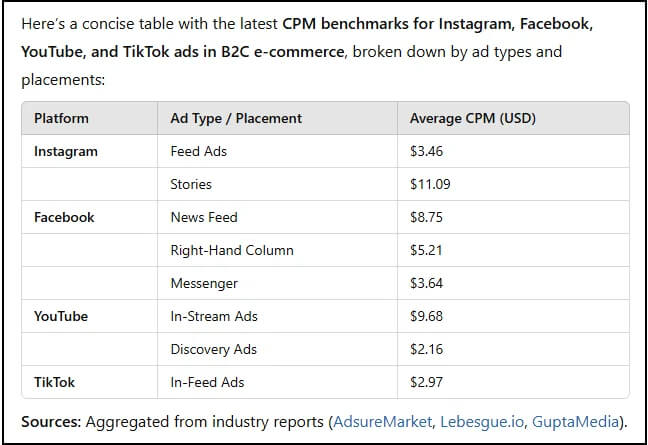
Je zult merken dat ze veel lager zijn dan de benchmarks die ik hierboven noemde.
De twee belangrijkste redenen hiervoor zijn:
a) Bij betaalde advertenties zijn productiekosten meestal niet inbegrepen. Wanneer je een influencer betaalt, betaal je in één keer voor alles: planning, creatie en bereik. Bij het meten van CPM voor betaalde advertenties kijk je alleen naar bereik. Geen salarissen, bureaus, productie, montage enz.
b) Vertrouwensfactor. Je boodschap laten overbrengen door de juiste socialmediacreator is simpelweg meer waard dan een vergelijkbare boodschap via je eigen merkaccount overbrengen. Deze persoon heeft maanden of jaren gewerkt om vertrouwen op te bouwen, waardoor diens stem meer impact heeft.
Het is heel goed mogelijk dat twee gesponsorde video's exact dezelfde CPM hebben, maar een drastisch verschillende impact op je bedrijf.
Hier zijn enkele voorbeelden van hoe de waarde of kwaliteit van een weergave kan verschillen:
De „diepgang” van de vermelding van je merk. Als je bijvoorbeeld deel uitmaakt van een cadeaugids waarin ook 6 andere merken worden genoemd, zou ik die weergave minder waardevol vinden dan een speciaal aan jouw merk gewijde post. Ook als iemand een speciale YouTube-video van 15 minuten bekijkt, is dat drastisch anders dan een integratie van 30 seconden zien.
Is het publiek breed of nichegericht? Doorgaans geldt: hoe breder het publiek, hoe lager de CPM. Soms is het waardevoller om een specifiekere doelgroep te bereiken tegen een hogere CPM.
Videoretentie. Vooral bij influencermarketing op YouTube: hoeveel mensen hebben daadwerkelijk het deel gezien waarin je merk werd genoemd?
Voortbouwend op het bovenstaande moet je beslissingen over nieuwe samenwerkingen of verlengingen niet uitsluitend baseren op CPM.
Het is een zeer nuttig signaal (daarom raad ik aan het bij te houden), maar het is slechts één onderdeel van een groter geheel.
Dat grotere geheel moet bijvoorbeeld het volgende omvatten:
(Dit is geen uitputtende lijst, maar je begrijpt waar het om gaat.)
Met al deze zaken in gedachten zijn er mogelijk gevallen waarin je besluit een samenwerking te verlengen die een veel hogere CPM had dan gemiddeld. Het hangt er altijd van af. Beperk jezelf niet door alleen in CPM's te denken.
Een belangrijke kanttekening bij dit gedeelte:
“Je CPM verbeteren” is alleen een zinvol doel bij influencermarketing als alle marketingfundamenten op orde zijn.
(d.w.z. dat je er zeker van bent dat je de juiste mensen bereikt, op de juiste plek, met de juiste boodschap.)
Dat gezegd hebbende: ALS het verbeteren van je CPM inderdaad het juiste doel is, volgen hier drie tactieken om dat te bereiken.
Content op een ander sociaal platform cross-posten is meestal een eenvoudige manier om je CPM te verbeteren.
Voor de influencer: die haalt extra inkomsten uit de merksamenwerking met weinig extra werk. Voor het merk: het krijgt meer views tegen een relatief lagere CPM (meestal).
(Dit werkt uiteraard alleen als de influencer “secundaire” kanalen heeft die daarvoor kunnen worden ingezet.)
De meest voor de hand liggende manier om cross te posten is met verticale video. Instagram Reels, TikToks en YouTube Shorts kunnen eenvoudig worden gecrosspost.
Nog een paar ideeën:
Sommige kanalen & contentformats leveren van nature meer impressies op voor hetzelfde budget.
Als je doel op Instagram bijvoorbeeld draait om CPM, kun je ervoor kiezen om meer in Reels en minder in Stories te investeren. Omdat Reels een groter bereik hebben.
Op YouTube kun je ervoor kiezen om integraties voorrang te geven boven speciale video's voor een lagere CPM.
Of je kunt ervoor kiezen om meer te investeren in TikTok-influencermarketing vanwege de lagere gemiddelde CPM.
Aangezien CPM's voor betaalde social media lager zijn en je de vergoeding voor de influencer al hebt betaald, levert het boosten van bestaande content waarschijnlijk lagere CPM's op dan het toevoegen van meer nieuwe content.
Bovendien heb je het voordeel dat je meer controle hebt over de targeting van je doelgroep.
Het enige waar je nog rekening mee moet houden, zijn gebruiksrechten, die afhankelijk van het contract terugkerende kosten met zich mee kunnen brengen.
Hier vind je een inleidende gids over whitelisting, als je er niet bekend mee bent.
Vond je dit nuttig? Op drie plekken vind je meer vergelijkbare content:
Bedankt voor het lezen! 🫡