

Meer tools
Toepassingen



Done well, influencer marketing is the tide that lifts all ships. More sales, more brand awareness, more content.
But the reality is that most Shopify brands aren’t doing it well. They’re running influencer campaigns like one-off experiments – a free product here, a discount code there – with no real system or strategy. Those that get it right are being more deliberate, with effective tracking, clear rewards tiers, and a scalable process for finding high-performing creators.
In other words, they’ve found a winning system. And I’ll share that system in this guide.
Influencer marketing for Shopify stores is all about collaborating with influencers to promote your brand and product to their audiences. Working with established influencers helps brands build trust and credibility, which can have a positive impact on sales and revenue.
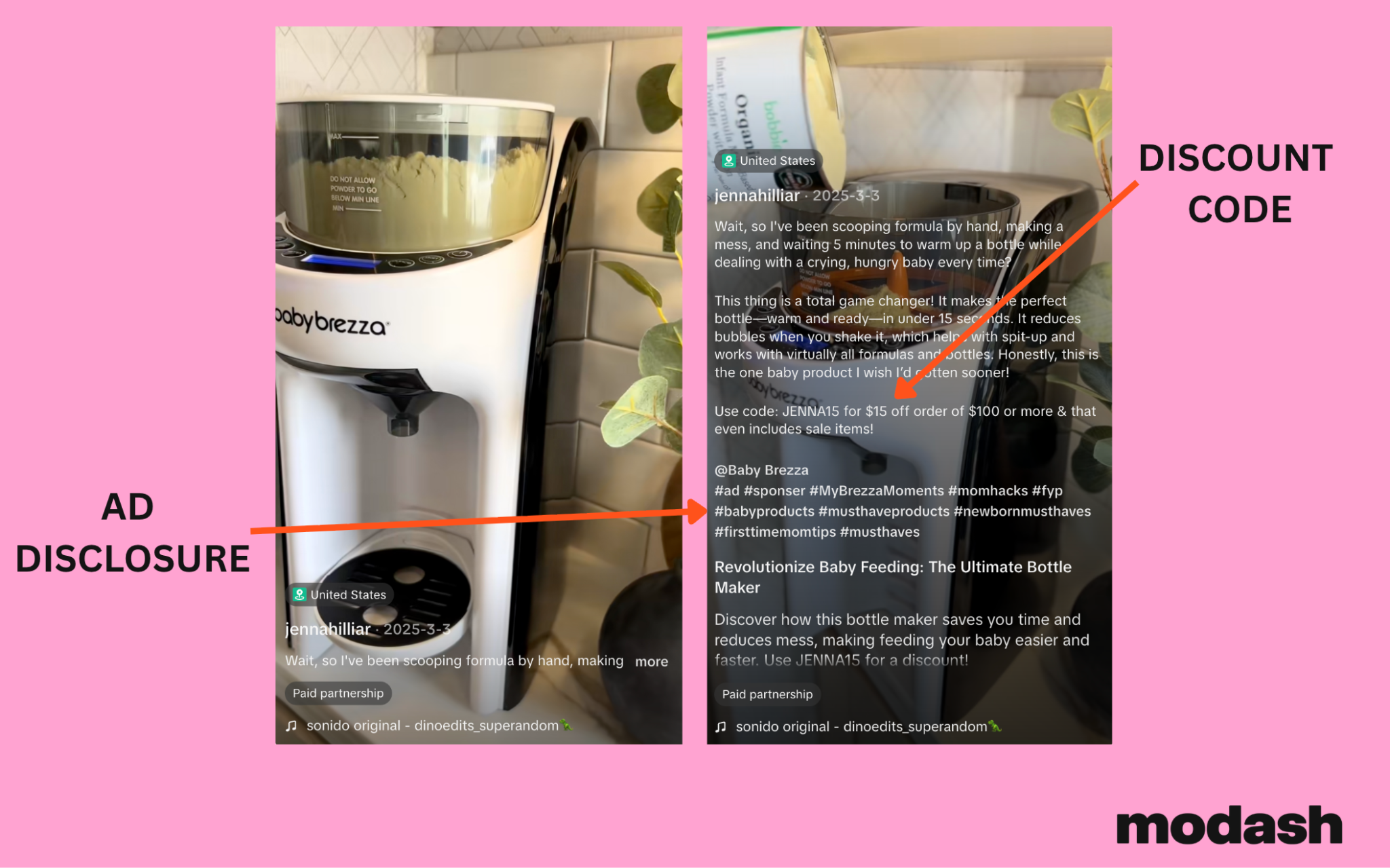
For example, baby products brand Baby Brezza teams up with creators on Instagram and TikTok to highlight the time-saving benefits of products like its range of formula dispensers. Check out the ad disclosure in this post from TikToker Jenna Hilliar, plus the affiliate discount code for turning video views into sales:
FYI I’ll be sharing a bunch more real-world Shopify influencer marketing examples later in this article. But if you’re hungry for more examples right now, check out the following articles:
👉 12 Micro-Influencer Marketing Examples for Inspiration [2026]
👉 12 Influencer Marketing Campaign Examples [+ Key Takeaways]
As the above subheading suggests, Shopify stores typically target one of three goals when running influencer campaigns:
(⚠️ Disclaimer: Bear in mind that capturing influencer content can be a goal in its own right, while also going hand-in-hand with each of those objectives.)
Choosing the “right” goal for a given campaign depends on the brand’s current market position and wider business objectives. For example, if a Shopify store is expanding into a new territory where it’s relatively unknown, a brand awareness campaign might make more long-term sense than a push for immediate sales.
🤓 Further reading: For more on goal-setting, check out Influencer Marketing Metrics: What to Track (and What to Ignore).
First things first, remember that follower count should never be your sole reason for working with an influencer. Kardashian-scale clout doesn’t guarantee results. A creator with a smaller but highly engaged and relevant audience will likely outperform one with a huge, disengaged following that has no interest in the product you sell.
However, size still matters in the influencer marketing world, so follower count often has an outsized impact on influencer pricing. For reference, influencers are often grouped by audience size, as follows:
You’ll almost always pay more to collaborate with a macro influencer than a micro influencer, while smaller accounts are far more likely to accept gifted products as payment.
While influencer marketing is theoretically possible on any platform, three in particular account for the vast majority of Shopify influencer campaigns:
There’s not a huge amount to choose between Instagram and TikTok, although the launch of TikTok Shop is one key differentiator (learn all about it in our guide on how to use TikTok Shop for influencer marketing).
And then there’s YouTube. It tends to be more expensive than the other two platforms (because YouTube videos are generally longer and have more professional, higher-quality editing), but it’s also less time-sensitive, meaning a YouTube video can keep generating views and clicks weeks or months after it was originally shared.
Not sure which is right for you? Check out our in-depth guides to each:
👉 The Guide to Instagram Influencer Marketing for Brands
👉 TikTok Influencer Marketing 101: How to Get Started
👉 YouTube Influencer Marketing: The Complete Guide for 2026
Naturally, you want to work with influencers who have complementary audiences and high-quality content, so it makes sense to search for specific audience niches and demographics – then rule out creators with poor engagement metrics.
If you’re just getting started with influencer marketing and/or are only looking to work with a handful of influencers, you can handle this stuff manually using the following process:
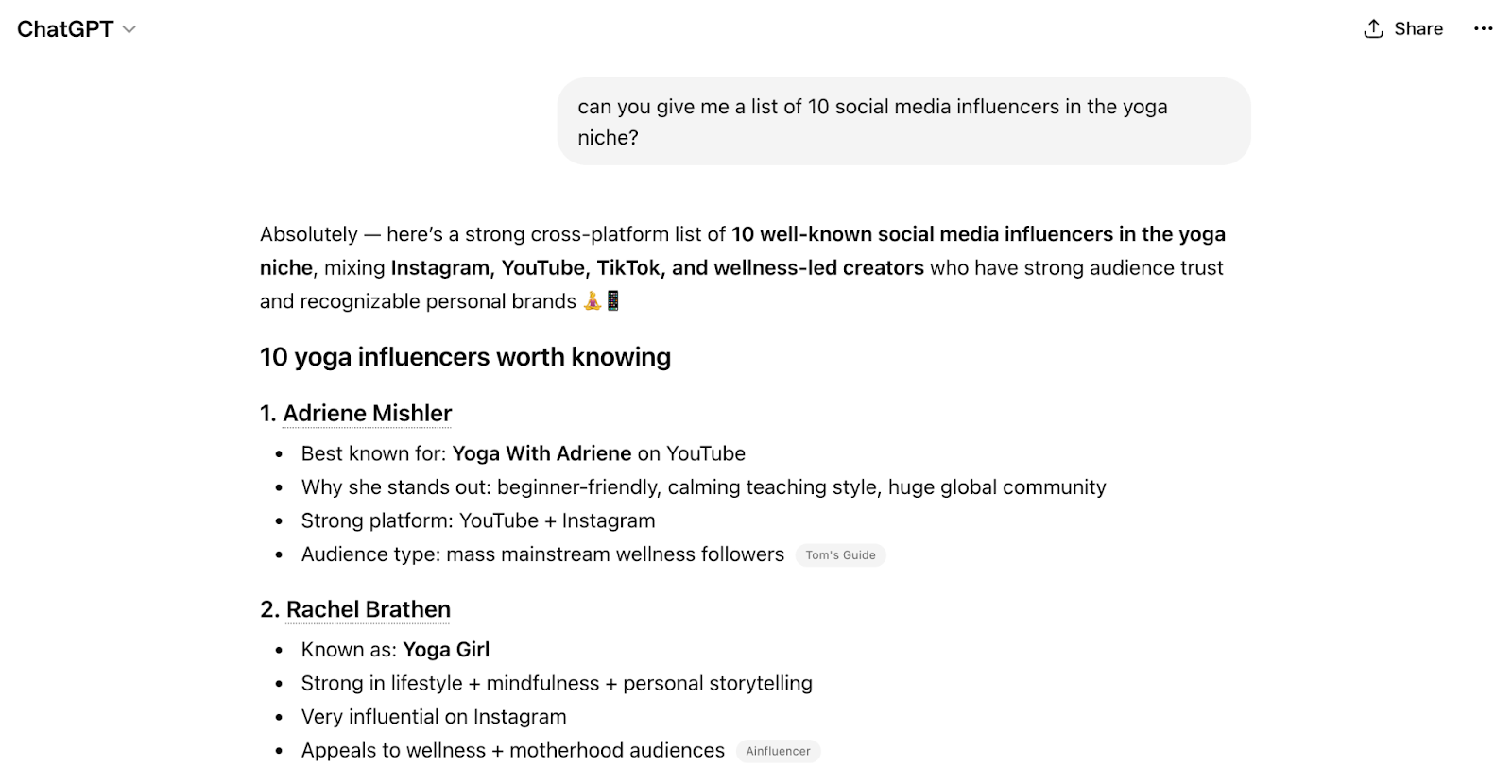
The downside of this method is that you’ll do a lot of waiting around for influencers to send you information. And, when you finally get hold of it, you might discover they were a bad fit all along 🤦
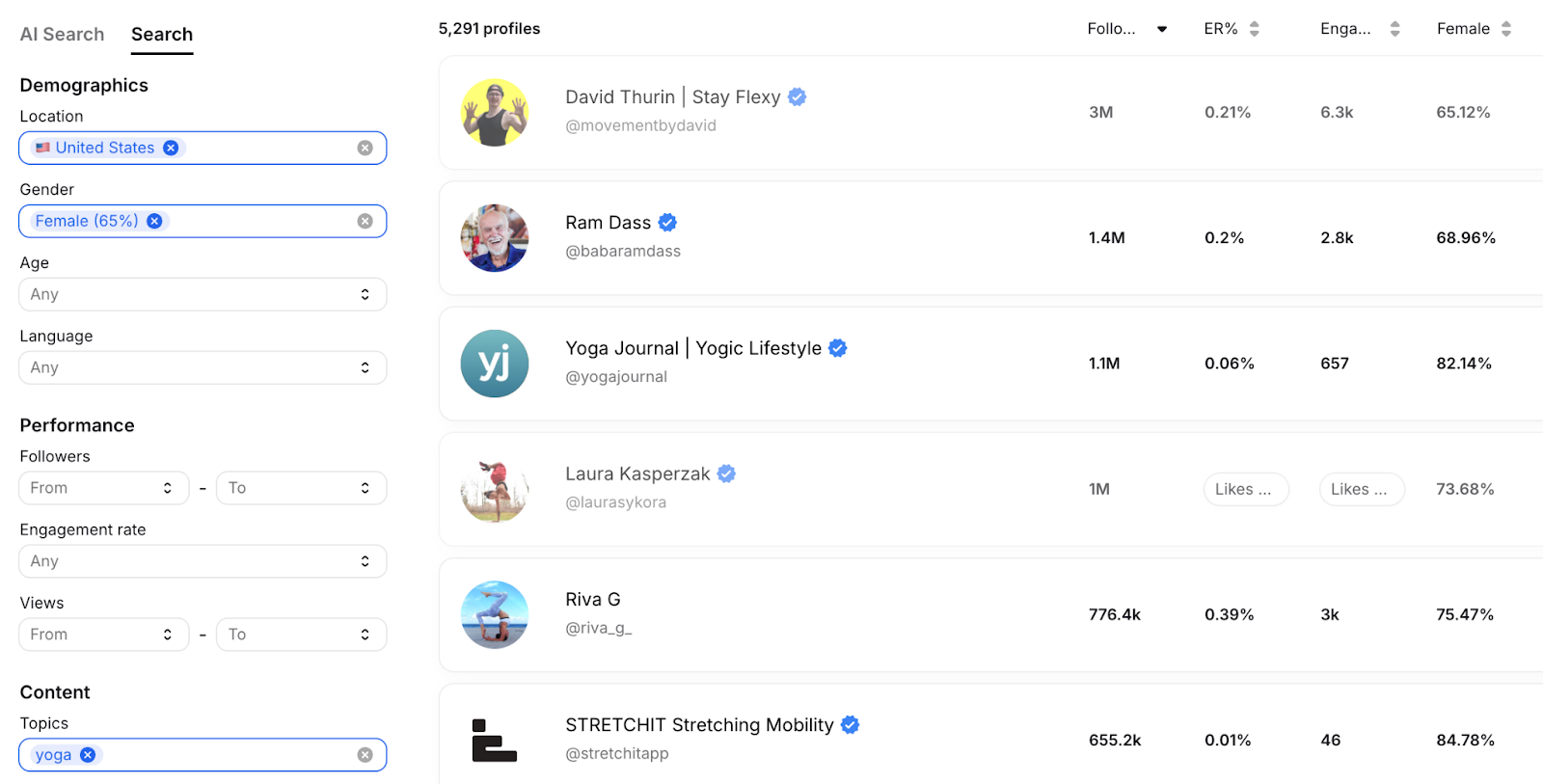
That’s why Shopify stores that are serious about building a scalable influencer program invest in influencer marketing software like Modash. Modash searches a database of 380+ million creators on Insta, TikTok, and YouTube to unearth relevant accounts based on search filters like:
And when you find an influencer you like the look of, you can open their profile to instantly access metrics like engagement rate, impressions, reach, and average likes – all without having to ask the influencer first.
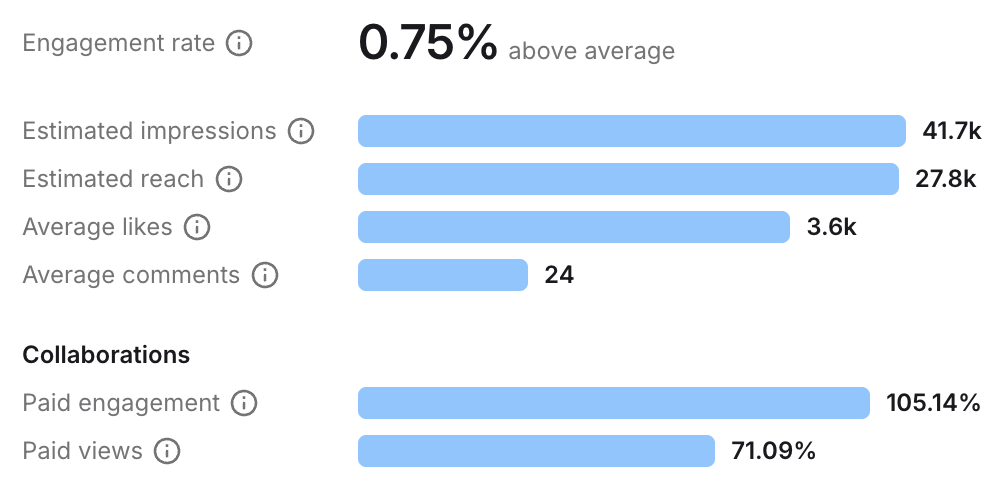
That way, you can focus your influencer outreach efforts on creators you definitely want to work with. It’s a major time saver.
🔎 Don’t take my word for it – try our search tools yourself by creating your free Modash account!
An influencer is far more likely to accept your collaboration offer if they already love your brand and product. So wouldn’t it be great if you could track down those super fans with big audiences?
Actually, there are a couple different ways to do this.
If you’re happy to do the leg work yourself, you can post on social media or send an email newsletter asking your followers/subscribers to get in touch if they’ve built an online audience and are eager to work with you.
Or save time and generate way more results using a platform like Modash, which lets you search for influencers who have:
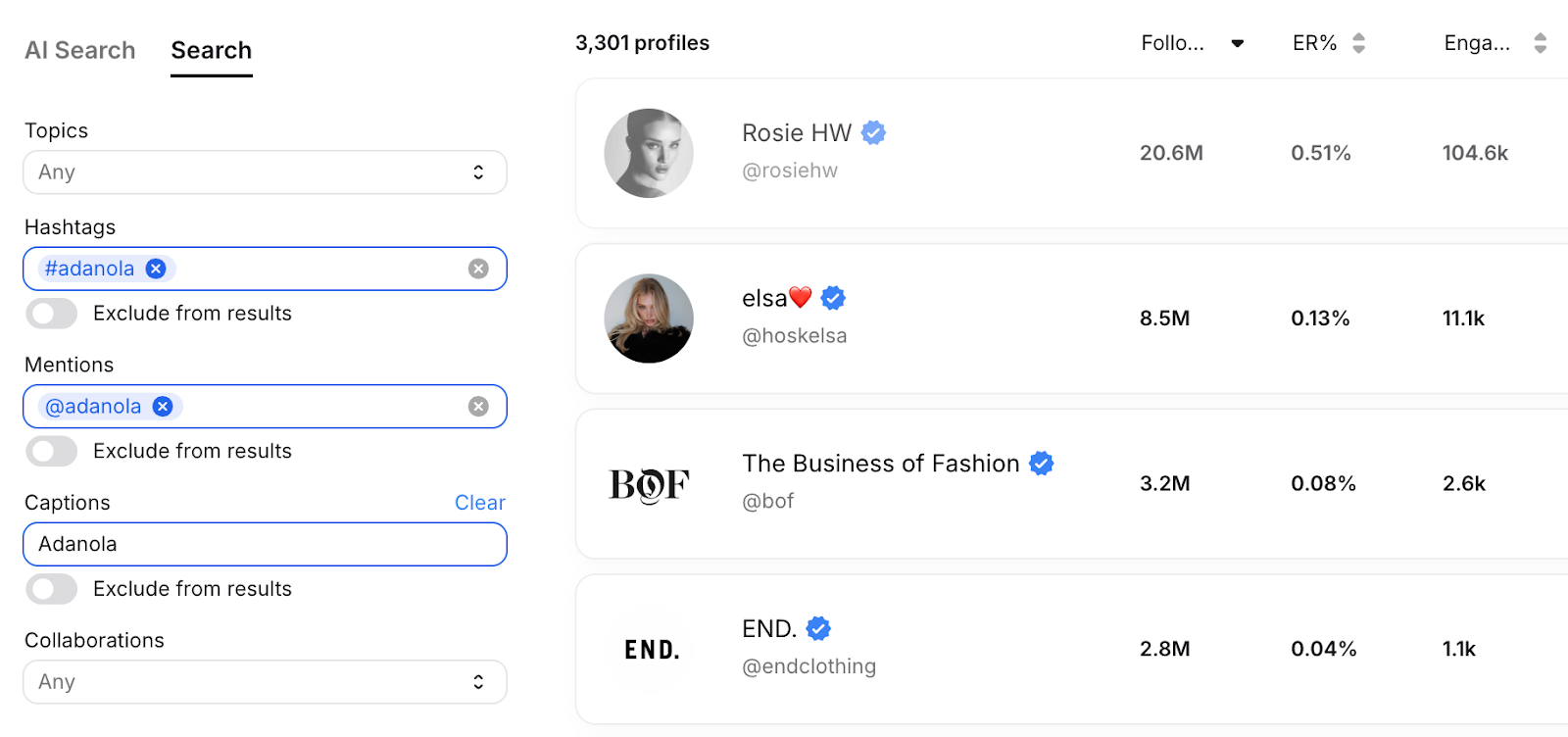
Alternatively, ask our AI Search tool to identify influencers who post about your products, then we’ll surface results based on the actual images and videos a creator shares, not just their captions and hashtags:
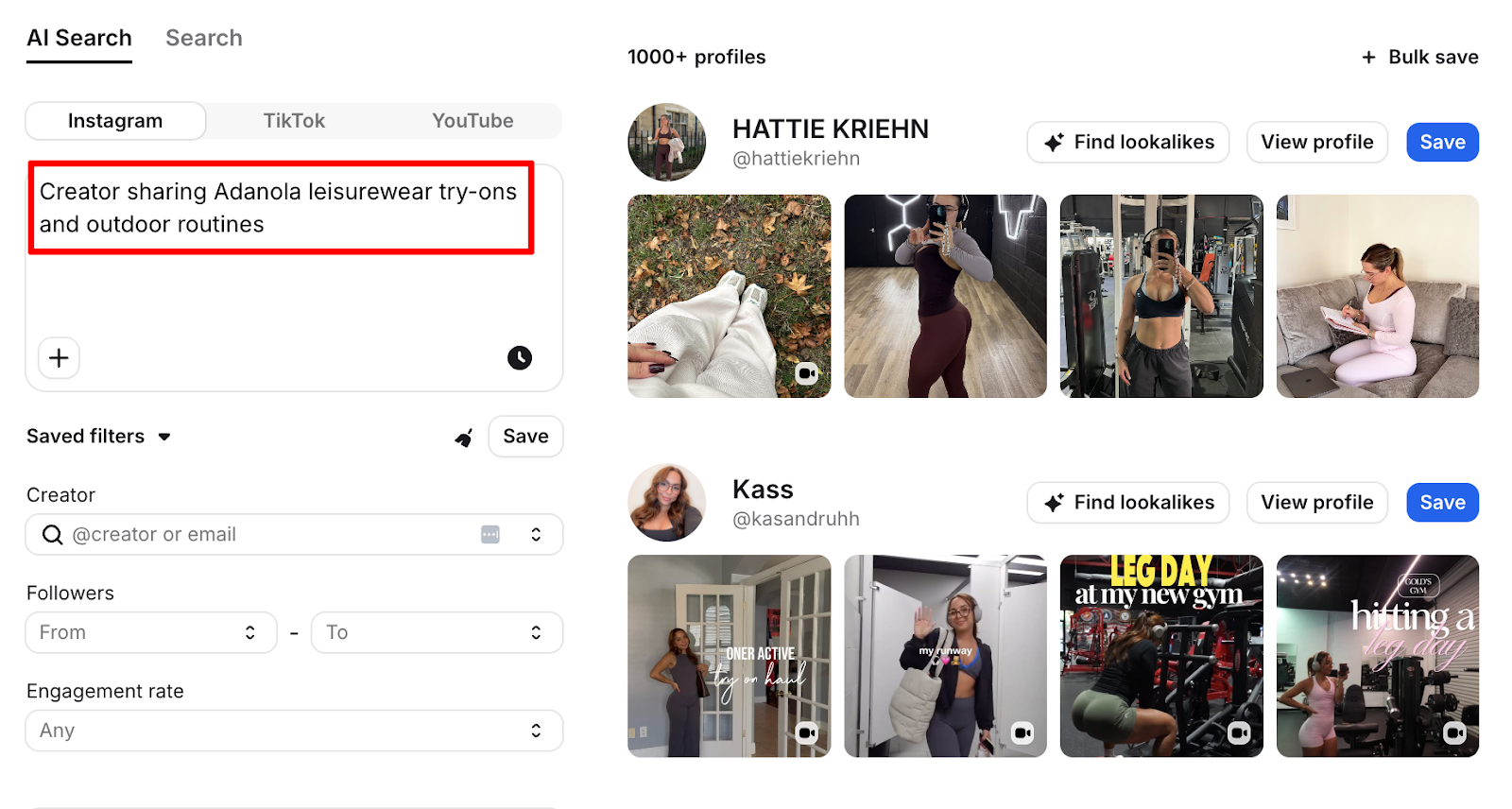
Smart stuff, eh?
🤓 Further reading: Learn more in our roundup of the 8 Best AI-Powered Influencer Discovery Tools.
By this point, you’ve (hopefully) found an influencer with a relevant audience. Now it’s time for some sense checking, AKA vetting. Specifically, you want to browse their content – including any previous brand collabs – to make sure they:
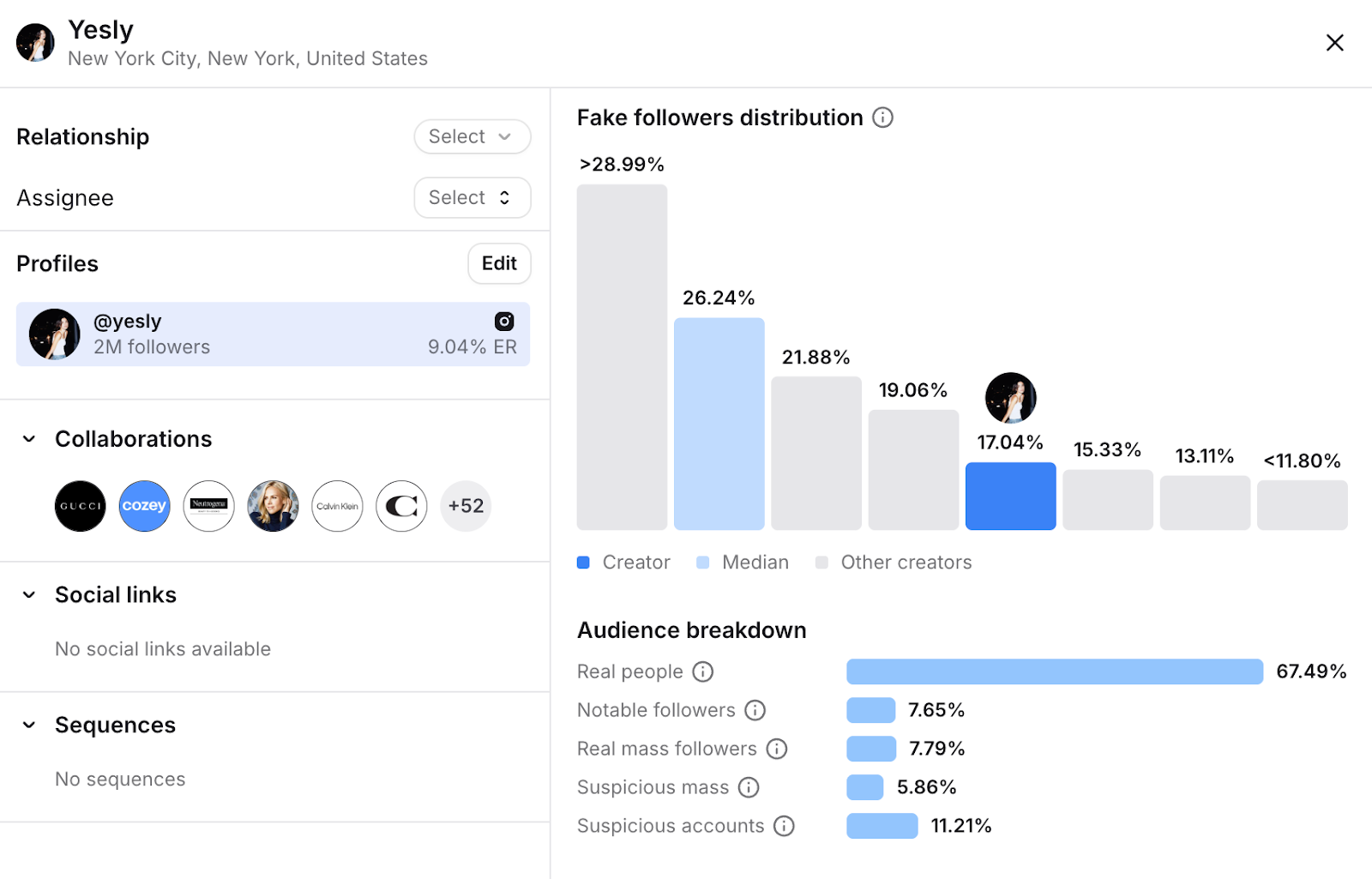
Also, make sure their audience is mostly made up of actual people, not bots. You can do this with Modash – just open an influencer’s profile to view their fake follower percentage, compare it to other accounts, and get more insights into their audience breakdown:
One last word on vetting: don’t let perfect get in the way of good.
When we surveyed 56 influencer marketers, 62.5% felt like they’ve missed out on potentially interesting collabs due to their overly stringent vetting criteria.
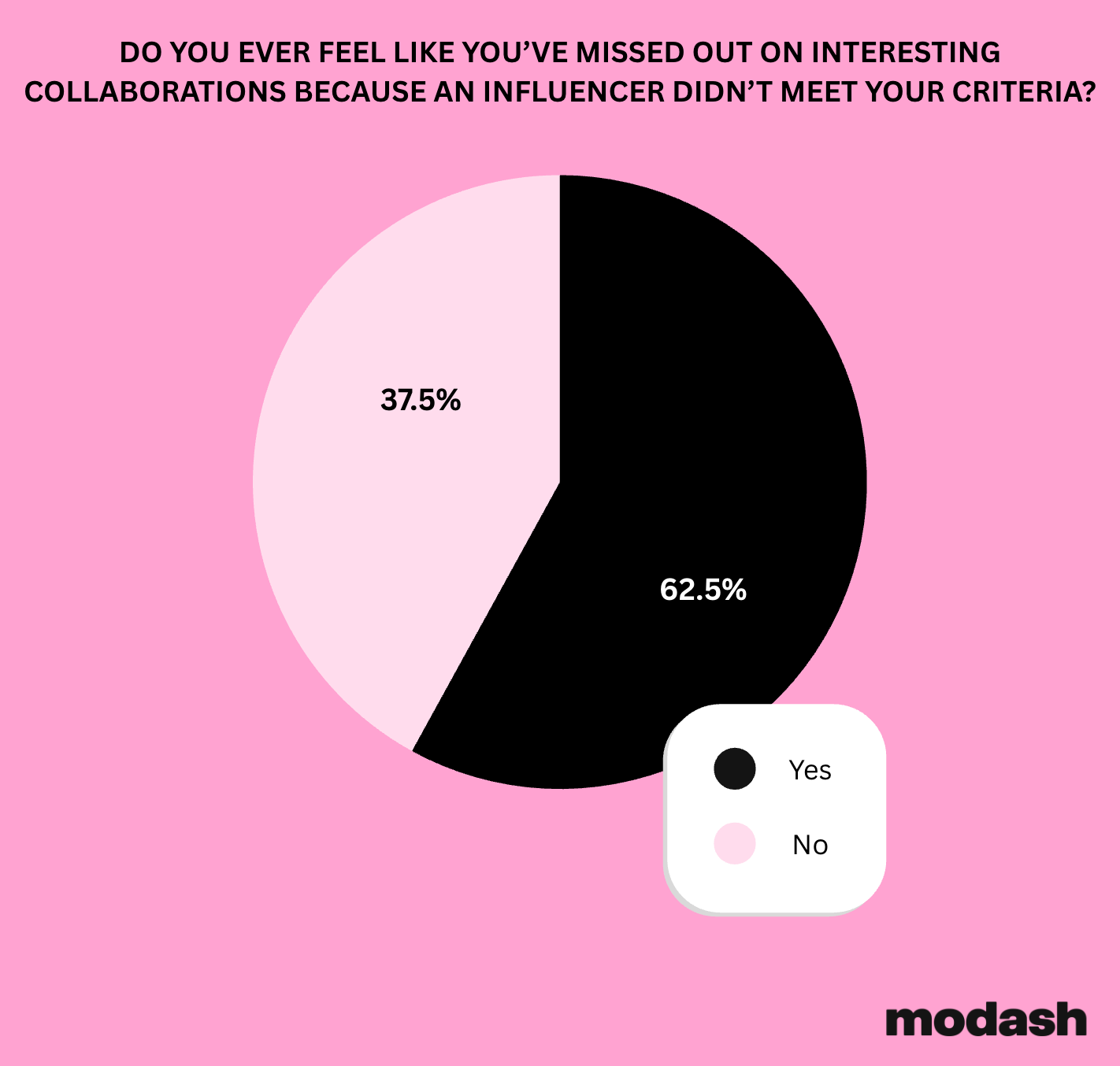
So by all means be vigilant when it comes to protecting your brand, but don’t dismiss an influencer just because their fake follower count is 1% higher than you hoped.
🤓 Further reading: For more on vetting, check out How to Assess Influencer Profiles: 7 Factors You Should Look For and How to Vet Creators Beyond Audience Metrics.