

Mehr Tools
Use Cases
Rechtliches




A lot of marketers have this idea that running an affiliate program is easy.
How hard could it be? Set up a landing page, work out some commission numbers, recruit some cool creators (or let them come to you), and pay them when they make you money. No sweat.
Here lies the effort gap paradox. When you actually break apart these affiliate programs, you’ll find that the set-it-forget-it style doesn’t actually perform.
At least, not the way it’s supposed to.
It turns out that affiliate marketing is far from an easy, beginner initiative for influencer marketers. The no-effort illusion tricks us into believing that it’s easy because of the performance-based payout.
We surveyed influencer marketers running affiliate programs to find out how they’re actually doing it – how they recruit, manage, and measure.
What we found is a market split into two:
The difference in results isn’t subtle. Across the board, we found the brands that put more into their affiliate programs get more out of them. In this report, you’ll learn:
Sometimes, the effort gap isn’t just about a lack of effort – it’s about too much effort in the wrong places.
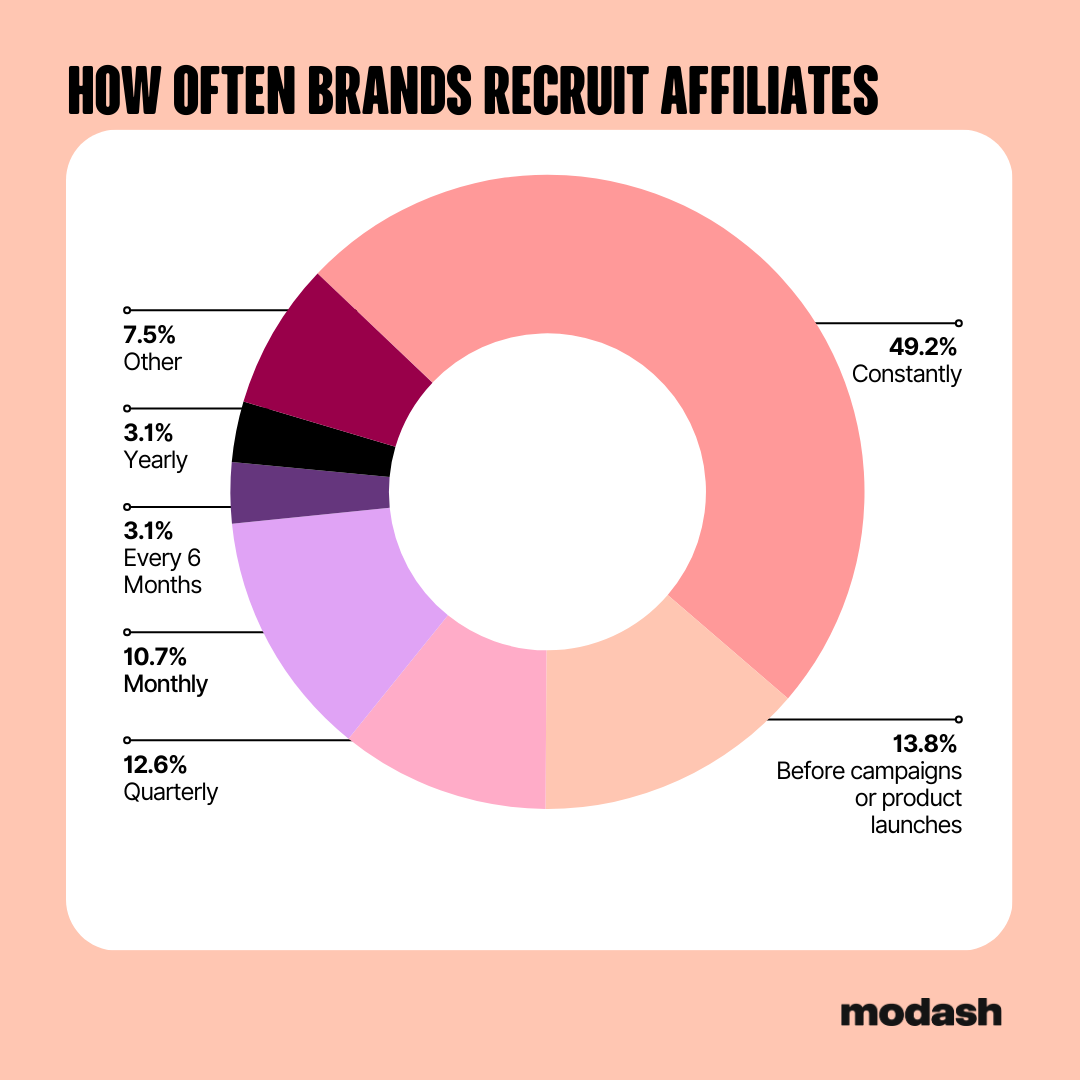
We found that nearly half of the marketers we surveyed are always looking for new affiliates.
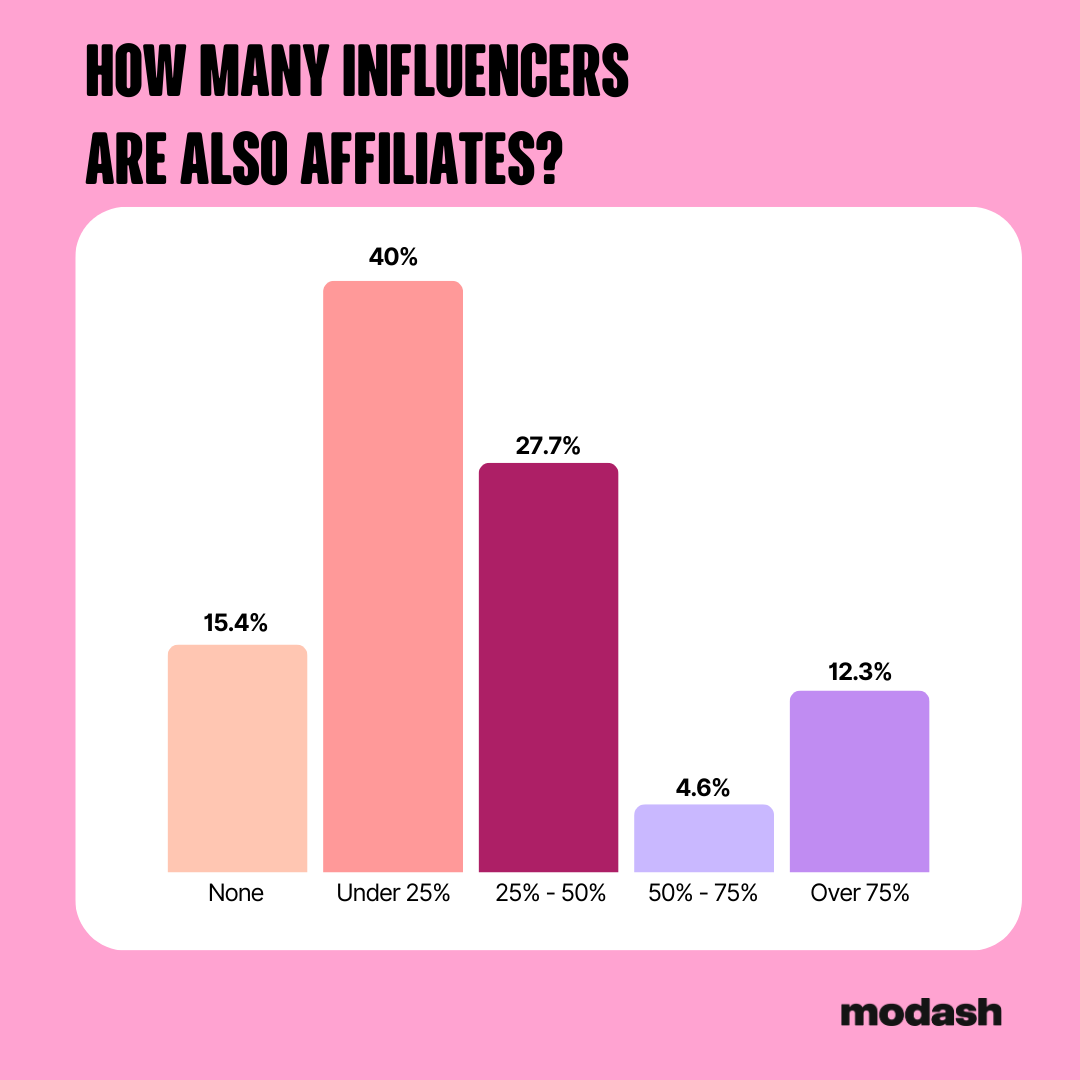
And while brands are spending a lot of energy finding new affiliates, they were barely tapping the partners they already have. Half of our participants said that just under a quarter of their influencer partners also double as their affiliates.
Your existing influencer partners can make for great affiliates because they already know and understand your product. And they’re right there.
The lesson is to ask more of your influencer partners (especially those that have been with you long-term) to be your affiliates, too. The good news is: over half of the influencer marketers we polled said that influencers are open to affiliate commission as an incentive.
Tapping your existing long-term partners is a great way to instantly recruit more affiliates into your program, without the issues of finding, vetting, contacting, recontacting, negotiating, etc. It’s the lowest of low-hanging fruit.
And you know what immediately solves the problem of needing more affiliates? Keeping the ones you already have active.
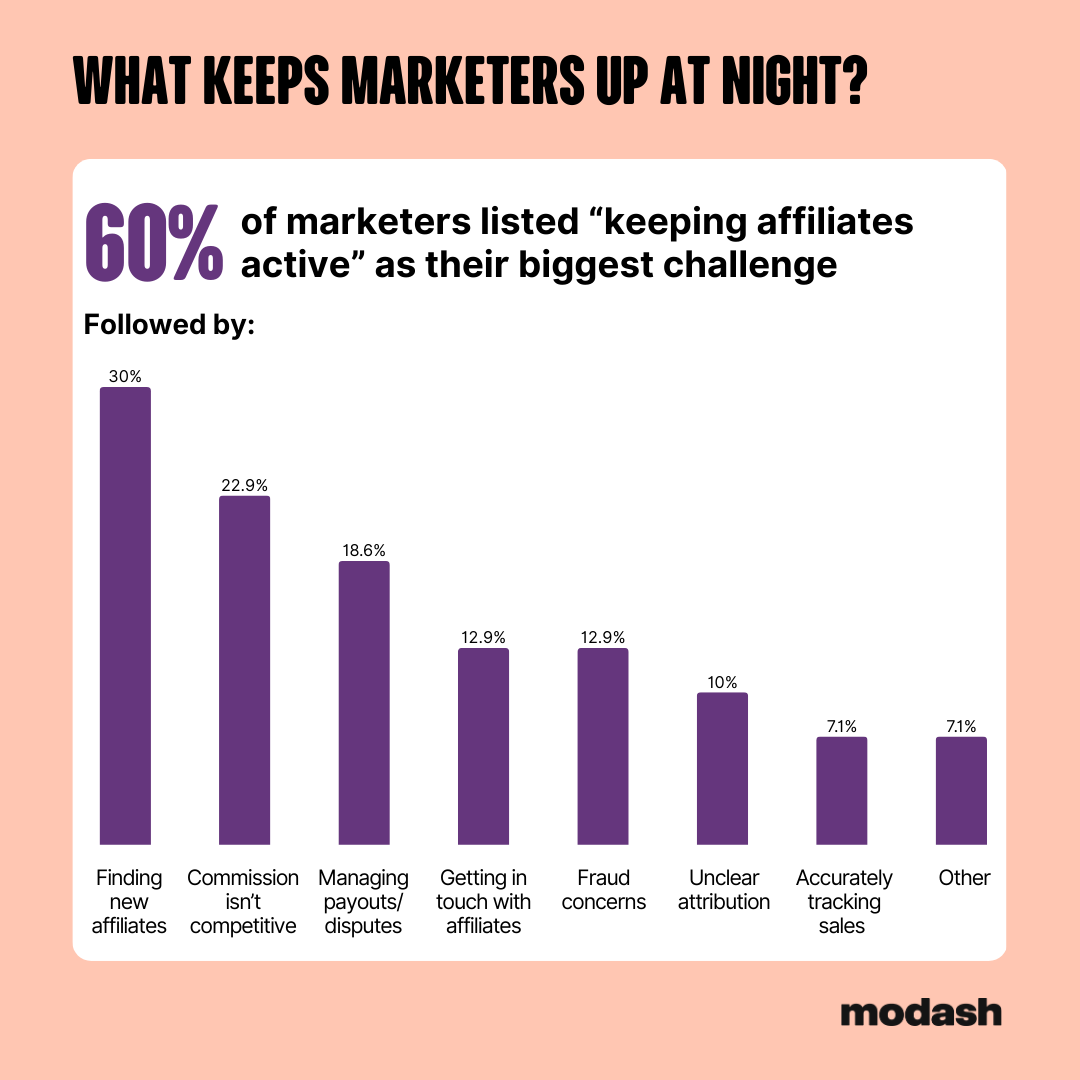
Keeping affiliates active is the biggest challenge marketers are facing today. 70% of marketers believe affiliates are critical for their success, and yet 60% say keeping affiliates “active” is their biggest challenge.
But what even is an “active” affiliate?
Over half of the marketers we surveyed considered any affiliate that posts even once a month an “active” affiliate. Over a third of marketers have less than 20% active affiliates for their brand.
When we asked marketers what they are currently doing to keep affiliates active, the answers sounded right on paper:
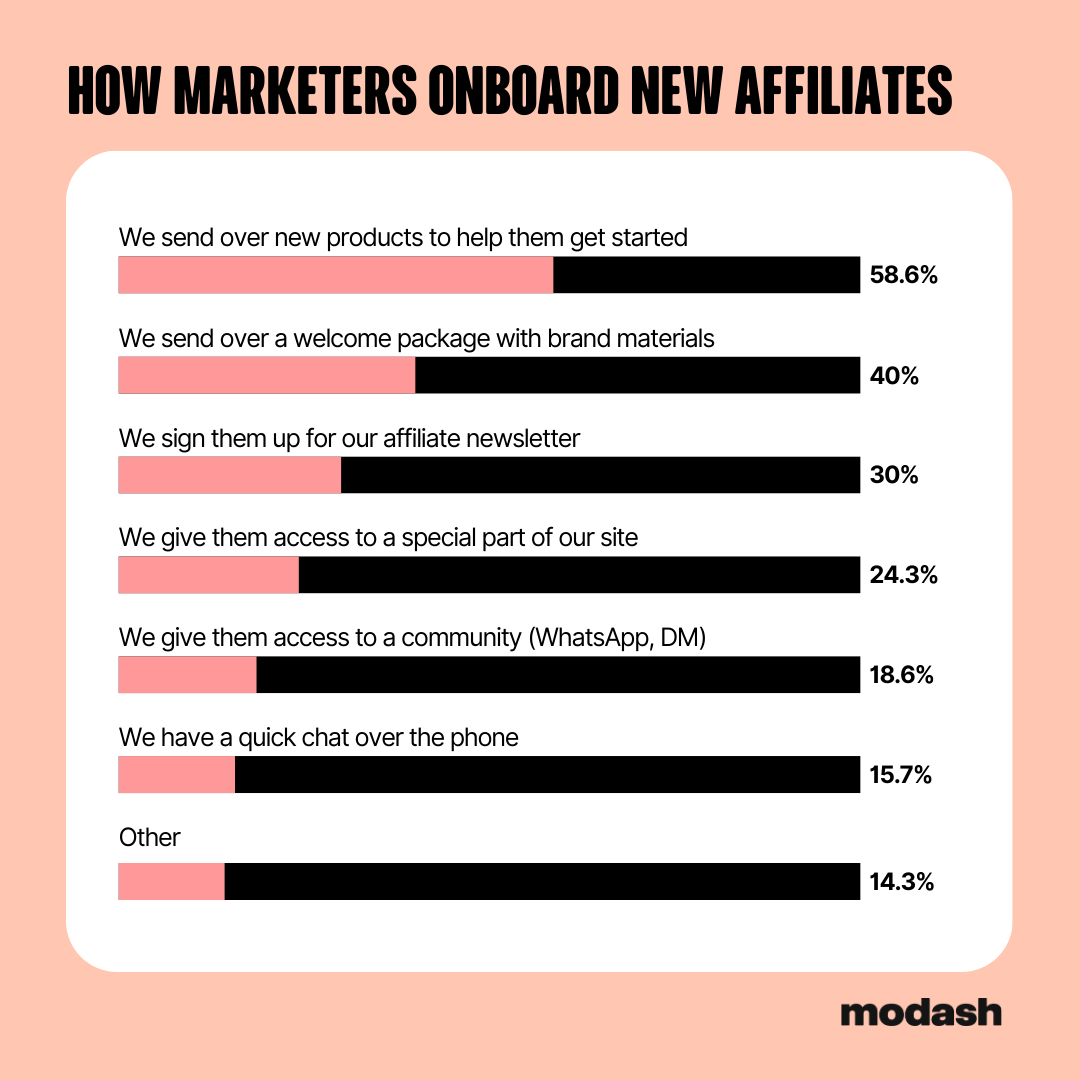
But again, there’s a significant portion of marketers who aren’t doing any of these things – including sending over brand materials or products to get their affiliates started.
Almost 30% of marketers describe their involvement with affiliates as “hands-off” – aka they mostly run their affiliate program on autopilot. And the data shows exactly how much that costs them.
We’d asked marketers how involved they were with their affiliates, then we split those responses out and found the average amount of active affiliates per each response.
And the effort gap doesn't lie. The more involved you are, the more active your affiliates will be:
Even going from "very hands-off" to "somewhat hands-off" quadruples your active affiliate rate.
So what does “involvement” actually look like in practice? Communication is a huge part of it – and this is where most programs fall short.
Despite struggling to keep affiliates active, only half of the marketers we surveyed actually use a one-to-many communication channel to keep affiliates active. Now, some of those marketers were using personal 1-on-1 emails to communicate with their affiliates – but that’s got to be a time suck.
One-to-many communication can help ease a bit of that workload – but it’s got to be a two-way conversation. Even when marketers were using some form of mass communication, it was a newsletter.
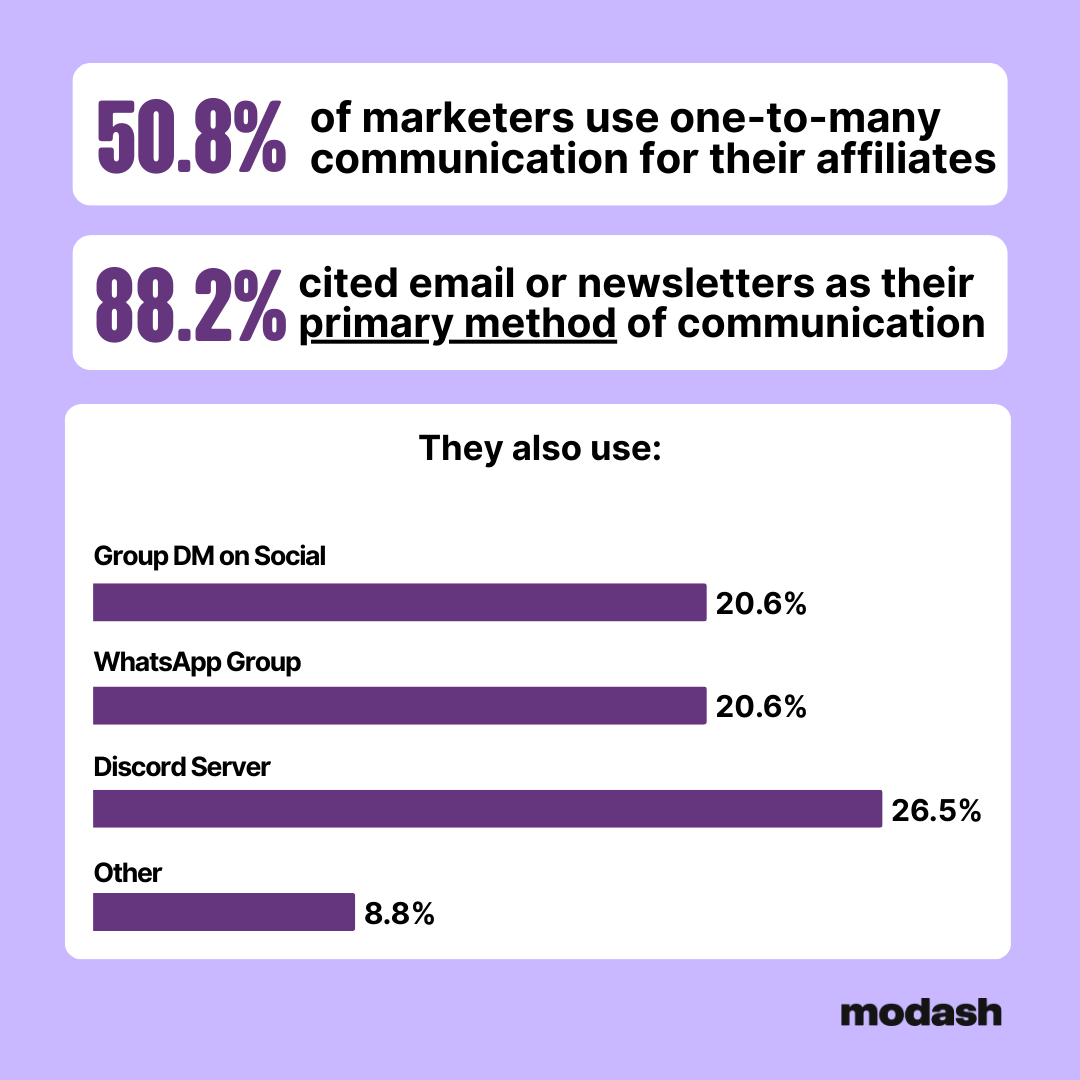
The email blast – while great for sharing tips, product info, and highlighting wins – is definitely not enough to build a strong affiliate relationship. It doesn’t allow any room for conversation, feedback, and connection.
On top of this, only 44.6% of marketers are only reaching out to affiliates monthly. Another third are communicating even less than that.
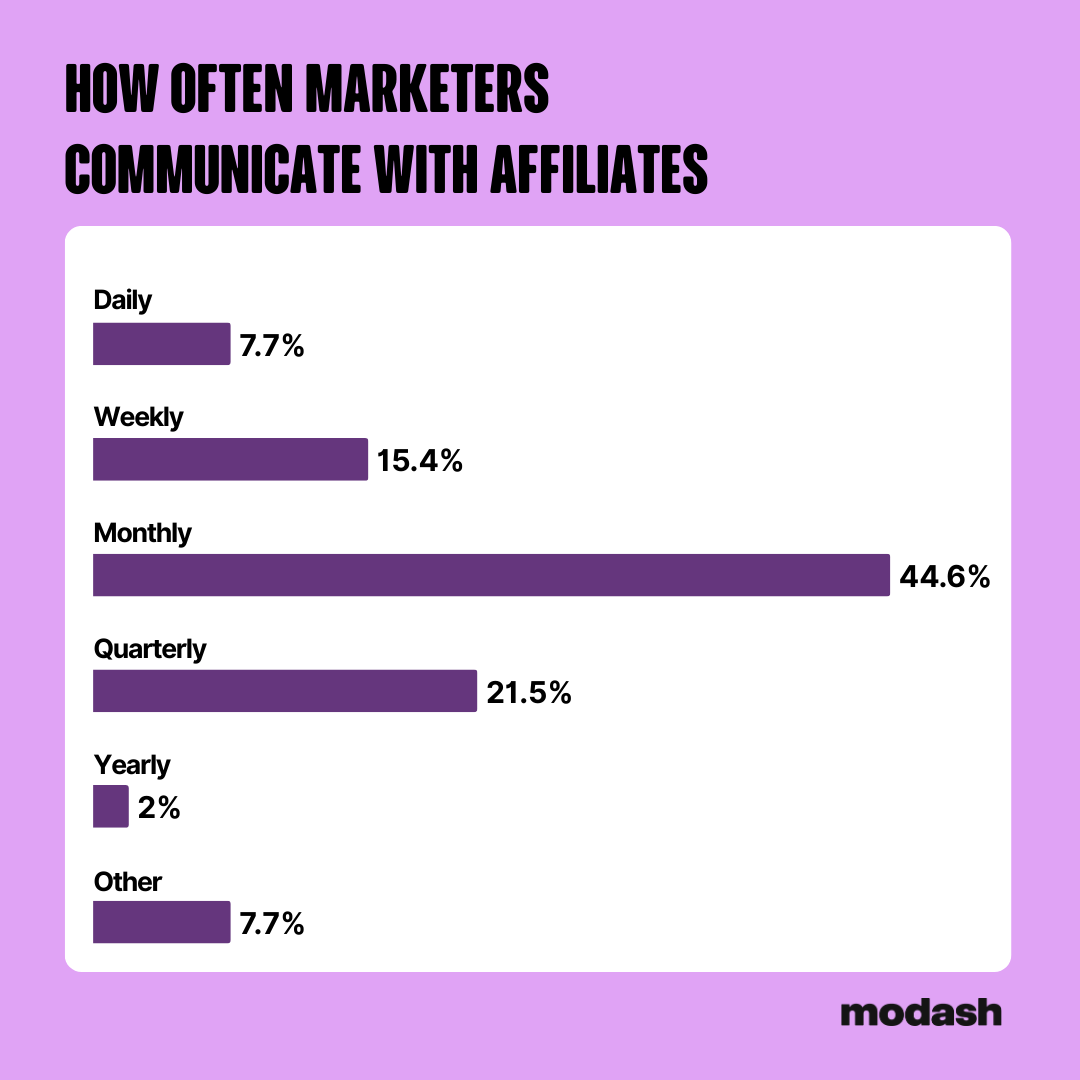
Combine those two stats and it’s pretty likely that many brands are “communicating” with affiliates once a month via an email blast and calling it a day. But to actually nurture your creator relationships, you need to talk more than once a month. Influencer marketing is a relationship business, after all.
And comms doesn’t need to be a heavy-lift task. Create a group with all your affiliate partners and assign rituals or theme days – like sharing a selling tip/customer pain point every Tuesday or appreciating one affiliate for their work every Friday.
You can even make room for traditions that connect affiliates with each other – such as a biweekly catch-up call – and build an even stronger connection.
It would be a far better use of your effort – and it would foster a real community with your affiliates.
93% of marketers gift new products to their affiliates. That sounds great – until you learn that almost 30% of them don’t refresh those products at the launch of a new product or campaign.
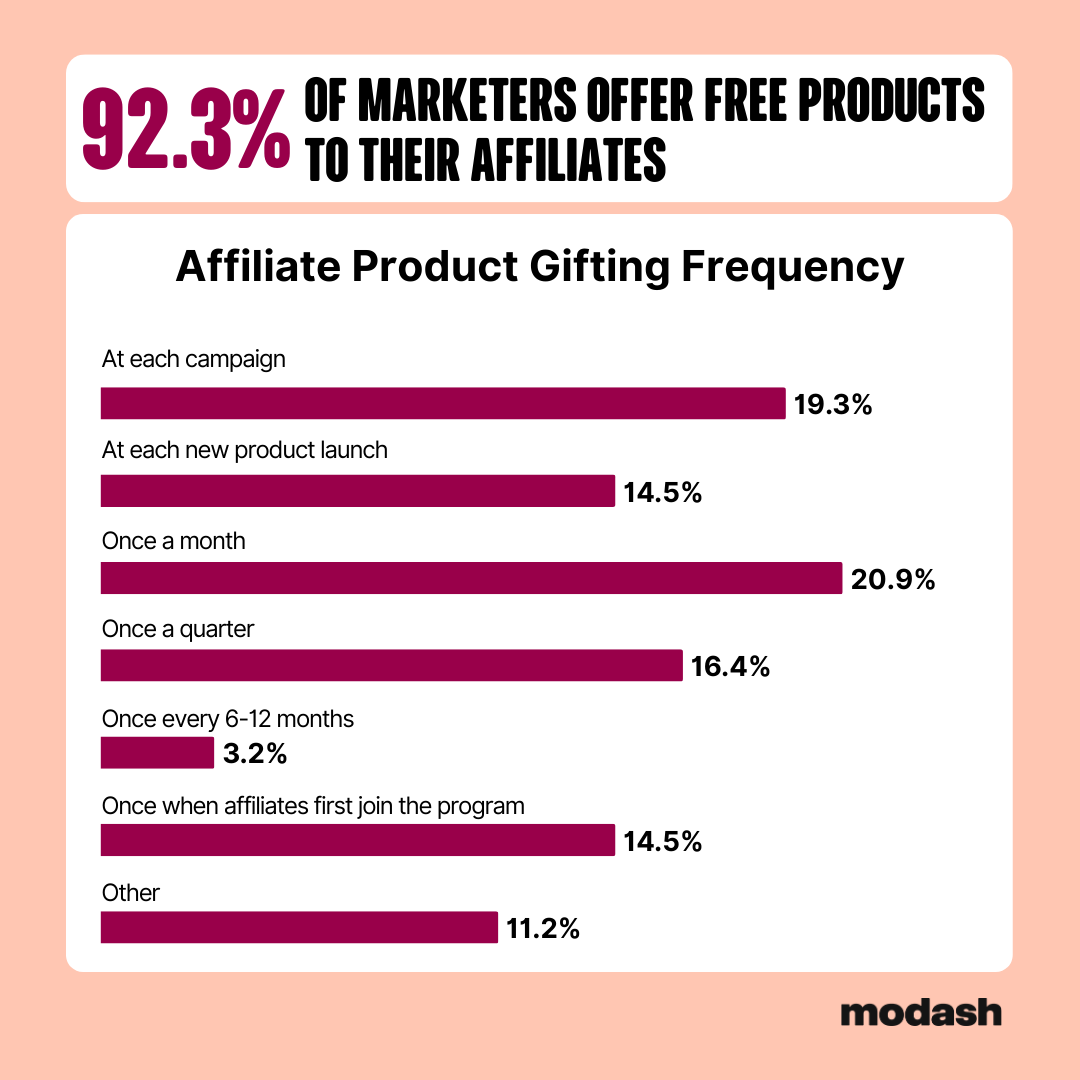
Think about it: you have onboarded an affiliate and provided them with your welcome package and products. But after a while, their products have gotten stale (or have been used up) because they’ve already promoted them a few times.
And when your brand launches something new, your affiliates can’t promote it because you never sent it to them.
Refreshing an affiliate’s products should be a recurring task in your to-do list. Obviously, it’s going to depend on what kind of products you sell, but fast-moving products should be refreshed regularly.
The fix here isn’t complicated – it’s just about caring enough to keep your affiliates equipped. And that same principle applies to how you structure their commissions. If your affiliates don’t have anything to aspire to, they won’t stay motivated.
Your commission structure directly impacts how active your affiliates will be.
And yet, more than half of marketers are still running a single-tier setup.
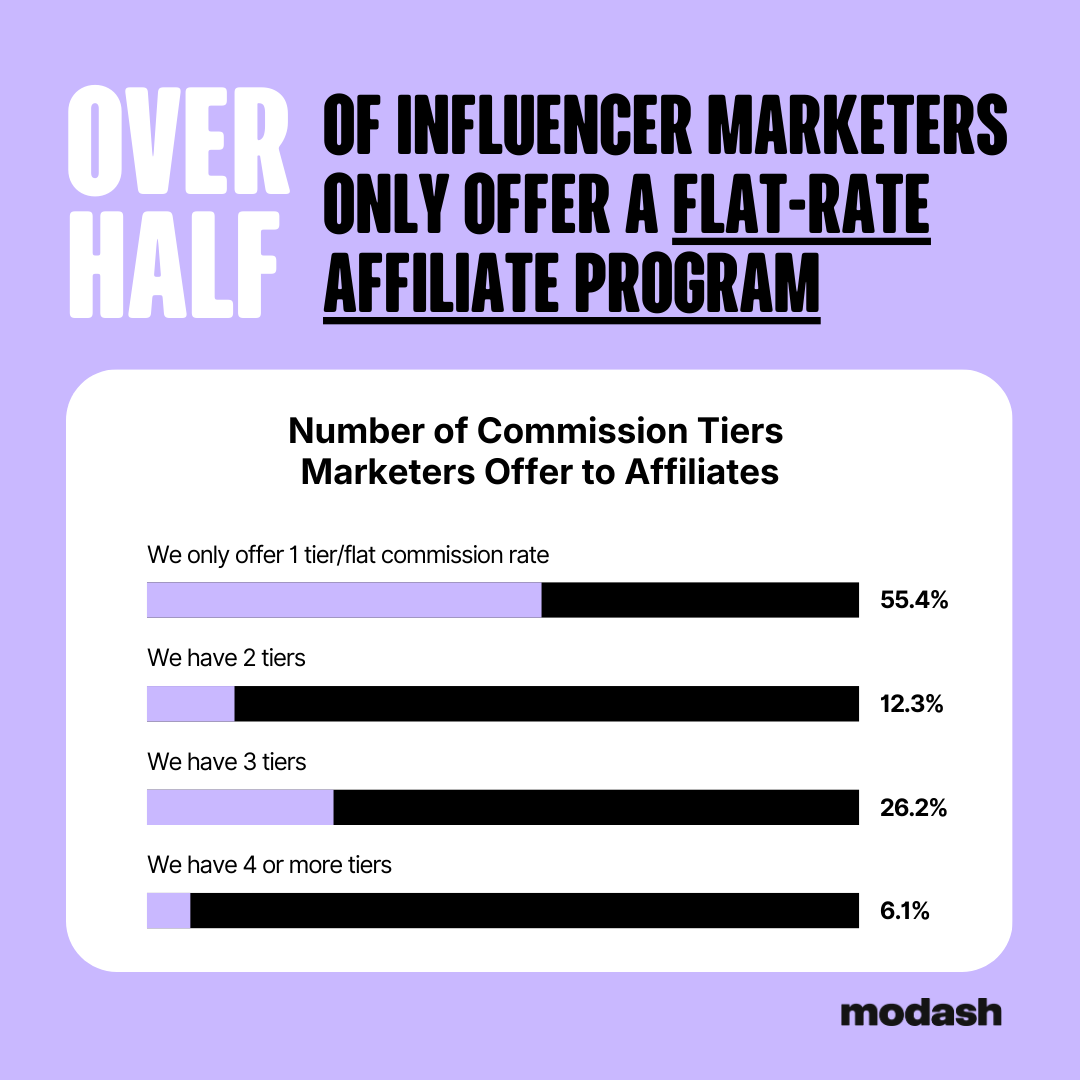
With a flat commission, an affiliate earns the same amount for each sale no matter how much revenue they bring in. There’s nothing to aspire to, no reason to push harder.
And we tested this ourselves. We spliced out the affiliate programs from the marketers we polled into 1-tier, 2-tiers, and 3-tiers.
Those with 1 tier in their affiliate programs counted only a 37% average of active affiliates. For those with 3 tiers or more? It was closer to 50%.
The average commission tiers according to our survey are 10%, 14%, and 19%. But you need to customize the commission tiers you can offer based on your margins, AOV, customer lifetime value, and more.
The effort gap also applies to the way you test your programs. Just like testing is critical for paid influencer marketing campaigns, it might even go double for affiliate programs.
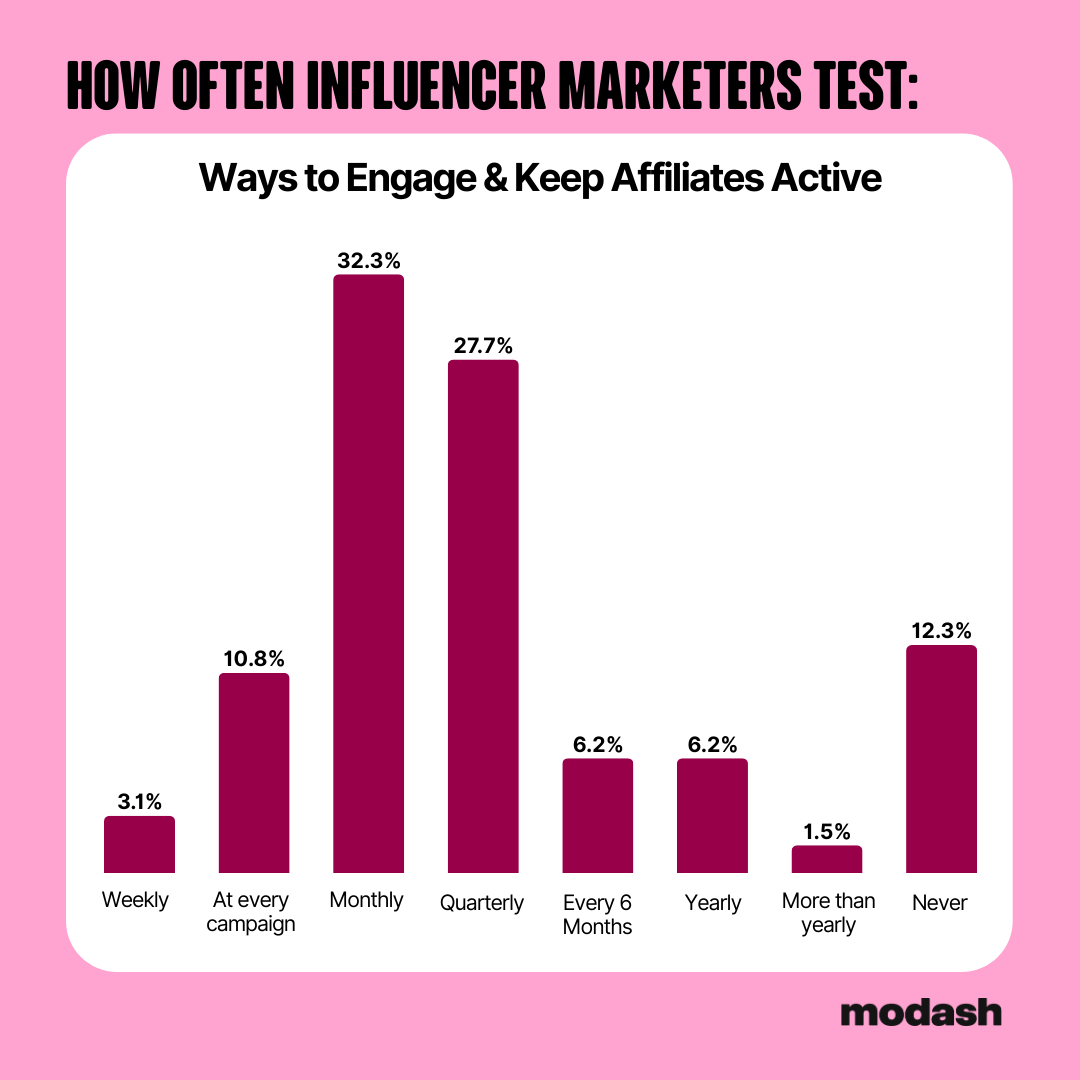
And with engagement being such a significant problem, you’d think that this would be an area where marketers test the most frequently. That’s true, but over a quarter of marketers in our survey are only testing new ways to engage affiliates every six months or longer. By that time, they’re likely pretty cold.
And another 12% of them are never actually testing new ways to keep affiliates active.
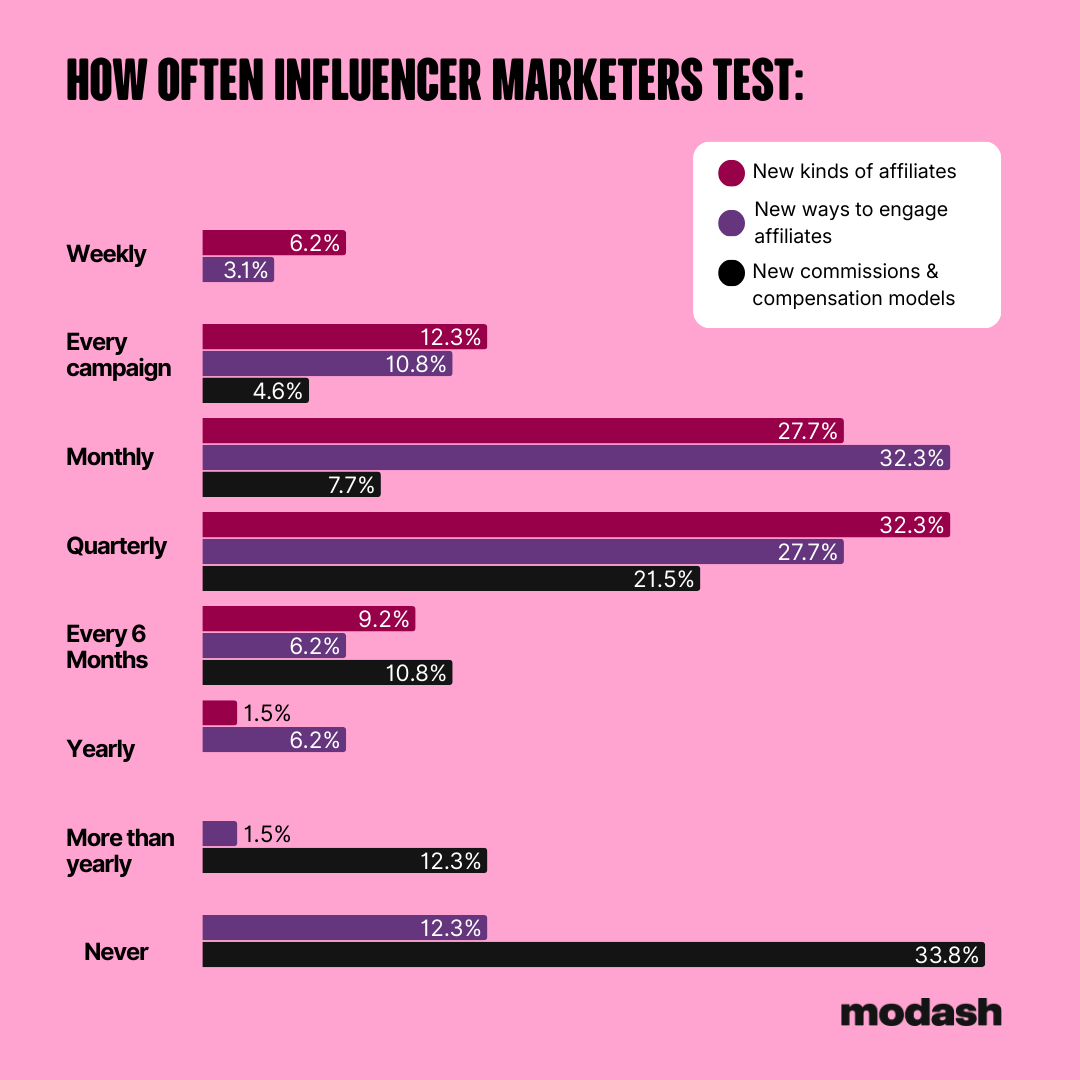
Marketers are also not testing new kinds of affiliates as aggressively as you’d think – especially given they’re constantly recruiting new ones.
The largest chunk (32.3%) only test new affiliate types quarterly, and 27.7% do it monthly. In a similar vein, marketers are also more reluctant to test new commission models: 33.8% aren’t testing any new payment structures at all.
We’ve talked a lot about the powers of the storyfit creator. A storyfit affiliate might be even more powerful – given they have a unique story that ties to your product and selling chops.
Given that half of marketers say less than a quarter of their influencer partners double as affiliates, there’s a clear opportunity to experiment more often – whether that’s bringing in nano/micro creators, loyal customers, or creators in adjacent niches. If you’re only testing new affiliate types once a quarter, you’re sitting on untapped growth and creative collabs.
47.6% of marketers in our survey struggle with code poaching – aka when your affiliate’s discount code is leaked into a code aggregation site. Marketers are dealing with it by:
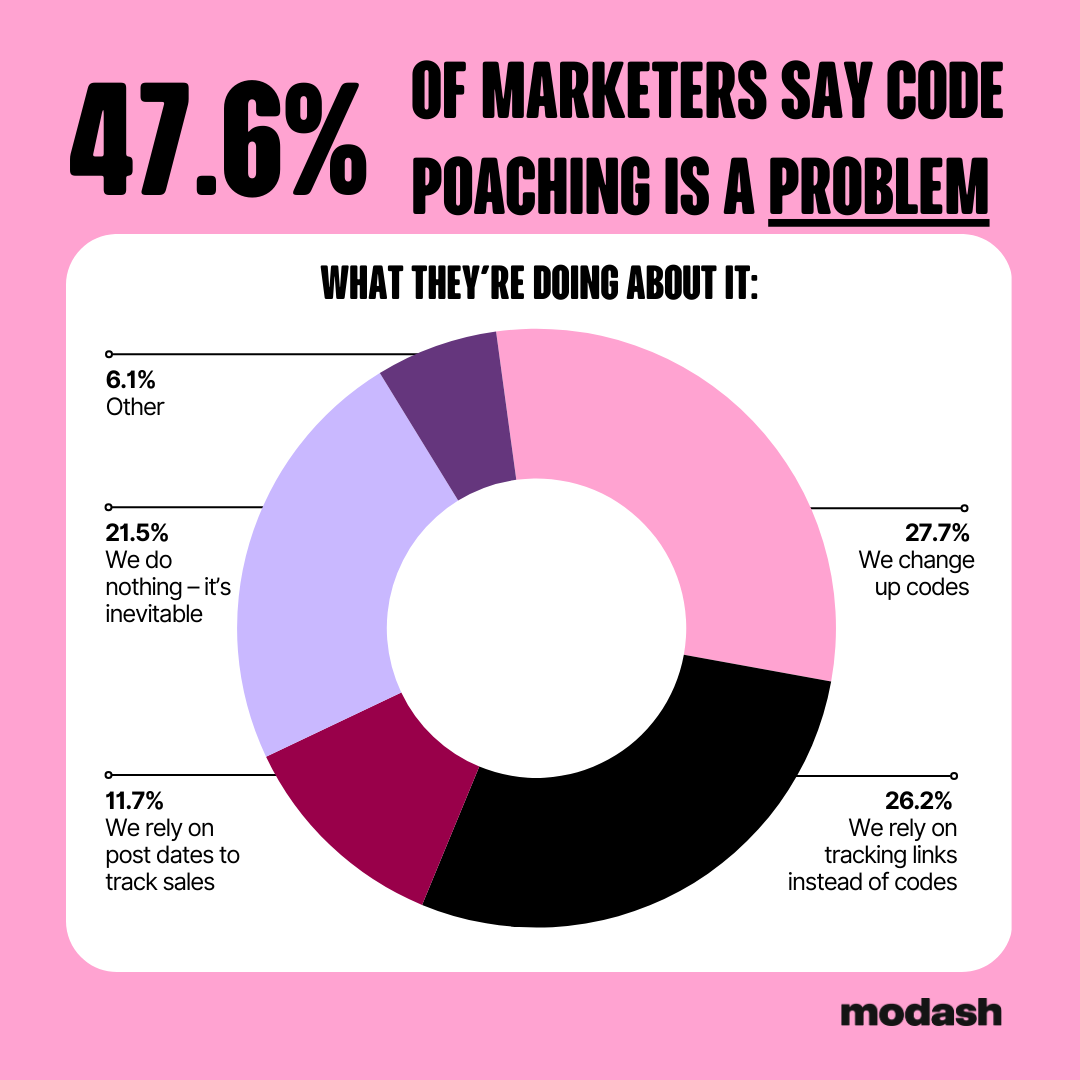
But each of those solutions comes with trade-offs – changing codes means you might miss late sales, links don’t work well on platforms like Instagram, and tracking by post dates is manual and unreliable on long-shelf-life platforms like YouTube.
Basically, a giant headache for you, your affiliates, and your end customers.
Not to mention, this is an area where you’re maybe spending too much effort trying to fix, while the new codes get leaked a week after your affiliate’s next post.
That might be why 20% of marketers are doing nothing about code poaching because it’s an inevitable problem. Honestly, if it’s not hugely impacting your attribution and sales, that might be the right call.
The best route is to actively monitor affiliate sales and flag any sudden spikes in code usage that don’t match up with post engagement.
Code poaching is frustrating, but it’s a solvable problem. The bigger challenge – and the one this entire report keeps coming back to – is whether you’re investing enough effort in your affiliate program to make it worth protecting in the first place.
Affiliate marketing programs are only as good as the effort behind them.
Brands that stay hands-on with their affiliates – communicating regularly, refreshing products, building tiered programs that give creators something to work toward – are seeing significantly more active affiliates and more revenue. Brands that set it and forget it are wondering why their affiliates have gone quiet.
Where you should invest your effort:
Where you should divert your effort from:
If you remember just one thing from this report, let it be this: affiliate marketing programs are the most successful when you actually invest time, energy, and resources in them. The effort gap is real – and the data backs that up at every turn.
And if you want more of the story, check out The A to Z Guide to Building an Affiliate Program (That Won’t Flop)