





Meer tools
Toepassingen



2025 bezorgde influencemarketeers de ene na de andere onverwachte wending – van de bijna-sluiting van TikTok in de VS tot dreigingen met importheffingen en de AI-revolutie.
Omdat deze economische onzekerheden marketingbudgetten over de hele linie beïnvloedden, stonden influencemarketeers voor een lastige vraag: hoe pas je je met een beperkt budget aan voortdurend veranderende omstandigheden aan, en zonder relaties met influencers in gevaar te brengen?
Om daarachter te komen, ondervroegen we meer dan 50 ervaren marketeers over hoe zij in 2025, binnen de grenzen van hun budget, over hun influencersamenwerkingen onderhandelden en deze structureerden, en wat ze voor 2026 plannen.
Ter vergelijking blikken we kort terug op de resultaten van de enquête van vorig jaar. In 2024 had meer dan 75% van de marketeers die we ondervroegen hun langetermijnsamenwerkingen uitgebreid ten opzichte van 2023, en meer dan 84% zei zelfs van plan te zijn daar in 2025 fors meer op in te zetten.
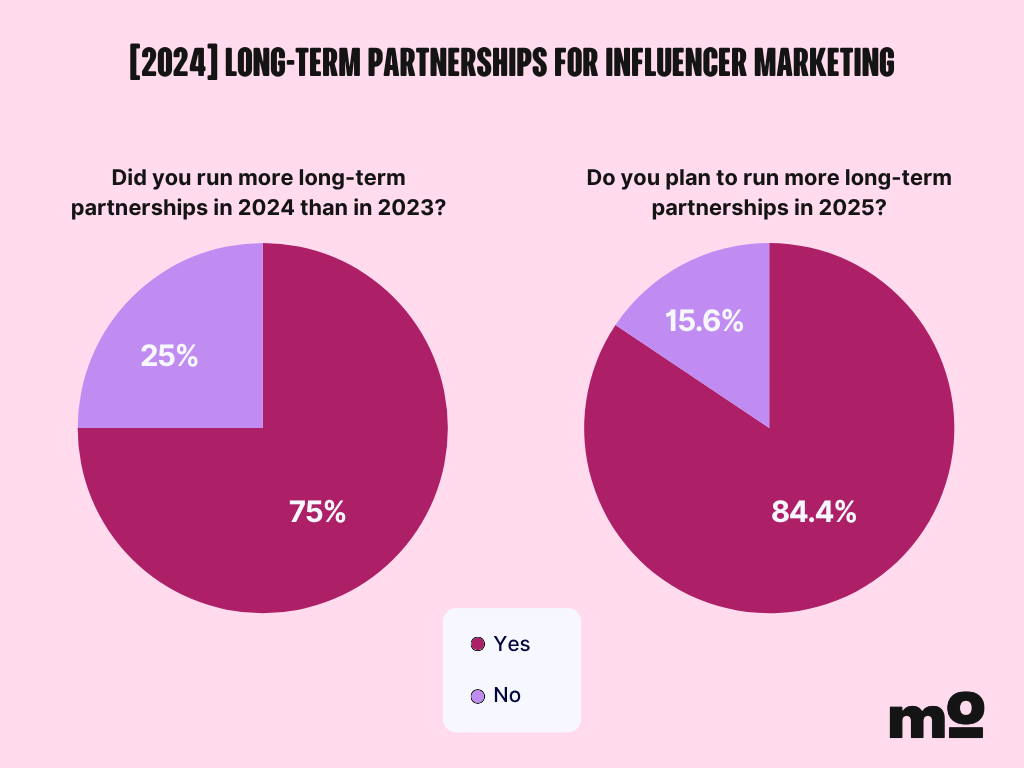
Maar 2025 was grilliger dan iemand had verwacht, waardoor marketeers terughoudender waren om zich aan langetermijncampagnes te verbinden. Dat is begrijpelijk – ze wisten niet hoe de situatie zich zou ontwikkelen of welke gevolgen dit voor hun budget zou hebben. Gezien de economische uitdagingen was het verstandiger om te investeren in kortetermijnsamenwerkingen.
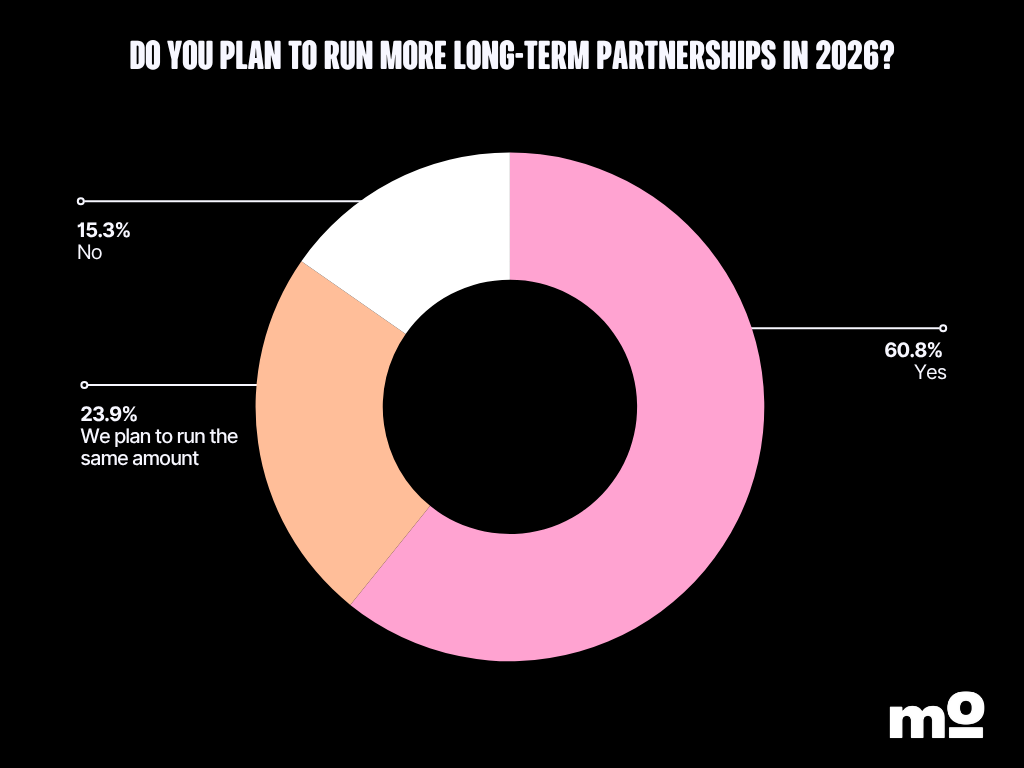
Uit onze meest recente enquête bleek dat in werkelijkheid slechts 54% van de marketeers in 2025 meer langetermijnsamenwerkingen met creators aanging dan in 2024. En hoewel meer dan 60% van de marketeers aangeeft volgend jaar meer in langetermijncampagnes te willen investeren, ligt dat percentage nog steeds ongeveer 23% lager dan vorig jaar.
Als je van plan bent om volgend jaar meer langetermijnsamenwerkingen aan te gaan, volgen hier drie praktische tips om het risico te beperken:
Als marketeers dit jaar dus niet erg enthousiast zijn over langetermijnsamenwerkingen met creators, waarin kiezen ze dan wel te investeren?
De lichte afname van langetermijncampagnes leidde tot een toename van affiliateprogramma’s, die veiliger zijn en sneller rendement opleveren. Meer dan de helft van de marketeers die we ondervroegen, gaf aan in 2025 meer in hun affiliateprogramma te hebben geïnvesteerd dan het jaar ervoor.
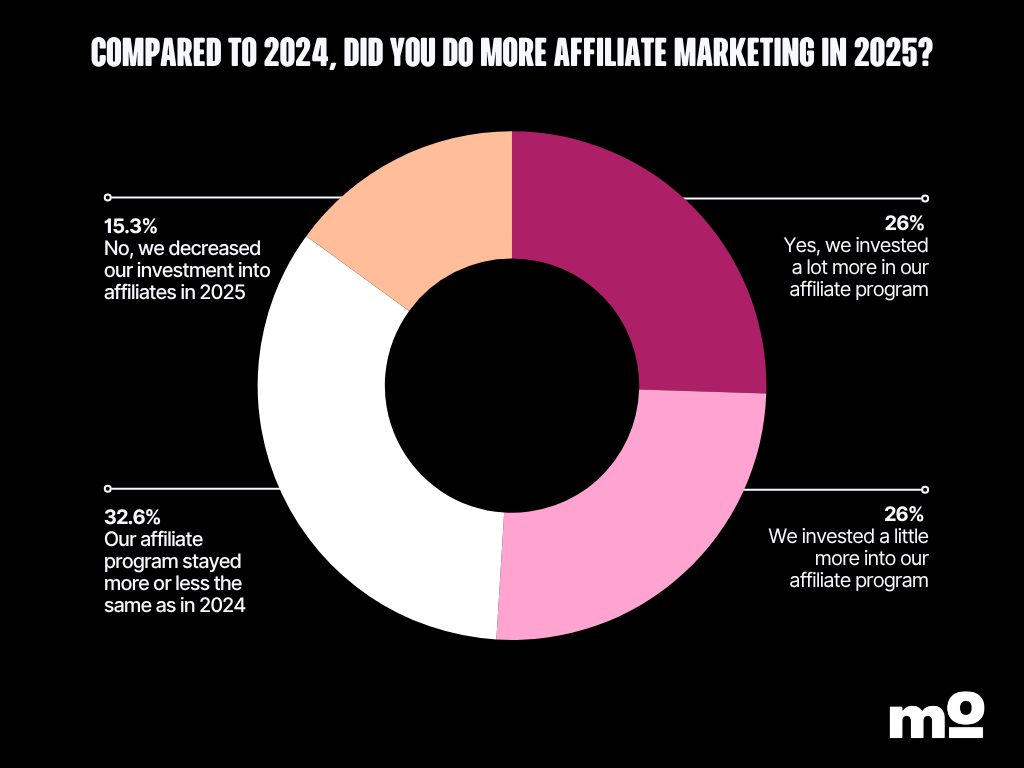
In een risicoaverse omgeving zijn affiliateprogramma’s uitstekend geschikt voor marketeers. Ze zijn eenvoudig te volgen en leveren een duidelijke ROI op: je ziet precies welke affiliates de meeste omzet/kliks opleveren en kunt elke influencer dienovereenkomstig vergoeden. Tamara Torrecillas Gutiérrez zegt dat prestatiegerichte betaalmodellen het nieuwe paradigma van influencermarketing worden:
Influencermarketing verschuift snel naar prestatiemodellen. De komende jaren zullen creators die niet daadwerkelijk verkoop of echte impact kunnen realiseren, het moeilijk krijgen, omdat bereik alleen voor veel prestatiegerichte merken simpelweg niet zal volstaan.

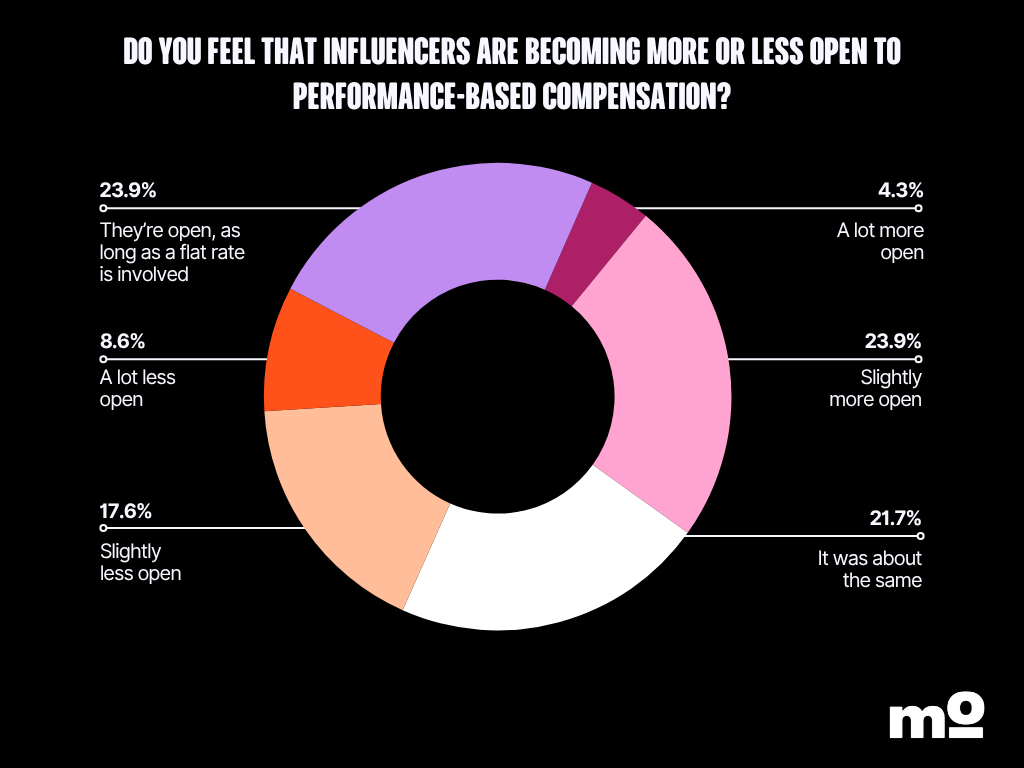
Maar er is ook een keerzijde: in 2024 zei meer dan 63% van de marketeers dat influencers steeds meer openstonden voor een rol als affiliate. Dit jaar daalde dat percentage naar 26%. Sterker nog, meer dan 45% van de marketeers zegt dat influencers minder openstaan voor een rol als affiliate.
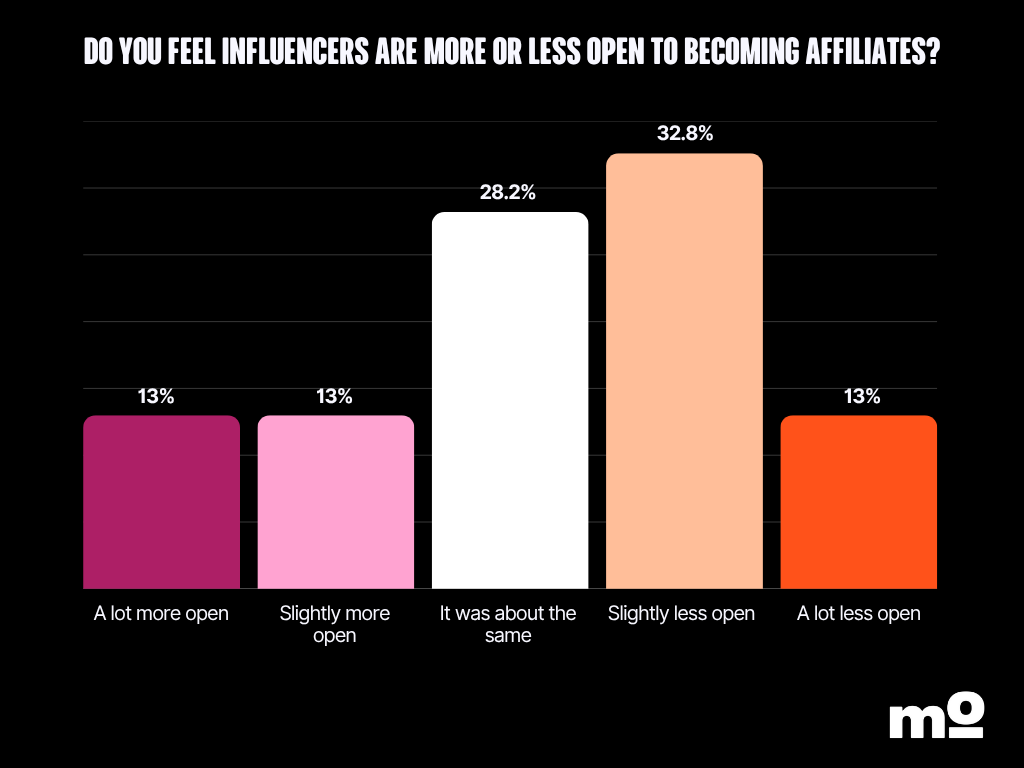
Hoewel affiliate-samenwerkingen een veilige keuze zijn voor marketeers, is het begrijpelijk waarom het sentiment is veranderd als je ernaar kijkt vanuit het perspectief van een creator: alleen op affiliatebasis werken is geen zekere deal voor influencers. Veel factoren bepalen hoe goed het bericht van een influencer presteert, waarvan er veel, zoals algoritmewijzigingen, buiten de controle van de creator liggen.
Wanneer een influencer alleen per klik of verkoop wordt betaald, is diens inkomen minder voorspelbaar dan bijvoorbeeld bij een model met een vast bedrag. De economische onrust heeft ook creators geraakt, dus het is niet verrassend dat ze op zoek zijn naar meer stabiliteit.
Maar dit betekent niet dat influencers niet openstaan voor prestatiegerichte vergoedingen – integendeel.
In 2025 gebruikte 61% van de marketeers een vorm van prestatiegerichte vergoeding om influencers te betalen.

Door prestatiegerichte vergoeding te combineren met een vast bedrag krijg je het beste van twee werelden: je kunt de creator zekerheid bieden en ervoor zorgen dat je een positief rendement op je investering behaalt. Leslie Belen voorspelt dat deze hybride betalingsstructuur in 2026 alleen maar populairder zal worden:
De allergrootste trend wordt de volledige verschuiving naar prestatiegerichte deals. Elk merk staat onder zoveel druk om ROI aan te tonen dat we in 2026 bijna volledig zullen overstappen op constructies met een lage vaste vergoeding en hoge commissie, wat het einde van de dominantie van het model met een vast bedrag inluidt.

Het hybride betaalmodel houdt creators tevreden en zorgt er tegelijkertijd voor dat ze belang bij het resultaat houden. Meer dan 23% van de marketeers zei dat influencers in 2025 openstonden voor prestatiegerichte vergoedingen, maar alleen wanneer vooraf een vast bedrag werd geboden.
Wanneer je een hybride deal voorstelt, vergeet dan niet transparant te zijn over hoe je de gesponsorde content van een influencer gaat bijhouden. Dit neemt eventuele zorgen weg over hoe hun prestaties worden gemeten (en uitbetaald).
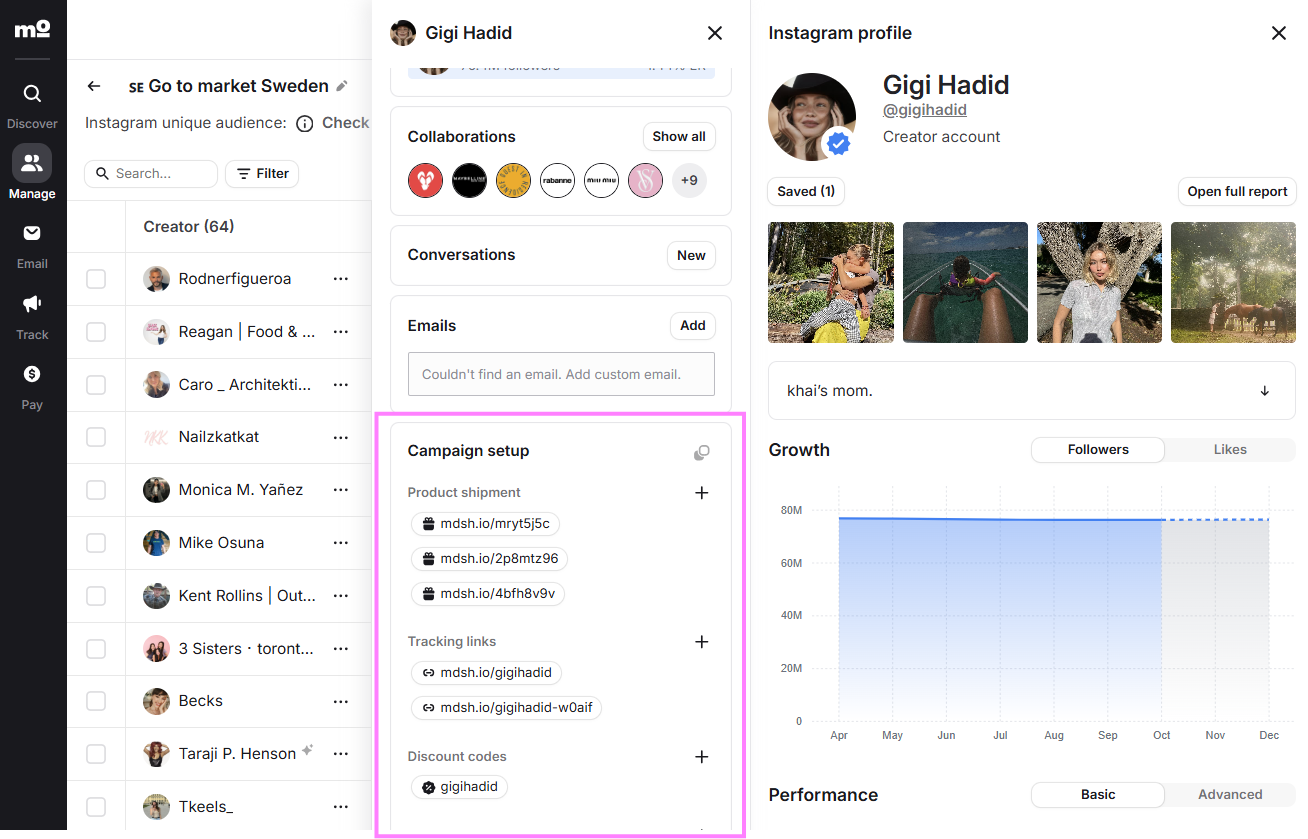
Geef bijvoorbeeld aan na hoeveel dagen je de totale betrokkenheid, kliks of verkopen uit het bericht van de influencer meetelt, en hoe die statistieken precies worden omgezet in een vergoeding. In Modash kun je elke influencer unieke kortingscodes of links toewijzen om nauwkeurig bij te houden hoeveel verkopen ze hebben gerealiseerd.
Als je weerstand krijgt van influencers tegen het hybride model, probeer dan te onderhandelen aan de hand van data.
Laat influencers eerst zien wat ze kunnen verdienen. Creators kunnen terughoudend zijn tegenover prestatiegerichte vergoedingen als ze niet weten hoeveel ze naast de vaste vergoeding kunnen verdienen. Geef een indicatie van de verdiensten door voorbeelden te geven van wat andere creatorpartners in eerdere campagnes hebben verdiend.
Je kunt ook proberen een hogere commissieschijf aan te bieden, als je dat kunt betalen zonder dat het te veel van je marges afgaat. En als geen van beide tactieken werkt, maak de deal aantrekkelijker met niet-financiële prikkels.
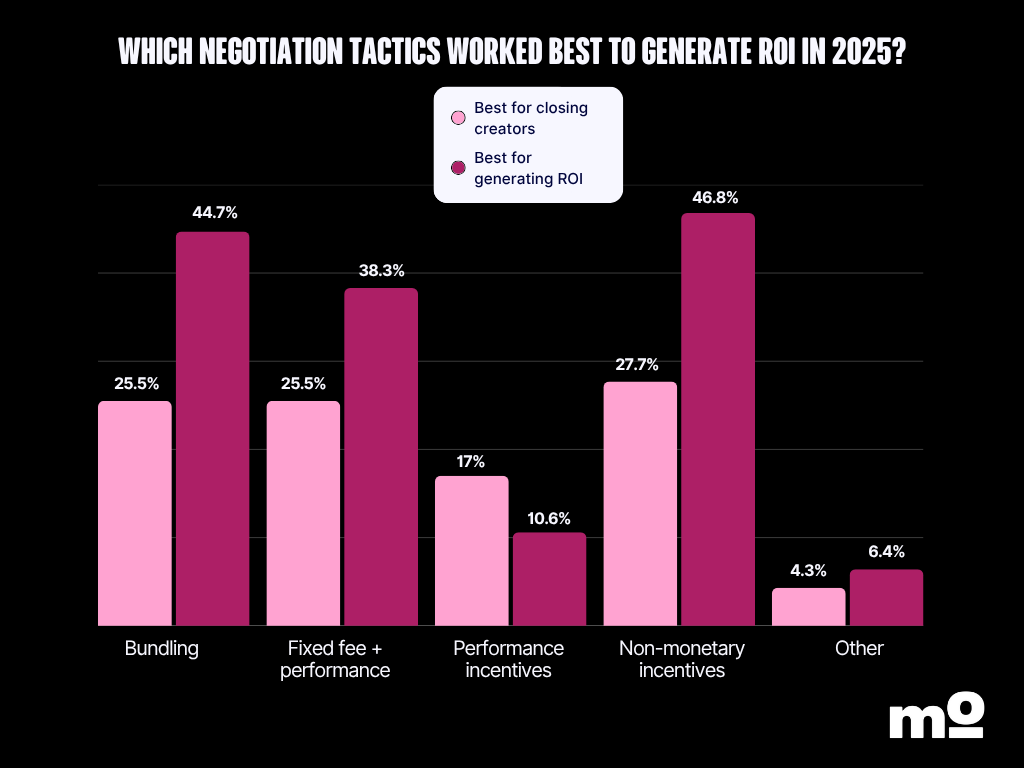
De marktomstandigheden (lees: onvoorstelbare uitdagingen) in 2025 creëerden een spanningsveld tussen merken en creators. Door een vaste vergoeding toe te voegen boven op een prestatiegerichte vergoeding voelden beide partijen zich zekerder. Maar marketeers waren ook creatief en introduceerden extra prikkels om deals met creators te sluiten en tegelijkertijd de ROI te beschermen.
Het aanbieden van niet-financiële prikkels was in 2025 de belangrijkste onderhandelingstactiek, op de voet gevolgd door bundeling en het hybride betaalmodel.
We waren benieuwd hoe niet-financiële prikkels er in de praktijk uitzagen en wanneer je welke inzet. Anna Jędrzejewska liet ons uitgebreid kennismaken met haar eigen arsenaal aan prikkels:
| Prikkel | Waarom het werkt | Het meest geschikt wanneer |
|---|---|---|
| Vroege toegang tot nieuwe producten | Zorgt voor oprechte opwinding en het gevoel bevoorrecht te zijn om als een van de eersten iets te krijgen | Het product dat je lanceert echt nieuw/exclusief is (anders verdwijnt die hype) |
| Langdurige samenwerkingen | Verandert de toon van transactioneel naar relatiegericht | Je in de toekomst daadwerkelijk werk zult aanbieden (gebruik het niet alleen als pressiemiddel, want creators komen daarachter) |
| Uitnodigingen voor evenementen of showrooms | Versterkt merkloyaliteit en de emotionele band, omdat creators zich onderdeel voelen van de inner circle | Je samenwerkt met creators uit het midden- tot topsegment (kleinere influencers hebben mogelijk een reiskostenvergoeding nodig om aanwezig te zijn) |
| Gratis producten of productbundels | De eenvoudigste en meest tastbare manier om goodwill op te bouwen | Je werkt samen met microcreators; voor grote creators moet je mogelijk nog een andere betekenisvolle incentive toevoegen* |
| Prestatiegerichte bonussen | Spreekt resultaatgerichte creators aan en voelt eerlijk voor beide partijen | Je hebt systemen voor duidelijke tracking en prestatierapportage |
| Unieke kortingscodes voor volgers | Voegt waarde toe voor het publiek van een creator en zorgt voor meetbare ROI | Je kunt een kortingspercentage bieden dat echt exclusief aanvoelt (kleine percentages maken mogelijk minder verschil) |
| PR-zichtbaarheid (de content van de creator delen op je eigen kanalen) | Biedt zichtbaarheid en stelt je vaak in staat deze content opnieuw te gebruiken zonder extra kosten voor gebruiksrechten | Je werkt samen met microcreators die de zichtbaarheid goed kunnen gebruiken (grotere creators willen mogelijk meer PR dan jij kunt bieden) |
| Creatieve inbreng/content samen creëren | Zorgt ervoor dat creators zich emotioneel betrokken voelen en trots zijn op het resultaat | Je voert kleine campagnes uit (voor grotere campagnes kan dit te tijdrovend zijn) |
*Tenzij je influencermarketing voor een duur product inzet.
Door unieke en creatieve niet-geldelijke incentives aan te bieden, voelt de influencer zich speciaal en zet diegene zich vaak extra in voor de campagne van je merk. Wees niet bang om buiten de gebaande paden te denken, zoals marketeers in de modebranche die hun creators op maat gemaakte kleding geven. Merken in de hospitality- en reisbranche hadden ook unieke incentives achter de hand, zoals gratis overnachtingen, maaltijden op kosten van het huis en vergoeding van vluchten.
Welke incentives vinden creators het aantrekkelijkst? Anna zegt dat er weliswaar een paar duidelijke favorieten zijn (vroege toegang, langdurige samenwerkingen, uitnodigingen voor evenementen), maar dat het ook afhangt van de behoeften van de influencer:
De grootste winnaars waren vroege toegang (iedereen vindt het leuk om als eerste iets te laten zien) en de mogelijkheid van een langdurige samenwerking. Prestatiegerichte bonussen en kortingscodes werken het best voor zakelijk ingestelde creators die graag duidelijke KPI's hebben, terwijl gratis producten nog steeds goed werken bij kleinere profielen die het product echt gebruiken en waarderen.

Gratis producten, PR-zichtbaarheid en kortingscodes zijn voor jou als marketeer misschien de eenvoudigste incentives om aan te bieden, omdat er weinig bureaucratie bij komt kijken. Andere incentives, zoals langlopende contracten, kosten meer tijd om te implementeren omdat ze goedkeuring van interne teams vereisen. Zorg dat je een lijst hebt met niet-financiële incentives die je tijdens onderhandelingen kunt aanbieden.
Maar marketeers hadden in 2025 nog een onderhandelingstactiek achter de hand: bundeling. Bundeling is een uitstekende onderhandelingstactiek waarmee je voor dezelfde kosten meer influencercontent kunt krijgen. Er zijn drie manieren waarop je bundeling kunt inzetten:
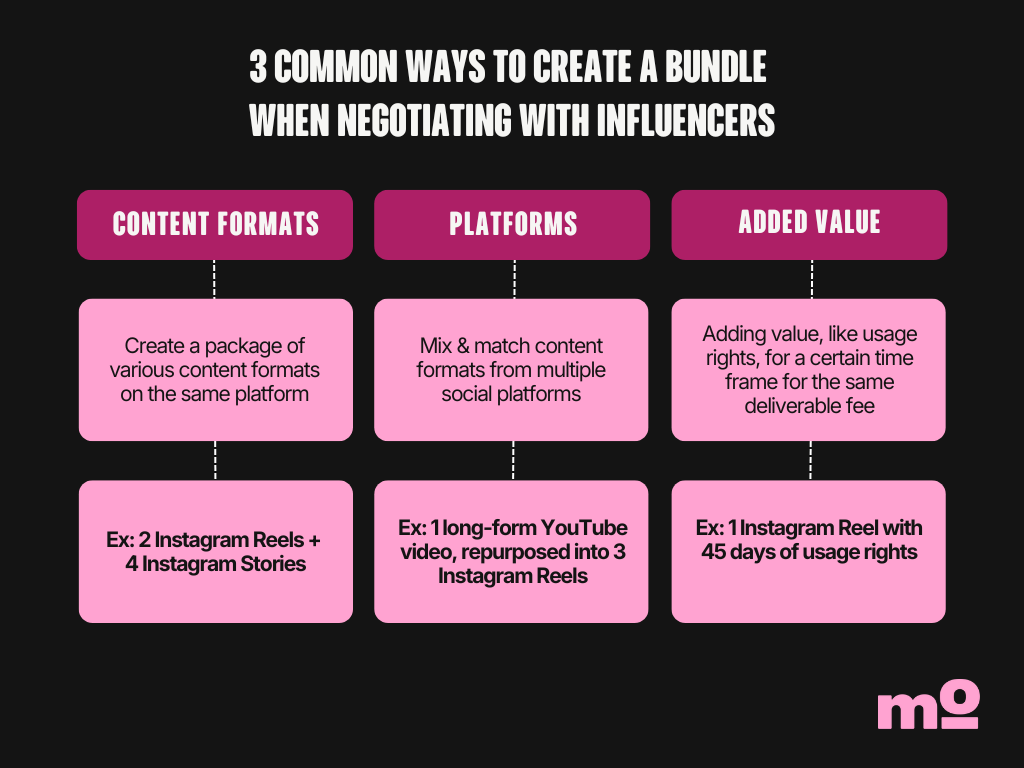
Aangezien bundeling volgens onze enquête de op een na populairste onderhandelingstactiek was, blijft deze ook in 2026 relevant. Het is wel cruciaal om redelijk te blijven in je verzoek: als de prijs die een creator voor Instagram Reels vraagt bijvoorbeeld buiten je budget valt, kun je vragen om een paar Instagram Stories toe te voegen, maar niet om een nieuwe TikTok-video.
De belangrijkste les is om creatief te denken en te begrijpen wat de influencer nodig heeft, vooral wanneer je niet-financiële incentives aanbiedt. Als een creator veel waarde hecht aan zekerheid, zijn langlopende contracten wellicht het aantrekkelijkst. Maar als de influencer liever een hogere vergoeding wil, zijn prestatiebonussen misschien een betere incentive.
Onthoud: deze onderhandelingstactieken zijn niet bedoeld om influencers te weinig te betalen. Gebruik ze om een middenweg te vinden met je creatorpartners, zodat beide partijen tevreden zijn met de overeenkomst.
En als een influencer beter presteert dan verwacht, bied dan extra incentives aan om je waardering te tonen. Anna biedt geselecteerde creators bijvoorbeeld kortingscodes met een bovengemiddelde korting en betaalt soms een bonus in affiliatestijl wanneer de resultaten uitzonderlijk zijn.
Deze gebaren lijken misschien klein, maar ze dragen sterk bij aan het versterken van je relaties met influencers, het opbouwen van merkloyaliteit en het motiveren van creators voor toekomstige samenwerkingen.
Influencermarketeers kregen in 2025 te maken met een snel veranderend landschap. Volgend jaar kan nog meer verandering brengen. Het goede nieuws is dat de basis hetzelfde blijft: focus op wat je influencerpartners nodig hebben en doe je best om op hen in te spelen.
Dit zijn de drie belangrijkste conclusies uit deze enquête:
En zoals altijd: ga influenceronderhandelingen aan met data aan je zijde. Je krijgt diepgaand inzicht in de creator – hun publiek, prestaties, groei en meer. Duidelijke cijfers maken het eenvoudiger om verwachtingen vast te stellen, prijsafspraken te maken en langetermijnrelaties op te bouwen.
Als je op de eenvoudigste manier diep in data wilt duiken, is Modash je toegangsbewijs. Ontvang een gratis proefperiode van 14 dagen (geen creditcard nodig) wanneer je je vandaag aanmeldt.