7 Phyllo-API-Alternativen für bessere Creator-Daten & Suche
Zaif Khan
Senior Marketer (API)
Veröffentlicht:
January 27, 2026
Wenn Sie bereits Phyllo-Kunde sind oder Creator-Daten-APIs evaluieren, haben Sie wahrscheinlich erkannt, dass der Aufbau einer skalierbaren Discovery-Engine mehr erfordert als nur authentifizierte Daten. Ganz gleich, ob Sie wechseln möchten oder gerade nach der perfekten API suchen – hier sind Sie richtig.
Wir haben die führenden Infrastrukturanbieter analysiert, um Ihnen eine umfassende Liste der besten Phyllo-API-Alternativen zu präsentieren.
Warum sollten Sie Alternativen zu Phyllo für Creator-Daten in Betracht ziehen?
Es eignet sich hervorragend zur Überprüfung privater Daten wie Einkommen oder Identität, jedoch erst, nachdem ein Creator ausdrücklich seine Zustimmung erteilt hat.
Für die meisten Plattformen schafft dieses Modell erhebliche Hürden:
Die Discovery-Lücke: In Phyllo können Sie nicht nach neuen Influencern suchen, da es keine Einblicke in Profile bietet, die sich noch nicht angemeldet haben.
Reibung bei der Authentifizierung: Wenn Sie Creator bitten, ihre Konten zu verbinden, führt das zu einem massiven Abbruch im User-Onboarding-Funnel.
Integrationskomplexität: Zusätzlicher Aufwand für die Einbindung von Authentifizierungsabläufen in Ihr Greenfield- oder Brownfield-Projekt.
Wenn Sie Influencer finden, Inhalte verfolgen oder Trends ohne ausdrückliche Nutzereinwilligung analysieren müssen, benötigen Sie eine andere Architektur. Hier sind die besten Alternativen.
1. Modash
Am besten geeignet für: Skalierbare Discovery, Echtzeit-Tracking, Datenanreicherung und globale Influencer-Suche
Was ist das: Die Modash API ist eine Dateninfrastruktur. Anders als Phyllo, das auf einen Login wartet, indexiert Modash proaktiv das öffentliche Social Web. Dadurch können Entwickler Suchmaschinen, Dashboards für das Kampagnen-Tracking und Tools zur Marktanalyse entwickeln, die mit Daten zu über 350 Millionen Creatorn gefüllt sind.
Modash vs. Phyllo:
Discovery vs. Konnektivität: Phyllo verbindet Sie mit Creatorn, die Sie bereits kennen. Modash hilft Ihnen, diejenigen zu finden, die Sie noch nicht kennen. Mit der Discovery API von Modash können Sie über 350 Mio. Profile nach Nische, Standort und Zielgruppendemografie durchsuchen – ganz ohne Beteiligung von Creatorn.
Daten zu Kooperationen: Die Collaborations API von Modash bietet einen Verlauf von Markenpartnerschaften. Anhand öffentlicher Kennzeichnungen wie #ad können Sie sehen, mit welchen Marken ein Influencer zusammengearbeitet hat (oder welche Influencer ein Wettbewerber nutzt), während Phyllo auf private Einblicke angewiesen ist.
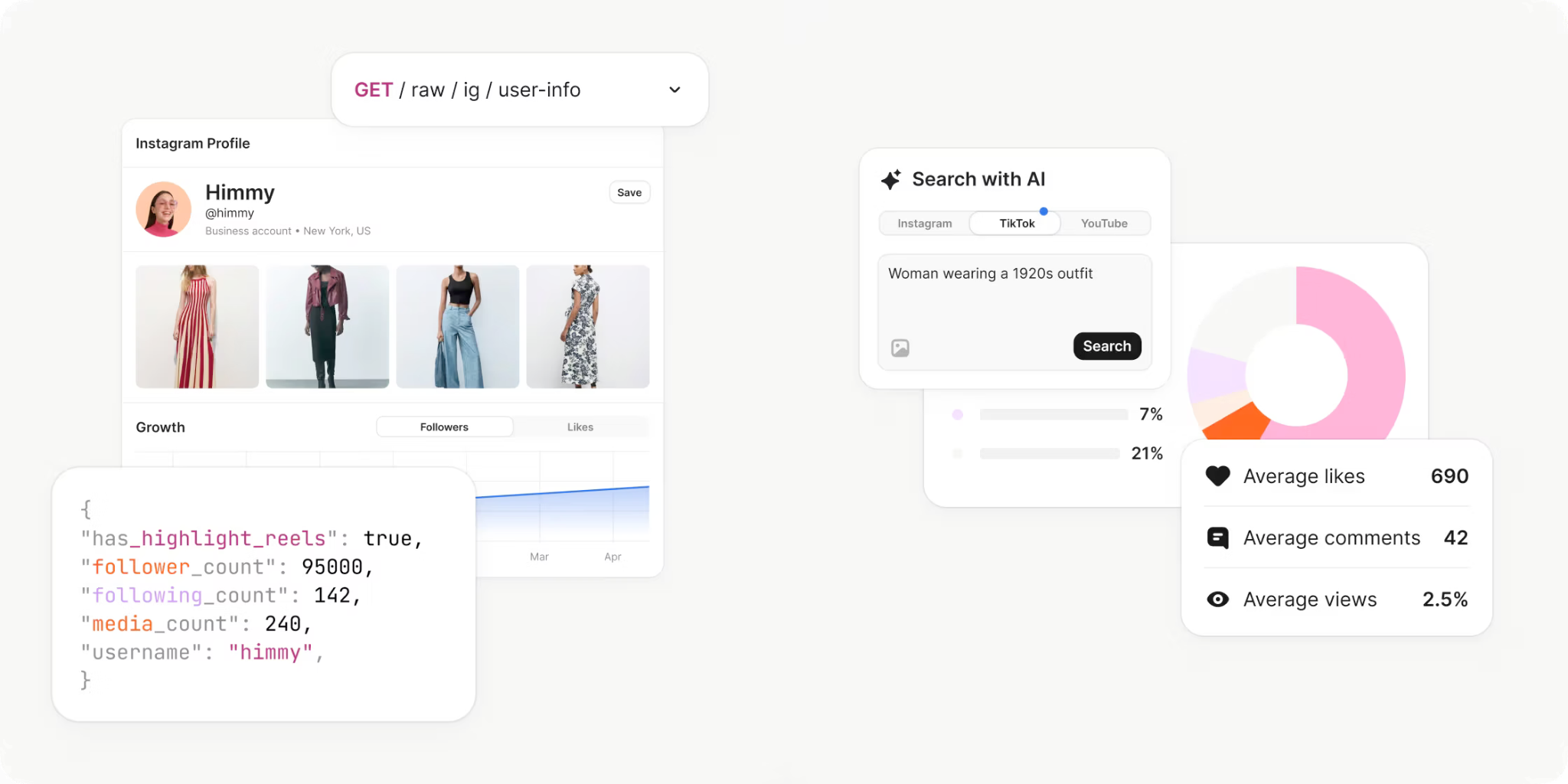
KI-Suche: Modash bietet KI-gestützte Suchfunktionen, die echte semantische Abfragen auf Basis von Bild- und Metadatenanalysen ermöglichen (z. B. die Suche nach „Tech-Reviewern, die faltbare Smartphones lieben“) – statt nur starrer, filterbasierter Suchen.
Rohdaten & Stimmung: Die Modash Raw API liefert aktuelle Daten, darunter Echtzeit-Metriken, Leistungsstatistiken und detaillierte Inhaltsdaten wie Kommentare. Dadurch können Entwickler umfassende Tools zur Sentiment-Analyse erstellen, indem sie Tausende von Kommentaren zu bestimmten Posts erfassen. Phyllo bietet zwar ebenfalls Echtzeitdaten, doch der Creator muss sich authentifizieren, um den Datenstrom zu erstellen.
Plattformabdeckung: Während Modash die 3 wichtigsten Plattformen – Instagram, YouTube und TikTok – abdeckt, bietet Phyllo eine deutlich breitere Plattformabdeckung, einschließlich Snapchat, Twitch, LinkedIn usw.
Preistransparenz: Modash bietet transparente, öffentlich verfügbare Preise für seine APIs. Die Preise von Phyllo sind nur über ein Gespräch mit dem Vertrieb zugänglich.
2. Influencers Club
Am besten geeignet für: Anreicherung von Kontaktdaten und Kaltakquise
Was ist das: Influencers Club ist ein Datenanbieter, der sich darauf spezialisiert hat, Social-Media-Handles mit verifizierten Kontaktdaten zu verknüpfen. Das Unternehmen pflegt eine riesige Datenbank mit E-Mail-Adressen und Telefonnummern und ist damit eine Art Gelbe Seiten für die Creator Economy.
Influencers Club vs. Phyllo:
Kontaktierbarkeit: Phyllo stellt keine E-Mail-Adresse bereit, es sei denn, der Creator meldet sich an. Influencers Club hingegen ermöglicht es Ihnen, eine Liste von Handles hochzuladen und sofort verifizierte E-Mail-Adressen zu erhalten.
Nischen-Targeting: Das Unternehmen nutzt fortschrittliche NLP-Technologie, um Creator in sehr spezifische Mikronischen (z. B. „Krypto-Trading“) einzuordnen, was beim Erstellen gezielter Listen für die Kontaktaufnahme hilft.
Datenaktualität: Influencers Club pflegt eine riesige Datenbank mit verifizierten E-Mail-Adressen, die Daten basieren jedoch häufig auf Momentaufnahmen. Phyllo stellt Echtzeit-Datenströme direkt von der Quelle bereit, erfordert jedoch mehr Entwicklungsaufwand.
Datenschutz & Preise: Bei Influencers Club müssen Nutzer selbst für die Compliance bei der Kontaktaufnahme sorgen. Phyllo regelt den Datenaustausch über die Authentifizierung, wodurch die Compliance bei Daten von Erstanbietern gewährleistet wird. Beide Plattformen haben nicht öffentlich zugängliche Preise.
3. HypeAuditor
Am besten geeignet für: Betrugserkennung, Marktanalysen und Creator-Berichte
Was ist das: HypeAuditor bietet eine API-Suite zur Analyse des Creator-Markts. Das API-Angebot umfasst eine Suggester API zur Suche nach Creatorn, eine Influencer Reports API für tiefgehende Analysen und eine Market Analysis API zur Verfolgung des Share of Voice.
HypeAuditor vs. Phyllo:
Marktinformationen: Mit der Market Analysis API von HypeAuditor können Sie den Share of Voice Ihrer Wettbewerber überwachen und verstehen, wen sie ansprechen. Phyllo bietet über seine listrning API ebenfalls ähnliche Funktionen, verfügt jedoch nicht über diese Makromarkt-Perspektive.
Glaubwürdigkeitsbewertungen: Während Phyllo Ihnen Rohdaten liefert, bietet HypeAuditor detaillierte Zielgruppendemografien und Betrugsaufschlüsselungen sowie Glaubwürdigkeitsbewertungen.
Kampagnenmanagement: Mit der Campaign Management API können Sie Beiträge und Hashtags verfolgen, wobei der Fokus auf Performance-Reporting statt nur auf reinen Datenpipelines liegt. Phyllo bietet ebenfalls Kampagnen-Tracking, jedoch nur mit authentifizierten Daten.
Suche & Entdeckung: Die Suggester API von HypeAuditor identifiziert ähnliche Creator und vielversprechende Leads. Phyllo eignet sich besser für die Verwaltung von Creatorn, die Sie bereits identifiziert und aufgenommen haben.
4. Upfluence
Am besten geeignet für: Affiliate-Marketing, E-Commerce und KI-gestützte Workflows
Was ist das: Upfluence ist eine Influencer-Marketing-Plattform für Unternehmen, die stark in ihre Creator Data API investiert hat. Die kürzlich um KI erweiterte API ist nicht nur für den Datenabruf, sondern für das ganzheitliche Kampagnenmanagement konzipiert – insbesondere für Marken, die Affiliate- und Seeding-Programme durchführen.
Upfluence vs. Phyllo:
Commerce Graph: Upfluence überzeugt auf der Transaktionsebene. Die API-Endpunkte decken Kampagnenleistung und Creator-Zahlungen ab und erleichtern so den Abgleich von Finanzdaten mit Creator-Aktivitäten. Phyllo bietet zwar Kampagnen-Tracking, aber keine Zahlungsfunktionen.
Social Listening: Anders als die direkte Profilverbindung von Phyllo umfasst die API von Upfluence spezielle Endpunkte für Social Listening. So können Sie umfassendere Marktdiskussionen und die Markenwahrnehmung über Ihre authentifizierten Creator hinaus verfolgen.
E-Commerce-Integration: Upfluence bietet integriertes Affiliate-Tracking, Codegenerierung und tiefgreifende Integrationen mit Plattformen wie Shopify und Amazon. Phyllo bleibt eine horizontale Datenschicht.
Skalierung & Implementierung: Upfluence verfügt im Vergleich zu auf Discovery ausgerichteten Tools wie Phyllo über eine kleinere Datenbank und erfordert als Teil einer größeren Suite eine komplexere Integration. Die Preisgestaltung ist auf die Anforderungen von Unternehmen zugeschnitten.
5. Data365
Am besten geeignet für: Rohdateninfrastruktur und KI-Training
Was ist das: Data365 ist weniger eine Marketing-API als ein Dienst für die Infrastruktur zum Scraping von Rohdaten. Entwickler können damit Rohdaten im JSON-Format für Beiträge, Kommentare und Profile in großem Umfang ohne Vorverarbeitung anfordern.
Data365 vs. Phyllo:
Öffentlich vs. privat: Data365 überwacht öffentliche Feeds in großem Umfang. Es wird häufig für „Social Listening“ (die Verfolgung von Markenerwähnungen im Web) verwendet, das Phyllo ebenfalls über seine API anbietet.
Unstrukturierte Daten: Wenn Sie ein KI-Modell entwickeln und 1 Million Rohkommentare zum Training eines Sentiment-Analysators erfassen müssen, ist Data365 die Pipeline, die Sie nutzen.
Wartung & Logik: Data365 stellt die Rohdaten-Pipeline bereit, verfügt jedoch über keine Intelligence-Schicht; Sie müssen Ihre Engagement-Raten selbst berechnen. Die Lösung ist wartungsintensiv und empfindlich gegenüber Plattformänderungen, während Phyllo die Normalisierung übernimmt.
Kapazität & Preise: Data365 bietet transparente, volumenbasierte Preise für Anforderungen mit hoher Kapazität, birgt jedoch aufgrund der Abhängigkeit von öffentlichem Scraping ein höheres Compliance-Risiko.
6. Unified.to
Am besten geeignet für: Horizontale Integrationen (HR, CRM und Social Media)
Was ist das: Unified.to ist ein Anbieter einer einheitlichen API, die Hunderte von SaaS-Tools verbindet – nicht nur soziale Medien. Wenn Sie ein Verwaltungssystem für Creators entwickeln, das mit deren QuickBooks, HubSpot und TikTok verbunden werden muss, ist dies eine überzeugende Option.
Unified.to vs. Phyllo:
Breite vs. Tiefe: Phyllo geht bei Creator-Attributen in die Tiefe. Unified.to deckt ein breites Spektrum an Business-Tools ab. Unified.to ist besser, wenn Sie Facebook-Ads-Daten und Salesforce-Daten im selben Schema abrufen müssen.
Passthrough-Architektur: Im Vergleich zu Phyllo, einem Anbieter verwalteter Social-Media- und Creator-Daten, fungiert Unified.to als Proxy und speichert keine Daten. Das kann für bestimmte Architekturen ein Compliance-Vorteil sein.
Technische Implementierung: Unified.to bietet einen modernen Tech-Stack mit robusten Webhooks, verwendet jedoch generische Datenmodelle, denen möglicherweise die Nuancen bestimmter Creator-Nischen fehlen.
Einschränkungen bei der Suche: SUnified.to verfügt über keine öffentliche Such- oder Discovery-Funktion. Es handelt sich ausschließlich um eine Integrationsschicht, im Gegensatz zu Phyllo, das eine Datenschicht ist. Die Preisgestaltung ist komplex und unterscheidet sich je nach Branche.
7. Offizielle APIs
Am besten geeignet für: Verwaltung eigener Konten, Werbung, Monitoring und Analysen sowie eingeschränkte Suchfunktionen.
Was ist das: Offizielle APIs (wie die Meta Graph API oder die TikTok Business API) sind Schnittstellen, die von Plattformen wie Meta, Google und ByteDance bereitgestellt werden. Sie ermöglichen autorisierten Anwendungen, direkt mit der Plattform zu interagieren, um verifizierte Daten abzurufen, Inhalte zu veröffentlichen und Werbung zu verwalten.
Offizielle APIs vs. Phyllo
Genauigkeit von Daten aus erster Hand vs. plattformübergreifende Einfachheit: Offizielle APIs (Meta, YouTube, TikTok) liefern verlässliche Originaldaten, erfordern jedoch für jede Plattform separate Integrationen, Authentifizierungsabläufe und Datenschemata. Phyllo fungiert als Aggregator.
Kontoinhaberschaft vs. Suche: Offizielle APIs sind strikt berechtigungsbasiert. Die Meta Graph API ermöglicht es Ihnen beispielsweise nur, detaillierte Kennzahlen für Konten einzusehen, die Ihnen gehören oder die Sie verwalten. Sie können sie nicht nutzen, um beliebige Influencer zu finden oder zu überprüfen, während Sie beides mit Phyllo tun können.
Ratenlimits & Infrastruktur: Offizielle APIs haben strenge, oft gleitende Ratenlimits (z. B. Instagrams Limit von 200 Anfragen pro Stunde). Phyllo verwaltet diese Limits in seiner gesamten Infrastruktur und bietet einen höheren Datendurchsatz als offizielle APIs.
Was ist also die beste Alternative zu Phyllo?
Wenn Sie ein Tool entwickeln, das eine private Verifizierung erfordert (z. B. eine Kredit-App für Creator), bleiben Sie bei Phyllo. Wenn Sie jedoch eine Plattform für Influencer-Marketing, Creator-Suche oder Analysen entwickeln, ist die Anmeldepflicht eine Hürde, die Sie sich nicht leisten können. Um Ihnen die Entscheidung zu erleichtern, haben wir außerdem einen direkten Vergleich verschiedener Daten-API-Architekturen bereitgestellt.
Modash zeichnet sich als die Alternative Nr. 1 aus, weil es das Problem des leeren Raums löst.
Suche: Durchsuchen Sie sofort über 350 Mio. Creator.
Daten: Erhalten Sie aktuelle Kennzahlen, Kooperationshistorien, KI-Suche, Inhalte und Kommentare.
Geschwindigkeit: Starten Sie innerhalb von Minuten mit API-Aufrufen, ohne Creator zur Anmeldung zu zwingen.