

Más herramientas
Casos de uso




UpPromote e Impact gestionan el seguimiento de afiliados, la gestión de comisiones y los pagos. Si estás evaluando herramientas para tu programa de afiliados, cualquiera de las dos parece que podría funcionar.
Las diferencias aparecen cuando empiezas a comparar cómo escala su precio, qué tipos de programas admite cada una y cuánta carga operativa asumes.
Vamos a desglosar todo eso y a señalar en qué se quedan cortas ambas si quieres gestionar programas de influencers y afiliados desde un solo lugar sin la complejidad.
UpPromote es una aplicación de afiliados nativa de Shopify creada para marcas que lanzan o amplían su primer programa de afiliados a un precio más bajo. Impact es una plataforma de gestión de partnerships diseñada para equipos más grandes que gestionan afiliados, campañas de influencers y programas de recomendación de clientes desde un solo panel.
Los problemas de ambas herramientas son:
Modash se encarga de todo eso — descubrimiento de creadores, seguimiento de contenido, gestión de influencers + afiliados, gifting de productos y pagos — en un panel nativo de Shopify. Así se comparan las tres:
| Criterios | UpPromote | Impacto | Modash |
|---|---|---|---|
| Ideal para | Marcas en Shopify que lanzan su primer programa de afiliados con un presupuesto ajustado | Marcas más grandes que gestionan afiliados, campañas de influencers y programas de recomendación de clientes desde una sola plataforma | Marcas que gestionan programas de influencers + afiliados en Shopify |
| Pricing | Plan gratuito disponible. Los planes de pago empiezan en $29.99/mes | Sin plan gratuito. Los planes de pago empiezan en $30/mes. Los planes con más funcionalidades empiezan en $500/mes | Prueba gratuita de 14 días. Los planes de pago empiezan en $199/mes |
| Cargos adicionales | 2% de las ventas de afiliados (se reduce al subir de plan) | 2.5% de las ventas generadas por partners en Starter. 20% sobre las comisiones de afiliados por encima de $2,500/mes en Essentials | 5% de los pagos a afiliados (no de las ventas). Los primeros $10k/año gratis |
| Compatibilidad con plataformas de ecommerce | Shopify | Shopify, BigCommerce, WooCommerce, Adobe Commerce, Squarespace | Shopify |
| Gestión de influencers | No disponible | Programa de creadores con campañas de tarifa fija, gestión de contenido, gifting y social listening | Flujo de trabajo completo — outreach, gifting, seguimiento de contenido, enlaces de afiliados, pagos — en un solo panel |
| Red de afiliados | Marketplace de UpPromote + popup posterior a la compra + MLM | 300K+ partners del marketplace + base de datos de 25M+ creadores | 380M+ perfiles de creadores en Instagram, TikTok y YouTube |
| Seguimiento del contenido de afiliados | No hace seguimiento del contenido generado por afiliados | Hace seguimiento del contenido de creadores contratados solo en el programa Creator (no de afiliados) | Recopilación automática de contenido, sin necesidad de acción por parte del creador (incluye Instagram Stories) |
| Informes | Panel en tiempo real con detalles de las recomendaciones y exportación | 40+ informes predefinidos, paneles personalizados en planes superiores | Panel unificado sincronizado con Shopify |
UpPromote tiene un plan gratuito que te permite configurar un programa de afiliados, hacer seguimiento de recomendaciones mediante enlaces y cupones, y acceder a la detección de fraude, con un límite de 200 revisiones de recomendaciones al mes. Impact no ofrece un plan gratuito, pero sí una prueba gratuita de 30 días para su plan Starter.
Los planes de pago de entrada son comparables en ambas herramientas: el plan Growth de UpPromote cuesta $29.99/mes y el plan Starter de Impact cuesta $30/mes. Pero las estructuras de precios divergen rápidamente a medida que crece tu programa de afiliados.
Para empezar, muchas de las funcionalidades de Impact no están incluidas en el plan Starter. Para acceder al marketplace de partners de Impact, a los paneles personalizables o a los bonos por rendimiento, necesitarías el plan Essentials, que cuesta $500/mes. Aquí tienes una tabla comparativa rápida de las funcionalidades incluidas en los dos planes:
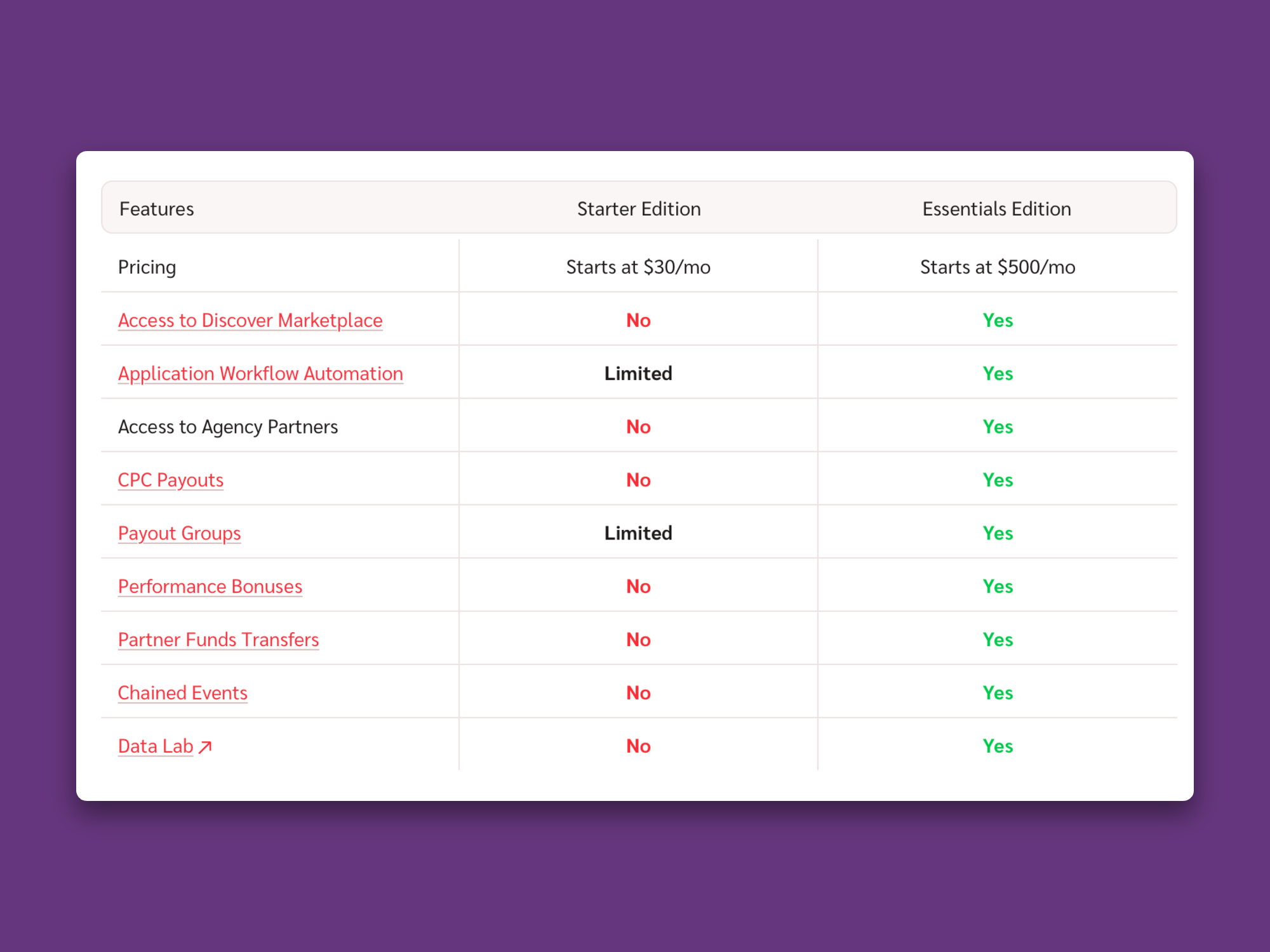
El plan de nivel más alto de UpPromote (Enterprise) cuesta menos que el plan Essentials de Impact. Por $199.99/mes, obtienes el conjunto completo de funcionalidades de UpPromote. Pero conviene señalar que, aunque Impact es más caro, también ofrece más funcionalidades que UpPromote (hablaremos de eso más adelante).
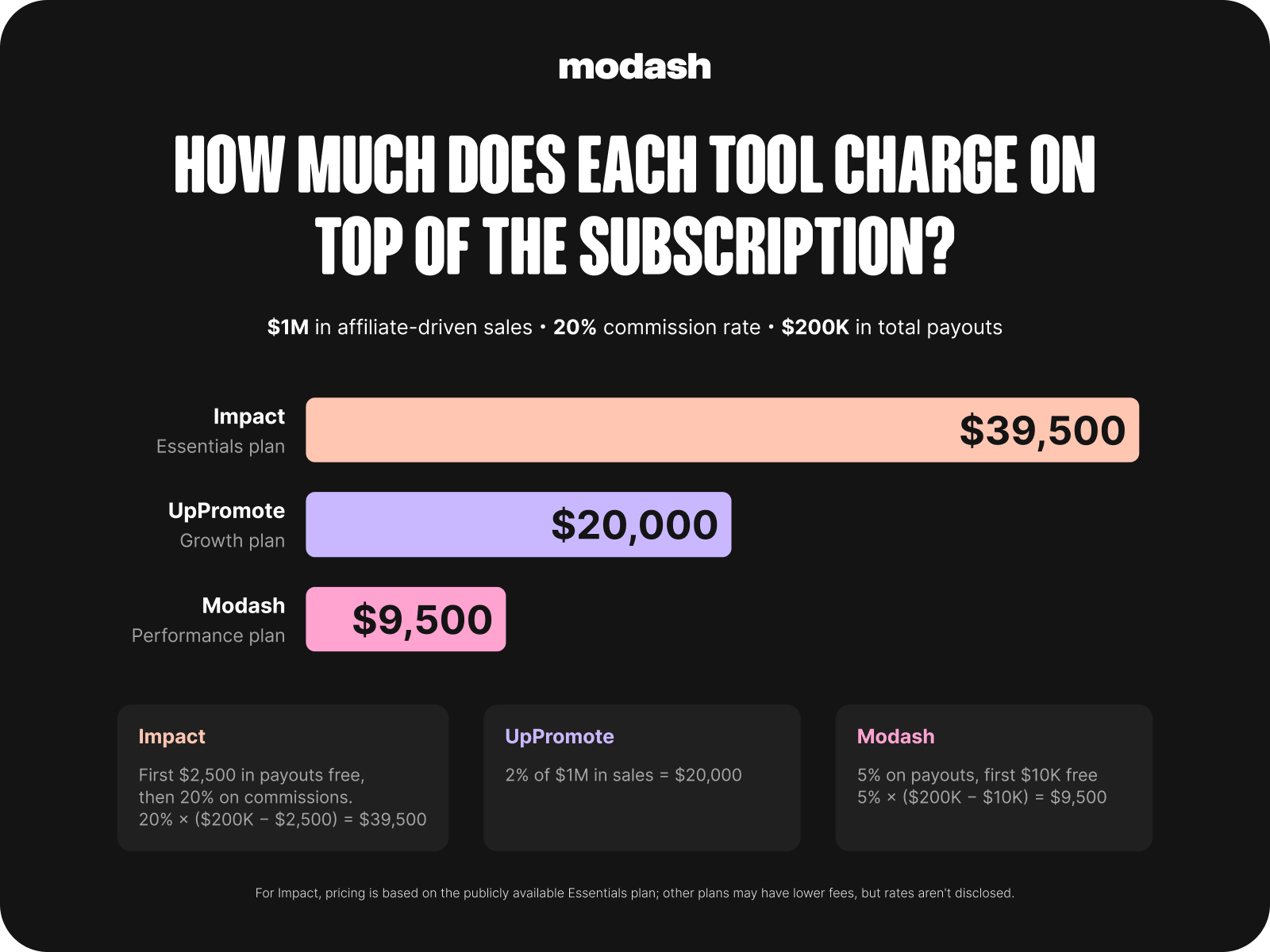
En segundo lugar, Impact se queda con un 2.5% de las ventas generadas por partners en su plan Starter. En el plan Essential, tienes $2,500/mes en pagos a partners sin coste adicional. Después de eso, se te cobra un 20% sobre las comisiones de afiliados (no sobre las ventas).
UpPromote se queda con un 2% de las ventas generadas por afiliados en su plan Growth y sigue reduciéndose hasta el 1% cuando pasas al plan Enterprise.
Modash adopta un enfoque similar al del plan Essentials de Impact, pero es más rentable. En lugar de cobrarte sobre las ventas de afiliados, Modash te cobra un 5% sobre los pagos a afiliados, sin ninguna comisión en absoluto sobre los primeros $10,000/año en pagos.
Así que, por ejemplo, si tus afiliados generan $1M en ventas con una comisión del 20% en un mes, así se compararían los precios de las tres herramientas:
Modash también es una herramienta más completa para ese nivel de precio. Por $199/mes (facturado anualmente), obtienes descubrimiento de creadores (380M+ perfiles con búsqueda con IA), gestión de influencers y afiliados, seguimiento de contenido, gifting de productos y pagos, todo en un solo panel nativo de Shopify.
Prueba Modash gratis durante 14 días hoy.
Puedes gestionar tres tipos de programas con Impact:

UpPromote también ofrece un programa de recomendación de clientes más sencillo: puedes convertir a los clientes en afiliados mediante un popup posterior a la compra.

Pero UpPromote no ofrece un equivalente al programa Creator de Impact. No puedes gestionar otros tipos de colaboraciones con influencers (como colaboraciones pagadas, sorteos, etc.), pagar a los creadores una tarifa fija ni pedir derechos de uso para reutilizar el contenido del creador.
Dicho esto, los datos de Impact no se integran sin fricciones entre sus distintos programas. Por ejemplo, si quieres convertir a un creador en afiliado o a un cliente en creador, no puedes trasladar sus datos de rendimiento existentes al panel de Performance.
Modash combina la gestión de influencers y afiliados en un solo panel nativo de Shopify. Puedes gestionar partnerships de pago, campañas de gifting, programas de embajadores de marca y programas de afiliados en paralelo, y pasar a un creador de un tipo de colaboración a otro sin cambiar de herramienta.
Un creador que comienza como partner de gifting puede pasar a ser afiliado con un código promocional y una estructura de comisiones, y puedes verlo todo dentro de su perfil.
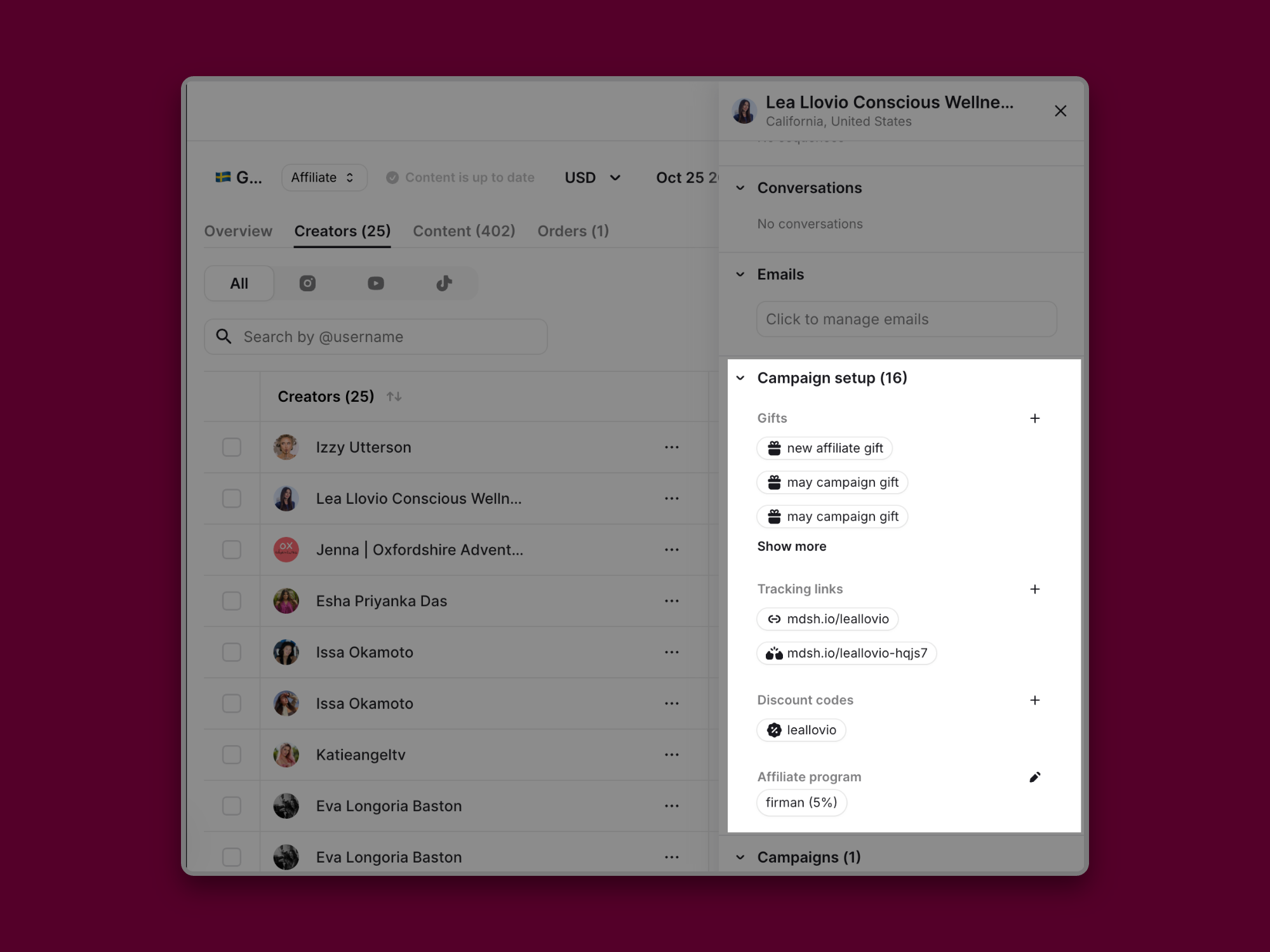
Los datos de rendimiento de todos los tipos de colaboración — métricas de contenido, interacción, clics e ingresos — viven en un solo panel. No necesitas extraer datos de módulos separados ni conciliarlos entre herramientas.

UpPromote es una aplicación de Shopify. La instalas desde la Shopify App Store y estás haciendo seguimiento de recomendaciones en cuestión de minutos.
Sí ofrece seguimiento de terceros para storefronts que no están construidos en Shopify — como WordPress, Hydrogen o tiendas headless personalizadas — mediante un píxel de seguimiento integrable. Pero el checkout sigue pasando por Shopify, y funcionalidades como el widget de recomendación de clientes, el popup posterior a la compra y la barra de mensajes no son compatibles con storefronts de terceros.
Impact tiene integraciones mediante plugins con Shopify, BigCommerce, WooCommerce, Adobe Commerce y Squarespace.
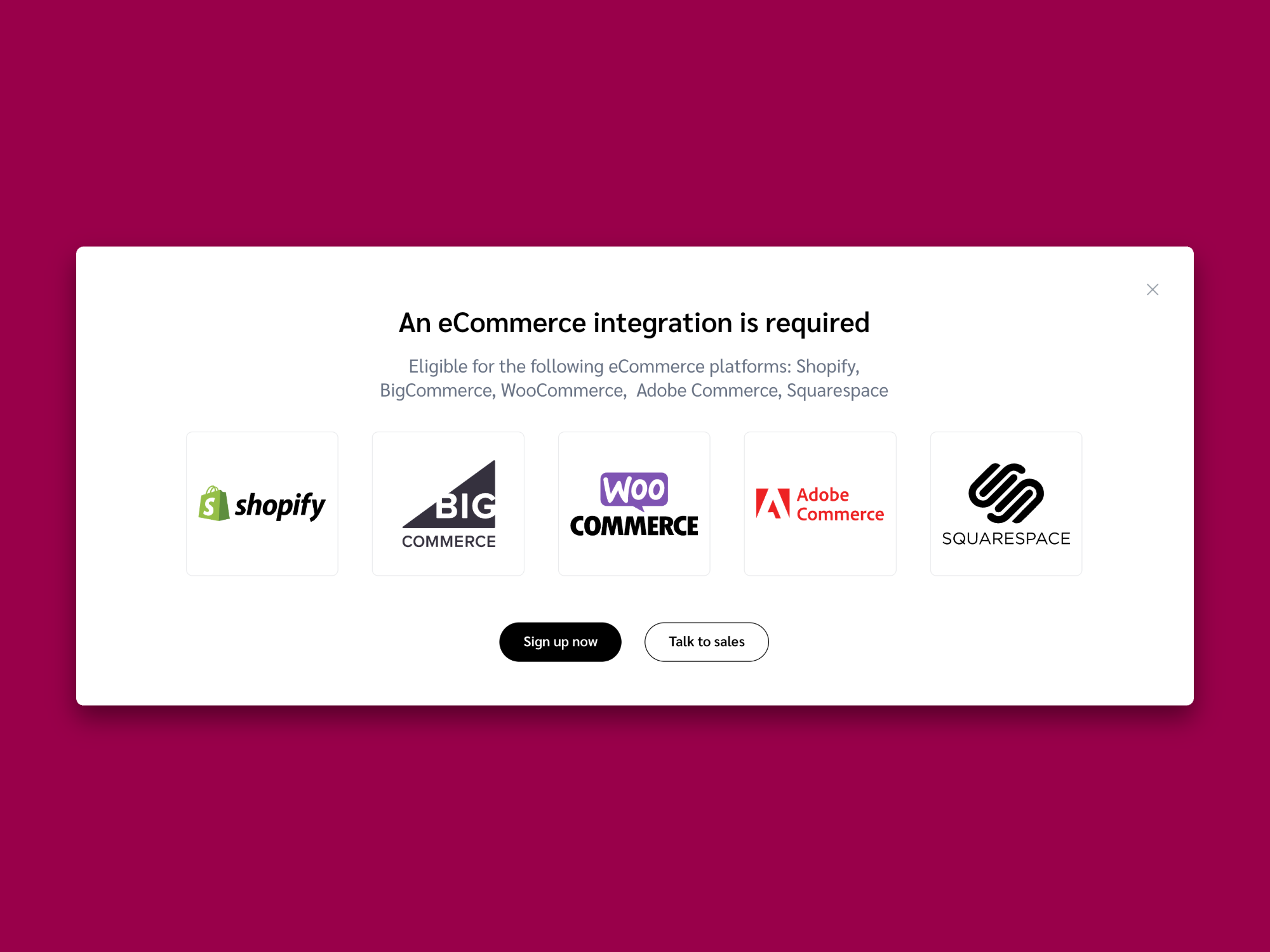
Si eres una agencia que gestiona clientes en distintas plataformas de ecommerce o una marca que vende en varios storefronts, Impact lo admite de forma nativa.
Impact y UpPromote tienen marketplaces donde puedes publicar tu programa de afiliados y los creadores verificados pueden solicitar participar. Impact tiene más de 300K+ creadores en su marketplace. UpPromote no comparte una cifra, pero sugiere ampliar tu búsqueda porque el marketplace por sí solo será insuficiente:
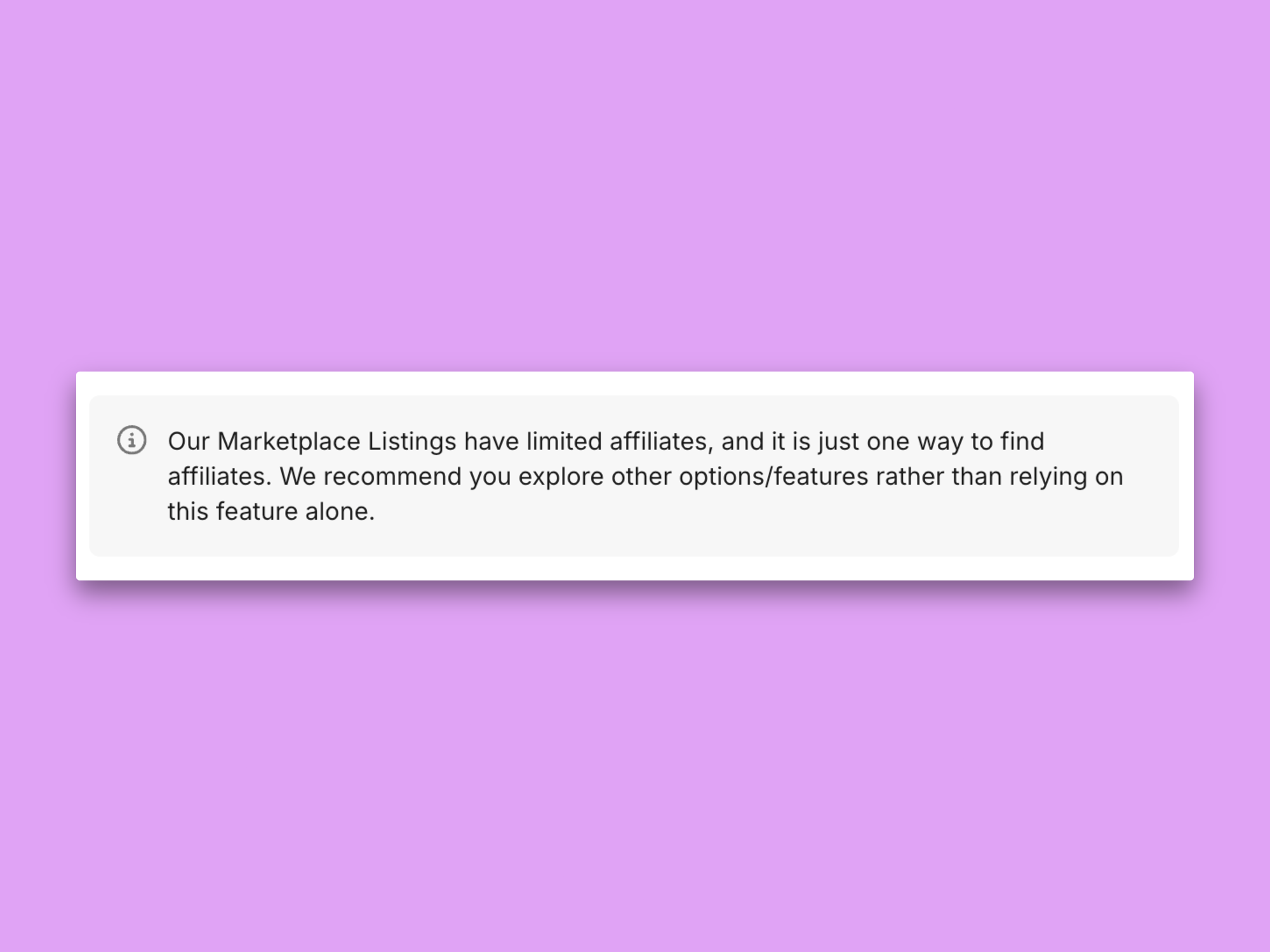
Además del marketplace, Impact también ofrece una base de datos de 25M+ creadores en Instagram, TikTok y YouTube. En la base de datos de Impact solo se muestran los creadores con direcciones de correo electrónico públicas.
Si estás reclutando afiliados a escala, ambas herramientas se quedarán cortas a largo plazo. Modash tiene una base de datos de todos los creadores con más de 1k+ seguidores en Instagram, TikTok y YouTube: eso son más de 380M+ perfiles. Con una base de datos de ese tamaño, nunca te quedarás sin afiliados potenciales con los que colaborar.

Además, la búsqueda con IA de Modash también puede ayudarte a encontrar creadores usando lenguaje natural o referencias visuales. Así que, si estás buscando un creador con un estilo concreto, es muy fácil encontrarlo.
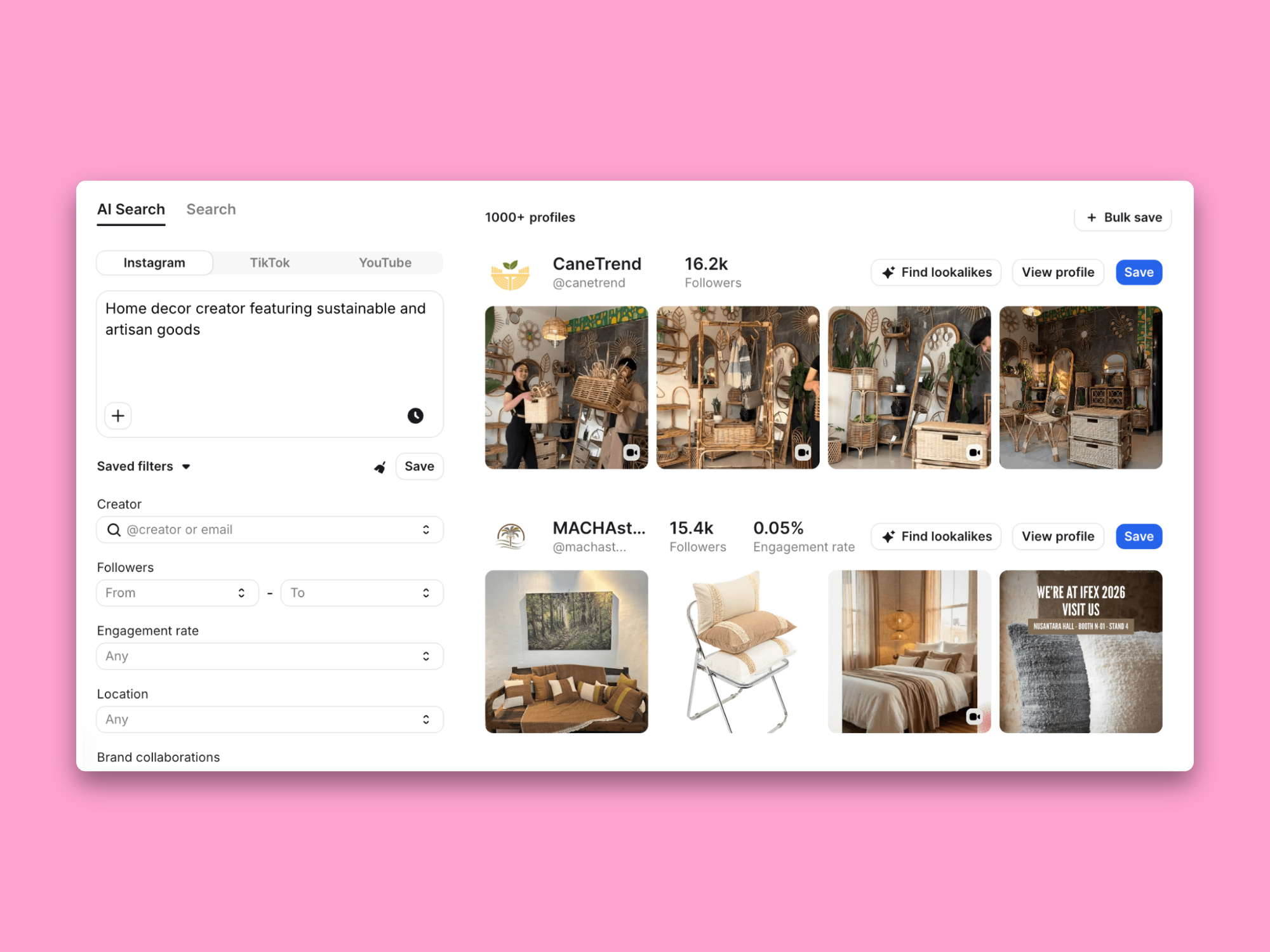
Y no solo obtienes una lista de creadores con algunas de sus métricas básicas de interacción. Puedes evaluar a fondo a un creador y profundizar en su perfil. Modash te permite ver el desglose de la audiencia, el contenido patrocinado anterior, las publicaciones populares, las métricas de interacción y mucho más.

En resumen, tanto Impact como UpPromote serán insuficientes para encontrar afiliados a largo plazo. Necesitas una herramienta de discovery de terceros (como Modash) para cubrir esa carencia.
Si estás buscando externalizar o recibir ayuda con tu programa de afiliados, Impact ofrece eso. Impact tiene un equipo dedicado de servicios gestionados llamado Studio que ofrece soporte práctico para marcas en distintas etapas de sus programas de afiliados:
Impact no publica públicamente el precio de ninguno de estos servicios.
UpPromote no ofrece servicios gestionados equivalentes. Lo que sí ofrece en el plan Enterprise ($199.99/mes) es desarrollo personalizado: puedes solicitar funcionalidades personalizadas creadas según tus requisitos por un coste adicional.
Son tipos de soporte diferentes. Los servicios de Impact son estratégicos: alguien gestiona o cogestiona tu programa. El soporte de UpPromote es técnico: alguien crea o personaliza funcionalidades para ti.
Impact te ofrece una gran variedad de reglas para pagar a tus partners. Puedes crear grupos de pago en función del código promocional, el tamaño del carrito, el estado del cliente (nuevo frente a recurrente), la categoría del producto y más.
También puedes configurar condiciones de contrato por partner: tasas de comisión únicas para afiliados individuales. Así que, si quieres pagar una comisión más alta en productos con márgenes elevados o recompensar a un partner top concreto con una tasa personalizada, Impact puede hacerlo.
Además, puedes ofrecer bonos por rendimiento a los partners top: pagos escalonados que aumentan a medida que los partners alcanzan hitos de ventas. Impact también admite pagos CPC y pagos basados en rutas en planes superiores.
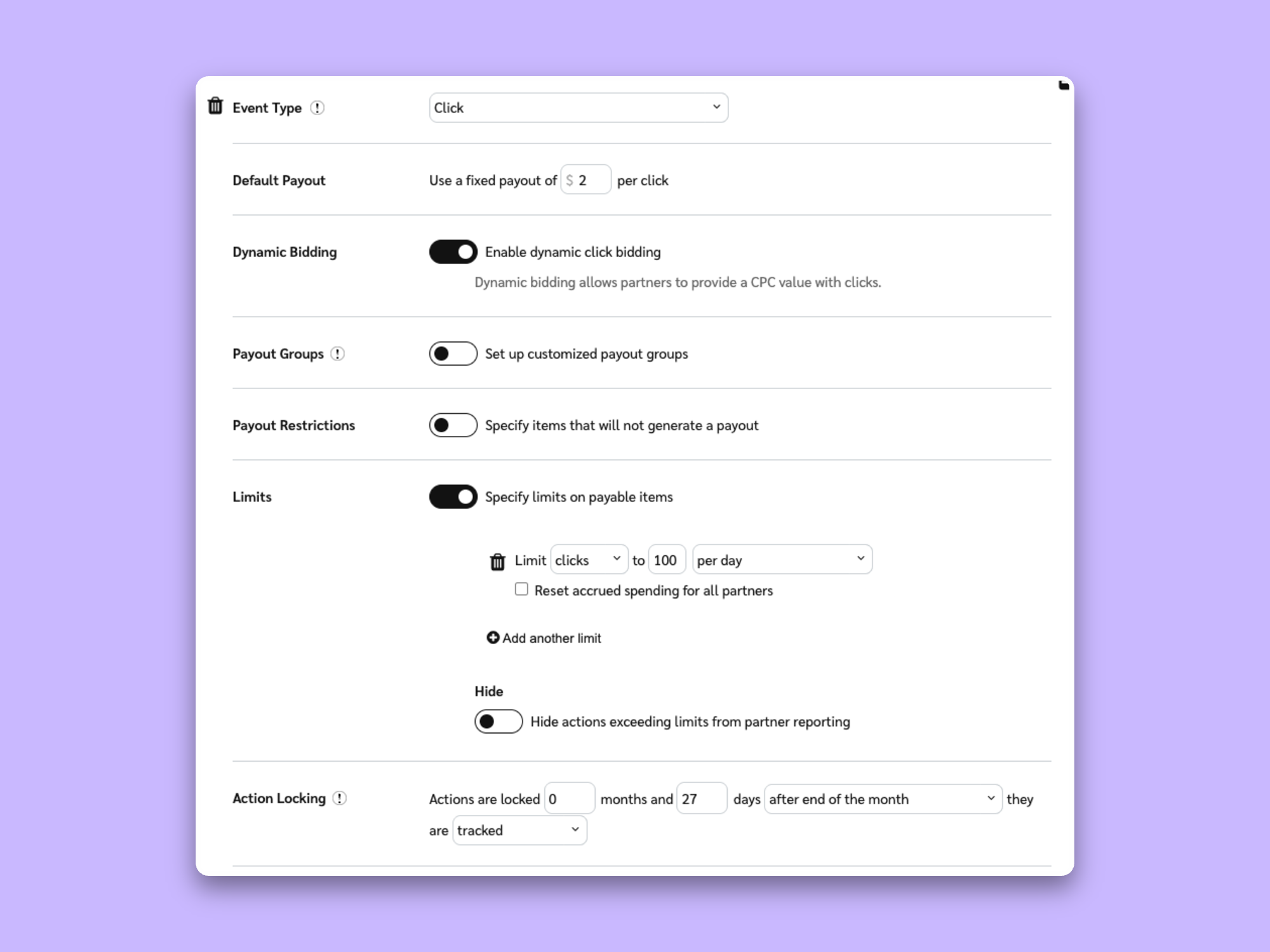
UpPromote también tiene amplias opciones de comisión: porcentaje de la venta, tarifa fija por pedido, tarifa fija por artículo, comisiones escalonadas según el valor del pedido, comisiones especiales por producto, comisiones por nuevos clientes, tasas específicas por cupón y auto-tier. Auto-tier mueve automáticamente a los afiliados a programas con comisiones más altas a medida que alcanzan hitos como ventas totales o número de recomendaciones.
UpPromote también ofrece regalos y bonos en el plan Professional y superiores. Pero no puedes establecer una tasa de comisión única para un afiliado individual dentro de un programa: tendrías que crear un programa aparte para ello.
Donde UpPromote tiene ventaja es en el marketing multinivel. Los afiliados pueden reclutar a otros afiliados y ganar comisiones por las ventas de sus reclutados en niveles configurables.
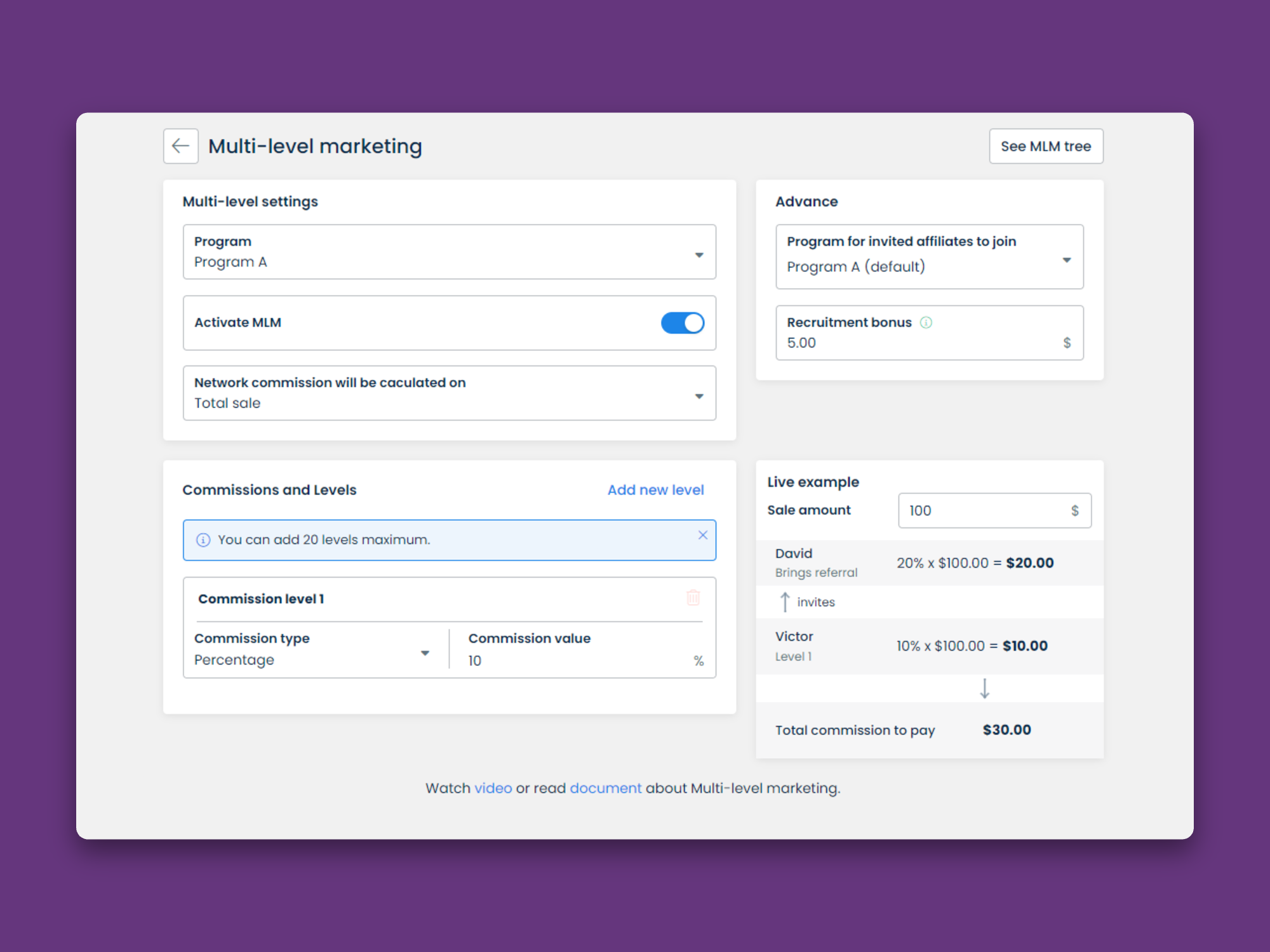
Impact admite redes de subafiliados como tipo de partner, pero no ofrece un MLM al estilo de UpPromote en el que afiliados individuales reclutan y ganan comisiones escalonadas por las ventas de sus reclutados.
Si quieres ver qué están publicando realmente tus afiliados — los Reels de Instagram, los vídeos de TikTok, el contenido de YouTube que impulsa (o no impulsa) las ventas — ninguna de las dos herramientas facilita esto específicamente para afiliados.
UpPromote hace seguimiento de clics, conversiones e ingresos por afiliado. Pero no hay visibilidad del contenido en redes sociales que publican tus afiliados. Si quisieras saber qué dijo un creador sobre tu producto, tendrías que encontrar tú mismo la publicación.
Impact puede hacer seguimiento del contenido de creadores, pero solo en su programa Creator. En el caso de los creadores contratados en campañas Creator, puedes ver y gestionar el contenido que envían, añadir etiquetas para organizarlo y ver métricas de rendimiento a nivel de publicación como Me gusta, interacciones, impresiones y alcance.
Pero los creadores tienen que conectar sus cuentas de redes sociales y ser contratados dentro de una campaña Creator para que funcione el seguimiento a nivel de publicación. Si un creador solo está añadido en tu programa de afiliados (Performance), no obtienes visibilidad del contenido.
Así que, para los afiliados en cualquiera de las dos plataformas, no hay seguimiento del contenido: ves que se produjo una venta, pero no qué contenido la impulsó.
En Modash, el seguimiento del contenido es automático. La herramienta rastrea datos públicos disponibles de redes sociales y recopila contenido de creadores (incluidas las Instagram Stories) a medida que se publica. Cada publicación aparece en tu panel junto con sus métricas de rendimiento, vinculada a los datos de ventas del afiliado procedentes de Shopify.

No necesitas que los creadores envíen publicaciones, conecten sus cuentas ni autentiquen nada.
Tanto en UpPromote como en Impact, cada afiliado tiene que rellenar un formulario de registro, ser aprobado e iniciar sesión en un portal antes de que puedas hacer seguimiento de su rendimiento.
Impact añade un paso adicional para los creadores en su programa Creator. Para hacer seguimiento del rendimiento del contenido a nivel de publicación, los creadores tienen que conectar sus cuentas de redes sociales y conceder permisos para que Impact pueda verificar la titularidad de la cuenta y acceder al contenido de las campañas.
Si un creador solo está en tu programa Performance (afiliados), no se requiere autenticación social, pero tampoco obtienes visibilidad del contenido.
La comunicación también se realiza a través de estos portales. En UpPromote, los afiliados tienen que iniciar sesión para ver tus mensajes del chat integrado en la app. En Impact, los partners te envían mensajes a través de su Impact Inbox. En ambos casos, si un creador no revisa su portal, no verá tus mensajes.
Para los creadores que gestionan múltiples partnerships con marcas, esto supone un registro aparte, un portal aparte y un lugar aparte donde revisar mensajes para cada marca con la que trabajan.
En Modash, los creadores no necesitan registrarse, conectar sus cuentas ni autenticar nada. Puedes encontrarlos, evaluar su perfil, hacer seguimiento de su contenido y medir el rendimiento sin ningún onboarding por parte del creador.
La comunicación se produce a través de tu bandeja de entrada real de Gmail u Outlook conectada a Modash: los creadores responden donde ya trabajan.

Solo necesitan una cuenta de Modash si decides pagarles a través de la plataforma. Y aun así, no necesitan autenticar sus cuentas de redes sociales.
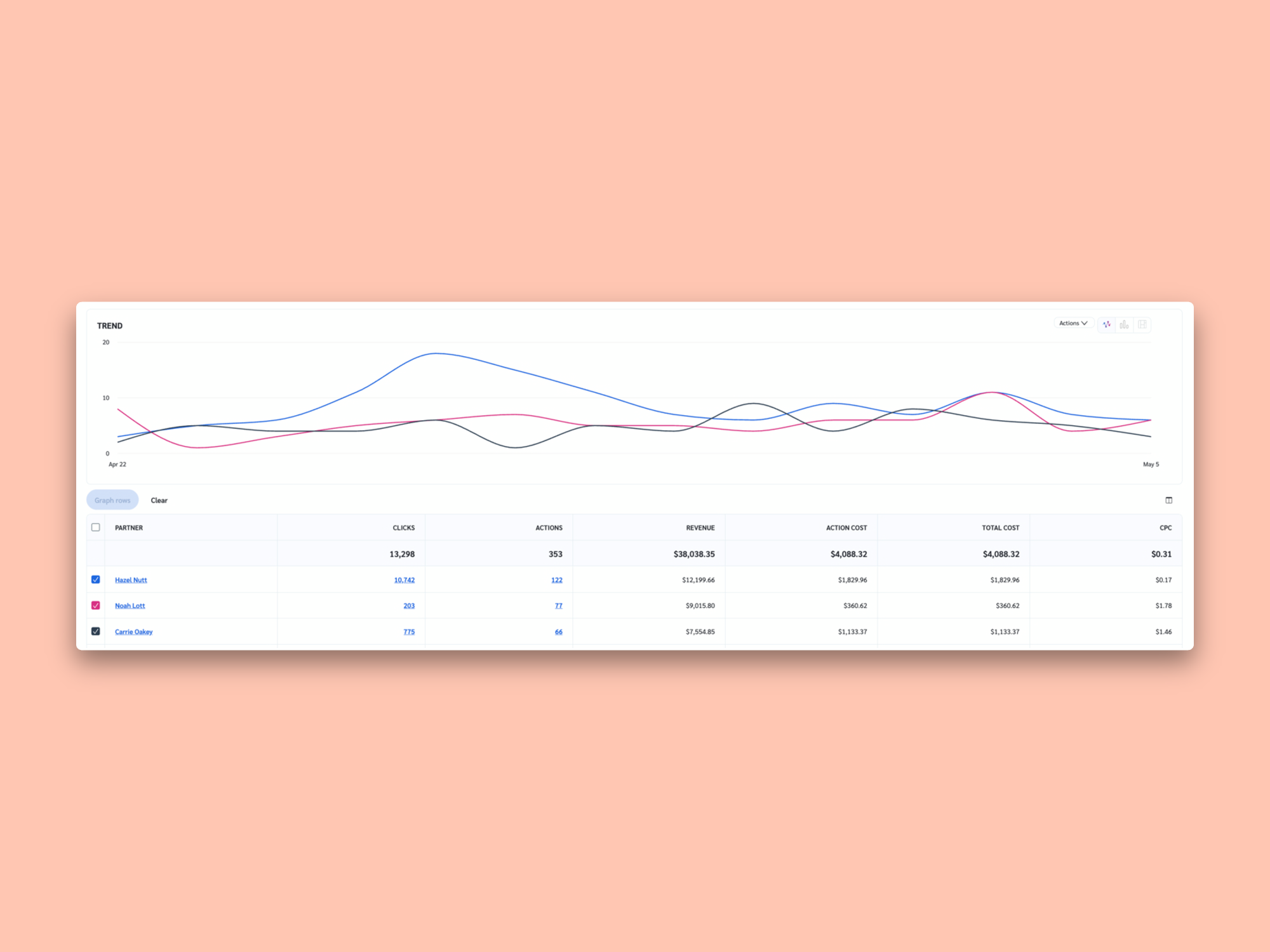
Impact tiene informes predefinidos que cubren el rendimiento por partner, producto, código promocional, país, dispositivo, día, semana, mes, hora, clientes nuevos frente a recurrentes y más.
En planes superiores, también obtienes Data Lab, un creador de informes personalizados en el que puedes crear tus propias métricas, crear paneles totalmente personalizables con varios tipos de visualización y segmentar los datos por dimensiones como SKU, día de la semana o grupo de partners.
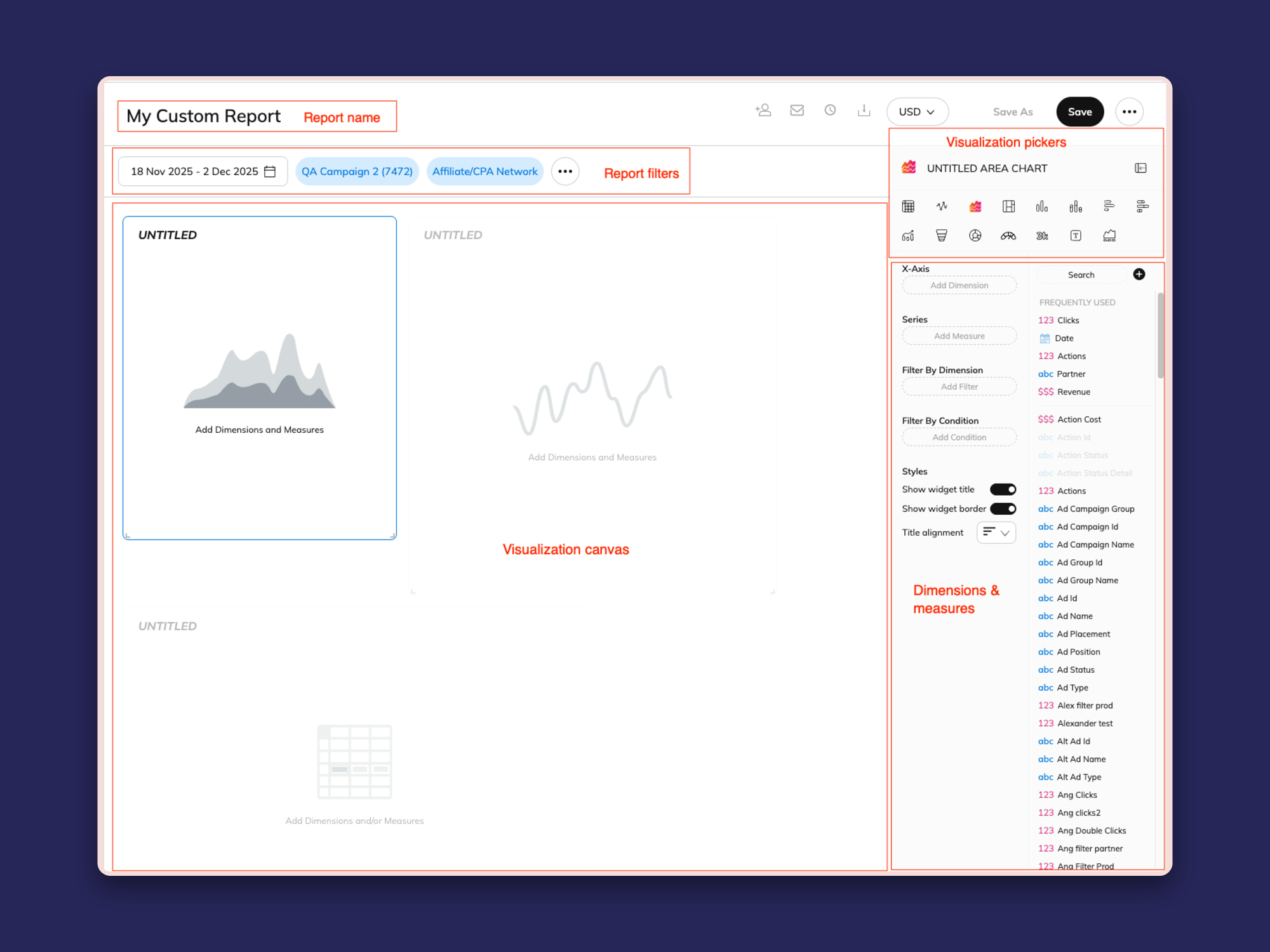
Esa profundidad tiene el coste de la complejidad. Impact tiene una curva de aprendizaje pronunciada, y puede llevar semanas entender cómo fluye la información entre sus programas (Performance, Creator, Advocate) y cómo configurar correctamente el seguimiento.
Los informes de UpPromote se basan en un panel en tiempo real que muestra clics, pedidos, ventas y estado de las comisiones de un vistazo.

Puedes ver detalles de las recomendaciones con datos del recorrido del cliente, filtrar por tipo de seguimiento (enlace, cupón, cliente conectado, producto conectado) y exportar informes para un análisis más detallado. Es más sencillo de configurar y puedes tener datos básicos de rendimiento en cuestión de días tras lanzar tu programa.
Pero no hay ningún equivalente al creador de paneles personalizados de Data Lab de Impact. Si quieres informes más profundos en UpPromote, tendrías que exportar los datos y crear los informes tú mismo, o usar parámetros UTM y Google Analytics para un seguimiento de clics más detallado.
Modash ofrece un panel unificado sincronizado con Shopify que muestra en una sola vista el rendimiento del contenido y los datos de ingresos por creador.
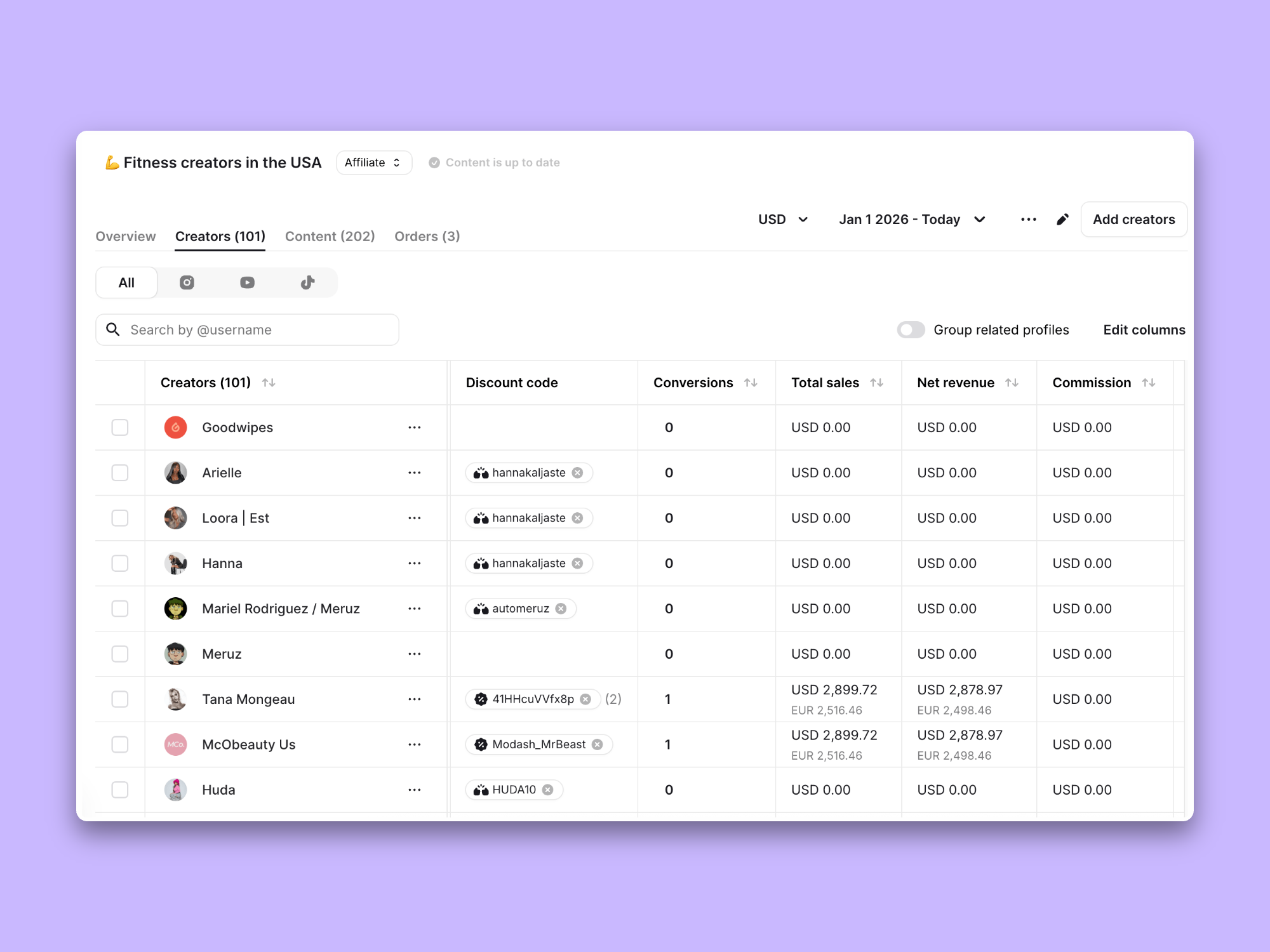
Los informes son más sencillos que los de Impact, pero cubren tanto el rendimiento de influencers como el de afiliados en un solo lugar, algo que ni UpPromote ni Impact hacen de forma fluida.
UpPromote incluye protección contra el fraude en dos niveles: registros y ventas.
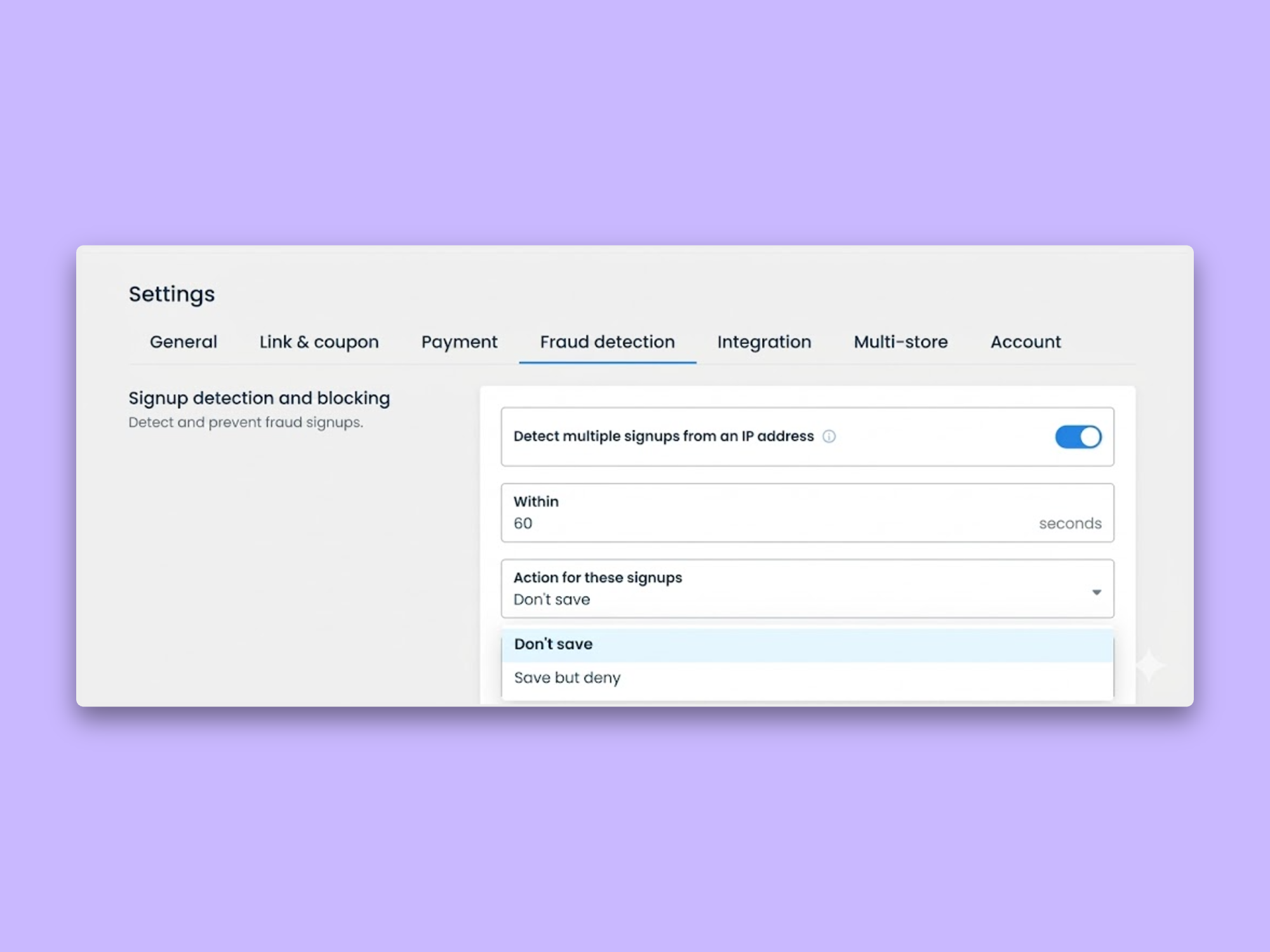
La protección contra el fraude de Impact cubre solo la parte posterior a la conversión. Su servicio Event Risk puntúa todos los clics y conversiones por actividad sospechosa no humana y categoriza cada evento como Crítico, Alto Riesgo o Sospechoso. La herramienta también ofrece Promo Code Monitoring, que analiza el uso no autorizado o caducado de códigos promocionales en toda la web.
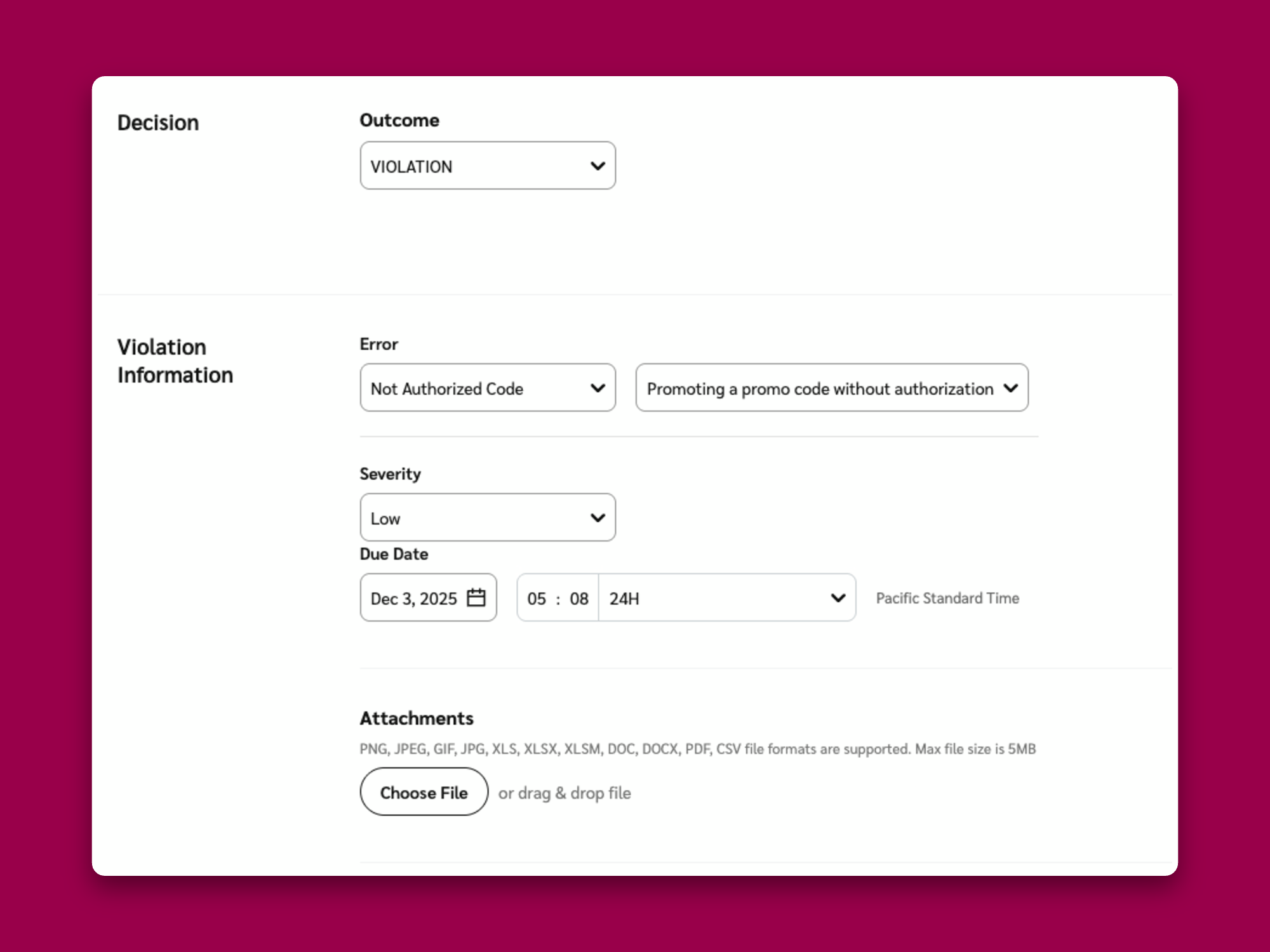
Pero para el fraude en el lado del registro, Impact recomienda una evaluación manual usando su checklist de “las siete C de la seguridad de marca”.
Así que UpPromote cubre ambas etapas con herramientas automatizadas. Impact tiene una monitorización posterior a la conversión más sofisticada (puntuación basada en IA, escaneo de códigos promocionales en toda la web), pero no cuenta con detección automatizada de fraude en el registro.
Si gestionas un programa de registro abierto con un alto volumen de registros entrantes, el filtrado automatizado de registros de UpPromote te ahorra tiempo de moderación manual. Pero si te preocupan más el fraude de clics, la filtración de códigos promocionales o la manipulación posterior a la conversión a escala, el conjunto de monitorización de Impact cubre eso.
Después de revisar todas las diferencias, tendrás una idea de qué plataforma encaja mejor con tu programa.
Elige UpPromote si:
Elige Impact si:
Incluso después de elegir entre UpPromote e Impact, te encontrarás con las mismas carencias en ambas plataformas.
Modash cubre esas carencias.
Modash ofrece planes mensuales, precios transparentes y una prueba gratuita de 14 días. Compruébalo tú mismo (sin tarjeta de crédito, autenticación de creadores ni demos).