




Autres outils
Cas d'usage



Au cours d’une semaine donnée, vous êtes probablement en train de :
… Et ce n’est encore que mercredi.
Les spécialistes du marketing d’influence sont cruellement en manque de temps. Il y a tout simplement tant à faire qu’il est presque impossible de s’en sortir (sans perdre la tête) sans automatisation et sans l’aide d’outils d’IA.
Mais le dilemme dans ce secteur, c’est que travailler avec des créateurs repose par nature fortement sur les relations humaines. Vous devez veiller à ne pas transformer l’aspect humain du marketing d’influence en processus robotisé par l’automatisation.
Pour comprendre où tracer la ligne, nous avons demandé à plus de 50 spécialistes du marketing d’influence comment ils utilisent l’IA dans leurs flux de travail et dans quels cas ils l’évitent.
Sans surprise, les spécialistes du marketing ont considérablement accru leur utilisation de l’IA pour les aider dans leurs tâches quotidiennes. Lorsque nous avons mené notre grande enquête annuelle l’an dernier, un peu plus de la moitié des spécialistes du marketing interrogés utilisaient l’IA. En 2025, ce chiffre a bondi à 81,9 %.

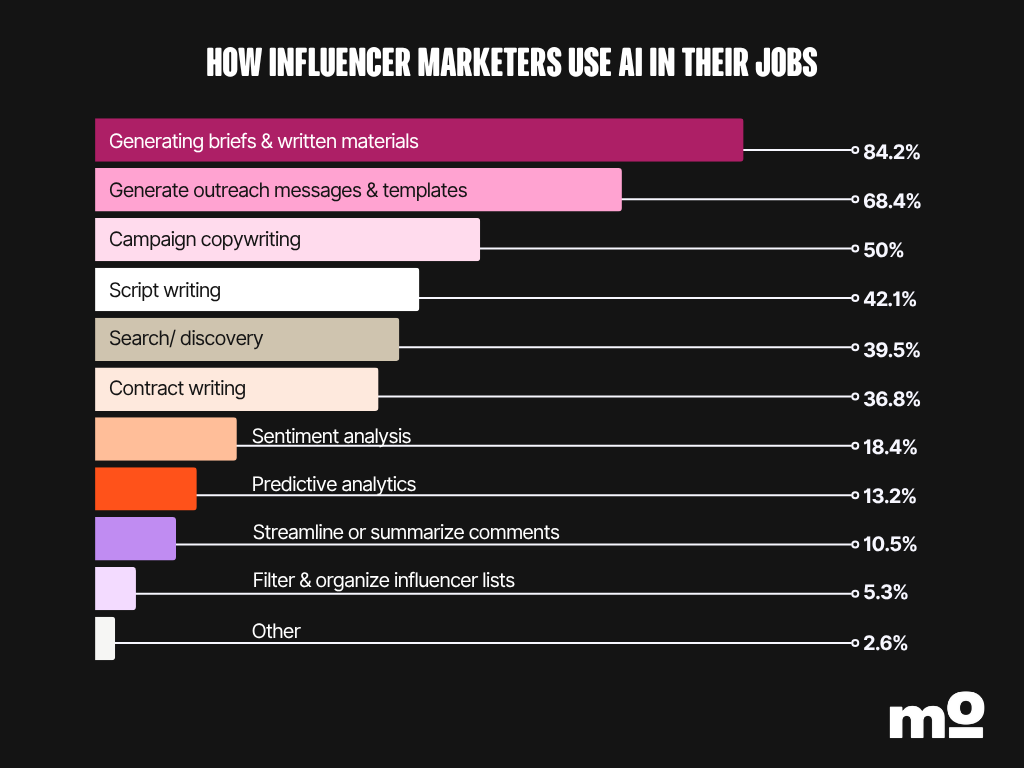
Mais à quoi les spécialistes du marketing d’influence utilisent-ils l’IA ? Et plus important encore, pour quoi évitent-ils d’utiliser l’IA ? Voici un bref résumé :

Examinons chaque tâche pour voir où l’IA se révèle utile (et où ce n’est pas le cas).
Selon notre enquête, la découverte d’influenceurs est la chose n° 1 pour laquelle les spécialistes du marketing souhaiteraient utiliser l’IA.
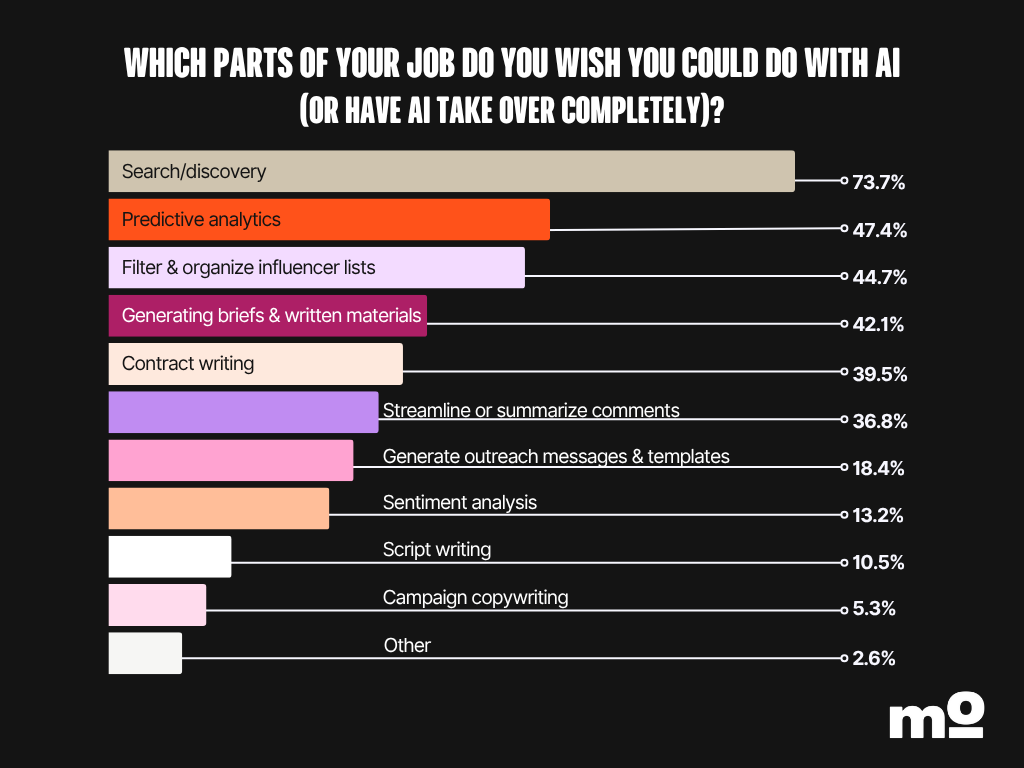
C’est compréhensible : rechercher les bons influenceurs peut être long et épuisant. Si vous utilisez un logiciel de marketing d’influence, vous pouvez appliquer des filtres tels que le nombre d’abonnés, le taux d’engagement, etc., et trouver des créateurs correspondant à vos critères plus rapidement qu’avec la méthode manuelle de recherche par hashtag. Mais même cela ne suffit pas toujours, car :
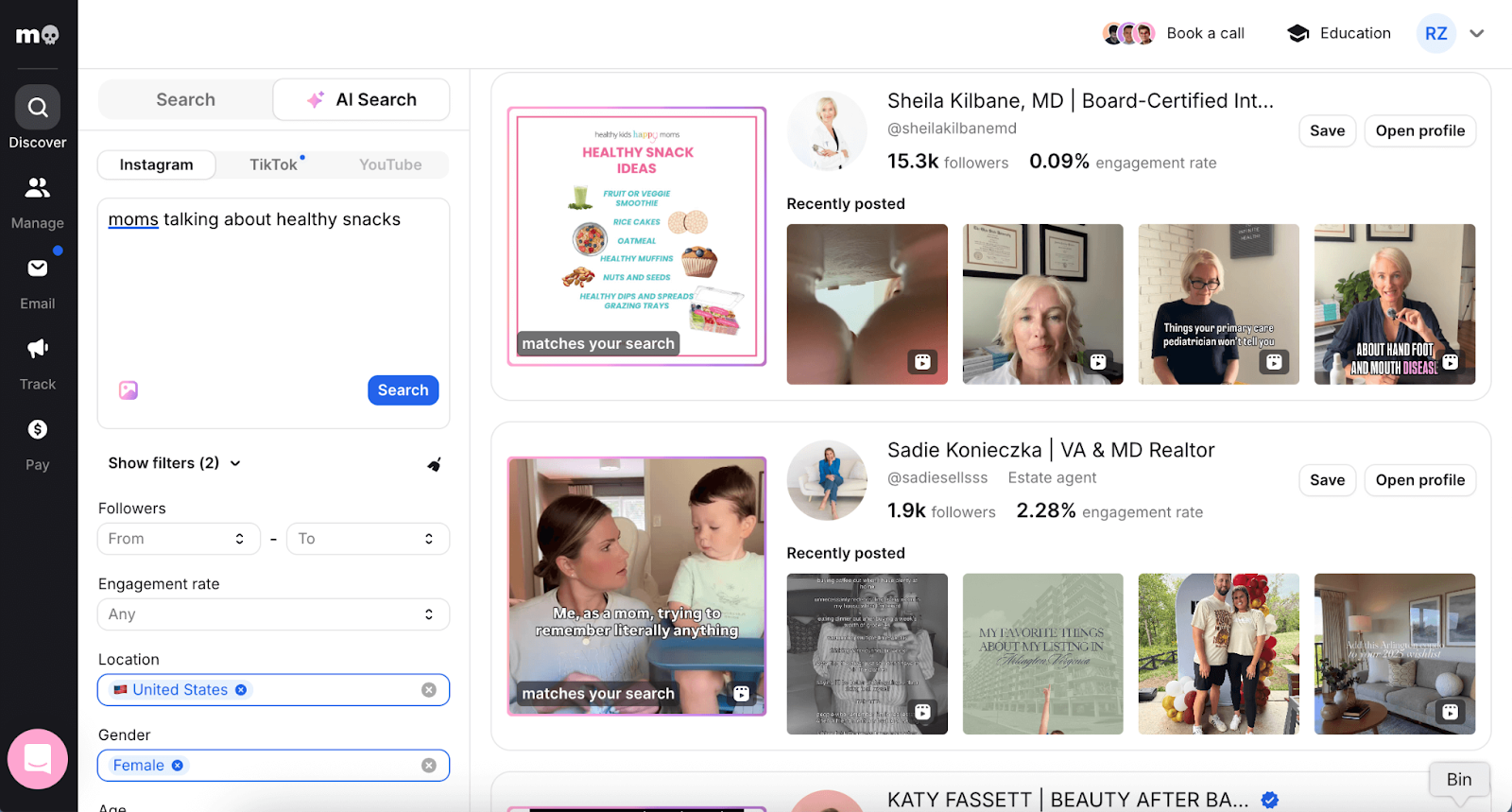
Découvrez : la fonction de recherche IA de Modash. Il vous suffit de saisir ce que vous recherchez et l'outil commencera à trouver des influenceurs qui créent ce type de contenu. Modash cherchera au sein du contenu visuel ce que vous recherchez, comme le ferait un humain.
Imaginons que vous soyez responsable du marketing d'influence pour une marque de snacks sains. Vous souhaitez trouver des mamans très occupées qui n'ont pas toujours le temps de préparer quelque chose de nutritif pour leurs enfants.
L'ancienne méthode : vous recherchez manuellement des influenceuses mamans, évaluez les créateurs qui parlent réellement de la difficulté de préparer plusieurs repas pour les enfants chaque jour et vérifiez leur adéquation avec votre marque. Après des heures de recherche, vous sélectionnerez peut-être quelques créateurs.
La nouvelle méthode : vous ouvrez Modash et saisissez « mamans qui parlent de snacks sains » dans la barre de recherche IA. Vous obtenez instantanément une liste d'influenceuses mamans qui publient déjà le type de contenu que vous recherchez (une compatibilité naturelle). Vous pouvez combiner des filtres tels que la localisation, le nombre d'abonnés, le taux d'engagement, le genre, l'âge, la langue et bien plus encore afin de vous assurer que la recherche n'affiche que les créateurs correspondant parfaitement à vos critères.
Essayez gratuitement la recherche IA de Modash pendant 14 jours.
À mesure que vous développez vos actions de marketing d'influence, les tâches suivantes deviennent de plus en plus chronophages :
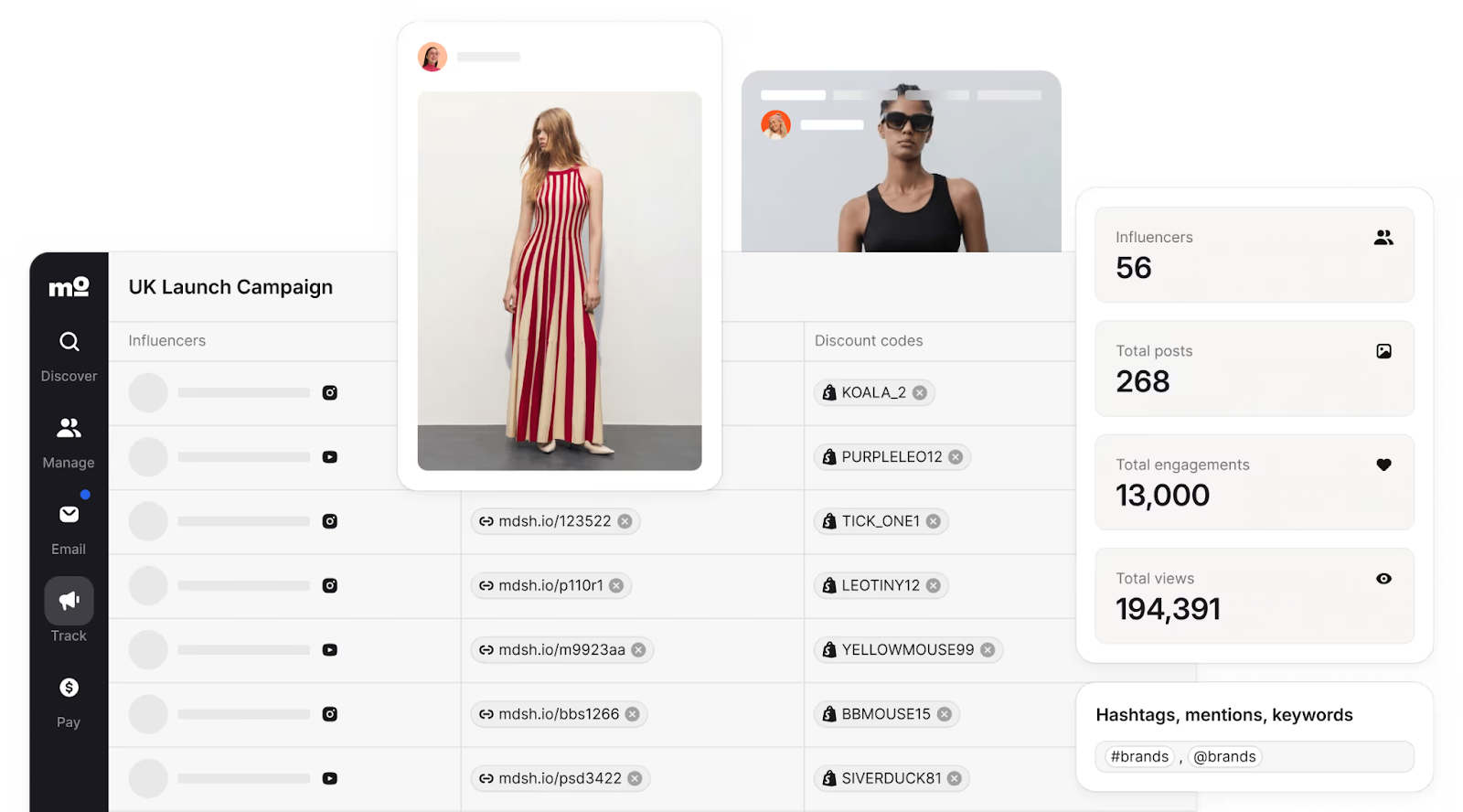
44,7 % des marketeurs interrogés automatisent ces tâches à l'aide d'outils d'IA. Dans Modash, par exemple, vous pouvez collecter tous les contenus d'influenceurs qui mentionnent un hashtag, une marque ou un mot-clé spécifique (y compris les Stories Instagram !). Vous pouvez même collecter tous les contenus qu'un influenceur publie, puis sélectionner ceux que vous souhaitez suivre pour vos campagnes.
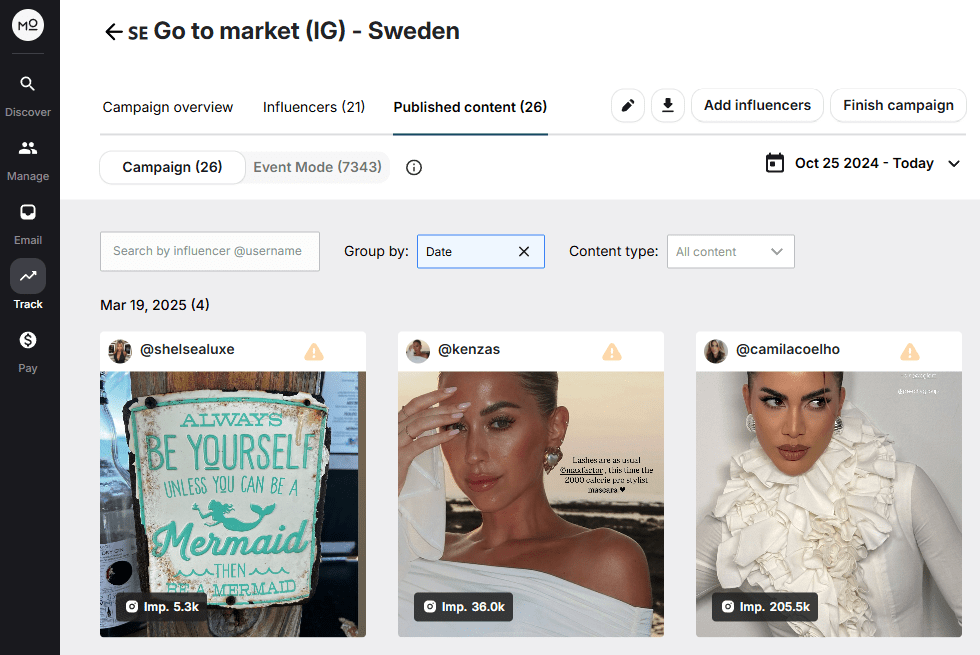
Modash signalera également lorsqu'un influenceur ne respecte pas les directives de la FTC en matière de divulgation publicitaire. Une fonctionnalité salvatrice, à mon avis.
Pour la gestion des influenceurs, vous pouvez utiliser des outils pour organiser vos listes de créateurs de manière beaucoup plus efficace. Vous souhaitez garder une trace de :
Au lieu de mettre à jour manuellement des feuilles de calcul, vous pouvez utiliser un logiciel pour tout gérer au même endroit. Dans Modash, vous sélectionnez et personnalisez l’étape de votre relation avec un influenceur afin que tout le monde soit sur la même longueur d’onde.
Pour gagner encore en efficacité, connectez votre boutique Shopify afin de consulter les liens uniques et les codes de réduction associés à chaque influenceur dans le même onglet.
Une autre tâche très chronophage pour les professionnels du marketing consiste à établir des rapports sur les performances du marketing d’influence. L’IA ne peut pas se charger d’automatiser l’intégralité du rapport. Après tout, vous seul savez comment le marketing des créateurs s’intègre à vos objectifs commerciaux globaux. Mais l’IA peut accélérer le processus en fournissant rapidement des données précises sur les performances de vos campagnes et créateurs.
Dans Modash, vous pouvez voir en un clin d’œil l’aperçu d’une campagne : vues, EMV, ventes, clics, coût, tout y est.
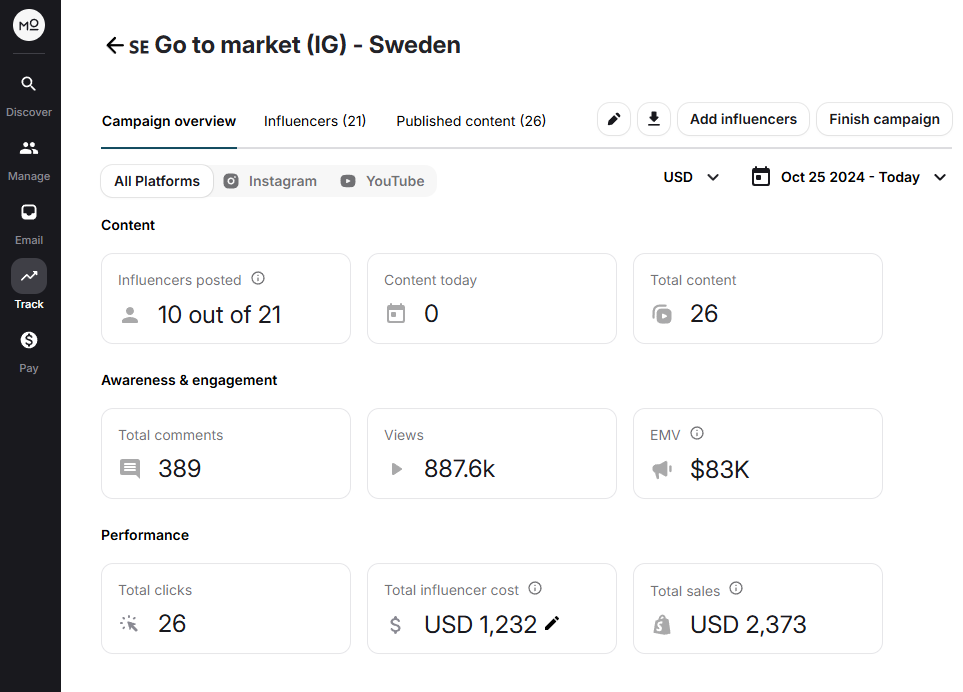
Vous pouvez également consulter des indicateurs plus détaillés pour chaque campagne, comme les performances de chaque influenceur. Pour obtenir des données plus précises, vous pouvez même personnaliser la formule de calcul de l’EMV.
Les professionnels du marketing expriment aussi fréquemment le souhait d’analyser les aspects qualitatifs des performances des influenceurs et des campagnes. Par exemple, vous pourriez vouloir analyser les commentaires d’une publication d’un influenceur afin de comprendre le sentiment des clients à l’égard de votre marque. Pour cela, vous pouvez utiliser un outil comme Siftsy. Ce n’est pas parfait, mais cela peut vous aider à obtenir de nombreux enseignements beaucoup plus rapidement qu’avec une méthode manuelle.
Un autre cas d’utilisation utile de l’IA est la détection des fuites de codes promotionnels. Des outils comme Marcode peuvent vous aider à repérer si le code promotionnel d’un influenceur a été divulgué sur des sites tiers. Cela peut vous aider à éviter la fraude et à attribuer précisément les ventes à vos partenaires créateurs.
8 professionnels du marketing sur 10 utilisent l’IA pour créer des briefs pour influenceurs et des contenus écrits associés (tels que des légendes, des scripts, etc.). C’est le cas d’utilisation n° 1 des professionnels du marketing dans notre enquête.
L’intelligence artificielle peut vraiment aider à réduire les contraintes administratives, car vous pouvez créer un modèle de brief à réutiliser pour chaque créateur. Vous pouvez demander à n’importe quel outil d’IA de :
Cela va sans dire, mais vérifiez systématiquement chaque brief produit par l’IA afin de vous assurer qu’il est exact et adapté à votre marque. Une fois affinés, les outils d’IA peuvent toutefois vous aider à créer des briefs plus rapidement et à les rendre plus cohérents pour l’ensemble des créateurs.
Vous pouvez également utiliser l’IA pour réfléchir à des points de discussion, des idées de scripts et des légendes pour les réseaux sociaux de vos campagnes. L’IA peut être un excellent partenaire de réflexion, surtout lorsque vous manquez d’inspiration et avez besoin d’un point de départ pour relancer votre créativité.
La prise de contact avec les influenceurs est le deuxième cas d’usage le plus courant de l’IA, selon notre enquête. Si vous contactez de nombreux créateurs chaque jour, l’IA peut vous aider à peaufiner les parties concernant votre entreprise et votre campagne (qui restent identiques dans chaque message).
Vous pouvez également utiliser l’IA pour trouver des informations sur un influenceur afin d’en apprendre davantage sur lui et de personnaliser votre premier message. Par exemple, j’ai demandé à ChatGPT de rechercher davantage d’informations sur Haley Pham à l’aide de ce prompt :
«Agissez comme un spécialiste du marketing d’influence qui contacte l’influenceuse spécialisée dans les livres, Haley Pham. Partagez des détails sur sa vie et son contenu qui peuvent m’aider à personnaliser mon premier message de prise de contact avec cette créatrice. Parcourez leur profil Instagram, leur chaîne YouTube et tous les autres podcasts auxquels ils ont participé.”
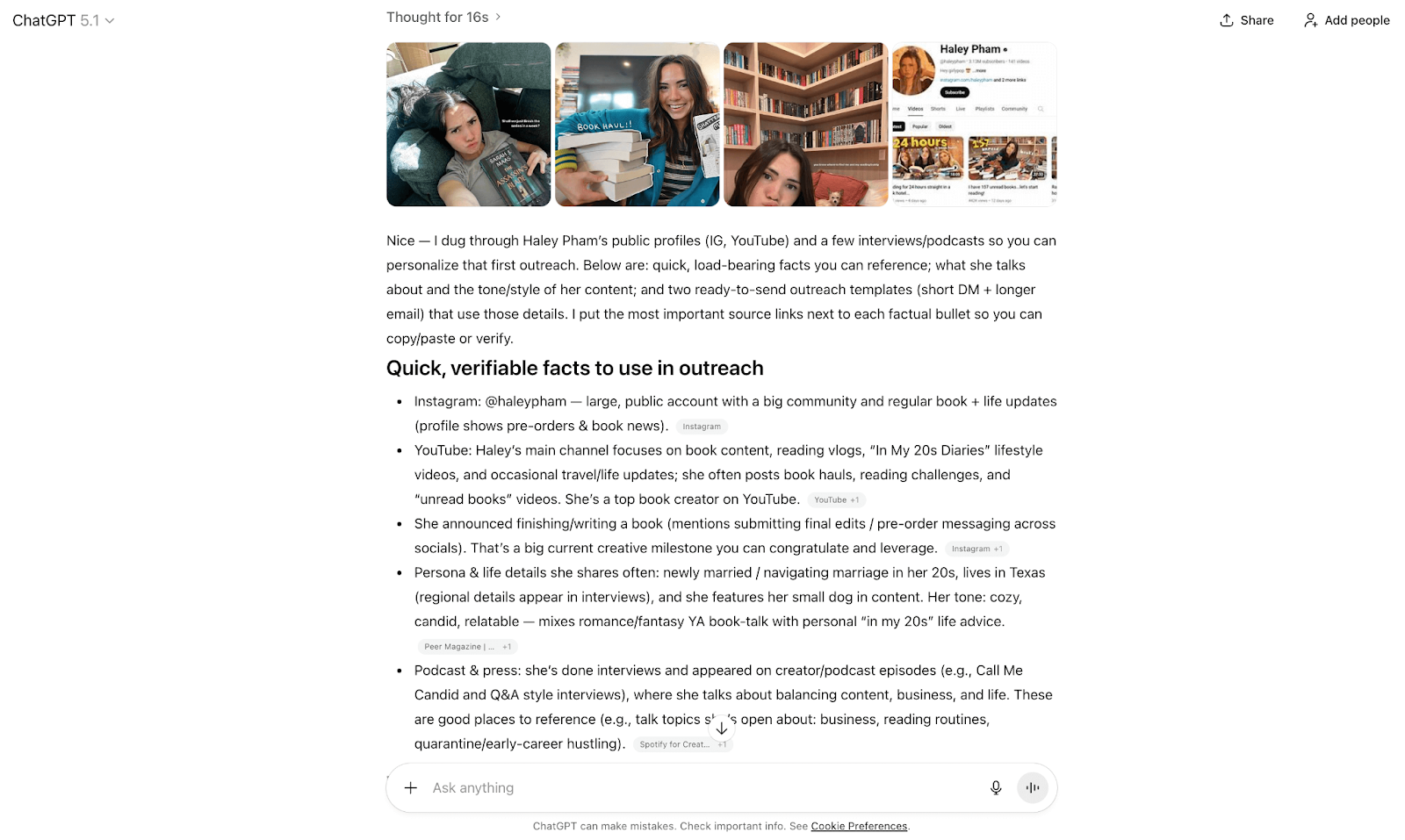
Grâce à ces informations, je peux féliciter la créatrice pour son premier livre afin de personnaliser le message de prise de contact.
⚠️ N’oubliez pas : vérifiez toujours que les informations fournies par un outil d’IA sont exactes, car il peut halluciner.
L’IA peut également vous aider à créer des modèles pour les messages que vous envoyez régulièrement. Par exemple, si vous partagez chaque semaine ou chaque mois des données de performance avec vos affiliés, vous pouvez utiliser l’IA pour créer un modèle, puis simplement mettre à jour les données chaque fois que vous envoyez le rapport de performance à vos partenaires créateurs.
De même, vous pouvez utiliser l’IA pour rédiger un simple message de relance aux créateurs que vous souhaitez relancer. Vous pouvez aussi intégrer Modash pour automatiser entièrement les relances. Définissez la date et l’heure auxquelles vous souhaitez envoyer votre e-mail de relance, et Modash s’en chargera pour vous, sans avoir besoin de rappels.
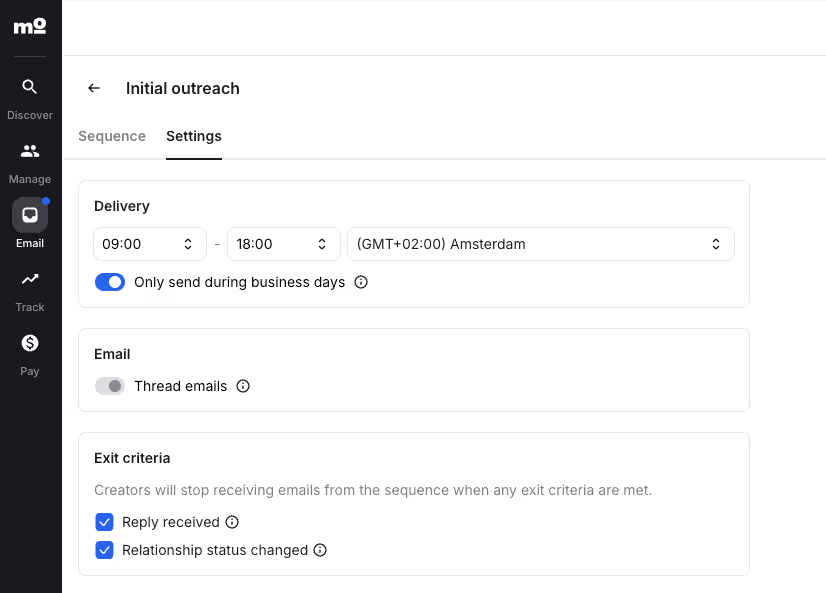
Et oui, vous pouvez suivre l’ensemble de votre séquence de prise de contact pour chaque créateur dans un seul tableau de bord. Vous saurez exactement quand vous avez pris contact pour la première fois, relancé, reçu une réponse, etc.
Enfin, vous pouvez également utiliser l’IA pour résumer un fil d’e-mails et en extraire les informations clés si une conversation par e-mail est devenue interminable.
Les contrats avec les influenceurs peuvent sembler contraignants, mais ils sont indispensables pour protéger votre marque et vous assurer que vos partenaires créateurs et vous êtes sur la même longueur d’onde.
Vous pouvez utiliser l’IA pour obtenir une première base juridiquement structurée, que vous pourrez affiner avec votre équipe juridique. Il vous suffit de saisir les informations à inclure :
⚠️ À retenir : l’IA constitue un bon point de départ pour votre contrat. Mais vous devez faire vérifier le contrat par un avocat avant de l’envoyer à un créateur.
De nombreux outils d’IA proposent également des modèles juridiques prêts à l’emploi pour vous éviter de partir de zéro.
Vous pouvez également utiliser l’IA pour résumer un contrat et en extraire les clauses clés. Cela peut aider votre équipe et vos partenaires influenceurs à obtenir rapidement une vue d’ensemble des conditions.
Les sections ci-dessus le montrent clairement : l’IA peut être un excellent outil pour rendre vos processus plus efficaces, sans aucun doute. Mais le marketing d’influence ne peut pas réussir sans une dimension humaine. Anna Jędrzejewska précise :
L’IA ne remplacera pas la dimension humaine (bon courage pour automatiser l’intuition), mais elle nous fera gagner le temps dont nous avons besoin pour réellement élaborer des stratégies au lieu de courir après des liens vers des fichiers et des signatures. Le marketing d’influence passe des feuilles de calcul aux systèmes.

Voici les tâches de votre processus que vous ne devriez pas confier à l’IA (et pourquoi).
Vous pouvez utiliser des outils d’IA pour présélectionner des créateurs qui répondent à vos critères quantitatifs. Mais au-delà de cette première vérification, vous devez évaluer les influenceurs sur le plan qualitatif pour réellement déterminer s’ils correspondent ou non à la marque. Cela implique de vérifier des éléments tels que :
44 % des marketeurs interrogés pour un autre rapport ont déclaré consacrer de 3 à 10 minutes à l’évaluation de chaque influenceur présélectionné.
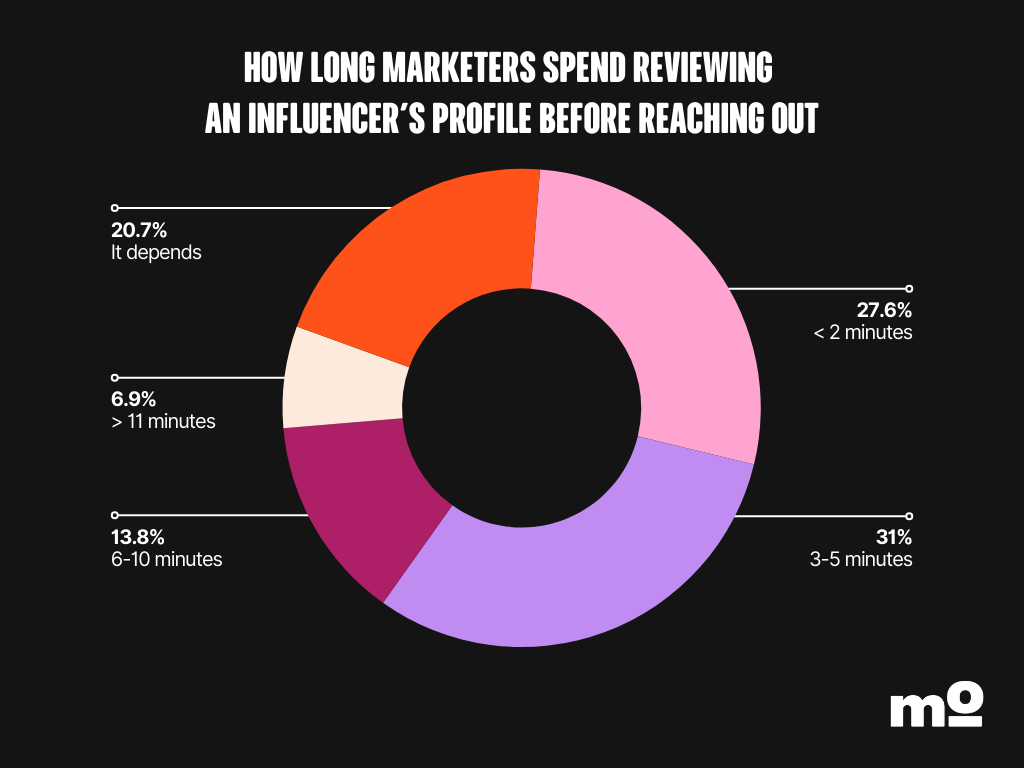
Si vous utilisiez uniquement l’IA pour évaluer les influenceurs, vous auriez probablement terminé bien plus rapidement. Mais à quel prix ? L’IA ne peut pas comprendre votre marque aussi bien que vous. Elle n’a pas de goût et ne peut pas distinguer un contenu de qualité d’une publication gênante. Paulina Cieślik explique pourquoi l’IA ne devrait pas prendre les décisions en matière de sélection d’influenceurs :
En matière de sélection d’influenceurs ou d’analyse de données, je ne considère pas encore que l’IA soit suffisamment précise ou pertinente. Dans le marketing d’influence, la touche humaine — la créativité, l’empathie et la compréhension du contexte — reste irremplaçable. L’IA devrait accompagner le processus, et non être considérée comme le décideur final.

Avez-vous déjà vu ces commentaires LinkedIn clairement générés par l’IA qui mettent tout le monde mal à l’aise ? Vos influenceurs auraient la même réaction si vous utilisiez l’IA pour communiquer avec eux. Si vous pensez que les créateurs ne peuvent pas le remarquer, pensez simplement à la façon dont vous repérez un commentaire bancal écrit par l’IA à des kilomètres.
Lorsque vous communiquez avec des influenceurs — que ce soit pour répondre à une simple question ou négocier les conditions d’un contrat — évitez autant que possible d’utiliser l’IA.
Une réponse robotique donnera à vos créateurs partenaires l’impression qu’ils ne sont qu’un nom de plus sur votre liste. Cela fera immédiatement disparaître toute l’authenticité et la confiance que vous avez cultivées.
C’est simple : une personne d’un côté s’attend à ce qu’un humain de l’autre lui réponde.
Vous pouvez suivre les performances des influenceurs à l’aide d’outils d’IA, mais ne standardisez pas vos retours, en particulier pour vos partenaires influenceurs à long terme.
Donner un retour personnalisé permettra non seulement au créateur de se sentir intégré à l’équipe, mais vous aidera aussi, vous, sur le long terme. Comment ? En prenant le temps d’adapter vos retours à chaque influenceur, vous lui donnez une excellente occasion de créer à l’avenir un meilleur contenu pour vous. Dans l’ensemble, cela limitera les allers-retours de modifications nécessaires et réduira votre charge de travail.
Si vous utilisez l’IA pour analyser le contenu d’un influenceur, elle ne vous donnera pas une vision complète. L’IA ne comprend pas quels types de publications arrêtent le défilement et incitent les gens à acheter. Elle ne sait pas ce dont votre marque a besoin. Ne faites pas davantage confiance à l’IA qu’à votre propre intuition et jugement.
Utiliser l’IA pour trouver des idées de publications, de légendes et de scripts ne pose aucun problème. Mais n’utilisez pas du contenu généré par l’IA mot pour mot, sans le modifier ni le relire. Leslie Belen explique pourquoi :
Je suis fermement convaincue que l’IA doit rester en dehors du processus créatif. Comme notre produit est une barre naturelle à grignoter, le contenu doit sembler authentique et personnel. Les légendes ou scripts générés par l’IA détruisent instantanément l’authenticité qu’exige notre audience soucieuse de santé et de bien-être. Nous sommes tout à fait favorables à l’utilisation de l’IA pour gagner en efficacité en coulisses, mais la création visible doit rester humaine et authentique.

En tant que consommatrice ayant lu en ligne des tonnes de légendes manifestement générées par l’IA, je peux vous le dire : les légendes générées par l’IA me rebutent immédiatement. Cela détruit la confiance envers la marque et crée une association négative dans l’esprit des futurs acheteurs.
L’IA peut être votre partenaire de contenu pour peaufiner les contenus destinés à vos clients, mais ne lui confiez pas entièrement la tâche.
La prospection de masse auprès d’influenceurs fonctionne dans très peu de cas dans le monde du marketing d’influence. Dans la plupart des cas, vous devriez éviter d’envoyer un premier message généré par l’IA à un créateur. Cela fait partir votre relation du mauvais pied et risque de nuire à la réputation de votre marque. Lee Drysdale est du même avis :
Lorsque je contacte des influenceurs, j’aime toujours prendre le temps de personnaliser mon message et de mentionner un élément de leur contenu qui me plaît particulièrement. J’ai l’impression qu’utiliser l’IA ici peut vraiment faire disparaître l’aspect relationnel du marketing d’influence. Tout le monde peut parler à l’IA, mais tout le monde ne peut pas me parler.

Comme Lee le dit à juste titre, n’importe qui peut être un robot. Mais personne ne peut être comme vous. 😉
Vous pouvez utiliser l’IA pour affiner la partie sur votre marque, votre campagne et votre CTA (car elle est commune à tous), mais ne l’utilisez pas pour personnaliser la section consacrée à l’influenceur. Voici un exemple de ce que vous pouvez mettre sous forme de modèle :
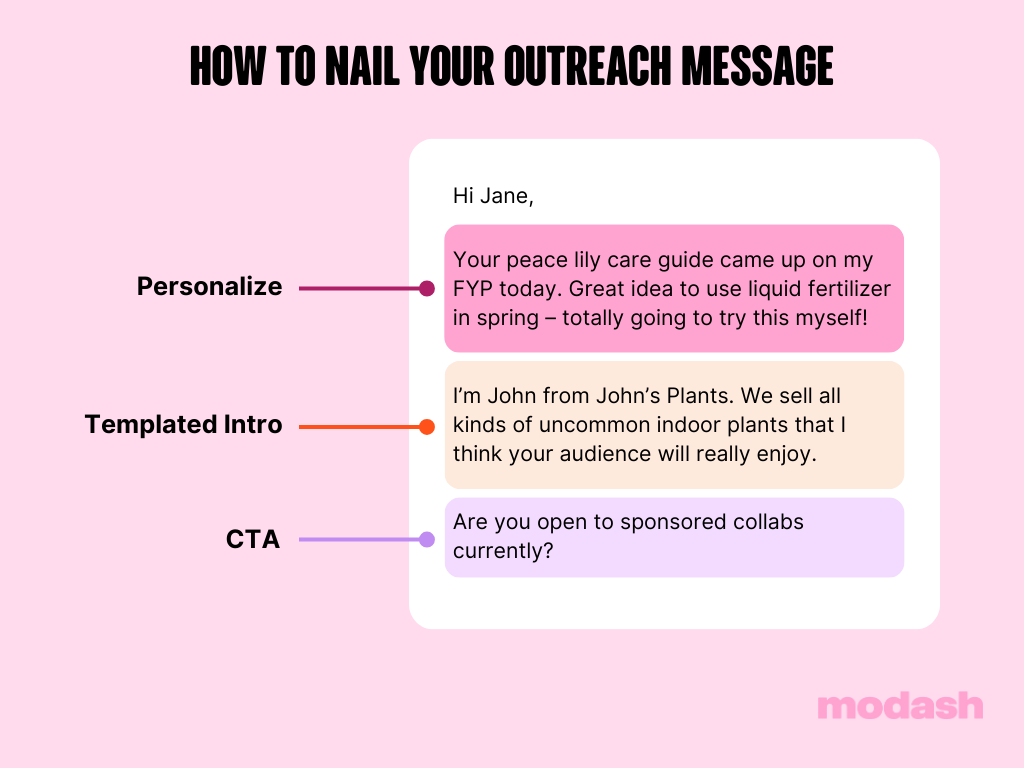
Si vous cherchez à comprendre comment les marketeurs abordent les influenceurs dans le monde réel, voici 14 exemples de vraies marques.
Envoyer à un influenceur un contrat généré par l’IA est une catastrophe annoncée. Une seule erreur peut vous coûter de l’argent, nuire à votre réputation et vous causer bien des maux de tête.
L’IA ne connaît pas les lois propres à chaque juridiction et ne comprend pas les nuances juridiques. De plus, vous avez besoin d’une terminologie juridique spécifique pour que votre contrat soit valide. Oui, vous pouvez demander à l’IA d’utiliser ce langage juridique précis, mais cela ne garantit pas qu’elle suivra vos instructions.
Même si vous créez un contrat généré par l’IA, votre équipe juridique doit le valider pour s’assurer qu’il est conforme aux exigences. Voyez les choses ainsi : si vous ne feriez pas aveuglément confiance à l’IA pour rédiger un e-mail à votre place, pourquoi lui confieriez-vous un document juridique ?
Si je devais résumer le débat sur l’utilisation ou non de l’IA, je dirais ceci : utilisez l’IA pour les tâches administratives qui ne nécessitent pas d’avis, mais évitez-la pour les tâches qui demandent une touche humaine.
Chaque fois que vous communiquez avec une personne (que ce soit en discutant avec vos partenaires influenceurs ou en rédigeant des légendes pour votre audience), ne vous fiez pas uniquement aux contenus générés par l’IA.
En revanche, lorsque vous effectuez sans cesse des tâches répétitives et fastidieuses (comme mettre à jour des feuilles de calcul ou collecter du contenu d’influenceurs), utilisez l’IA pour libérer du temps et de l’énergie.
L’IA peut transformer votre façon de travailler. Elle peut vous faire gagner des heures de travail administratif, faire ressortir plus rapidement des informations clés et aider votre équipe à rester organisée à grande échelle. Mais c’est aussi un rappel : toutes les facettes de votre travail ne devraient pas être automatisées. La magie du marketing d’influence réside toujours dans les relations, la créativité et l’intuition — des choses qu’aucun algorithme ni outil ne peut reproduire.
Si vous souhaitez utiliser l’IA là où elle fait réellement la différence — pour la découverte d’influenceurs, la gestion de contenu et le suivi des performances — essayez Modash. Modash est conçu pour rendre vos workflows plus intelligents sans perdre la touche humaine.