Gebruik Modash in Claude, ChatGPT, Cursor en andere AI-tools
Aan de slag met MCP



Awin en Impact zijn twee van de meest gevestigde affiliateplatforms op de markt, maar ze zijn ontwikkeld voor verschillende soorten programma's. Awin biedt je toegang tot zijn uitgeversnetwerk en een eenvoudige installatie. Impact geeft je meer controle over contracten, tracking en partnertypen, maar tegen een hogere prijs en met meer complexiteit.
In dit artikel zetten we uiteen hoe de twee zich tot elkaar verhouden (op het gebied van prijzen, creator-werving, commissiestructuren, Shopify-integratie, contenttracking enz.) en waar ze allebei tekortschieten als je influencer- en affiliateprogramma's vanuit één plek wilt runnen.
Awin en Impact zijn ontwikkeld voor verschillende fasen en soorten affiliateprogramma's. Awin is beter voor merken die hun affiliateprogramma willen opstarten en opschalen, terwijl Impact geschikter is voor grotere bedrijven die complexe samenwerkingen beheren.
Awin is een traditioneel affiliatenetwerk. Je krijgt direct toegang tot hun groep creators, een eenvoudige installatie en gestandaardiseerde tools waarmee je snel kunt lanceren zonder uitgebreide configuratie.
Impact is een platform voor partnershipmanagement. Het biedt gedetailleerde tracking en attributie, en de mogelijkheid om affiliates, influencercampagnes en klantverwijzingsprogramma's vanuit één dashboard te beheren. Het is ontwikkeld voor merken die elke laag van hun partnerprogramma zelf willen beheren en aanpassen. Maar die controle heeft een prijs: zowel financieel (de nuttige functies beginnen bij $500 per maand) als in de operationele inspanning die nodig is om alles te configureren en te beheren.
De eenvoudigste manier om ernaar te kijken: Awin biedt je een netwerk waarop je kunt aansluiten. Impact biedt je een systeem waarop je kunt voortbouwen.
Maar met geen van beide kun je proactief creators vinden, hun content automatisch tracken of influencer- en affiliaterelaties beheren in één verbonden workflow zonder uitgebreide configuratie.
Daar komt Modash om de hoek kijken: een Shopify-native tool die creator discovery, contenttracking, affiliatemanagement en uitbetalingen op één plek regelt, zonder de complexiteit of het prijskaartje van beide. Zo verhouden Awin en Impact zich tot elkaar en tot Modash:
| Criteria | Awin | Impact | Modash |
|---|---|---|---|
| Het meest geschikt voor | Merken die affiliateprogramma's lanceren of opschalen | Merken die complexe partnershipprogramma's met meerdere typen beheren | Merken die influencer- en affiliateprogramma’s op Shopify runnen |
| Vanafprijs | $49/maand (VS) + 3,5% trackingkosten | $30/maand of 2,5% van de partnerkosten (afhankelijk van welk bedrag hoger is) | $199/maand + 5% uitbetalingskosten over de commissie van de creator (niet over affiliate-inkomsten) |
| Prijs voor geavanceerde functies | Vanaf $ 99/maand (Accelerate) | $ 500/maand (Essentials) | Vanaf $ 199/maand |
| Affiliatenetwerk | Meer dan 1 miljoen partners van alle soorten | 110.000 gecontroleerde partners | 380 mln.+ creatorprofielen (Instagram, TikTok, YouTube) |
| Influencermanagement | Creators sluiten zich aan als publishers; geen speciale tools voor merken | Speciaal Creator-programma met campagnes, contentbeheer, gifting en social listening | Volledige workflow – outreach, gifting, contenttracking, affiliatelinks, uitbetalingen – in één dashboard |
| Klantverwijzingsprogramma's | Kan geen klantverwijzingsprogramma's uitvoeren | Maakt het mogelijk om klantverwijzingsprogramma's uit te voeren vanuit hetzelfde creator- en affiliate-dashboard | Kan geen klantverwijzingsprogramma's uitvoeren |
| Tracking van affiliatecontent | Geen | Prestaties per post voor ingehuurde creators, alleen in Creator-campagnes (niet van toepassing op affiliates) | Automatische contentverzameling – geen actie van creators nodig (inclusief Instagram Stories) |
| Adviesdiensten | Flexibele adviesdiensten – keuze uit ad-hoc- of strategische ondersteuning | Je kunt kiezen voor de Jumpstart-service voor je eerste affiliateprogramma of voor ondersteuning van de serviceafdeling wanneer je later hulp nodig hebt | Biedt geen adviesdiensten |
| Shopify-integratie | Hybride tracking. Kan problemen veroorzaken bij het afstemmen van order-ID's | Vereist configuratie | Native: promotiecodes, affiliatelinks, productgifting en omzetattributie in één workflow |
| Rapportagetools | Basisfuncties in het laagste abonnement | 40+ uitgebreide vooraf opgestelde rapporten in het laagste abonnement | Geïntegreerd dashboard gesynchroniseerd vanuit Shopify |
| Contractuele verplichting | Minimum van 3 maanden voor het laagste abonnement | Opstartkosten + contractvoorwaarden verschillen per abonnement | Maandelijks, op elk moment opzegbaar |
| Gratis proefperiode | Eerste maand gratis bij het goedkoopste abonnement | 30 dagen gratis proefperiode bij het goedkoopste abonnement | Gratis proefperiode van 14 dagen, geen creditcard vereist |
Awin is geschikter voor merken die affiliateprogramma's willen opzetten en opschalen, maar de prijzen van Impact leveren een beter rendement op voor grotere merken die klantverwijzingen, influencer- en affiliateprogramma's uitvoeren. De ideale middenweg is Modash – een perfecte keuze voor merken die een uitgebreide tool willen om influencers & affiliates te vinden en ze in één dashboard te beheren.
Op het eerste gezicht lijkt Impact goedkoper om mee te beginnen. Het Starter-abonnement kost $30 per maand, terwijl het goedkoopste abonnement van Awin $49 per maand kost (plus 3,5% transactiekosten). Maar als je goed kijkt, is het duidelijk dat het Starter-abonnement van Impact voor de meeste influencermarketingteams niet genoeg zou zijn.
Bovendien bedragen je kosten $30 per maand alleen als je affiliateprogramma klein is. In de factureringsdetails van Impact staat dat je 2,5% van je totale partneromzet of $30 per maand in rekening wordt gebracht, afhankelijk van welk bedrag hoger is. Dus als je affiliatepartners in een bepaalde maand $2.000 aan commissies opleveren, is je Impact-fee $50 en niet $30.
Impact brengt ook opstartkosten in rekening, die afhankelijk zijn van het aantal technische middelen dat je onboarding vereist.
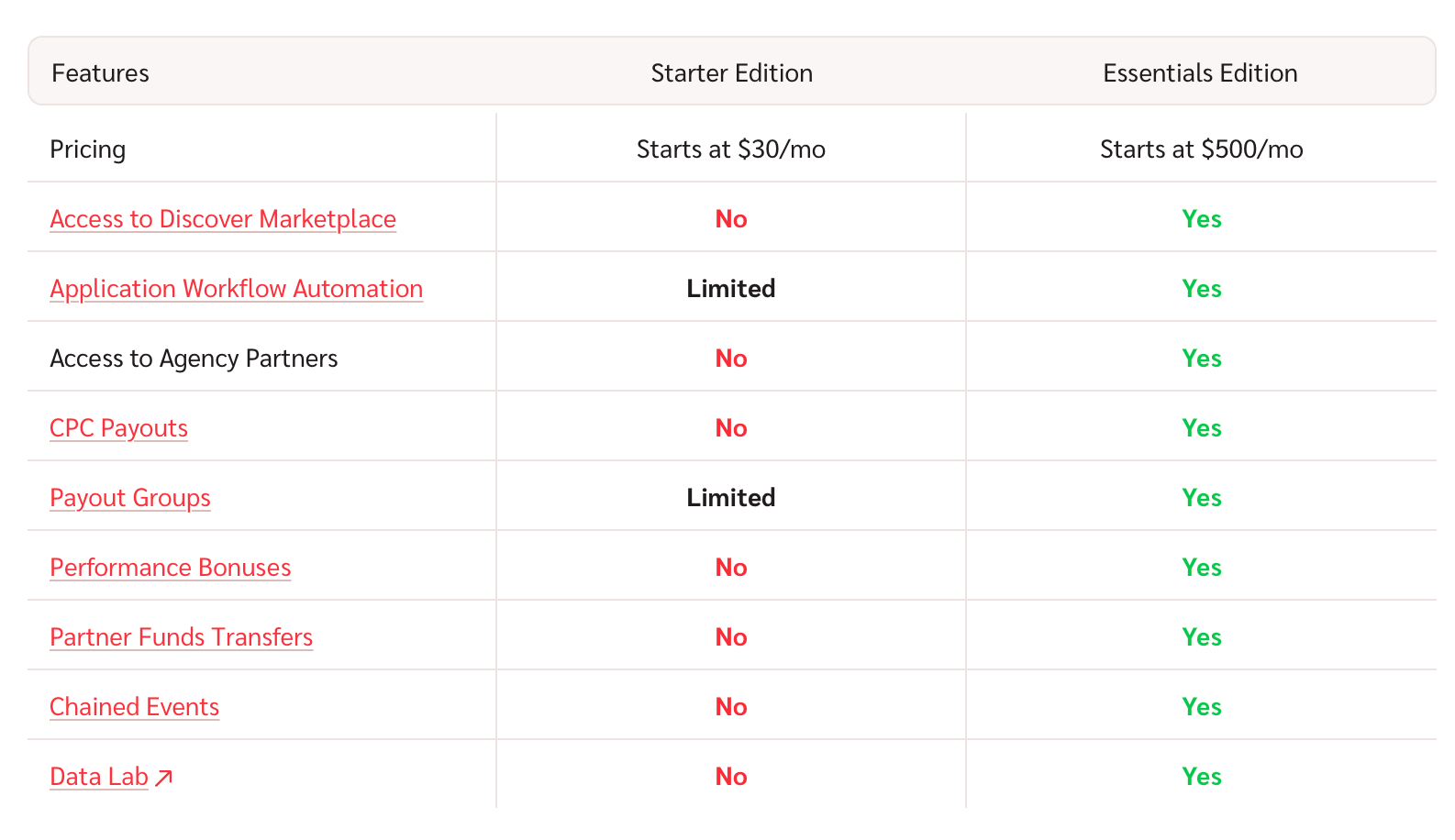
Om de geavanceerde functies van Impact te ontgrendelen, moet je upgraden naar het Essentials-abonnement, dat $500 per maand kost – een flinke sprong. Hier is een snel overzicht van de functies waartoe je geen toegang krijgt met het betaalbare abonnement van $30 per maand:
Ter vergelijking: de prijzen van Awin zijn veel duidelijker. Voor $49 per maand (en 3,5% transactiekosten) krijg je toegang tot hun gescreende partners, gepersonaliseerde partneraanbevelingen, de mogelijkheid om campagnes te lanceren en te beheren, een communicatiecentrum om partners berichten te sturen, geautomatiseerde e-mails aan partners en basisrapportage. Maar met het Access-abonnement zit je vast aan een minimumduur van drie maanden.
Dat gezegd hebbende, bieden de hogere prijzen van Impact veel meer dan het aanbod van Awin.
Maar wat als je een tool wilt die uitgebreider is dan Awin, maar niet zo ingewikkeld (en duur!) als Impact? Een perfecte optie is Modash. Je kunt:
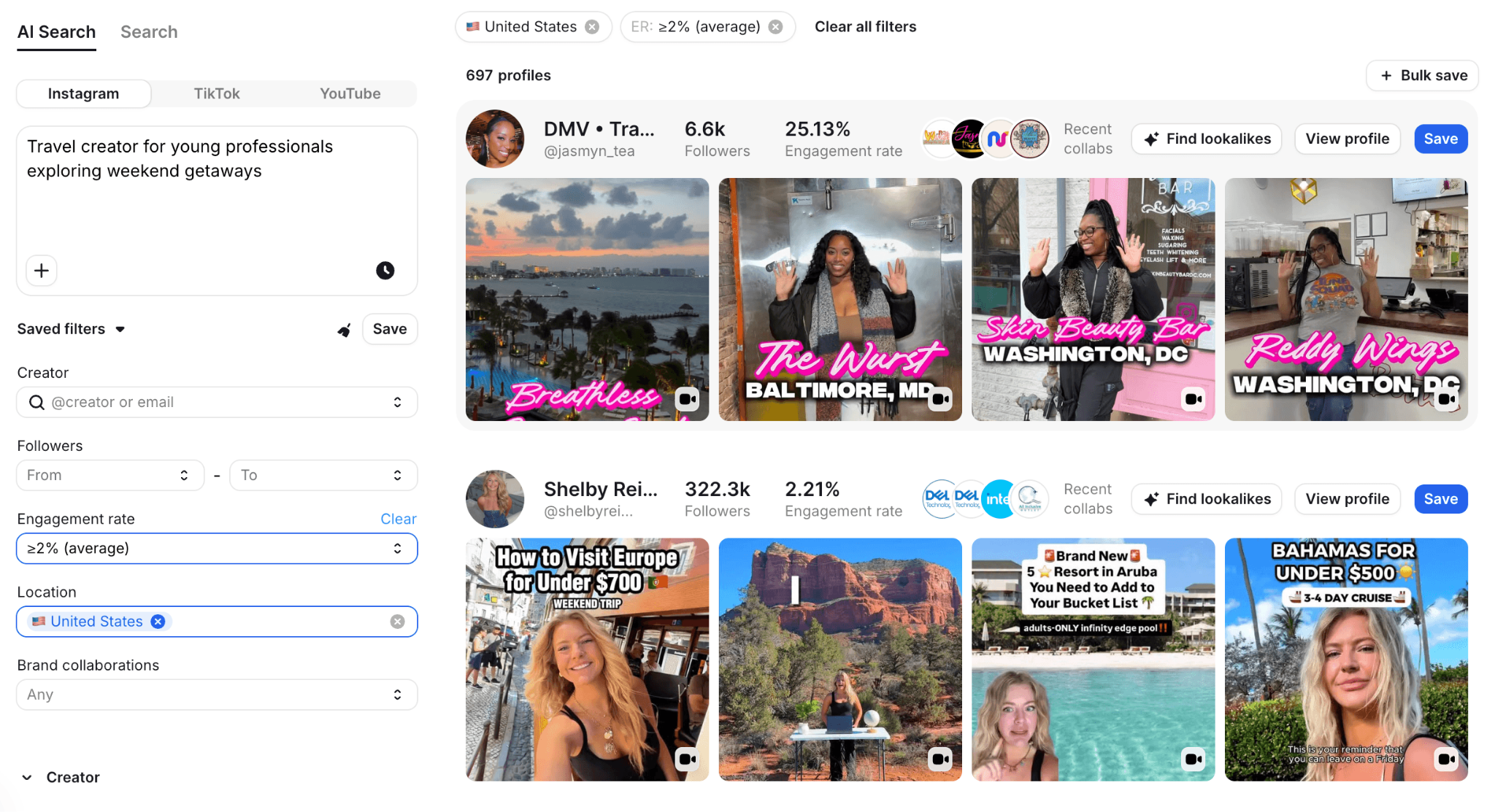
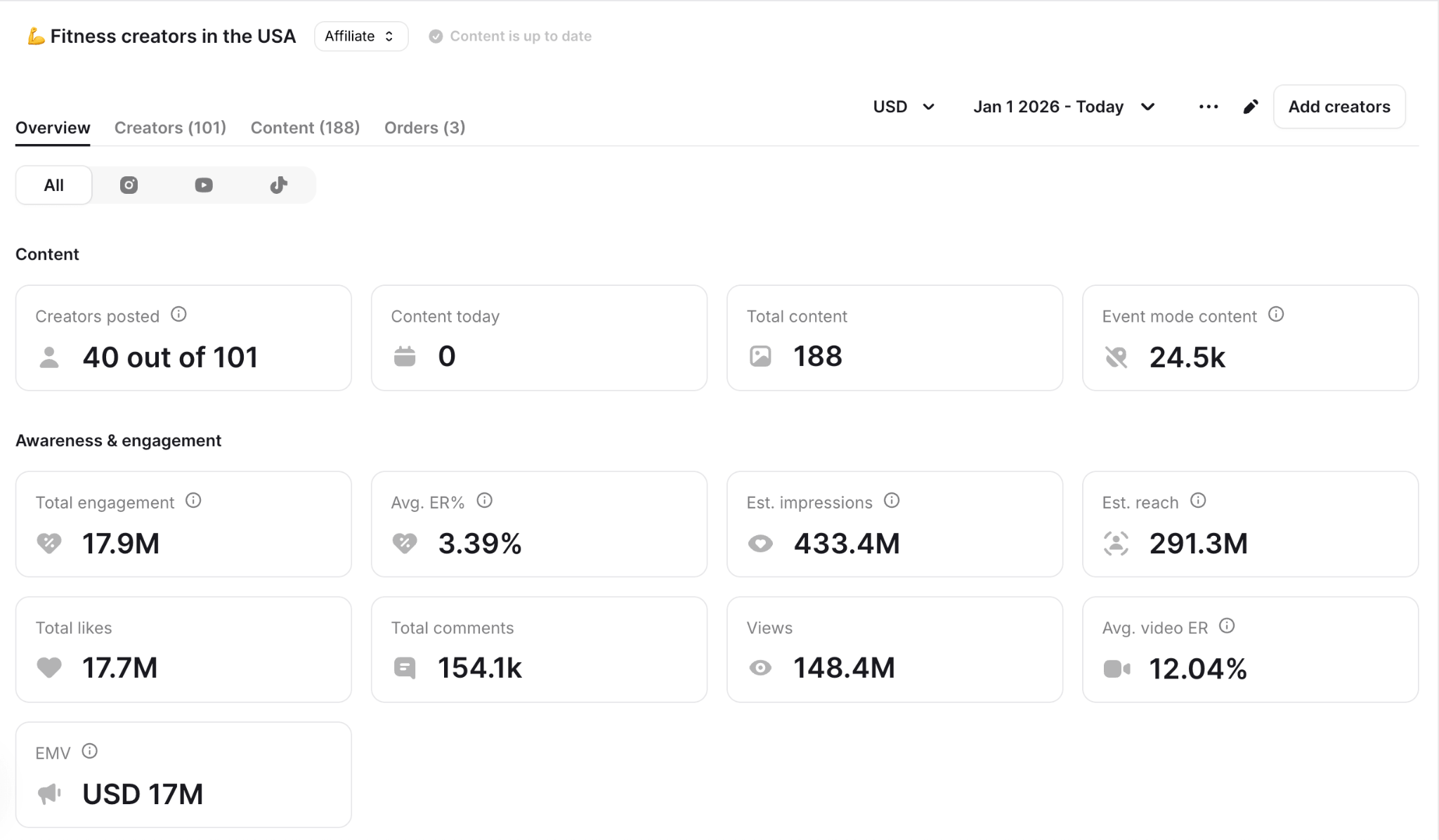
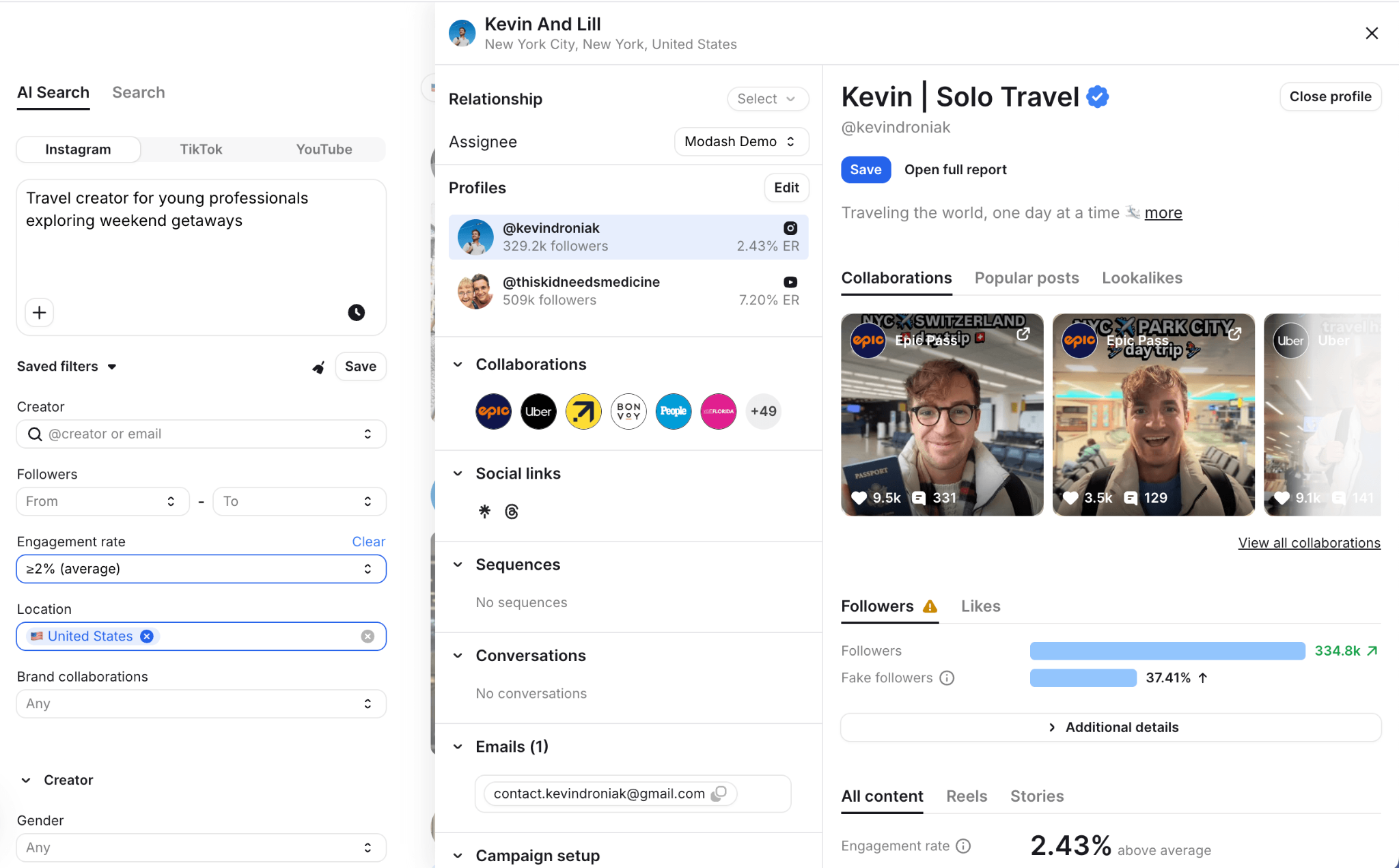
De prijzen beginnen bij $199 per maand. Je kunt opschalen naar $499 per maand om affiliates en betalingen aan creators te beheren. Probeer het 14 dagen gratis.
Als je Awin en Impact gebruikt, heb je een derde tool nodig voor het werven van affiliates (of creators). Awin heeft meer dan 1 miljoen partners op zijn marktplaats, terwijl Impact er slechts 300.000 heeft (al bevat de creatordatabase meer dan 25 miljoen creators). Dat is minimaal – vooral zodra je filters toepast om affiliates te vinden die bij je merk passen.
Een veel betere oplossing is een tool voor influencer- & affiliatemanagement zoals Modash. Een wereldwijde database met creators die je kunt filteren op grootte, locatie, doelgroep, nepvolgers en meer. En je krijgt toegang tot meer dan 380 miljoen creators – dat zijn alle creators ter wereld met meer dan 1k+ volgers op Instagram, TikTok en YouTube.
Je kunt zelfs de AI-zoekfunctie gebruiken om creators te vinden die volledig aan je criteria voldoen, of een visuele leidraad uploaden om affiliates met een vergelijkbare uitstraling te vinden.

Een nog groter probleem met zowel Awin als Impact is dat elke creator met wie je samenwerkt op het platform moet zijn aangemeld om hun prestaties bij te houden. Dus zelfs als je je affiliates buiten deze tools vindt, moet je hen vragen om lid te worden van Impact/Awin, hun socialmedia-accounts te koppelen, belastingdocumenten in te dienen enzovoort om met je samen te werken. Dit zorgt voor veel drempels voor de creator en velen kunnen worden afgeschrikt door de extra administratieve rompslomp.
In Modash hoeft de creator zich niet aan te melden om met je merk samen te werken. Je kunt hun profiel beoordelen, contact met hen opnemen, met hen communiceren, hun prestaties bijhouden en content verzamelen, zonder dat je hen vraagt zich ergens aan te melden.
Zodra je een affiliate hebt gekozen, kun je die uitnodigen voor Modash zodat die je programmavoorwaarden kan bekijken, bankgegevens kan delen en betalingen kan volgen. Als je alleen met een influencer samenwerkt, hoeft die zich helemaal niet aan te melden.
Kortom: Awin en Impact schieten tekort voor het vinden van affiliates. Je hebt een externe zoektool nodig – zoals Modash – om genoeg affiliates te vinden en je programma op te schalen.
Awin en Impact bieden mogelijkheden om experts uit de sector in te schakelen voor het beheren en verbeteren van je affiliateprogramma.

De service-add-ons Launch, Reach en Elevate beginnen bij £299 en de Publisher-gapanalyse bij £99 (+ btw). Deze opties zijn veel flexibeler voor veel influencermarketingteams die ad-hocondersteuning nodig hebben.
Maar als je voortdurend hulp nodig hebt – strategisch of administratief – kan Awin daar ook bij helpen. Je kunt pakketten aanpassen op basis van wat je nodig hebt. Als je team bijvoorbeeld operationele ondersteuning mist, kun je ervoor kiezen om het Awin-team dit te laten afhandelen. Maar als je meer strategische begeleiding nodig hebt, kan het Awin-team inspringen om proactief potentiële affiliates onder de aandacht te brengen, de prestaties van je programma te meten, enzovoort.
Kortom: hoewel zowel Impact als Awin deskundige diensten aanbieden, zijn de opties van Awin veel flexibeler.
Naast tools voor affiliatebeheer kun je met Impact ook influencer- en klantverwijzingsprogramma's opzetten vanuit hetzelfde dashboard. Awin biedt dit niet.
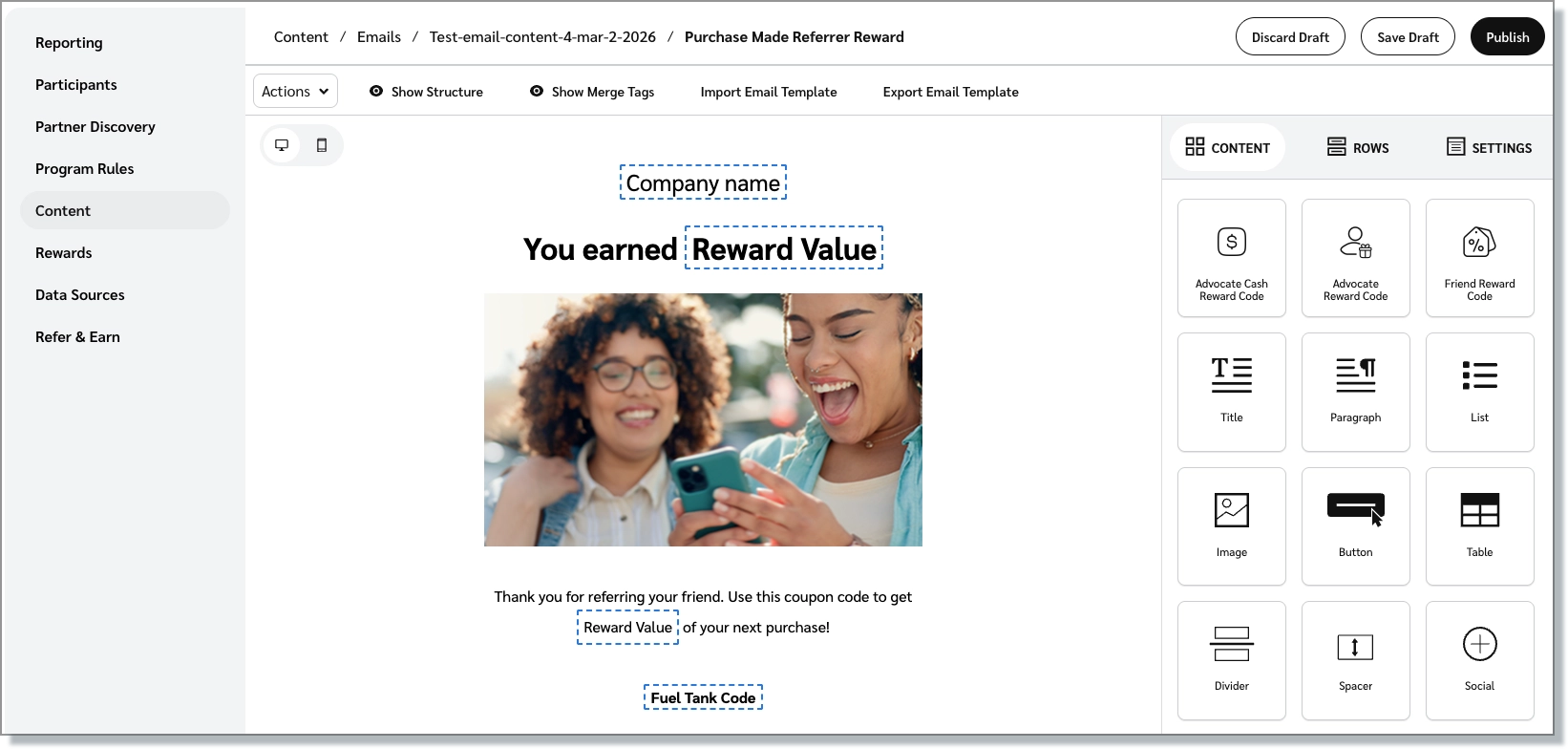
Je krijgt een apart Creator-programma en een apart Advocate-programma, elk met een eigen configuratie, rapportage en workflows – maar allemaal toegankelijk vanuit hetzelfde Impact-dashboard.
Bij klantverwijzingsprogramma's kun je kiezen uit verschillende beloningen voor je klanten, waaronder contant geld, cadeaubonnen, punten, tegoed, kortingen, productupgrades enzovoort. Je kunt het verwijzingsprogramma ook aanpassen met terugkerende, tijdgebonden en op niveaus gebaseerde beloningen.
Dankzij de vele integraties van Impact zijn ook attributietracking en geautomatiseerde uitbetalingen mogelijk. Je kunt het programma zelfs gedurende de hele klantreis rechtstreeks vanuit Impact integreren met aangepaste e-mails na aankoop, widgets en speciale landingspagina's.
Voor influencercampagnes kun je kiezen uit verschillende vergoedingsmodellen (vaste vergoeding, cadeaus aan influencers, prestatiegerichte beloning, enz.). Maar zoals hierboven besproken, moeten creators zich nog steeds aanmelden voor een Impact-account en hun sociale profielen koppelen voordat je met hen kunt communiceren en hun prestaties kunt volgen.
Het enige nadeel is natuurlijk dat de prijs van Impact voor al deze functies torenhoog is. Om influencers te zoeken met behulp van zoekwoorden of zelfs aanpasbare rapporten te maken, heb je het Pro-abonnement nodig – dat maar liefst $2.500 per maand kost.
Een beter alternatief dat budgetvriendelijker en eenvoudiger te gebruiken is, is Modash.

Conclusie: Impact is de enige van de twee opties als je influencer-, affiliate- en klantdoorverwijzingsprogramma's in één platform nodig hebt – Awin biedt de laatste twee helemaal niet. Maar als je je richt op influencer- en affiliatemarketing zonder het prijskaartje van een enterprise-oplossing, biedt Modash dat voor een fractie van de kosten.
Impact heeft een van de meest uitgebreide rapportagesuites binnen affiliatemanagement. Maar dat maakt het ook ingewikkeld in gebruik. Als je voor Impact kiest, moet je veel meer tijd aan onboarding besteden en het duurt even voordat je het volledige potentieel van de tool benut.
Alleen al in het Starter-abonnement van Impact zijn er meer dan 40 vooraf gebouwde rapporten beschikbaar, met prestaties per partner, product, promotiecode, land, apparaat, dag, week, maand, uur, nieuwe versus terugkerende klanten en meer.

Naarmate je voor hogere abonnementen kiest, worden de mogelijkheden alleen maar gedetailleerder en diepgaander. Je kunt bijvoorbeeld volledig aanpasbare dashboards met verschillende typen visualisaties bouwen, je eigen meetwaarden creëren, prestaties voorspellen en de impact over verschillende kanalen volgen.
De rapporten van Awin zijn ook nuttig, maar vergeleken met Impact behoorlijk beperkt (vooral in het Access-abonnement). Je kunt de klantreis volgen, je prestaties vergelijken met die van concurrenten en de bijdrage van affiliates aan de omzet volgen.
Maar Awin heeft geen tool voor het bouwen van aangepaste dashboards zoals Impact. Als je uitgebreidere rapportages in Awin wilt, moet je gegevens ophalen via hun API (alleen beschikbaar in Accelerate en Advanced) en zelf rapporten maken – of een Zapier-integratie gebruiken om gegevens naar je eigen tools door te sturen.
De keerzijde van Impact is echter dat die diepgang ten koste gaat van de eenvoud. Impact heeft een steile leercurve en het kan weken duren voordat je begrijpt hoe data tussen de programma's (Performance, Creator, Advocate) stroomt en hoe je tracking correct configureert. Het enorme aantal rapporten kan overweldigend zijn, vooral als je een klein team hebt (of een eenpersoonsteam bent).
Dit betekent ook dat het langer duurt voordat Impact waarde oplevert. Tussen de setupkosten, het onboardingproces, de integratieconfiguratie en de tijd die partners nodig hebben om genoeg conversies te genereren voor betekenisvolle data, kunnen er weken of maanden verstrijken voordat je bruikbare inzichten uit de rapportages van Impact krijgt. Voor kleinere teams is dat veel overhead voordat je ROI ziet.
Awin is eenvoudiger in te stellen en te gebruiken, en je kunt er sneller rapportages mee maken – binnen enkele dagen na de lancering van je programma beschik je over basisprestatiegegevens.
Conclusie: de rapportages van Impact zijn aanzienlijk krachtiger, maar je betaalt ervoor met zowel geld als onboardingstijd. Met Awin krijg je sneller basisgegevens met minder configuratie.
De rapportagemogelijkheden van Impact werken ook door in de commissiestructuren. Je kunt een breed scala aan regels opstellen om partners uit te betalen op basis van onder meer promotiecode, winkelmandgrootte, klantstatus (nieuw vs. terugkerend) en productcategorie.
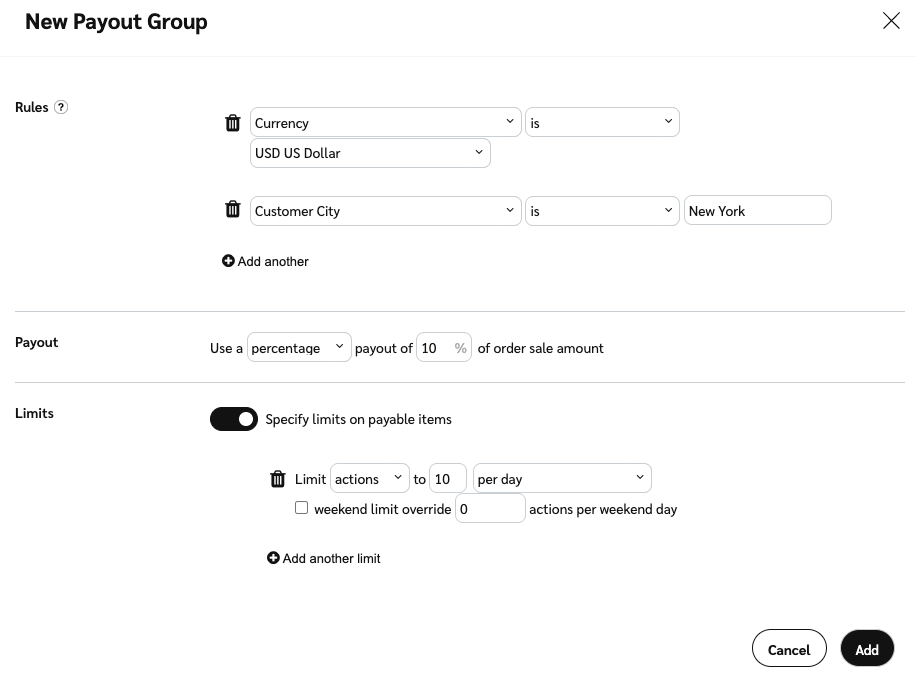
Daarnaast kun je prestatiebonussen aanbieden aan toppartners, uitbetalingsgroepen met verschillende tarieven voor verschillende partnersegmenten maken en contractvoorwaarden per partner instellen. Dus als je een hogere commissie wilt betalen voor producten met hoge marges of partners wilt belonen die appdownloads genereren, kan Impact dat allemaal.
De flexibiliteit is geweldig, maar daar hangt wel een hoger prijskaartje aan. De meeste van de meest gedetailleerde commissiemodellen zijn alleen beschikbaar in abonnementen van een hoger niveau.
Awin biedt ook veel opties voor verschillende commissies, maar die zijn niet zo gevarieerd als die van Impact. Je kunt commissieregels bepalen op basis van AOV, kliks, vouchercode, SKU enzovoort, maar je kunt contracten niet per partner aanpassen. Net als bij Impact zijn de flexibelste commissiestructuren voorbehouden aan de hoogste abonnementen.
Er geldt ook een beperking voor het verlagen van tarieven bij Awin: je kunt commissies slechts met maximaal 20% per keer verlagen, eens per 30 dagen, met een voorafgaande kennisgeving van 7 dagen aan partners.
Conclusie: Impact heeft een krachtige commissie-engine, maar je moet minimaal $500 per maand betalen om die daadwerkelijk te gebruiken. Awin biedt je een gemiddelde mate van flexibiliteit die meegroeit met je abonnementsniveau.
Zowel Awin als Impact hebben Shopify-apps, maar geen van beide integraties is echt ‘native’ voor Shopify. Beide volgen affiliateverkopen via hun eigen externe systemen, wat configuratie, het instellen van pixels en doorlopend onderhoud vereist. Als je een Shopify-merk bent en wilt dat tracking meteen werkt zonder extra configuratie, is dat niet mogelijk met Awin of Impact.
Impact vereist dat je gebeurtenistypen configureert, trackingpixels installeert in de app-embeds van je Shopify-thema en alles end-to-end test voordat je live gaat. Het grootste nadeel van Awin is dat het de interne bestel-ID van Shopify (een lange reeks cijfers) gebruikt als bestelreferentie in rapportages – niet het voor klanten zichtbare bestelnummer (zoals #1001) dat je ziet in je Shopify-beheeromgeving en in e-mails aan klanten. Wanneer je Awin-rapporten met je Shopify-bestellingen probeert te vergelijken, moet je daarom elke interne ID handmatig opzoeken of een CSV-bestand exporteren om ze te koppelen.
Met geen van beide tools kun je dingen doen die je van een Shopify-native platform zou verwachten – zoals gratis producten naar creators sturen via je Shopify-voorraad of automatisch gegevens over contentprestaties verzamelen zonder handmatige configuratie.
De Shopify-integratie van Modash werkt anders. De integratie maakt rechtstreeks verbinding met je winkel en synchroniseert alles in één workflow – promotiecodes, affiliatelinks, UTM-tracking, productgifting en verkoopattributie.
Je kunt kortingscodes maken voor afzonderlijke creators, productgiftinglinks versturen waarmee creators zelf hun items kiezen (tot een maximale waarde die jij instelt), en klikken, inwisselingen en omzet per creator in realtime volgen. Verkoopdata worden automatisch gesynchroniseerd met je Modash-dashboard. Je hoeft geen pixels te configureren, geen datafeed op te zetten en geen bestellingen handmatig te koppelen.
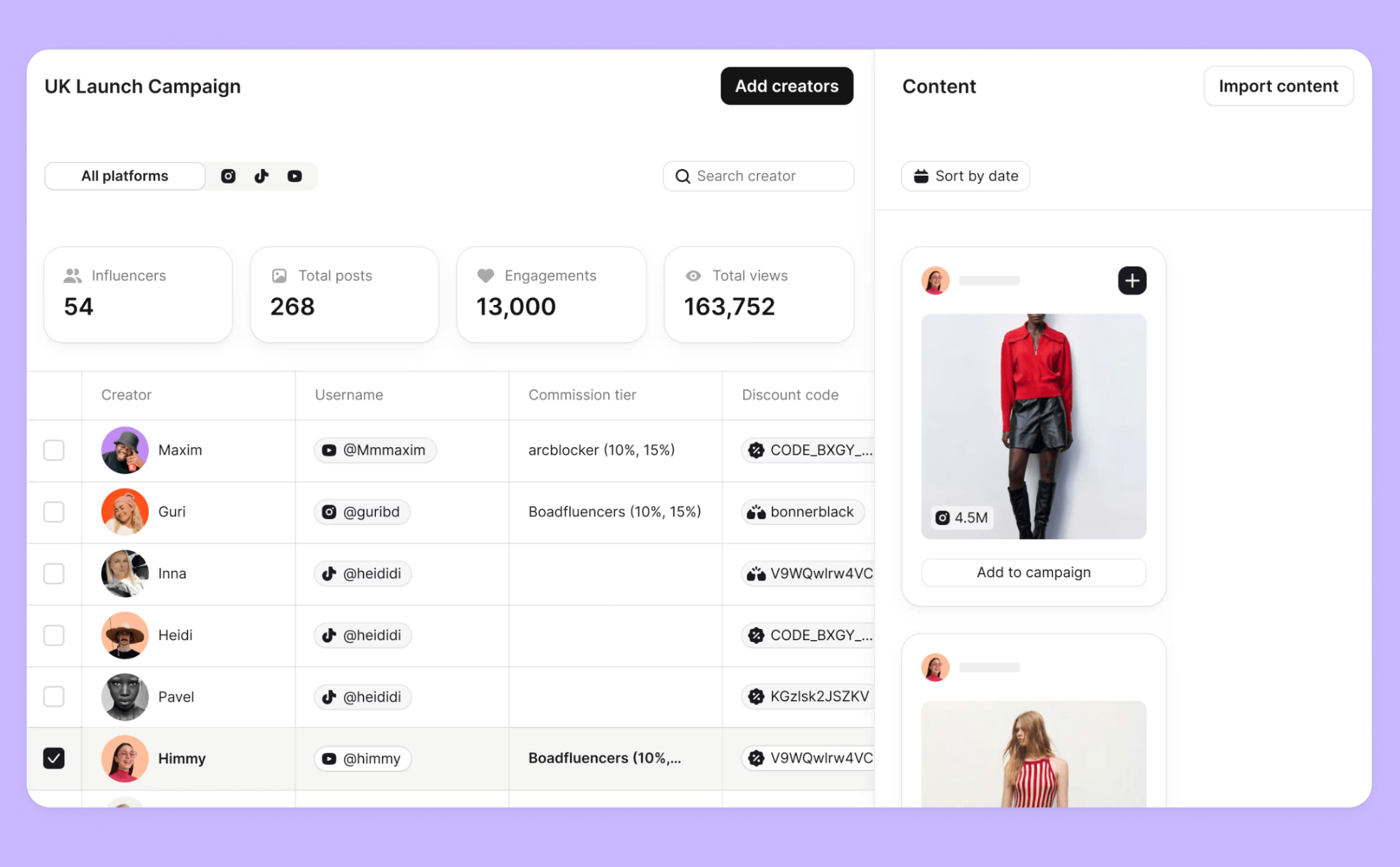
Conclusie: de Shopify-integratie van Impact is beter dan die van Awin, maar vereist configuratie in afzonderlijke modules. Als je wilt dat affiliatetracking, productgifting en creatorbeheer naadloos samenwerken met je Shopify-winkel in één gekoppelde workflow, is Modash de meest naadloze optie.
Als je een affiliate- of influencerprogramma runt, wil je waarschijnlijk zien wat je partners daadwerkelijk plaatsen – de Instagram Reels, TikTok-video's, YouTube-content en Stories die verkoop stimuleren (of juist niet). Noch Awin noch Impact maakt dit eenvoudig.
Awin heeft helemaal geen native contenttracking. Je kunt klikken, conversies en omzet per publisher zien, maar je hebt geen enkel zicht op de daadwerkelijke socialmedia-content die je affiliates of creators plaatsen. Als je wilt weten wat een contentmaker over je product heeft gezegd, moet je zelf op zoek naar de post.
Impact is hier beter, maar alleen binnen het Creator-programma – niet aan de Performance-kant (affiliate). Voor ingehuurde influencers in campagnes kun je hun ingediende content bekijken en beheren, labels toevoegen om die te organiseren en hun prestatierapport bekijken met metrics zoals likes, engagement, impressies en bereik, uitgesplitst per afzonderlijke post.
Impact heeft ook een Social Listening-functie die trefwoorden, hashtags en vermeldingen op sociale platforms monitort, aangevuld met sentimentanalyse.
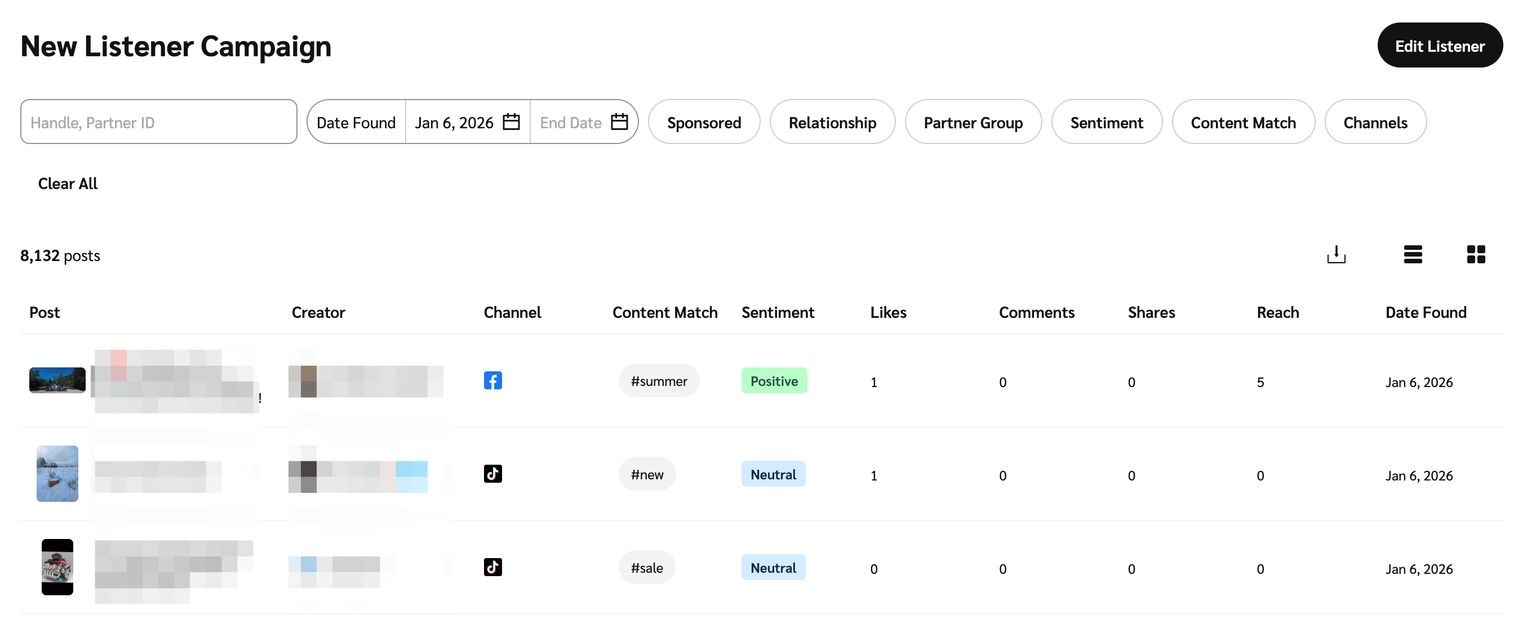
Een belangrijke kanttekening is dat creators hun socialmedia-accounts moeten koppelen en ingehuurd moeten zijn voor een Creator-campagne voordat tracking op postniveau werkt. Als een creator alleen is toegevoegd aan je Performance-programma (affiliateprogramma), krijg je geen zicht op content. Social listening bewaart ook alleen resultaten van de afgelopen 30 dagen.
Voor traditionele affiliates op beide platforms is er helemaal geen contenttracking. Je ziet dat er een verkoop heeft plaatsgevonden, maar niet welke content die heeft veroorzaakt.
Modash pakt dit totaal anders aan. Contenttracking verloopt automatisch – je hoeft creators niet te vragen posts in te dienen, hun accounts te koppelen of iets te authenticeren. Modash crawlt openbaar beschikbare socialmedia-data en verzamelt creatorcontent (inclusief Stories) zodra die wordt geplaatst.

Dit betekent dat je elke post in je dashboard ziet naast de prestatiemetrics ervan, gekoppeld aan de verkoopdata van de affiliate uit Shopify.
Conclusie: Awin biedt je geen inzicht in content. Impact biedt tracking op postniveau, maar alleen voor creators die voor campagnes via het Creator-programma zijn ingehuurd – en voor de beste functies heb je een uitgebreider abonnement nodig. Modash verzamelt en volgt automatisch alle content van creators, zonder dat de creator iets hoeft te doen.
Na het doornemen van alle verschillen krijg je een goed beeld van welk platform beter bij je programma past.
Kies Awin als:
Kies Impact als:
Zelfs nadat je tussen Awin en Impact hebt gekozen, loop je op beide platforms tegen dezelfde hiaten aan.
Modash vult die gaten op.
Modash heeft maandabonnementen, transparante prijzen en een gratis proefperiode van 14 dagen. Bekijk het zelf (geen creditcard, creator-authenticatie of demo’s vereist).