





There’s an easy way and a hard(er) way to do affiliate program competitive analysis.
The easy way is to look at a rival brand’s commission rate, check out the big creators they’re collabing with, then put your feet up and smoke a fat cigar. It’s fast, it’s cheap… and it doesn’t work.
Sadly, as with everything in life, effective competitive analysis requires a little more effort, like:
In this article, I’ll share how to analyze all that stuff (and more), then tell you what to do with all that juicy competitor data.
At this point, you might be thinking: “What’s the beef with just copying my competitor’s headline commission rate and stealing their highest-profile affiliates?”
There’s nothing wrong with looking at this stuff, per se. It’s just that Modash research shows these factors don’t truly speak to whether an affiliate program will succeed or fail.
Fact is, when we surveyed affiliate marketers about what keeps them up at night, one issue dominated all others: keeping affiliates active. As you can see, it’s twice as worrying as finding new affiliates, and almost 3X more than uncompetitive commission rates:
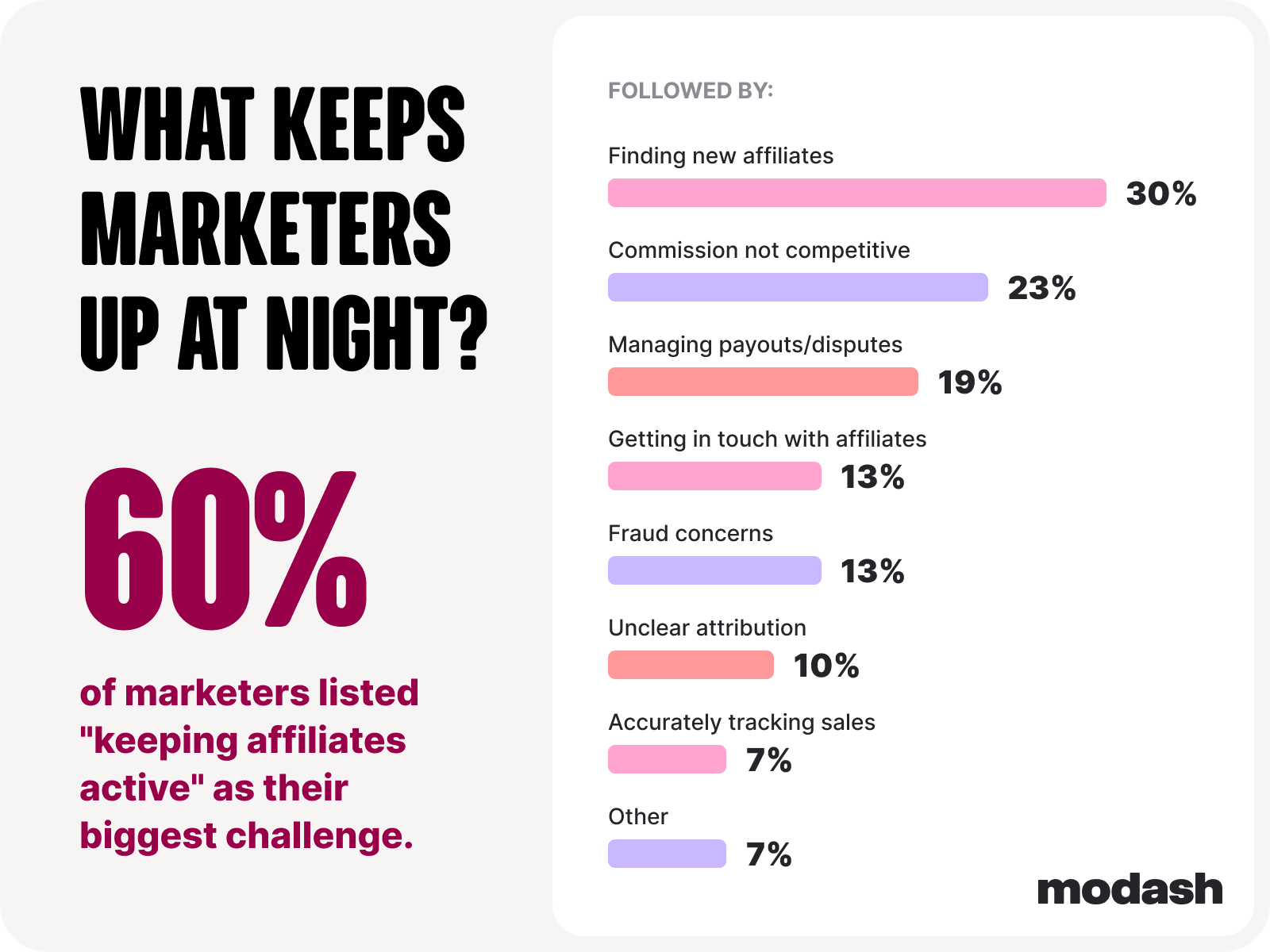
This gets us closer to figuring out what really matters, because our research also showed that programs with tiered commissions have much higher activation rates – 37% for flat-rate programs vs ~50% for three (or more) tiers, to be precise.
So if you truly want to understand what your competitors are getting right, you need to focus on how they keep creators active and engaged.
🤓 Further reading: Check out all the data from this section in Affiliate Marketing Survey 2026: Why Hands-On Programs Outperform the Rest.
Okay, so we know that analyzing headline commission rates and big creators doesn’t cut the mustard. In this section, I'll explain what to look at instead, where to find it, and how much each factor actually tells you about whether a competitor's program is working.
For starters, here’s an at-a-glance view…
…and now let’s take a deeper look at each factor:
Just because top-line commission rate isn’t a reliable predictor of a program’s success, that doesn’t mean you should ignore commission rates entirely. Indeed, there’s a commission-related factor you definitely want to look out for: how your competitor’s rewards are structured (including the breakdown of their commission tiers, if relevant).
Because, as I’ve already noted, programs with 3+ commission tiers see higher rates of active affiliates – and the more active affiliates you have, the less time you have to spend recruiting new ones.
Our research shows that the average three-tier affiliate program is structured like this:
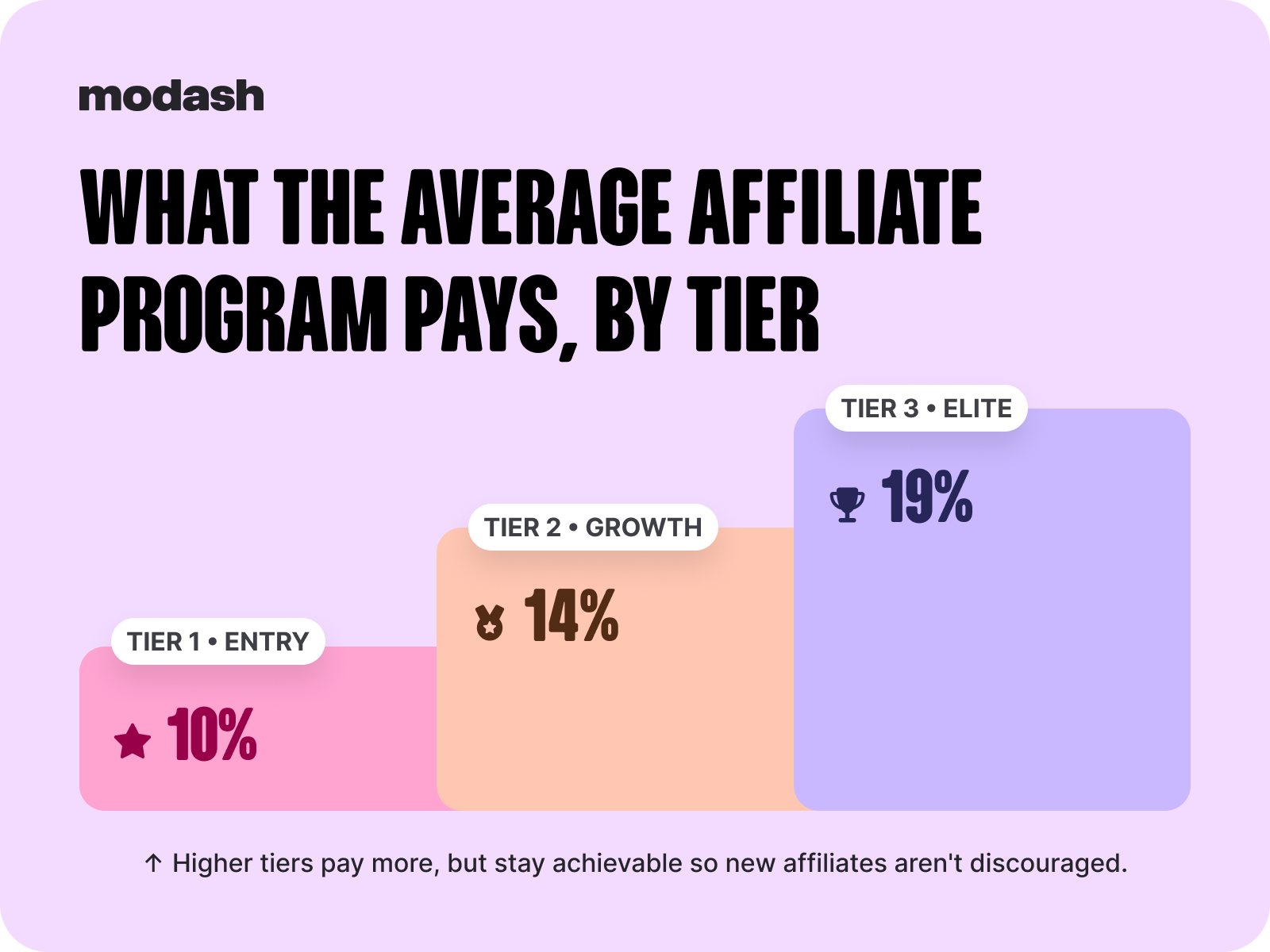
Your goal here is to see how your competitor(s) compare to these benchmarks, and also what performance targets they put in place for each tier (e.g. drive $100 – $499 of sales in a month to qualify for tier #2, or reach tier #3 by hitting $500+).
Many brands include this information on a dedicated affiliate program landing page, like this one from beauty retailer Belantti…
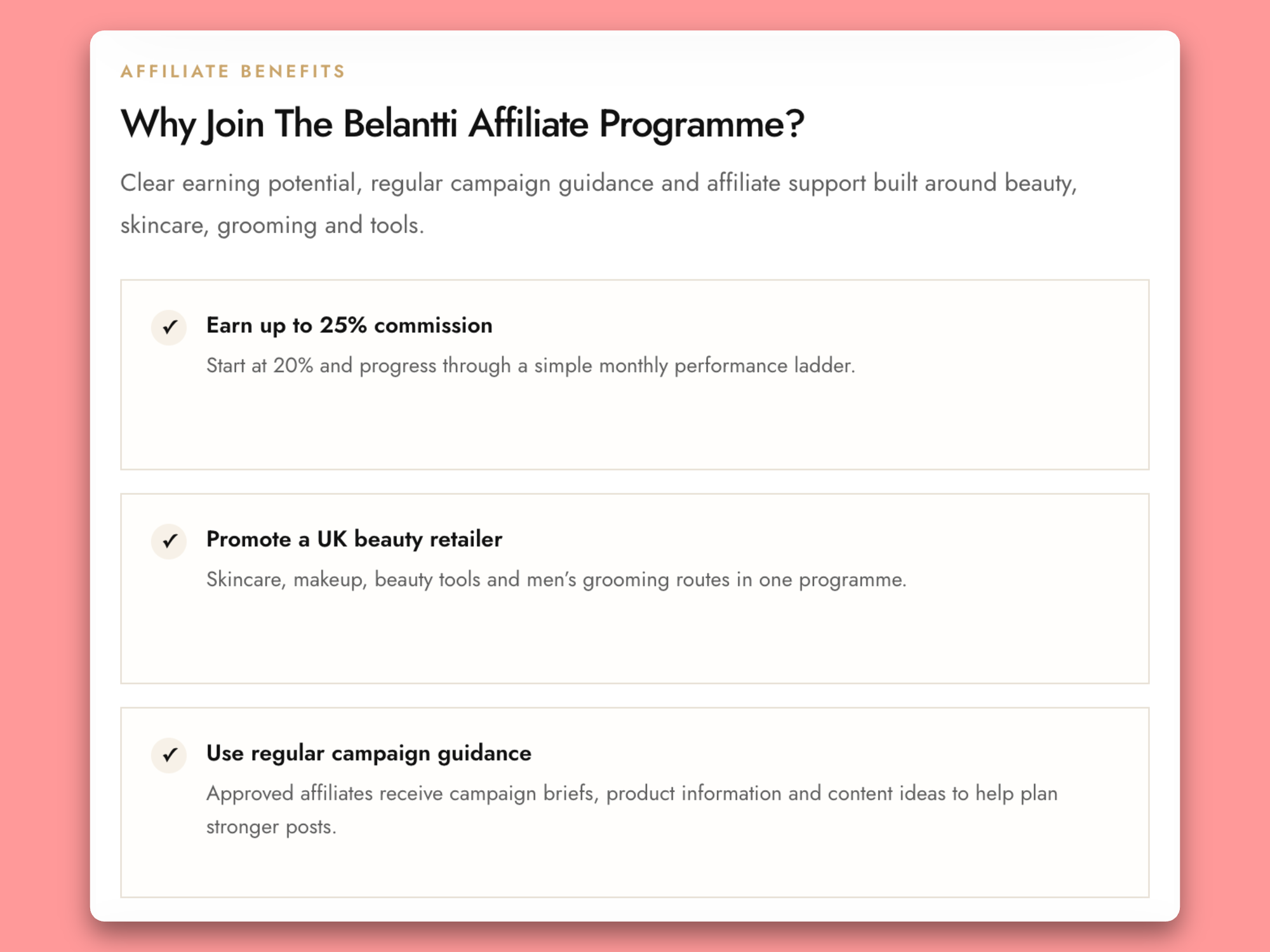
…and you might also find it in promotional social media posts encouraging creators to sign up.
Once you know how your competitor's tiers are structured, you've got a benchmark to build against:
🤓 Further reading: For more on commission structures and other rewards, check out 5 Affiliate Incentives That Actually Drive More Sales (With Examples).
Most affiliates only keep working with brands if they’re making decent money from it – they’ve got bills to pay, right?
So if you can track down the loyal creators who consistently promote your competitor, month after month, you’ve likely found the folks who are driving the bulk of that brand’s affiliate sales.
Which is fantastic news, because once you find those top performers, you can…
There are lots of ways to do this, and I’m not gonna go in-depth on them here – if that’s what you want, check out my guide How to Find Your Competitors' Affiliates. Instead, I’ll show you a simple (but unscalable) manual approach, then explain what to do when it starts holding you back.
IMO the best manual solution is to Google your competitor’s name alongside one or more affiliate-related search operators, like “discount code” or “link in bio”. Most, if not all, of the results will be affiliate posts:
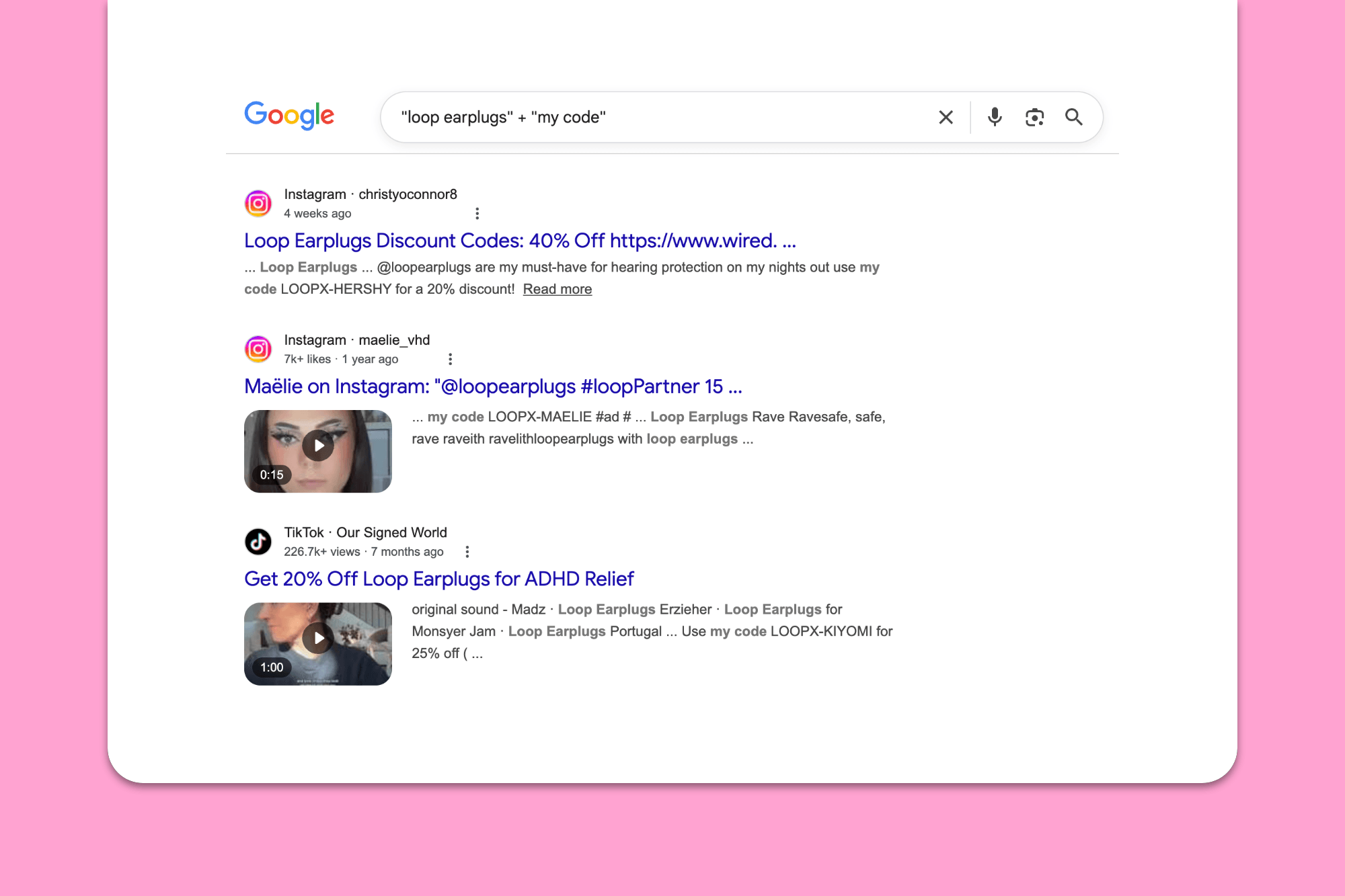
Then, when you’ve identified a bunch of creators, you can stalk – sorry, “monitor” – their profiles over time to see how frequently they collaborate.
This method is preeeetty useful. But it’s a lot of work.
For a more efficient solution, you need affiliate marketing software like Modash, which gives you a whole suite of options for finding your competitors’ affiliates. Use it to search for creators who…
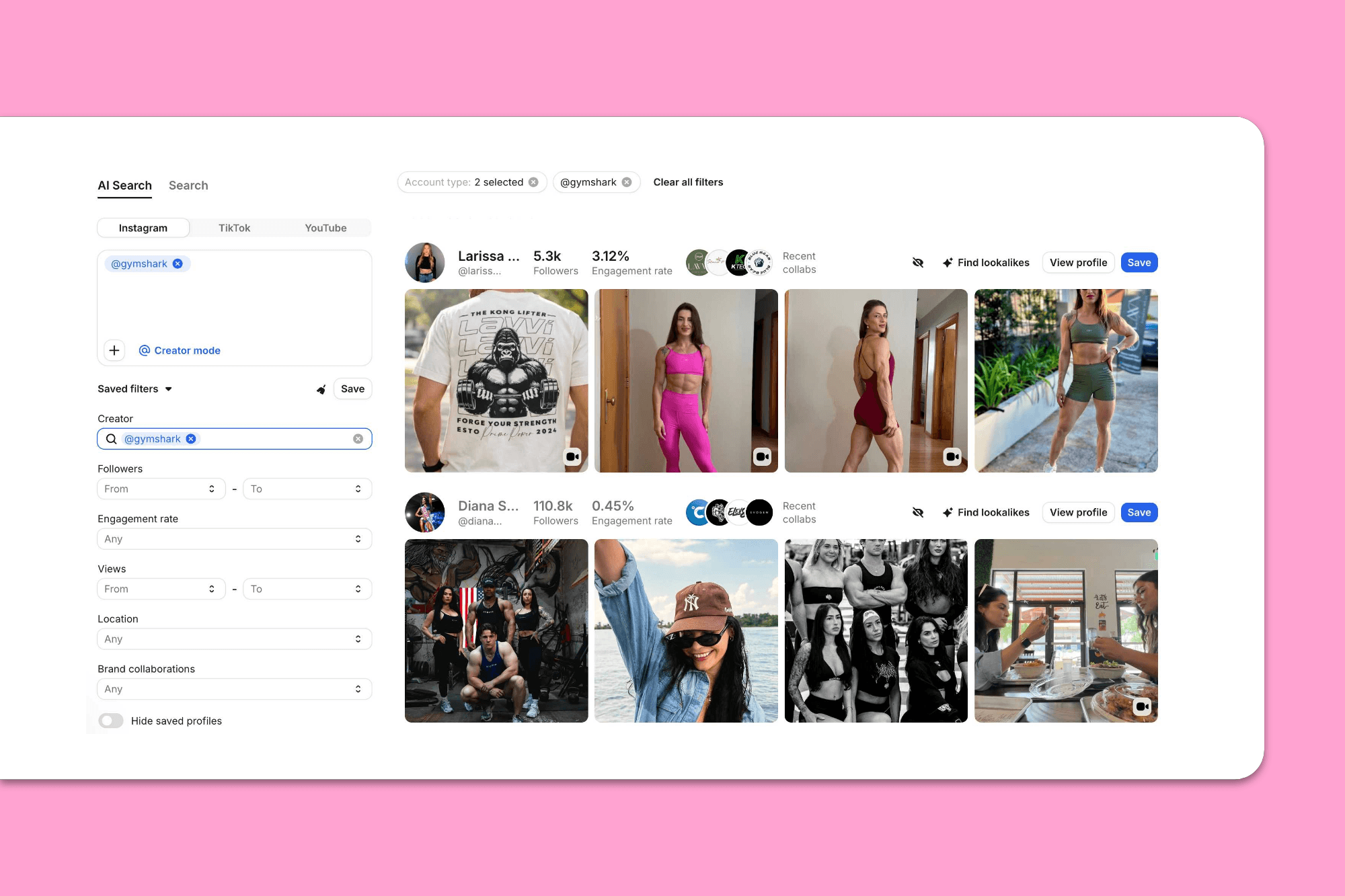
…or simply search by brand collaborations to find all the creators who’ve worked with your competitor in the past.
And, as an added bonus, once you’ve found a competitor affiliate you can use our lookalike search feature to immediately track down a ton of similar profiles. It’s a super effective way to scale your competitive analysis efforts.
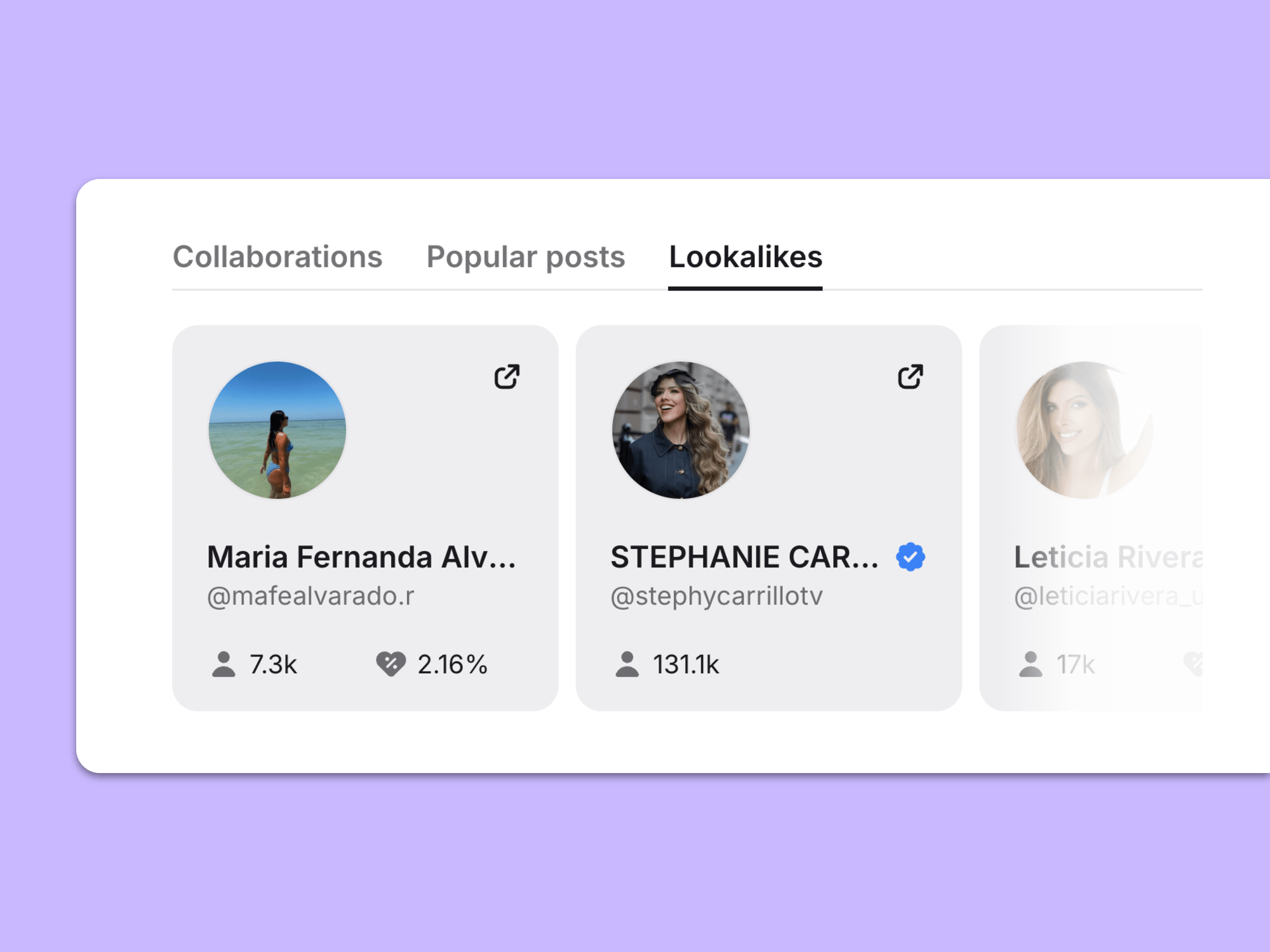
👉 Try all of Modash’s affiliate search tools for yourself by starting your 14-day free trial!
Analyzing your competitors’ affiliates isn’t just about recruiting their top performers – it also tells you whether their results come from a handful of big creators or a ton of smaller ones sharing regular content.
Why does this matter?
Because a brand with a wide, active affiliate base is harder to compete with than one leaning heavily on 2-3 names. After all, if you (or another brand) poached those names – or they just decided to stop working together for some other reason – their whole program could go down in flames.
Unfortunately, like in the previous section, there’s really no easy way to discover this information manually. The best you can do is find creators who’ve posted about your competitor in the past, then individually analyze their follower counts and how often they post. And/or you can manually scan a brand's tagged posts to see if the same few big accounts keep appearing.
Either way, it’s a whole lot of busy work.
Far more efficient to use a platform like Modash, which lets you:
That way, you can clearly see whether all the results are coming from a small group of big accounts.
Not only that, but you can open each creator’s profile to check their collab history, so you confirm who’s a consistent partner and who just dropped an incidental mention and moved on.
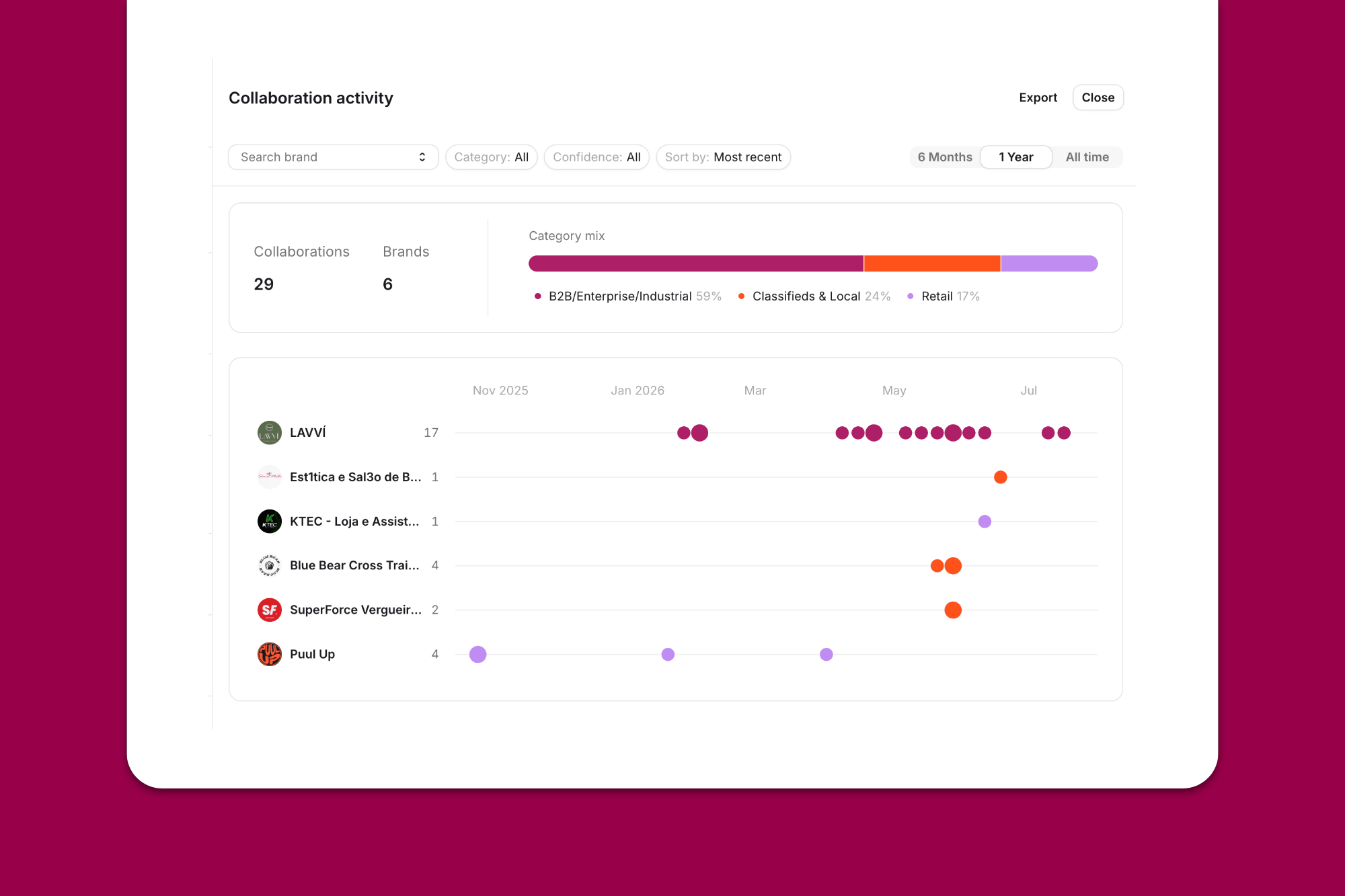
Remember: the more active affiliates you have, the less time and energy you need to invest in recruitment. Plus longer-term collabs often produce more authentic content that drives stronger results 💪
That’s why it pays to analyze all the stuff your competitors are doing to boost activation.
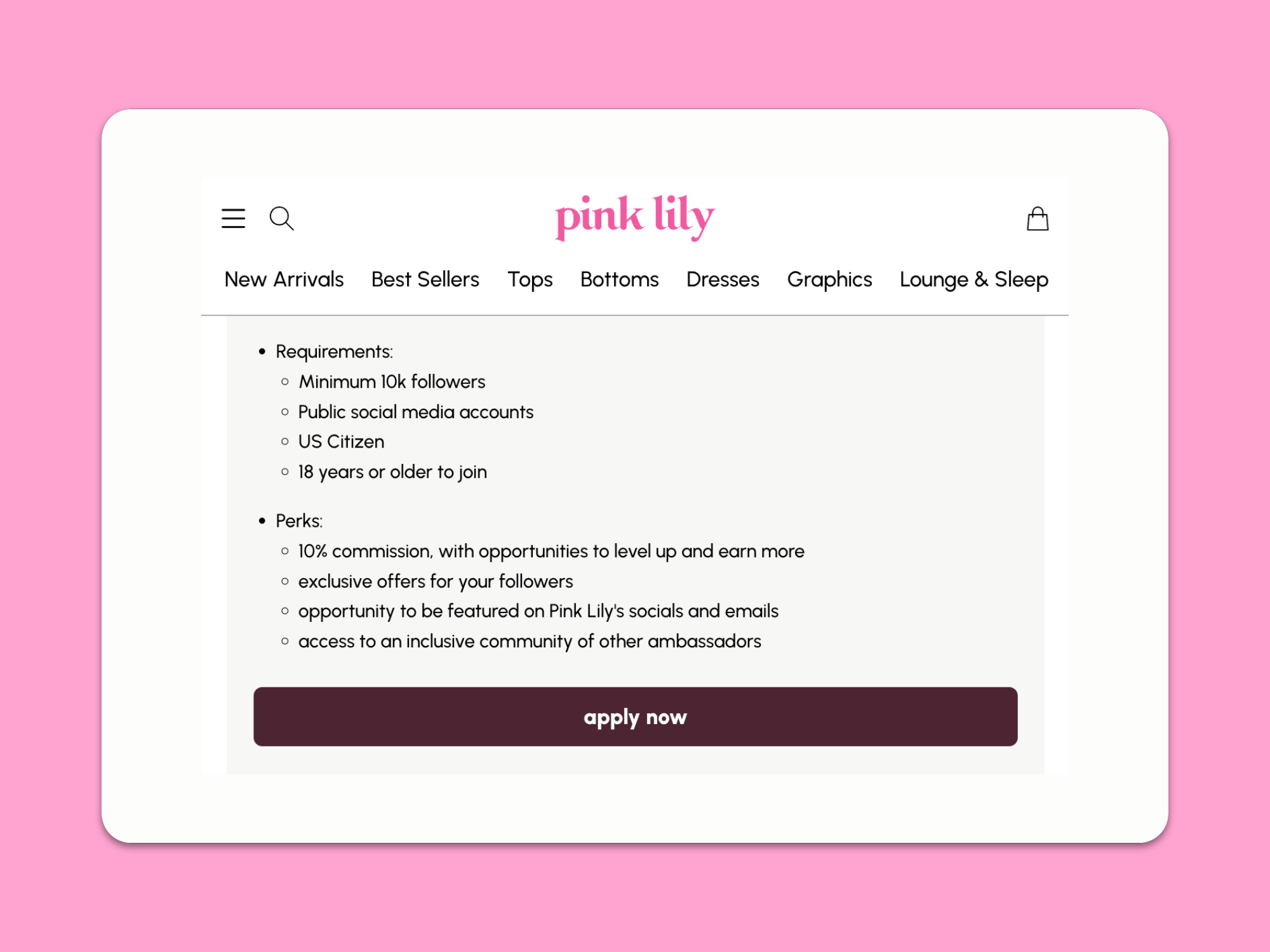
Sadly, unless you’re gonna kidnap and/or bribe one of their existing affiliates, you’re not getting a glimpse at exactly what it’s like to work with them as a creator. But there are some tell-tale signs that they’re at least making an effort, such as:
For example, see how clothing brand Pink Lily mentions that its affiliates get access to an “inclusive community of other ambassadors”:
Modash can help you here, too. Just use the collaboration history feature I showed you in the previous section to verify repeat posters and analyze their partnership cadence – is it sustained over time, or more like 1-2 isolated posts?
All of these steps help you understand whether their affiliates stick, which is way harder to compete with than a high commission rate.
One of the most effective ways to help your affiliate partners drive more sales is to share examples of high-performing content.
Chances are you’re doing this already based on what’s converting for your existing affiliates – angles, formats, and how creative they are. But why not dig into what’s working for your competitors, too?
Once again, Modash can help here. Rather than scrolling through a creator’s feed to manually pick out their #sponcon, Modash displays all their brand collabs and content in one place, along with a quick performance snapshot – views, engagement, EMV – so you know what’s driving results:
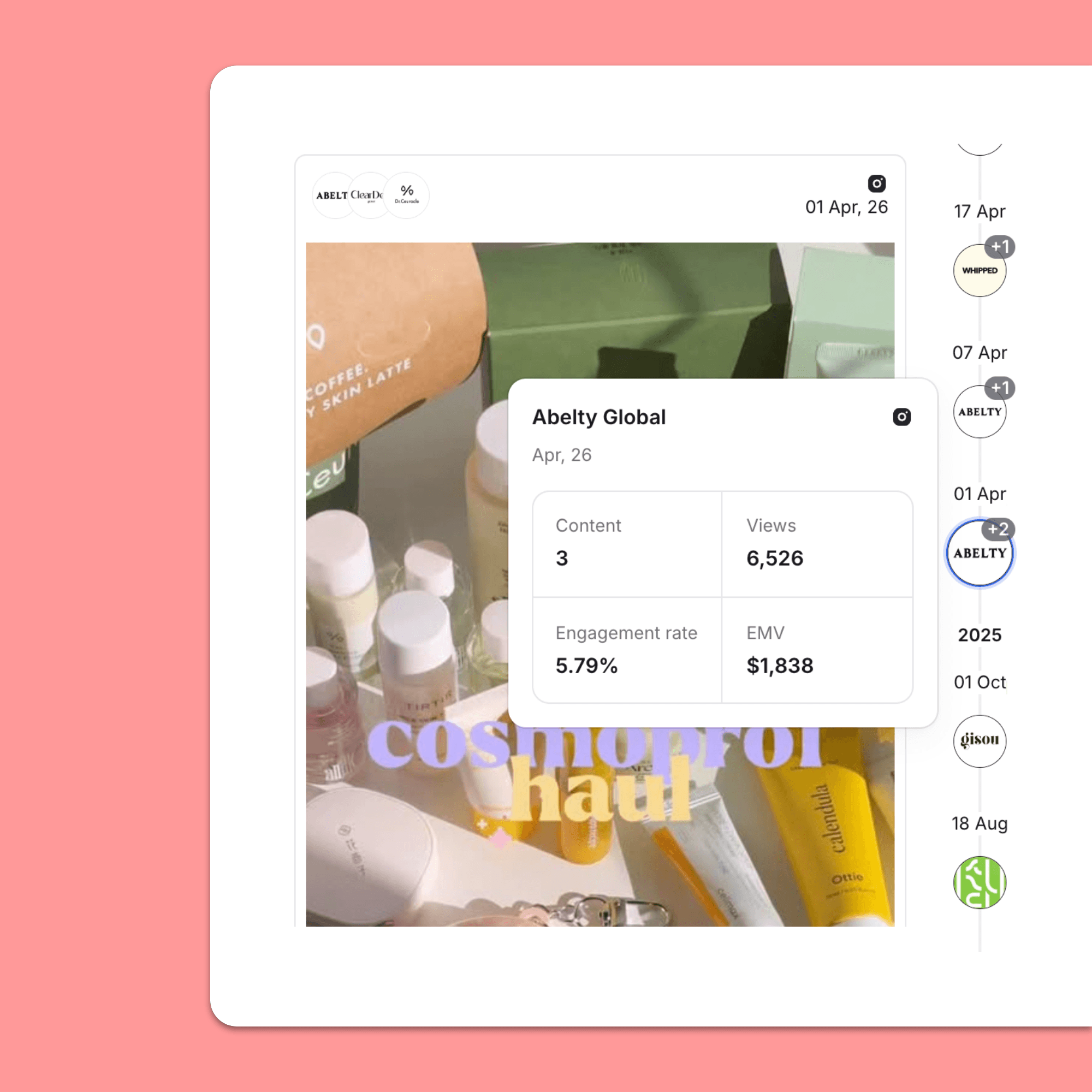
At this point, if you’re doing a deep dive, it’s also worth manually looking at the comments – especially for mega successful posts – to see what people have to say. Are they loving it? What are they saying they enjoy? Anything specific about the content is well worth picking out.
As a general rule, if you’re seeing the same angles and formats crop up time and again, it’s a good sign that they’re generating lots of sales and revenue.
That’s the kind of competitive intelligence your affiliate partners will definitely want to know about.
Once you’ve compiled your affiliate program competitive analysis, you’ve got three choices:
This way, you’re not just competing for the sake of it – you’re focusing on the stuff that really makes a difference while protecting your precious margins.
That’s the theory, at least. Now let’s put it into practice with a couple different scenarios:
Tell your inner control freak to take some time off, because you don’t want to be too prescriptive about the types of content your affiliates can share – especially if your competitors are happy to encourage plenty of creative freedom.
Sure, big accounts can drive big numbers. But do you really want to rely on a handful of affiliates? Beat them by recruiting a wider base of smaller affiliates and keep them engaged with tiered commissions.
You’re not honor-bound to match or beat your competitor’s headline commission rate. Chances are, if they’re paying a flat 20%, they’re barely breaking even – don’t get dragged into their race to the bottom. Instead, differentiate with tiered rewards that incentivize your most active affiliates.
Brands often share their commission rates on a dedicated affiliate program landing page and/or in social posts as part of their affiliate recruitment efforts. Alternatively, if they work with an affiliate network like CJ or Impact, you can check out their network profile to find out how much they pay.
Sure! You can absolutely reach out and attempt to hire an affiliate who works with one of your competitors – in fact, lots of affiliates collaborate with a whole bunch of competing brands. What you can’t do is encourage them to breach an exclusivity contract or give away any trade secrets.
Your best bet is to see how often the creator posts about the brand in question (yours or your competitor’s). A fan might mention a brand every once in a while, whereas a loyal affiliate will likely promote them on a regular basis – potentially even multiple times per month.
That’s a definite maybe. If you can match their commission rate while maintaining healthy margins then you probably should. On the flip side, if they’re paying a super high flat commission, you’re better off differentiating rather than trying to beat them – such as offering attractive tiered commissions that motivate your highest-performing, most active affiliates.
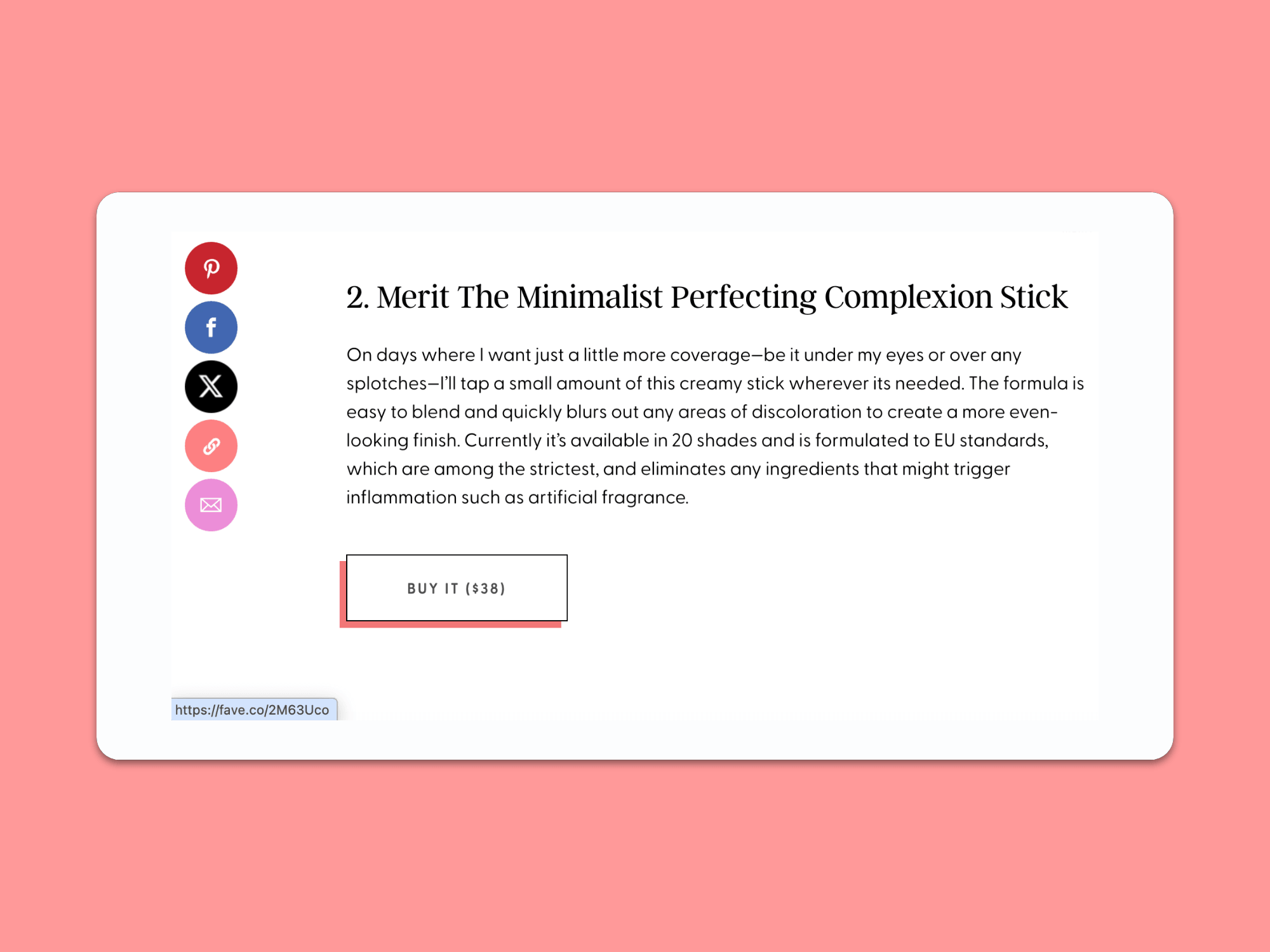
One method is to Google your competitor’s brand name + a commercial-focused keyword relevant to their product catalog. For example: "best makeup for sensitive skin" AND "sephora". Then click through the results and look out for content featuring affiliate links, like the URL in the bottom left of this image:
When it comes to running a high-performing affiliate program, the winner isn’t whoever pays the highest commission rate.
(In fact, brands typically only resort to paying sky-high commissions when they’re desperate for new affiliates and struggling to differentiate in more meaningful, sustainable ways.)
Instead, the prize goes to the brand with the deeper, more active affiliate program 🏆
Effective affiliate program competitive analysis will help you identify the gaps that you’re best-placed to exploit – whether that’s motivating affiliates with tiered commissions, building a deeper pool of loyal creators, or entrusting your affiliate partners more creative freedom. Or something else entirely.
Modash can help you uncover those gaps by making it easy to find your competitors’ existing affiliates and the types of content they share.
👉 See for yourself by starting your 14-day free trial of Modash!