Influencer Marketing Metrics: What to Track (and What to Ignore)

Measuring the impact of influencer marketing is notoriously difficult. But often, itโ€™s not because influencer marketing canโ€™t be tracked โ€“ itโ€™s because people are simply tracking the wrong metrics. Chances are, thereโ€™s plenty of good data at your fingertips; you just need to know what youโ€™re looking for (and what to avoid like the plague).

Why ROI is a terrible influencer marketing metric

Return on investment seems like an obvious metric to track. Maybe even the most important of all. Because itโ€™s all about the stuff that really matters, right?

But when you dig into it, ROI is waaaaaaay more murky than it seems:

  • How do you define "return"? Is it just revenue? Is it contribution margin? What if marketing only contributes to some sales, but not all? Then is it contribution margin on incremental revenue? If so, how are you going to calculate that? Plus attribution is fundamentally flawed anyway ๐Ÿคท
  • How do you define "investment"? At some point, you spent marketing dollars that contributed to a sale. What timeframe do you count? Marketing investments from last quarter or last year could still be driving impact today, while the majority of impact from today's investments hasn't occurred yet. Not to mention, there are usually costs hidden from the calculations (e.g. salaries or a CEO/founder's time contribution).

The term โ€œROIโ€ also has different implications across different channels, as Modash Head of Marketing Ryan Prior explains:

Typically, when teams look at Meta ads ROI (or ROAS), theyโ€™re looking at the cost of reach alone. Costs of ad production, labor/agency fees etc. are often ignored. Whereas in influencer marketing, you look at the amount you pay influencers, which includes everything โ€“ content production, reach, plus the trust factor of using their name/face.

avatar
Ryan Prior Head of Marketing, Modash

So if ROI is a waste of time, what should you be tracking instead?

The most important influencer marketing metrics by program type

There are obviously tons of potential metrics to track, but that doesnโ€™t mean you have to obsess over all of them. Quite the opposite, in fact โ€“ if you focus on too many metrics at once, youโ€™ll come up short on all of them ๐Ÿคฆ

Because there are only so many hours in the day, Iโ€™ve segmented the most important influencer marketing metrics by campaign type here:

Brand awareness campaign metrics

Metric What is it?
Views How often your content was played or displayed on a userโ€™s screen
CPM Cost per 1,000 impressions
Branded search volume Volume of searches for brand and product names
EMV Estimated value of earned media from influencer activities
Engagements Total number of clicks, likes, saves, etc
Aided & unaided brand awareness Percentage of consumers who can recall your brand, prompted vs unprompted
Website traffic Total visits to your website

Conversion and sales metrics

Metric What is it?
Revenue Total money earned from sales before deducting costs
Conversions Volume of actions like clicks, form completions, sales, etc
CPA Average cost of delivering specific actions or conversions
LTV for influencer-attributed customers Estimated revenue generated per customer throughout their relationship with your brand
Code redemptions Volume of codes redeemed
AOV for influencer-attributed orders Average amount customers spend per influencer-attributed order

Influencer-affiliate metrics

Metric What is it?
Affiliate link clicks Volume of clicks on affiliate links
Commissions paid Total commission paid to influencer-affiliates
Earnings per influencer Total revenue generated by each influencer-affiliate
Active vs inactive influencer-affiliates Percentage of enrolled influencer-affiliates who generated 1+ action
Acceptance rate Percentage of influencers who accept invitations to your program
Total content from affiliates Volume of influencer content generated per month

Influencer gifting metrics

Metric What is it?
Gifts offered Total number of gifts offered to influencers over a given period
Acceptance rate Percentage of outreached influencers who agree to receive a gifted product
Posting rate Number of content units generated / total products gifted
Cost per post Total cost of sending gifted products / number of organic posts
Gifting conversion to paid partnership Percentage of gifted influencers who enter paid collaborations

Now Iโ€™ve got the top-level stuff out the way, letโ€™s take a deeper look at each metric and why it mattersโ€ฆ

Brand awareness metrics

Views

๐Ÿค” What is it? Simply, views tells you how many times your content was played or displayed on a userโ€™s screen. Itโ€™s been a key metric on YouTube for years โ€“ and, as of November 2024, itโ€™s become the primary content distribution metric on both Facebook and Instagram.

๐Ÿ’ช Why does it matter? Views are a key awareness metric because they demonstrate your contentโ€™s reach and visibility, both of which are essential to getting more eyes on your brand. The higher your views, the more people are seeing your content.

CPM

๐Ÿค” What is it? The cost paid per 1,000 impressions. In other words, if you pay an influencer $2,000 and get 100,000 impressions, your CPM is $20.

๐Ÿ’ช Why does it matter? If your goal is to reach as many people as possible, CPM can be a super helpful metric. Of course, those impressions are only valuable if youโ€™re targeting the right people with the right content. For instance, it might be worth paying a higher CPM to reach a more specific, relevant audience.

๐Ÿค“ Further reading: Learn more about CPM as a metric in Using CPM in Influencer Marketing: Benchmarks, Limitations, & Tips to Improve.

Branded search volume

๐Ÿค” What is it? The number of times people search on Google (or a different search engine) for your brand name, branded products, and/or other specific brand-related terms over a given period.

๐Ÿ’ช Why does it matter? Branded search clearly shows that people are looking for information about your brand and the stuff you sell. If you see a spike in branded search following an influencer campaign, itโ€™s a pretty clear signal that the campaign boosted brand awareness.

EMV

๐Ÿค” What is it? Earned media value takes the engagement and exposure generated by an influencer campaign and estimates how much itโ€™d cost to get the same results from paid advertising.

๐Ÿ’ช Why does it matter? EMV gives a more holistic view of brand awareness by combining a range of metrics โ€“ impressions, comments, likes, views, shares, saves โ€“ and providing a meaningful way to compare your influencer marketing and paid ad campaigns.

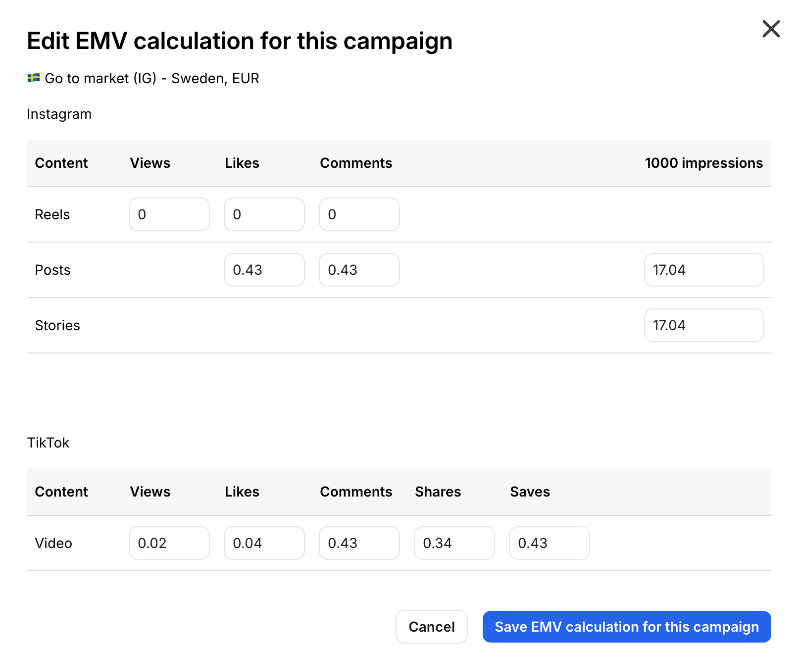
โšก Pro tip: When you track influencer campaigns in Modash, you can customize your EMV calculation at the campaign level by setting your own values for comments, likes, views, and more. That way, you can paint the most accurate and relevant picture of your campaignโ€™s true value.

Engagements

๐Ÿค” What is it? The number of engagements generated by your influencer content. โ€œEngagementโ€ is a broad term incorporating a bunch of brand awareness-related metrics. Depending on platform, engagement metrics can include some or all of the following:

  • Clicks
  • Comments
  • Likes
  • Saves
  • Shares

๐Ÿ’ช Why does it matter? When a campaign racks up lots of engagement, itโ€™s a clear sign that people arenโ€™t just seeing your content โ€“ theyโ€™re reading, watching, and interacting with it, too. Which makes them far more likely to remember your brand going forward. Saves are often especially valuable, because if someone saves an influencerโ€™s content, chances are they found it useful.

Aided & unaided brand awareness

๐Ÿค” What is it? โ€œAidedโ€ awareness is when consumers can recall your brand after being prompted (such as seeing the name in a list), while โ€œunaidedโ€ awareness means they can do so without any external assistance. Measure these metrics via post-campaign surveys.

๐Ÿ’ช Why does it matter? These metrics speak to the โ€œstickinessโ€ of your brand awareness campaigns. Because you donโ€™t just want people to see your brand โ€“ you want them to remember you when theyโ€™re ready to buy.

Website traffic

๐Ÿค” What is it? The number of visits to your site over a given period. From an influencer marketing perspective, this is typically tracked via UTMs or in correlation with posting activity (e.g. did traffic spike shortly after a specific post went live?).

๐Ÿ’ช Why does it matter? If traffic climbs off the back of an influencer campaign, itโ€™s a good indication that more people are becoming aware of your brand. In particular, look for increases in branded search traffic and direct traffic (AKA people typing your URL into the address bar).

Conversion & sales metrics

Even if conversions and sales arenโ€™t the first thing you look at when evaluating influencer campaign success, your leadership team definitely cares about them ๐Ÿค‘ Bear in mind that not all sales are attributable โ€“ the following metrics are only relevant to sales that can be attributed via codes, landing pages, links, or post-purchase surveys.

Revenue

๐Ÿค” What is it? Arguably the simplest conversion-related metric, revenue is the total money earned from sales over a set period before deducting costs.

๐Ÿ’ช Why does it matter? Tracking influencer-attributed revenue is a quick and easy way to assess the health of your influencer program. If youโ€™re spending more than youโ€™re making, youโ€™re in trouble.

Conversions

๐Ÿค” What is it? Conversions are whatever you say they are โ€“ a form completion, a newsletter signup, a download, a sale, or something else. In short, theyโ€™re the ultimate action you want customers to take after engaging with your influencer content.

๐Ÿ’ช Why does it matter? Conversions are the โ€œthingโ€ you need to keep growing your business. So if your influencer program is delivering plenty of them, youโ€™re clearly getting something right.

CPA

๐Ÿค” What is it? Cost per action (or cost per acquisition) is exactly what it sounds like โ€“ the average amount you spend to deliver specific actions or conversions, such as those described in the previous section. As well as a metric, CPA is a common influencer marketing payment model.

๐Ÿ’ช Why does it matter? Tracking your CPA is key to achieving sustainable business growth. Because youโ€™ll run into problems fast if your cost per acquisition outstrips your customer lifetime value. Speaking of whichโ€ฆ

LTV for influencer-attributed customers

๐Ÿค” What is it? Lifetime value is a forward-looking metric that predicts the total revenue you can expect from a customer throughout their relationship with your business.ย 

๐Ÿ’ช Why does it matter? Specifically tracking LTV for influencer-attributed customers helps you understand the loyalty and revenue-generating power of consumers who interact with your influencer content. The higher the lifetime value, the more you can afford to spend per acquisition, boosting your growth potential.

Code redemptions

๐Ÿค” What is it? Custom discount codes are a common way to attribute sales to individual influencers. This metric simply tracks the number of codes redeemed in a given period.

๐Ÿ’ช Why does it matter? Tracking code redemptions tells you how many sales your influencers are generating and which influencers are performing best. When you know who your top performers are, you can make data-backed decisions about which influencers to retain.

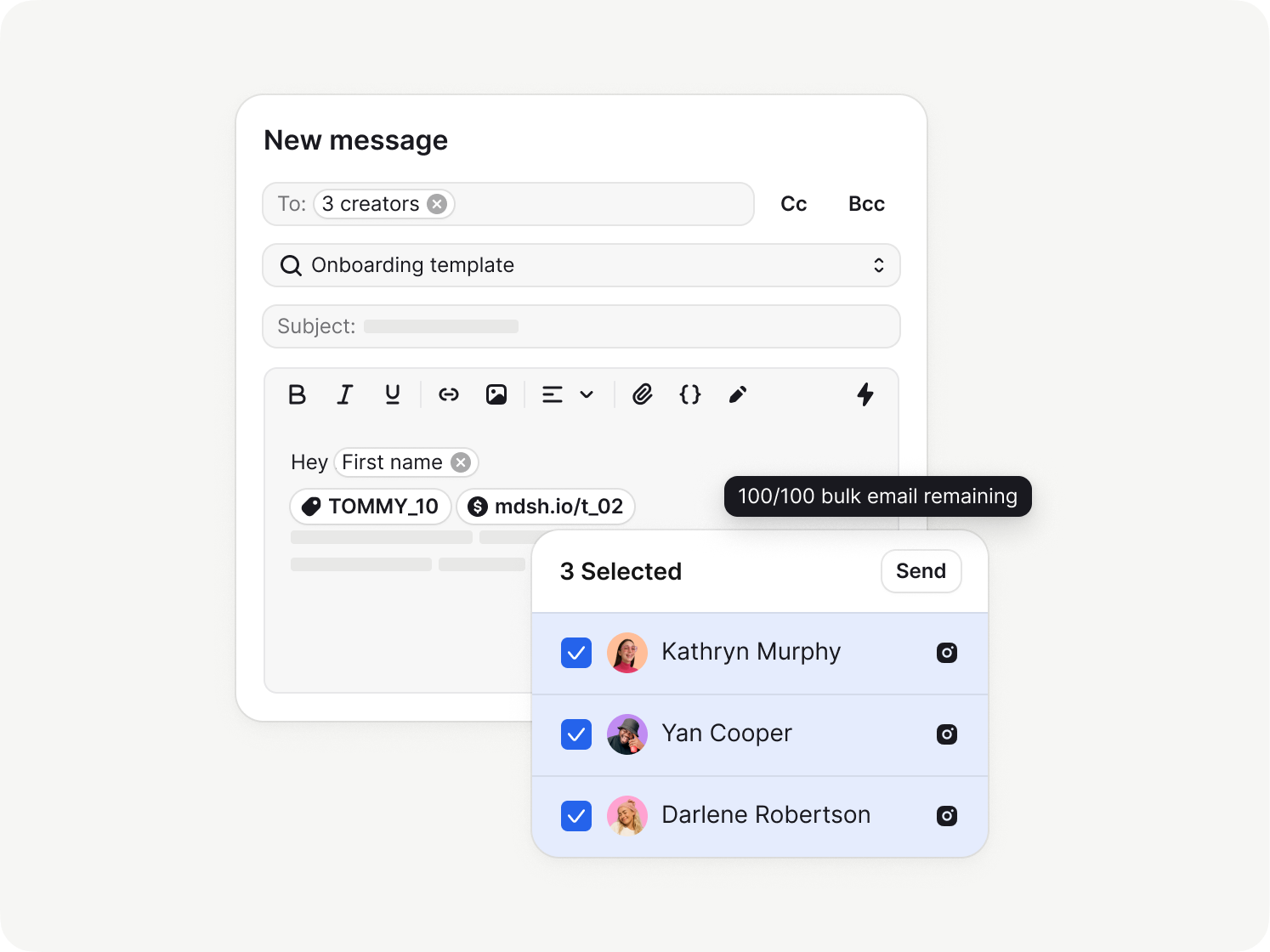
โšก Pro tip: Modash accelerates campaign setup by letting you create codes and links, then email them to influencers in bulk (including variables).

AOV for influencer-attributed orders

๐Ÿค” What is it? The average amount customers spend per influencer-attributed order. Higher AOVs mean theyโ€™re buying lots of products in a single transaction or purchasing higher-ticket items (or both).

๐Ÿ’ช Why does it matter? Big spenders are obviously more valuable to your business, so you want your influencer program to bring in as many of them as possible.

Influencer-affiliate metrics

Given the performance-driven nature of the influencer-affiliate model, many of the previous conversion-related metrics will also apply here. Instead of repeating myself, Iโ€™ve only mentioned specific influencer-affiliate metrics in this sectionโ€ฆ ๐Ÿ‘‡

Affiliate link clicks

๐Ÿค” What is it? The number of clicks through to your website (or some other page) from links in affiliate content.

๐Ÿ’ช Why does it matter? In general, customers click links when they find affiliate content engaging and like the look of your product. If youโ€™re seeing lots of clicks, itโ€™s a good sign that youโ€™re working with quality influencer-affiliates and targeting the right audiences.

Commissions paid

๐Ÿค” What is it? Like it sounds โ€“ the total amount of commission paid to your influencer-affiliates over a given period.

๐Ÿ’ช Why does it matter? The more commissions paid, the more sales your influencer-affiliates have generated, which is a strong indication of a healthy influencer-affiliate campaign.

Earnings per influencer

๐Ÿค” What is it? The amount of revenue generated by each influencer through their unique affiliate links or codes (or some other form of attribution).

๐Ÿ’ช Why does it matter? Tracking earnings per influencer helps you see the proportion of influencer-affiliates who are contributing to your bottom line. Youโ€™d probably prefer them all to be generating sales, rather than the bulk of your earnings coming from one or two standout performers.

Active vs inactive influencer-affiliatesย 

๐Ÿค” What is it? The percentage of enrolled influencer-affiliates who generated one or more tracked actions โ€“ like clicks or conversions โ€“ over a set period.

๐Ÿ’ช Why does it matter? Similar to earnings per influencer, tracking active vs inactive influencer-affiliates speaks to the health of your influencer program; you donโ€™t want to be over-reliant on a handful of high earners. It also helps you identify lapsed influencer-affiliates for re-engagement or removal.

Acceptance rate

๐Ÿค” What is it? The proportion of influencers who accept invitations to join your program from outbound methods like cold emails and DMs.

๐Ÿ’ช Why does it matter? A high acceptance rate indicates that youโ€™re targeting relevant influencers who want to work with your brand, and that your influencer offer (commission rate, payment terms, etc) are sufficiently attractive.

Total content from affiliates

๐Ÿค” What is it? The volume of content units youโ€™re getting per month from influencer-affiliates.

๐Ÿ’ช Why does it matter? If content product is a key focus of your influencer-affiliate program, youโ€™ll want to know whether this figure is growing and how the volume breaks down across different channels and formats.

Influencer gifting metrics

All the brand awareness and conversion metrics I listed in the first two sections can be used to measure the success of your influencer gifting campaigns. So, again, the following section only contains metrics specific to influencer gifting ๐ŸŽ

Gifts offered

๐Ÿค” What is it? The total number of gifts offered to influencers over a given period.

๐Ÿ’ช Why does it matter? This metric speaks to the health of your influencer outreach efforts. Lots of volume suggests youโ€™re successfully and efficiently finding, qualifying, and contacting relevant influencers.

Acceptance rate

๐Ÿค” What is it? The percentage of outreached influencers who agree to receive a gifted product from your brand.

๐Ÿ’ช Why does it matter? A high gift acceptance rate indicates that youโ€™re targeting relevant influencers and that your outreach messaging is on point.

Posting rate

๐Ÿค” What is it? The number of pieces of content generated by influencers youโ€™ve gifted, divided by the total number of products gifted.

๐Ÿ’ช Why does it matter? Tracking posting rates over time helps you optimize your influencer selection criteria. The higher the rate, the better you are at finding and qualifying relevant influencers โœ…

Cost per post

๐Ÿค” What is it? The total cost of sending gifted products to influencers โ€“ including product cost, shipping, and handling fees โ€“ divided by the number of organic posts generated.

๐Ÿ’ช Why does it matter? This metric helps you benchmark the performance of your gifting program against paid influencer partnerships.

Gifting conversion to paid partnership

๐Ÿค” What is it? The percentage of influencers who go on to enter paid collaborations with you after initially receiving gifted products.

๐Ÿ’ช Why does it matter? As well as measuring the efficiency of your talent pipeline, tracking this metric helps you justify budgets for gifting beyond the immediate exposure generated through organic influencer posts.

๐Ÿค“ Further reading: Discover more about finding and hiring brand-fit influencers in 5 Ways To Recruit Influencers (+ Proven Tips & Methods).

Vanity metrics that matter less than you think

All of the above metrics reveal something valuable about influencer program performance and might be worth tracking for your brand, depending on your specific goals.

But thatโ€™s not the case for all metrics. Some might appear useful, but in reality donโ€™t reveal anything that really matters. The following vanity metrics are best avoided ๐Ÿ™…

  • Follower count: Says nothing about whether followers are real, active, and/or relevant to your desired target audience.
  • Likes (in isolation): Liking content is low-effort and often habitual. It doesnโ€™t tell you whether the โ€œlikerโ€ trusts the influencerโ€™s recommendation, likes your product, or plans to take action.
  • Engagement rate: has some value in vetting influencers, but comes with limitations too. It combines very different behaviors into a single percentage, with no way to distinguish the proportion of passive โ€œlikesโ€ vs higher-quality comments, saves, etc., and also fails to account for โ€œhiddenโ€ influence like DMs.

Whatโ€™s next?

Now you know what to track, the next challenge is figuring out how to track it.

If youโ€™re just starting out on your influencer marketing journey and/or only working with a handful of influencers, you can track everything yourself via spreadsheet. To make your life easier, check out our pre-built influencer tracking spreadsheet (plus guidance on how to use it).

Alternatively, if/when you reach the scale where manual tracking gets painful, you can automate all your content tracking and KPI collection with Modash ๐Ÿ˜ฎโ€๐Ÿ’จ

๐Ÿ‘‰ Try Modash for free today!

์ „๋ฌธ ๊ธฐ๊ณ ์ž

Ryan Prior
๋งˆ์ผ€ํŒ… ์ฑ…์ž„์ž, Modash
LinkedIn