Free virtual event: hear from influencer leaders at ŌURA, Adobe, Stanley 1913 & more.
See the lineup





Influencer marketing can boost awareness and sales – but only if you work with brand-fit influencers. Tracking down and recruiting those influencers can be a serious challenge, so read on for everything you need to know about how to hire influencers…
Traditionally, brands invest in influencer marketing to achieve one or more of the following goals:
👀 Grow brand awareness
🛍️ Increase conversions (typically sales or leads)
🤳 Capture influencer-generated content
It makes sense to clearly define what you’re trying to achieve before you start the hiring process – that way, you can align your goal(s) to the type of influencer you’re searching for and the platform(s) they use to reach their audience.
Here’s a simple example: imagine your brand makes noise-reducing earplugs. You want to boost sales, so you team up with influencers in the music industry – guitarists, DJs, vocalists. And you choose to run the campaign on Instagram so viewers can click through to your product pages via Story links.
The result? Your influencer partners do a fantastic job demonstrating how your earplugs help them perform while protecting their hearing. So their followers rush to your store to buy your product. That rocks 🤘
There are lots of ways to hire influencers – and the best model for your brand will vary based on your budget, goals, the type of influencer you’re looking to work with, and a whole bunch of other factors. To help you get it right, I’ve summarized four of the most common hiring models.
🤓 Further reading: For an in-depth look at influencer hiring models, check out my article on how to pay influencers.
Depending on the niche you’re targeting and the level of influencer you’re trying to hire, flat fees can be anywhere from $100-or-so per post to five figures (or even more).
This model guarantees a set number of deliverables – perfect if content generation is a key goal – and can be a strong fit for brands with low-margin products that can’t afford revenue-sharing deals.
On the downside, flat fees often work out more expensive than longer-term collabs, so you could be “priced out” of working with higher-profile influencers.
Performance-based pay typically involves giving influencers a percentage-based commission of any sales they generate.
This model appeals to a lot of brands because it’s low-risk, high-reward. Interestingly, our research shows that influencers are also becoming more open to this sort of payment arrangement:

According to Miroslava Petkova, this growing acceptance of affiliate deals is largely a case of supply and demand.
Since the number of influencers continues to increase, but brand deals are not increasing proportionately, affiliate partnerships are rising again as a popular form of collaboration.

Still, not all influencers are open to performance-based pay, so you might have to find a compromise – such as negotiating a smaller fixed fee plus a percentage commission.
Once upon a time, influencer marketing was all about gifting free products in return for reviews.
While the industry has matured over the years, influencer gifting is still a super common payment model. Brands mostly use it for building awareness, but it can also help with boosting sales, generating content, and developing new influencer relationships.
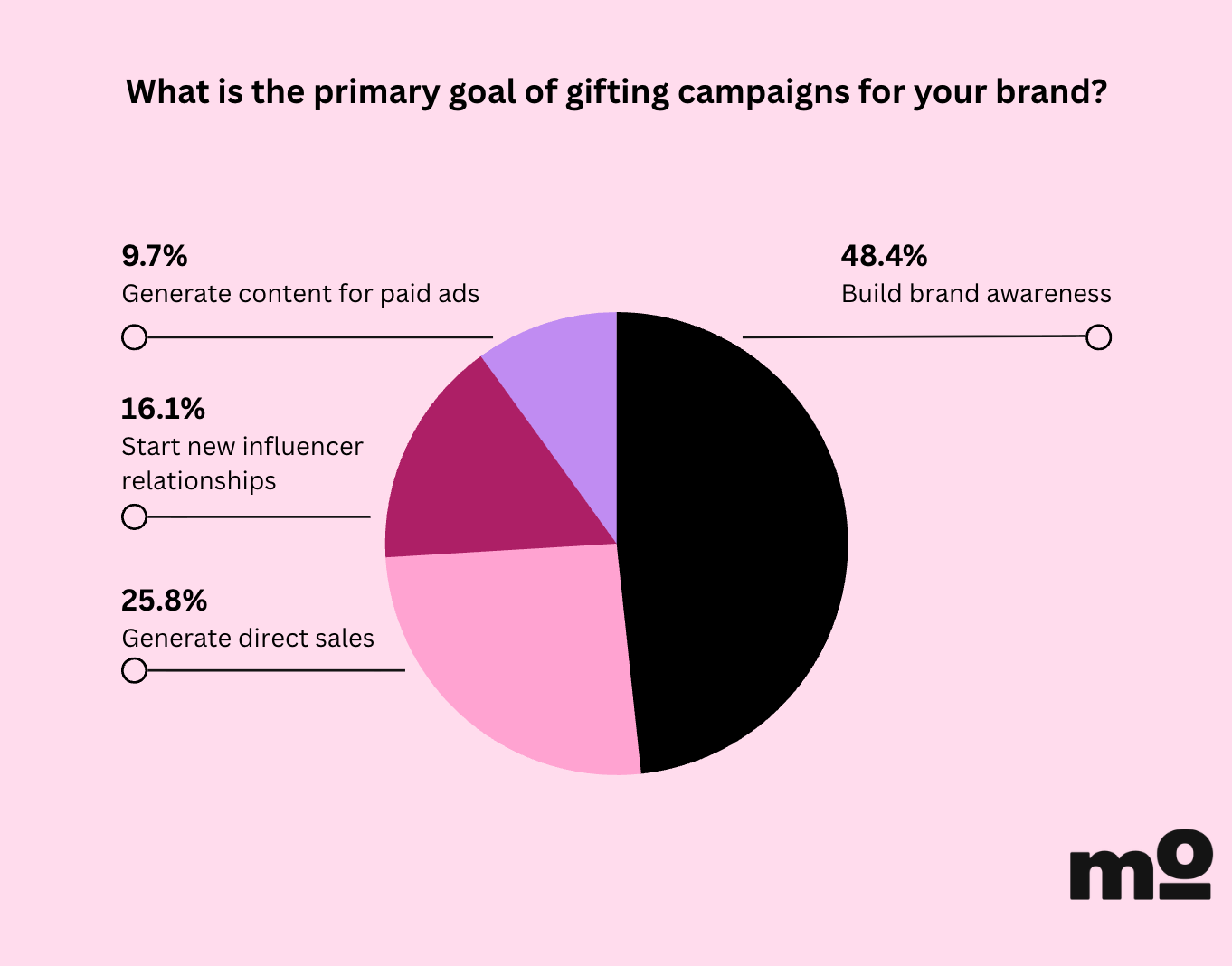
However, like with performance-based payments, not all influencers are willing to collaborate with brands on a product-only basis, leading to an increase in the number of product-plus-cash hybrid deals. Think of it as a combination of flat fees and gifting.
Building long-term influencer partnerships is the dream for many brands and influencers. Brands get high-quality content with less back-and-forth; influencers get the guarantee of consistent pay. It’s a real win-win.
The only real downside is that building these relationships takes a ton of time and trust from both parties – and not everyone’s prepared to put in that sort of effort!
🤓 Further reading: Learn more in How To Create A Brand Ambassador Program (With Examples).
When brands struggle to generate results from influencer marketing, it’s often because they’re working with the wrong influencers. Here’s how to find the people you should be hiring.
Broadly speaking, there are two ways to find influencers:
💪 Manually, using Google + search tools built into platforms like Instagram and TikTok
🤖 With dedicated tools like Modash to narrow down your search using filters and AI
The manual approach can work well if you’ve got time on your hands and you’re only searching for a handful of influencers. However, accessing key data like engagement rates and audience demographics is a struggle. Often, you’ll have to ask the influencer themselves, which adds another step to the hiring process.
That’s why a lot of brands turn to influencer marketing platforms like Modash.
With Modash, you can either search using influencer and audience-level filters like:
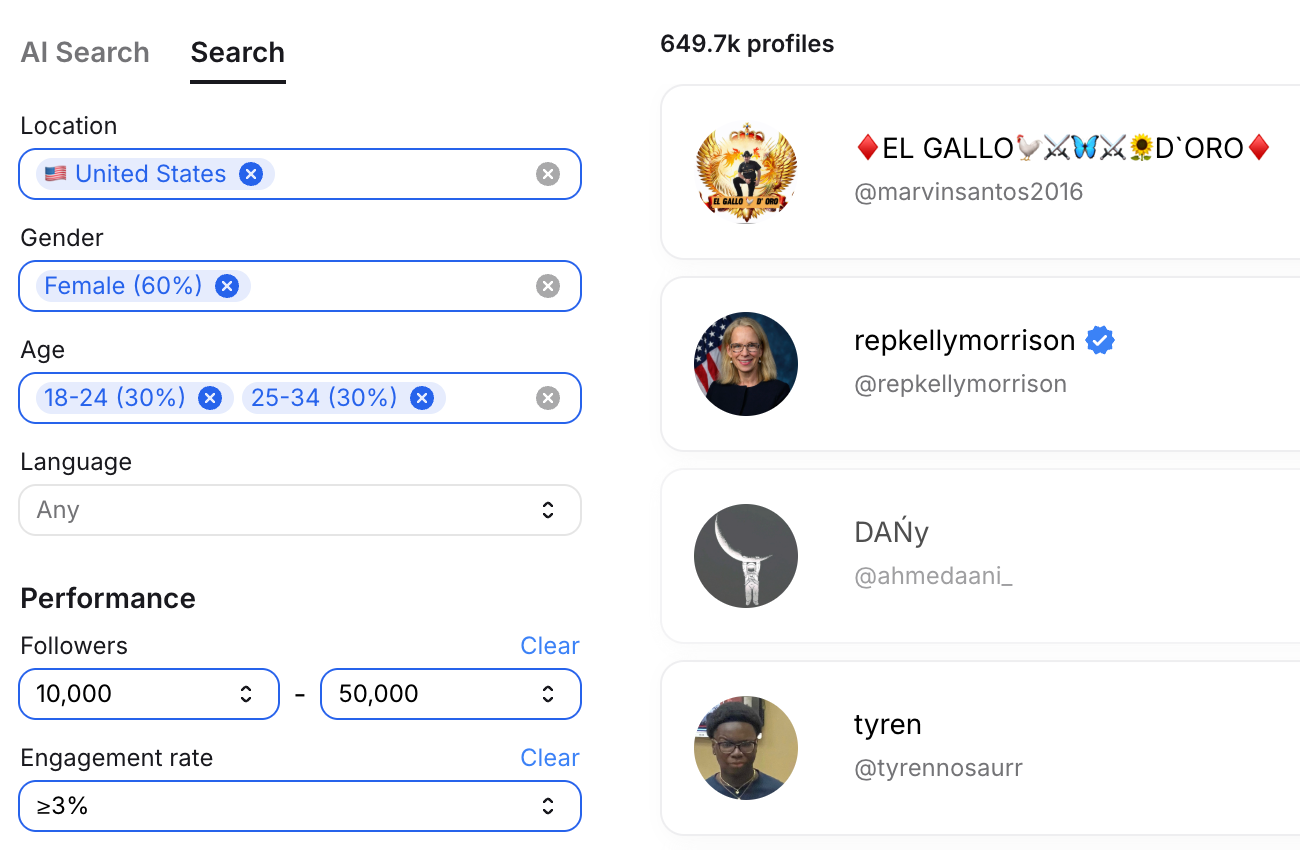
Or use our AI Search feature to track down relevant accounts based on natural language queries (plus you can layer filters on top if you like):
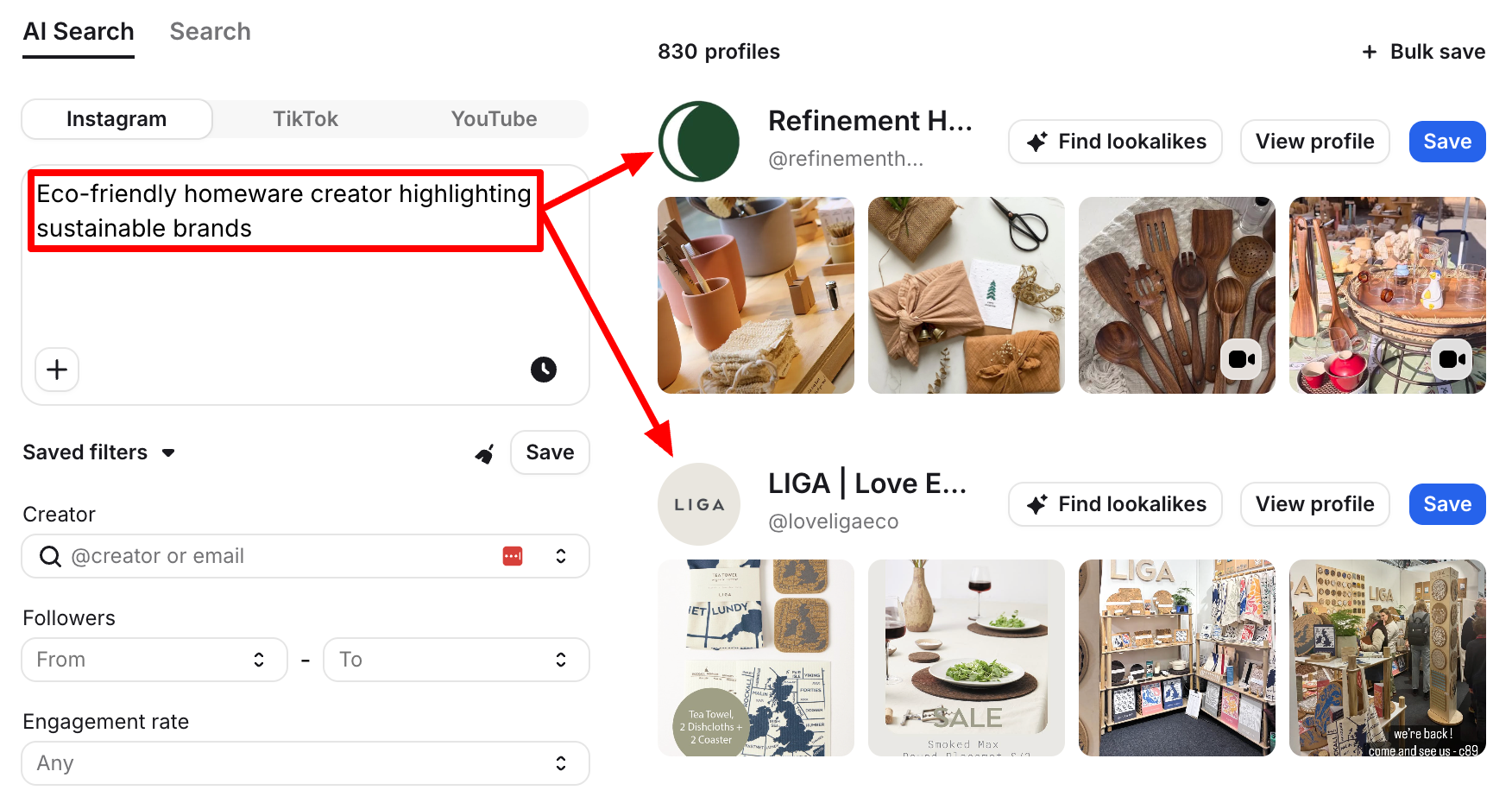
Either way, a search that might have required days of manual effort takes just a few seconds.
🤓 Further reading: Learn more in Top 7 Influencer Search Mistakes (And How to Fix Them).
Once you’ve tracked down a potential influencer partner, it’s time to decide whether they’re really a good fit. Specifically, you’ll want to analyze their:
Your goal here is to build a longlist of influencers to evaluate in the next step of the search process. The size of your list will naturally depend on your campaign requirements – if you’re aiming to hire half-a-dozen influencers, you might only need to longlist 10 – 15. Whereas you’ll need a whole lot more if you’re trying to seed products to hundreds of influencers.
Remember, if you’re searching for influencers manually, you’ll have to find all the above data for yourself. Whereas with Modash you can simply click an influencer in the search results to pull up a ton of information about their followers, content, past collabs, and more:

And you can dig into all that good stuff without having to reach out to a single influencer. It’s a massive time-saver – you can see for yourself when you try Modash for free!
Now that you’ve found and analyzed a bunch of influencers, it’s time to figure out which ones you really want to work with.
I can’t make that decision for you (sorry!). But I can give you a scorecard for evaluating and shortlisting prospective influencer partners. For each influencer on your longlist, award them a score out of five for the following criteria:
Then it’s simply a case of adding the top scorers to a shortlist and reaching out to them 📧
⬇️ Download your own version of our influencer evaluation spreadsheet – happy evaluating!
Influencer outreach and negotiation are pretty meaty topics. If you’re looking for in-depth guidance on each, I’d strongly recommend checking out these articles:
👉 How To Do Influencer Outreach: A Guide For Brands
👉 7 Effective Negotiation Tactics for Influencer Marketing
But if you’re just looking for some quick-and-dirty best practices, stay right here!


After the first month if the influencer content hasn’t performed well, we're obviously not going to want to use it any further. So, it’s better to commit for a shorter period of time and then review the contract later if the content performed really well.

Even after you’ve found the right influencer and negotiated with them successfully, there’s no guarantee your collaboration will achieve the desired results. At this vital stage, things can still go to pieces faster than Humpty Dumpty (RIP). But you’re more likely to get it right by creating effective influencer briefs.
Again, you should definitely check out our dedicated influencer briefing guide for in-depth advice, but here are some general best practices to keep in mind:

“We’ve found that including some example language pulled from real product reviews can help give creators a sense of the practical benefits that a brand’s product provides – and often provides language that resonates deeper with the creators audience.”
I’ve already shared a bunch of best practices to support your influencer hiring efforts – but there are a few things you should definitely avoid, too. Common mistakes include:
Sure, follower count can be a useful metric for assessing whether or not to work with an influencer, but it should never be the only metric you consider.
Our research shows that when influencer campaigns fail, brands are most likely to blame “audience mismatch”:
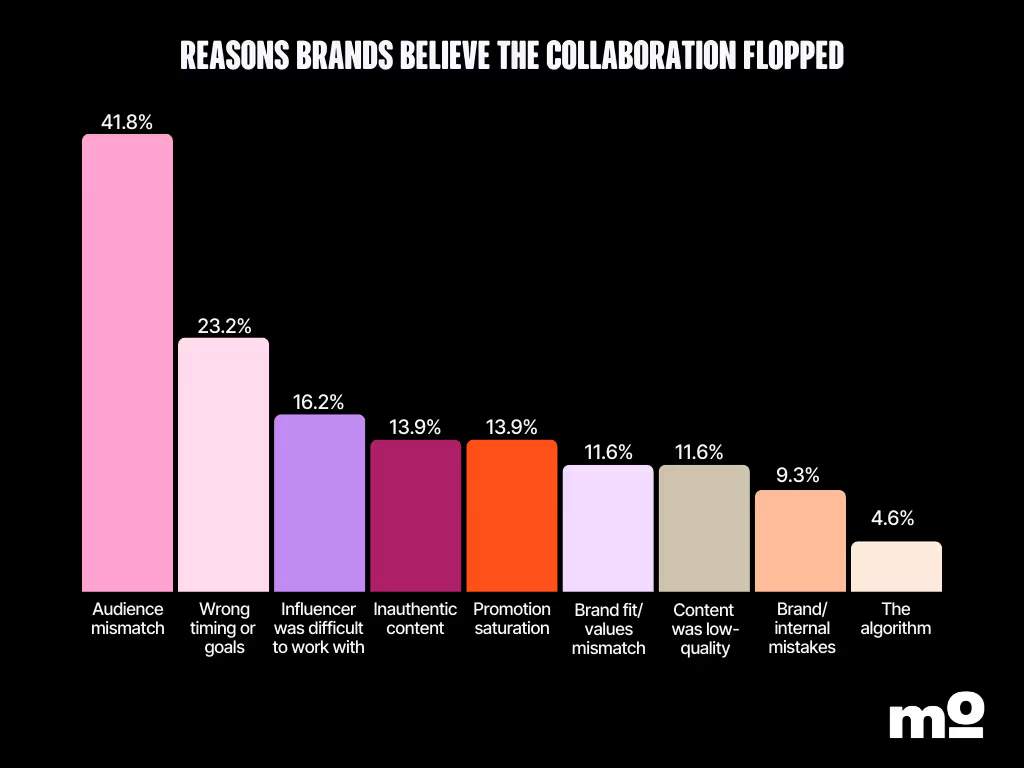
It doesn’t matter how many zillions of followers an influencer has – if they’re not a good fit for your brand and product, you’re not going to see results. So be sure to consider other key criteria (audience demographics, engagement rate, content quality) before reaching out.
Influencers aren’t mind readers 🔮 If you don’t adequately explain what you’re hoping to achieve, you can’t expect them to magically get it right.
There are two common causes of unclear expectations:
So be sure to agree campaign objectives and sign them off with your leadership team ahead of starting your influencer search, and don’t forget to explain them clearly in your influencer brief.
If this is your first influencer project and you’re doing everything manually, it probably feels like a ton of work getting your campaign off the ground.
But remember that for most brands, the secret to unlocking real results from influencer marketing lies in building longer-term partnerships with creators, rather than thinking in terms of standalone projects. Because the longer you work with an influencer, the better they understand your brand, product, and audience (or that’s the idea, at least).
Of course, that doesn’t mean you should avoid one-off collabs like the plague. They’re totally fine for things like seasonal campaigns or testing new influencer partners. The big mistake is failing to graduate top performers into something more consistent.
Sure, hiring (the right) influencers can be tough. But it gets a whole lot easier with Modash in your corner. From finding brand-fit influencers to reaching out and onboarding them, Modash handles the heavy lifting at every step of the hiring process, so you can focus on the stuff that requires a human touch.
Our expert contributors