




It doesn’t matter how much a creator digs your brand and products, or how much they love emailing you. If you consistently mess up their affiliate payouts, they’re gonna ditch you faster than it takes me to eat a bowl of salted peanuts (AKA pretty damn fast).
Read on to self-qualify which payout model best fits your program and learn how to build a process that's transparent enough to avoid disputes, without creating unnecessary admin overhead.
⚠️ Disclaimer: I’ve never paid an affiliate in my life (at least, not knowingly). So for much of this article I’ll be relying on insights from someone who has. Namely Melissa Sorby, former Influencer Marketing & Advocacy Manager at ALLIES OF SKIN. Thanks, Melissa!
Flat commissions are the most basic way to pay affiliates, although that doesn’t mean they’re worth dismissing out of hand. They come in two distinct “flavors”:
💰 When to use it:
According to Melissa, flat commissions – whichever flavor you prefer – are often a good fit in the early and/or experimental stage of an affiliate program.
You can easily see who is converting and with which products/links, which makes scaling easier when the program grows.

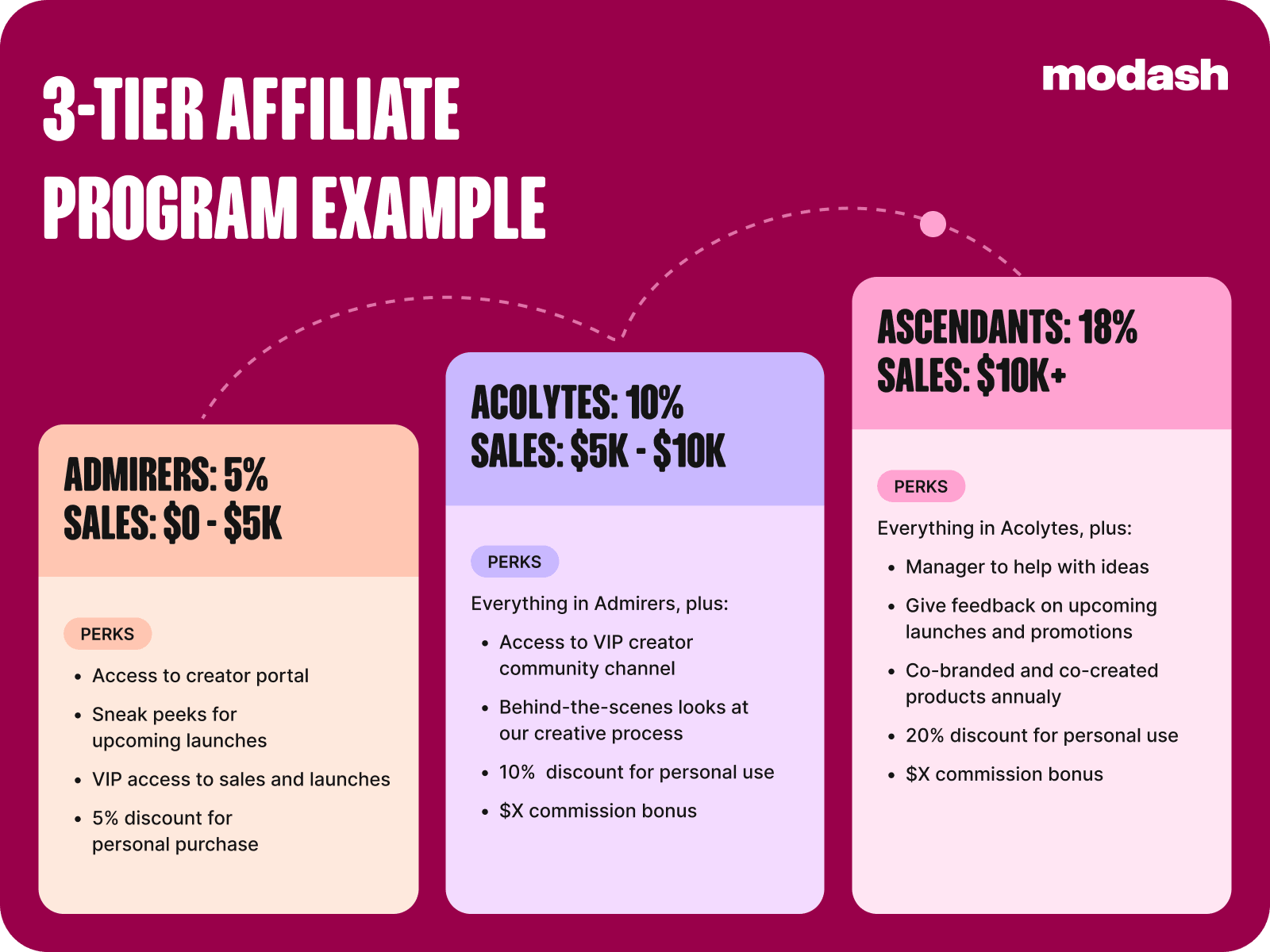
Tiered commissions are exactly what they sound like: a reward system whereby an affiliate’s commission rate increases as they hit various sales targets. For example, you might pay:
While a tiered commission structure is more complex to manage than a flat model, it can have a big impact on creator engagement. Modash research shows that brands with 3+ commission tiers see an active affiliate rate of almost 55%, compared to 35% for those with flat structures.
💰 When to use it:
Melissa says tiered commissions are a smart choice in two main scenarios. Firstly, when you need to motivate the troops…
Tiered commissions make sense when you have ambitious targets to hit, so naturally you need to increase the level of incentives for creators.
…and secondly for brands with mature programs that want to reward their top performers:
When an affiliate program has had chance to grow and there’s plenty of creators in it, you can afford to spend more budget on the creators that are really driving sales.
Hybrid structures combine a base commission rate alongside a performance-related bonus that gives creators an even bigger incentive to keep on driving sales. For example, you might pay a standard 5% commission to all your affiliates, as well as offering a $100 cash bonus for your top seller over a fixed period.
💰 When to use it:
The hybrid model is a strong fit for peak periods like the Cyber Weekend, as Melissa explains:
During busy sales periods, you want to get as many people linking as possible in terms of volume, but then you also want to incentivize your best performers on top of that to optimize order value.
Similarly, she recommends this approach for times like product launches, when brands want to generate as much content as possible along with maximum reach and visibility.
Whichever affiliate payout model you choose, there are two main ways you can award commissions:
There’s a time and a place for both. So which is right for your brand?
Well, according to Melissa, revshare can feel more motivating to creators.
Revenue share keeps commissions relative to the amount of order value generated in one sale, so it encourages creators to drive higher-value purchases.
On the flip side, she says the CPA model can make more sense for brands with little pricing variance across their product catalog. If your store stocks 1,000 different phone cases that all sell for $30 – $35 a piece, percentage rewards won’t make a whole heap of difference, so you might as well pay a fixed $5 per sale.
First up, you need to figure out how much you’re gonna pay your affiliates and what, exactly, your rewards structure will look like.
CPA or revshare?
Flat or tiered?
Commission-only or with bonuses?
I’ve already shared a bunch of information about the various affiliate payout models in the previous section, including Melissa’s take on when to use each 👆👆👆 But if you prefer a side-by-side comparison, feast your eyes on this beautiful table…
Once you’ve decided on the right model for you, it’s time to set your commission rate(s). Melissa says these should be informed by a combination of internal and external factors:
Both are equally important and should be weighed up together. For example, if your margins are tight, you clearly need to keep a close handle on your commissions. But, at the same time, if your competitors are all paying super generous commissions (and have similar prices + AOVs to yours), it’s gonna be a tough ask coaxing creators with a significantly lower rate.
The principle is the same for tiered affiliate programs, albeit you need to set multiple rates. Melissa recommends a bottom-up approach:
We start with the lowest tiers and work upwards based on what is realistic.
Of course, setting tiered commission rates is one thing, but actually keeping track of them is a whole other struggle. If you’re doing it manually (i.e. without software), expect to spend a ton of time working out which affiliates hit higher-tier thresholds.
It’s just about manageable if you only have 5 – 10 affiliate partners. Any more is unworkable.
In which case you need a dedicated creator marketing platform like Modash, which lets you set commission rates per affiliate tier and automatically calculate what each affiliate is owed based on their sales volume.

That way, you’re not stuck doing the math manually at the end of every month 😅
👉 Modash does a whole lot more than handling affiliate payouts – recruitment, relationship management, campaign tracking, analytics, the list goes on. Check out our full range of features when you create your free Modash account!
Next, let’s talk payout thresholds – the minimum amount an affiliate has to earn in a month to receive their commission. If they don’t hit the threshold, their commissions get rolled into the following month, and so on and so forth until they eventually rack up enough $$$.
To be clear, you don’t need to set a payout threshold; not every brand does. But you probably should, because it eliminates the need for constant micropayments. Your finance team won’t thank you if they’re constantly paying tiny commissions to multiple creators, plus you’ll likely waste a ton of extra money on transaction fees, too.
There’s no industry standard threshold, but they typically range from $10 – $100 (or the same amount in pounds or euros).
When choosing your payout threshold, make sure to check out your competition. If you’re a smaller/newer brand in a highly competitive niche, it might make sense to set a lower amount than your rivals to help you attract more affiliates.
As well as setting a threshold, you need to decide the frequency of your affiliate payouts.
You can do what you want here – some brands pay weekly, while a small proportion even offer daily payouts. But the majority of programs choose one of three options:
Just like with payout thresholds, there’s no right or wrong answer here. Instead, let’s look at the pros and cons of each approach…
Regardless of how often you pay affiliates, you’ll also want to build in a holdback period, AKA a delay between when a creator generates a sale and when the commission on that sale becomes available for payment. That way, you’ve got some extra wiggle room to weed out scammy or low-quality conversions before payday arrives.
Now, I know what you’re thinking. Isn’t this just the same as choosing your payout frequency?
In a word: no.
For example, you might offer monthly payments with a further 30-day hold window. In practice, this means any confirmed, approved commissions from 30+ days ago will be added to your next monthly payment run.
It’s important to consider your hold period and payout frequency together, like how I find it impossible to think of Nick Lachey without also picturing Jessica Simpson 💔
From a brand’s perspective, a longer payout frequency is good for cash flow and a lengthier holdback window supports fraud detection. But affiliates understandably want to get their hands on their hard-earned commissions ASAP, so it’s a balancing act.
Again, check out what the competition is doing before making your mind up.
🤓 Pro tip: With Modash, you can configure a commission hold period of anything from 7 – 365 days, giving you all the time you need to review and approve commissionable transactions.
There’s a frankly giddying number of apps and tools for transferring money, but when it comes to affiliate marketing, most brands choose one of the following methods:
Guess what? Yet again, there’s no “correct” answer here, just pros and cons to weigh up:
In other words: there’s a whole heap of variables at play, from the locations of the people you’re paying to the level of flexibility you require.
However, it’s worth noting that Modash Pay – our in-house payments tool – lets you pay affiliates in their local currency while also handling everything from creator bank onboarding to invoice generation to payment processing.
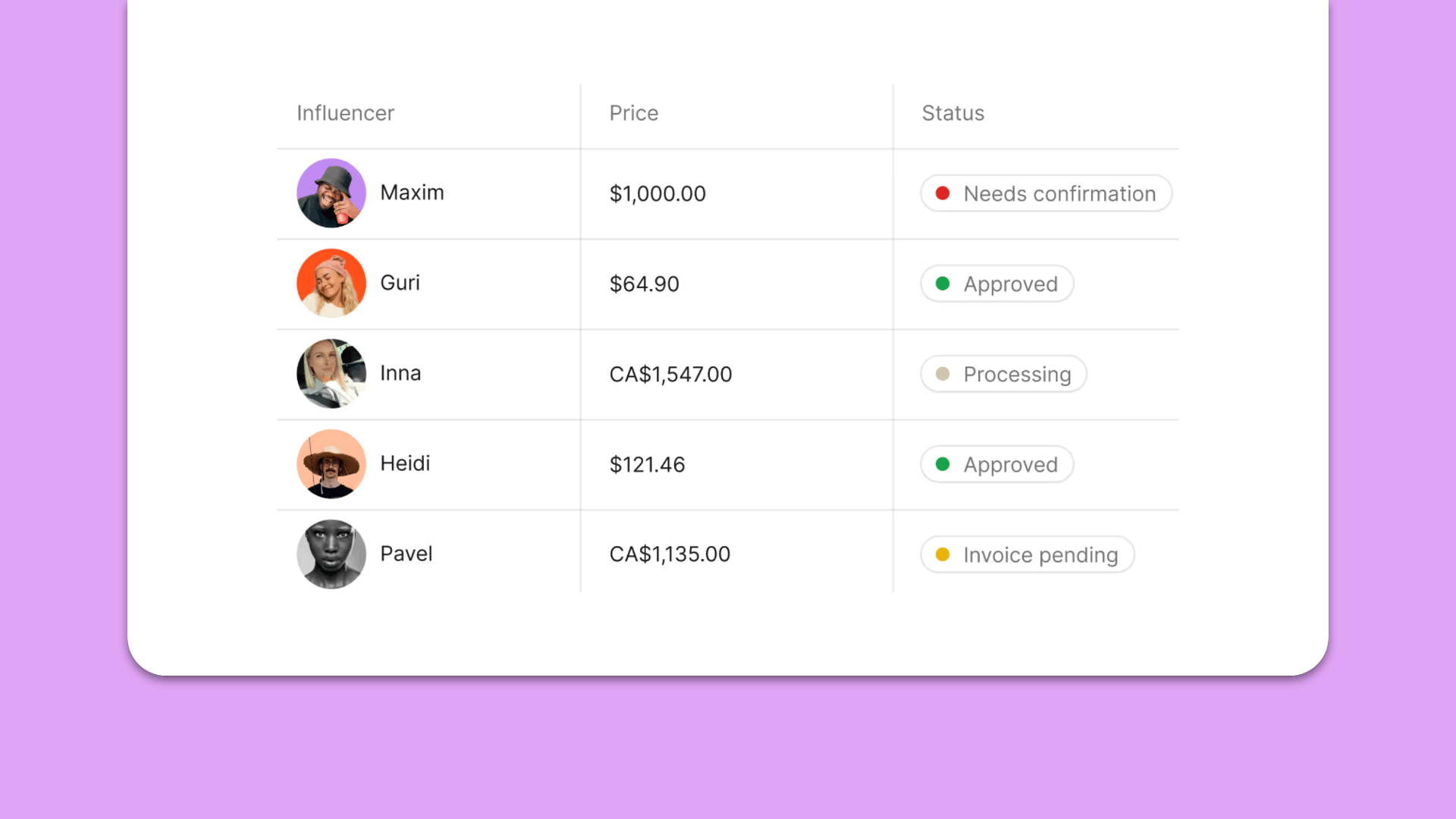
As you’re probably aware, the affiliate payouts process generates a veritable Mount Everest of paperwork.
Requirements vary widely from country to country. For example, if you’re based in the US, you’ll need to collect Form W-9 from domestic affiliates, while overseas creators will (probably) need to complete Form W-8BEN.
Now, I’m not an accountant, so I’d strongly advise speaking to an actual expert to figure out your documentation requirements.
Alternatively, if you don’t fancy handling all that painful tax and compliance stuff yourself, Modash Pay helps handle creator invoicing, tax compliance, and payout documentation. Book a demo to find out more 😎
For creators, a timely and reliable affiliate payout process is as much of a selling point as your commission rate and bonuses.
They want to feel confident that you’ll pay them exactly what they’re owed, on time, month after month. Ideally, without too much effort or chasing on their part. And the best way to convince them is to clearly communicate your payout schedule.
Mention it as part of your affiliate onboarding and break it down in detail as part of your affiliate agreement.
That way, new affiliates will know exactly what to expect – which means you’ll spend less time down the line on payment-related queries and complaints.
The good news is that, once you’ve developed your affiliate payout process, most of it runs on autopilot.
But that’s not to say it’ll always be like that. Unfortunately, there are various issues that can shatter your rock-solid system into a thousand tiny pieces, so I asked Melissa to identify the biggest threats.
First up, returns and chargebacks – specifically, those that happen after you’ve already paid commission on them 🤦♀️
Melissa says this is “definitely something to keep an eye on” for brands running CPA programs. Although, as I’ve already noted, you can go a long way to mitigating this issue by simply setting a longer hold period on commission payments.
Commission tiers and one-off bonuses can be fantastic motivators for your affiliate partners. But, inevitably, they also encourage some creators to try to cheat the system, as Melissa notes:
If a creator is suddenly driving significantly more order value than usual but there isn’t the content output to match, it’s worth investigating further before paying out any commissions.
Her comment highlights the solution as well as the problem. Any time you’re suspicious about a big leap in a creator’s sales, check out the content they’ve been sharing. Is there enough of it, and is it of sufficient quality, to explain the upturn in performance?
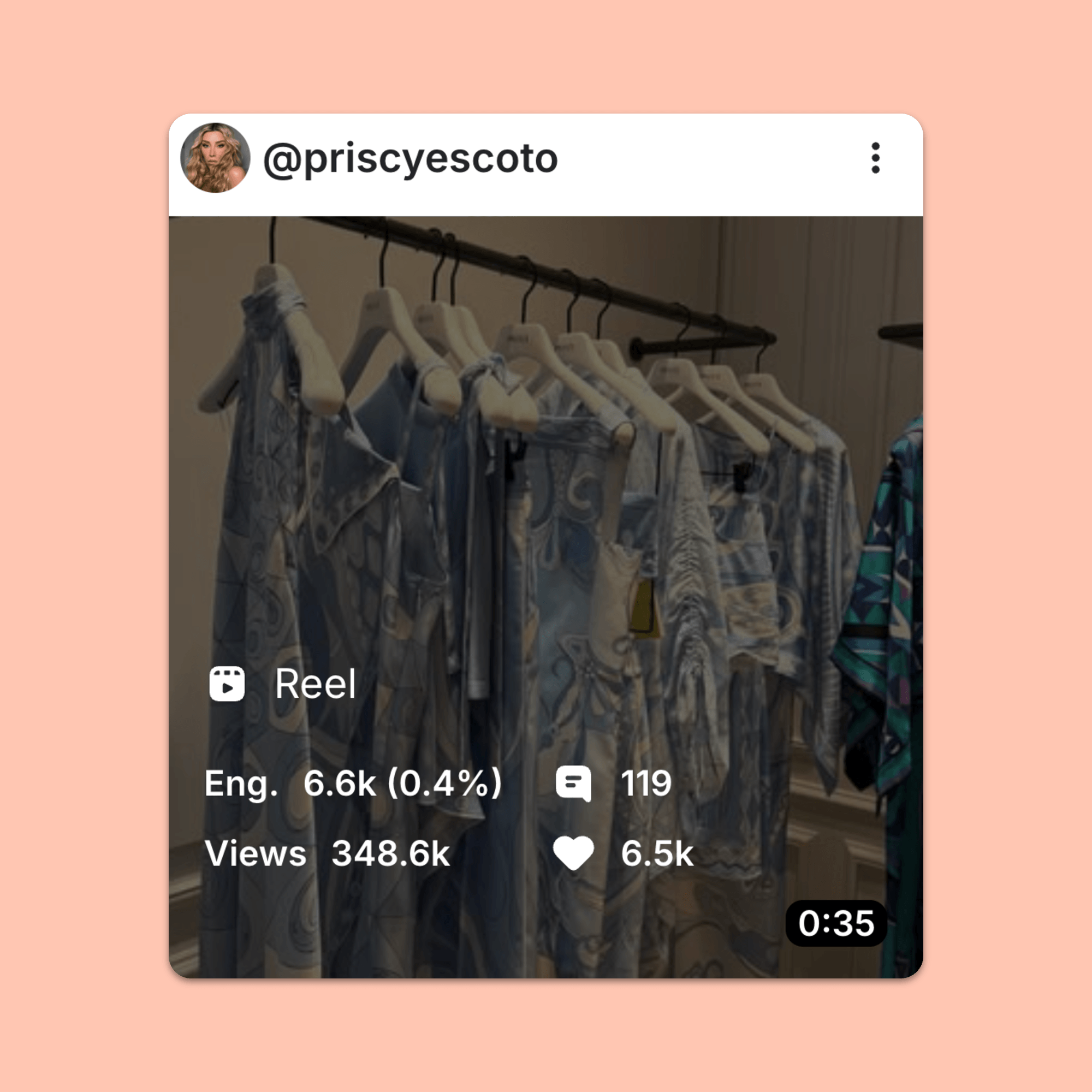
Obviously, you can do this by simply exploring the creator’s socials. Or you can use Modash’s automated content tracking tool, which gives you an instant view of each post’s engagement metrics:
Promo codes and affiliate links are the two most common ways to track affiliate sales – and they’re often used together to ensure that if one method breaks down, the other will still attribute the sale to the correct creator.
However, there’s a problem: if a customer clicks a link and enters a discount code during the same transaction, there’s a risk of the sale being double-tracked. Which means you end up paying two commissions for a single conversion 😬
Melissa says this is definitely one to look out for:
Duplicate attribution happens fairly often, especially if a customer clicks one creator's link but then checks out using someone else's promo code.
It’s easy to see why this issue happens. If you’re handling affiliate payouts manually via spreadsheets, it’s all too easy to miss a single duplicated commission among dozens or hundreds of different orders.
As ever, the most efficient solution is to invest in dedicated affiliate software. For instance, if you’re on Shopify, Modash syncs with your store and automatically tracks conversions to the right affiliate, even when the customer clicks a link and uses a promo code in the same transaction. Not only that, but…
All of which means you can wave goodbye to double-counting 👋
Sure, there are plenty of issues that can trip up your affiliate payout process. But you can overcome many of them by diving into a creator’s performance and content data.
For starters, if you’re concerned about whether a creator’s sales are 100% legit, it makes sense to do a quick sanity check on the relevant orders. You want to make sure that each conversion is real and final, not just that a conversion event was recorded.
You should also keep a close eye on chargeback rates over time. If an affiliate is generating a disproportionately high number of them, there’s clearly some sort of quality issue, even if the sales were totally genuine – so look at their content to make sure they’re not misleading customers about your product.
Earlier in the article, I mentioned (well, actually, Melissa did) that it’s important to check whether a creator’s performance aligns with their content activity.
Let’s say an affiliate racked up $1,000 in commissions last month. You’d expect to see them sharing a decent volume of content throughout the month – and, as I’ll discuss in the next section, you’d expect that content to have performed well, too.
If that output is missing, it’s a strong signal that something untoward has happened. It might not be fraud – the creator could have had their promo code leaked without their knowledge, for instance – but it’s definitely a red flag that needs investigating before you pay up.
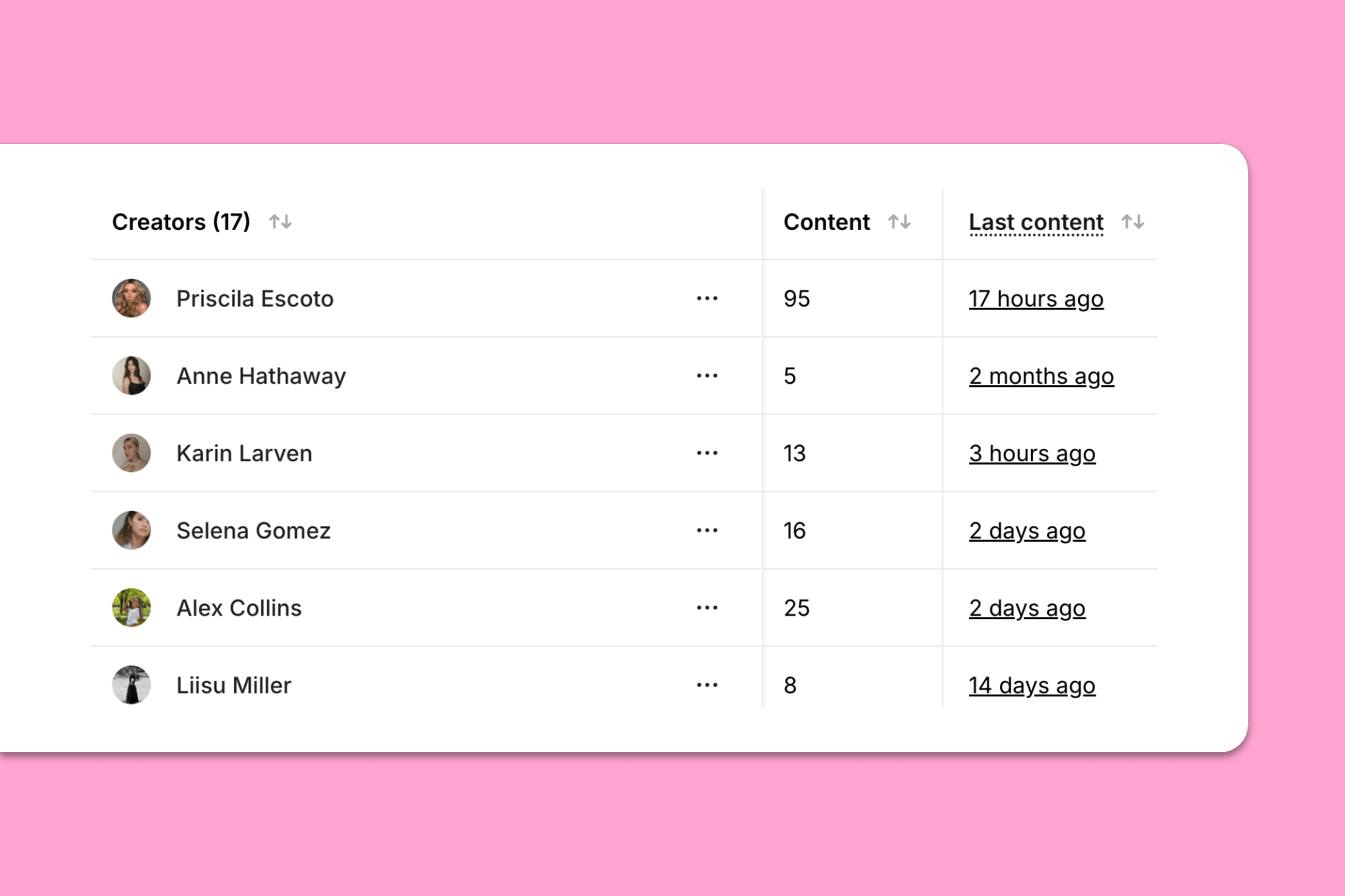
🤓 Pro tip: Modash makes this process easy by providing a quick view of when each creator in your program last posted and how much content they’ve shared in a given period.
Conversion data isn’t the only thing to consider when reviewing affiliate payouts – you should also be keeping a close eye on content performance.
Again, say a creator earned a cool $1k last month. You’ve checked the order data and everything looks above board – lots of clicks, traffic, and orders.
But does their content tell the same story?
To bring in that level of sales, they’d presumably need at least 1 – 2 posts doing serious numbers in terms of views, comments, saves, shares, etc. To find this out, you’ll either have to manually calculate engagement rates for every affiliate (no thanks), or use a tool like Modash to instantly view key metrics like…
…all broken down per creator.
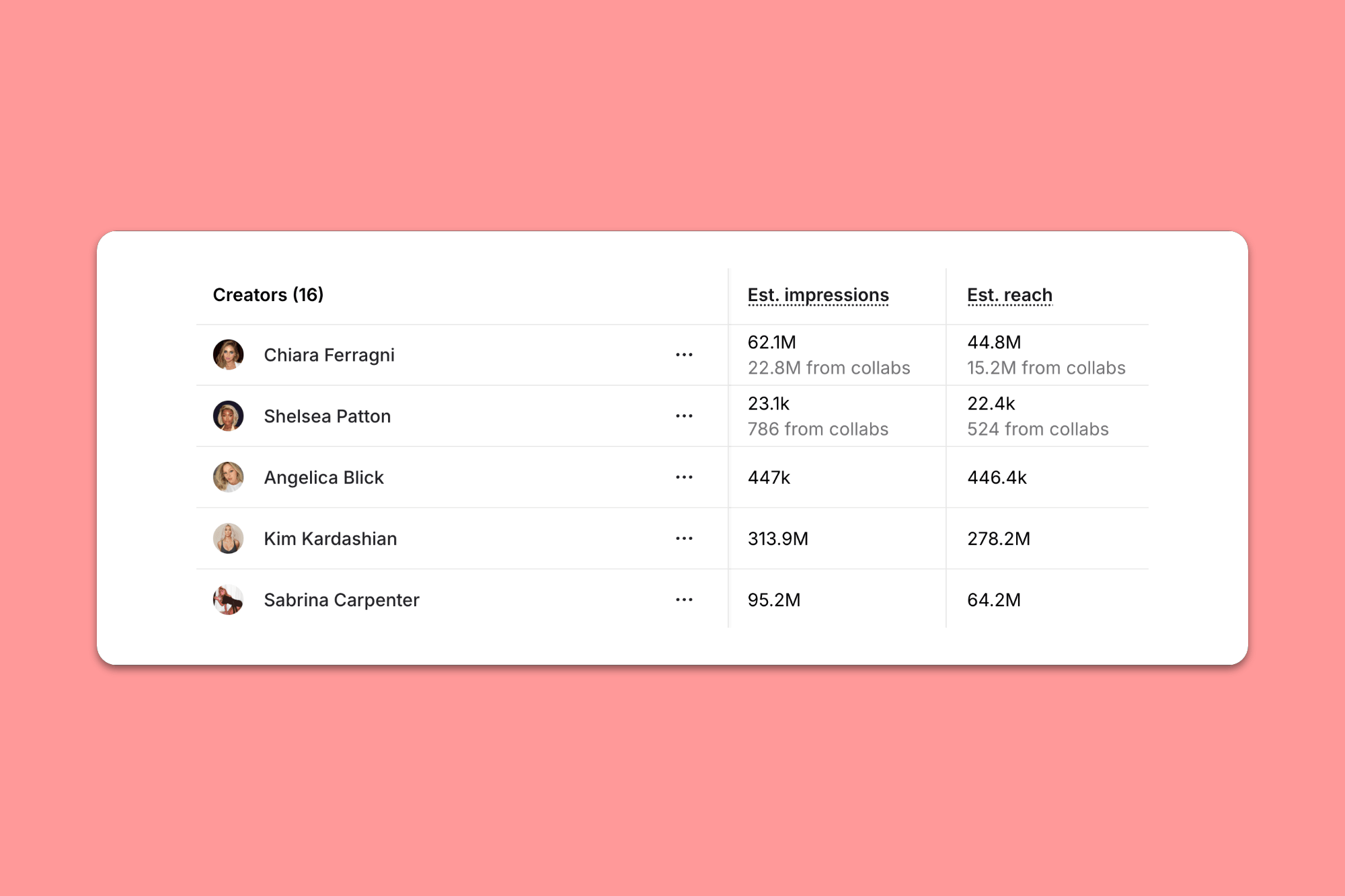
Either way, if the figures don’t add up, you’ll need to take a closer look before signing off their commissions.
While there’s no universally agreed minimum payout threshold, most brands keep hold of commissions until an affiliate has earned at least $10 – $100 in a month. If a creator earns less than the threshold, any commissions they’ve accrued roll into the following month, and so on until they hit the minimum amount.
It’s far from ideal to pay an affiliate for a sale, only for that sale to get returned. Most brands handle this situation by clawing back the commission from an affiliate’s future earnings – but there’s obviously not a whole lot you can do if the affiliate in question ghosts you and never makes another sale.
For most brands, it makes sense to handle affiliate payouts monthly rather than paying affiliates per conversion, as Melissa explains:
Especially in terms of reporting, it’s important to be able to review payouts on a monthly basis. It also allows time for any last-minute changes to be made if needed (e.g. if a creator is linking fraudulently, we have time to remove the commission before the payment window closes).
She also notes that monthly payments are generally better for affiliates, too:
From the creator's perspective, monthly payouts are much more predictable, making affiliate marketing feel like a genuine, sustainable income stream rather than a series of one-off payments.
Of course, there might be some exceptions. For example, if your AOV is unusually high and you have a long sales cycle, you might find per-conversion payments easier to manage.
There are a couple payout considerations to bear in mind for affiliates based overseas. Firstly, make sure they fill in any relevant tax paperwork (e.g. for US brands, international affiliates will probably need to complete Form W-8BEN). Secondly, make sure you choose a payment solution that supports international transfers. For example, Modash Pay handles payments across 180+ countries and 36 currencies.
Depends why you deactivate them. If you’re purging inactive affiliates from your program, it’s best to pay creators any accrued commissions before closing their accounts – you don’t want to be accused of stealing, after all. On the flip side, if you’re kicking them out for violating your terms or committing fraud, you might want to retain some or all of their outstanding commissions, especially if you’re worried about the orders getting returned post-payout.