.avif)





I asked 35 marketers (customers of Modash, an influencer marketing tool) some questions about their brand ambassador program strategies.
Here, I’ve collated their answers & some strategic advice to help you maximize the ROI on your ambassador program.
You’ll learn about how other companies are:
Let’s start 🙂
Disclaimer: In this report, I’m not claiming to have statistically significant conclusions on each topic. Rather, I’m telling you “I asked 35 marketers, and here’s what they said”, so that we can all learn from each other.
71% of respondents use a mixture of inbound & outbound to recruit new ambassadors.
Around 3/4 of respondents generate inbound ambassador applications, and almost everyone does some amount of outbound recruitment.
.avif)
So how do you figure out which recruitment strategy makes sense for you?
To start with – driving inbound interest in your brand ambassador program is ideal.
There’s just two caveats to consider.
The first is that, unless you’re a big brand, you probably won’t recruit enough to scale with inbound alone.
The second is that you're not going to get the bigger fish. On average, people coming inbound are likely to have a smaller reach.
With that in mind, here’s what you can do.
1. Set fixed terms; spend no time on back-and-forth negotiations. Creators can take it or leave it. Both the requirements, and the rewards are the same for everyone.
2. Create a landing page with an application form to invite creators. Link it in the footer. Make sure it ranks in Google when someone searches “[yourbrand] + ambassador program”.
3. Create guidelines, collate examples and inspiration – everything a self-serve ambassador would need to get started.
You could make that a commission-only model, or you could use Boohoo’s model, which offers a voucher in exchange for specific monthly deliverables:
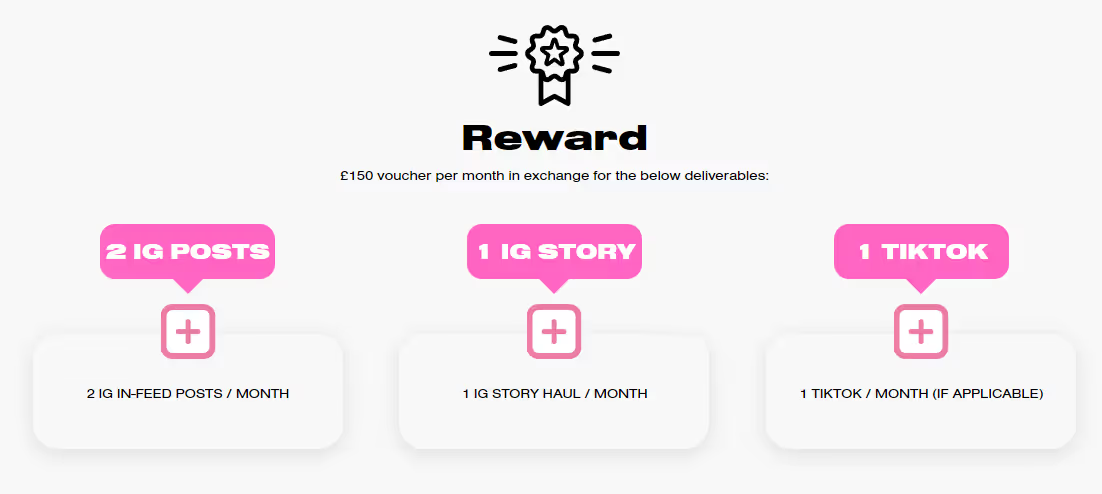
The important part is that the terms are clear, and you don’t spend time negotiating and onboarding each ambassador. Overall, it should be relatively low effort for your team to manage.
Then, while that is running, work on a separate outbound program. Find ideal brand ambassadors who are worth the time and manual efforts to collaborate with, and negotiate custom deals case-by-case.
💡 If you haven’t tried it already, test out Modash for finding brand ambassadors (and their contact emails). You can apply filters to search every social media creator in the world with 1k+ followers on Instagram, YouTube, and TikTok.
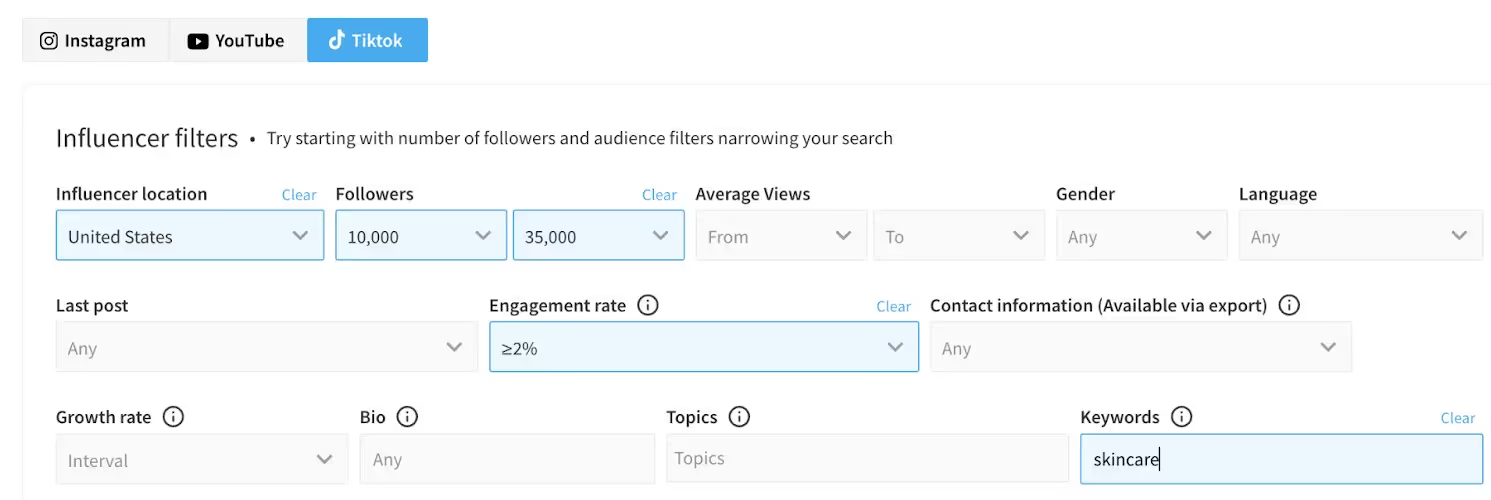
Try it for free, no credit card (or sales call) needed. Or, view pricing.
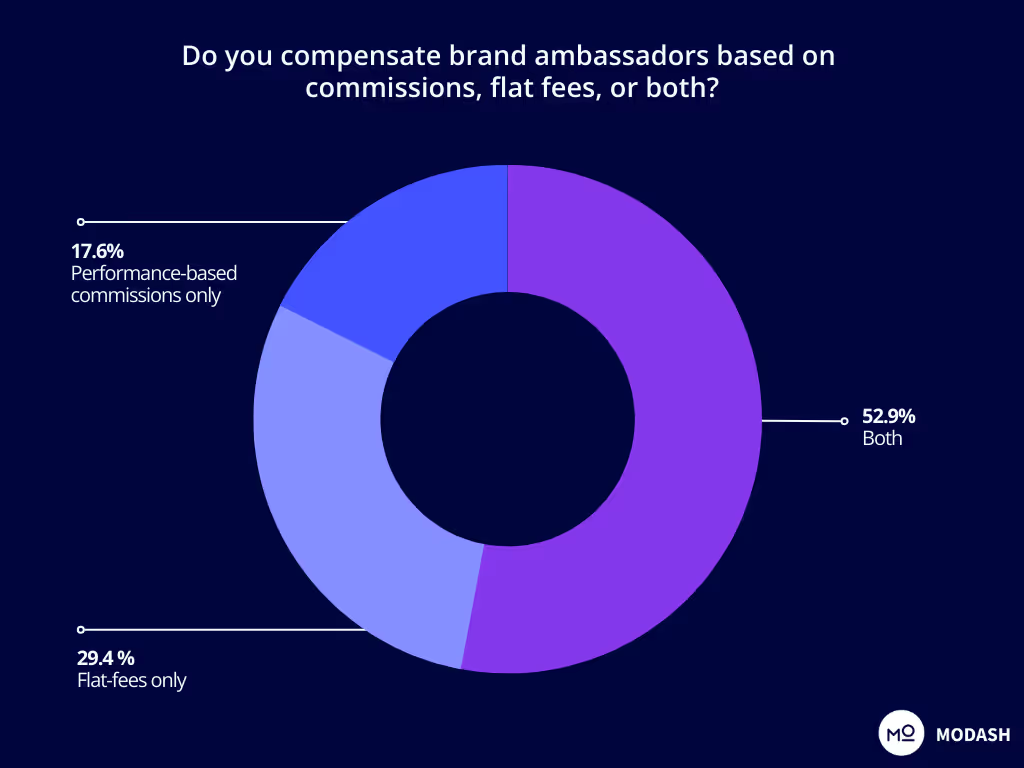
53% of respondents compensate ambassadors using a mixture of flat fees plus performance-based commissions.
Some marketers pay ambassadors based on flat fees, and others use commission-only. We found, though, that the most common way to compensate ambassadors was a mixture (base fees plus commission).
In a perfect world, all our partnerships would be based on commission. That’d make them infinitely scalable, with zero risk for the brand.
The main problems with commission-only are:
That’s what makes mixed compensation so popular.
Without guaranteed income for the creator, time spent on making content is risky. It might not turn into anything. And at the same time, great creators are likely to have offers from other brands that aren’t risky to choose instead.
So adding a base fee guarantees the deliverables. The creator knows that they’ll at least get paid for the time they spend making content. Then, there’s infinite upside if they perform well. Win-win.
If it's not feasible for you to pay a recurring monthly base fee, you could try offering an activation fee.
If creators aren't responding to a commission-only offer, pitch the idea of a one-time fee to kickstart your collab, then continue based on performance afterwards.
Tanja Milicevic (Affiliate Manager at Donnerberg) has several experiences with this. They paid YouTubers a flat rate for a single video, and offered additional performance-based commissions on top. One example is Fisiolution, a Spanish channel with 1M+ subs.

After a successful first video, those channels continue to mention Donnerberg multiple times every month, being compensated only based on performance.
As you would expect, the respondents who did not offer base rates have a higher average commission rate. None of the respondents offer below 10% commissions:
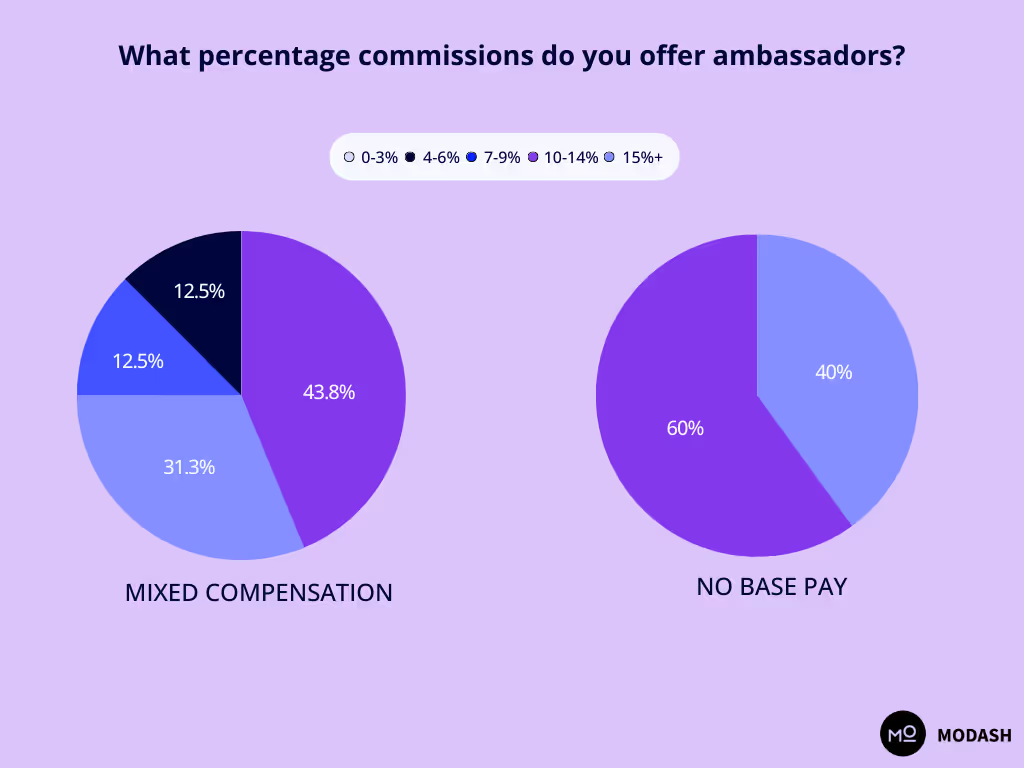
Of those who offer mixed compensation, there’s more variation, but 3/4 are still offering 10% or higher. 31.3% offer 15%+.
Naturally, your product & business model will dictate (to an extent) the commissions you can offer. A mobile app, SaaS, or digital product has bigger margins than a physical product, for example. Or a subscription product might have a higher lifetime value than a one-time purchase.
Regardless, there are three main factors to consider when you’re choosing a commission rate for your program:
Just remember: it can be a lot of work to be part of an ambassador program. Most creators can realistically only keep up a couple at a time. Make sure yours is attractive enough.
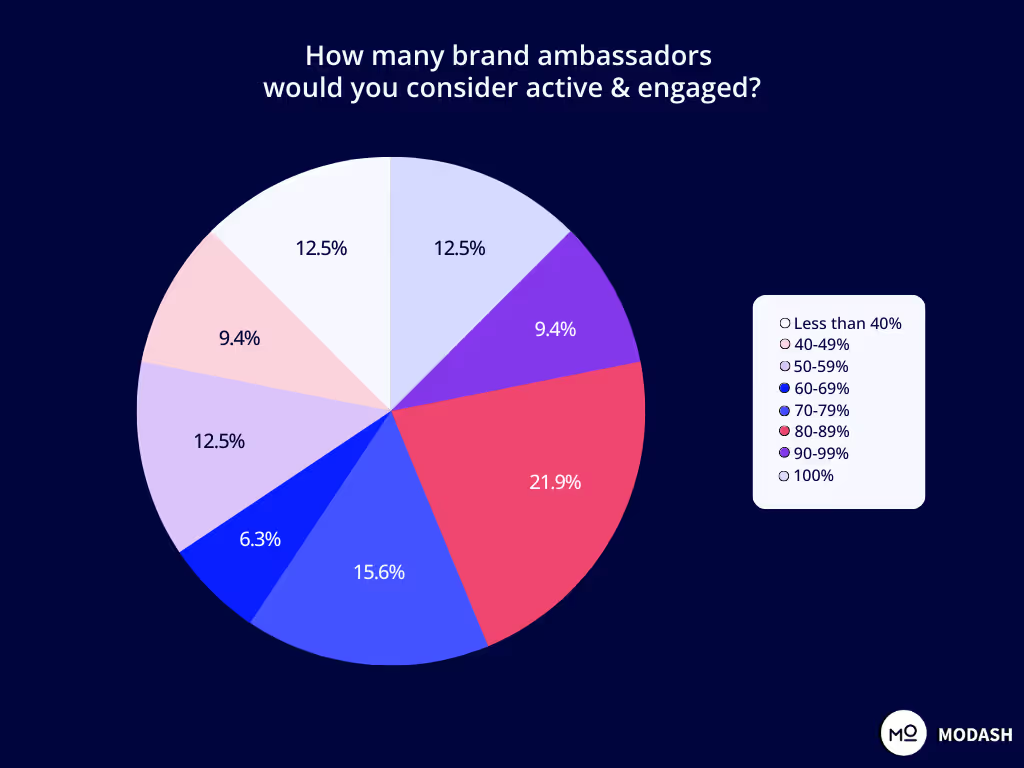
38% of respondents said they believe up to 50% of the ambassadors they’ve recruited are disengaged and inactive.
The rest of the answers are all over the place – ranging from <40% to 100%.
Keeping ambassadors engaged is a clear, common challenge for most brands.
So much work goes into recruitment, negotiations and onboarding – only for the creator to go cold after a month or two.
Here, I’ll share a few tactics that markets are using to solve the problem of long-term engagement.
Find a way to bulk communicate regularly with your ambassadors. It could be a newsletter, a Discord server, a Facebook/Instagram group, anything.
Once you have a way to keep in touch, you can:
You can also use it to shout out those who have had high performing content. Doing so is motivating for those who you’re recognizing, plus it helps others learn what works best to improve their own content next month too.
Another simple way to ensure engagement is to simply make it an obligation.
This works best when there are flat fees involved in exchange for a minimum amount of content or activity.
But, even if your program rewards are simply commissions or discounts – you could still choose to require a minimum amount of activity in order to remain an ambassador.
This was one of the most commonly cited methods to maintain engagement, used by Gabrielė Palepšaitė (Regional Influencer Marketing Lead @ Surfshark), and several others.
Note: if you want to learn more about Surfshark’s creative influencer marketing strategy, listen to Gabrielė’s podcast interview!

Simply being friendly and human goes a long way when dealing with creators (or anyone!).
Two quick examples of marketers who are prioritizing this:
Agita Matule (Marketing Associate @ Wolt) regularly invests time into giving constant feedback about both the content and the results to help ambassadors succeed.
Georgia Humphries (Influencer Marketing Team Lead @ Tourlane) strongly believes in personal relationships with creators. From meeting in-person for a coffee, to sending gifts, her team focuses on creating an incredible experience for creators. Start to finish. (Listen to her podcast episode here!).
The more the creator likes you, the more enthusiastic and genuine they’ll be in promoting your brand.
Just be reliable, be friendly, and get the basics right:
Lastly, I want to share some advice from Ben Williams (Senior Influencer Manager @ Blast). He reminds us that having disengaged ambassadors isn’t always a cause for concern.
“It could be that 80% of sales are generated by your top 10% of ambassadors, so prioritize keeping top performers engaged first and foremost!”
While it is a big opportunity to engage the rest of your ambassadors, don’t spend your time there at the expense of the top ambassadors who are already performing great. Keep them happy.
As well as direct payments (commissions or flat fees), marketers make their ambassador program more attractive with additional perks.
The most common ones are:
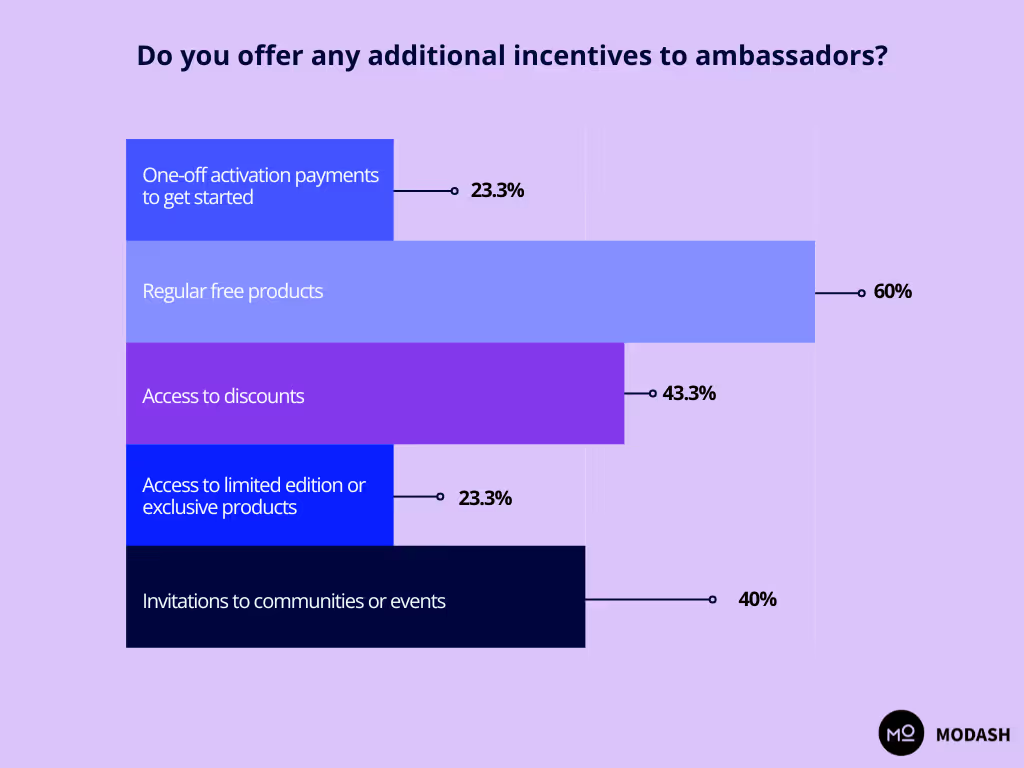
I’ll say it again: it can be a lot of work to be part of an ambassador program. You need to make sure yours is attractive enough. If there are simple, low-cost perks you can offer like these, throw them in as extra incentives.
Here’s more ideas:
Of the respondents who used mixed or commission-only compensation, 52% have multiple commission tiers, meaning that top-performers can unlock higher commission rates.
If you’ve got a successful ambassador who is driving sales on a commission basis, you want to do everything you can to keep them. Not only keep them, but make sure it’s worth their time to sell even more.
If your margins allow it (they usually do), consider making higher commissions available to your best ambassadors.
And make sure that new ambassadors are aware that those higher tiers exist, too. Advertise it on your program landing page, as a minimum.
Tip: Your commission tiers don’t have to be based on sales. They can be other performance-based metrics like clicks or impressions. Or, they can even just be activity requirements (e.g. minimum amount of content per month).
Although the sample is a little biased (these people are all users of Modash, an influencer marketing platform), marketers are generally feeling great about their program.
Just two weren’t sure (yet) about the ROI, and one said it isn’t yet ROI-positive, but believed the program will be in the future. None of the respondents are considering stopping their ambassador program.
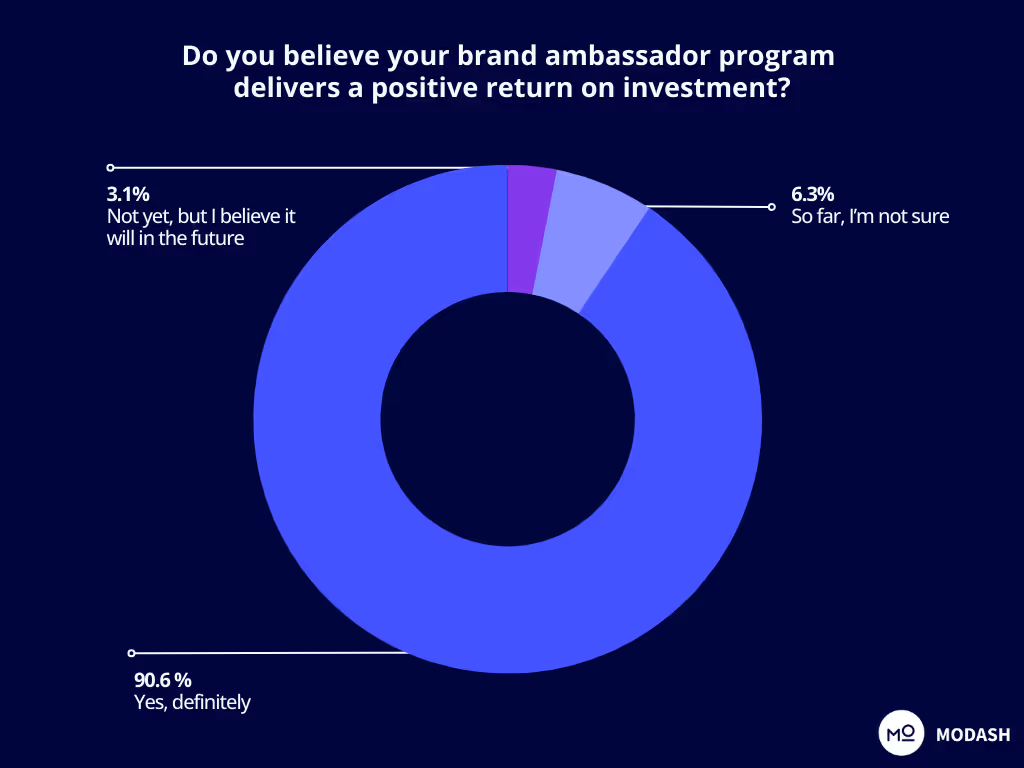
The future looks bright for ambassador programs as a revenue-generating channel.
And it’s a channel that compounds. As you get better at recruiting, negotiating, communicating (etc.) – you’ll be able to manage hundreds of ambassadors effectively without adding more team members.
And the more ambassadors you have, the more you’ll start to see other creators want to get involved with you.
It all compounds.
Thanks for reading!
P.S. If you want to participate in any of Modash’s content (podcasts, future surveys, or anything else), hit me up: ryan@modash.io.
P.P.S. Eager for more influencer marketing content?