

Narzędzia
Zastosowania



Maybe you’re seeking some eye-catching data to convince your leadership team that it’s time for a budget increase. Maybe you’re comparing your own program to the wider influencer marketing world. Or maybe you’re just curious 🤷♀️
Whatever the case, you’re looking for influencer marketing statistics – and we got ‘em.
That’s right; I dived into Modash’s library of 100% original surveys to bring you the 45+ juiciest stats, covering everything from global influencer marketer salaries to top influencer outreach and negotiation best practices. Let’s get into it…
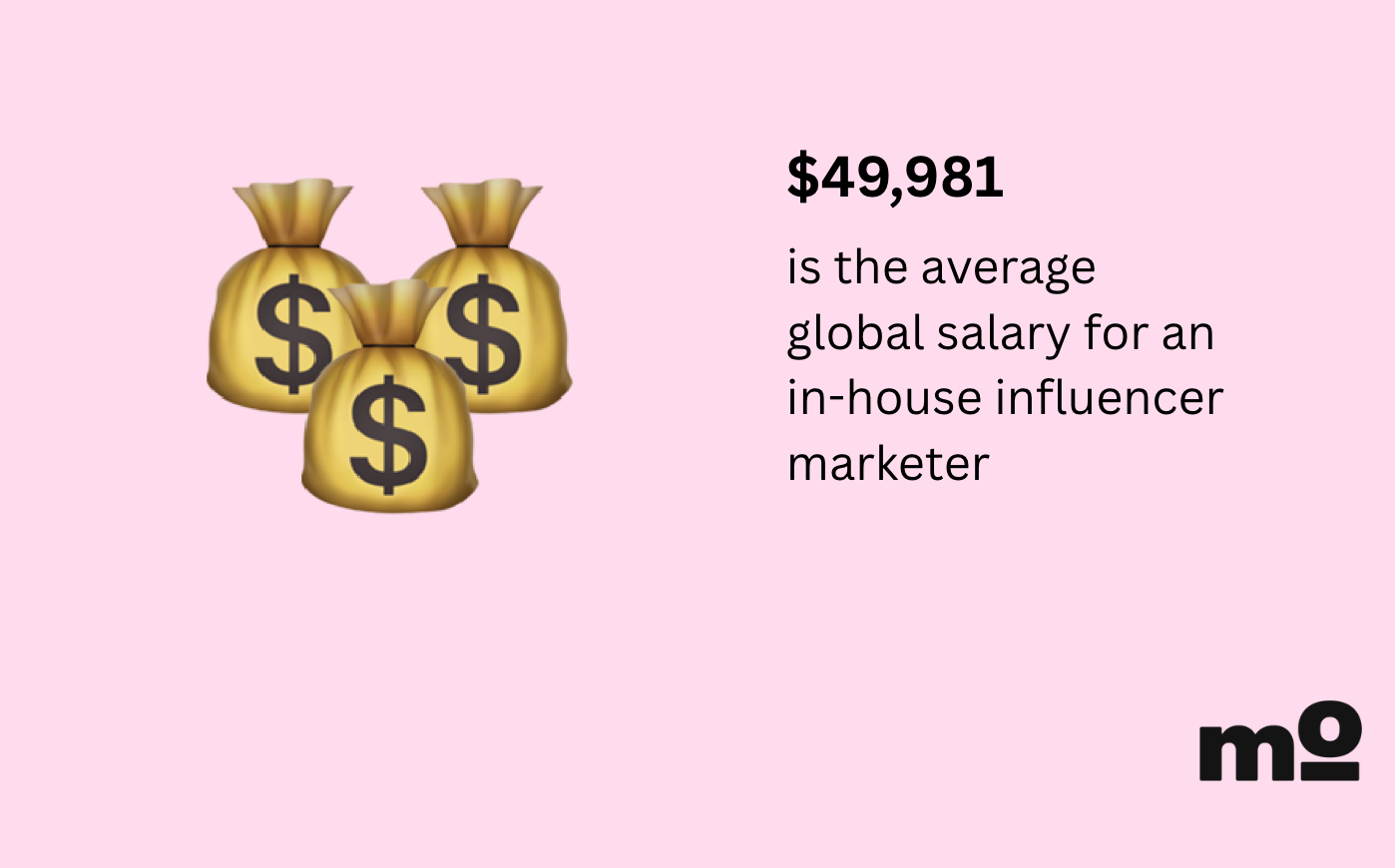
We surveyed 400 in-house influencer marketers from around the world to answer the question: how much do influencer marketers earn? The global average stands at $49,981. However, as you can imagine, the reality is a little more complicated, with a wide range of factors – location, gender, company size, and more – affecting average earnings.
👉 Discover more in our Influencer Marketing Salaries 2026 Report.
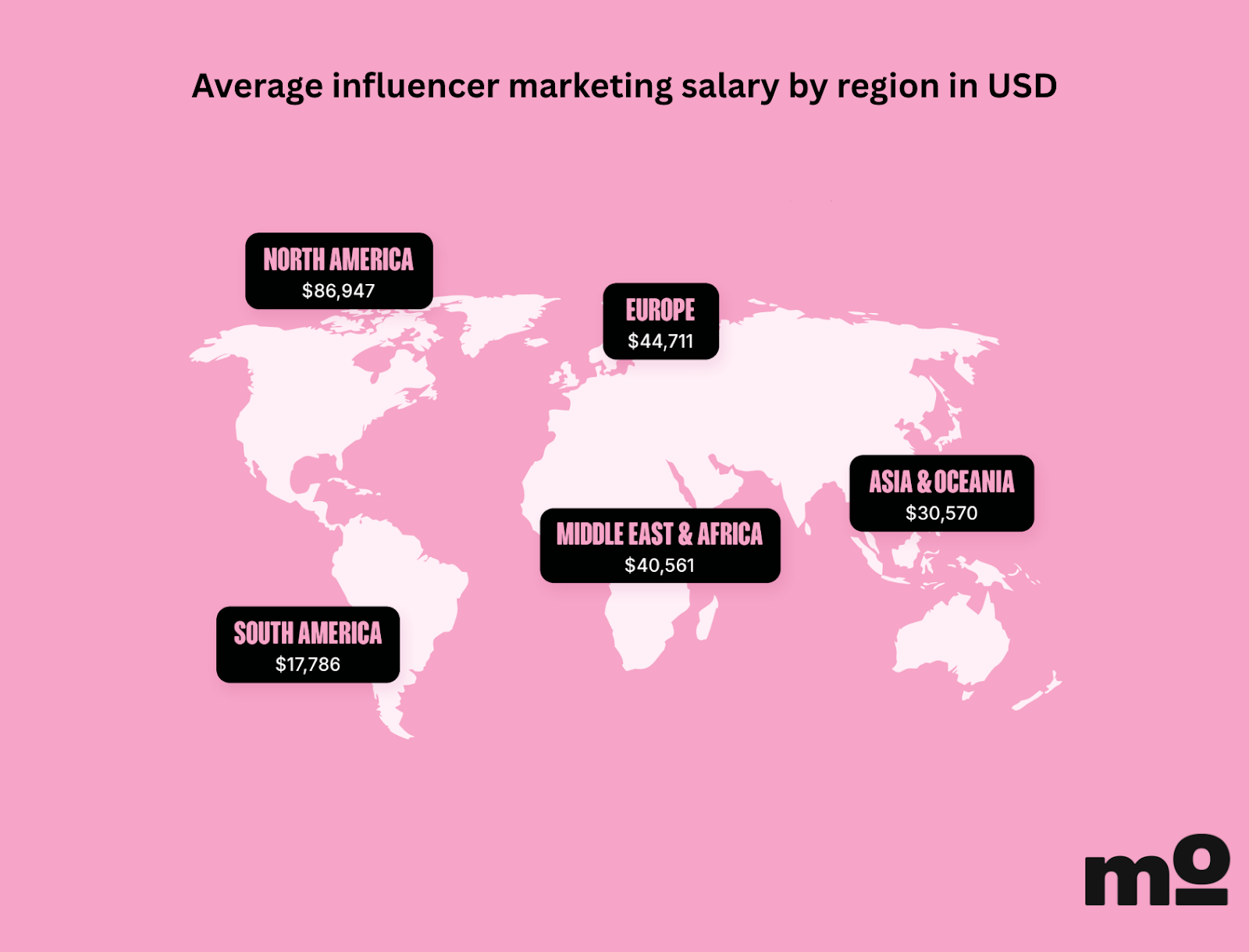
More from our salary survey: when we segmented the results by location, we discovered that North American influencer marketers earn an average of $86,947 – almost double the global figure.
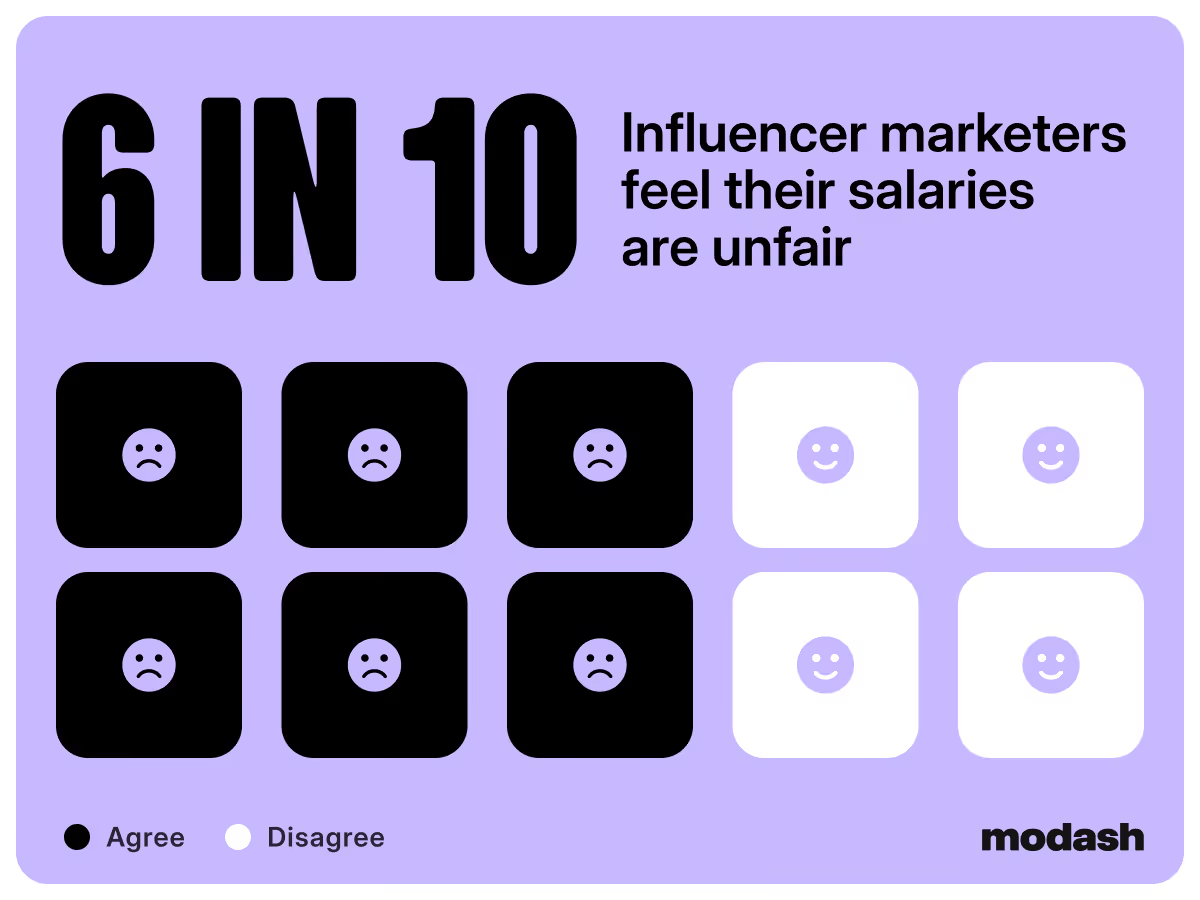
Regardless of location, a significant proportion of influencer marketers we spoke to for our salary survey – six in 10, to be precise – insisted their earnings are unfair because they don’t fully reflect the demands of their role. What’s more, seven in 10 said the influencer marketing industry as a whole is failing to adequately reward marketers for the value they provide.
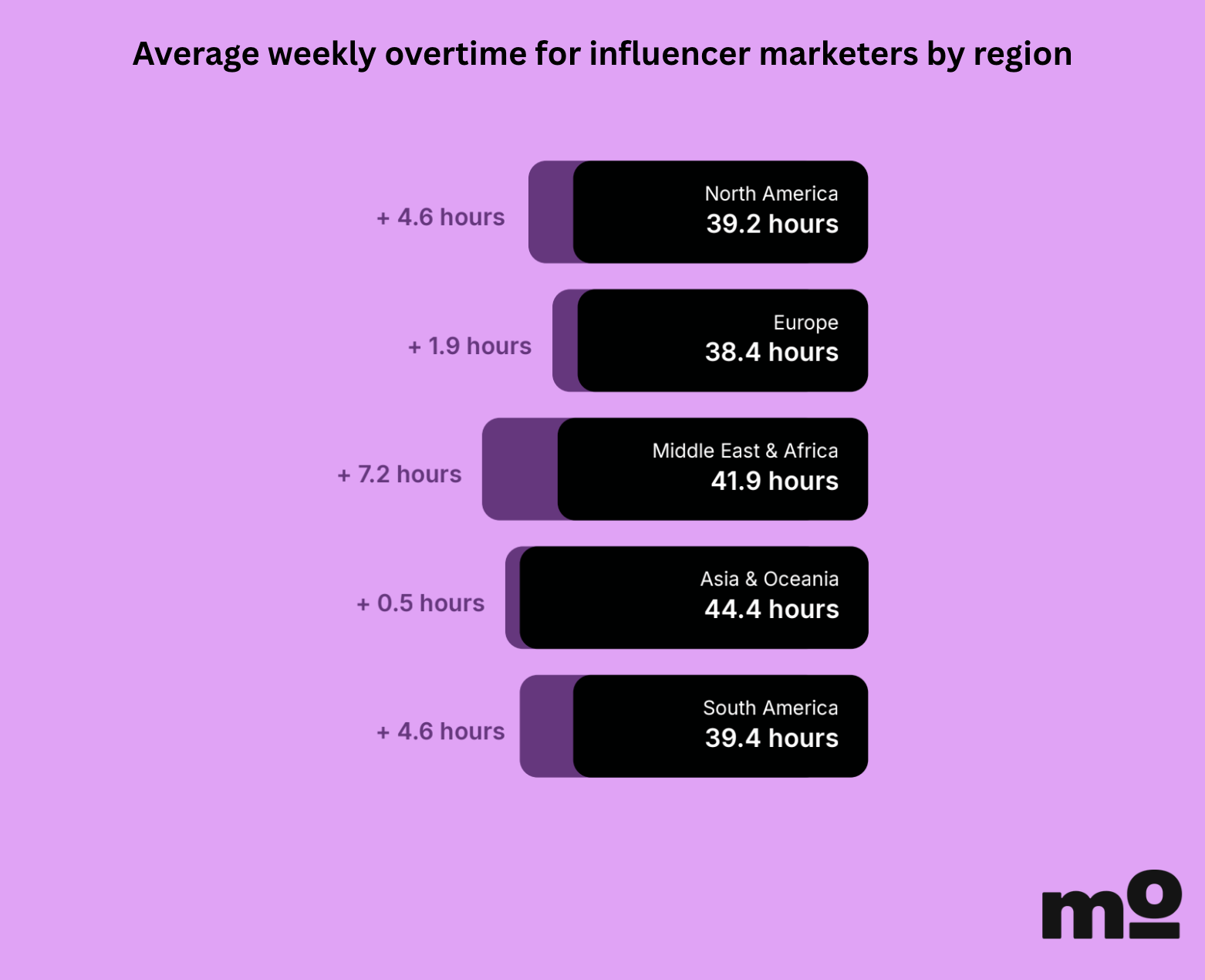
On to the thorny issue of unpaid overtime: globally, influencer marketers clock up 2.9 hours of it every week, according to our salary survey. Based on the average global influencer marketer salary of $49,981 and average contracted hours of 39.76 per week, this equates to an hourly wage of $24.17 – meaning the average influencer marketer is losing $1,256.84 per year in unpaid overtime.
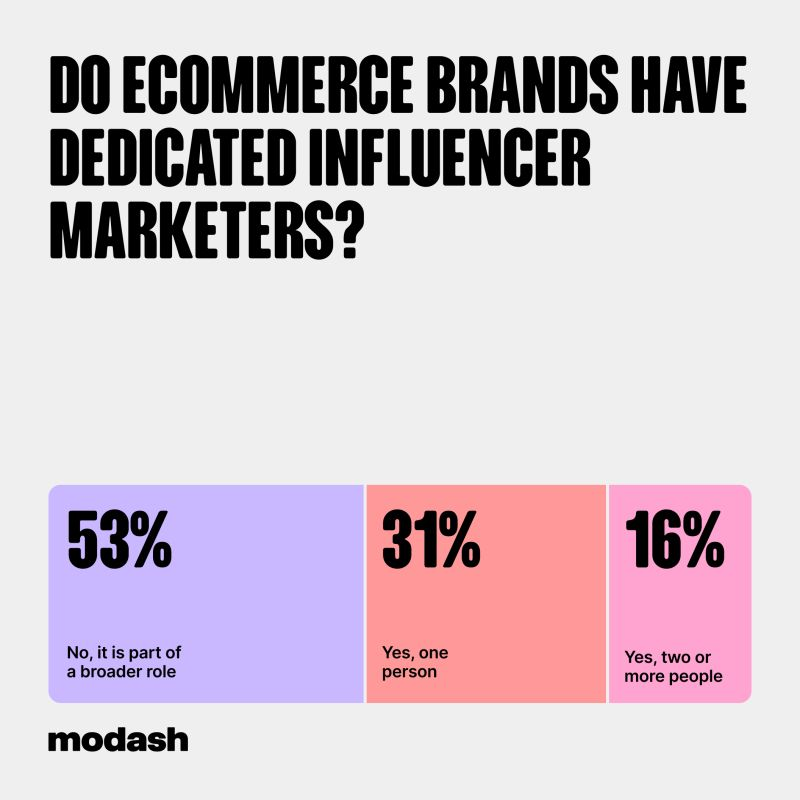
Influencer marketing is hardly a new thing, with the global market surpassing $33 billion in 2025. Yet when our Head of Marketing, Ryan Prior, surveyed 81 marketing leaders at ecommerce brands that employ 10+ people and run regular influencer campaigns, he discovered that 53% don’t have a dedicated influencer marketer – instead, it’s handled as part of a broader role. Meanwhile, 31% had one dedicated influencer marketer and 16% had two or more.
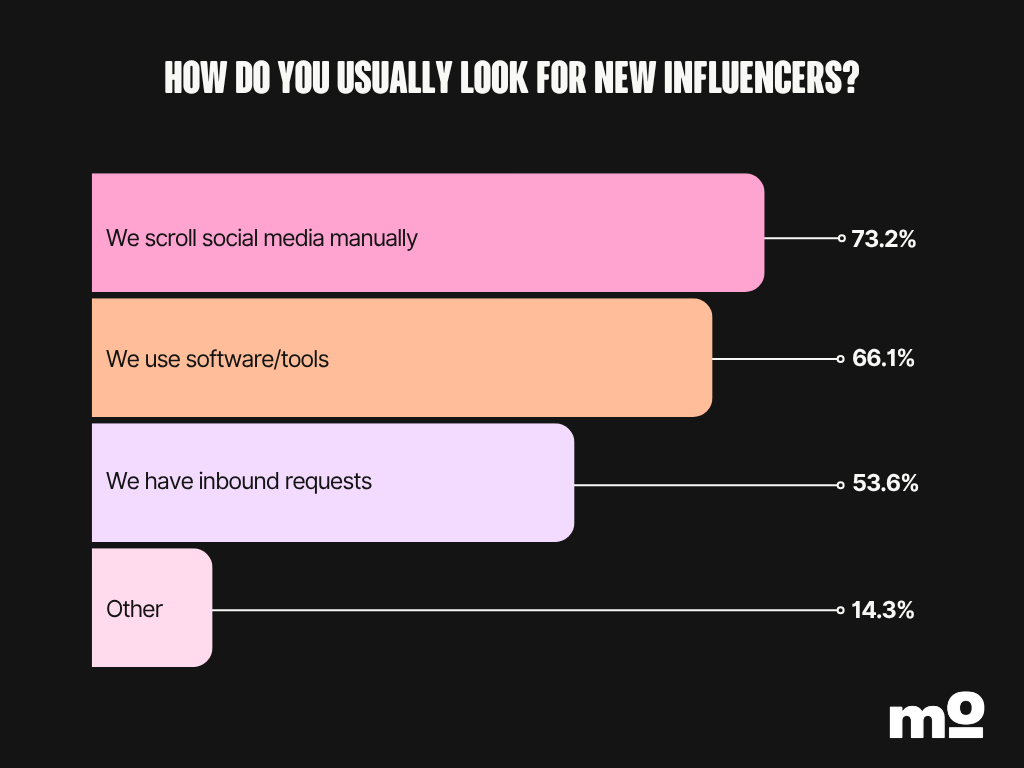
Finding the right influencers is a key requirement for any influencer program – so how are brands doing it? We asked 53 influencer marketers and discovered that 73.2% rely on manually scrolling social media to track down relevant influencers, while 66.1% use dedicated influencer marketing software like Modash and 53.6% receive inbound requests.
👉 Read more in 53 Influencer Marketers Share How They Find Influencers.
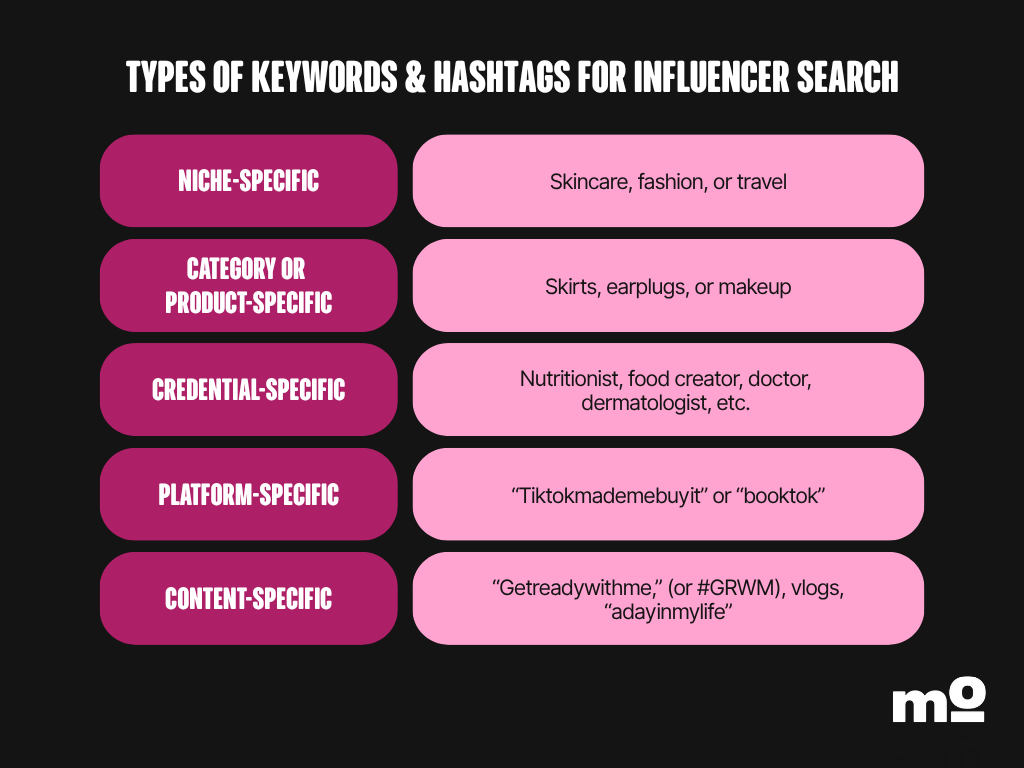
The same survey revealed that just over two-thirds of influencer marketers who use native social search functionality leverage hashtags and/or keywords to find influencers. These can be segmented as follows:
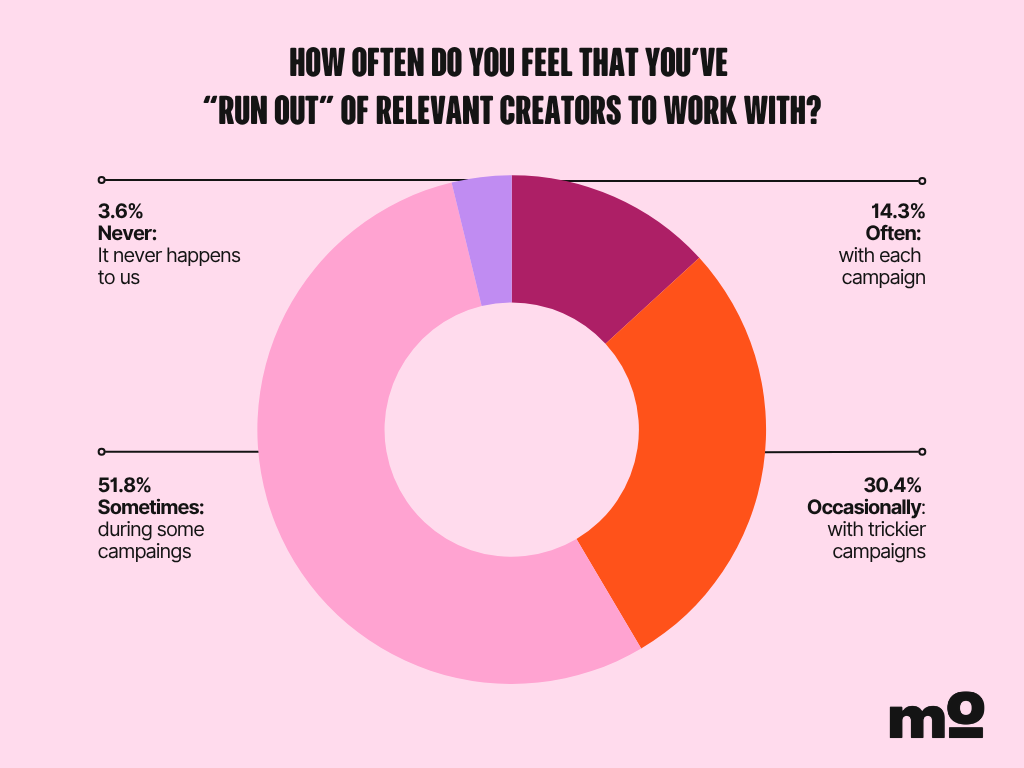
Of those same 53 influencer marketers, just 3.6% said they never run short of influencers to collaborate with. By contrast, 14.3% run out with every campaign, 30.4% run out “occasionally” with trickier campaigns, and 51.8% run out during some campaigns.
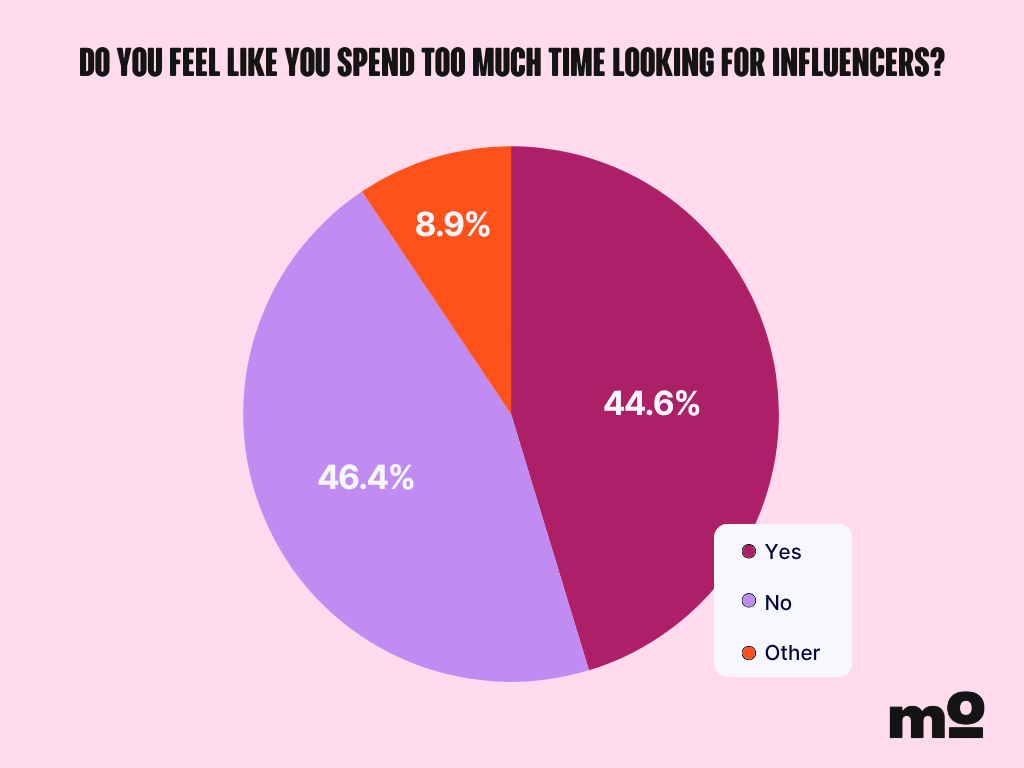
The big problem with regularly running out of influencers is that searching for new collaboration opportunities can be a serious heavy lift for some brands. Indeed, the same survey reveals that 44.6% of influencer marketers feel they spend too long looking for influencers. Meanwhile, 46.4% say influencer search doesn’t take them too much time, so they’re clearly doing something right.
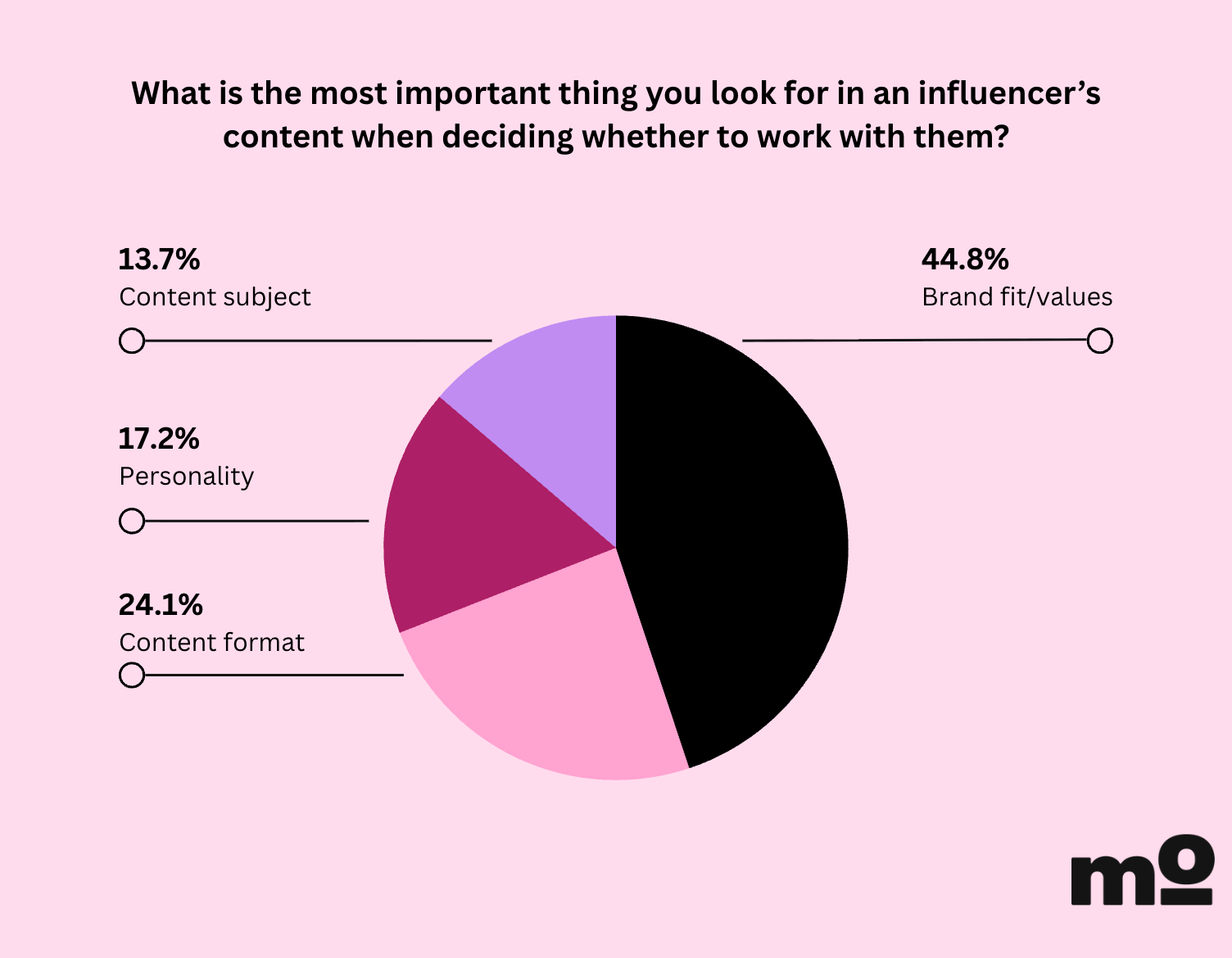
Vetting influencers is another essential element of the recruitment process. When we surveyed 29 influencer marketers about vetting influencers, we discovered the following top factors for deciding whether to work with an influencer:
👉 Discover more stats like this in 29 Marketers Share How They Vet Instagram Influencers.
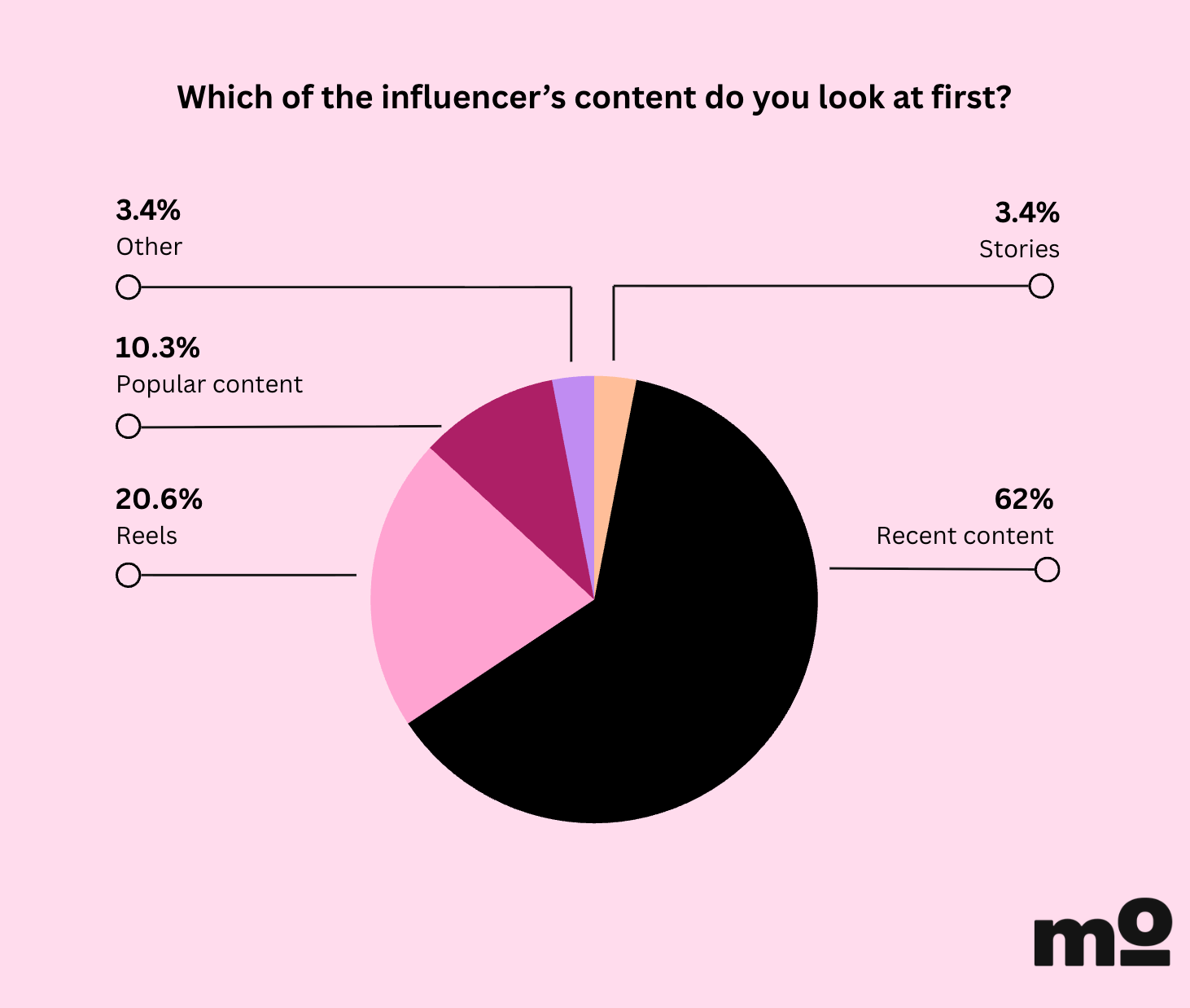
Staying with the same survey of 29 influencer marketers, we found that 62% start vetting Instagram influencers by looking at their most recent content, while 20.6% head straight for the Reels tab.
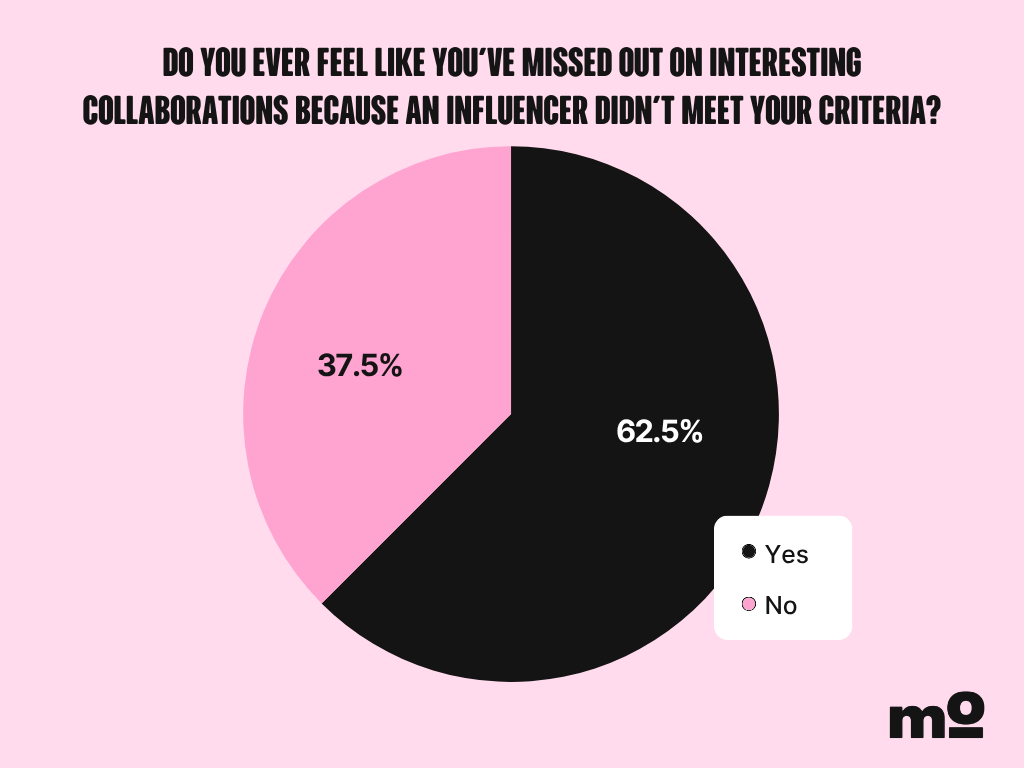
Sure, vetting is important – but remember you can have too much of a good thing. Indeed, when we surveyed 56 influencer marketers, 62.5% admitted they feel like they’ve missed out on potentially interesting collabs due to their overly stringent vetting criteria.
👉 Read more in [Survey] Is Influencer Search Actually Getting Harder?
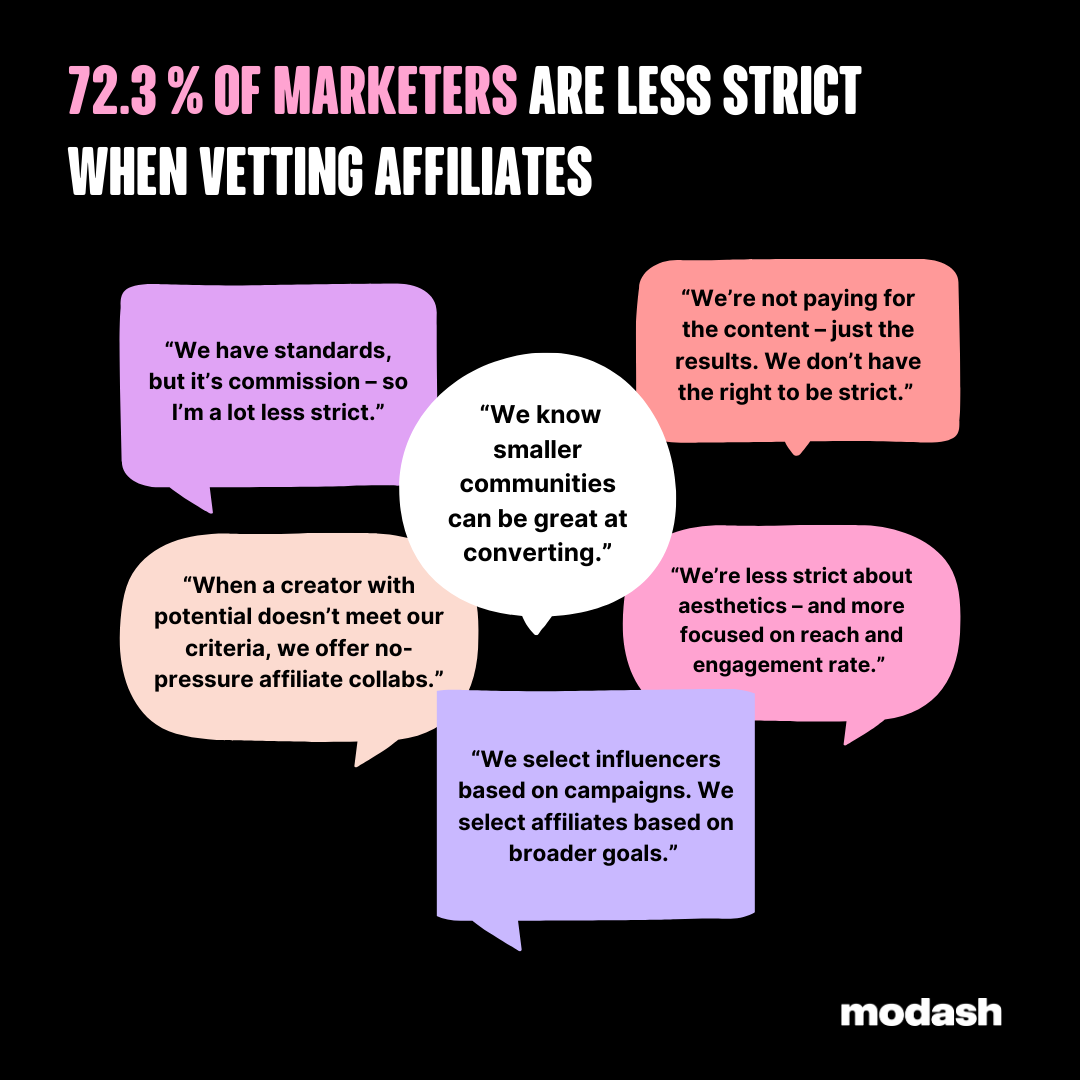
Of course, vetting isn’t just for new influencer partnerships – it plays a part in affiliate marketing, too. We surveyed 65 marketers who do both affiliate and influencer marketing, with 72.3% saying they’re less strict when it comes to vetting affiliates.
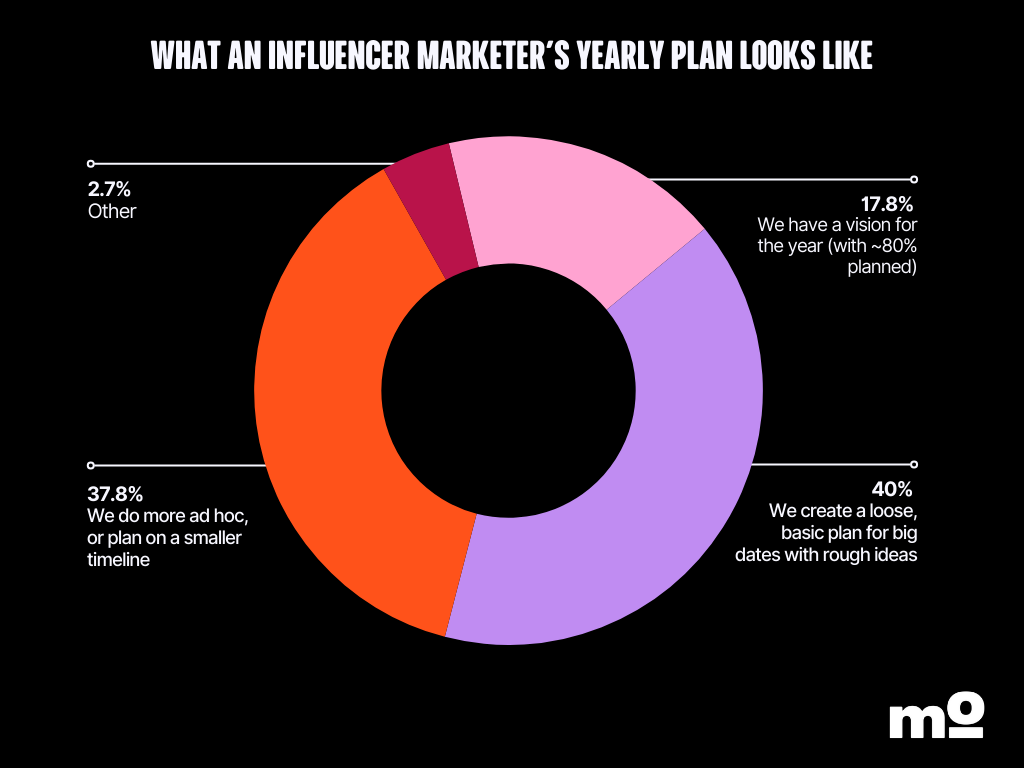
(Most) successful influencer campaigns take a ton of planning. How much? Well, 17.8% of influencer marketers we surveyed said they have a “clear vision” for the full year ahead, with approximately 80% of all activities already planned. By contrast, 37.8% do things on a more ad hoc basis or plan on a shorter timeline.
👉 Find more research like this in The Ultimate Guide to Annual Influencer Marketing Planning.
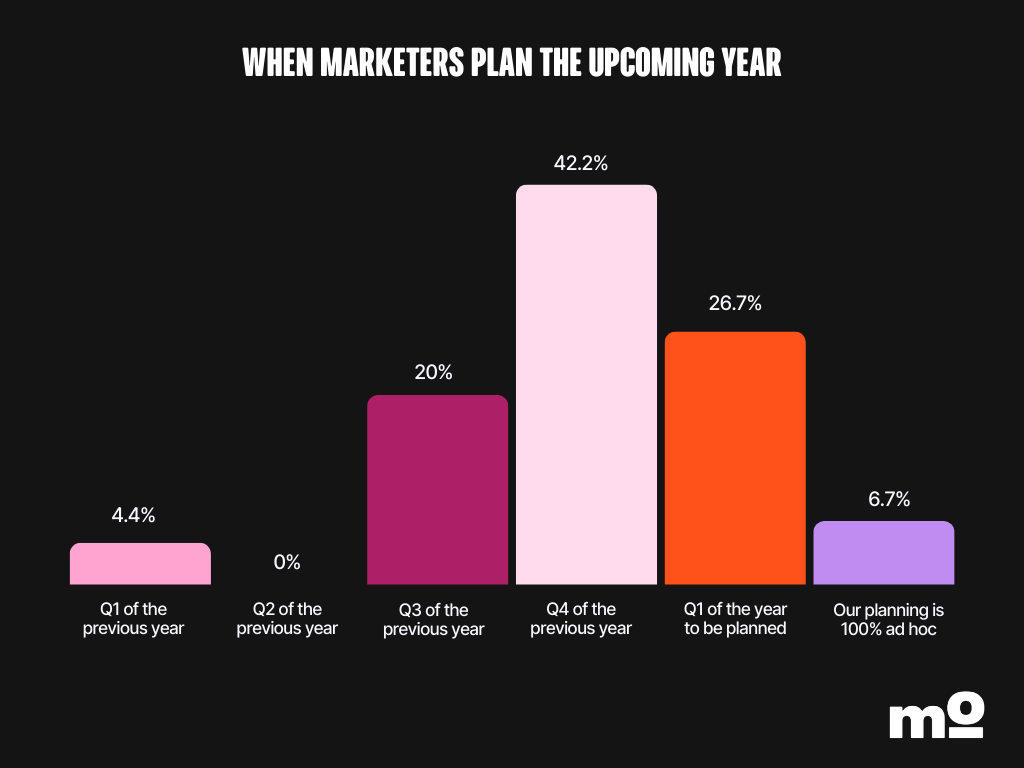
As well as revealing how far in advance influencer marketers are planning, the same survey found that 42.2% of influencer marketers start their planning in Q4 of the previous year. Just 6.7% say their planning is totally on-the-fly.
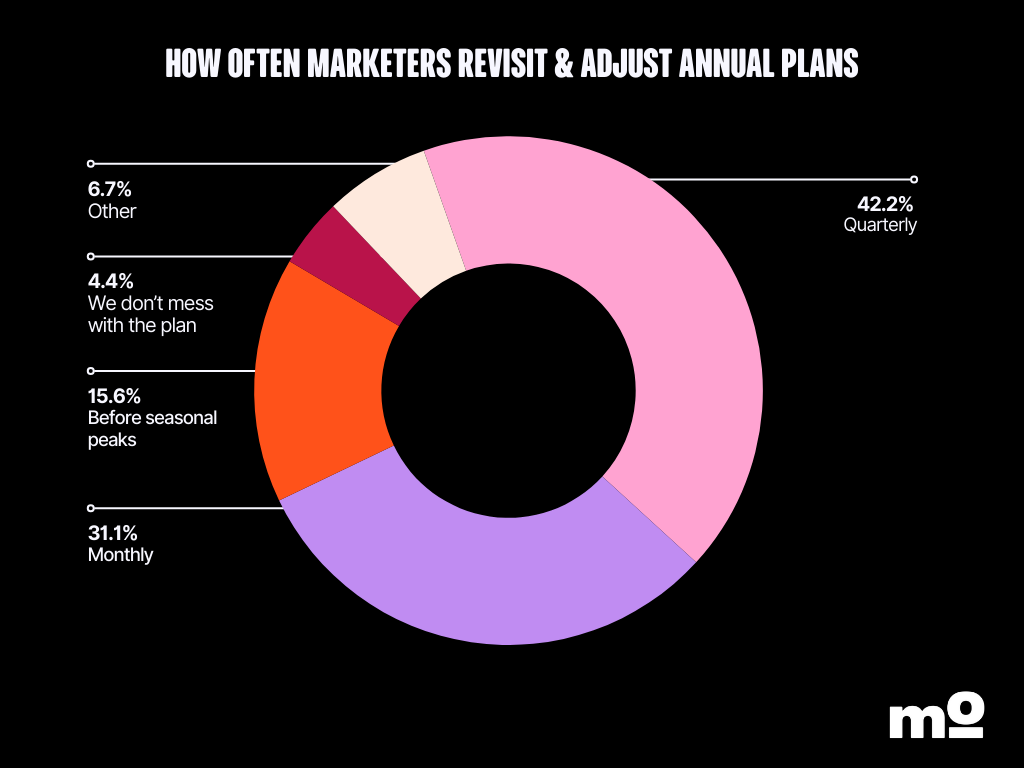
Of course, planning is never totally finished. Our annual planning survey also found that 42.2% of respondents revisit and tweak their annual plans on a quarterly basis, while 31.1% do so monthly.
The most exciting brands are prepared to take a few risks in the planning process, so it’s no surprise that a whopping 98% of influencer marketers we surveyed had run at least one campaign that scared them a little. Some 71% said they’d been a little scared by a campaign they ran within the last quarter.
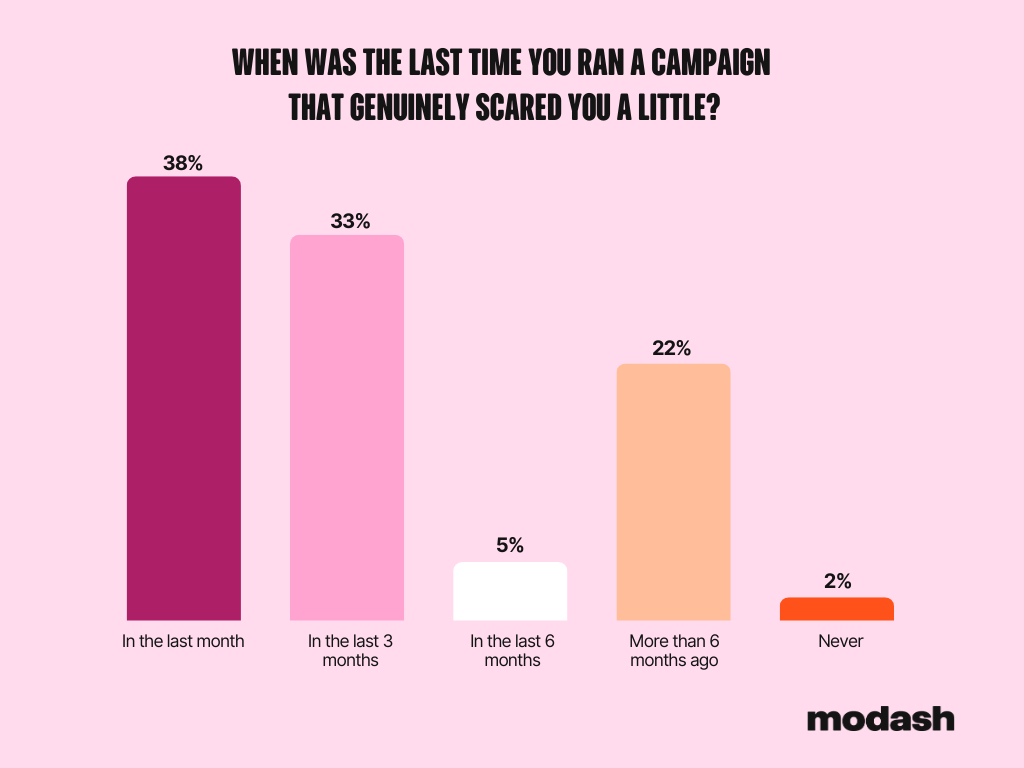
👉 For more insights like this, read How Influencer Marketers Handle Risky Collaborations.
It stands to reason that longer-term influencer relationships make campaign planning a little easier. Yet our research suggests long-standing partnerships are actually becoming slightly less popular. In 2024, 84.4% of influencer marketers insisted they would run more long-term collabs in 2025. But when we repeated the research, only 60.8% said they planned to run more long-term partnerships in 2026.
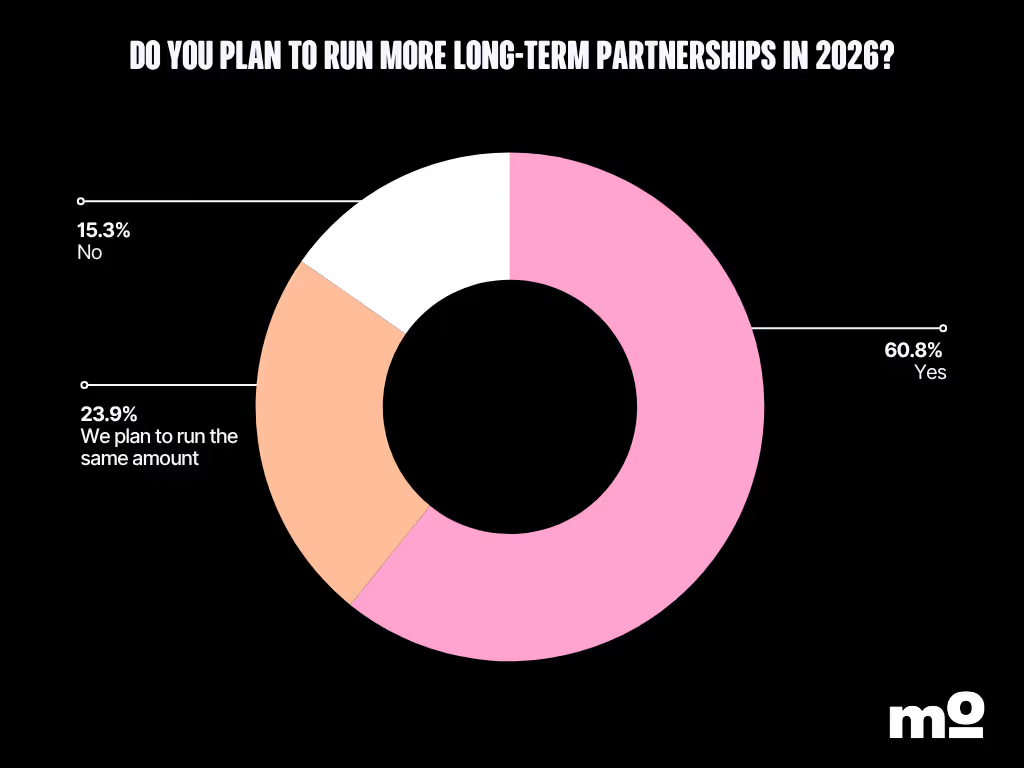
👉 Learn more in Influencer Marketers Play it Safe & Chase Quick Wins in 2025
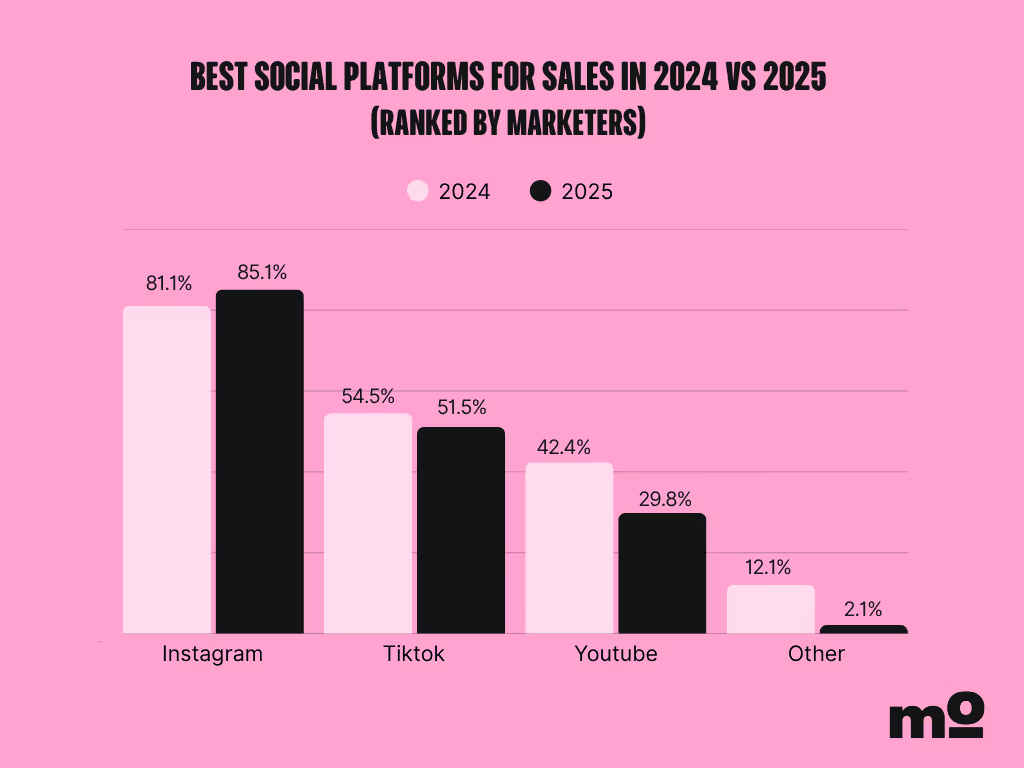
Sales are the #1 goal for many brands with influencer programs. When we asked 50+ influencer marketers which social platform was their biggest sales driver in 2025, an impressive 85.1% chose Instagram, placing it ahead of TikTok and YouTube.
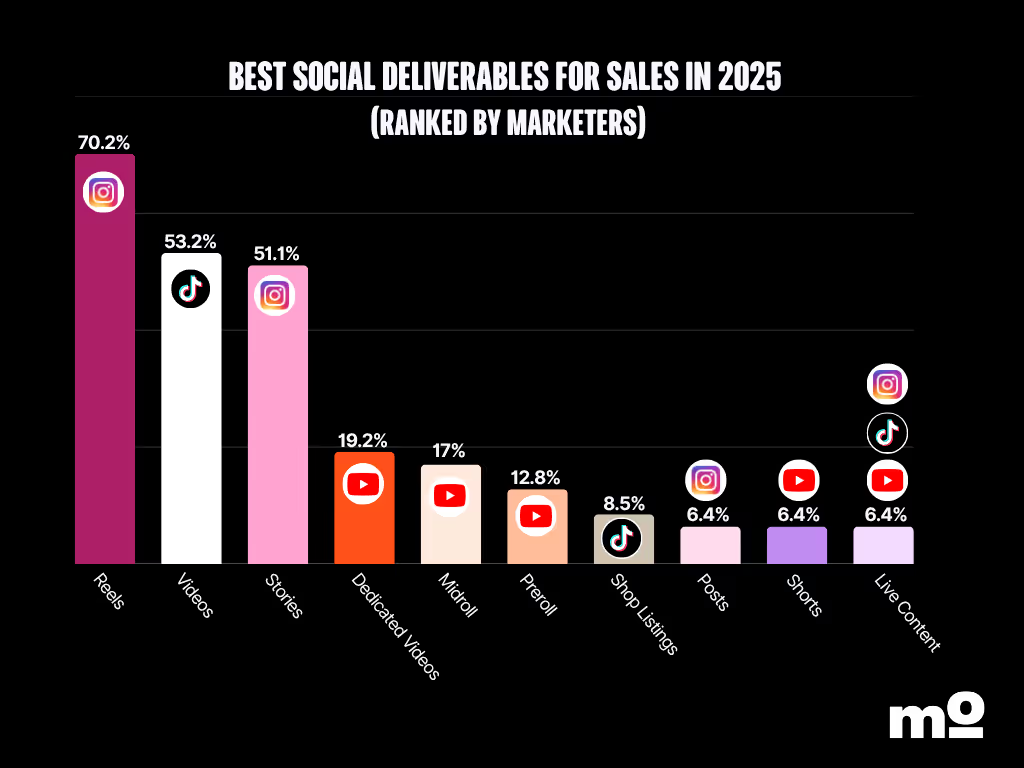
Digging deeper, the same survey also asked influencer marketers to rank their top deliverables for driving sales, with 70.2% of respondents naming Instagram Reels. TikTok videos (52.2%) and Instagram Stories (51.1%) also performed strongly.
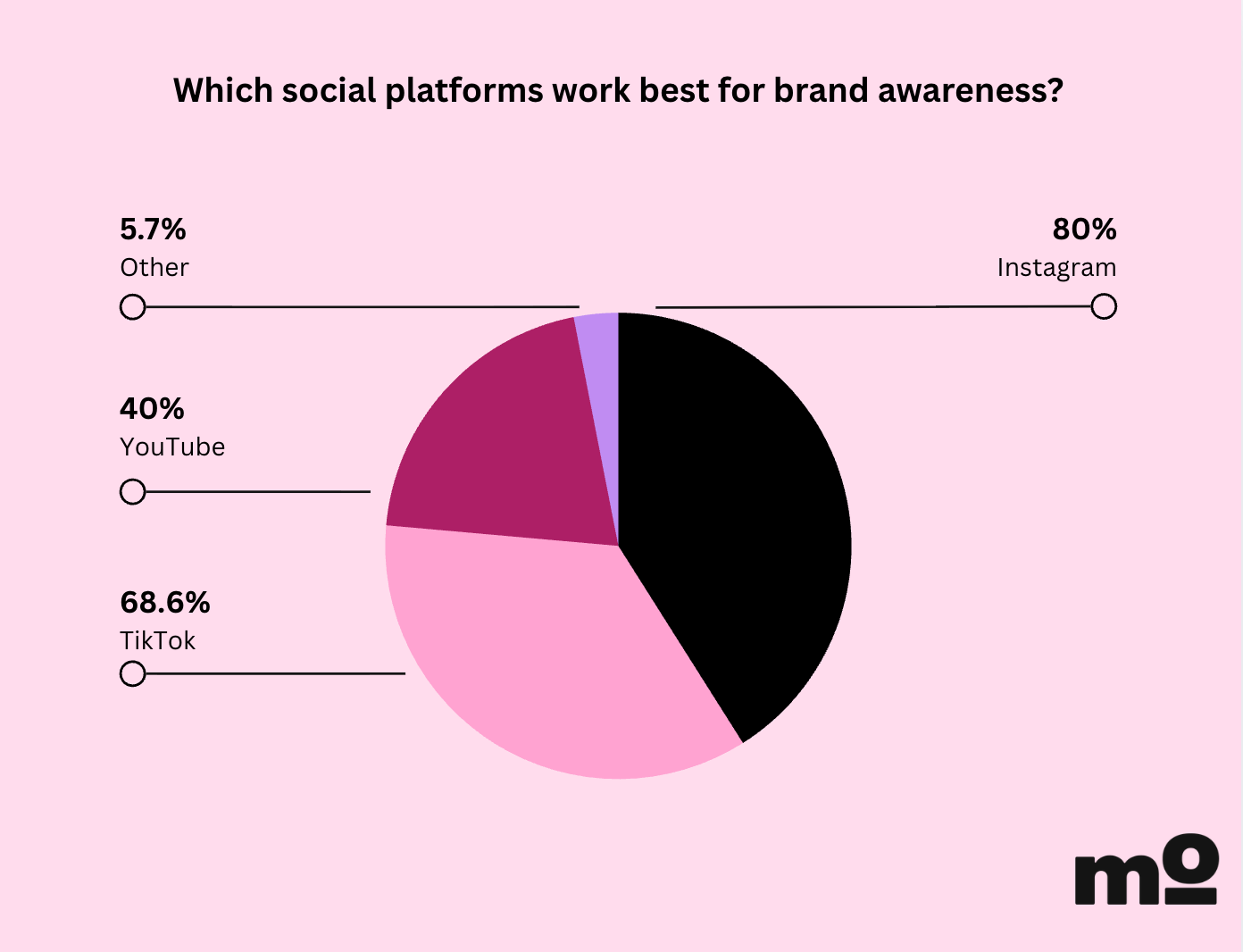
Of course, sales aren’t the primary goal for every influencer program – many brands want to boost awareness. We surveyed 35 influencer marketers about the best social networks for brand awareness, with 80% naming Instagram, 68.6% TikTok, and 40% YouTube.
👉 Learn more in 35 Marketers Explain How to do Brand Awareness Influencer Campaigns Right.
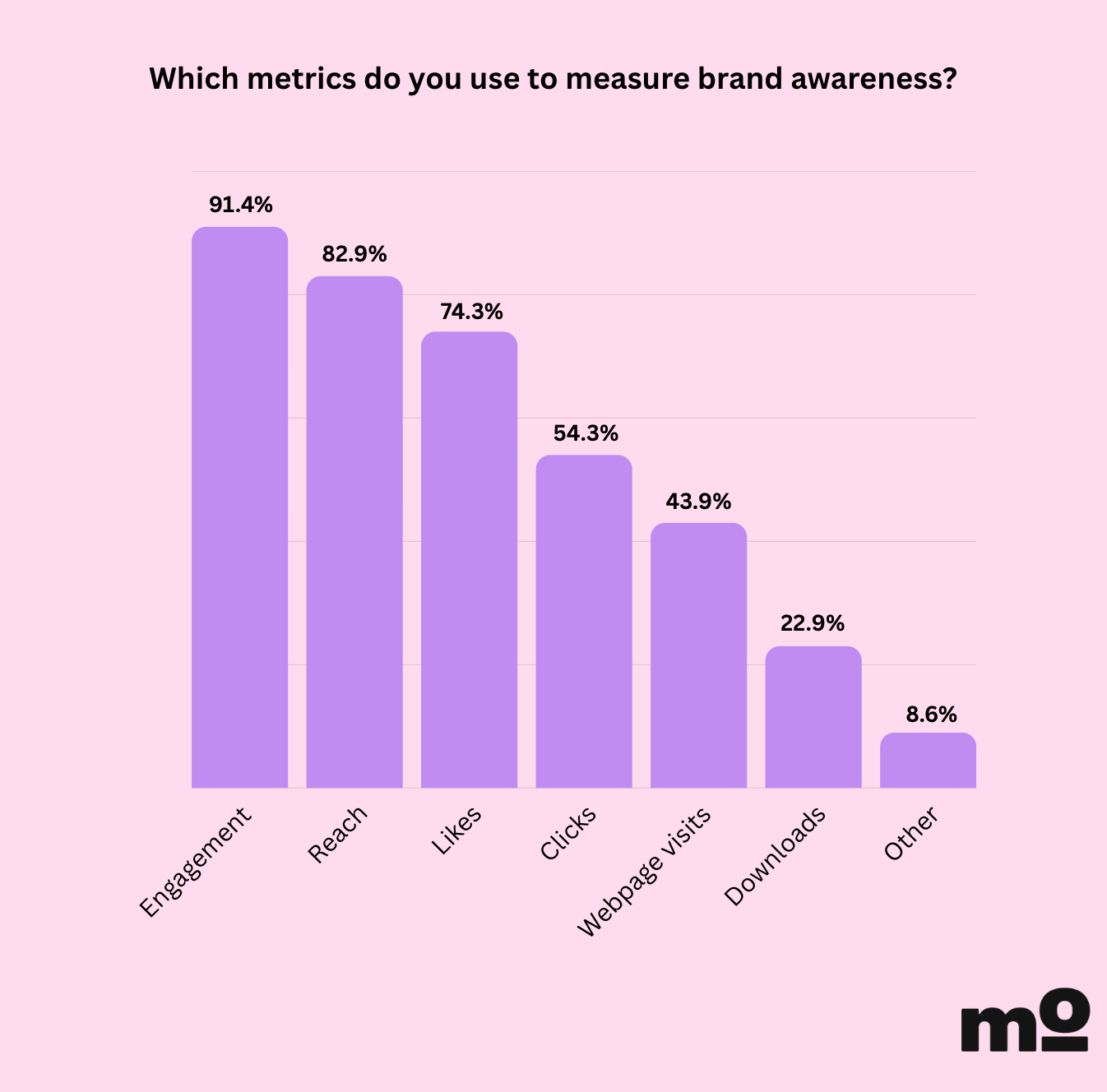
We asked the same 35 marketers how they track brand awareness. After all, it’s a little tougher than counting sales and revenue. It turns out they rely on a wide range of metrics, but some – engagement (91.4%), reach (82.9%), and likes (74.3%) – popped up more often than others.
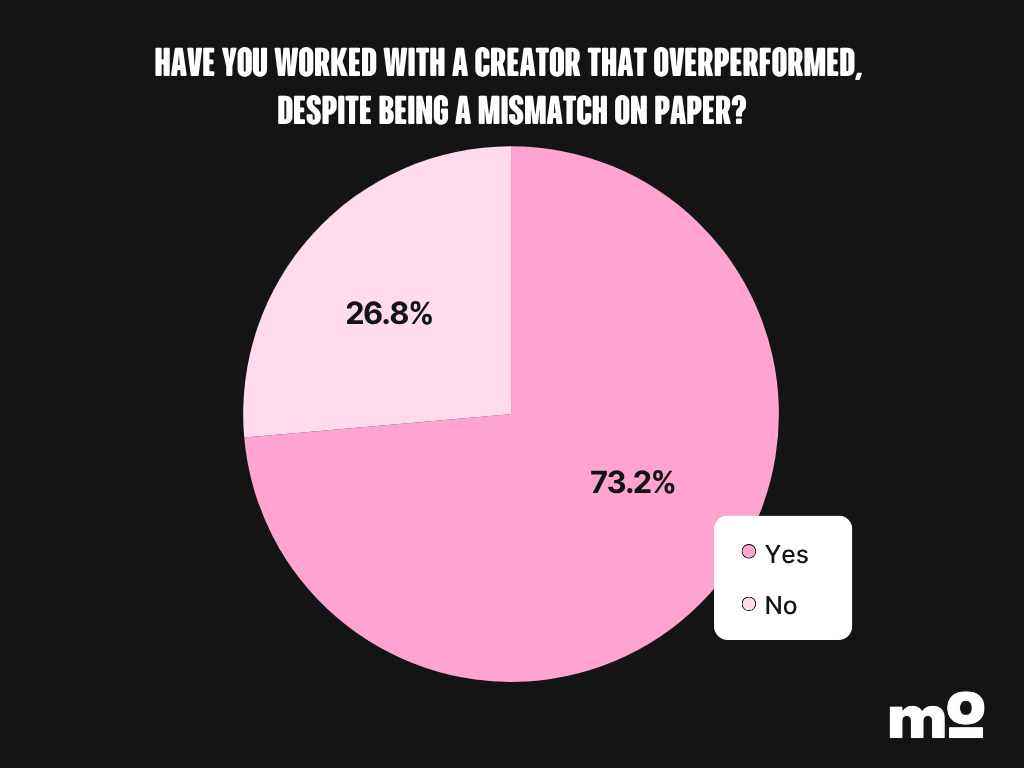
Sometimes, performance comes from unexpected places. In fact, of 56 influencer marketers we surveyed, 73.2% said they had collaborated with an influencer who overperformed despite being a mismatch on paper. Which just goes to show that rigid vetting can only get you so far.
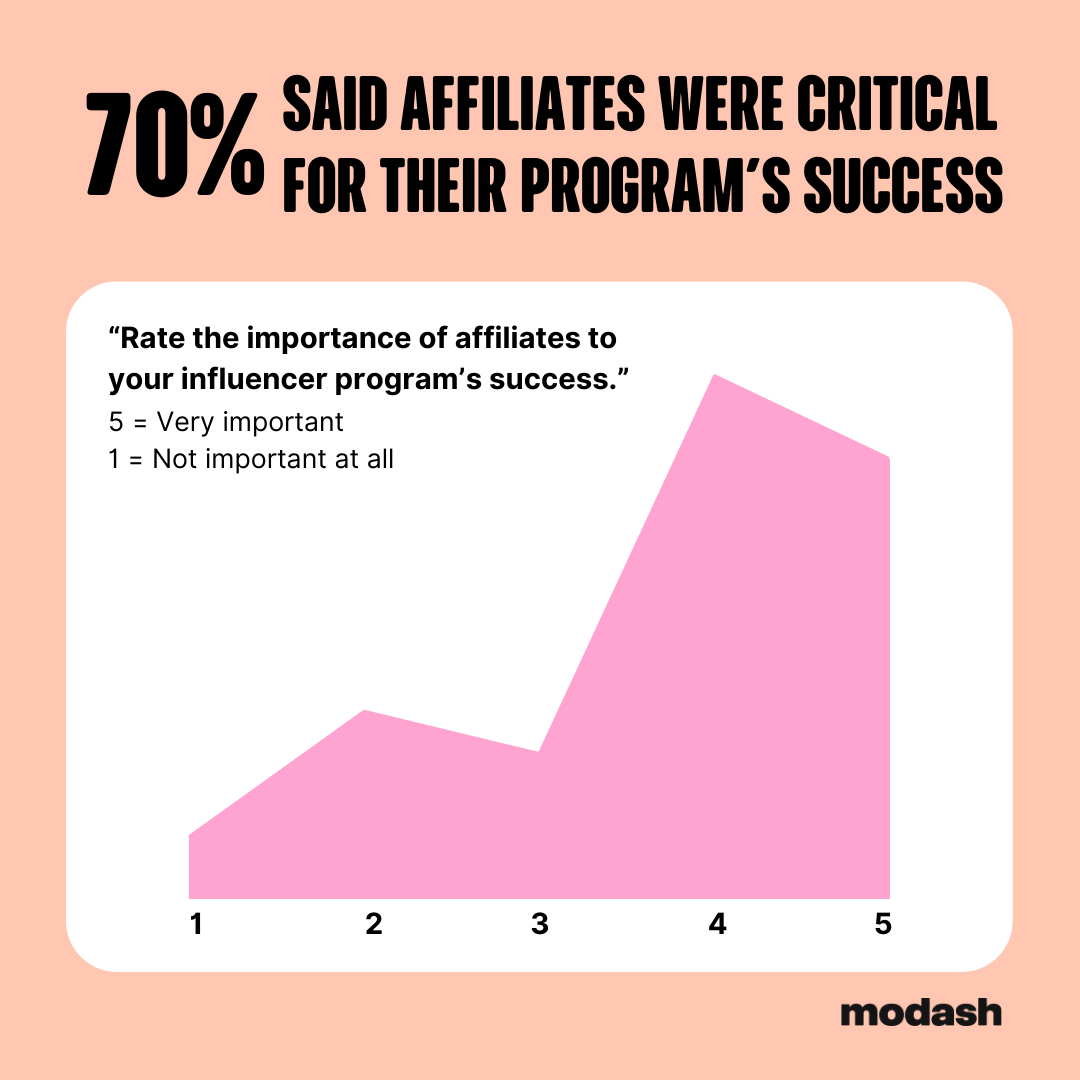
Affiliates can have a huge impact on influencer marketing performance (especially for programs focused on generating sales). Indeed, of 65 influencer marketers we surveyed, 70% said affiliates were critical to their program’s success.
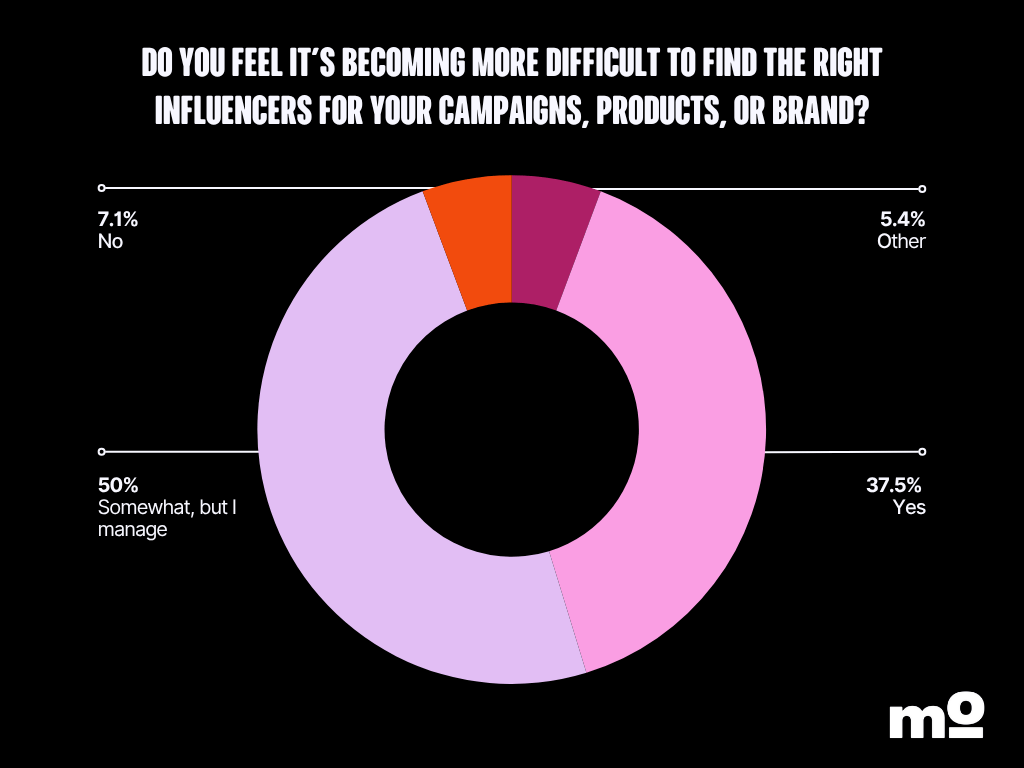
Finding brand-fit influencers has always been tough. Either it feels like searching for a needle in a haystack, or like there just isn’t a single creator who matches your ideal profile. However, 87.5% of the 56 influencer marketers we surveyed feel influencer search is actually getting even more difficult 😱
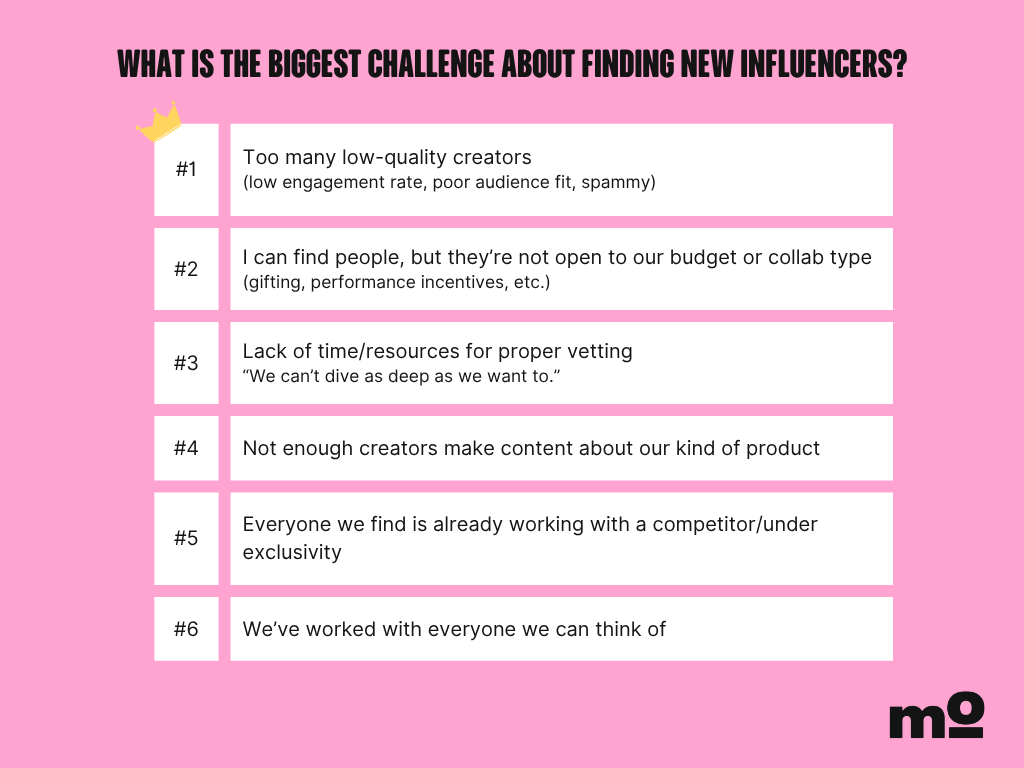
Okay, so finding the right influencers is tricky. But what, exactly, makes it so tough? According to the 56 marketers we surveyed, the biggest challenge is the sheer number of low-quality creators. Meanwhile, many marketers say they can find brand-fit influencers, but those creators aren’t open to their budget or collaboration type.
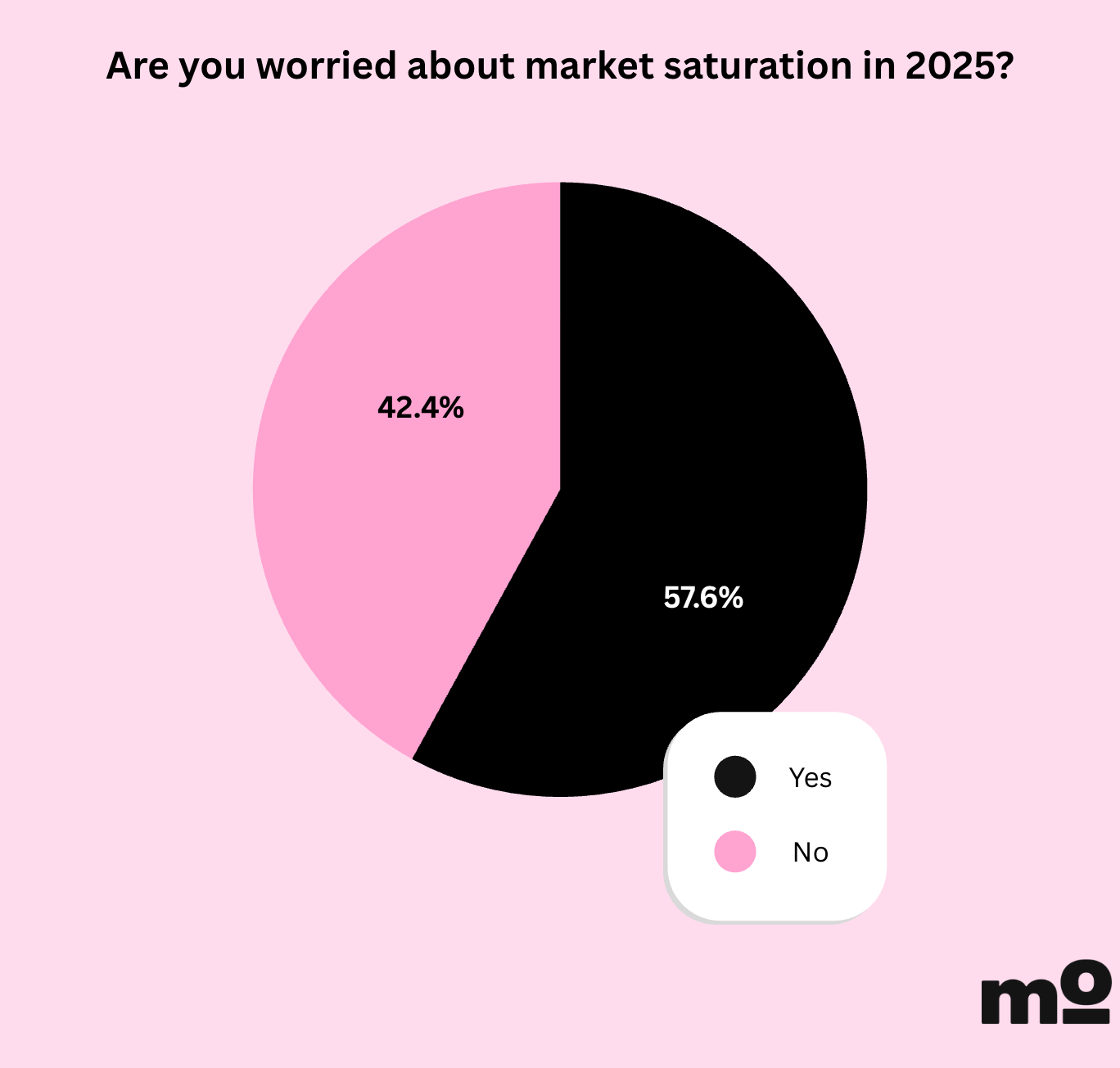
Not only is it hard to find the perfect influencer, but when you do find them, there’s a risk their audience will get bored of them banging on about your brand and products 🥱 Indeed, 57.6% of 33 influencer marketers surveyed said they were worried about market saturation in 2025.
👉 Dig into the data by reading The Biggest Influencer Marketing Challenges of 2025.
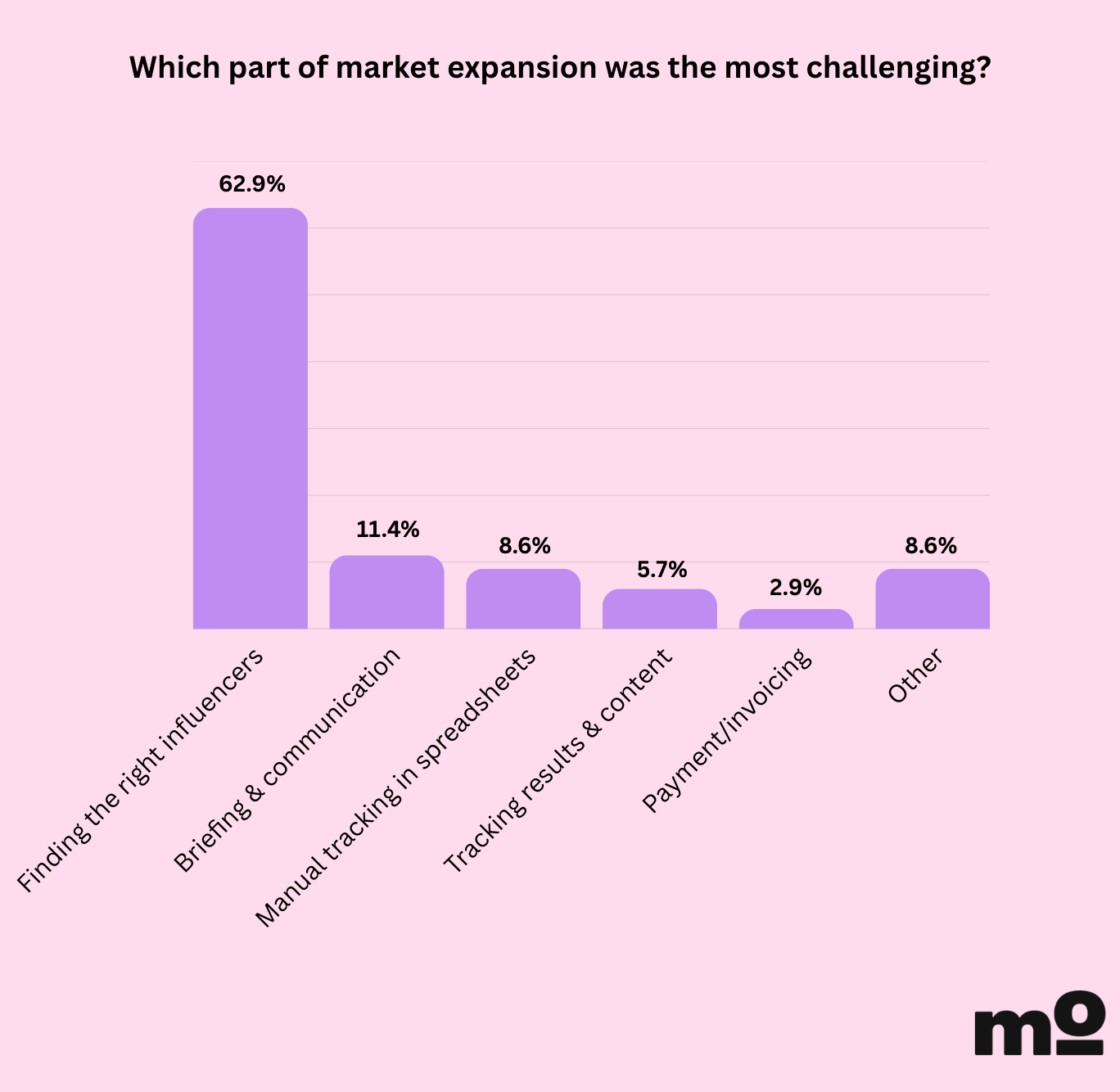
Struggling to find influencers can have consequences that extend way beyond your influencer program. Indeed, in a survey of 35 influencer marketers, 62.9% said finding the right influencers was the biggest challenge of expanding into a new market.
👉 Read more about market expansion in 7 Pitfalls Influencer Marketers Face When Launching in a New Market (+ How to Avoid Them)
One of the most popular and effective influencer negotiation tactics is bundling (AKA securing a discount by grouping together multiple deliverables from a single creator). Indeed, when we surveyed 38 influencer marketers, over 90% said they use bundling when negotiating with influencers.
👉 Learn more in 7 Effective Negotiation Tactics for Influencer Marketing
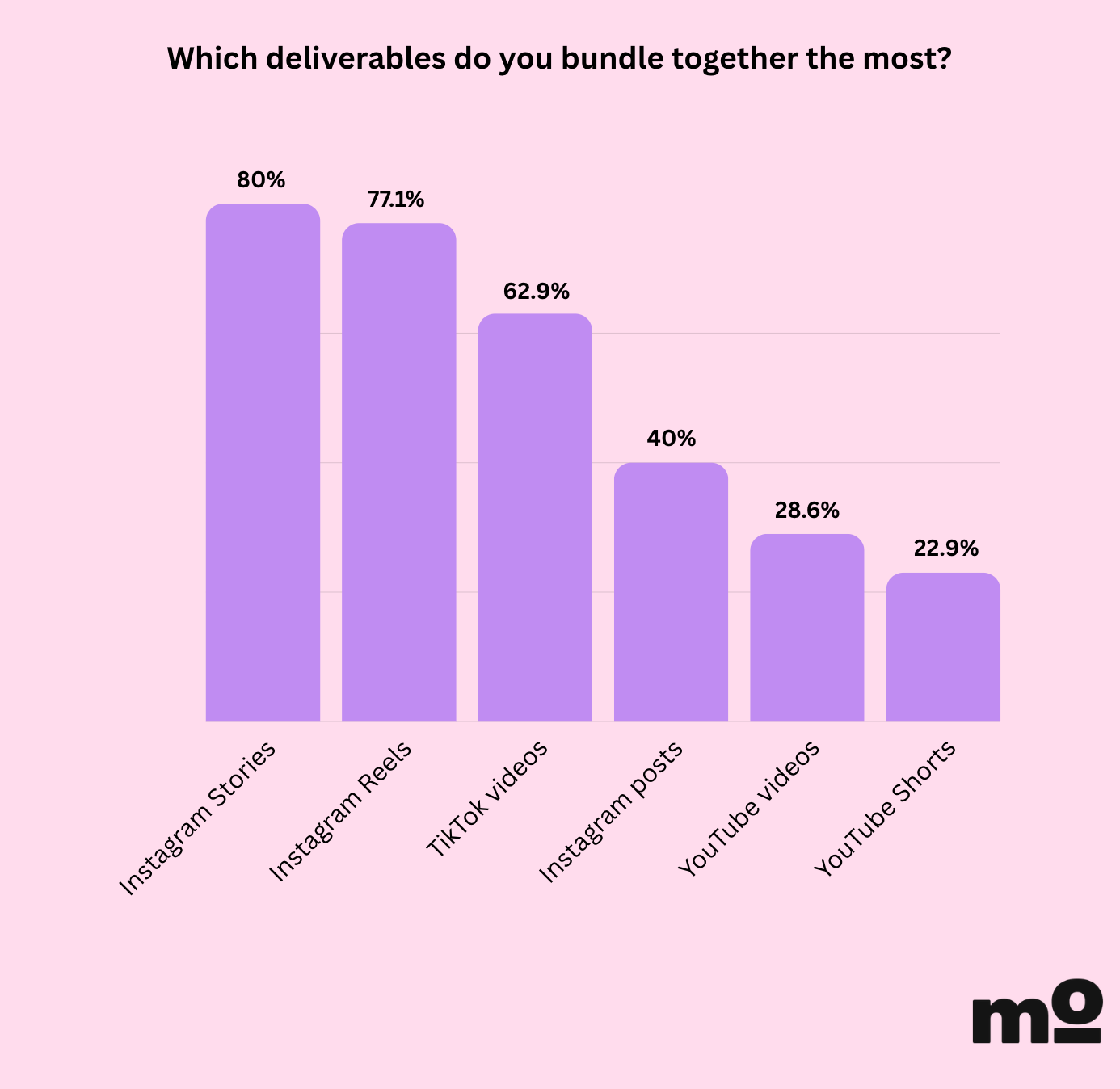
We know bundling is popular – but what, exactly, is getting bundled? The same survey found that Instagram Stories are the #1 deliverable for bundling, used by 80% of influencer marketers – followed closely by Reels (77.1%) and TikTok videos (62.9%).
Now let’s discuss an unpopular negotiation tactic: asking for a minimum view guarantee (MVG). Almost 60% of the 38 influencer marketers we surveyed said they never use MVGs, while nearly 75% of those who have used them in the past admitted that proposing a minimum view guarantee had put an influencer off working with their brand 🤦♀️
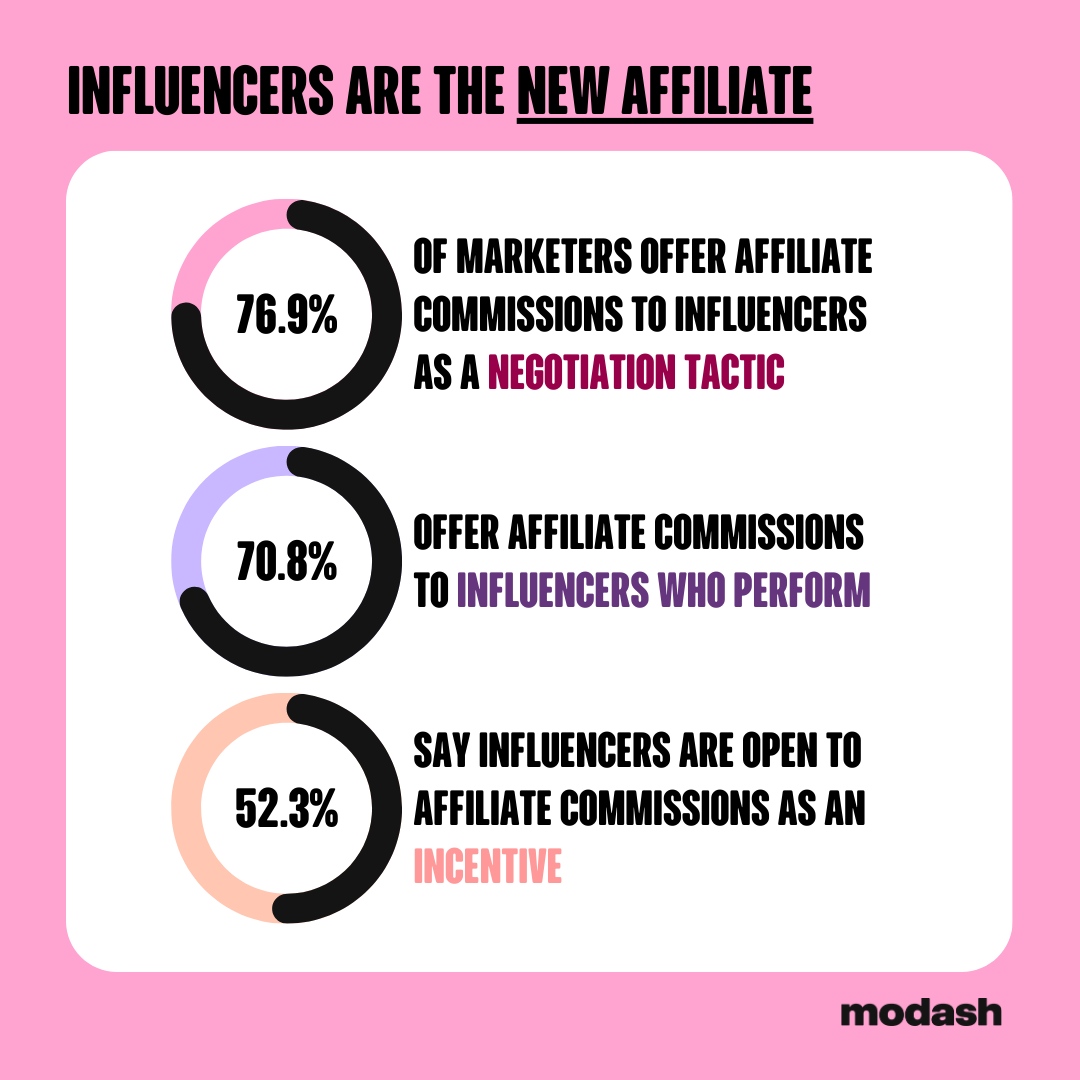
Struggling to secure that perfect collab? Try offering the influencer a cut of any sales they generate. When we surveyed 65 influencer marketers, 76.9% said they use affiliate commissions to sweeten the deal (although only 52.3% said influencers are open to commissions as an incentive).
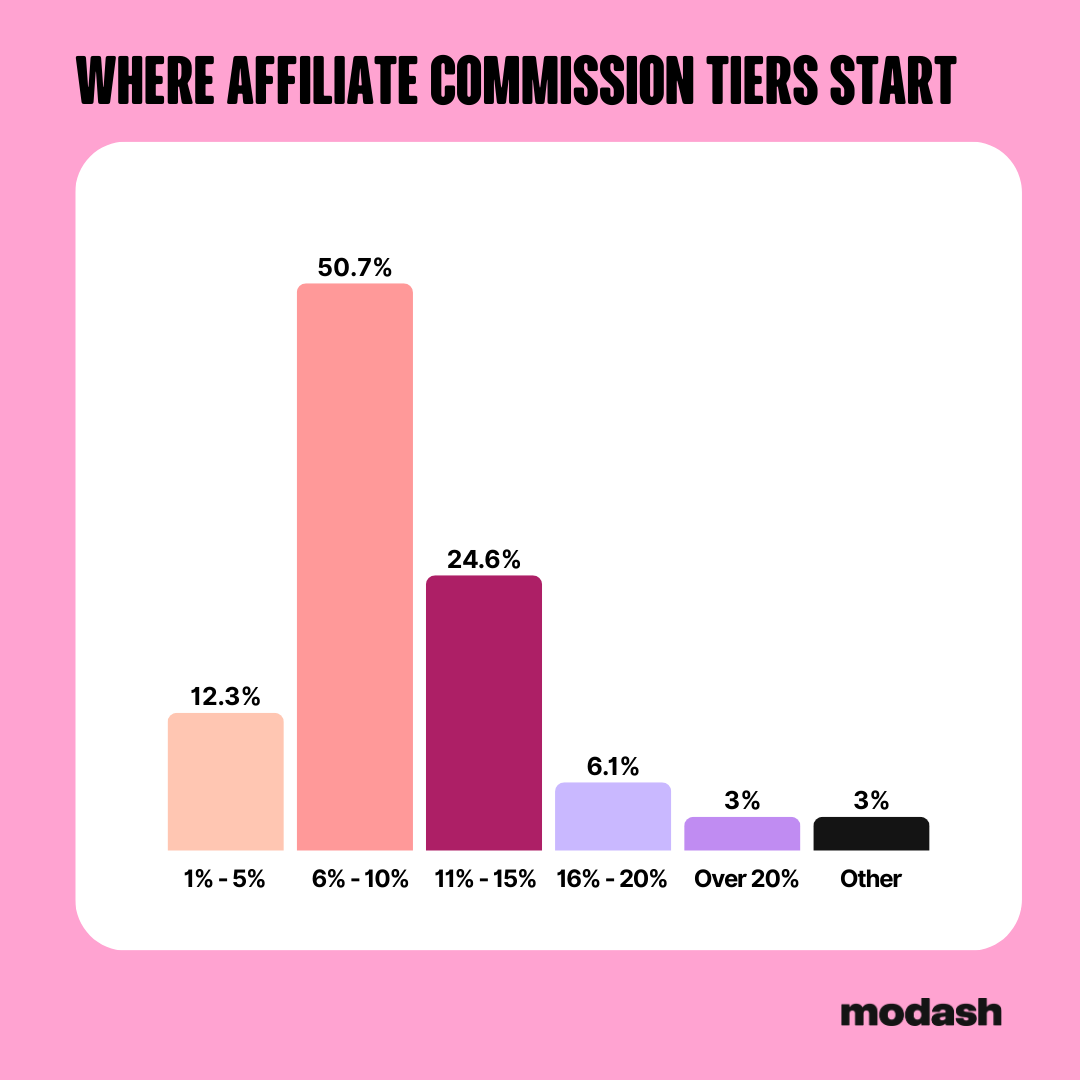
Want to try commissions as a negotiation tactic but not sure where to start? The same survey revealed that most brands pay commissions of 6% – 10%, while a small number pay 20%+.
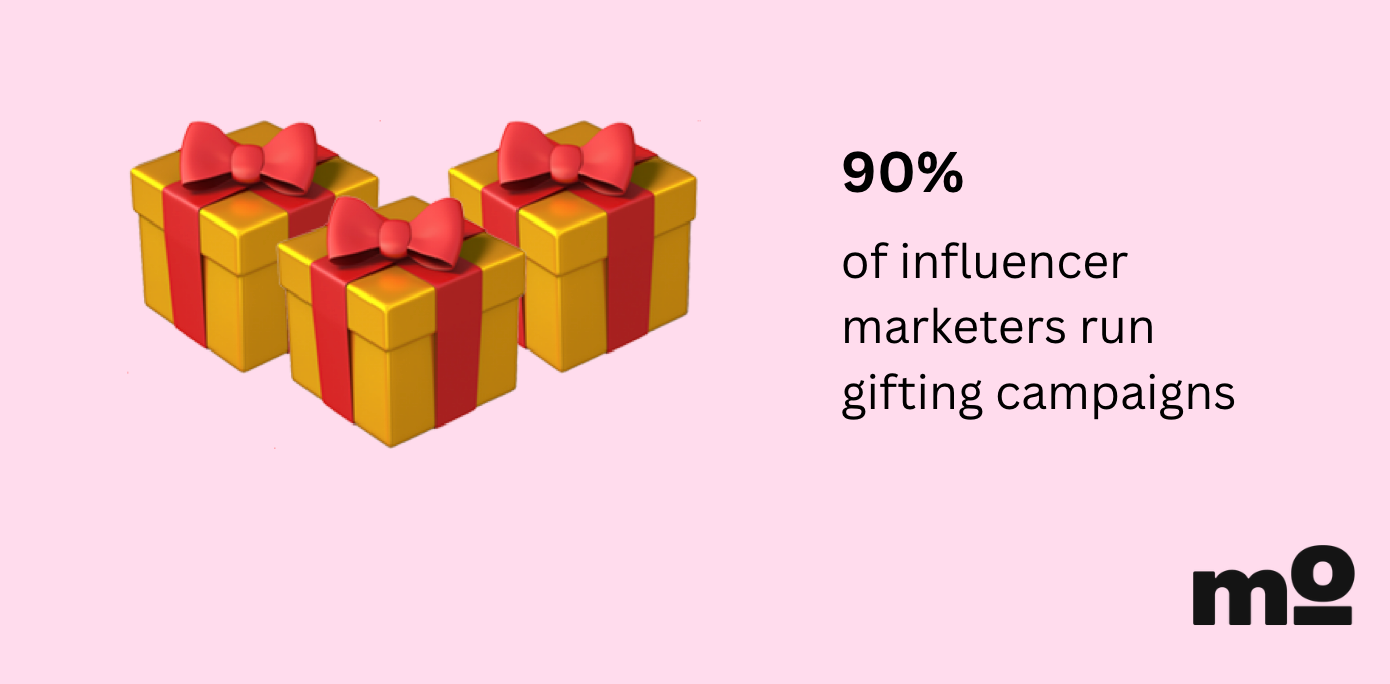
Gifting is far and away the most popular campaign type (for brands, at least). When we surveyed 31 influencer marketers, 90% said they’re already running gifting campaigns, while the other 10% are planning to start gifting soon.
👉 Find out more in 31 Brands Share How They Manage Influencer Gifting Programs.
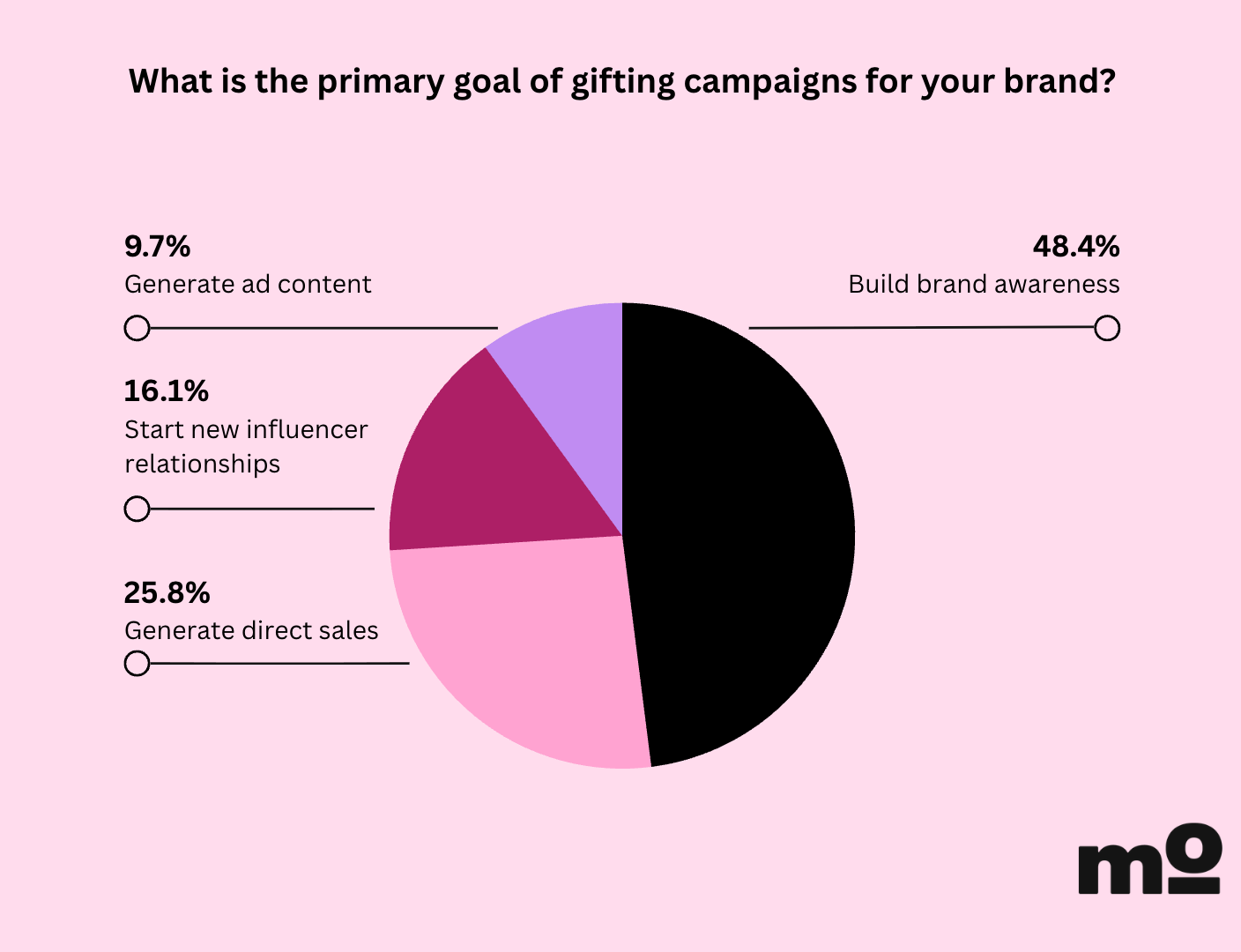
So what’s the reason behind all those gifting campaigns? Well, 48.4% of respondents to the above survey said their main goal is to drive brand awareness, while 25.8% cited direct sales.
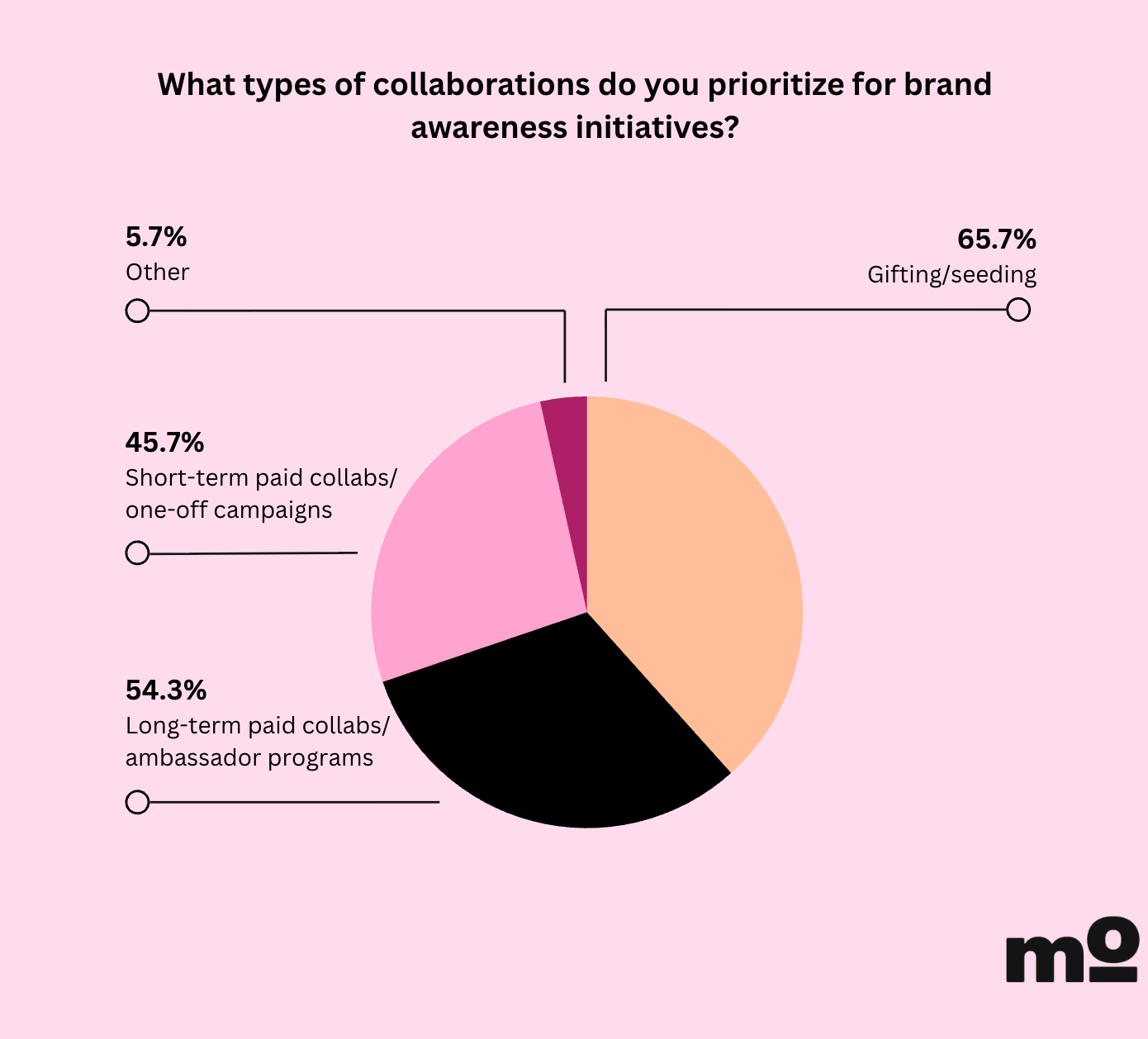
In fact, gifting/seeding campaigns are just good for building brand awareness – they’re great at it. Of 35 influencer marketers we surveyed, 65.7% named gifting/seeding as their main priority for brand awareness initiatives, followed by long-term collabs/ambassador programs (54.3%) and short-term paid collabs/one-off campaigns (45.7%).
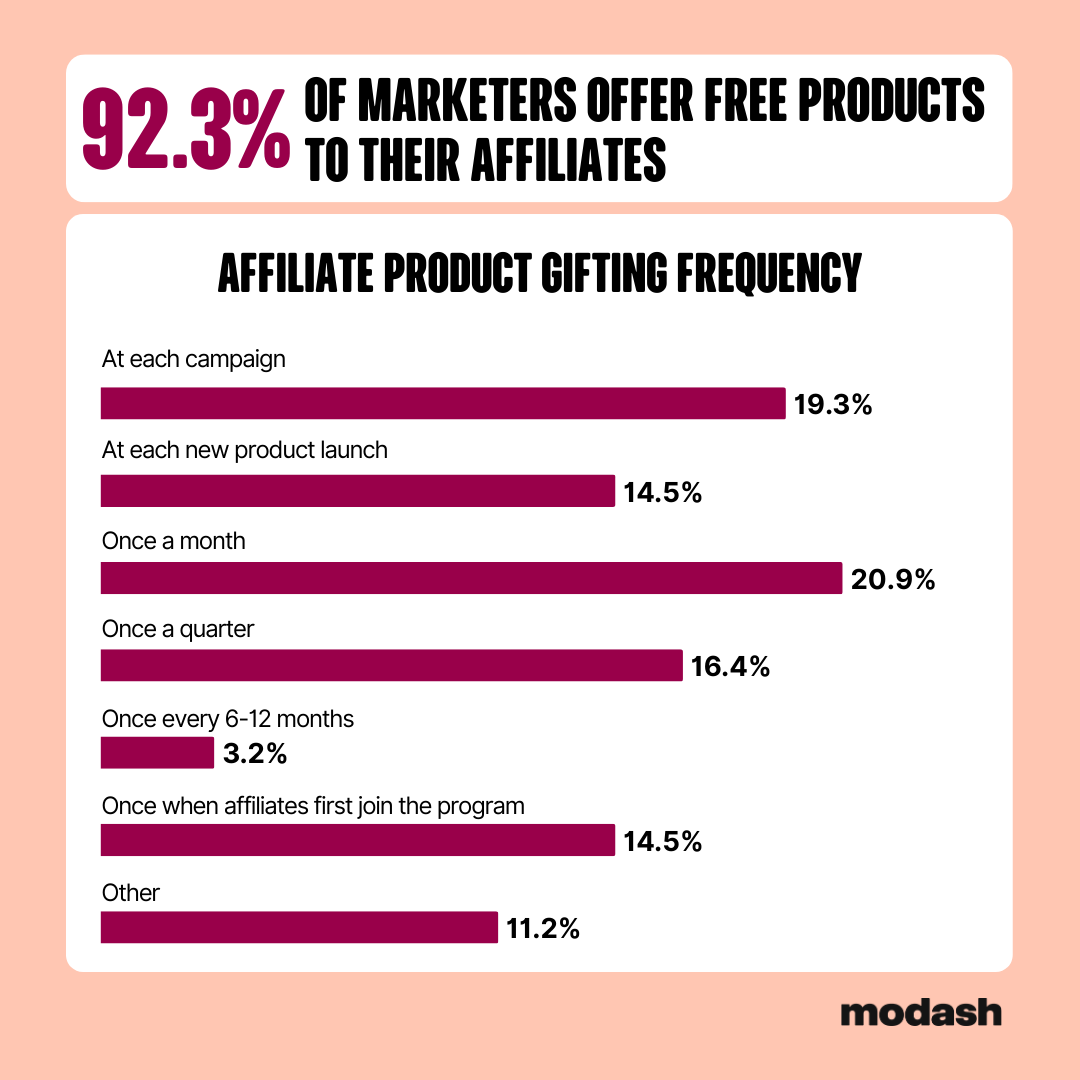
Gifting isn’t just for influencer campaigns. In a survey of 65 influencer marketers, we found that 92.3% offer free products to affiliates, with 19.3% offering them as standard with every campaign.
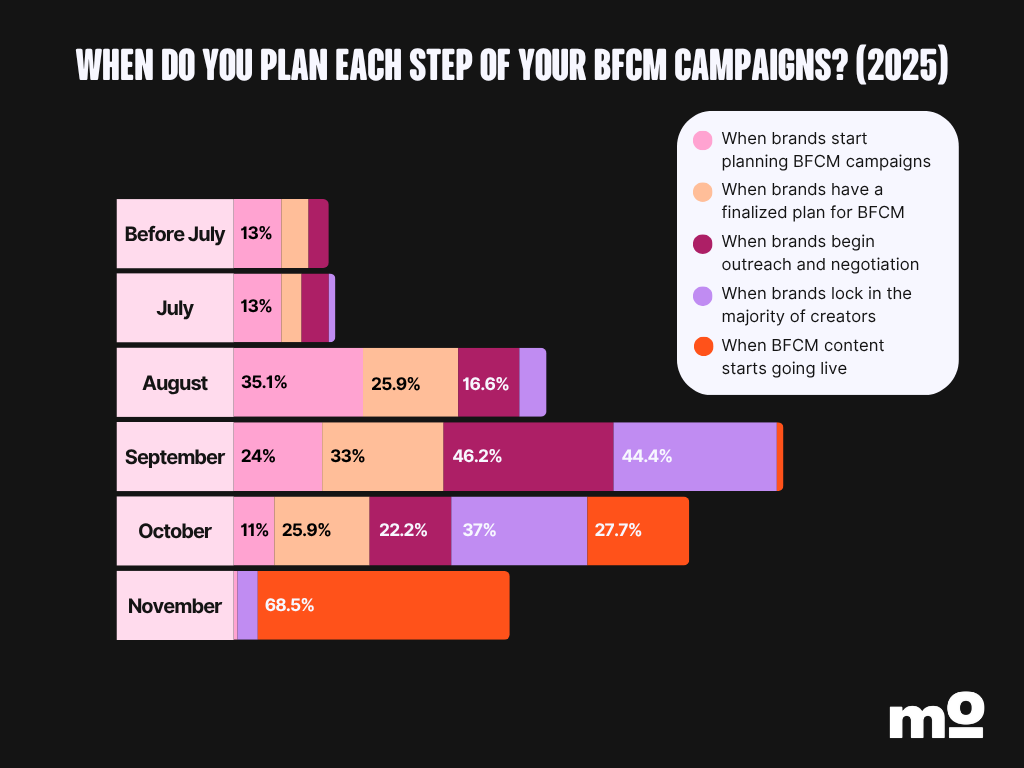
Black Friday and Cyber Weekend are make or break for many ecommerce brands, so they require some serious planning. When we surveyed 53 influencer marketers about BFCM prep, we discovered that on average, they start planning promotions in late July and have a finalized plan in place by mid-August.
👉 Discover more in How Marketers Manage Black Friday Influencer Campaigns.
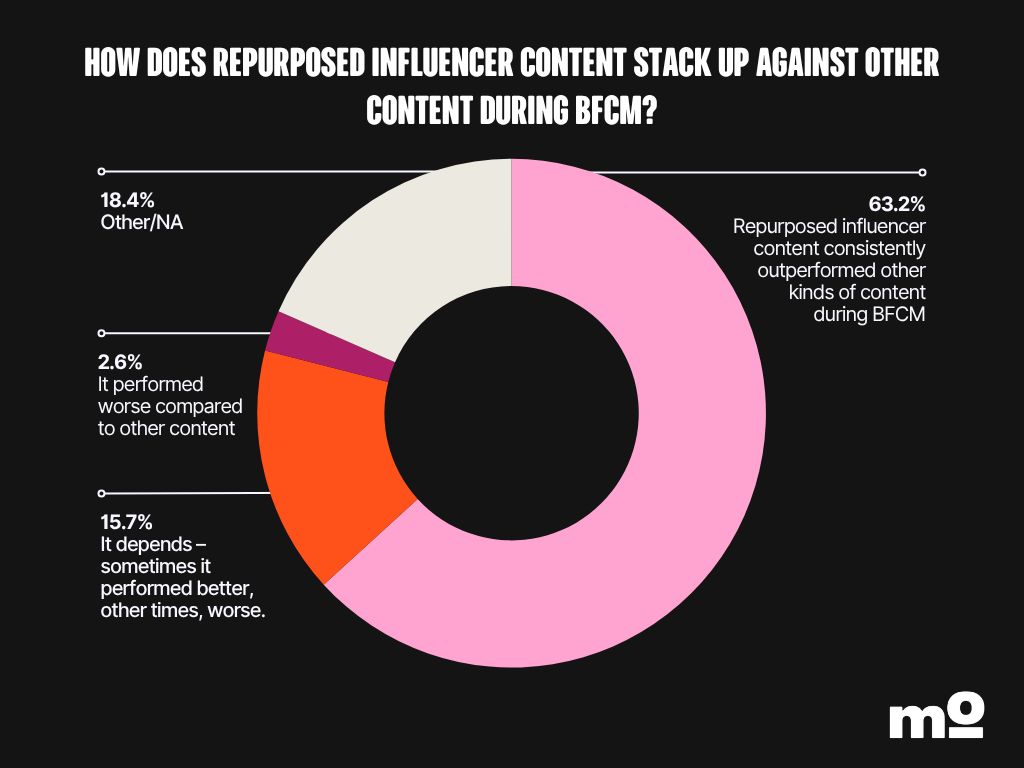
Starting your BFCM preparations early gives you the opportunity to capture a bunch of influencer content for repurposing when the Cyber Weekend rolls around. That’s a big deal because 63.2% of the 53 influencer marketers we surveyed said repurposed influencer content – such as for ads, emails, and website visuals – outperforms other types of content during BFCM.
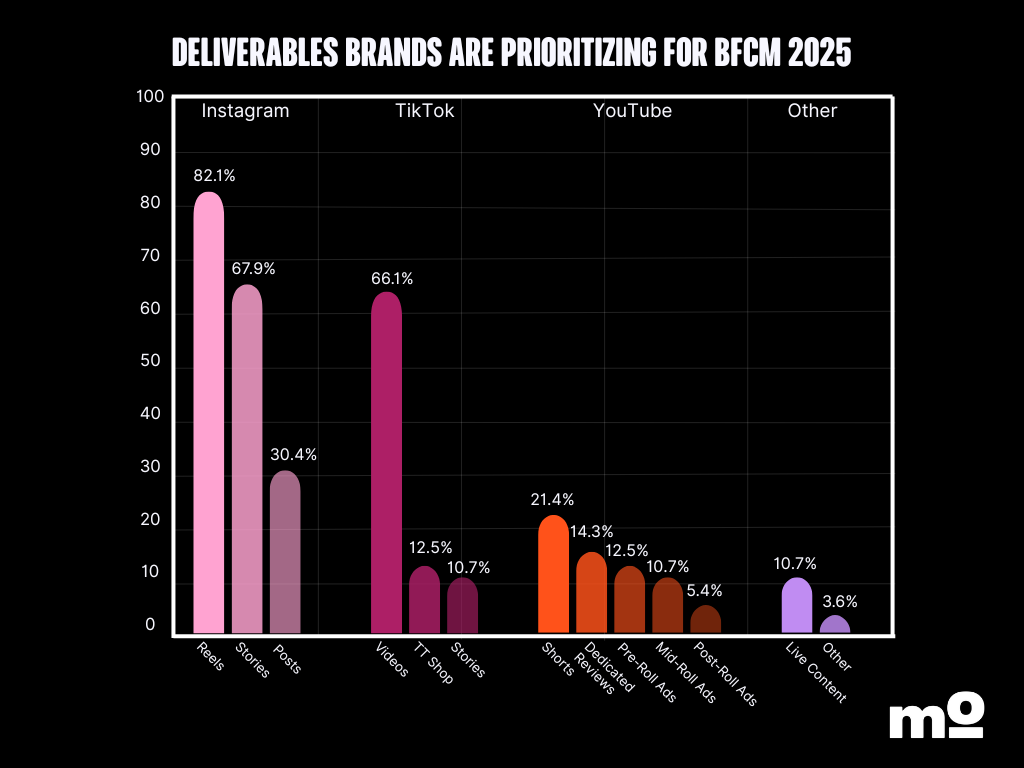
We already know Reels are the best deliverable when it comes to driving sales. So it’s no surprise that they’re also rated as the top priority for brands during BFCM, cited by 82.1% of our 53 influencer marketer respondents.
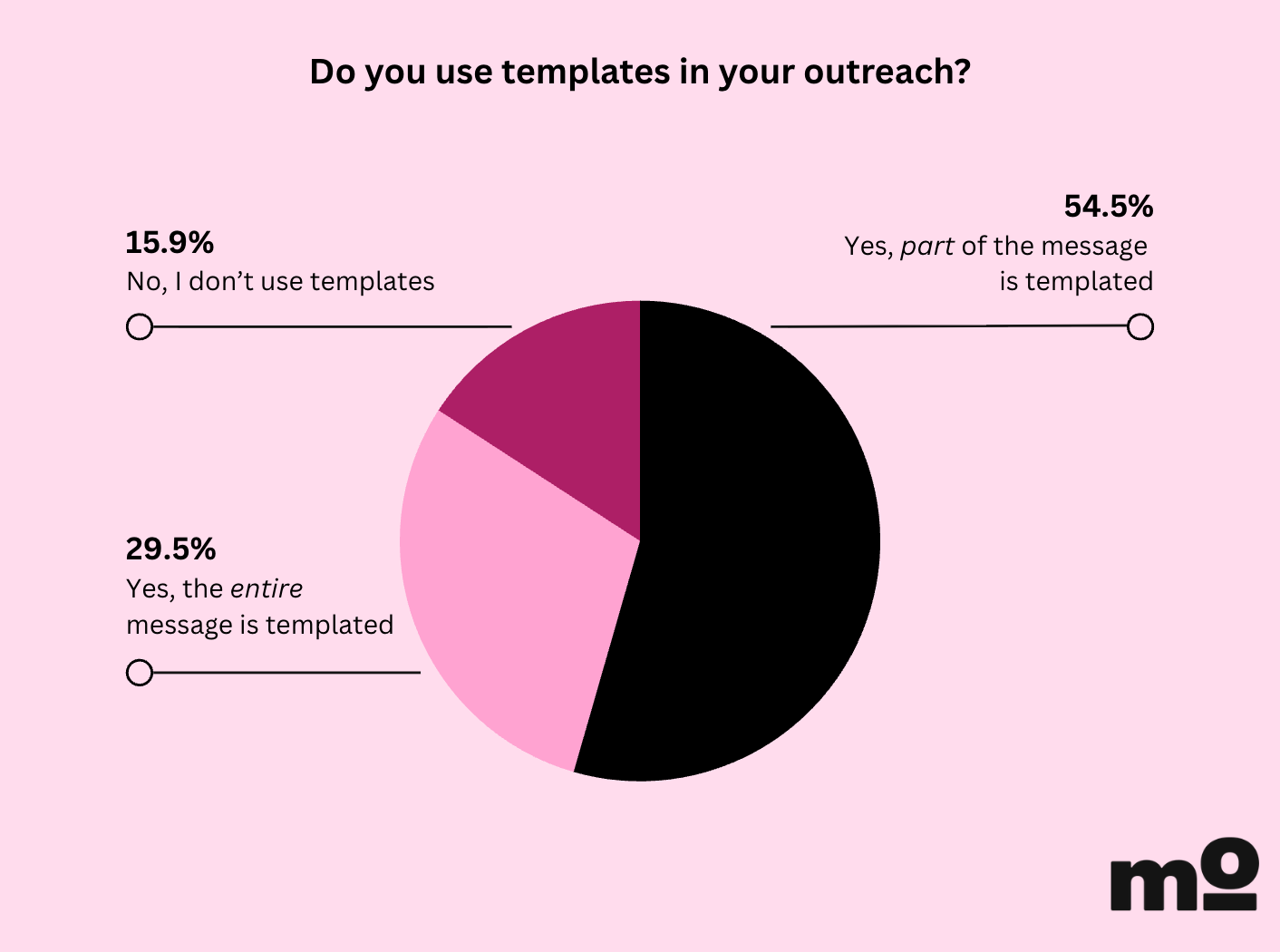
Sure, finding relevant influencers is tough – but persuading brand-fit influencers to work with you can be a real challenge, too. Especially at scale. That’s why 84% of 51 influencer marketers told us they use some form of templates in their influencer outreach.
👉 Learn more about influencer outreach in 51 Marketers Share How They Reach Out To Influencers.
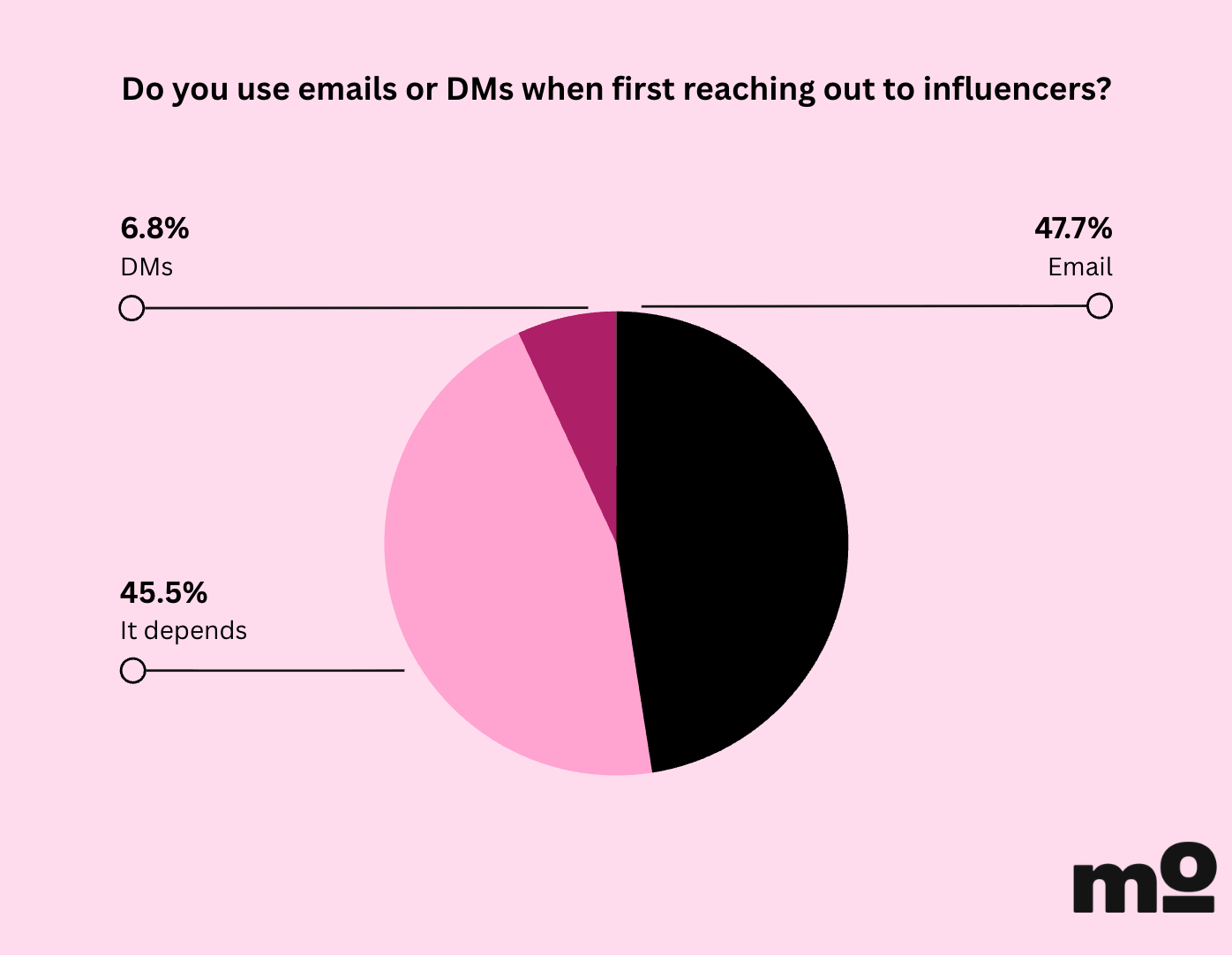
Marketers essentially have two choices when reaching out to an influencer for the first time: find their email address or slide into their DMs. Emails are the go-to option for 47.7% of our 51 respondents, with just 6.8% favoring direct messages and 45.5% saying “it depends”. How enigmatic.
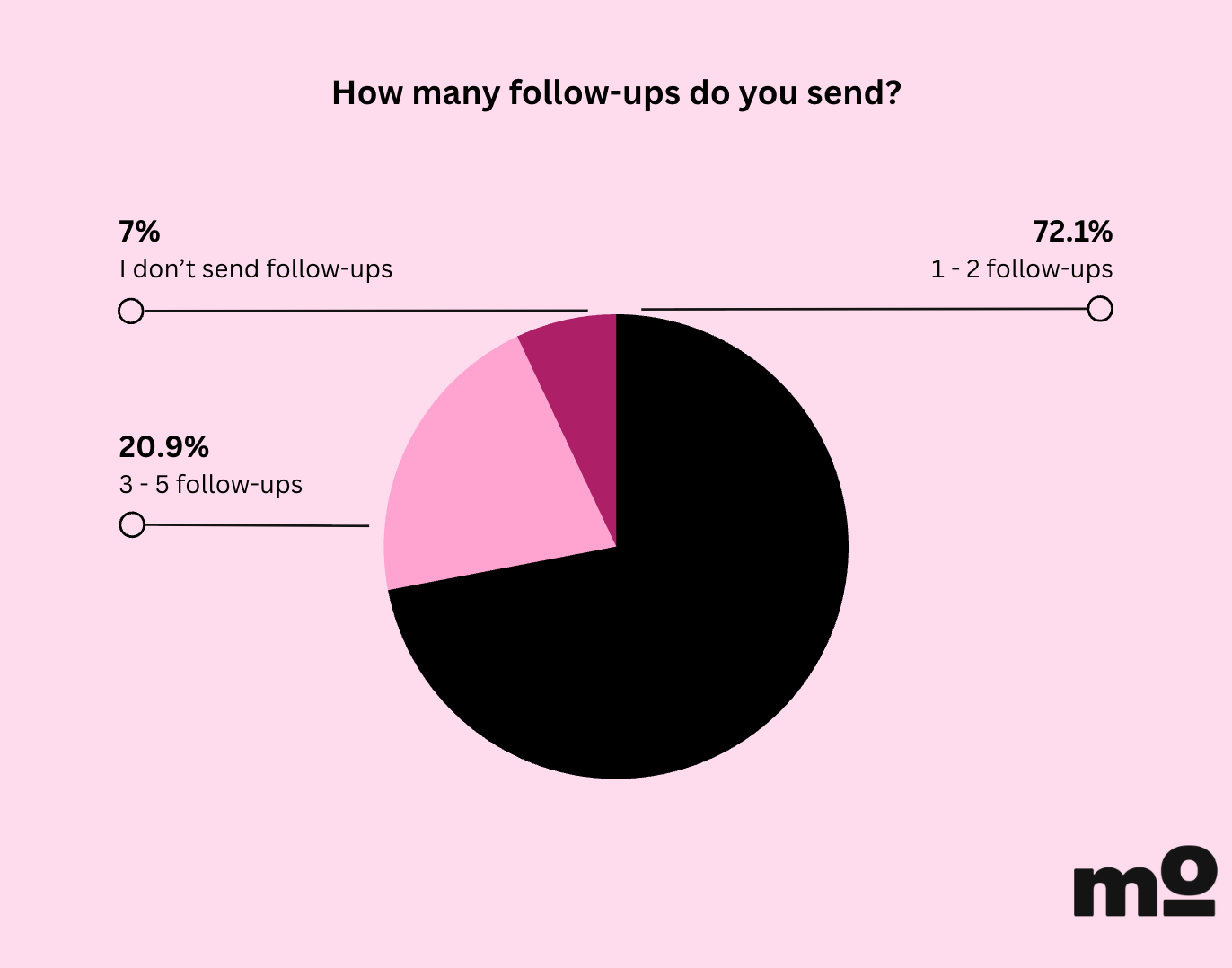
Influencers are busy people, so don’t expect to send a single email or DM and get a 100% reply rate. Just 7% of the 51 influencer marketers we surveyed admitted they don’t send any follow-up emails, with 72.1% sending one or two follow-ups.
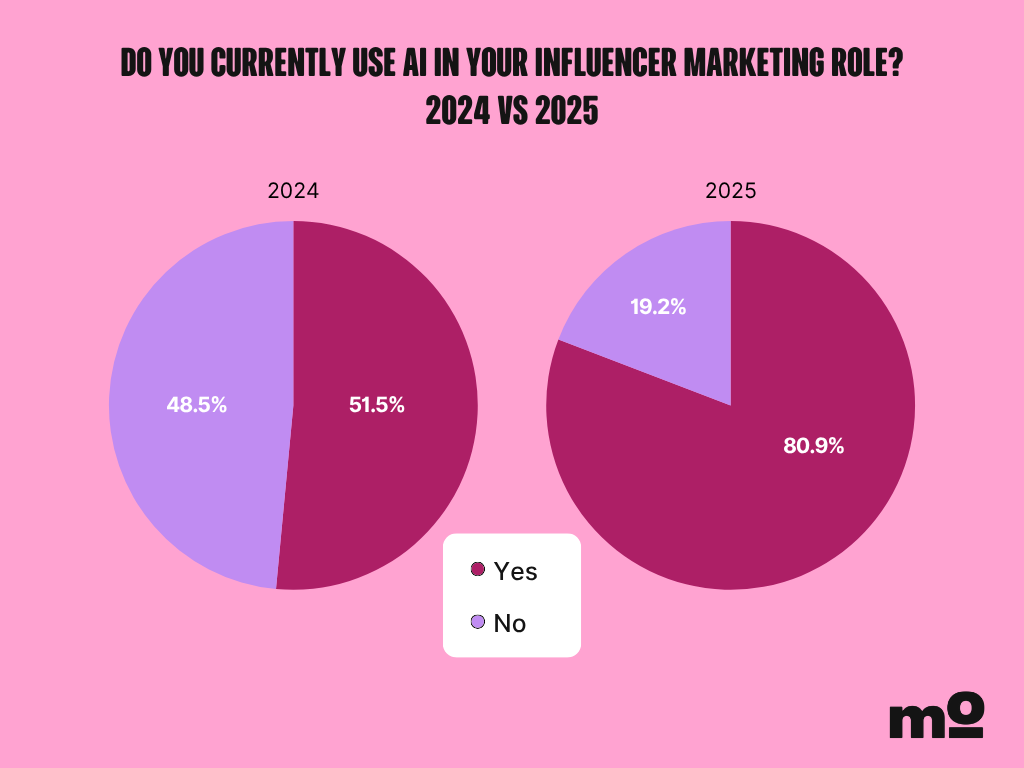
Artificial intelligence has well and truly arrived in the world of influencer marketing, with 81.9% of 50+ marketers we surveyed in 2025 saying they currently used AI – up from just 51.5% a year earlier.
👉 Find out more in Using AI In Influencer Marketing: When To Use It (And When Not To).
As you can imagine, there are a ton of potential influencer marketing use cases for AI. However, 73.7% of our 50+ respondents wished they could do influencer search/discovery with AI (or, even better, have AI take it over completely).
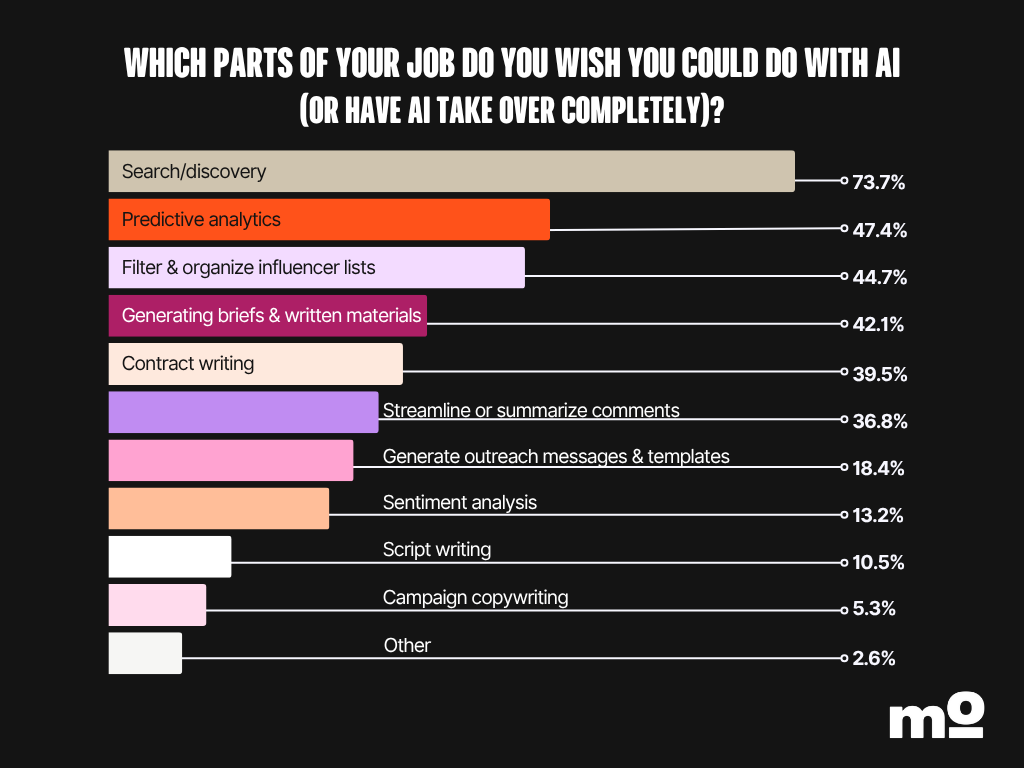
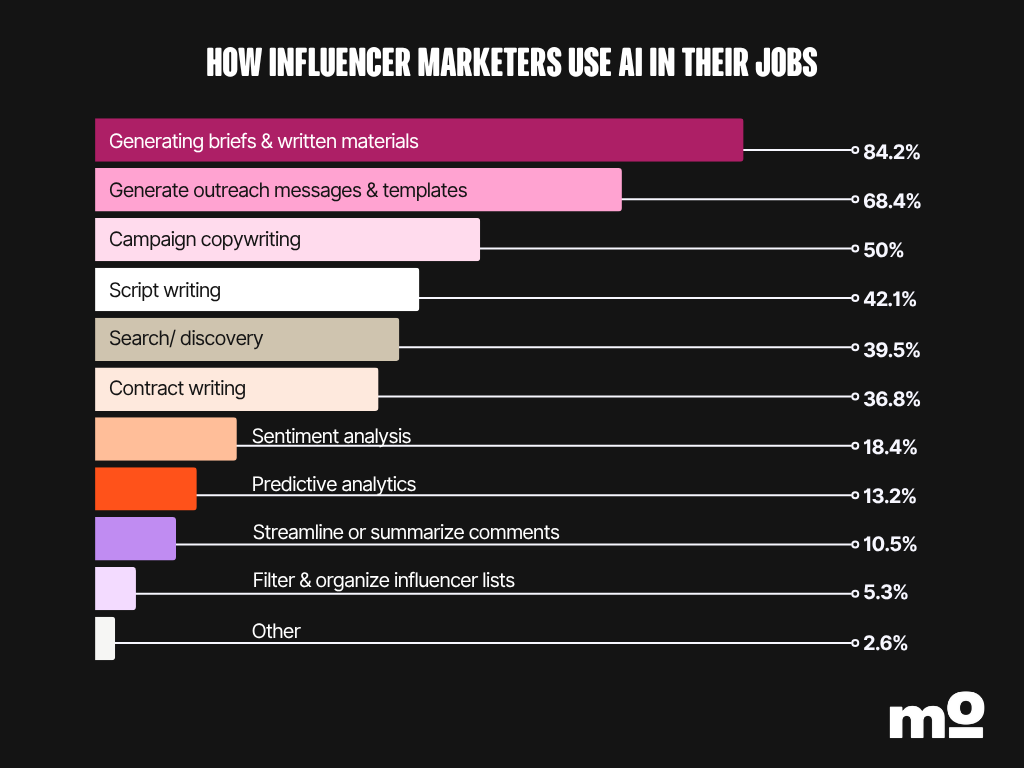
Search/discovery might be the top “dream” scenario for AI use in influencer marketing, but the reality is a little different, with our survey revealing that the most common use case is creating influencer briefs and written materials (cited by 84.2% of respondents). Only 39.5% currently use AI to find influencers.
🤓 Pro tip: We analyzed billions of pieces of social content to create our AI Search tool, which unearths relevant influencers based on the actual videos and images they post, not just the captions and hashtags they write. Give it a spin by creating your free Modash account!
Love these statistics? Wish you could get even more data and insights delivered straight to your inbox every two weeks? Join 66,000 other brand builders and sign up for our free newsletter, Return on Influence!