


More tools
Use cases



Influencer marketing, like any industry, doesn’t come without its challenges.
But because influencer marketing dips into so many different sub niches of marketing, their challenges can be particularly tricky to manage.
So I asked 33 influencer marketers what challenges they saw coming for 2025, and how they plan to mitigate them. We talked:
Plus other challenges you might come up against this year.
Engagement pods are when, usually smaller, creators form a group to like and engage with each other’s posts. It might seem benign on the surface – after all, what’s three or four creators banding together to support each other?
Except that some of these groups can be upwards of tens of thousands of members strong – and while the support from a few friends won’t make much of a difference, if you have 75,000 influencers liking and engaging with each other’s posts, it just artificially inflates a creator’s metrics.
Why it’s a problem:
If you’re trying to reach an audience of any size, it’s because you’re hoping to transform that audience into people familiar with your brand – and potentially even customers.
But the issue with engagement pods is that the engagement isn’t from a genuine community. The would-be influencers engaging with these posts won’t be inclined to purchase from you, meaning a waste of your time, budget, and resources.
Nycole Hampton highlighted how much more prevalent they were becoming.
You have creators purposely doing follow-for-follow, and when you go to their account, literally everyone engaging is just another content creator. This is a huge red flag, they’re busy trying to become influencers, not building a community – which is how you gain influence. They’re trying to appear that they have influence, but they don’t.

She continues, explaining that it might become a bigger problem in the future.
Bottom line, engagement pods are fraud, and brands need to steer clear. They’ve been around for over a decade at this point, but if you search the words ‘content creator and influencer’ on Threads, you’ll see dozens of creators advertising their engagement pods. Before it was at least a secret, but now people are bold with it, which is disappointing.
How to prevent it:
Luckily, engagement pods are pretty easy to spot by thoroughly vetting your influencers.
For Michael Todner, you can usually tell something is wrong right away.
I think ultimately engagement pods are fairly easy to spot once I look under the surface metrics – there's usually tell-tale signs that something isn't right. Be that the comments, the engagement percentage being abnormally high. I tend to find it is micro/nano creators where this issue is most prevalent.

You’ll want to look for the typical red flags that might indicate an engagement pod:
Athira Aravind says that engagement pods follow typical patterns you can easily check.
You can easily spot engagement pods by identifying patterns they follow. For example, one pattern is that all the comments on the videos are contributed by other influencers, rather than by a normal audience.


So what should you do if you spot a creator in an engagement pod? For Fernanda Marques, it’s an immediate blacklist.
Should we identify an influencer participating in engagement pods, we would need to blacklist them from future campaigns to maintain credibility and effective partnerships.

You think you’ve got a system in place, your program is running like clockwork, and you’re partnering up with talented creators across social media.
But you’re just not getting the same return on your budget.
When we polled influencer marketers, a whopping 81.2% said that it was harder to get the same ROI value from influencer collaborations in 2024.

Why it’s a problem:
It goes without saying – when you have to spend more to get the same results, your program suffers. It’s harder to justify budget with leadership, and generally, you get to do fewer activities than you’d have originally planned.
This is definitely the case for Zuzana Jiříčková, who mentioned a few potential causes behind a dropping ROI.
Yes, it's harder to achieve the same ROI due to factors like content saturation and changes in platform algorithms. Additionally, rising costs for influencers make it more challenging to justify the investment.

What to do about it:
Potential reasons why your ROI is slipping vary from saturation of your brand’s content with a creator's audience, to changes in the market, to even changes within different social platforms themselves.
But, there are a few ways to make sure you’re maximizing what you’ve currently got:
Cheyanne Pettyjohn reinforces the idea that it’s about repetition: the more an audience sees your products and brand, the more likely they are to retain your brand in their minds when they want to make a purchase.
Consumers are less likely to buy something if they see their favorite influencer post about it once. They may look into it, but more often than not, they'll scroll away. But if they see multiple posts on their feed about it, they’ll want to try it out themselves. That's why the ROI on affiliate work is so much more effective in most cases.

For Fernanda, it was about focusing on influencers with smaller overall audiences.
Larger influencers often have high flat rates with declining engagement and pricing, based on follower count rather than actual engagement. In contrast, we’ve seen better ROI with smaller accounts, engagement is stronger and audiences are more receptive. This shift highlights the importance of balancing audience size with true engagement to achieve effective results.
You set up and perform a gifting campaign that goes off without a hitch. Maybe you even get a few sales – and customers are raving about the PR box you sent to your creator.
And then a week goes by and you see that exact same PR box on Vinted. It’s like a punch straight to the gut.
Then, on top of that – what does it say about your brand?
I wanted to know if influencer marketers really encountered this problem – or if it was really even a problem at all.
I asked marketers if they’ve ever experienced regifting, and nearly 1 in 2 said they’d seen a creator regift or even sell products from a gifting campaign.
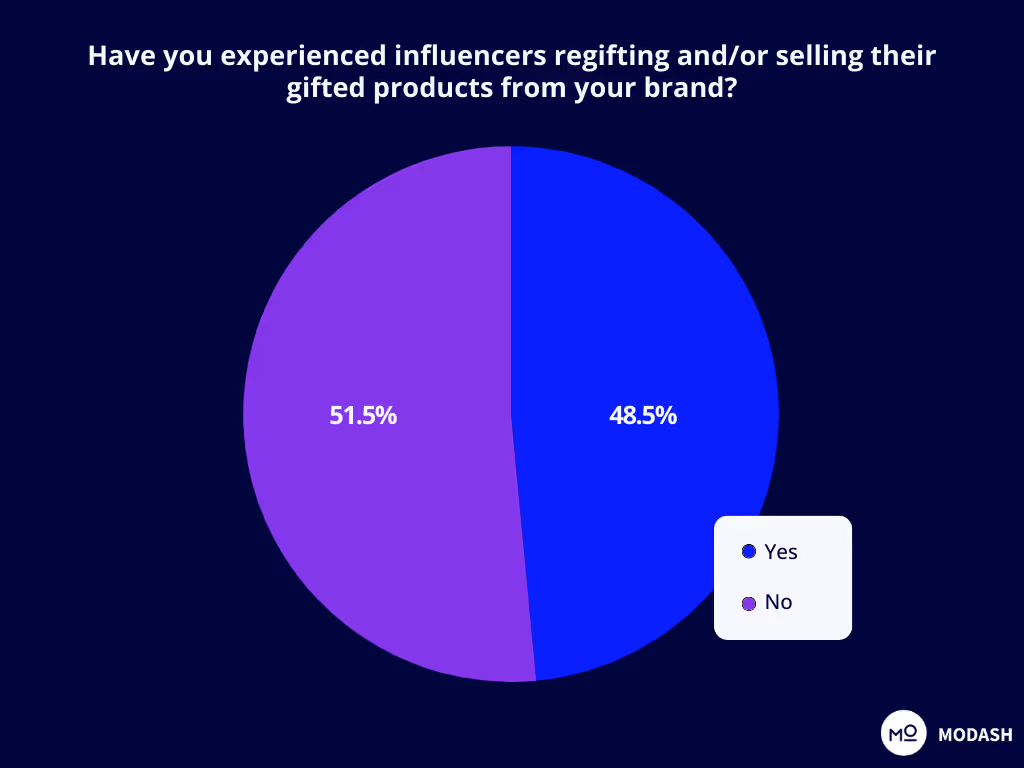
Why it’s a problem:
So, first, it’s not always a problem. If the influencer gives in private, or even creates meaningful content around giving the product to a close friend or loved one, it could be a huge boost for your brand.
For example, Nicole Ampo encountered an influencer who gifted her brand’s products to her mom.
I actually support it more since it puts the product to good use instead of it just being forgotten somewhere around the house or thrown away. I remember an influencer who gifted our product to their mom since she loved it. I think that was very thoughtful of the influencer.

For Michael, as long as it’s given in private, there’s no problem.
For us, we don't particularly see it as an issue providing it isn't done in public, as that carries some negative connotations around our products. If done in private and we've received all of the deliverables we expected, it's not an issue.
According to Zuzana, it doesn’t even have to be in private so long as the influencer asks for permission ahead of time.
We've had the experience of having an influencer do a giveaway with the packages. Normally, it's not a problem but they have to ask us in advance before posting.
For Lee Drysdale, it’s another thing altogether if it’s a custom PR box.
If it's a product they have not requested or will not use then no, I don't see any problem. However, if it's a big bespoke PR send then they're getting blacklisted. I've seen a couple of PR boxes that I've worked on on Vinted – super disheartening but I always try to not take things personally! I try to see it as the purchaser gets to experience the full PR send.

And again – when something like this happens, what does it say about your brand? Regifting, when not done in an appropriate way, can make your brand look cheap or disposable. If an influencer is raving about your product in a post, only to be openly selling it a few days later, it chips at the creator’s authenticity as well as the authenticity of your brand.
What to do about it:
Everything always depends on context. If this is something that’s harmful to your brand, and/or the influencer didn’t clear it with you ahead of time – it might be time for a conversation.
Unfortunately, depending on your contract, you might not even have legal recourse to stop an influencer from reselling or gifting a product. If this keeps happening to you, you might think of adding that into your influencer contracts.
Depending on how severe the regifting or reselling was, and if your campaign is finished or not, you may want to consider discontinuing the collaboration and moving on to the next campaign.
In hyper competitive markets, you can find yourself running out of your “ideal” influencer partners.
Everyone you find (and probably fall in love with) has recently or is currently working with a competitor – and maybe under exclusivity on top of it.
To make matters worse, everyone else who hasn’t (or isn’t) working with a direct competitor is someone you’ve already worked with and the audience-fatigue is real.
When we asked marketers if they were concerned about market saturation in 2025, over half of them said they were.
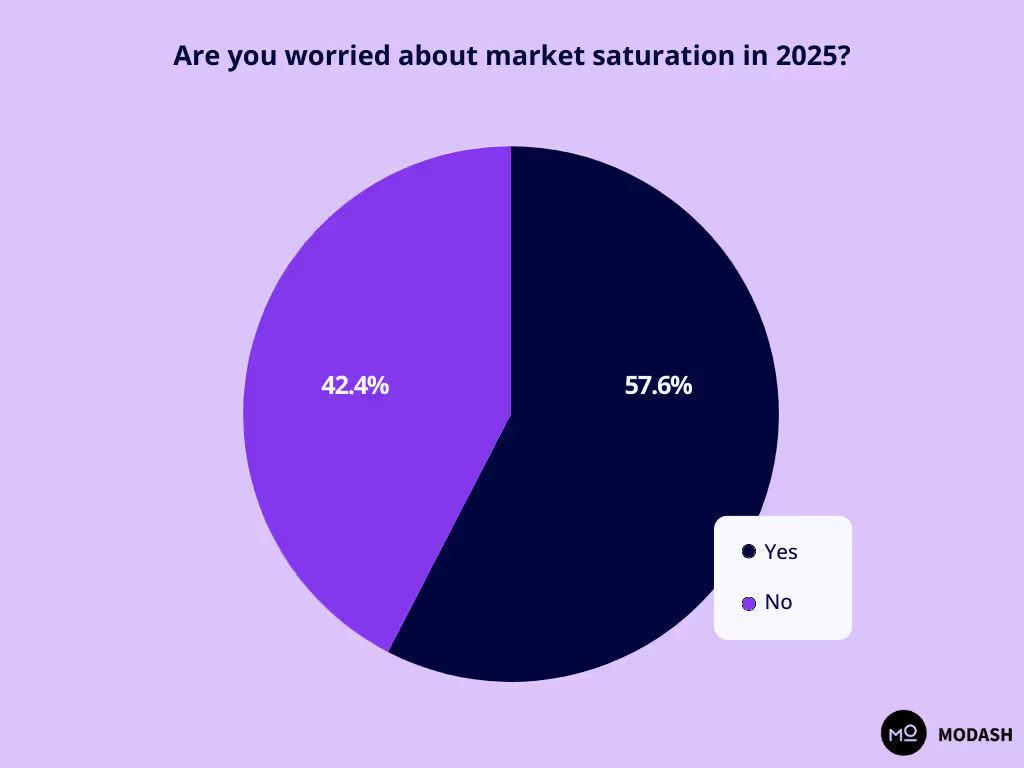
Why it’s a problem:
In saturated markets, it can be super difficult to find available influencers that fit your criteria. Not only that, you might end up spending more on them because you’ll need to secure exclusivity contracts.
If exclusivity isn’t possible, needing to “share” influencers with competitors, depending on your niche, can make content feel inauthentic.
What do to about it:
First, lean in hard on those long-term relationships. Creators with whom you have a long-standing relationship won’t be so quick to jump on a competitor’s offer, especially if you provide them with stable, well-paid work.
This is the plan of attack for Alex Sabucido.
Starting early is one of the best ways to respond to market saturation. Lock in partners early and for longer. It’s nice to try out influencer marketing agencies since they bring expertise and resources to the table, but it often comes at a higher cost.

If you’re feeling audience fatigue from your long-term partners, you may just have to get creative about your content, according to Lee.
It's time to get even more creative—finding unique or niche influencers, offering long-term collaborations, or even exploring different ways of working together outside of typical sponsored content.
Nycole highlighted the need to do things differently to stand out in saturated markets.
Are you studying the industry enough to know where your white space could be? There's still so much room for creativity and doing things bigger and better by simply doing things a little differently.
She also gave examples of exactly how to set yourself apart.
This may include choosing higher quality partners, having partners feature the product/services in a different way, or building multi-channel marketing extensions across owned, paid and even earned. The future of influencer marketing will rely on stepping outside of the silo to build more robust partnerships outside of just social media.
Also, get creative about your influencer search. This could mean going after smaller influencers with more dedicated communities – which is what Michael does.
We’re focusing more on upcoming and micro/nano creators that we see real potential in. As mentioned before, the relatively lower costs associated with this means that we can test more than we could with a more established creator. Laying the groundwork early is key.
Fernanda agrees, explaining that there are more influencers than ever before.
Even if a few influencers have exclusive deals, there are still plenty of talented content creators available who can be a great match for our brand. With so many creators emerging across niches, we’re confident in our ability to find the right partners.
Finally, prioritize building deep relationships with the influencers you have right now.
For Greta Zacchetti, this means offering influencers what the competition isn’t.
We’re securing influencers by offering long term contracts, competitive salaries, and community events.

Go above and beyond for your influencers – and they’ll be much more likely to stay loyal to you.
While those three challenges were the big ones to look out for in 2025, there are a few others marketers mentioned in passing.
A few marketers mentioned that sometimes, it’s hard to get influencers to hold up their end of the deal. For example, Zuzana highlighted that while she normally has a great experience, sometimes influencers would delete their sponsored posts a week after they went live. Others mentioned missing ad disclosure information, or links not being present in the published content.
Some even brought up influencers who would accept gifted products, and then break their contracts by never posting any content about them.
Other than reaching out and attempting to have a conversation about it, there’s not a lot that can be done after the fact. However, there are a few ways to try to prevent working with partners who don’t get it exactly right:
Again, leaning into the creators you already know who are great in collaboration is also a solid way of avoiding this problem.
While your particular challenges next year will vary, a lot of the problems you stand to face come down to the same core issues.
For example, engagement pods can be avoided through vetting influencers thoroughly. Regifting (if it’s a problem at all) can be avoided through clear communication most of the time. And market saturation can be mitigated through simply getting creative about your search and collaboration with influencers.
While you may not be able to alleviate every headache that comes with working and depending on other people for your job, you can at least prevent the grand majority.
And if tracking your 2025 campaigns is yet another headache you’re looking to solve, Modash has you covered. Say goodbye to screenshotting Stories and asking influencers for their metrics after your campaigns – you can do it all with Modash (plus finding and vetting those influencers we mentioned earlier).
But don’t take my word for it, try Modash free for 14 days.