Funciones
Integrations






Casos de uso
Funciones
Integrations
Casos de uso


So you’ve heard affiliate marketing is a low-touch way for ecommerce brands to grow traffic and revenue. Build a landing page, set up some codes, and wait for the sales to come flooding in.
Well, I’ve got some bad news for you: affiliate marketing isn’t passive. It's a managed channel that requires the same operational discipline as any other form of performance marketing – and the results compound when you run it like a program, not a side project. Read on for a comprehensive, practical breakdown of how affiliate marketing works for ecommerce brands and how to build a program from scratch.

Ecommerce affiliate marketing is where brands pay affiliate partners a commission for driving specific “actions”, like generating leads or sales, with results tracked via the affiliate’s unique referral link or code. Those affiliates are often social media influencers/content creators – although they might also be bloggers, website owners, or pretty much anyone else with an online audience. As a performance-based channel, affiliate marketing is a comparatively low-risk way for brands to drive growth, because they only pay on conversion.
There are three broad options when it comes to choosing a commission model:
| Commission model 💰 | What is it? 🤔 | Example 👇 |
|---|---|---|
| Flat | A fixed cash amount per conversion. | Brand A pays a fixed $5 commission per sale. Affiliate A sells a $50 product and earns a $5 commission. Affiliate B sells a $75 product and earns the same $5 commission. |
| Percentage | A percentage of the total sale amount. | Brand B pays a 10% commission. Affiliate A sells a $50 product and earns a $5 commission. Affiliate B sells a $75 product and earns $7.50. |
| Tiered | A commission scale that rewards higher-performing affiliates. Typically percentage-based. | Brand C pays a basic 8% commission, rising to 12% for monthly sales of $1,000+. Affiliate A has sold $500 of products this month, so they earn an 8% rate, for a total of $40 in commissions. Affiliate B has sold $1,100 this month. They earn 8% on the first $1,000 and 12% on the next $100, for a total of $80 + $12 = $92. |
The right choice for your brand depends on your product and goals. For instance:
The ideal commission rate is high enough to attract new affiliate partners (and encourage them to keep promoting your brand and products), but not so high that it destroys your margins and makes sustainable growth impossible.
Unfortunately, there’s no simple answer here. There are a ton of variables, including:
For example, you might expect all luxury fashion houses to pay similar commission rates – after all, they’re targeting similar customers and (presumably) have somewhat similar margins. Yet a super prestigious brand may be able to pay lower commissions than an unknown startup while still remaining competitive, simply because affiliates are desperate to work with them.
What’s that? You want actual numbers? Well, you’re in luck, because our research – based on responses from 65 influencer marketers – reveals that the overwhelming majority of commission tiers start between 1% and 15%, with most falling from 6% – 10%.
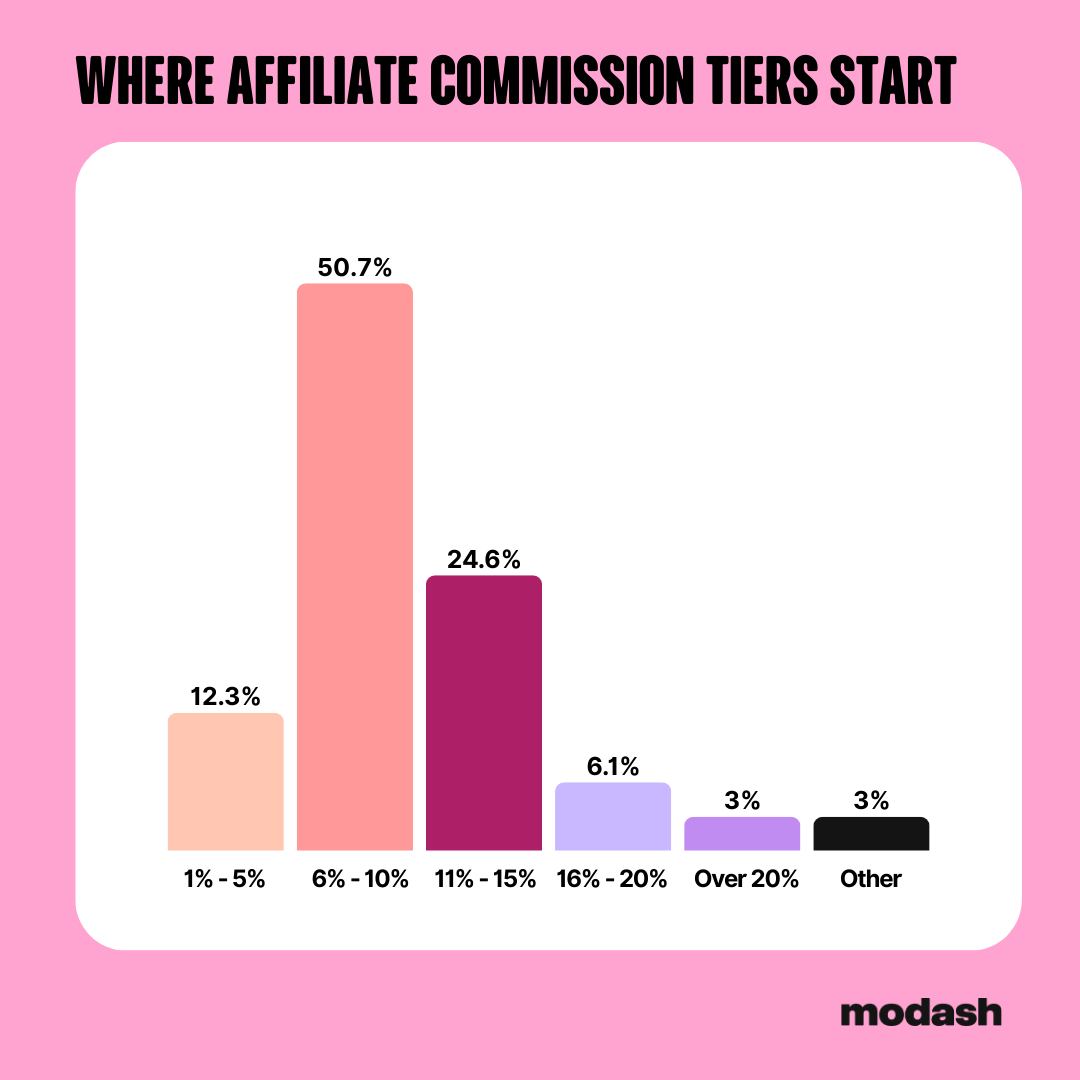
Just don’t make your mind up based solely on our data. At the very least, take the time to explore what other brands in your niche are paying.
🤓 Further reading: For more of our original affiliate marketing research, check out Affiliate Marketing Survey 2026: Why Hands-On Programs Outperform the Rest.
Of course, it’s not just about deciding how much to pay your affiliate partners – it’s also about making sure the right affiliates get rewarded for sending customers your way. There are two main ways to track sales:
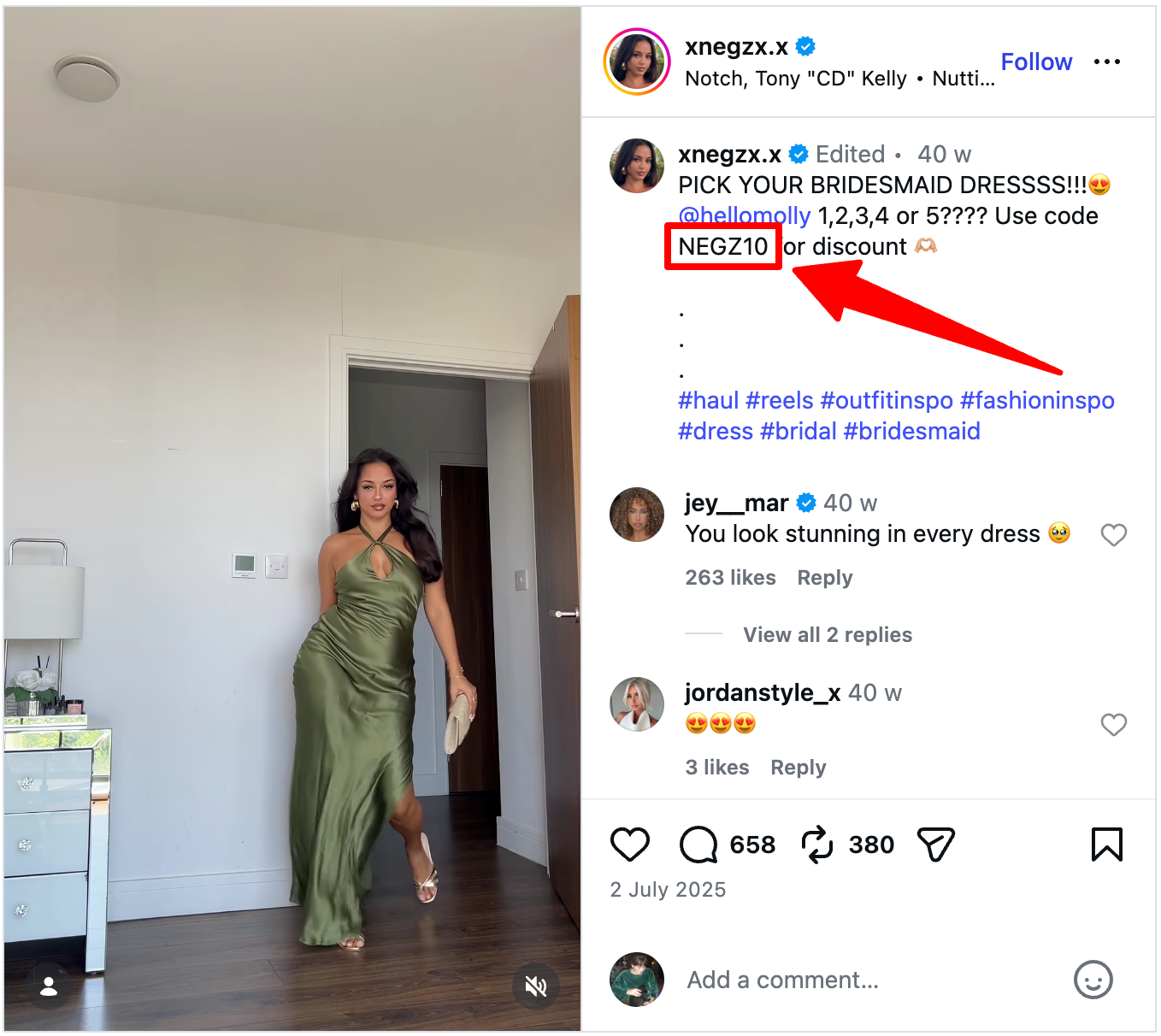
👉 Promo codes, also called “discount codes”, are unique to each affiliate. When a customer enters the code at checkout, they get a discount – and their purchase gets tracked to the relevant affiliate. Here’s an example courtesy of Instagram influencer Negar Aghaei:
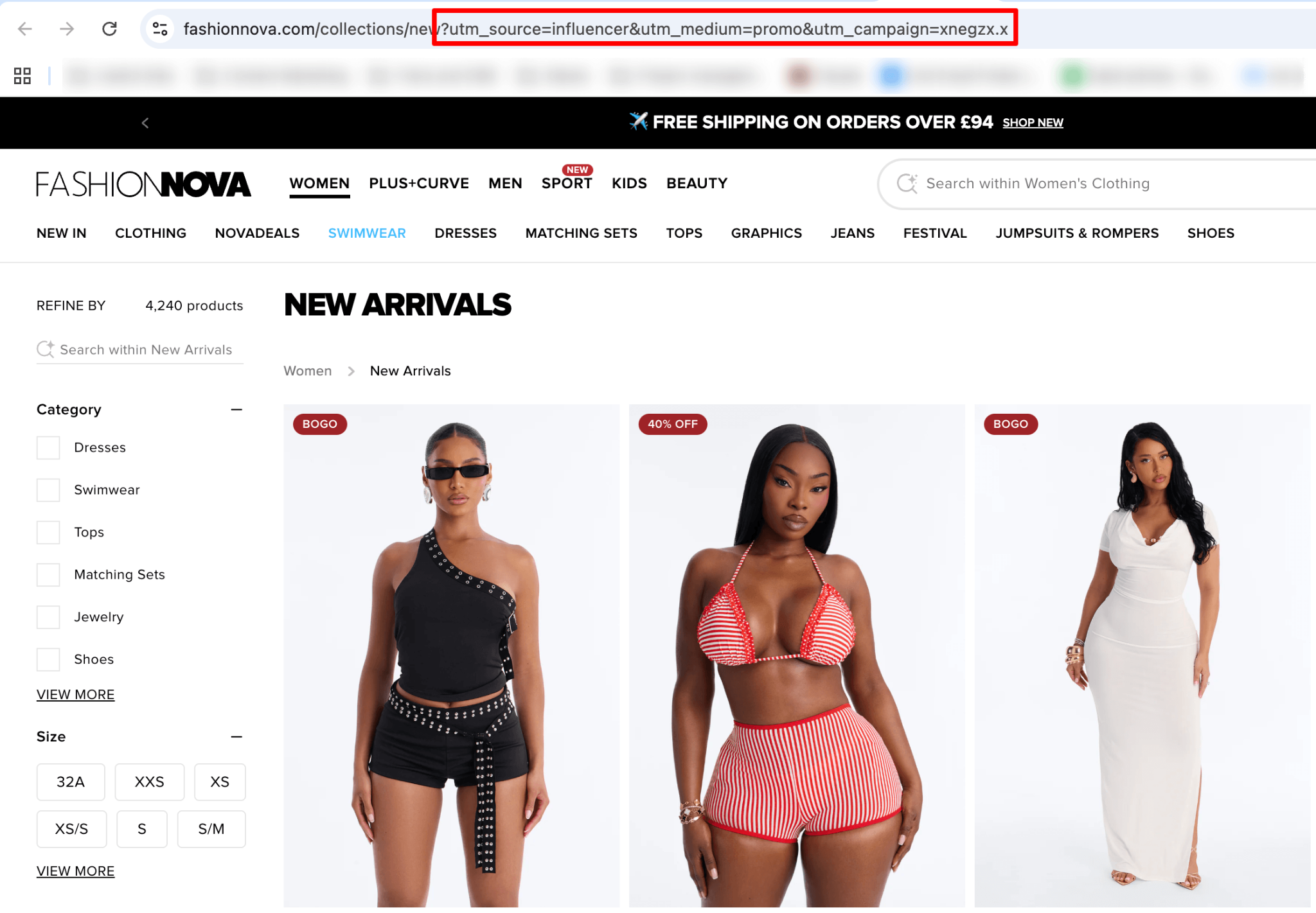
👉 UTM links are custom URLs that tell analytics tools where a click came from. Again, they’re unique to each affiliate, so they help you understand which creators are driving the most traffic to your store. Here’s an example of a link from one of Negar Aghaei’s campaigns to the women’s fashion brand Fashion Nova:
So which should you be using?
Actually, because promo codes track sales and UTMs track clicks and traffic, the smart solution is to use both. That way, you get a clearer view of performance. And if there’s an issue with one method – like the affiliate spells their promo code wrong 🤦♀️ – you’ve got a built-in backup.
🤓 Further reading: We go into way more depth on promo codes, UTM links, and more in How to Measure Influencer Marketing: 8 Proven Tracking Methods.
Chances are, some of your existing customers already have some kind of online audience, and would love to get paid for promoting your products. Not only are these folks highly likely to agree to your collab request, but their content will also feel more authentic, because they actually like the stuff they’re posting about 🫶
Let’s discuss two ways to find would-be affiliates among your existing audience.
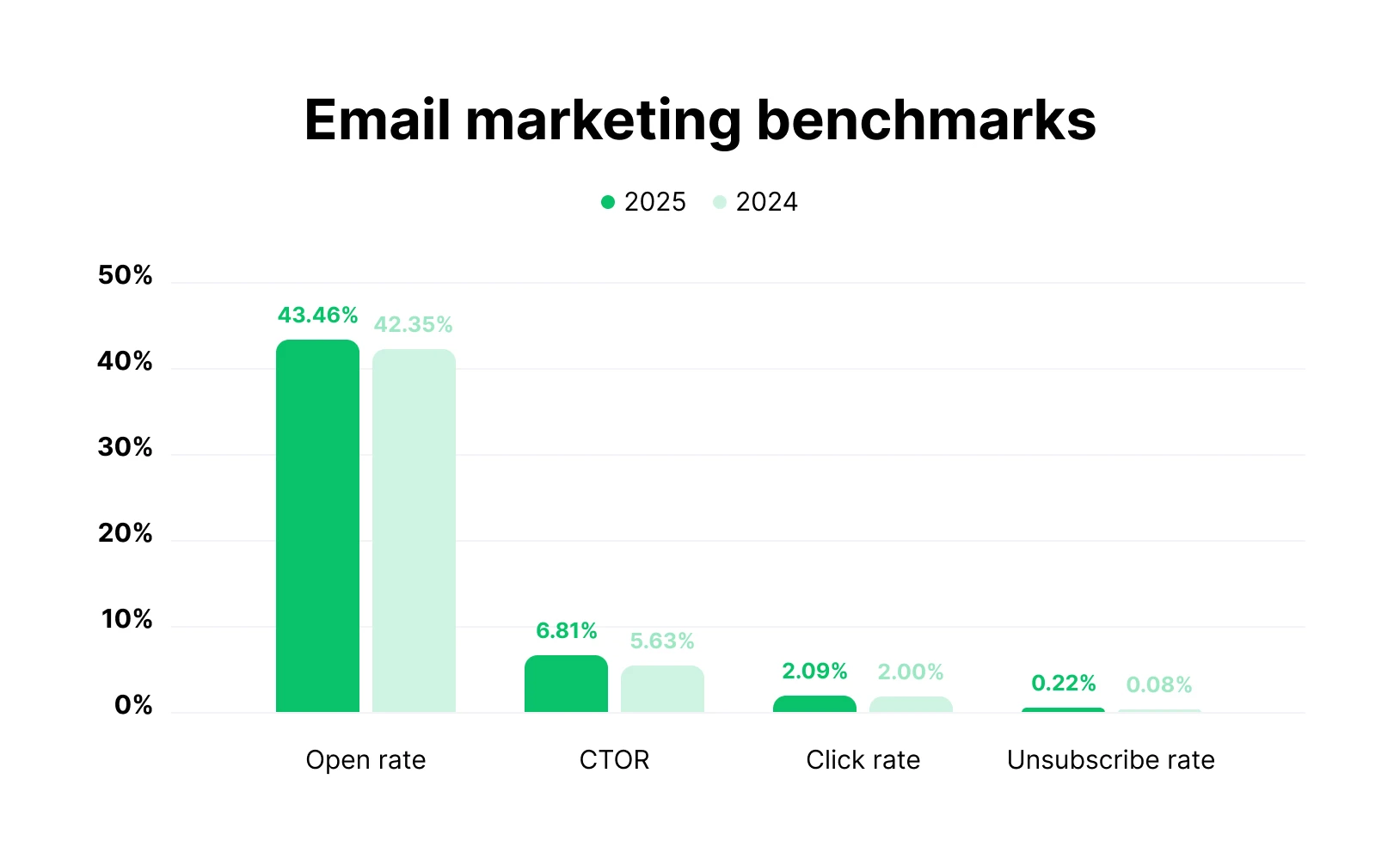
First up, the manual approach: send an email newsletter asking if any of your email subscribers want to join your affiliate program (including details about what they’ll be promoting and how much they can earn). Trouble is, only about 43% of marketing emails get opened – so you’re basically guaranteed to miss over half of your audience this way.
For a more watertight method, you’ll need a dedicated influencer search tool like Modash.
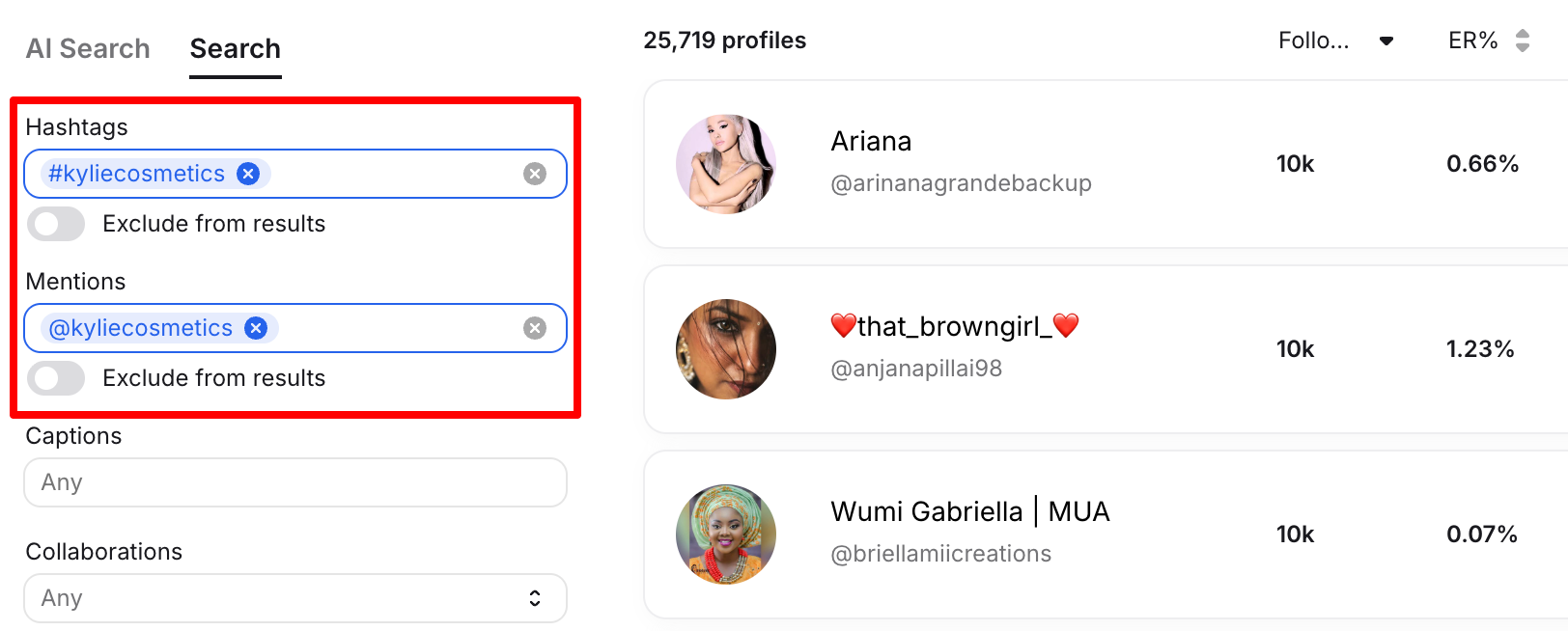
With Modash, you can instantly find creators who are discussing your brand on Instagram, TikTok, and YouTube by searching hashtags and mentions. Here’s how it’d look if you were running affiliate recruitment for Kylie Cosmetics:
Plus you can “niche down” the results using our various discovery filters – more on them in a couple sections’ time… 👇👇👇
Every social platform has a built-in search function to help users discover creators and content that match their interests. Here’s how it looks on TikTok:
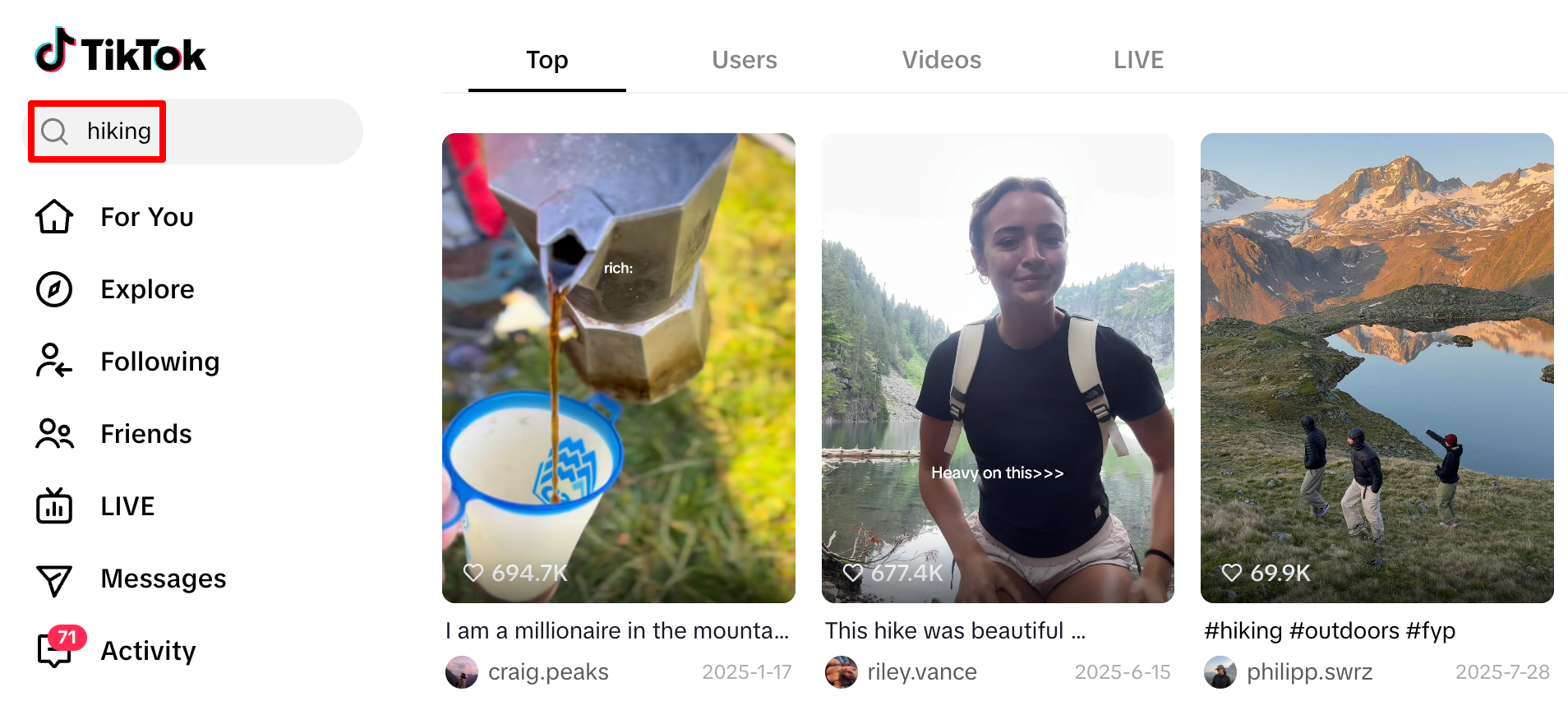
If you’re only looking to recruit a small number of affiliates (I’d say 10 at the absolute most), you can get by using just these free tools to identify potential affiliate partners in your niche.
However, this approach falls apart at scale because it takes a ton of additional clicking around to find out if the creators in the search results are actually relevant to your brand and audience. And if you want to learn more about a creator’s audience and/or performance metrics, you’ll have to reach out and ask them for screenshots, with no guarantees they’ll ever reply (whereas tools like Modash let you access this sort of data in just a couple clicks).
All of which means you'll have to spend hour after excruciating hour trawling search results, all for the sake of a software subscription. And that subscription needn't be expensive – Modash pricing starts at $199 a month 😎
I’ve already noted how social platforms have built-in search features for tracking down niche content creators. However, if you want to focus the results, you’ll need to layer some sort of filter on top.
There’s no real way to achieve this manually (AKA without software). The best you can do is Google something like “[niche] influencers in [location]” (e.g. “outdoors influencers in Seattle”). Or try asking a gen AI tool like ChatGPT for a list of influencers who meet your search criteria – just be sure to sense check the results.
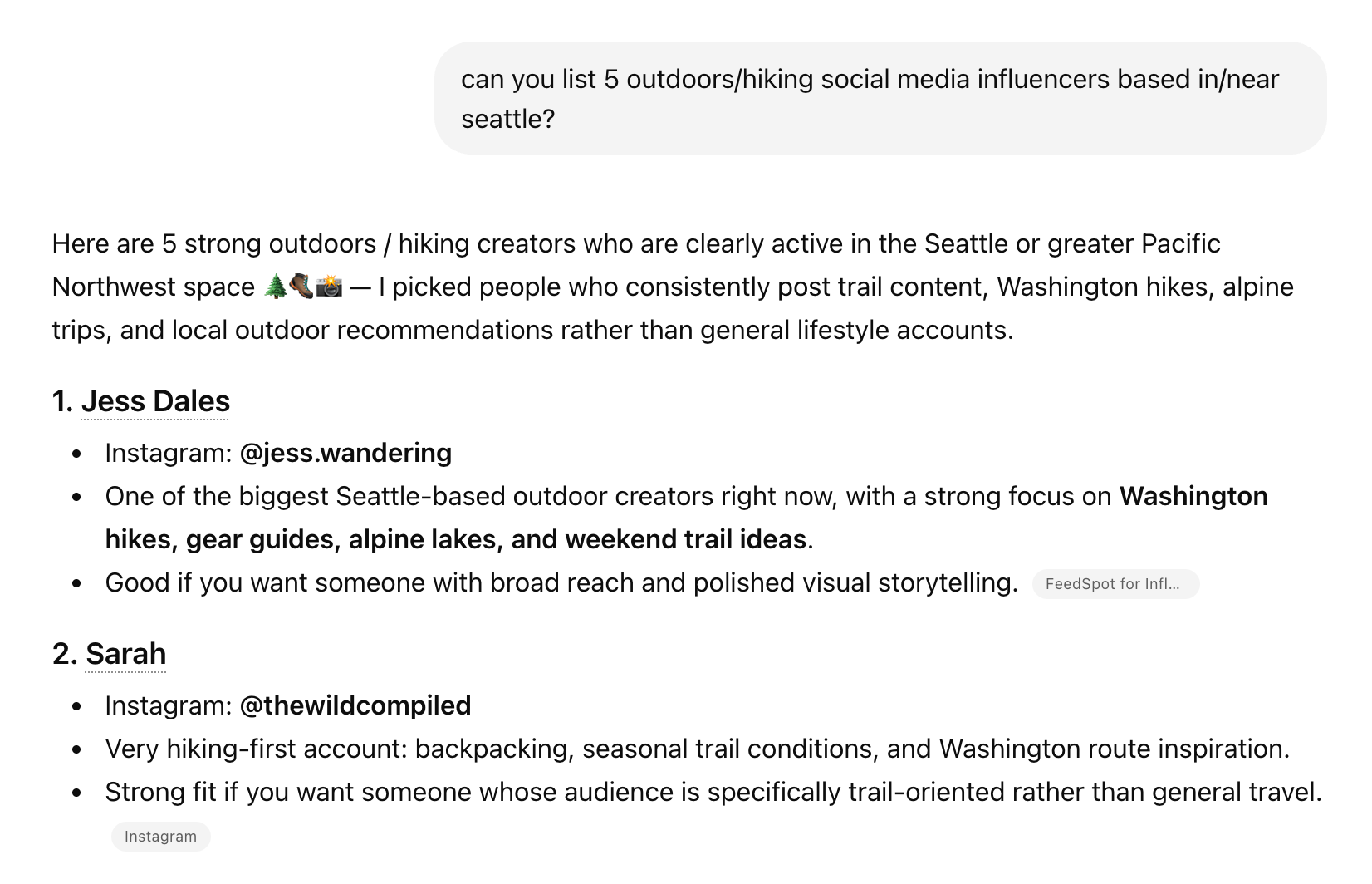
Again, this is all well and good if you’re only looking to hire a handful of affiliates. But if you’re recruiting at scale (say, anything over ~10 affiliates), you’re gonna burn through a huge chunk of time searching and vetting creators.
For best results, you need a search tool like Modash, which offers multiple discovery filters to help you find brand-fit affiliates from our database of 380M+ creators. Set your search criteria using filters like:
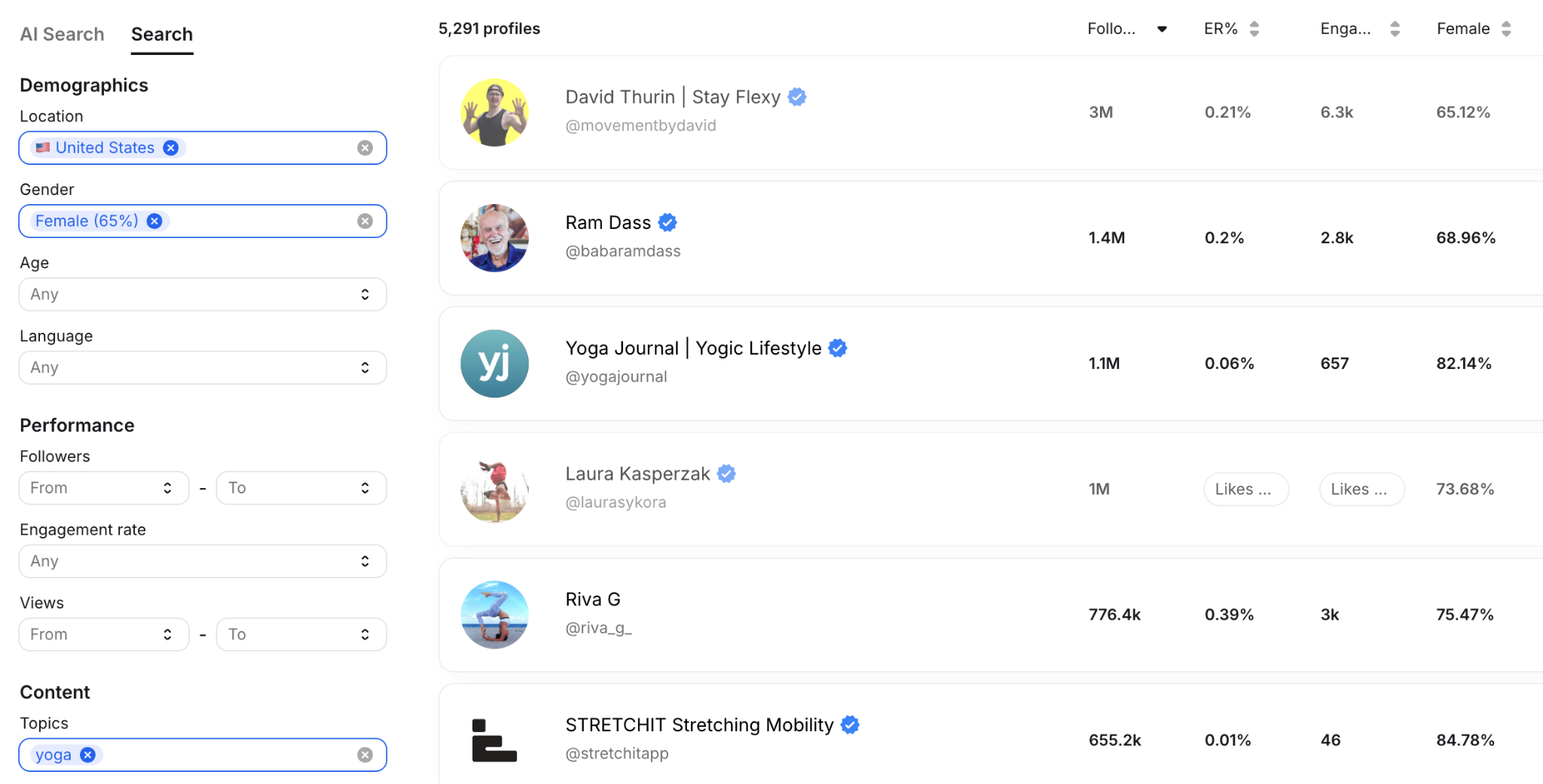
Just like that, you’ve got a list of dozens, or hundreds, or thousands of creators who match your requirements. Now it’s time to vet the results…
Vetting helps you weed out creators with:
That way, you can feel more confident that the affiliates you collaborate with will generate results.
As with the previous steps in the affiliate search process, you can vet creators manually or save yourself a bunch of time with a dedicated influencer marketing platform.
The manual option is preeeeetty basic – slide into the creator’s DMs (or find their email address) and ask for screenshots of their audience breakdown and engagement rate data. Then you can run them through Modash’s fake follower checker – it’s free! Once again, it’s fine if you’re only recruiting in small numbers, but a serious heavy lift at scale.
Alternatively, use a tool like Modash to access a ton of valuable data in a single click, including:

One last point on this: don’t get too carried away, because 62.5% of influencer marketers feel they’ve missed out on potentially interesting collabs due to overly stringent vetting. Sometimes, the perfect creator doesn’t tick every single box.
🤓 Further reading: For more on vetting, check out How to Assess Influencer Profiles: 7 Factors You Should Look For.
One of the most effective ways to scale recruitment is to find an “ideal” affiliate, then track down a bunch of other “lookalike” accounts. Just like that, you’ve gone from one potential affiliate to many.
If you’ve got zero budget for a paid tool, your best option here is to use gen AI. Try a prompt like “list 5 Instagram influencers with similar audiences and content to @[your affiliate’s handle]”.
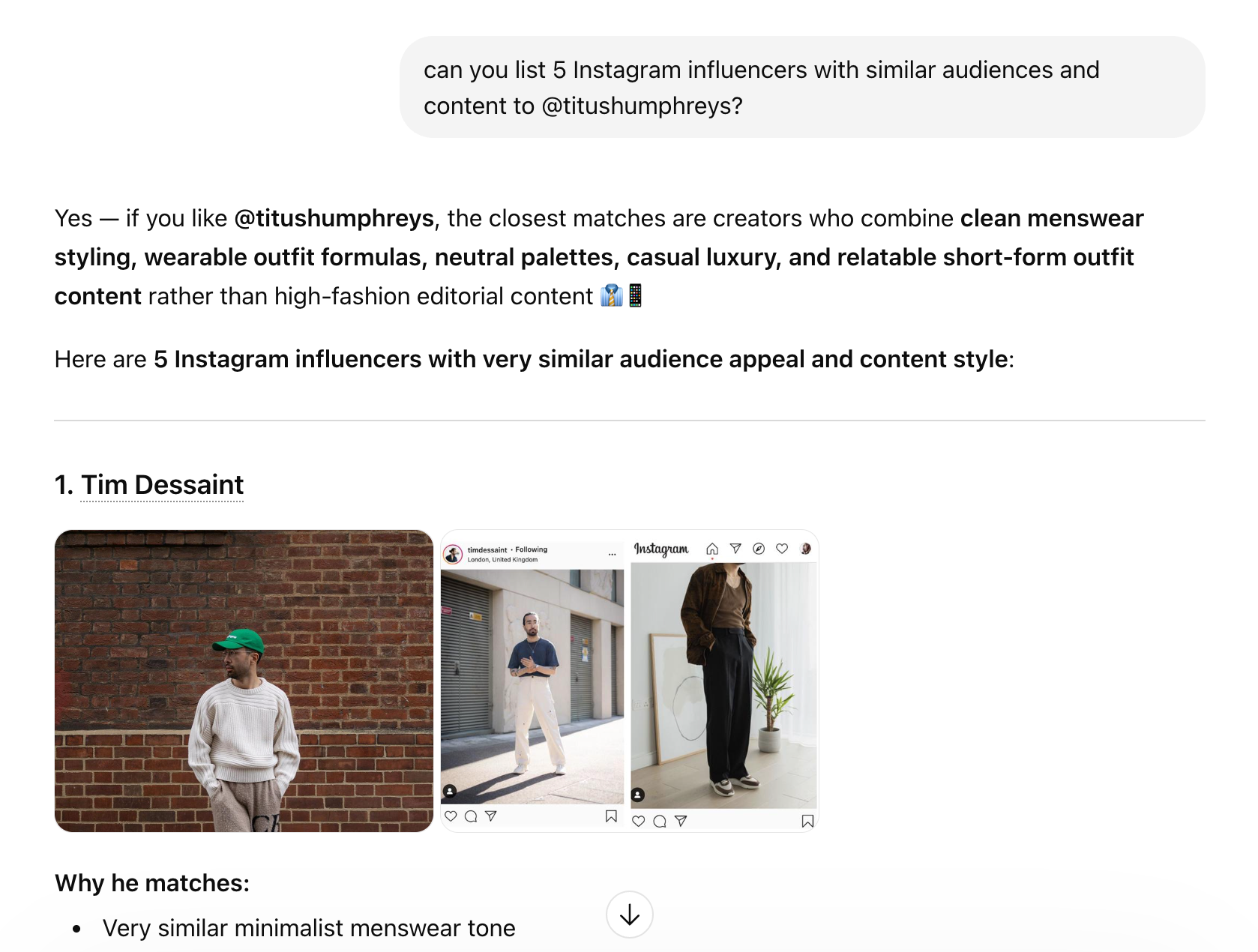
Just remember these tools are far from perfect – the creator I used for this example, Titus Humphreys, posts about outdoor adventures, but ChatGPT recommended a bunch of menswear influencers. Not super helpful.
For a faster and more reliable solution, you’ll need a proper search tool like Modash. With Modash, all you need to do is open the creator’s profile to see a shortlist of similar accounts, or hit View all lookalikes for a more in-depth overview:
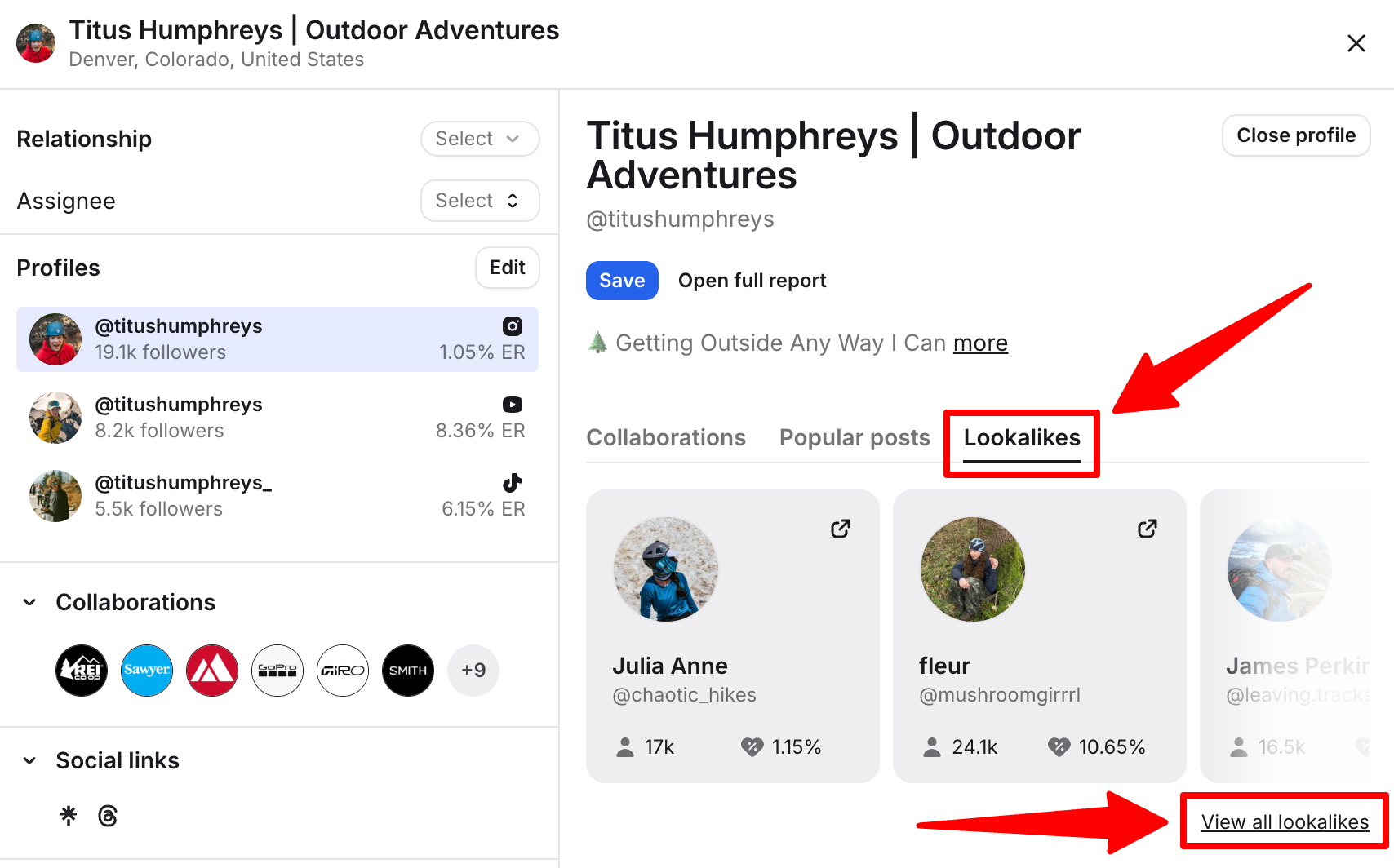
Plus every lookalike creator will have their own lookalikes – so you can quickly identify hundreds of similar accounts from a single brand-fit affiliate.
Unless you’re a household name, there are likely millions of potential affiliates for your brand who post about your product category but have never even heard of you. Now if you could only find them and explain how brilliant your product is, they’d probably post about you too.
I’ve already shared how to do this manually – either Google niche creators or ask gen AI for a list. Both are fine if you can afford to spend hours manually scrolling and sense-checking the results. But if you’re searching for a more streamlined process, software like Modash is the way to go.
With Modash’s filters, you can search for creators based on:
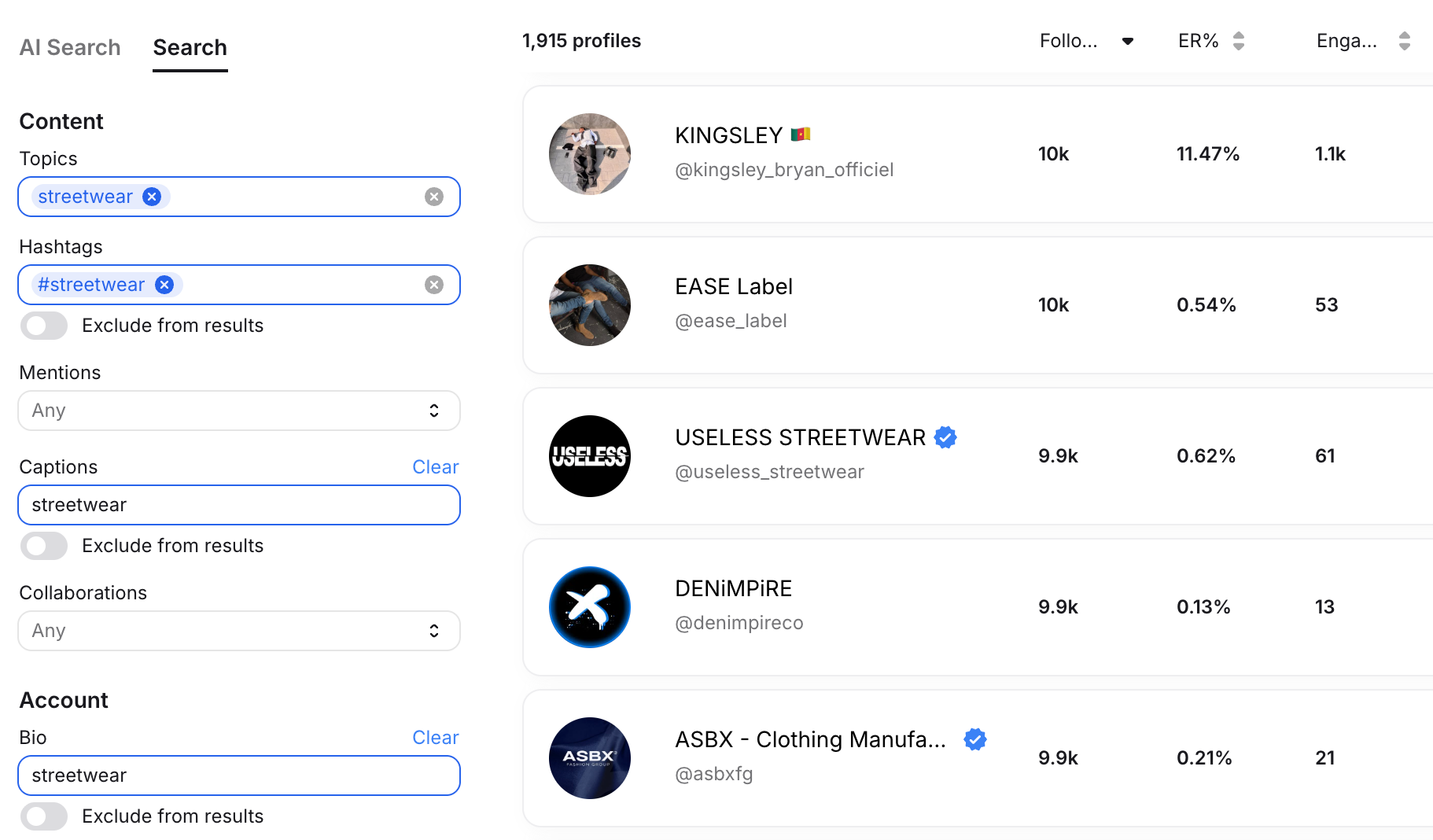
Just like that, you’ve got a comprehensive list of every creator posting about a topic relevant to your category and audience.
🔎 Try all our search tools yourself by creating your free Modash account!
Fewer than you probably think.
Sure, if you imagine your “dream” affiliate program (what do you mean you don’t have a dream affiliate program???), you’re likely picturing thousands of creators posting about your brand and product. But few programs have that sort of volume from day #1.
Fact is, starting out small with 10 – 20 well-vetted affiliates who are a genuine fit will almost always yield better results than working with 100 randoms, so pay close attention to things like:
Now that you’ve found a bunch of potential affiliates you’d like to hire, it’s time to reach out to pitch your brand and offer.
Our research shows that cold email is the clear winner when it comes to contacting creators for the first time, with 47.7% of influencer marketers favoring it (and only 6.8% choosing DMs).
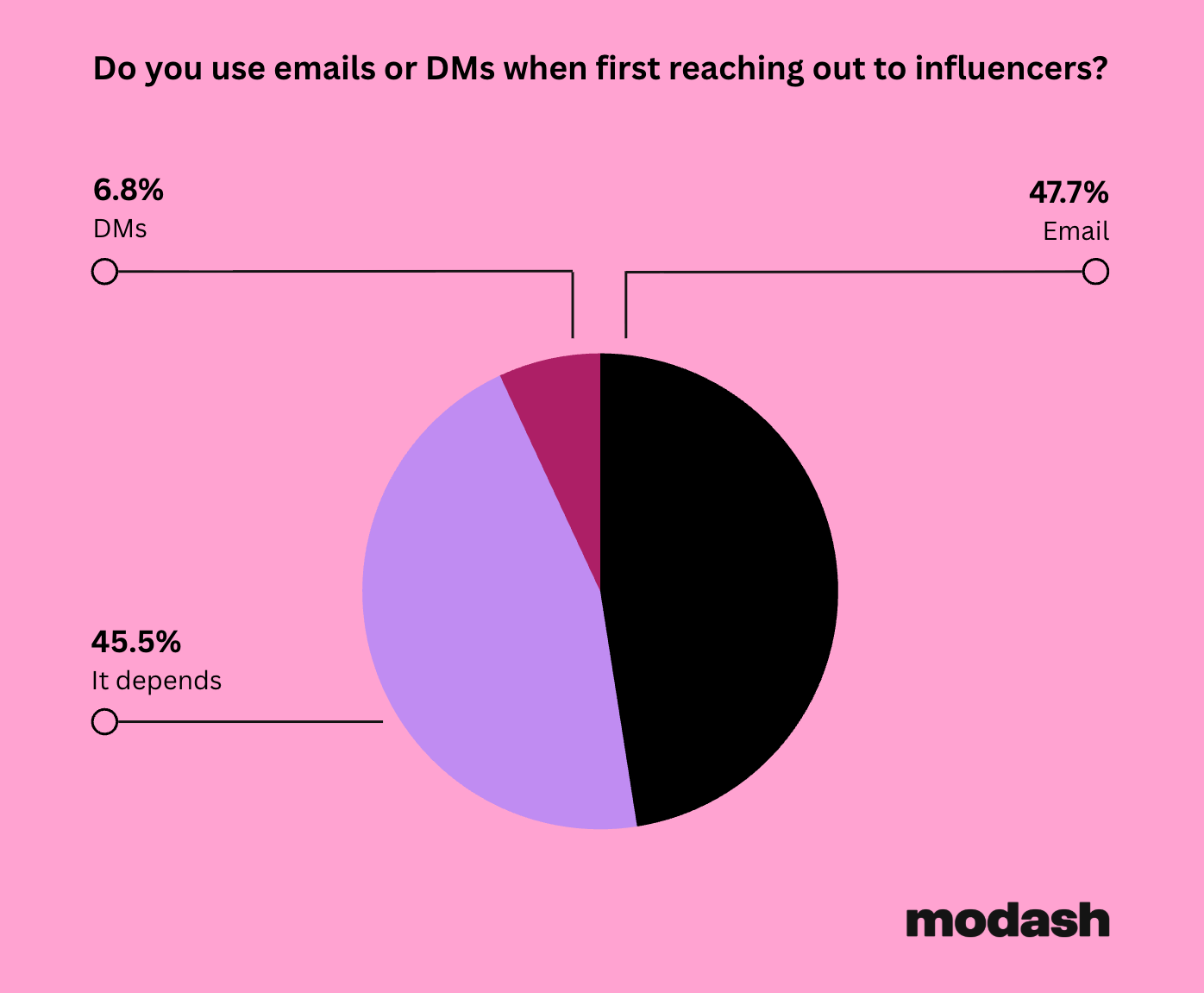
Of course, email outreach is by no means perfect. Lots of content creators live on social media and barely check their email inboxes, so don’t expect everyone you contact to even see your message, let alone open and read it. But folders and labels make email more manageable at scale than DMs – plus it’s better for building personalized outreach sequences (more on that in the next section 👇).
Still, I’m no email fundamentalist, and there are times when direct messaging clearly makes more sense. DMs generally get a faster response, so they’re better for anything time-sensitive. And if a creator doesn’t reply to your outreach emails, it’s definitely worth following up via DM.
🤓 Further reading: For more on this, check out Email vs. Whatsapp vs. DMs: A Guide for Choosing the Best Influencer Communication Channels.
Scaling affiliate recruitment requires an efficient outreach process – and efficient outreach = templates. But how do you use templates while adding the personal touch that’s so crucial to boosting reply rates?
The simple answer is to template the generic elements of your outreach, like…
…while personalizing the first 2 – 3 sentences of your opening email (plus the recipient’s name, obviously) so they’re more likely to keep reading. Here’s how that looks in practice:

Clearly, any amount of personalization is more of a heavy lift than just spraying and praying the same boilerplate email to thousands of creators. But it’s worth the effort – and there are ways to save time.
For starters, use mail merge to automatically populate email templates with personalized data pulled from a spreadsheet. It works, but it’s a little fiddly to set up. And you’ll still have to spend a bunch of time hunting around for all that personal info in the first place.
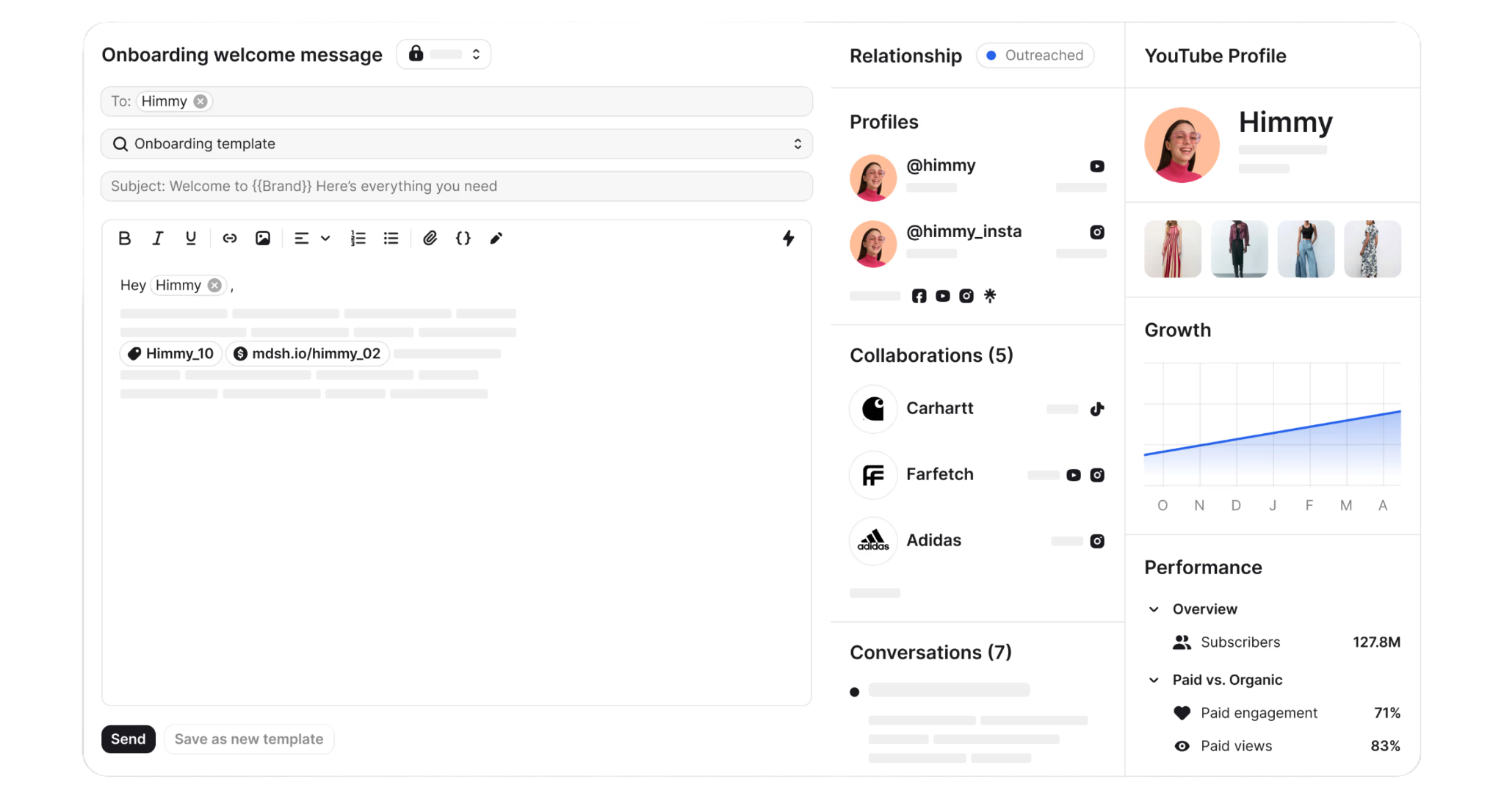
That’s why the most efficient option is to use an influencer outreach tool like Modash. Our dedicated influencer marketing inbox gives you at-a-glance access to key details about the creators you’re outreaching, like their:
So you can quickly knock up a highly personalized email opener, use automated placeholders for basic personalization like names and social handles, and template the rest.
Unfortunately, even if you craft a Hemingway-esque email, you’re never going to see a 100% reply rate. Chances are, plenty of recipients won’t even open it.
That’s why follow-up emails are so essential. With Modash, you can schedule follow-ups in advance – which means no more time spent checking who hasn’t replied and chasing them up manually. And when a creator does respond, they’ll be automatically unsubscribed from the rest of your follow-up sequence.
📧 Check out our full range of outreach tools by creating your free Modash account!
Speaking of follow-ups…
We know they play a vital role in boosting reply rates. But affiliate marketing is ultimately about relationship management – and no relationship should ever start with 38 unanswered emails 😬
So how much is “too much”?
Well, our research shows that almost three-quarters of influencer marketers send 1 – 2 follow-up emails, while one-fifth send 3 – 5. Only 7% don’t send any follow-ups.
🤓 Further reading: You can find more of this research in 51 Marketers Share How They Reach Out To Influencers.

Any number of follow-up emails is better than zero. But if a creator still hasn’t replied after one initial email + five follow-ups, it’s probably time to take the hint and accept that you’re not going to work together (at least, not right now).
Let’s be clear: if you’re doing affiliate outreach at scale, you’re never going to get “yeses” from every single creator you contact. It’s just not gonna happen. But you’re more likely to get a positive response if your initial email answers three key questions that every affiliate wants to ask:
| What affiliates want to know 🤔 | What you can tell them 👍 |
|---|---|
| What do I get? | Clear commission rate (and, ideally, how it compares to other programs in your niche) Free product upfront – gives them a tangible reason to reply and something to actually post about |
| How easy is it? | Simple onboarding process accessible through one link, not five back-and-forth emails Affiliate dashboard for promo codes, UTM links, and commissions |
| Is this brand worth my audience's trust? | Social proof from existing affiliate partners and/or customers who love your product |
A bunch of work goes into finding and hiring affiliates (although, as you’ve seen, it’s a whole lot easier with a tool like Modash in your corner). So the last thing you want is to go through all that effort, only for your new affiliate partners to ghost you when it’s time to start promoting your products 👻
Sadly, that’s a fact of life for many influencer marketers, with 60% saying their biggest challenge is keeping affiliates active.
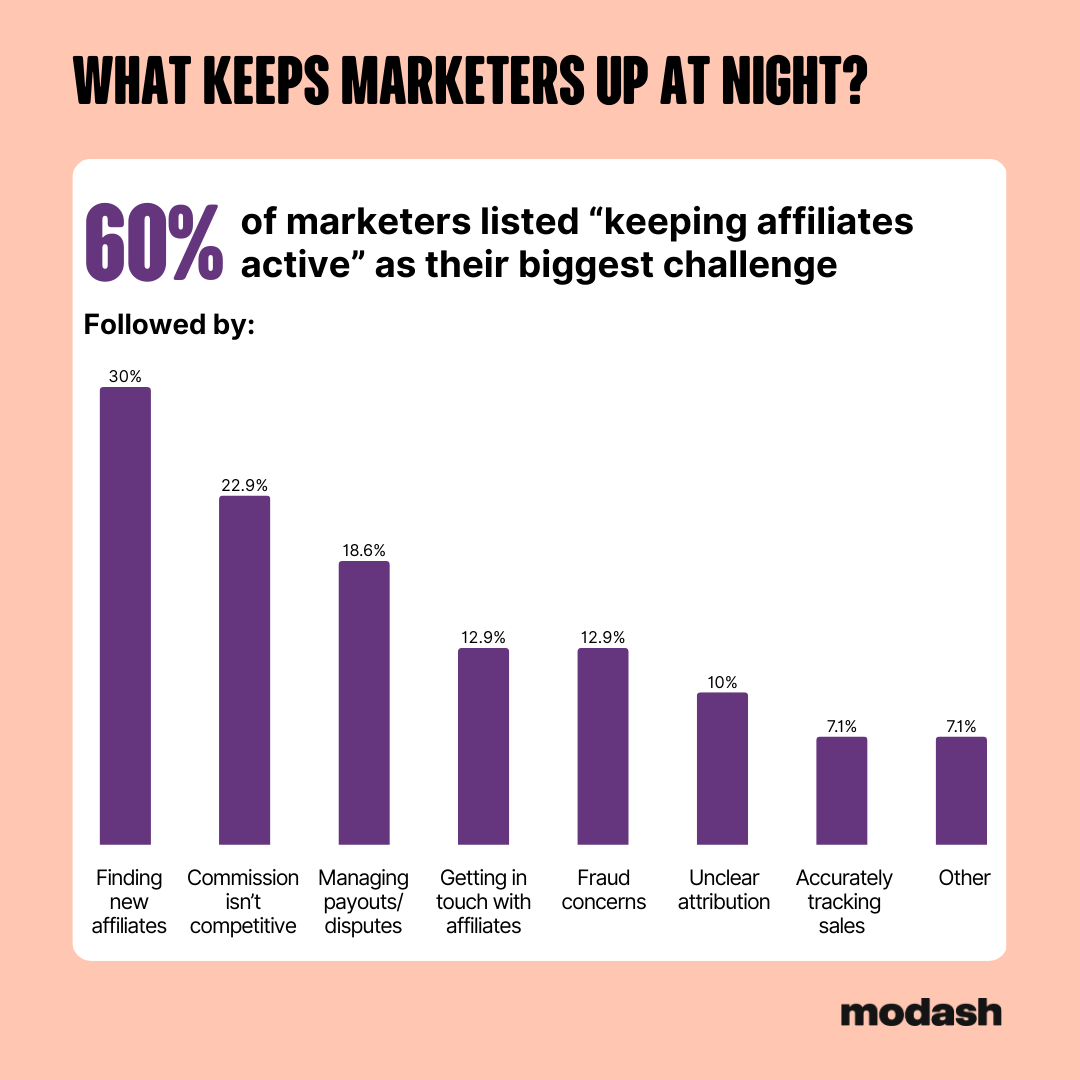
And BTW, there’s a pretty low bar for what counts as an “active” affiliate. Over half of the marketers we surveyed consider any affiliate who posts once a month to be active. Yet over a third of marketers still have less than 20% active affiliates for their brand 😱
So what’s going on here??
Well, our research identified a bunch of common issues that might persuade affiliates to vanish, like:
To make matters worse, 12% say they never test new ways to engage affiliates and keep them active.
Without wanting to repeat myself, it all boils down to relationships. Creators want to feel special, so take the time to contact your top performers and pat them on the back. Send them new gifted products as often as possible. And keep them motivated with tiered commissions (more on this later…).
The welcome email is your opportunity to ensure the relationship (that word again) with your new affiliate partner starts on the right foot. Get it right by sharing:
Most brands get that part right. What they often overlook is a little humanity. Anna Klappenbach, Senior Influencer Marketing Manager here at Modash, recommends adding this less obvious element to your welcome emails:
Add humanity, make them feel like they're a person that you (as the brand) are proud of welcoming to the team. Show how excited you are to work with them instead of treating them like a money-making machine.

Once they’ve read all that stuff, your new affiliate should feel ready and motivated to share that all-important first post about your brand. And the sooner they start promoting your products and generating sales, the more likely they are to keep engaged with your program.
Affiliates aren’t going to post until they get their hands on their promo codes and tracking links – because without codes and links, they won’t be credited for any sales they generate.
You can do this manually if you like:

Of course, as with every other step in the process of building an affiliate program, all that manual work is a major barrier to scaling recruitment.
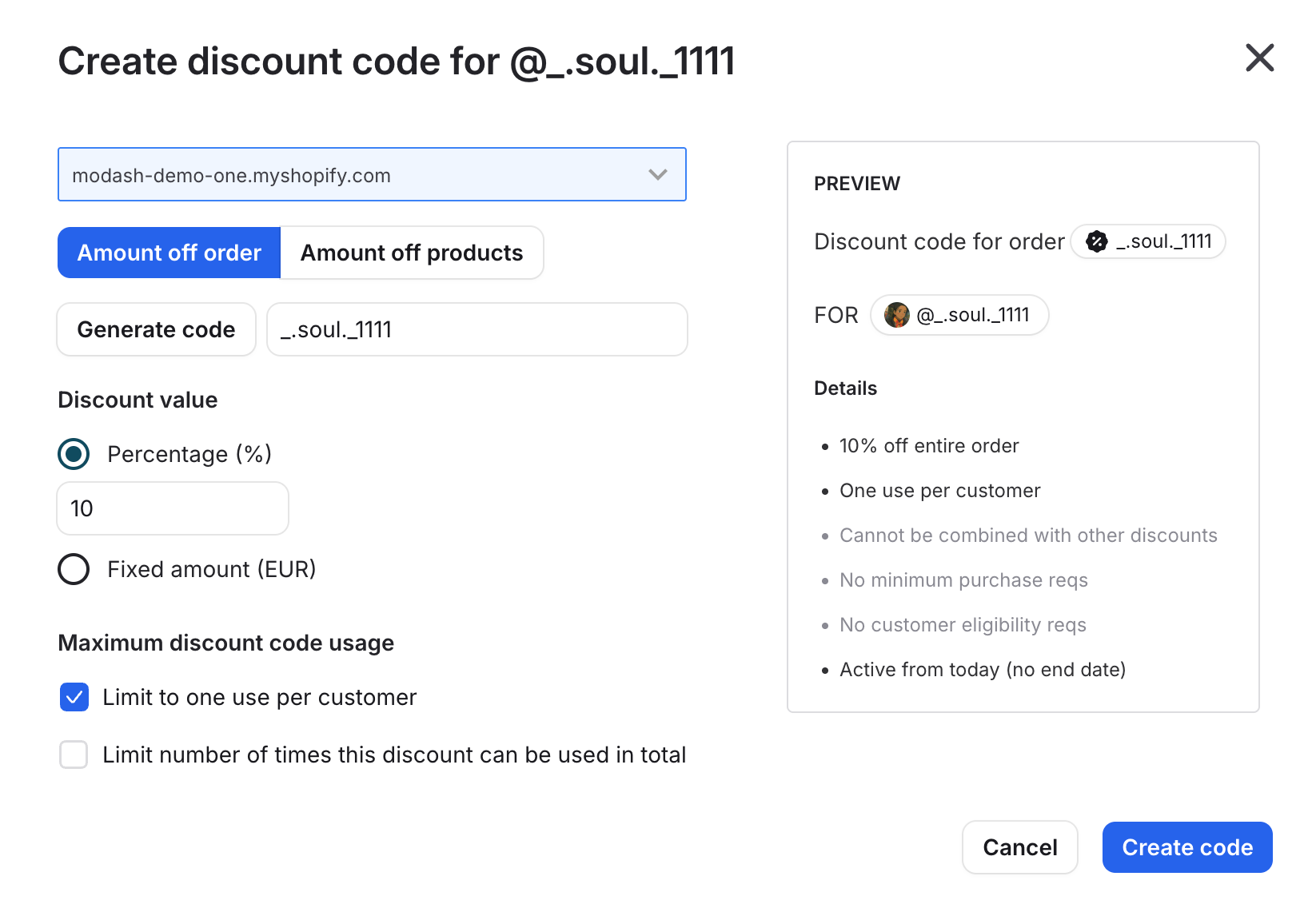
Whereas with Modash, links and codes can be generated automatically when creators join your programyou can use bulk actions to share codes and links with hundreds of affiliates at once. Set rules for code usage – like discount value and redemption limits – then track clicks and sales through our performance dashboard.
It’s easy enough to create a Google Drive or OneDrive folder (or similar) housing all your marketing assets, then share it with your affiliate partners. But it’s all too easy for affiliates to misplace those folders – then they’ll inevitably end up asking you to reshare everything.
Which is a pain.
Modash makes life easier for your affiliate partners (and yourself). If you’re a Shopify store, affiliates can access your assets through the same dashboard that contains all their performance data. That way, they don’t have to navigate separate platforms next time they want to check their commissions and download your latest banners.
Contrary to popular belief, having clear expectations around what (and how) your affiliates should post doesn’t necessarily stifle the creative process.
If anything, setting guidelines makes it easier for creators to share great content. Because if you randomly ask me to draw anything, I’ll probably struggle to get started. Whereas if you ask me for a picture of a house, I’ll knock up something like this in approx five seconds:

I know, I know – I’m wasted as a writer.
With that in mind, make sure that during the onboarding process, you discuss:
🤓 Further reading: For more on setting expectations with creators, read Influencer Briefing: 7 Things To Include (+Free Template & Examples).
There’s definitely a place for mass comms via broadcast channels like Discord, Slack, and WhatsApp. Indeed, half of marketers we surveyed use one-to-many communication to reach their affiliates. And you should too, because broadcast channels are fantastic for maintaining affiliate relationships at scale. Use them to:
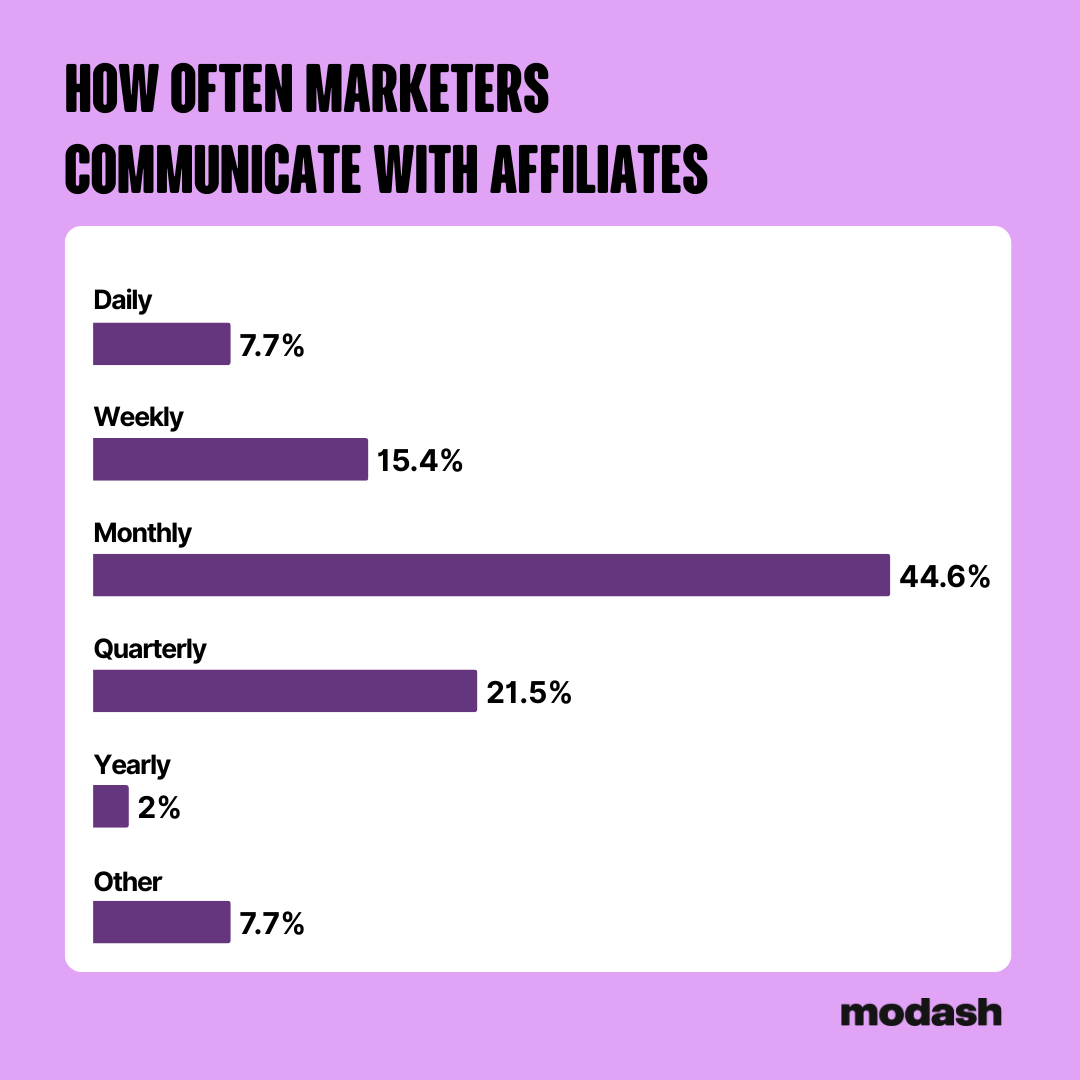
The trouble comes when marketers rely too heavily on one-to-many comms at the expense of 1:1 channels, and/or communicate too infrequently. About two-thirds of influencer marketers only speak to their affiliates monthly or quarterly – that’s simply not enough to keep them engaged and motivated.
🤓 Further reading: Learn more about scaling comms in How to Use One-to-Many Broadcast Channels in Influencer Marketing (Without Erasing the Personal Touch).
Affiliates are way less likely to lapse if they make an early sale or two. Because there’s no greater motivator than seeing those commission numbers mounting up in your affiliate dashboard 🤑
While you can’t guarantee that a new affiliate will hit the ground running, you can certainly focus their efforts by over-rewarding early successes. For instance, you could offer a flat bonus on milestones like making their first sale or hitting a certain revenue target in their first month.
Single-tier commission structures only keep affiliates motivated for so long. Sooner or later, your top performers are gonna want a bigger slice of the pie – and if you don’t play ball, they’ll go and promote someone else instead.
Despite this, tiered commissions are criminally underused, with only 45% of brands offering 2+ commission tiers, and only one in three paying 3+ tiers:
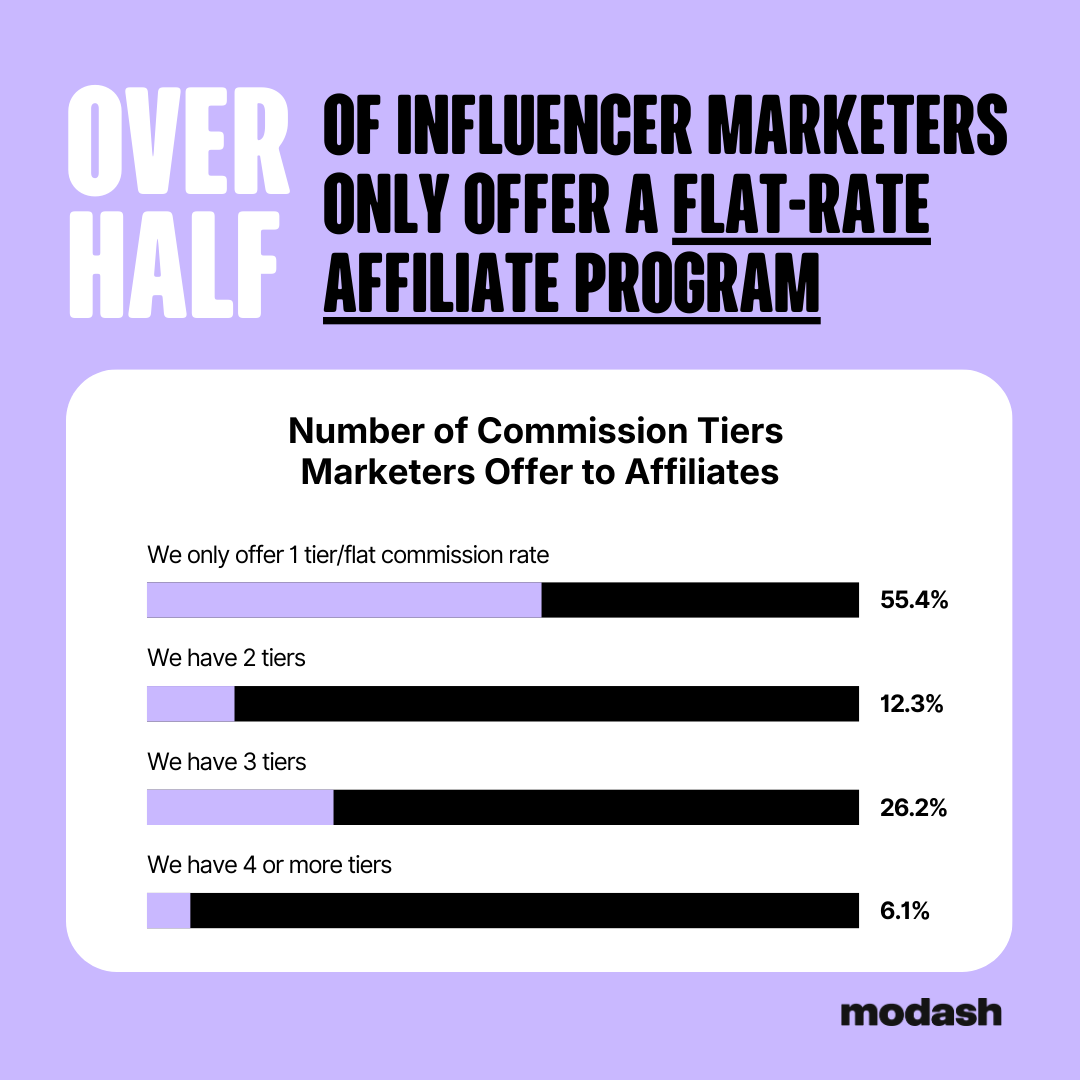
I know how effective tiered commission structures can be because we crunched the numbers ourselves. In our affiliate marketing survey, we asked marketers what proportion of their affiliates were active, then segmented the results for brands with one-, two-, and three-tier commission structures. Here’s what we found:
It’s a virtuous cycle: motivated long-term affiliates are (generally) more likely to be successful, and successful affiliates are more likely to be motivated and long-term 🤝
🤓 Further reading: For more on retaining creators, check out Long-Term Influencer Partnerships: Pros, Cons, & How The Pros Do It.
I’ve already talked plenty about using UTM links and promo codes to understand how many clicks and sales your affiliate program is generating. There’s just one small problem: neither gives you a complete view of performance.
Sure, you can see how much traffic is coming from your links using Google Analytics (or countless other analytics platforms), while your ecommerce platform can give you total revenue from transactions with discount codes. But what if you also use discount codes for non-affiliate campaigns? It skews the whole picture 🤦♀️
Now, if you’ve only got ~10 active affiliates, it won’t take too much effort to unpick the tangle and see the real impact of your program. Any more than that and you’ll need a more robust solution like Modash Track.
Provided your store is on Shopify, you can connect it to Modash to track all your key campaign metrics in a single platform, like:
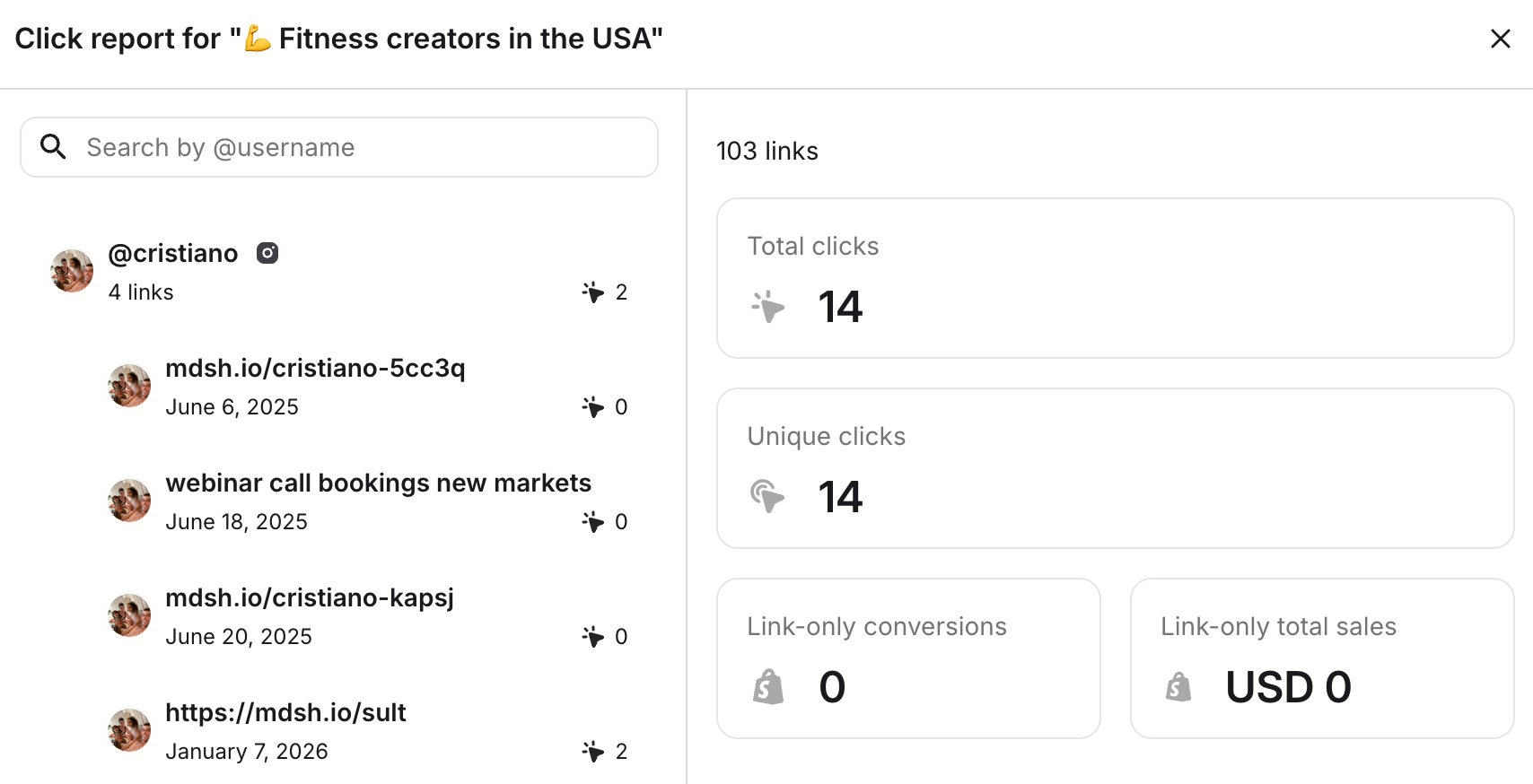
For a more granular view, open a click report to see which individual creators are sending you traffic, plus the number of conversions and value of sales they’ve generated.
🤓 Further reading: For more on tracking (and why it’s traditionally been so difficult), check out How to Measure Influencer Marketing: 8 Proven Tracking Methods.
You’ll never understand how well your affiliate program is working unless your data gives an accurate picture of where your clicks and sales are coming from. That’s why you need to ensure your attribution is watertight.
One of the most common issues with affiliate attribution is code poaching (AKA code leakage), when an affiliate’s promo code gets leaked by a third-party aggregator. You know the type – there are tons of them out there.
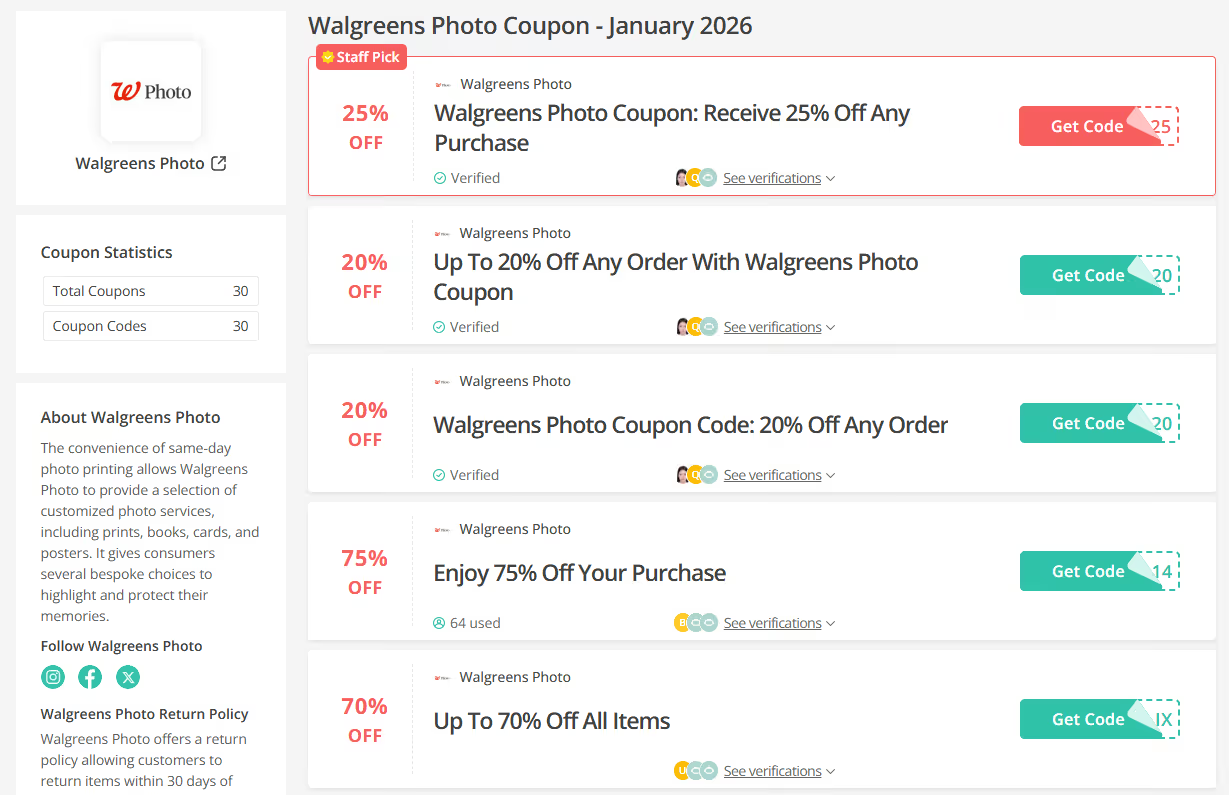
Code poaching messes with your aggregation. Even more annoyingly, there’s often no way to get your code removed once it pops up on one of those sites. So what can you do about it? Well, for the 47.6% of marketers who say code poaching is a problem, popular tactics include:

Another potential gap is around last-touch vs multi-touch attribution. For example, imagine a customer sees an influencer post about your product and stores it away in their mind palace. Then, a couple days later, they Google your brand a couple days later, click through to your store, and buy. With last-touch attribution, it looks like the sale came from organic search – but actually, the affiliate played the most important role.
Of course, if the customer entered a promo code at checkout, the creator still earns their commission. If not, you could try another workaround, like rewarding affiliates for sending traffic to your store even if they don’t immediately convert.
Affiliate tracking isn’t just about measuring clicks and sales. It’s also about keeping tabs on all the content your campaigns are generating. Not only is having lots of content good for brand awareness, but you can also potentially repurpose it on your own social channels, on your website, and even in ads (learn more about this in Influencer Whitelisting: The Complete Guide).
But you can’t do any of that if you’re unsure how much content your affiliates are posting, or where it is, or what it looks like.
If you’re running a teeny tiny affiliate program and/or you’re a masochist, you can track content manually by trawling your affiliates’ social channels, screenshotting each piece of content, and saving it all in folders. And remember – you’ve only got 24 hours to capture Stories before they disappear forever 🫥
(Honestly, even if you are a masochist, there’s got to be more stimulating ways to spend your time…)
For most brands and marketers, the best solution is to use an influencer tracking tool like – you guessed it – Modash. Just tell us which hashtags, mentions, and/or keywords to track and we’ll round up all the live affiliate content for you (yep, even Stories 🥳).
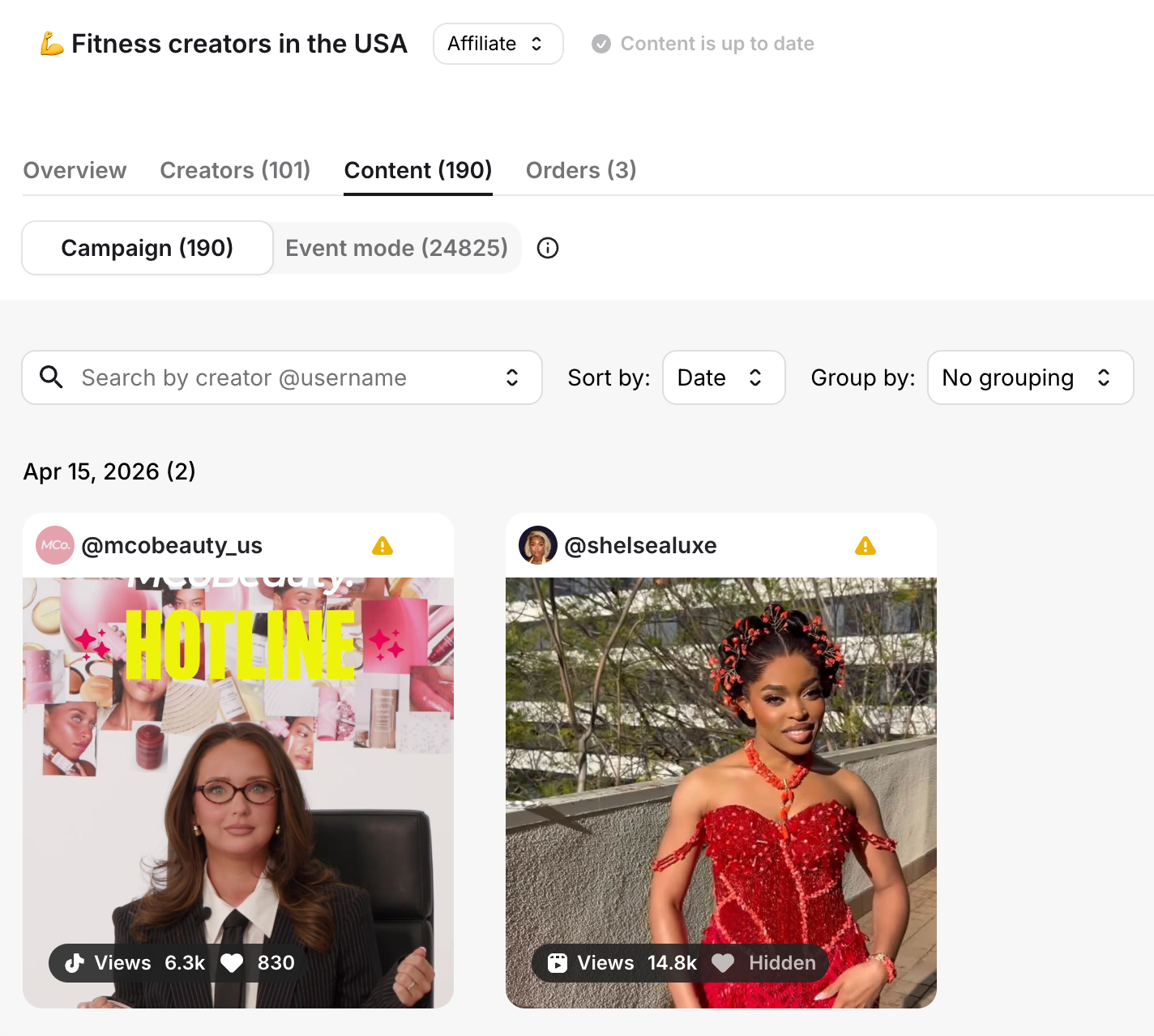
Alternatively (or additionally), activate Event mode to automatically track all content from selected creators. That way, you’re guaranteed to see absolutely every post, even if an affiliate forgets to mention you or misspells a hashtag.
It’s often said that 20% of affiliates drive 80% of program revenue (that’s the Pareto Principle babyyyy).
Whether or not that’s true to the letter, chances are results won’t be spread evenly across all your affiliates. Most likely, an elite few will be responsible for the lion’s share of sales – and those are the creators you desperately want to retain.
How do you identify those “super affiliates”?
You can do it manually – just see which promo codes are driving the most revenue. Only thing is, it might require a little leg work if you’re managing hundreds of affiliates, each with their own unique code.
The more efficient (and accurate) solution is to use Modash. For Shopify stores, Modash tracks clicks, code redemptions, sales, and payouts for all affiliates, so you can instantly see your top performers (bear in mind that non-Shopify stores don’t get the same end-to-end attribution reporting).
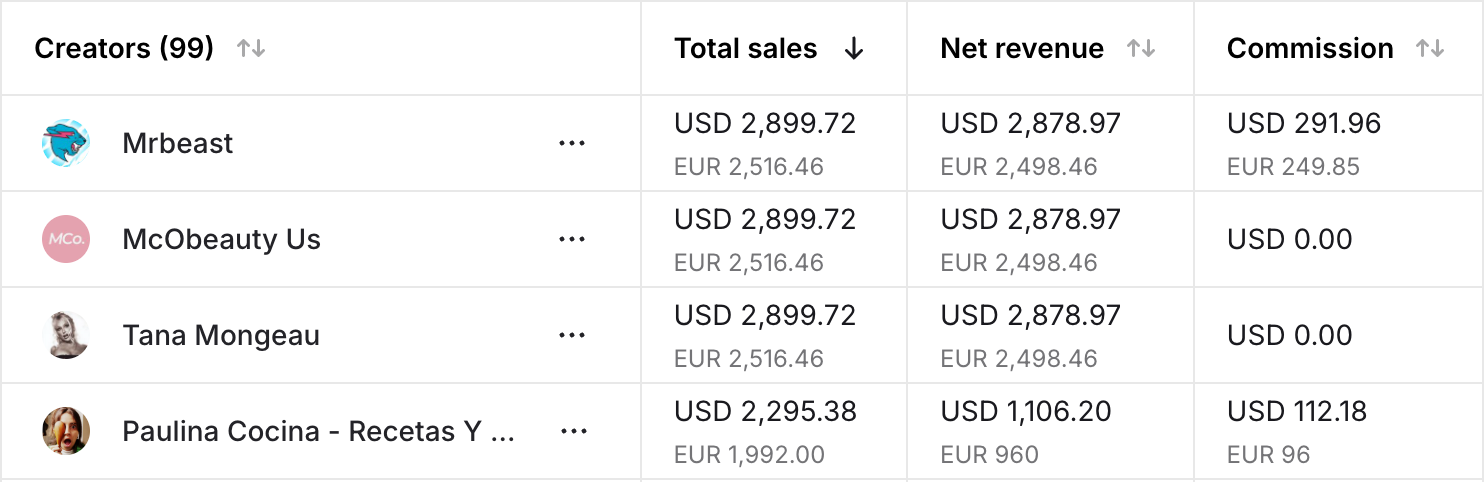
Sticking with the Pareto Principle, let’s say affiliates in the 80th percentile for revenue generated are your best-of-the-best. Retain them by creating an exclusive VIP affiliate tier with higher commission rates and other perks, like:
Also, make sure you’re keeping them engaged with plenty of communication – and not just through mass emails and newsletters. If they’re earning you thousands of dollars in monthly sales, you can at least pick up the phone or videocall them for a check-in every few weeks.
In an ideal world, every time a customer bought a product after seeing an affiliate post, the relevant creator would be instantly rewarded 🎉
But that’s just not practical in the real world. What if the customer returns their purchase? And just think how many tiny transactions you’d have to make to pay all those commissions – there just aren’t enough hours in the day.
There are two “devices” built into affiliate programs to help brands deal with these twin issues:
While a 30-day hold period and $50 payment threshold are pretty standard for affiliate programs of any size and in any niche, it’s worth checking what your competitors are doing before setting your own conditions. If they’re offering weekly payouts with zero minimum, you either have to match them or trust that your program is strong enough to justify stricter terms.
Let’s be honest – invoices are a headache. The less time you (or your affiliates) spend thinking about them, the better for everyone.
Unfortunately, if you’re handling affiliate payments manually, invoices are going to be a major part of your life. While your finance folks slug their way through 100+ individual payments every single month, you’re stuck apologizing to creators for delays and teaching them what “IBAN” or “SWIFT/BIC” mean. Sheeesh.
Modash makes this whole process mercifully easy. Send payment links at scale, then automatically collect invoices and let us handle payments and compliance.
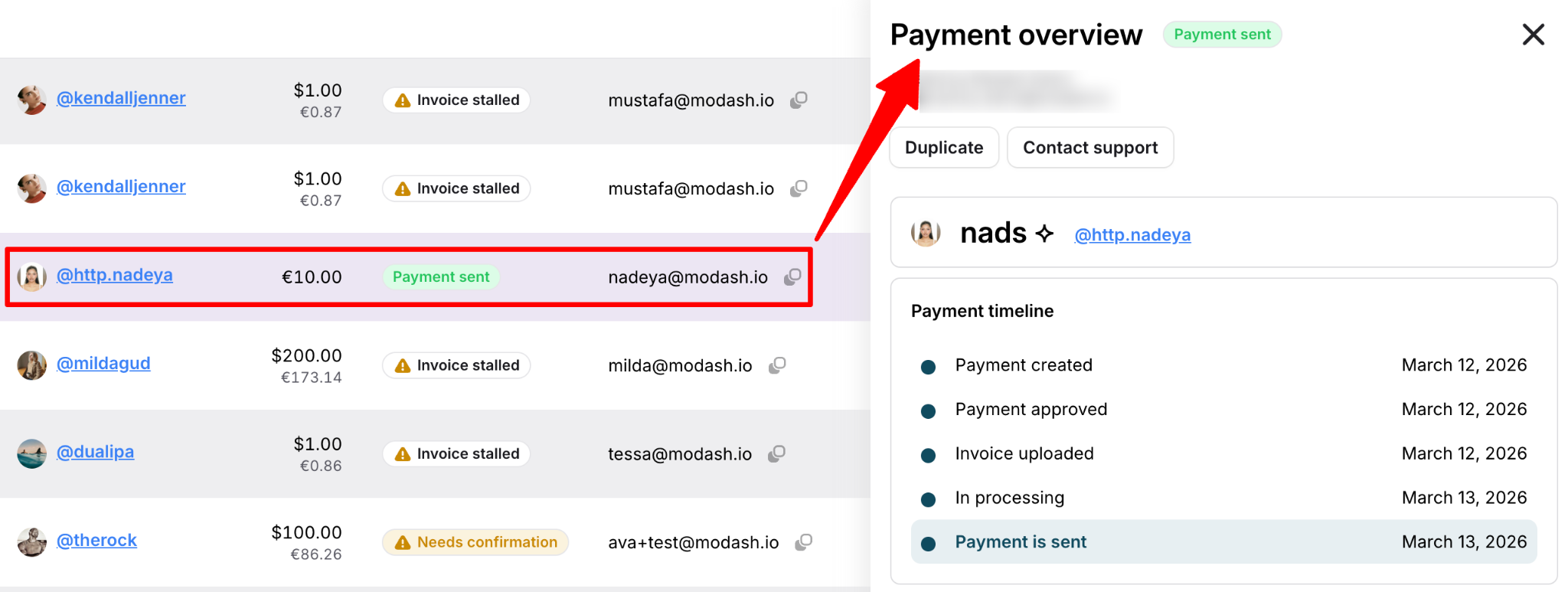
With Modash, your affiliates get paid straight to their bank account within three days, in their local currency, and with zero fees. And you never need to chase an invoice again!
🤓 Further reading: Learn more about payments in How To Pay Influencers: 5 Ways To Compensate Creators.
Hopefully, after ~6,000 words, I’ve dispelled any myths about affiliate marketing being a set-it-and-forget-it channel. It requires a ton of work. But Modash is here to streamline every step, from finding, vetting, and outreaching creators to managing affiliate relationships, tracking results, and even handling payments.
See for yourself by signing up for your free Modash account 😎
Colaboradores expertos