

Más herramientas
Casos de uso



Nano influencers are the most accessible and cost-effective entry point into influencer marketing. But most brands either dismiss them (too small) or mismanage them (treat them like mini-celebrities). The sweet spot is volume + authenticity: 20 nano influencers who genuinely use and love your product will outperform one macro influencer who’s only in it for the paycheck. This guide shows you how to run a nano influencer program that actually scales 📈
First off, let’s clarify what we’re talking about here.
Nano influencers are social media creators with 1,000 – 10,000 followers, making them the teeniest of all the influencer tiers:
As with any tier of influencer, nano influencers can help you build brand awareness and grow sales. But because their audiences are comparatively small, you’ll need to work with lots of ‘em to generate meaningful results.
Obviously, nano influencers are smaller than micro, macro, or mega influencers. While follower count isn’t the only factor you should consider when deciding whether to work with an influencer, it has a big impact on price. Provided other factors (like niche and location) are the same, it’s almost always cheaper to work with smaller creators.
Their small size doesn’t just make them more cost-effective to work with. Because nano influencers don’t have tons of followers, they’re also more relatable than larger creators, which makes their content feel more authentic. So when they say your product is the best thing since sriracha mayo, their audience sits up and takes notice.
On average, influencers with smaller followings see higher engagement rates. So if you work with them at scale, you can expect to generate significantly more comments, likes, shares, etc than you would from collaborating with a handful of larger accounts. This is a big deal because (most) social platforms prioritize content that generates tons of engagement – so you’ll reach more people, too.
FYI I’ll share specific engagement rate benchmarks for nano influencers vs other tiers later in this article 👇👇👇
Remember when I said nano influencers are more relatable than the bigger guys? That makes their content feel more credible – which, in turn, makes their recommendations more authentic and trustworthy. Of course, that’s not to say all larger accounts are inauthentic; it’s just that a creator with 5,000 followers is probably going to understand my specific needs better than, say, Ryan Reynolds.
Bear with me while I do some quick math:
Say you pay 10 TikTok nano influencers $200 to each create a video promoting your latest product. Sure, their individual followings are small, but their high engagement rates help them reach a combined 100,000 people, at a total cost of $2,000.
Alternatively, a macro influencer might charge $5,000+ for a single video – and while their audience is much larger than your nanos, they might still only reach 100,000 people due to their lower engagement rate.
All of which means you’re getting a much better deal from your nano influencer collabs.
You obviously know more about your brand than I do. But nano influencers are well worth considering for…
✅ Brands with highly specialized or localized audiences, where there just aren’t that many big creators.
✅ Brands with lower-priced products that encourage impulse purchases, where a nano influencer’s recommendations can drive immediate conversions.
✅ Brands running experiments or launching in new markets, where collaborating with smaller accounts can help them understand what works before scaling investment.
✅ Brands that need a ton of UGC, because the more influencers you work with, the more user-generated content you can capture.
✅ Brands with products that need showcasing in real-world settings, where relatability makes the messaging feel more natural and persuasive.
✅ Brands seeking community engagement over broad awareness, as nano influencers are great at generating comments and starting real conversations.
⚠️ Disclaimer: This isn’t designed to be an exhaustive list. Plenty of brands with expensive products or broad audiences succeed with nano influencer marketing, too. But if you check one or more of the above boxes, nano influencers are likely a good fit.
Influencer search tools make it easy to find relevant nano influencers using filter-based searches related to the influencer’s niche, audience, content, and more. Just make sure you choose a platform with a large database, otherwise you’ll run out of matches fast (N.B. Modash has 380+ million influencer profiles, representing every influencer with 1,000+ followers on Instagram, TikTok, and YouTube).
I’ll show you how this process works with Modash. Choose from dozens of filters, including:
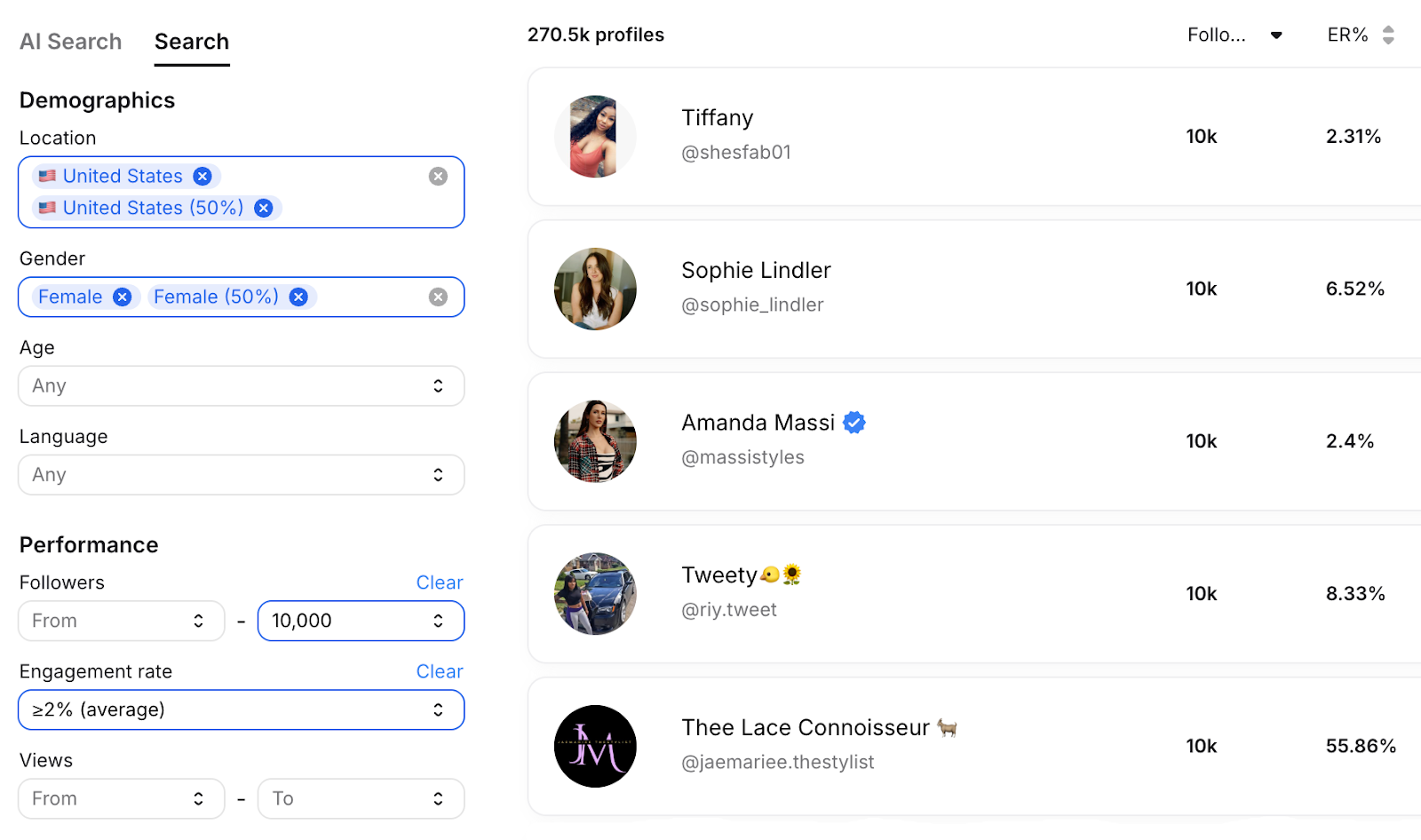
Then simply click through the results, do some additional vetting – I’ll discuss this in the next section – and reach out to those you like the look of. Easy!
Most influencer search tools rely totally on filters to surface brand-fit creators based on captions, bios, and demographic information, just like I described in the previous section. But the most sophisticated tools (*cough* Modash *cough*) also let you search by what’s happening in the influencer’s content – AKA the images and videos they’re posting.
It’s all possible thanks to the power of AI 🤖 We analyzed and stored billions of pieces of influencer content to understand exactly what they post about. Which means you can simply describe the type of creators you’re looking for using natural language – like “beauty creators reviewing kylie cosmetics products” – and our AI Search tool will track down relevant accounts.
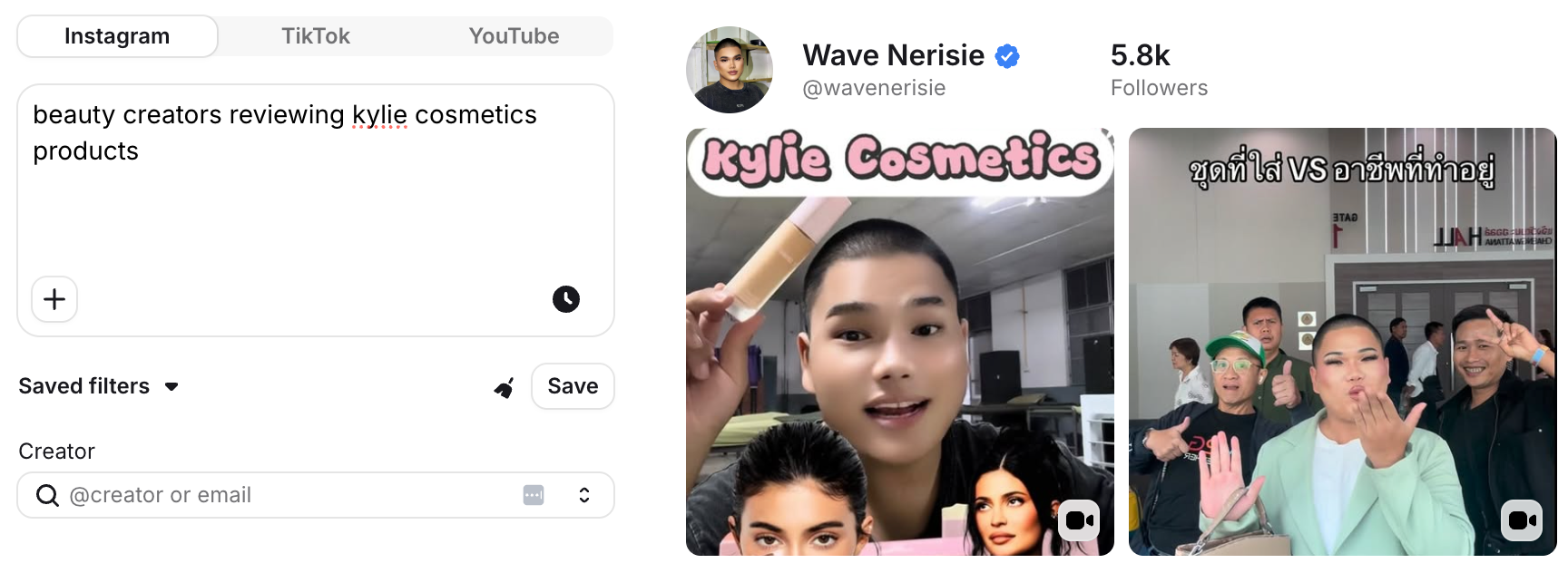
It opens up a whole world of creators who you might have missed if you’d only been searching with filters.
👉 Try our full suite of influencer search tools by creating your free Modash account – no credit card required 😎
With literally tens of millions of nano influencers worldwide, there’s a decent chance that some of them already know about your brand. Perhaps they even use (and post about) your products?
If so, you definitely want to know about it. There are two big reasons to prioritize finding influential fans:
There are a couple effective ways to find nano influencer fans.
One approach is to reach out to your email subscribers and ask if any of them have built a following on your chosen social platform. Of course, not everyone opens marketing emails… so this method isn’t exactly watertight.
A more reliable tactic is to track down nano influencers who are talking about you online using Modash’s content search features. It’s simple – just enter your brand name into the Hashtags and Mentions boxes (and don’t forget to filter for influencers with 1K – 10K followers, obvs):
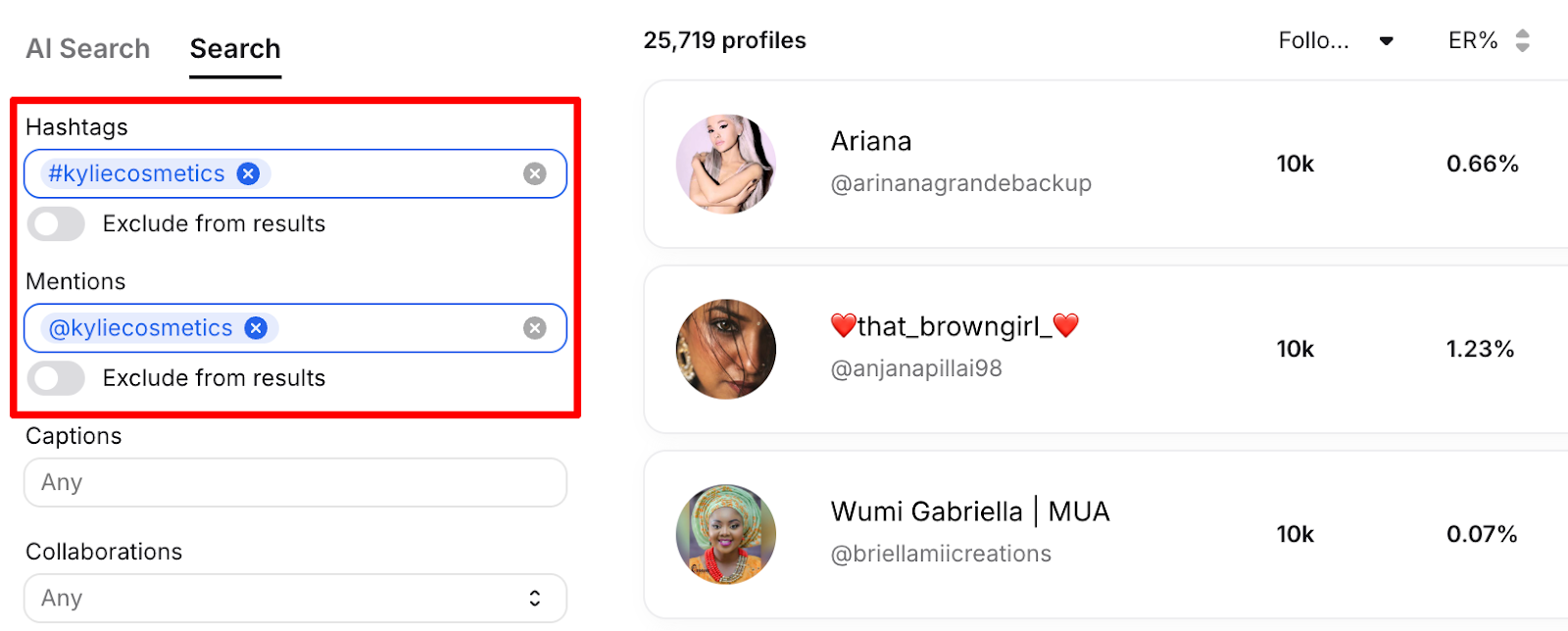
In just a couple clicks, you’ve (hopefully) unearthed a bunch of nano influencers who are passionate enough to post about you for free. Surely they’d love to work with you for a fee and/or free product?
🤓 Further reading: For more advice on tracking down smaller creators, check out 11 Ways To Find Nano Influencers For Your Brand [+How To Vet Them].
Just because an influencer has relevant content and the right follower count, that doesn’t mean you should definitely work with them. You’ll want to vet their audience first.
Doing this manually is a real pain – you have to reach out to the influencer and ask them for screenshots from their audience analytics. It adds extra steps to the recruitment process, plus you can’t be 100% certain the data is genuine.
Better to use an influencer marketing platform like Modash, which lets you analyze an influencer’s audience without contacting them first 🙏 Just open the influencer’s profile to instantly see their:
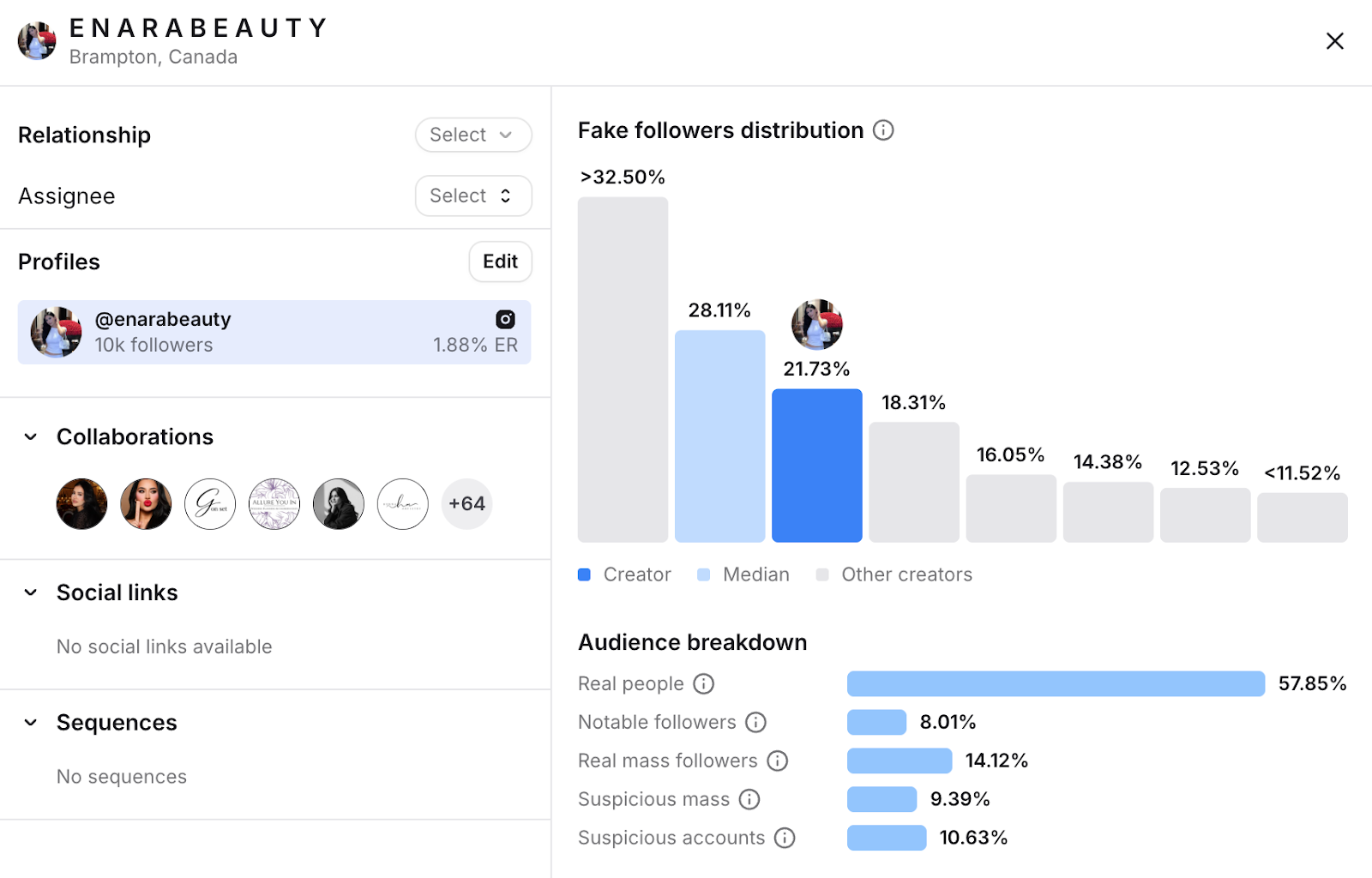
⚠️ Disclaimer: Bear in mind every influencer has some fake followers. Anything up to ~25% of their total follower count is perfectly normal.
Now you know their audience is legit, it’s time to check out your nano influencer’s content. Specifically, make sure it’s high-quality, engaging, and aligns with your brand and voice.
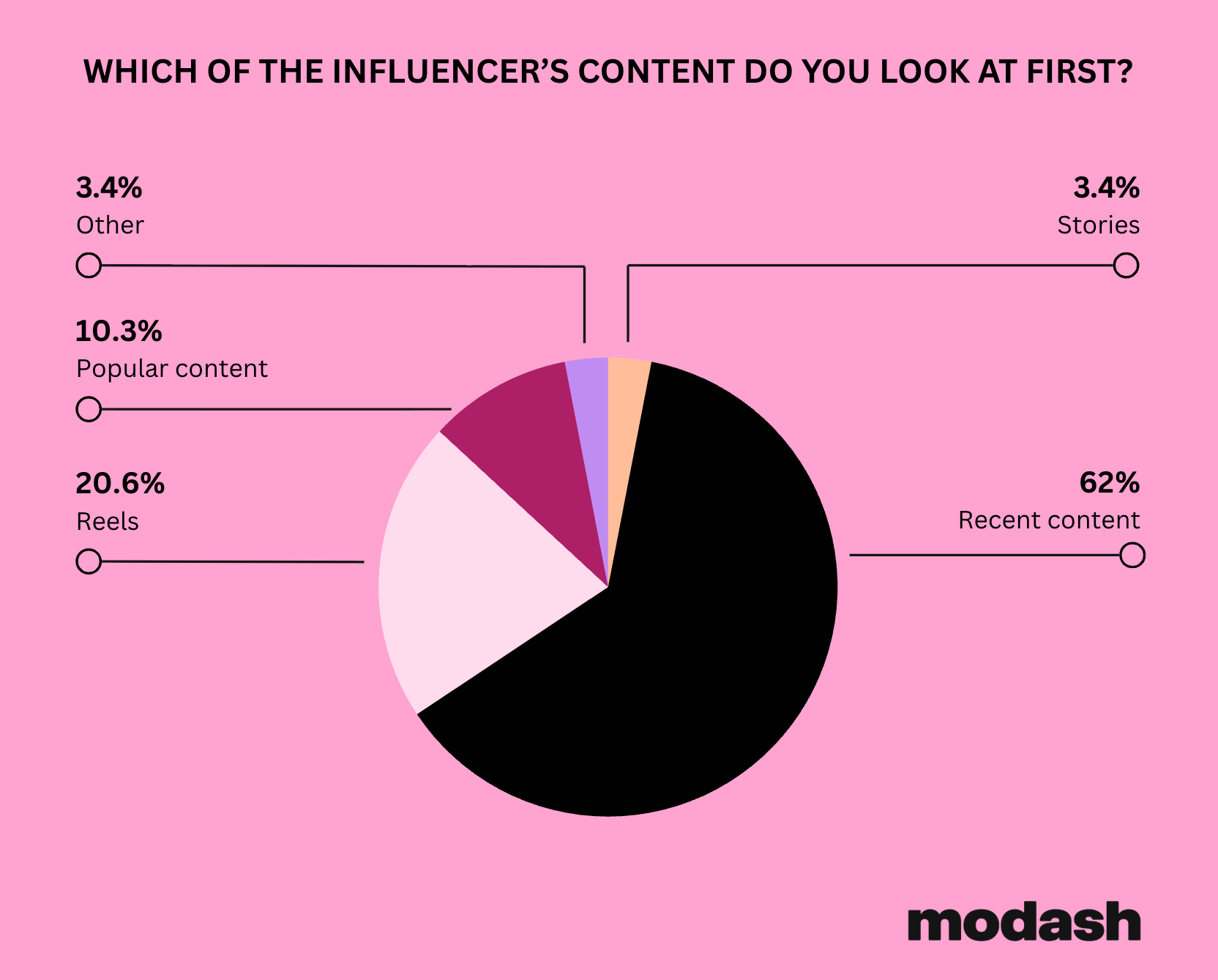
When Modash spoke to 29 marketers for our influencer vetting survey, we discovered that 62% start the content vetting process by exploring recent posts, while 20.6% head straight for the Reels tab and 10.3% look for the creator’s most popular content.
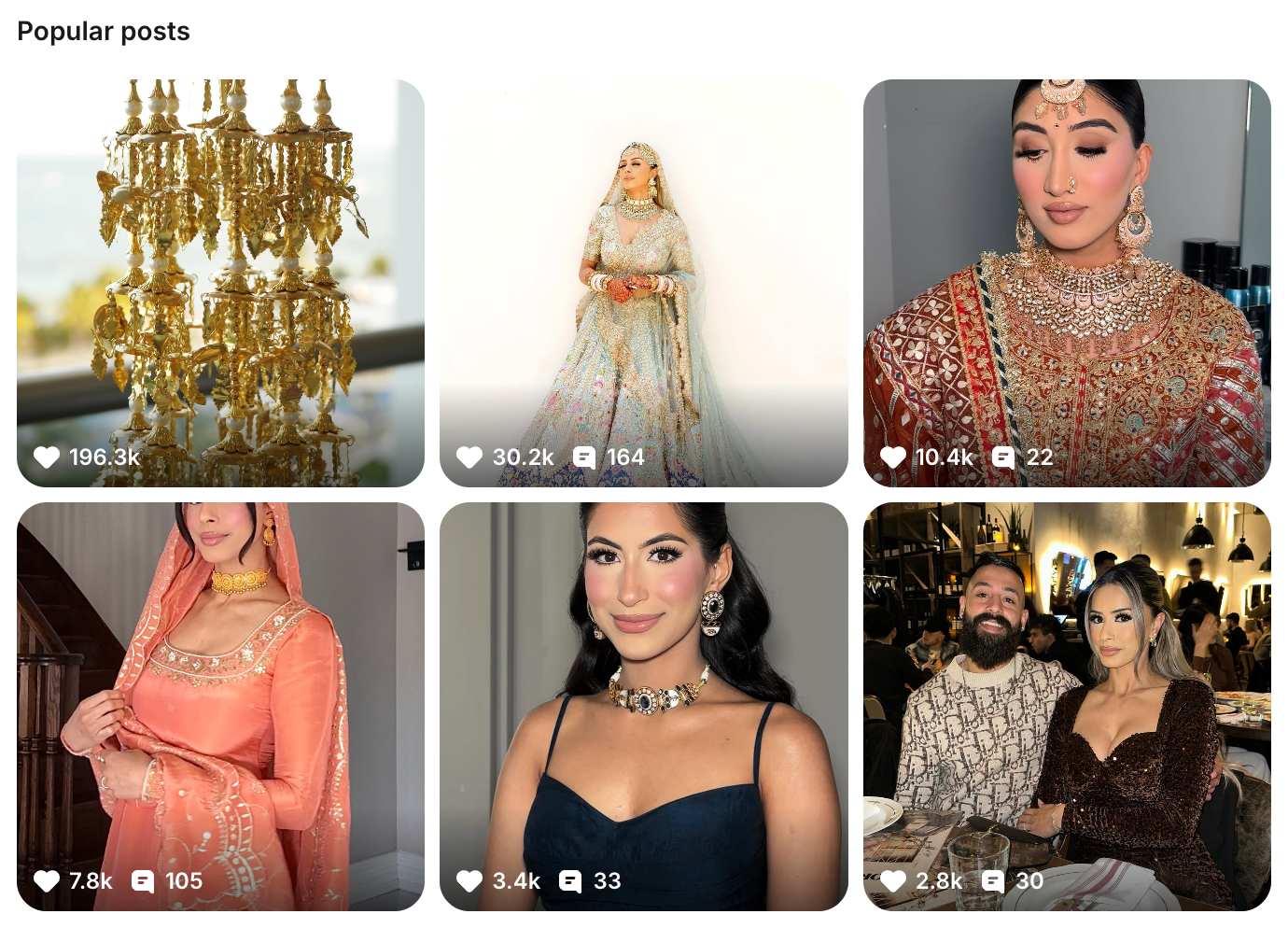
Clearly, you can find most of this stuff by heading to the influencer’s social accounts and doing a little scrolling. But with Modash, you only have to open an influencer’s profile to see their most popular content:
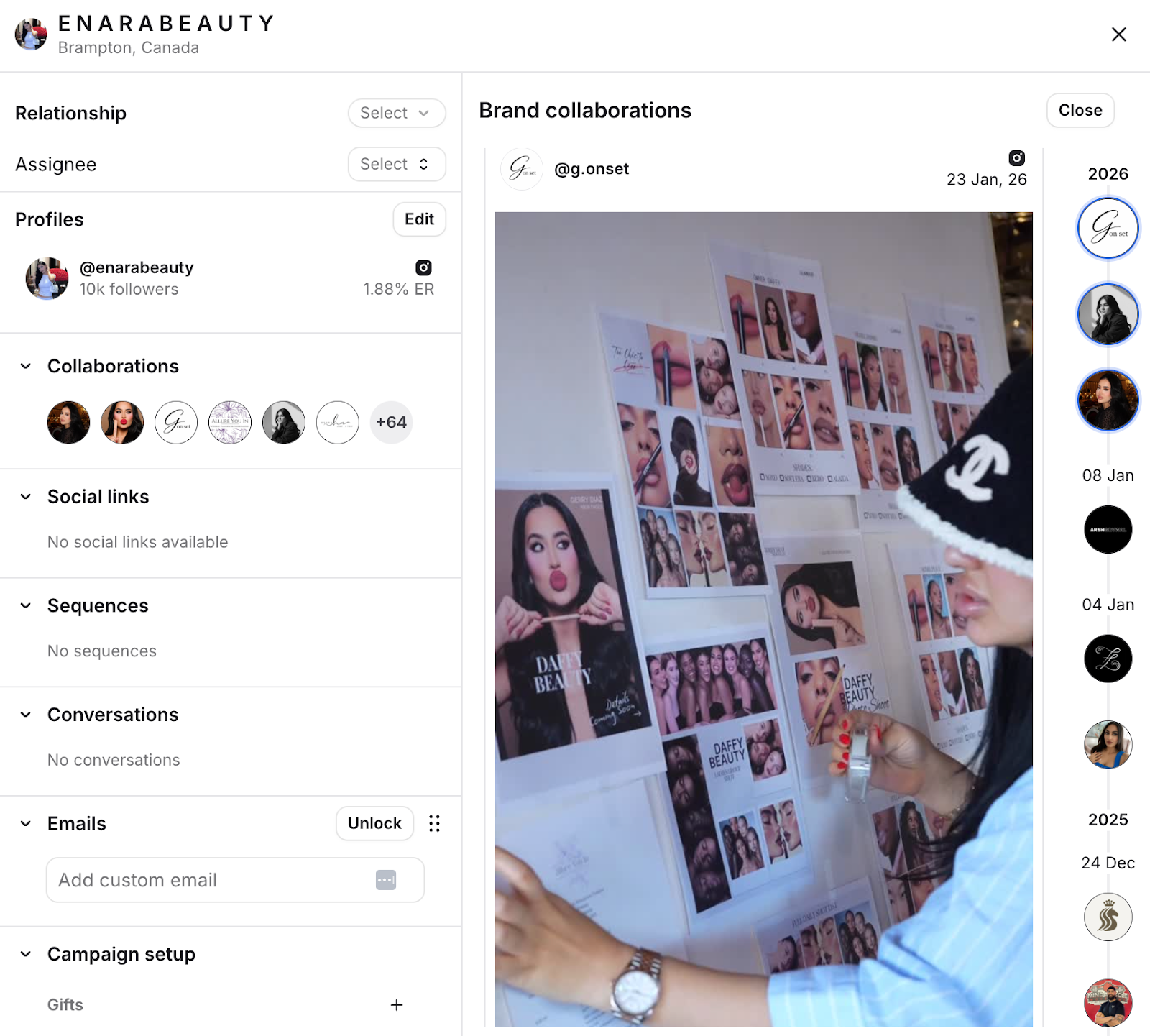
Importantly, we also show you every single one of the influencer’s previous brand collaborations, so you can make sure their sponsored content is just as strong as their organic posts.
Don’t rely on gut feeling alone to assess the quality of a nano influencer’s content – look at their engagement rates, too. If no one’s liking, sharing, or commenting on their posts, you probably shouldn’t be working with them.
There are two main barriers here. You need:
🤓 Pro tip: Always compare engagement rates within the same niche and follower range. A 2% rate might be amazing for a celebrity but underwhelming for a nano creator.
Fortunately, I can help with both of those problems. Firstly, let’s look at some platform-specific benchmarks for Instagram influencer marketing:
Meanwhile, for TikTok and YouTube, engagement rates of 3% – 6% are strong across all tiers. A 4% engagement rate on TikTok often means thousands of people actively engaging with every post.
As for finding engagement rates for specific nano influencers, it’s simple: just use Modash. Every influencer profile features engagement rate data (broken down by content type where relevant), plus a visual distribution of how the creator compares to other influencers with similar account sizes:
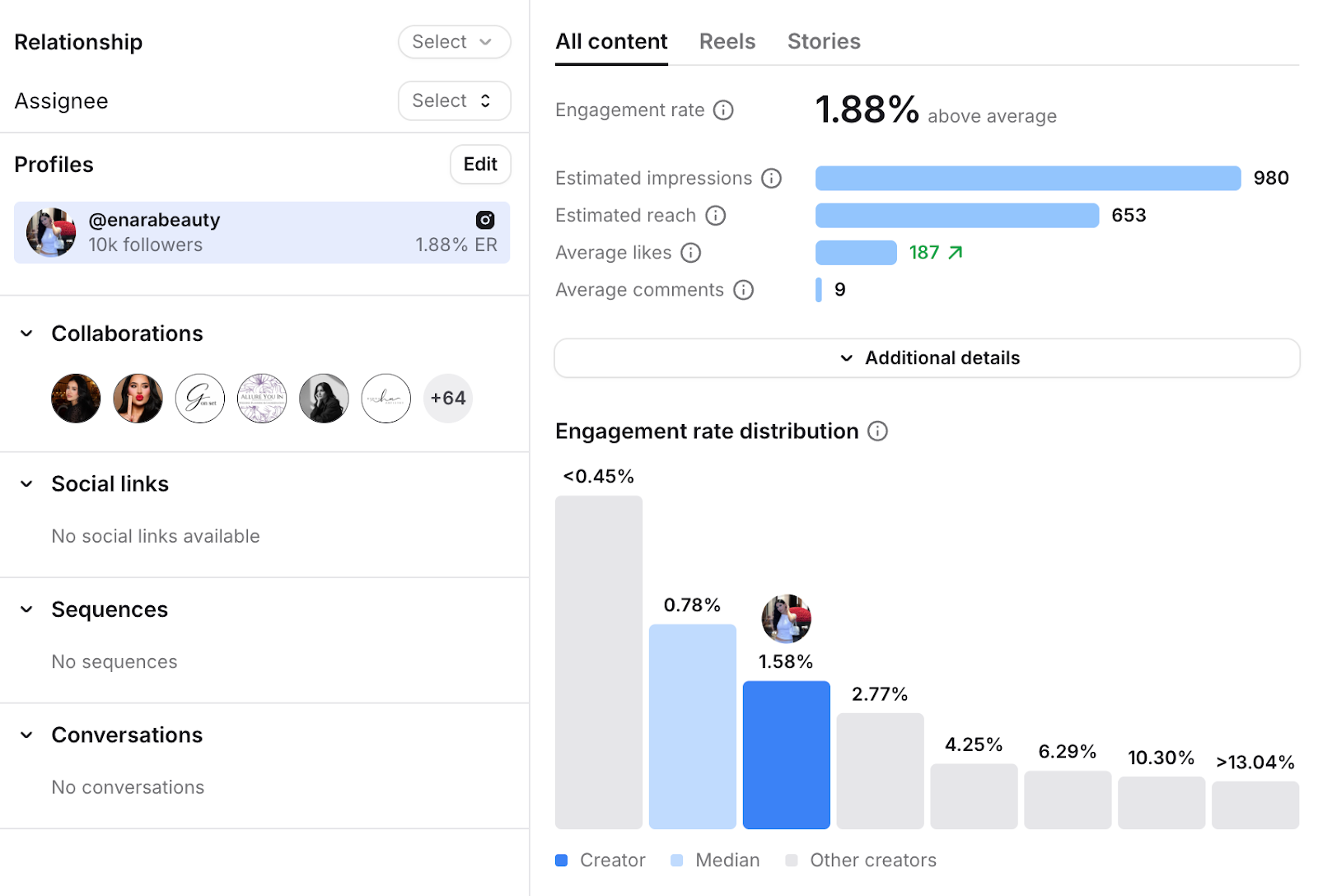
That’s everything you need to make an informed decision about the influencer’s content.
By this point, if you like what you see, it’s time to drop the influencer an email or DM. I won’t go into that in this article – there’s way too much to say. Instead, take a look at How To Do Influencer Outreach: A Guide For Brands 💅
🤓 Further reading: Want more about vetting influencers? You’re in luck! Check out How to Assess Influencer Profiles: 7 Factors You Should Look For and How to Vet Creators Beyond Audience Metrics.
Honestly, both paid campaigns and influencer gifting are viable options for nano creators. Deciding which is “better” depends on your brand and goals:
🎁 Gifting campaigns are great for brands with low budgets that want to scale influencer marketing fast.
💰 Paid campaigns are less scalable for brands on a budget, but offer greater control over factors like platforms, deliverables, and content quality.
Or there’s a secret third option that often yields the best results: using gifting to build relationships with nano influencers, then graduating top performers to paid campaigns for repeat collabs.
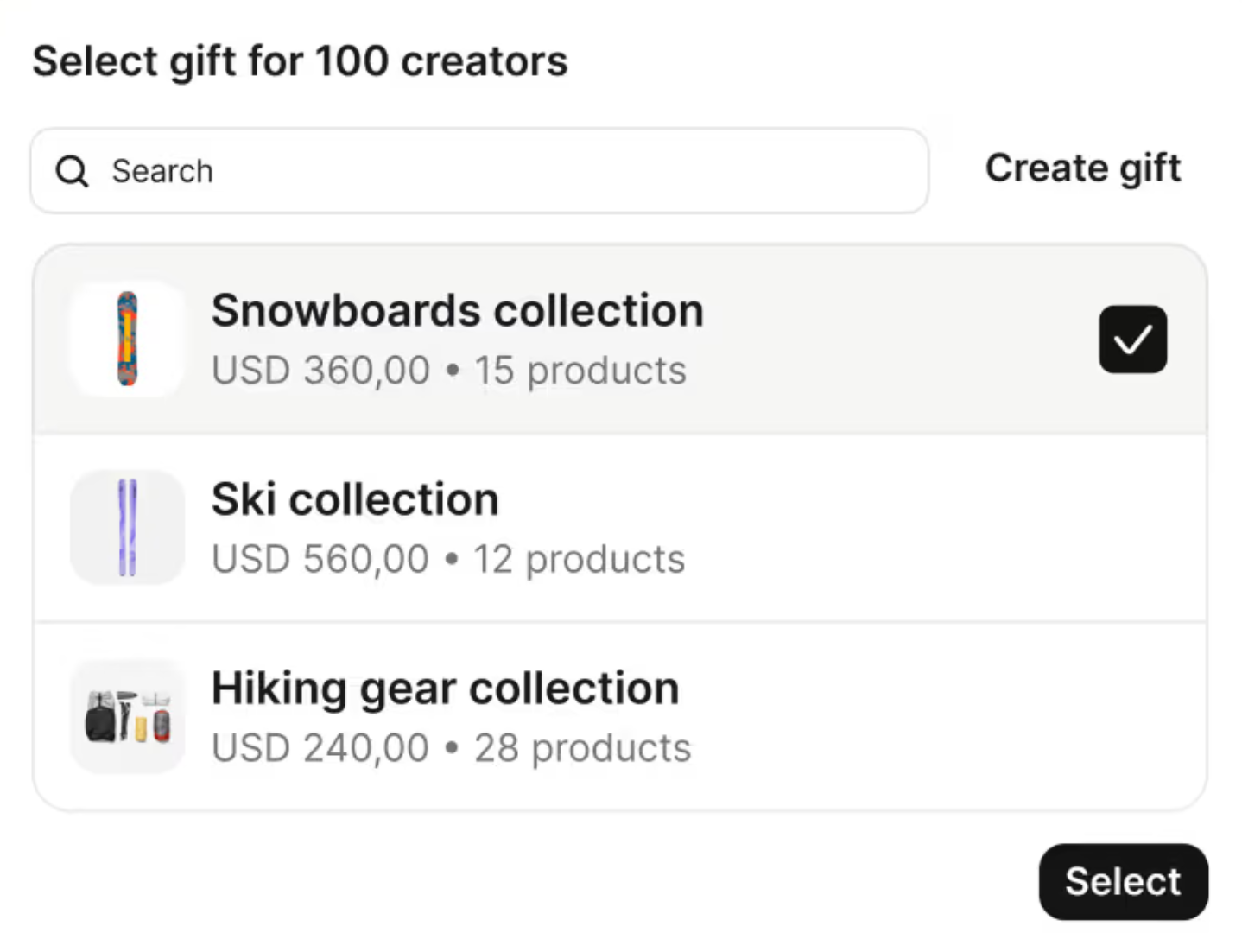
🤓 Pro tip: Gifting campaigns might be affordable, but they require a ton of legwork. Boost gifting efficiency with Modash – recruit at scale, specify gift budget and gift selection, and automatically create orders the moment an influencer selects a product. You can even send unique gift links to 100 – 500+ creators in minutes.
Briefing influencers can be tricky. On the one hand, you want to make sure you’re 100% satisfied with the content they deliver – but on the other, you don’t want to stifle their natural creativity or run their easy breezy tone of voice through the corporate buzzword machine. Because TikTok is no place for “promoting synergies” or “shifting paradigms” 🙅
In short, you want to be strict about the right stuff, while providing the freedom to create something authentic. This is important for any tier of influencer, but especially so for nanos, who may have less experience of brand collabs than their larger peers.
Get it right by including the following information in your briefs:
✅ Company & product overview: A short intro detailing what you do (and why), what makes people buy your product, and why customers would choose you over a rival brand.
✅ Campaign overview: List your campaign purpose (AKA what you’re promoting) and target audience, plus key details like deadlines and preferred communications channels.
✅ Objectives & KPIs: Outline what success looks like for your brand and which influencer marketing metrics you’ll use to measure performance.
✅ Deliverables & timelines: Explain what content you want from the influencer and when you need it by, plus your approval process if relevant.
✅ Guidelines & inspiration: Share a few bullet points or key messages that a creator could use in their content – and remind them about ad disclosure.
✅ Creative requirements: If you want a nano influencer to add a CTA at the end of their video or add your logo in the first three seconds, this is the place to mention it.
✅ Payment & contact details: Reiterate your agreed rates and explain your invoicing process.
🤓 Further reading: For a comprehensive guide to briefing influencers, check out Influencer Briefing: 7 Things To Include (+Free Template & Examples).
By now, you should be clear that effective nano influencer marketing is all about scale. Don’t expect significant results if you’re only working with half-a-dozen creators with a couple thousand followers apiece; you need to be collaborating with 50+ nanos at a time to really move the dial.
This creates its own problems. With potentially hundreds of influencers to recruit, manage, and pay, you can get real overwhelmed, real fast. So forget about trying to run your program on hopes, dreams, and a single sprawling spreadsheet – this calls for dedicated influencer management software.
With Modash, you can access all those essential nano influencer details in one place, including:
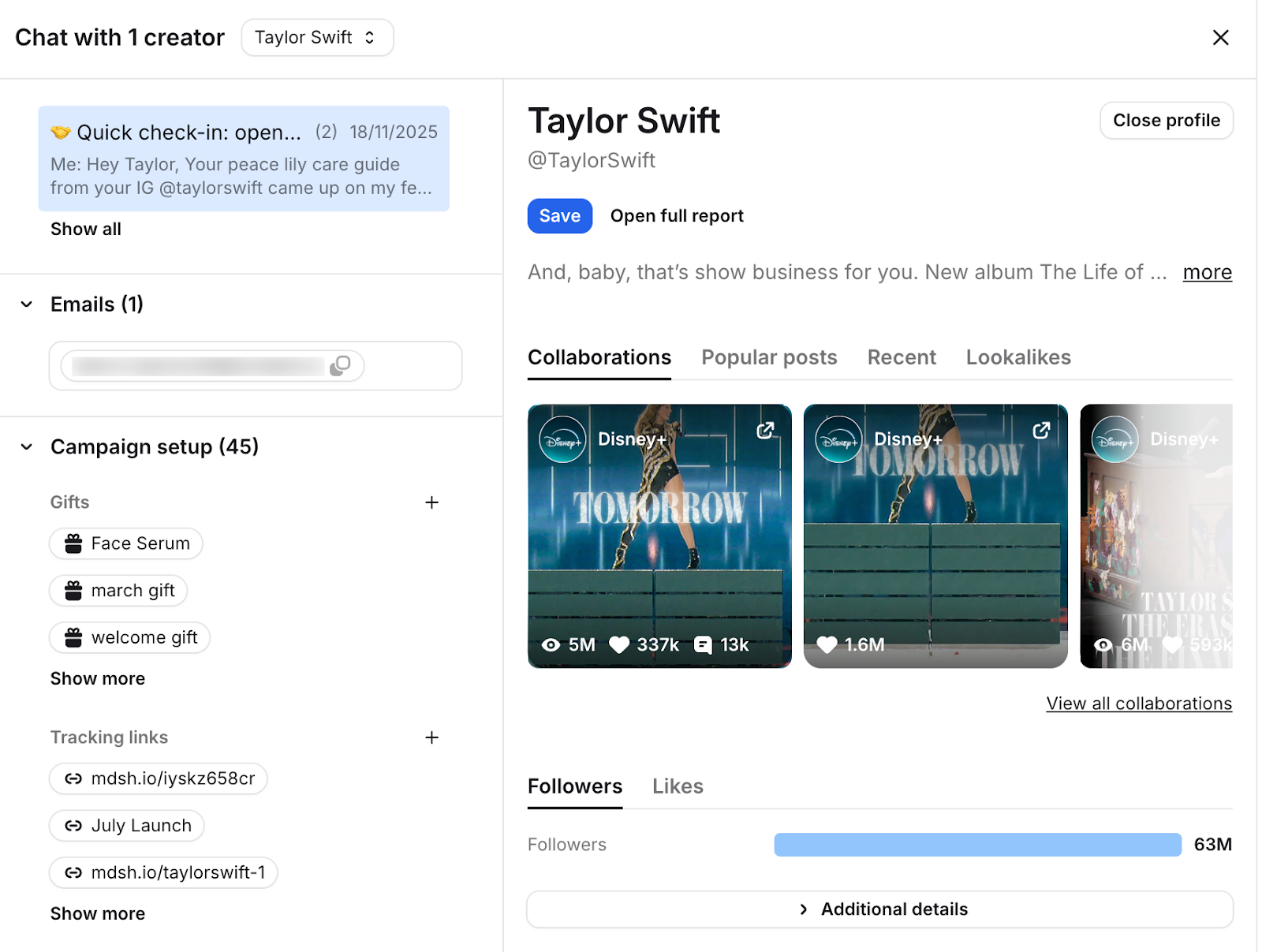
Speed up campaign management with bulk actions. Group creators by lists, campaigns, niche, performance tier, or stage. Assign creators to specific team members so no relationships fall through the cracks – while ensuring everyone on your team has full visibility over workflows.
👉 Remember, you can see all this stuff for yourself by creating your free Modash account!
Similarly, there’s zero point trying to manually track content and performance for nano influencer campaigns. Your head will explode somewhere around the point when you’re rushing to screenshot your hundredth Instagram Story before it vanishes 🤯
There are plenty of influencer tracking tools out there, but I’m confident Modash is the best option.
Set up Modash to track content containing specific hashtags, mentions, or keywords (yep, even Stories). Or activate Event mode to capture all content from selected creators – that way, you can be certain you never miss a post.
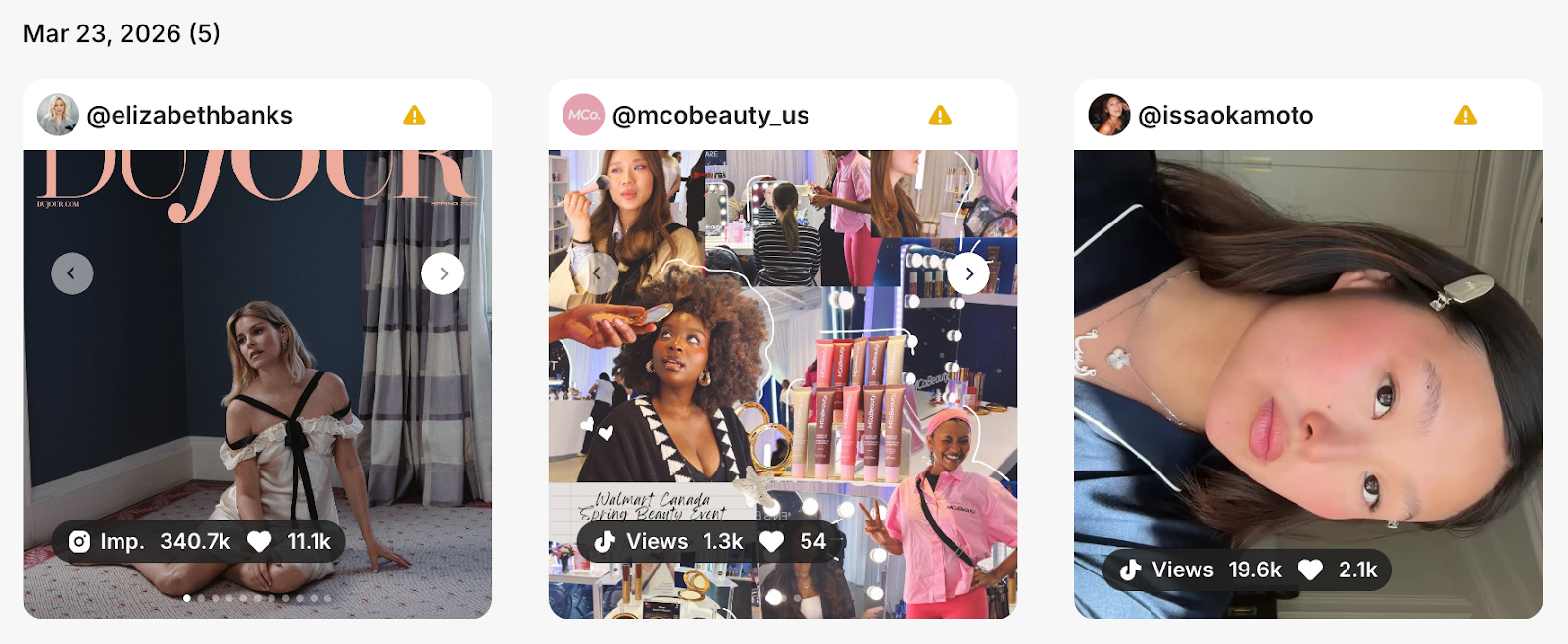
We’ve also got your back when it comes to performance tracking. From a single dashboard, you can view:
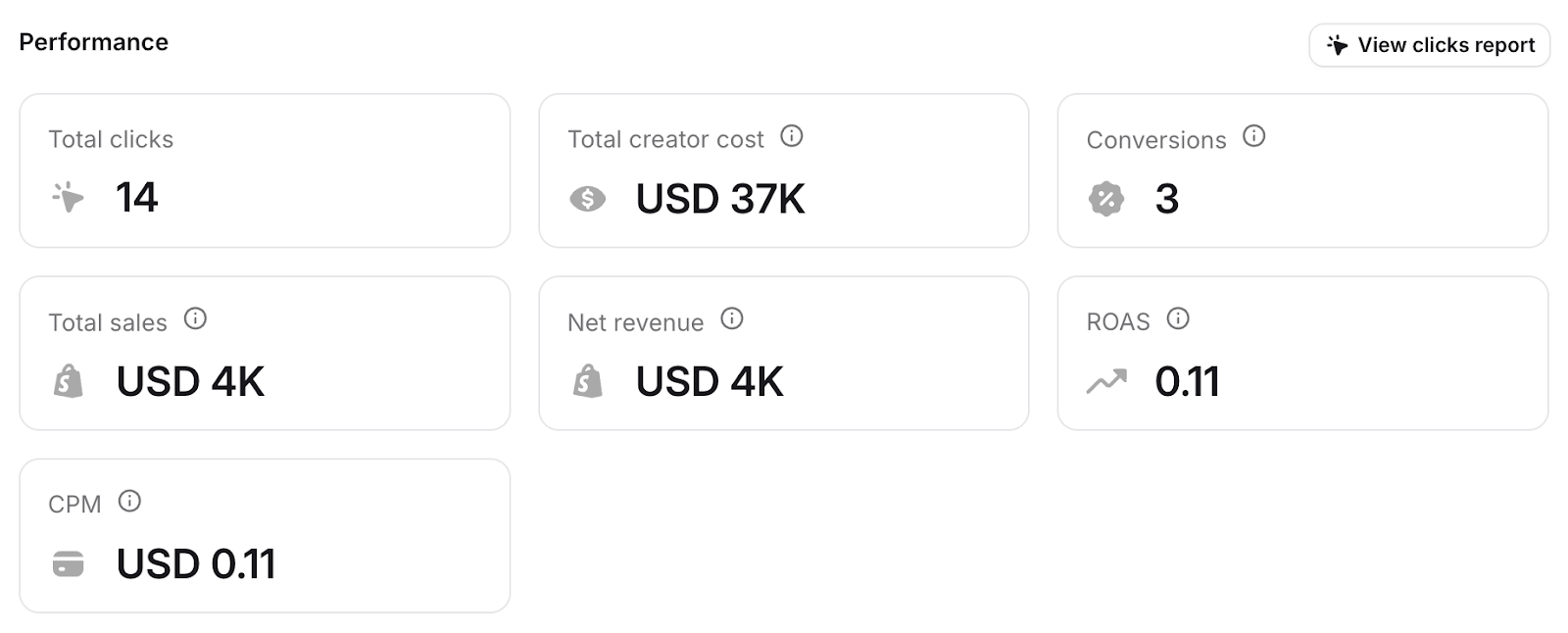
You can even drill down into which influencers are driving traffic to your site – plus the number of conversions and total revenue they’ve generated:
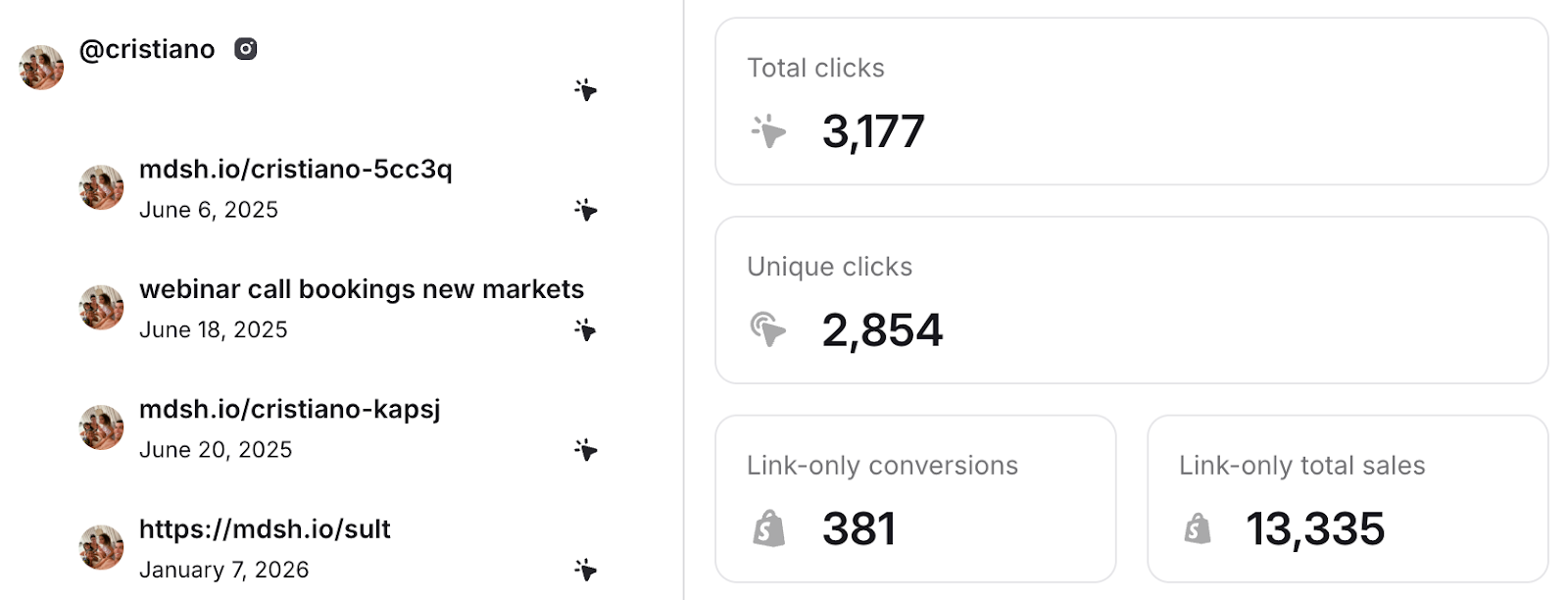
So you’ll never be in the dark about where your clicks and sales are coming from, giving you the confidence to make better strategic decisions 💪
Sure, collabing with nano influencers is (almost always) more affordable than working with larger accounts. But how much are we talking here?
First, the usual disclaimer:
⚠️ Influencer pricing is affected by a ton of factors beyond account size. Location, niche, engagement, platform – all these (and more) dictate how much an influencer charges. ⚠️
Now that’s out the way, here are some platform-specific guidelines for nano influencer pricing, largely based on influencers in the US:
If you’re working with influencers in locations where the cost of living is lower, you might pay significantly less than these rates. Or you could pay a lot more if you’re in a particularly challenging niche. And bear in mind there’s a big difference between a creator with 1,000 followers and one with 10,000. All of which means you should take these figures with a healthy pinch of salt – but they’re a useful starting point for budget planning and negotiations.
🤓 Further reading: Want more financial talk? Check out Influencer Pricing: What Influencer Marketing Costs Today and 7 Effective Negotiation Tactics for Influencer Marketing.
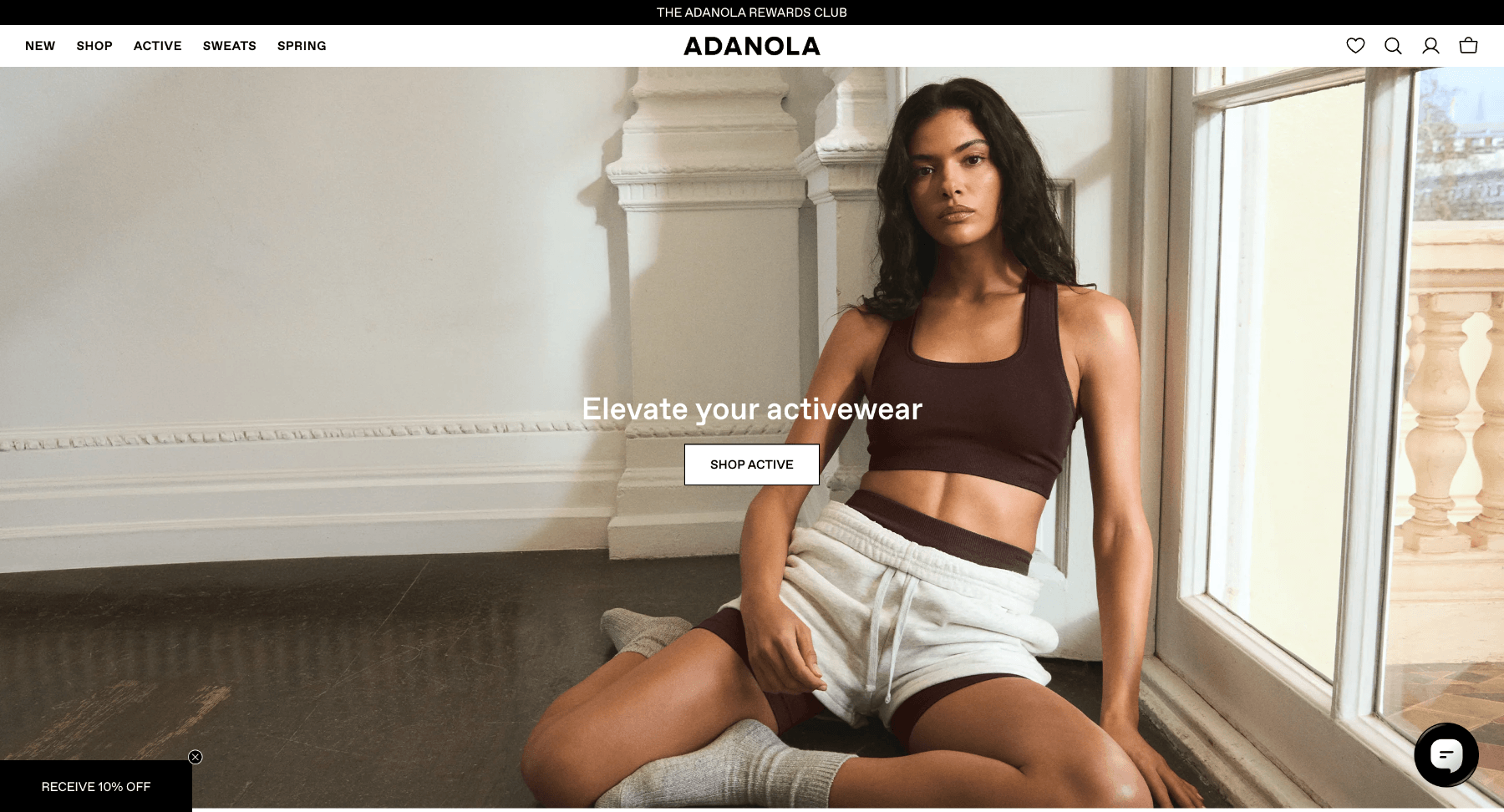
📌 Niche: Activewear and loungewear
📱 Key platform(s): Instagram and TikTok
Adanola works with influencers of all sizes, largely on Instagram and TikTok. However, many of its longer-term influencer relationships are with smaller creators.
Of 1,500 unique creators in our dataset, 5% posted content for Adanola in three or more separate calendar months, with their most consistent partner – nano influencer Katerina Ageridou – collaborating with the brand in each of the past 12 months. Check out her Insta bio and you’ll see she’s a full-fledged Adanola brand ambassador.
Kat’s content takes advantage of her role as a certified pilates instructor. Essentially, she shares herself working out while wearing Adanola gear:
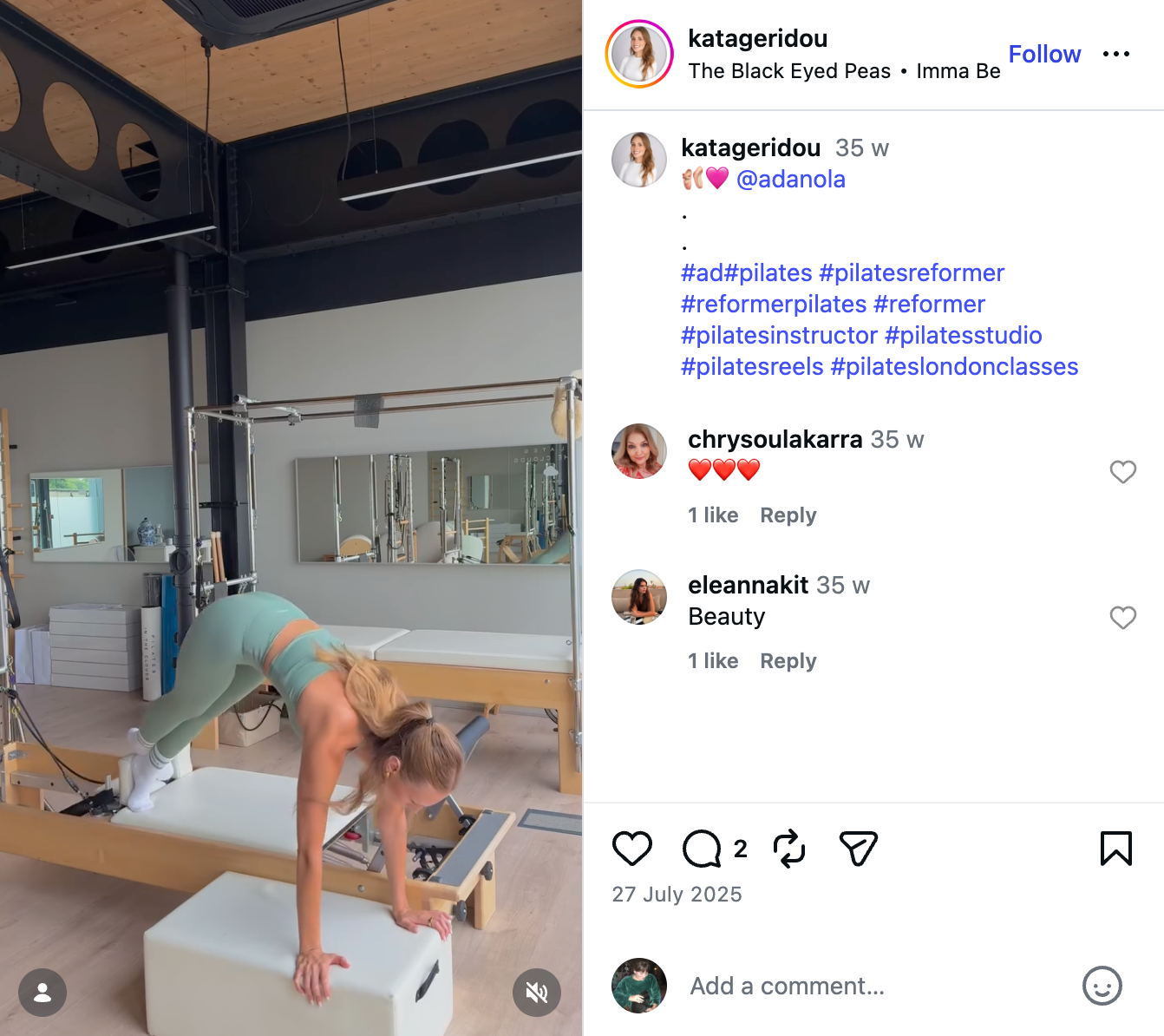
This soft-touch, non-salesy approach keeps Kat’s content feeling authentic, which is great for building brand trust. Especially as she posts about Adanola every month.
👉 Read more: Adanola's Influencer Marketing Strategy (2026 Data & Insights)
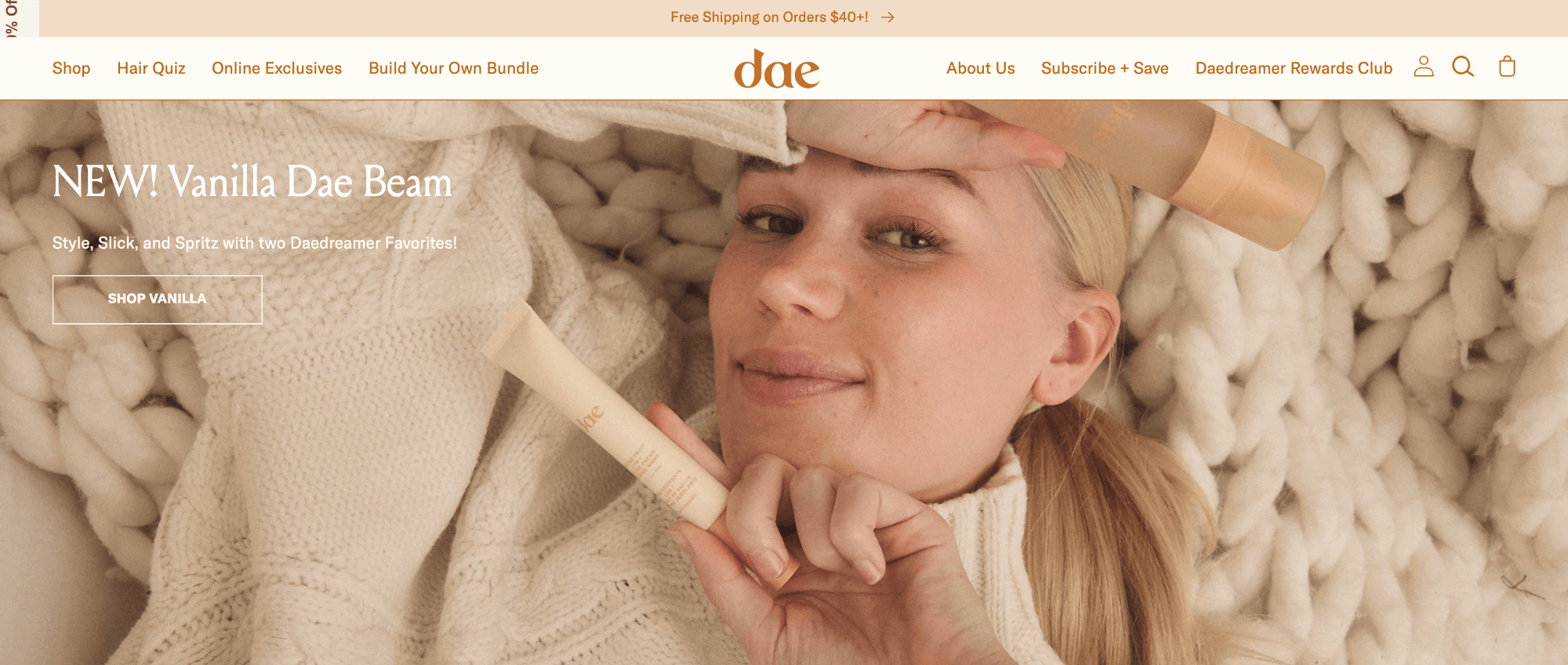
📌 Niche: Clean haircare
📱 Key platform(s): TikTok
Dae Hair’s influencer marketing strategy is heavily geared toward nano influencers on TikTok. We analyzed close to 5,000 pieces of sponsored content for the brand across a 12-month period, of which three-quarters were on TikTok – with 36% of its TikTok partnerships featuring creators averaging 1,000 – 5,000 views per post.
Like many other brands, Dae Hair often uses gifting to collaborate with smaller creators. For instance, check out this collab with TikTok nano influencer Diana Salazar, who reviews the brand’s Fairy Blaster Dry Texturizing Spray:
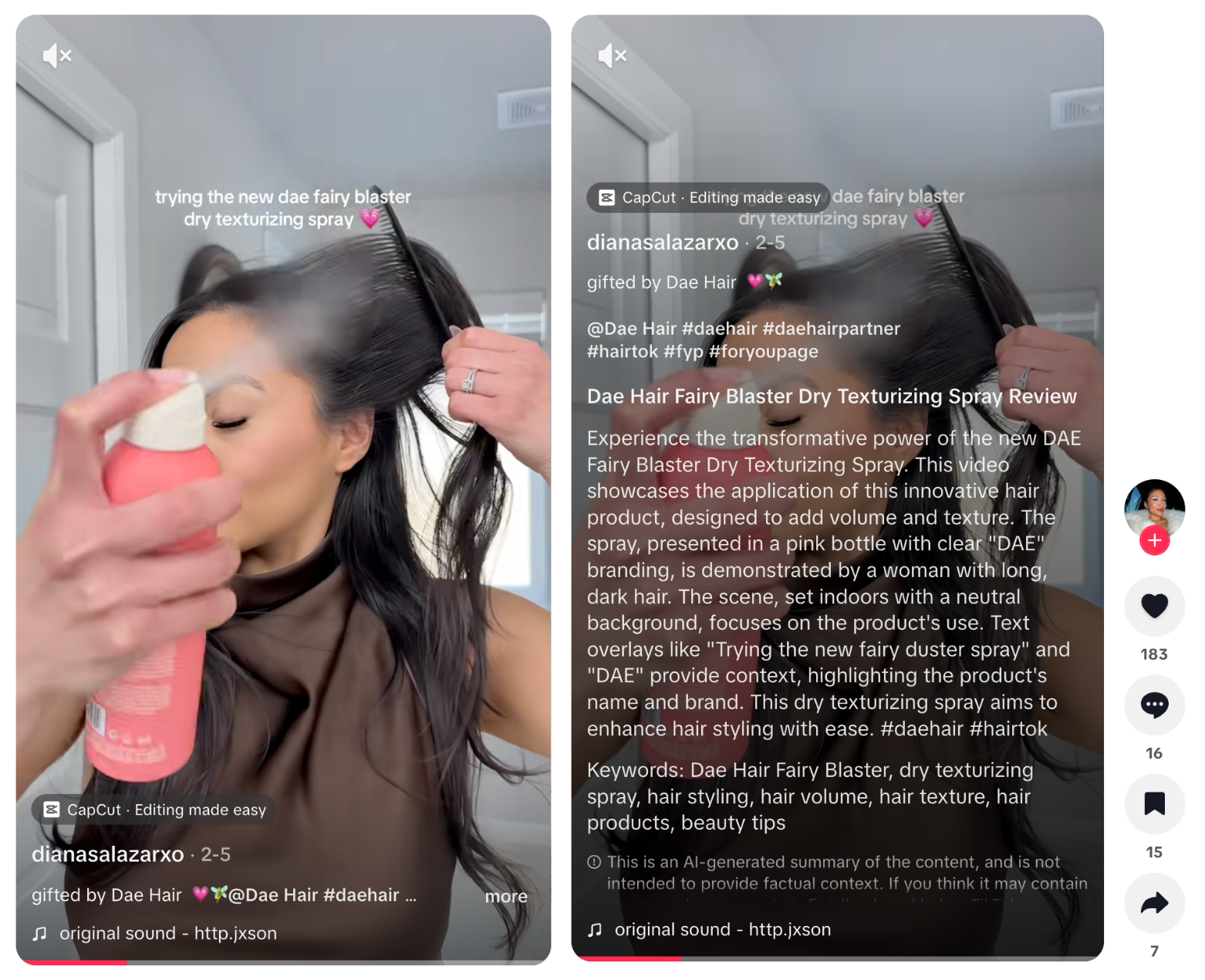
This approach allows Dae Hair to scale its influencer program without spending a ton of money upfront on sponsored content fees.
👉 Read more: Dae Hair's Influencer Marketing Strategy (2026 Data & Insights)
📌 Niche: Noise-reducing earplugs
📱 Key platform(s): TikTok and Instagram
Loop Earplugs is even more heavily geared toward nano influencers than Adanola or Dae, with more than two-thirds of creators it partners with generating an average of 5,000 views or fewer per TikTok post. That’s pretty “nano”.
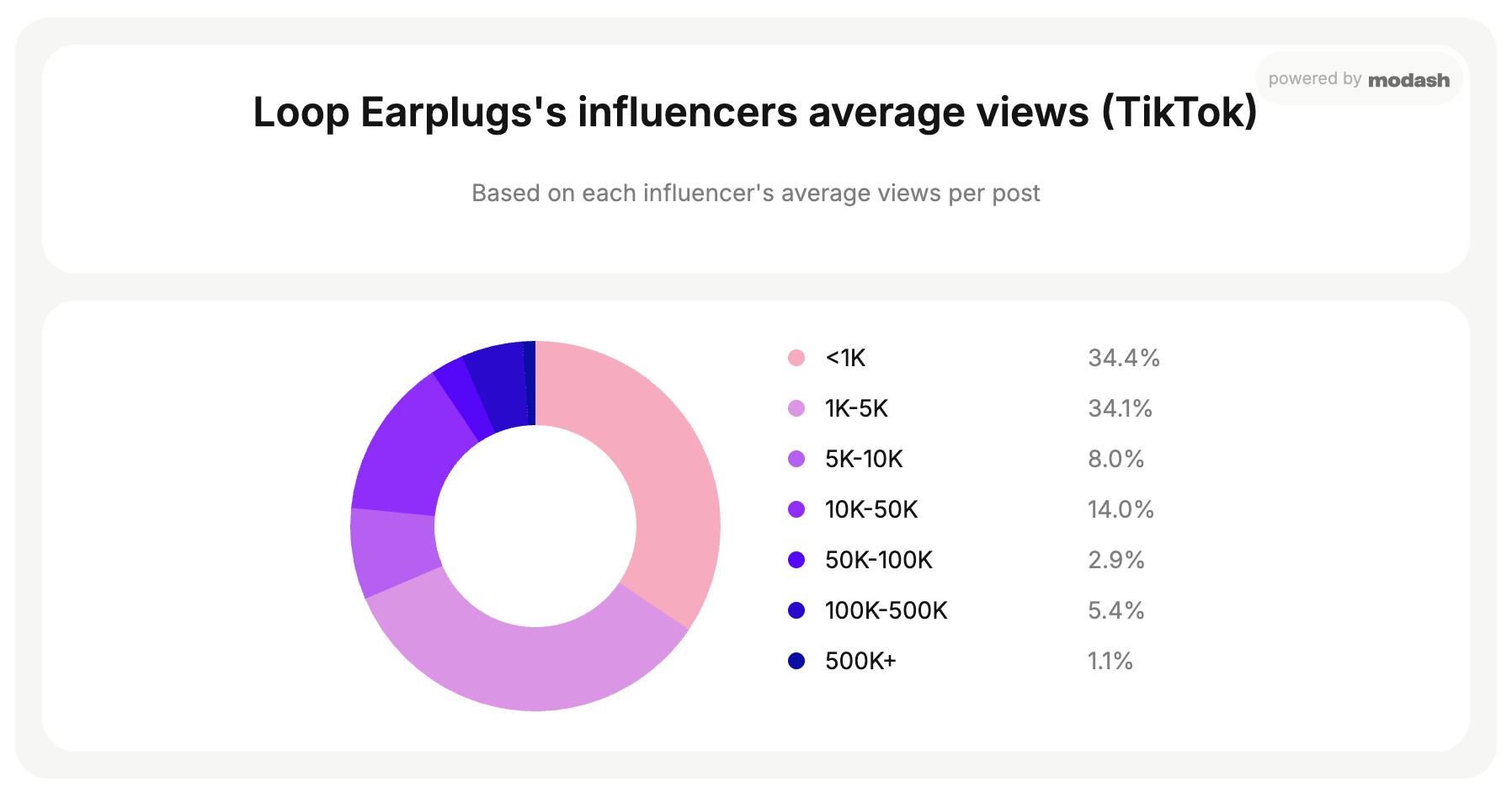
This gives Loop the budgetary freedom to run a wide range of collab types simultaneously. To demonstrate my point, let’s look at two different collaborations, posted within a month of one another.
First, they teamed up with TikTok nano influencer @tristfrwxce to promote their earplugs to overstimulated parents…
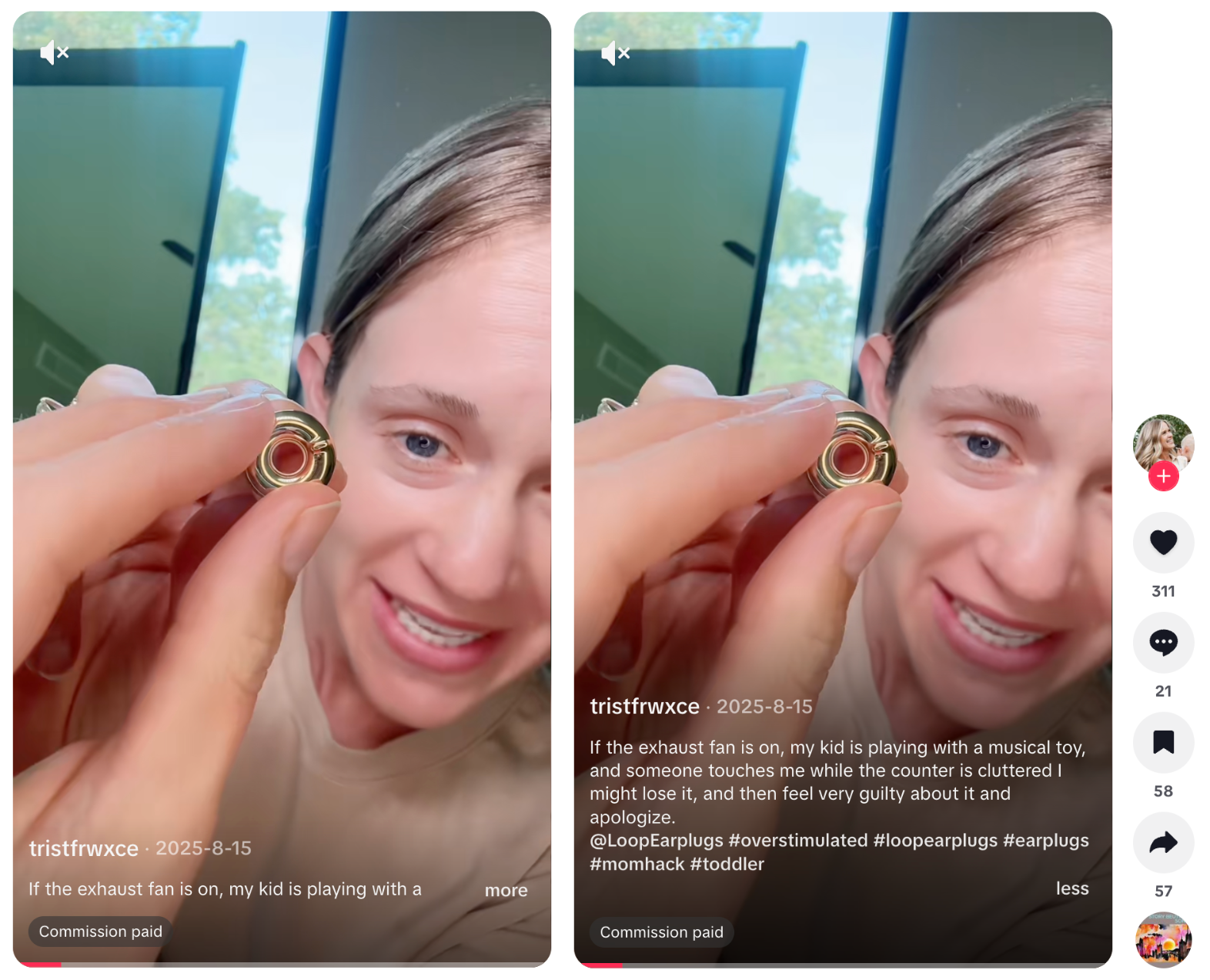
…before working with Instagrammer @cinmi.does.makeup on a classic discount code campaign:
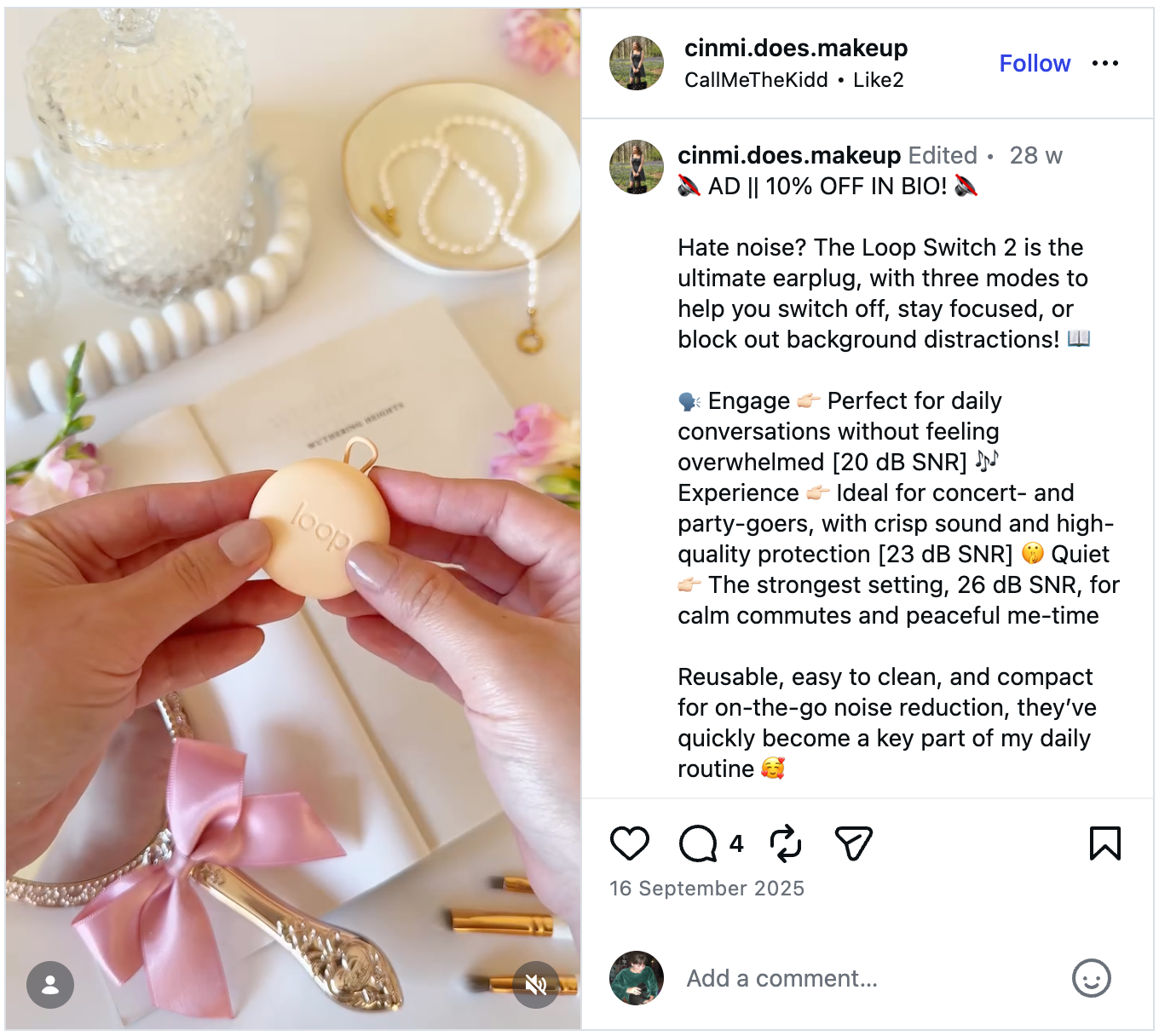
That way, Loop can figure out what works best, then scale results by working with even more nanos and/or collaborating with larger influencers.
👉 Read more: Loop Earplugs' Influencer Marketing Strategy (2026 Data & Insights)
🤓 (More) further reading: Marit Tiesema, Former Senior KOL & Ambassador Specialist at Loop Earplugs, was a massive help when I was writing How To Scale Influencer Marketing: 5 Proven Methods 👈👈👈 check it out!
If you want to see results from nanos, expect to be managing 50+ collaborations at the same time. That’s way too much for one person (or even a small team) to handle manually – but it’s totally achievable with a tool like Modash. With Modash, you can: