Claude, ChatGPT, Cursor 등 AI 도구에서 Modash 사용하기
MCP 시작하기




Incentives are the whole reason that (most) affiliates are promoting your brand in the first place. Yet, all too often, marketers don’t give those incentives adequate thought – they default to "set a commission rate and hope for the best".
In this article, I’ll help you self-qualify which incentive levers are right for you based on your program size and affiliate mix, so you can avoid over-spending on incentives that don't change behavior. And to ensure you’re only getting primo advice, I’ll be sharing insights from a bona fide expert in Melissa Sorby, former Influencer Marketing & Advocacy Manager at ALLIES OF SKIN.
Modash research reveals that over half of affiliate programs have flat, single-tier commission rates – meaning every creator earns the same amount per action, whether it’s their first sale of the month or their thousandth.
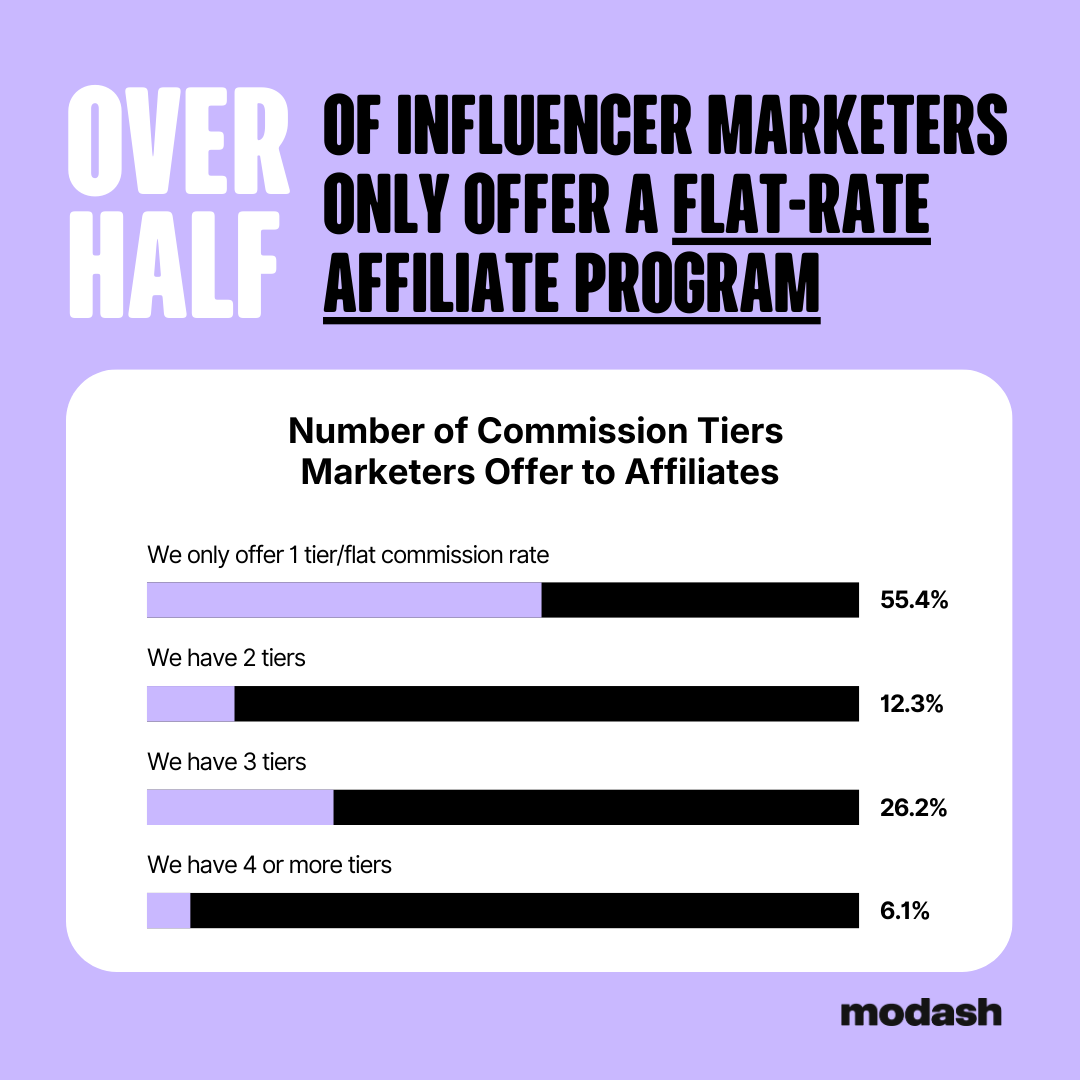
(👉 BTW you can check out the full research here: Affiliate Marketing Survey 2026: Why Hands-On Programs Outperform the Rest.)
That’s a problem, because flat-rate programs give affiliates nothing to work toward, beyond the same old percentage or cash commission for the next sale, and the next, and the next…
Tiered commissions are different because they reward high achievement. To give a simple example, you might pay:
That way, a creator who’s already notched up 80 sales has a reason to keep pushing to unlock that attractive top-tier rate.
No wonder, then, that brands with single-tier their affiliate programs only have an average of 37% active affiliates – compared to almost 50% for those with 3+ tiers.
While tiered affiliate programs are clearly more effective than flat commission structures, there comes a point where you hit diminishing returns for adding extra layers to your reward system.
Anyone and their nan can understand a three-tier commission plan or a $100 cash bonus for hitting a certain sales milestone. But if your bonus structure requires more than a handful of bullet points to explain, it’s too complicated.
The best case scenario of complex rewards is that you put off potential affiliate partners. The worst case is that your existing partners feel misled because they thought they’d earned a bonus, only to learn that they missed out because they didn’t fulfill all the Ts & Cs 😡
Fact is, the vast majority of affiliate programs are still solely based around lagging metrics like sales and revenue.
But, as the name suggests, lagging metrics only measure performance once the outcome has happened. Say you pay a bonus when an affiliate hits a certain sales threshold – well, by the time you know they didn’t hit it, the month is over and it’s too late to change anything 🤷♀️
To be clear, I’m not saying you should stop paying commissions on sales. Sales still pay the bills. But you should also reward leading metrics that predict future performance, such as:

For example, you might say: “Post 4x this month to earn a $100 bonus.” That way, you’re incentivizing the activity that drives sales, not just paying for the end result.
This one’s a no brainer.
I’ve already noted how brands with multiple commission tiers have more engaged, active affiliates, so you should absolutely be rewarding your creator partners for hitting higher sales and revenue volumes.
Don’t fancy calculating commissions manually? Your best bet is to use a dedicated creator marketing platform like Modash, which makes it easy to set up commission tiers, then assign each of your affiliate partners to the relevant tier.
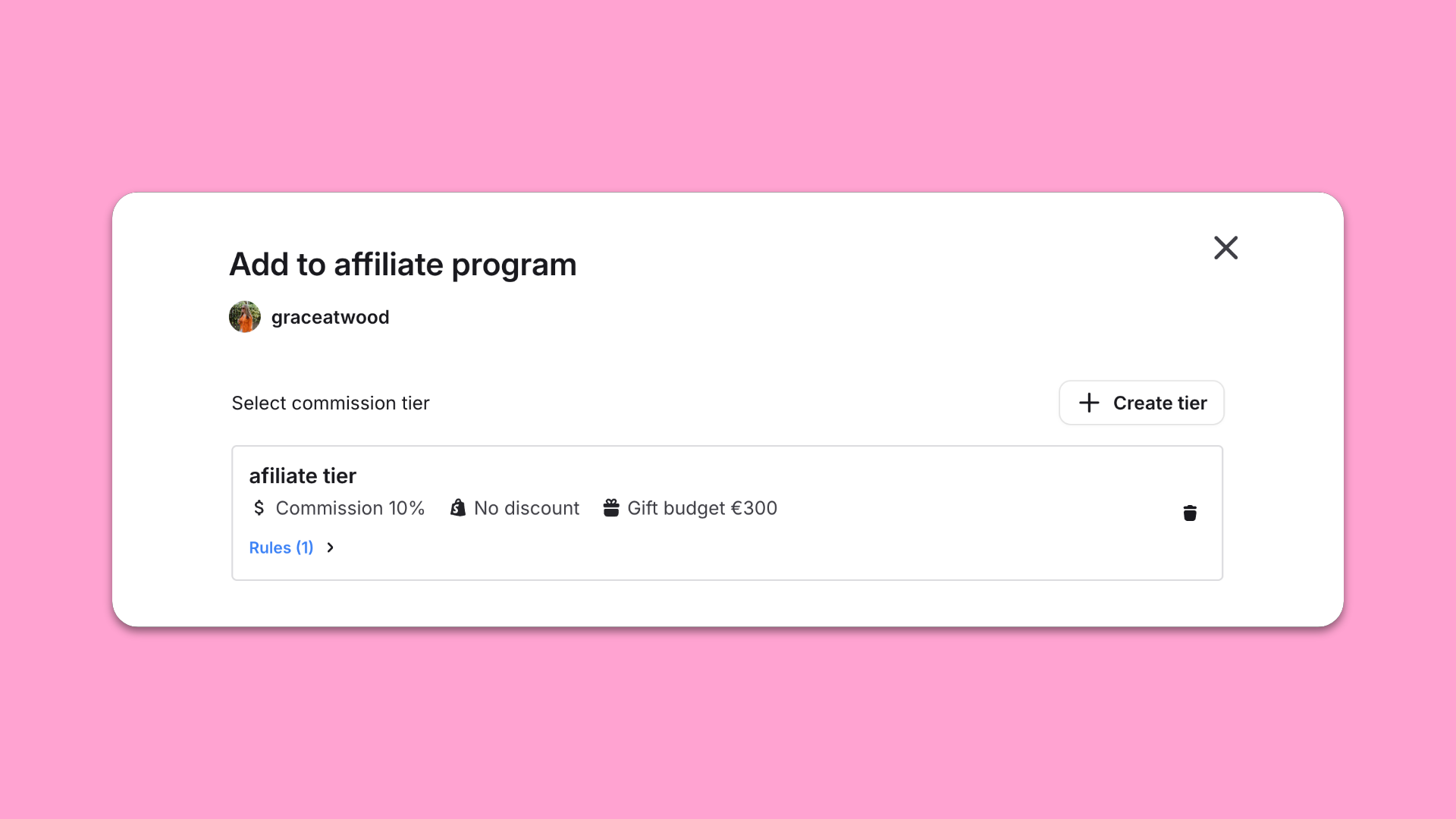
As well as paying commissions, you should also think about offering regular performance bonuses that reward your creator partners for the specific behaviors you want to incentivize (FYI I’ll go into more depth on the types of behaviors to incentivize later in the article…).
To give a simple example, you might pay:
🤓 Pro tip: Modash makes it easy to rank your top performers by tracking sales, revenue, and commissions per affiliate.
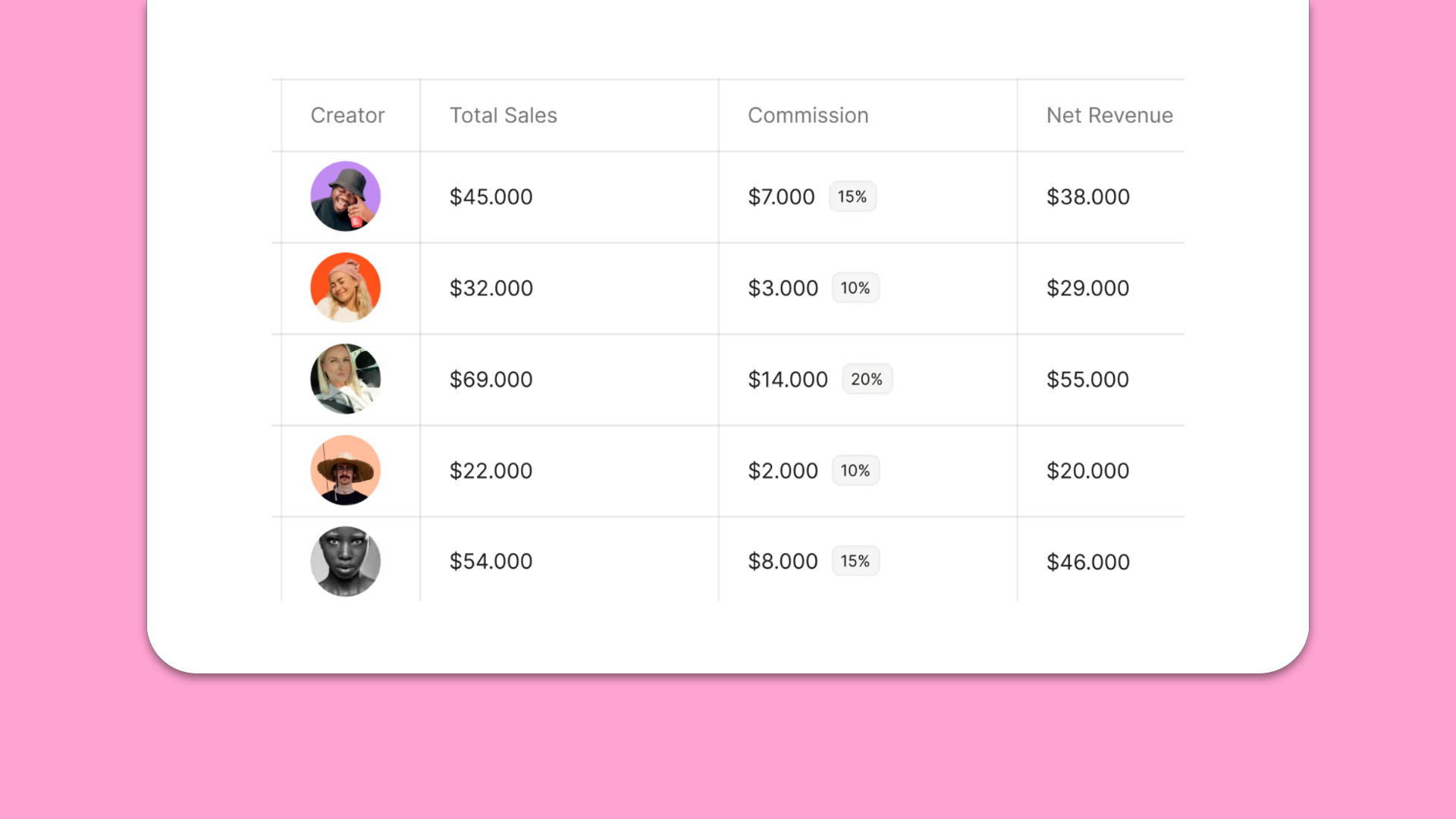
Just like with regular commissions, bear in mind that not all bonuses should be based around lagging indicators like sales and revenue. It also makes sense to reward creators for hitting content-related milestones, such as:
Or you could get more granular by incentivizing affiliates to hit targets around specific content formats. For example, you might pay a cash bonus to creators who share 1x Instagram Reel + 3x Story frames in a month.
Of course, if you’re running your program 100% manually (i.e. without software), it’d be a nightmare tracking all the content your affiliate partners share – unless you’re only working with a tiny number of creators.
Realistically, if you’ve got 10+ affiliates, you need a campaign and content tracking tool like Modash to handle all the heavy lifting. Modash automatically collects live affiliate content and shows output per creator – then you can easily pay cash bonuses to those who achieve your activity targets.
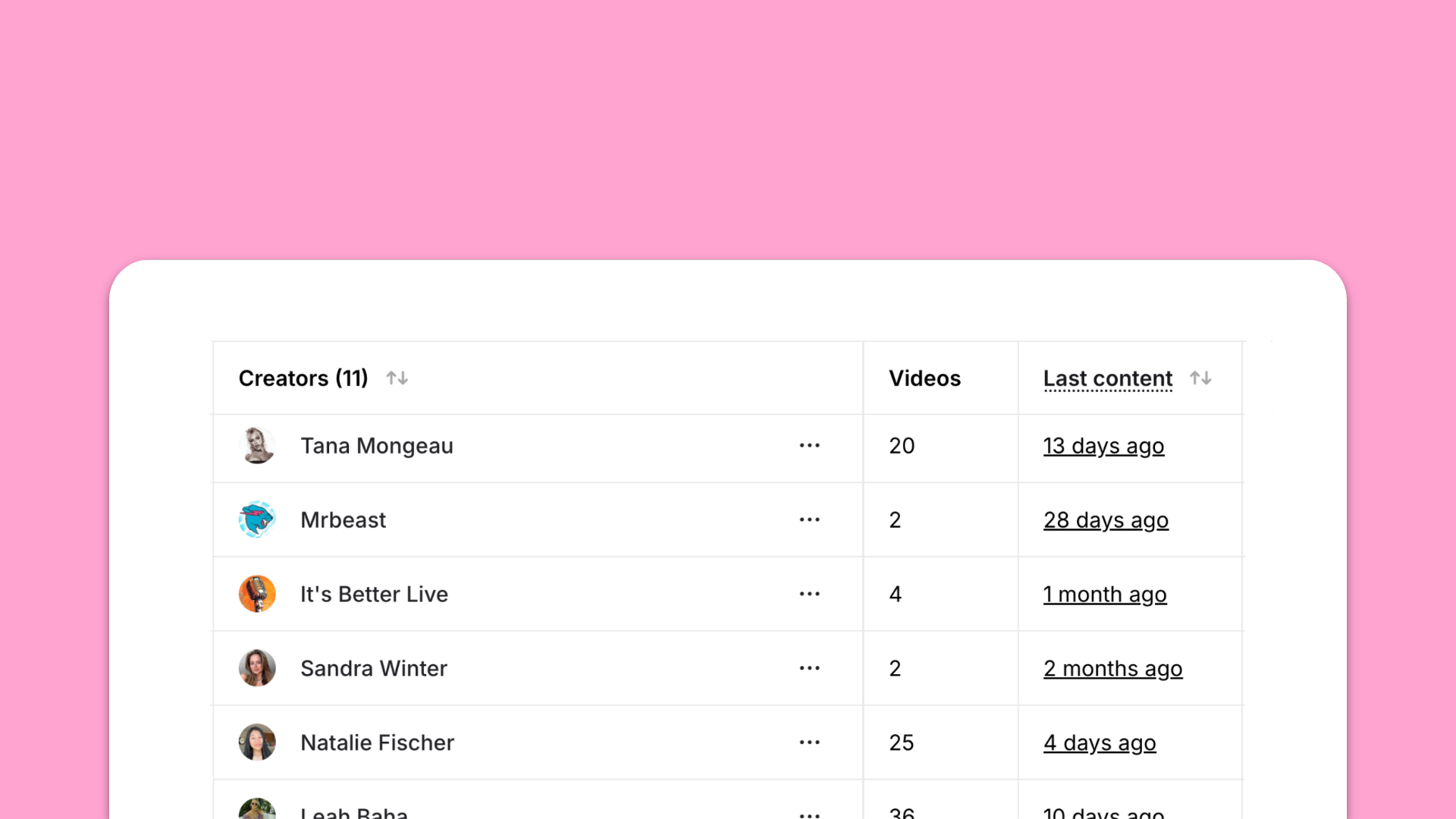
However, not all performance bonuses are purely financial…
Don’t want to lean solely on cold, hard cash to reward your affiliate partners? No bother, there are plenty of non-monetary alternatives.
One popular approach is to use products as an incentive. For example, you might allow your top-performing creators to:
Similarly, try incentivizing affiliates by giving them a set budget to spend on products from your store. You can also turn this into a performance-related bonus system by offering higher budgets to creators who drive the most sales or post the most content (or whatever behavior you’re trying to incentivize).
Just be aware that while gifting products sounds a cinch in theory, in practice it can be kinda painful when you’re handling all the logistics yourself. You’ve got to ask for the creator’s address and size, place the order, and deal with all those follow-ups about when it’s going to arrive… What a headache 🤯
If your store is on Shopify, the smart solution is to manage gifting through Modash.
That way, all you have to do is share unique gift links with your creators – then let them browse your catalog, pick products, and enter their own shipping details.
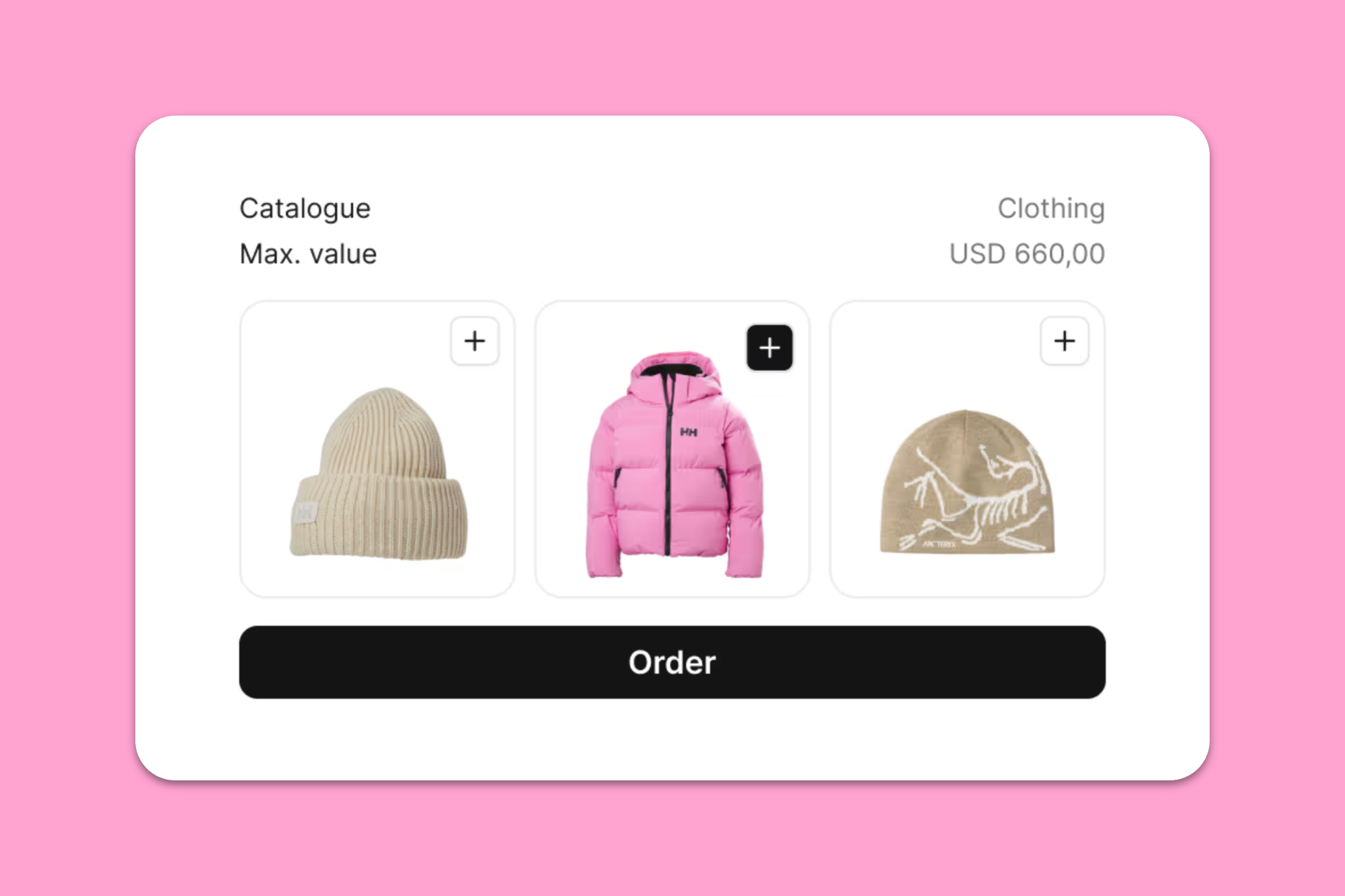
The moment a creator selects their favorite product, we set up the order in Shopify, with zero manual work for you and your team. It’s a serious time saver.
🤓 Further reading: Learn more about the art of gifting in How To Do Influencer Gifting: A Complete Guide.
Sure, affiliates want to pay their bills – who doesn’t?
But they also want to grow as creators. Because growing their own online brand = more followers + more/higher-quality paid collaborations = more 💲💲💲
The good news is that you can use this as an incentive by suggesting co-marketing opportunities like collaborations and features. For example, you could use a creator’s content in a paid ad campaign, or give top performers their own storefronts where they can curate their favorite products while earning a cut of the sales.
If you’ve got one or two affiliates who consistently smash your sales targets while maintaining high quality controls around their content, you might even reward them by launching a co-branded product (or a whole collection) together.
The whole purpose of building an affiliate incentive structure is to reward your best creator partners – those who always post excellent content and generate high volumes of sales – while encouraging more people like them to join your program.
That’s why the first step is to segment your existing affiliates by:
You might also want to factor in other metrics here, too, like click-through rate and average order value.
Tracking all this stuff manually either requires self-reporting or spreadsheet-based consolidation. Both of which eat up a ton of time and are pretty prone to error. For a slicker and more accurate alternative, use a tool like Modash, which tracks per-creator sales, net revenue, and commission via Shopify attribution.
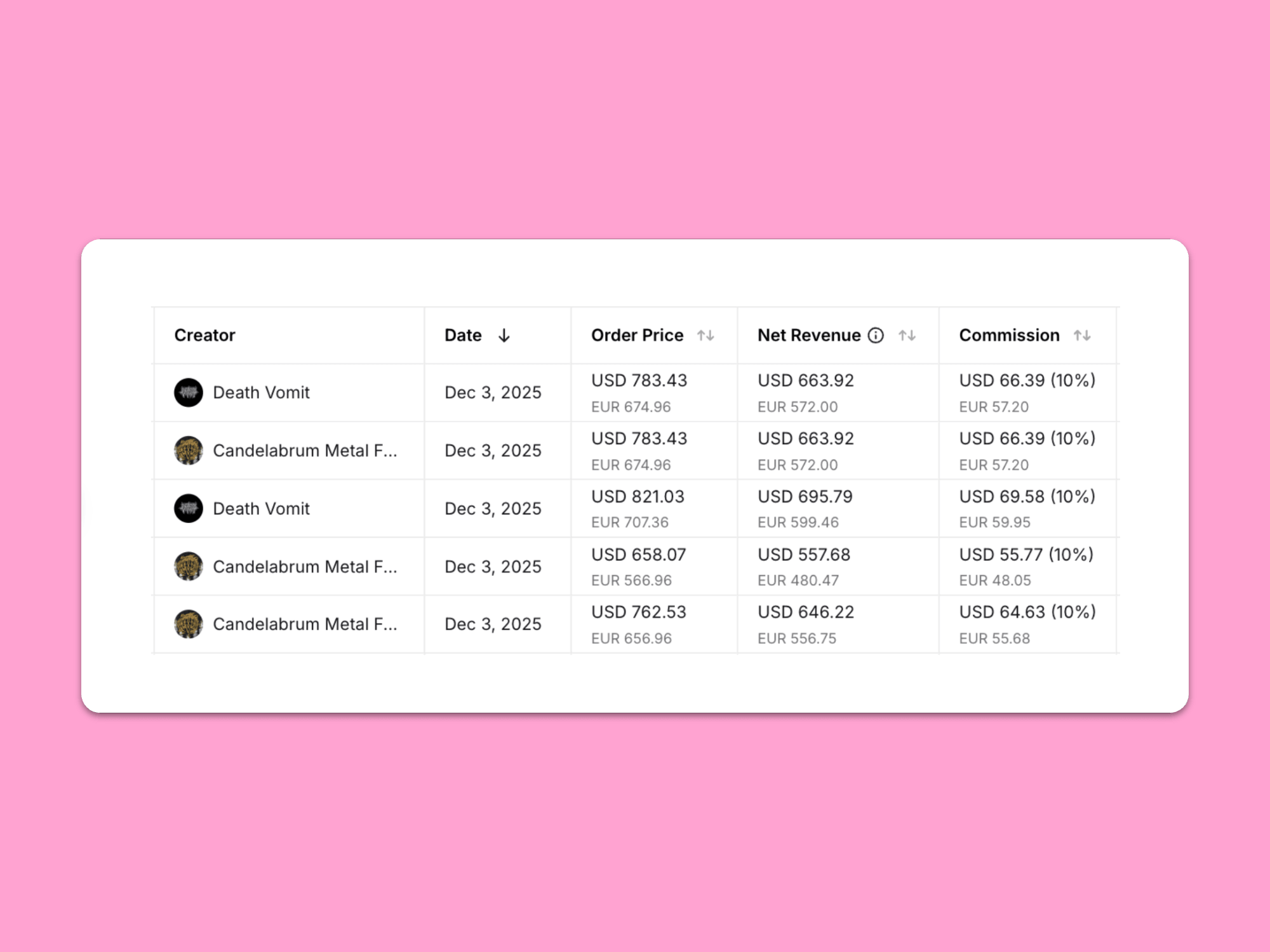
Whether you track manually or use a tool, your ultimate goal is to end up with 2 – 3+ segments of affiliates grouped together by activity level and sales potential (as defined by past performance). Naturally, this will be different for every program, but it could look something like this:
| Affiliate tier 🪜 | Description ✍️ | Performance 📈 |
|---|---|---|
| Bottom tier | New program members and lower performers | <2 posts AND/OR <$50 in sales per month |
| Mid-tier | Average performers with potential for improvement given the right management + incentives | 2–4 posts AND $50–$200 in sales per month |
| Top tier | Top-performing “super affiliates” bringing in the highest proportion of sales + revenue | 4+ posts AND $200+ in sales per month |
🤓 Further reading: I talk more about segmentation – plus tracking, comms, and more – in 13 Affiliate Program Management Best Practices to Scale Without the Chaos.
Next, it’s time to define exactly what you’re incentivizing affiliates to do. Are you encouraging them to post more content? Boost your gross market value? Attract new customers (rather than selling to existing ones)?
Again, this will vary from one brand to the next. For example, when Melissa worked in-house for a brand, her main priorities were order volume and content quality.
We wanted to ensure affiliate was a channel that didn’t just drive sales, but drove brand awareness and expanded the reach of our brand in a positive light.

Once you’ve identified your primary goal, you can create incentives to match. For example, if your goal is to generate more content from affiliates, you could offer a regular bonus for creators who post 4+ times per month or reward those who share the most content in a quarter.
I’ve already spoken plenty about the benefits of tiered commission structures – well, now it’s time to set performance thresholds around those tiers.
For reference, our research shows that the average commission tiers are as follows:
But your rates shouldn’t be plucked from thin air or based on general, cross-niche data – they should be informed by realistic benchmarks drawn from your program’s historic performance.
For example, Melissa suggests looking at the order volume and sales that creators can drive in a month, then using this information to calculate a “realistic” target + a stretch target for top performers. Just be sure not to get too ambitious here.
The target ultimately must be ambitious but achievable, otherwise it can be demotivating for the creator.
Bear in mind that these thresholds don’t have to be set in stone. Most likely, you’ll want to tweak them around peak sales periods, such as setting stricter targets for Black Friday while also paying higher rewards (like a more attractive commission rate and/or cash bonuses for creators who hit sales targets).
🤓 Pro tip: Once you’ve figured out your commission tiers, turn them into real rules by plugging them into a tool like Modash. That way, you only have to set them up once, rather than manually enforcing them every month.

Realistically, cash is always going to be the key component of any affiliate incentive structure. Because most creators aren’t just doing this as a hobby. So you’ll definitely need an appealing commission structure – and you’ll likely also want to give your creator partners the chance to earn cash bonuses.
But while cash is king, it isn’t the only way to incentivize your affiliate partners.
Free products can also be a powerful motivator, especially if they’re exclusive, as Melissa explains:
Offering anything exclusive is a big incentive as it can set an affiliate’s content apart. For example, sending top performers a lab sample of a new skincare product before it officially hits the market is a great incentive as it gives them an edge over other creators.
🤓 Pro tip: Modash’s Shopify gifting workflow takes all the pain out of this key non-financial incentive. Just share unique gift links with creators so they can select their own products and enter shipping details themselves, cutting out endless back-and-forth emails and manual chasing.
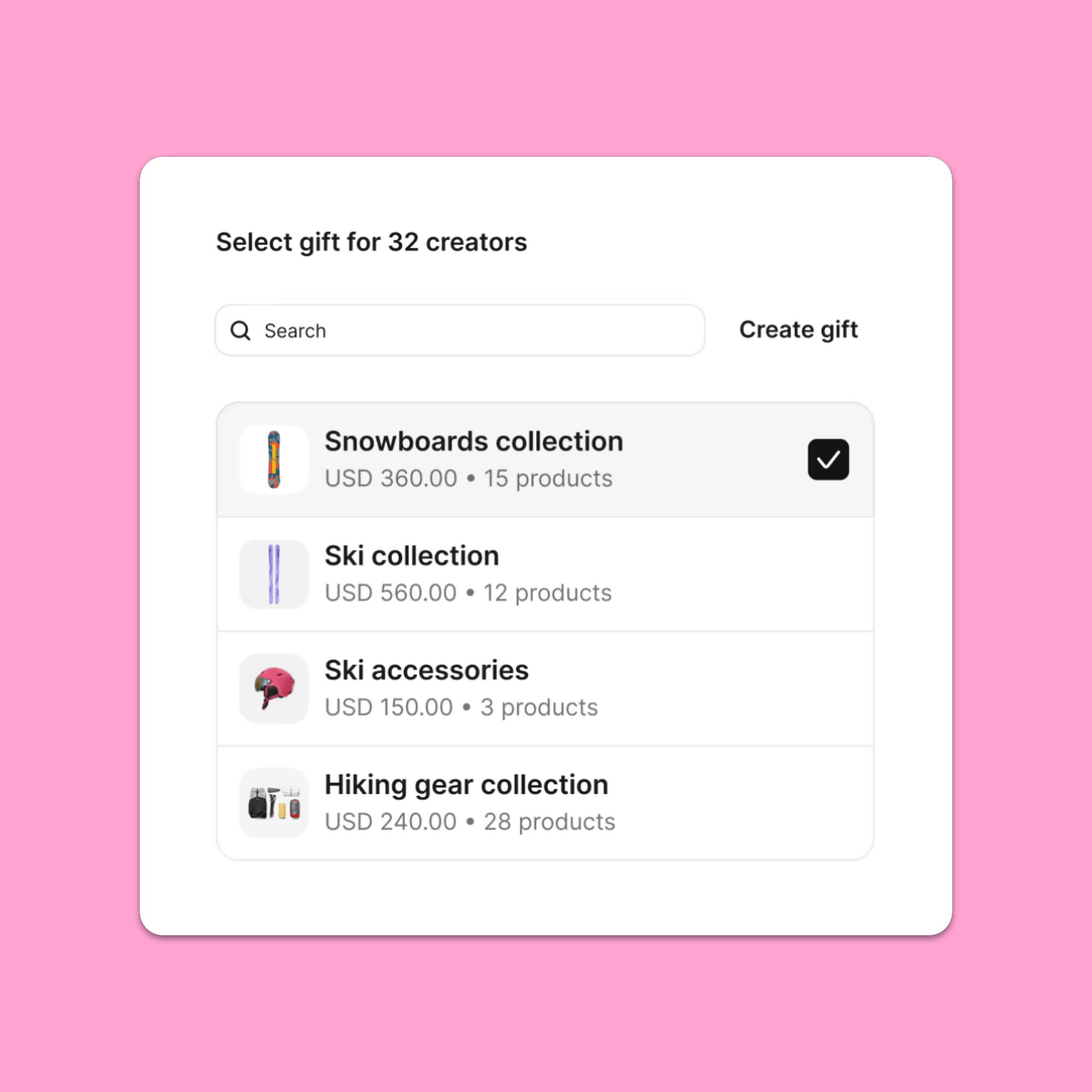
Another possible option is to bring top-performing affiliates closer to your internal team, thereby helping them better understand your brand and products. Again, this is the sort of insider information that helps creators stand out in a crowded market.
This process will look different depending on the size of your company. For smaller businesses, you might offer high performers a 1:1 call with your founder, whereas for larger brands they might get access to a dedicated Slack channel alongside your affiliate team.
An affiliate incentive structure that no one knows about is as much use as a cotton candy doorknocker. So make sure to clearly communicate it to every affiliate who joins your program.
The simplest solution is to explain your standard incentive structure as part of your onboarding process. Ideally, you’ll share top-level details in your affiliate welcome email, then add a more detailed explanation – if required – in your affiliate resource center or FAQ section.
Separately, you might also reach out later in the onboarding process with a targeted bonus for new affiliates to drive early momentum, such as offering a fixed cash bonus for affiliates who hit a specific sales target in their first month.
🤓 Further reading: Learn more in 7-Step Affiliate Onboarding Process to Boost Activation Rates.
Offering tiered rewards and performance-related bonuses is only gonna work if you’ve got a robust way to track the content your affiliates are posting and the results they’re driving.
If you only have, say, half dozen affiliate partners, you can probably get away with managing all this stuff in a spreadsheet. But prepare for some long hours matching sales to affiliates in a spreadsheet, then manually calculating all your tiers and bonuses 😴
Realistically, if you’re serious about scaling your program and/or you’re already collaborating with 10+ affiliates, you need software to track affiliate performance against incentives.
For example, if your store is on Shopify, Modash automatically tracks all individual orders per affiliate…
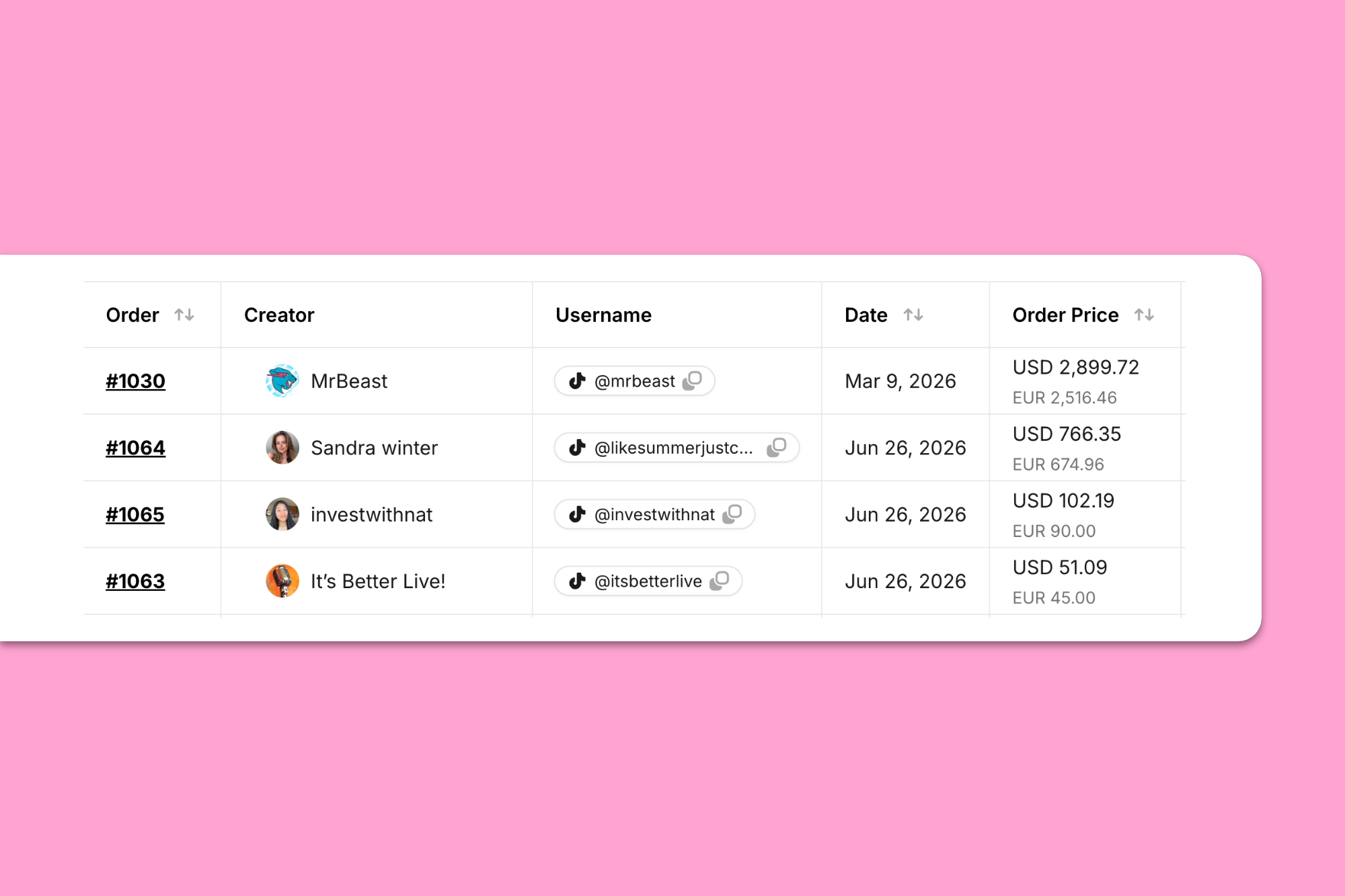
…as well as total sales, revenue, commissions, content volumes, and more.
So whatever incentives you’re running, it’s easy to find the relevant data and pay creators accordingly.
👉 Try all of our affiliate tracking and campaign management tools for yourself when you create your free Modash account!
The process of building an effective affiliate incentive scheme doesn’t stop the moment you start sharing your commission structure with your affiliate partners. For best results, you’ll want to review your incentives every quarter (and refresh as necessary).
For starters, Melissa recommends diving into the data to see what proportion of creators are actually benefiting from your rewards scheme.
It’s important to review how many creators are hitting the incentives and if the targets are achievable or not, as if the targets are too high this will likely discourage creators from linking.
Additionally, make sure your incentives align with your priorities and objectives for the upcoming quarter. For example, you might want to support a new product launch by incentivizing affiliates to share more content, or adjust your targets to account for higher sales during the holiday season.
Affiliate bonuses should eat up no more than 15% – 20% of your monthly budget, according to Melissa. Because, as she points out, you need that money for more than just rewarding your existing affiliate partners.
You still want to cast a wide enough net that you’re discovering new creators, rather than becoming overdependent on top performers.
It makes sense to tell all affiliates about your tiered commission structure. After all, the prospect of earning more attractive commissions and bonuses can encourage even your lowest performers to step up their game. However, you’ll likely want to spend more time communicating incentives to creators who are most likely to engage, as Melissa suggests:
You can gauge which creators are interested in working their way through the tiers, so you know where to invest a little more time/attention into nurturing that relationship.
While it’s worth investigating any instances of affiliates hitting targets through questionable traffic, this doesn’t mean you should always take action against the “guilty” creator. In reality, this scenario calls for a little more nuance, as Melissa explains:
If it’s a one-off and cannot be proven, I’d likely give the creator the benefit of the doubt, but would closely monitor them for future months.
Sure!
For starters, you might already be paying influencer-affiliates an upfront fee per post/campaign, which likely calls for a different approach to commissions and bonuses than what you’re using for “traditional” affiliates.
Beyond this, there are any number of reasons why you might pay affiliates different commissions and bonuses to influencer-affiliates. For example, you might target traditional affiliates on new customer acquisition, while rewarding influencer-affiliates for posting a certain amount of content per month. It’s up to you.
You should be reviewing your incentive structure once per quarter to take account of different product focuses, targets, shopping periods, etc. This doesn’t necessarily mean ripping up your affiliate incentives and starting afresh every three months, but you’ll at least want to ensure that the actions you’re incentivizing and the rewards you’re paying are aligned with your quarterly goals.
전문 기고자