





Influencer marketing ROI has always been tough to prove. But it’s meant to be different with affiliates – they make a sale, you pay a commission. With such clear numbers, the return must be obvious, right?
Ahhh, if only it were that simple.
In reality, affiliate marketing ROI is only as trustworthy as the two figures feeding it, and most brands get both wrong 🤦♀️
So your goal here is to get those numbers accurate and honest first, then start improving things. Read on and I’ll explain how to do both…
Divide revenue by spend and you're done. That’s it, that’s the article, you can all go home now.
PSYCH! Actually, the formula is a little more complex:
👉 ROI = (attributed revenue − total program cost) / total program cost, expressed as a percentage
But there’s a further complication here: even when you use the right formula, you can still end up with a “wrong” number, or at least a misleading one. That’s because revenue =/= return.
Fact is, a program can look profitable on attributed sales, yet still lose money once you account for the full cost stack. It’s all a case of top-line attributed revenue vs margin adjusted profit:
Or, to put it another way:
Top-line attributed revenue might give you a sexy-sounding number because it ignores both your gross margin and the softer costs. Whereas with margin-adjusted profit, the output might not look as flattering, but you can actually defend it.
Now, let’s dig a little deeper into the numbers…
If you’re aiming for honesty (and you certainly should be), your return will be based on attributed net revenue, not gross.
You’ll also want to decide whether revenue from new customers should count differently to repeat orders. There’s no right or wrong here – it ultimately goes back to whether you view affiliate marketing as an acquisition channel or an all-round revenue-generating machine. Disregarding returning customers completely feels harsh, but maybe you’ll choose to only count 50% or 70% (or whatever) of the revenue.
Finally, bear in mind some revenue is tough to attribute cleanly.
A creator’s content might keep driving sales weeks or months after a campaign ends, or prompt direct visits and branded searches that can’t be traced back to the original post (AKA the so-called halo effect).
You’ve got to find some way to factor these “hidden” benefits into your ROI calculations, but there’s no ideal solution – although I’ll share a few useful tactics later in the article 👇👇👇
The reason affiliate marketing ROI numbers are so often inflated is that they often exclude a whole heap of costs. The full cost stack includes:
To be clear, I’m not tryna beat anyone up for this – manually tracking all those costs is tough! Commissions live in one spreadsheet, creator costs in another, while sales are hidden away in the backend of your ecommerce platform.
It gets a whole lot easier when you use an affiliate marketing platform like Modash. If your store is on Shopify, Modash pulls attributed net revenue and creator cost (AKA manual cost plus commissions) into a single campaign view…
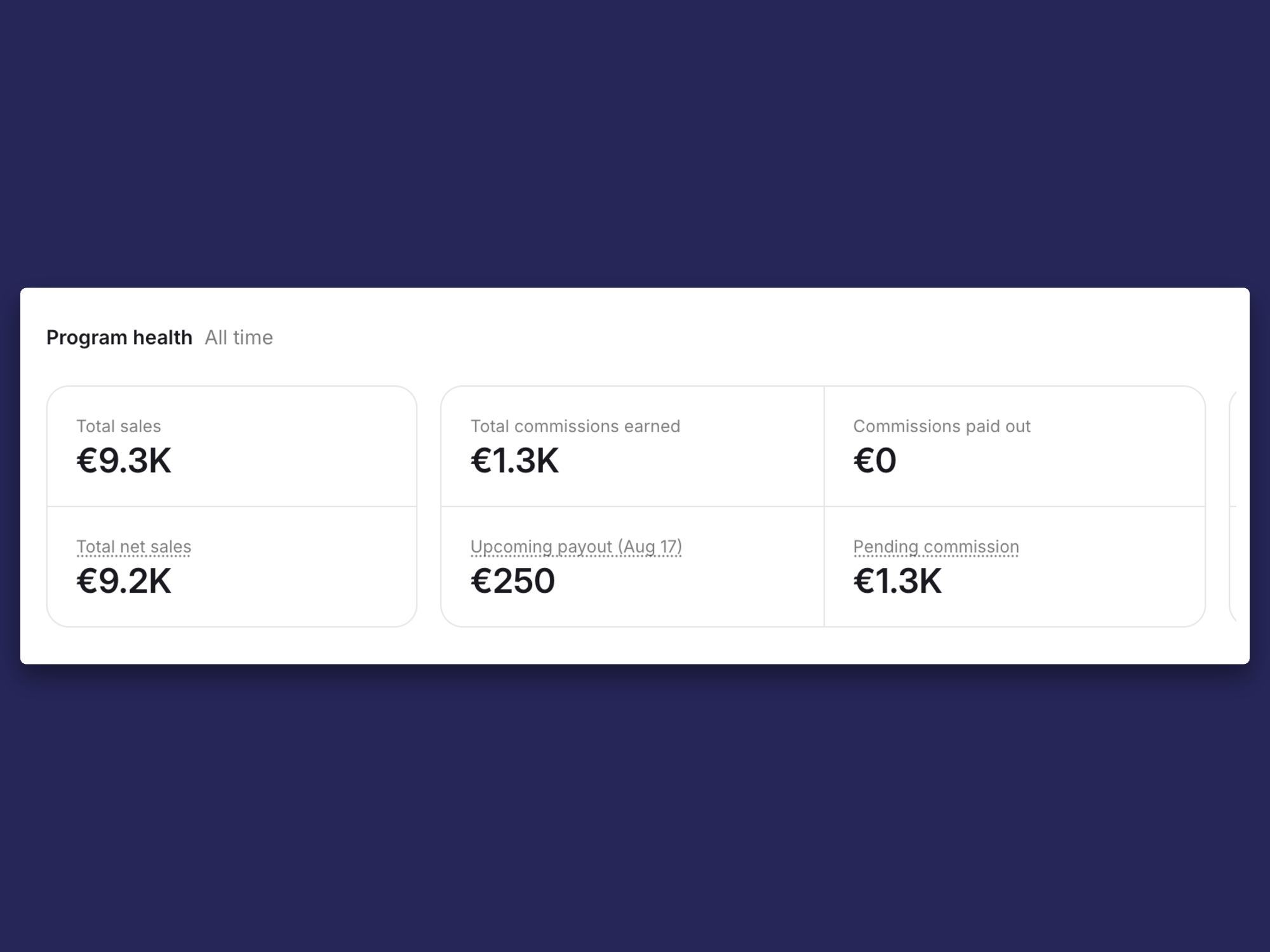
…so the hard numbers aren’t spread further and wider than Voldemort’s Horcruxes.
⚠️ Disclaimer: This view is campaign-level and gives you revenue and hard costs. To reach true ROI, the brand still needs to apply its own gross margin and soft costs.
As I’ve already alluded to, an ROI figure is only as good as the numbers it’s based on. If it’s built on shaky foundations, it’ll fall apart the second your leadership team starts asking questions – in which case, wave goodbye to your budget 👋 So let’s focus on making it trustworthy.
Let’s consider two pretty common scenarios:
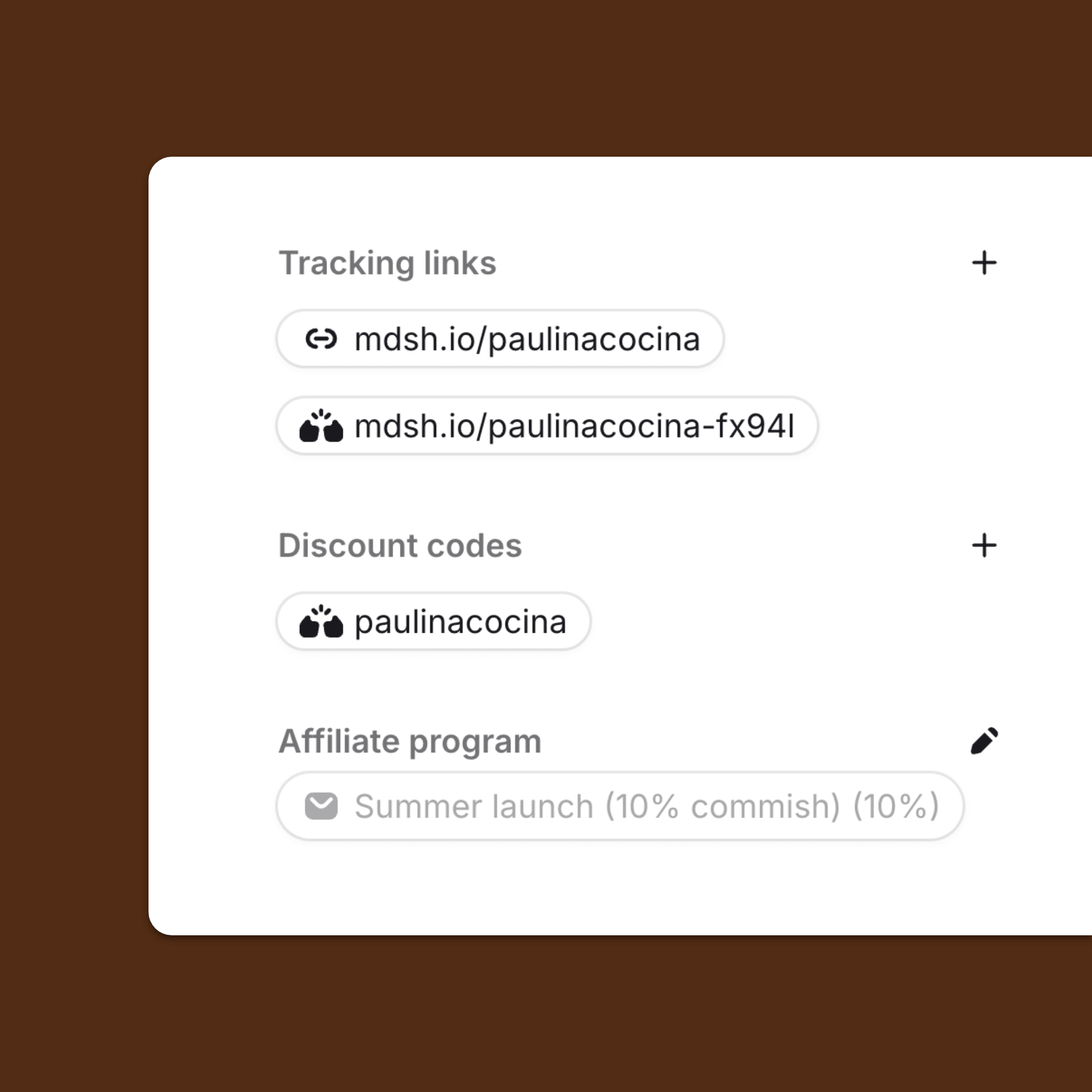
First up, we’ve got a shopper who watches your affiliate’s content and likes what they see. But they’re too busy to buy right now, so they come back later – without using the tracked link. Oh, and they forget to use the creator’s promo code, too. That’s a sale that should have been attributed to your affiliate program, but actually gets chalked up to organic or direct.
Secondly, let’s imagine you’re tracking affiliate sales manually. A customer buys after clicking an affiliate link and entering a discount code, so you end up double-counting. Instead of one sale and $50 of revenue, you’ve counted two sales and $100. But, of course, that extra $$$ doesn’t really exist.
Simple attribution issues like these happen all the time, and they make a complete mess of your ROI calculation.
🤓 Pro tip: With Modash, you can assign the same creator both a discount code and a link – but to prevent double counting, the code always takes priority.
Remember all those costs I listed a couple sections ago? 👆👆👆
Well, plugging that stuff – discount-code margin, gifting, time – into the equation ensures that your ROI reflects reality. And an ROI figure based on reality is easy to back up.
Modash makes your life simple here because commissions are calculated on net rather than gross revenue, so they already account for things like shipping, tax, discounts, and refunds.
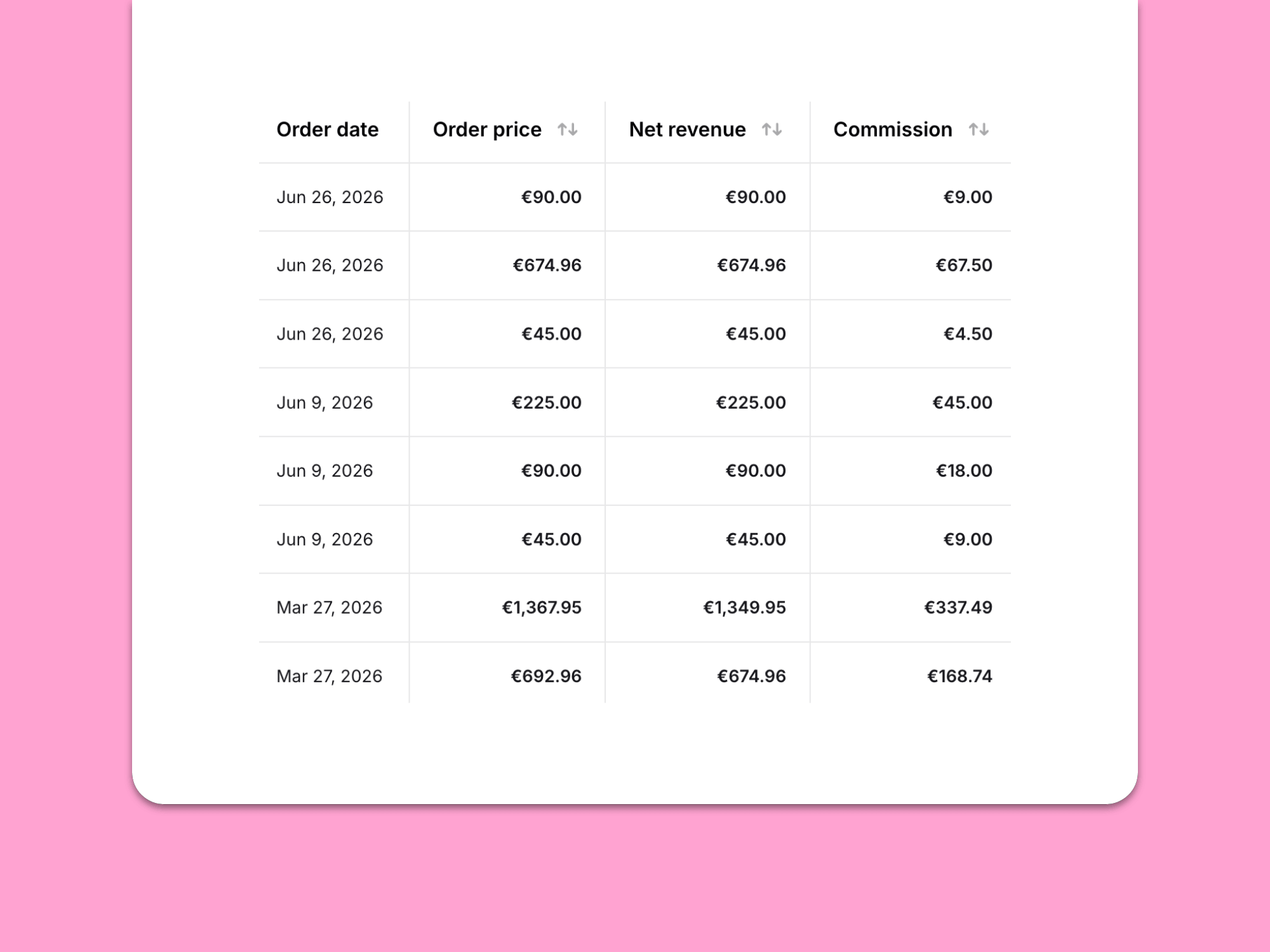
All of which means your single biggest affiliate cost input is already squeaky clean, with zero guesswork required.
By this point in the article, it should be pretty damn clear that strong, meaningful ROI figures are based on consistent, trustworthy numbers. Without them, it’s hard to measure your return over time.
So there’s really no good reason why you should be chopping and changing your attribution model – and no, “because it made my numbers look better!” isn’t a good reason. The only real exception is if your business goals and/or collab styles change completely.
While we’re on the subject, when it comes to choosing your affiliate attribution model, the simplest, cleanest option for most brands is last-click.
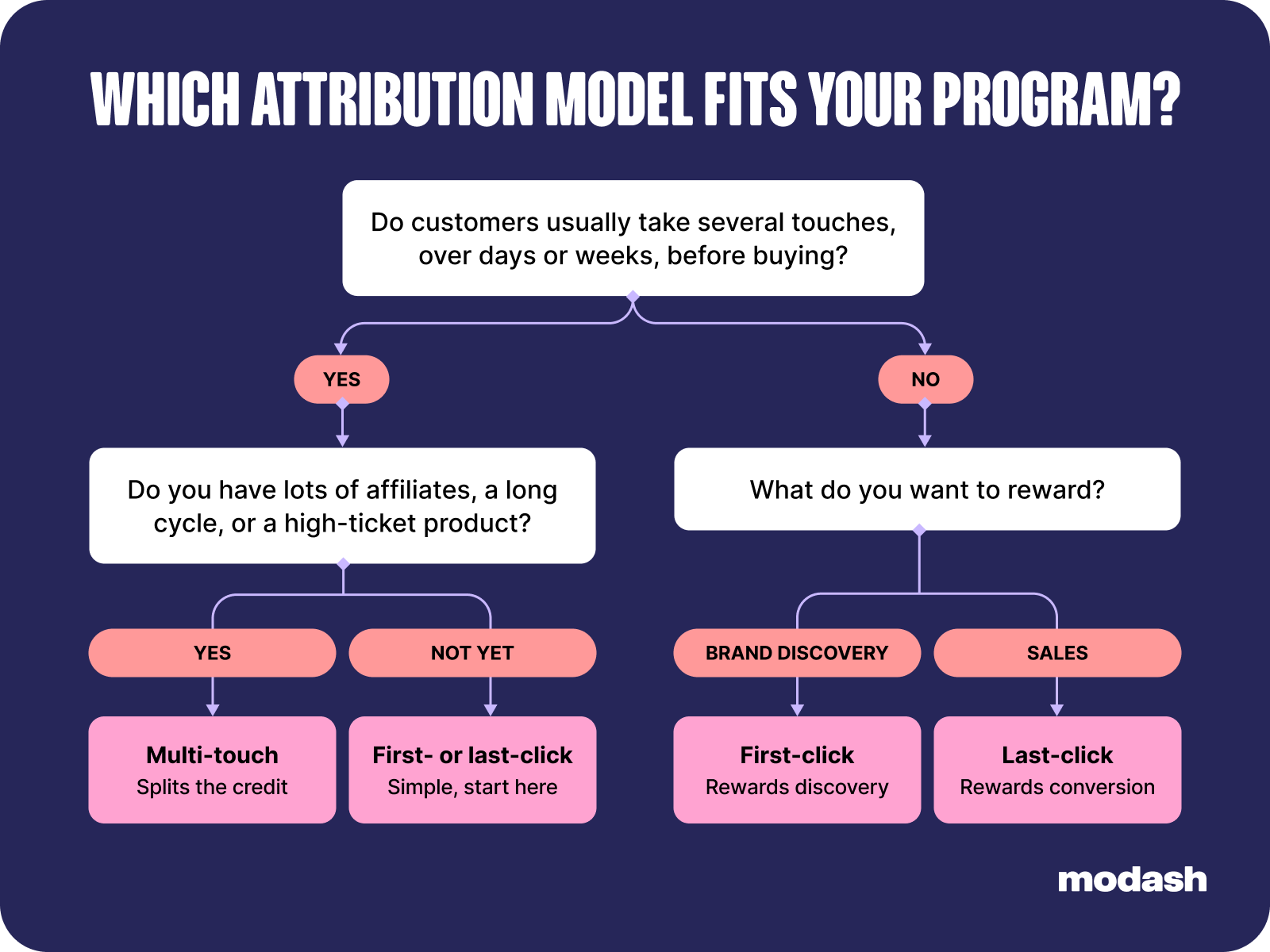
And if you do choose last-click attribution, Modash's consolidation layer makes it easy to calculate ROI by bringing all the messy affiliate performance data into one normalized place. If you’re on Shopify, Modash consolidates:
Once you’ve got your unified data, there’s no need to manually reconcile all your figures from a bunch of different sources – Shopify, affiliate platforms, spreadsheets, creator lists, payment tools.
Instead, we connect the final credited sale to the correct creator and show you the commercial outcome, all in one place.
500%.
You wanted a number, you’ve got one – are you happy now??
Actually, as you probably guessed, the real answer is that there is no universal "good" ROI number, because it's all a function of your gross margin and what you compare against.
A 3:1 return might be super healthy for a brand with high margins, but a total disaster for a low-margin brand. Likewise, public benchmarks rarely disclose things like attribution model, vertical, or program maturity, so they’re best treated as noise rather than targets to build your whole strategy around.
Instead, figure out what counts as a good affiliate affiliate marketing ROI number for you by considering your:
Now let’s consider how this works in practice. Say we have a brand with an affiliate ROI of 200%. Is that healthy? Dangerously low? Somewhere in between?
Let’s find out by comparing it against the above factors:
With all that valuable context to back us up, we can comfortably say that yes, a 200% affiliate program ROI is healthy (for this imaginary brand, at least).
Now we’re clear on how to actually calculate your return, we can get into some practical guidance on how to make that line on your ROI graph go up and to the right 📈
The whole point of calculating your ROI is so you can try to improve it. But if you get the calculation wrong in the first place, it’s highly unlikely you’re gonna make strategic decisions that actually benefit your brand.
That’s why the first step to boosting your return is to tighten up your attribution – so you’re totally confident that the numbers behind your ROI figure are accurate.
As an added bonus, closing attribution gaps often positively impacts ROI by ensuring you’re no longer under-counting legit affiliate sales.
Any sale is better than no sale – but that doesn’t mean all affiliate-driven transactions should pay the same commission.
To generate healthier returns, ditch those flat, top-line payouts in favor of a net-revenue system. That way, if you’re selling products with different margins, you can keep your profits healthy while still rewarding your creator partners fairly.
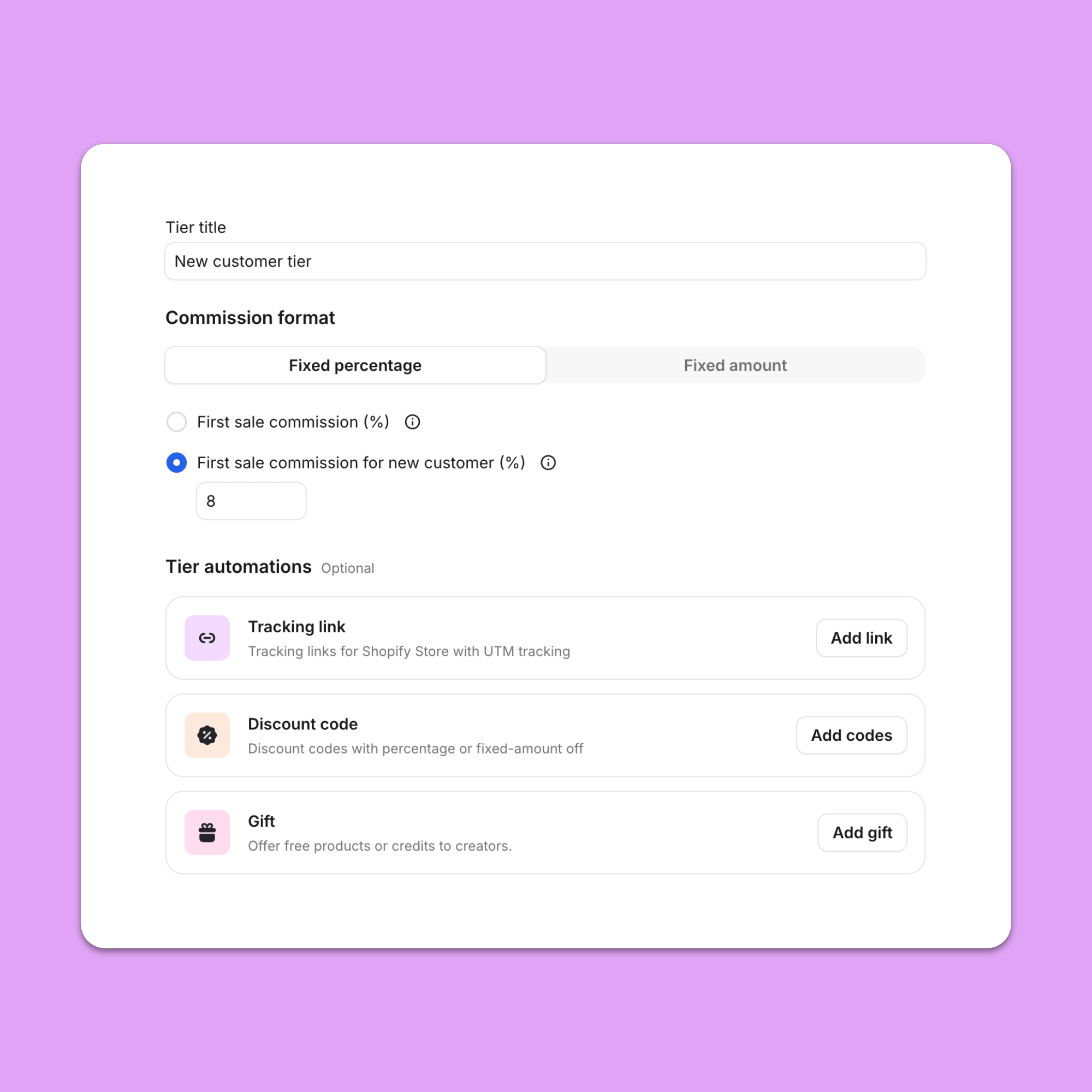
While you’re at it, consider paying a separate (higher) rate for new customers, and build a tiered commission structure that motivates creators to behave like you want them to – such as tying rewards to the volume of content they share, not just the value of sales they generate.
Again, Modash makes this easier by calculating commissions on net revenue and allowing you to set tier-based rates, so you’re always paying against profit contribution rather than gross.
🤓 Further reading: Did you know that programs with tiered commissions see higher rates of active affiliates? Find out more in Affiliate Marketing Survey: Why Hands-On Programs Outperform the Rest.
Don’t get me wrong, follower count is still somewhat important.
More followers = more eyes on your affiliate content = more 💰
But it definitely shouldn’t be the single most important factor informing your affiliate recruitment strategy, and it probably shouldn’t be the second or third-most important either.
Fact is, a smaller creator who complements your vibe and audience will usually return more per dollar than a large one whose followers are a looser match. Because size doesn’t drive conversions – relevance does.
Modash is your best friend here. We’re big believers in the power of working with storyfit influencers – AKA creators who can tell your brand’s story in a way that…
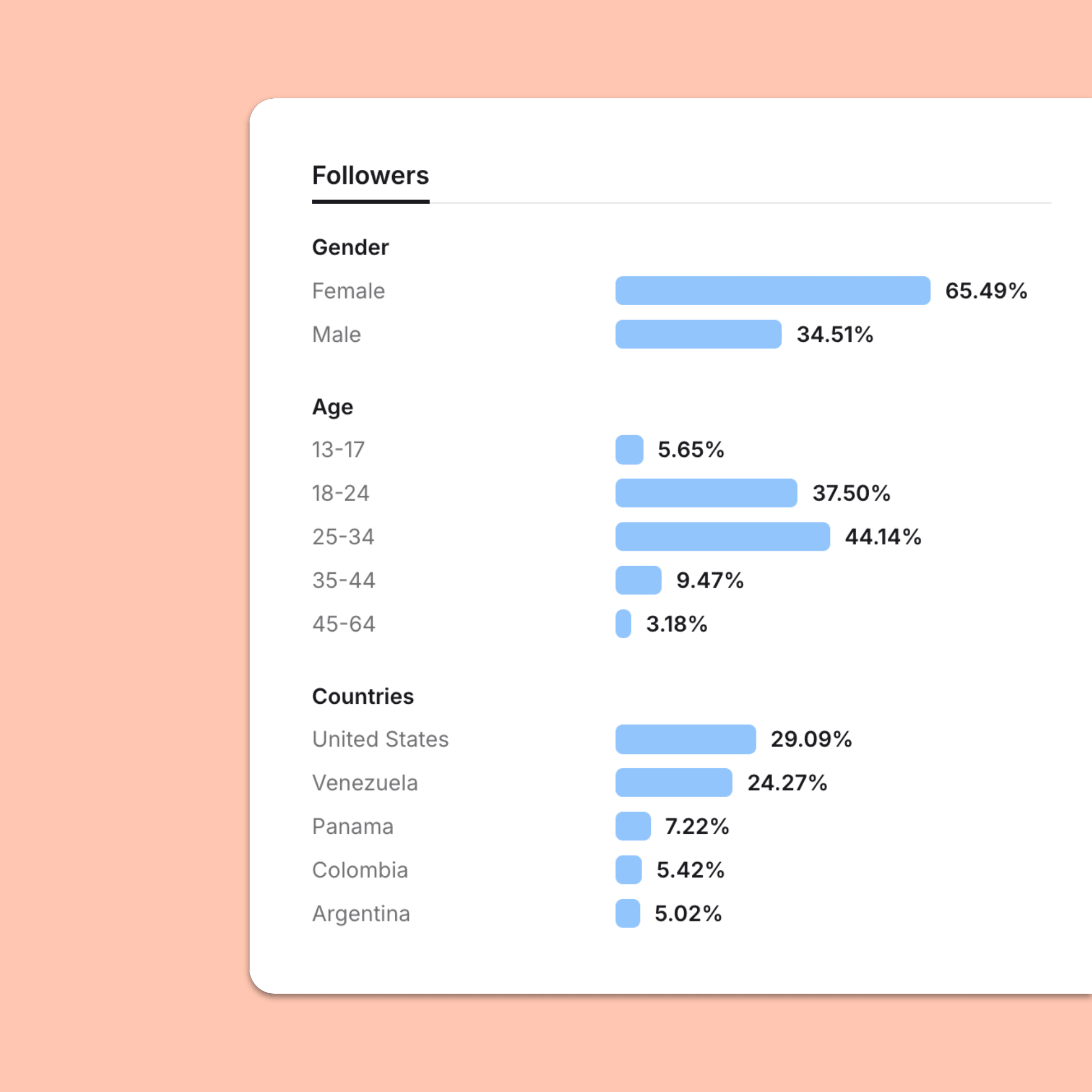
Our affiliate vetting tools are built around helping you unearth those all-important storyfit influencers. Use them to dig into a creator’s audience (size, gender, age, location, interests, and more) without first sliding into their DMs first to ask for analytics screenshots.
🤓 Further reading: Learn more in How to Qualify Affiliates: A Framework for Vetting Creators at Scale.
The commissions you pay and the affiliates you work with are very visible costs that eat into your return.
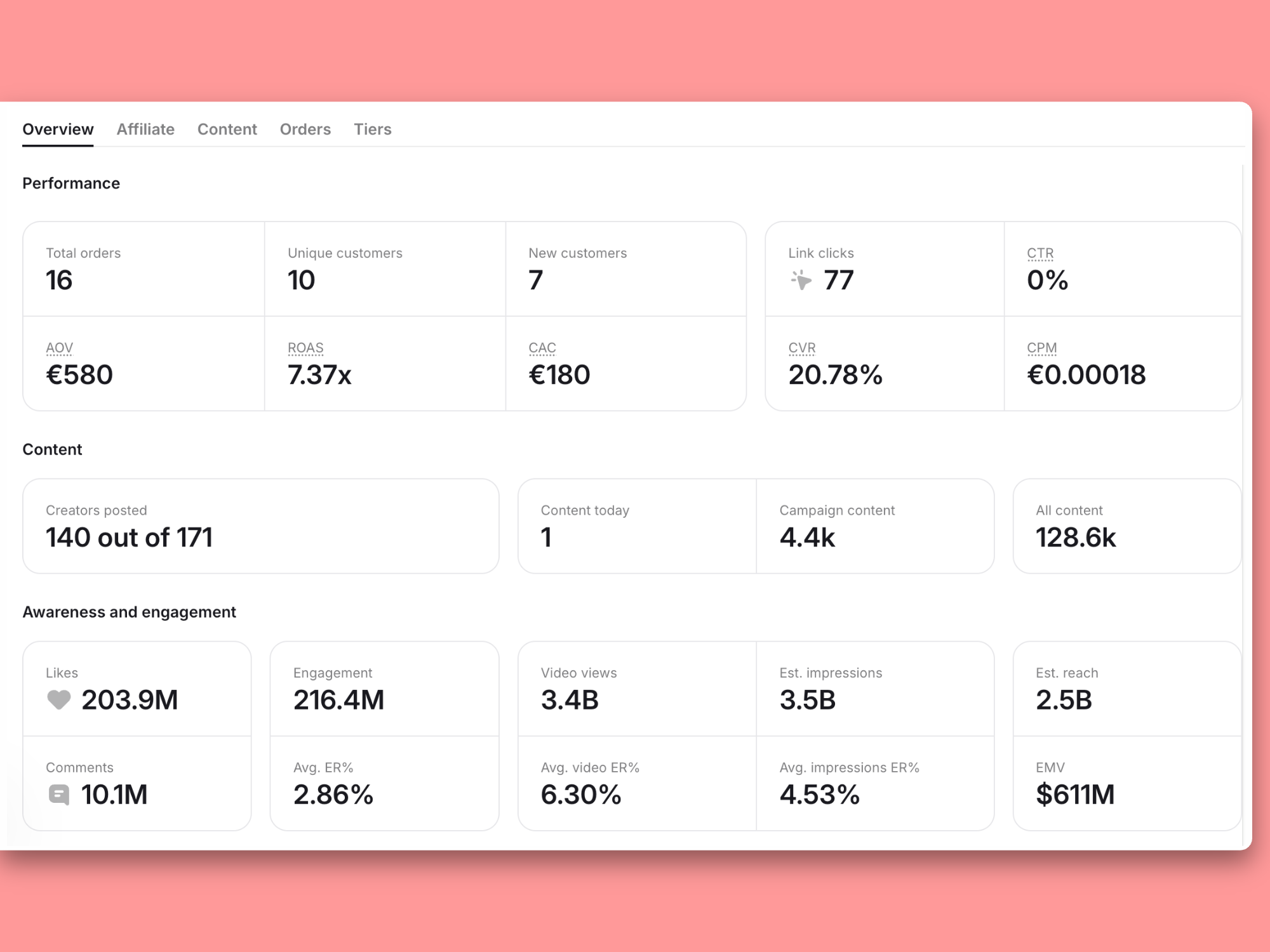
But, for many brands, the stuff that happens in the background has an even greater impact – I’m talking about all those tasks that keep your program on the rails. They eat up a whole chunk of the team hours that factor into your costs, so any efficiencies you find here can make a big difference to your ROI.
Modash helps here by automating and/or speeding up tasks like:
And then there are other operational costs that gnaw even deeper into your margins, such as customers stacking multiple discounts in a single transaction, or returning purchases after you’ve already paid commissions on them. Rude.
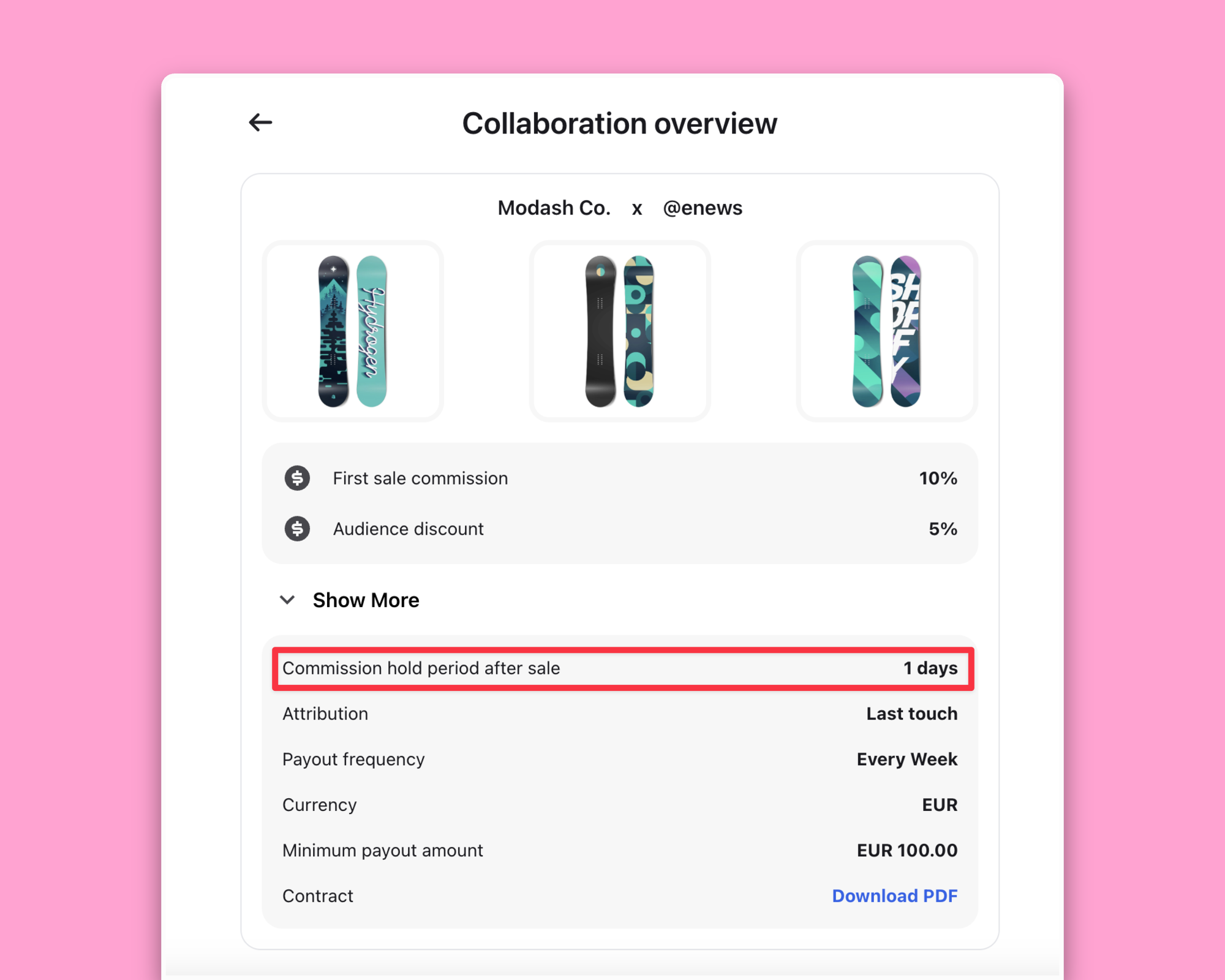
Modash has your back here, too, by letting you set up a configurable hold period that stops commissions being paid on orders that later get returned. Here’s how that hold period gets displayed in our creator portal, so your affiliate partners know exactly what’s going on:
As I noted earlier, affiliate content has a long old tail.
A YouTube video might still be a consistent revenue-driver years after it was first published, and while Instagram and TikTok typically have a shorter shelf-life, it’s not uncommon for them to keep contributing sales way after your campaign end date.
In other words: measuring ROI at week #2 will almost always undercount the true impact of affiliate marketing.
That’s why it’s important to set a measurement window that matches your buying cycle. If it takes your customers three months to make their mind up about a purchase, why stop measuring your return a couple weeks after the content went live?
Beyond this, there are various tactics you can use to identify some of the hidden halo effect from your affiliate content, like running brand awareness surveys, measuring branded search volume, and/or asking customers how they heard about you.
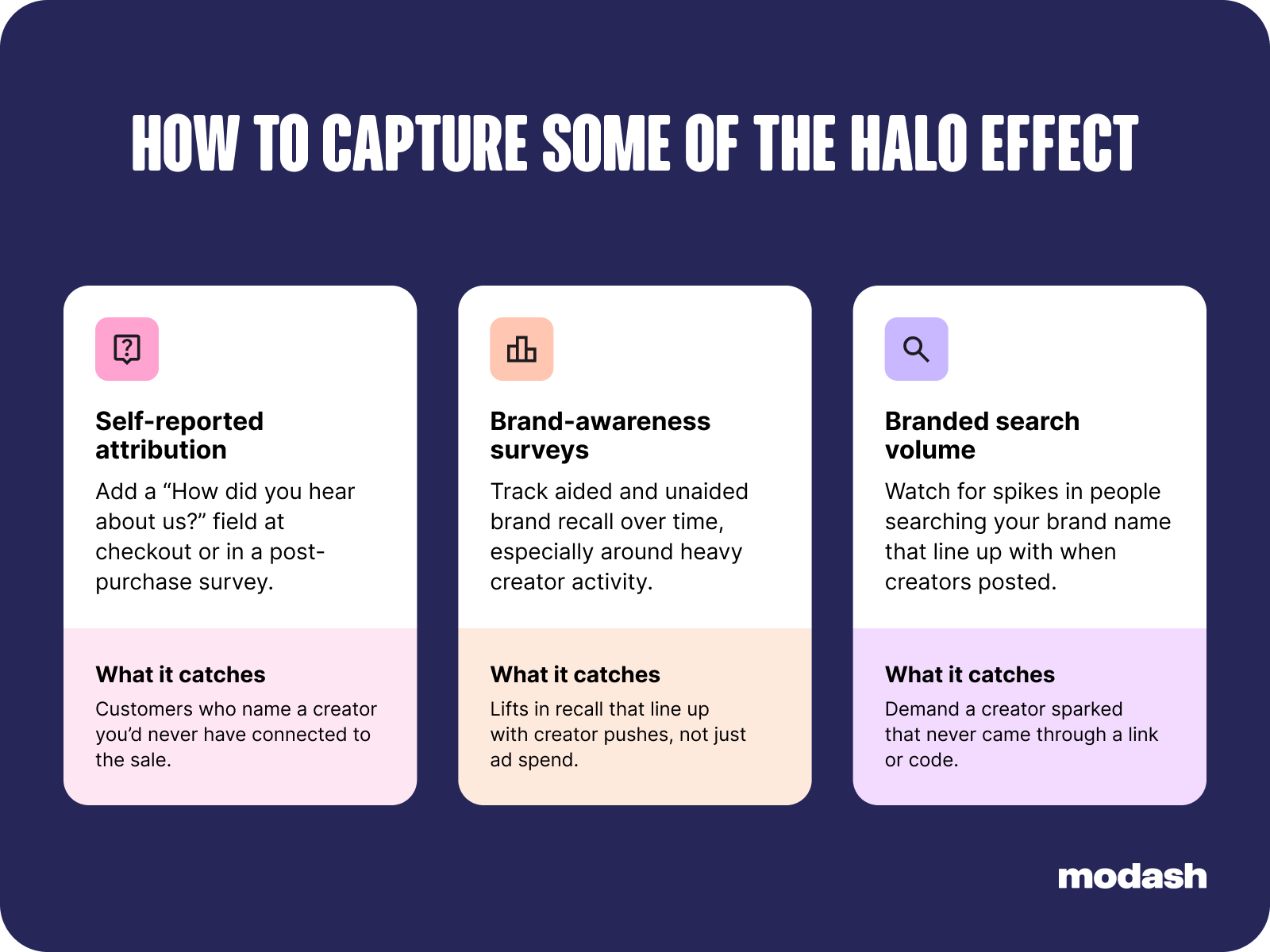
The important thing to remember is that your goal here isn’t to artificially inflate your ROI number.
Sure, a 1,000% return sounds super impressive. But if you can’t back up your revenue and cost figures, it’s not worth the paper (or the slide deck) it’s printed on.
What actually matters is an accurate and honest number that you can defend against a barrage of questions from your leadership team. How did you calculate this? What’s your attribution model? Can you run us through your costs?
That’s what ultimately builds trust and wins your program more budget 🤑
And it's a lot easier to build that number when your revenue and costs aren't scattered across three spreadsheets and the Shopify backend. Modash pulls attributed net revenue and creator cost into a single campaign view, calculates commissions on net revenue so your biggest cost input is already clean, and holds payouts on orders that later get returned.
You still bring your own margin and softer costs to reach true ROI – but the hard numbers are assembled and trustworthy from the start.
👉 Start your free Modash trial and build an affiliate ROI figure you can defend.
Using the following formula:
Then you can either express the results as a ratio (like 3:1) or a percentage (like 300%).
Honestly, there’s no universal “good” ROI for an affiliate program; there are just too many variables. And most of the public benchmarks you’ll find fail to disclose crucial information like:
So rather than obsessing over what everyone else is doing, look at internal data – like historical baselines, payback period and blended performance across channels – to come up with a number that actually means something.
There could be any number of reasons, but common issues include:
No, it’s not a cost, but it is a loss of revenue – so that’s where you need to account for it. For example, if a customer uses a 10% discount code to buy a $100 product, the net revenue would be $90.
In a word: no. Shopify has all your raw sales data and discount code usage. But it doesn’t track the commission you pay your creators or the time your team spends on operational tasks or the size of your platform and agency fees.
Again, I wouldn’t put too much faith in what everyone else is doing, because there are too many variables and external factors at play. For example, assuming everything else is equal, an established brand will likely see a faster return than an unknown startup.
That said, if you get the setup right and recruit the right creators, it’s not unreasonable to start generating a positive return by month six (or maybe even earlier).
🤓 Further reading: Learn more in How to Start an Affiliate Program in 7 Steps.