





There are three big reasons why finding competitor affiliates is one of the highest-leverage recruitment tactics available:
✅ They’ve already demonstrated interest in your category
✅ They have an audience that buys similar products
✅ They’re actively open to brand partnerships
Of course, the concept isn’t the hard part – it's the execution. Manual search is slow and unreliable, and to make matters worse, most affiliate tools don’t help with competitor research. But don’t abandon hope, because in this article I’ll share a bunch of practical methods to find your competitors’ affiliates…
Affiliates don’t just post for the love of content – they’ve got bills to pay and commissions to earn. So if you see a creator recommending the same competitor brand and product(s) repeatedly, chances are they’re making decent money from it.
Also, in the case of influencer-affiliates who earn a flat fee + commission on collabs, the brand(s) they’re working with wouldn’t keep hiring them if they weren’t driving sales.
When you partner with a creator for the first time, there’s always an element of doubt over whether their audience will actually be interested in your product. But when you recruit affiliates who’ve already worked with your competitors, this risk vanishes, because their followers have already proved that they’ll purchase products like yours.
The only potential issue with trying to hire competitor affiliates is that they might have exclusivity arrangements in place with your competitors. Those arrangements fall into two distinct categories:
To be clear, while paid influencer-affiliate partnerships may require full and/or category exclusivity, this isn’t the case for most “traditional” affiliate programs. So don’t let the exclusivity issue put you off searching for your competitors’ affiliates.
🤓 Further reading: Learn more in Navigating Exclusivity In Influencer Partnerships: A Guide For Brands.
The trouble with most competitor affiliate search tactics is that they require a ton of manual work – which makes them fine in the early days of an affiliate program, but a poor fit for any brand looking to scale affiliate recruitment.
That’s why lots of Modash customers use our creator search tools to massively accelerate the process.
With Modash, you can simply enter your competitor’s brand name into our “Mentions” tool. Then our software instantly crawls our database of 380M+ creators – that’s every public profile on Instagram, TikTok, and YouTube with 1,000+ followers – to surface those who’ve mentioned your competitor in their content.
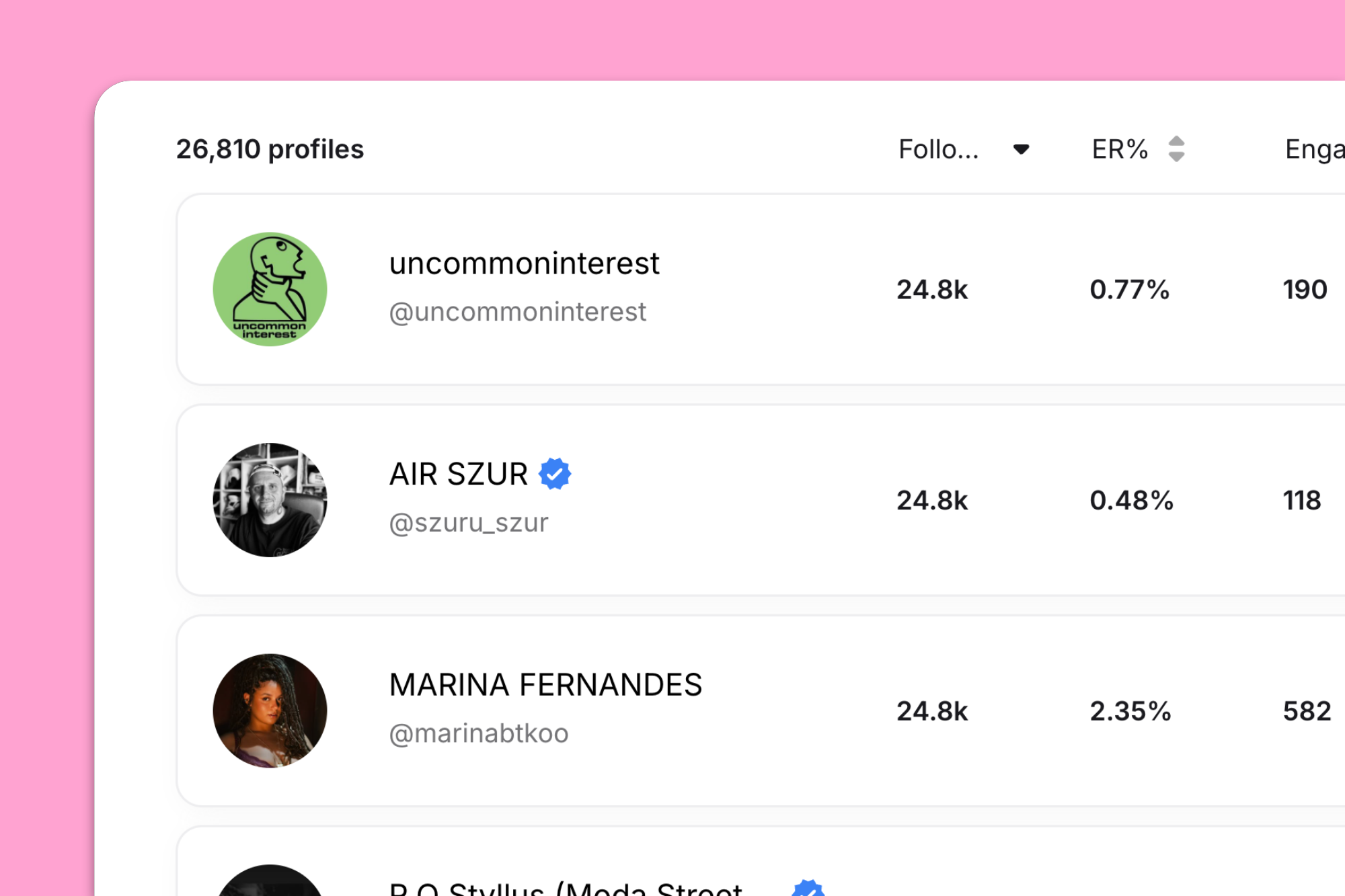
Alternatively, Modash also lets you search by previous collaborations based on creators’ ad disclosures, so you can be certain they’re working with your competitor rather than just posting about their products for fun.
Depending on the brand recognition of the competitor you’re targeting, these searches might return tens of thousands of results. It’d take you days or weeks of manual searching to produce that many results (and you’d probably lose the will to live along the way).
Then it’s simply a case of doing a little creator vetting until you’re left with a shortlist of potential partners. Easy, huh?
👉 Take our search tools for a spin by creating your free Modash account!
Of course, there are plenty of non-tool-based methods to find competitors’ affiliates. If you’re happy to do the leg work yourself, you can save money on a software subscription – just don’t expect any of these tactics to scale easily.
One of the most popular manual approaches is to search your competitor’s name alongside one or more affiliate-related search operators, such as:
For example, if you’re looking for creators who work with Loop Earplugs, you could search “loop earplugs” + “my code”. Most, if not all, of the results will be affiliates:
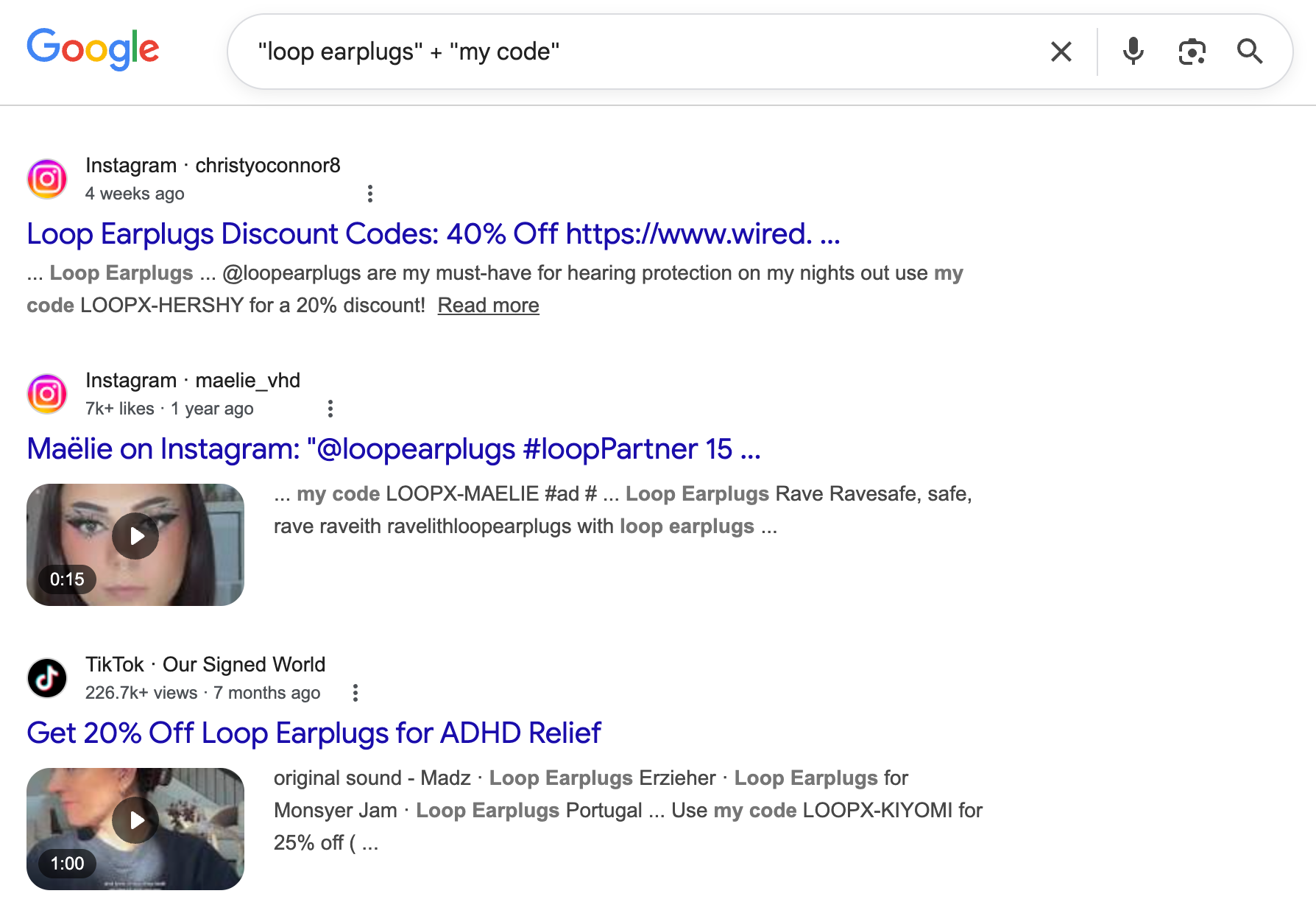
Click through to each post in turn, pick out your favs, and copy-paste their handles into a spreadsheet so you can reach out to them later.
🤓 Further reading: I don’t talk about the outreach process at all in this article, so for more on that, head to How To Do Influencer Outreach: A Guide For Brands.
If using Google search operators feels a little passé, why not ask your fav gen AI platform to hunt for competitor affiliates instead?
For example, if you were trying to find creators who are part of Sephora’s affiliate program, you could use a prompt like: “Find 10 beauty TikTokers and Instagram creators promoting Sephora products with affiliate disclosures.”
However, while this approach sounds neat in theory, in practice I’ve found the results aren’t great. Even with a high-profile program like Sephora’s, ChatGPT kept insisting that “finding creators who are definitely Sephora affiliates is harder than it sounds” (those are the AI’s words, not mine). After some back-and-forth, it eventually gave me this somewhat uninspiring list of three creators, one of whom it didn’t even name:
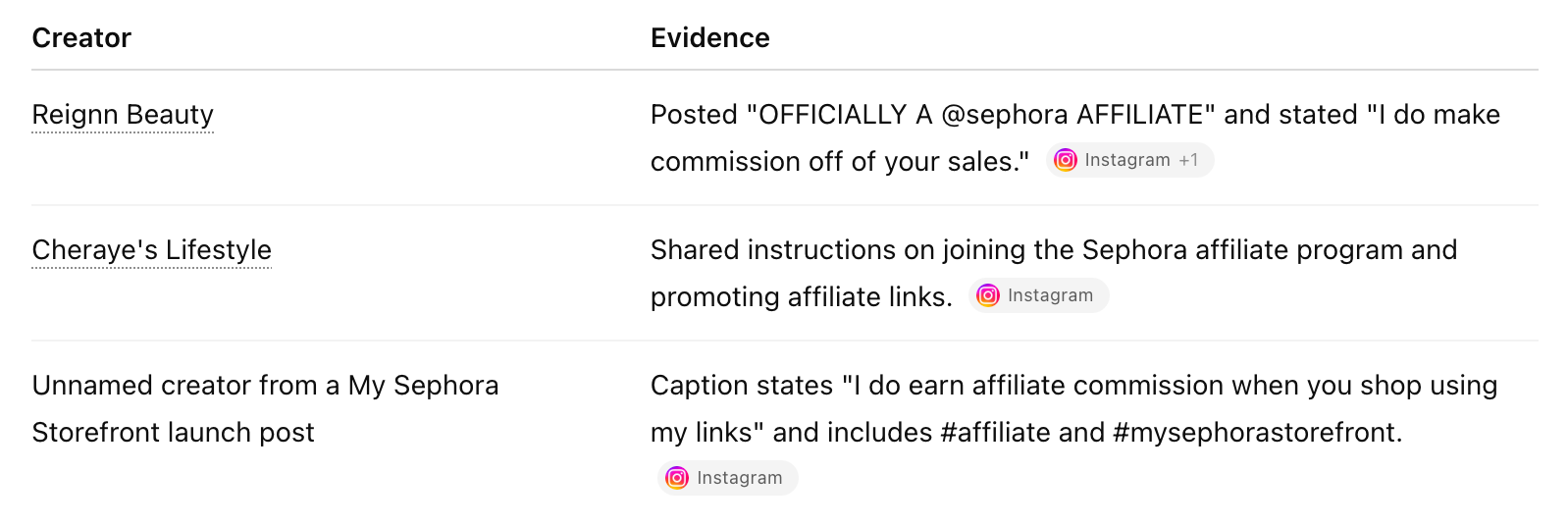
Screenshot taken on 14/06/2026
(You can take a look at the whole annoying convo here if you like.)
So TBH you’re probably better off using the Google method – it’s more reliable and more scalable.
Or, alternatively, you can use an AI solution that’s actually built for creator search, like Modash’s natural language AI Search tool.
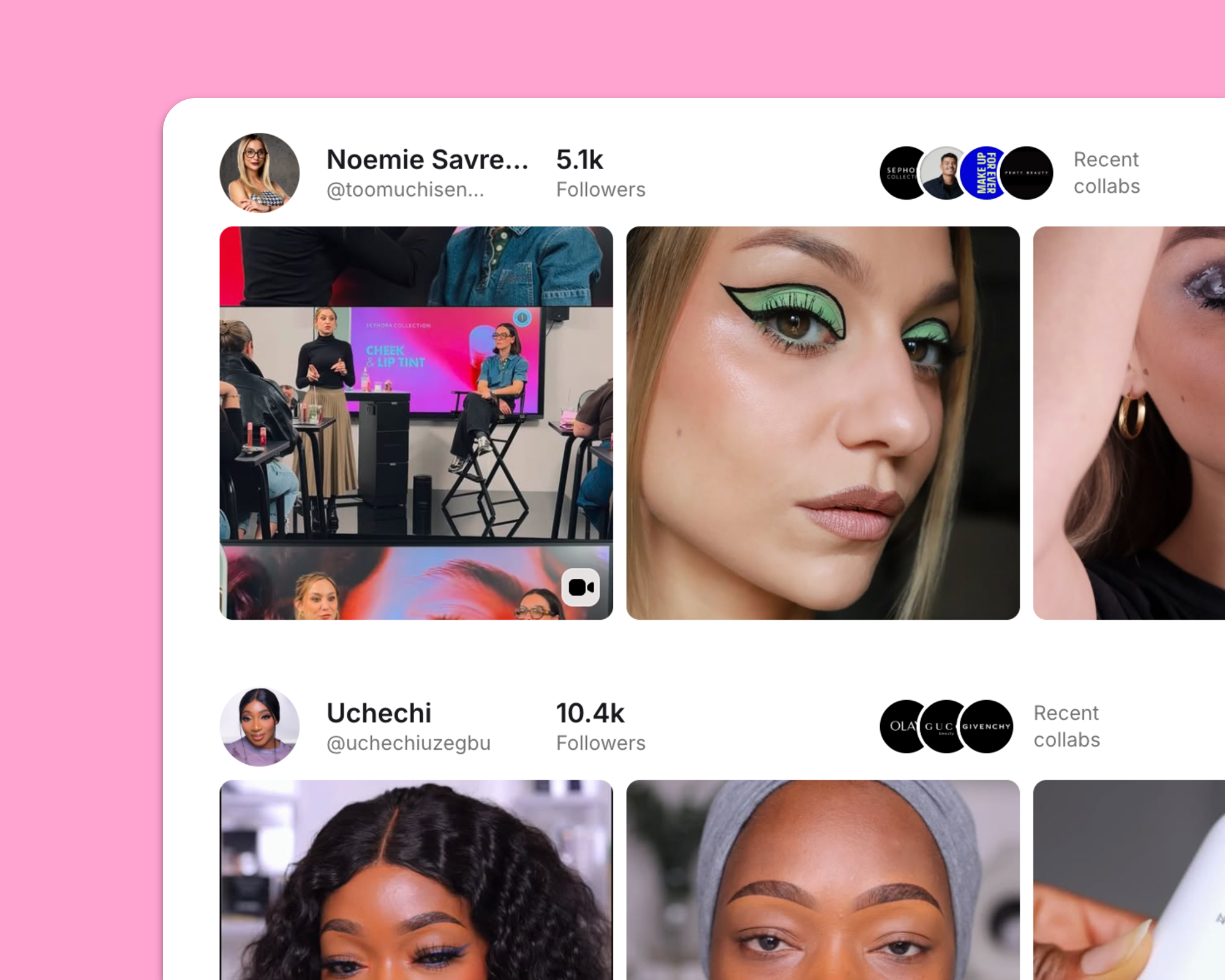
To build our AI tool, we analyzed and stored billions of pieces of content to understand what creators are posting about based on the actual images and videos they share, not just the words in their captions and hashtags. That means if you ask us to find beauty creators showcasing Sephora product tutorials, you’ll end up with 1,000+ profiles to review and vet:
👉 Check out our AI Search tool by creating your free Modash account!
As well as searching on Google, you can use the built-in search tools on social media platforms to track down competitor affiliates. It couldn’t be simpler: just enter your competitor’s brand name in the search box and see what comes up.
For example, I typed “fly by jing” into Instagram’s search function (in case you’ve never heard of them, they make Chinese chili sauce) and got the following results:
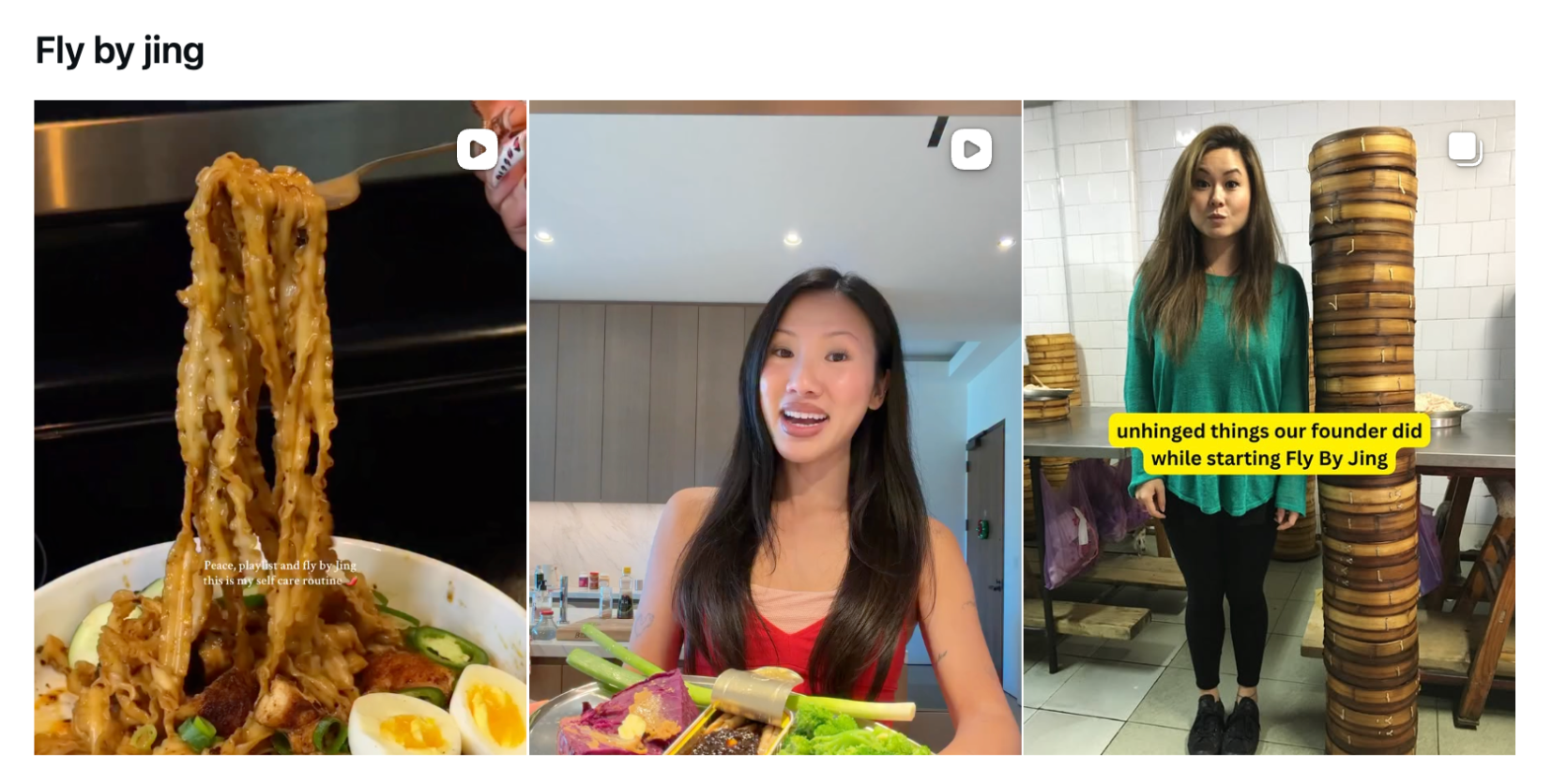
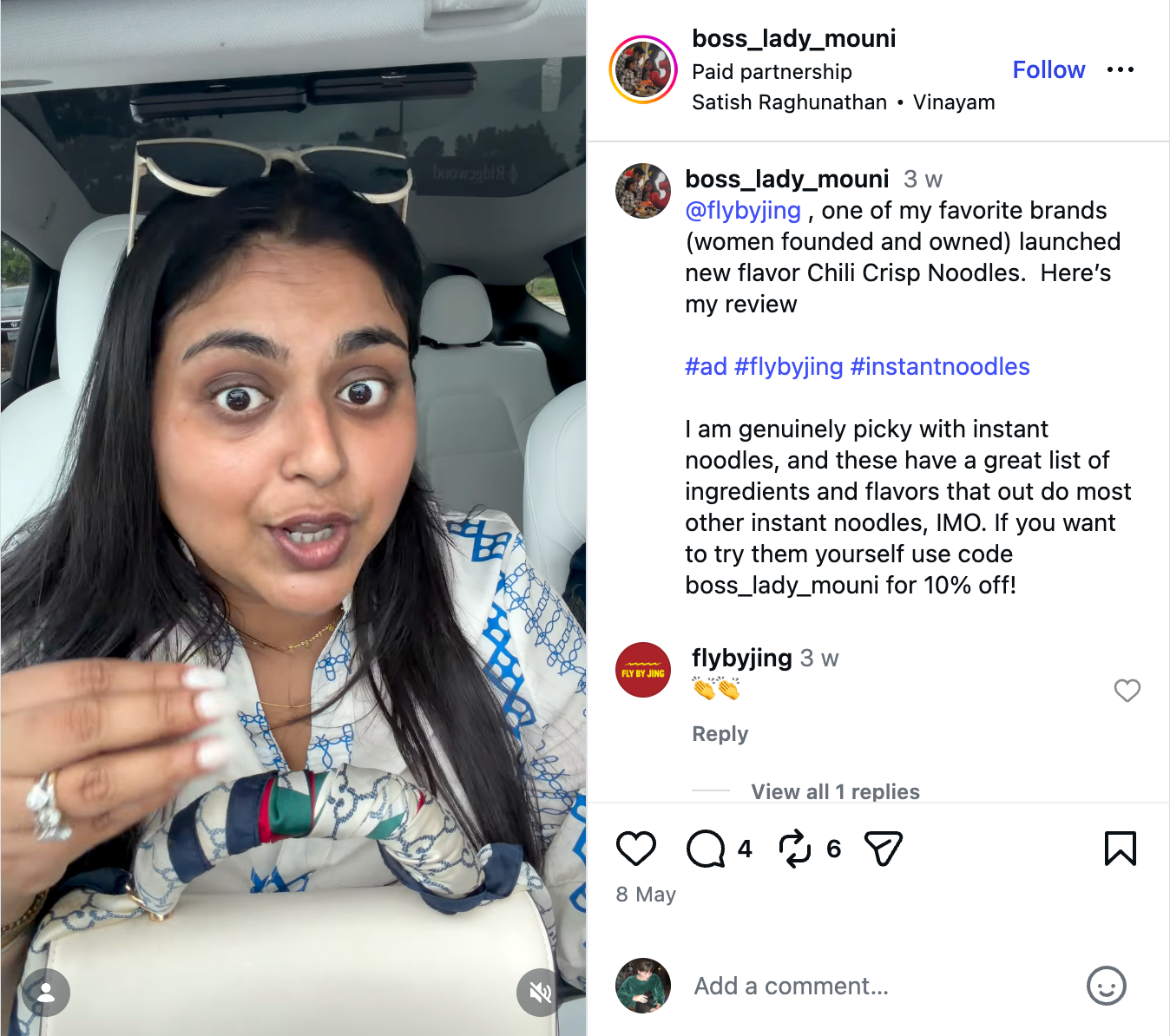
Granted, you’ll end up with a ton of posts from the brand’s own account, which isn’t super helpful. But with a little clicking, you should eventually find some affiliate content, like this post from Mounika Tiruveedhula, AKA @boss_lady_mouni:
You know the drill by this point: keep trawling through the results, find some way to collate the best creators you find – most likely, adding them to a spreadsheet – and slide into their DMs or email them to see if they want to become your affiliate, too.
It works fine, it’s just sloooooooow 🥱
While I’ve largely focused on social media content creators up to this point, it’s important to note that they’re not the only type of affiliate you can work with. Website publishers are a whole other category of affiliate – and they can be just as valuable in driving clicks and sales.
Voucher code sites are one specific type of publisher. Their whole purpose is to aggregate and promote discount codes for brands they have affiliate relationships with. Examples include:
👉 Honey
👉 Rakuten
So the idea behind this tactic is to visit those sites (and similar ones) and search your competitor’s brand name. For example, I searched on RetailMeNot for Stanley 1913, the drinkware company:
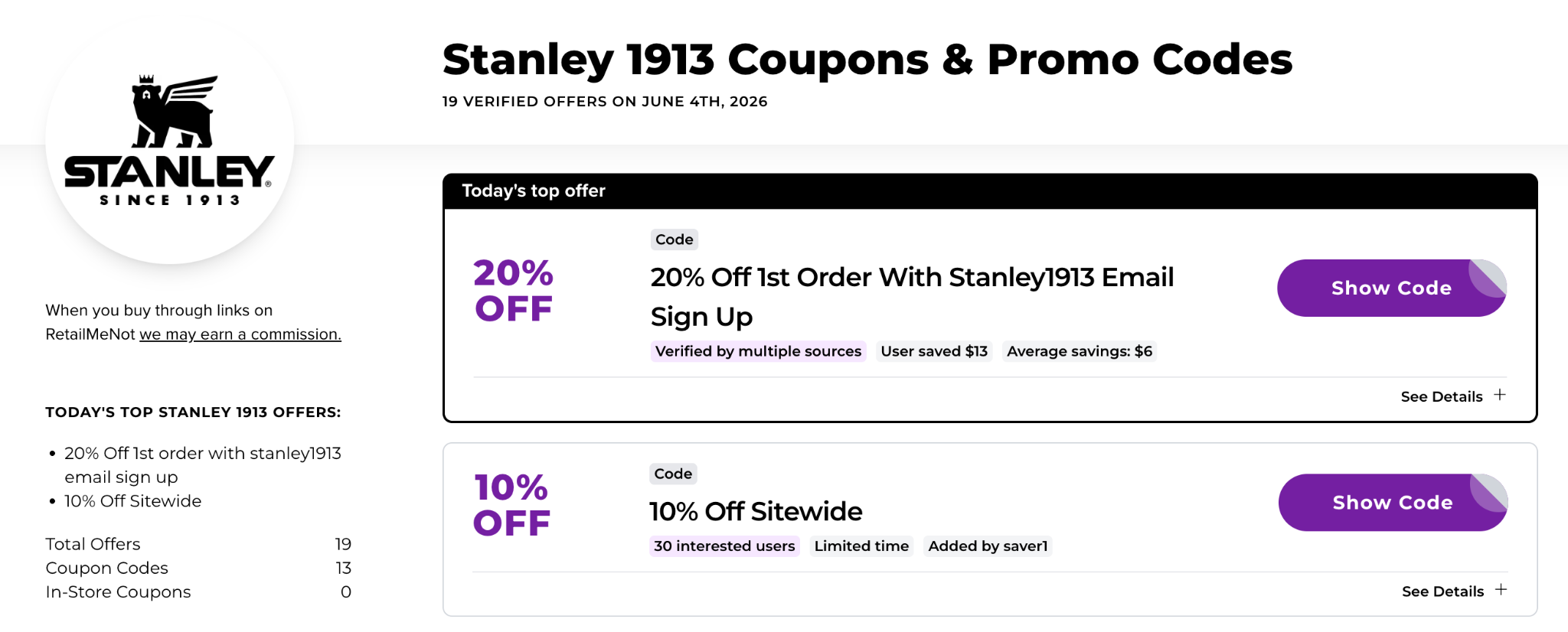
Screenshot taken on 04/06/2026
Then I scrolled down the page and found this copy explaining that RetailMeNot has been a Stanley affiliate partner since 2025:
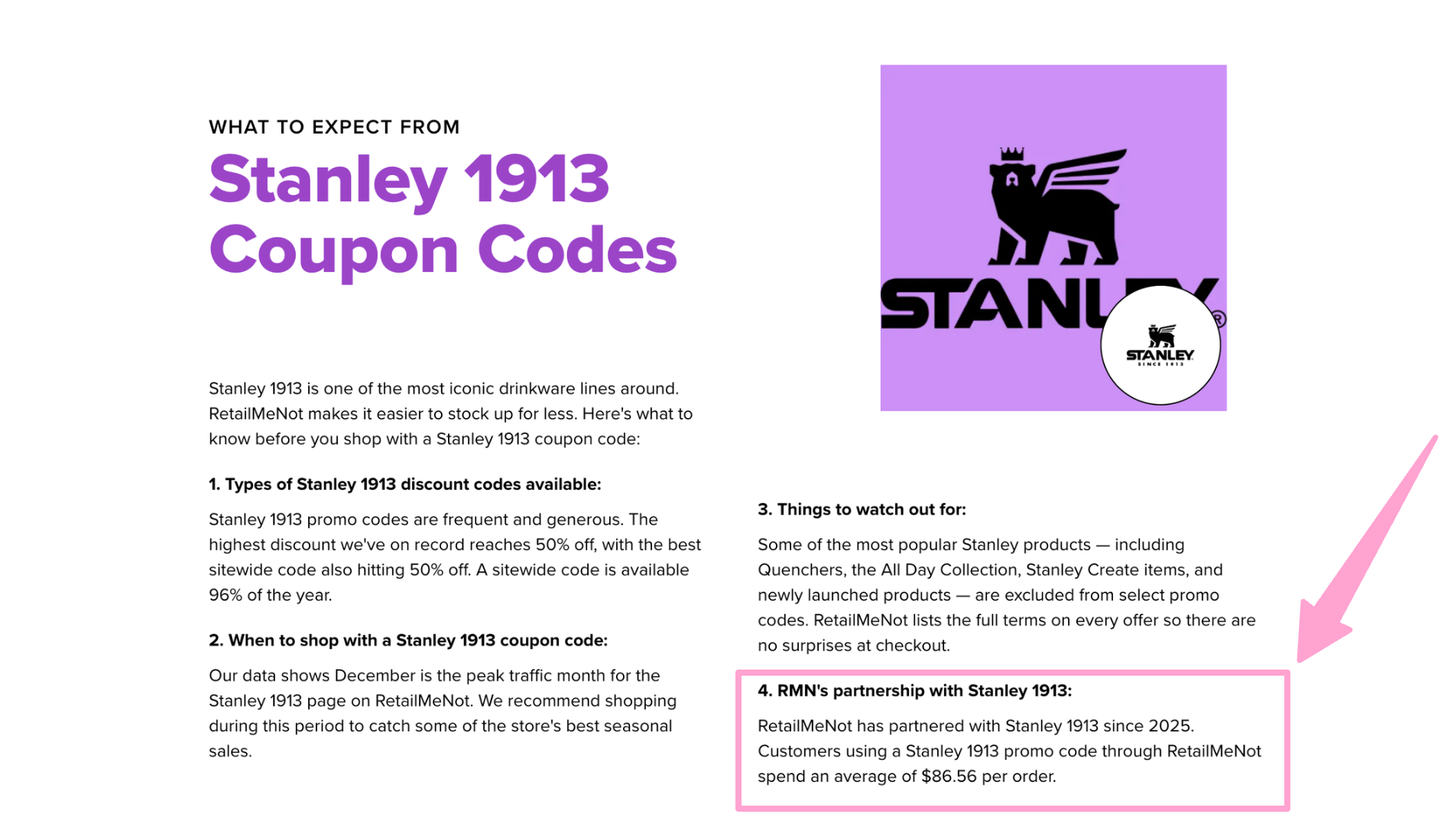
Screenshot taken on 04/06/2026
In which case maybe it’s worth you working with them, too?
By their nature, affiliates tend to be very online – it’s a requirement of the job, really.
As well as sharing content on their websites and/or social channels, many of them like to spend their days posting in affiliate communities like subreddits and Facebook groups. Inevitably, this means they’ll sometimes discuss the programs they’ve signed up for.
How does this help you find your competitors’ affiliates? Well, you can search the group/subreddit in question for people posting about your competitor.
For example, Reddit has a built-in search bar that lets you find relevant content within the subreddit you’re viewing. When I used it to search for mentions of Nike, I found this unhappy creator venting about low returns from Nike’s affiliate program:
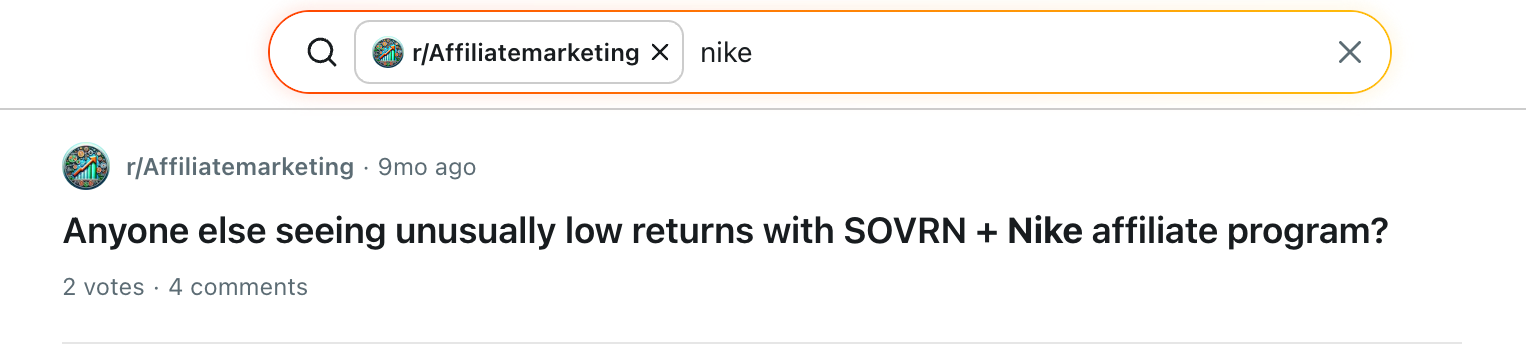
Now, if I was actually a Nike competitor, I could reach out to that creator and ask if they’d like to join my program instead.
This final method isn’t a standalone way to find competitor affiliates. Rather, it’s a handy way to verify whether a specific creator you’ve found is currently working with a competitor.
It’s super simple: just visit the creator’s Instagram or TikTok profile, tap the link-in-bio, and see if they link to your competitor.
For example, here’s the bio link for Instagrammer Alessia Oronzio…
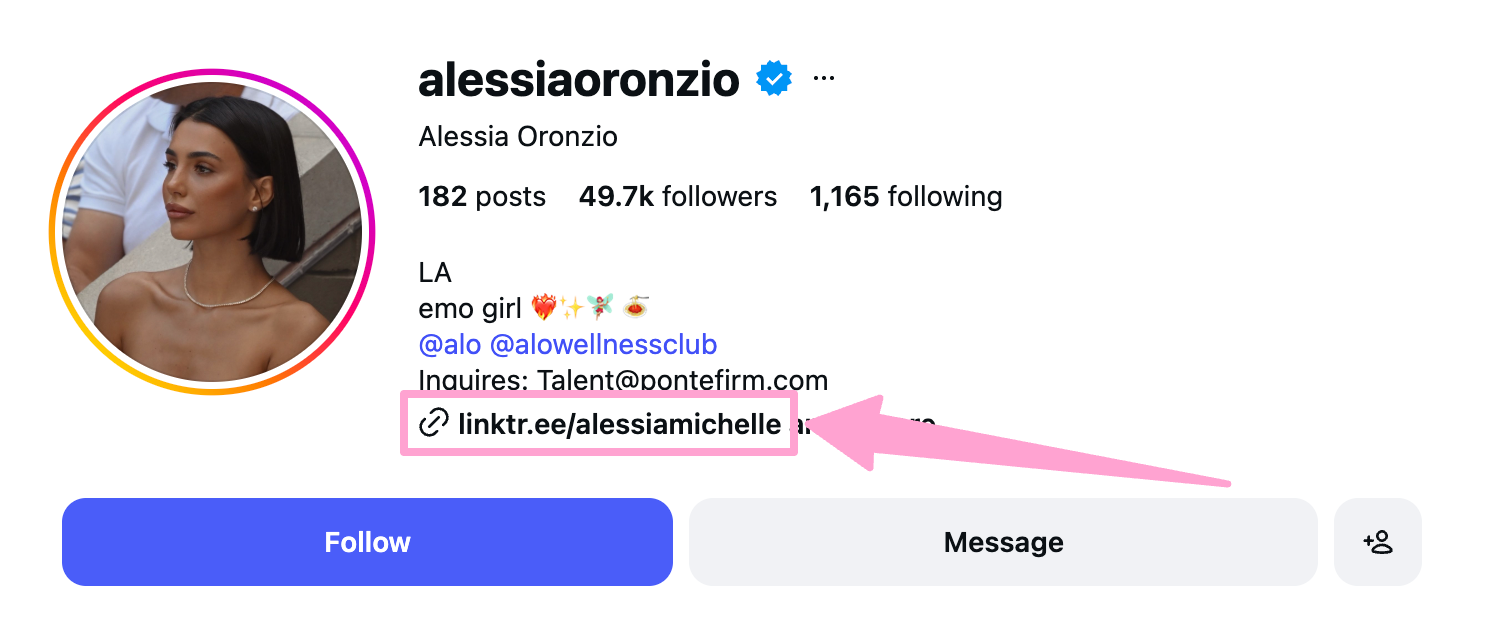
…where she links to fashion retailer Revolve.
Of course, this technique won’t necessarily surface every single one of a creator’s brand partnerships. But if they’ve built a long-term relationship with your competitor and/or work with them on a recurring basis, there’s a good chance they’ll add the brand in question to their bio links.
Follower count used to be the go-to metric for deciding whether or not to work with a social media creator.
Don’t get me wrong; it can still be useful. After all, more followers generally = more views. But it’s no longer the be-all, end-all. Today, brands are more likely to prioritize an affiliate’s engagement data and audience fit. Because you definitely want to reach people who are interested in your product, and you also need to trust that the creator’s content will be engaging enough to drive action (AKA website visits and sales).
There are various free tools that can help you do this, such as Modash’s Instagram engagement rate calculator and our free influencer analytics tool. Trouble is, they rely on you analyzing one creator at a time. That’s fine if you’re only looking to hire a handful of affiliates, but if you’re serious about scaling, you need a more efficient approach.
In that case, it’s time to upgrade to a paid Modash account.
That way, when you find a competitor creator, you can open their profile to instantly view their engagement rate alongside a bunch of audience data, including:
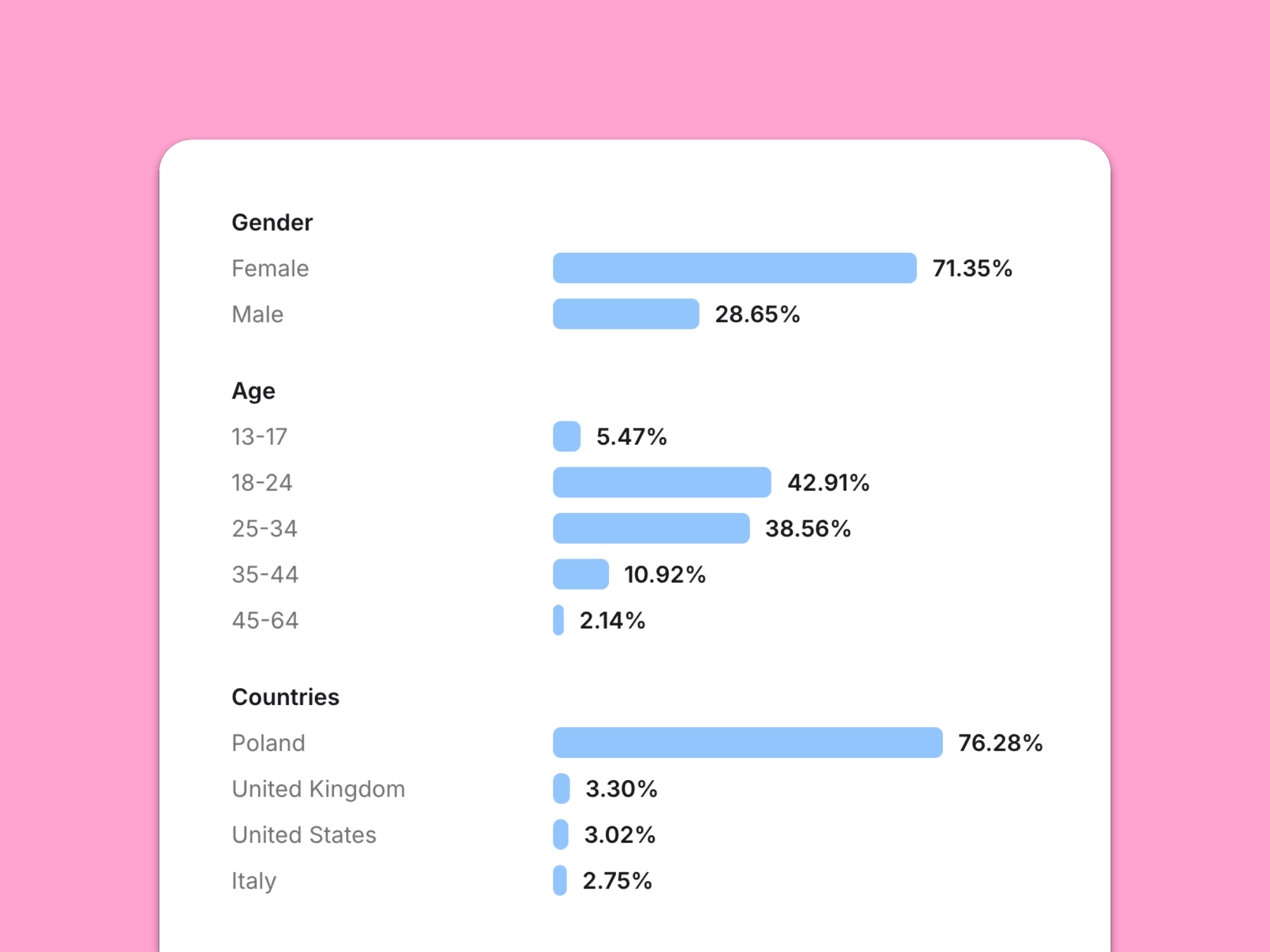
Recency is a careful balancing act.
On one hand, you want to find affiliates who’ve recently promoted your competitor. That way, you can feel more confident that their audience is still interested in products like yours.
But on the flip side, you might not want them actively posting about rival brands at the same time they’re mentioning you. Some affiliates can get away with this – like, if their whole “thing” is reviewing products in a specific category, it makes sense that they’d be constantly mentioning a whole bunch of brands – but for most, it looks a little inauthentic.
And inauthentic content rarely drives sales.
The only way to manually check recency is to scroll through each affiliate’s feed in turn until you find their last collab with your competitor. Again, you can likely imagine how much of a heavy lift this would be at scale 😬
Far better to use Modash, which lists all of a creator’s collaborations in their profile, along with:
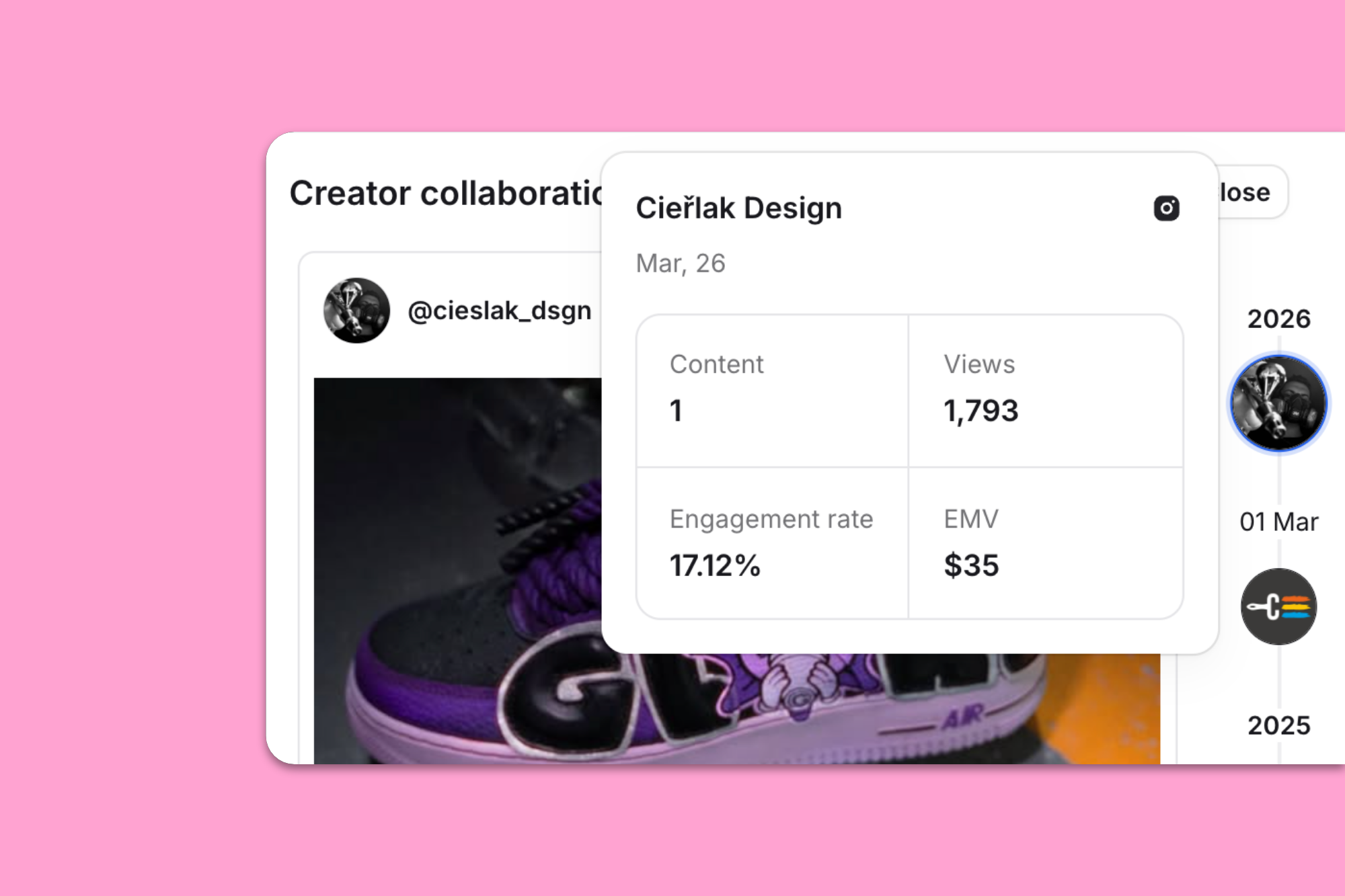
Like I explained back at the start of this article, affiliates (generally) only work with brands on an ongoing basis if they’re making good money from the partnership. Which most likely means they’ll be generating lots of traffic, sales, and revenue for the brand in question.
As such, it makes sense to prioritize affiliates who’ve posted about your competitor multiple times, rather than those who’ve only shared one-off posts.
The process for finding this information is just the same as in the previous section – you can either look through a creator’s feed to see whether they’ve shared several posts about your competitor, or you can let Modash do the hard work for you.
If you’re serious about growing your affiliate program, Modash is the obvious choice.
As you can see, there’s no shortage of manual methods to find your competitors’ affiliates. You can Google it; you can use social media search tools; you can even stalk affiliate communities to see if they’re discussing your competitor’s program.
Thing is, while all of those tactics work just fine for recruiting small numbers of creators, they’re just not scalable. You’ll spend hours every week on manual searching and vetting when you could do it all in minutes (or seconds) with Modash.
It’s not even like Modash is cost-prohibitive, with plans starting at $199/month.