

Mais opções
Aplicações




Most affiliate programs plateau not because the model doesn’t work, but because admin tasks eat up your whole day.
You know the pattern: you started partnering with a handful of affiliates, managed everything in a spreadsheet, and it worked fine. Then you started scaling your affiliate program.
Now you’re copy-pasting the same onboarding emails every week, manually cross-referencing Shopify orders with coupon codes, chasing creators for content links they forgot to send, and spending a full afternoon on payouts every month.
None of those tasks is in service of improving your strategy or offering a better affiliate experience. But before you can start investing in the long-term vision, you’ve run out of hours doing admin chores.
The solution is automating parts of your affiliate marketing operations that don’t require the human touch.
This guide breaks down the full affiliate workflow – discovery, outreach, onboarding, tracking, and payouts – and shows you what automation actually looks like at each stage, what tools make it possible, and where manual work is still worth keeping.
Affiliate marketing automation involves using software to handle the repetitive parts of running an affiliate program so you can spend more time on the work that actually requires judgment.
But this doesn’t mean you automate everything possible. Some tasks could be automated, but they need human input. For example, it’s A-OK to automate following up on your outreach messages or sending a templated welcome email to all affiliates. But negotiating with a high-value creator is a conversation you should participate in.
The tasks that strengthen your affiliate relationships or require your experience/judgment are something you should not automate.
Now, let’s understand how you should decipher which tasks in your workflow you should automate first.
Most marketers begin by automating affiliate payouts because it’s the most obvious. And that’s fine – but the bigger leverage is usually earlier in the funnel. Here’s a rough priority framework:
You don’t need to automate everything at once. Start by dissecting where your team spends most of their time. If you’re in scaling mode, you’re likely spending a lot of time hunting for relevant affiliates. But if you already have a mature affiliate program with tons of partners, you need to prioritize tracking content and performance because they’ll have the most influence on your future strategy.
The fear with automation is that it makes your program feel generic. That’s a valid concern – and it’s also mostly avoidable if you’re deliberate about where you draw the line.
The rule of thumb: if a task requires human judgment or strengthens a relationship, keep it manual.
Your onboarding sequence can be templated, but the first DM to a creator you genuinely admire should still be written by a human. Commission tracking can be automatic, but the quarterly check-in where you ask a top performer what’s working and what’s not – that stays manual.
The goal with affiliate automation isn’t to replace all tasks on your to-do list with software. The goal is to free up your time so you can focus on building affiliate relationships and improving your overall strategy.
Related reading: 6 Influencer Marketing Tasks You Can Automate (And 5 That You Shouldn’t)
Next, let’s break down what automation (without losing personalization) looks like at each stage of the affiliate workflow – discovery, outreach and onboarding, tracking, and payouts – along with the tools that make each one possible.
Finding the right affiliates is one of the most crucial and time-consuming parts of an affiliate program. The goal with automation here isn’t to list a longer list of irrelevant affiliates, but to get to the right creators faster and analyze their profiles quickly.
The manual approach looks something like this: you open Instagram, search a hashtag or browse a competitor’s tagged posts, click through profiles one by one, eyeball their content, check their follower count, and copy their handle into a spreadsheet. Repeat 50 times.
This workflow has two problems:
1. It doesn’t scale. You can only find so many relevant affiliates while manually scrolling.
2. After finding an affiliate you like, you still have to manually vet them (by either asking them or using a tool) to ensure they’re a brand fit.
That’s why a better, more automated approach is using a creator discovery software that allows you to use filters to find relevant affiliates. For example, let’s say your non-negotiable criteria are:
In a discovery tool like Modash, you can apply all these filters to find a list of potential affiliates who match your criteria to a T. You can even apply additional filters like fake followers, audience demographics, language, and more.

Our pro tip is to apply limited filters in the beginning so you find a wider pool of affiliates. Keep narrowing it down as you go so you don’t miss out on any creator that was the perfect fit but didn’t match all your criteria.
What if you want to find a creator who matches a vibe (and not such specific boxes)? Maybe you’re searching for storyfit creators (aka affiliates outside your immediate niche) for fresher collaborations.
Modash’s AI search takes care of that. Instead of just adding filters, you can also use natural language to describe the kind of creator you’re looking for or just upload a visual reference.
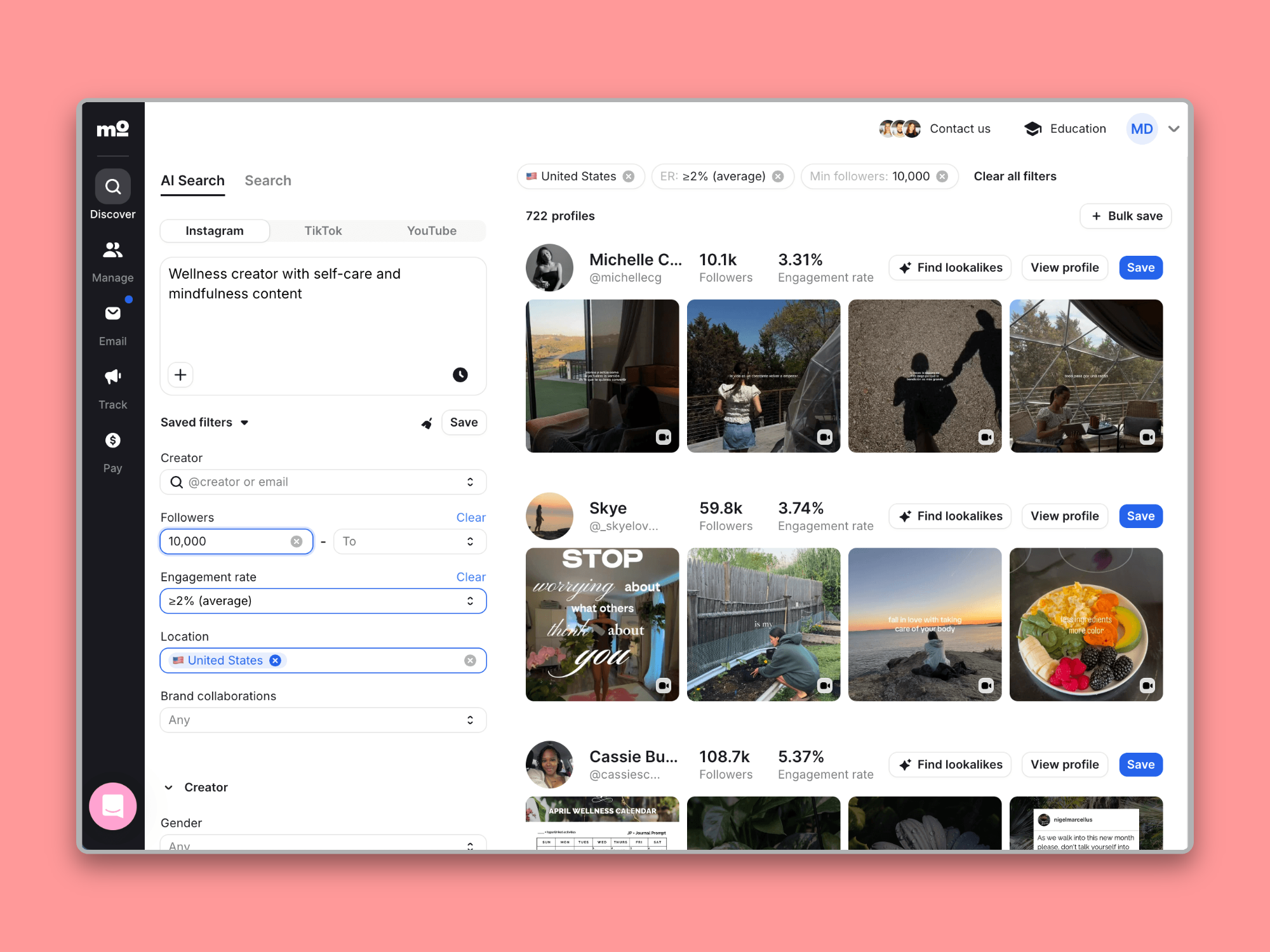
You can even save these filters so you don’t have to start applying them from scratch every time you need to search for new affiliates.
When you automate affiliate discovery using any database, the #1 limitation you’ll run into is most tools have quite a small database. As soon as you start applying filters, you’ll shrink your pool even further and have a handful of affiliates remaining. Then you’re back to square one, trying to find more affiliates manually.
With Modash, you’ll never run into this problem because it lists every creator on the planet with 1k+ followers across Instagram, TikTok, and YouTube. That’s over 380M+ creators right now (and it’s only growing!).
Thanks to AI search, plenty of filters, and a vast database, using Modash will ensure you never run out of potential affiliates to partner with. The shortlist that used to take you hours to build will now be finished in minutes.
The easiest way to find high-performing affiliates is to analyze your existing partners, sort out the top performers, and find more creators like them.
There are manual ways to do this, like clicking on the suggested accounts button next to a profile’s icon on Instagram.
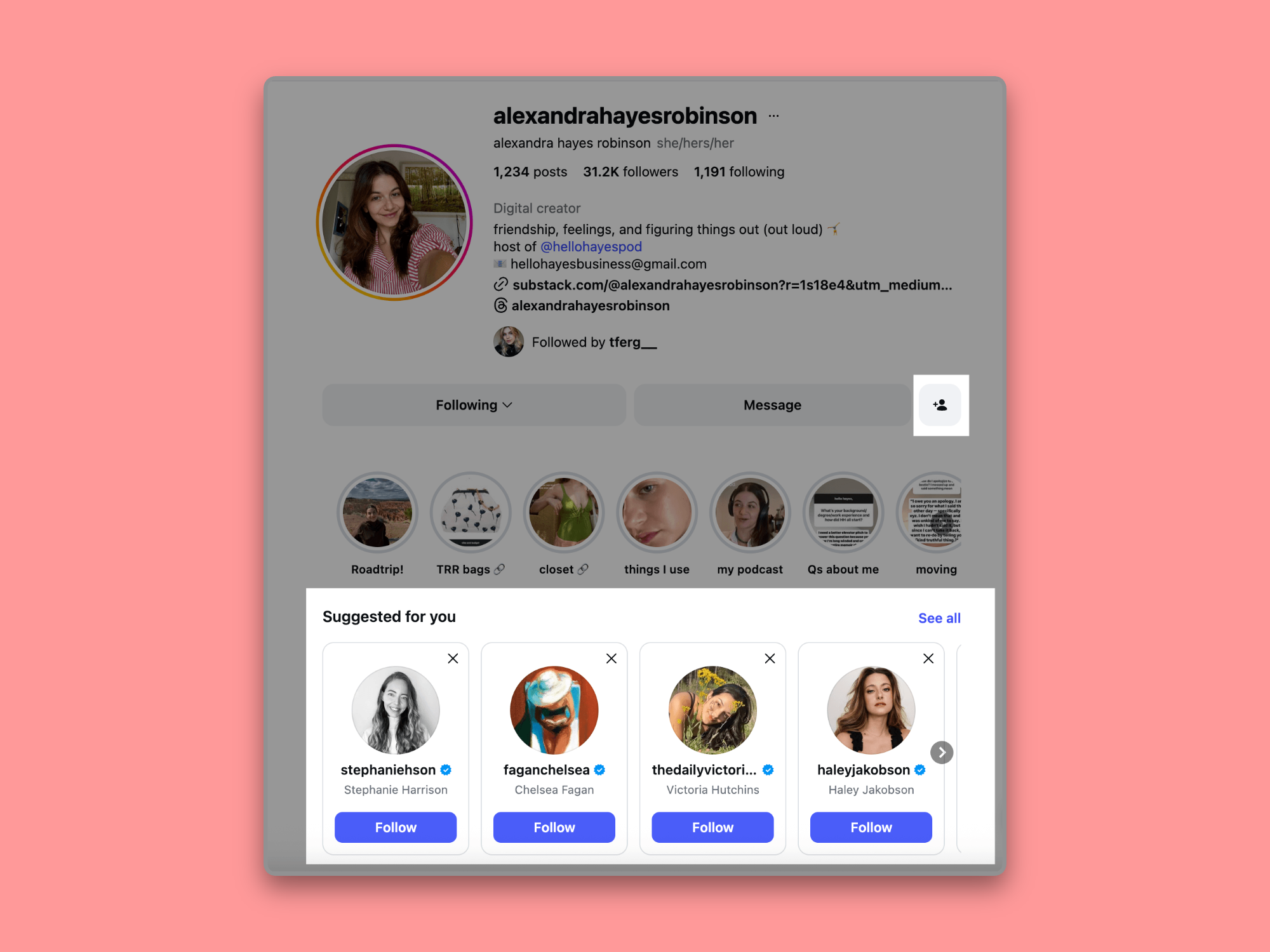
And if you’re scrolling to find relevant affiliates from your brand account, it’s likely social media algorithms will automatically feature some similar profiles to your ideal affiliates in your feed.
But all of these tactics are dependent on social media algorithms and aren’t scalable. And like before, after hunting down a creator that looks similar to your top-performing affiliate, you still have to do the vetting manually to ensure an affiliate that looks good on paper is actually a good fit for your brand.
If you use a tool like Modash, finding lookalike affiliates is much quicker and simpler. Instead of manually hunting for similar profiles, you feed the tool a creator who’s working and let it surface others with similar audience demographics, content style, and engagement patterns.
Just enter the affiliate’s handle and Modash will find plenty of lookalike profiles for you.

The lookalike feature is especially useful when you’re expanding into a new market or content vertical. Rather than starting from scratch, you’re using your existing results as a template.
Finding a relevant affiliate is only half the battle. The next step is doing a deep dive on their profile and metrics to understand if they’re actually a brand fit.
The manual approach is finding an affiliate, vetting their profile to check their content, asking them for performance numbers/media kit, and waiting for their response. Apart from being extremely time-consuming, following the manual route also means:
a) You might be wasting hours vetting and communicating with an affiliate who doesn’t meet your criteria
b) Some creators may dupe you by inflating their performance metrics or manipulating their audience quality
Automating this process means having all the data you need about a potential affiliate at your fingertips – without reaching out to them. On Modash, as soon as you find a list of creators who match your criteria, you can dive deep into their profile and see:
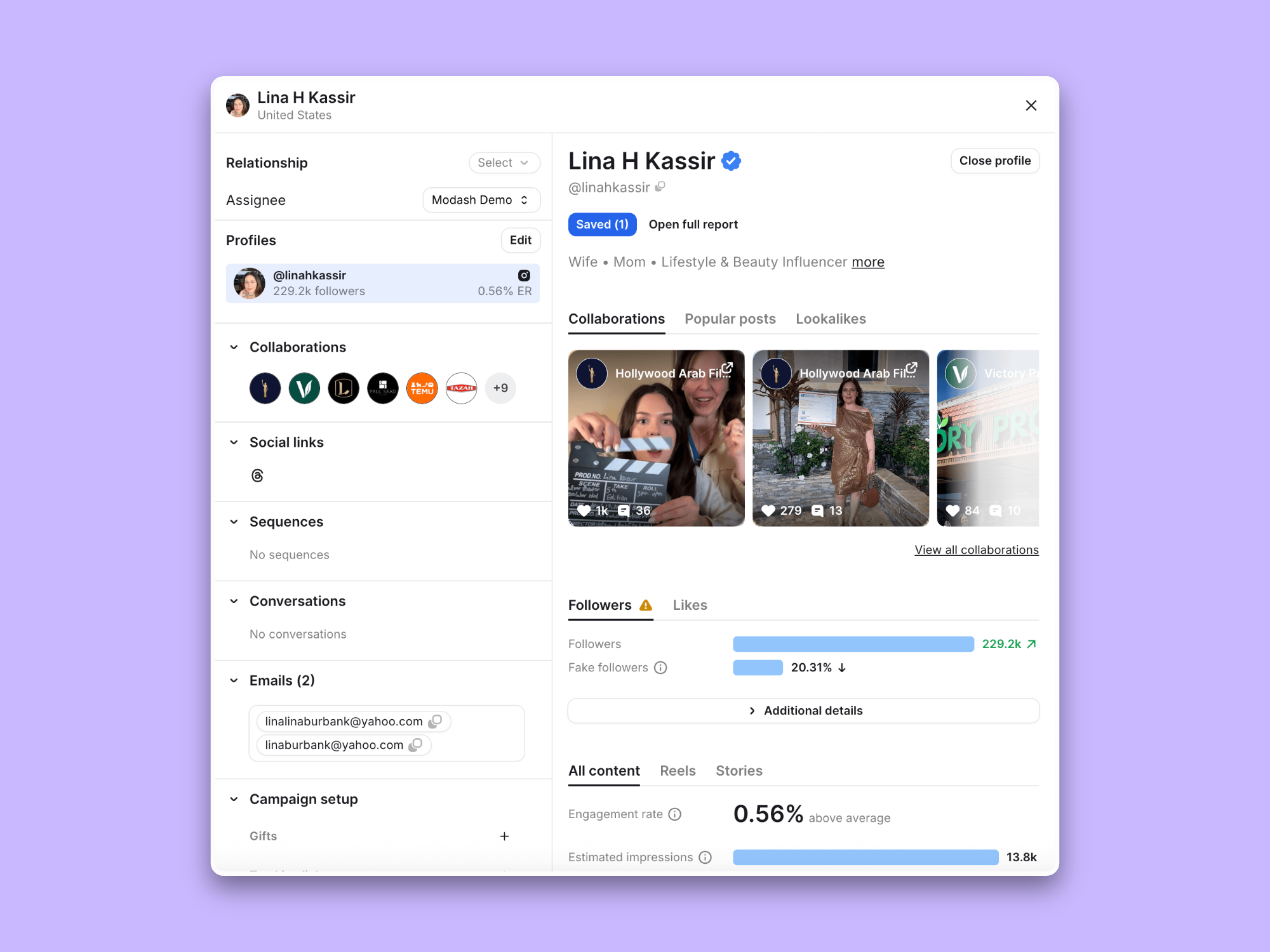
Having this information readily available means you only reach out to affiliates who actually meet your criteria. And you don’t waste your time asking them for their previous collaborations and performance numbers.
Note: we still recommend manually scrolling through an affiliate’s content to check for its overall vibe. Data and filters can help you shortlist the ideal creators, but only your judgment can help you determine whether or not an affiliate is a brand fit.
Related reading: How to Assess Influencer Profiles: 7 Factors You Should Look For
Now that you have a vetted shortlist of affiliates, the next step is reaching out to them and getting them set up in your program. Here’s how automation can help you do that without drowning in repetitive emails.
Once you have a vetted shortlist, the next bottleneck is getting those affiliates into your program – and doing it without spending your entire week on email or DMs.
Outreach and onboarding are where most affiliate managers lose the most hours to repetitive work. Every new affiliate gets a version of the same pitch, the same welcome email, the same set of tracking codes, and the same FAQ answers. If you’re writing those from scratch each time, automation can help you get hours of your day back.
Before you can start your outreach process, you need to find the affiliate’s email. Most creators have them listed in their bio. But manually storing each email in a spreadsheet first will shave hours off the clock.
A better solution is using tools like Modash that surface publicly available emails automatically with each creator’s profile.

If you want to avoid affiliates who don’t have a publicly listed email, just toggle on the “email available” button and the tool will only show creators with their emails listed publicly.
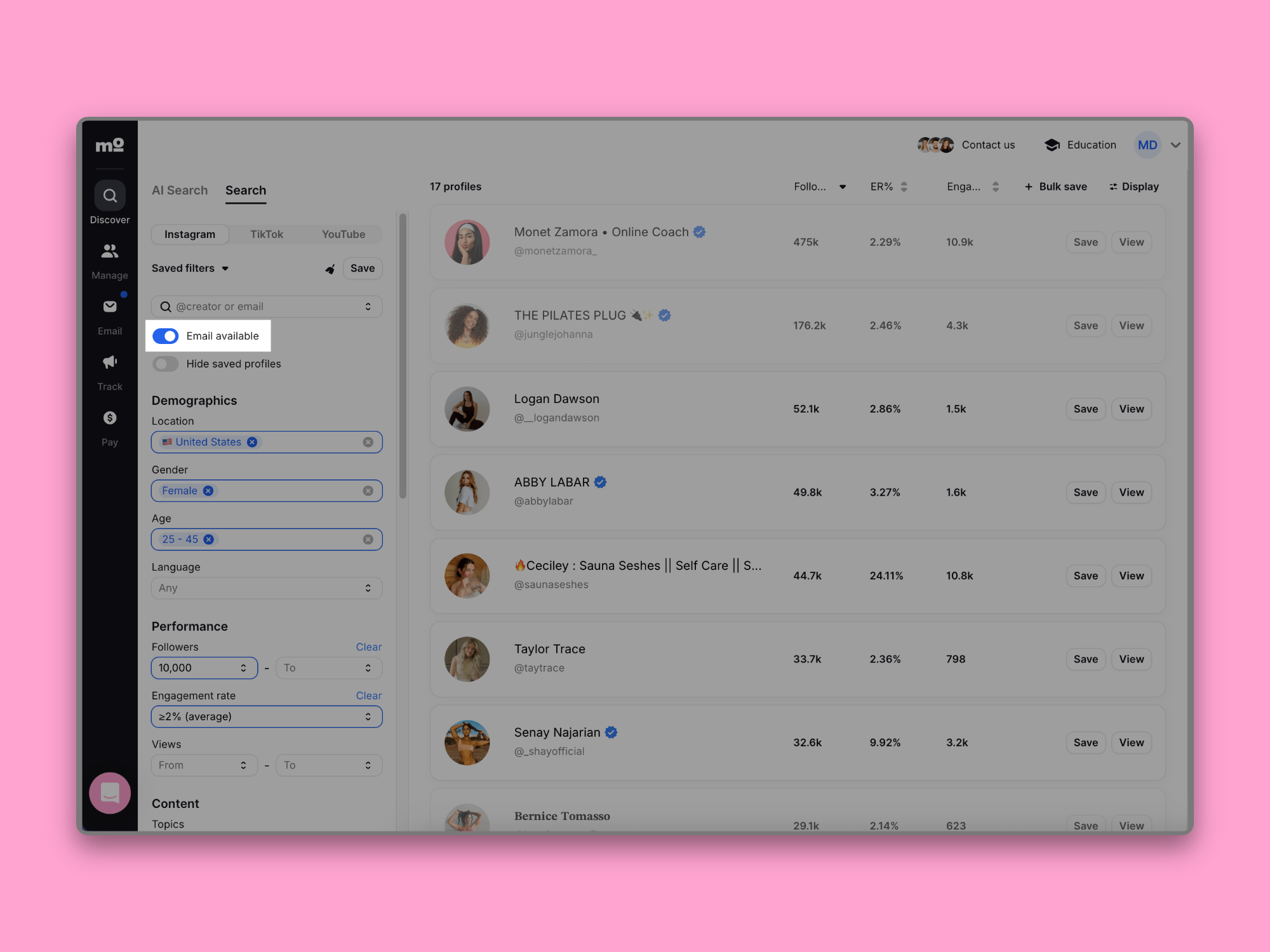
Pro tip: create a shortlist of all your potential affiliate partners and unlock every creator’s email in bulk using the relationship management screen.

You want to be in the middle of the “fully custom email for every affiliate” and “blast the same generic pitch to 500 people” spectrum. That means drafting a partially templated outreach email.
You write the core structure once – who you are, what the program offers, what’s in it for them – and personalize the parts that show you’ve actually looked at their profile. That might be referencing a specific piece of content they posted, mentioning why their audience is a fit, or noting something about their niche. Here’s an example of what that template looks like:
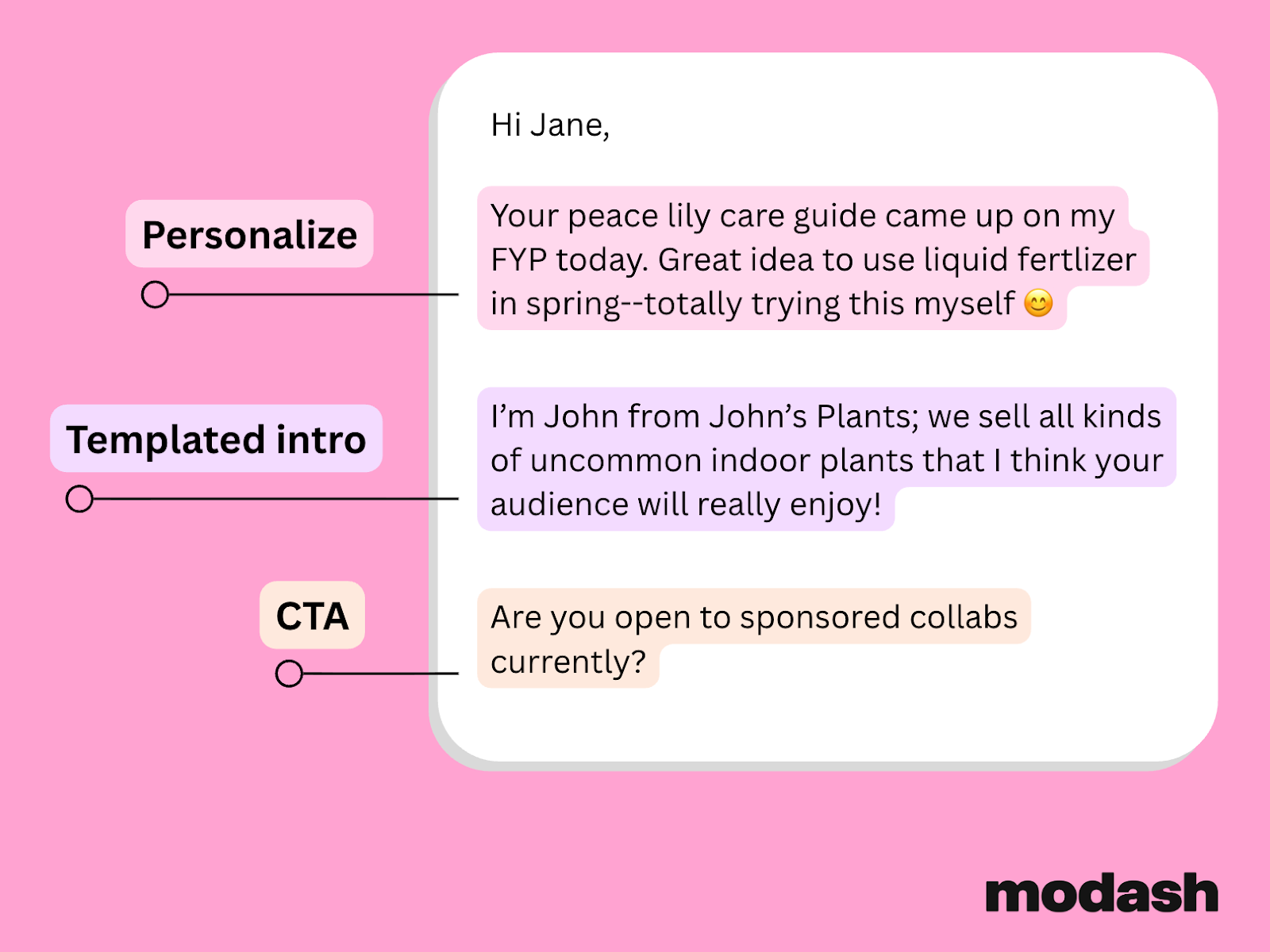
Why personalize the outreach email when you can just do mass outreach? Because most of the time, a personalized approach will give you better response rates than the generic pitch approach. Plus, by investing the time to personalize a part of your email, you start off the relationship on the right foot.
Still, copying an affiliate’s email from a tool, writing the personalized email, sending it, and following up is too manual. You could use tools like Mail Merge, but setting it up requires too much upfront work and you still have to manually track your efforts in a spreadsheet.
It’s much more efficient to use an influencer outreach tool like Modash that connects to your inbox and surfaces all the creator details right next to their contact info. All the info you need to send your outreach (email and profile details for personalization) is right there.

The bigger time-saver is automated follow-up sequences. You set the sequence – say, an initial pitch, a follow-up three days later if an affiliate hasn’t replied, and a final nudge a week after that – and the sequence stops automatically when the affiliate responds.

You don’t have to track who responded, who you need to follow up with, and pull your hair out trying to figure out which creator is at what stage in your affiliate program.
Once an affiliate says yes, onboarding kicks in. And for most programs, onboarding is the same five-to-seven touchpoints every time:
You might have other similar email sequences in your affiliate program like:

If you’re sending these regular email sequences manually, you’re spending 15-20 minutes per affiliate per email. Multiply that by 10 new affiliates a month and it adds up fast.
With automated email sequences in Modash, you write the emails once, set the timing (e.g., welcome email immediately, brand guidelines the next day, first check-in a week later), and let the sequence run.

You can use a standalone email automation tool like Mailchimp or Klaviyo if you prefer to keep onboarding comms in your existing email stack. But then your influencer outreach will live separately from the rest of your workflow. In Modash, everything related to influencer marketing stays in one tool.
Your welcome email in the onboarding process likely includes assigning each affiliate their unique UTM link or discount code. But creating and tracking these links/codes manually is a chore.
You need to use tools like Google’s Campaign URL Builder (for UTMs) paired with a link shortener like Bitly to systematize the process – but you’ll still need to manage distribution manually unless you template it into your onboarding email sequence.
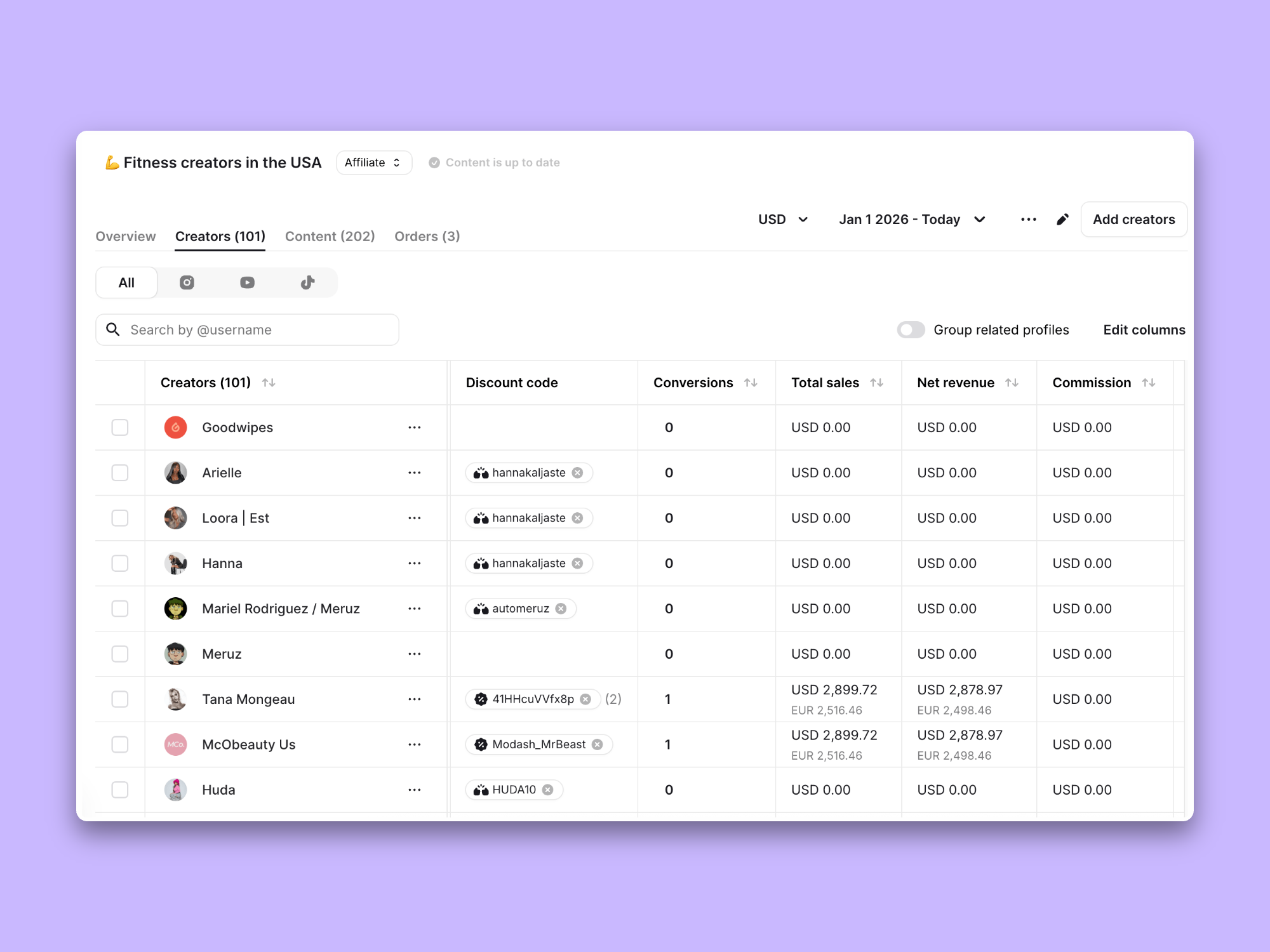
But with Modash’s Shopify integration, everything from discovery to tracking lives in one window. You can create unique promo codes, UTM links, affiliate links, and QR codes directly in the platform and send them to affiliates in a few clicks.
The codes are tied to each affiliate’s profile, so tracking is automatic from the start. You don’t need to maintain a spreadsheet of codes or perform any manual Shopify admin tasks.
You need to communicate with your affiliates regularly to clear any roadblocks they have, answer their questions, share company/product updates, and motivate them to create content. Doing this one email at a time for each affiliate is not the most efficient.
Broadcast-style communication solves this. Instead of writing individual emails every time you have an update, you send one message to your entire affiliate roster (or a filtered segment of it).
In Modash, you can use bulk email to send updates to your affiliate lists. You can also create templates so you can reuse the same structure of email every time (great for monthly updates).

Outside of Modash, tools like Slack (if you run a private affiliate community channel), a simple email newsletter through Mailchimp, or even a WhatsApp broadcast group can serve the same function. The important thing is that your affiliates have one reliable channel where program updates land – and you’re not writing the same message 50 times.
Related reading: How to Use One-to-Many Broadcast Channels in Influencer Marketing (Without Erasing the Personal Touch)
Note: we don’t recommend solely relying on broadcast channels to communicate with your affiliates. If our surveys have told us anything, it’s that an affiliate program is only as successful as your effort in it. Maintaining strong 1:1 relationships, especially with your highest-performing affiliates, is a non-negotiable element to make your affiliate marketing efforts successful.
New affiliates you onboard will have a lot of questions in the beginning.
If you’re answering these individually, you’re wasting time repeating yourself. A self-serve affiliate landing page consolidates everything an affiliate needs to know into one place: program terms, commission tiers, content guidelines, FAQs, and a signup or application form.
Pura Vida is a great example of this – they have a dedicated landing page answering the most commonly asked questions about their affiliate program. Whenever a new affiliate is unsure about something, they can find the right answer here.

A landing page for your affiliates can do double-duty, too. It reduces inbound questions from existing affiliates and it acts as a recruitment tool – affiliates who find your brand organically can apply through the page without you doing any outreach at all.
You can build this as a simple page on your existing site (a dedicated Shopify page, a Notion doc, or even a Google Doc works in a pinch), or use a landing page tool like Carrd or Unbounce if you want something more polished.
Checking to see if an affiliate actually posted about your brand is one of the biggest timesucks in your to-do list. And tracking affiliate content performance is another beast.
When you’re manually checking whether affiliates posted, cross-referencing coupon codes in Shopify, and building performance reports in a spreadsheet, you’re slow and likely missing some performance data metrics entirely.
Automating accurate performance tracking can have a big impact on your overall affiliate marketing strategy because it’ll help you quickly and easily find your best-performing creators.
The manual version of content tracking looks like this: you DM or email each affiliate asking if they posted and wait for a response. Or you scroll through their feed to find it, screenshot the post, and log it in a spreadsheet. For Stories, you have a 24-hour window before the content disappears. Miss it, and it’s gone.
This workflow isn’t just slow and tedious, it’s also likely to break down fast as you start to scale. If you're working with 20+ affiliates who each post a few times a month, that’s hundreds of pieces of content to track – and Stories make it even harder because of the time pressure.
Influencer tracking tools like Modash automate this process by collecting all affiliate-generated content (including Stories!) for you. Once you add affiliates to a campaign, it automatically captures every post, video, and Story they publish about your brand across Instagram, TikTok, and YouTube. And your affiliate partners don’t need to authenticate anything for you to do this.
Modash detects content in two ways:
All of this lands in a centralized campaign dashboard. You’re not hunting through feeds or asking affiliates to send screenshots. The content comes to you, with performance metrics (views, engagement, clicks) attached.

And if you have your Shopify store integrated with Modash as well, you can see the whole picture (relationship history, discount code/link, number of sales, content posted) in one view for each affiliate – more on that in the next section.
Tracking affiliate content is one half. The other half is connecting that content to actual revenue.
The manual approach usually involves exporting Shopify orders, filtering by discount code, matching codes to affiliates in your spreadsheet, calculating commissions, and hoping nothing got lost in translation. If you’re also using UTM links, you're cross-referencing Google Analytics on top of all that.
With Modash’s Shopify integration, this connection is automatic. Promo codes and affiliate links are tied to each affiliate’s profile, so when a sale comes through, it's attributed to the right person without needing any spreadsheet reconciliation. You can see clicks, code redemptions, and revenue per affiliate in one dashboard.

This automation is not just convenient, it also reduces errors that can miscalculate the impact of your affiliate program and erode trust with your partners.
A mistyped code, a duplicate entry, a sale that gets attributed to the wrong affiliate – these mistakes compound over time and misattribute the actual impact of your affiliate program.
And when an affiliate questions their commission and you have to dig through three spreadsheets to figure out what happened, that’s a relationship risk.
Even with automated tracking, attribution isn’t perfect. Many brands with affiliate programs experience leaked coupon codes, affiliates accidentally sharing a shortened/modified link or discount code, and returning customers using a code when they would’ve purchased from you anyway.
If you’re not watching for these gaps, they’ll distort your reporting. You’ll end up overpaying affiliates who aren’t actually driving sales (because their code leaked) or underpaying top performers whose sales aren’t being attributed correctly.
A few things you can automate or systematize here:
Attribution is never going to be 100% clean. But the difference between catching a leaked code in 24 hours versus discovering it three months later during a quarterly review can be thousands of dollars.
Beyond sales data, you also want visibility into how much content each affiliate is creating so you can figure out which creators are the most active ones in your program.
It’s easy to keep track of this in your head when you’re managing 10 affiliates. But as you keep scaling and onboarding new creators, you need a better system to keep track of which affiliate posted when.
Otherwise, you end up in the awkward position of not realizing that a previously high-performing affiliate hasn’t posted in six weeks or that a quieter affiliate has been consistently producing great content that you haven’t acknowledged. Both are relationship risks that need immediate attention.
With content tracking tools like Modash, affiliate content gets logged automatically per affiliate, per campaign. You can see at a glance how many posts each affiliate has published, when their last post was, and what the engagement looked like – without maintaining a content tracker spreadsheet.

Having this data handy at all times also gives you leverage in conversations. When you’re renegotiating terms or deciding who gets a commission bump, you have data to back it up – not a vague sense of which affiliate has been ‘active.’
An adjacent task, in addition to finding your most active affiliates, is always knowing your top performers and creators who are just coasting.
Manually, this means pulling data from multiple sources, ranking affiliates by sales or engagement, and then deciding what to do about each tier. By the time you’ve done this, the workday is over and it’s possible the data is already stale.
If you’ve already automated content and performance tracking, most of this work is done for you – you just need to read the data.
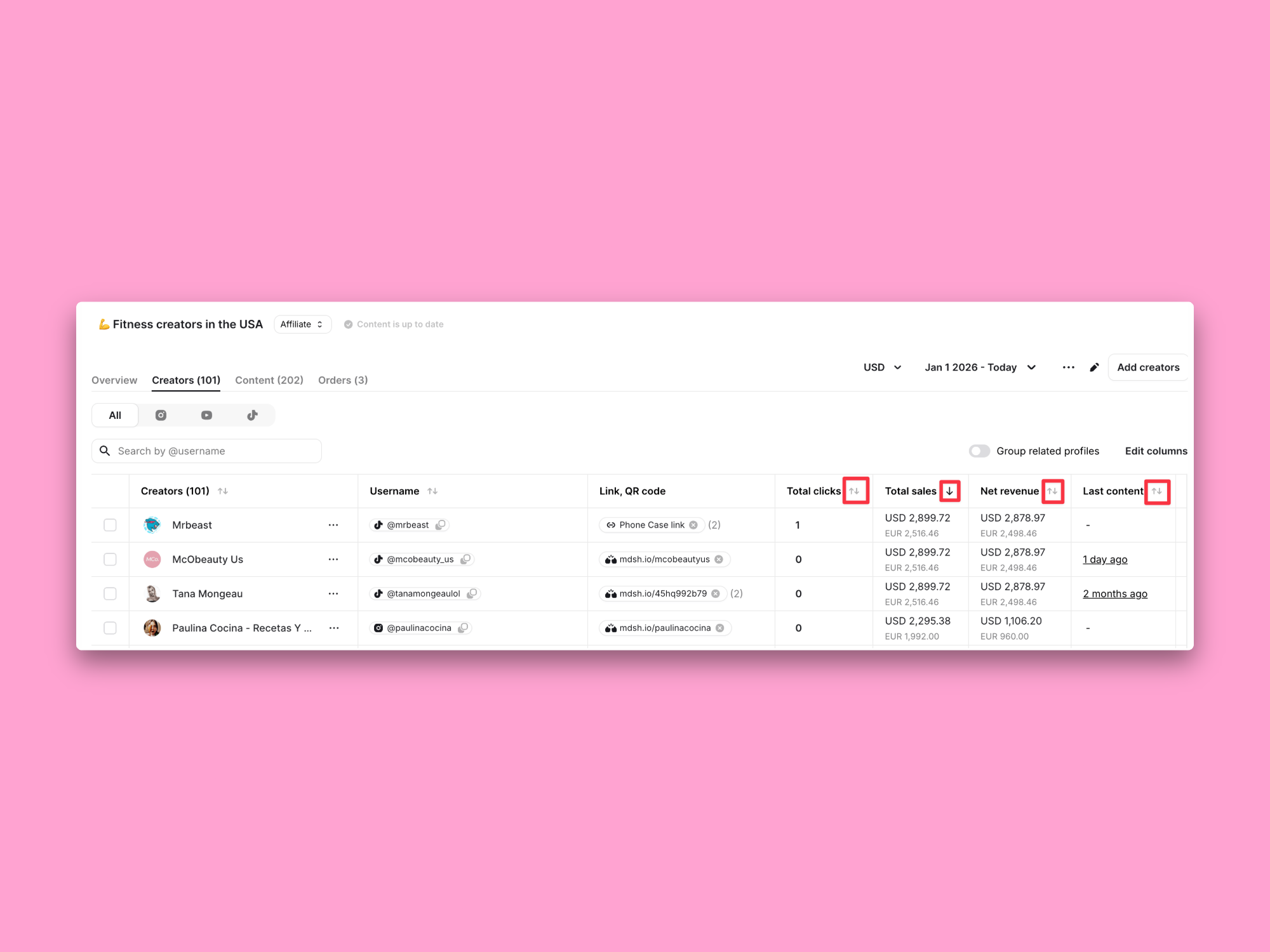
In Modash, for example, you can sort and filter your affiliate list by performance metrics like sales, revenue, clicks, and code redemptions. That means you can quickly surface your top earners and – just as importantly – spot affiliates with no tracked activity, no orders, or no clicks in the last 30+ days.
From there, the playbook is straightforward:

Gold tier (15%): affiliates who consistently drive $5,000+ per month and produce high-quality content
Having the data on your active and top affiliates gives you room to prioritize creators creating the maximum impact. Thanks to automation, when your tracking data is already centralized, segmentation becomes something you can do in a few minutes instead of building a separate project that requires pulling data from five different tabs.
Payouts are the most tedious part of running an affiliate program. It’s not the most strategic or complex task, but it’s still time-consuming and error-prone. More importantly, payouts are the part your affiliates care about the most. Late or unclear payments are the fastest way to lose a good affiliate’s trust and motivation.
This is why automating affiliate payouts so your payments are always calculated correctly and go out on time is so critical.
Most affiliate programs pay on a monthly cycle. But monthly still leaves a lot of manual work if you’re deciding each time which affiliates have earned enough to warrant a payout, which commissions have cleared their hold period, and whether any returns need to be deducted first.
Automating this means setting clear rules upfront:
A payment tool for affiliates should automate:
Modash’s payment platform does all of this for you. Commissions are automatically calculated based on sales data pulled from your connected Shopify store. And commissions are based on net revenue – order total minus shipping, taxes, returns, and refunds – so you don’t have to calculate anything yourself.
Once commissions clear the hold period and meet the minimum payout threshold, they’re queued for the next payout cycle. You can choose to review and approve each payment manually or turn on automatic approval for established affiliates you trust.
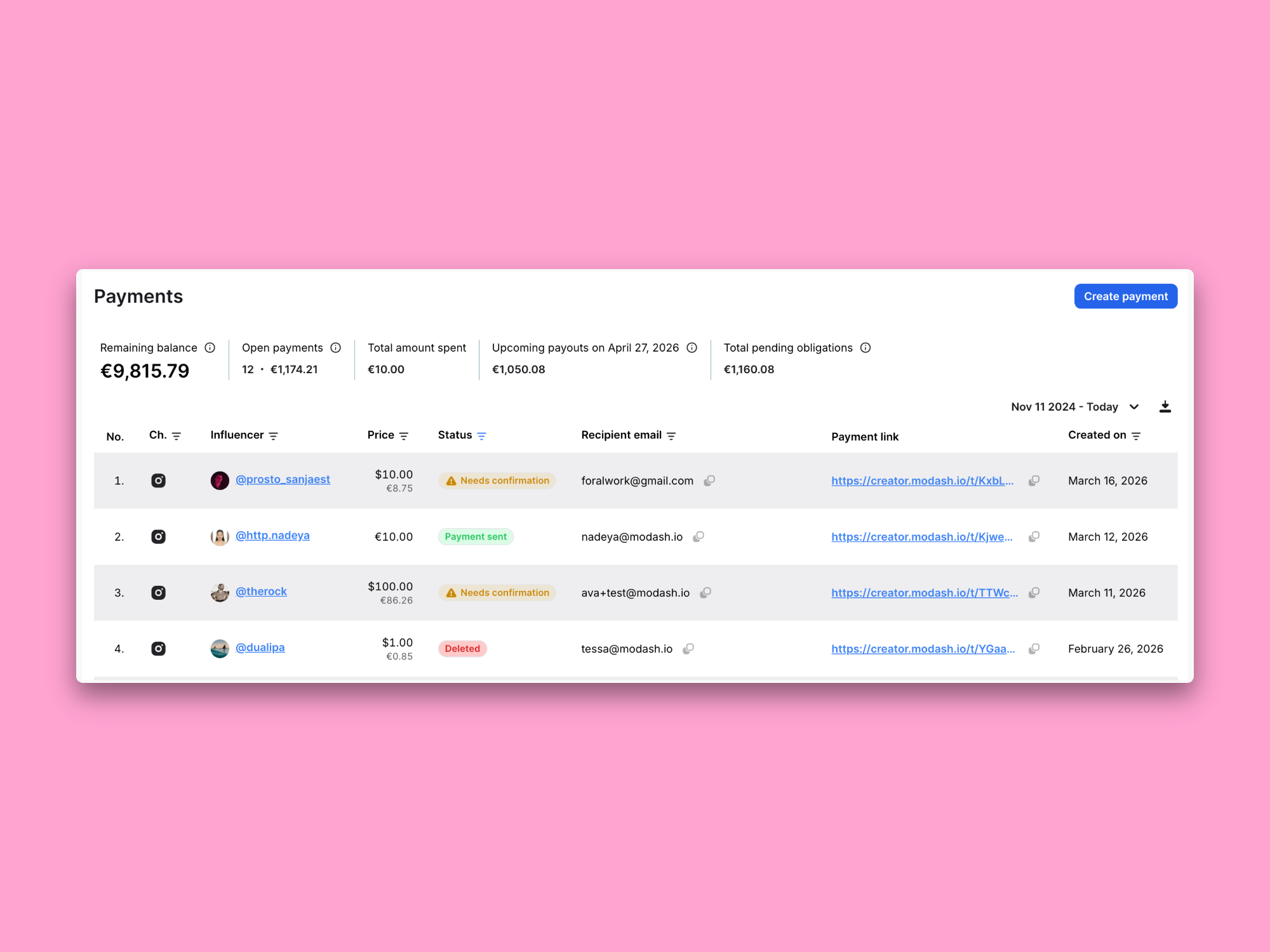
And the best part is you can also use Modash to not just manage your influencer and affiliate partners, but pay both kinds of creators (even if you’re paying influencers a fixed fee).
Invoicing is where the payout admin gets especially painful. In a manual setup, the process looks something like this:
Multiply this by 30, 50, or 100 affiliates and it becomes a part-time job.
Tools like Modash collapse this into a single workflow. You pay Modash one invoice. Modash handles distributing individual payouts to each affiliate, collecting invoices (affiliates can auto-generate compliant invoices or upload their own), and managing tax compliance across 180+ countries and 36 currencies. Your finance team deals with one vendor, not hundreds.

For affiliates, the experience is equally streamlined. They get paid directly to their bank account in their local currency, usually within a few business days of approval. They can track their earnings, see upcoming payouts, and view payment history through their own dashboard – so they’re not emailing you asking for updates.
Most affiliate programs don’t pay everyone the same rate – and for good reason. A top performer driving $10k/month in revenue deserves a better deal than someone who made two sales last quarter.
But managing tiered commissions manually means tracking who qualifies for which tier, remembering to upgrade them when they hit a threshold, and making sure the new rate applies to the right transactions.
If you automate this using a tool like Modash, you can create multiple commission tiers (e.g., 5%, 10%, 15%) and assign them per affiliate.

You can also set different rates for new customer sales versus repeat customer sales – so an affiliate who’s great at acquiring first-time buyers gets rewarded for that specifically, while the rate for repeat purchases reflects the lower acquisition value.
For example, your tiers might look like this:
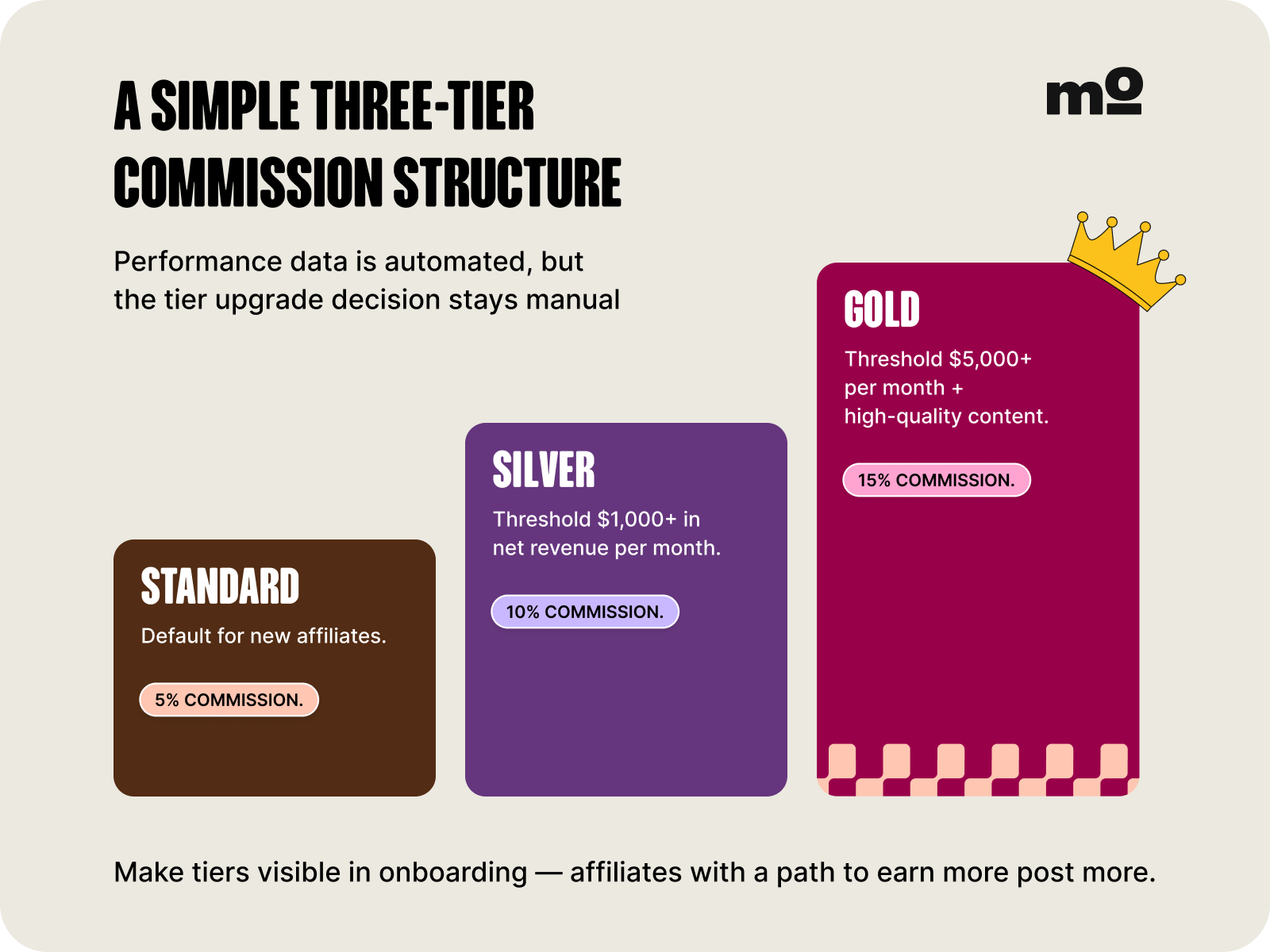
The tier assignment itself is still manual – you decide when an affiliate has earned a bump. But because all the performance data is already tracked and visible per affiliate, the decision takes seconds rather than requiring a deep-dive audit. And once you assign the new tier, the updated rate applies automatically to future commissions.
Remember: don’t keep your tiers a secret. Make the structure visible in your onboarding materials or affiliate landing page. When affiliates know there’s a path to earning more, they’re more motivated to post, promote, and drive sales.
Reading all of the automation workflows you can apply can be equal parts overwhelming and exciting. But remember that you don’t need to start (and finish!) automating every single aspect of your necessary admin today.
Start by identifying the one or two tasks that eat up the most hours every week – whether that’s manually hunting for affiliates, copy-pasting the same onboarding emails, reconciling Shopify orders against a spreadsheet, or chasing invoices at the end of every month. That’s your first automation opportunity.
From there, layer on. Once discovery is running through filters instead of hashtag browsing, move to templating your outreach. Once tracking is automated, use that data to segment your affiliates and double down on top performers.
Each piece you systematize frees up time for the work that actually grows your program – negotiating better deals with your best partners, experimenting with new content formats, and creating an affiliate experience people genuinely want to be part of.
If you’re running an affiliate program on Shopify and want to consolidate discovery, outreach, tracking, and payouts into one workflow, try Modash free for 14 days – no credit card required.