

Más herramientas
Casos de uso




Every “future of influencer marketing” article eventually lands on the same, boring, obvious predictions: more creators, more AI, more competition.
And sure, those things are probably true. But they’re not especially useful if you’re the person actually running an influencer program day-to-day. Knowing that AI will transform influencer marketing doesn’t help you figure out how to embed it in your current workflows.
That’s why this post will not share crystal-ball predictions, but the operational shifts that will separate programs that scale from programs that stall.
Some of this is based on what we’re already seeing in our survey data. Some of it is where the clearest momentum is pointing. In the end, you’ll be able to figure out whether your program is ready for what’s next – or whether there are gaps worth closing now.
A few years ago, many brands would pick one primary platform for their influencer marketing efforts (usually Instagram) and run most of their program on one channel. That’s not the case anymore.
Part of the reason is creators themselves are expanding their overall presence because:
a) their audience is split across channels
b) some platforms offer better monetization opportunities than others
c) it’s easier than ever to repurpose a piece of content and publish it on multiple social channels
Instagram, TikTok, and YouTube are the most successful social media platforms for influencer marketing, according to our survey.
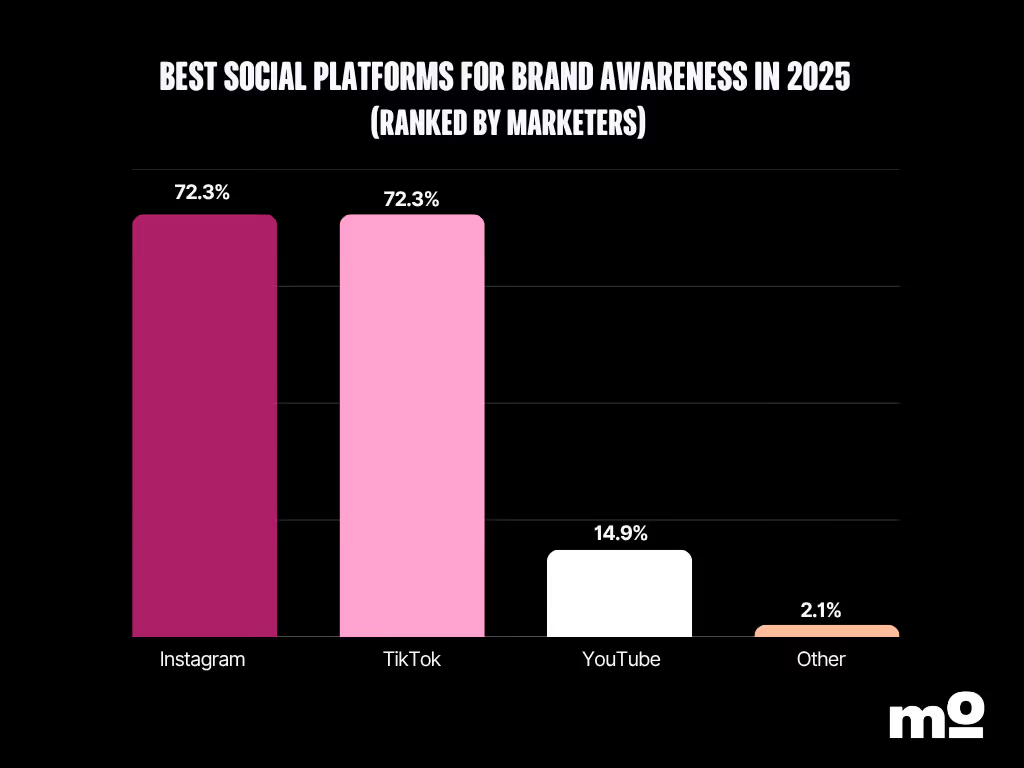
All three platforms have overlapping video-first features – which means a creator who posts a Reel is probably posting a TikTok and a Short too (it’s also straightforward to repurpose or repost content across these channels).
This means creator content is flowing across multiple platforms, whether or not your brand has a system to track it.
And that’s where many influencer marketers often hit a wall. They might add a reposting clause and even pay extra for it, but they don’t have neat dashboards sharing which creator is posting what content on which channels and how it’s performing.
This is why cross-platform campaigns often end up with blind spots: a creator who’s underperforming on Instagram but crushing it on YouTube gets misjudged because you’re only looking at one slice.
This is one of the things Modash was built for. You can automate tracking creator content and performance across Instagram, TikTok, and YouTube in one place (including Instagram Stories!).
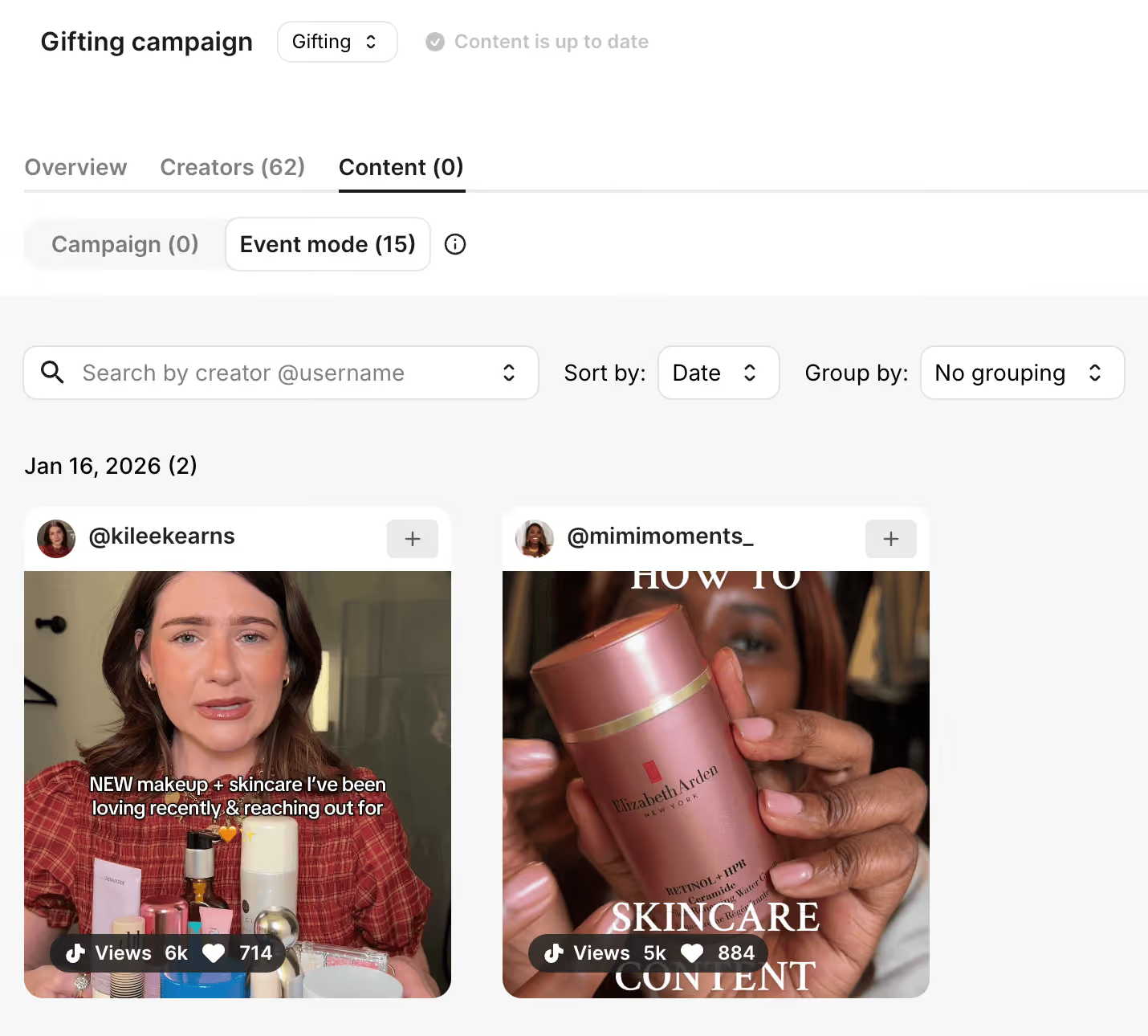
This allows you to evaluate creator partnerships based on total impact, not platform-by-platform fragments. It also means you can spot which platforms are actually driving results for specific creators and double down accordingly, instead of defaulting to whatever platform you happen to check first.
The reality is expanding to new platforms comes with operational overhead. Teams that figure out the systems side of this early will have a real edge as multi-platform programs become the standard.
Want to learn how your influencer marketing strategy should differ for these three platforms? Read our guide on TikTok vs. Instagram vs. YouTube.
Influencer marketing is now dominating a bigger share of the marketing spend than it did even a couple of years ago. And while this is great news, it also means leadership wants to see the same rigor they expect from paid media or email – contribution to pipeline, revenue impact, incrementality, etc.
No one expects perfect attribution (everyone knows that’s still messy), but stakeholders need enough data to answer whether influencer marketing is working and where they should put more money.
The problem is most teams can’t report this cleanly because their data is all over the place. Creator performance in one spreadsheet, content tracking in a platform dashboard, affiliate revenue in a third tool, outreach history buried in email threads. So when it’s time to pull together a report, the first challenge is finding the numbers (instead of analysis).
Not to mention, a lot of programs are still stitching together screenshots and platform-native analytics into a deck that’s time consuming and not all that convincing.
The good news is closing this gap isn’t always a measurement issue – it can also be a simple, easily-solvable systems issue. The most straightforward changes to make are:
Modash can help make this much less painful. You can not only monitor creator content, but also track performance metrics and generate reports across your full roster without the manual stitching.
It won’t solve attribution completely (nothing will), but it gets your tracking hygiene to the point where you can be confident about what’s working and what’s not.
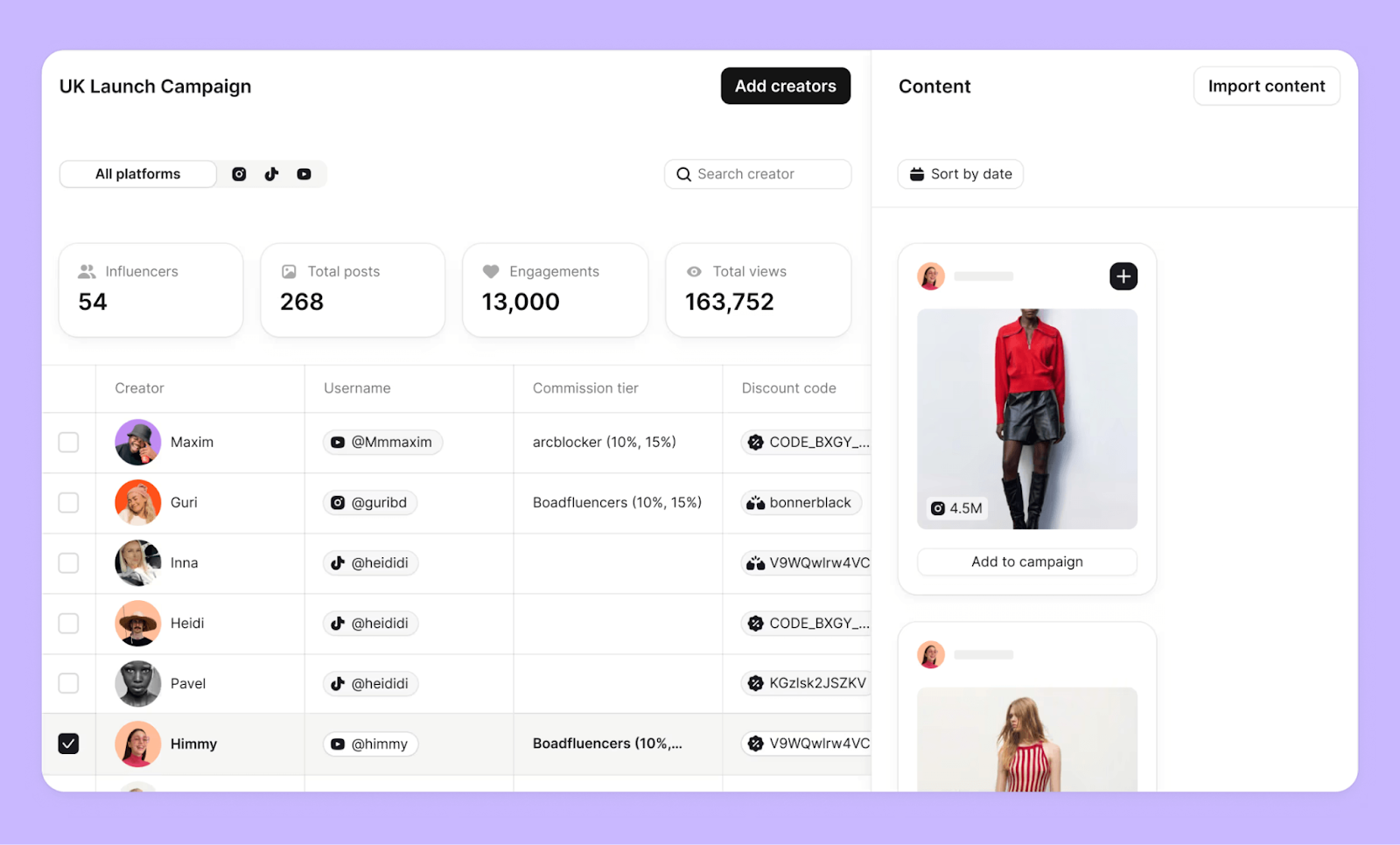
Meeting measurement expectations is rarely about cracking “perfect” attribution. Instead, winning teams will focus on getting data that’s clean and consistent enough to make confident decisions – even if it’s with imperfect numbers.
It’s no surprise that brands will forge more and more long-term influencer relationships in the future. That’s already been a prediction for over three years – and it’s come true. 60.8% of marketers we surveyed plan to have more long-term creator relationships in 2026.
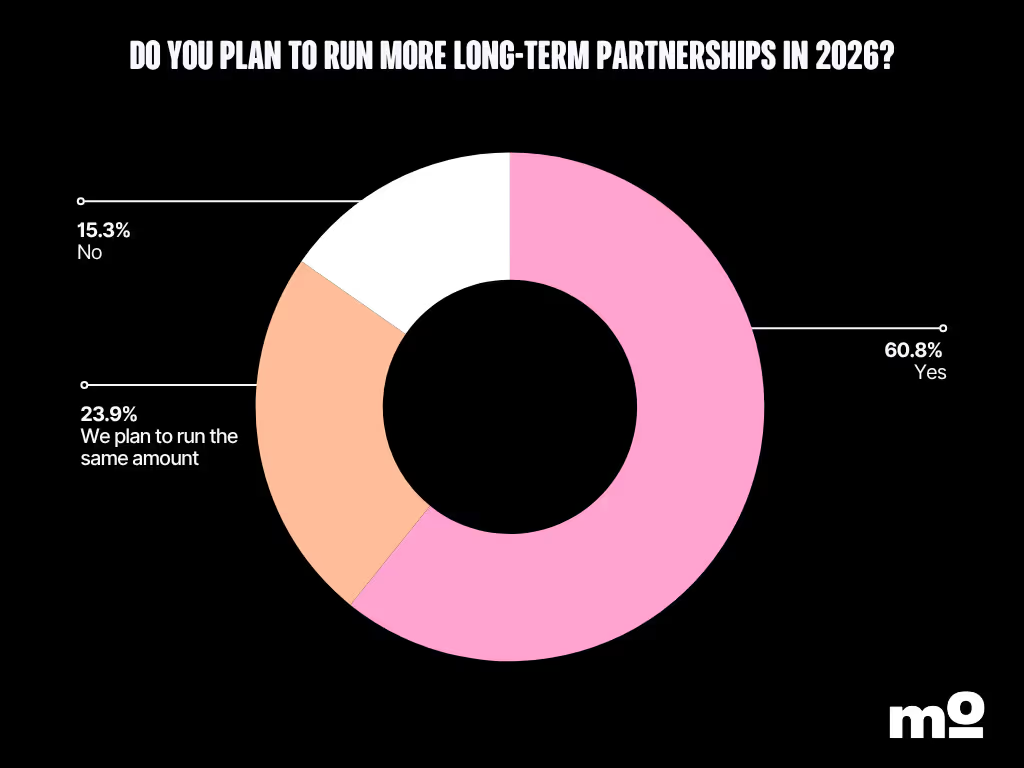
What’s actually changing is the depth of long-term creator relationships. Instead of marketers insisting “post this deliverable once a month for a year,” they’re treating creators more like collaborators.
Take MCo Beauty. They don’t just provide influencers a brief, approve the content, and let it die in the ether; they co-create content with creators. This means working on the brief together, coming up with a fresh concept, and making the partnership lucrative for both parties.

👉 Learn about how MCo Beauty co-creates content with influencers.
Co-creating content isn’t possible with all long-term influencer partners, but it’s excellent for sharing interesting brand content (when the creator has a unique edge). The good news is it’s only one of the ways to deepen your creator relationship. Some other methods marketers are using include:
Ultimately, marketers will have the kind of relationship with their long-term partners where a creator actually cares whether the content works – not just whether it gets delivered on time.
This kind of depth doesn’t happen automatically, though. It requires systems. Marketers need clear visibility and time for reflection to check what a creator has posted, how it’s performed, what feedback is given, etc. Without that, creators become line items in a spreadsheet, and the relationship flattens to transactional by default.
That’s why a creator CRM (like the one we have at Modash) is essential to find this depth in your long-term influencer relationships. You can keep track of every partnership in one tab – content history, performance data, notes, and more.
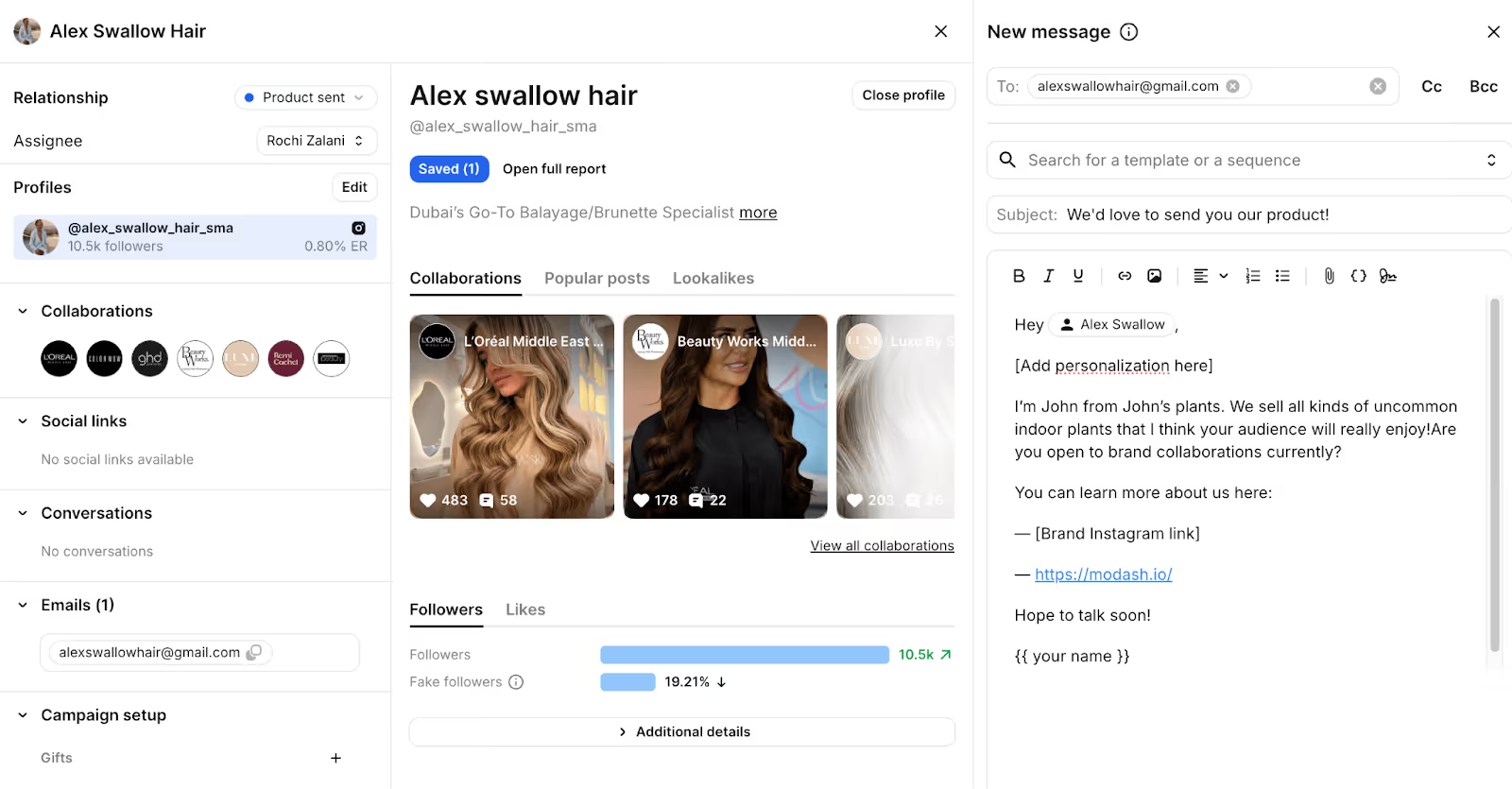
When you have an up-to-date creator CRM, your team’s conversations with always-on creators will shift. Instead of saying, “hey, here’s your brief,” they’ll say, “hey, your unboxing videos consistently drive 2x the engagement of your tutorial posts. Let’s lean into that format for the summer drop and test a longer version for YouTube, too.”
Storyfit creators are the influencers who might not fit your niche directly, but can tell your brand story in a unique and authentic way.
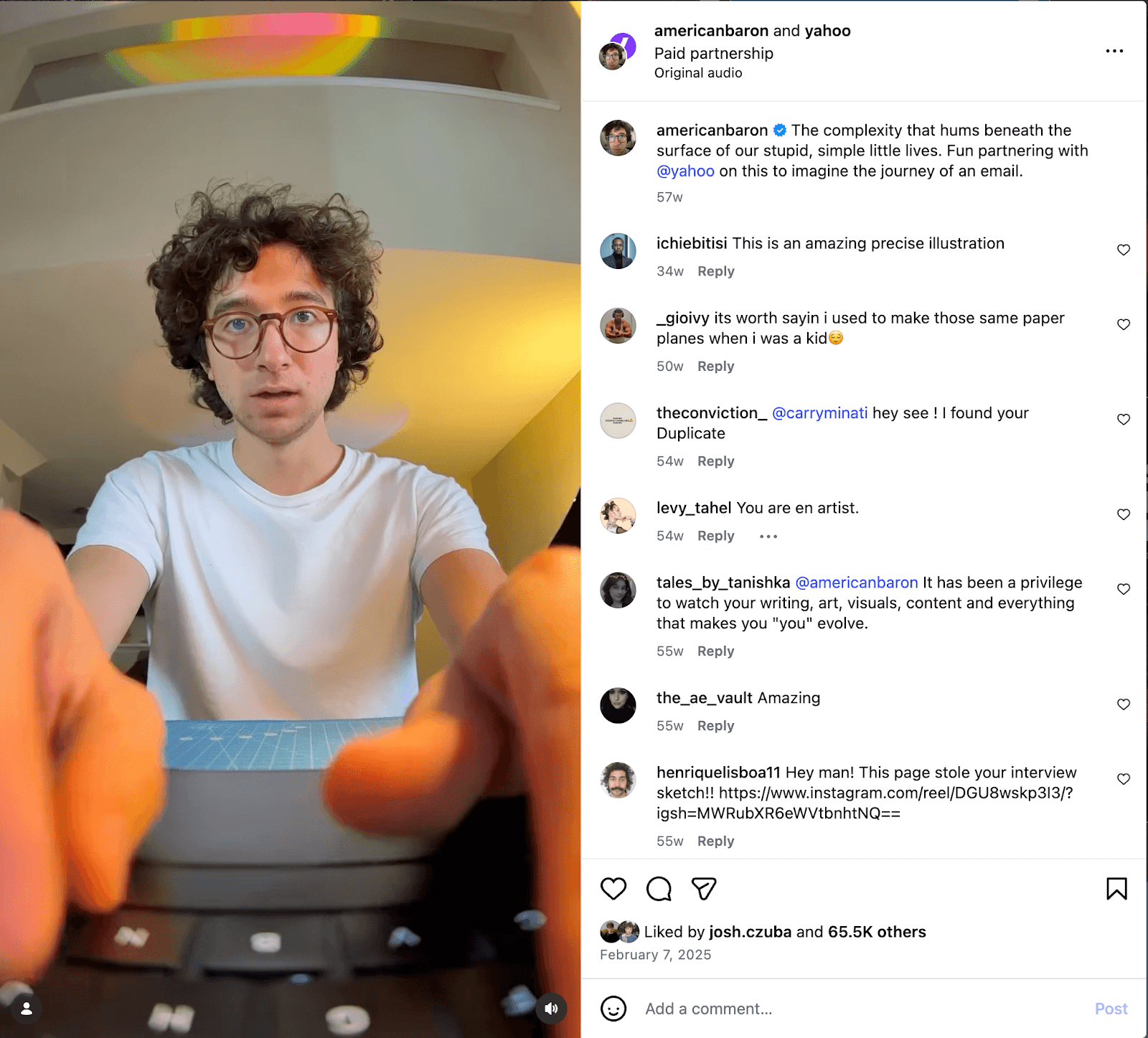
The partnership between Baron Ryan (an author and poet) and Yahoo is the perfect example of a storyfit partnership – the concept is fresh and unique, and Baron is far from what the “standard” influencer you’d expect for Yahoo.
For years, skincare brands have stuck to skincare influencers, food brands to food creators, and so on. These partnerships still work, but they’ve become easy to tune out because of how obvious they are.
Storyfit influencers break the pattern because they don’t fit the “ideal” structure you would have in mind for your creator partners. They still speak to your audience, but in a fresh and memorable way. Marketers will lean more and more on storyfit collabs because brands want to stand out and create something fresh that sticks in the minds of future buyers.
Finding storyfit creators is harder than finding niche-fit ones, though. You can’t just search “skincare influencer” and call it a day – you need to think laterally about whose storytelling style and audience would click with your brand, even if their content isn’t an obvious match.
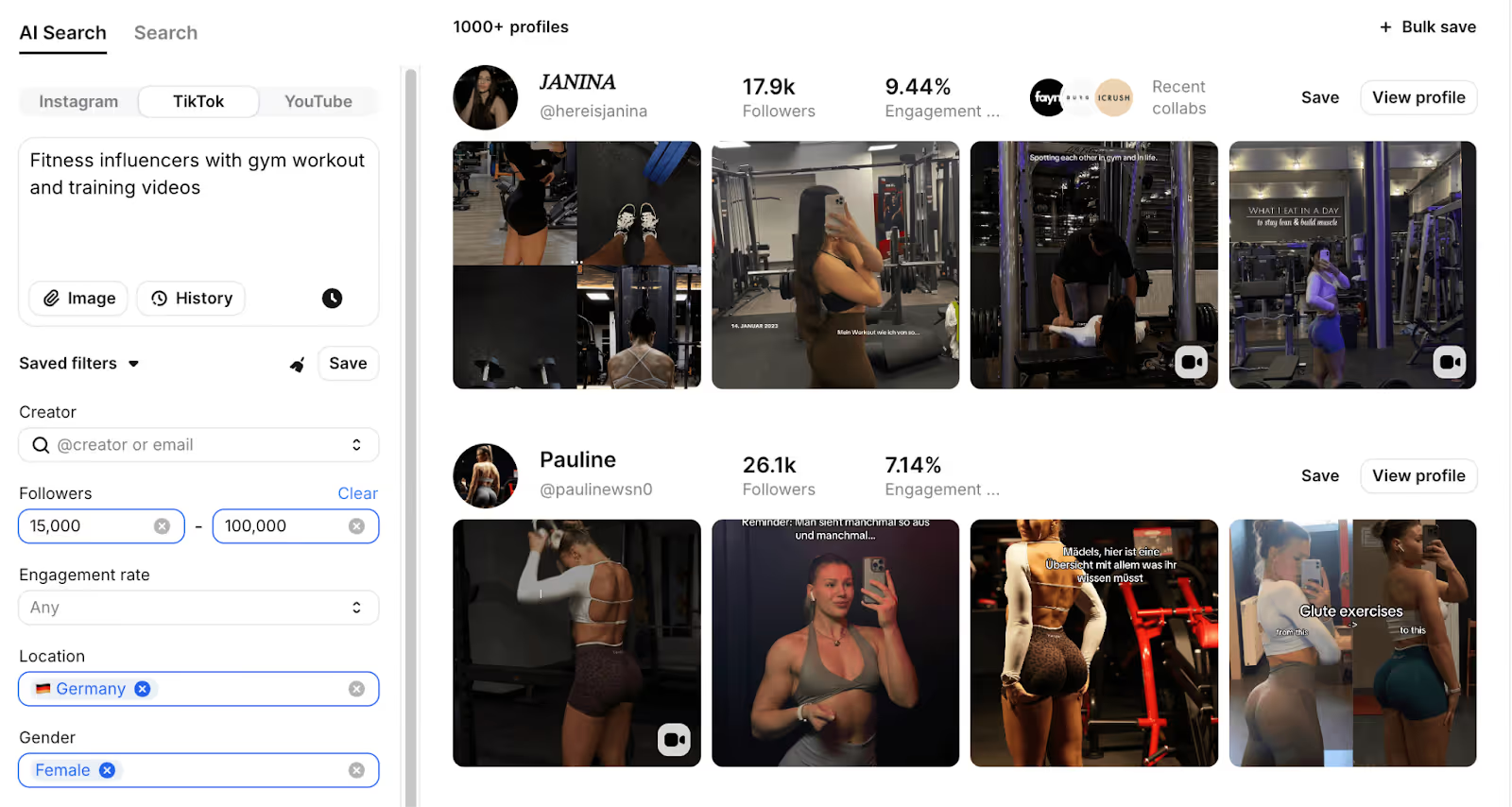
Modash’s AI search can make this easier. Instead of filtering by rigid categories, you can describe the kind of creator you're looking for in natural language (or upload a visual!) and surface profiles you’d never have found scrolling through hashtags.
👉 Learn more about how to find storyfit influencers.
Marketers have already been repurposing influencer content for ads or whitelisting it on a creator’s profile. The next shift is creator content showing up on brand websites as a core part of the buying experience.
This looks like:
Many brands like Tarte Cosmetics are already doing this. The company’s homepage features creator content teasing a new product launch and product landing pages always include multiple creators testing the product.
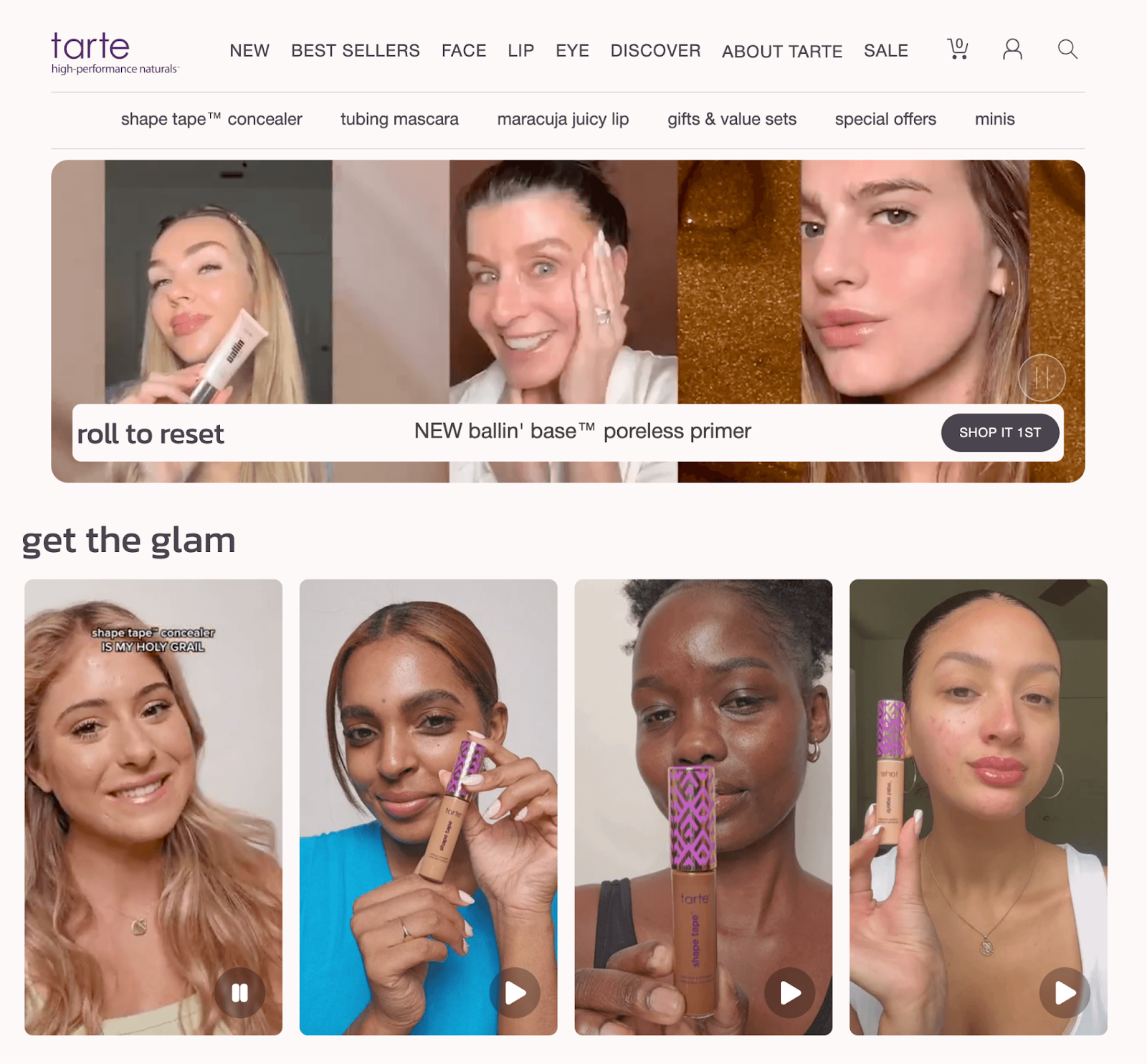
Influencer content is trusted because it looks and feels like something a real person made, not something a brand approved after six rounds of revisions.
And that trust doesn’t stop being valuable just because someone clicked through to your website. It’s actually more valuable where the purchase decision happens.
⚠️ Note: don’t forget to secure usage rights for every influencer content you plan to repurpose for ads or for your site.
Affiliate and influencer marketing have traditionally lived in separate teams, separate budgets, and separate tools. But today, marketers are increasingly running affiliate programs as a layer within their influencer program.
More than half of the marketers we surveyed said they invested more in their affiliate program in 2025 than they did in 2024.
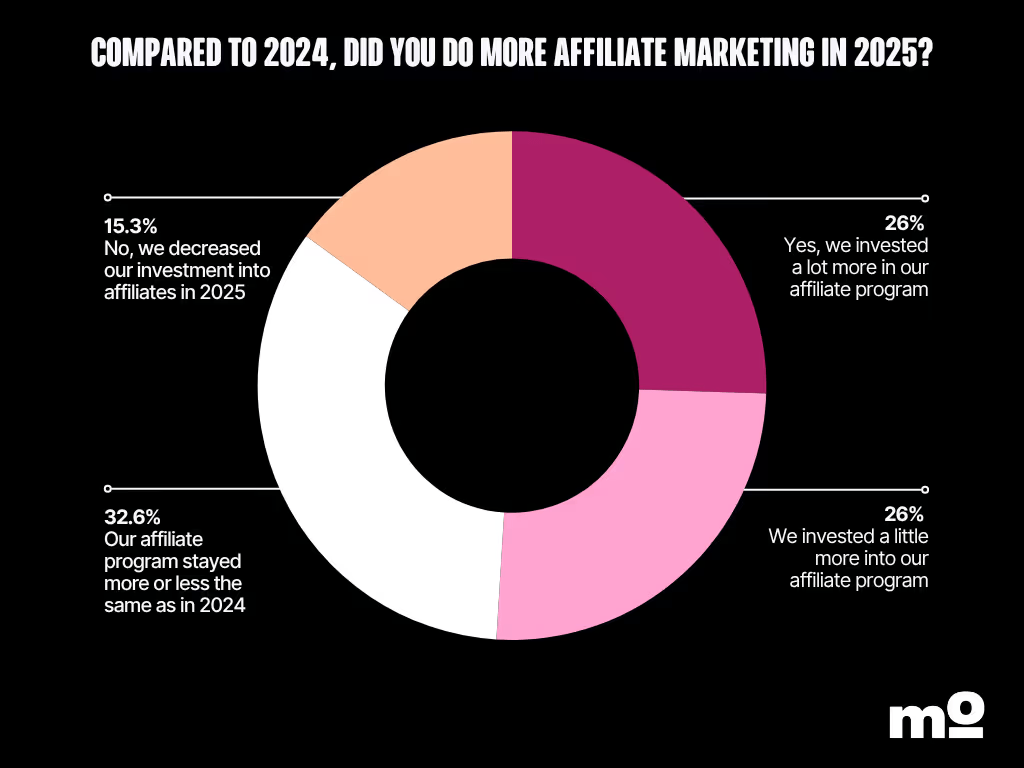
The popularity of affiliate collaborations ties directly back to the measurement pressure we covered earlier. When leadership wants to see revenue impact, affiliate collaborations are the easiest to defend.
There’s no squinting at engagement rates or debating whether a brand awareness lift was real – you can see exactly which creator drove which sales, and how much revenue they generated.
The risk profile is also more forgiving. A flat-fee sponsorship is a risk: you pay upfront and hope the content performs. An affiliate deal means you compensate based on results. The more a creator drives revenue, the more they earn.
The low risk also makes it easier to test new creators without committing your big budget to someone unproven. And the best part is your highest performers are rewarded for the value they bring.
None of this means flat-fee partnerships are going away – especially for brand awareness campaigns. But brands will start to blend both models within one program, rather than running them as separate silos. This, in turn, will allow marketers to have a much clearer picture of which creators are actually moving the needle.
Modash’s Shopify integration makes this easier to actually run. You can track affiliate sales, attribute revenue to specific creators, and see it all alongside the rest of your influencer program – without switching between platforms or reconciling data from separate dashboards.
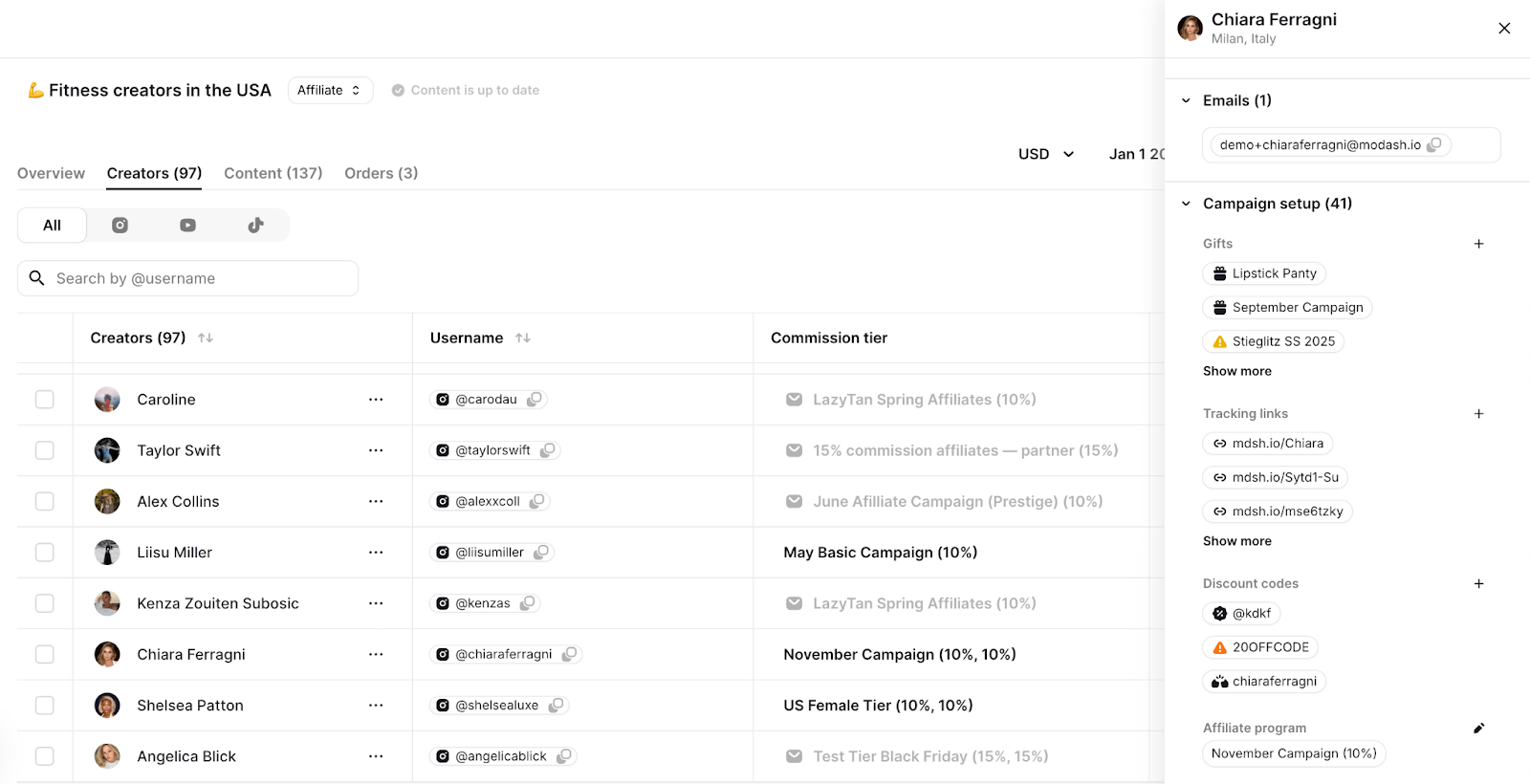
When you have all your different kinds of collaborations under one roof, partnering with affiliates as part of your influencer program feels seamless rather than duct-taped together.
👉 Learn how to run a successful affiliate program.
Influencer marketing involves a lot of repetitive work that has nothing to do with strategy – drafting outreach emails, writing briefs, pulling together reports. AI is already taking the edge off a lot of this.
In 2024, a little over half of the marketers we surveyed were using AI. That number jumped to 80.9% in 2025.
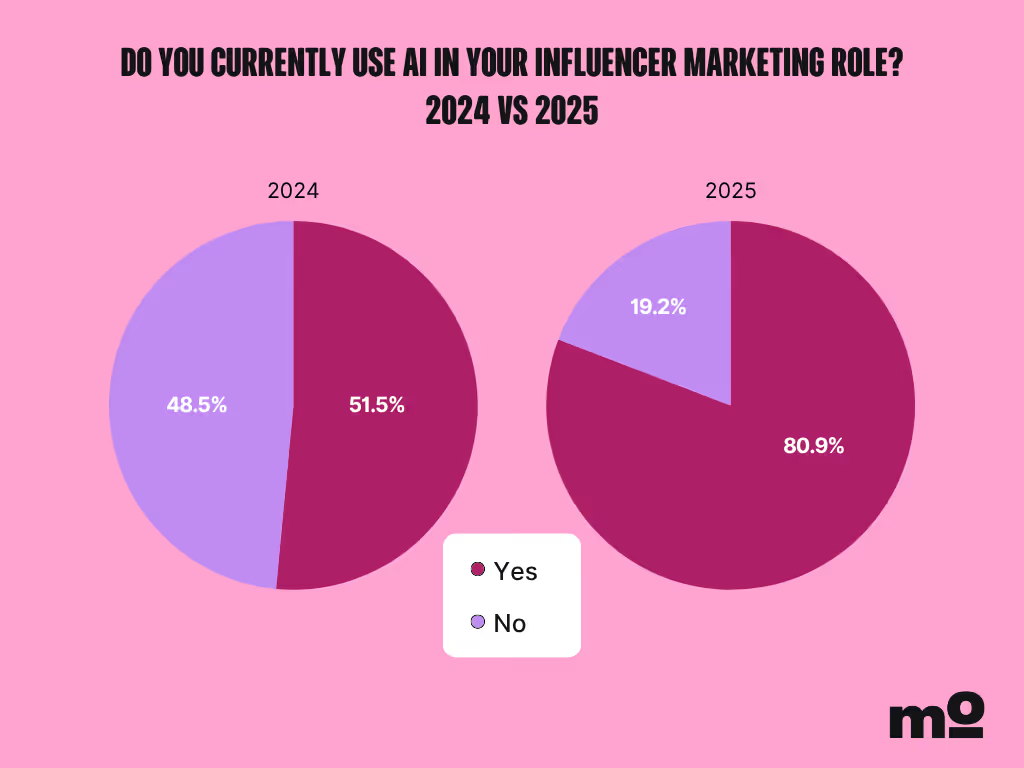
Right now, marketers are still only scratching the surface of what’s possible with AI. The top use case in our survey was creating briefs and other written materials.
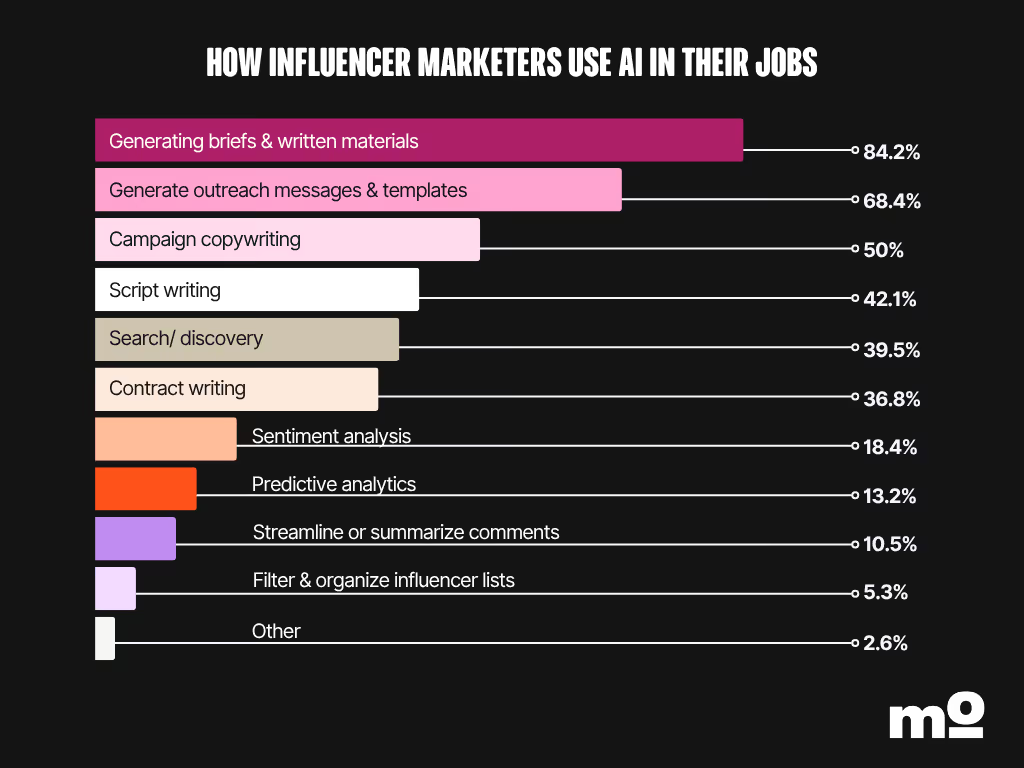
But AI can do a lot more (and the technology is only getting more and more advanced). The low-hanging fruit is the stuff that eats your time but doesn’t need your brain – finding creators, compiling reports, flagging underperformers.
For example, using Modash’s AI search, you can use natural language and a visual reference to find exactly the kind of creator you need. Instead of manually sifting through thousands of profiles, you get ultra-relevant results in seconds.
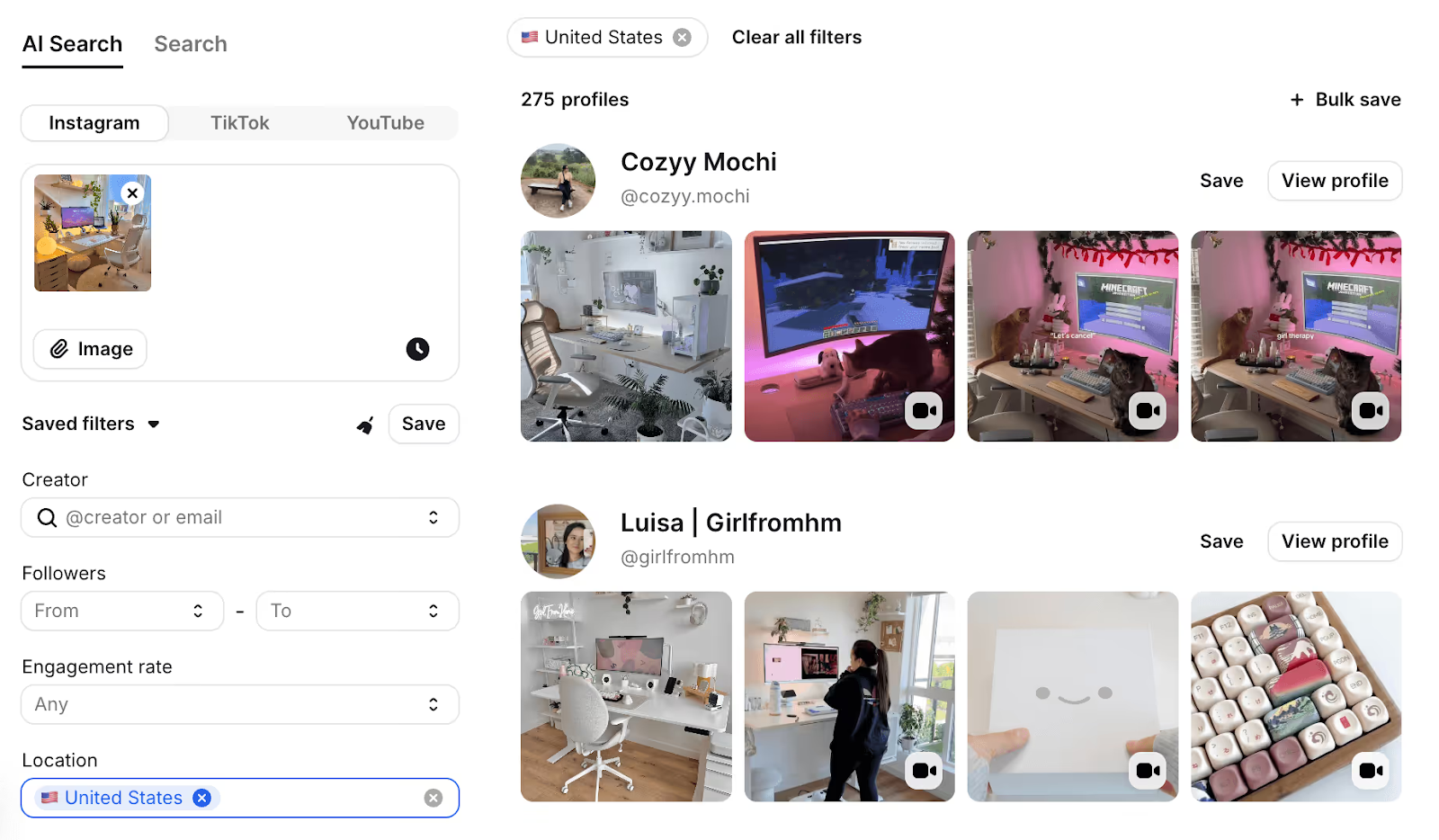
At the same time, AI will make a marketer’s judgment all the more valuable. AI can surface a hundred relevant profiles in seconds, but it can’t tell you which one will actually resonate with your audience, or whether a creator’s tone fits your brand’s next campaign.
Not every shift in this article is relevant to your program right now. But the throughline is worth paying attention to: the biggest bottleneck for most teams is that their tools, data, and workflows are scattered across too many places to act on any of it efficiently. Here’s how you can figure out what to prioritize:
Every stage has the same underlying problem: the more your program grows, the more fragmentation costs you – in time, in missed signals, and in reporting that takes a week to assemble. That’s what Modash consolidates.
From AI-powered creator discovery to cross-platform tracking, a built-in CRM, and Shopify integration – it’s built for teams who want to run influencer programs that scale without cobbling together five different tools to run one program. Try it free for 14 days.