





More tools
Use cases



The ultimate goal of any influencer marketer is to use creator content to 1) boost brand awareness or 2) generate sales. But which social media platforms are best for each? Which content types? Which deliverables? And in partnership with which influencers?
These are the questions we asked over 50 influencer marketers to understand which platforms, creators, content types, and deliverables are getting them the best results. Here’s what we found.
For two years in a row, influencer marketers have ranked Instagram first for revenue generation. In 2025 specifically, a whopping 85% of marketers listed it as their #1 choice for sales.
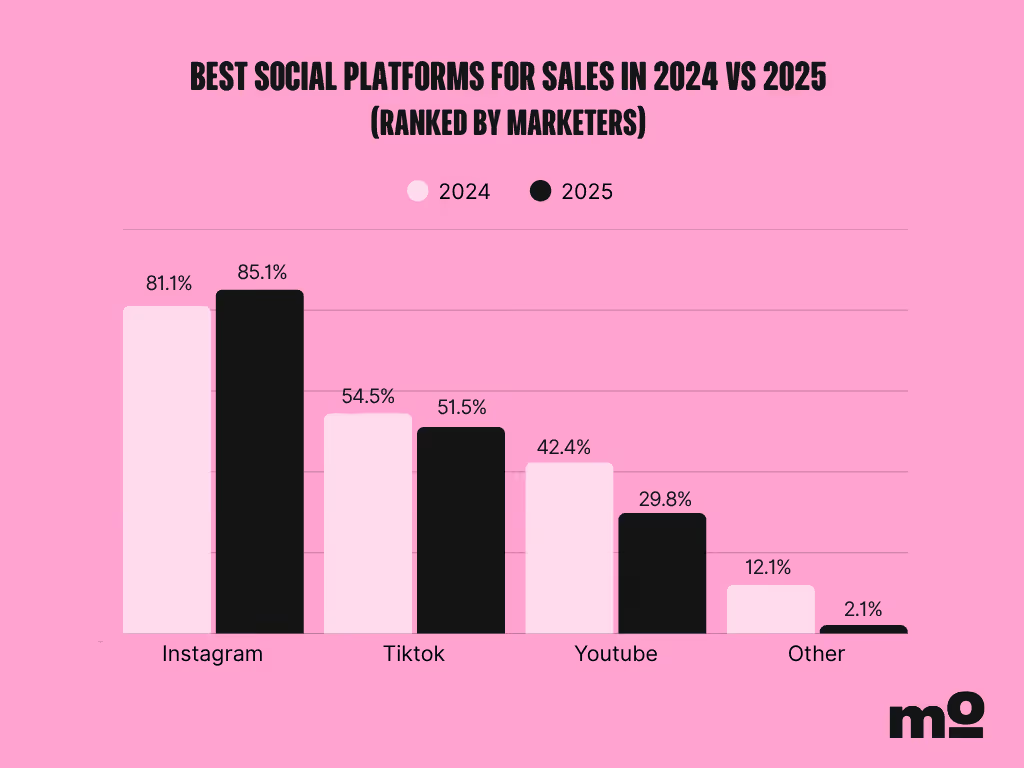
That might not come as a surprise, but do you know what will? It’s this: marketers invested far less in YouTube – and other channels beyond Instagram and TikTok – in 2025 compared to previous years.
Our theory is that it’s due to rapid market changes (tariffs, a looming TikTok buyout, the general state of the world). The economic uncertainty has caused marketers to lean into OG channels they’re more confident and comfortable with: Instagram, TikTok, and YouTube.
You’ll also notice a significant dip in the percentage of marketers investing in YouTube influencer marketing. Not that the platform isn’t lucrative, though – because of its long-form content, YouTube is actually an excellent investment that can drive sales for years.
Marketers agree: over 53% of the ones we polled said long-form content performed the same as short-form content, and nearly 30% said long-form performed better.
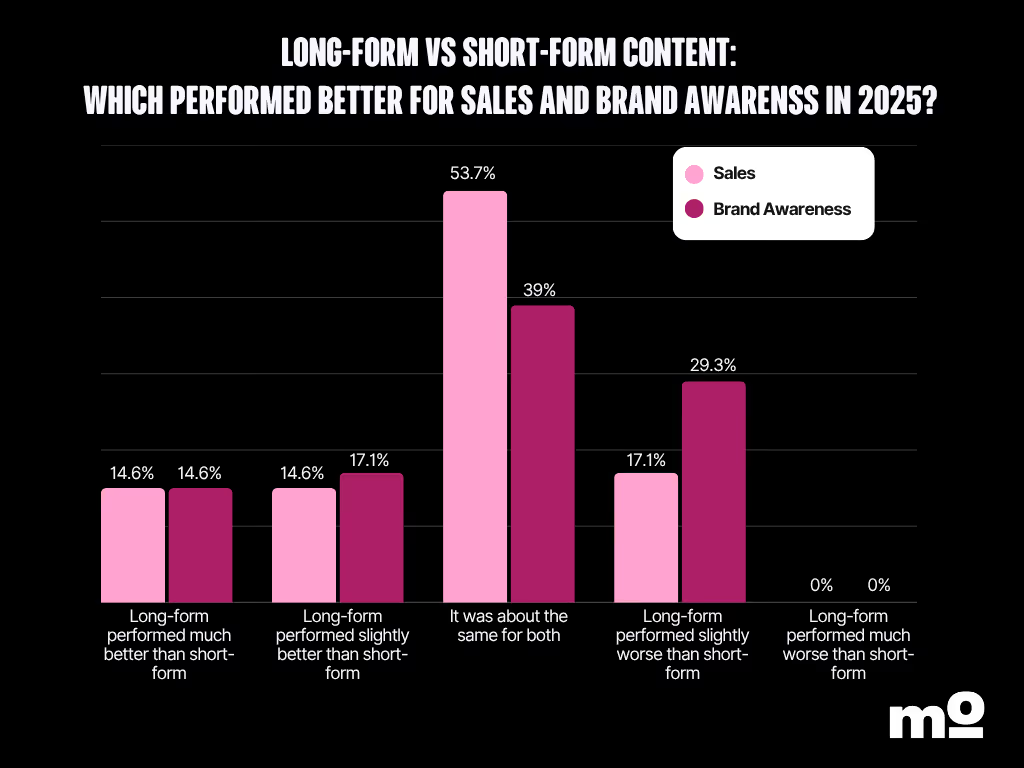
But it takes longer to see results on YouTube than on other social channels. And if you want creators to post dedicated long-form videos about your product, you’ll need to invest significantly more money, too.
The picture shifts when you compare the channels for brand awareness: Instagram still takes the lead, but it’s tied with TikTok.
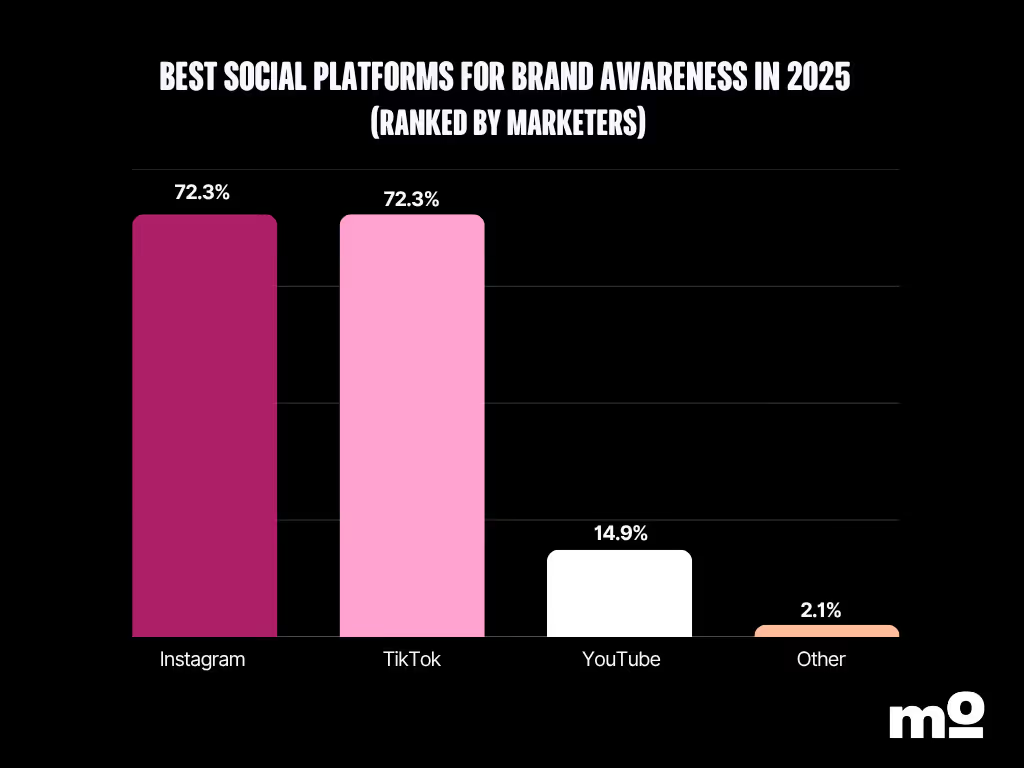
It’s obvious why marketers love Instagram for brand awareness: it has over three billion monthly active users, which is more than TikTok (1.5 billion) or YouTube (2.5 billion). Influencer marketing on Instagram is the clear choice for reach and visibility.
But what about TikTok? Why is it an equally popular choice for brand awareness among influencer marketers? We think the reason is the nature of this social media channel.
According to TikTok, 61% of its users discover new brands and products on the platform, which is 1.5 times more than on other platforms. After all, #tiktokmademebuyit is a popular hashtag for a reason, making this channel another excellent choice for brand awareness alongside Instagram.
💡Learn how your strategy should differ for each platform in this comparison guide.
But which content format performs best on each of these social channels? Let’s cover that in the next section.
On Instagram, Reels were the top driver for sales, which isn’t shocking – the platform’s algorithm loves video content.
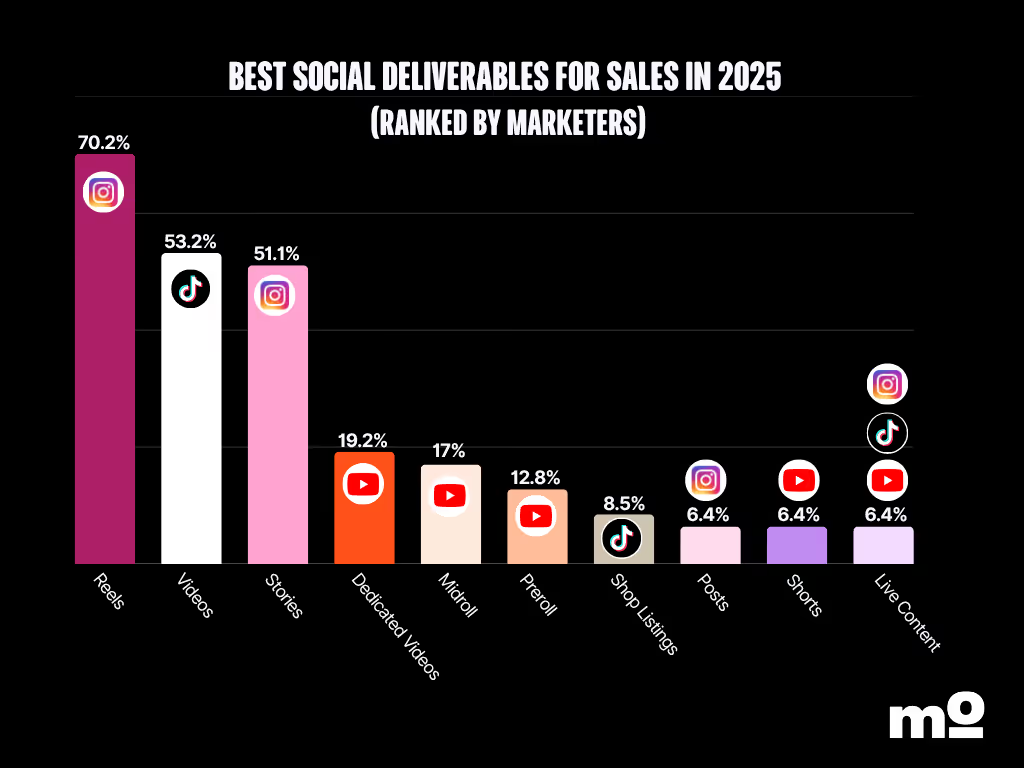
More surprising, though, is the rise of TikTok videos. In 2024, marketers had ranked Instagram Stories as the #2 top deliverable for sales. This year, TikTok videos won over Stories.
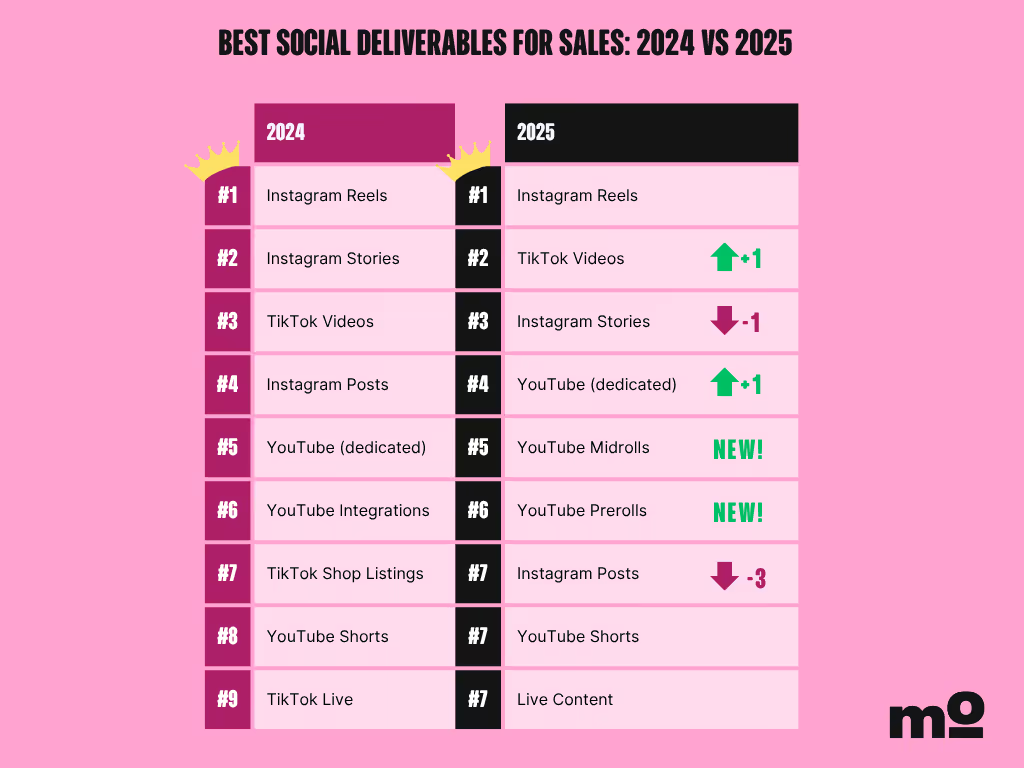
You’ll also notice that dedicated YouTube videos ranked higher than in 2024. But didn’t we just discuss how marketers are pulling back from YouTube compared to last year, especially for sales campaigns?
Both are true at the same time:
The marketers betting on YouTube have likely already seen positive ROI and want to continue their upward momentum. They’re still risk-averse, but they know how to succeed on that channel.
Then it’s no wonder why marketers ranked dedicated YouTube videos higher than all integrated sponsored content on the channel. Compared to pre-, mid-, and post-roll deliverables, dedicated videos are much more product-focused. They are bottom-of-funnel content. So, when marketers are in on YouTube, they’re all in.
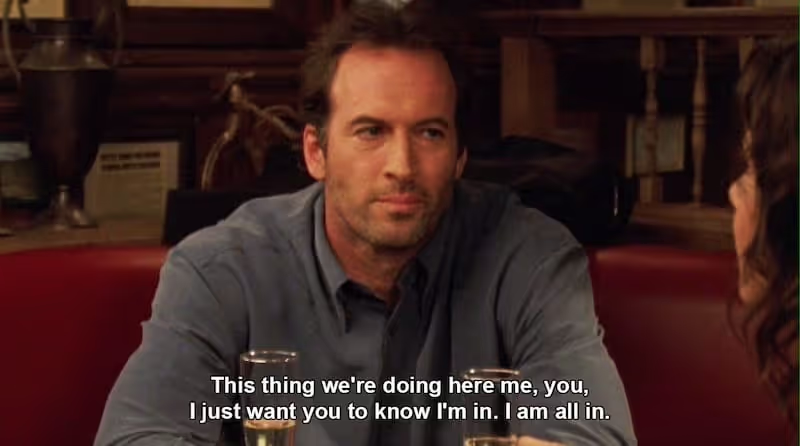
Marketers ranked Reels, TikTok videos, and Stories as the top three deliverables for brand awareness, too. In fourth place was a tie between Instagram posts, dedicated YouTube videos, and YouTube Shorts.

Now you know which deliverables marketers are investing in for the top social platforms. Let’s zoom in a bit more and check which content types are the best performers.
Marketers said personal stories and product tutorials were their top-performing content for generating sales in 2025.
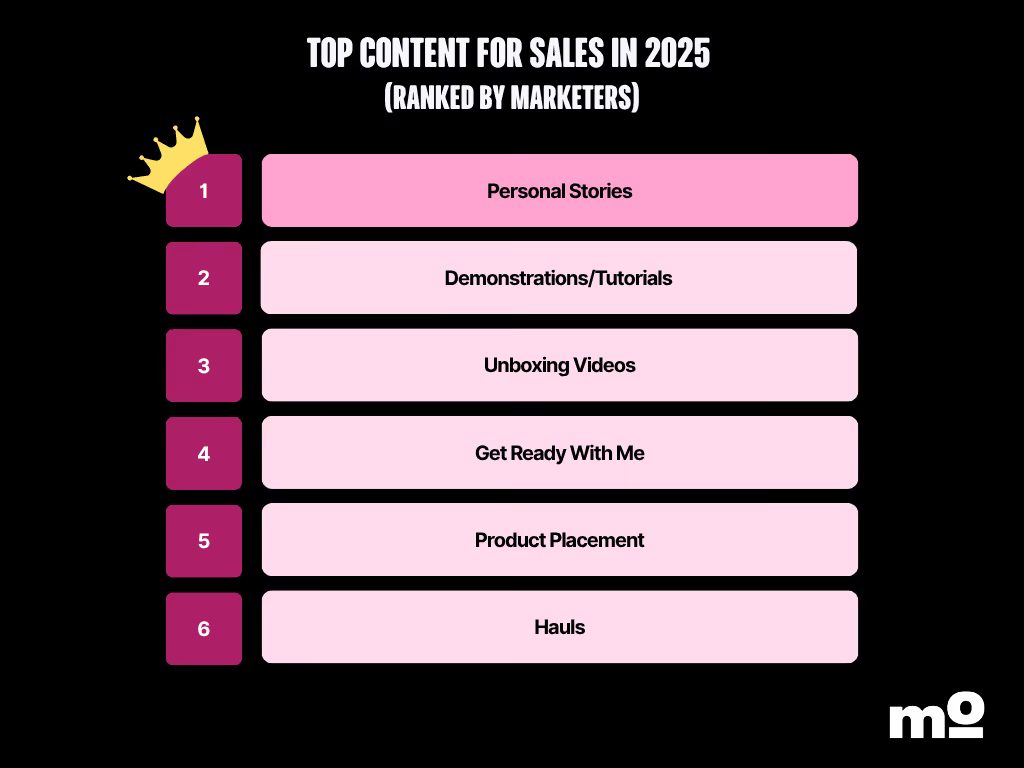
It makes sense: product demonstration videos are bottom-of-funnel content specifically designed to convert. Someone viewing your product’s demonstration is likely already interested in the product and/or is about to purchase.
But marketers ranked personal stories as their #1 choice for brand awareness campaigns, too.
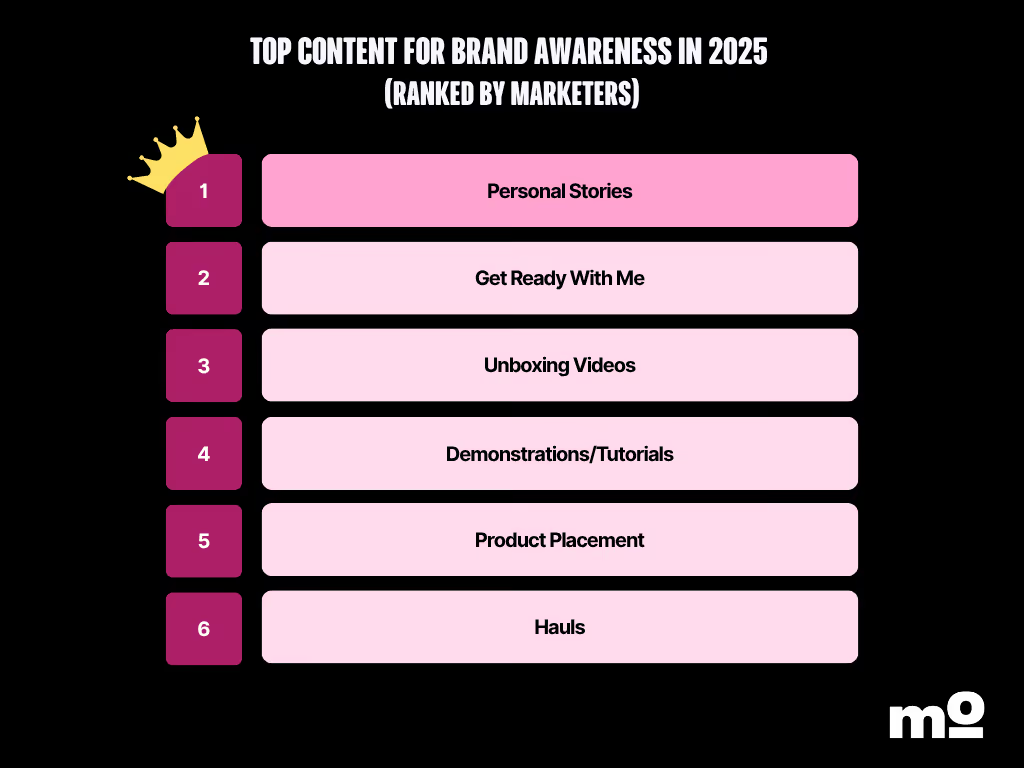
There’s a reason personal stories work so well: with so much noise on social media, they stand out because of their authenticity. Stories stop the scroll and build emotional connection. According to Fiorella Picado, conventional ad content is on its way out:
The traditional ad-like content needs to go. People already know how it works, so brands need to be more clever about how they present their products and infuse value into the content, not just broadcast the product.

One of the best examples of the impact of personal stories is this partnership between Mariona Roma and learning language platform Preply. The creator explains why she and her partner are learning each other’s native languages: because some things just don’t have a direct translation.
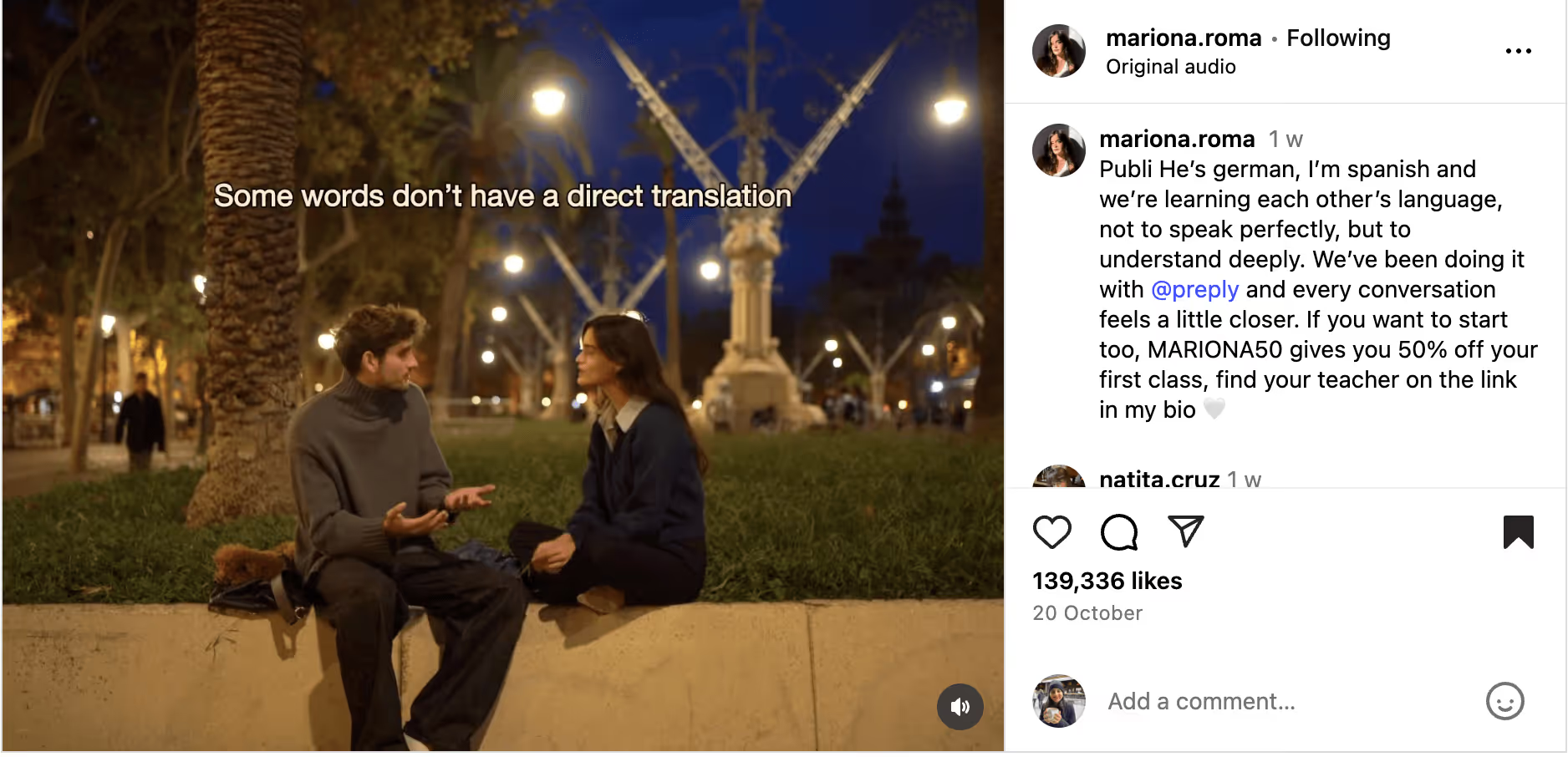
The concept itself is beautiful and touching, and the video’s execution – showing unique words in each language – just makes it so memorable. That’s the power of personal stories.
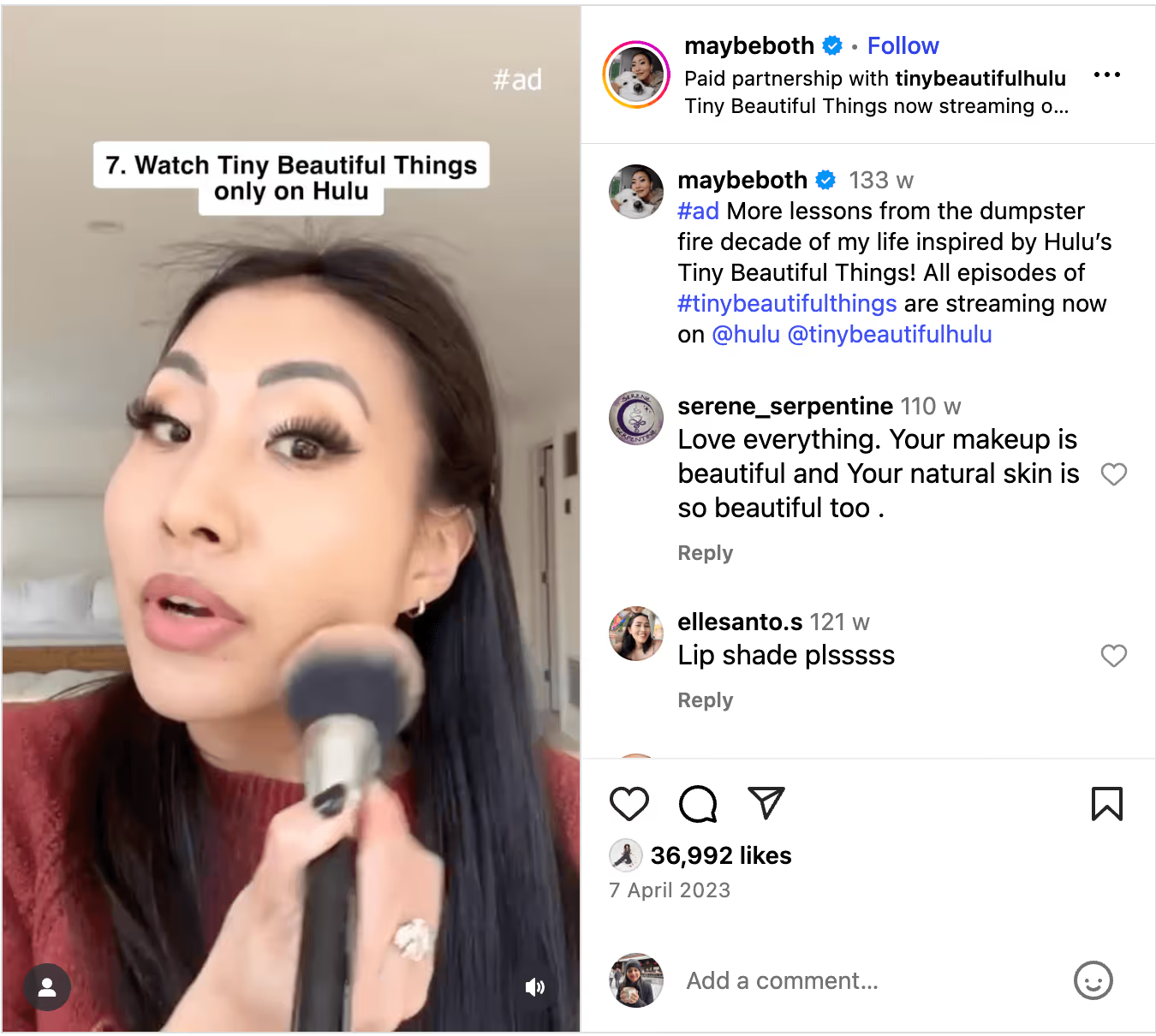
As for other content, marketers chose “get ready with me” as the #2 best format for brand awareness because it lets you seamlessly integrate your product into an already proven content format. We get hooked on GRWM content because we love a ✨process ✨ and feel cheated if we don’t follow through till the end (spoken as someone who has watched a million makeup GRWM videos without owning a foundation, concealer, or eyeliner).
Anna Kai is the queen of this content format, in my opinion. Here she talks about a new book adaptation in a GRWM me video, which you could watch in its entirety without noticing it’s an ad.
So, which content formats should you focus on in 2026?
Personal stories win for both sales and brand awareness. It might be worth experimenting with storyfit influencers, too, who can naturally weave your product into their unique personal stories.
Product-centric content like tutorials and unboxing videos are better for sales. Anything that has all eyes on your product will likely convert quite well. But remember to focus this content on the benefits of your product so potential buyers can see how it’ll improve their lives.
For brand awareness, focus on GRWM-style content that seamlessly integrates your product into a post. It fits perfectly with the organic content in an influencer’s feed and doesn’t feel like an ad. It’s the best way to boost your brand’s reach and enjoy the ripple effect when you run sales-focused campaigns.
In 2024, nearly 7 out of 10 marketers said long-form content would compete with short-form content in 2025.
It was sound reasoning: Reels, TikTok videos, and Shorts were increasing their video lengths across the board. But when push came to shove, marketers didn’t invest nearly as much as they had hoped in long-form content.
Almost 30% of marketers we surveyed last year said long-form content would make up 50–75% of their influencer content in 2025. In reality, less than 5% of marketers followed through. Nearly half of the marketers we polled in 2025 said long-form content accounted for less than 25% of their total influencer content.
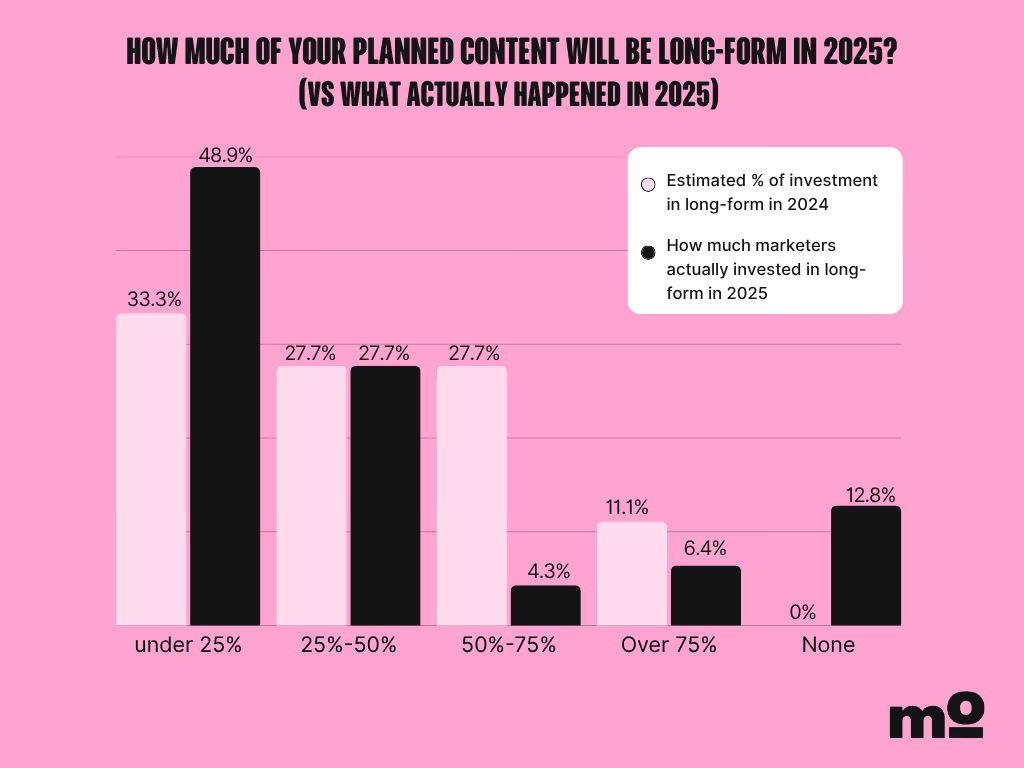
Is this the beginning of the end for long-form influencer content? Not really. At risk of sounding like a broken record, the market conditions (*gestures wildly*) hardly encouraged marketers to swing for the fences and invest in time-consuming, budget-heavy long-form content.
This tracks perfectly with the bigger picture: as we discussed previously, influencer marketers didn’t invest a lot this year in YouTube, the primary channel for long-form content.
So, no, it’s not the end of long-form content. But as long as marketers are under pressure to deliver ROI quickly amid rapidly shifting economic conditions, they will rely on quicker wins – which come more easily with short-form content. For 2026, nearly half of marketers remain undecided about whether they’ll invest in long-form content.
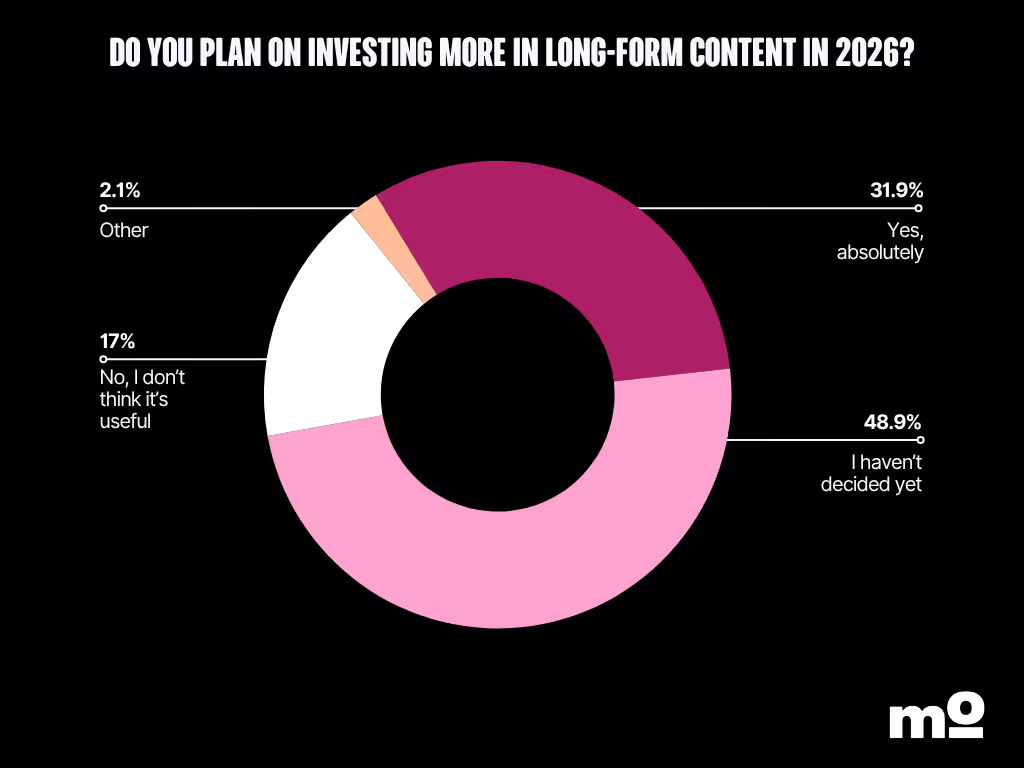
If you’re struggling to decide where to allocate your budget in 2026, we’d recommend diversifying your content types and investing in both short- and long-form content. When you have a diverse portfolio, you’ll feel less pressured to make a single type of content perform exceptionally well.
In case of budget constraints, create a split by investing more in short-form content for the quick wins while keeping some money allocated to long-form content, too, no matter how little. You need those long-term plays that keep working and compounding for you just as much as you need the fast victories.
Budget reservations didn’t just determine platform choices, preferred deliverables, and content formats, though. The butterfly effect meant marketers also chose smaller creators over larger ones – a bet that paid off.
Marketers are so over the empty hype that often comes with mega influencers and celebrities. In 2024, 8 out of 10 marketers we had surveyed said small, niche creators had the best ROI. This year, they made good on that claim: nearly 80% of marketers worked with smaller creators over big-name influencers.
Perhaps the more important question is whether the marketers we polled were right. Are small and niche creators performing better than large influencers? Nearly 60% said yes while only 1 in 10 said they performed worse.
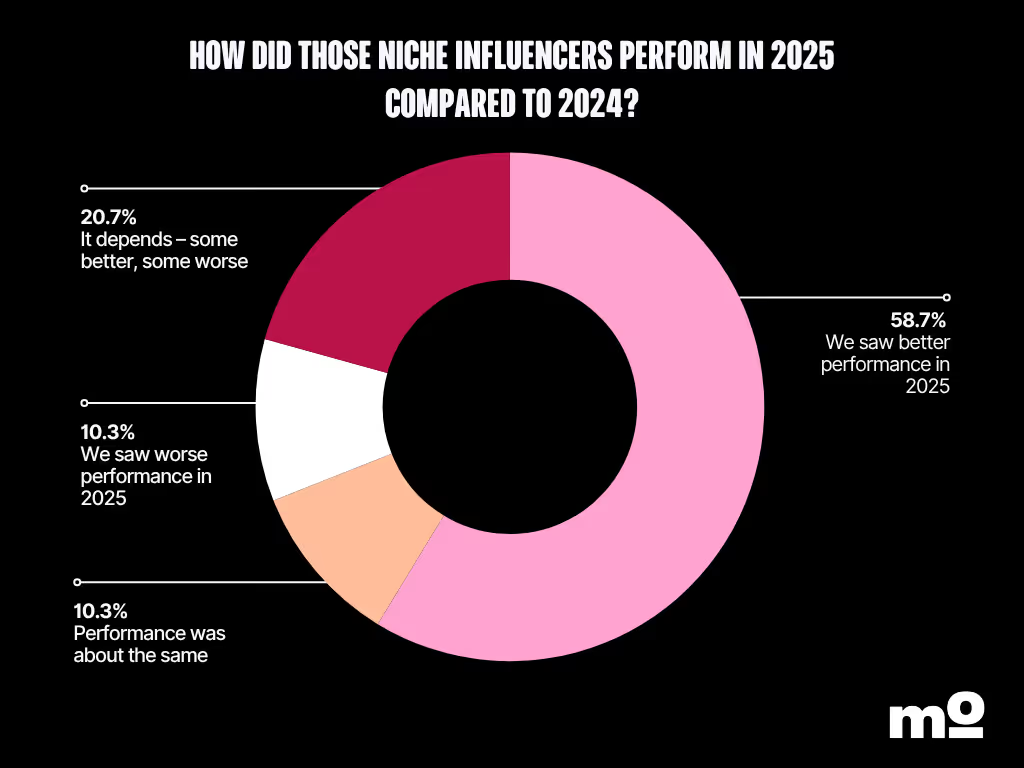
It makes sense to partner with smaller influencers in the current market because they’re usually more cost-effective and less risky. Plus, they typically see higher engagement rates and come with a tight-knit community that actually trusts them.
Lee Drysdale adds that consumers are smart enough to spot authentic partnerships, so the trust niche creators build helps a ton to drive ROI.
The average consumer is becoming savvier to what’s a cash grab and what’s an authentic partnership. Whilst mega influencers and celebrities hold a lot of power to actually influence, the niche talent has built a community on trust!

The only drawback might be the administrative load of scaling when working with micro creators. Anna Jędrzejewska explains how managing smaller influencers can become a huge time-suck:
Micro influencer campaigns are a logistical nightmare. Hundreds of creators and contracts, late or low-quality content, reshoots, invoices, feedback rounds… it’s a spreadsheet jungle. The ROI is there, but the time cost can eat your margin alive.

To ease the burden, Anna suggests using automation for the admin tasks that don’t require human touch or intuition – stuff like sending contracts, requesting approvals, tracking performance, paying creators on time, and more.
You now know industry-wide trends about the best-performing content, deliverables, and creator types. But the only way to know for certain what would work for you is to track your own performance metrics.
Which social media platform gives you the best ROI? Instagram is the winner for most marketers, but check to see if your data agrees. Where did most of your best-performing campaigns come from? Remember the channel that works best for brand awareness might not work best for sales.
Which deliverables are the most effective for you? Reels, TikTok videos, and Stories dominate the charts for the marketers we polled. But do your own channel-by-channel analysis to understand which deliverables are the most effective for you.
What content types strike a chord with your ICP? Personal stories have been performing the best, followed by product tutorials, but your audience might be different. Don’t forget to check which content type is best for brand awareness and which is best for sales.
What creators performed the best for you? Micro influencers have been outperforming larger ones, according to our survey. Make a list of all the creators you’ve worked with and compare their performance against each other. Look for patterns – are they all of a similar size? Are they all of a specific niche? Do they all have a distinct content style?
If measuring all this sounds like a Herculean task, don’t worry – I got you. Modash can measure the performance of every creator and every campaign (and streamline almost every other admin task). The reporting tool can help you:
See for yourself: try Modash at no cost for 14 days.