

More tools
Use cases



Say two affiliates drive the exact same number of sales this month. Depending on which attribution model you're using, one of them could get credit for all of those sales and the other could get credit for none.
Yes, you need to pick a commission structure, find good creators, and write decent outreach. But nobody sits you down and says, hey, by the way, the attribution model you pick decides who your best affiliates are. Last-click, first-click, linear, time-decay…they’ll straight-up disagree on who deserves the money, and by extension, who you keep investing in and who you stop working with.
And that's assuming the numbers you're looking at are even right in the first place. Which, plot twist, they often aren't.
Choose the wrong model, and you'll reward the wrong people. Have shaky tracking, and it doesn't matter which model you picked…garbage in, garbage out. This guide is about untangling both: the models you can choose from, how to figure out which one’s best for you, and what to do about pesky tracking gaps.
An attribution model is just the rule for which affiliate gets credit for a sale, and within what window.
Here's an overview of the four main models before we get into each one:
Whichever affiliate's link or code the customer used right before checkout gets 100% of the credit.
It's the out-of-the-box default in most Shopify affiliate apps, which is why most programs end up using it.
Say a customer's path to purchase looks like this:
The last-click model would give Creator C 100% of the credit for the sale, even though Creator A drove the first click and Creator B had a big part to play.

The biggest pro of this approach is how simple it is. The tradeoff is that it doesn’t account for anything that happened earlier in the journey. Fine for smaller programs where the buying journey is short and simple, but insufficient once you're running always-on content alongside performance-driven codes and want to know who's actually doing what.
The creator who a customer saw or interacted with first gets all the credit. So, in the example above, Creator A would get 100% of the credit.

This is a good model to use if your program leans on affiliates for top-of-funnel awareness rather than direct response (e.g. creators doing unboxings or "here's what I've been using" content rather than a hard sell).
The downside is that it ignores whoever pushed the customer to finally check out.
Instead of giving one affiliate all the credit, multi-touch models split it across everyone who had some input in the sale.
There are three common multi-touch models:

Multi-touch is the most accurate reflection of how a proper purchase journey works because customers rarely convert off a single post.
But that accuracy comes at a cost. It's harder to set up, harder to explain to affiliates who just want to know whether they get paid for a sale or not, and it’s generally a bit more fiddly than necessary for a small program. Save it for programs where you’re working with a lot of affiliates or for products with longer consideration cycles.
Rather than tracking clicks, this model assigns credit based on whose code gets used at checkout.
It’s worth noting here that codes are just a mechanism rather than a model in their own right, and they come with a couple of blind spots.
Here are some scenarios where they might not work as well:
Codes tend to be the more reliable way to track whether a sale happened and who gets paid, while links tend to be better at tracking traffic. Most programs will benefit from running both side by side rather than picking one, especially bigger affiliate ops.
👉 Further reading: How to Track Affiliate Sales
Okay, so you know the four models. The burning question now is which one actually fits your program. This flowchart points you to a model based on your program's shape. The details follow below.

Our survey found that 70% of marketers believe affiliates are critical for their success, so it’s worth taking the time to match your model to the overall shape of your program.
Consider these three things in particular:
There's no universally "correct" choice here. Both work just fine, and both will favor a different kind of affiliate. For example, last-click celebrates your closers and first-click gives your top-of-funnel creators all the glory.
Neither is wrong, so pick based on what you actually want more of: views or conversions? Here are a few questions to help you decide:
If you’re just starting out with affiliates or want to test a low-lift campaign, first- or last-click will be enough.
Multi-touch is worth the extra setup when:
A multitouch approach tends to work best if you’re marketing higher-priced products, too. For example, a $20 product is more likely to be an impulse buy than a $300 product that needs a bit more thought behind it. A customer shopping for a more expensive item might need to watch a few different creators talking about it before they commit.
The rule of thumb though is to default to first- or last-click until your program outgrows them.
Whichever model you land on, it can only work with the data you actually capture – so how you track (codes, links, or both) matters just as much. We'll get into that below.
No attribution model, however well-chosen, can measure everything an affiliate does for your brand.
Attribution models are built to track direct, trackable sales. What they can't see is the little moments that happen in between, like the customer who watched a creator's video, didn't buy anything that day, but felt a little more familiar with your brand the next time they saw an ad.
This is known as the halo effect, and refers to all the things that happen around a sale.
Some ways brands try to capture some of that halo effect include:

Half of the marketers we surveyed say fewer than a quarter of their influencer partners also work as affiliates. That means a lot of a creator's actual influence on your brand is happening through content that wasn’t initially set up to be tracked as affiliate activity.
If your program has influencer partners who aren't affiliates yet, consider bringing them on board so you can track their influence.
Picking the right model gets you most of the way there, but even a well-chosen model runs into the same handful of snags once it's live.
Here are the four that come up again and again.
Imagine you’ve made a sale through an affiliate and have paid out their commission…then two weeks later, the customer returns the product. You’ve paid an affiliate for a sale that no longer exists.
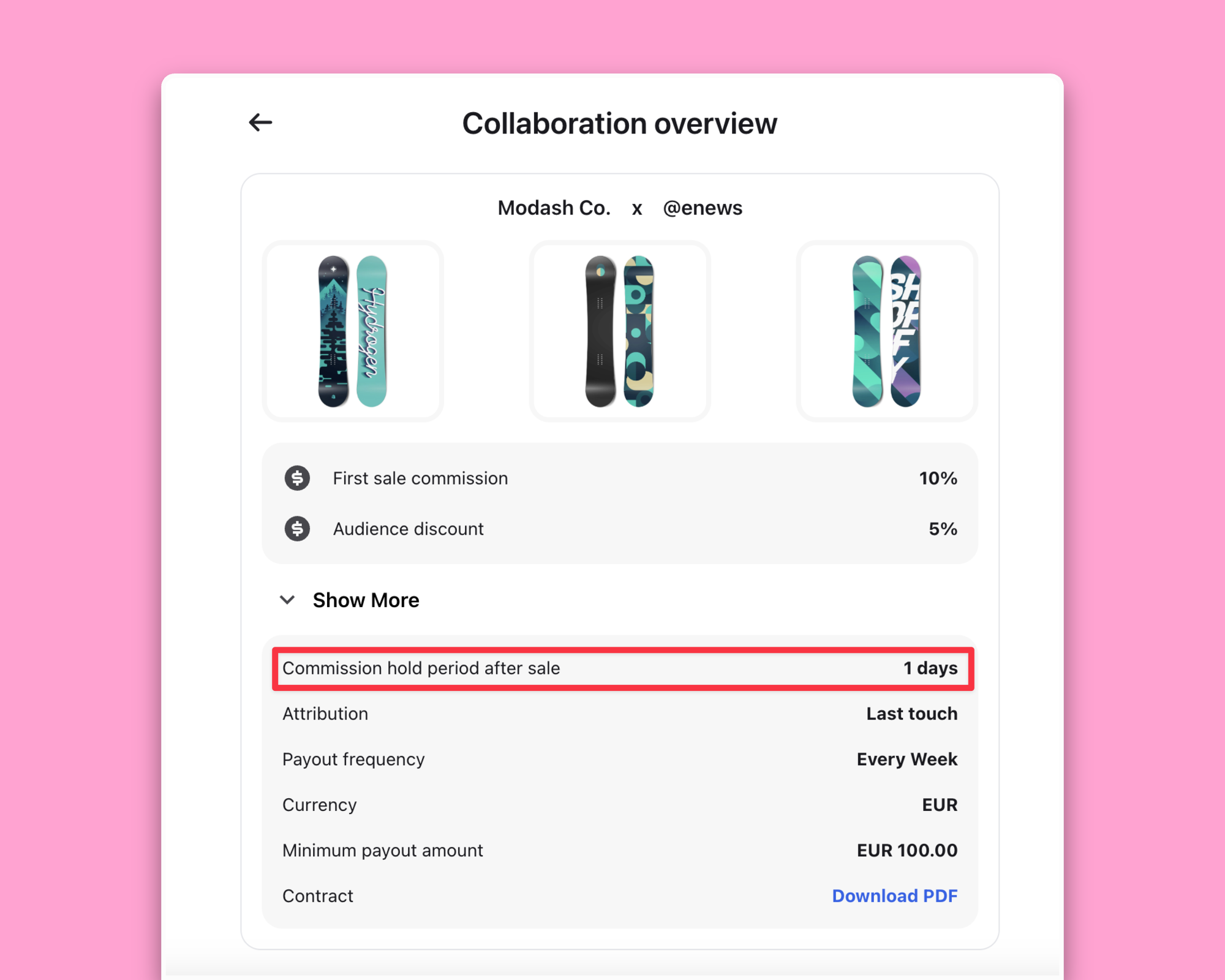
Fix: instead of paying out immediately, use a hold period, a.k.a. a set number of days after the sale where the commission is “pending”. Thirty days is a good amount of time, as it covers most return windows and doesn’t make creators wait too long to get paid.
Modash lets you configure hold periods per program, and the creator-facing portal reflects the same so affiliates know when they’re getting paid.
At some point, a creator's code redemptions and their link clicks won't line up, and you'll wonder which number to trust. The answer is trusting neither figure alone, on its own. Codes and links measure different things, so treat them as two views of the same activity rather than one source of truth.
Here's what each is actually good at:
Fix: if a creator disputes a number, pull both their code redemptions and their link clicks and reconcile the two side by side. Nine times out of ten the gap is a code-vs-link mismatch – a forgotten code, a cross-device purchase, a code shared without a click – not a tracking error.
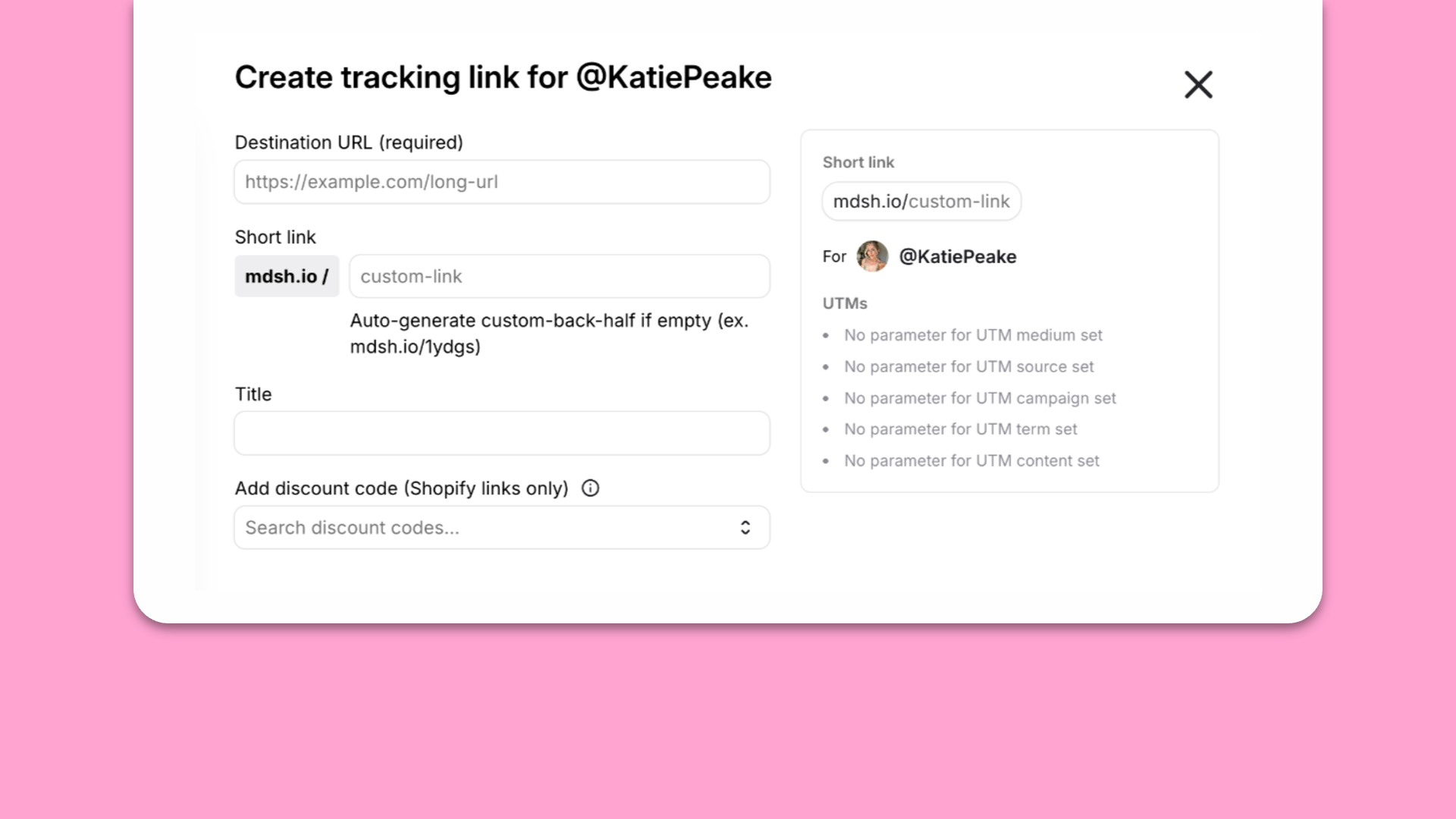
Modash generates a code and a tracking link for every affiliate automatically, with both feeding into a single performance view, so you're not stitching reports together by hand.
Under Apple's iOS privacy rules, apps now need to ask permission before they can track someone. This means a growing number of link clicks either can’t be tracked at all or get attributed to the wrong person.
Fix: use codes as your primary tracking method rather than links alone, especially if a large chunk of your traffic is on iOS. Codes don't rely on cookies or cross-app tracking permissions, so they sidestep the problem.
Modash's attribution logic already prioritizes codes over links when both could apply to the same order, which naturally shields your program from this issue.
Code poaching is when an affiliate's discount code gets shared or leaked outside their own audience (e.g. onto a coupon aggregator site). It’s a pretty common problem, with 47.6% of marketers saying they deal with it.
Twenty percent do nothing about it at all, treating it as an inevitable, low-impact cost of running an affiliate program, which is a reasonable call if it's not massively distorting your numbers.

If it is impacting your numbers, you can:
Every problem above will eventually turn into a trust issue if a creator can't see their own numbers.
If affiliates are stuck waiting on you to confirm their earnings, every hold period, every code and link mismatch, and every cookie-tracking issue can start to feel a bit like you're withholding money. Not great for morale or building solid creator relationships.
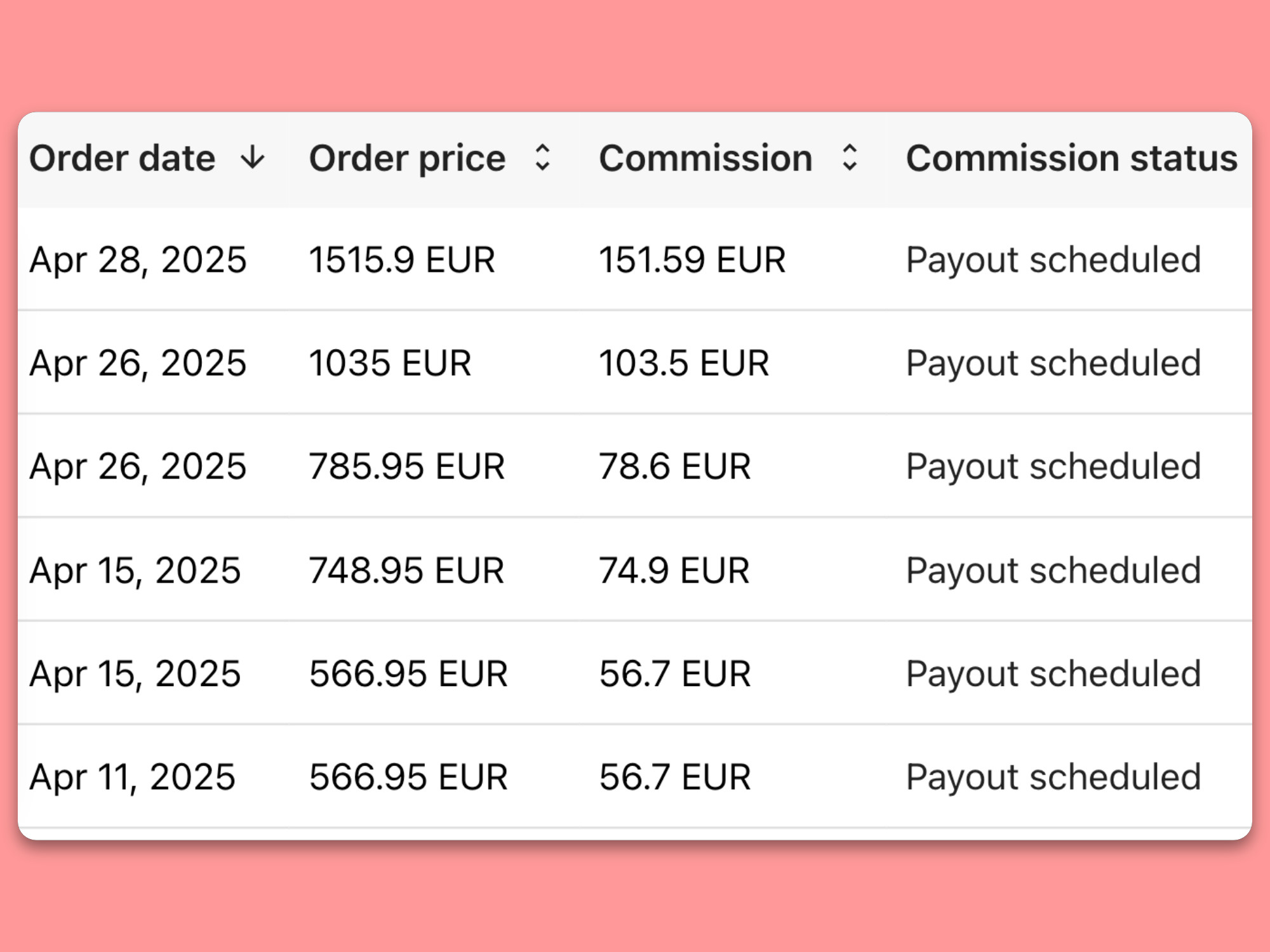
Fix: give affiliates direct visibility into their own performance so they can check live instead of waiting on you. In Modash, commission and sales data show up in the creator-facing portal within about 30 minutes of a purchase – each creator can see the orders associated with their link/code, commission earned, and when it's due to be paid, so a commission on hold shows up with its reason attached rather than as a silent gap.
Last-click, by default, mostly because it's what nearly every Shopify affiliate app uses. It's simple to set up and explain, which is exactly why most brands don’t even question it.
It depends on what you want to reward: first-click credits whoever introduced the customer to your brand, last-click credits whoever closed the sale. Most programs default to last-click since it's simpler, but if your affiliates are mainly doing top-of-funnel discovery content, first-click is more likely to reflect the actual work they're doing.
Most ecommerce brands go for something between 7 and 30 days, depending on how long it usually takes a customer to buy. Shorter windows suit impulse-buy products, while longer ones make more sense for anything with a bit more consideration behind the purchase.
Because they're capturing different things: a customer might click a link but forget to use the code, use a code they saw in a caption without clicking anything, or click on their phone and buy later on a different device using the code. Codes and links will naturally disagree in these situations.
Not really, not out of the box, anyway. Shopify will show you sales by discount code and referral source via UTM parameters, which is fine for a top-level view, but it doesn't tie codes and referral clicks together per affiliate, so you end up manually cross-referencing reports. Shopify's a great ecommerce platform, it's just not built to be an affiliate one. A tool like Modash sits on top of your Shopify data and does that tying-together for you – one code and one tracking link per affiliate, both feeding a single per-creator view.
If you pay commission the moment a sale happens, a return two weeks later means you've already paid an affiliate for a sale that doesn’t exist anymore. That's why it’s a good idea to have a set number of days where the commission sits as pending rather than final. With Modash, you set that hold period per program, and any returns or cancellations during the window automatically drop the related commission before it's ever paid out.
Only if your program has a lot of affiliates, a longer consideration cycle, or customers who typically encounter several creators before buying. If you've got a handful of affiliates and short, simple purchase journeys, multi-touch models are more complex that you need right now.
Pull both code redemptions and link clicks for that specific creator and compare them side by side. More often than not, the discrepancy comes down to a code-vs-link mismatch (e.g., forgotten code, cross-device purchase, code shared without a link) rather than an actual tracking error.
There's no universally "right" attribution model, just the right one for your program. Start with your program's size and complexity, decide what behavior you actually want to reward, and pick your tracking method before noodling which model to use.
Don’t forget to keep an eye on returns, code-vs-link mismatches, iOS cookie-blocking, code poaching, and creators who can't see their own numbers.
At the end of the day, the perfect model is the one creators trust. Modash gives you that trust out of the box – last-touch attribution with a configurable window, codes and links tied together per affiliate, hold periods that handle returns automatically, and a creator-facing portal where affiliates see every order and payout in real time.
Start a free trial and set your program up right from day one.