Use Modash in Claude, ChatGPT, Cursor, and other AI tools
Get started with MCP




Brands often treat launching an affiliate program as a software decision – pick a tool, switch it on, wait for sales. But the tool is the last 10%. First, you need to know what you can afford to pay, which products to push, who you recruit, and on what terms.
In this guide, we'll cover the whole process of starting an affiliate program. You'll learn how to tell if affiliate marketing fits your business and how to launch a successful affiliate program in seven steps.
An affiliate program is one of the lowest-risk ways to grow your brand. But that doesn’t mean it’s right for everyone. Before you build this kind of program, it's worth checking whether your margins, products, and audience set you up to win. Here's how to tell.
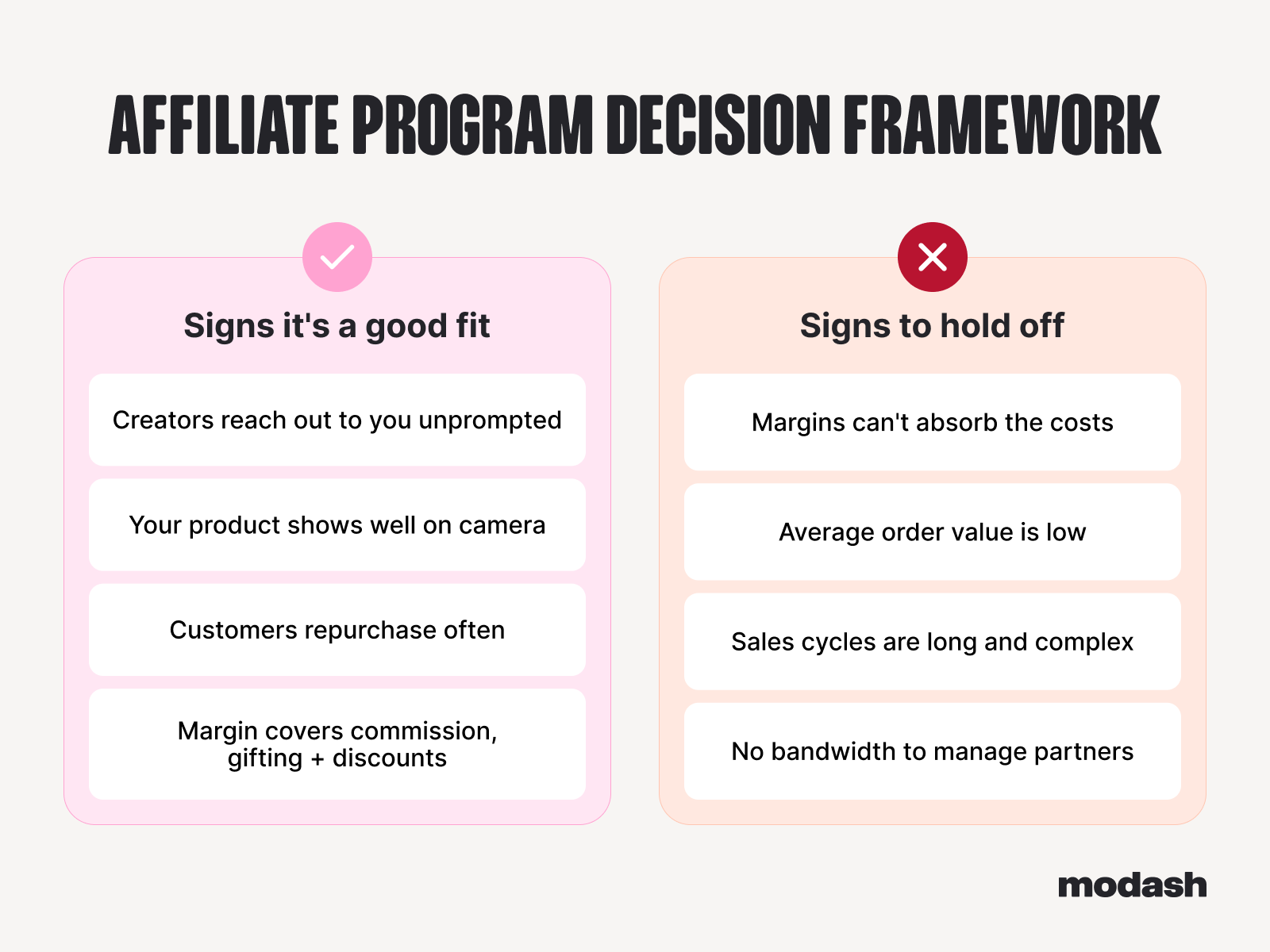
Consider an affiliate program if:
Affiliate marketing won't work for every brand. Hold off if:
If the signs point to a good fit, here's how to go from zero to a working program in seven straightforward steps.
Before you build anything, get clear on what you want the program to achieve. Your affiliate marketing goals will determine how you set commission rules, which creators you partner with, and how you judge success.
For instance, if rising ad costs have pushed you toward affiliate marketing, you might opt to optimize for new customers and judge the program on customer acquisition cost (CAC). If your customers tend to repurchase, you might target total revenue or lifetime value instead.
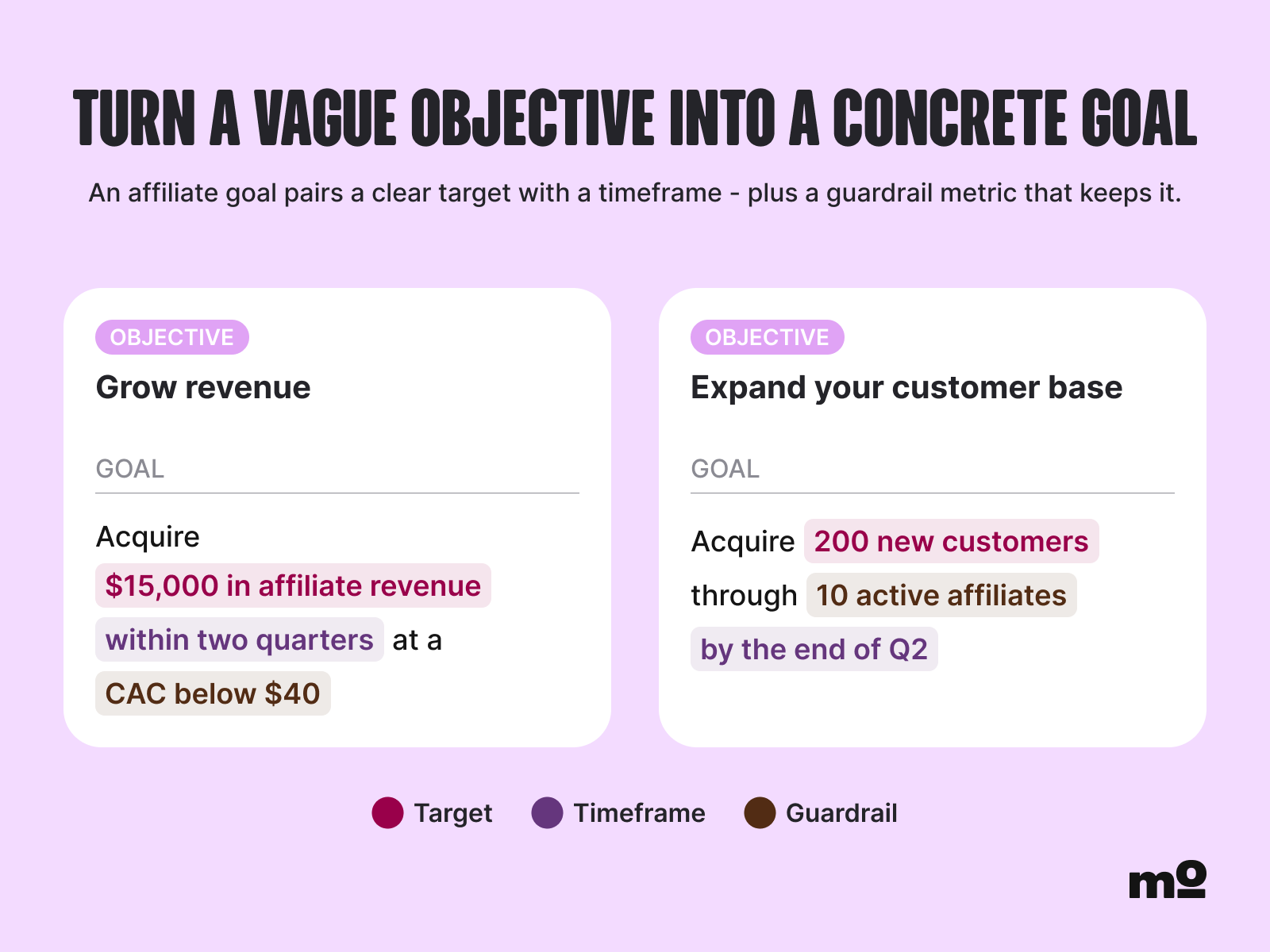
Your affiliate goals should align with your organization’s priorities. So, if revenue is your main objective, you might set a goal to drive $15,000 in affiliate revenue in the next two quarters at a CAC below $40. Or if expanding your customer base is your main objective, your goal might be to acquire 200 new customers via 10 active affiliates by the end of Q2.
Decide which products to promote based on marketability and margin. Every product has to account for affiliate marketing costs, so your hero product won't automatically be your top affiliate product.
You're looking for products that check three boxes:
Creators check your commission before almost anything else, so it's a key factor in who decides to partner with you. Set it too low, and strong creators will opt out. But set it too high, and every sale will erode your margin.
You have three structures to choose from:
Percentage of sale ties the payout to order value, so creators earn more when they drive bigger carts. This is the default for a reason: It aligns their incentive with your revenue.
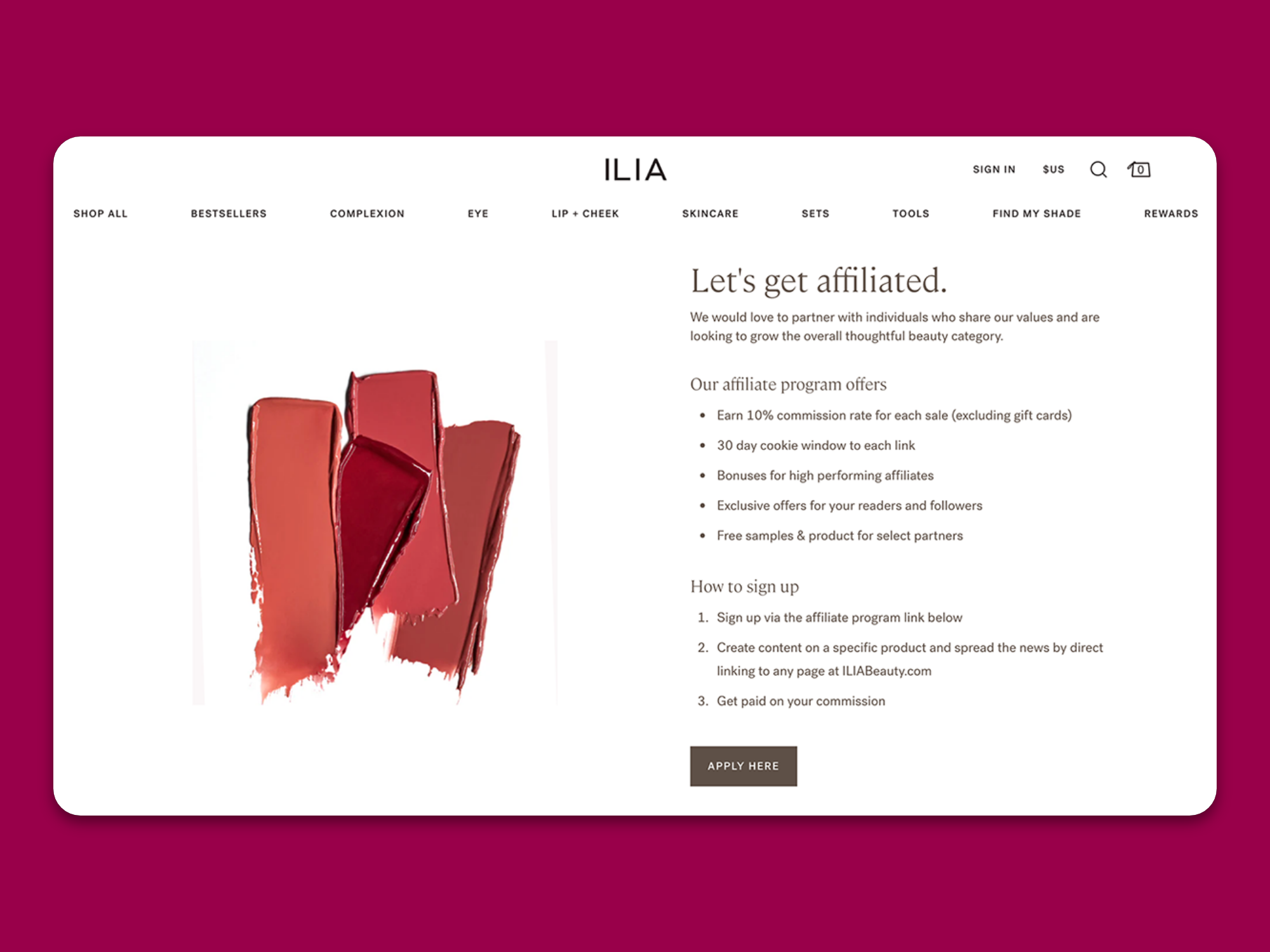
ILIA's affiliate program pays a flat 10% rate for each sale.
Flat rate pays a fixed amount per sale. It keeps your CAC predictable. This makes it a good fit when order values swing widely or when you want to target new customers.
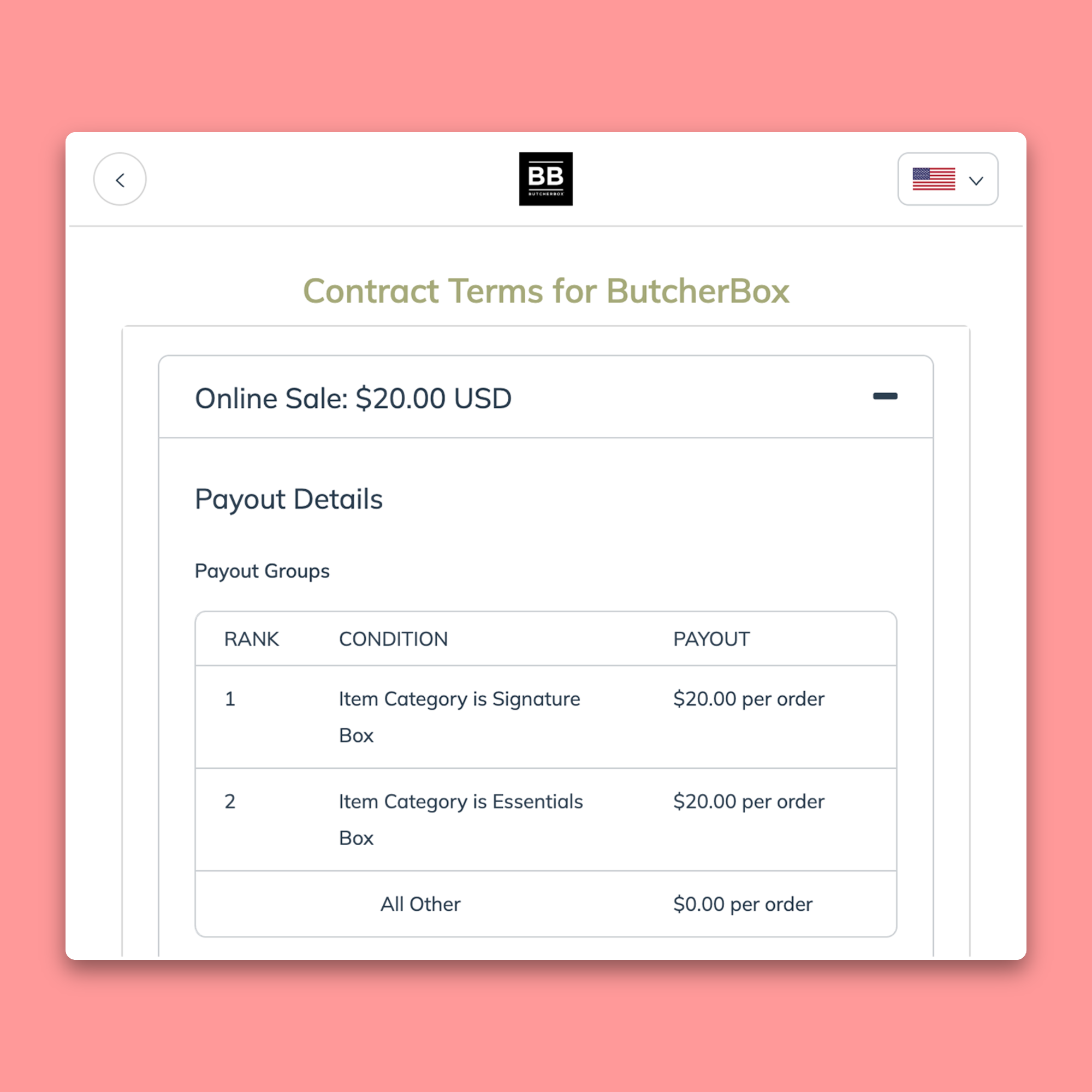
ButcherBox’s affiliate program pays $20 per new subscription.
Tiered raises the commission rate as creators hit volume milestones. It lets you launch at a modest base rate while still competing for top performers. And it gives your best affiliates a reason to keep pushing.
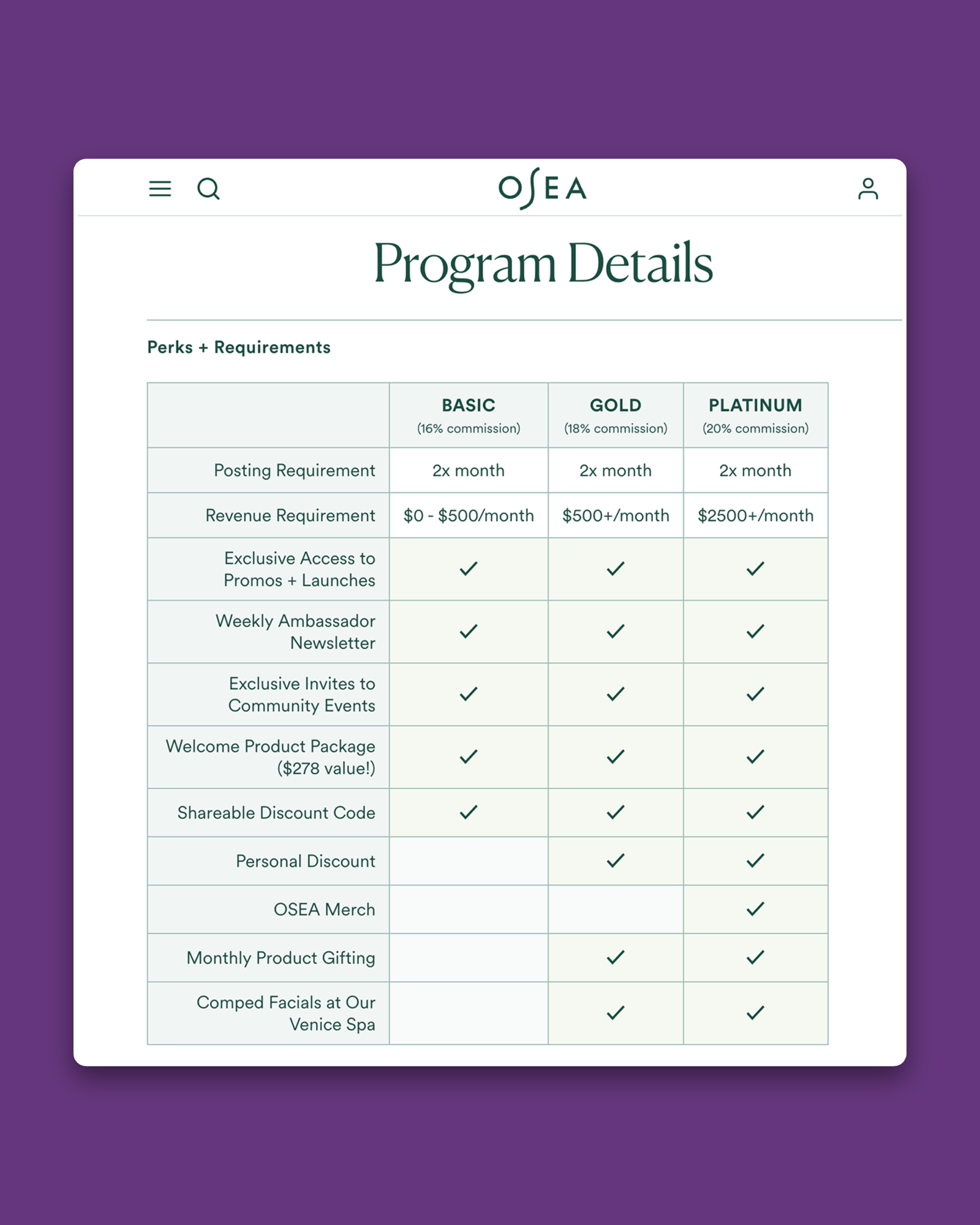
OSEA’s affiliate program has revenue-based tiers that range from 16% to 20% commission.
So, which structure should you pick? Start with your average order value (AOV).
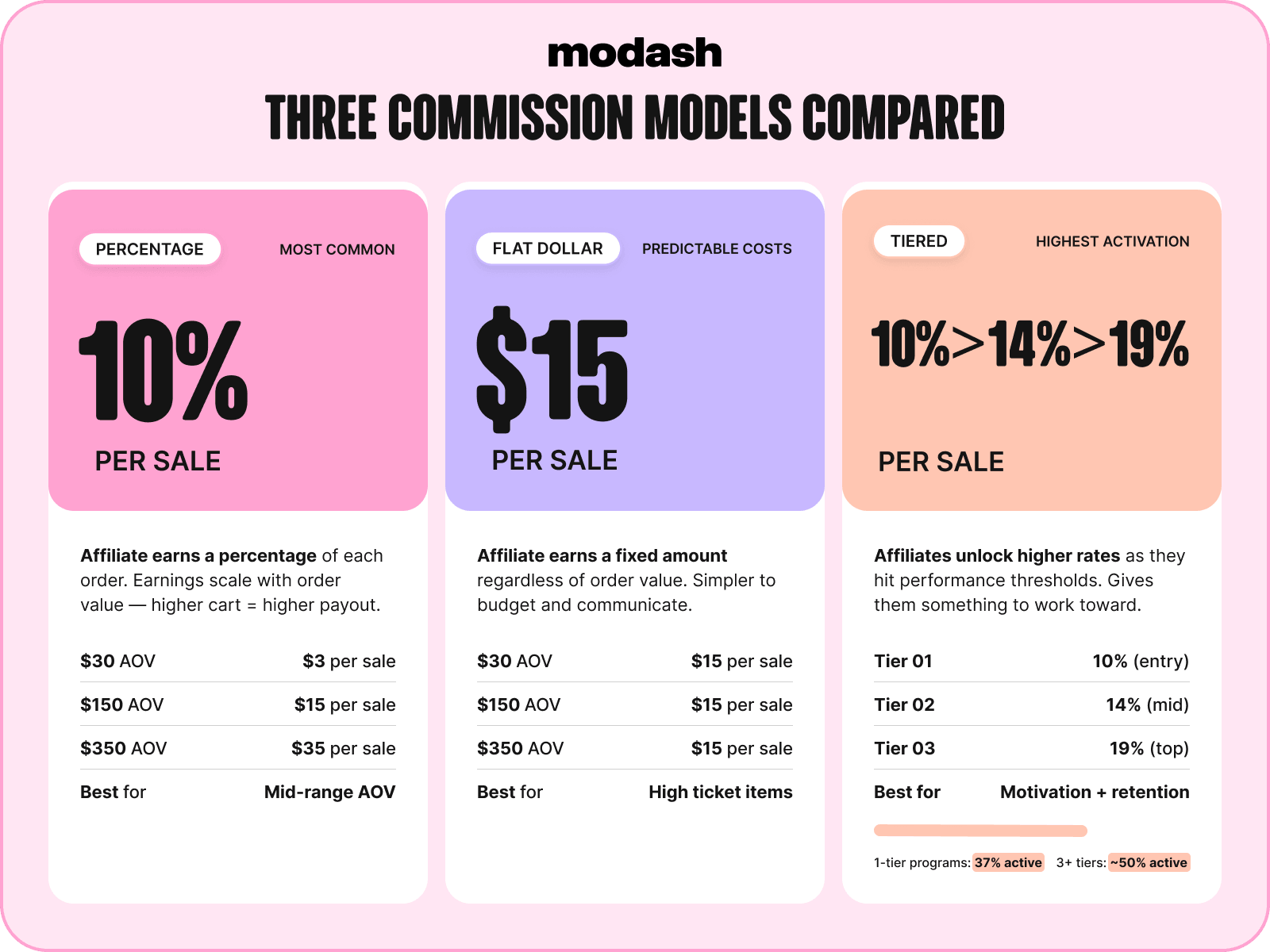
Whichever structure you choose, the rate itself comes down to margin math. Your commission has to consider what a customer is worth and what you're willing to spend to acquire them. Work out your average profit per order, then decide how much of that you can hand to a creator while still coming out ahead.
It’s helpful to check your current CAC. Say you’re paying $25 to acquire a customer through ads. In that case, a commission below that works, since you only pay it on a confirmed sale. The goal is a number high enough to attract the creators you want but low enough that every sale still makes you money.
For a more detailed comparison of commission models and rates, see our article on how to build an affiliate program.
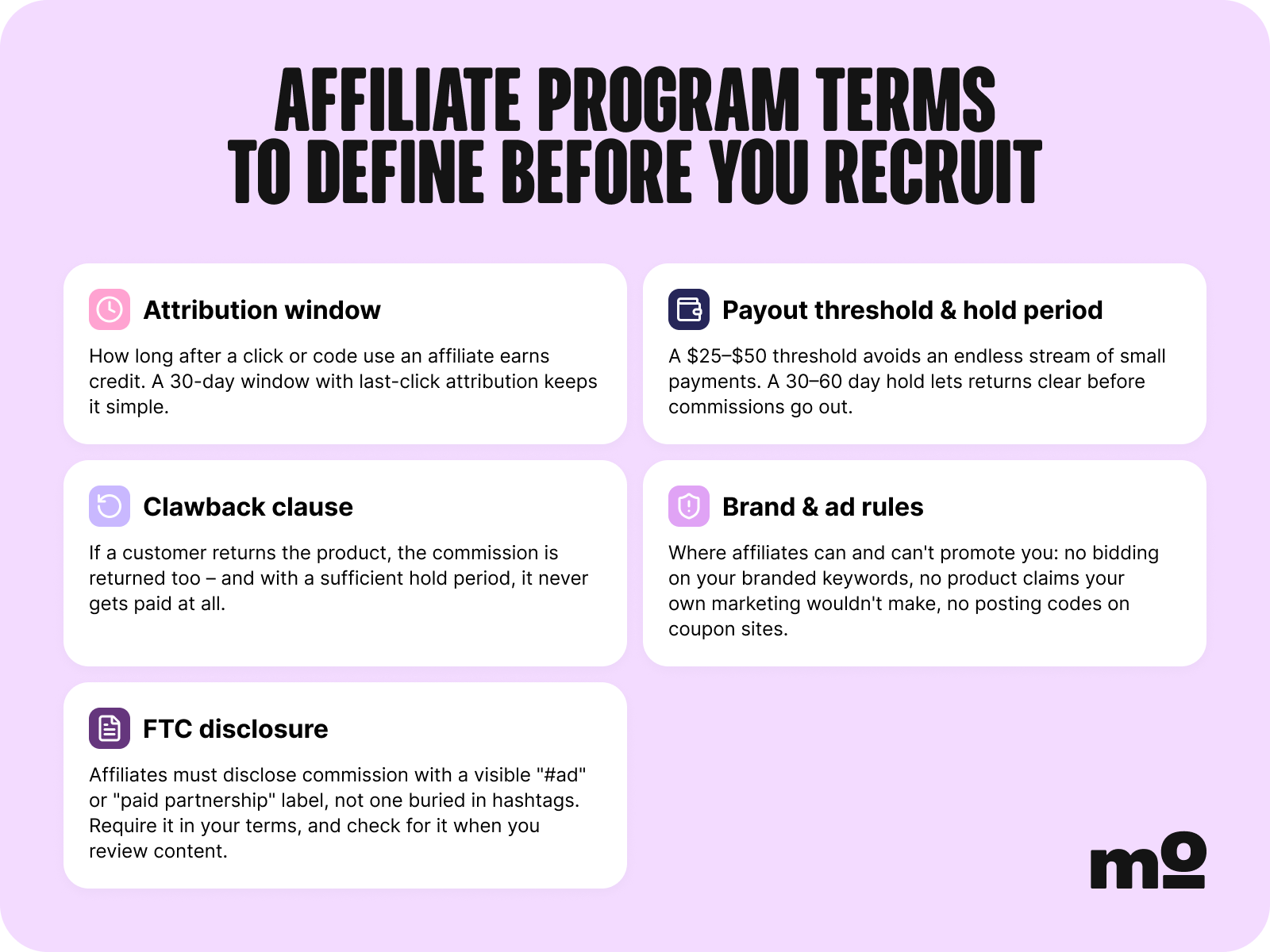
Your program terms serve as the contract between you and your affiliates. Write them before you recruit anyone.
Here’s a quick summary:
There are three main ways to run an affiliate marketing program. The option you choose affects how much work the program takes and which affiliates you'll attract.
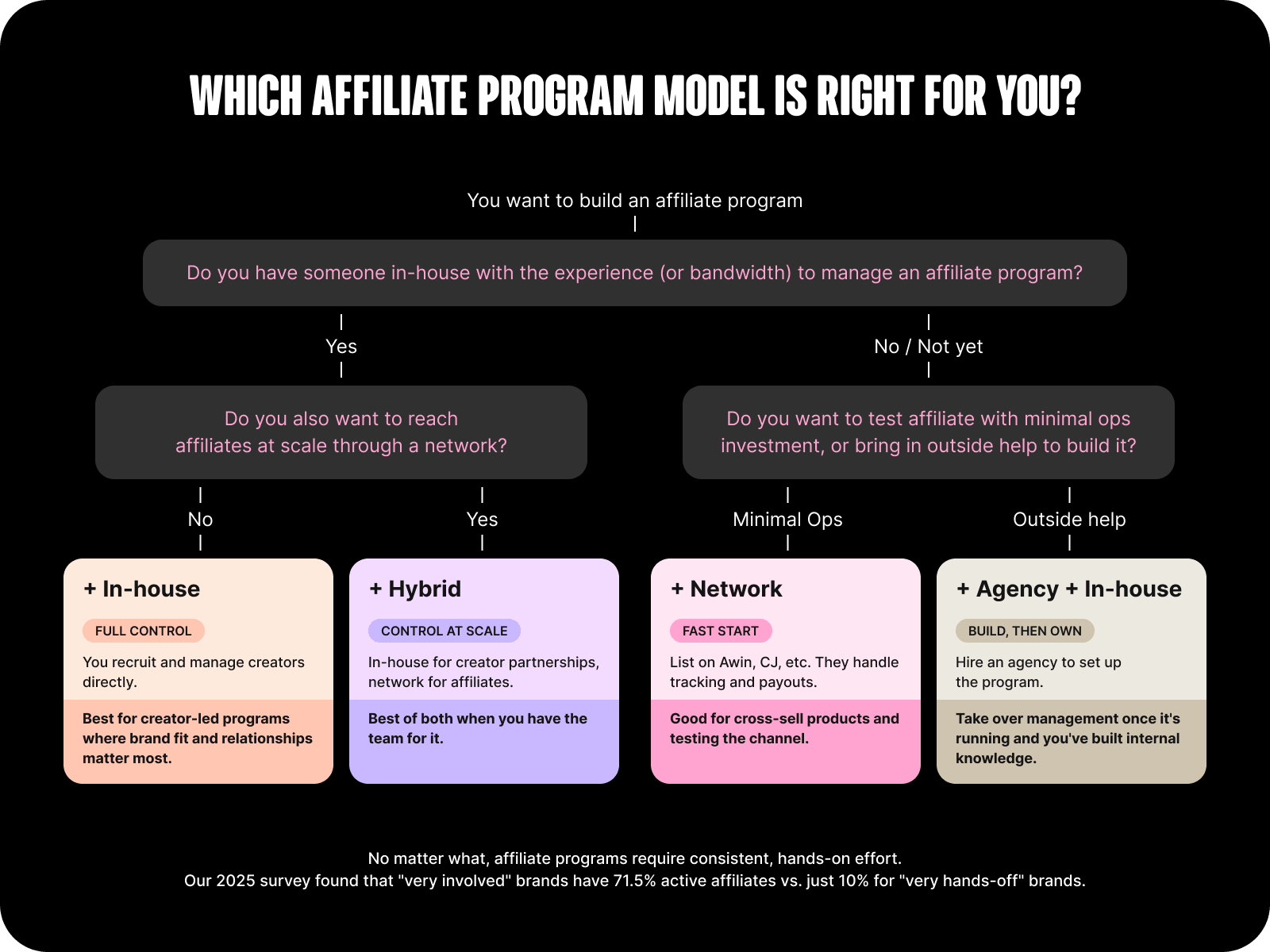
Traditional affiliate networks weren't built for creator partnerships, which require thorough vetting (beyond audience fit), ongoing communication, and content tracking. And agency partnerships increase costs while preventing direct relationships with creators.
An affiliate platform like Modash handles the creator workflow end to end, from vetting and communication to sales tracking and payouts to connecting directly to your Shopify store. Since it supports affiliate, gifting, and paid campaigns, you can use one tool as your partnerships expand.
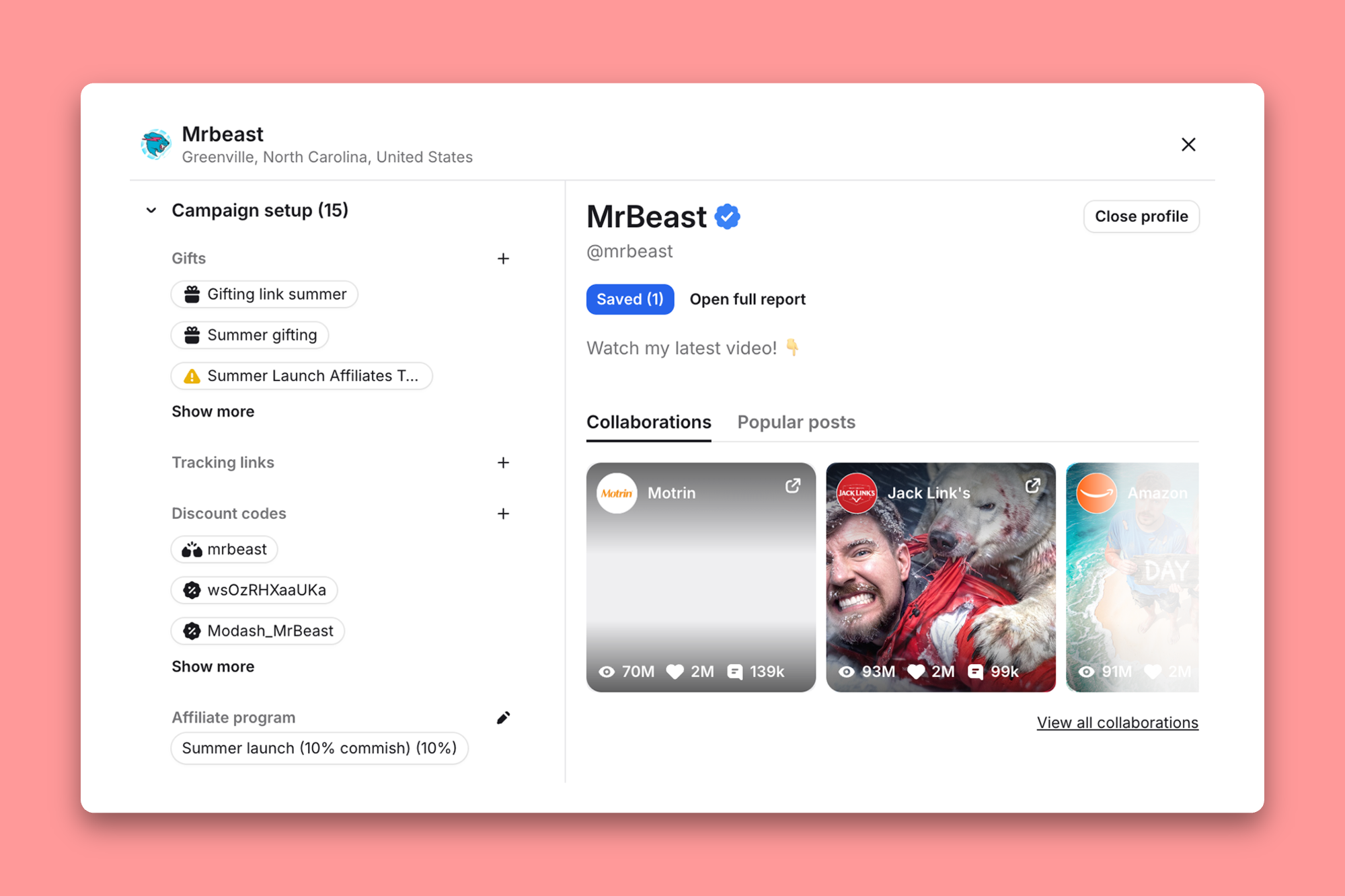
There's a good chance you'll find your first affiliates in your customer list, social mentions, or email subscribers. Customers who post about your products, creators who tag you, and subscribers who open every email are all warm candidates. Look for people with a regular posting habit and followers who resemble your ideal customer.
Existing influencer partners are another great but often overlooked source. According to our survey, nearly half (49.2%) of marketers said they're constantly searching for new affiliates. That’s a missed opportunity right there.
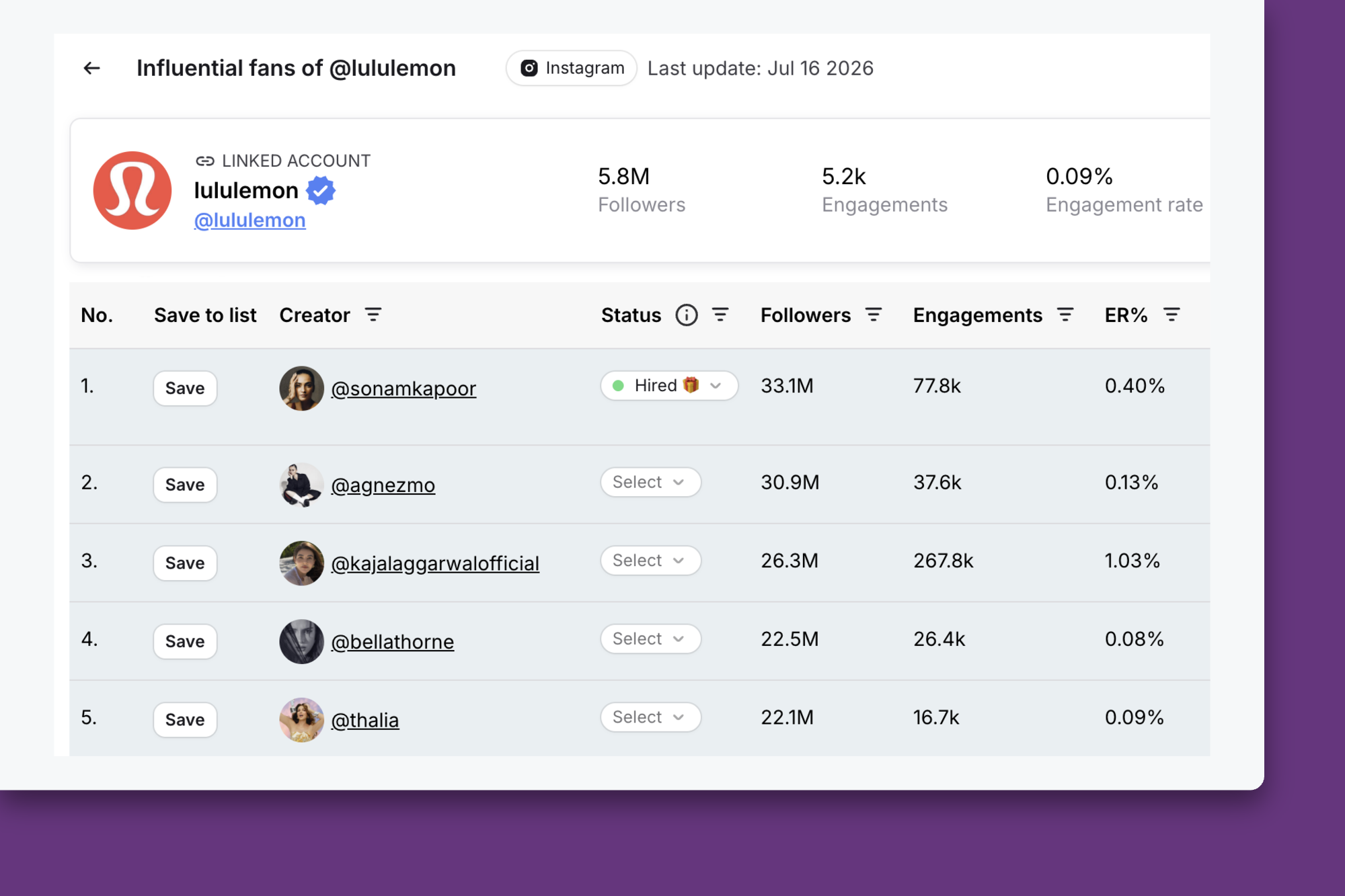
Start by finding creators who already love your brand. You can find them in tagged posts, comments, or you can keep it simple and use Modash. All you have to do is enter your username and it’ll surface creators who already follow your brand – helping you find warm prospects.
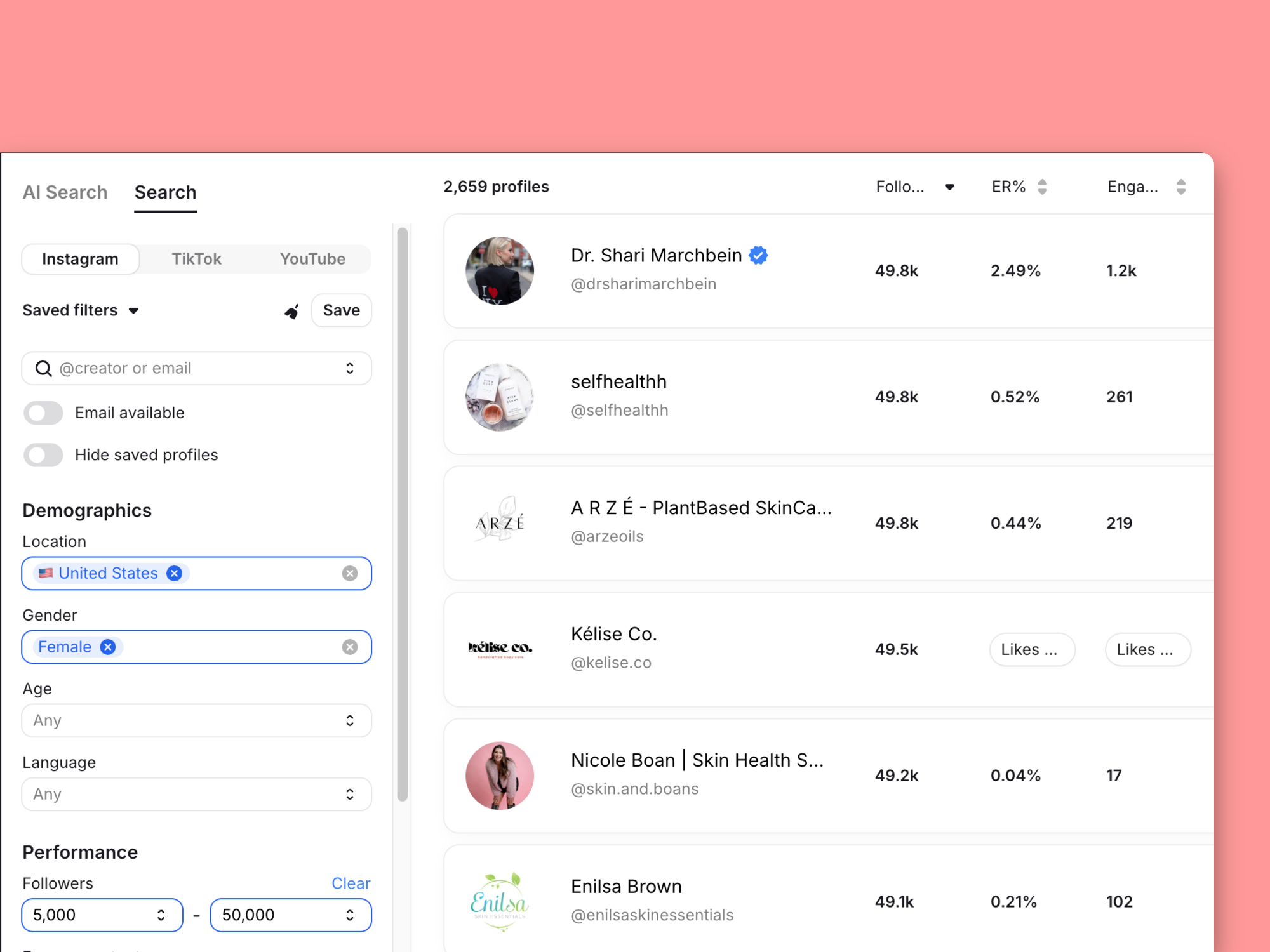
To grow your program further, proactively look for brand fit creators. Modash’s discovery filters narrow 380M+ profiles by niche, location, audience demographics, and engagement – so you find affiliates who match your customer profile.
If you also want to recruit affiliates with a specific content style, you can use Modash’s AI creator search to describe what you’re looking for in natural language or simply upload a visual reference. Finding storyfit influencers has never been simpler.

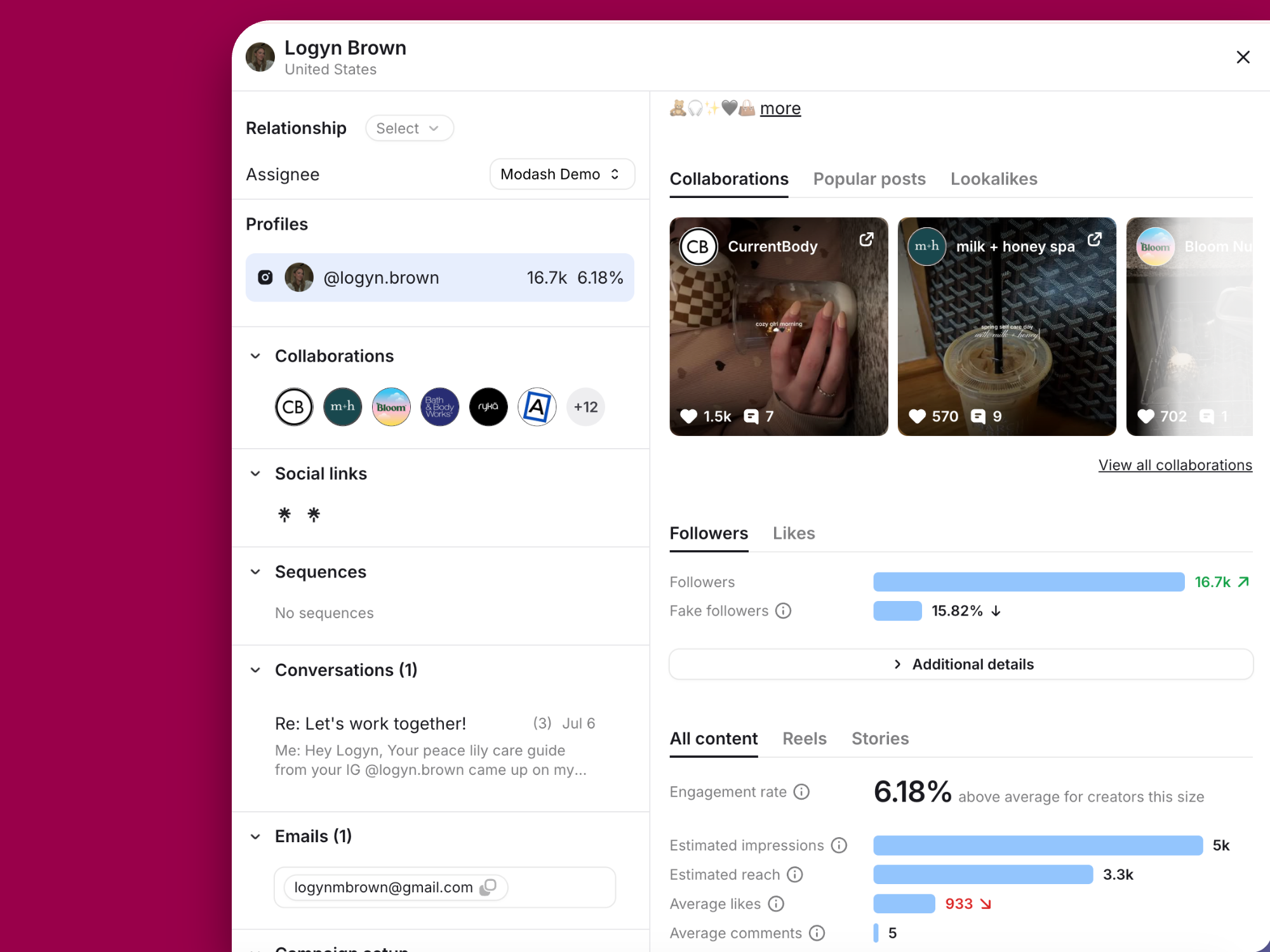
But whether you find creators in your following lists or using Modash, vet them thoroughly before inviting them to your affiliate program. Follower counts are easy to inflate, and purchased engagement sends you traffic that will never convert. Modash can help you check:
Onboarding is your chance to get affiliates off to a strong start – and it matters more than most brands think. In our survey, 60% of marketers said keeping affiliates active was their biggest challenge, and over a third said fewer than 20% of their affiliates are active at all.
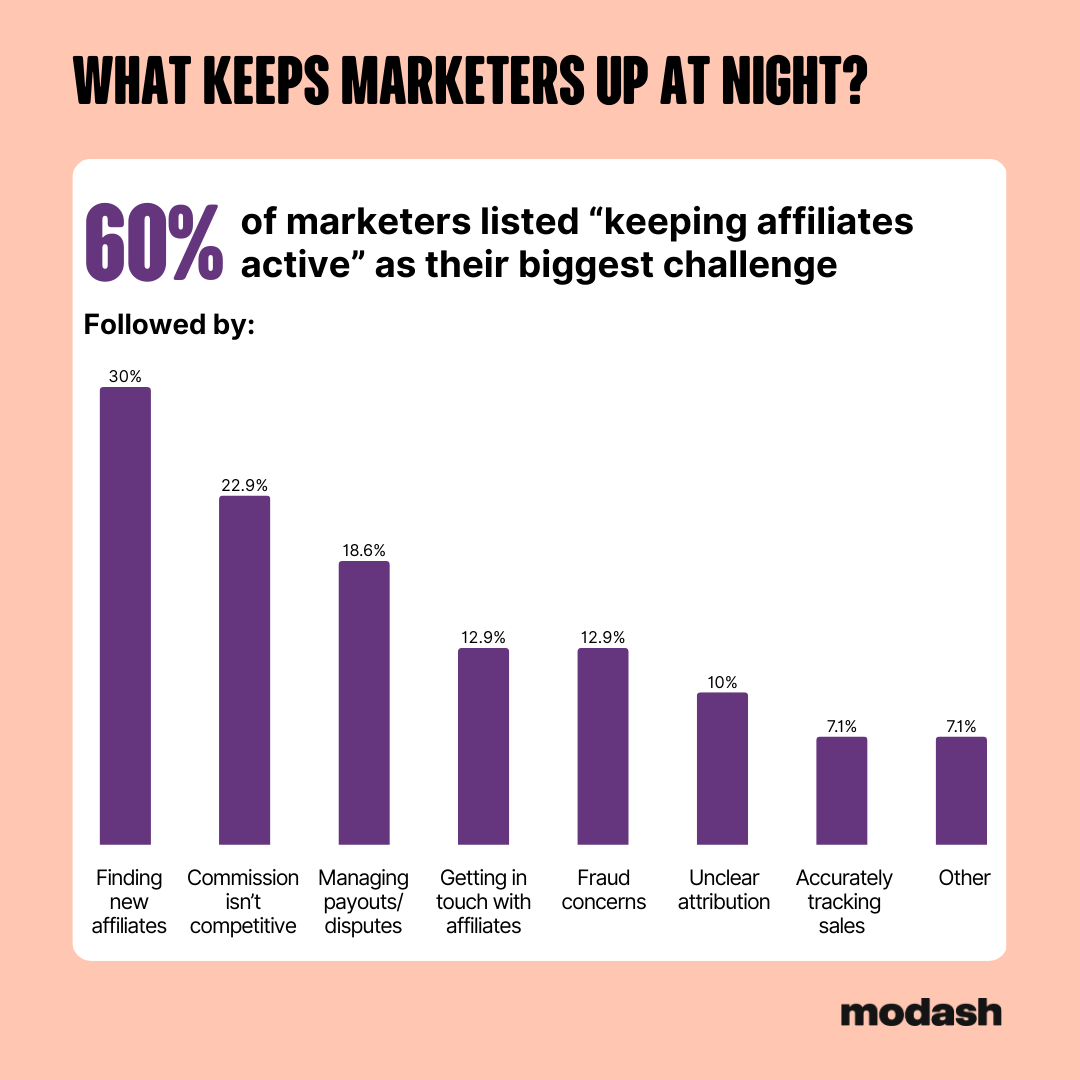
The pattern behind those numbers is almost always the same: affiliates go silent when the program is friction-heavy or forgettable. Good onboarding heads both off. Here are three moves to help you ensure your affiliates get a smooth onboarding:
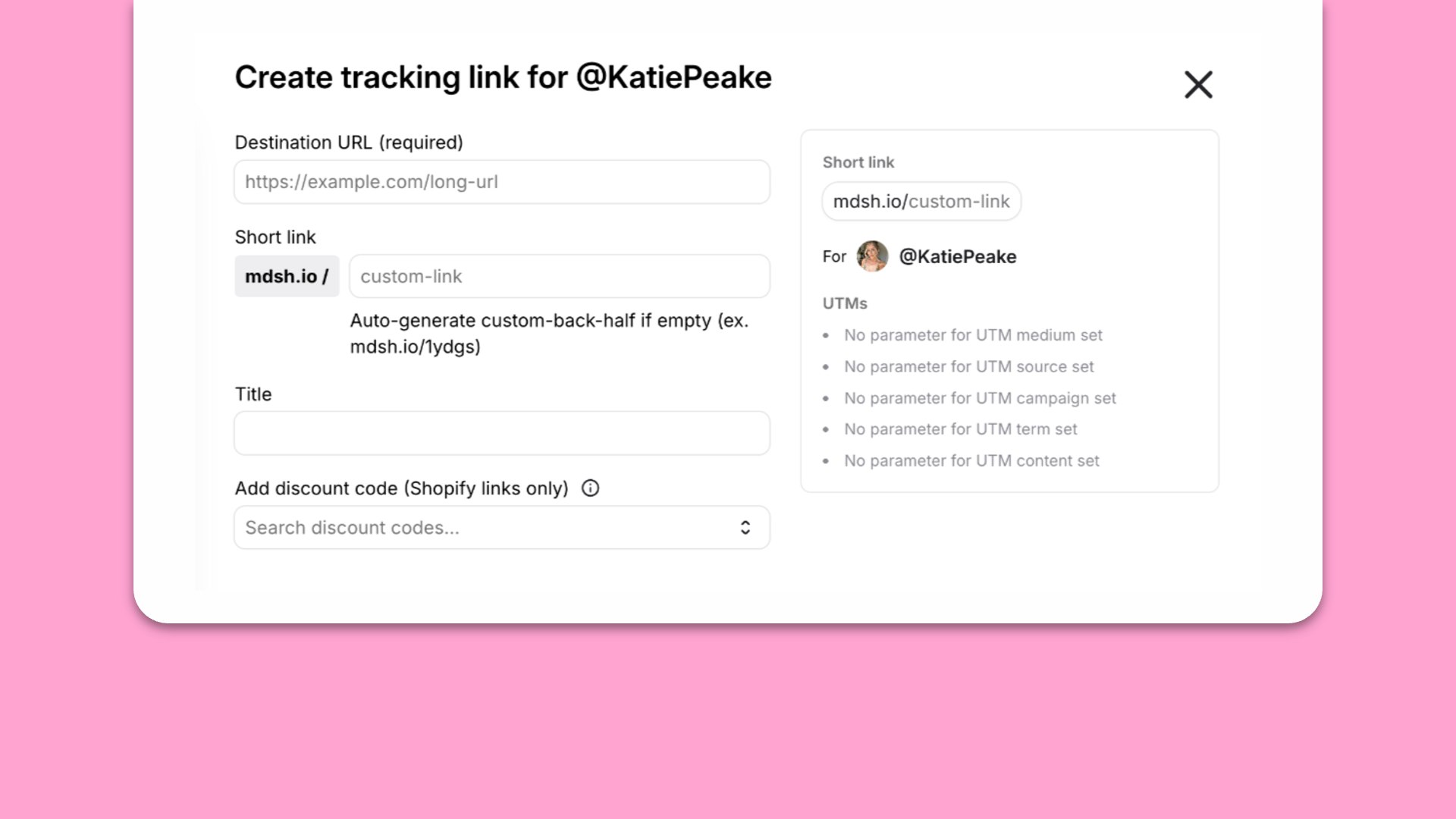

Learn more: How to Set Up New Affiliates So They Actually Start Posting
Once affiliates start posting about your brand, you'll want to measure their performance. This data helps you decide which affiliate should get a rate increase, which products to prioritize, and where to spend recruiting efforts.
Creator-level data tells you which partners drive sales and engagement, while campaign-level data tells you whether the program as a whole is meeting ROI goals. Modash tracks performance at both levels automatically, so you can easily use it to make decisions.
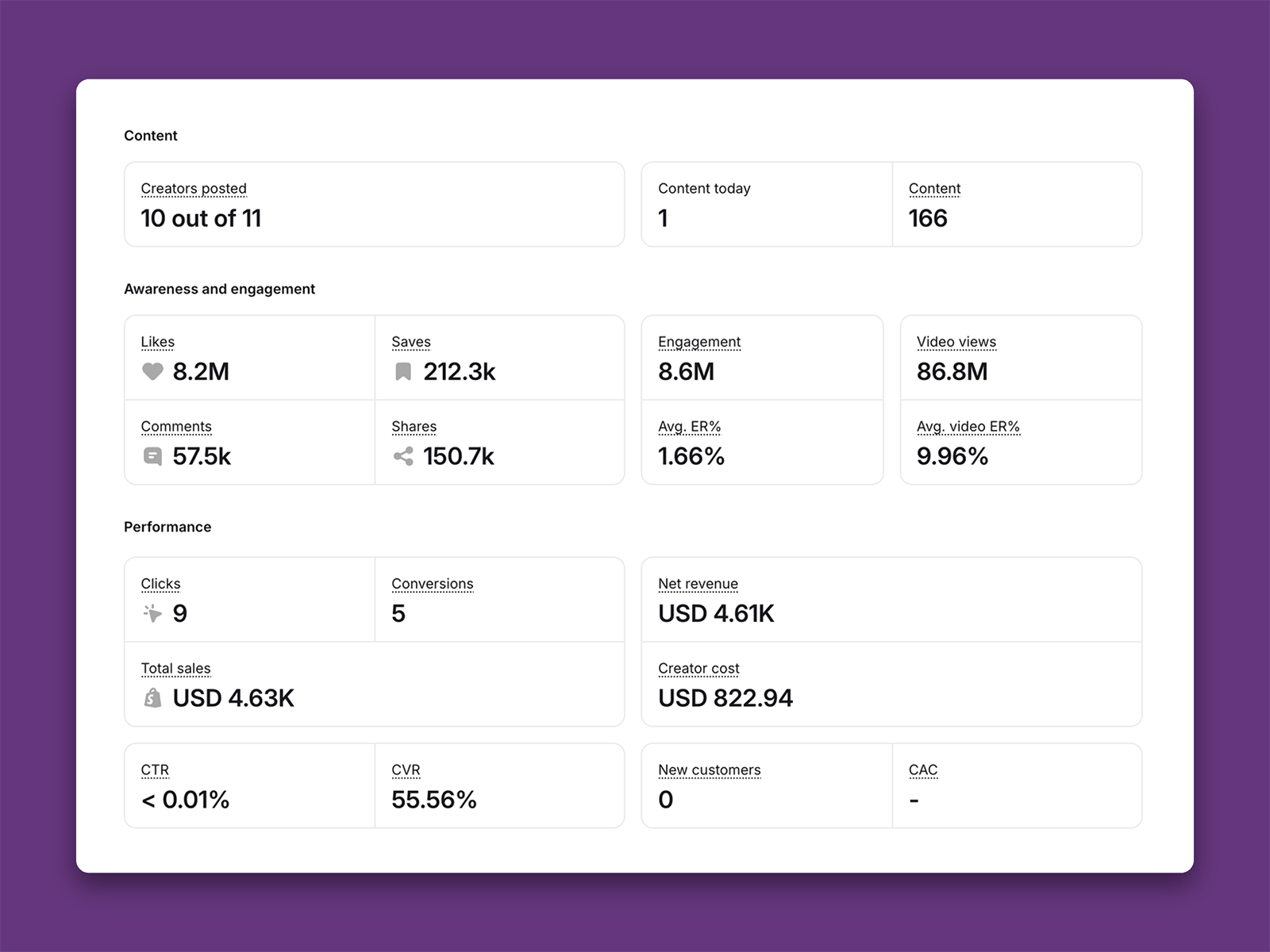
With the right affiliate platform, tracking is easier, notes Melissa Sorby:
While no attribution model is ever perfect, having a platform integrated with Shopify (or whichever ecommerce platform you use) gives you confidence in the data and allows you to track performance at both creator and content level.

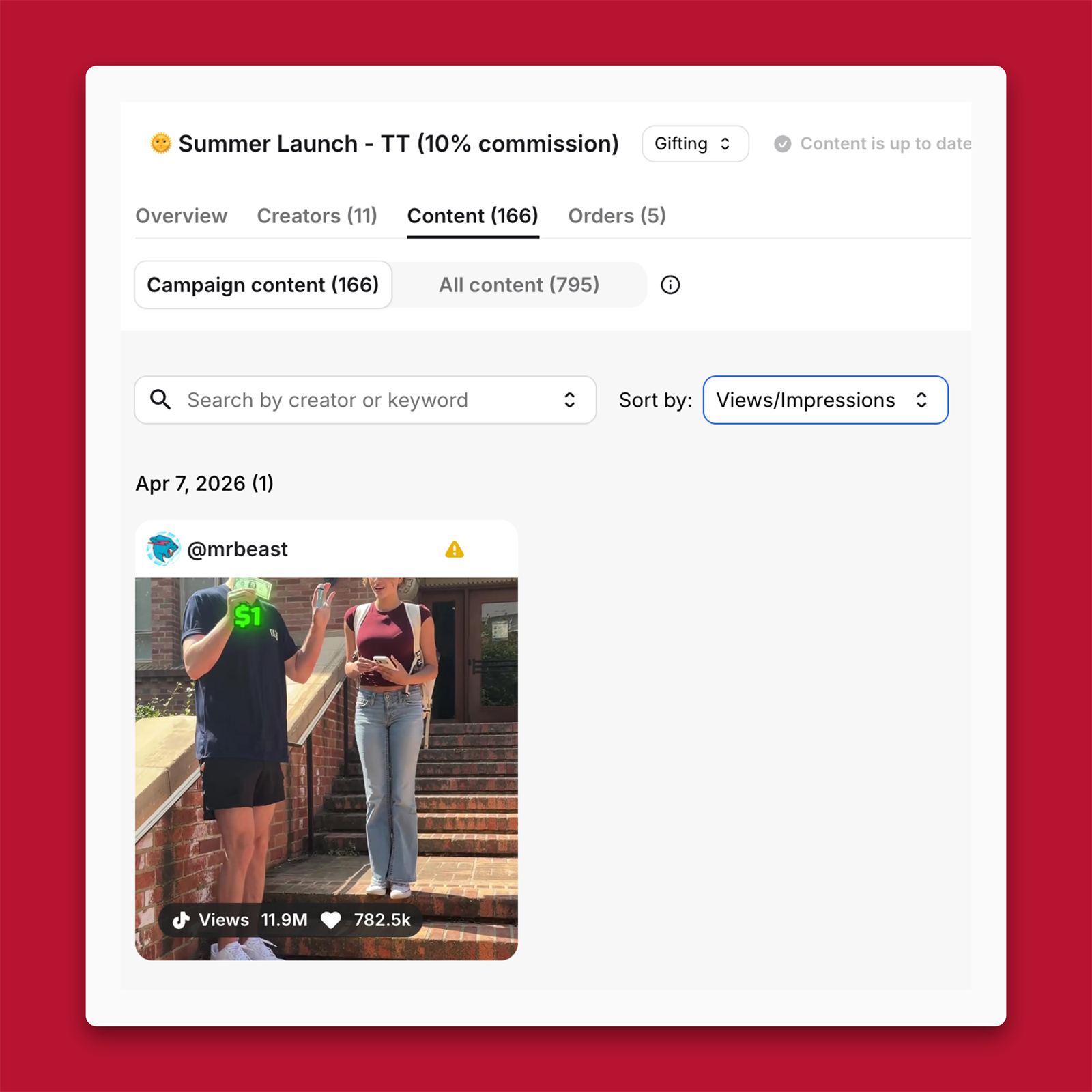
You must also collect affiliate content because:
With Modash, there's no need to do this manually. The platform automatically collects content from tracked creators, including Instagram Stories, without creators having to submit screenshots. Either have affiliates add your campaign hashtag to their posts or use Modash’s Event Mode to capture all content posted during the campaign period.
Then, you’re ready to pay affiliates. Before you sign that cheque, make sure to process returns and refunds, removing any relevant affiliate commission from the balance sheet.
You don’t have to calculate all this manually. Connect Modash to your Shopify store to automate creator payments. Once connected, affiliate payouts will require paying just one invoice per month (to Modash).
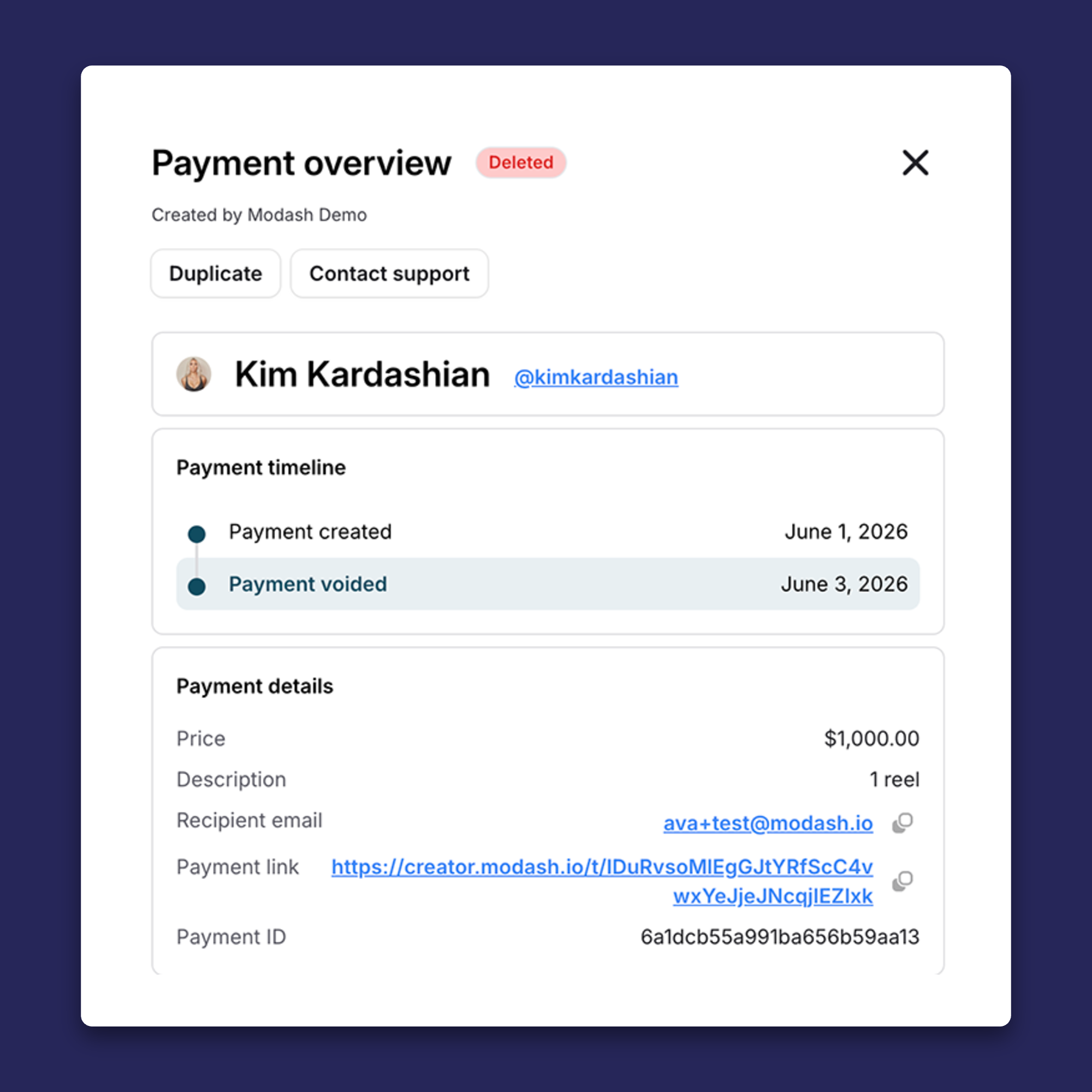
And Modash takes no cut of your affiliate revenue – platform fees apply to creator payouts only (free for $10k/year, then just 5% on affiliate commission, not revenue).
Plus, creators get their own portal to track earnings and payment status, which spares you the check-in emails.

Affiliate marketing has no upfront media spend, but it isn't free to operate. Budget for these costs:
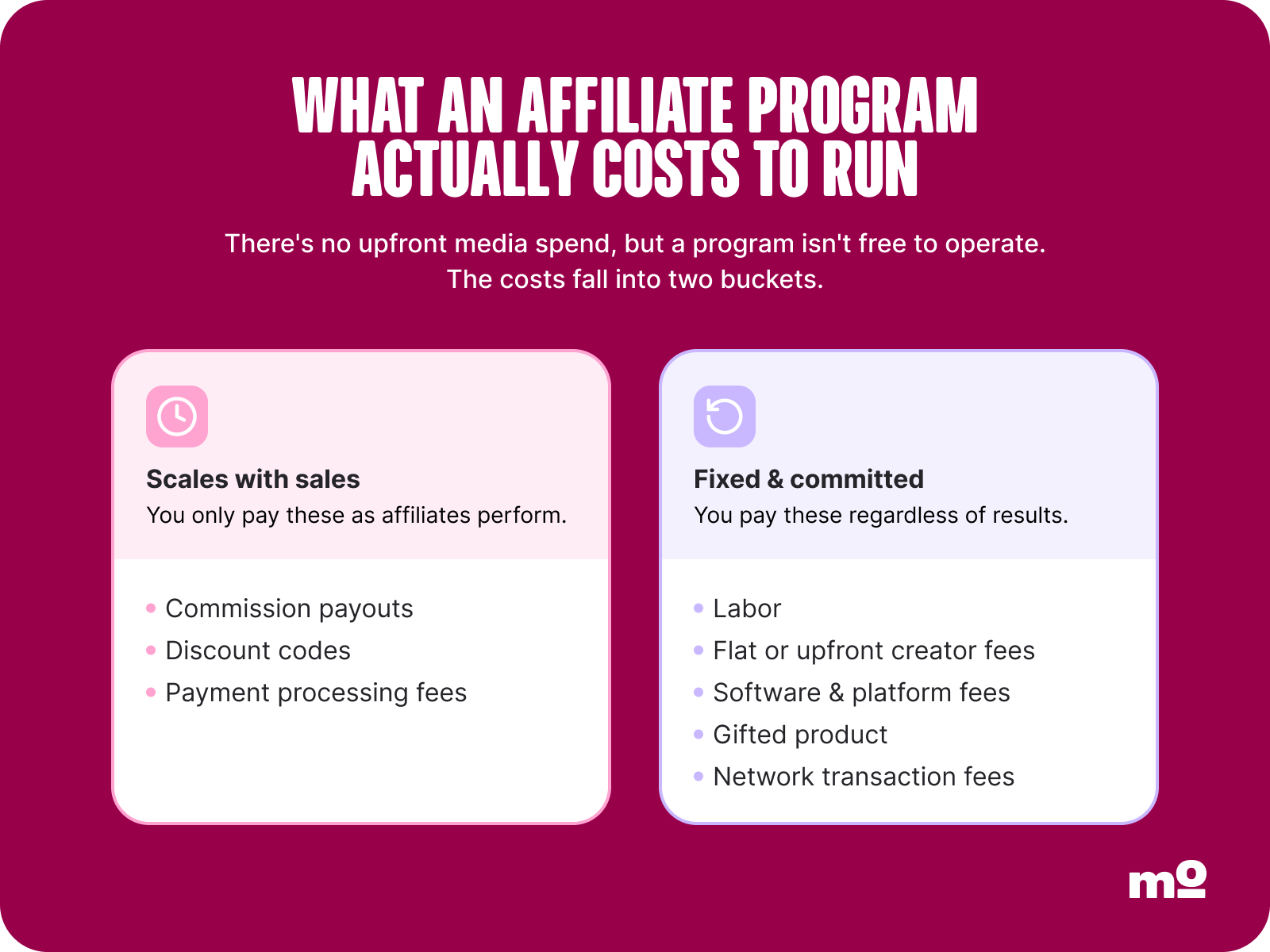
Before committing to an affiliate management tool, check how it calculates fees. A percentage of order value and a percentage of creator payouts sound interchangeable, but they result in different invoices. One platform charges based on what your affiliates sell, and the other charges based on what you pay them.
An affiliate program pays off when you treat it as an ongoing channel for building creator relationships. The brands that get results recruit steadily, keep affiliates stocked and informed, and pay on time.
The right tooling makes that sustainable for a small team. Try Modash free for 14 days to find creators who already love your brand and run your entire affiliate program from one convenient dashboard.
A good rate depends on your gross margin after the affiliate's discount code. Rates from 5–25% are the norm for ecommerce brands. Say your product sells at $80 with a 60% gross margin, leaving $48 per order. A 15% commission ($12) and a 10% code ($8) still leave $28, so that rate would be sustainable. Launch below your ceiling so you have room to raise rates for top performers later.
In-house works for a handful of affiliates, but the manual work increases with every partner you add. Networks bring an existing affiliate pool, though they were built for coupon sites and often take a cut of your sales. For creator-led programs, a platform like Modash gives you full control with discovery, tracking, and payouts in one place.
No. A pilot with up to 10 affiliates and a single product is enough to test whether the economics work. Small programs are also easier to manage well, and treating early affiliates well matters more than recruiting at scale.
Assign each affiliate a unique discount code and a UTM-tagged link. Platforms with a native Shopify integration, like Modash, automatically attribute revenue to each creator.
Yes. Affiliates must clearly disclose that they earn commission from your links or codes, with a visible label like "#ad" rather than one buried in hashtags. The FTC can hold your brand responsible for missing disclosures, so put the requirement in your program terms and check for it when reviewing content.
When a referred order is returned, the commission on it should be reversed. Include a clawback clause in your terms and set a commission hold period of 30 to 60 days so many returns happen before you've paid anything out.
Our expert contributors