Free virtual event: hear from influencer leaders at ŌURA, Adobe, Stanley 1913 & more.
See the lineup





When it comes to running really good affiliate programs, finding affiliates is half the battle. The second (and arguably harder) part is whittling them down to find a good fit.
The recruiting part is fun. The influx of applications, DMs, and names in a spreadsheet feels like you’re making progress. But when it comes to vetting those same creators, it can feel like that progress screeches to a halt.
And so a lot of brands rush the vetting part… or they skip it entirely… or they flatten it down to one question: do they have enough followers?
But when you just go on the numbers rather than whether a creator is a brand fit, you can end up wasting more time on campaigns that don’t work and might also harm your brand in the process.
The real question isn't "do they have enough followers?" – it's "is this creator actually a good fit?" And answering that takes two kinds of checks:
It's easy to lean too hard into one side. Rely only on data and you'll end up with creators who check every box on paper but don’t feel quite right. Rely only on judgment and you'll waste hours eyeballing creators a tool could've filtered out in seconds – and make inconsistent calls you can't defend later.
Vetting affiliates is a two-pronged process. A bit like how American Idol producers screen thousands of auditions before anyone gets in front of the judges. The first round is more of a technical scan to check the affiliate’s numbers (in American Idol’s case, to check if the person can, you know, sing). The second round is more of a gut check for star quality or fit.
Layer 1: the data layer. This is everything you can check on a public profile: fake-follower percentage, engagement rate, audience demographics and location, past brand collabs. It's objective, it's fast, and most of it doesn't need you to have a conversation with the creator at all. Modash can help you vet for this layer at scale (more on that soon).
Layer 2: the judgment layer. This is everything a spreadsheet can't tell you: content quality, brand safety, tone, fit. No tool can tell you whether a creator's style matches your brand's voice. That's still a human call.

For this to work, the layers need to be carried out in that exact order. Layer 1 exists to narrow a large pool down to a shortlist. Layer 2 exists to make the final call on that shortlist. Run them in reverse and you'll burn hours on judgment calls for creators who should've been filtered out in seconds.
Not all checks are equal or take the same amount of effort. Some you pull straight from a profile in seconds, while others take a closer look.
As a good rule of thumb, start with these checks.
Follower count is the least reliable number on a creator's profile because it’s the easiest one to fake.
Bots and follower farms can inflate that number for pennies, so a big following on its own tells you almost nothing. What tells you more is the ratio between followers and actual engagement: likes, comments, saves. Something’s a bit fishy if a creator with 50,000 followers has 40 likes per post, even if the follower count looks impressive on paper.
Pull up a handful of recent posts, check the engagement against the follower count, and you'll usually spot the mismatch within a minute or two.
You don't have to do this manually for every creator on your list, though. Modash has a fake follower filter that shows you what percentage of a creator's followers are real versus fake (inactive or bot-like).
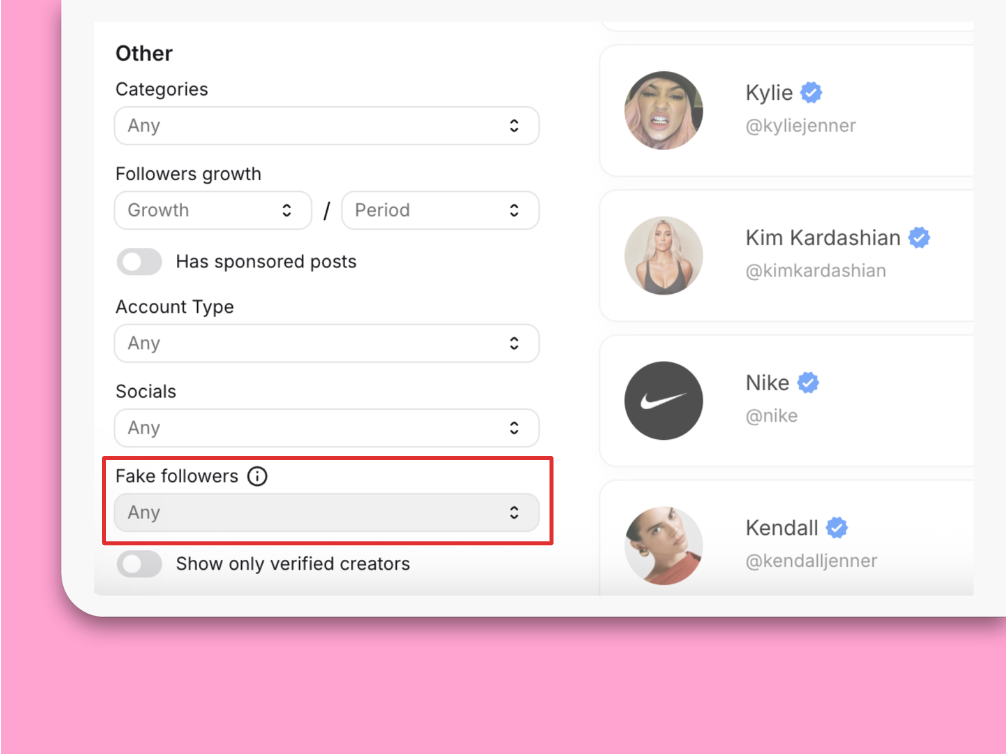
Note: a higher number of fake followers doesn’t automatically mean that a creator has bought them. Bot attacks are common and many creators are prey to it. If everything on a creator’s profile looks great except fake followers, it’s worth giving them a chance to explain.
You want your affiliates to have followers that overlap with your ICP. Evaluating an affiliate’s audience demographics is the obvious starting point: right country, right age range, right general interest. Modash makes this super easy – you can see any creator’s audience demographics, location, and interest data directly on a creator's profile, along with their previous sponsored posts.
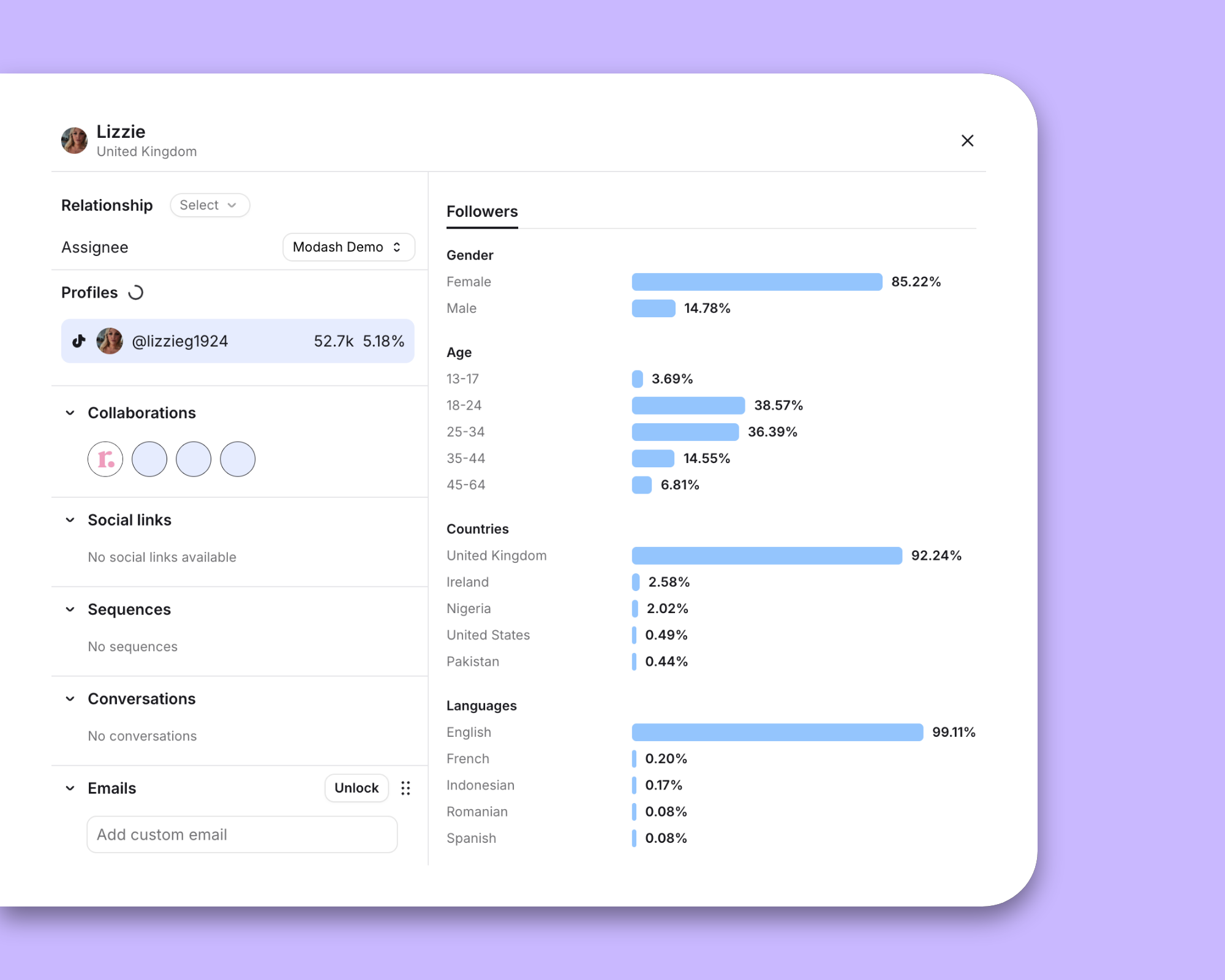
But matching demographics is only the surface. An affiliate can have your exact ICP in their audience and still not drive sales – either because that audience doesn't have the buying power for your product, or because the creator doesn't have real influence over their followers’ purchasing decisions.
So beyond the demographic match, ask:
This is where the two-layer framework comes in. The demographic match is layer 1 – data you can read straight off the profile using Modash. But the three questions above are pure layer 2: even with clean numbers in front of you, answering them takes experience and brand knowledge.
Two creators can have near-identical audience breakdowns and still be very different bets, depending on what that audience is used to buying, from whom, and how much they actually act on the creator's word.
The data you retrieve in layer 1 won't make that call for you, but it makes it faster. An audience overlapping with your ICP narrows a huge pool of affiliates down to creators whose followers resemble your customers, and past sponsored posts hint at whether that audience tends to act on a recommendation or just scroll past. From there, using your judgment is a much more efficient and effective process.
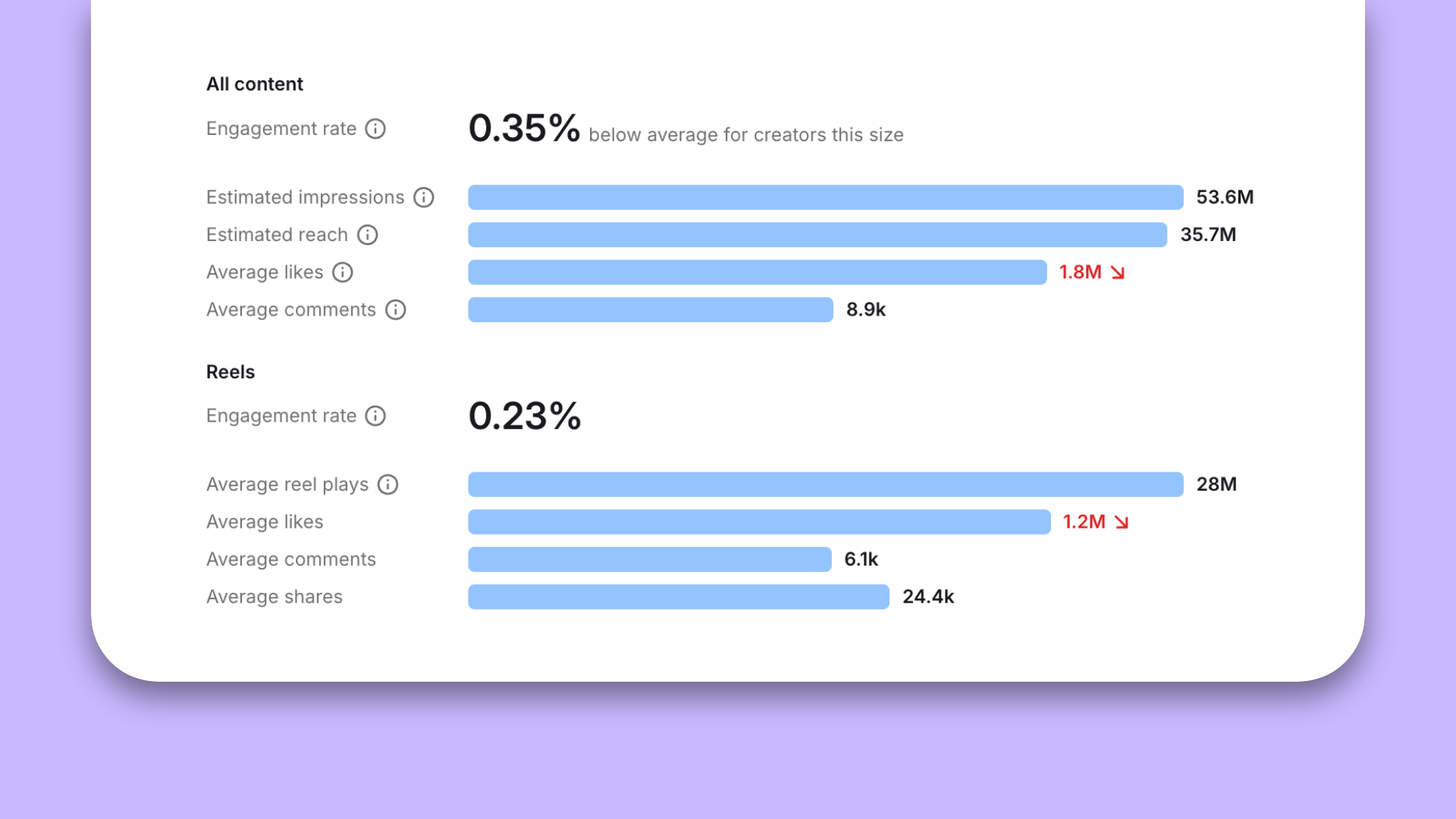
Engagement rate is a better signal of authenticity than follower count on its own. A smaller account with an active comment section can out-qualify a much bigger account with an engagement rate that’s not great.
The catch is that "good" engagement is relative – a 2% rate might be strong for a creator with a million followers and mediocre for one with ten thousand. So the number only means something in context.
In Modash, you can filter your search by engagement rate to screen out weak accounts up front, then check how a creator's rate compares to the median for others of a similar size, so you're judging them against the right benchmark rather than a single fixed number.
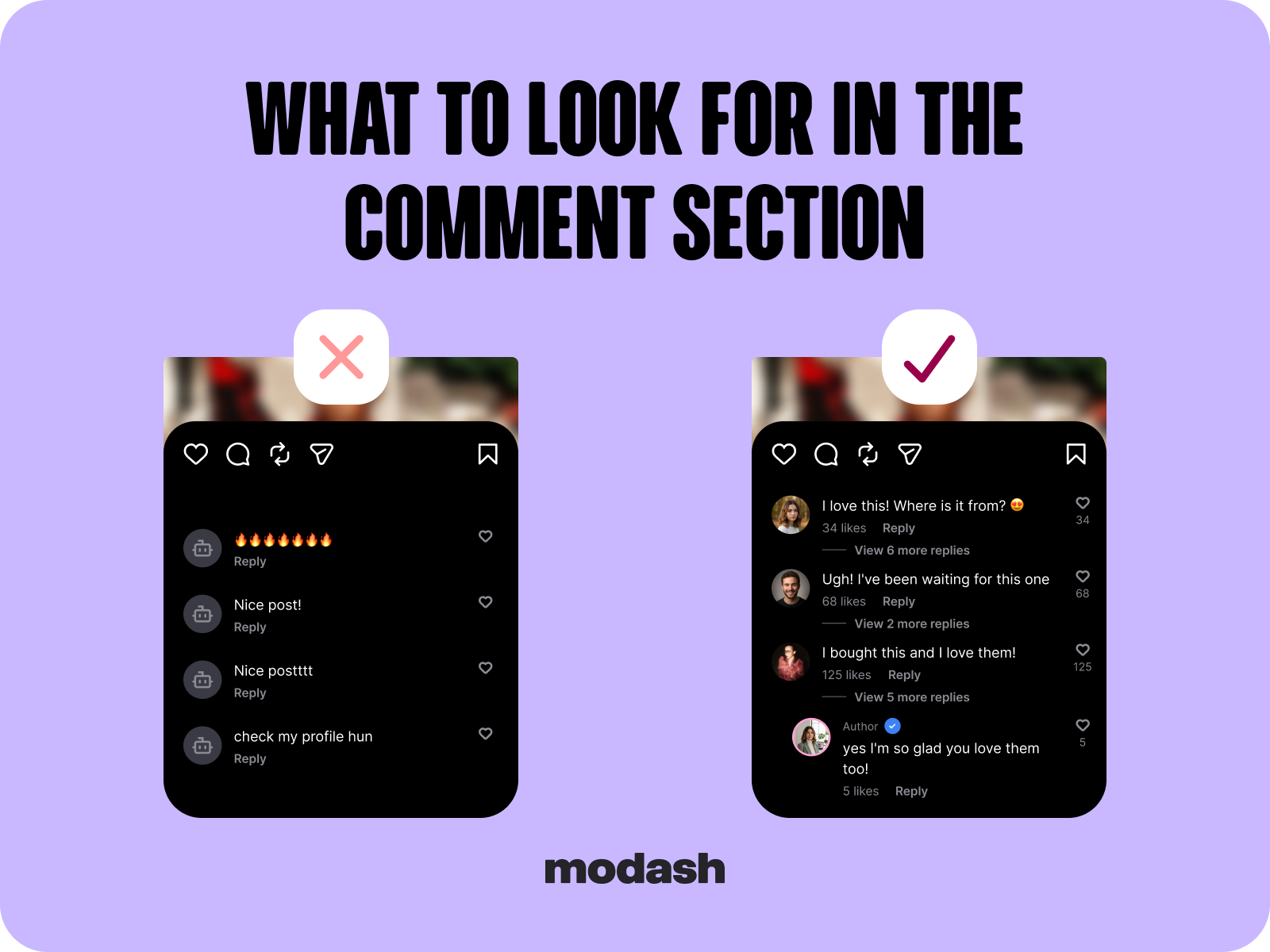
But even a healthy engagement rate isn't proof on its own. Today you can buy bot engagement just like you can buy fake followers. So where do you actually confirm whether it's real? The comment section.
In our own survey of marketers, 9 out of 10 marketers said they manually review a creator's comments before deciding whether to work with them. Only a small minority skip straight from follower count to a decision.
Real engagement looks like comments related to the actual content – sometimes a back-and-forth between a follower and the creator. Fake or pod-driven engagement looks like a wall of "🔥🔥" and "so pretty!".
Has this creator actually worked with brands in your space, or something close to it, and how did it go?
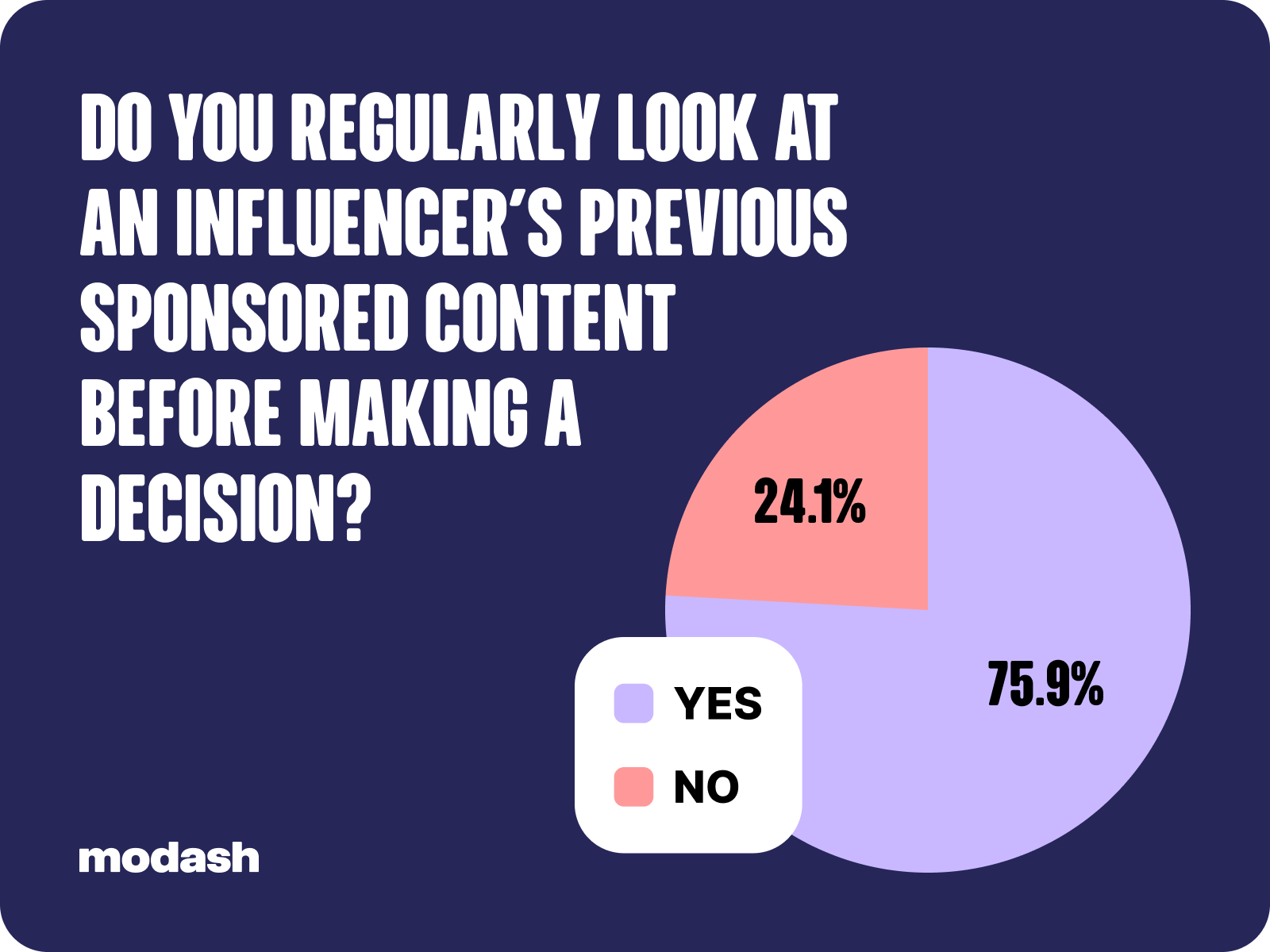
Checking a creator's past sponsored content is common practice: 75.9% of marketers do it. Some go a step further and compare how a sponsored post performed relative to that creator's organic content, as a proxy for how their audience responds to paid partnerships.
You could scroll a creator's profile and hunt down their past collabs by hand. Or you can use Modash because the tool puts them all in one place – a separate tab of every sponsored post, with performance data attached.
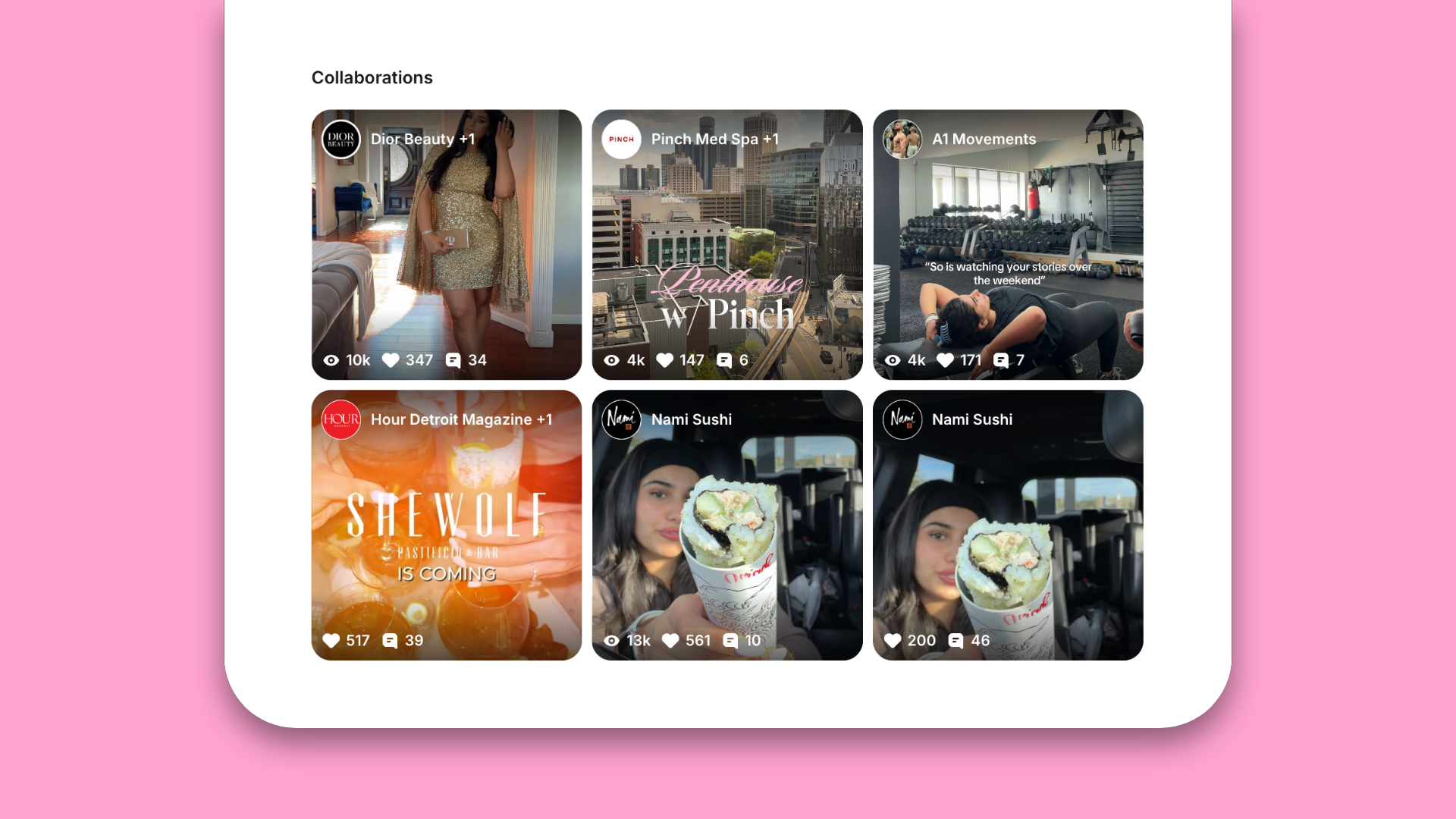
Your mileage may vary here. Some brands choose to skip this check on the logic that what worked for one brand doesn’t necessarily predict what’ll work for them.
But what if an influencer has partnered with your direct competitor? It’s not automatically a red flag. Almost two-thirds of marketers we spoke to said it's not a dealbreaker on its own, and another 24% said it depends mostly on how recent the partnership was and whether it was exclusive.
The nuance here really comes down to your product category. In skincare, audiences don't expect a single-brand relationship with a skincare influencer, especially if the products don't even overlap (a past sunscreen collab won't hurt you if you're pitching a toner).
But for rare, considered purchases (mattresses are the classic example) exclusivity matters a lot more. Nobody buys multiple mattresses in a short space of time, so a creator who worked with a competing mattress brand recently can undercut your campaign's credibility.
It is not a deal breaker. It can be if they are currently working with a competitor, as they could have a non-compete with them. But it is sometimes a positive indicator if they have worked with a competitor because I know they'd be open to working with my type of brand/company.

Note: don't take "niche fit" too literally. If you only look for creators who already talk about your exact product category, you'll keep bidding for the same small pool of obvious names as every other brand in your space.
Some of the best-performing partnerships come from creators outside your niche whose audience, identity, or content style still overlaps with your ideal customer. A creator who doesn't review your product category at all can be a good storyfit influencer if their audience looks like your buyers.
Time to bring in the judgment layer. Note that there aren’t any tools that’ll flag these for you outright, you have to actually hunt for them yourself.
Here’s what to watch for:

Brand fit is important here too. Brand safety is about avoiding harm, but brand fit is about whether a creator's style, tone, and content match how you want your brand to be perceived, even when nothing they post is objectively "bad".
Having an influencer that fits the brand helps massively with authenticity. It's a buzzword that often gets thrown around but having an influencer who aligns with your brand, understands your product/offering, and is a real believer in it, makes a world of difference. I think a lot of people (including myself at times) can get very bogged down in data and forget a human eye can tell you so much that data simply can't.

Learn more about vetting influencers for brand fit: The Art and Science of Brand Fit
Everything so far assumes you're going out and finding affiliates yourself. But most brands run some form of inbound too. Vetting works a little differently when the creator applies first.
A good intake form does some of the vetting for you. The more specific your questions are the better.
At minimum, ask for:
Once applications start coming in, you need a process for saying yes or no.
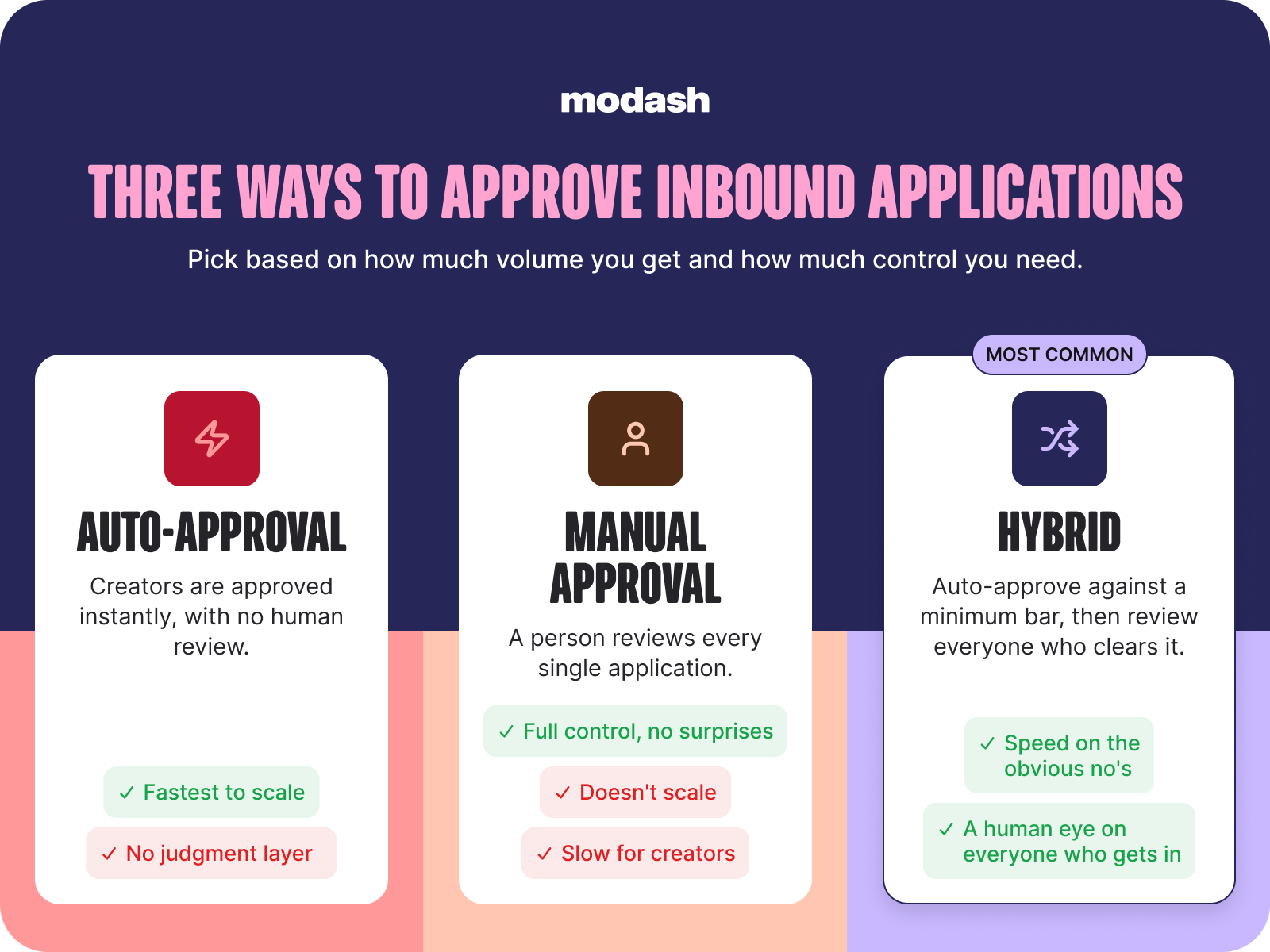
Here are three ways to do that:
Every affiliate program is walking a tightrope between recruiting (which rewards speed) and vetting (which rewards care and consideration).
The way to balance this isn't to pick a side. It's doing both, in the right order:
Modash can help with the first part. Instead of starting from a pile of hundreds of applicants and manually working through every single one, you start from a shortlist that's already cleared the data checks. On each profile, you can see:
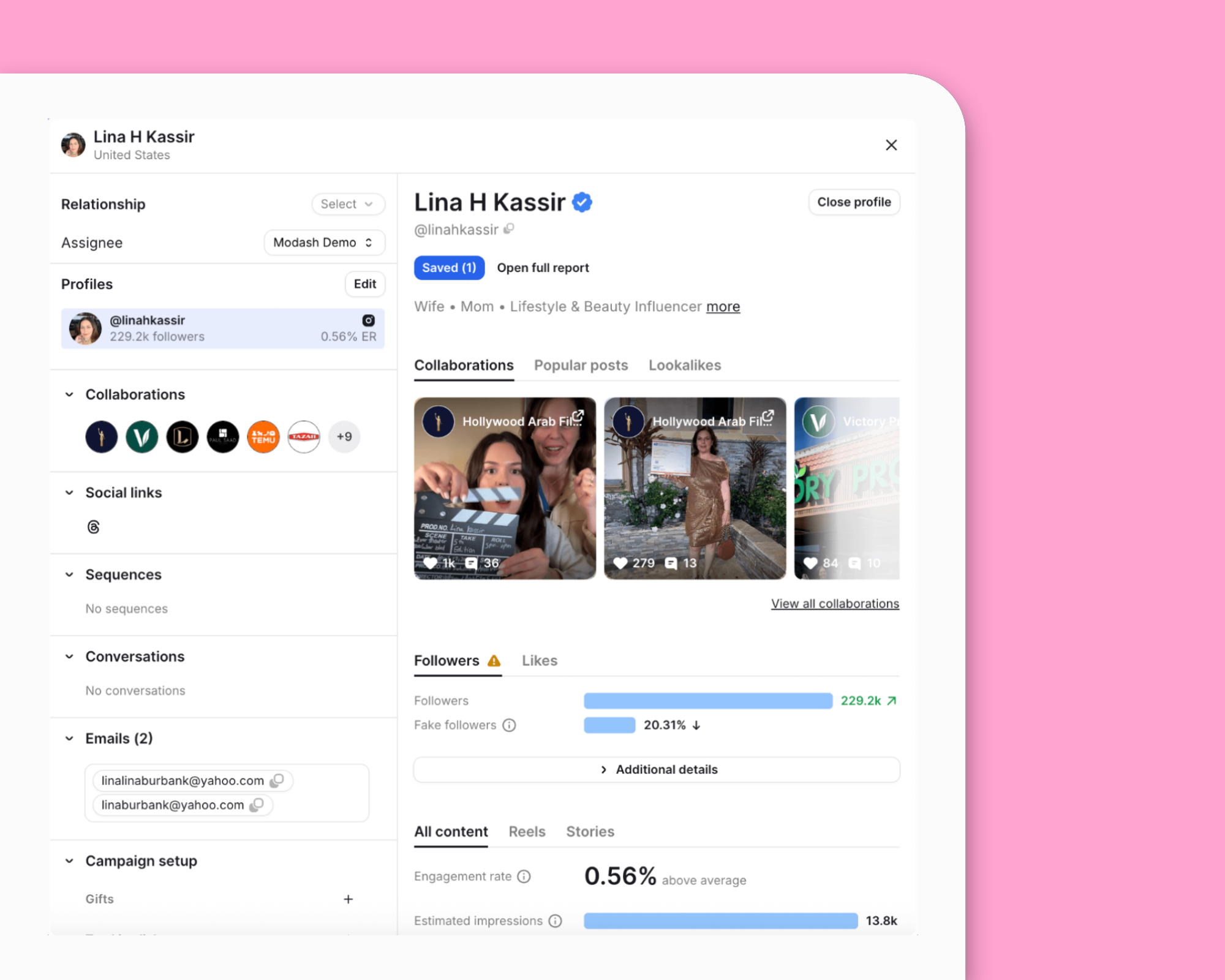
By the time you get to the judgment call, you're only sifting through the handful of people who are a good fit.
Start a 14-day free trial – no credit card required.
There's no universal number, it depends on your budget and campaign goals. Most brands set a floor low enough to catch smaller, highly engaged creators (often the best value), then let engagement and audience fit do the filtering from there.
Look at the ratio between followers and actual engagement (likes, comments, saves) rather than the follower count alone, and scan the comments themselves for specific, on-topic replies versus generic spam. A tool like Modash can also run an automated audience-authenticity check that flags fake or bot-driven followers for you.
Ask for links to their actual content (not just a handle), why they want to partner with your brand specifically, and basic audience info like location and niche.
There's no single cutoff that works for every brand or campaign size, but most marketers get cautious once fake or bot followers climb into the double digits as a percentage of total followers. Pair that number with engagement data before making a call – a high fake-follower percentage combined with low engagement is a pretty strong sign a profile is riddled with fake followers.
Engagement rate, by a wide margin. Follower count is easy to inflate and tells you almost nothing on its own, while engagement (especially specific, on-topic comments) is a much stronger sign that real people are paying attention.
Most brands do both, since they usually run outbound and inbound side by side. For outbound, vet before you reach out so you're not wasting time on creators who won't pass; for inbound, a well-built application form does a first pass of vetting before you manually review.
This varies by platform, follower count, and niche, so treat it as relative rather than absolute. Compare a creator's engagement rate to others of a similar size and category rather than chasing one fixed number. A rate that's dramatically lower than similar accounts is a red flag.
Start with demographics (e.g., location, age, interests) then go a layer deeper and ask whether that audience can actually afford your product and isn't already loyal to a competitor's brand. Demographics are a data check, but deciding whether the audience will actually buy from you is a judgment call.
A hybrid approach tends to work best: auto-approve against a minimum bar (follower floor, account age, fake-follower check), then manually review everyone who clears it. Full auto-approval is fast but skips the human judgment call entirely, which is a risk to brand safety.
Our expert contributors