


Altri tool
Casi d'uso



Measuring affiliate marketing is a game of two layers:
Trouble is, most brands only do one of the two, causing them to misvalue the channel’s impact in both directions.
They underrate it because a large share of affiliate-influenced purchases arrive untracked. And they overrate it by counting revenue without subtracting the real costs.
But help is at hand. Read on and I’ll explain how to measure an affiliate program end to end so you can understand how your program is really performing…
Affiliate marketing looks easy to measure because links and codes give you direct attribution, but that attribution covers only part of sales that affiliates actually drive.
As I’ve already shown you, not everything can be attributed – and there’s plenty of scope for credit to be contested (e.g. when a customer buys after clicking Affiliate A’s link but entering Affiliate B’s code at checkout).
It’s also easy to get the cost side wrong by omitting line items like product costs, margin lost to codes, etc, which screws up your ROI calculation by making your program look way more profitable.
That’s why measuring affiliate marketing requires a combination of direct and indirect methods to fill in as many attribution gaps as possible.
Right, now that I’ve explained why measurement can be tough, let’s show you how to get it right…
Like when you ask your dad to help with your homework, I’m gonna start several steps back from the thing you’re actually trying to achieve. Because the first step to nailing affiliate marketing measurement is to understand what a “working” affiliate program actually looks like for your brand.
Measurement starts with a goal.
Not a vague, wishy-washy one like “grow sales” or “build brand awareness”, but a clear one incorporating the following parameters:
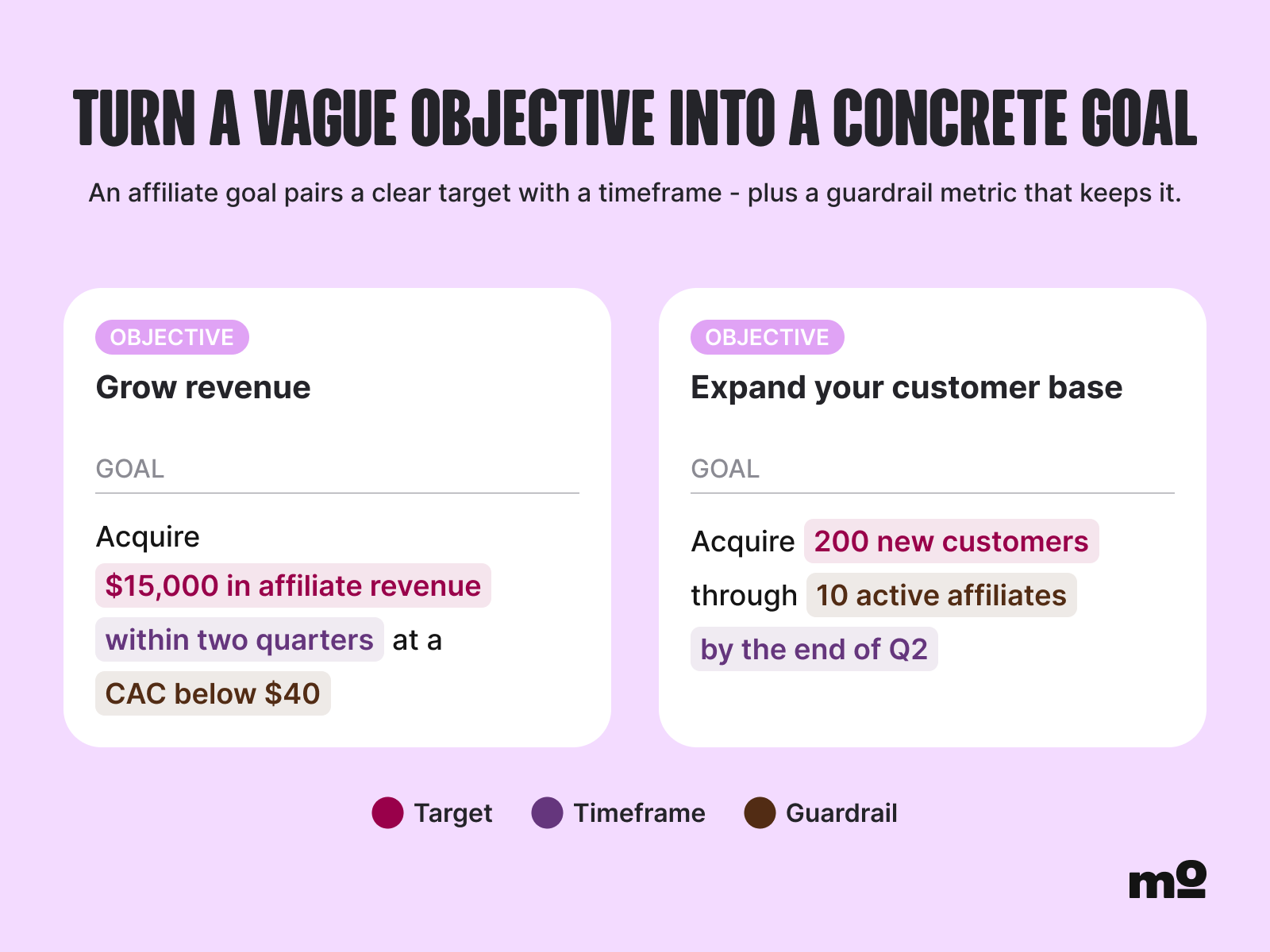
The type of goal you set will dictate the metrics you measure. For example:
🤓 Further reading: For even more on metrics, check out 10 Affiliate Marketing Metrics That Actually Matter (Ranked).
Next, let’s get to the easy (or easier) side of measurement – directly attributable sales. I’ll walk you through how to track them, reconcile codes against links, choose an attribution model, and account for the full cost.
The cleanest, most reliable – and most popular – way to track sales back to individual creators is through tracking links and promo codes.
First up, tracking links.
These typically use cookie-based tracking and URL parameters to identify the affiliate whose content a customer clicked through from. That way, any resulting sales from those visits can be awarded to the correct affiliate.
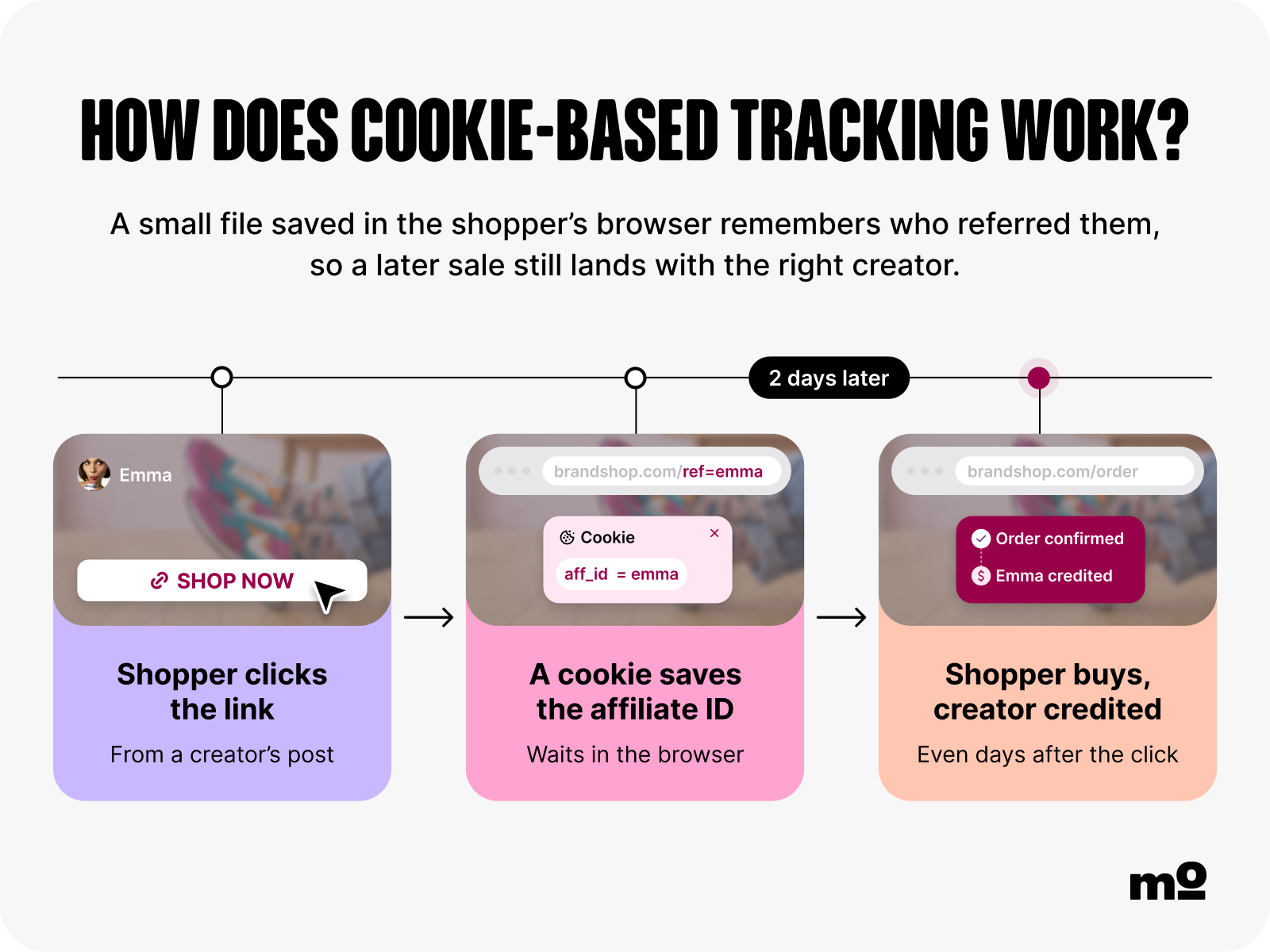
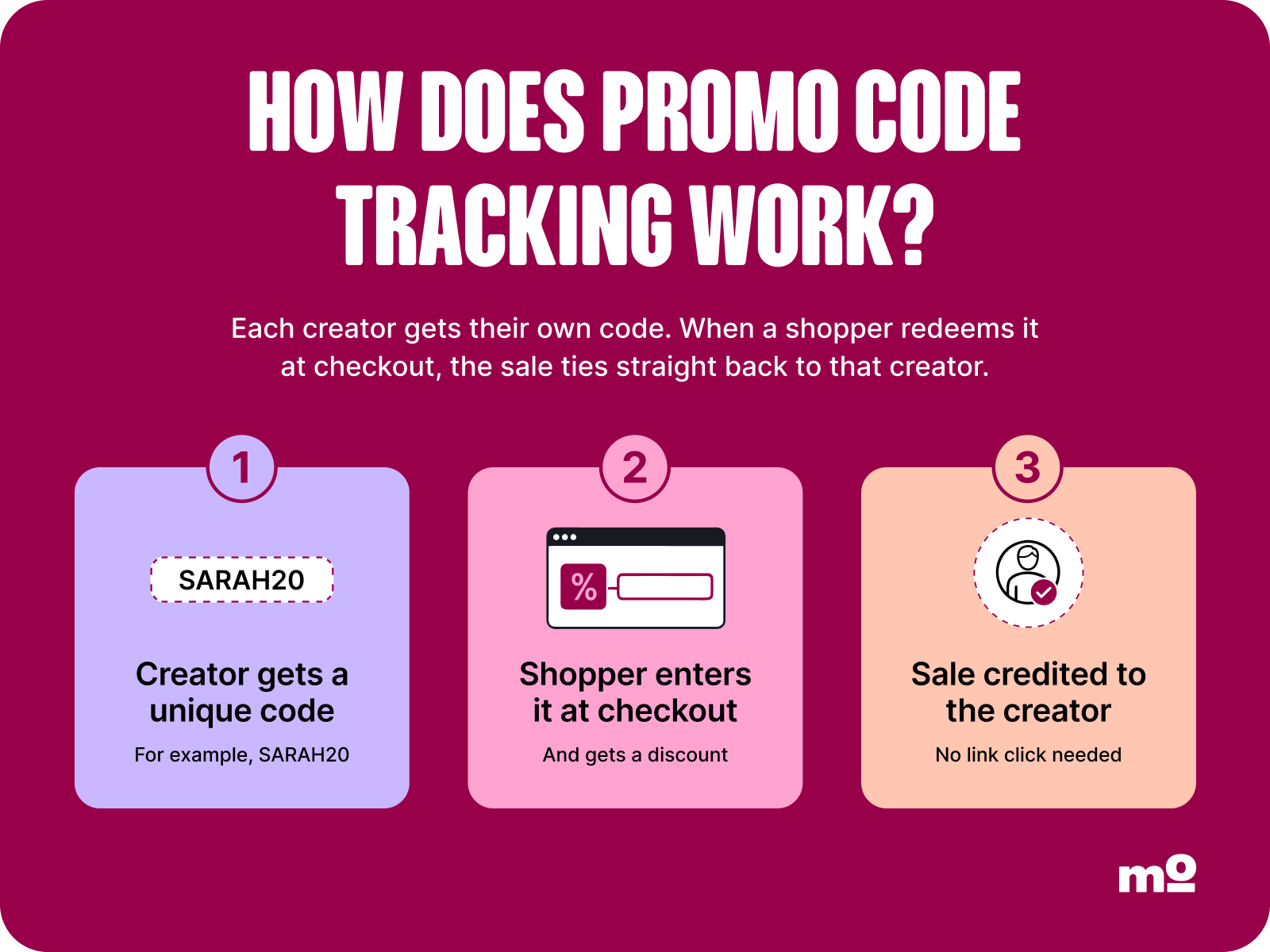
And then there’s promo code tracking.
It’s simple: each affiliate gets their own code; when a customer submits that code at checkout, the sale gets tracked to the relevant affiliate.
For best results, assign links and codes to every affiliate. That way, if one method breaks down – like if a customer buys without entering a promo code, or the tracking cookie gets stripped somewhere along the path to purchase – you’ve still got the other as fallback.
It’s perfectly possible to set all this up manually and track the results through a spreadsheet, but it’s a serious heavy lift if you have more than, say, 10-15 affiliates in your program.
If your store’s on Shopify and you’ve already grown beyond that level (or you’re going to soon), it’s far more efficient and accurate to use an affiliate marketing platform like Modash.
Modash’s Shopify integration automatically tracks per-affiliate sales, revenue, and commission in a single dashboard, so you don’t need to click through three separate tools and spreadsheets to understand how your program is performing.
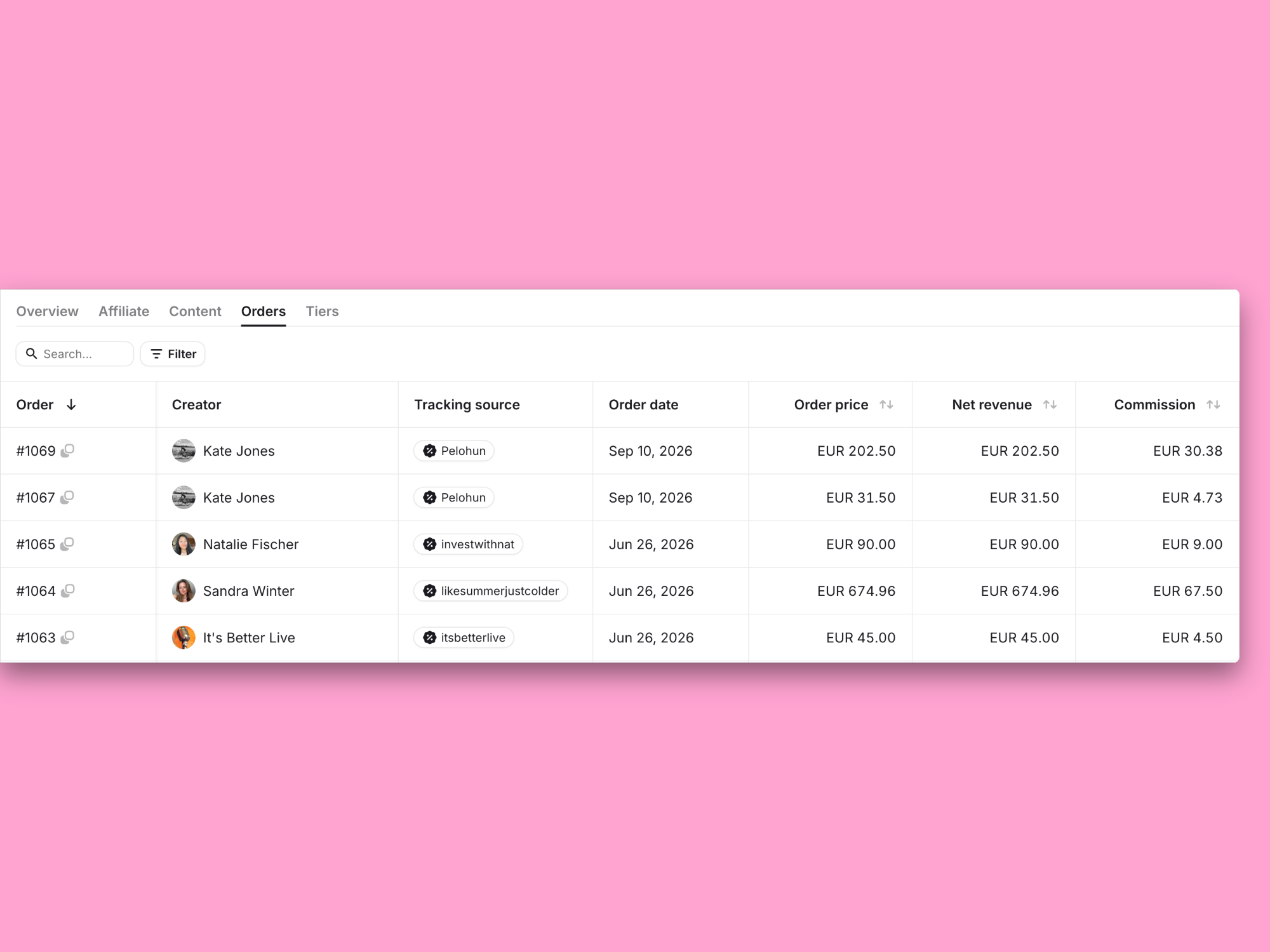
🤓 Further reading: For more on tying sales to creators, head over to Affiliate Conversion Tracking: Methods, Setup & Troubleshooting.
Using links and codes at the same time is the best way to ensure you don’t miss any directly attributable sales.
But it also opens up the possibility of accidentally paying double commissions on sales that came from both a link click and a code submission 🤦♀️
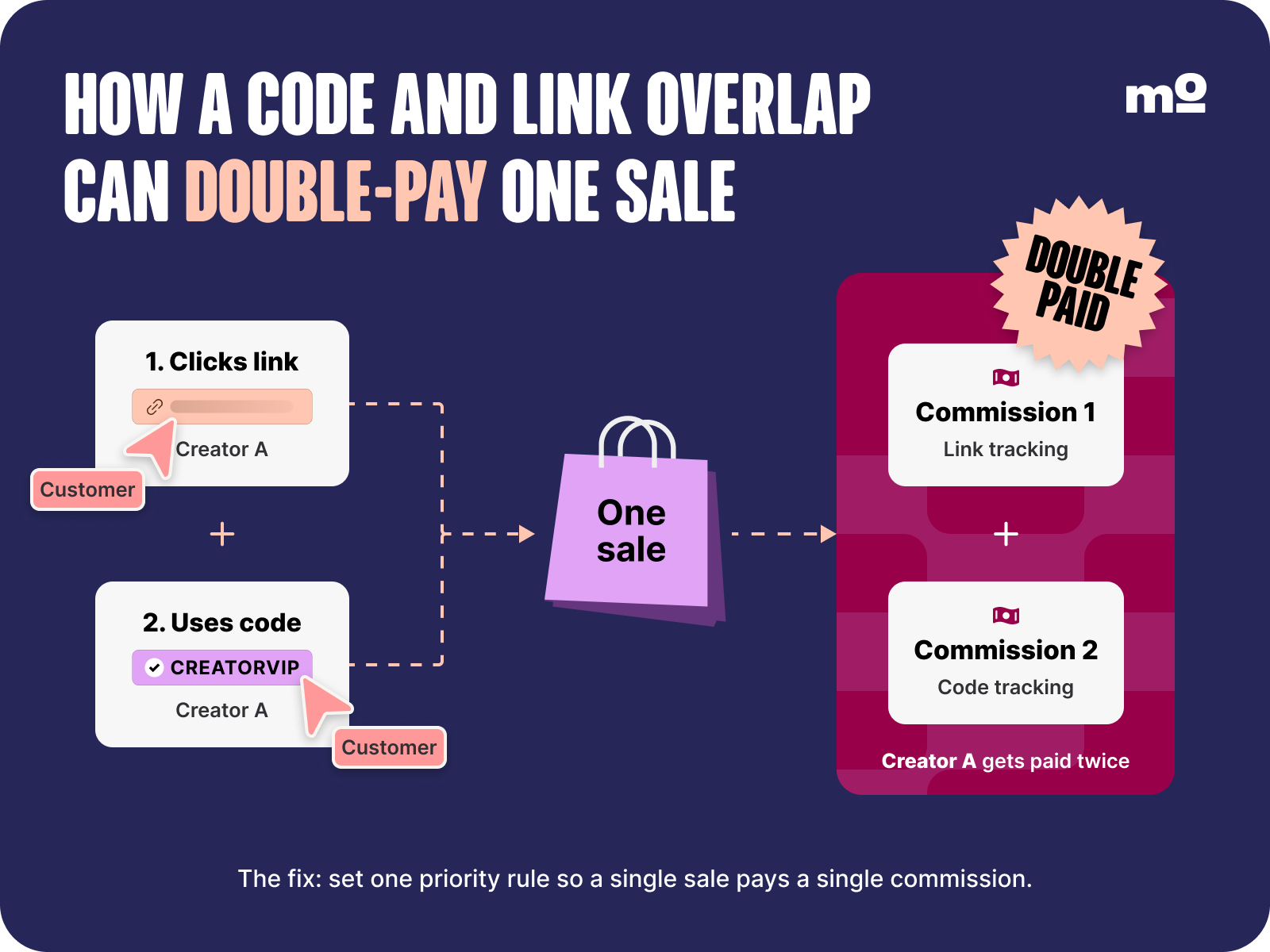
That’s why you need to reconcile codes and links against individual orders to ensure you’re:
Sadly, there’s really no way to guarantee this if you’re doing everything manually. Human error is a fact of life, and if you’re trawling through a spreadsheet containing hundreds of clicks, codes, and orders, you’re bound to slip up occasionally.
Your best option is to upgrade from Excel in favor of an affiliate tracking tool like Modash.
Some important context: because Modash pulls order and commission data directly from Shopify, the per-creator number isn’t another version of the truth that needs reconciling against the figures in your ecommerce platform – it’s the real deal.
Modash overcomes the double-commissioning problem by prioritizing codes over links. So any time a customer uses both a link and a code, Modash credits the code and pays one commission.
But what if a customer uses a sitewide promo rather than an affiliate code? No bother; Modash simply reverts to whichever creator drove the original link click.
Tracking affects how you measure an affiliate’s actions; attribution decides which affiliate gets credit for the sale, and within what window.
Broadly speaking, there are three main attribution models to choose from:
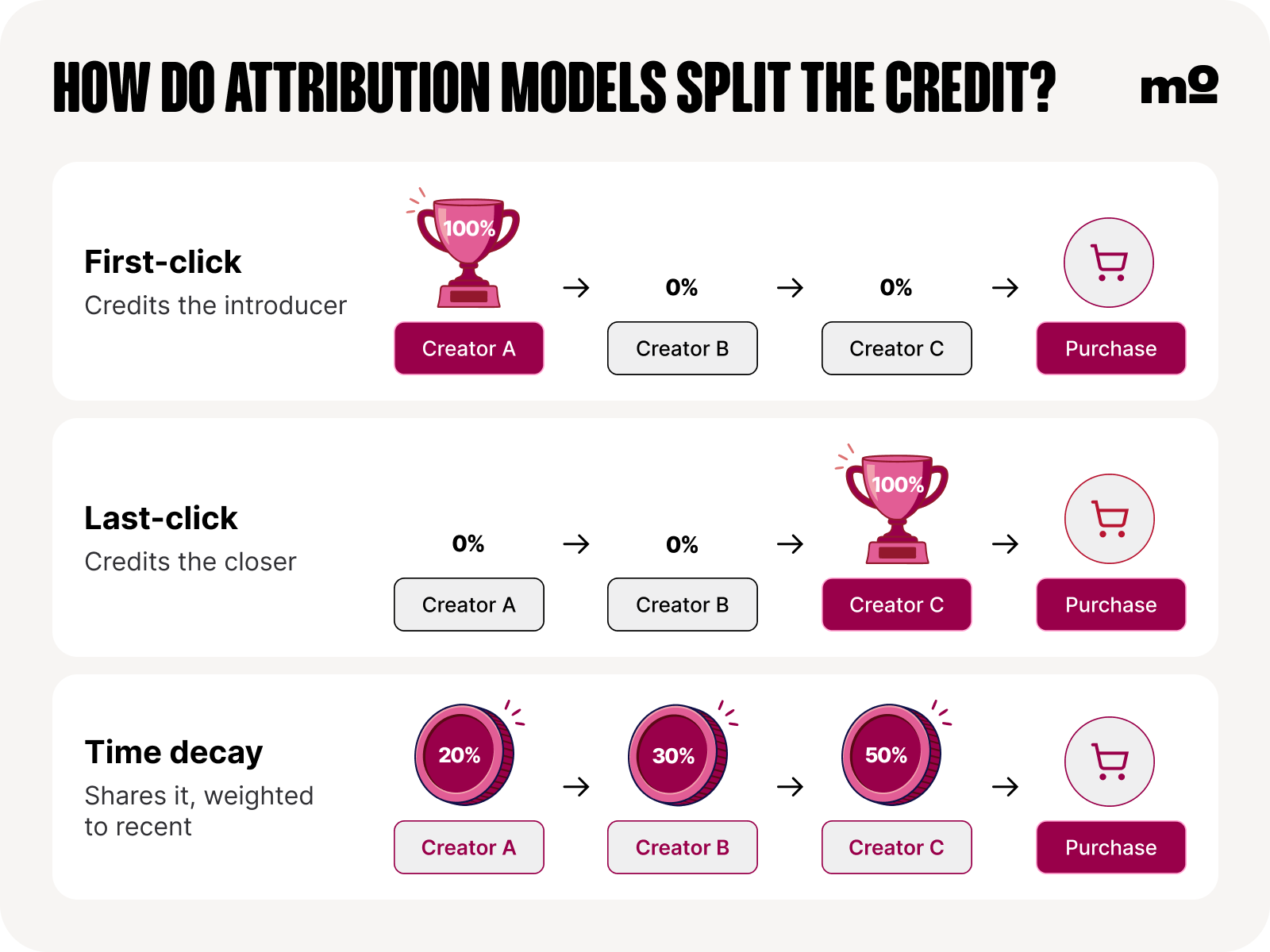
The last-click approach is comfortably the most popular because it’s simple to implement, measure, and explain to affiliates.
But that doesn’t necessarily make it the best fit for your program, as you can see from this handy flow chart:
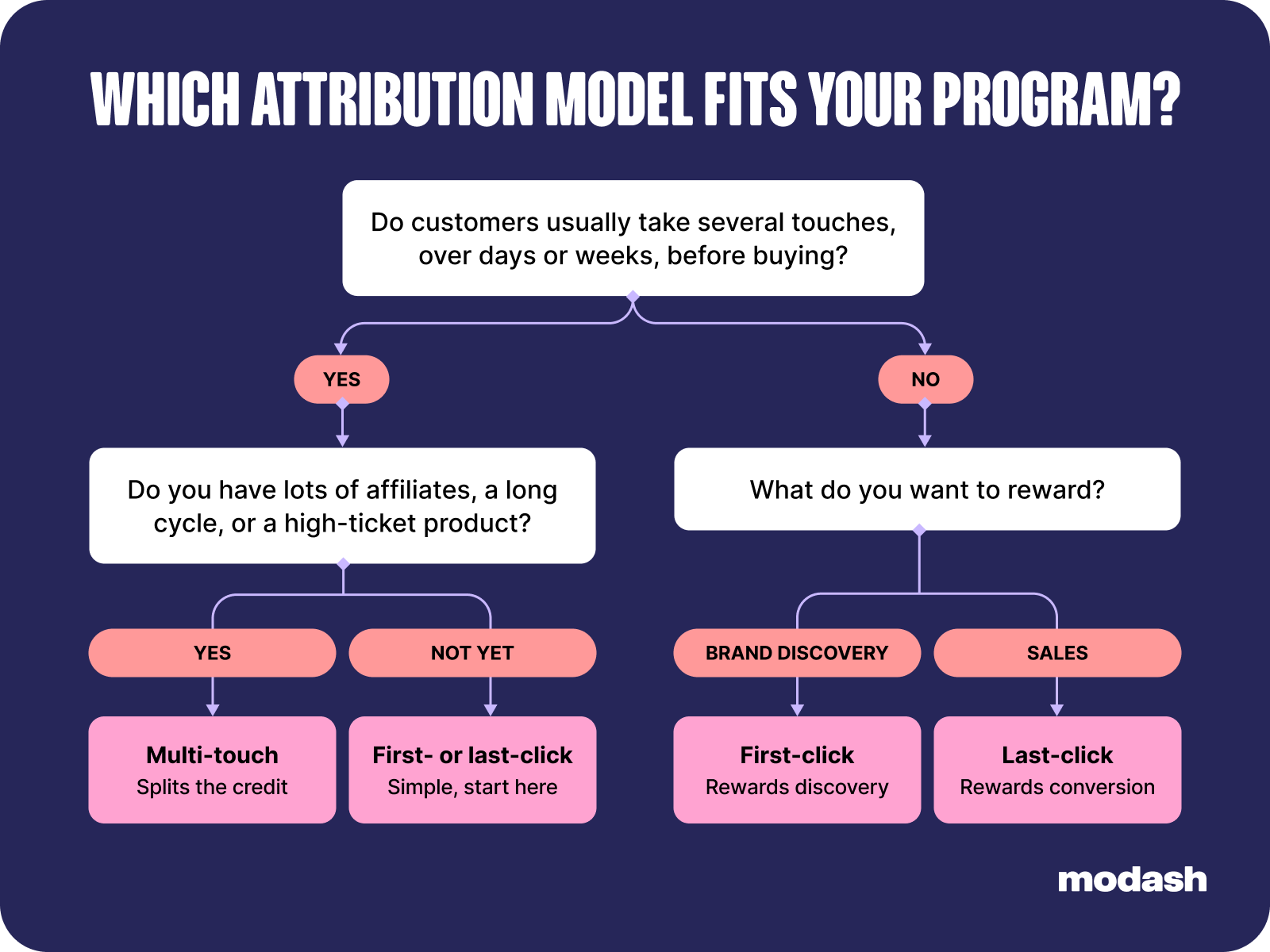
None of those models is automatically “better” than the others.
What matters here is to choose one and stick with it – that way, you’re implementing consistent rules around measurement. And consistency matters here because it allows you to make the like-for-like comparisons that are so essential for guiding strategic decision-making.
One final point on attribution:
Whichever model you pick, you’ll also need to set an attribution window – that is, the length of time after a click in which the sale is still credited to the creator.
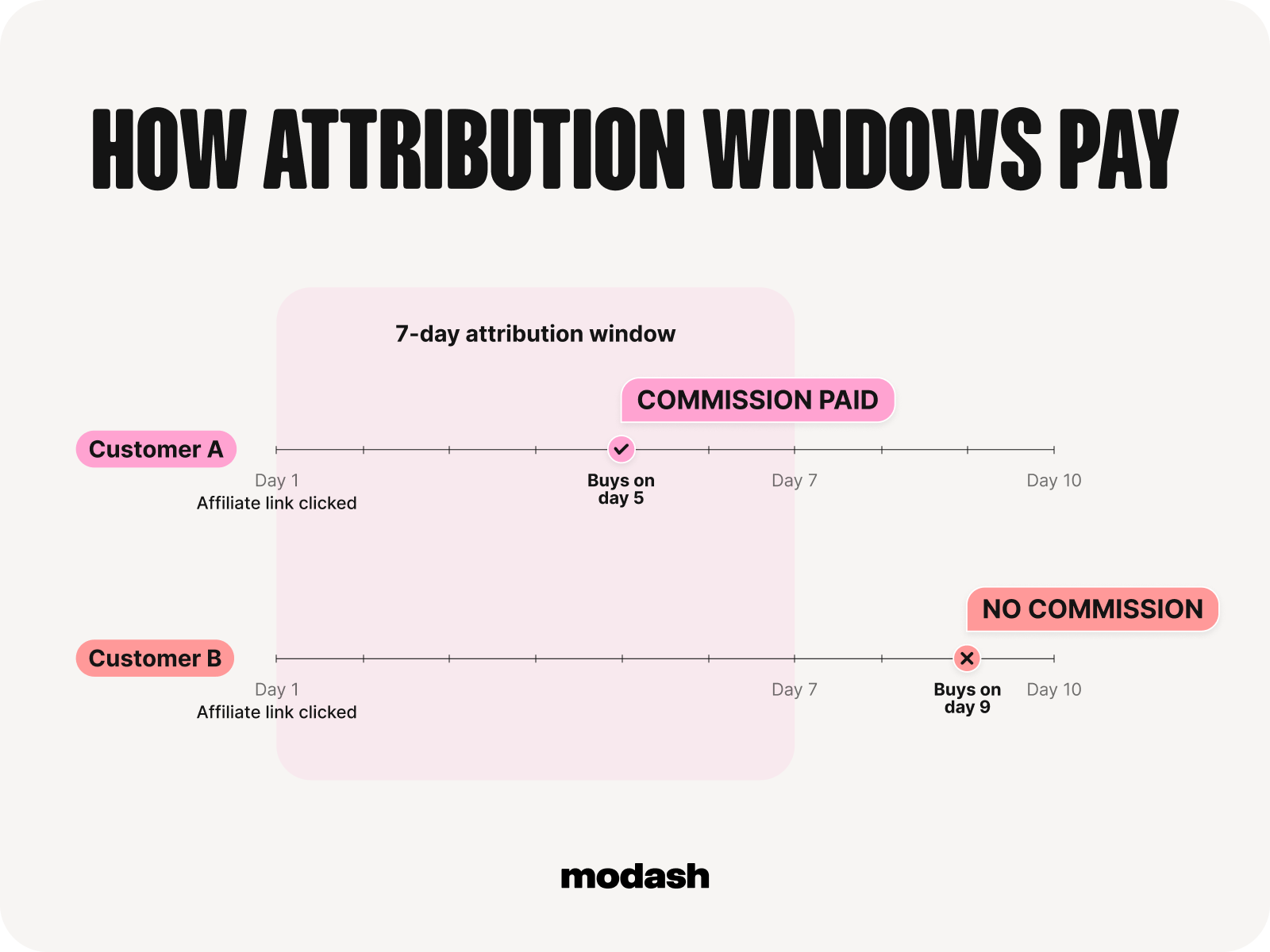
Most ecommerce brands choose somewhere from 7 – 30 days, depending on how long customers usually take to buy. Keep it the same across creators so your comparisons stay fair.
🤓 Further reading: Learn way more about this in our guide to Affiliate Attribution Models: How to Choose the Right One for Your Program.
Calculating your affiliate program’s ROAS is just a case of dividing revenue by total commissions, right?
Nuh-uh.
If you’re looking for an honest number you can defend to your leadership team, rather than an inflated figure that collapses under scrutiny, you need to include the full cost stack in your calculations. Namely:
Some of those costs are fixed; others scale as your program grows and sales increase 📈
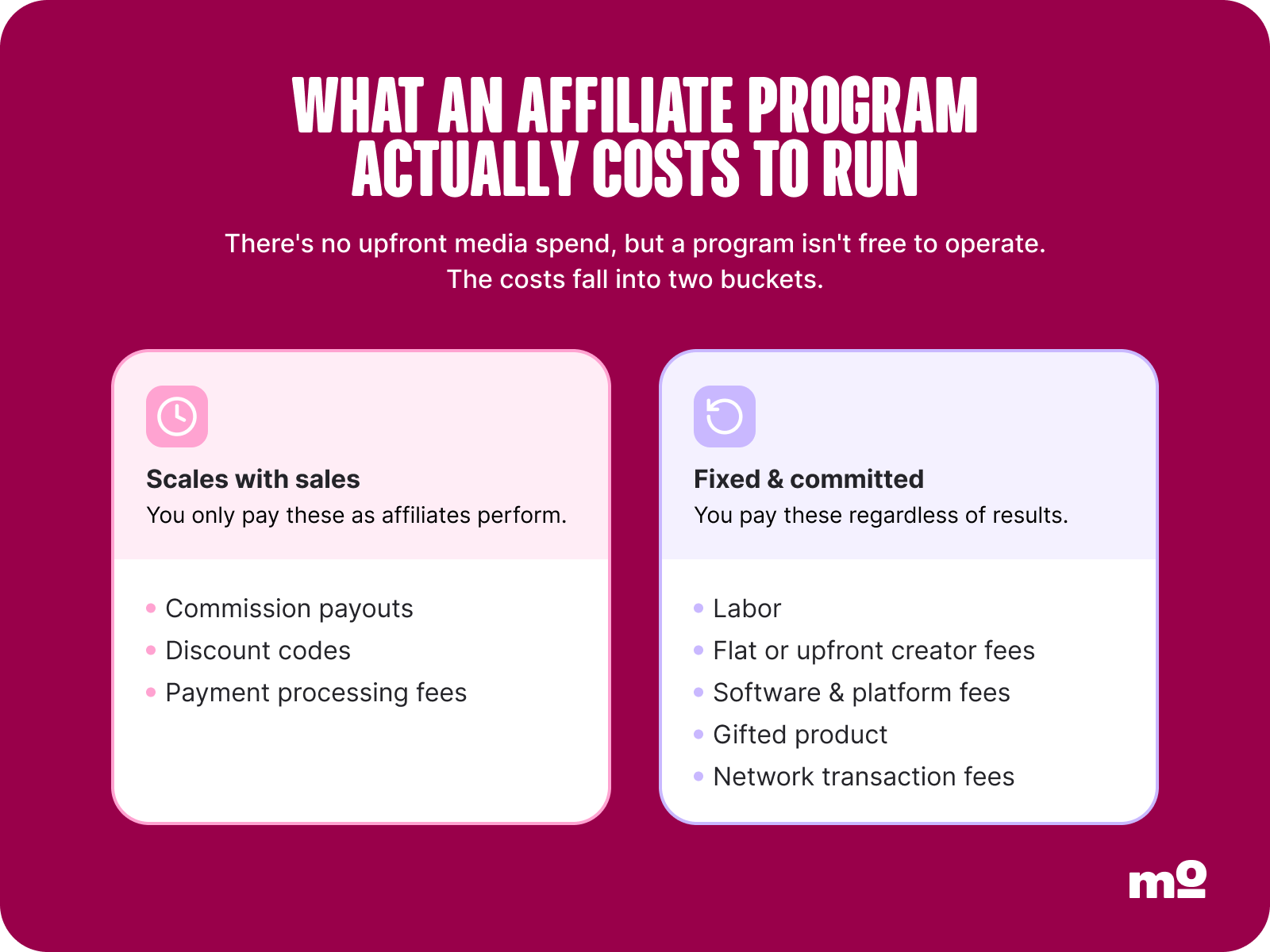
Also, before making your ROI calculation, make sure to use net revenue (after returns and refunds), not gross. Returned orders still count toward gross, which makes your program look better than it is.
🤓 Pro tip: Modash automatically calculates ROAS at the campaign level based on total creator cost – including affiliate commissions – so you can understand which campaigns are driving real results.
The reality is that a large share of affiliate-driven purchases aren’t directly attributable, as influencer marketing consultant Andreea Moise (AKA the Hype Maven) explains:
If you’re just relying on links and codes, roughly 50% – 60% goes untracked, especially if you don’t know how people buy or where and just rely on direct attribution.

And then you’ve got the issue of trying to assign credit for sales that happen after your attribution window closes. Honestly, it’s one headache after another.
All of which means you need to find some way to put meaningful numbers against all that untrackable activity.
Brand awareness is notoriously tricky to track effectively.
So you can either give up completely or find a workaround.
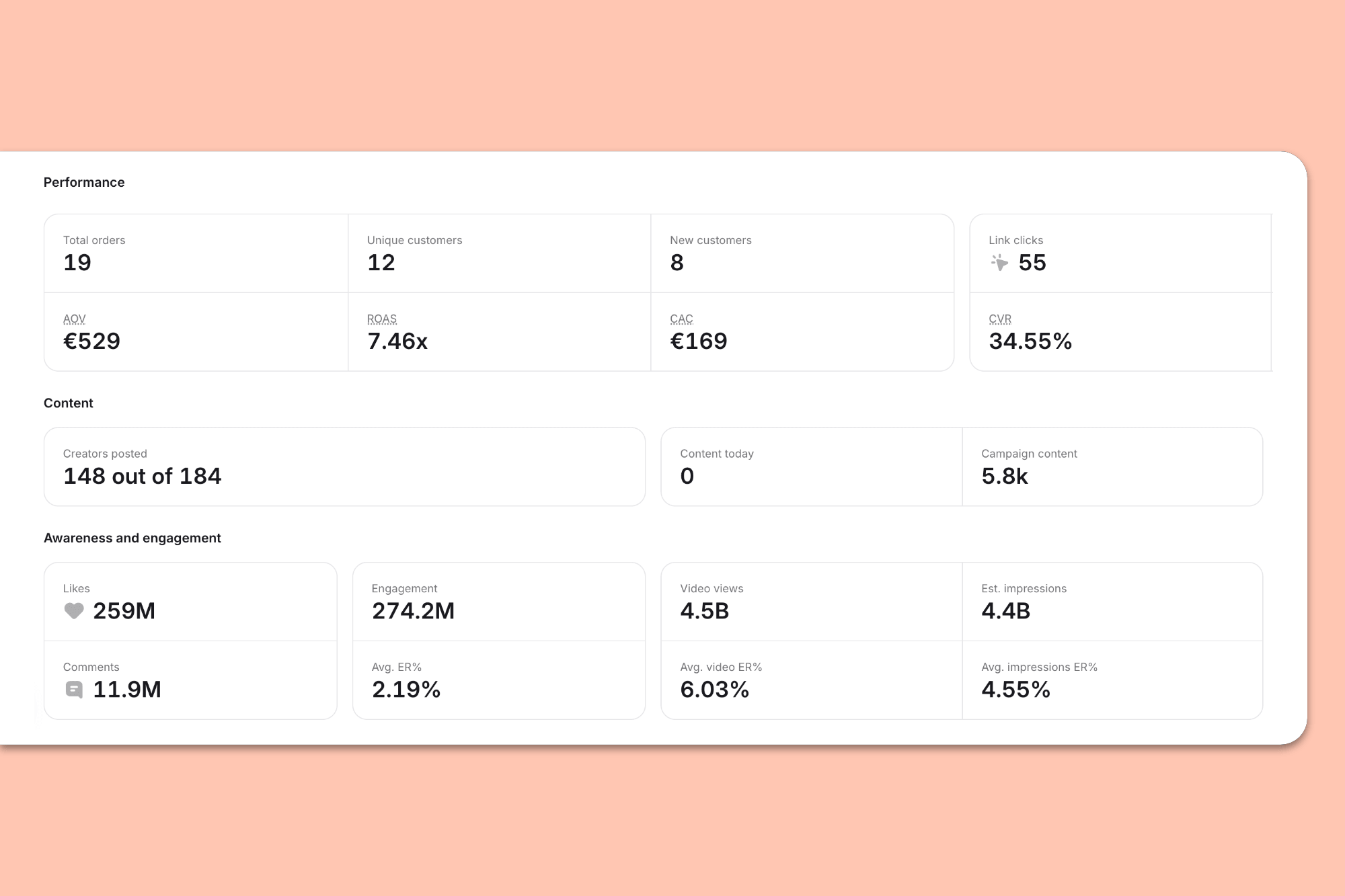
If you prefer option #2, the smart move is to measure sales alongside content performance. That way, if a creator generates a ton of reach and engagement at the same time you see a spike in sales, it’s safe to say at least some of that revenue came from your affiliate program.
🤓 Pro tip: With Modash's campaign analytics, you can view content performance (likes, engagements, video views, etc) and sales attribution together at a campaign or creator level.
Not all content formats allow creators to add tracking links (yet) – I’m looking at you, Reels and TikToks.
That means customers will often watch an affiliate’s video, Google the brand, and click through from the SERP. Any resulting sales will then be tracked to organic, when in reality, the affiliate deserves the credit.
Unless you can persuade Meta and TikTok to change their rules around clickable links, your best bet here is to start tracking the number of searches for your brand and product names in Google Search Console.
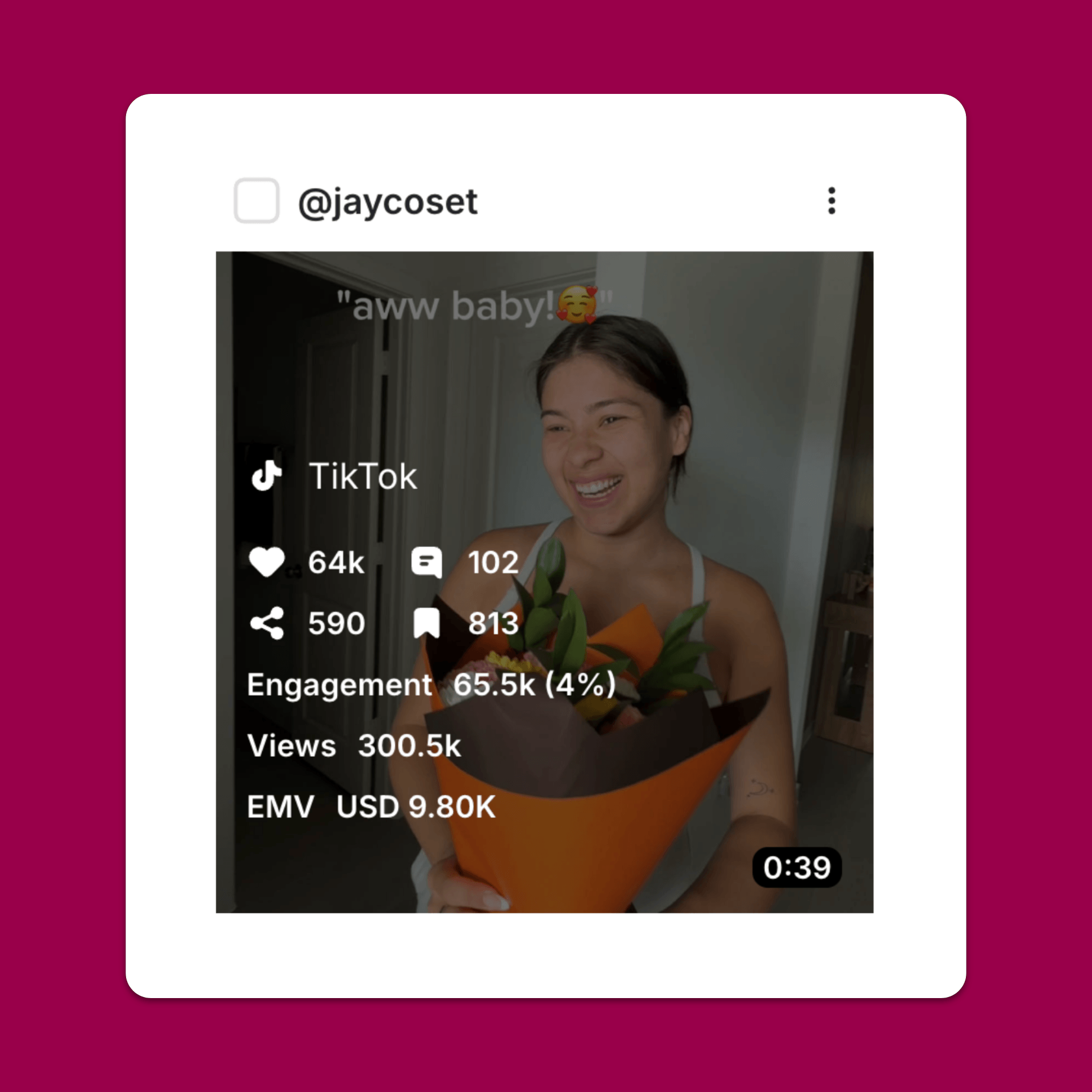
If search volume increases, try to correlate the numbers with affiliate content output and performance. If searches went brrrrrr at the same time an affiliate shared a viral post, there’s a good chance the two events are linked.
🤓 Pro tip: Modash simplifies this process by automatically capturing live affiliate content and sharing a snapshot of performance for every post.
Another option for measuring indirect impact is to run post-purchase surveys.
It’s a simple idea: ask everyone who’s just placed an order where they heard about you. Include an option like “influencer/content creator” – and, for even more clarity, add a free text field so they can tell you which affiliate convinced them to buy.

Of course, self-reporting isn’t perfect.
Lots of customers won’t bother to complete your survey. And of those who do, some will share the wrong information, either accidentally or deliberately. People are just like that, I’m afraid.
But if you track survey results over time, a noticeable increase in “influencer/content creator” responses is still a strong indication that your program is working.
Pretty soon, you’ll have a bunch of direct and indirect measurement data to review.
The next piece of the puzzle is to translate all those cold, hard numbers into smart strategic decisions. Do you double down on a creator? Renegotiate their commission rate? Or say buh-bye and cut them from your program?
Here’s how to do it:
It’s extremely unlikely – maybe even impossible – that every affiliate in your program will deliver roughly the same amount of content, clicks, and sales.
Far more realistic is that a tiny proportion of your affiliate partners will generate a massively outsized share of sales.
Broadly speaking, affiliates can be split into four categories:
Segmenting affiliates in this way helps you understand where to focus your efforts and which levers to pull to drive performance.
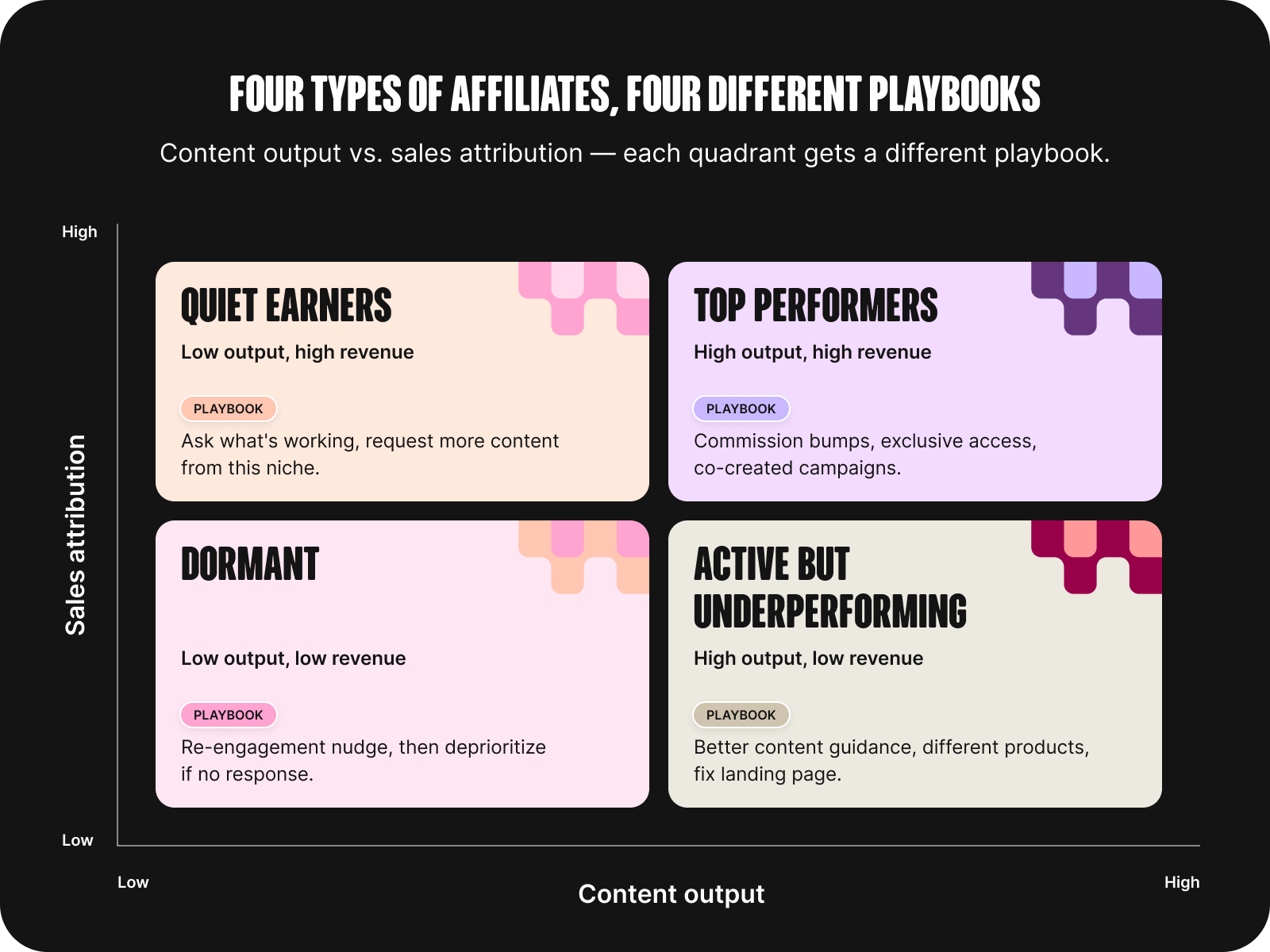
For example, if an affiliate is bringing in comparatively high sales despite sharing relatively little content, you’d naturally want them to post more. Maybe you can motivate them with a little incentivization, such as:
Meanwhile, encourage your top performers – those with high output + revenue – through things like VIP commission tiers, free gifts, early access to new products, and co-branded campaigns.
🤓 Further reading: For more ideas, check out 5 Affiliate Incentives That Actually Drive More Sales (With Examples).
As well as adequately rewarding high-performing affiliates, you need an effective strategy for identifying inactive affiliates (and, ideally, persuading them to post more content).
This is a bigger problem than you might realize, with our survey revealing that over one in three marketers have <20% active affiliates. And bear in mind our definition of “active” was “anyone who posts at least once a month”, which was a pretty low bar.
Bleak as that sounds, our research also offered some good news – the more hands-on you are in managing your program, the higher your activation rate will be:
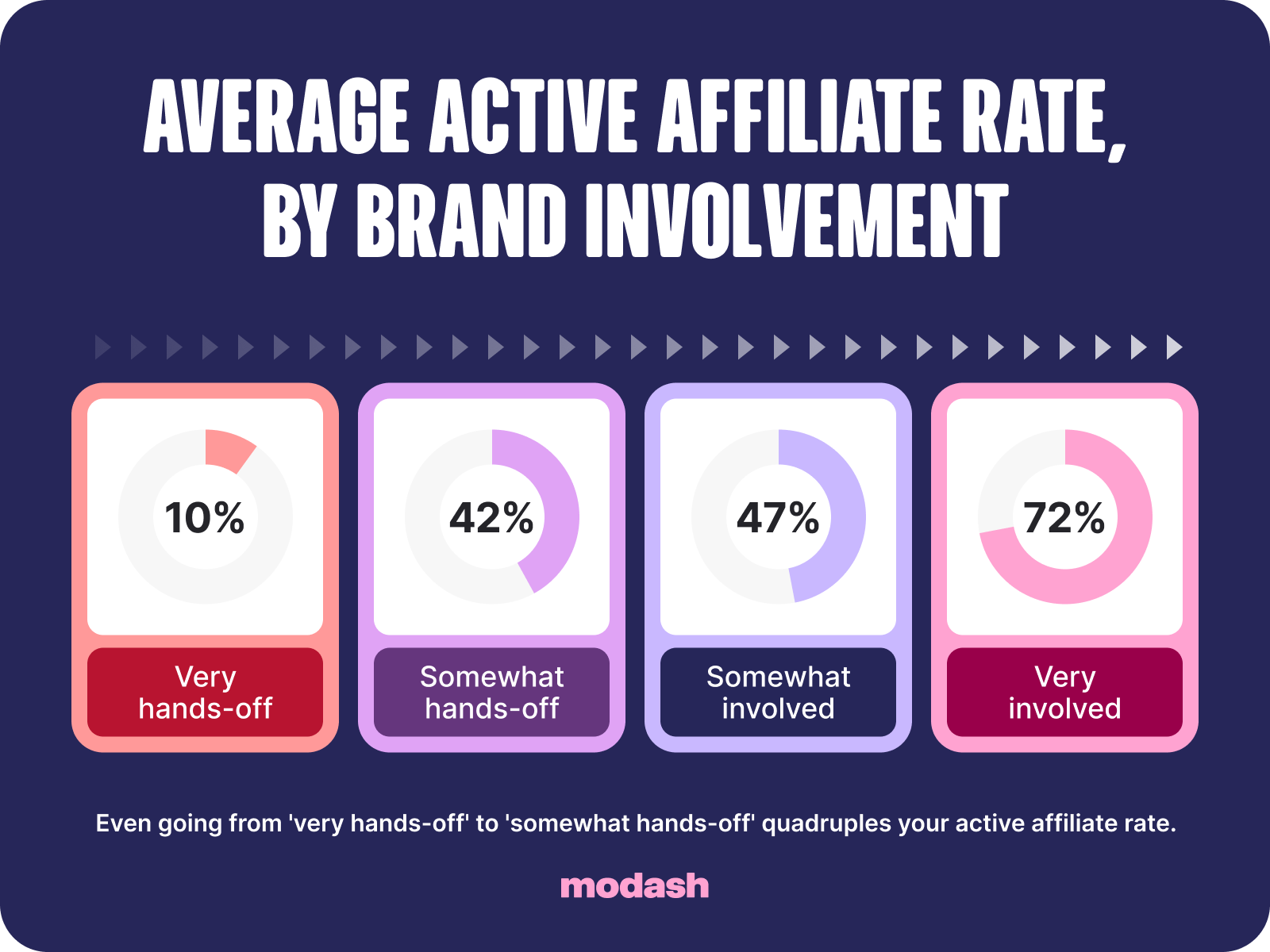
That’s because, when you’re very involved, you can quickly identify inactive/lapsed affiliates and incentivize them to start posting again. For example, you might offer a higher commission rate on their next sale, or a bonus if they post at least twice a month for the next three months.
And if they still don’t step up their output, it might be time to say goodbye 👋
Now that you’re calculating ROAS based on the full cost of running your program, it’s worth taking another look at your commission rate and other terms.
For example, paying a flat 20% commission might have made sense when that was the only cost you were factoring in. But once you’ve accounted for product costs, software fees, and more, you may find you’re barely breaking even on affiliate-driven sales 😬
In which case you might decide to drop your “regular” rate to 10%, while adding 15% and 20% commission tiers for high performers who reach certain monthly sales targets.
Speaking of which, our research also found that programs with 3+ commission tiers see an active affiliate rate of almost 50%, compared to just 37% for those with a single tier.
Finally, you need to decide how often you’re gonna look at the numbers you’re measuring, AKA your review/reporting cadence.
Timings-wise, Andreea says quarterly is the way to go:
By far the most accurate [reporting frequency] for proving performance is quarterly. Weekly won't catch a lot of impact, especially if you have long-form content in the mix, and monthly might look inconsistent based on content volumes and hitting/missing 1-2 goals, but quarterly will always tell the truth.
However, there are no right or wrong answers here; it all depends on your audience and the type of report/review they require.
For example, if you’re creating a report for your internal team members, you might run the numbers weekly but only share a small amount of detail – enough to help them spot any potential issues before they grow into bigger problems.
Whereas if it’s for your leadership team, you’ll likely run fewer reports but add greater depth so they can better understand all-round performance.
🤓 Further reading: For more on this, head to Affiliate Reporting: What to Track and How to Report on Your Program.
Affiliate marketing measurement isn’t about chasing perfection. Because, frankly, there are just way too many gray areas.
Even if you run post-purchase surveys, track branded search volume, and measure content performance next to sales, you’re never going to capture all the impact of your affiliate program.
Instead, focus on what you can control:
Also, bear in mind that measurement gets a whole lot easier when you’ve got a tool like Modash in your corner.
With Modash, you can track link and code sales per creator alongside content performance in a single campaign analytics dashboard, so your direct sales and content performance sit side by side in a single campaign analytics dashboard. Nice!
See for yourself by starting your 14-day free Modash trial 😎
To understand the performance of your affiliate program, you need to measure two different layers:
Depends on your goal. For example:
You need to set a meaningful goal incorporating a specific target, a secondary guardrail metric to keep you on track, and a clear timeframe. For example:
There are a couple different reasons for this.
Firstly, it could be about attribution. Say a customer loves your affiliate’s post, so they Google your brand name, click through, purchase, and comment on the affiliate’s post to say “thanks”. The affiliate, understandably, thinks they drove the sale – but from your perspective, it gets attributed to organic search.
Secondly, just because an affiliate sees a sale attributed to them in their dashboard, that doesn’t mean it’s a done deal. The order might get canceled or end up being returned, in which case they lose the commission.
While last-click is the most common way to measure affiliate marketing impact, it’s not the only attribution model.
There are 2 other types of attribution:
As a general rule, last-touch is better for sales-focused campaigns, whereas first-click works best for brand awareness, and multi-touch models are more effective for brands with longer sales cycles and/or higher-priced products.
Yes and no.
Shopify displays sales by discount code and referral source, which is fine if all you need is a top-level view.
But it doesn’t match codes and referrals per affiliate. So if you want to know which creators are driving performance, you have to do it externally by manually reconciling orders and codes in a spreadsheet, or using dedicated affiliate tracking software.
Again, it depends.
If you’re reporting to the board, you want to provide an in-depth view of program performance, in which case quarterly reporting is the way to go.
Whereas if you’re sharing regular updates with your team, it makes sense to add a lot less detail but do it more frequently – say, once a week.