


Altri tool
Casi d'uso



Setting an influencer marketing budget is easy, right? Surely it’s just a case of looking at a rate card or two and buying all the deliverables you can afford?
Actually, as with most things involving money, the reality is very different.
For starters, direct creator spend isn’t your only line item. You’ve also got to factor in agency fees (if you’re outsourcing operations), tool costs, shipping, usage rights, the list goes on…
And then there’s the fact that a budget built from numbers in a rate card is always gonna be hard to justify, because there’s no direct through-line from the money you’re spending to the goal you’re trying to achieve 💸
That’s why you need to:
Which, by happy coincidence, is exactly what I’m gonna be discussing in this article…
Ooof, straight into the tough questions, eh?
First off, let me give you a straight answer from someone who knows what they’re talking about, namely Modash’s Senior Creator Partnerships Manager, Anna Klappenbach. She says if you’re serious about generating meaningful results from influencer marketing, you need a minimum:
I don't think anything under a $10k monthly budget across 3 months makes sense. You can still get results with less, but they'll take you a lot longer and they're a lot more disheartening to look at.

And disheartening results aren’t gonna safeguard your budget.
Okay, so I’ve given you some hard numbers, now it’s time for some nuance. There are various factors that feed into how much you should be spending. I’ll talk through them here:
However much you end up budgeting for influencer marketing, your leadership team is gonna want to know that it’s money well spent. So the best starting point is to define your program’s goal and work back from there.
Of course, influencer marketing can deliver various goals, from building brand awareness to generating more content assets to driving direct sales. Choose the one that’s most relevant to you, then identify a metric to hang your budget calculations on.
For example:
You definitely shouldn’t base all your decisions on what other people are doing. After all, as my mom used to say: “If all your friends jumped off a bridge, would you do it too??”
Still, when planning your influencer marketing budget, it helps to know how much everyone else is spending.
Unless you’ve got pals at other brands who are happy to commit a little light industrial espionage by sharing their budgets with you (unlikely), the best you can do here is look for publicly available data.
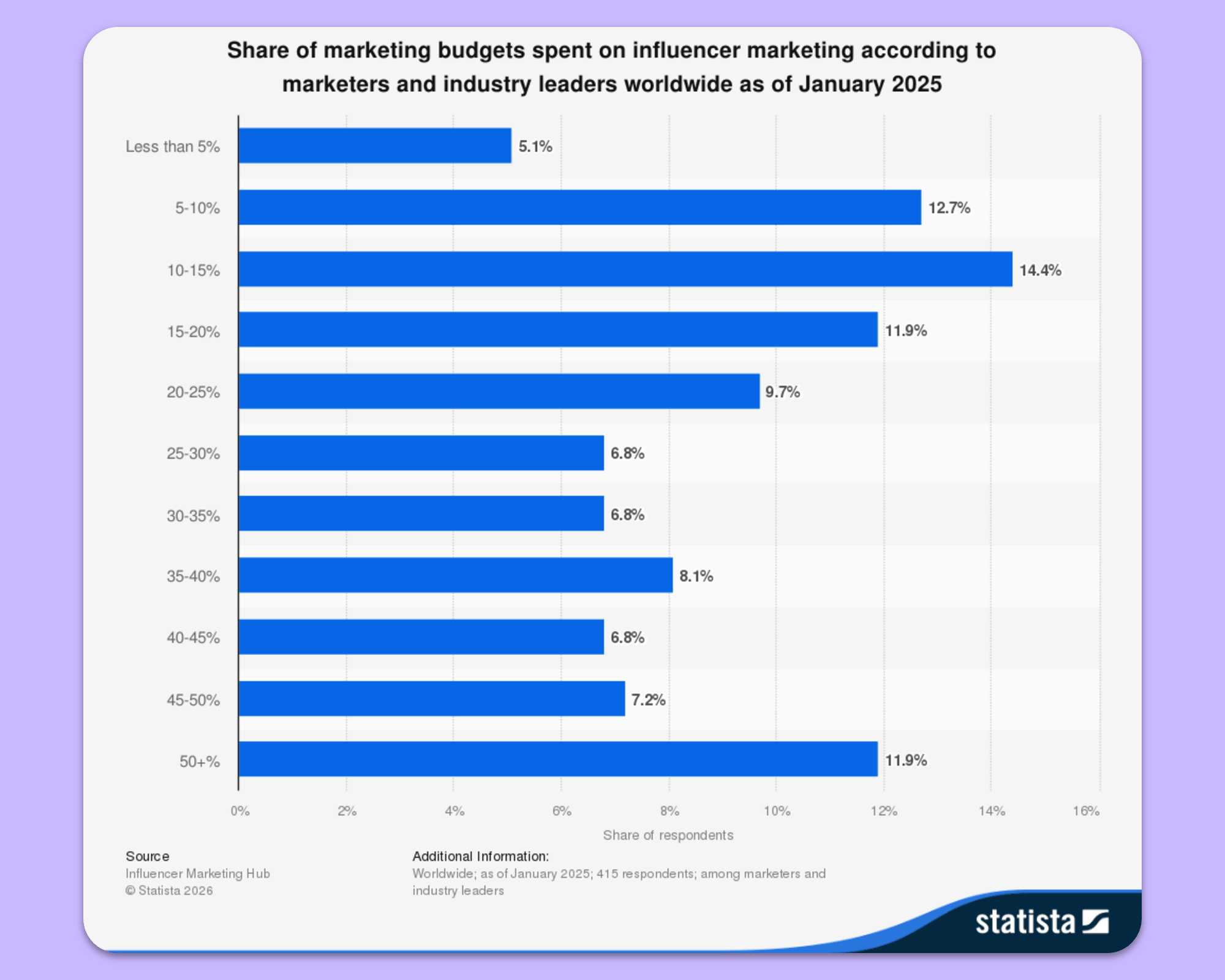
For example, Statista surveyed 415 marketers and industry leaders in January 2025 and found that approximately one in seven respondents spent 10% – 15% of their total marketing budgets on influencer marketing, while one in eight spent over half their total budget on creator marketing efforts.
Sure, creator spending isn’t your only cost, but it’s gonna make up a majority of your influencer marketing budget. So you need to have some idea of the numbers.
Like the benchmarks in the previous section, charges range widely based on factors like niche, follower count, and engagement rate.
Platform and content format play a big part, too – all other factors being equal, a 60-minute dedicated YouTube video will cost a whole lot more than a single Instagram Story frame.
That makes it hard to share meaningful numbers. But, as a general guide, expect to pay:
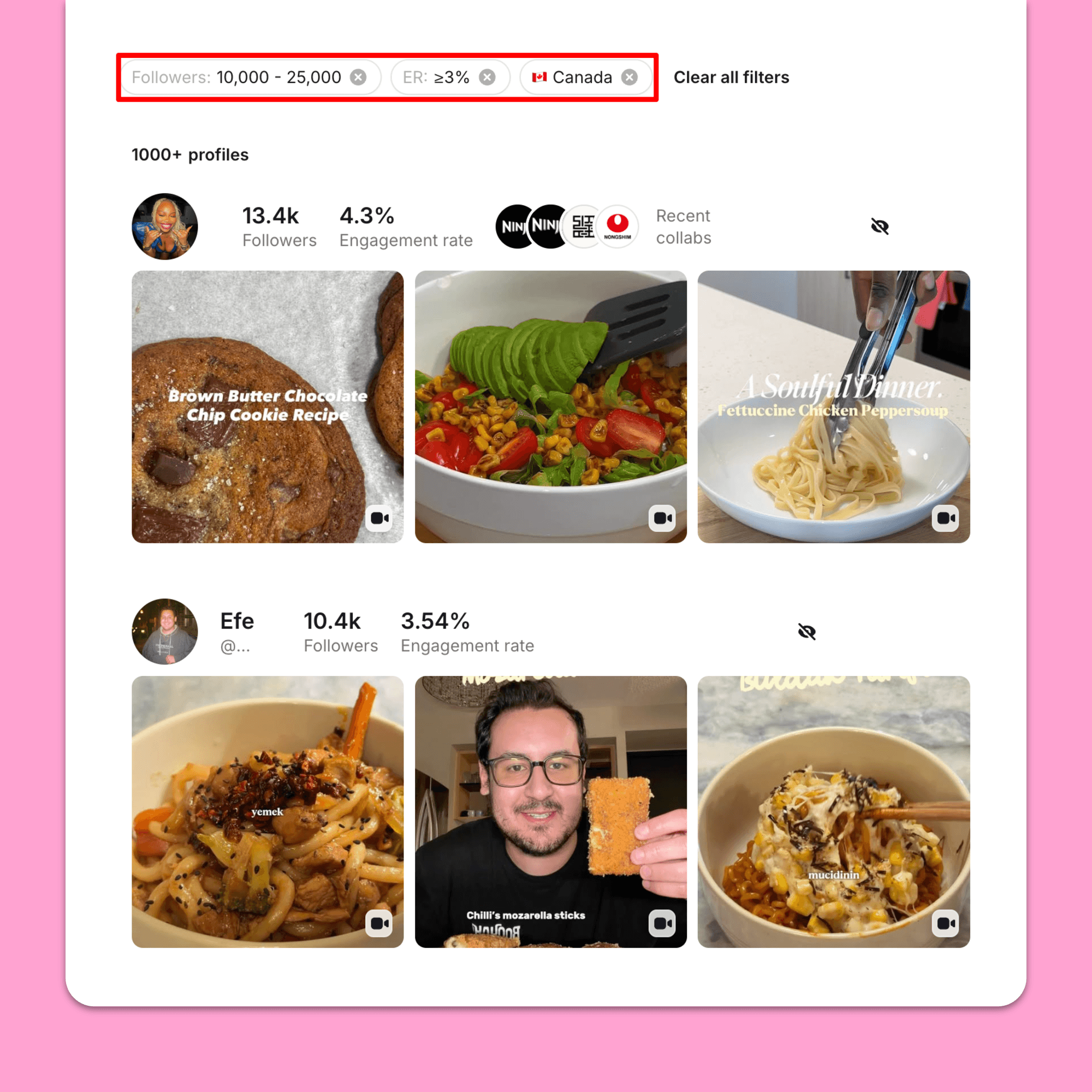
🤓 Pro tip: Modash’s AI creator search functionality, coupled with our follower, engagement, and location-based filters, make it easier to find influencers in your niche and price range.
🤓 Further reading: I’ve barely dipped a toe in the murky waters of influencer rates here. For waaaay more detail, check out my general guide Influencer Pricing: What Influencer Marketing Costs. Or for platform-specific intel, try our TikTok or YouTube pricing guides, or our free Instagram influencer pricing calculator.
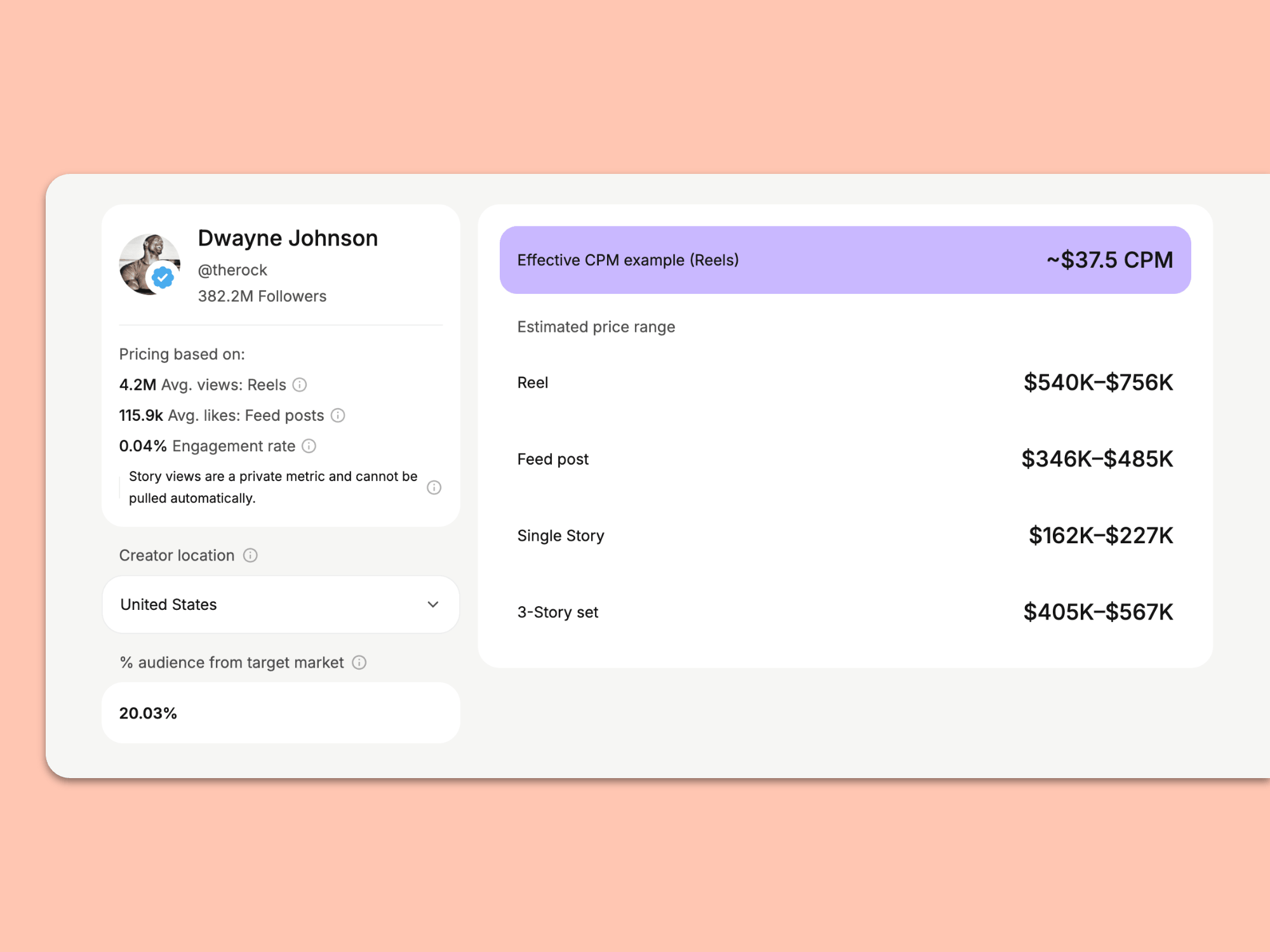
By this point, it should be clear that an influencer marketing budget =/= the sum of a bunch of deliverables in a rate card. Let’s dive into everything it should include, followed by a working example budget broken down across all the various line items…
Depending on how you manage your influencer program and the types of campaigns you run, your budget will comprise most or all of the following:
Depending on how much you have left over after paying creators, you can choose to hire external help (especially when expanding to a new market) or invest in influencer marketing tools to reduce the manual work required to run your program.
For example, rather than spending hours manually screenshot-ing live campaign content, automate it using an influencer tracking tool.
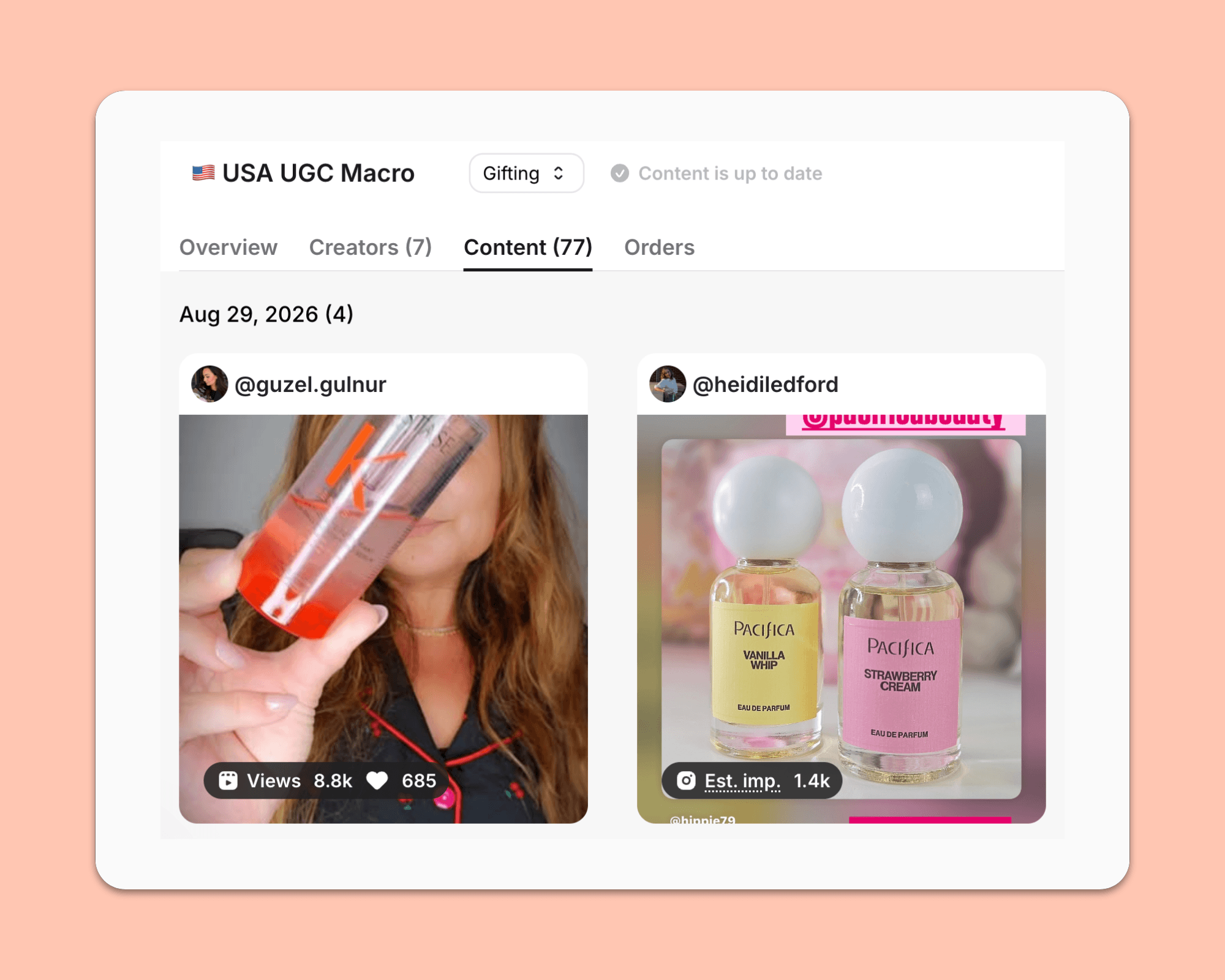
Rather than paying for a bunch of different tools, consolidate your stack by choosing one that combines discovery, management, tracking, and creator payments in a single platform (like, ahem, Modash!).
🤓 Further reading: For more on cutting the operational costs that stifle program growth, check out How To Scale Influencer Marketing: 5 Proven Methods.
I can’t tell you exactly what your influencer marketing budget should look like – my powers of mind control simply aren’t that strong.
(Yet.)
What I can do is show you how a $10k monthly budget can be split across all the line items in the previous section, with some additional pointers on how it might vary for different program types:
⚠️ Disclaimer: One small caveat for you. If a marketer is hiring an agency specifically for recruiting creators, the agency fee will likely include creator costs. And because they also manage creators, you probably won’t need dedicated influencer marketing software either.
Allocation is where budgets are won or lost.
Or, to put it another way, the same spend produces very different returns depending on how it's split. Always-on gifting might cost just as much as a one-off Black Friday campaign, but the output and results will look totally different.
Broadly speaking, you’ve got three decisions to make here:
Let’s look at how this plays out in practice…
Ahh, the classic tradeoff between campaign-based and always-on activity. There’s lots to like about both:
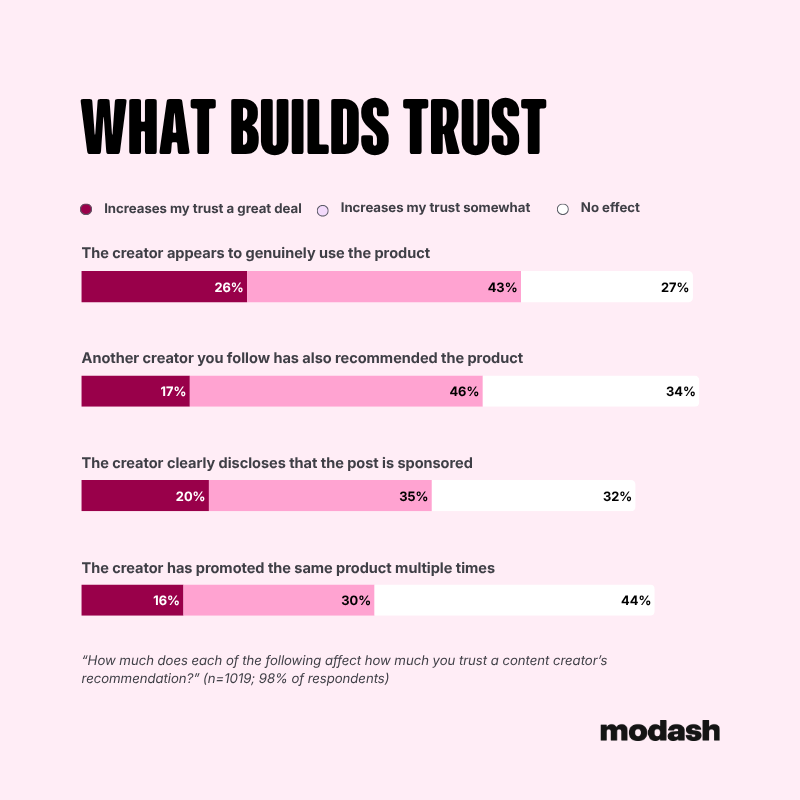
Always-on collabs are a good idea because even if you don't have a sitewide sale or new launch right now, they allow you to build awareness when a customer's ready to buy (or when you do have a big launch or sale to promote). Plus Modash research shows that 46% of US adults agree it builds trust when they see a creator promoting the same product multiple times.
At the same time, if you have a new product or a major promotion coming up, you’ll want to set budget aside for a one-off campaign as early as possible.
In an ideal world, you’d have plenty of money to spend on both campaign types, with just enough left over to pay for your end-of-year party 💃
But this world is rarely ideal so you’re probably gonna have to make some compromises here.
As a general rule, the more “evergreen” your product, the more your budget will skew toward always-on collabs (although even the most “seasonal” brands rarely rely 100% on one-off campaigns with zero always-on activity).
That said, very few brands live at the extreme ends of the spectrum.
Even the most “seasonal” brands rarely rely 100% on one-off campaigns with zero always-on activity. And even for an uber-evergreen product like toothpaste, you’d still want to run the occasional one-off campaign around key dates like Black Friday.
Similar to the tradeoff between always-on and campaign-based collabs, you need to decide how to split your budget between larger and smaller creators.
Again, there’s no fixed approach here, just general rules to guide your strategy:
So you’ll want to slant your budget toward the creator tier that offers the best ROI for your program’s goal, without neglecting what goes on at the other end of the funnel.
Because your audience will get pretty sick of constant aggressive sales messaging.
Still, it’s worth noting that we’re seeing a broad shift away from big names, with almost 60% of brands telling us that niche influencers performed better in 2025 compared to 2024. According to Senior Influencer Executive Lee Drysdale, it’s all down to the community-building potential of working with smaller creators.
The average consumer is becoming savvier to what’s a cash grab and what’s an authentic partnership. Whilst mega influencers and celebrities hold a lot of power to actually influence, the niche talent has built a community on trust.

Another head-scratcher for you: how do you segment your budget between paid collabs with upfront fees, influencer gifting, and performance-based influencer-affiliate deals?
Each has its strengths:
As always, the ideal split will depend on your goals.
For example:
Time for a quick sense check:
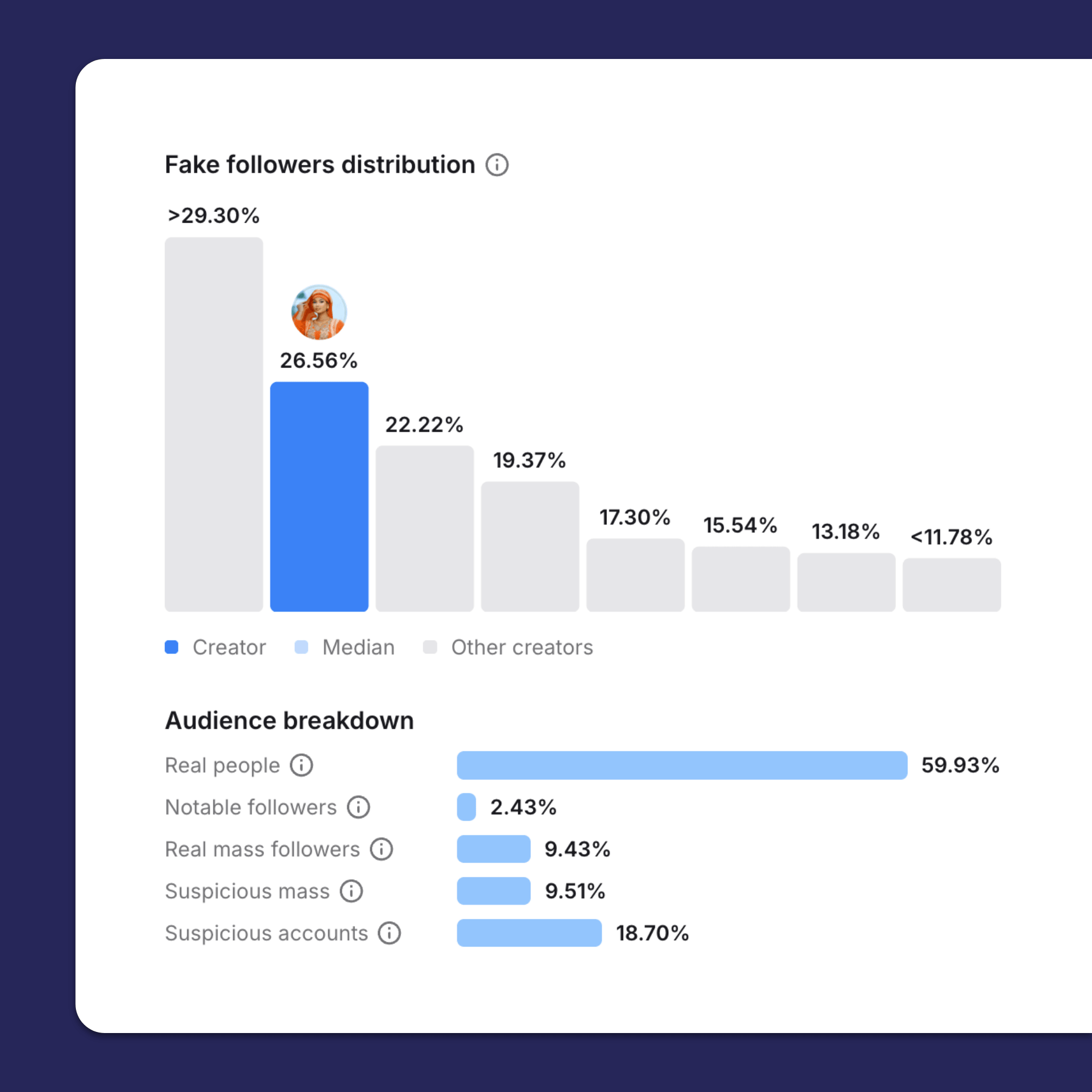
Allocation is important. But however you cut and slice your budget, you’ll only see results if your influencer partners are actually reaching real people, so be sure to check the quality of each creator’s audience before you agree to work with them.
Some fake followers are inevitable – anything up to 25% is to be expected. But significantly more than that is a red flag 🚩
🤓 Pro tip: Use Modash’s fake follower and audience credibility checkers to assess a creator’s audience before reaching out with an offer to collaborate.
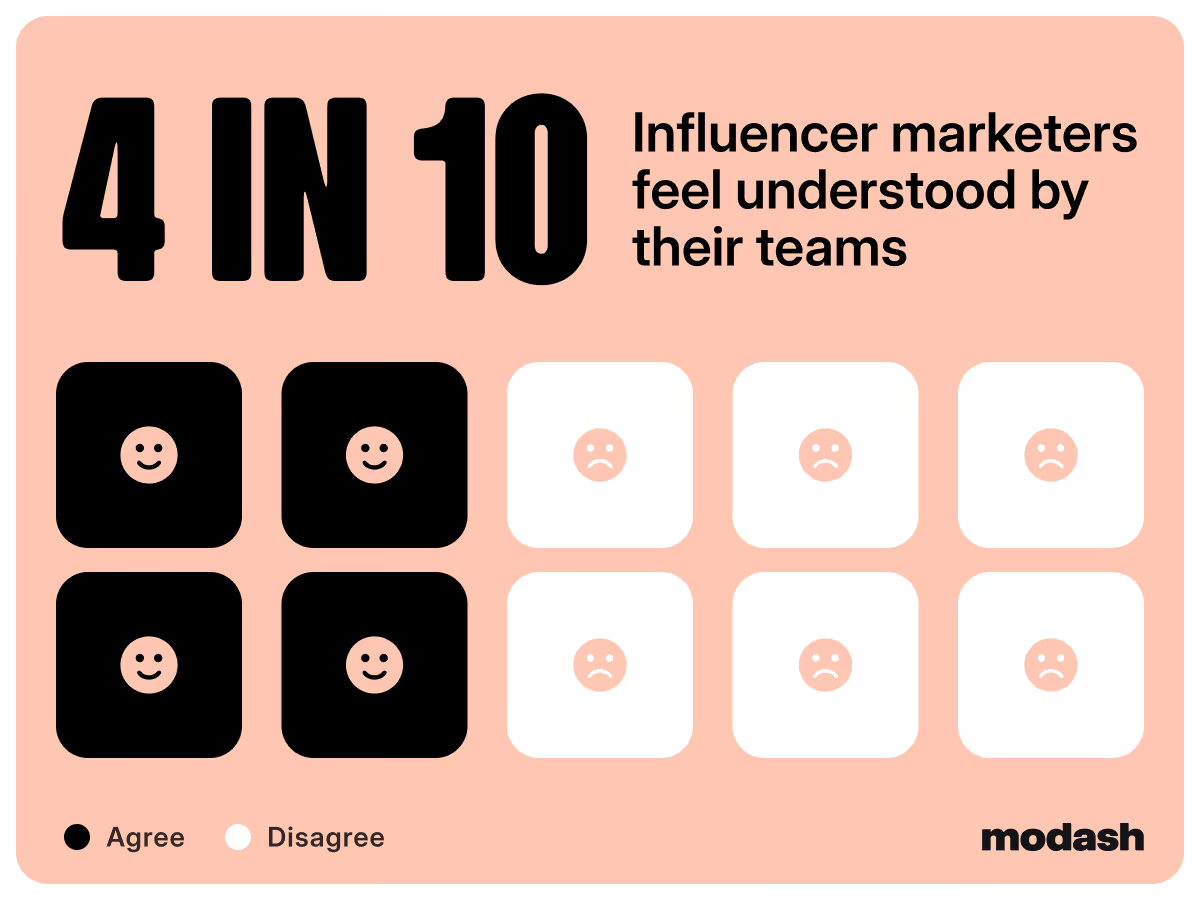
It’s no surprise that influencer marketers routinely have to battle for budget, with only four in 10 believing that their teams and leadership truly understand the value they provide.
And leaders that don't understand influencer marketing tend to starve it.
(Sorry if all this talk of feeling misunderstood triggers your inner emo, btw.)
The solution is to never leave anything to chance.
Forecast the return before you commit, report on the results you deliver, and use the data to build a watertight defence. That way, a budget you defend once becomes one you can grow 🌱
Right back at the start of this article, I showed you how to work backward from your program’s top-line goal using the following metrics:
Your objective here is to attach an expected outcome to your budget figure, not to blindly spend and hope.
Why does this matter?
Because before you can start defending your budget, you need leadership to play their part by agreeing on your target metric and forecasted results.
That way, when you hit (or surpass) those results, there’s no room for doubt: either they raise your budget and give you a medal, or they admit they messed up in the first place by signing off on the wrong target – in which case they’re to blame, not you.
Now that you’ve got leadership to agree on your forecast, it’s time to start reporting on program performance.
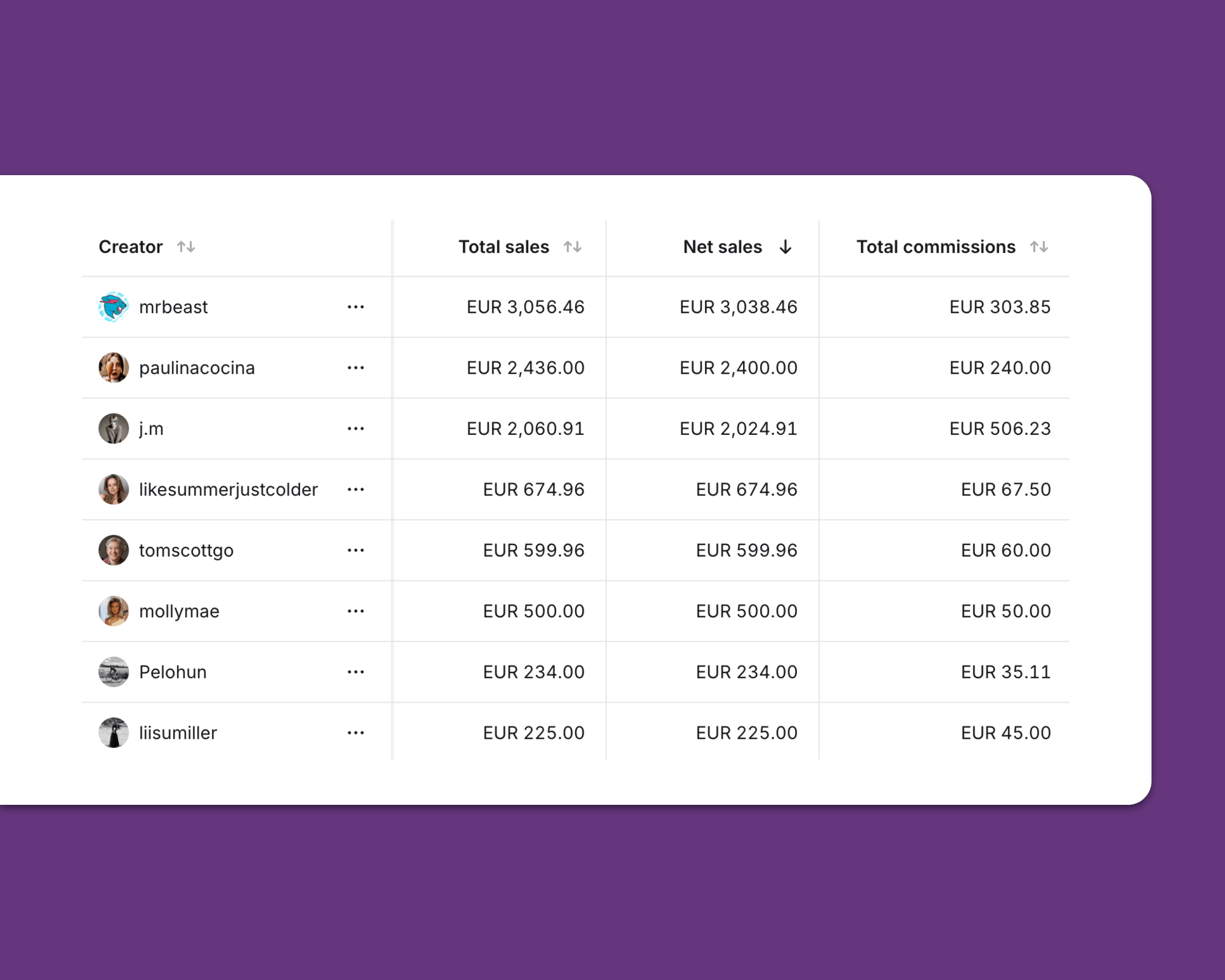
Naturally, you’ll want to include the relevant top-line metric from the previous section – CPM for awareness, CAC for sales, cost per unit for content generation. Beyond those, most leadership teams only really care about a handful of metrics…
…so you’ll want to include them in your reports, too.
🤓 Pro tip: Modash automatically tracks all these metrics in our influencer marketing dashboard, plus you can export the results to CSV or Excel to share with your leadership team and/or add to an external reporting tool.
So how often should you be reporting results?
According to influencer marketing consultant Andreea Moise (AKA the Hype Maven), quarterly is the way to go:
Weekly won’t catch a lot of impact, especially if you have long-form content in the mix, and monthly might look inconsistent based on content volumes and hitting/missing 1 – 2 goals, but quarterly will always tell the truth on how the program is actually doing.

🤓 Further reading: For more on this, check out How to Report on Influencer Marketing (+ Templates).
You’ve got the numbers; now you can beat down the boardroom door and demand that long-awaited budget increase.
(Or, worst-case scenario, use the data to defend what you’ve already got.)
As ever, framing is everything. Don’t ask for $10,000 a month – ask for the money to generate X more impressions or Y more content units or Z more sales. That way, your budget looks like an investment in an expected return, not just another cost.
Consistent reporting will help you out, too. Andreea recommends a quarterly cadence, but whatever you choose, do it consistently so there’s a clear track record to point to.
Of course, internal data isn’t all you can use. Don’t be afraid to draw on numbers from further afield if they support your case. I shared some benchmark data earlier in the article, and no doubt there’s plenty more out there – if it helps you demonstrate that your budget is lagging behind other brands, go for it.
And remember: you don’t necessarily need to wait for signoff to prove that a little extra budget can deliver big returns. Use small tests to build your case, then use the results to argue for more cashola 💵
When it comes to budget-setting, affordability isn’t a goal in its own right.
Like, sure, you don’t have infinite money. But if you know that your “affordable” budget won’t deliver the results your leadership team wants to see, what’s the point? It’s gonna be impossible to defend anyway 🤷♀️
So let’s park affordability. Instead, focus on:
The tools in your marketing tech stack can help with a lot of this stuff. For example, Modash helps you find creators who fit your budget, check their audience is legit before collaborating with them, and track per-creator costs and results in a single dashboard.
👉 See for yourself when you start your 14-day free Modash trial!
According to Anna Klappenbach, Senior Creator Partnerships Manager at Modash, if you’re serious about influencer marketing you need to commit at least $10,000 a month for a minimum of 3 months. Any less and it’ll take far too long to show meaningful results.
A majority of businesses spend 10% – 15% of their total marketing budgets on influencer marketing, according to a global survey from Statista. However, creator payments aren’t the only influencer marketing line item – budgets also cover things like software, product/shipping costs, and agency fees.
The 70/20/10 rule is designed to deliver consistent returns while leaving space for creative experimentation by splitting an influencer marketing budget into three distinct tiers:
While creator fees will almost certainly be the biggest line item in your influencer marketing budget, it also has to cover some or all of the following:
If you want more budget for creators, you can cut some ops spend by taking things in-house, using spreadsheets instead of tools, or negotiating for usage rights to be included in the fee.
Even if you have no past data, you can still set an influencer marketing budget by working backward from the results you’re trying to achieve. For example, if your goal is to acquire 200 new customers with a target CAC of $50, you need an influencer marketing budget of $10,000.
The best approach is to set a clear, measurable goal that your leadership team buys into – such as generating a certain volume of sales or reach/impressions or units of content – then demonstrate that you’re achieving or surpassing the target. You should also forecast how a budget increase would improve results (e.g. “with another $2,000/month, we could generate $6,000/month in sales").
Yes, absolutely! Lots of brands see results from small influencer marketing budgets. There are lots of ways to keep costs low, such as:
At the same time, bear in mind that Anna Klappenbach recommends a minimum budget of $10k/month and a time commitment of at least 3 months.