Capabilities
Integrations





Use cases
Capabilities
Integrations
Use cases


Here's the thing about finding influencers on Instagram:
It seems suspiciously easy.
Open the app, type a word, and boom – creators as far as the thumb can scroll. An hour later you've got 30 handles in your Notes app and you're feeling pretty smug about it.
Then your boss asks: "Cool, are their followers real? Are they even in the US?"
Ah.
There’s the trap. Instagram is built for browsing, not judging. It'll hand you names until your battery dies, but it won't tell you a single useful thing about who's actually following them. Which probably explains why 87.5% of marketers in our survey said finding the right-fit influencer is getting harder, not easier.
Here are 11 ways to discover Instagram influencers who fit your brand just right.
To keep this practical, let's invent a brand. Let’s say you run a Shopify store selling small-batch hot sauce and you need 20 Instagram creators by the end of the month.
Here's your menu:
That third column is a whole lotta "nope." Keep that in mind.
Now, let’s dive into these methods in more detail.
An influencer database is basically Instagram search with some extra useful bits bolted on. You're not just looking for creators – you're filtering by who actually follows them, so you can find people and vet them at the same time.
Take Modash, which lists every public Instagram creator with 1k+ followers (note you can use filters so it’s not so overwhelming).
Our hot sauce brand could ask for creators who:
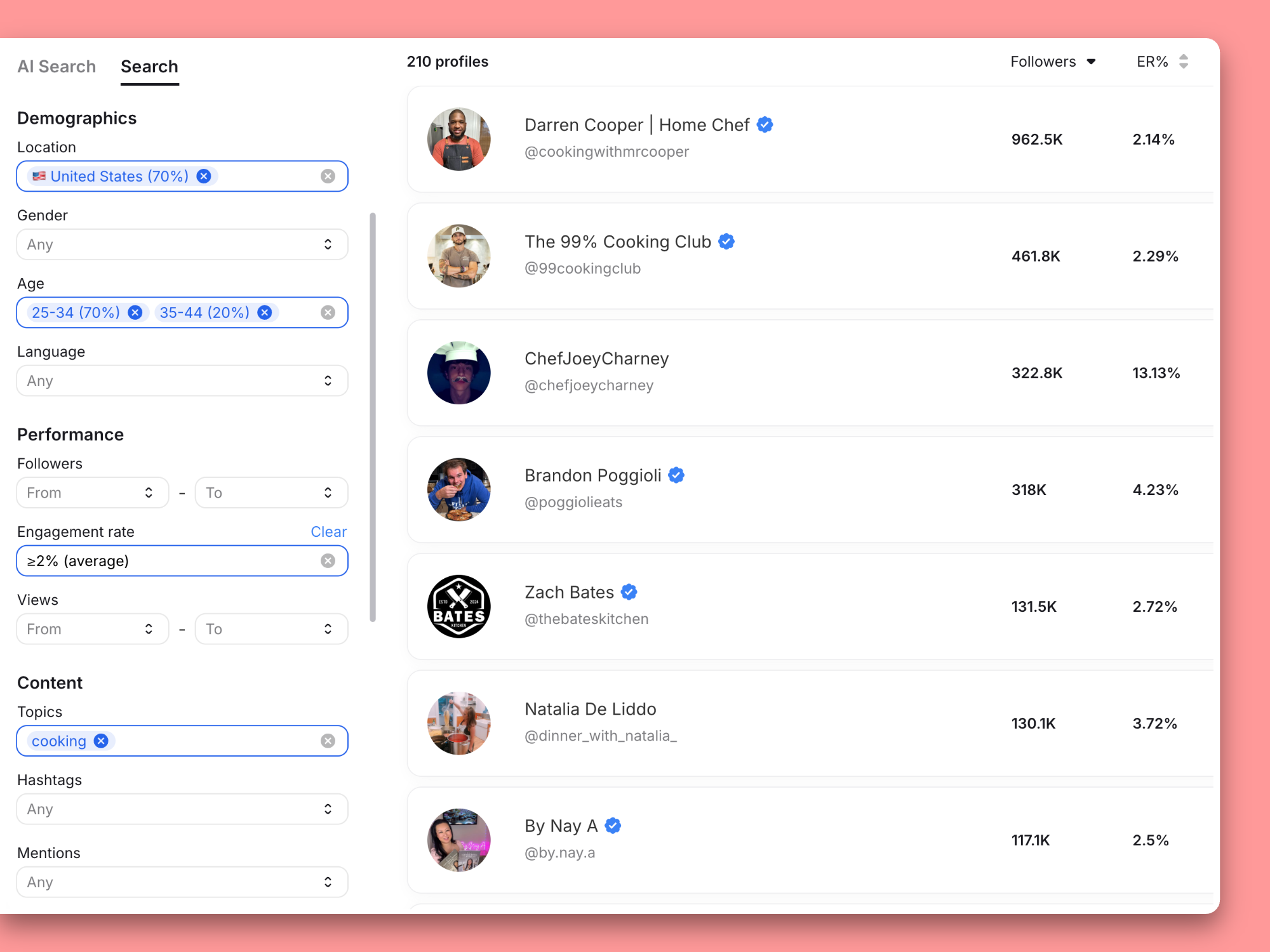
Of course, databases cost money, and you might not have any to spend right now. That's fine! All the free methods below still work. They just take longer, and they won’t give you much info about a creator’s audience, so you’ll have to check that yourself.
🤓 Shopping around? Here are the 10 best influencer search tools.
Filters are great when you know exactly what to type into them…
…but sometimes you don't. Sometimes “food influencer” is way too broad. What you’re really after is a creator whose content has a specific feel to it, whatever their niche.
Like, I know our hot sauce brand needs "guys who film themselves crying over wings in their truck." I can picture the Reel and I can practically hear the sniffing. But nobody's putting that in their bio, and there's no hashtag for it (#trucktears?), so a keyword search is never going to find them.
This is the gap an AI creator search fills. In Modash, you can describe the creator you want in plain old English and it will find creators who fit the bill.
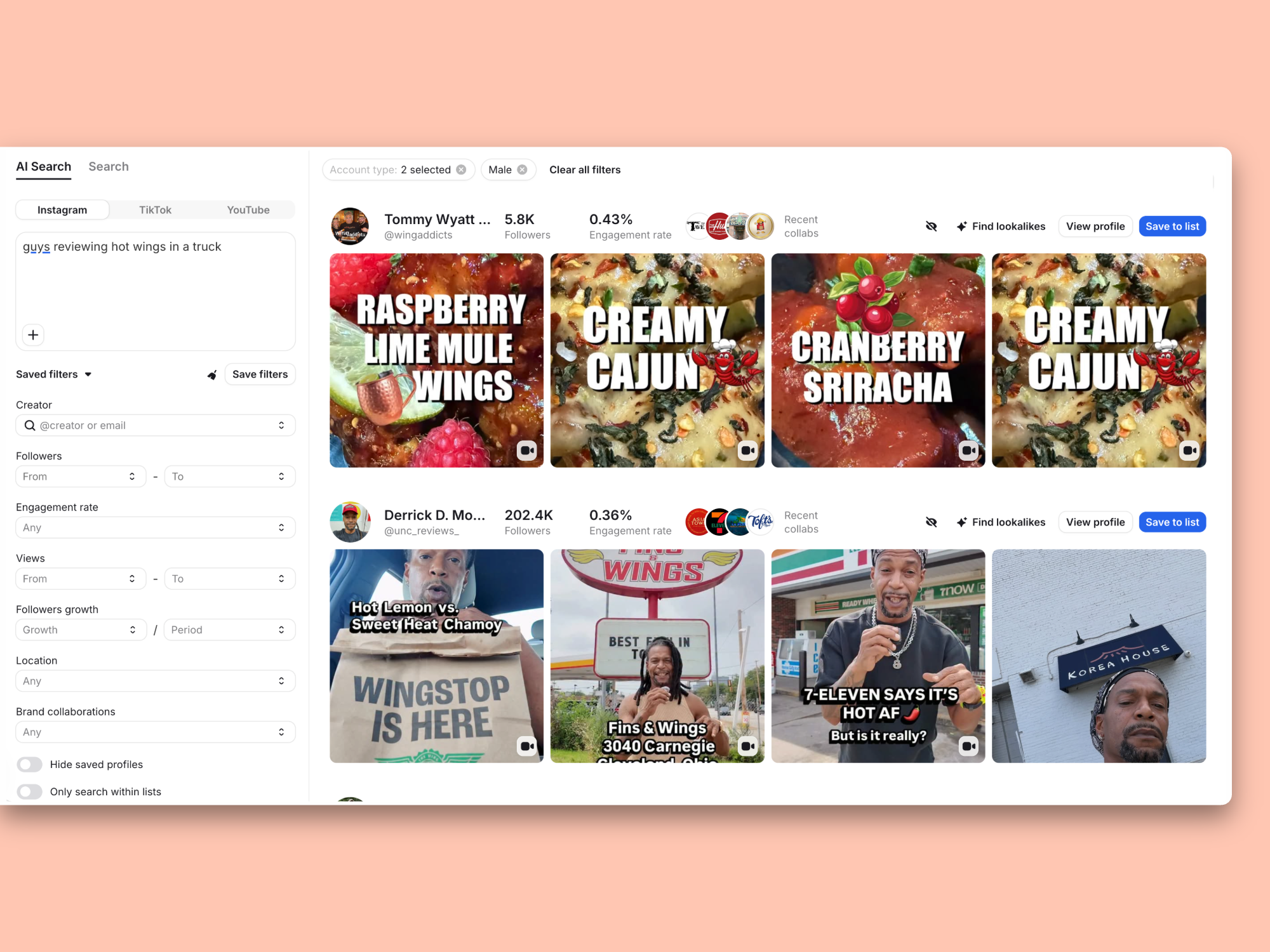
And it's not only for text. You've got two other ways in:
So if you've got a screenshot of a Reel that made you think "THIS, more of this", you can now use it as a search query.
It's handy for one more reason, too. Because you're describing a moment or a vibe rather than a category, you’ll find creators who'd never normally appear under a simple search for a “food influencer.”
Right, onto the free stuff. And we'll kick off with the one you've almost certainly tried already.
Just over 66% of marketers in our survey use hashtags or keywords to find creators through native search. Which makes sense. It's free, it's right there in the app, and it feels like the obvious place to start.
But most people do it pretty badly. They type "hot sauce," scroll through a wall of random posts, and inevitably give up 20 minutes later.
Instead, try typing in your keyword, then tap over to the Profiles tab, where you’ll see influencers who have used that keyword in their name field (think "Jess | Spicy Food Reviews").
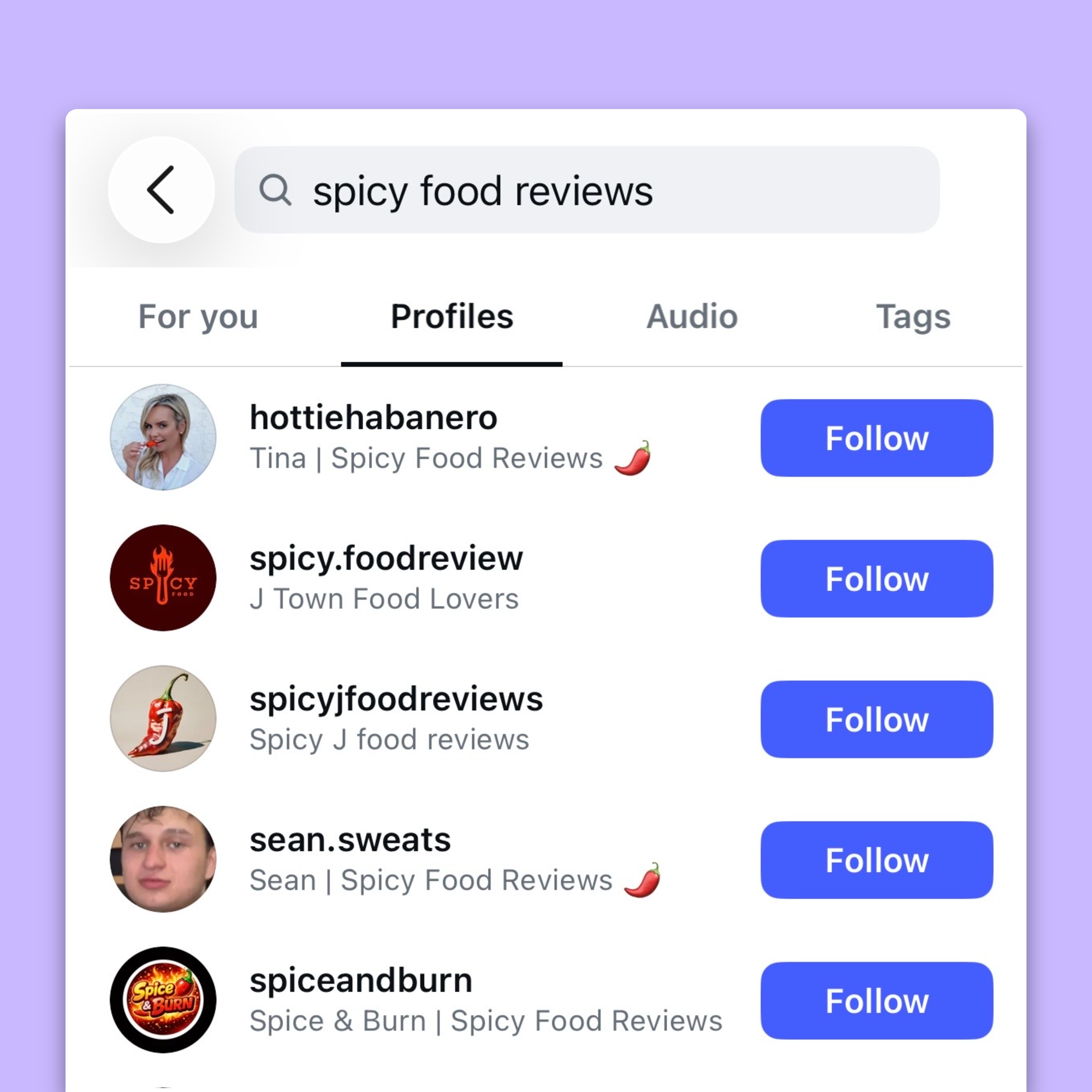
Don't stop at one search term, either. Try these five types of keywords:
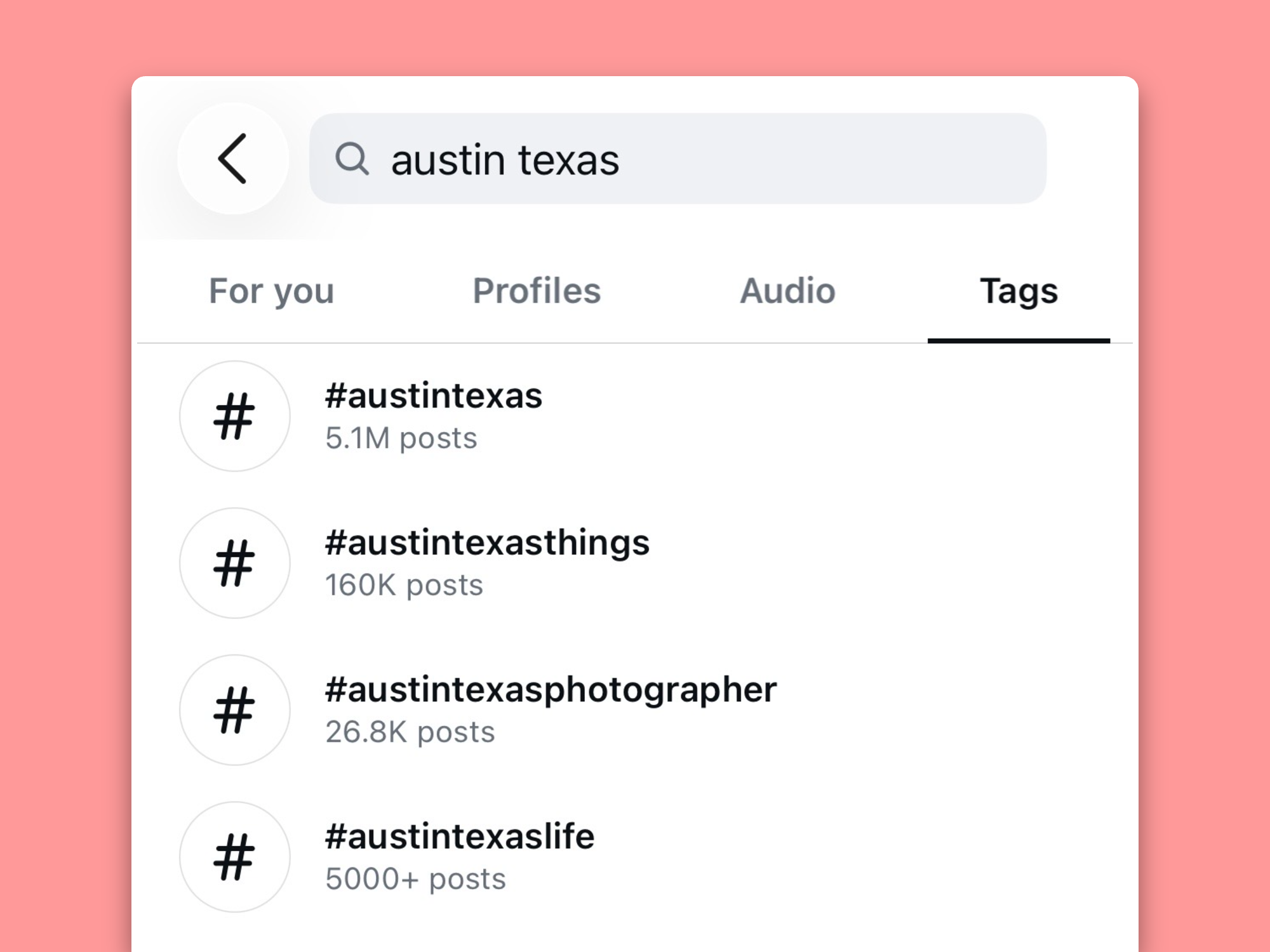
Once you've rinsed Profiles, have a nosey at Tags as well. For example, if you search "Austin, Texas, you’ll see a selection of popular Austin-focused hashtags you can scroll through.
So what's the catch?
It's noisy. It takes ages. And you'll only ever find creators that the algo is pushing, which rules out a whole bunch of great ones.
Oh, and you still don't know the first thing about their followers. Small detail.
You know when you watch one video of a dog on a skateboard and suddenly your whole feed is dogs on skateboards?
That's Instagram’s Explore feature for you. It's a menace when you're trying to get to sleep, but it's really handy when you're looking for creators.
You can make it work harder (and smarter) for you by setting up a separate Instagram account purely for creator hunting.
Follow 30 or so creators in your space. Like their posts, save a few Reels, and maybe leave a comment or two. Give it a few days, and Instagram will cotton on to what you're into and start lining up similar creators in Explore and your "Suggested for you" recommendations.
It's basically a free recommendation engine. You've just gotta train it first 🐶
That said, don't forget who's in charge here. The algorithm picks what you see, so it's going to keep serving you whoever's already popular. Smaller creators who'd be perfect for you might never show up at all and a grid of thumbnails tells you zilch about quality.
Say you've found a creator you really like. Great! Now you want 10 more just like them.
Instagram can help with that. Go to their profile and look for the little chevron next to the Follow button. Tap it, and a row of similar accounts appears underneath.
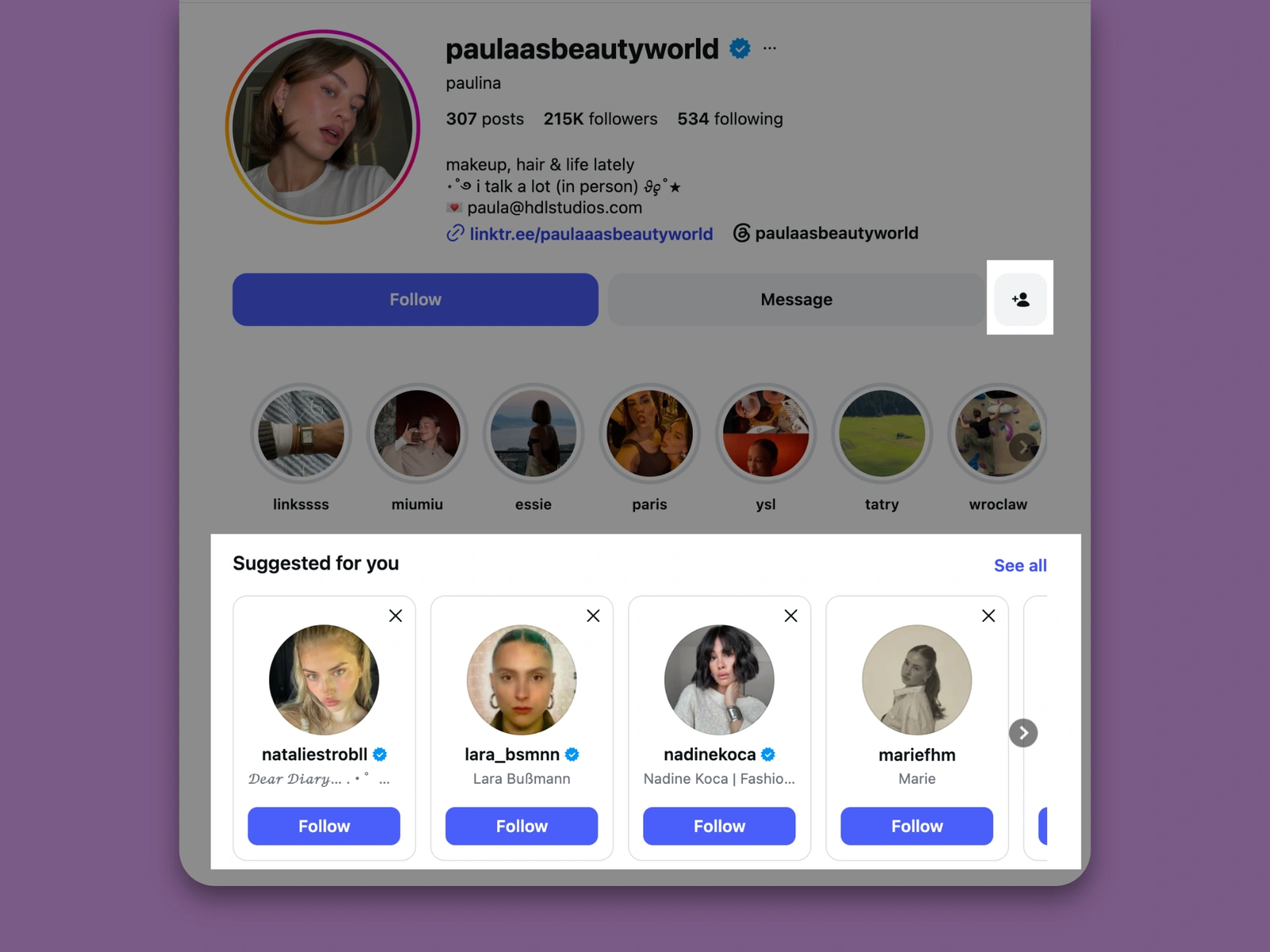
Then tap one of those, hit the chevron again, and off you go.
I'll be honest, I kinda love this one. It costs nothing, it takes two seconds, and every now and then it turns up someone brilliant.
But it's got some pretty obvious limits. You're relying on Instagram's idea of "similar," which can be… loose. You can't tell it what you actually care about. And if you need 200 creators rather than 10, your thumb will probably need physio at some point.
That's where a proper lookalike tool comes in.
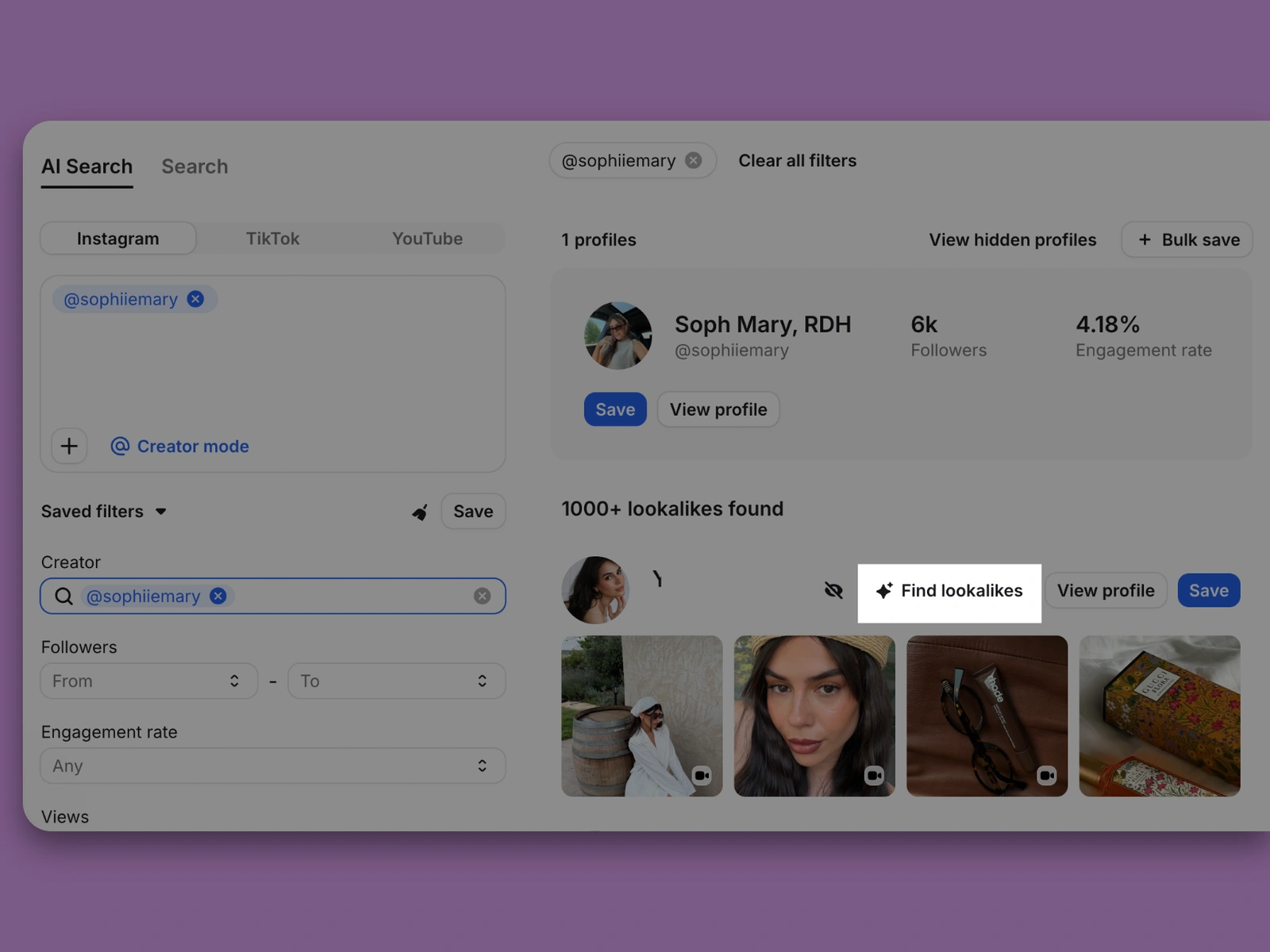
With Modash, you drop in one creator who's already done great things for you, and it finds others with similar content or a similar audience. Every result comes with data attached, and you can stack filters on top to narrow it down. So, if you only want lookalikes with a US audience and under 50k followers, you can have exactly that.
Some creators are already posting about you. For free. Without being asked.
These are the easiest partnerships ever, because you don't have to convince them your product's any good.
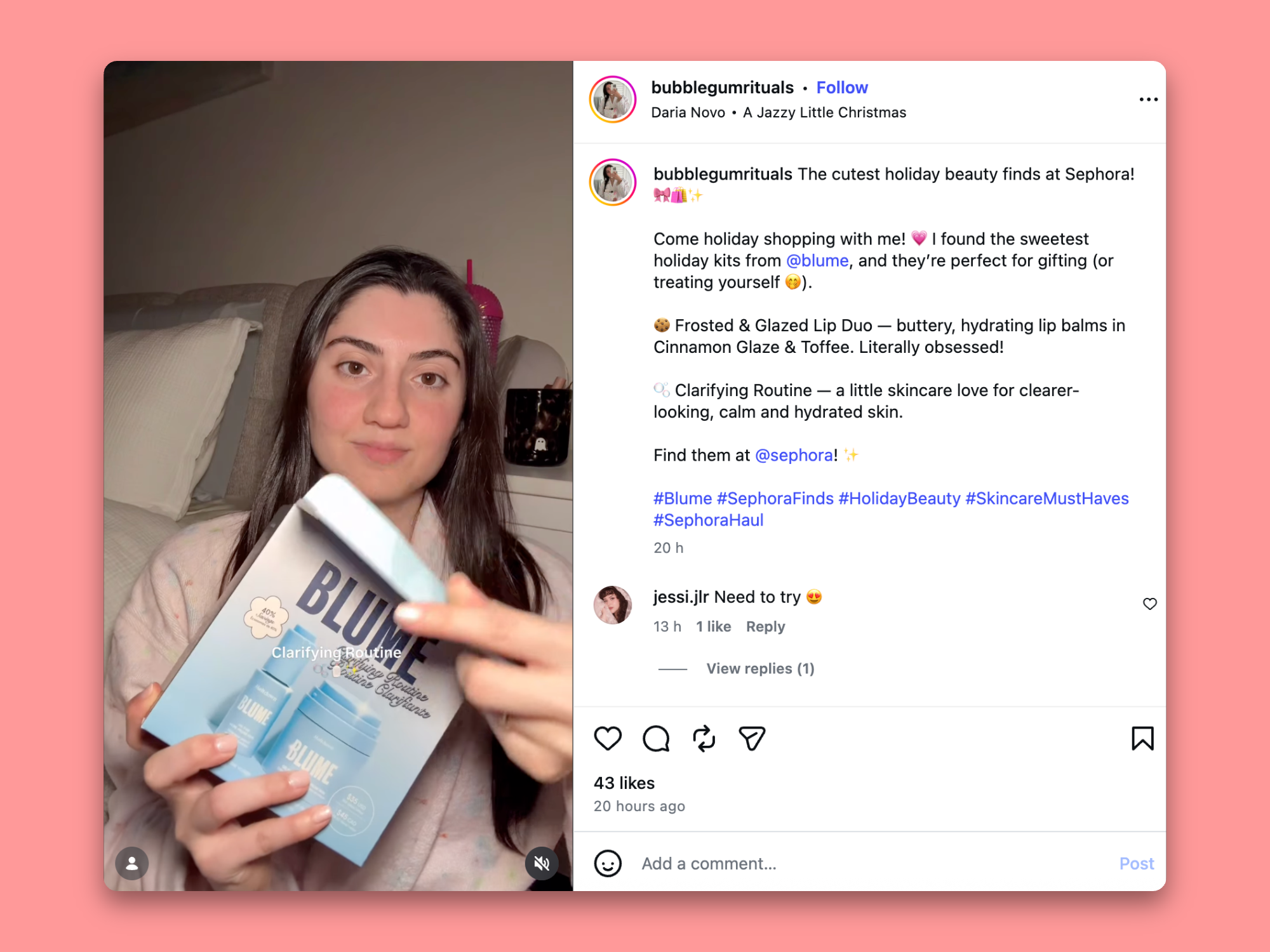
In this example, Diba of Bubblegumrituals tags beauty brand Blume in her post despite it not being a paid partnership. She’d be a great partner for the brand because her enthusiasm is genuine (and the audience can tell!).
So where do you find creators who’ve already posted about your brand? There are three places to look:
Obviously, Stories expire after 24 hours. A creator with 40k followers could rave about your habanero sauce and you might never see it.
Now, you could check your DMs every few hours, all weekend, forever. Or you could let Modash do the legwork. The find your fans feature shows you which creators already follow your brand.
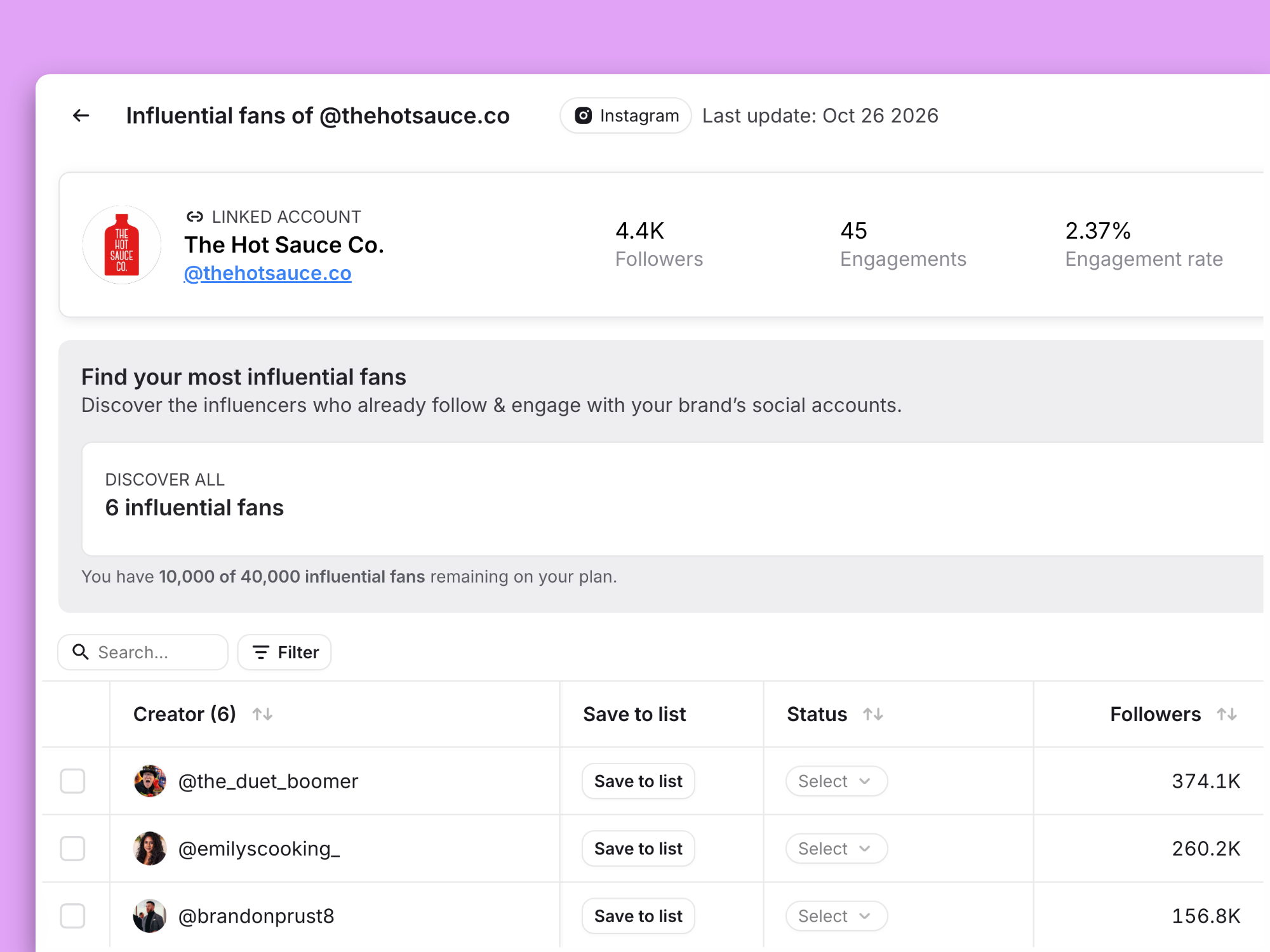
Just remember that a creator being warm doesn't mean their audience is right for you, so do a brand-fit check before you get excited.
Did you know Instagram has its own tool for finding creators?
It's tucked away inside Meta Business Suite and is called Creator Marketplace. You can browse creators, filter them by niche and by audience, and send a partnership offer straight from there.
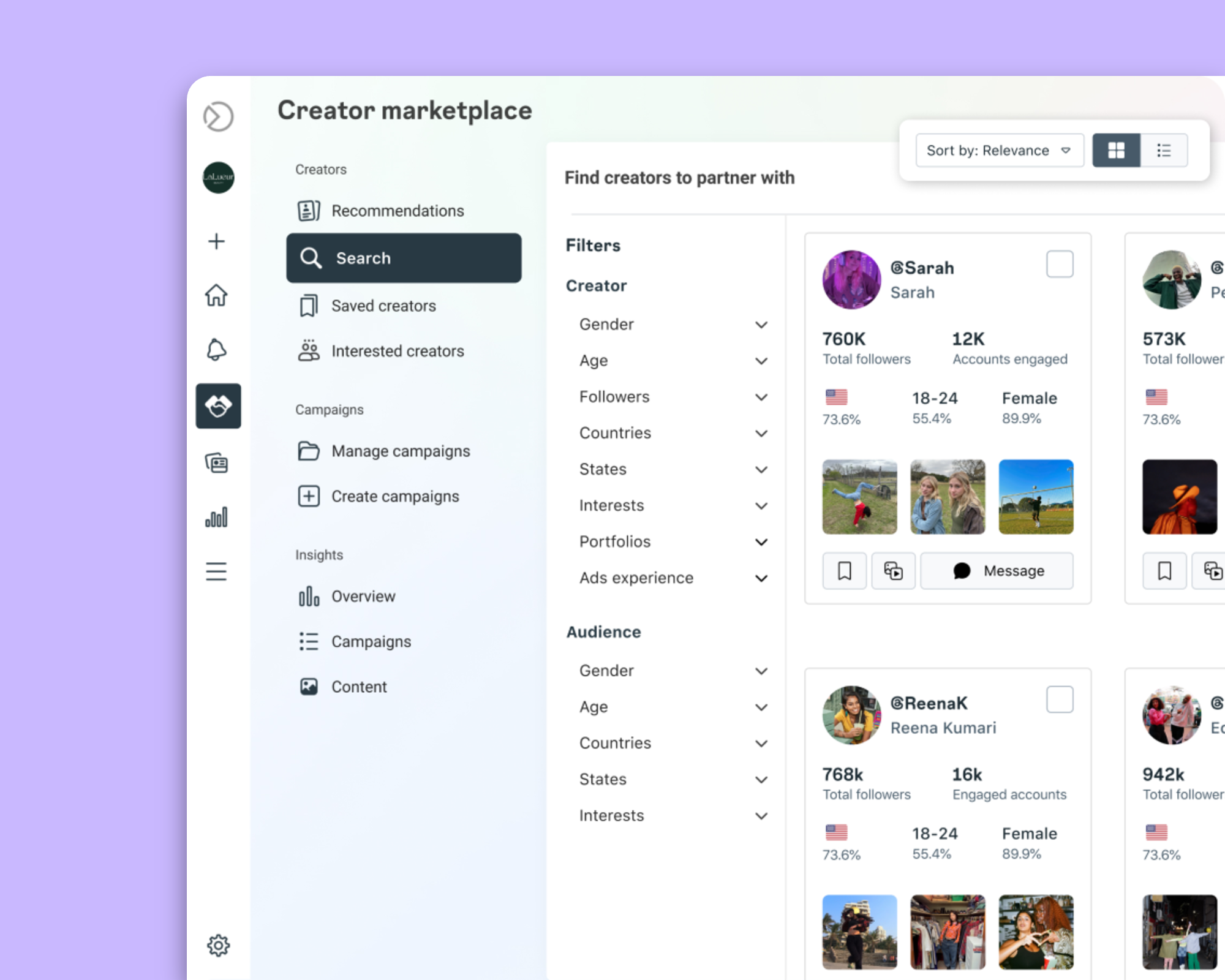
Sounds pretty great, right? So why isn't everyone using it?
Two reasons.
It's still worth a look, mind you. Creators in there want brand deals, so they tend to reply. Just don't expect it to be your only source.
I Googled "food influencers on Instagram" to see what our hot sauce brand would be working with.
Top result: Gordon Ramsay.
Great. I'll just give him a call.
That's the trouble with broad searches. You get the biggest names on the planet, and unless you've got a few hundred grand lying around, they're no use to you.
So you've got to narrow it down. Add your niche, a location, and a follower range, and you'll get something far more realistic. For example: "spicy food Instagram creators in Texas under 50k followers."
You can ask ChatGPT the same thing, and it'll happily give you a list.
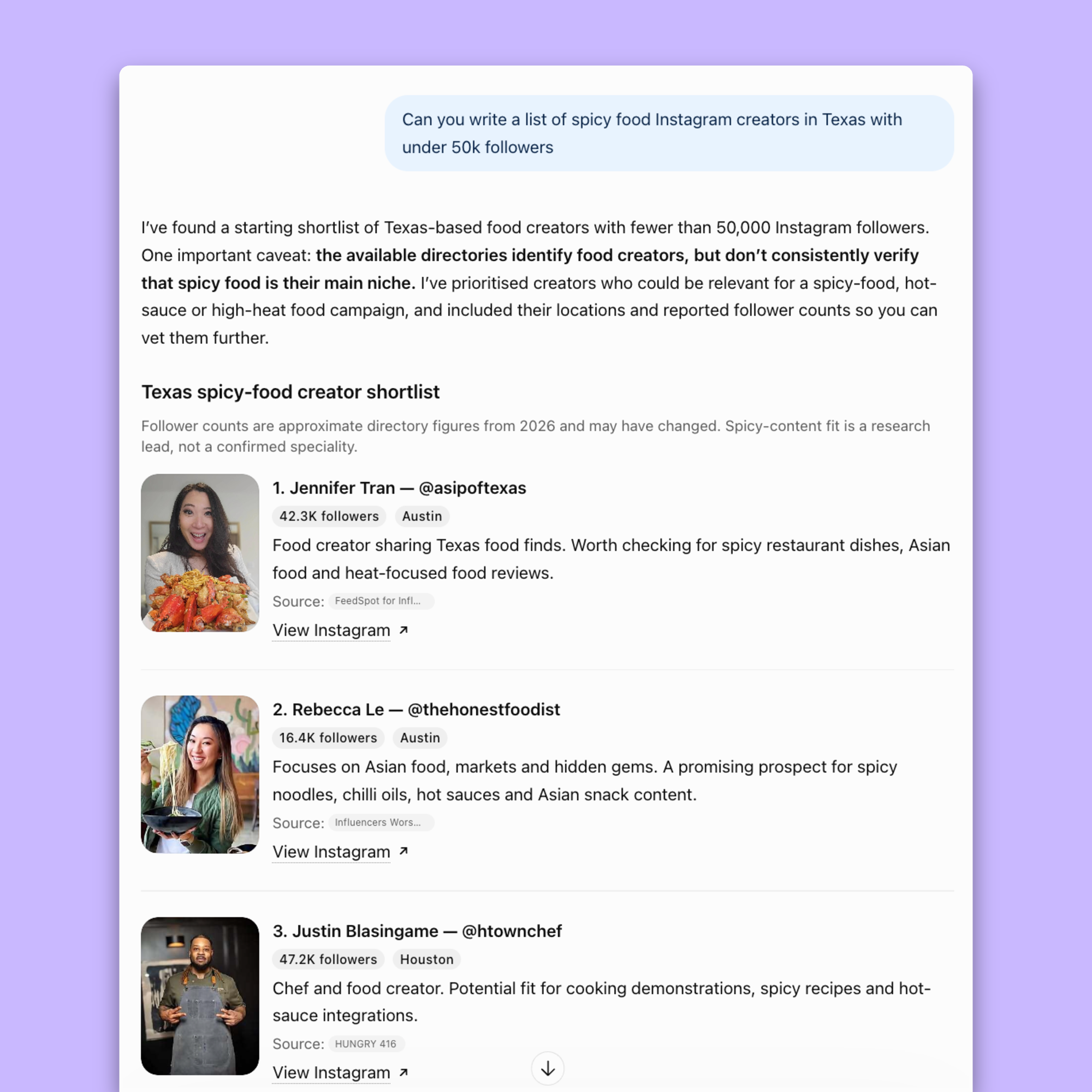
But go in with your eyes open. A lot of what comes back will be pulled from listicles that are years old, so some of those creators will have quit, pivoted, or blown up way beyond your budget. And every so often, an AI tool will confidently recommend someone who doesn't exist. I've clicked on a few of those handles myself 🙃
This is the biggest difference between a broad Google search and Modash’s AI creator search – the latter shows you people who are still around and still posting.
Your competitors have already done a load of creator research. It’d be a shame not to have a peek 🕵️
Start with their Tagged tab. That'll show you everyone who's posted about them, paid or not.
Then scroll through their feed and look out for two things:
Any creator you find this way has already sold a product like yours to an audience like yours. That's a pretty good sign.
There's a "but" coming, obviously.
Some of them will be tied into exclusivity deals, which means they can't work with you even if they want to. So before you get your heart set on someone, check how recently they posted for your rival and whether it looks like an ongoing thing.
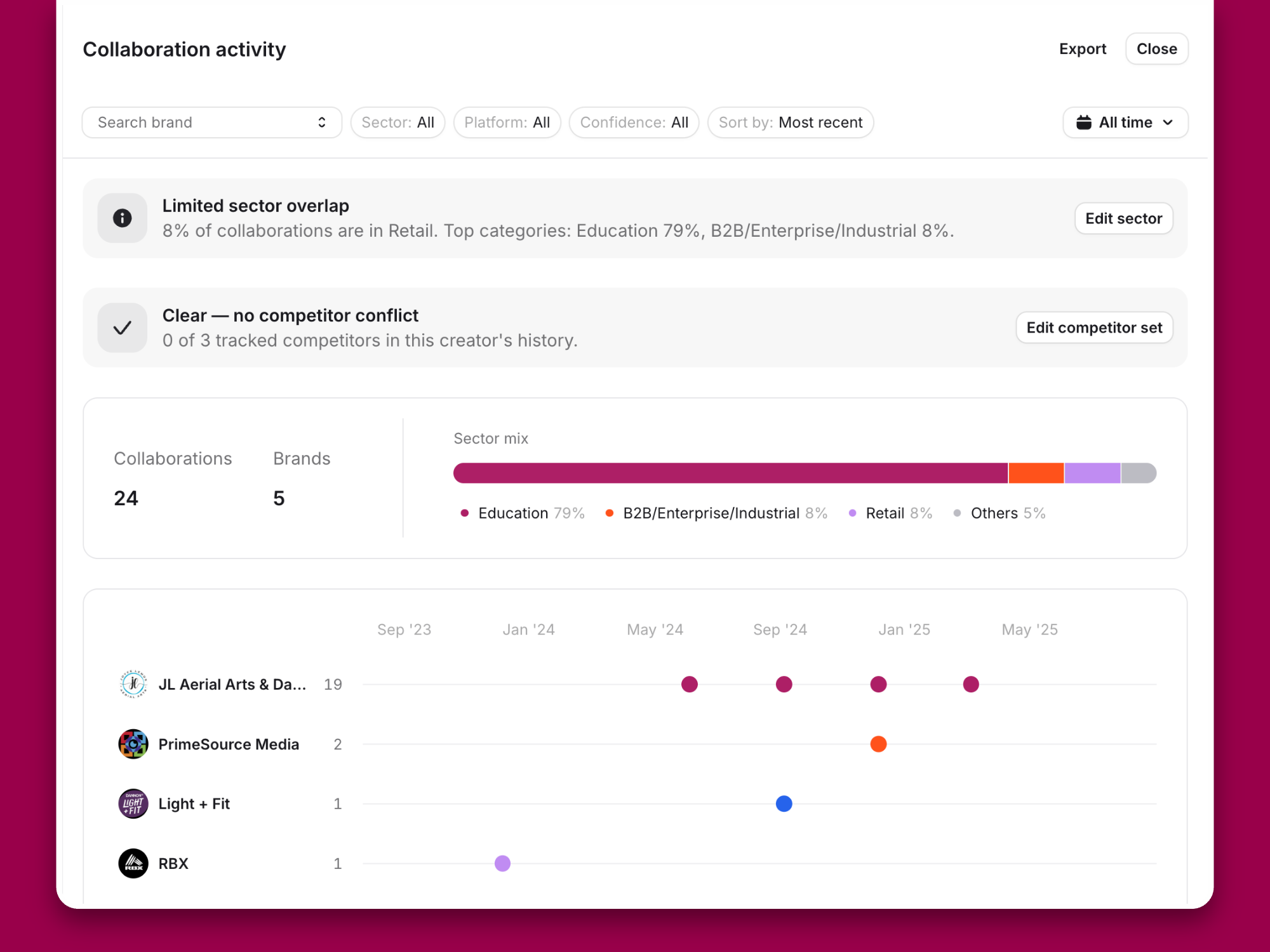
All that scrolling adds up, too. If you'd rather not damage your thumbs, Modash has brand collaboration data built in. Type in a competitor's name and you'll see the creators who've worked with them.
Open any profile and you get a timeline of every brand deal they've done.
Creators talk to each other. A lot.
They're in group chats, they go to the same events, and they comment on each other's posts. Which means the creators you already work with almost certainly know a few more who'd be a good fit.
So ask them! It doesn't need to be a big formal thing. Something like this does the job:
“Hey {influencer name}, We loved partnering with you on {1-2 personalized lines about the campaign you partnered with them on} and can’t wait to chat about future collaborations!
In the meantime, we were wondering if you had any recommendations for creators like you on Instagram? We’re looking to partner with similar influencers for our new campaign, and an intro from you would be super helpful! Specifically, we’re looking for Instagram creators who…{send some requirements like follower range, niche, engagement rate, and other metrics you’re looking for}.
Do you have anyone in mind who might be a good fit for {company name}? No worries if not!”
The nice thing about referrals is that you skip the awkward first bit.
You're not a random brand in their inbox – you're the brand their mate said was good to work with, and that counts for a lot. It works in your favour, too: a creator you already rate will point you to people like them, so you’re far less likely to end up chasing someone who misses the deadline and ghosts you.
If you're already running creator campaigns on TikTok or YouTube, you've got a list of people who've proven they can sell your product… and most of them will have an Instagram account too.
So before you go looking for strangers, look them up.
Just don't assume their talent on YouTube or TikTok will automatically carry over to Instagram. I've seen creators with a million TikTok followers whose Instagram is made up of nine blurry brunch photos from 2021.
Have a proper look at what they post on Instagram and ask yourself two questions:
It's often a different crowd from platform to platform, so it's worth checking even if you know the creator well.
Let's check in on our hot sauce brand.
They've done everything right. They searched the keywords, snooped on competitors, and tapped every chevron in sight. And they've ended up with the same 15 spicy food reviewers as every other hot sauce brand on Instagram.
You can guess how that goes. Those creators charge a fortune and they're booked up for months.
We call this overfitting.
It's what happens when your idea of the "right" creator gets so narrow, and so obvious, that you're stuck competing for the same handful of people as everyone else. And because you're all using the same creators, your content ends up looking the same too.
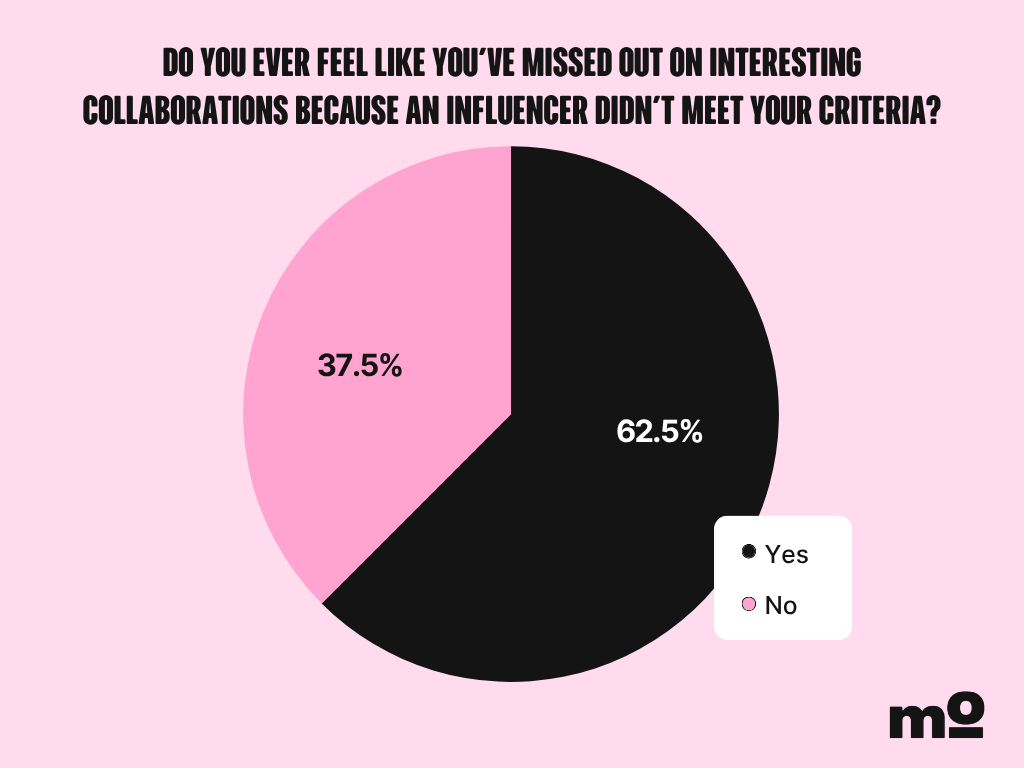
It's costing people good partnerships, as well. Over 62% of marketers in our survey reckon they've missed out on an interesting collab because the creator didn't tick every box.
So what's the alternative?
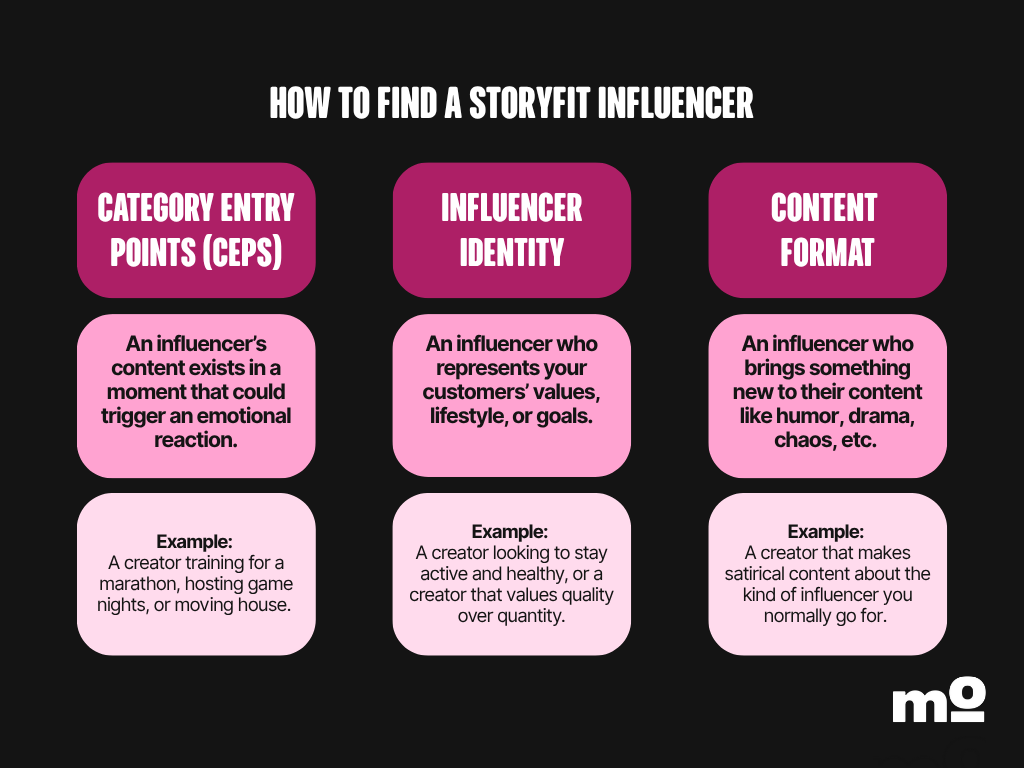
Storyfit creators. These are people who can tell your brand's story in a way that feels natural to them, even if they've never posted about your category before.
There are three ways to find them:
None of those people are your typical hot sauce influencers, but all of them could sell a lot of hot sauce.
Storyfit doesn't have to mean a different audience. Sometimes it's just a different way of showing your product.
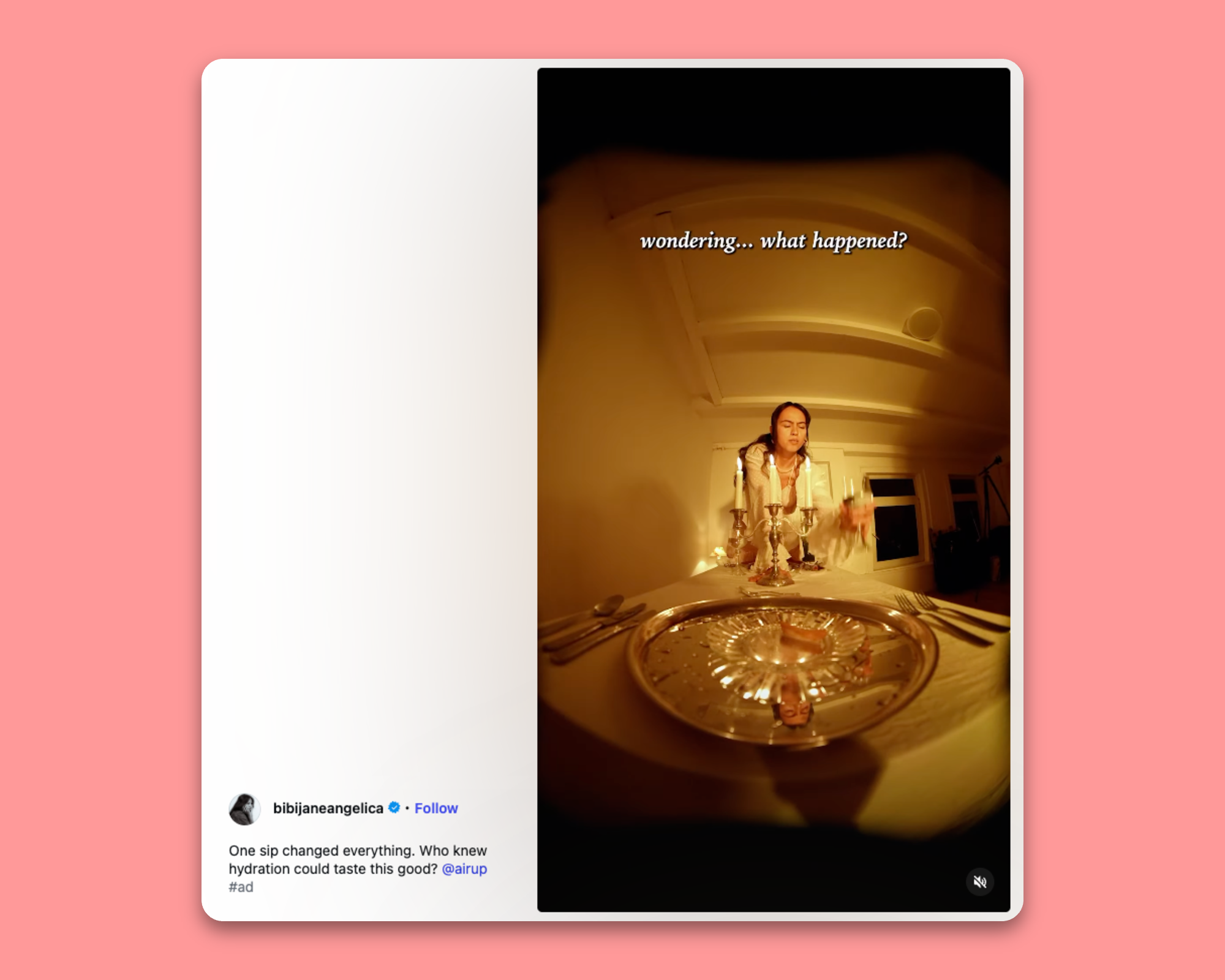
Take Airup, a water bottle brand. The obvious move would be gym creators and hikers – people filmed mid-workout, taking a big swig, and giving the camera a thumbs up.
Instead, they teamed up with Bibi-Jane Angelica, a filmmaker, a.k.a. someone who's really, really good at making things look cool.
And the result is nothing like a normal water bottle ad.
Now, I know what you're thinking. "Sounds lovely, but will it actually work?"
Fair question. And the data says yes: over 73% of marketers told us they've worked with a creator who overperformed despite being a mismatch on paper.
One of them was influencer marketing manager Nacho Selma. He was convinced a younger creator couldn't possibly sell shapewear designed for older women:
I thought there was no way an influencer could sell shapewear for older women, but it was the product she chose – and honestly, she ended up being one of the top performers in that campaign, which had several different products. It worked way better than I ever imagined!
The funny thing is, most marketers already buy into this. A massive 91.2% say they're open to trying unconventional creators, yet fewer than 36% actually work with them on every campaign.
So nearly everyone likes the idea, and hardly anyone does it…
Which is good news for you. While your competitors are all bidding on the same 15 faces, there's a huge pool of creators on Instagram that barely anyone's looking at.
🤓 Further reading: Want to go deeper? Our guide to finding storyfit influencers walks you through all 3 routes in more detail, plus how to vet storyfit creators before you commit.
Think back to the table at the top of this post and all those "nopes" in the audience data column.
Almost every free method tells you who a creator is and nothing about who follows them. So at some point, you've gotta go and find that out yourself.
And it's slow going.
Most marketers in our survey spend 5–15 minutes checking a single profile. That's fine for 10 creators. For 100, you're looking at two or three full working days of squinting at follower lists.
It gets worse if you have to ask creators for their numbers.
But you can't skip it. This step turns a huge list of names into an actual, decent shortlist.
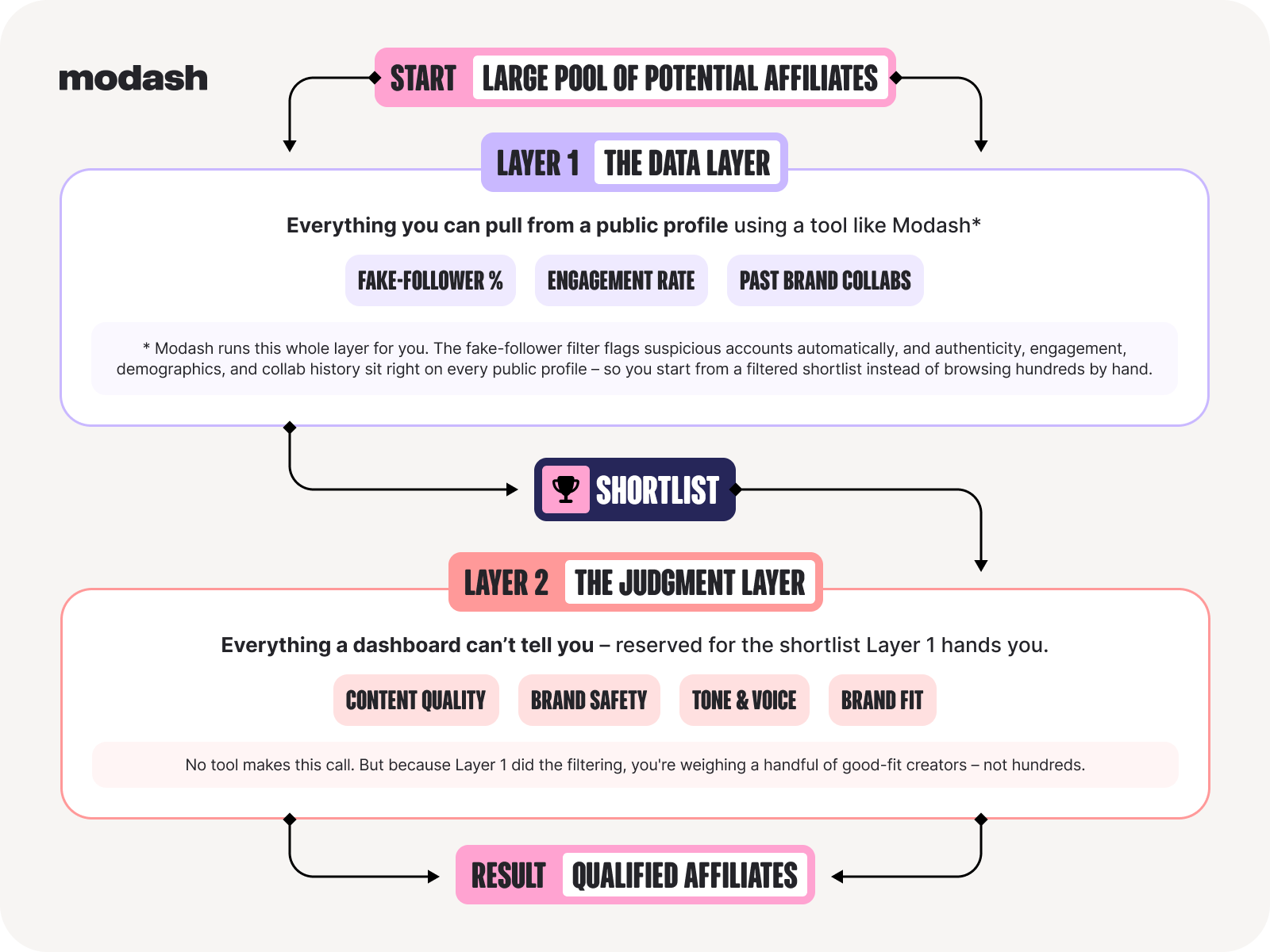
To keep things simple, break vetting into two checks:
If you're looking at a storyfit creator, there's a slightly different test with three parts:
The data side is where a tool saves you a ton of time. In Modash, every creator profile shows you their fake follower percentage, where their audience lives, how old they are, and how good their engagement really is. All on the same screen.
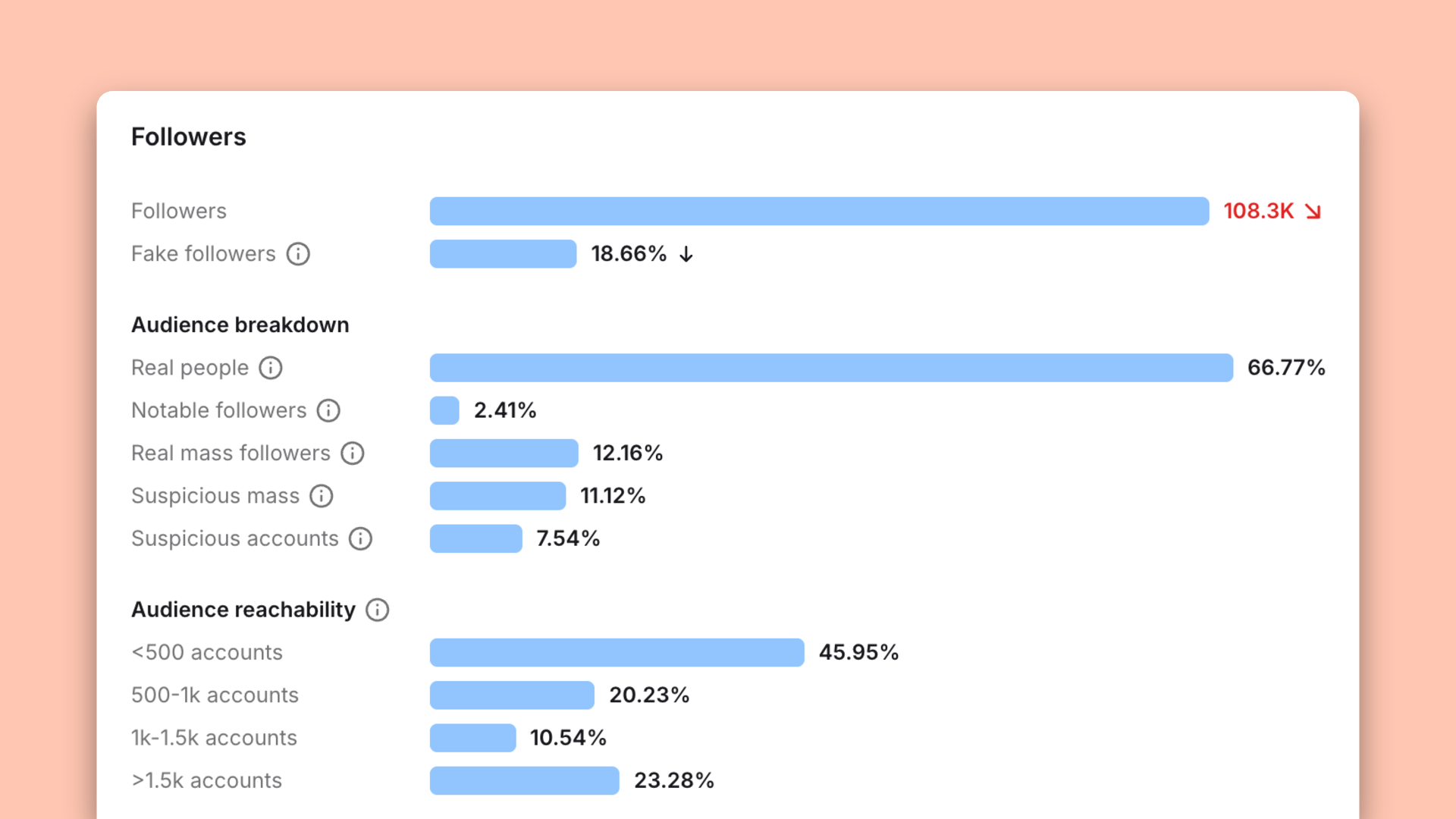
The vibe check, though? That’s still down to you.
Go and read their comments. Watch two or three of their sponsored Reels. Are real people asking "where can I get this?" Or is it just a row of fire emojis from other creators? You'll get a feel for it pretty quickly.
🤓 Further reading: For a full walkthrough, check out how to analyze influencer profiles.
Instagram is never, ever going to run out of creators to show you.
So collecting more handles isn't the flex you think it might be. Instead, the real holy grail is a shortlist you'd happily bet your budget on, and that only comes from doing the step that’s really tempting to skip: qualifying.
That's a whole lot easier when you can search and vet in the same place. With Modash, you can search every public Instagram creator with 1k+ followers, then check their audience and fake follower percentage before you send a single DM.
And once you've got your shortlist? You don't have to go and stitch five other tools together. Modash handles the rest too:
Ready to give it a go?
👉 Start your 14-day free Modash trial – no credit card needed!
Search keywords and switch to the Profiles tab, browse Explore, tap the chevron for "Suggested for you," check your Tagged tab, and see who your competitors work with. It won't cost you a penny, but none of it tells you anything about a creator's audience, so you'll need to vet them separately.
Instagram's own Creator Marketplace is free, though it's only open to brands in eligible countries and only lists creators who've opted in. You can also try Modash free for 14 days to search every public Instagram creator with 1,000+ followers.
Type your niche into Instagram search and head to the Accounts tab, since most creators put what they do in their name field. If you want to narrow it down by audience too, a database like Modash lets you filter by bio keywords, hashtags, and follower demographics at the same time.
Look out for sudden jumps in follower count, comments that are all emojis or generic praise, and engagement that seems way off for their size. For a faster answer, run their handle through Modash's free fake follower checker to see what percentage of their audience looks suspicious.
There's no magic number. A creator with 8,000 followers who trust every word they say will often outsell one with 800,000 who barely notice their posts, so focus on audience fit and engagement over size.
A storyfit influencer is a creator who can tell your brand's story authentically, even if they're outside your niche. Think a mom creator promoting a meal delivery service, or a filmmaker making a water bottle look like the coolest thing you've ever seen.
Our expert contributors