

More tools
Use cases




The creator economy has a data problem. The volume of social content generated daily is staggering (projected to underpin a $480 billion market by 2027), yet access to that data has never been harder. Platforms tighten their walled gardens. Official APIs throttle and restrict. Scraping tools age overnight.
What makes this especially tricky for AI development is the shift toward agentic workflows. AI agents don't query APIs the way humans click buttons. They make probabilistic, autonomous decisions about what data to fetch, when to fetch it, and how to chain results across multiple tool calls. There's also the discovery gap to think about. It's the fundamental mismatch between AI-scale exploration and human-gated data access.
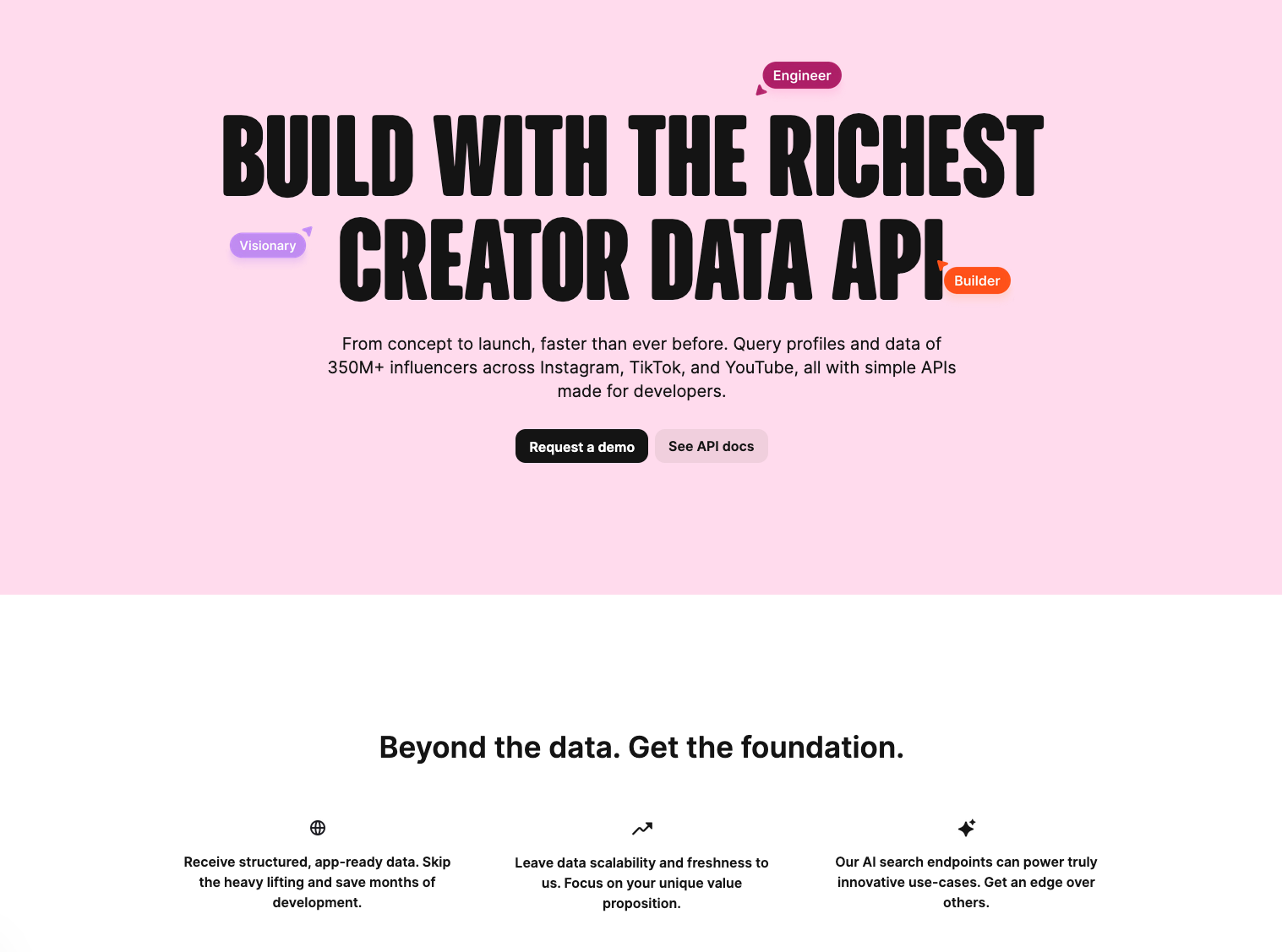
Modash runs on a pipeline that continuously indexes over 350 million profiles across Instagram, TikTok, and YouTube. When a developer or an AI agent submits a query, the response comes back in milliseconds against an already-optimized, structured database. It's the closest thing the market has to a turnkey data layer for AI.
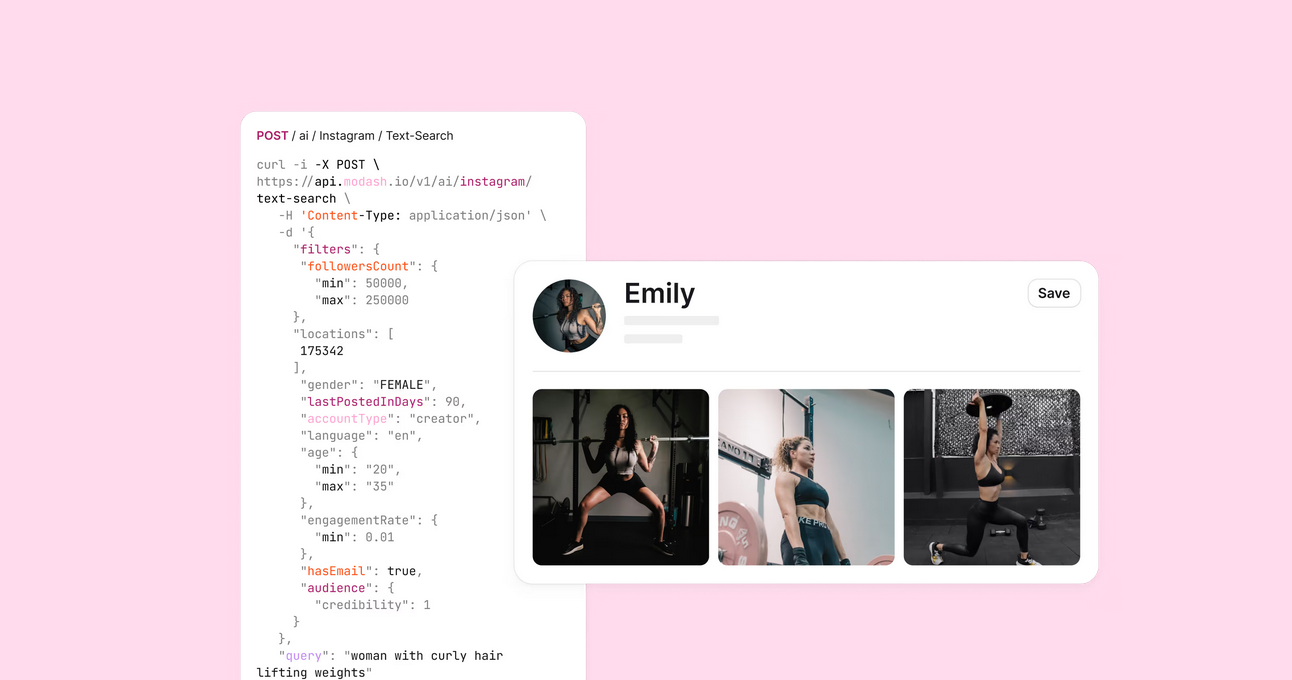
The semantic search is worth calling out specifically. Because Modash indexes the full text of bios, captions, and hashtags alongside visual metadata, an agent can query for a concept like "sustainable living working moms in Paris" and surface relevant creators. The lookalike engine extends this further: feed in a seed profile, and the API returns creators who are statistically similar based on graph overlap and content similarity. There's also a dual API setup with a pre-processed Discovery API for RAG retrieval and a Raw API firehose for live comments and post metadata.
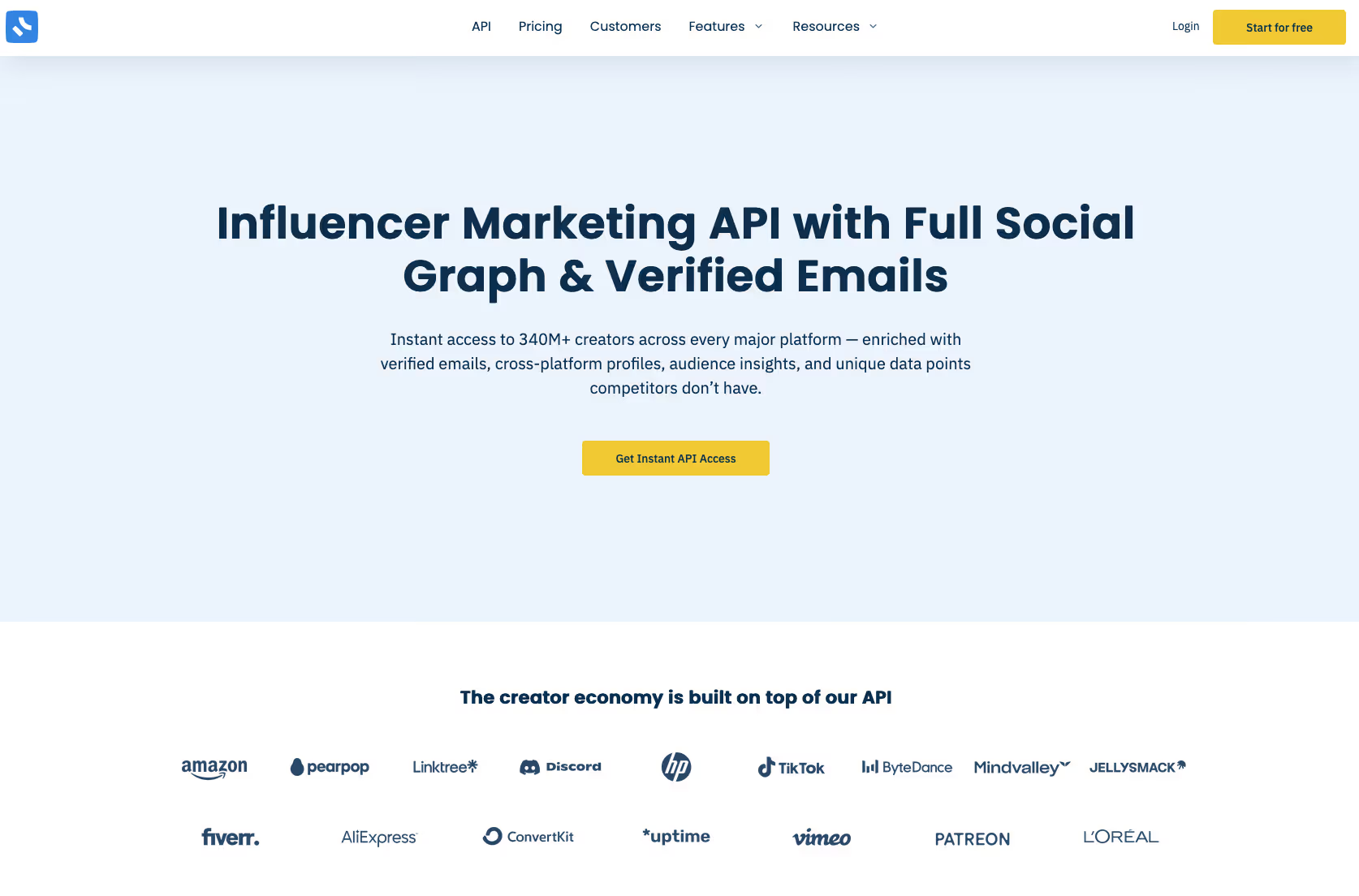
Influencers.club covers 340 million profiles across 47 platforms, including Discord, Patreon, Twitch, and Reddit. It's built for teams that need a complete view of a creator's digital footprint without stitching together dozens of separate integrations.
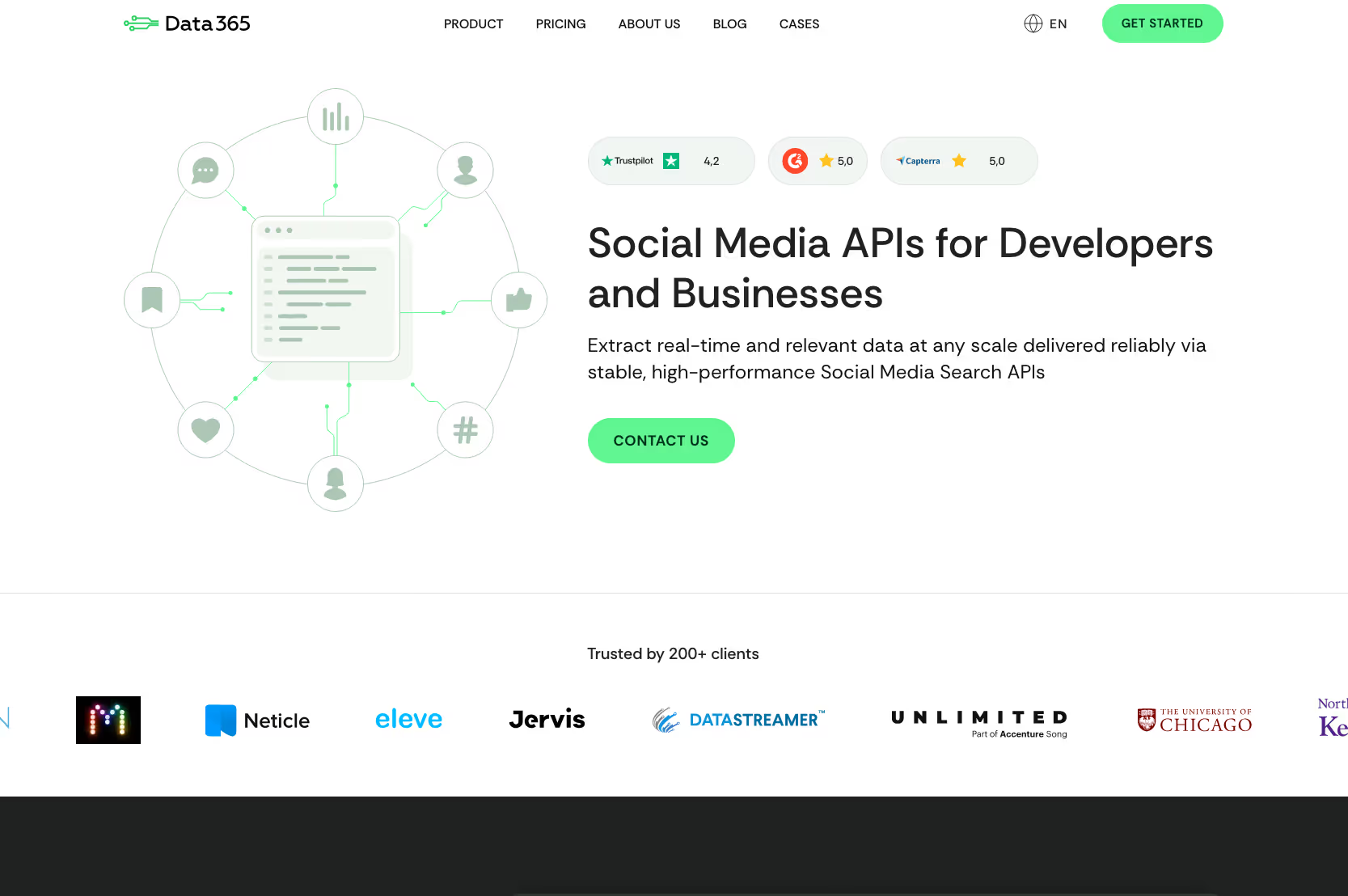
Data365 isn't a marketing platform at all. It's an extraction infrastructure. It delivers unstructured JSON for posts, comments, and profiles across Instagram, Twitter, Reddit, TikTok, and LinkedIn.
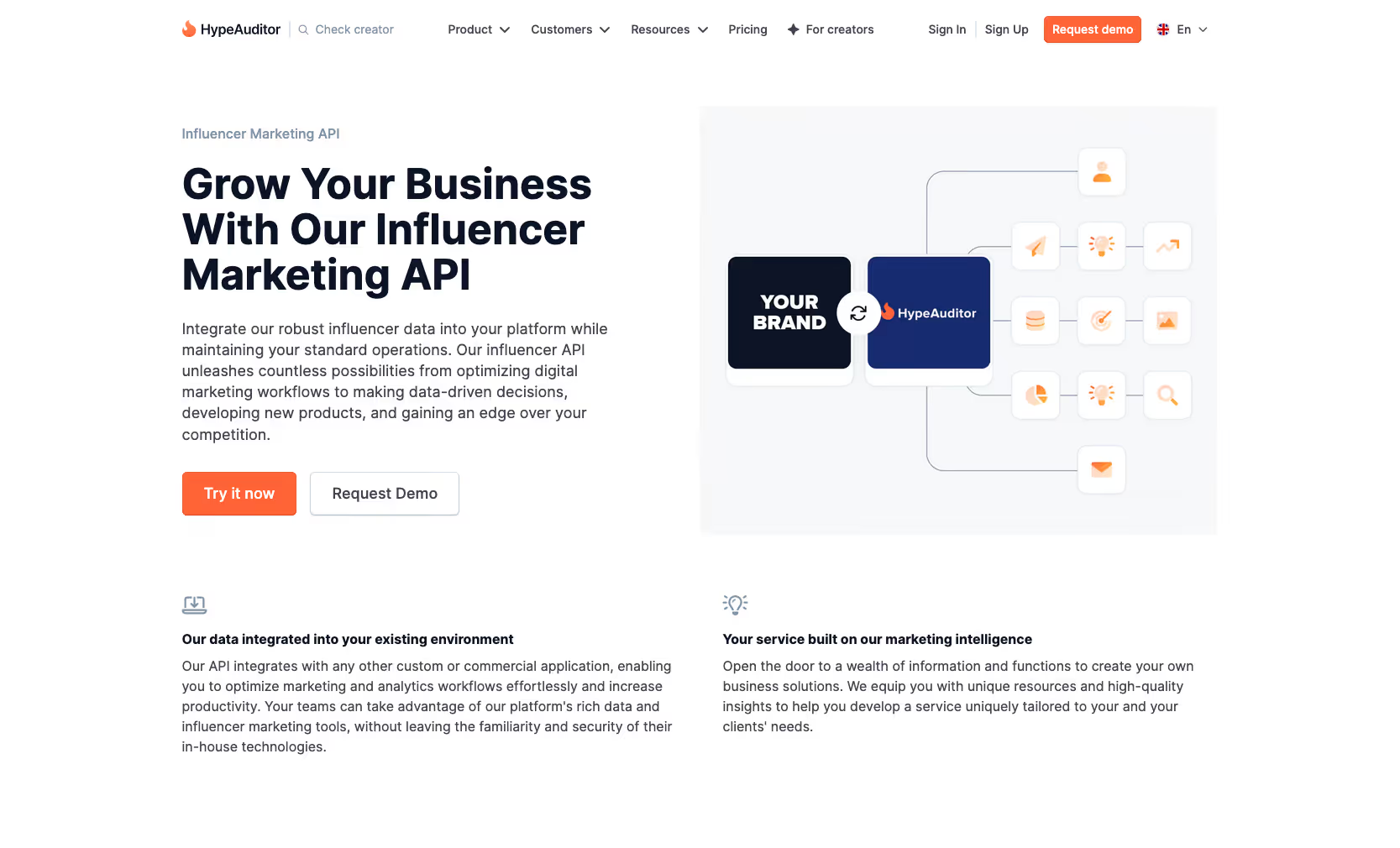
HypeAuditor tracks 219 million profiles across five platforms, using ML models trained specifically to detect artificial engagement. For AI agents building outreach lists autonomously, the Audience Quality Score endpoint acts as a programmatic quality gate.
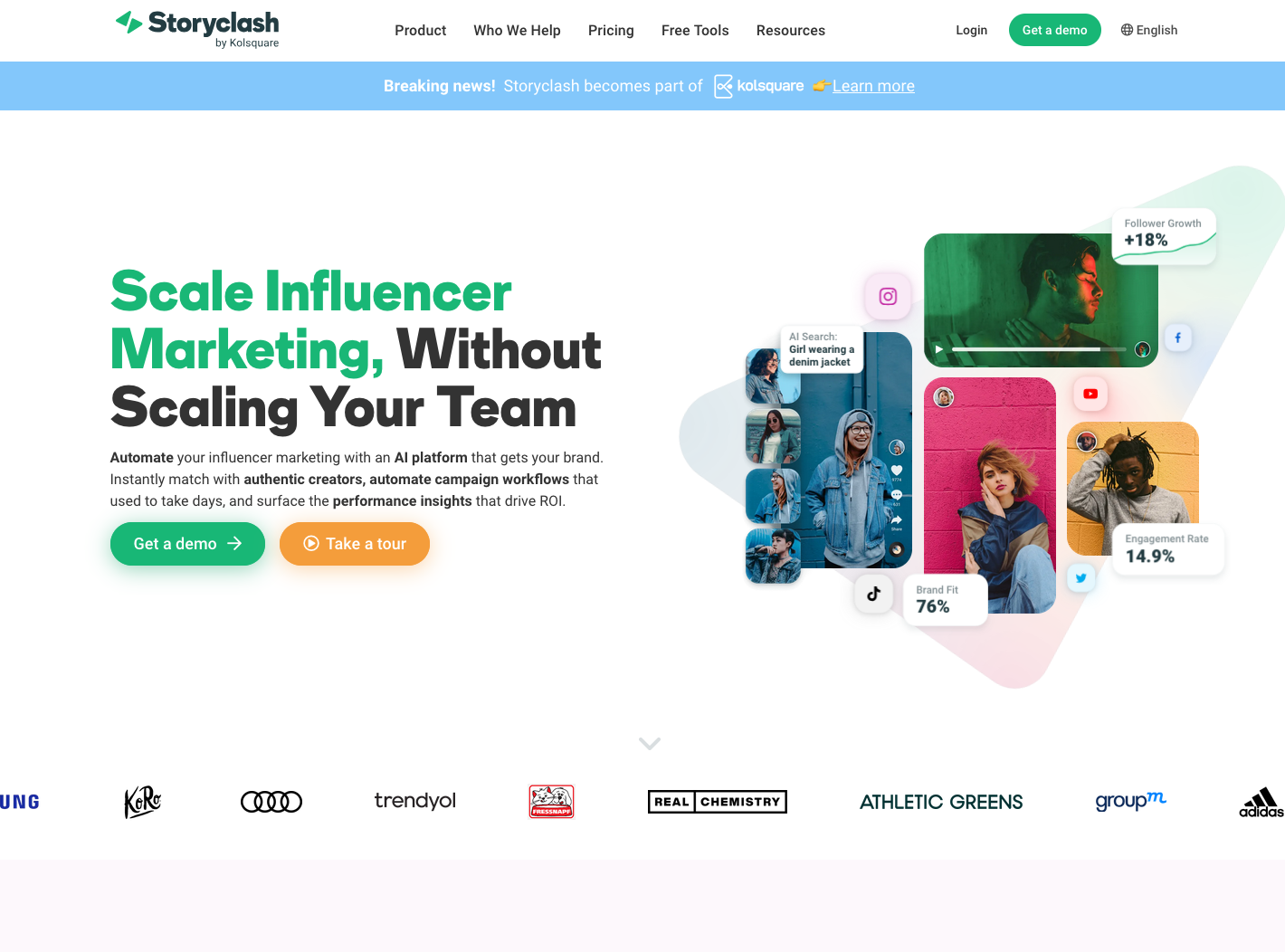
Storyclash brings neural visual search to creator discovery. Pass a reference image or a product URL, and the API returns creators generating visually and contextually similar content. It also archives content such as Instagram Stories, enabling AI agents to analyze temporary campaign placements that would otherwise disappear.
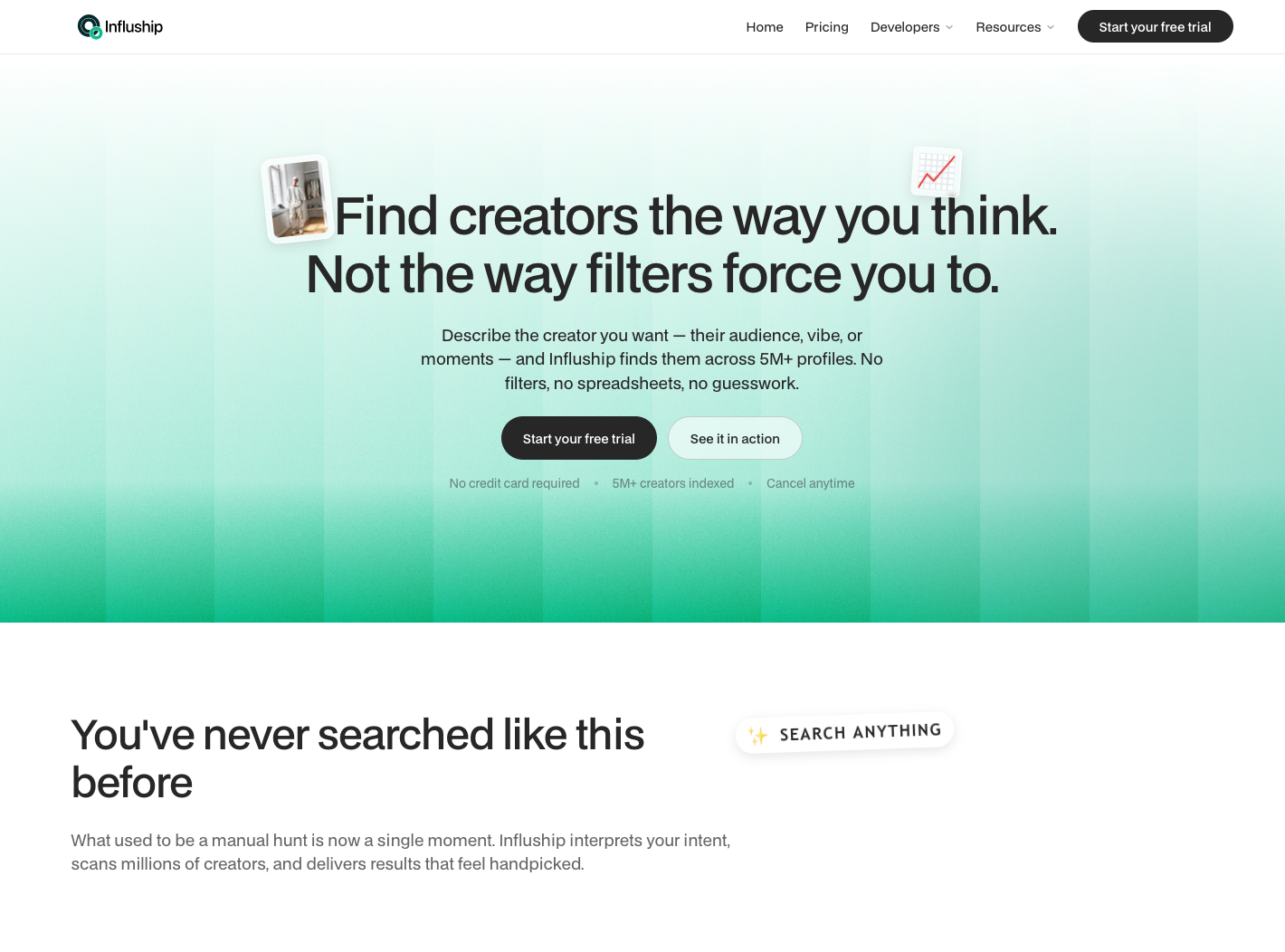
Influship takes a different stance from most providers: open access with minimal authentication barriers. It focuses on Instagram and tracks around 5 million creators, prioritizing speed and natural language search over broad cross-platform coverage. The API is specifically designed to feed scalable outreach programs and slot into custom CRM workflows with minimal setup.
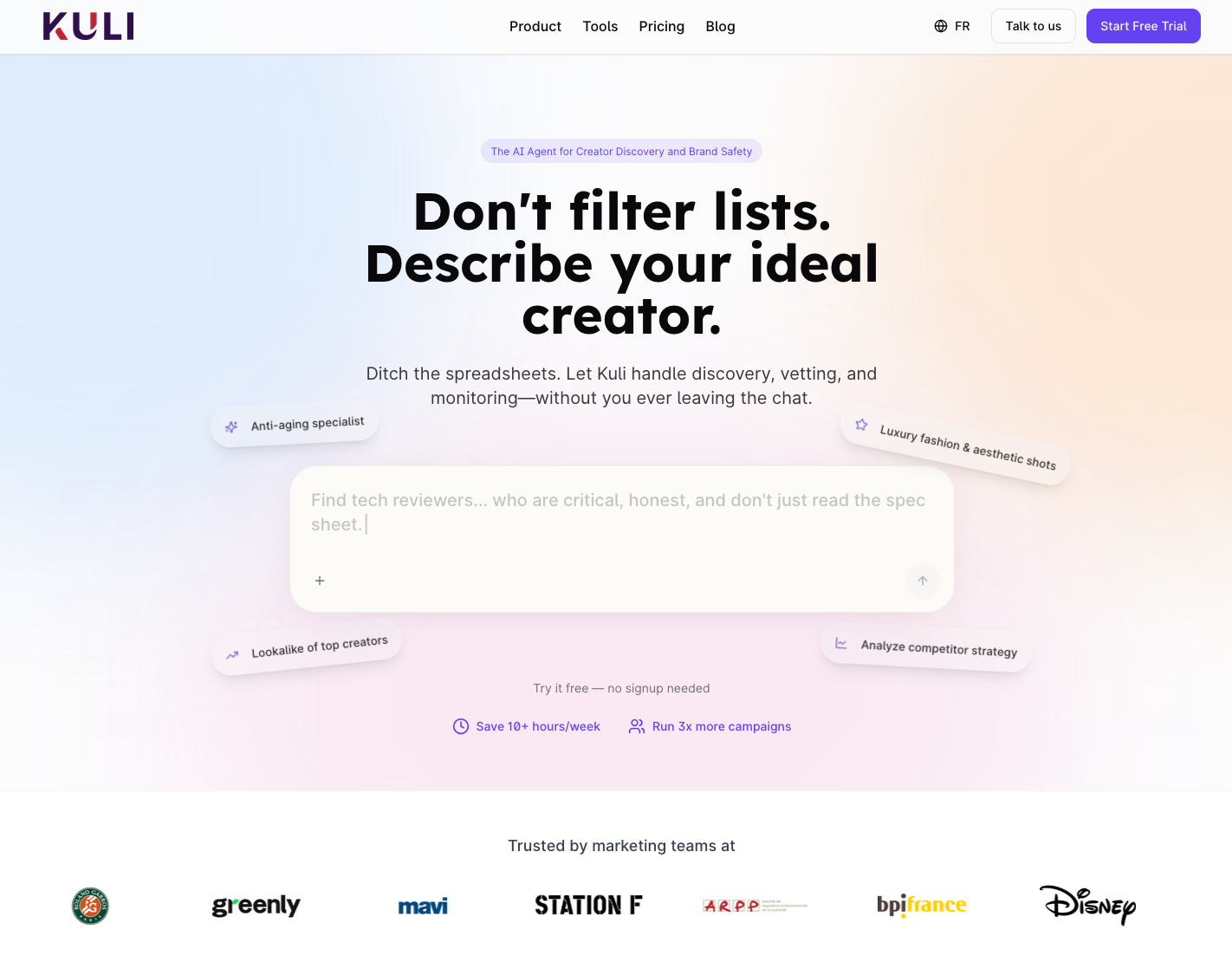
Kuli is less of a data API and more of a discovery intelligence engine. Its Video Intelligence system analyzes content frame-by-frame, extracting quality signals like watch completion rates, production trajectory, and authenticity markers.
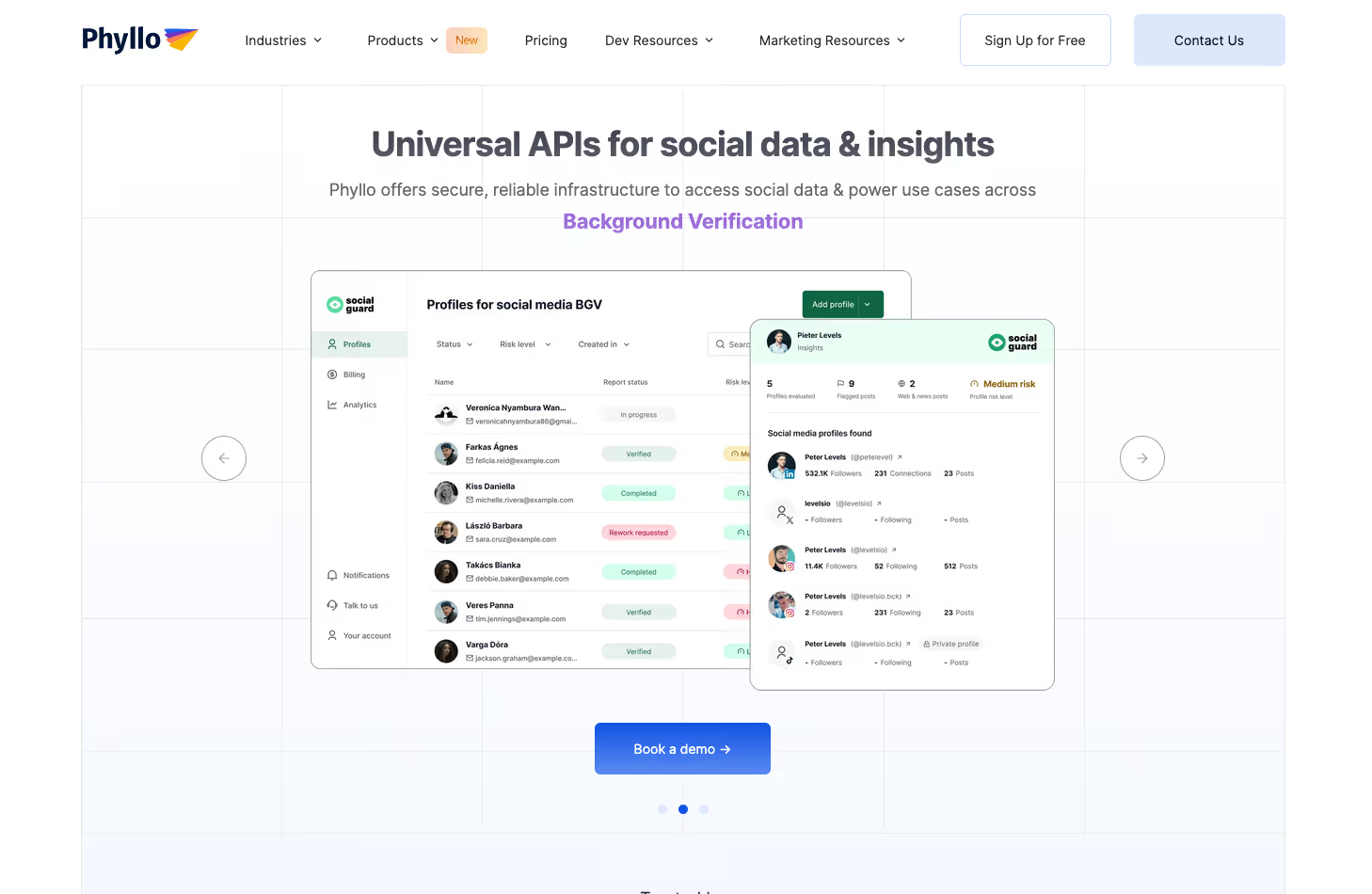
Phyllo is architecturally different from every other provider on this list. It's an OAuth gateway that requires the creator to authenticate and grant the developer first-party access to private data. That makes it the right call for high-stakes environments like real-time revenue reconciliation.
Picking the right API is only half the problem. How you connect it to an AI agent matters just as much. Dropping a REST API call into a plain text prompt and hoping the LLM figures out the parameters is a reliable path to hallucination, invented values, and burned API credits. There are three patterns worth knowing about.
The MCP gateway
The most future-proof approach is building an MCP server as a standardized intermediary between the LLM and the creator data API. Instead of writing custom wrappers inside the application logic, the MCP server exposes API endpoints as named tools with defined schemas.
Tool and function calling
For smaller, more contained systems, such as a single in-app copilot, direct function calling is a reasonable option. Modern LLMs are well-trained to output structured JSON schemas, so wrapping an Influencers.club or Influship endpoint into a typed function definition generally works.
Agent-to-agent (A2A) orchestration
For more complex workflows, the right pattern is to break the job into specialized micro-agents rather than loading a single agent with the entire task. Modash's dual API setup enables running a meaningful version of this entirely within a single provider. A Discovery Agent uses the semantic search endpoint to pull a structured list of matching profiles based on a concept query. A Lookalike Agent then selects the best-performing result from that list, feeds it into the lookalike engine, and expands the pool with creators statistically similar to it.
Each agent handles a smaller, more focused task, reducing the risk of hallucinations and making the system easier to debug. When the workflow needs to go further (fraud scoring, email enrichment, outreach), you layer in HypeAuditor or Influencers.club at the end of the chain.
Most use cases point back to one of a handful of providers. Here's the short version:
The creator economy's data challenge isn't going away. Platforms will keep restricting access, AI will make discovery more valuable, and the maintenance cost of scraping will only compound. Architectural laziness is expensive in this environment.
Data is both a commodity and a moat. The teams that win aren't the ones who collect the most of it. They're the ones who picked an architecture that lets them focus on building what their users actually value. Don't ask "Which API is cheapest?" Ask "Which API makes my AI agent actually work?"
The walled gardens will keep bricking up their gates. Your choice of data infrastructure determines which side of the wall you're building on.
Ready to decide? Get started with free trial credits: Book a call