

More tools
Use cases




Most mobile game influencer marketing advice stops at "work with micro-influencers" and "be authentic". We wanted to see what the biggest mobile game brands actually do, so we pulled the 50 most recent sponsored posts for each of the most-searched mobile game brands in the US and looked at who posted, how each deal was disclosed, and which posts took off.
Here's why mobile game brands work with creators, the commonalities in their strategy, and a step-by-step way to run your own campaign.
Creators do a few things for mobile game brands that ads and product pages can't:
These are the most-searched mobile game brands in the US, according to Ahrefs. Deal types show how each post was disclosed (for example, with a paid partnership label or an ambassador hashtag). Creator tiers: micro 10k–50k followers, mid-tier 50k–500k, macro 500k+.
| Brand | What they sell | Most common deal type | Typical creator size | Signature tactic |
|---|---|---|---|---|
| Block Blast | Block puzzle game | Paid | Mid-tier | Brazilian creators joining one hashtag challenge |
| Genshin Impact | Open-world fantasy RPG | Paid | Mid-tier | Cosplayers building props for new characters |
| Monopoly GO | Mobile board game | Paid | Macro | Big comedy creators rebooked for each season |
| Pokémon GO | Location-based mobile game | Paid | Mid-tier | Creators invited to its GO Fest events |
| Vita Mahjong | Mahjong puzzle game | Paid | Micro | Small local creators in four countries |
37 of Block Blast's last 50 sponsored posts carry #desafioBlockBlast, a challenge it ran with Brazilian creators over 11 days in December. Most of those creators don't post about games at all: a barber, a muralist and a motorcycle tuner all joined in. 28 of its creators are based in Brazil and 6 in the US, all 50 posts ran on TikTok, and none use a code.

What to take from it: Let creators fit your game into the format they already make. An ASMR creator with 329k followers mentioned playing Block Blast while showing a week-dried crystal candy, and it got 5.2M plays, Block Blast's most-viewed post.
Genshin Impact's last 50 sponsored posts go back to October 2024, and 8 come from one cosplayer, @kamuicosplay, building props like a light-up sword with almost 300 LEDs. Others land on update days: 7 went live on May 20 for version 6.6 and its new character, Nicole. 14 include a code for free in-game items like Primogems, and its creators are spread from the US (6) and the UK (3) to Indonesia (2) and the Philippines (2).

What to take from it: Pay creators to make something, not just to play. @kamuicosplay's finished Mavuika sword got 4.9M plays and 488k likes, Genshin Impact's most-viewed post.
Monopoly GO books big names: its median creator has 2.0M followers, and only one of its 32 creators has fewer than 50k. Posts land in waves around each collab or season, from Marvel's Fantastic Four (7 posts) to The Simpsons (3), and 10 went live on August 27 and 28 as creators tagged each other into a push about choosing GO! friends. 9 of its 32 creators posted more than once, 28 are based in the US, and all 50 posts ran on TikTok.

What to take from it: Run one storyline across many creators so each post feeds the next. In the August GO! friends push, the only creator with fewer than 50k followers got 8.3M plays, more than 200 times their following.
20 of Pokémon GO's last 50 sponsored posts mention GO Fest 2026, from creators at the events in Chicago, Copenhagen and Tokyo to Indian creators promoting its global weekend in July. Another 10 mark Pokémon's 30th anniversary, most using a new camera feature to take a photo with a favorite Pokémon. 8 posts were labeled as gifted, often for free event access, its creators are based in the US (26), the UK (3) and India (2), and none use a code.

What to take from it: Show who your game brings together. A creator with 52k followers filmed a kid out-catching them on shiny Pokémon at GO Fest Chicago, and it got 321k plays, the most of any post filmed at a GO Fest event.
All of Vita Mahjong's last 50 sponsored posts went live between April 14 and May 16, and 48 carry a country hashtag: #VitaMahjongonBeat in Indonesia (14 posts), #stayvitamahjong in the Philippines (15), #SayVitaMahjong in Brazil (12) and #Focusvitamahjong in Mexico (7). Most captions just tag the game on top of the creator's usual videos, from pranks to cooking to a night swim. 20 of its 36 creators with a follower count have under 50k followers, and its creators are based in Indonesia (13), the Philippines (9), Mexico (4) and Brazil (3).

What to take from it: Spread the budget across many small creators. A creator with 14k followers got 1.6M plays and 388k likes, Vita Mahjong's most-liked post, while its biggest creator, with 3.5M followers, got 77k plays.
Looking across all 250 posts, four patterns stand out:
Here's how to run a campaign step by step, using what the top mobile game brands do at each stage.
Decide what the campaign is for before you pick a single creator, because the goal changes who you book, how you pay them and what you ask them to post. The top mobile game brands' posts show both goals at work. Genshin Impact's download-and-redeem-this-code posts and Pokémon GO's download-and-play posts are built to drive installs. Monopoly GO's Fantastic Four skits and Pokémon GO's 30th anniversary photos are built for reach.
Pick one metric per campaign so you can compare creators fairly afterwards.
Follower count is the last thing to filter on. A Pokémon GO player with 2k followers posted catching a perfect-stat Mewtwo at GO Fest Copenhagen and got 10k plays, nearly six times their following, because their followers are players who know how rare that catch is. Across all five brands, creators under 50k followers got about one and a half times the likes relative to their audience.
Our survey found niche micro-creators are outperforming mega-influencers: nearly 60% of marketers said niche influencers performed better in 2025 than in 2024.

You can also find mobile game influencers for free, for example by searching the hashtags your buyers follow.
Mobile game brands pay per post. Block Blast, Monopoly GO and Vita Mahjong disclosed all 50 of their last 50 posts as paid partnerships. Pokémon GO is the exception, with 8 labeled as gifted.
Commission-only is getting harder to sell, though. Over 23% of marketers in our survey said creators would take performance pay only if a flat fee came with it. If you run tiers, the average commission tiers in our affiliate research were 10%, 14% and 19%, and brands with more than one tier had more active affiliates.
The captions from the top mobile game brands point to three formats that carry most of their creator content:
Whatever the format, give creators the update or event date, the app store link and any in-game code players need, and ask them to show the game on screen.
Codes in mobile games unlock rewards, not discounts. Genshin Impact's creators shared codes for free Primogems, and the other four brands used no codes at all.
Codes also leak. In our affiliate marketing research, 47.6% of marketers said they struggle with code poaching, where a creator's code ends up on coupon sites.
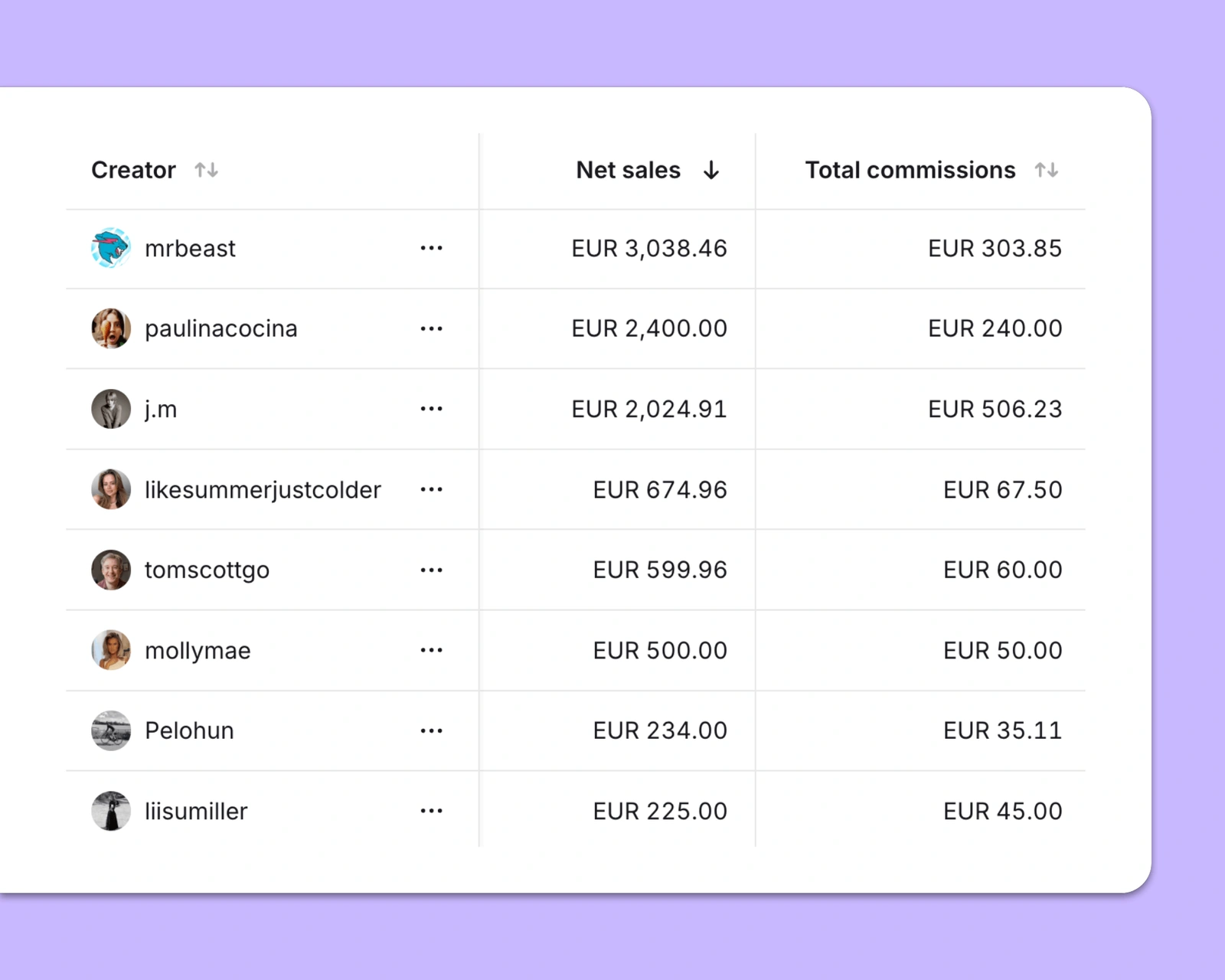
In Modash, each creator gets a tracked link and a code tied to your Shopify data, so sales from DMs, bios and stories all count toward the right person. Commission is calculated on net revenue after refunds and returns.
The top mobile game brands rarely rebook: only 26 of their 195 creators posted more than once. That's a missed chance in a category that ships updates every few weeks, where a creator who already plays has something new to show each time. Monopoly GO is the exception.
Most marketers want to do more of this. In our influencer marketing trends survey, over 60% said they plan to invest more in long-term partnerships, but only 54% actually ran more of them last year.
The top brands avoid a few mistakes that trip up smaller programs:
It depends on platform, following and engagement. Micro-influencers often work for free product plus a fee in the low hundreds per post, or an affiliate commission. Larger creators charge more. Many brands start with gifting plus commission to test fit before committing to flat fees. To estimate what a specific creator is likely to charge, drop their handle into our free Instagram influencer pricing calculator.
TikTok and Instagram split mobile game creator work: three of the five most-searched mobile game brands ran every sponsored post we analyzed on TikTok, and the other two ran theirs on Instagram. TikTok is worth testing first: in our survey, marketers rated TikTok videos the highest-performing deliverable (53.2%).
Block Blast, Genshin Impact, Monopoly GO, Pokémon GO and Vita Mahjong are the most-searched mobile game brands in the US, and all of them run active creator programs. See the breakdown above for who each one works with.
It depends on your goal. A launch chasing awareness leans bigger, a conversion play leans smaller and more trusted. In the mobile game posts we analyzed, creators under 50k followers got about one and a half times the likes relative to their audience size, so most brands should build their base with micro-influencers (10k–50k followers) and add bigger names for launches.
Track sales per creator with unique links and codes, then compare revenue against what you paid (fees, product and commission). Our engagement rate calculator and fake follower checker help you vet creators before you spend, and our guide to influencer marketing ROI covers the full calculation.
Find creators, manage relationships, pay them in 180+ countries and 36 currencies, and track every sale through Shopify – all in one place, with no fees taken out of creators' pay. Try Modash free, no credit card required.