Free virtual event: hear from influencer leaders at ŌURA, Adobe, Stanley 1913 & more.
See the lineup



Before you shortlist a single tool, figure out which program you're actually building. "Affiliate referral software" covers two very different motions: customer refer-a-friend programs (your existing customers sending friends a discount for store credit) and creator affiliate programs (partners promoting for a cut of tracked sales). They need different reward logic, different attribution, and different payout mechanics. Pick the wrong category and you'll spend months forcing a tool to do a job it wasn't built for.
This list covers 10 tools across both motions. I've weighed them on pricing transparency, integration depth (especially Shopify), attribution accuracy and reward flexibility. Some run refer-a-friend beautifully but stumble on creator commission logic. Others do the opposite. Here's how they actually differ.
| Tool | Best For | Pricing |
|---|---|---|
| Modash | In-house teams at Shopify brands managing creator affiliate programs end-to-end | From $199/month (annual) or $299/month (monthly) |
| Rewardful | SaaS teams on Stripe or Paddle launching affiliate programs fast | From $49/month |
| ReferralCandy | Ecommerce brands running referral and affiliate programs side by side | From $39/month + success fee |
| Referral Factory | Businesses automating branded customer referral programs without code | From $160/month |
| Tapfiliate | SaaS and ecommerce scaling affiliate, referral, and influencer programs | From $74/month |
| PartnerStack | B2B SaaS running affiliate, co-sell, and referral partner programs | Free Spark plan; main platform quote-based |
| Impact | Brands managing affiliate, creator, and referral partners in one platform | From $30/month |
| Referral Rocket | SaaS, fintech, ecommerce running refer-a-friend and affiliate programs | Free Starter plan; paid from $16/month |
| Post Affiliate Pro | In-house affiliate programs and full affiliate networks with precise tracking | From $79/month |
| Refersion | DTC brands on Shopify or WooCommerce running affiliate and ambassador programs | Free marketplace listing; paid plans from $29/month |
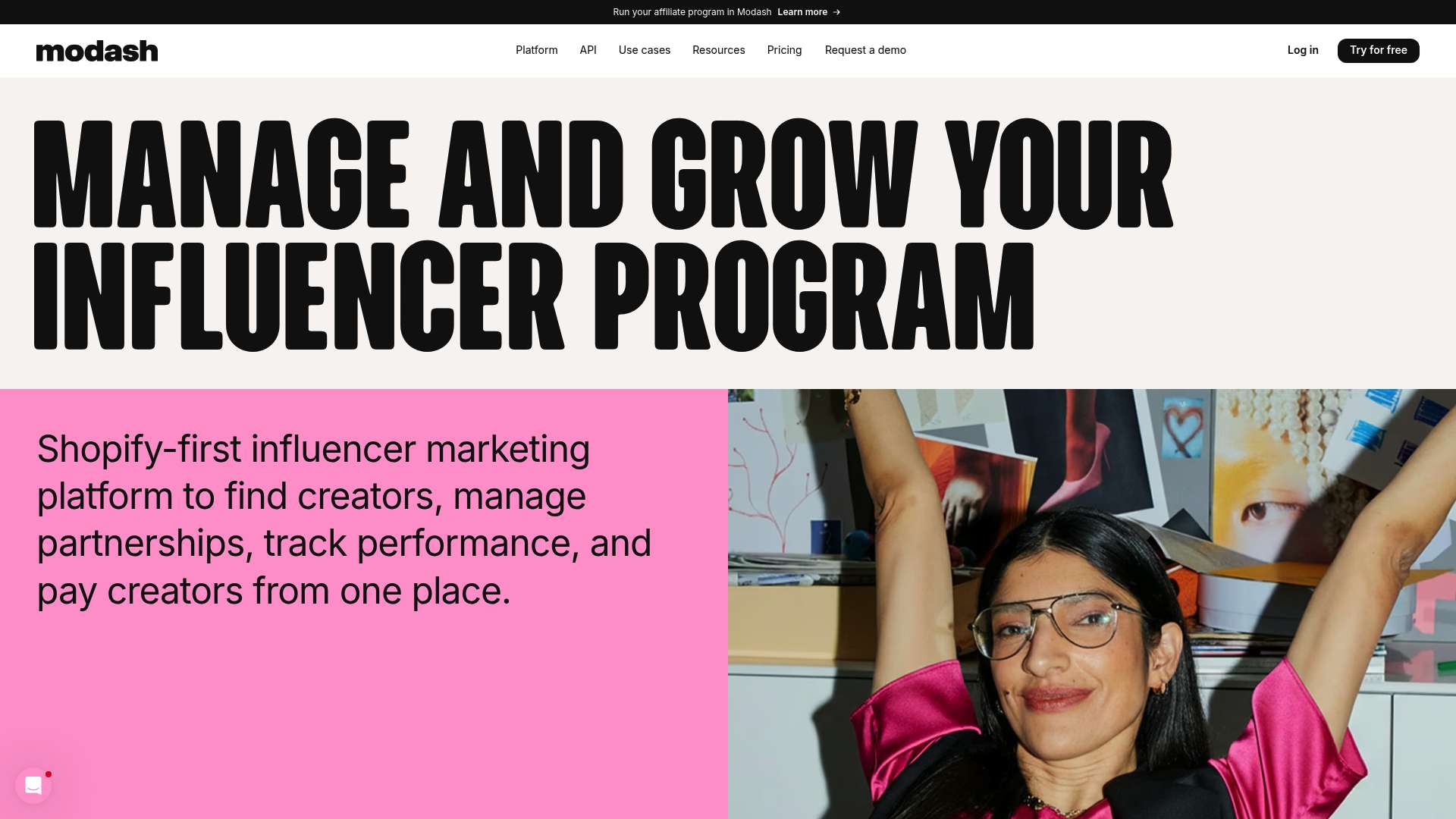
🥇 Best for: In-house marketing teams at ecommerce brands, especially on Shopify, who need to run a creator affiliate program end to end. Discovery through payment.
🤔 What is Modash?
Modash is an influencer marketing platform built for finding, vetting, tracking, and paying creators at scale. It covers the full lifecycle: discovery, outreach, campaign tracking, and global payments. The Shopify integration is where it earns its keep for ecommerce brands.
For affiliate referral specifically, Modash ties creator rewards to real Shopify orders. Each creator gets a unique discount code and a tracking link with UTM parameters. Commission is calculated on net revenue, after shipping, taxes, discounts, and refunds. So a refunded order doesn't quietly get paid out as a referral reward.
That matters more than it sounds. Most referral tools reward clicks or self-reported sales. Modash rewards revenue that actually landed, which makes the number defensible to both your finance team and the creator.
Key features:

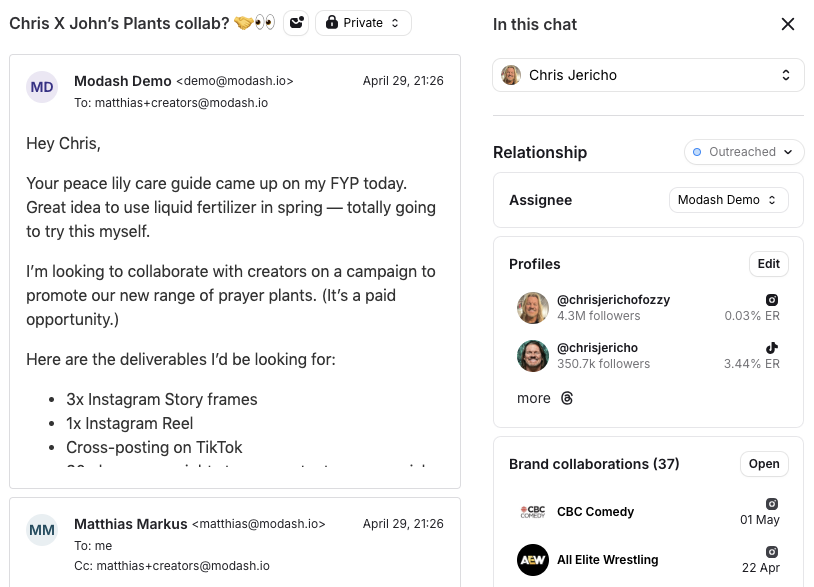

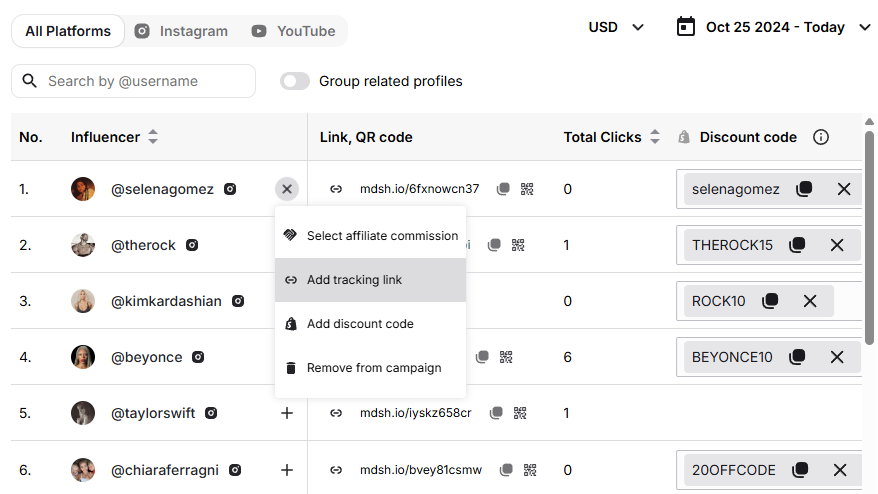

One thing worth calling out: Modash can guarantee a creator a minimum payout per cycle regardless of sales. That lets you offer an income floor while keeping performance upside, a hybrid most pure referral tools don't support.
Worth noting: Referral tracking works through the Shopify integration only. If your sales live on another platform, you can't track or reward them here. For Shopify brands that's a non-issue, but it does mean Modash isn't the pick if your store runs elsewhere.
Price: Starts at $199/month (annual) or $299/month (monthly). Free trial.

🥇 Best for: SaaS founders and marketers on Stripe or Paddle who want an affiliate program live in minutes, not weeks.
🤔 What is Rewardful?
Rewardful is affiliate and referral software built around Stripe and Paddle. It syncs your billing data automatically, tracks conversions, and manages payouts. Most teams have a program live in under 15 minutes without touching engineering.
Key features:
Worth noting: The Starter plan caps affiliate revenue at $7,500/month with one campaign. You'll need to upgrade to scale past that. It's also built around SaaS on Stripe rather than ecommerce.
Price: Starter $49/month, Growth $99/month, Enterprise $149+/month. 14-day free trial, 0% transaction fees on all plans.

🥇 Best for: Ecommerce brands, especially on Shopify, that want referral and affiliate programs running quickly without custom development.
🤔 What is ReferralCandy?
ReferralCandy is a customer acquisition platform for launching referral and affiliate campaigns in minutes. Branded pages, automated tracking, ROI reporting. You can run refer-a-friend and creator affiliate programs side by side in the same system.
Key features:
Worth noting: ReferralCandy leans more toward customer refer-a-friend than deep creator commission logic. If a tiered, revenue-based affiliate program is your priority, the commission depth here can feel comparatively light.
Price: Basic $39/month + 10.5% success fee; Grow $79/month + 3.5%; Scale $249/month + 1.5%; Enterprise $799/month + 0.25%. 7-day free trial.

🥇 Best for: Businesses with an existing base of loyal customers that want a branded referral program live without coding.
🤔 What is Referral Factory?
Referral Factory is plug-and-play referral marketing software. You build, promote, track, and reward customer referral programs using template-driven page builders and reward automation, then wire it into your CRM and payment tools.
Key features:
Worth noting: It's built for customer referral rather than creator affiliate commission tracking, and the Enterprise plan has no free trial.
Price: Basic $160/month (annual), Pro $320/month (annual), Enterprise from $800/month (annual). 15-day free trial on Basic and Pro, plus a 50% startup discount for qualifying businesses.

🥇 Best for: SaaS, ecommerce, and subscription businesses running affiliate, referral, and influencer programs from one platform.
🤔 What is Tapfiliate?
Tapfiliate tracks clicks, conversions, and commissions across affiliate, referral, and influencer channels. It ships with around 30+ pre-built integrations including Shopify, Stripe, and WooCommerce, plus flexible commission models and automation.
Key features:
Worth noting: The Launch plan is capped at 50 affiliates, 5,000 clicks, and 500 conversions per month, with overage fees beyond that ($1.50 per 1,000 extra clicks, $15 per 1,000 extra conversions).
Price: Launch $74/month (annual), Scale $149/month (annual), Enterprise is custom. Free trials from 7 to 30 days, depending on plan.
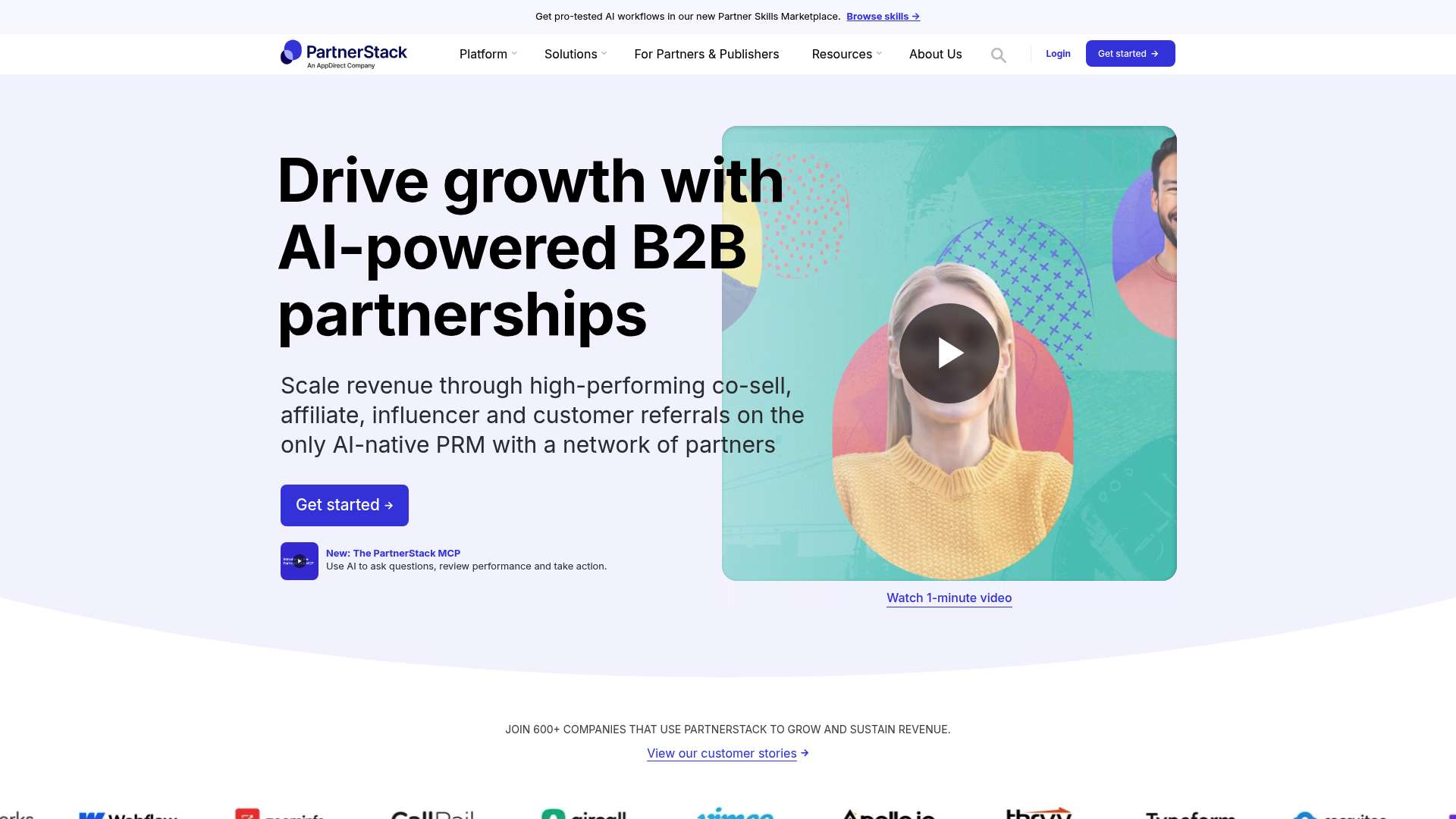
🥇 Best for: B2B SaaS companies running affiliate, referral, co-sell, and influencer partner programs from one platform.
🤔 What is PartnerStack?
PartnerStack is a partner relationship management platform built for B2B SaaS. You recruit, activate, track, commission, and optimize partner programs, with access to its own B2B partner network.
Key features:
Worth noting: The main platform pricing is quote-based and confirmed during a demo, so evaluating cost upfront takes a call. There's a free self-serve Spark plan at $0/month with a 10% processing fee on commissions.
Price: Spark $0/month (10% processing fee); Launch, Growth, and Enterprise are quote-based.

🥇 Best for: Brands and enterprise programs managing affiliate, creator, and customer referral partnerships from one unified platform.
🤔 What is Impact?
Impact is a partnership management platform to discover, manage, track, and pay affiliates, creators, and referral partners in one system. The focus is measuring which partnerships actually drive revenue, consolidating separate tools into a single dashboard.
Key features:
Worth noting: Partner Insights Reports and Attribution Risk Protection require the Enterprise edition.
Price: Starter from $30/month; Essentials from $500/month; Pro from $2,500/month; Enterprise via sales. 2.5% transaction fee on partner-driven sales.

🥇 Best for: SaaS, fintech, and ecommerce businesses launching automated refer-a-friend and affiliate programs with minimal development.
🤔 What is Referral Rocket?
Referral Rocket is referral tracking and affiliate marketing software. You launch automated refer-a-friend programs and affiliate campaigns, with commission tracking, affiliate portals, and automated payouts aimed at lowering acquisition cost through brand advocacy.
Key features:
Price: Free Starter plan (1 campaign, 3 affiliates, 10 referrals); Basic from $16/month; Pro from $33/month; Enterprise from $85/month when paying yearly.

🥇 Best for: Brands running in-house affiliate programs or full affiliate networks that need precise tracking and flexible commission structures.
🤔 What is Post Affiliate Pro?
Post Affiliate Pro is affiliate tracking software for building and managing in-house programs or entire affiliate networks. It's built around precise click and sale tracking with granular control over how you structure commissions.
Key features:
Price: When paying annually, Starter is from $79/month; Pro $129/month; Ultimate $249/month; and Network $599/month. A 30-day free trial is available.
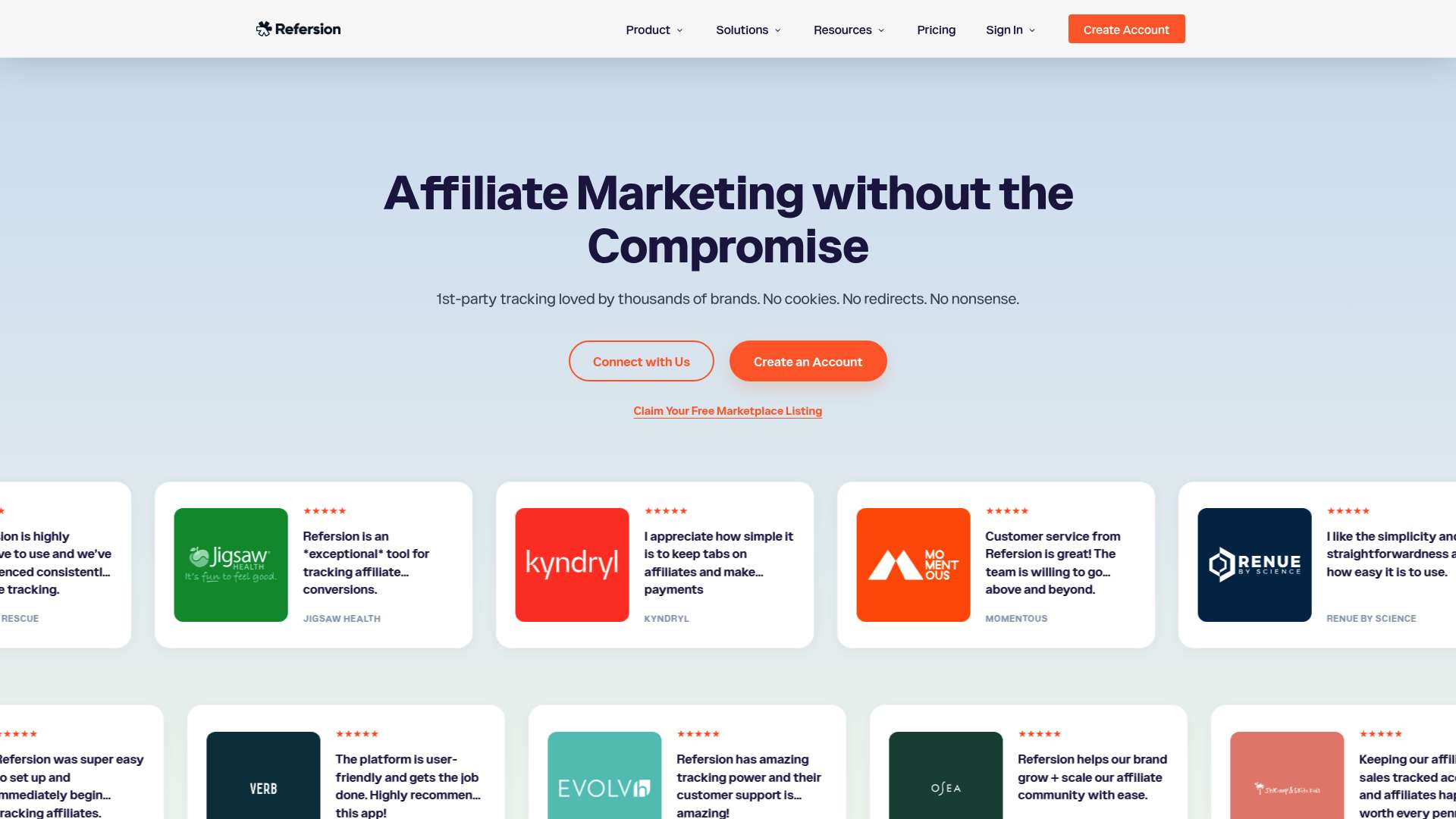
🥇 Best for: DTC ecommerce brands on Shopify or WooCommerce running affiliate, influencer, and ambassador programs without cookies or redirects.
🤔 What is Refersion?
Refersion is an affiliate and ambassador platform built for DTC ecommerce. It tracks sales through Shopify and WooCommerce without relying on cookies or redirects, which keeps attribution accurate as browser tracking gets stricter.
Key features:
Price: Free marketplace listing; Launch $29/month (+3% of affiliate driven sales); Growth $159/month (+2% of affiliate driven sales). Pricing based on annual billing.
After working through these tools, a few capabilities separate the ones that hold up from the ones that create work later. Here's what to weigh.
Revenue-based attribution, not click-based
The reward should track back to a sale that actually happened, ideally net of refunds, discounts, and returns. If a tool pays out on clicks or self-reported numbers, you may end up reconciling disputes by hand and defending payouts to finance. Codes taking priority over links, plus a defined attribution window, keeps credit clean when both fire on one order.
Payout controls that protect you from refunds
Hold periods, payout thresholds, and defined payout cycles exist for a reason. Without a hold period, a refunded order can get paid out as a referral reward before the refund clears. Look for controls that let you set a return-protection window and a minimum threshold before money moves.
Integration depth with your store platform
A deep integration ties partner activity straight to store revenue, auto-generates discount codes and tracking links, and calculates ROAS without you touching a spreadsheet. If you're on Shopify, this is the difference between a tool you run and a tool that runs itself.
What's the difference between a referral program and an affiliate program?
A referral program rewards existing customers for sending friends your way, usually with store credit or a discount. An affiliate program rewards partners (often creators) with a commission on tracked sales. They need different reward logic and different tracking, so decide which one you're building before you shortlist tools.
Can one tool run both a refer-a-friend and a creator affiliate program?
Some can. ReferralCandy and Impact both support customer referral and creator affiliate motions in one system. But most tools lean toward one side. Tools built for refer-a-friend tend to have lighter commission logic, while creator-focused tools handle tiers and revenue-based payouts better.
How does revenue-based commission actually work?
Instead of paying a flat amount per click or per sale, commission is calculated as a percentage of net revenue, after shipping, taxes, discounts, and refunds. Modash, for example, calculates against real Shopify orders. That makes the payout defensible to both your finance team and the creator, because it's based on money that actually landed.
Do affiliates have to sign up to have their content or sales tracked?
It depends on the tool. Some require creators to authenticate before you can see their content or attribute sales. Modash tracks content without any creator sign-up, which removes friction when you're onboarding partners at scale.
Which tool is best if I'm on Shopify?
Modash, ReferralCandy, and Refersion all integrate with Shopify. Modash ties creator affiliate rewards to net Shopify revenue and handles gifting, codes, and payouts in one system. Refersion offers cookieless sale tracking. ReferralCandy is strong if you want refer-a-friend and affiliate running together.
Start by naming the program. If you're rewarding existing customers for referring friends, a refer-a-friend tool like Referral Factory or ReferralCandy will get you live fast. If you're running a creator affiliate program on SaaS billing, Rewardful or PartnerStack fit the Stripe and B2B motions respectively.
If you're an ecommerce or Shopify brand rewarding creators on tracked sales, you want revenue-based attribution, refund-safe payout controls, and a real Shopify integration in one place. That's where Modash earns its spot, especially if you're already managing discovery, outreach, and payments and want affiliates handled in the same system rather than bolted on.
The honest trade-off: Modash tracks referrals through Shopify only, and program setup runs through Customer Success rather than being fully self-serve. For an in-house team scaling a creator program on Shopify, that's a fair deal for rewards tied to real revenue. Try Modash free and see how it fits your program.