


More tools
Use cases



Soooo you've run the campaign. The content was A+, the comments were glowing, and then you open the numbers…
1.2% conversion rate.
Is that bad? Good? Totally normal?
You have no idea!
And so you Google it. One article says 3% is the average, ChatGPT says 5%. Some bloke on LinkedIn reckons anything under 10% means you should sack your entire team.
The reality is, they could all be right…
…because the number changes depending on how you count it.
The exact same campaign can spit out 1% or 6% depending on what you divide by, what you count as a conversion, and how much of the buying journey you track.
Which means comparing your number to some random benchmark is a bit like comparing your marathon time to someone else's 5K.
In this guide, I'll show you how to calculate your conversion rate properly, what "good" looks like for you, and how to push it up. We'll measure it first, then improve it 👇
Influencer conversion rate is the percentage of people who did the thing you wanted them to do after seeing a creator's content.
The formula is:
Conversions ÷ the traffic or audience you're measuring against × 100.
Simple, right? Weeeell, not quite. It all depends on what you divide by.
Say a creator with 50,000 followers posts a Reel, reaches 20,000 people, gets 800 clicks, and drives 32 orders:
These are numbers for the same creator, the very same Reel, and the same 32 orders.
As you can see, they are veeeery different.
Clicks are the tightest (and most common) denominator, because they count people who showed some intent. They actually visited your site. It's also what most published benchmarks use, so it's your best bet if you want to compare your rate to anyone else's.
And “clicks” need pinning down, because there are 2 kinds:
Say a creator drives 32 sales. Divide that by 800 total clicks and you get a 4% conversion rate. Divide it by 600 unique clicks and suddenly it’s 5.3% 😬
For most marketers, unique clicks are the better pick. You’re trying to work out what share of people bought, and someone who clicked three times is still just one person.
Regardless of which option you choose, stick with it. Comparing one creator’s unique-click rate to another’s total-click rate is apples and oranges.
Reach and followers are also fine as denominators for your own internal tracking, but know they'll always look teeny, and you can't compare them to a click-based rate.
They do have one good use: a reach-based rate helps you compare creators when there's no link to click, like a code-only Story or a YouTube mention.
For most ecommerce brands, a “conversion” means a sale.
But it could just as easily be an email sign-up, an add-to-cart, or a quiz completion for a pricier product.
That's because not every campaign is trying to make a sale on the spot.
If you sell a $900 mattress, nobody's buying it off the back of one Story, so getting them on your email list to nurture might be your goal.
There's no wrong answer here… just don’t go changing your goal halfway through the year.
If you counted purchases as a conversion in Q1 but switched to add-to-carts as a conversion in Q2, yes, it’ll look like your numbers have improved. But have they really? No, they haven’t. You’ve just done a very good job of moving the goalposts (with the added bonus of making yourself look better at the end of it 😉)
We know, it’s tempting. But… don’t. Pick one and stick with it in your reporting.
Your next question is probably…
I know, I know. You want a number.
And I'd love to give you one, I really would, but a single benchmark is a trap.
Your rate swings wildly depending on the denominator, the offer, the price point, the funnel stage, and how well the creator's audience fits your product.
A $25 lip balm with a 20% off code and that $900 mattress are never gonna convert at the same rate. Nor should they.
That said, here's something you can anchor to.
When fashion and homeware retailer Ellos switched to a performance-based program with 130 smaller creators, it pulled in $78,000+ in revenue at a 4% conversion rate.
And that is considered impressive.
So if your click-based rate is sitting somewhere in the low single digits, you don't need to panic.
But… take it with a pinch of salt. The case study doesn’t say what that 4% was divided by. Was it clicks, sessions, or something else? We don't know, so it's only a useful comparison if their math matches yours.
That's why the best benchmark is your own baseline.
Compare each creator and campaign against your historical rate and calculate it the same way every time.
Now you know the only benchmark is the one you set, let’s take a look at how you can track conversions.
Before you blame the creator, hear me out: a "low" conversion rate is very often a tracking problem rather than a creator problem. So let's check the plumbing.
First up, the top half of your formula: conversions.
There are a few ways to count them, but spoiler alert, none of them catches everything on its own, which is why the number you divide by matters as much as the one you’re dividing into.
Here’s what each method’s good at and bad at:
| Method | What it measures | Best for | Blind spot |
|---|---|---|---|
| Discount codes | Orders using a creator’s code | Cross-device shoppers | It doesn’t track click data and codes can leak to coupon sites, which means you might be wrongly attributing a sale to a creator |
| Tracking links | Clicks and the sales that follow | Getting click-level data per creator | Difficult to track people who switch devices during the buying journey |
| UTMs | Traffic source and behavior in GA4 | What visitors do after a click | The UTM tag can get removed from the link before someone buys, plus sales data is usually tracked via a different tool |
| Post-purchase surveys | How someone heard about you | People who saw a post but didn’t buy until later | It relies on shoppers’ memories |
Like we said, none of these are perfect on their own, so we recommend picking more than one (a link plus a code is the bare minimum).
If most of your creators post somewhere links are awkward (or impossible) to click (think TikTok videos, YouTube mentions, or Instagram feed posts), lean on codes. People are far more likely to remember "SARAH15" than go hunting for a link in a bio.
If your conversion rate looks lower than you'd expect, add a post-purchase survey.
A simple "How did you hear about us?" at checkout picks up any sales that came from creators but didn’t come via the link or code. It won't give you exact numbers, but it’ll fill in the gaps a bit.
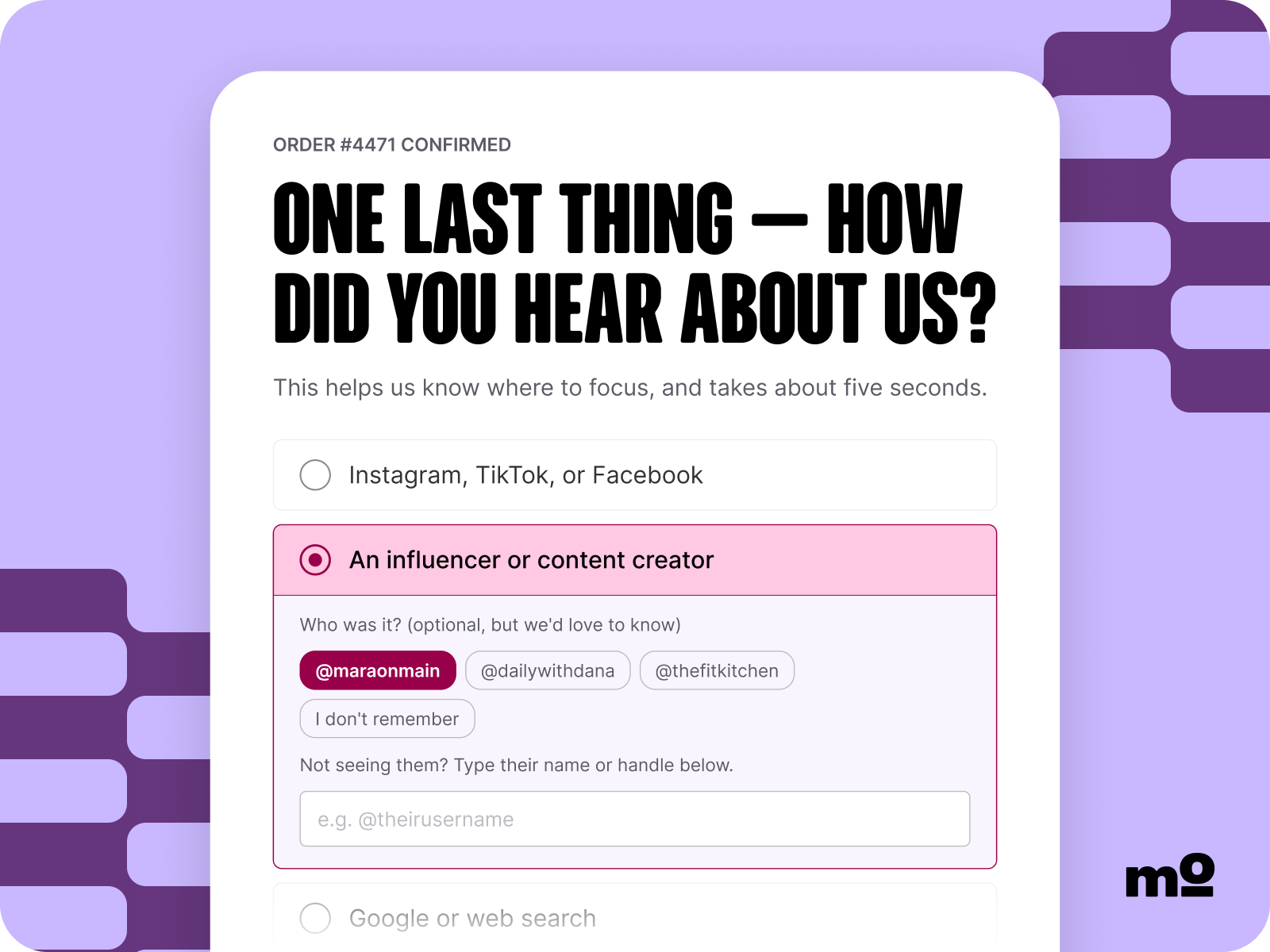
And if people are clicking but not buying, add UTMs. They let you see what visitors did once they landed on your site, so you can tell whether the problem is the creator's audience or your product page.
To get a very accurate conversion rate, you need to be able to see clicks and attributed sales for the same creator in the same place.
And… annoyingly, it’s rare to find those two things together.
Clicks tend to be in GA4, sales in Shopify, and the creator’s own stats are, well, probably buried in a screenshot that you now can’t find.
You can stitch it all together in a spreadsheet. This works fine for five creators, but if you’re trying to juggle 50 creators (and their accompanying screenshots) it can get a bit hairy.
This is where Modash comes in. Its campaign analytics show total and unique clicks right alongside attributed sales for each creator in a single dashboard.
When you have both halves of the formula side by side, you can do the math pretty quickly without needing to export and stitch anything.
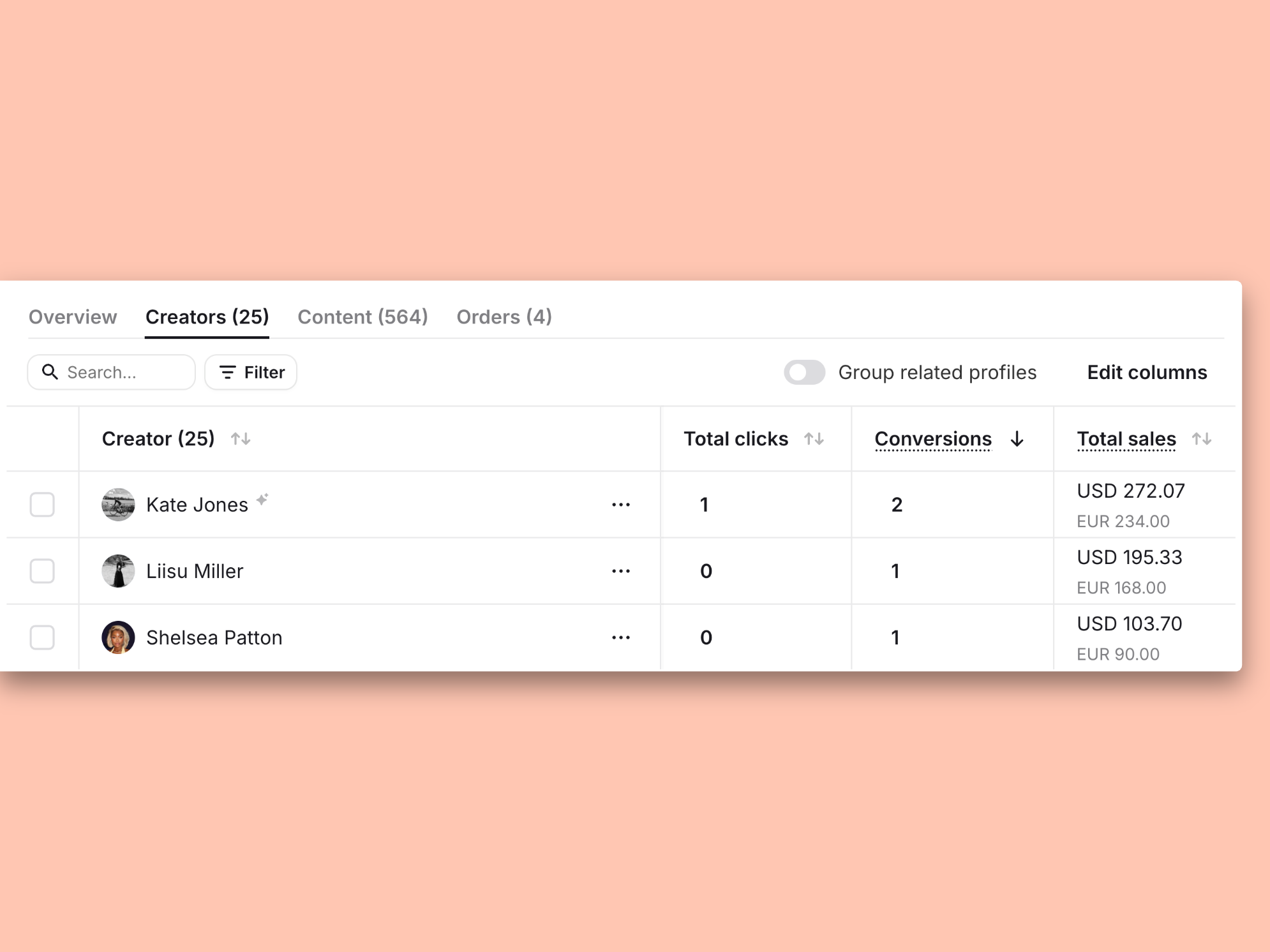
Having everything in one place helps, but some sales will still slip through the cracks – making your conversion rate look lower than it is.
If your sales are up but conversion rate still looks surprisingly low, it's probably down to one of these culprits:
And these aren’t always small leaks.
Influencer marketing consultant Andreea Moise says:
If you’re just relying on links and codes, roughly 50% – 60% goes untracked, especially if you don’t know how people buy or where.

Yep. More than half.
Attribution is fundamentally flawed, and no tool on earth will fix it completely. But there are ways you can make your conversion rate more accurate.
This is the biggest lever by a mile.
It’s nice to have a big audience, but big isn’t always better. Sometimes, you just need the right audience to convert.
10,000 followers who match your ICP perfectly is waaaaay better than 100,000 followers who aren’t gonna pick up what you’re putting down.
Trouble is, you can't tell who's following a creator by squinting at their grid (well, you can, but it would take a longggg time, and it’s probably not great for your eyes).
That's what Modash is for. Every creator profile in the tool shows you audience demographics, fake-follower rate, engagement, and past collabs, so you know what kinda people are in their follower lists.
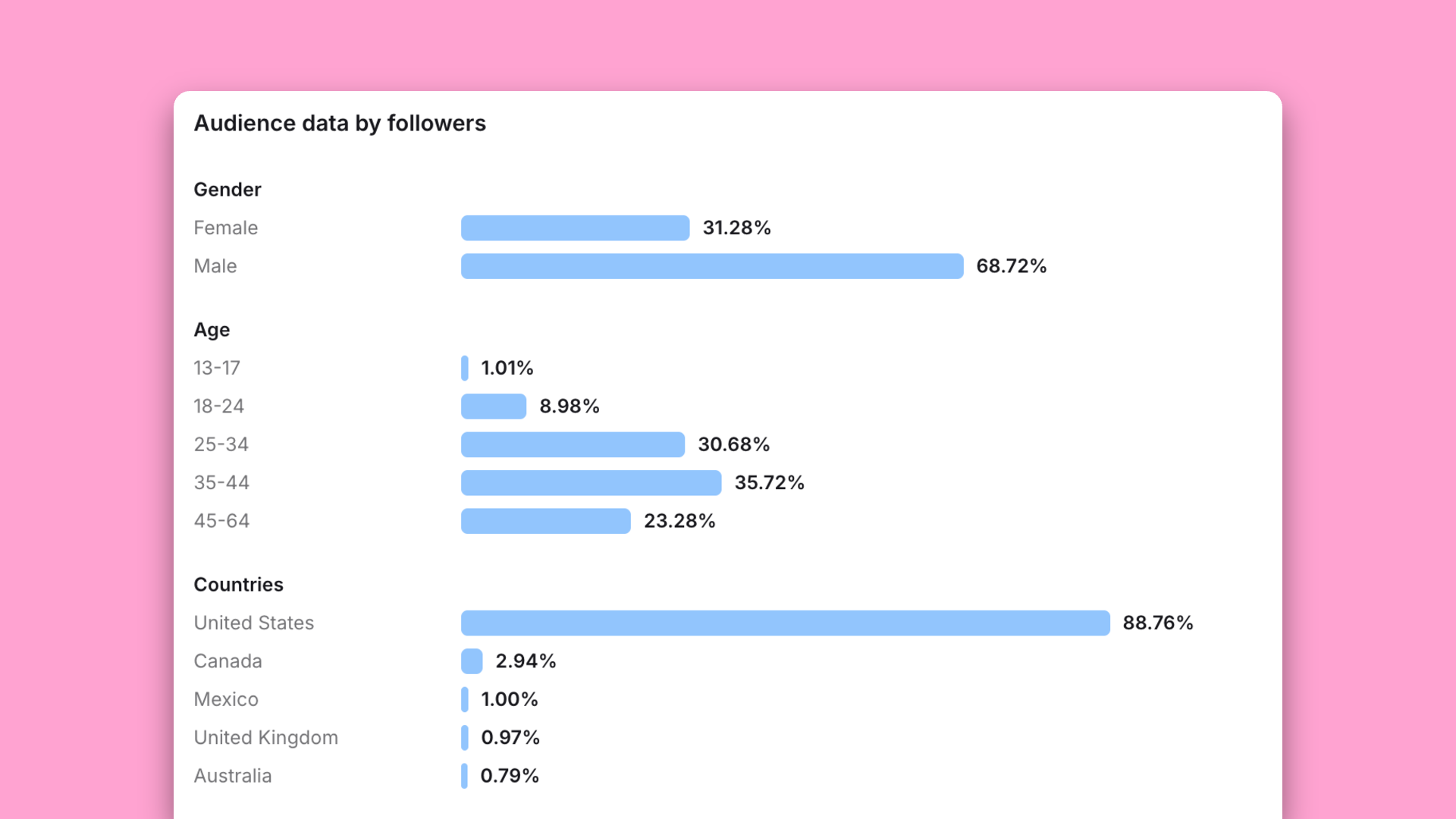
Then there are storyfit creators – one more way to stand out.
Niche creators are the obvious place to start, and for good reason. A skincare creator’s audience already cares about skincare. But if that’s the only place you look, you’re competing with every other skincare brand for the same creators, and the content can start to blend together.
Storyfit creators sit outside your usual niche, but they still reach the people you sell to and can show your product in a way that feels natural. Different niche, same customer.
Say you sell sunscreen. Alongside your skincare creators, you partner with a travel creator. They film a full day hiking in the sun, reapply on a windy clifftop, and show zero burn and zero white cast at sunset. It’s the same product but presented in a new context with a new audience seeing it work.
Storyfit creators still need to pass the fit check. A travel creator with an audience full of your ideal customers is brilliant. But if the same creator’s followers live where you don’t ship your products, the collab is unsuccessful.
This is where Modash’s AI creator search helps. Describe the creator you’re picturing in plain English, like “travel creators who film beach and hiking days,” and it searches bios, captions, and visuals to find them. Then filter by audience location, age, and gender to check if their followers still look like your customers.
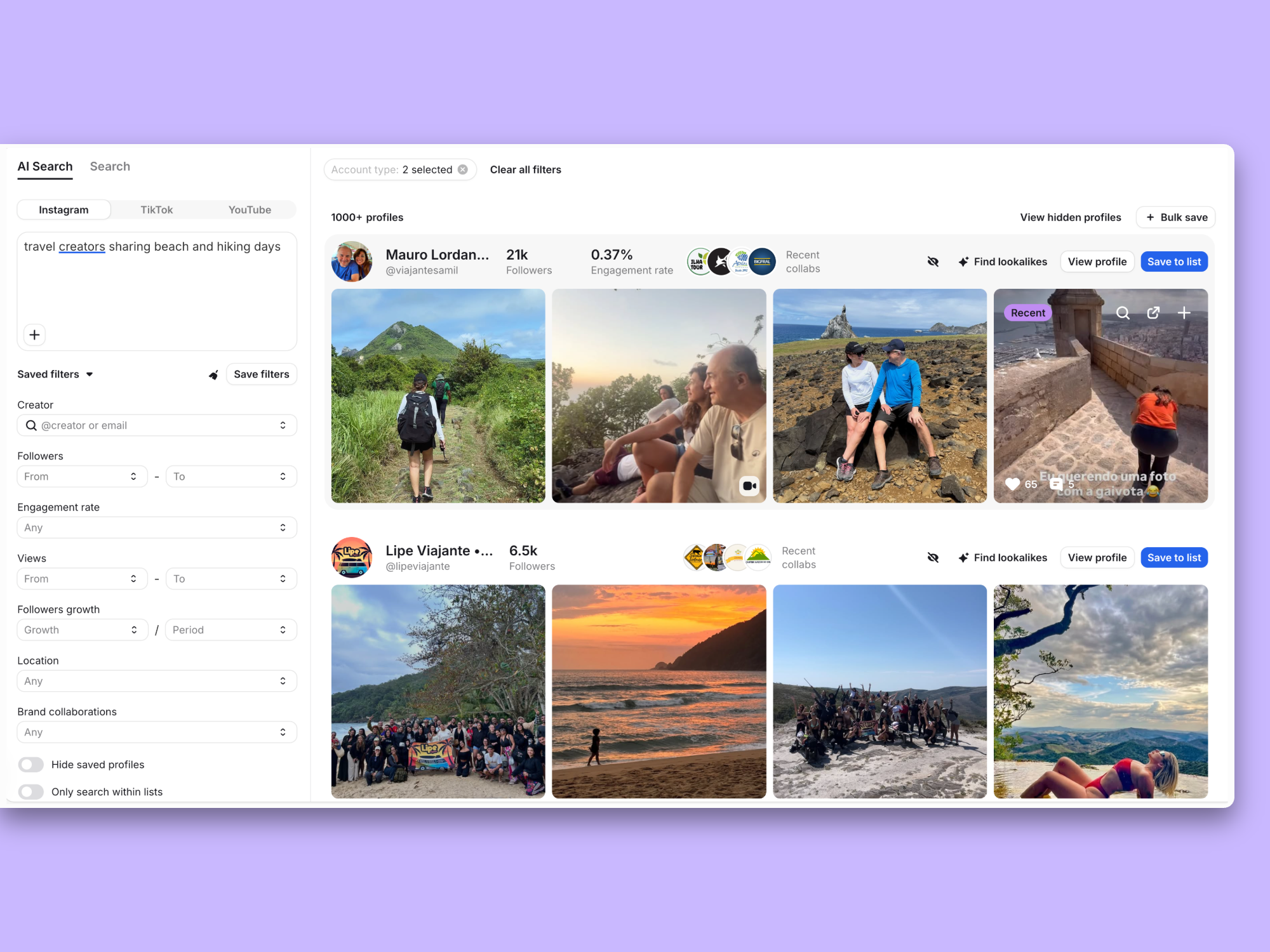
People need a reason to buy now instead of at some point, maybe… when I am not feeling lazy.
So give them one. A code that’s only valid for a set period of time, a limited-time bundle, or early access to a launch will all do it.
This collab between creator Erin Azar and Shokz is a good example – she shares about their sales and offers her limited time code to get an additional 5% off.
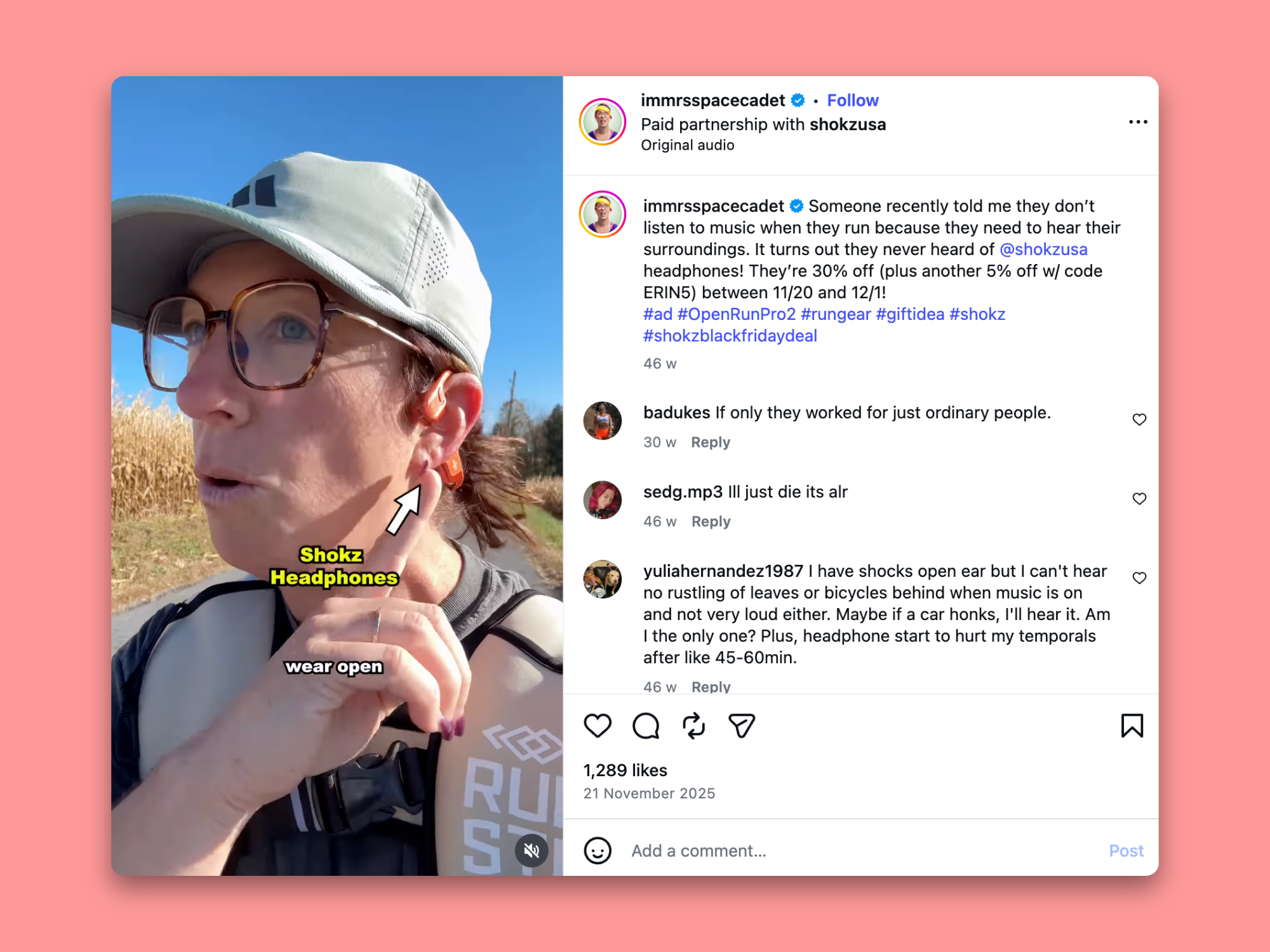
The sale does prompt a buyer to purchase immediately, but the extra 5% off for a limited time sharpens the immediacy even further.
A tight script that you’ve written feels safe. I get it.
But make a creator say "Shop now using my exclusive code for premium quality essentials!" and you can practically hear the thumbs scrolling past.
In fact, 36% of adults in our survey said a creator reading from a script or hitting marketing talking points makes them trust that creator less.
On the flipside, the number one thing that builds trust is the creator looking like they genuinely use the product (69%).
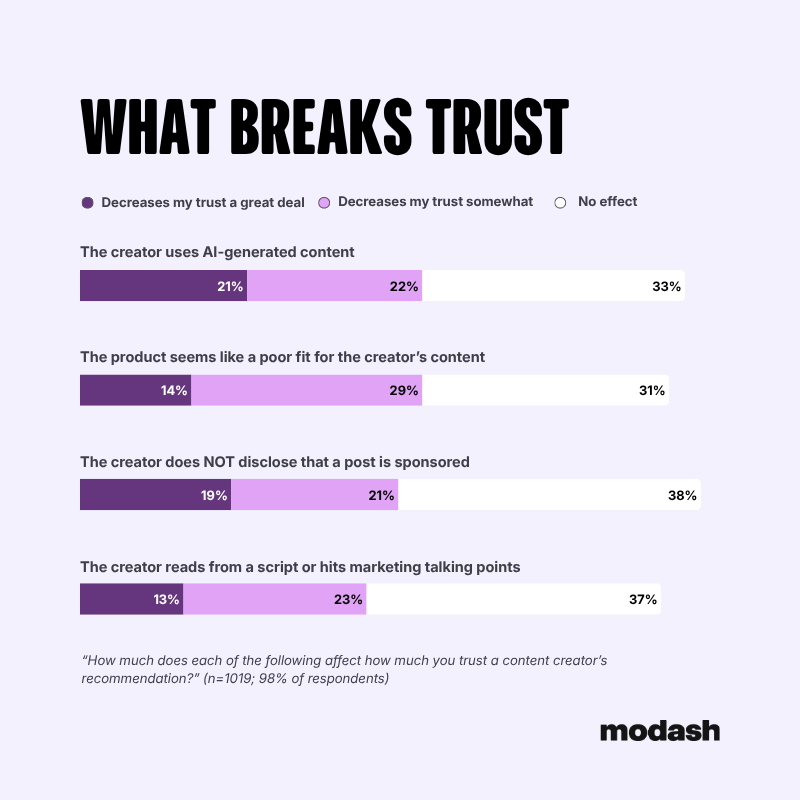
Creators know what makes their audience tick (and what gives them the ick), which is obviously why you hired them. So tell them the message and the guardrails. If you’re struggling to brief creators without stifling their creativity, here’s a handy framework from our very own Anna-Maria Klappenbach:
Imagine being given a blank piece of paper and asked to draw anything vs. something like 'a house'. Within the framework of 'a house' lie certain limitations that allow for creativity to blossom. That's how I hold it with (most) creators: tell them what the message / feeling should be, and then let them paint the picture with their own colors!

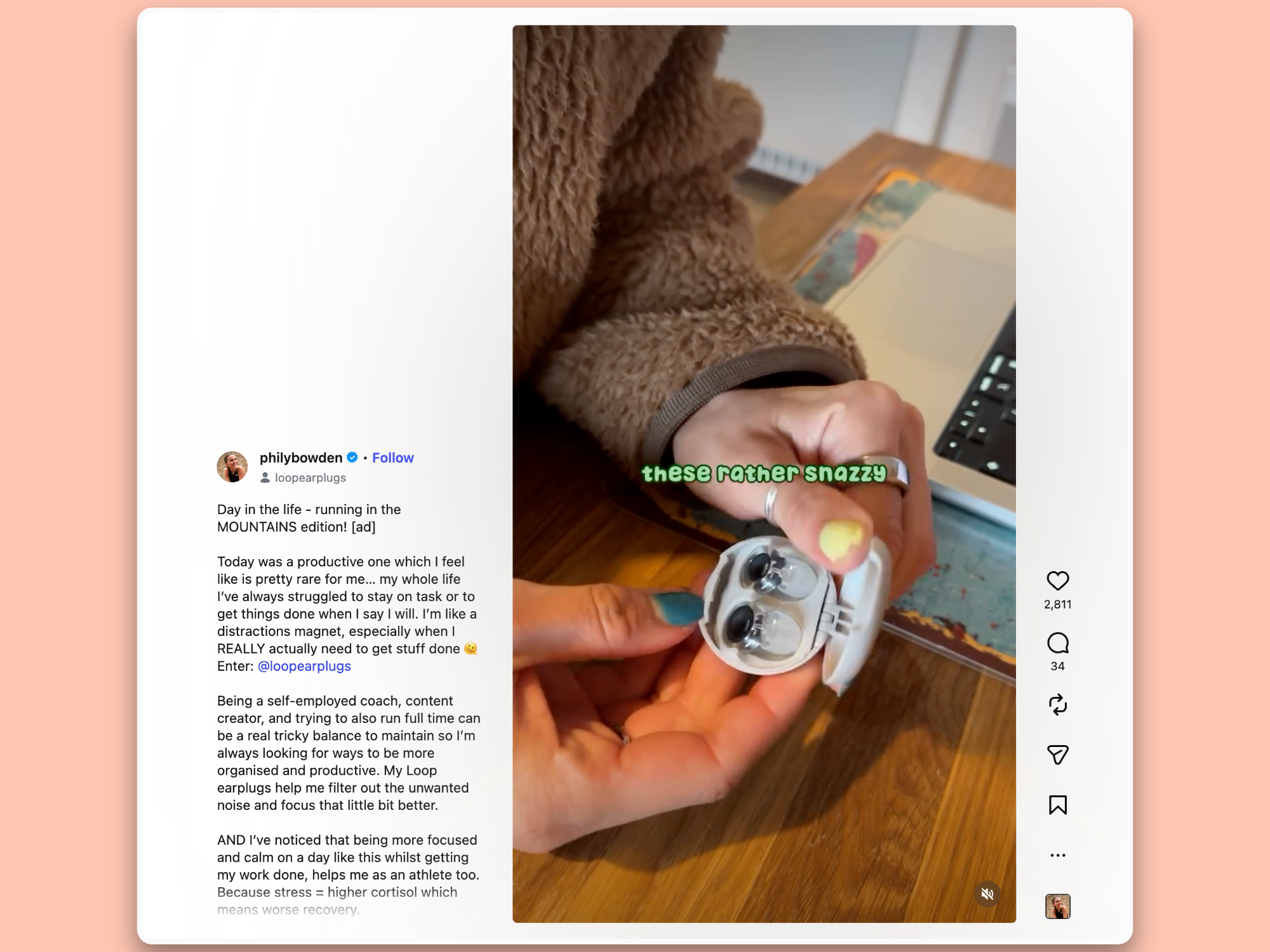
Loop Earplugs is fab at this. Marathon runner and coach Philippa Bowden made a Reel about her struggles with focus and productivity, and how Loop helps.
Notice what’s missing? A list of product features. Instead of reeling off talking points, she tells her own story, and Loop just slots into it. It’s not an angle you’d expect a brand to write for a marathon coach either, which is exactly why it feels like her and not an ad.
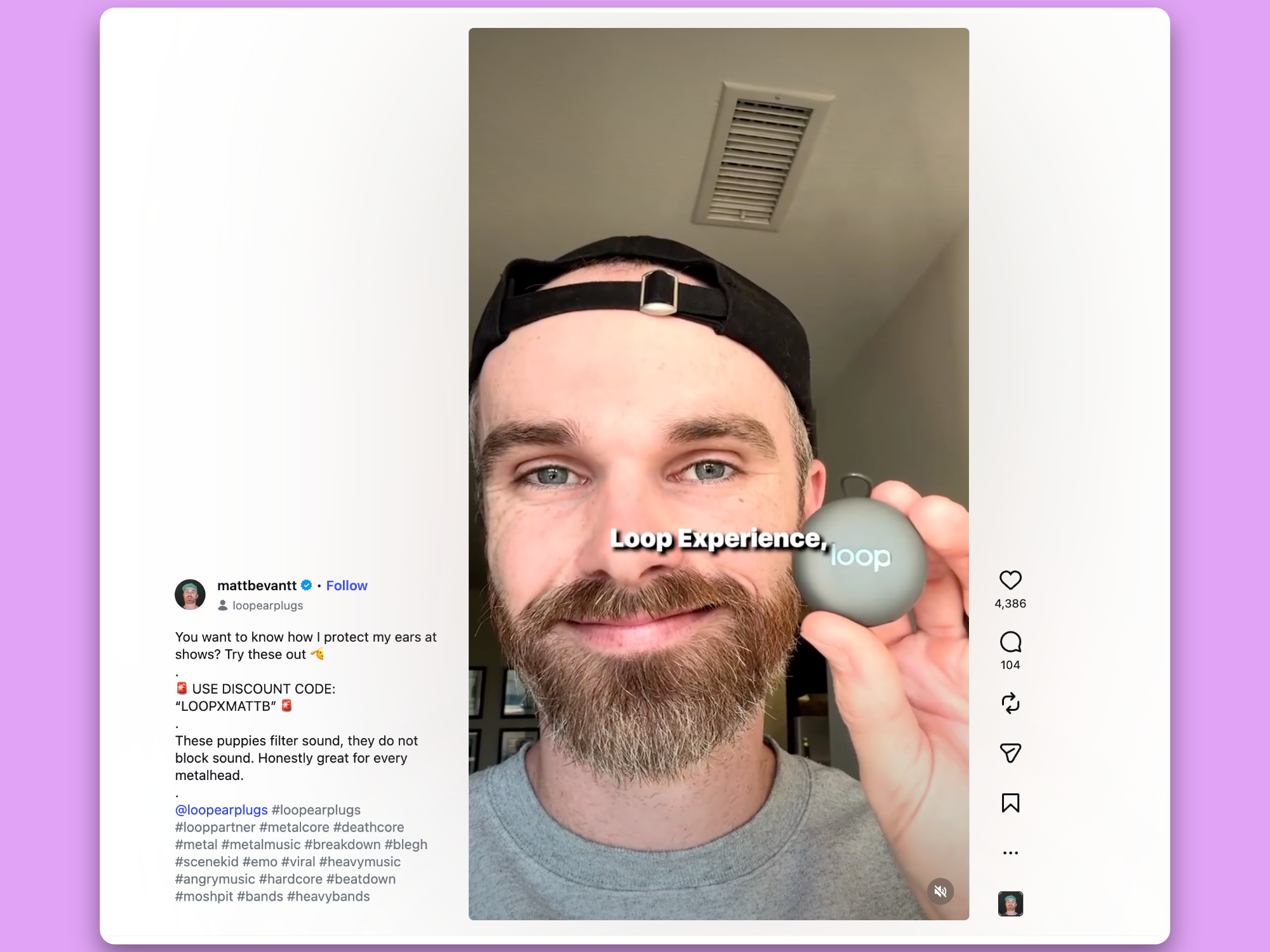
Meanwhile, metalhead Matt Bevan talked about wearing them to rock concerts 🤘
Again, the product isn’t the star, Matt is. He’s talking to his own crowd about something they already care about: going to gigs and still being able to hear properly the next morning. Loop is just the thing that makes that possible.
Both stories feel like something they’d have posted anyway. But look closer and both still cover the important stuff: the key product benefits of Loop Earplugs and real-life use cases.
That’s the balance to aim for. Your brief sets what has to land – the benefits, the use case, the CTA. The creator decides how to say it, because they know what their audience responds to. A good brief gives them the essentials, then gets out of the way.
The creator will get people to your site, but the rest is up to you.
So if a creator raves about one specific moisturizer and their link dumps people on your homepage to go hunting for it, that's on you. Sorry.
Match the page to the promise: same product, same offer, ideally with the code already applied if you can swing it.
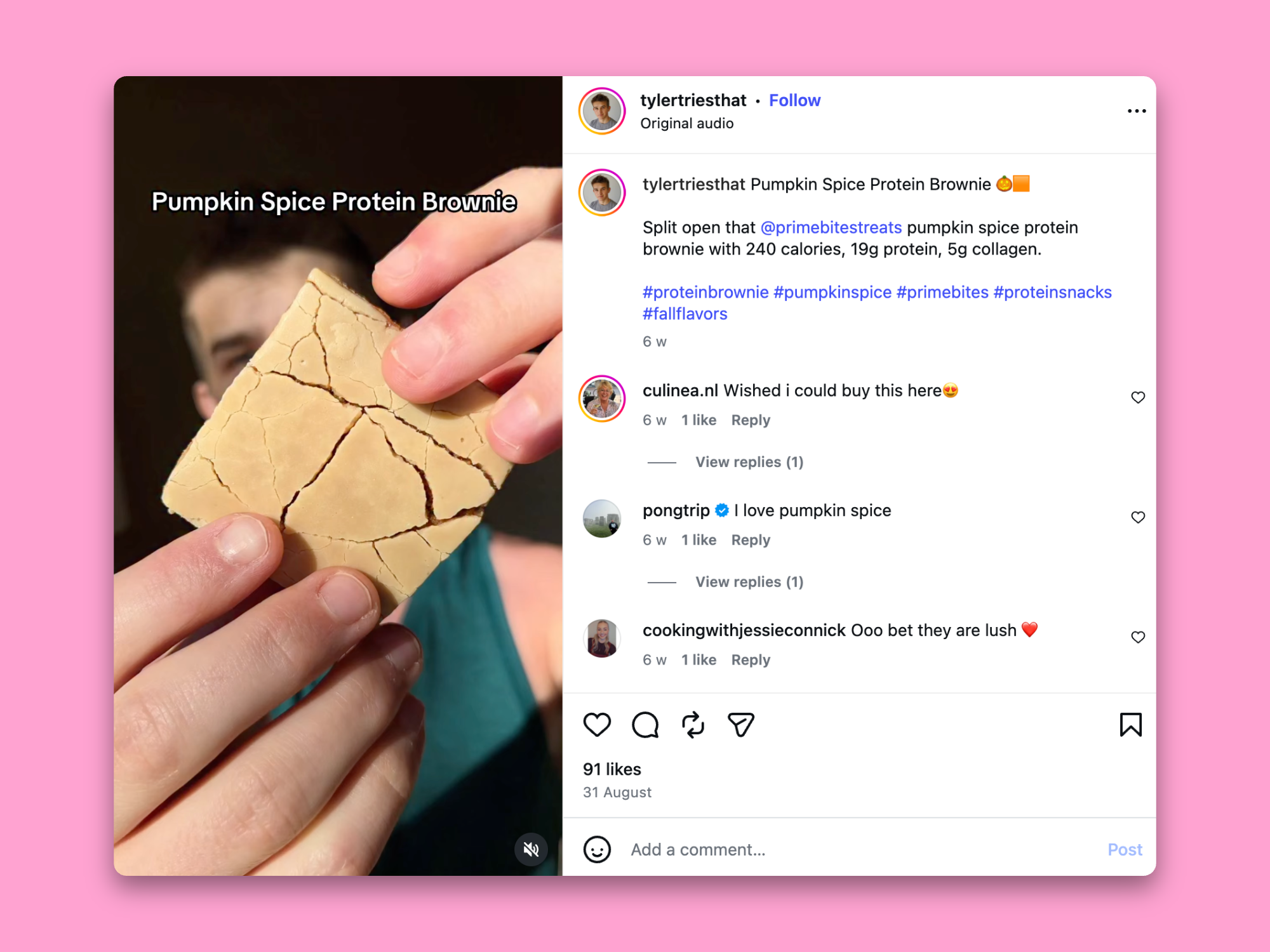
Influencer Tyler Tries That works with lots of food brands, sharing his unique creator link in his Instagram bio. Here’s a collab post he did with Prime Bites:
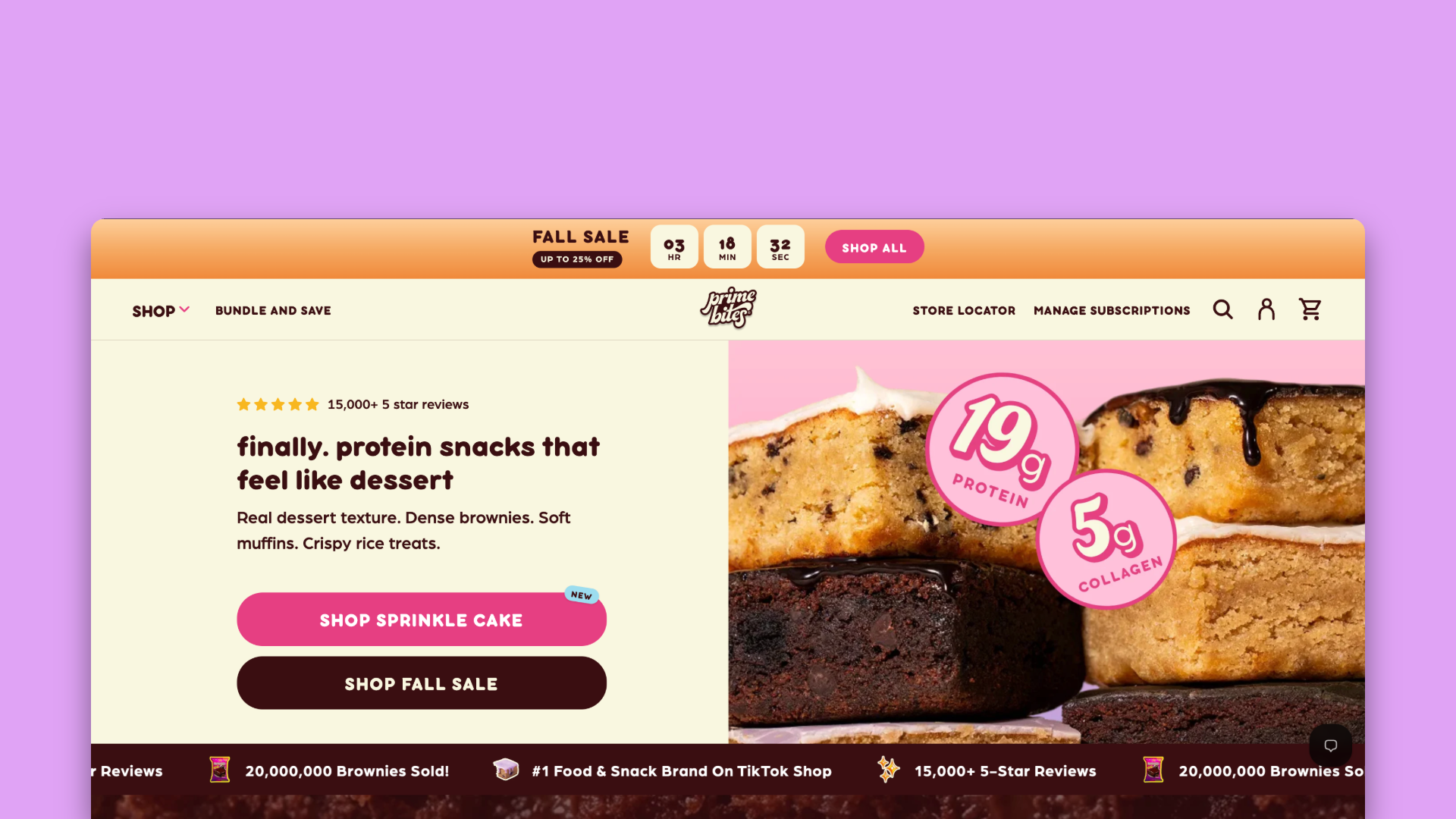
The link in his bio goes to a landing page that’s consistent with the content he posts. You immediately see the same product he was talking about, with the same claims he stood by, and the same messaging.
But remember, most influencer traffic doesn’t buy on the first visit. So retarget website visitors with customized Meta ads based on the product pages they visited.
If your creator posts their 15% code on Thursday, don’t launch a 25% sitewide sale on the same weekend. Or offer a 30% popup discount on entering the customer’s email.
Shoppers will take the better deal (obviously), despite the original foundation of the sale being the creator.
When your sitewide sale beats the creator’s code, you’re competing with your own creator partner – the sale still happens, but it attributes to “direct” instead of them, so you can’t see what’s working and you under-credit the people actually driving revenue.
A conversion rate is only useful if you use the same method and denominator to work it out every time.
A big number might look lovely and shiny but it’s no good if you can’t explain where it came from (cue v awkward convo with your boss).
So, sort out the measuring before anything else.
Decide what you're dividing by, decide what you’ll count as a conversion, and use more than one tracking method to capture all the sales you can. Once that's done, then you can start working on making the number bigger.
To do any of this, you need to see each creator's clicks and sales side by side.
Luckily, if your store is on Shopify, Modash shows you both in one dashboard.
Divide the number of conversions a creator drove by the number of clicks, views, or followers they got, then multiply by 100. So if a creator's link got 800 clicks and 32 people bought, that's a 4% conversion rate.
There isn’t one reliable average, because every brand measures it differently – different denominators, offers, and price points. A number that looks great for a $20 impulse buy would be poor for a $900 considered purchase. Your most useful benchmark is your own past campaigns, measured the same way each time.
It's often a tracking problem rather than a creator problem. People buy on a different device, forget to use the code, or Google you later, and none of those sales get linked back to the creator. To capture more of an influencer’s impact, give every creator both a link and a code, and keep an eye on branded search, and use post-purchase surveys. Even then, treat conversion rate as just one piece of the puzzle, since creators also drive reach, content, and trust that aren’t visible up at checkout.
Use clicks (unique ones, if you can). Reach and followers will give you a much smaller number, and you can't compare it to anyone else's click-based rate.
Neither one catches everything, so ideally you should use both. Codes pick up people who buy on a different device or come back days later, while links tell you how many people actually clicked through to your site. Modash helps you assign both to every creator. And because codes take priority over links, a customer who clicks a link and uses a code only gets counted once. So you’re never attributing the same sale twice.