




More tools
Use cases



Most brands start building their affiliate program backwards. They sign up for an affiliate app, maybe recruit a few creators, and then figure out their commission structure, payout rules, and recruitment strategy somewhere along the way.
That’s how you end up with a dormant program full of affiliates who signed up, never posted, and eventually forgot you exist.
The order matters more than most people think. Your commission structure should be locked in before you recruit anyone. Your recruitment strategy should be deliberate before you try to scale. And your tools should match where your program is headed – not just what’s easiest to set up today.
In this guide, we’ll walk through the full process step by step: from deciding what kind of program to build and setting your commission structure, all the way through to recruiting your first affiliates, onboarding them, tracking performance, and iterating as you scale.
Before you touch commission rates or recruitment, you need to decide how your program will run. There are three main approaches – and the right one depends on your budget, your team’s capacity, and how much control you want over your creator relationships.
Here’s a quick flowchart to help you decide which route to take:
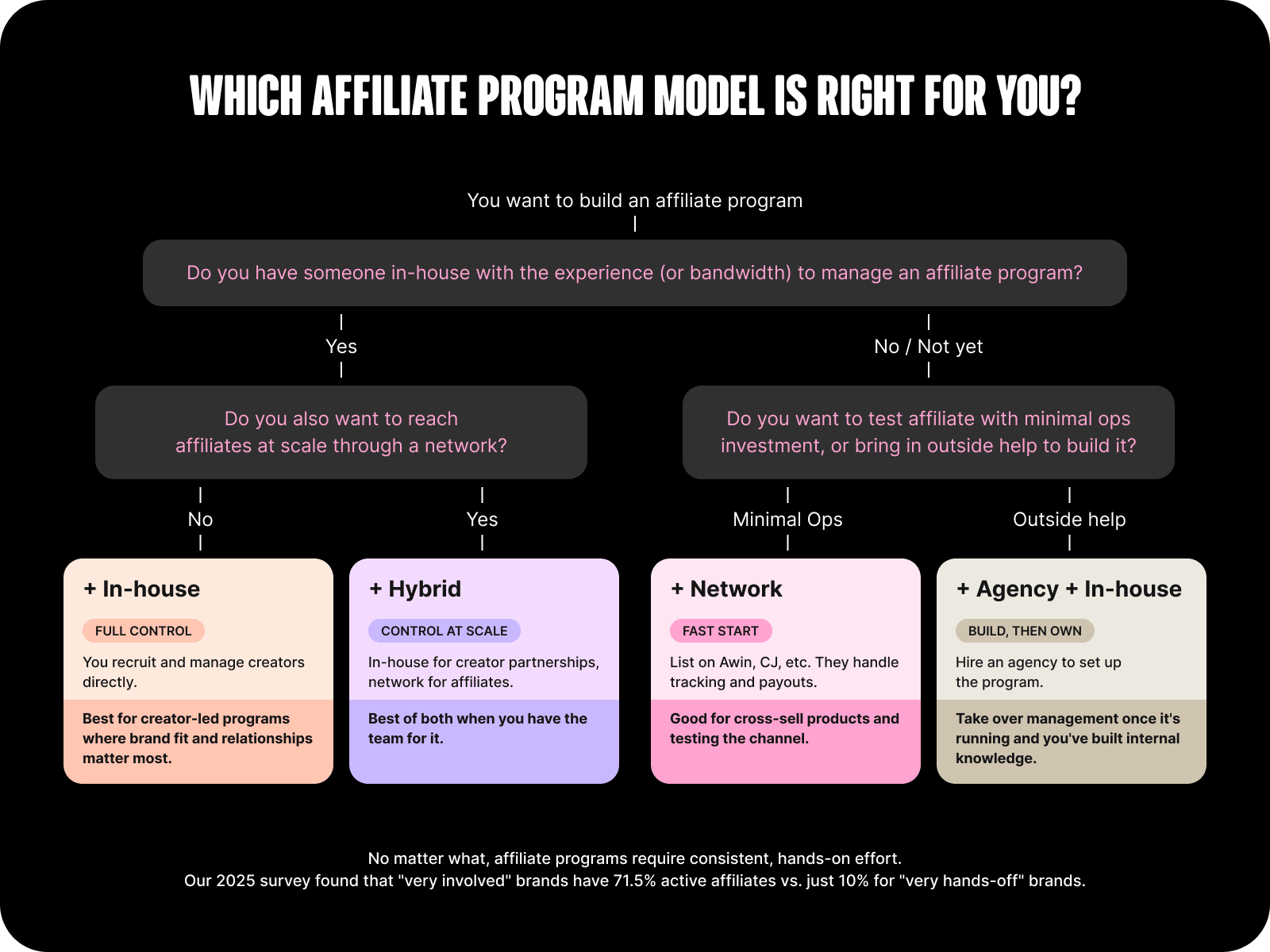
An in-house program means you’re finding, recruiting, and managing affiliates yourself (or with your team) – without a middleman network. You own the relationships, you set the terms, and you control how your brand shows up.
While running an affiliate program can be a lot of work (and requires at least one dedicated employee to scale well), it’s also the approach that gives you the most control and the highest payoff in the long run. Ana Polino elaborates:
An in-house team is more aligned with the company’s long-term vision, which usually translates into better communication, faster decision-making, and stronger relationships with affiliates and partners. Internal teams can react quicker to market changes, launch promotions faster, and maintain full control over brand messaging and quality standards.

You also get flexibility in-house that networks can’t match. You can build tiered commission structures, transition high-performing affiliates into paid partnerships over time, involve creators in product launches, and repurpose affiliate content across other channels. Fiorella Picado notes:
Running your program in-house also gives you more flexibility to integrate affiliates into the wider marketing mix, use the program as a stable source of content for other channels, and run initiatives more spontaneously. Also, keeping things in-house will always give creators a much closer relationship and insights to your brand, something that external partners or networks can’t match in the same way.

In-house works best when:
Affiliate networks – platforms like Awin or CJ Affiliate – give you access to a large pool of affiliates and handle much of the infrastructure: tracking, payments, and reporting. You list your program, affiliates apply or find you, and the network manages the technical layer.
The primary appeal of networks is that they take a lot off your plate. You’re not building tracking infrastructure from scratch, managing payout logistics, or chasing down tax forms.
For brands that don’t have a dedicated affiliate manager – or don’t have the in-house experience to build a program from the ground up – networks remove a lot of the operational friction and let you get started faster.
In our survey, we also found that nearly half of the marketers are constantly looking for new affiliates.
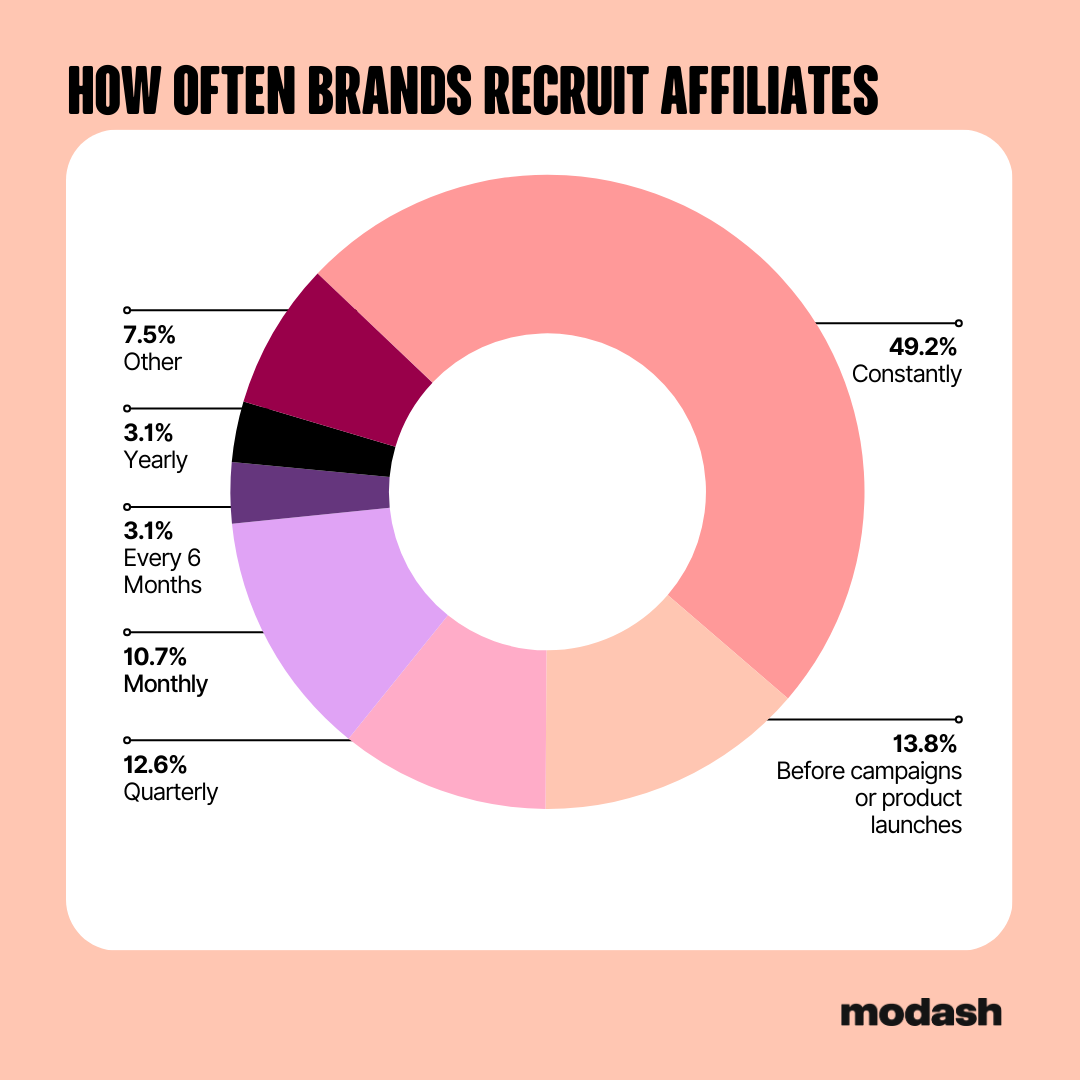
Affiliate networks can help a lot with that, especially if your product has a broad appeal. Think brands like fashion, beauty, wellness, FMCG, etc. selling into larger markets – networks can provide meaningful scale, especially for reaching traditional affiliate types like bloggers, review sites, and online magazines. Fiorella agrees:
Affiliate networks are a better fit for brands that want to scale faster, need access to a broader pool of affiliates, or require support with tracking, payments, and infrastructure.
The tradeoff is control. Networks tend to attract coupon sites, cashback platforms, and publishers alongside creators – and not all of those will represent your brand the way you’d want.
Networks work best when:
A hybrid approach combines in-house management for your core creator relationships with a network for broader reach through traditional affiliates.
This is the best option when you want some control over affiliate recruitment and relationships, but also want to scale your program using the reach a network can provide.
Another angle to taking a hybrid approach is working with an agency to build and set up your affiliate system initially, and let the internal team take over once the program is up and running. This can work for brands that have someone who can maintain the program long-term but lack the expertise to architect it from scratch.
Hybrid works best when:
Whichever route you go with, the next step is figuring out the structure of your affiliate program – what you’re going to pay affiliates, what commission you’re going to offer, and how you plan to keep affiliates active.
Most brands jump straight to signing up for a tool or recruiting creators. But the programs that actually work tend to follow a specific sequence: nail your structure first, then recruit, then scale. Here are the 11 steps to get there.
Our survey on affiliate marketing has made one thing clear: many brands expect affiliate marketing to drive sales, but treat it like a passive program. That doesn’t work. If you want your affiliate program to be successful, you need to invest time, money, and resources in it.
The first step is setting concrete, specific goals about what success looks like for your affiliate program. Don’t think too far ahead – just decide what you want to accomplish in the first 90 days. It can be something like:
Most programs will blend a couple of these, but pick one as your north star. Trying to optimize for everything at once is how you end up optimizing for nothing. After the first 90 days are over, reflect on what went well, what could improve, and calibrate your goals accordingly.
One thing to remember is to set KPIs that are actually realistic for a new program. If this is your first affiliate program, don’t benchmark against brands that have been running theirs for two years. Here’s what realistic looks like in the first 90 days:
Even if you’re not new, it’s worth taking your resource limitations into account. If you have a one-person team running your entire affiliate program, it’s more realistic to expect them to manage 10 affiliates in the first 90 days rather than aim to onboard 50 and neglect a majority.
Give the program at least six months before deciding if it’s working. But set 90-day checkpoints so you can catch problems early and course-correct.
Your commission structure is one of the first things an affiliate evaluates when deciding whether your program is worth their time. Get it wrong and you’ll struggle to recruit good creators – or you’ll recruit them and watch them go inactive because the payout isn’t motivating enough.
There are three main models to choose from:
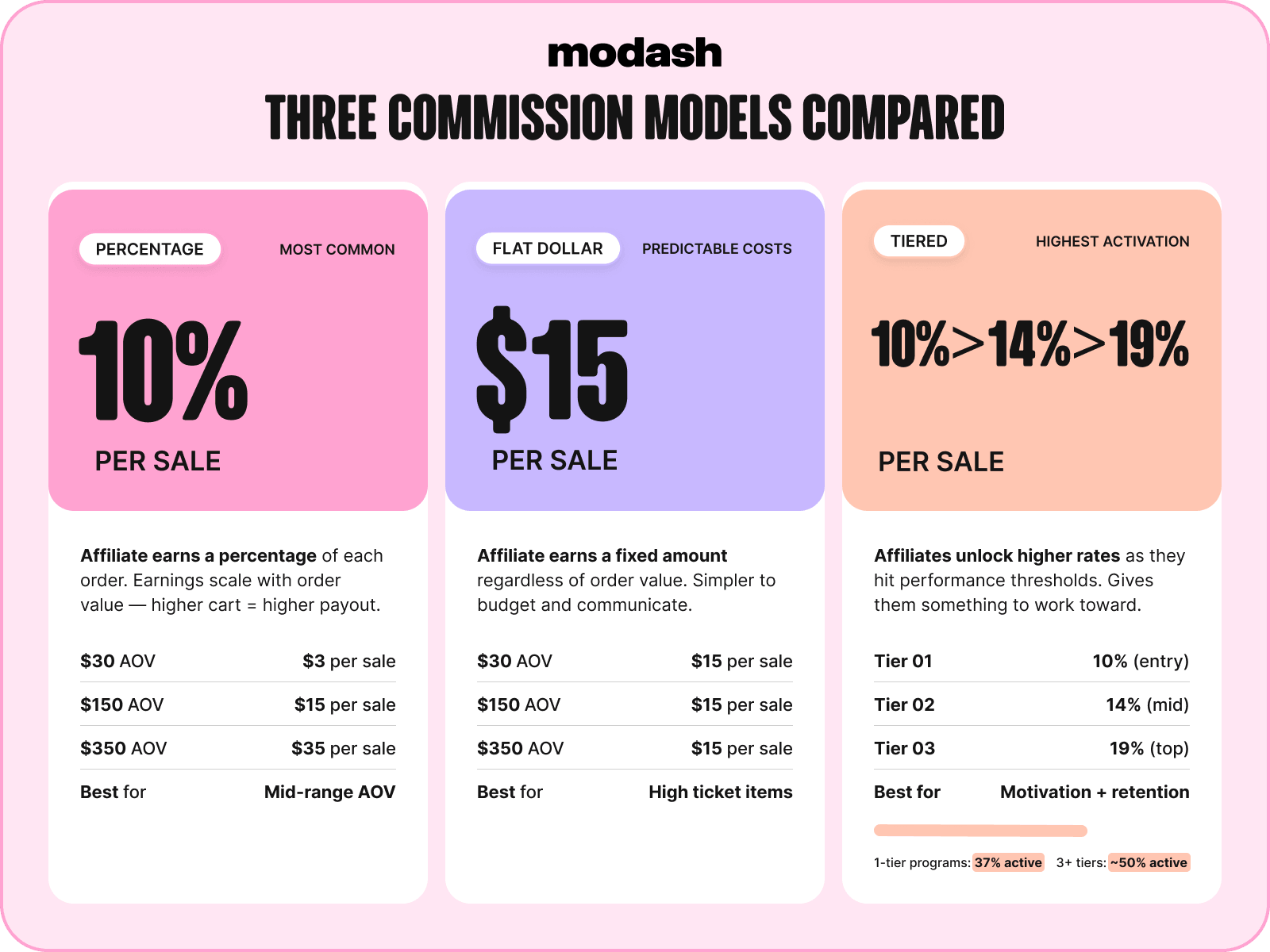
How do you figure out what you can actually afford to pay? Fiorella suggests factoring in unit economics while looking at models that motivate affiliates:
Before locking in a commission structure, I usually model different scenarios based on expected AOV, contribution margin, and customer behaviour with a goal in mind: to find a structure that is attractive enough to bring in affiliates and motivate them to post consistently, while still allowing the brand to scale profitably and keep control over acquisition costs.
Start by doing a simple exercise:
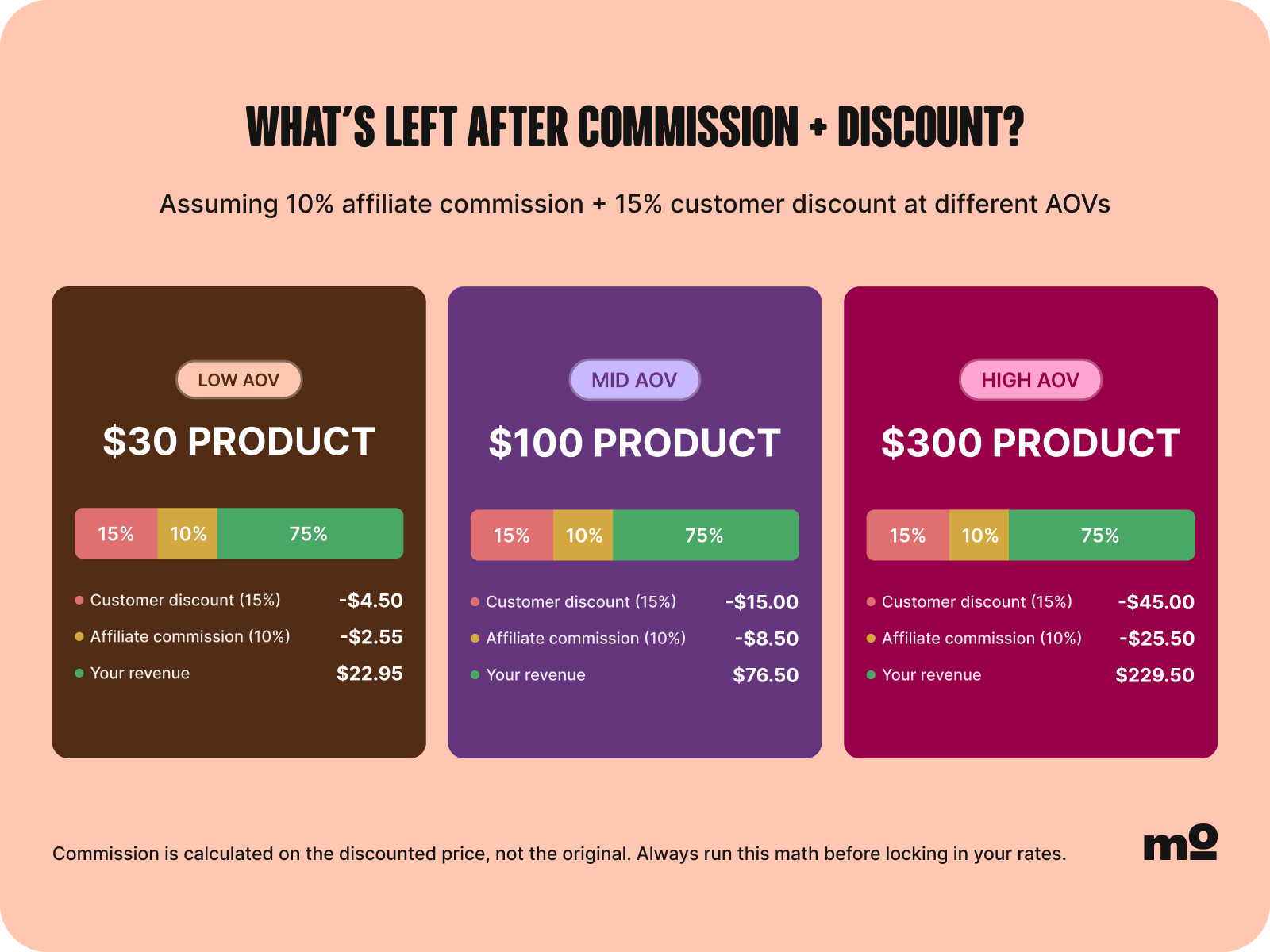
In most cases, brands with larger product portfolios and lower COGS – like fashion, beauty, or FMCG – tend to benefit more from percentage-based commissions. Payouts align with revenue and affiliates are incentivized to push higher basket values.
But brands doing influencer marketing for expensive products should consider flat rate commissions. A percentage model on high-AOV products can lead to payouts that make CAC volatile and the program hard to scale profitably.
It’s also worth noting that both models incentivize different kinds of behavior from affiliates. Pick the model that’s closest to your goals set in step one. Fiorella explains:
Percentage commissions typically encourage affiliates to maximize order value, while flat fees tend to prioritize conversion volume. The right structure depends on whether your goal is to increase AOV, drive new customer acquisition efficiently, or scale volume in a controlled way.
If you’re unsure between percentage and flat-tiered, start with a percentage. It’s easier to adjust later and it’s what most affiliates expect.
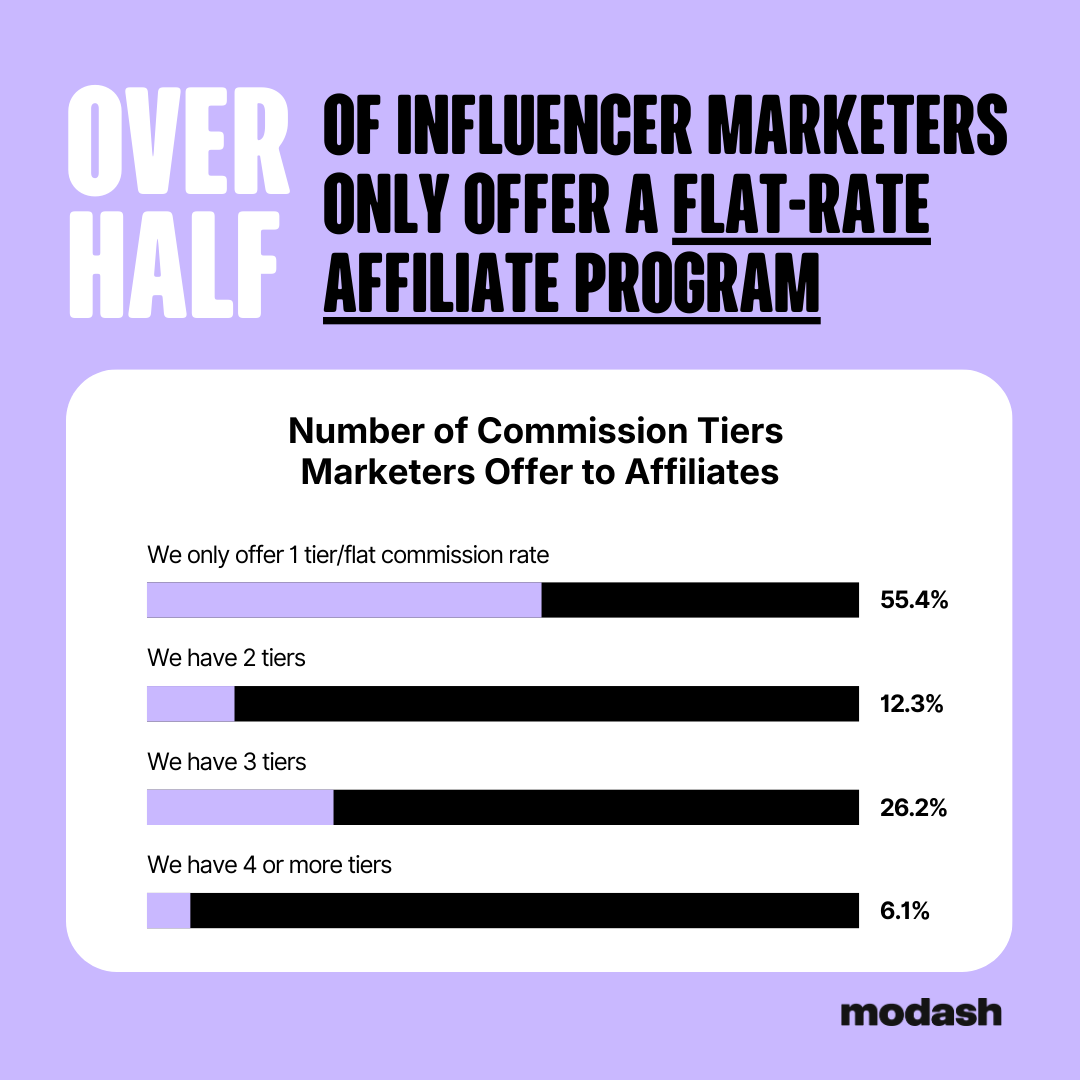
It’s critical to lean on a tiered model from the beginning, though – or else you’ll leave nothing for your affiliate partners to drive toward. This sounds obvious, but half of the marketers in our survey are still running a single-tier commission structure.
A tiered structure doesn't need to be complicated – three tiers is the sweet spot. Based on our survey data, average commission rates across three tiers land around 10%, 14%, and 19%, but you’ll need to customize based on your margins and AOV. Here’s a simple example of how you can set up a three-tier commission structure:
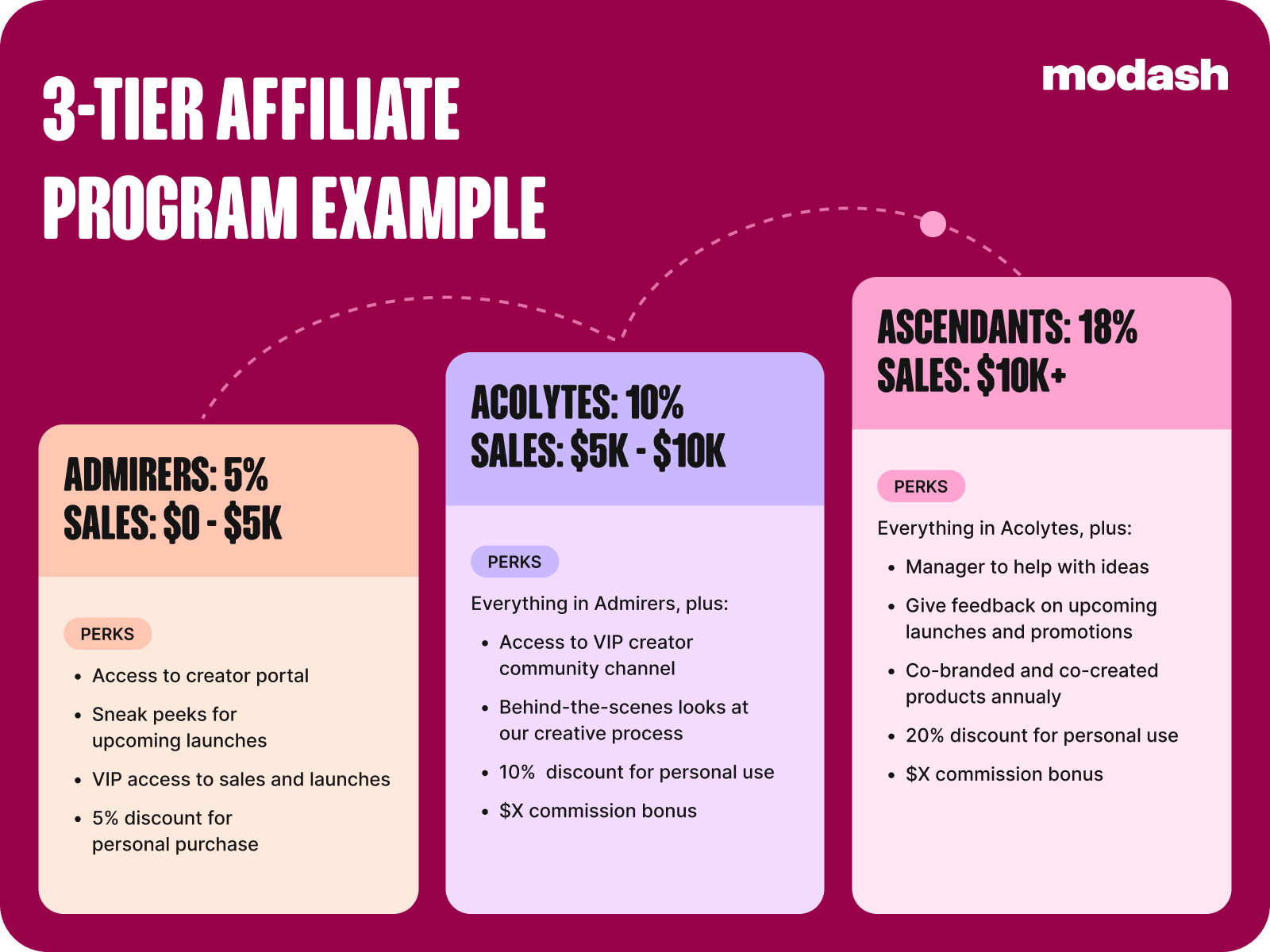
The key is making sure each tier is attractive and attainable. If your lowest tier isn’t attractive, affiliates will hesitate to sign up to your program. But an ultra-attractive top tier means nothing if it’s nearly impossible to reach – your affiliates will get demotivated and stop trying. Set thresholds that your affiliates can realistically hit with consistent effort.
For a deeper dive on commission math, benchmarks by industry, and how to structure your tiers, check out our A to Z guide to building an affiliate program.
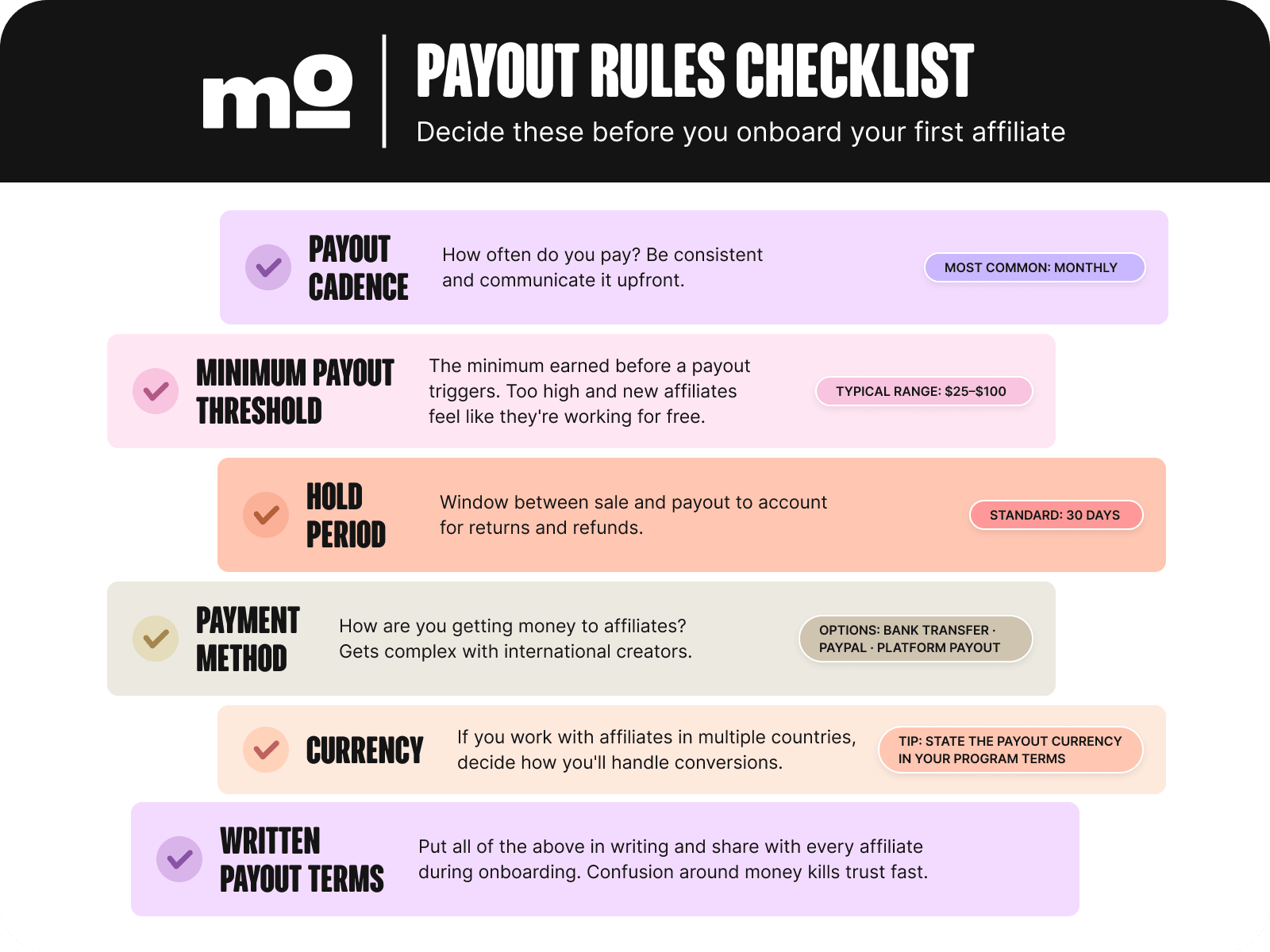
Payout structure is just as (if not more) important than your commission structure. If affiliates don’t know when they’re getting paid, how much they need to earn before a payout triggers, or what currency they’ll be paid in, you’ll lose trust fast – and trust is the whole foundation of an affiliate relationship.
There are a few decisions to make here:
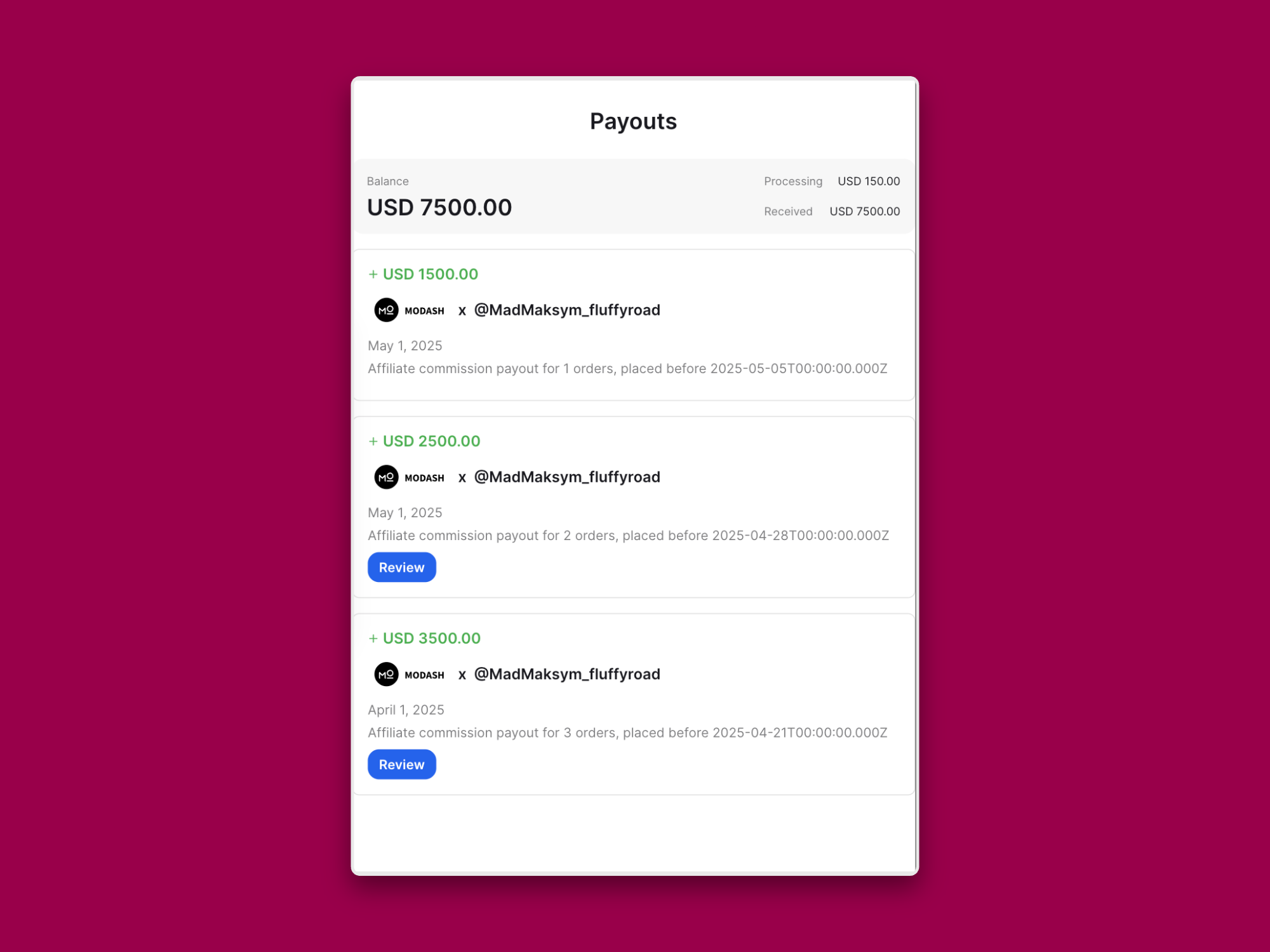
Payout logistics – especially internationally – can be the biggest frustration for many influencer marketers (and their accounting teams). Handling payouts manually across a growing roster – tracking who’s owed what, processing invoices, managing currency conversions, dealing with tax forms – becomes an operational headache as soon as you have 15 active affiliates.
The right tool can make a massive difference here. Modash:
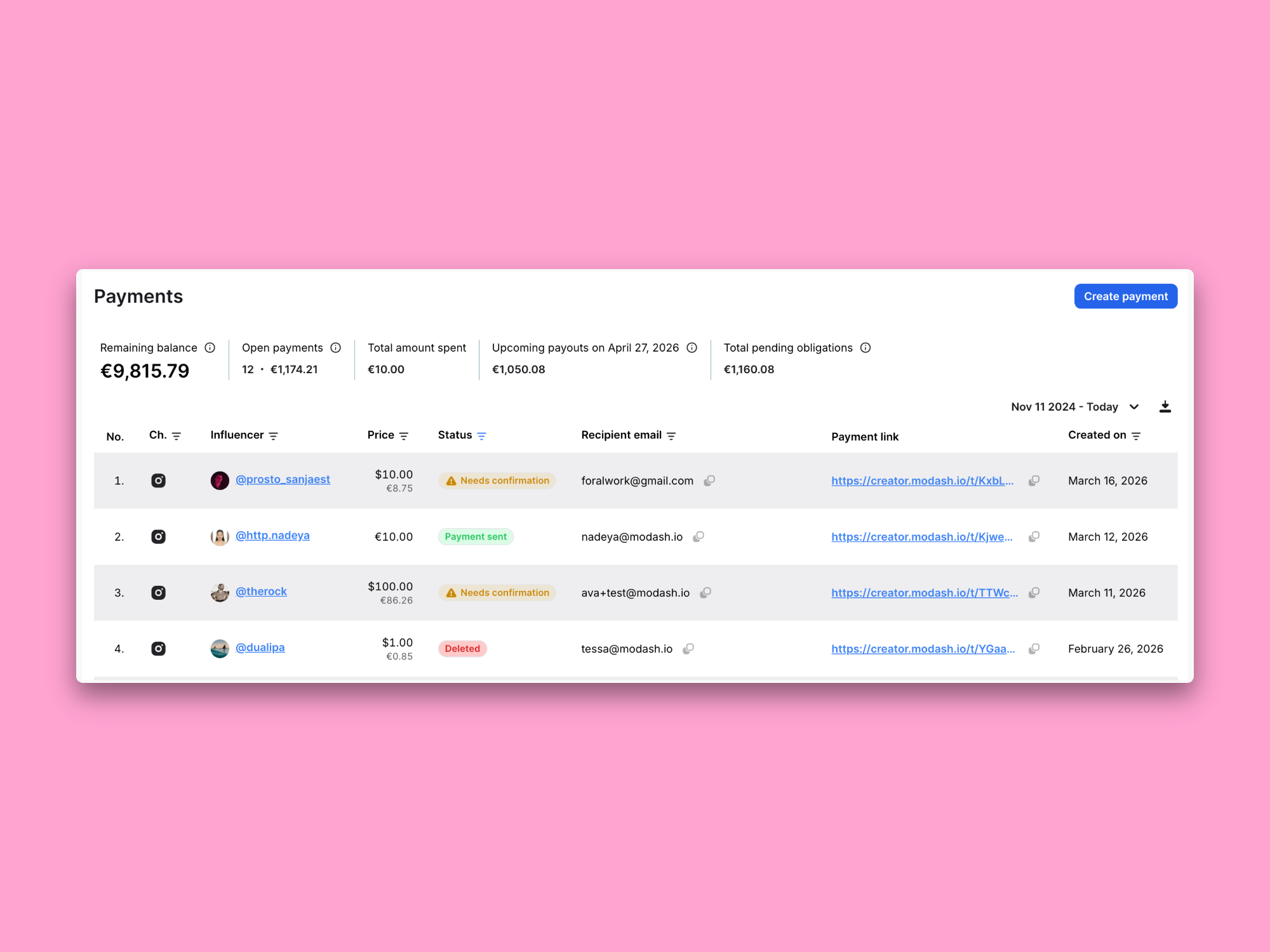
All you have to do is connect your Shopify store, set the rules we talked about above, and pay the one Modash invoice every month. That’s literally it. Your operational load will never balloon, no matter how fast your program scales.
Note: whatever payout rules you set, put them in writing and share them with every affiliate during onboarding. Confusion around money is the fastest way to damage a creator relationship. Be transparent about when they’ll get paid, how much they need to earn first, and what happens with returns.
It doesn’t matter whether you’re taking the in-house or hybrid approach – you need a tool to manage everything. Trying to run an affiliate program through spreadsheets and manual tracking might work for your first three or four affiliates, but it falls apart fast once you start scaling. Fiorella backs this up:
If you decide to run the program in-house, this still needs to be via an affiliate tool (unless you are planning to keep the volume of affiliates very low). Without a tool, operations can become messy, over-complicated, and affiliates lose transparency on their performance.
Spreadsheets and manual tracking might work for your first three or four affiliates, but they fall apart fast once you start scaling. The question isn’t whether you need software – it’s how much of your workflow you want to consolidate into one place versus piecing together separate tools.
This is the most efficient route if you’re serious about building a program that scales. Instead of stitching together one tool for discovery, another for tracking, a spreadsheet for payouts, and your email client for outreach, you run everything from a single platform where context flows with each creator.
Here’s how Modash handles the full affiliate lifecycle:
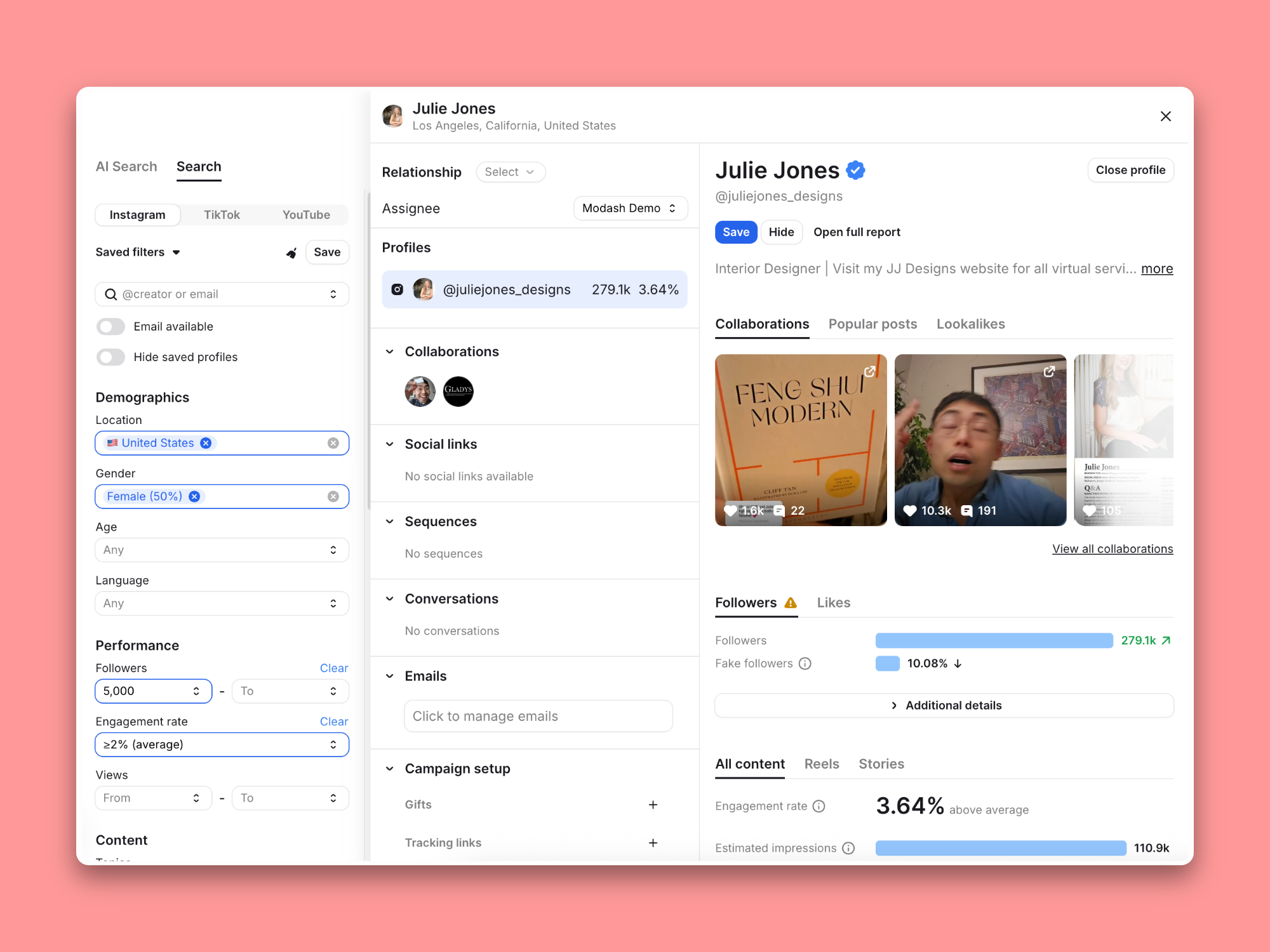
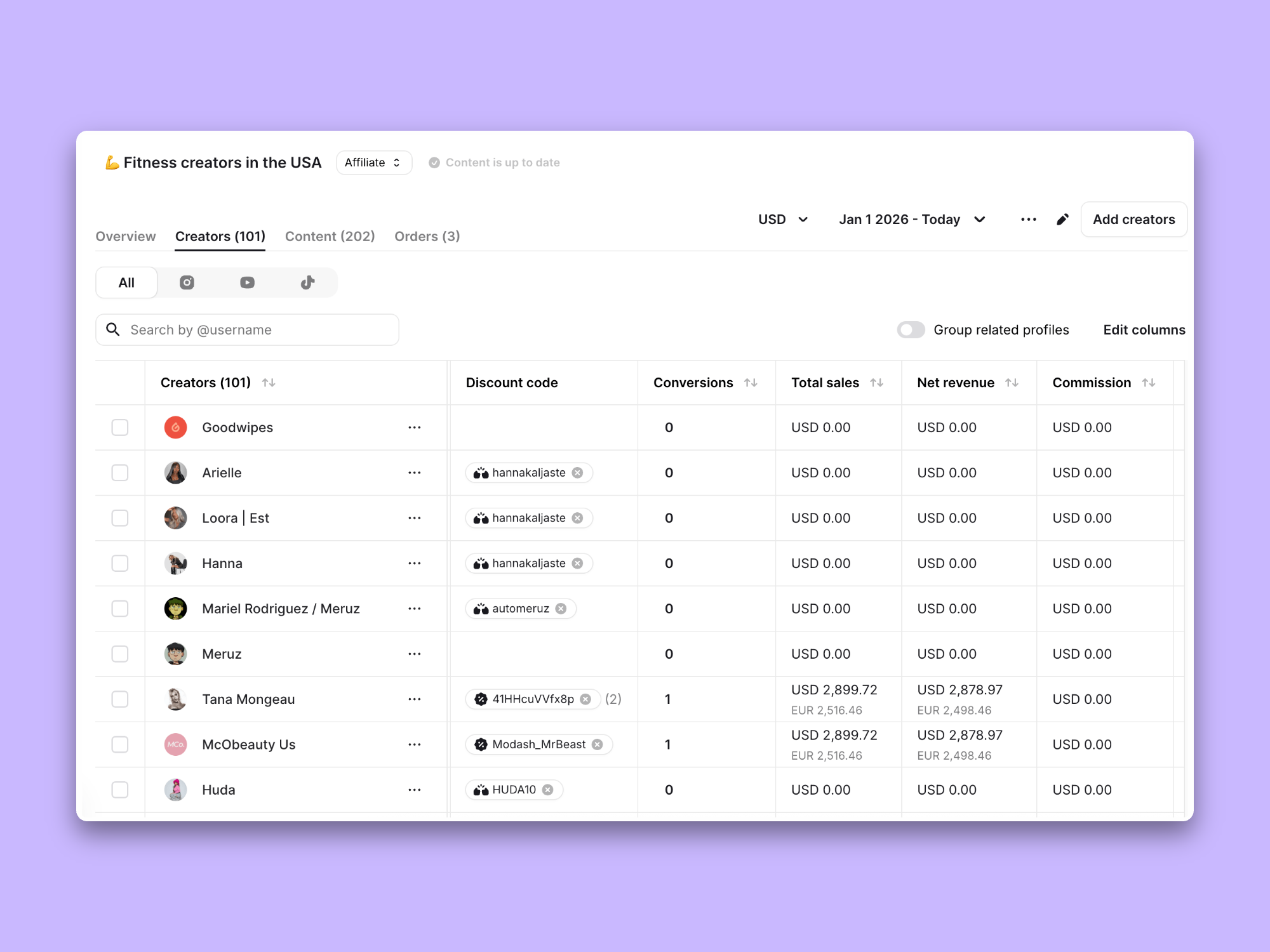
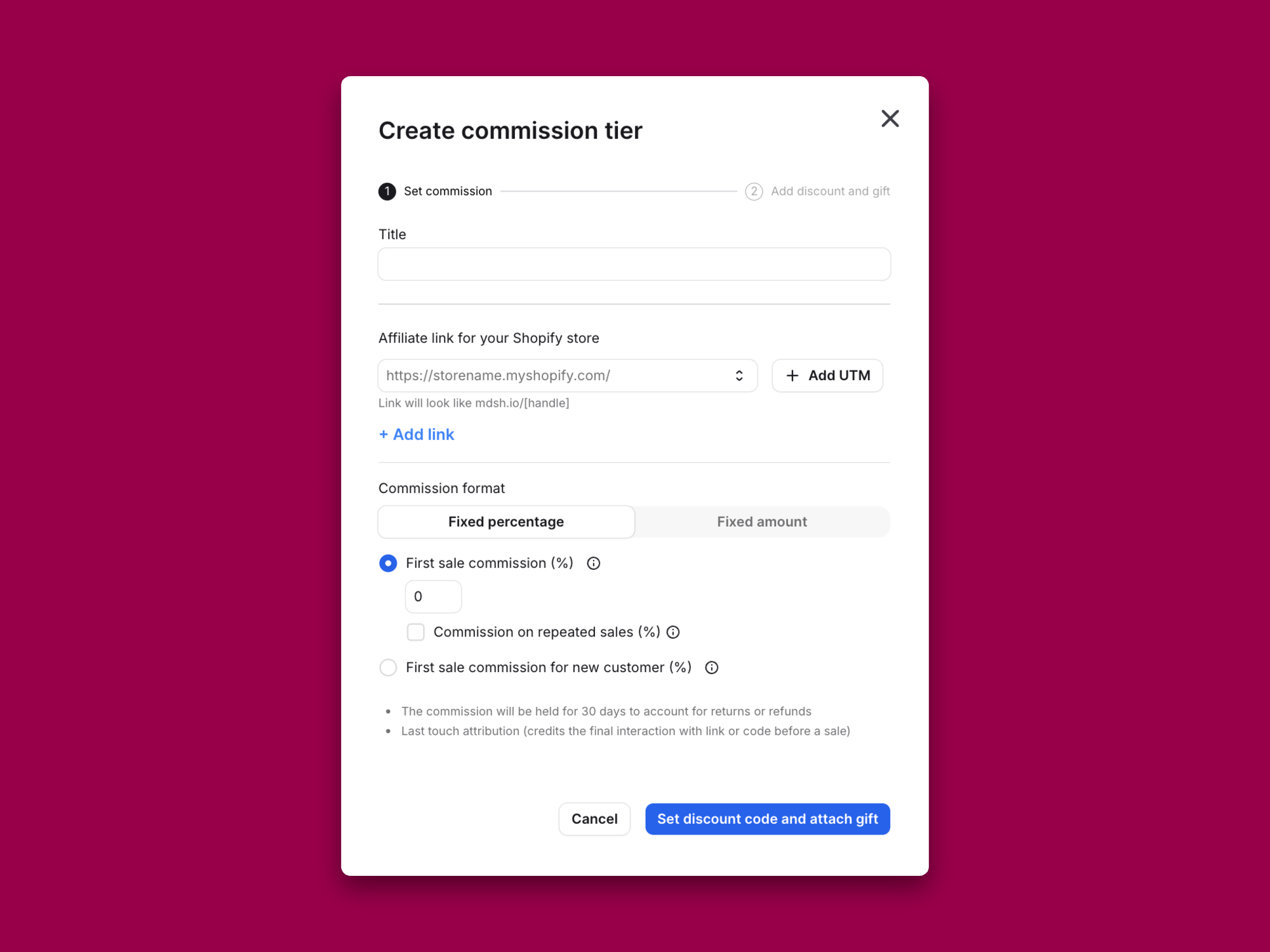
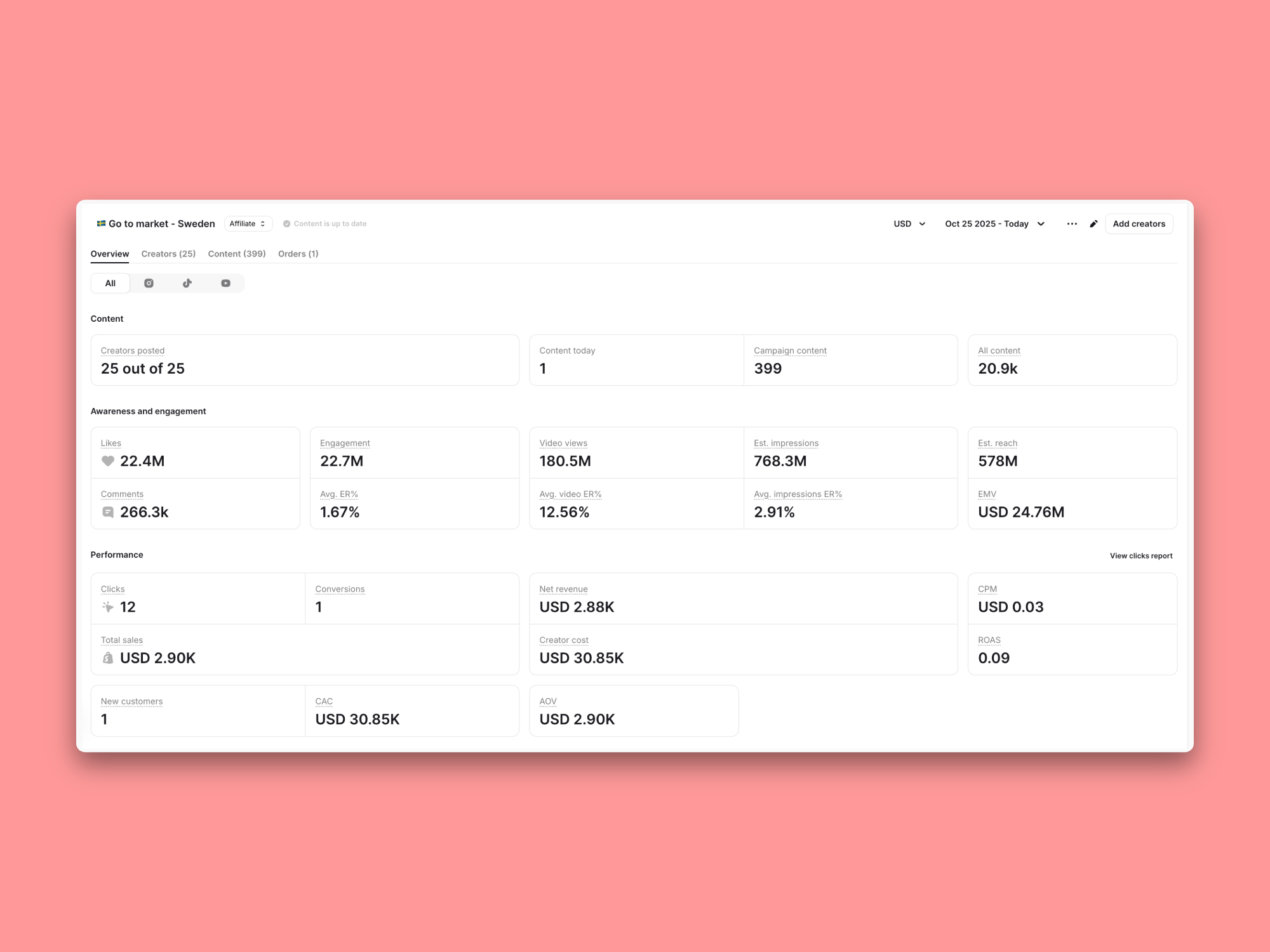
The advantage of having all of this connected is you’re never cross-referencing a spreadsheet to figure out who’s been gifted what product, what their commission tier is, and when they last posted. Everything lives in one place.
You don’t need to buy into the full stack on day one. If you’re running a smaller program – say, under 10 affiliates – or you’re still testing whether affiliate is the right channel for you, start by automating the tasks that create the most operational pain.
For most brands, the most frustrating and necessary admin work is the payouts. It’s the single most tedious admin task in most programs, and the one that damages creator trust the fastest when it goes wrong. Tracking who’s owed what, processing invoices, handling currency conversions, chasing tax forms – it’s a mess at any scale (and a much bigger one when international creators are involved).
Modash offers payments as a standalone tool, too, so you can automate payouts across 180+ countries even if you’re not using the rest of the platform yet.

After payouts, look for automating tracking and attribution. Manually matching orders to creators, calculating their commissions, and figuring out what to pay each affiliate is a huge operation. Look for a tool that connects with your Shopify store, automatically generates discount codes, and handles attributing it back to the right creator. This will also make reporting a lot easier.
In the initial stage, if you can’t afford it, it’s okay to keep a discovery and outreach manual. If you’re only recruiting a handful of affiliates at a time, you can do this through your own network, social browsing, and personal emails. It’s slower, but it works on a small scale. Automate this when you need to recruit more than you can manage manually – which usually happens around the 20-affiliate mark.
Some brands piece together a discovery tool, a separate affiliate tracking platform, a Shopify app for codes, their email client for outreach, and a spreadsheet to tie it all together. This can create a lot of software fatigue and a giant mess as you scale and want to consolidate everything.
It’s better to automate payouts and tracking in the beginning and then eventually move to an all-in-one tool that can handle everything for you.
For a deeper look at what you can automate at each stage, check out our guide to affiliate marketing automation.
Your tracking setup is what connects an affiliate’s content to actual sales. Get it wrong and you’ll either misattribute revenue, underpay creators, or have no idea whether your affiliate program is actually working.
There are two main tracking mechanisms:
Using both gives you a safety net. The code catches the customer who saw the post but didn’t click the link. The link catches the customer who clicked through but forgot to enter the code at checkout.
A few things about tracking to get right from the start:
The reality of affiliate tracking is that it’s never perfectly clean. Customers switch devices, disable cookies, forget to use codes, or find your site through a completely different channel after seeing a creator’s post.
This is where a lot of programs start losing trust with their affiliates – because creators can see the engagement on their posts, but the sales aren’t showing up in their dashboard.
The most common pain points:
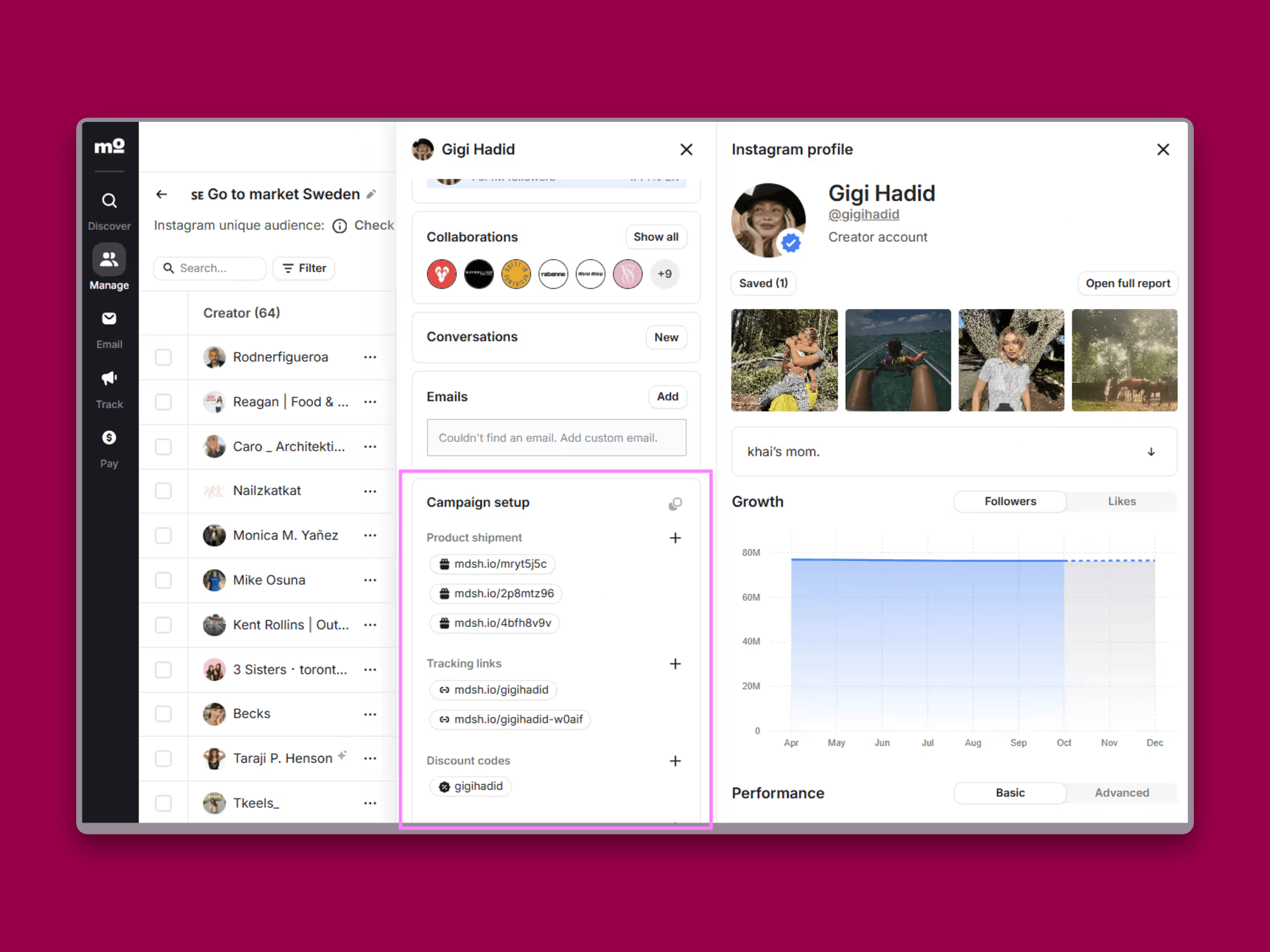
This is one of the areas where Modash saves the most time. Because it integrates natively with Shopify, you can create and manage both discount codes and tracking links directly from a creator’s profile – you don’t need to switch between platforms or manually enter codes. You can see an affiliate’s entire relationship history in a jiffy.
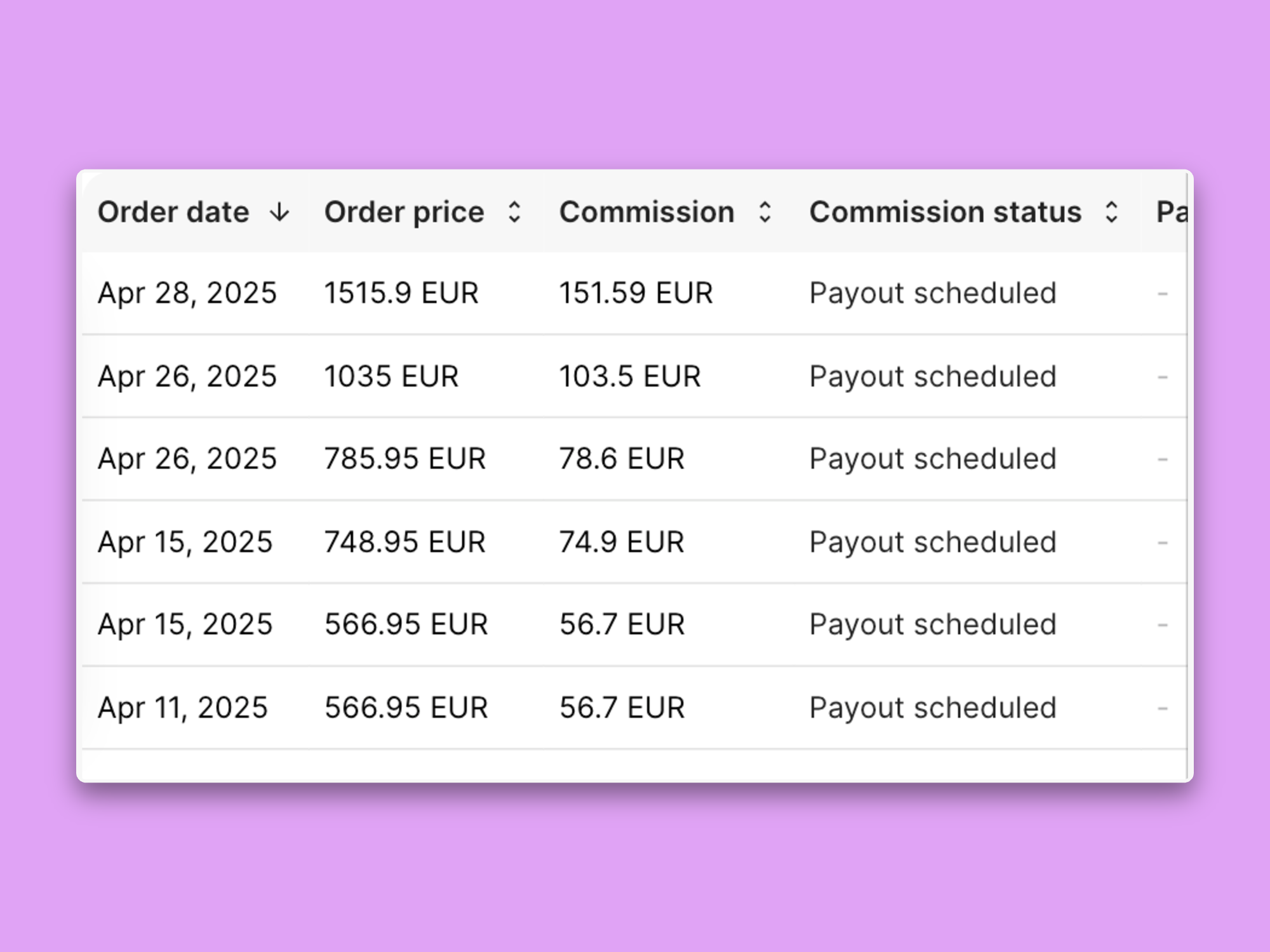
When a sale happens, it shows up in the creator’s dashboard in real time, attributed to the right person, with clicks, conversions, and revenue all in one view.
You can also set configurable attribution windows per campaign, so you’re not stuck with a one-size-fits-all approach. And because everything – codes, links, sales data, creator profiles – lives in the same platform, you’re not reconciling data across three different tools to figure out what’s working.
Code poaching – when an affiliate’s discount code ends up on a coupon aggregation site – is a headache nearly half of marketers in our survey deal with.
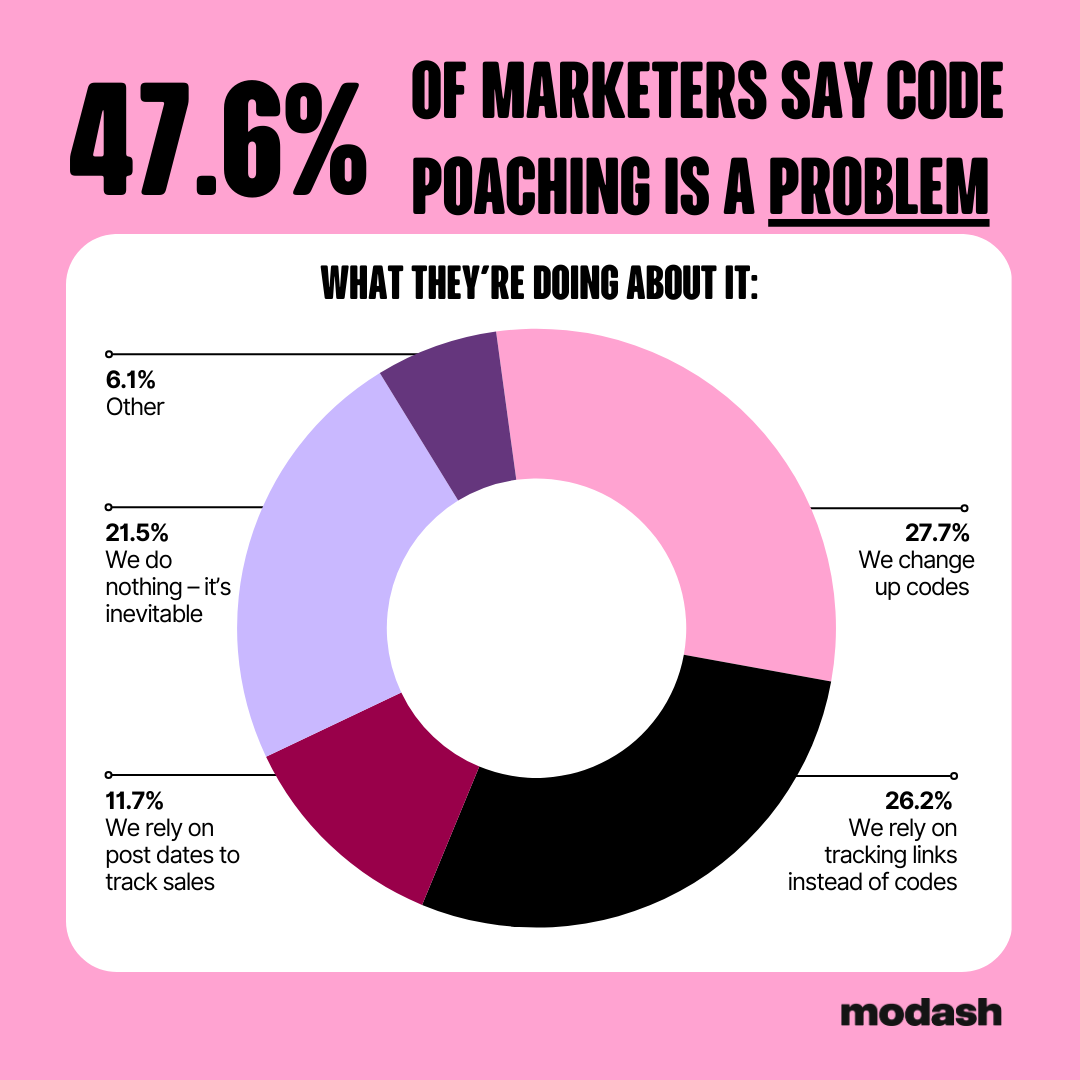
It messes with attribution and can inflate an affiliate’s numbers with sales they didn’t actually drive.
There’s no perfect solution, but here are a few ways to manage it:
About 20% of the marketers we surveyed do nothing about code poaching because they consider it inevitable. If it’s not massively impacting your attribution, that might be the right call – the operational headache of constantly rotating codes can outweigh the problem itself.
Affiliate landing pages help you with inbound recruitment. This page can also double as an “all info you need is here” page for affiliates you hire using outbound methods.
A lot of brands skip this step or throw up a generic form and call it done. That’s a missed opportunity. Your affiliate landing page is doing two jobs at once: it’s selling creators on why your program is worth their time, and it’s filtering out people who aren’t a good fit.
What to include on your landing page:
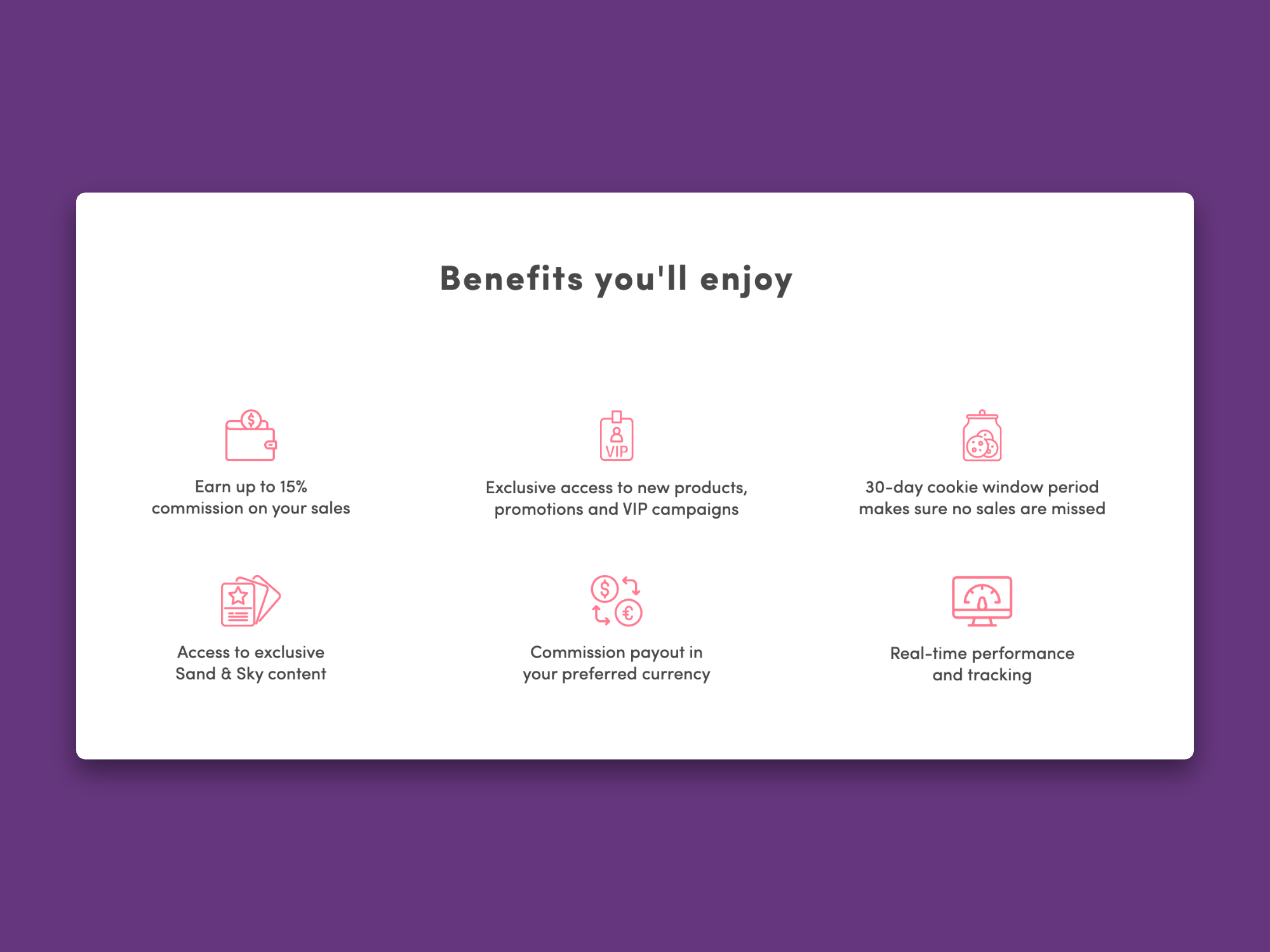
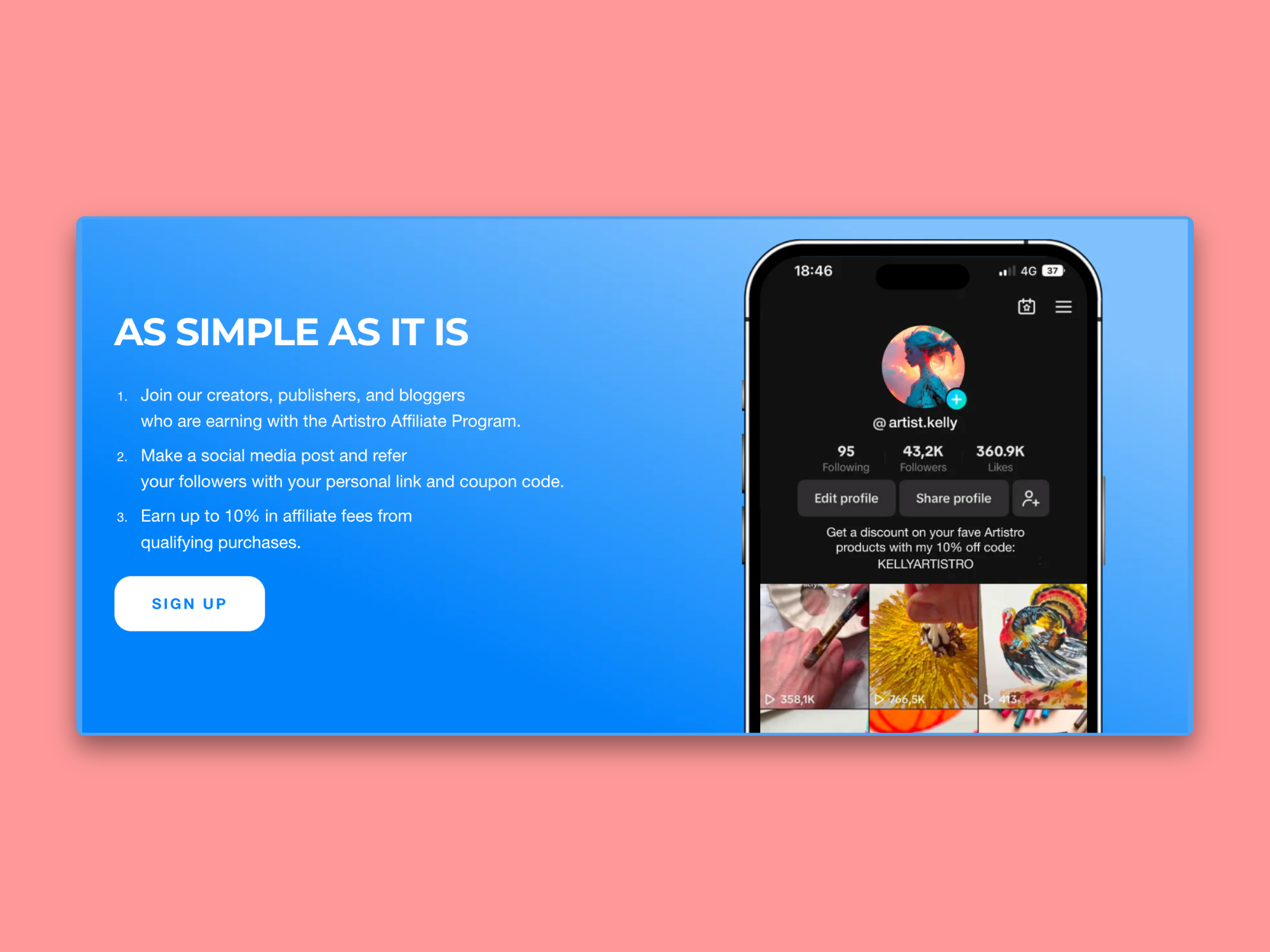
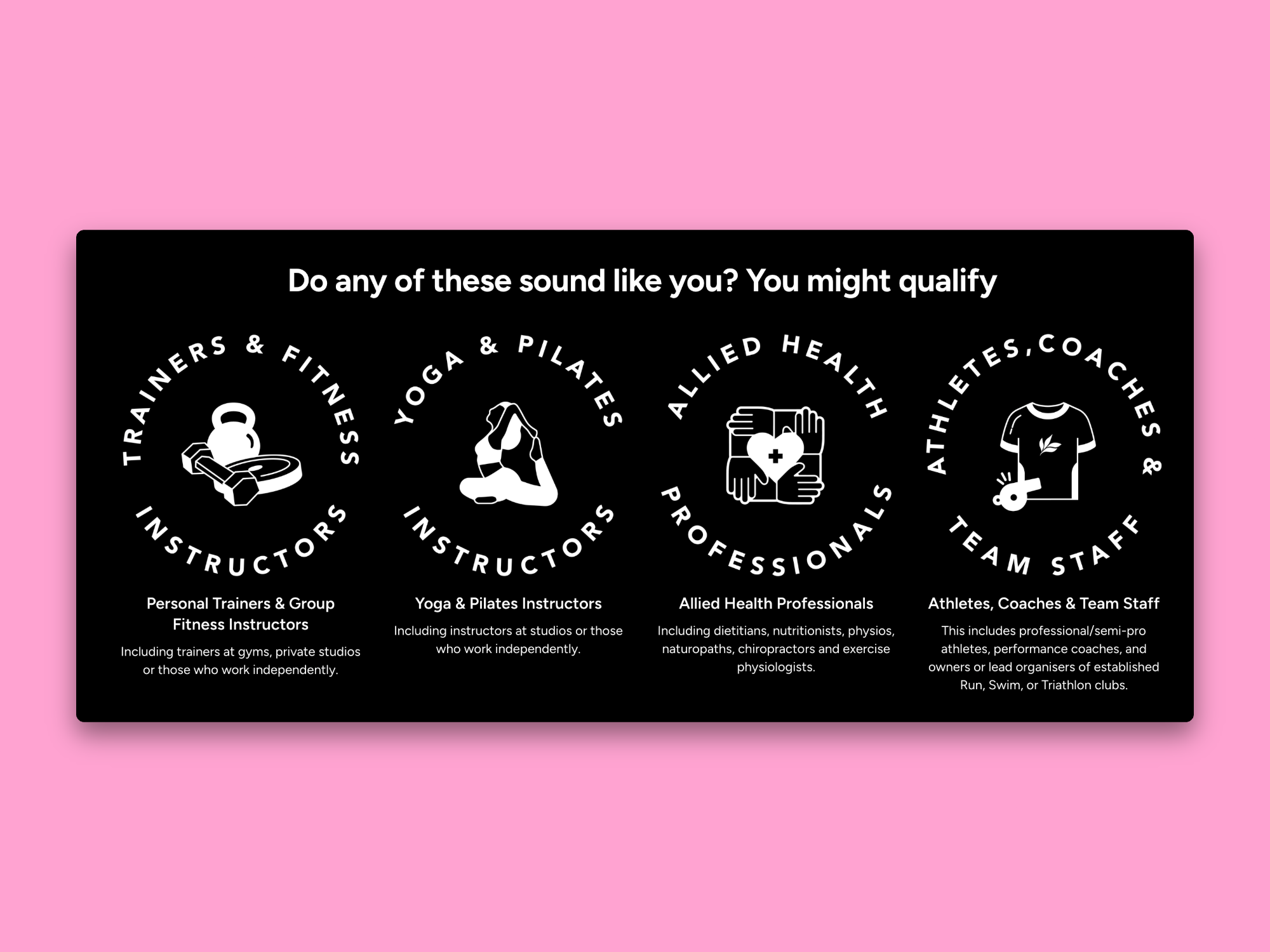

The common thread across all of these: they lead with what the affiliate gets, they’re specific about who they’re looking for, and they make applying easy.
You can also use your landing page to share your program terms to cover the operational and legal side. This doesn’t need to be a 20-page contract, but it should include:
Pura Vida, for example, shares its contract details before affiliates spend time filling up the form to become an affiliate partner.
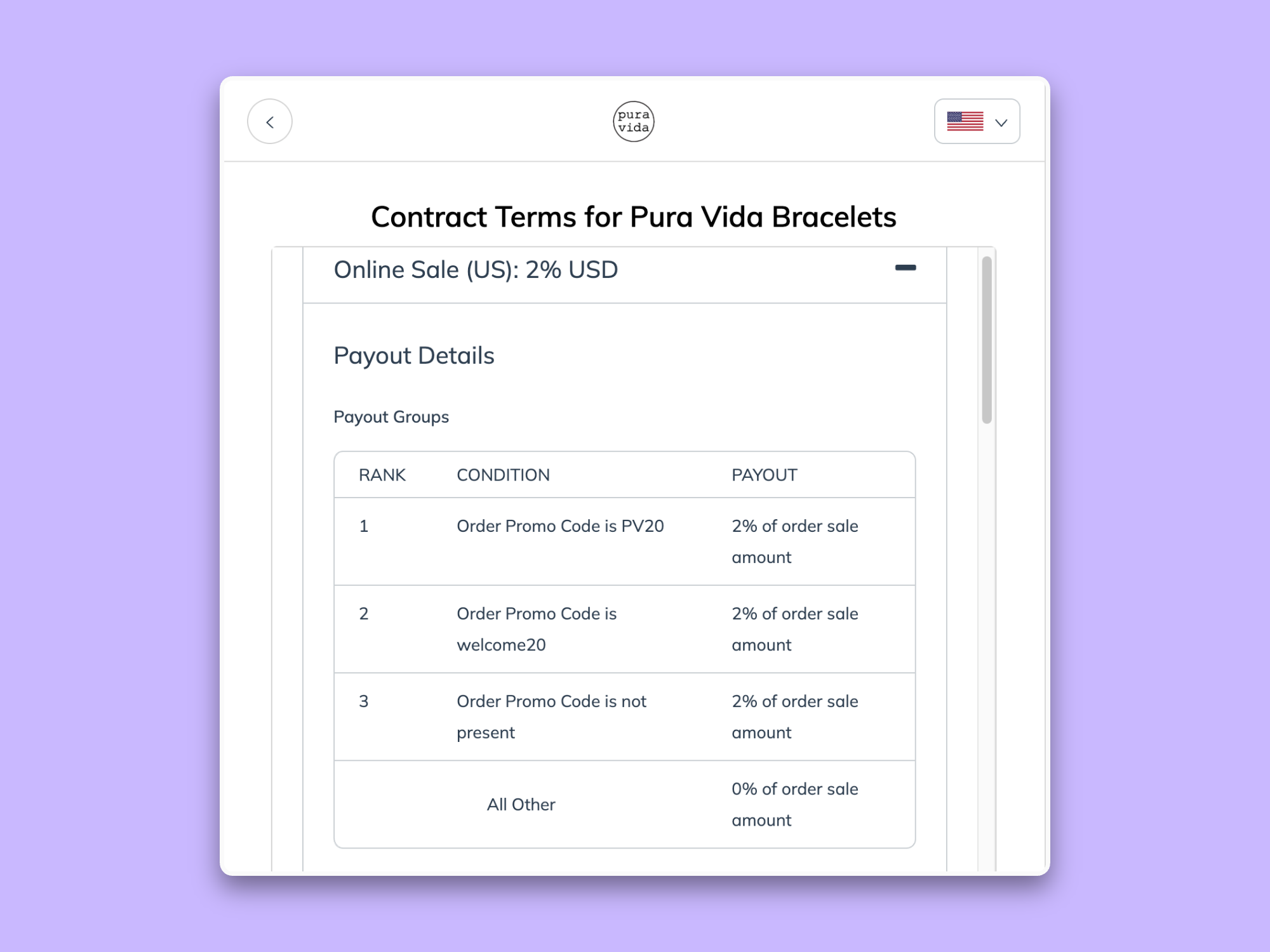
Put your terms in writing, share them during onboarding, and make sure both sides are clear before any content goes live.
Finding your first batch of affiliates is one of the most important and time-consuming parts of building a program – but it doesn’t have to be complicated. The key is knowing where to look and being deliberate about who you bring in. A small roster of well-matched creators will always outperform a large roster of random signups.
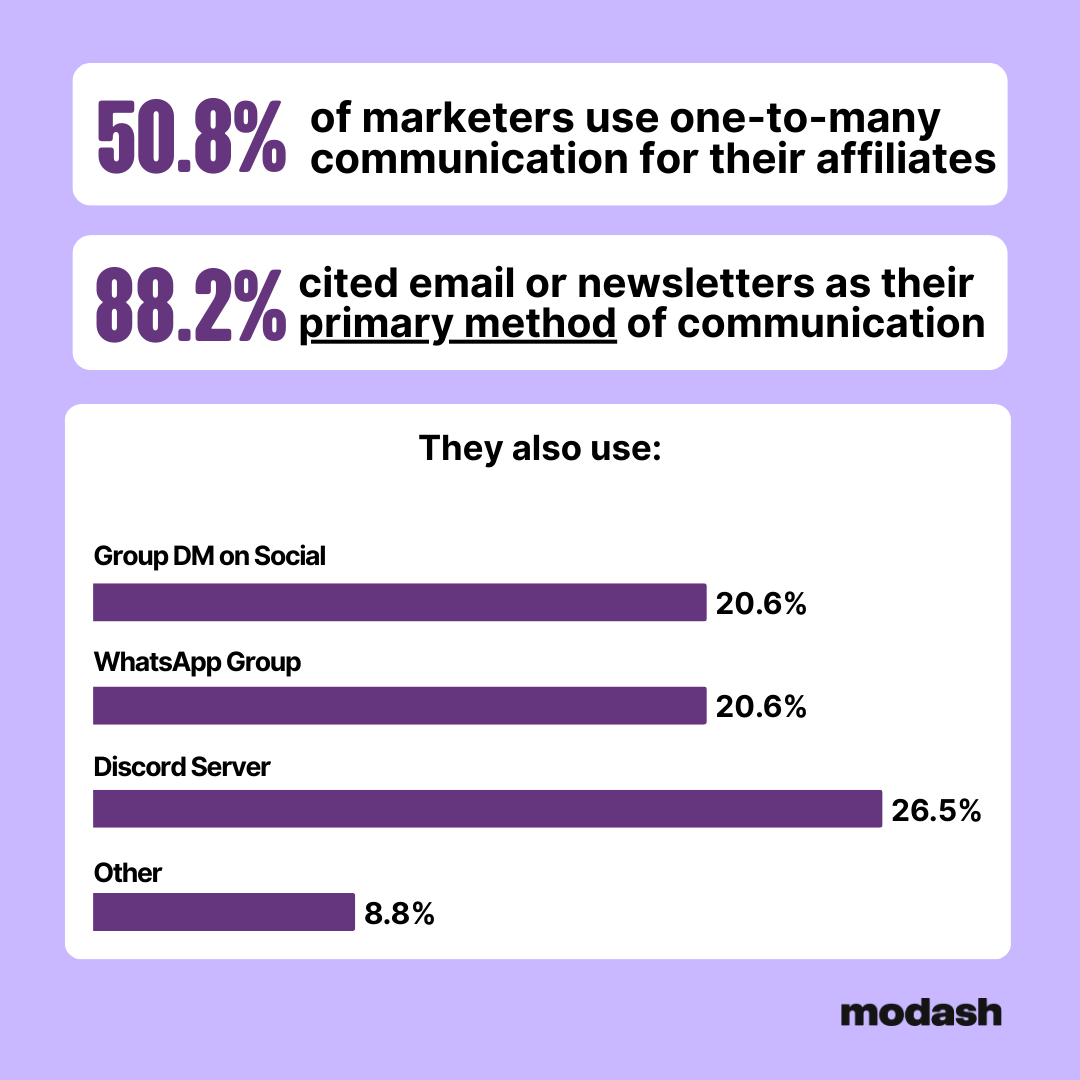
It’s likely that your best affiliates are already in your orbit. Our survey found that nearly half of marketers are constantly recruiting new affiliates, but barely tapping the partners they already have – half of respondents said less than a quarter of their influencer partners also double as affiliates. That’s a huge missed opportunity.
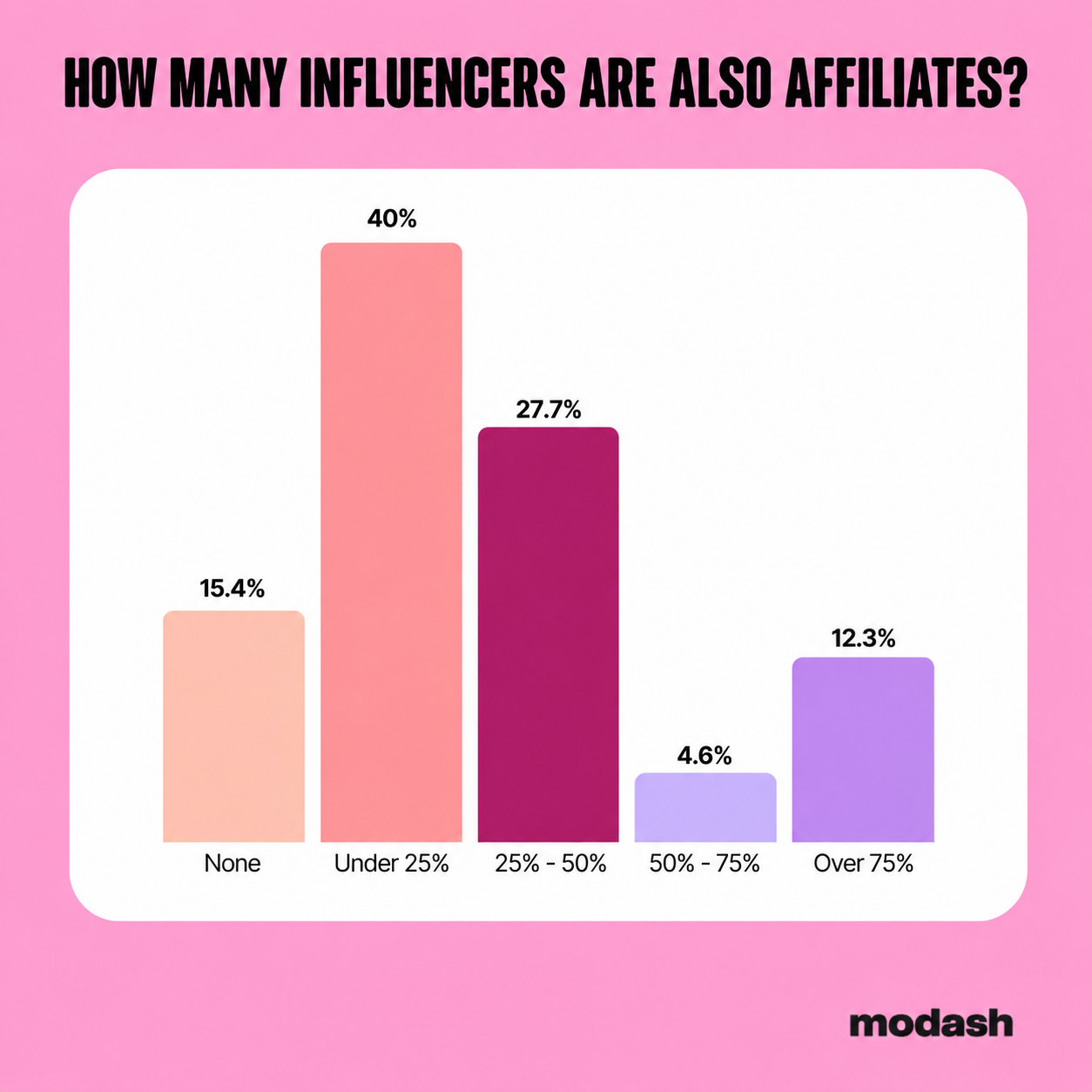
Start with who you already know:
Once you’ve tapped into resources you already have, begin expanding your affiliate hunt outward:

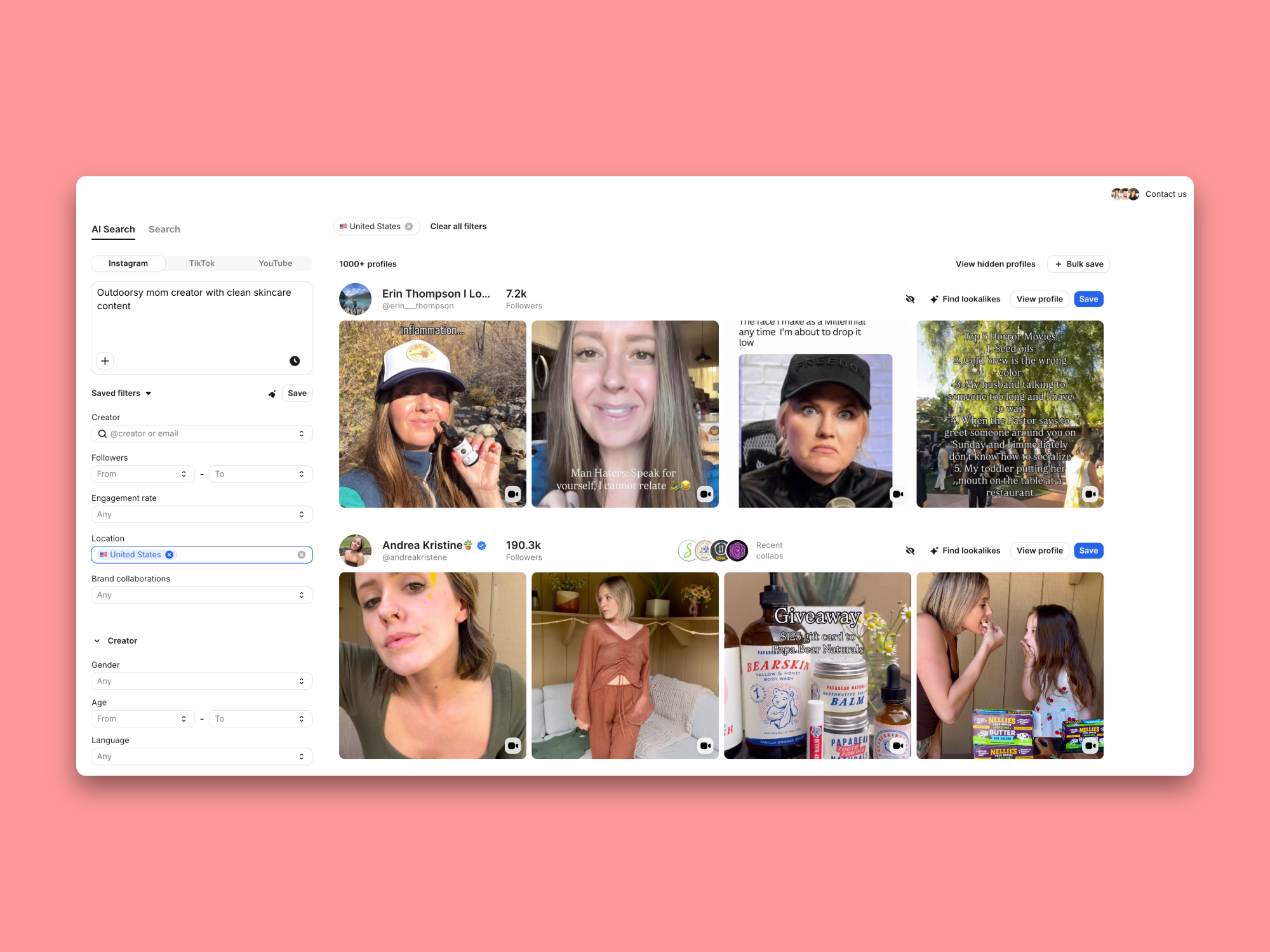
Modash’s AI search can come in handy here to help you find creators using plain language – something like “Outdoorsy mom creator with clean skincare content.” It’ll surface matching creator profiles and you can also layer in filters to make your search more specific.

Remember: vetting creators thoroughly matters as much as finding the right ones. Not every creator who looks good on the surface will be a good affiliate. Before you accept anyone – whether they applied through your landing page or you found them proactively – check whether they’re truly a brand fit.
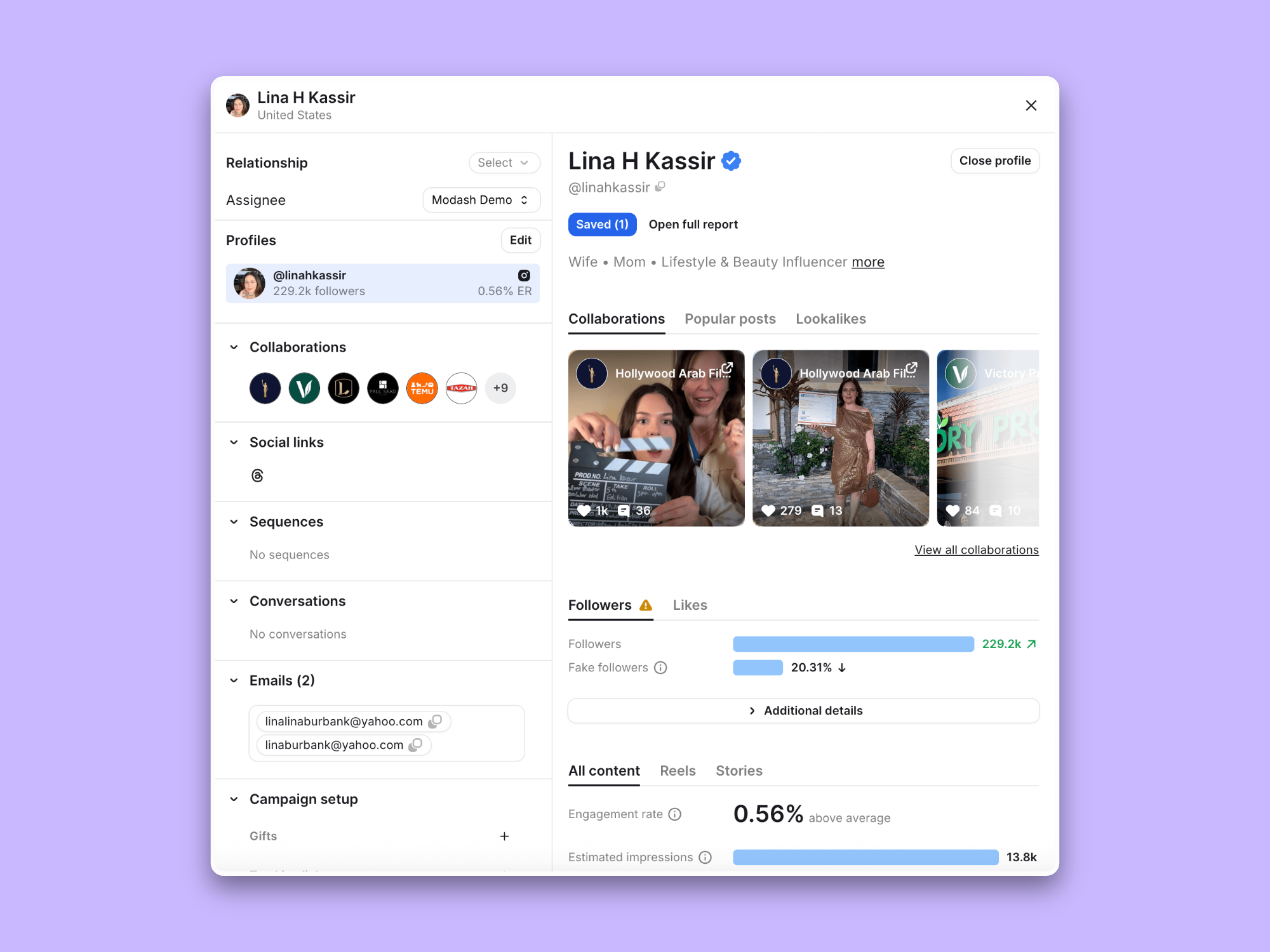
Modash shows you the full breakdown on a creator – demographics, locations, interests, sponsored content, high performing posts, etc. – so you can spot whether or not a creator is the right fit in seconds.
Finding creators is only half the job. You still need to convince them to say yes – and a generic “we'd love to work with you” email isn't going to cut it, especially when creators are getting dozens of these a week.
The best outreach does three things: it shows you’ve actually looked at their content, it makes the offer clear and specific, and it makes saying yes easy.
What to include in your outreach:
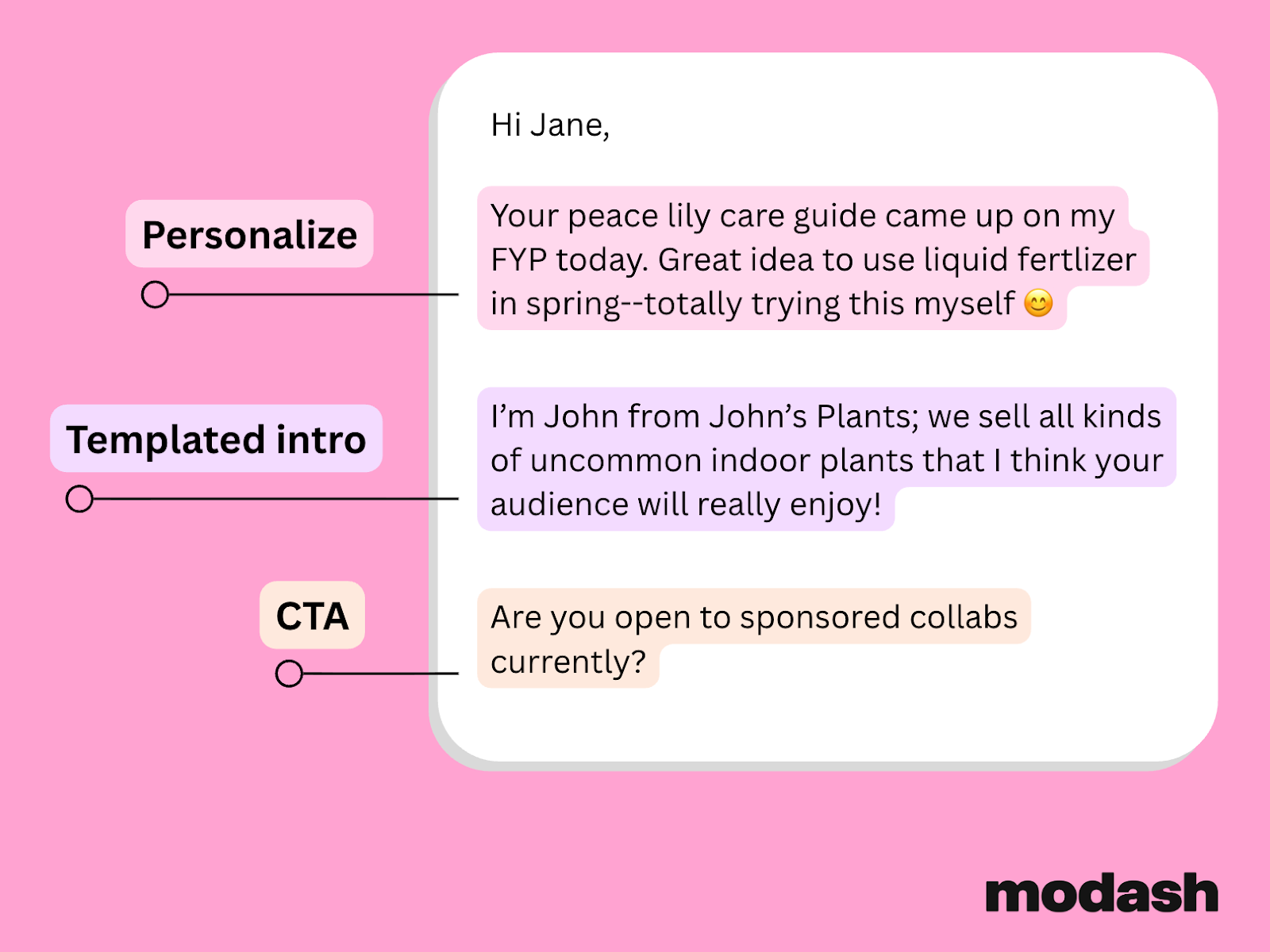
You can templatize the stuff about your affiliate program, but personalize the rest. Here’s an example of a good, partially-personalized outreach email:
In Modash, you can handle outreach directly from the platform – with the creator’s full profile visible in the sidebar while you write. That means you can reference their engagement rate, recent content, audience demographics, and past brand collabs without switching tabs.

You can also use outreach templates for the basics and customize per creator, and set up automated follow-up sequences that trigger if you don’t hear back – so you’re not manually tracking who needs a nudge across a spreadsheet.

For outreach templates, personalization tips, and a full breakdown of how to activate new affiliates once they’ve signed on, check out our guide to recruiting and activating affiliates.
Recruitment gets someone to say yes. Onboarding determines whether they actually post.
After signing up, a lot of affiliate programs gradually fall apart. A creator agrees to join, receives a discount code in a one-line email, and then... nothing. They get no guidance on what to post, no product to work with, and no community to plug into. They go silent and you can’t blame them.
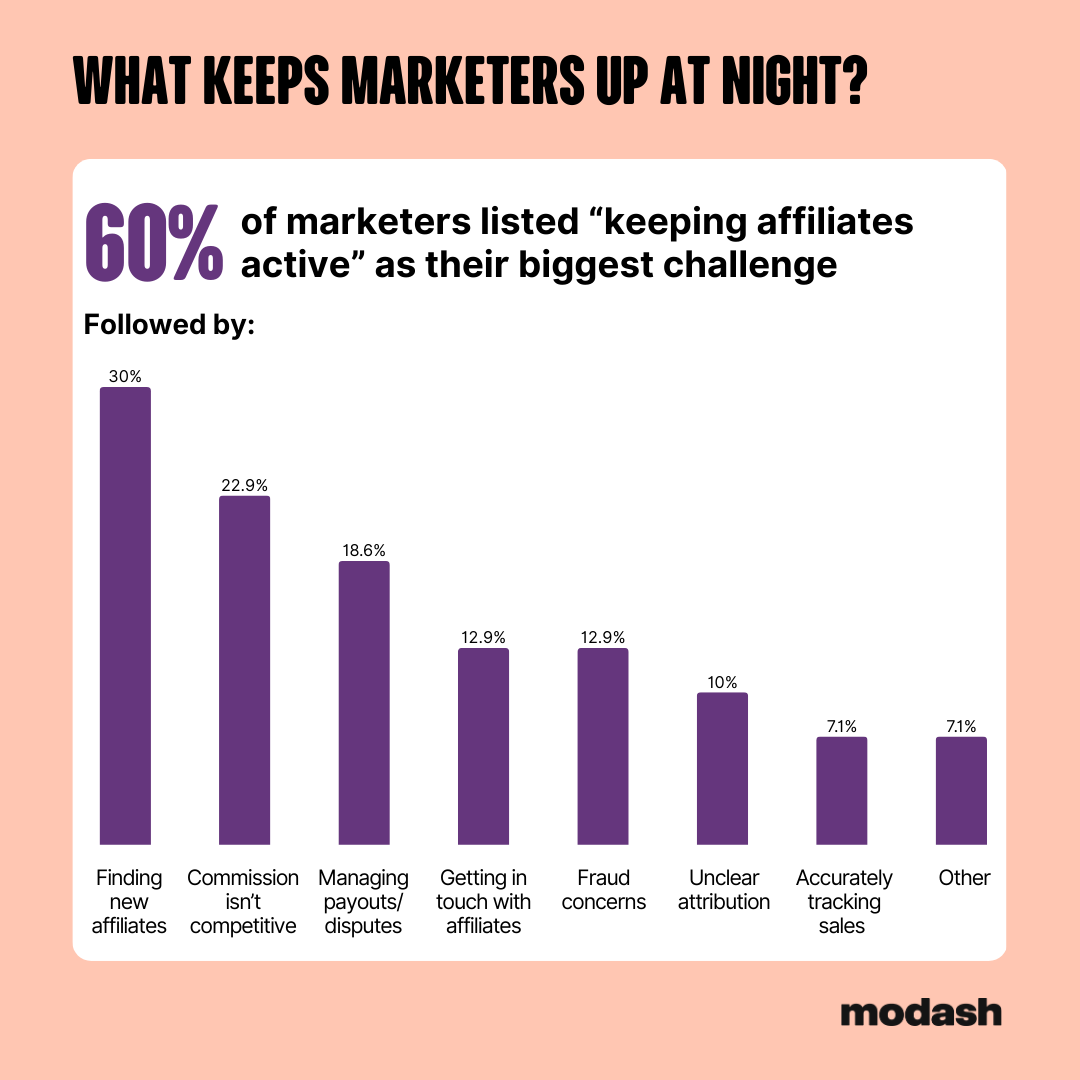
Our survey found that 60% of marketers say keeping affiliates active is their biggest challenge – but almost 30% describe their involvement as “hands-off.” The connection between those two numbers isn’t a coincidence.
Include the following in your routine to ensure you onboard affiliates well and keep them active for the long haul:
Some affiliates simply stop posting because they don’t have enough product to create new content. If you are not actively checking in with them, this can easily be misinterpreted as low motivation or lack of interest, when in reality it is a logistical issue.
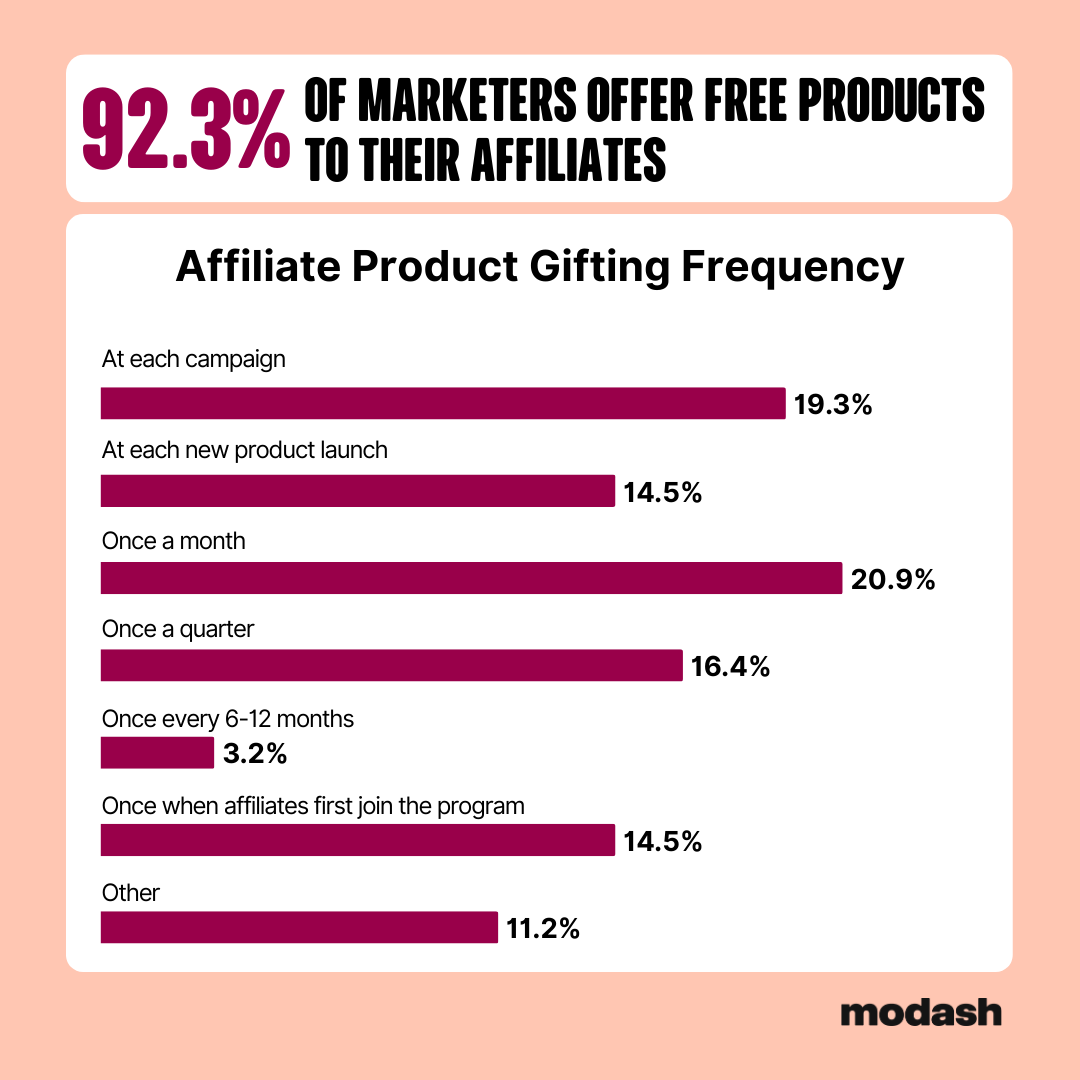
Our survey backs this up – 93% of marketers gift new products to affiliates, but almost 30% don’t refresh those products when new launches happen.
The first 30 days of a program matter the most. If you’re not seeing any activity within the first 30 days, reach out – don’t just wait and hope. It could be a tracking issue, confusion about the program, or simply that they need a nudge to get started.
Set a reminder to check in with every new affiliate after their first week and again after 30 days. A quick “hey, how’s it going, need anything?” message can be the difference between an active affiliate and a ghost.
Once your affiliates are posting, you need to know what’s actually working – and more importantly, who’s working.
Here’s what you should track:
[There are] cases where conversions are mainly coming from existing customers, heavy discount usage, or code leakage. While revenue might look strong on paper, these affiliates can end up being unprofitable or adding little value to the program.

Modash tracks content automatically – even when creators forget to tag you – and calculates EMV, ROAS, and CPM per creator and per campaign. You can see at a glance who’s driving results, who’s gone quiet, and who needs attention, without pulling data from five different places.
But tracking performance isn’t just about reporting, it’s also about making roster decisions. After the first 90 days, you should have enough data to sort your affiliates into three buckets: invest more, maintain, or cut.
Fiorella evaluates affiliates across several dimensions – not just revenue – before deciding what to do with them:
Affiliate programs should be managed like a portfolio where each partner justifies their place either through revenue, potential, content value, or strategic importance.
Here are some signs to look out for to understand when you should cut (or deprioritize) an affiliate and when you should invest more in them, according to Fiorella:

The goal isn’t to ruthlessly cull your roster – it’s to redirect your time and budget toward the affiliates who are actually moving the needle, and give a clear off-ramp to the ones who aren’t.
Here’s a quick recap of what to do (and in what order):
The biggest takeaway from everything we’ve covered is that affiliate programs reward effort. The brands that treat affiliate marketing like a real channel and invest time, budget, and attention into it are the ones seeing success.
That effort gets a lot easier when your tools aren’t working against you. Modash handles discovery, outreach, Shopify-native tracking, product gifting, tiered commissions, automated global payouts, and reporting in one platform – so you can spend your time on relationships and strategy instead of spreadsheets and manual payout calculations.
Start a 14-day free trial – no credit card required.
And if you want a data-backed look at what separates affiliate programs that perform from the ones that stall, read our Effort Gap report.
The biggest costs are product seeding, commission payouts, and your affiliate software. You don’t need a huge upfront budget – commissions are performance-based, so you only pay when affiliates drive sales. Software costs vary depending on the platform and what features you need. The real investment is time: someone on your team needs to actively manage the program for it to work.
It depends on your margins, AOV, and product type. Our survey found average commission tiers of 10%, 14%, and 19% across a three-tier structure. Lower-AOV brands tend to need higher percentage rates to keep payouts attractive, while high-AOV brands may benefit from flat-dollar commissions to control costs. Run the math on your own unit economics before picking a number.
Fewer than you think. 10-20 active affiliates who post consistently will outperform 100 who signed up and went silent. Focus on activation rate – what percentage of your affiliates are actually creating content – rather than total headcount.
An influencer program typically involves paying creators upfront (flat fee or gifting) for content. An affiliate program pays creators based on performance – usually a commission on each sale they drive. Many brands run both, and some use hybrid models where creators receive a base fee plus commission. The two aren’t mutually exclusive, and your existing influencer partners are often your best affiliate candidates.
Set clear program terms that define what counts as fraud (code leakage, running unauthorized paid ads with affiliate codes, fake leads). Use hold periods on payouts so you can catch returns and suspicious activity before commissions are paid out. Monitor for sudden spikes in code usage that don’t match post engagement. And vet creators thoroughly before accepting them into your program – audience quality checks and sponsored content history go a long way.
You can absolutely run it in-house – and for creator-led programs, it’s usually the better option because you get more control over relationships, brand representation, and program flexibility. But you do need an affiliate tool to manage operations, even in-house. Networks make more sense if you don’t have a dedicated manager yet, want to test the channel with minimal setup, or sell broad-appeal products and want access to traditional affiliate types at scale.