

More tools
Use cases




Search “science” influencers and you’ll drown in polished feeds – but most are clickbait facts with no accuracy, not telling you how to explain a concept simply or which claims actually hold up. Reach is the easy part, alignment is what’s hard.
Here’s how to find creators whose audience already trusts them – the fast way with a discovery tool, plus the free manual methods if you’d rather do it by hand.
First, get clear on who you’re selling to – a 20 to 45 audience into science and learning – because that’s what you’ll search on.
Modash lets you describe the science creator you’re after in plain language – “creators who post accurate, engaging science explainers” – and its AI search surfaces matching creators on the platform you’re searching (Instagram, TikTok, or YouTube).
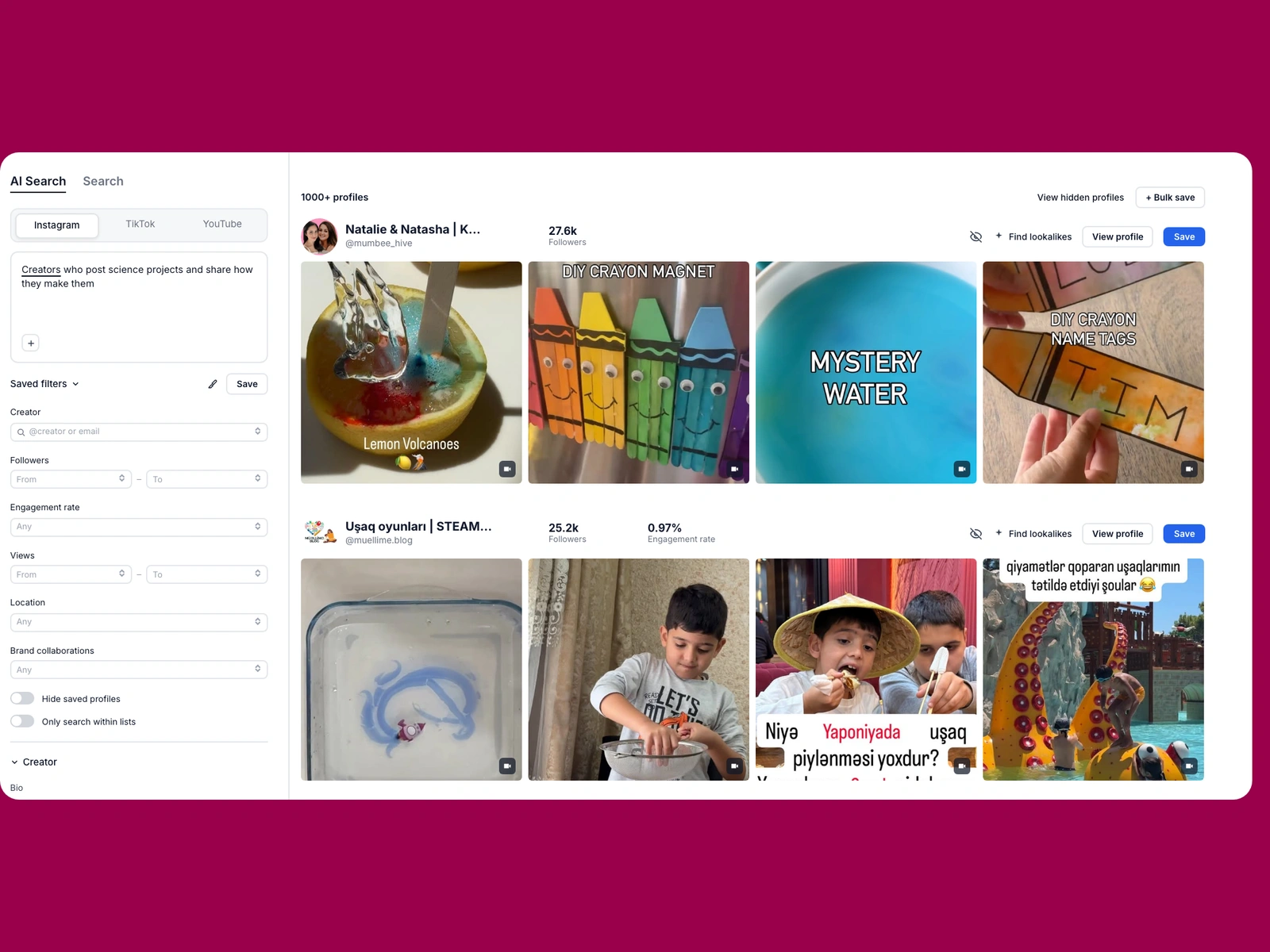
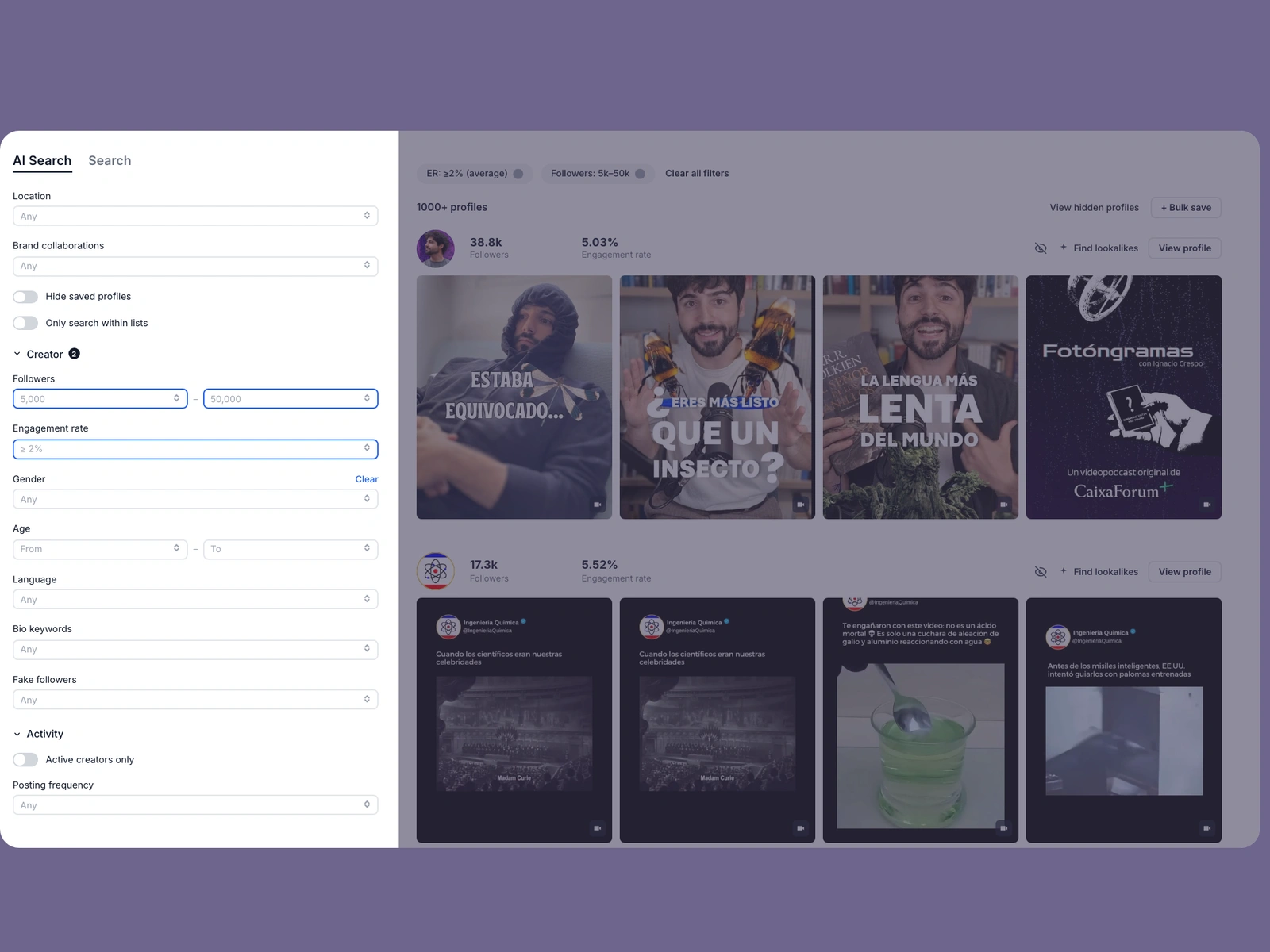
Or skip the description and filter instead: Modash’s database of 380M+ creators lets you narrow by audience demographics (age, gender, location), bio keywords, engagement rate, and fake-follower checks.
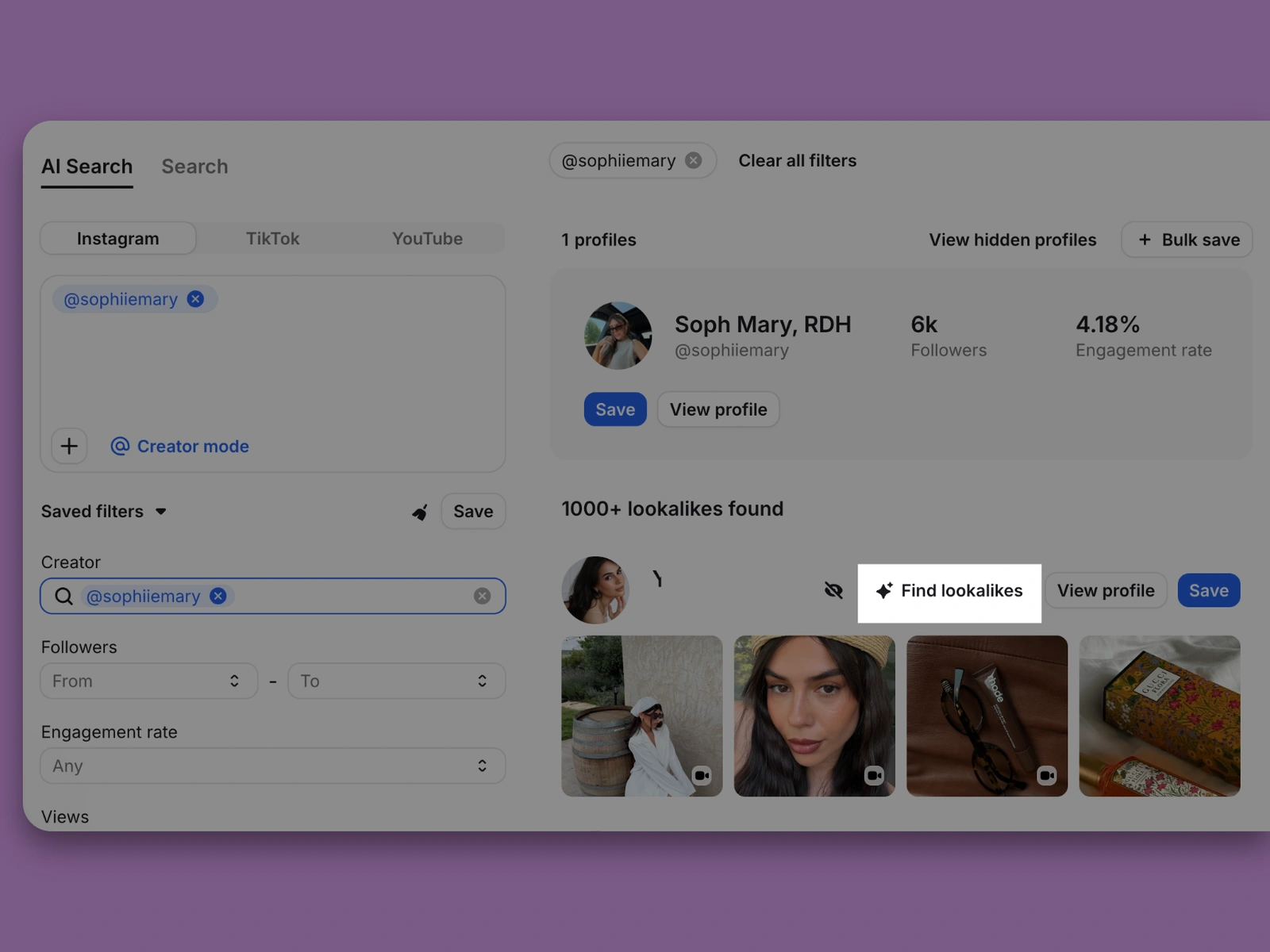
Found one creator who fits? Lookalike search takes that profile and surfaces similar ones – you stay in control of audience location, size and engagement instead of trusting an opaque feed algorithm.
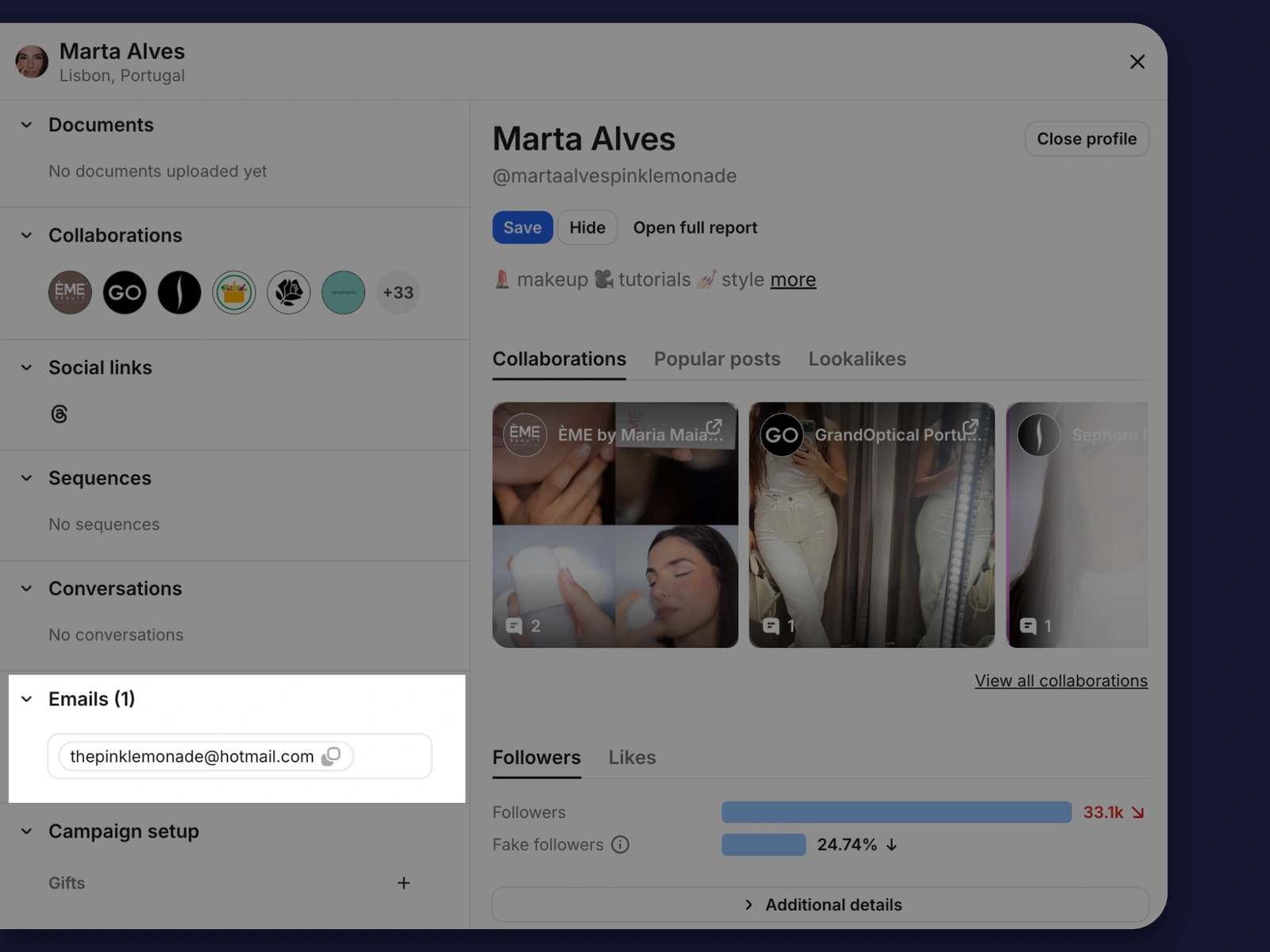
Every profile comes with contact details you can export, so outreach starts right away instead of after an email hunt.
Discovery is the hard part, but it isn’t the whole job. Once you’ve built a shortlist, Modash also manages the relationships, pays creators across 180+ countries and 36 currencies, and ties posts back to real sales through its Shopify integration – with no fees taken out of creators’ pay. You can try it free, no credit card required.
The methods below are free. They take more time and won’t tell you whether an audience is real or where it’s based – but they’re a good way to get a feel for the niche and build a starter list.
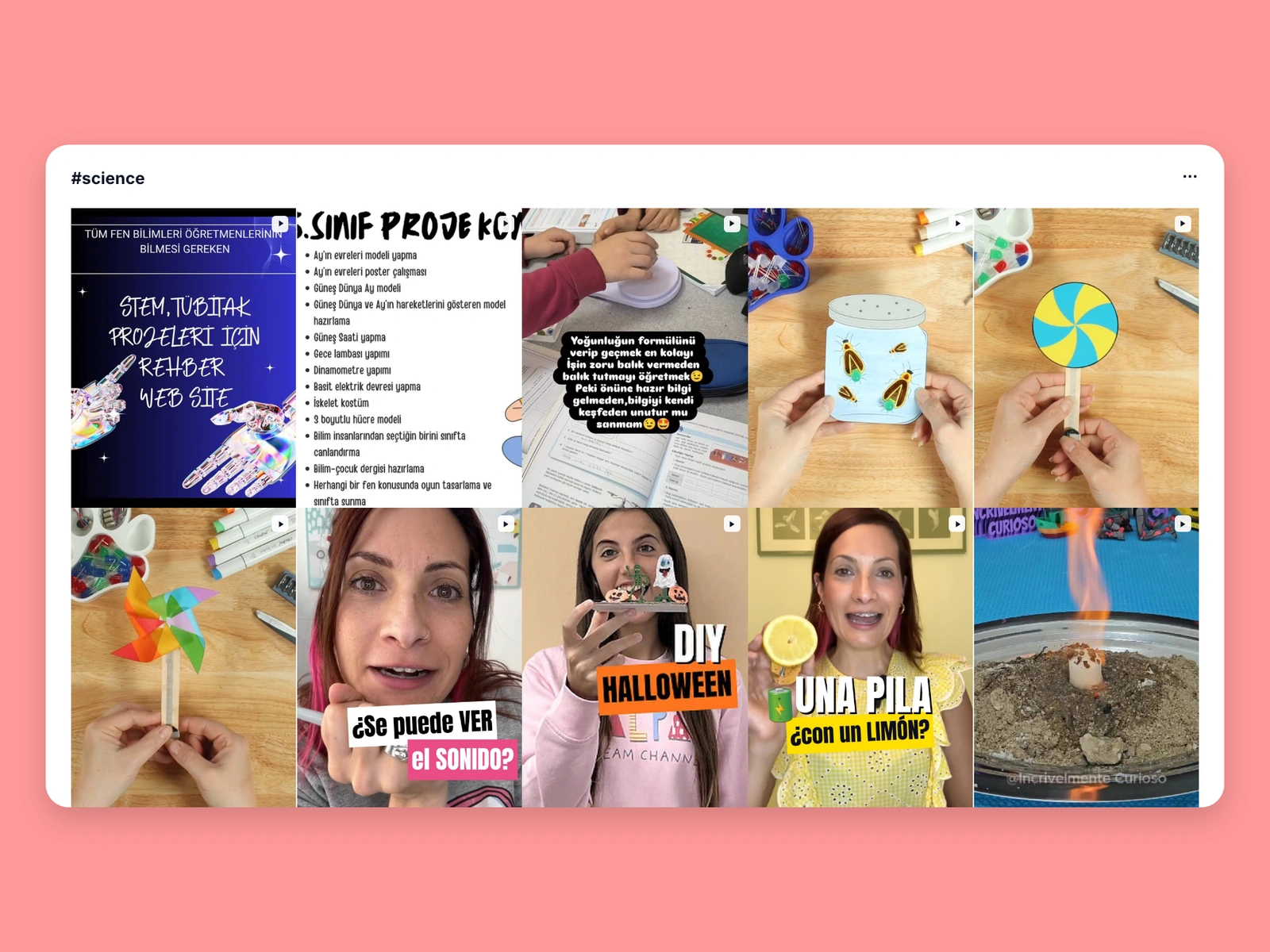
Search science hashtags – #science, #stem, #sciencefacts, #scicomm, #learnoninstagram – and sort by recent to catch creators who are still actively posting.
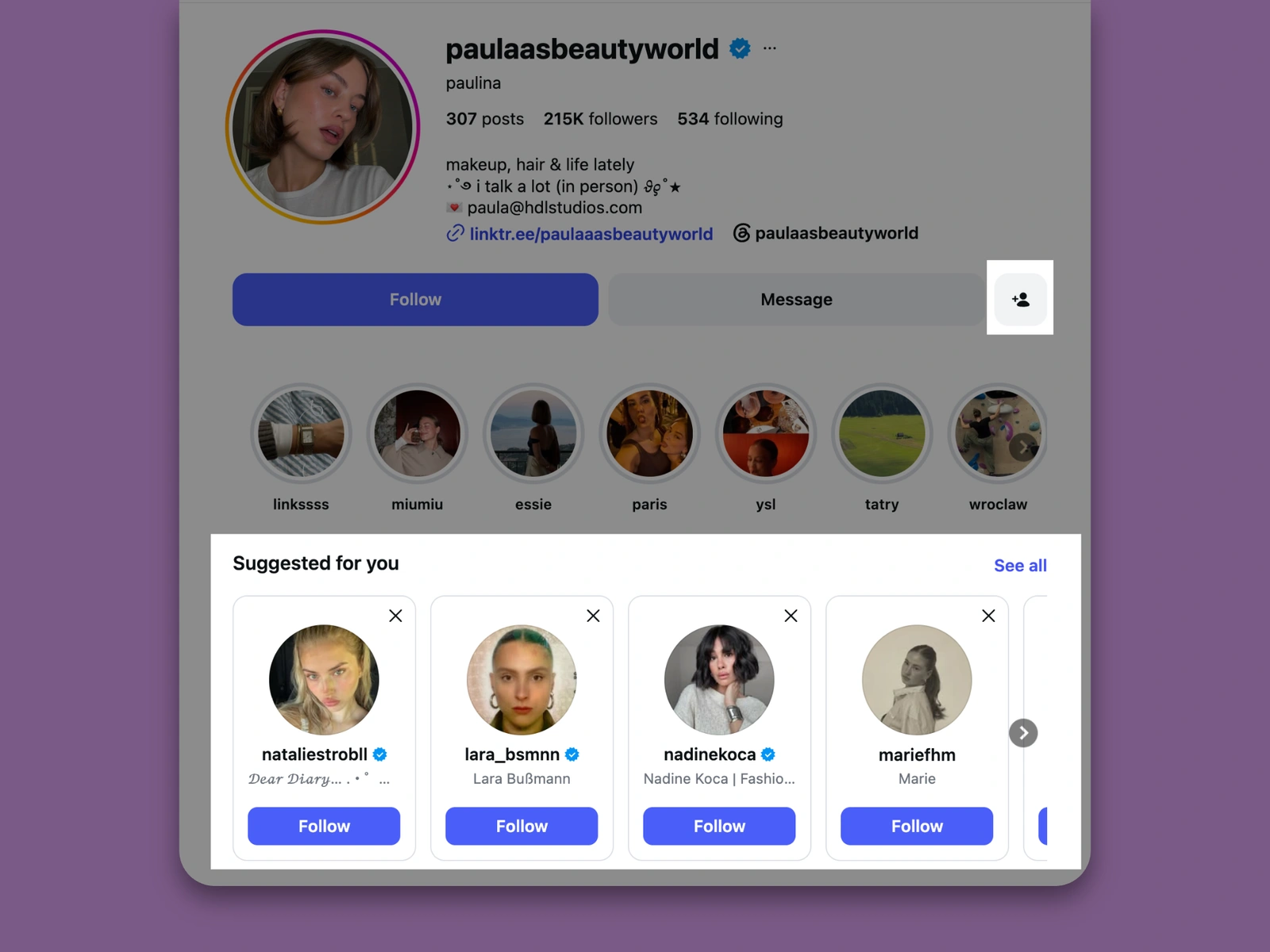
The search bar works for plain keywords too, and it returns accounts, not just posts. Open a profile that fits, tap the chevron next to Follow, and Instagram’s “Suggested for you” row surfaces similar accounts – the free, unfiltered cousin of a lookalike search. Branch outward from each strong profile.
For a more structured route, Instagram’s Creator Marketplace (inside Meta Business Suite) lets you filter creators by niche and audience and send partnership offers directly – though it only covers eligible countries and creators who’ve opted in.
For the full walkthrough, see our guide to finding Instagram influencers.
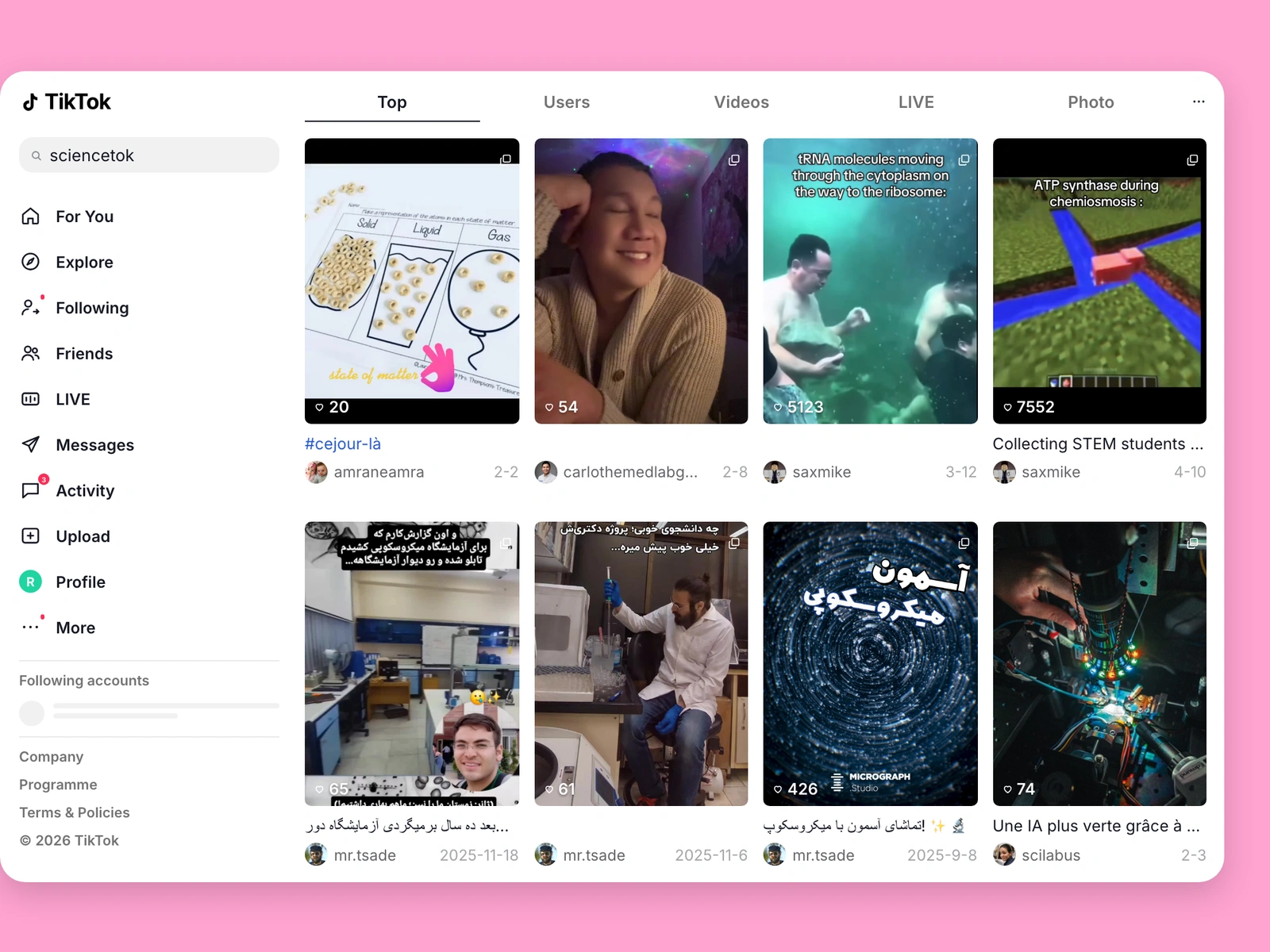
Search the same tags plus condition-specific ones like #sciencetok or #stemtok, and use the search bar for plain keywords too – it returns creators as well as videos. Watch for creators who get a steady stream of comments about the products they use – that’s buying intent.
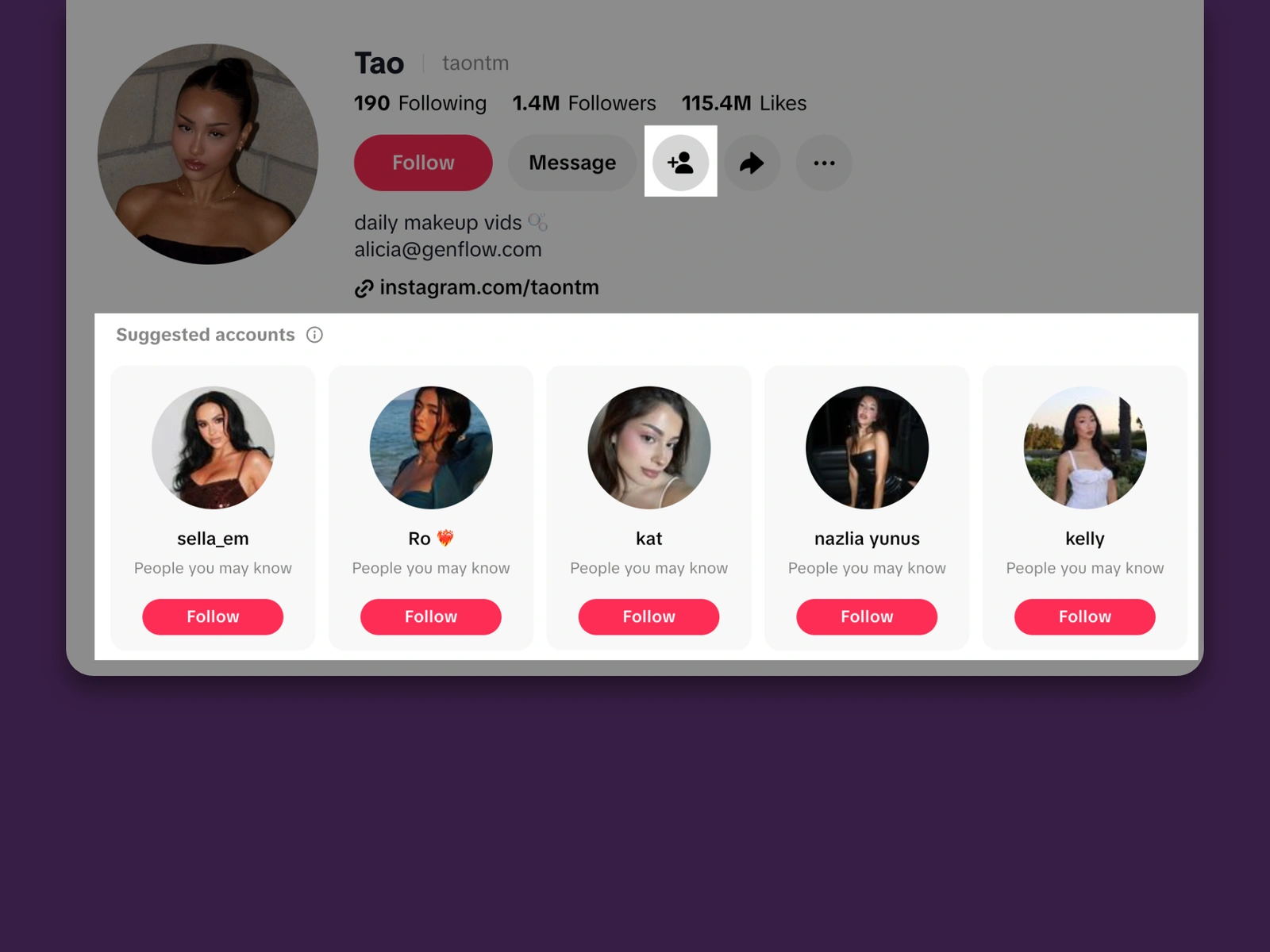
The arrow next to Follow on a profile opens a “Suggested accounts” list of similar creators.
For a more structured option, the TikTok Creator Marketplace (now part of TikTok One) lets brands filter creators by niche, location and engagement and reach out through the platform – you just need a TikTok Ads Manager account.
More detail in our guide to finding TikTok influencers.
Search the intent queries your customers use – “cool science experiments,” “science explained simply,” “stem for kids” – and note the channels behind videos with active comment sections.
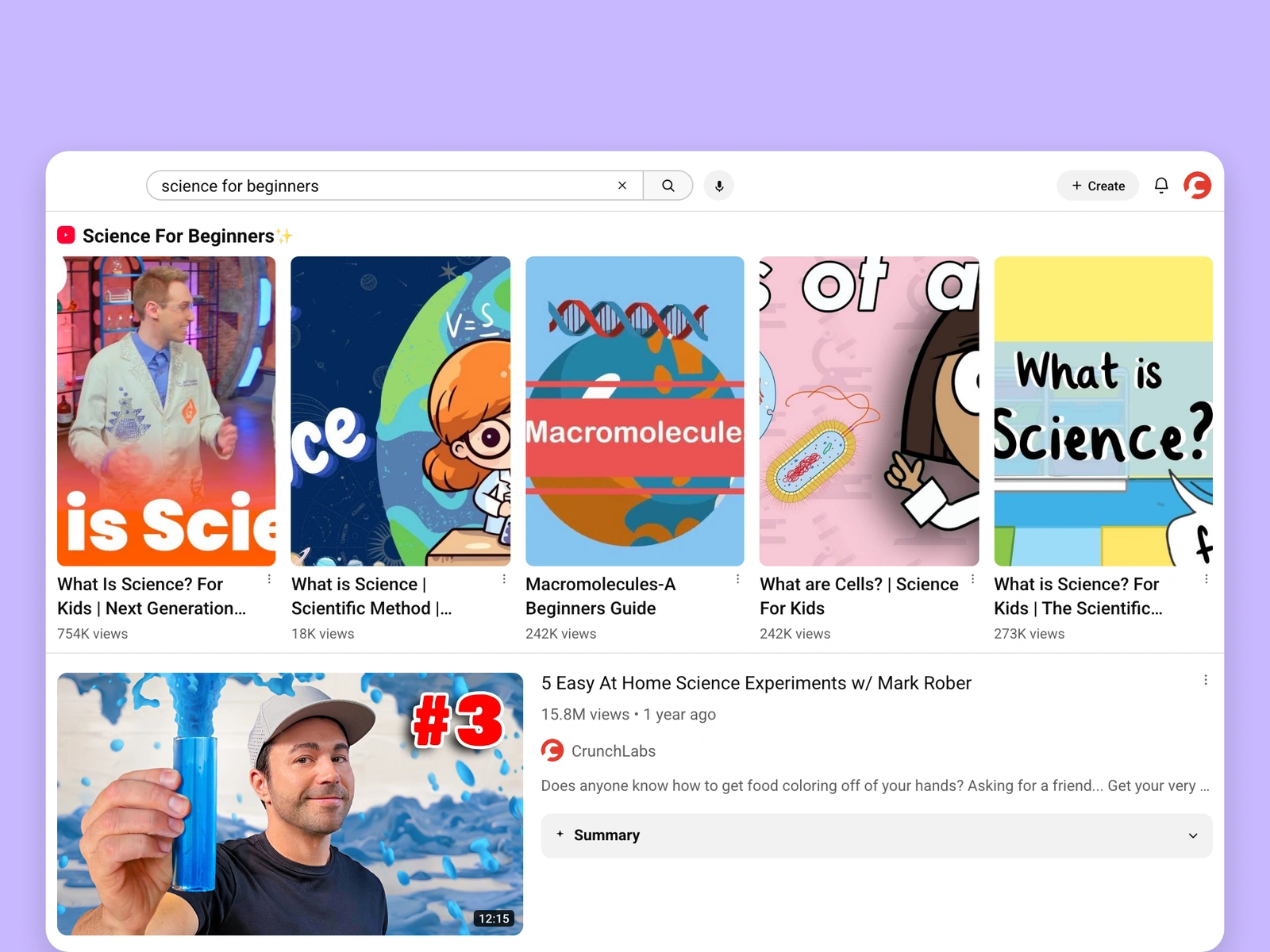
The recommended-videos sidebar is a fast way to find more creators in the same lane.
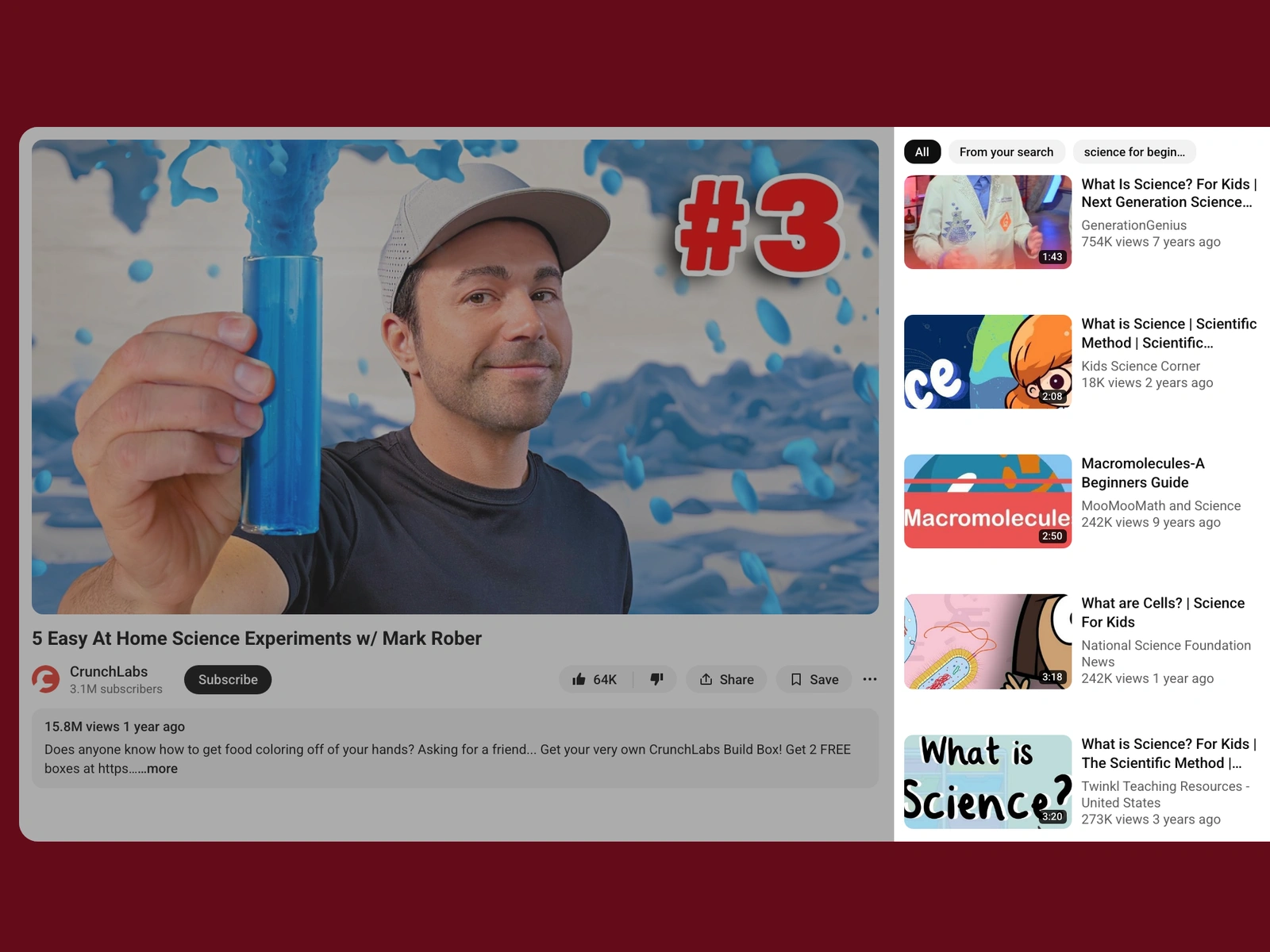
See our guide to finding YouTube influencers for more.
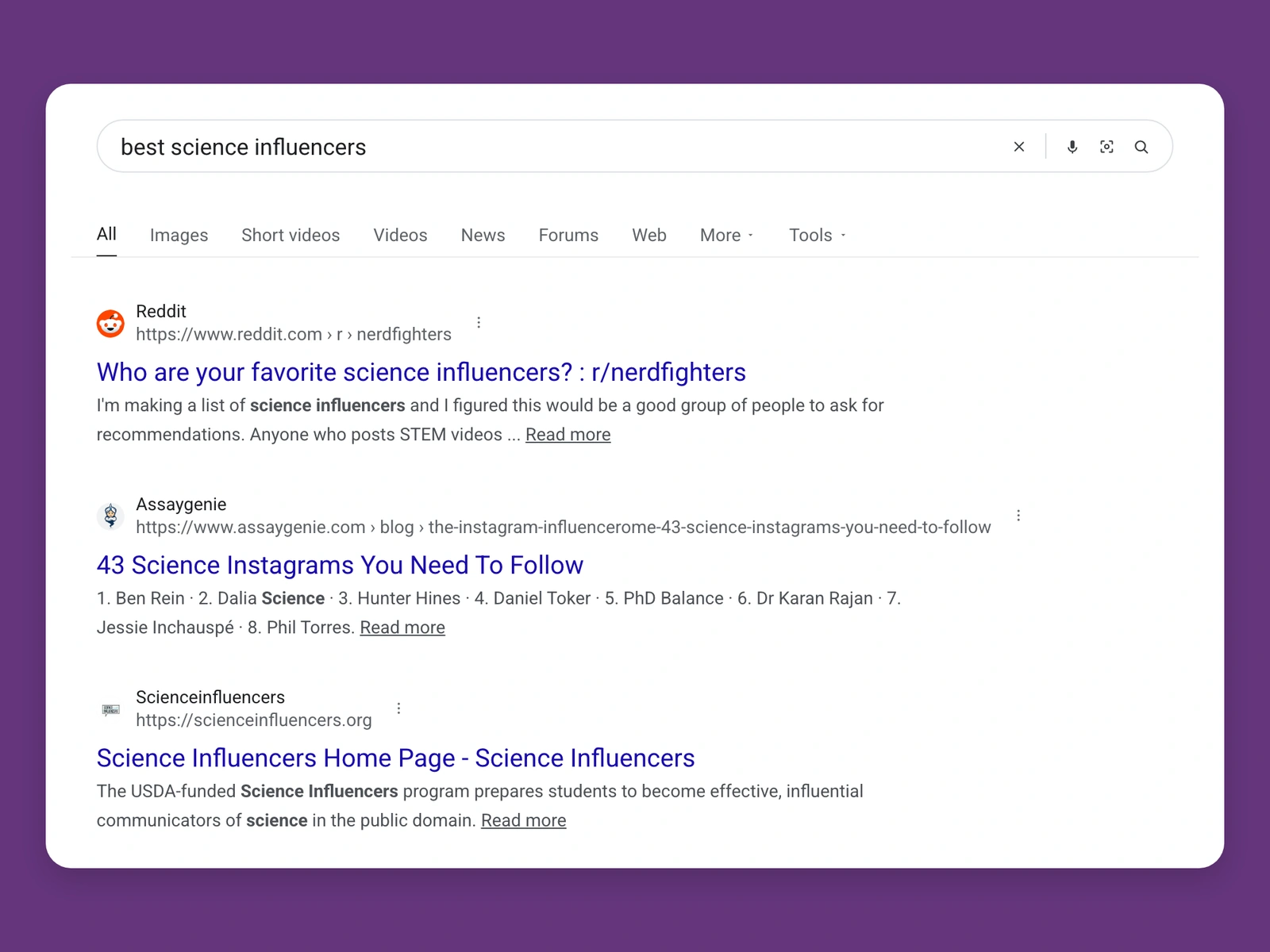
On Google, search “best science bloggers” or “science influencers [your city]” and mine the roundups and niche articles that come up – most bloggers cross-post to Instagram and TikTok, so one good list can seed dozens of profiles.
AI tools like ChatGPT, Perplexity, Gemini or Claude can shortcut this. Ask something specific: “List 15 micro science influencers on Instagram who post accurate, engaging science explainers, based in the US.”
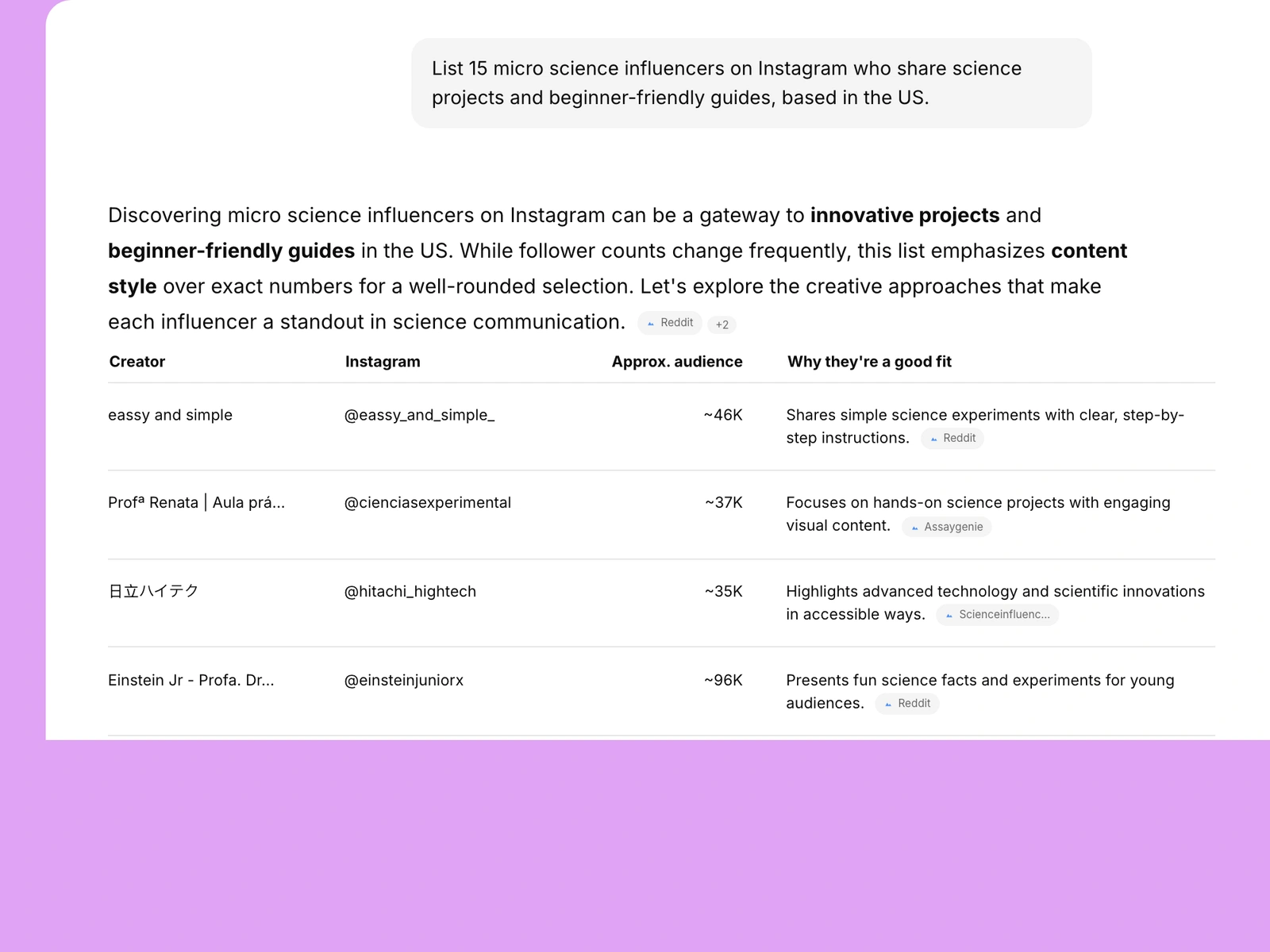
Treat the output as a starting list, not gospel – LLMs can invent handles or lean on stale data, so open every profile to confirm the creator still posts and their audience actually fits.
It varies widely by platform, following and engagement. Micro-influencers often work for a free product plus a fee in the low hundreds per post, or an affiliate commission; larger creators charge more. Many brands start with gifting plus commission to test fit before committing to flat fees. To estimate what a specific creator is likely to charge, drop their handle into our free Instagram influencer pricing calculator for a CPM-based price range in seconds.
It depends on your goal – a launch chasing awareness leans bigger, a conversion play leans smaller and more trusted. That said, for most science brands and most objectives, the 5k–50k range (micro-influencers) is the sweet spot: small enough that a recommendation still feels personal, big enough to move product.
Check engagement rate against follower count, read the comments for genuine interaction, and confirm the audience is in the countries you sell to. Two free tools make this quick: run any profile through our engagement rate calculator to benchmark it against creators of the same size, and our fake follower checker to spot an inflated audience before you pay for reach that isn’t real.
Follower count and a one-off viral post both mislead. Our free Instagram average views calculator shows a creator’s typical views, so you can gauge repeatable reach before you negotiate rates.
You’ll usually find it in the creator’s bio, their Linktree, or a linked second account. To skip the hunt, our free Instagram email finder pulls the publicly listed email for a profile in one step – it draws on public sources, so if a creator has genuinely never posted an email anywhere, no tool will have it either.
Build a shortlist in minutes instead of spending days searching for the right creators manually. Try Modash free, no credit card required – or browse the top science influencers to see who’s already out there.