

More tools
Use cases



There’s no skirting around the fact that a large chunk of affiliate outreach emails get ignored. Most of the time, it’s got nothing to do with the creators you picked, and everything to do with what you included in your pitch.
Usually, there’s one glaring issue. In a paid collab, the brand carries the risk because the creator gets paid whether or not the content performs. Affiliate outreach flips that because there’s no guarantee a creator will make any sales (and, therefore, they won’t make any money). Most outreach emails don't acknowledge that at all – they copy-paste the influencer-collab template, swap in a commission rate, and wonder why nobody replies.
So the real question is: how do you make "work with us for a cut of sales" sound worth someone's time when there's no guaranteed payout? That's what we cover here, as well as the anatomy of an affiliate pitch that gets replies, real affiliate-specific examples, and how to keep your outreach engine working once you're sending at volume.
Influencer outreach is asking a creator to make content in exchange for a fee.
Affiliate outreach is asking a creator to promote your product in exchange for a cut of whatever it sells.
There are two things that make affiliate outreach a harder sell.
The first is risk. In a paid collab, the brand carries all the risk because the creator always gets paid. In affiliate programs, the creator carries the risk. This changes what your outreach email needs to do. It’s not enough to just be nice or on-brand, you also have to make your program sound tempting enough that a creator is willing to take a bet on you.
Even hybrid deals (a flat fee plus commission) don't fully take the creator off the hook. The flat portion is usually lower than what they'd make from a flat-fee-only collab, the "performance" part still hinges on direct conversions, and there's an opportunity cost either way: they could've played it safe with a flat-fee deal from another brand instead.
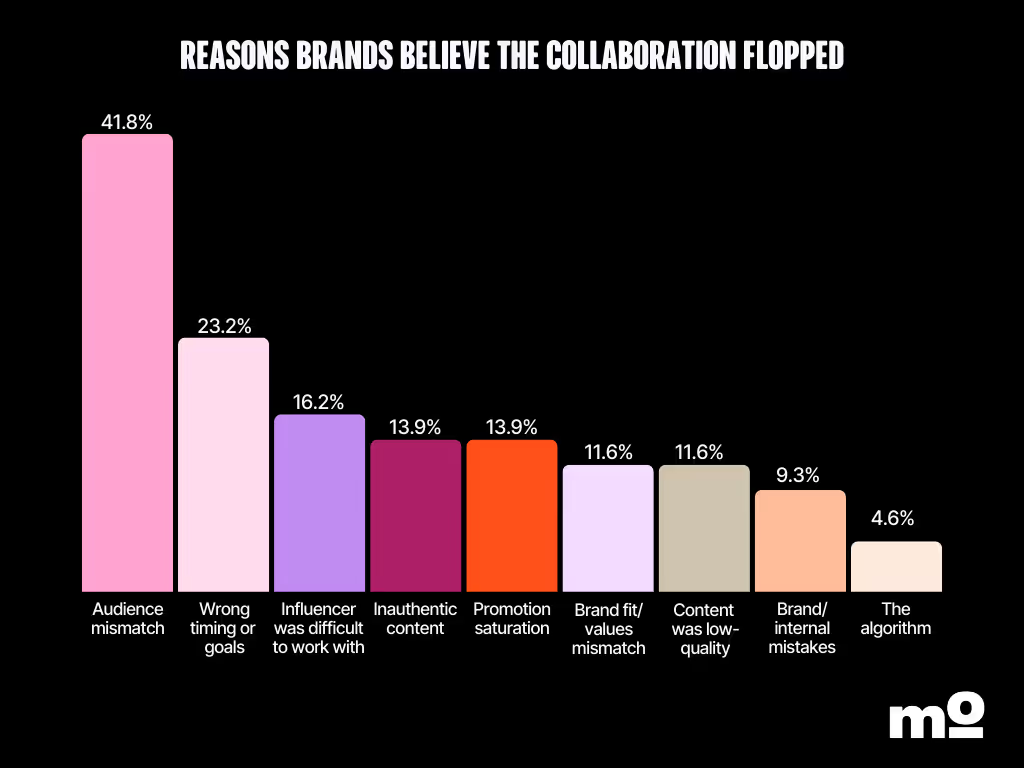
The second is fit. Creators only get commission if their audience buys what you’re selling. Basically, “decent engagement” isn’t enough. In fact, our research has found that audience mismatch is the number one reason brands say creator collabs fail.
All of this means the standard outreach playbook of personalizing one line, following up three times, and you’re good to go doesn’t always work for affiliates. This advice is aimed at brands who are footing the bill regardless of how a post performs. It doesn’t account for the fact that you’re asking someone to work for free upfront in the hope that it pays off later.
The classic outreach anatomy looks something like this:
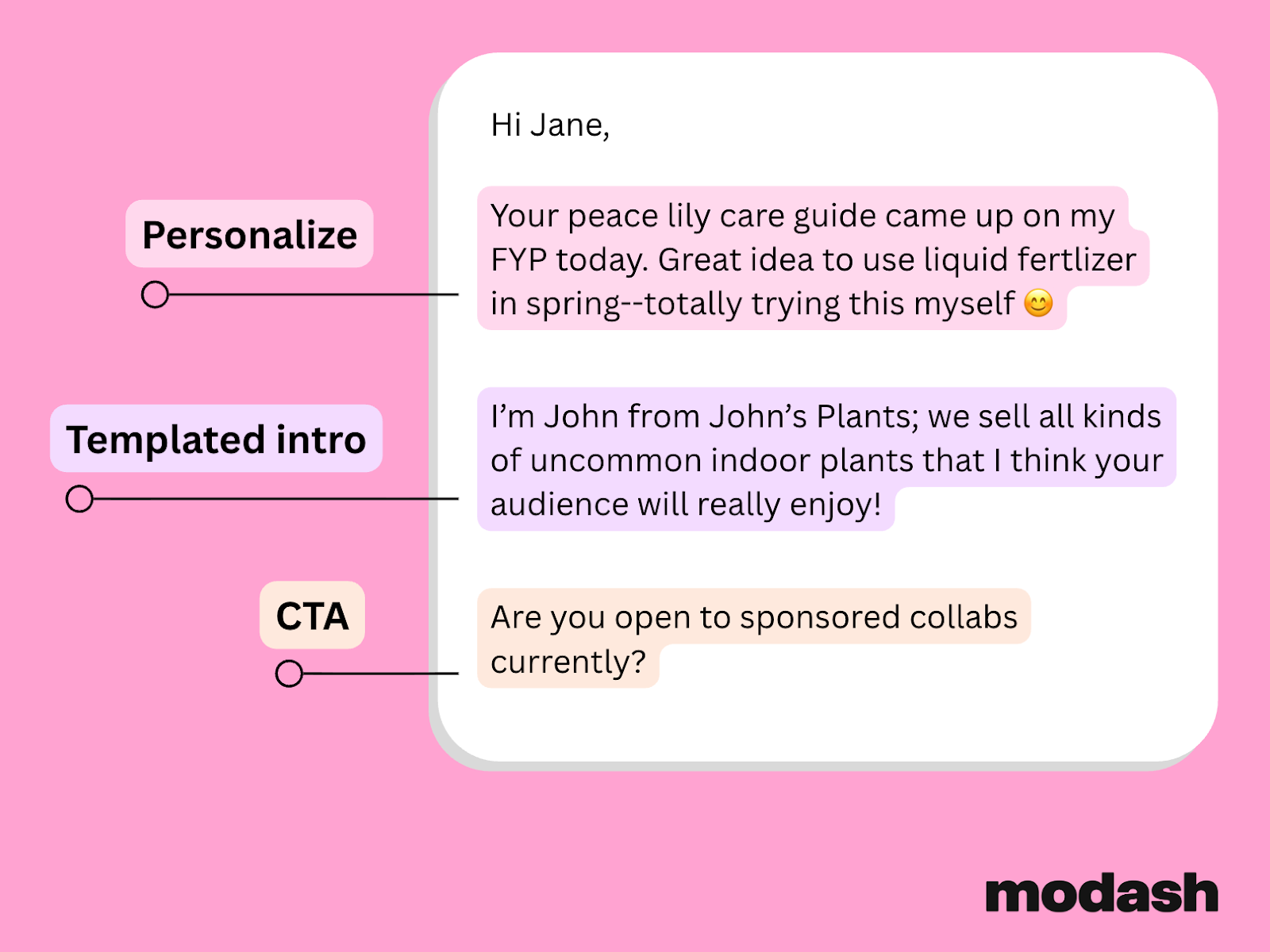
Personalize the opener, introduce yourself and the brand, then ask if they're open to working together.
But there’s a big caveat here. This format is built for a paid-collab pitch, and affiliate outreach needs more than that. This kind of straightforward three-step template works when you’re offering a flat fee (the creator just needs to decide if they like your brand enough to say yes). But it doesn’t always work when you’re offering only commission. This is because the creator not only has to weigh up whether they like your brand enough, but they also need to think about if their audience will actually convert and whether it’s worth their time.
The basic shape of this template can still work for affiliate outreach, but it needs a bit more structure. Below is the anatomy of an affiliate outreach email that accounts for all of the nuances that come with asking someone to take a bet on you.
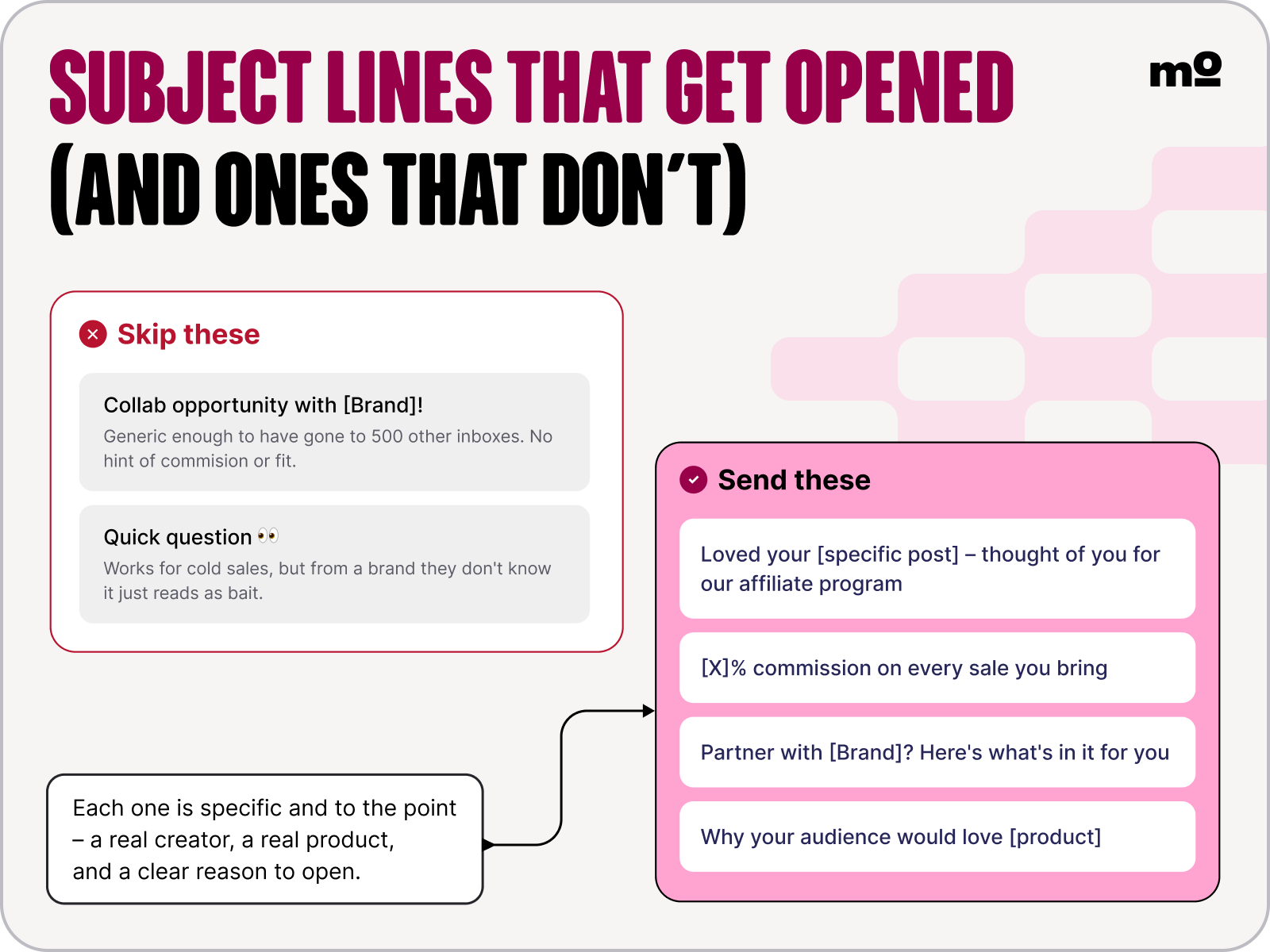
Most creators triage their inbox in about two seconds. Therefore, your subject line has one job: prove, before they even open the email, that this isn't a mass send or a typical paid-collab pitch.
That's a lot to ask of a few words, so it helps to know what not to do first:
Bad: "Collab opportunity with [Brand]!"
It's generic enough to have gone out to five hundred other inboxes, and it gives no hint that commission (or fit) is a huge part of the deal.
Bad: "Quick question 👀"
This one works fine for cold sales, where a little mystery might get you a click. From a brand a creator's never heard of, it just reads as bait… and creators can smell bait a mile off.
Good: something specific and upfront about what you're offering.
A few that do this well:
Notice how all of these are very to-the-point: this is a specific creator, a specific product, and (if it fits your niche) a specific number.
If it’s the norm to share commission upfront in your industry, do it in the subject line. It filters out anyone who wasn’t going to bite anyway, and it tells the right people you’re not about to waste their time.
Why can’t you just DM a creator? Our survey found 47.7% of marketers prefer email over DMs for that first outreach touch versus just 6.8% who go DM-first. That's partly because DMs are easy to miss, especially for creators who get plenty of them from their own audience too, while a business email in a bio is a much clearer signal. So, whichever creator you’re trying to reach, odds are your subject line is the first thing they’ll see.
It’s very common for influencer-outreach emails to start with some version of “we love your content!”, and why shouldn’t it? A little bit of flattery never hurt anyone. But affiliate outreach needs to do more than flatter, because you’re asking someone to bet that their audience will actually make a purchase.
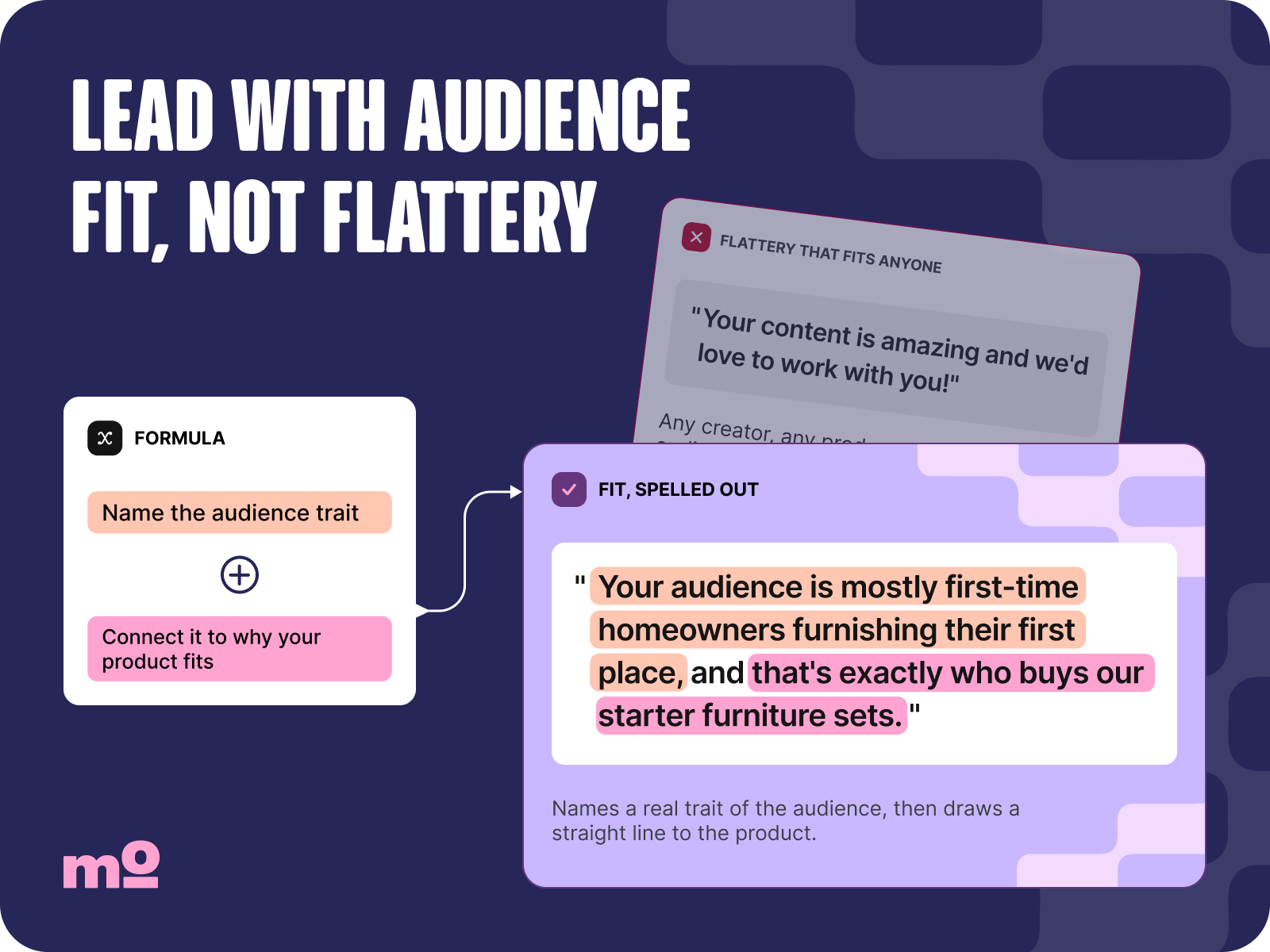
So, skip the compliment and go straight to the argument: why does this specific audience buy this specific kind of product?
For example, if you sell the kind of product a first-time homeowner would love and the creator’s audience skews toward first-time homeowners, actively call it out.
There’s a formula you can use here: name the audience trait, then connect it directly to why your product fits.
Bad: "Your content is amazing and we'd love to work with you!"
This could be copy-pasted into any email, to any creator, for any product. It says nothing about why this audience would actually buy what you're selling.
Good: "Your audience is mostly first-time homeowners furnishing their first place, and that's exactly who buys our starter furniture sets."
This highlights a real trait of the audience, then draws a straight line to the product.
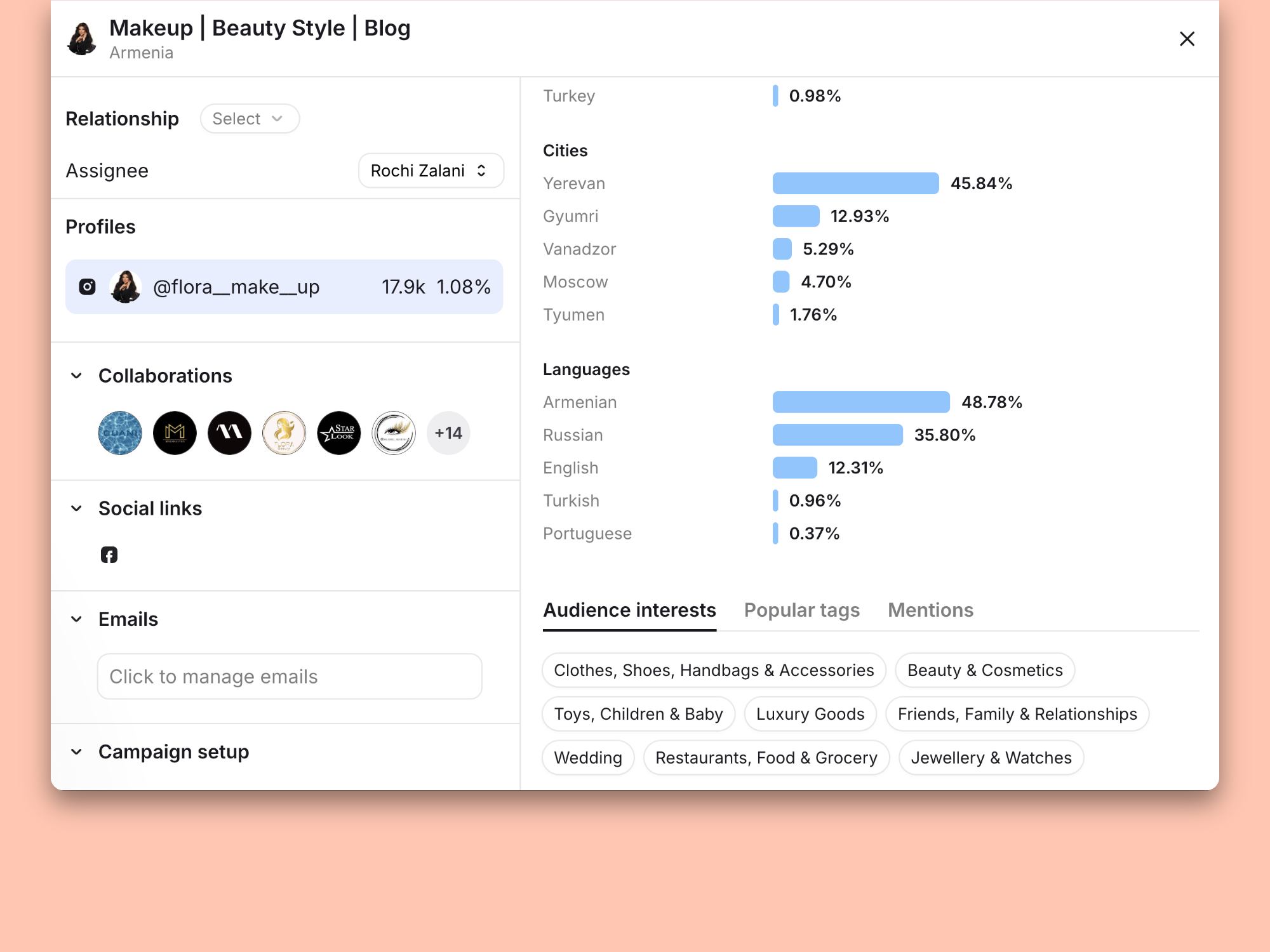
Modash can help you find good-fit creators here with its vetting capabilities. Each creator profile shows you audience demographics, past collabs, and what their audience is interested in, which all help you personalize your email and explain why you want to partner with this particular creator.
It’s easy to say “you’ll earn great commission”, but it means nothing to creators – what do you mean by “great”? Does your version of “great” match theirs?
Instead, give creators something to work with. That could be a real number (e.g., on your average order value, a creator earns roughly $X per sale). Or, if you’ve got one, an anonymized example of a real payout to a comparable affiliate (e.g. “one of our partners with a similar audience size earned $X last quarter”).
The good news is this isn’t as hard a sell as it might feel like. Over half the influencer marketers we surveyed said influencers are open to affiliate commission as an incentive. So, if you run into resistance, it might not be about the model itself, but more about how you’re pitching it.
Be very clear about three things:
Something like “you’ll earn 15% per sale, tracked for 30 days after a click, paid out monthly” works just fine.
The call-to-action (CTA) should ask for the smallest possible next step.
For most affiliate programs, the ask is about getting your product into the creator’s hands. You basically want to confirm their interest and send the product over.
It’s tempting to skip a few steps and give someone a link and code before they’ve even tried your product, but it’s much harder for them to authentically promote something to their audience that they haven’t even used themselves.
The low-effort CTA here is something like “reply yes and I’ll get [product] sent out to you”, with the link and code following once they’ve received and used your product.
Here are two examples of outreach emails, one that works as a cold pitch to new creators and one that works well for creators you already have a relationship with.
Example 1: cold pitch to a new-to-you creator
When you include everything we mentioned above (a juicy subject line, short body copy demonstrating how good a fit your product is, concrete commission math, and a low-effort CTA), you get something like this:
Example 2: warm pitch to an existing fan or influencer partner
This type of outreach can be shorter, because you already have a relationship with the person you’re pitching.
You don’t need to overtly layout the product-audience fit here because there’s already some history to work with. Even so, the CTA should still be low-effort and aim to get your product in the creator’s hands.
A lot of brands are sitting on an obvious opportunity they’re not using. Half of marketers say fewer than a quarter of their influencer partners also work as affiliates. So, before building your cold outreach list, check who you’ve already worked with and whether they would be a good addition to your affiliate program.
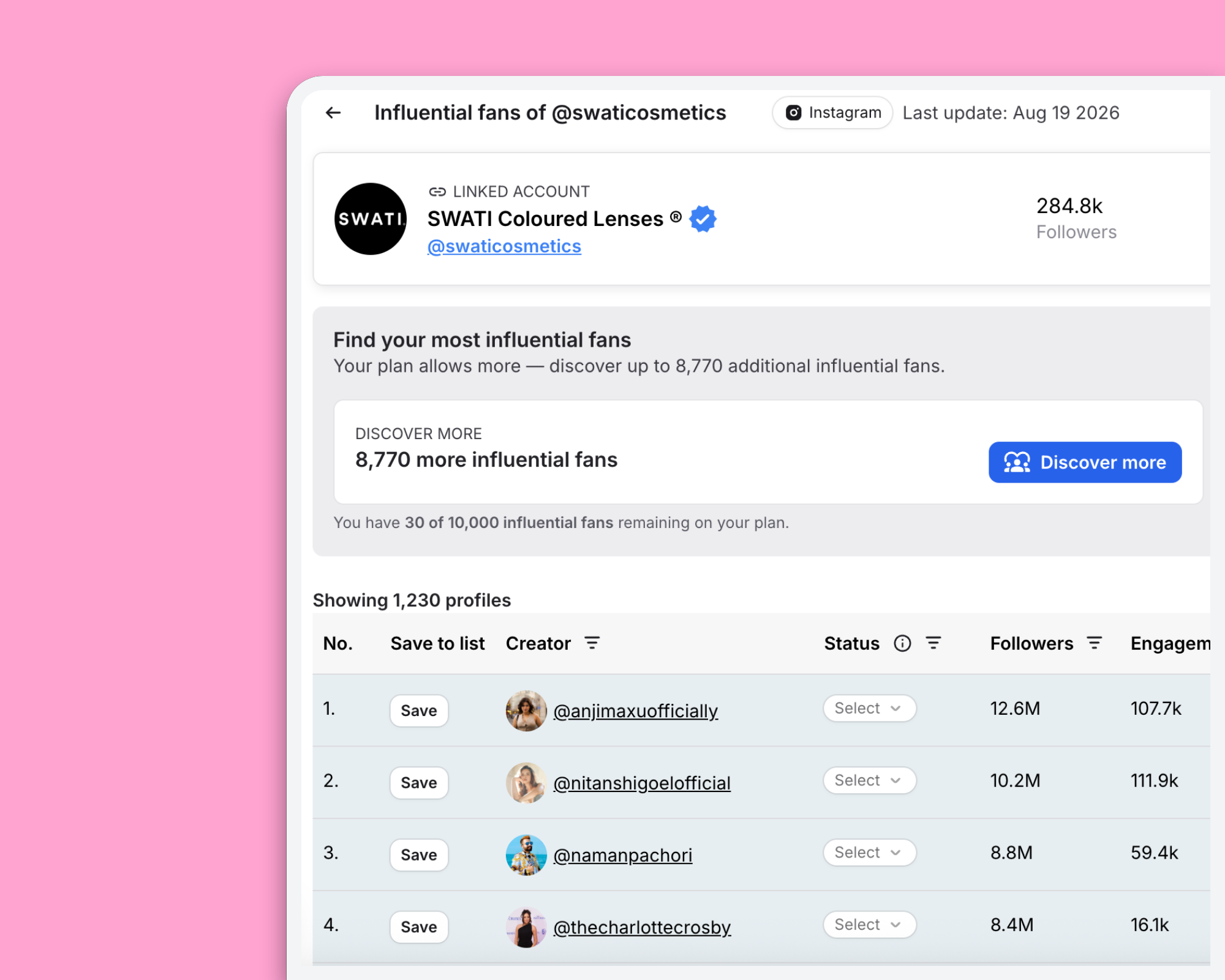
As an aside, if you want to find creators who are already posting about your brand organically, Modash helps you uncover influencers who follow your brand on social media – meaning they’re already aware of your brand and will likely be interested in collaborating.
The outreach templates in this post all hinge on personalization and making sure there’s a good audience-product fit. Despite this, there is a time and a place for mass outreach, and that’s self-serve, open affiliate programs. Joining them doesn’t require any back and forth, because the creator simply chooses whether to sign up or not.
But that's specifically for volume-recruitment into an open program. It's not a green light for blasting the same email to the specific creators you actually want a relationship with. Those still need the fit, the terms, the personalization, a.k.a. everything covered above.
Let’s dive into follow-ups and scaling.
Almost every marketer we surveyed follows up in some form.
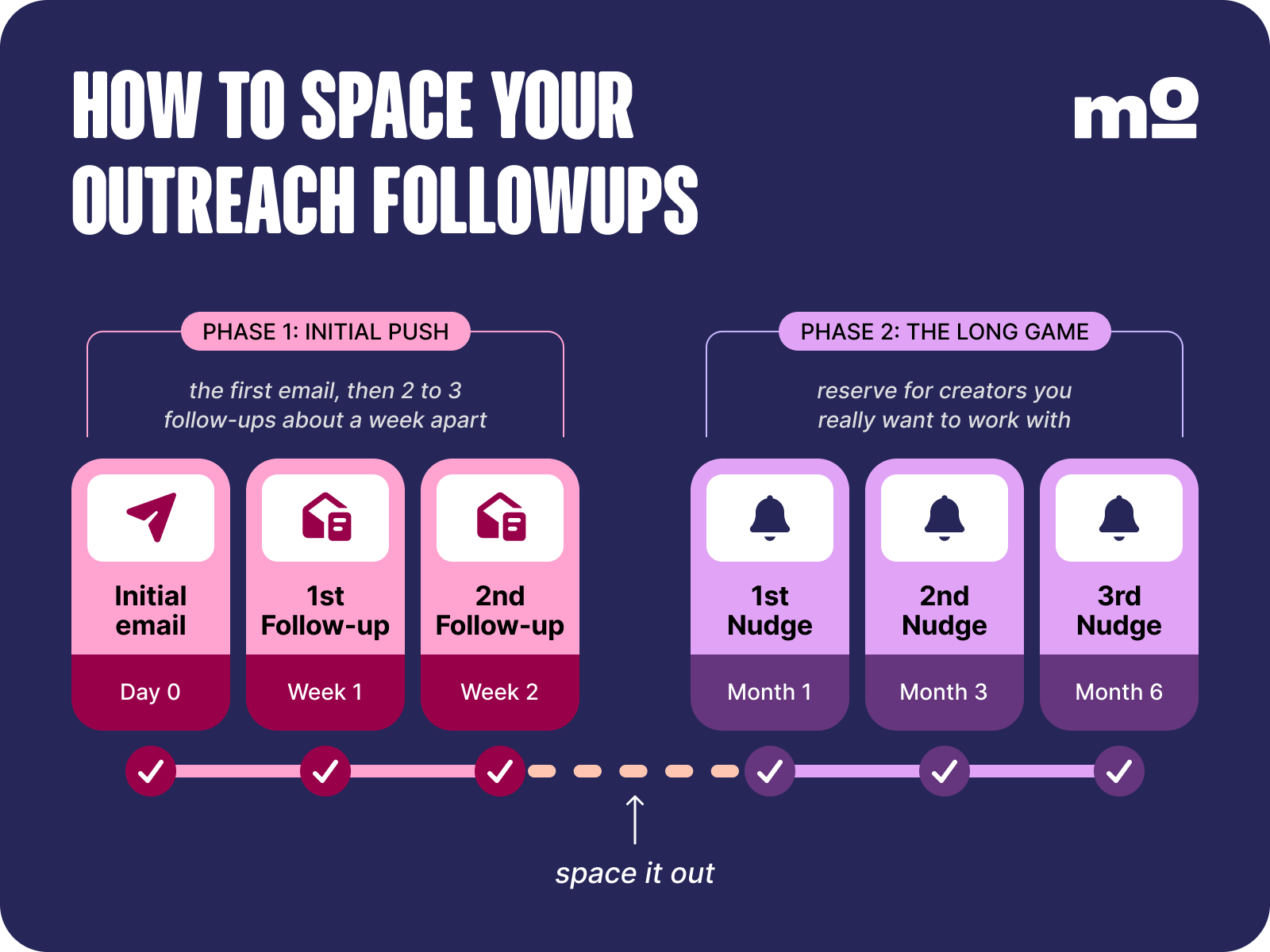
Try sending 2-3 follow-ups spaced a week or so apart, then a longer gap, like a month, then three months, then six, if it's a creator you really want to work with. \
It’s worth building a separate list of creators who were a great fit but never responded. That list can then become your first port of call the next time you want to kickstart recruiting.
Here's what a follow-up email can look like (note how it’s short, low-pressure, and easy to say yes or no to):
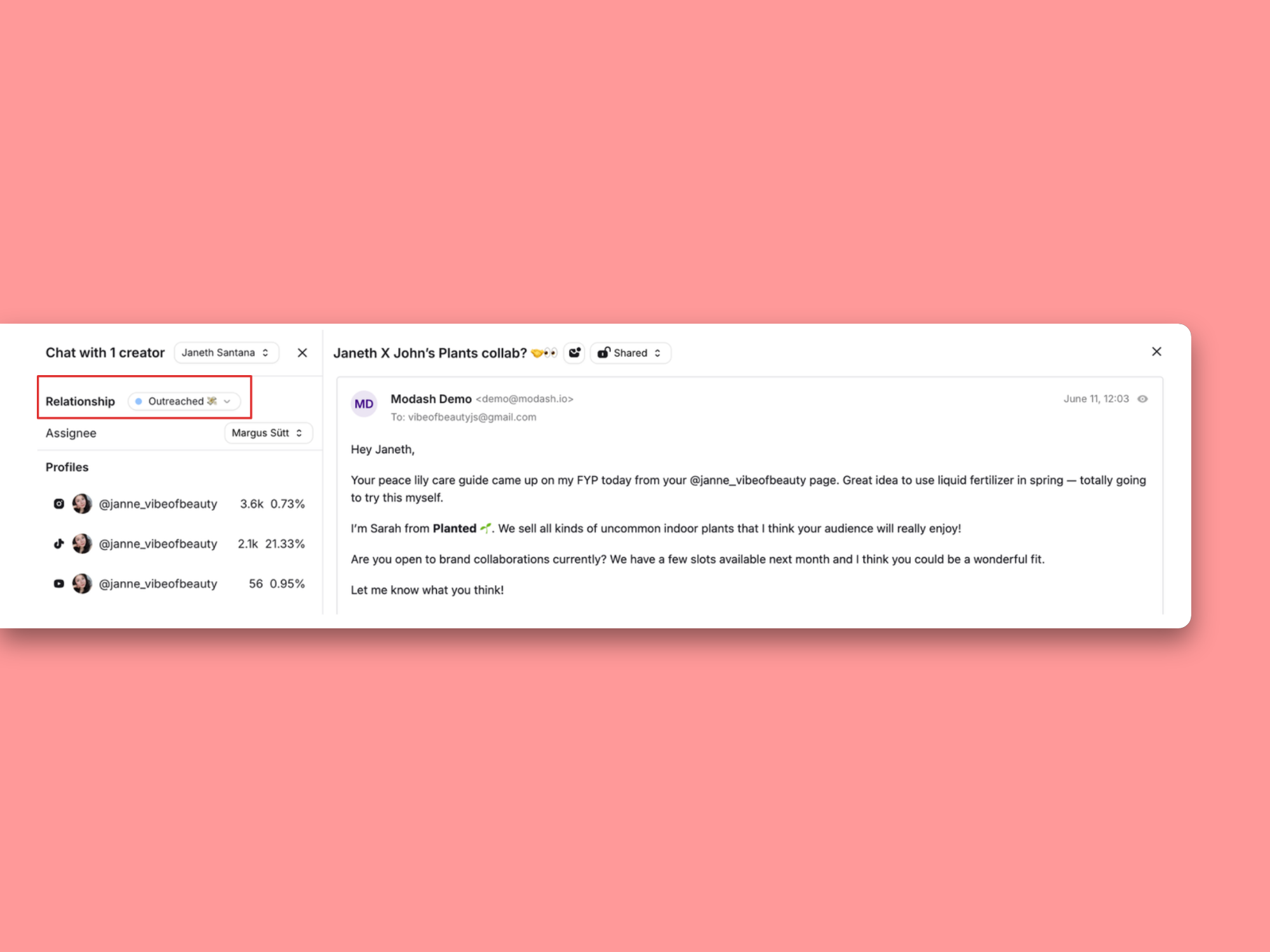
Modash lets you connect your existing inbox (aka your Gmail or Outlook) so you can see conversation history, internal notes, and a full creator profile before sending a follow-up email.
There is a way to scale affiliate outreach while keeping it personalized: template the brand and offer info and personalize the bit about audience-product fit.
Hunter's research on cold email found that messages with just two personalized details saw a 56% higher reply rate than non-personalized ones (5.6% versus 3.6%).
Modash’s templates and sequences with dynamic variables handle the brand and offer info automatically, and you can see the profile sidebar right next to the compose window with the audience and collab data you need to personalize each message. .
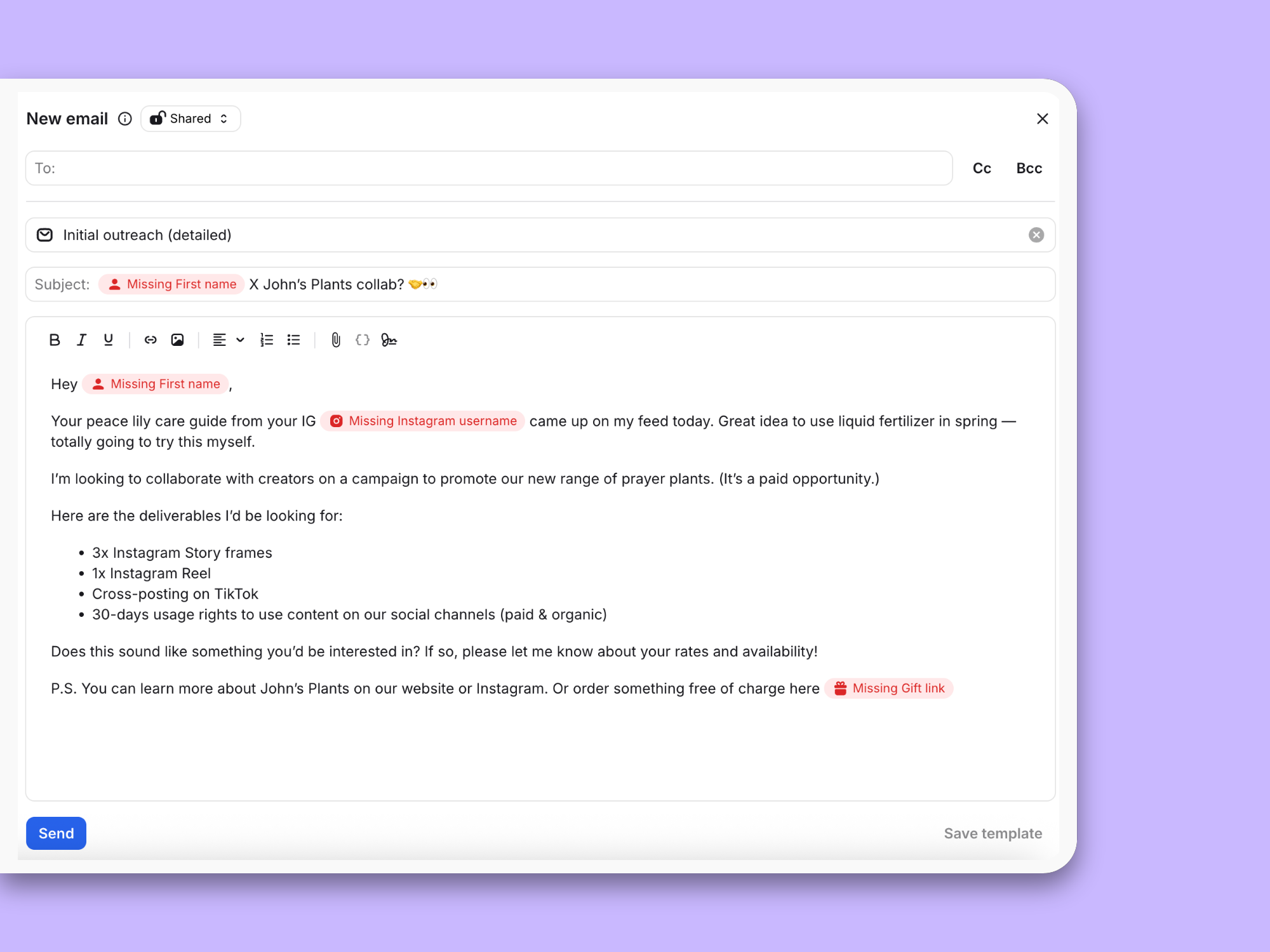
The fear of scaling up your outreach is usually because of one thing: will you get marked as spam? It’s a very fair, very real worry, especially since spam filters are built to catch a flood of near-identical emails from the same address.
With Modash, there are separate daily send limits (up to 100 new outreach emails plus up to 300 follow-ups per connected account per day) with randomized delays between sends, built to protect your domain reputation.
It also helps to know when a pitch just isn't working before it tanks an entire campaign. Template performance tracking (including sent, opened, responded, and bounced data) means you can iterate off actual reply data.
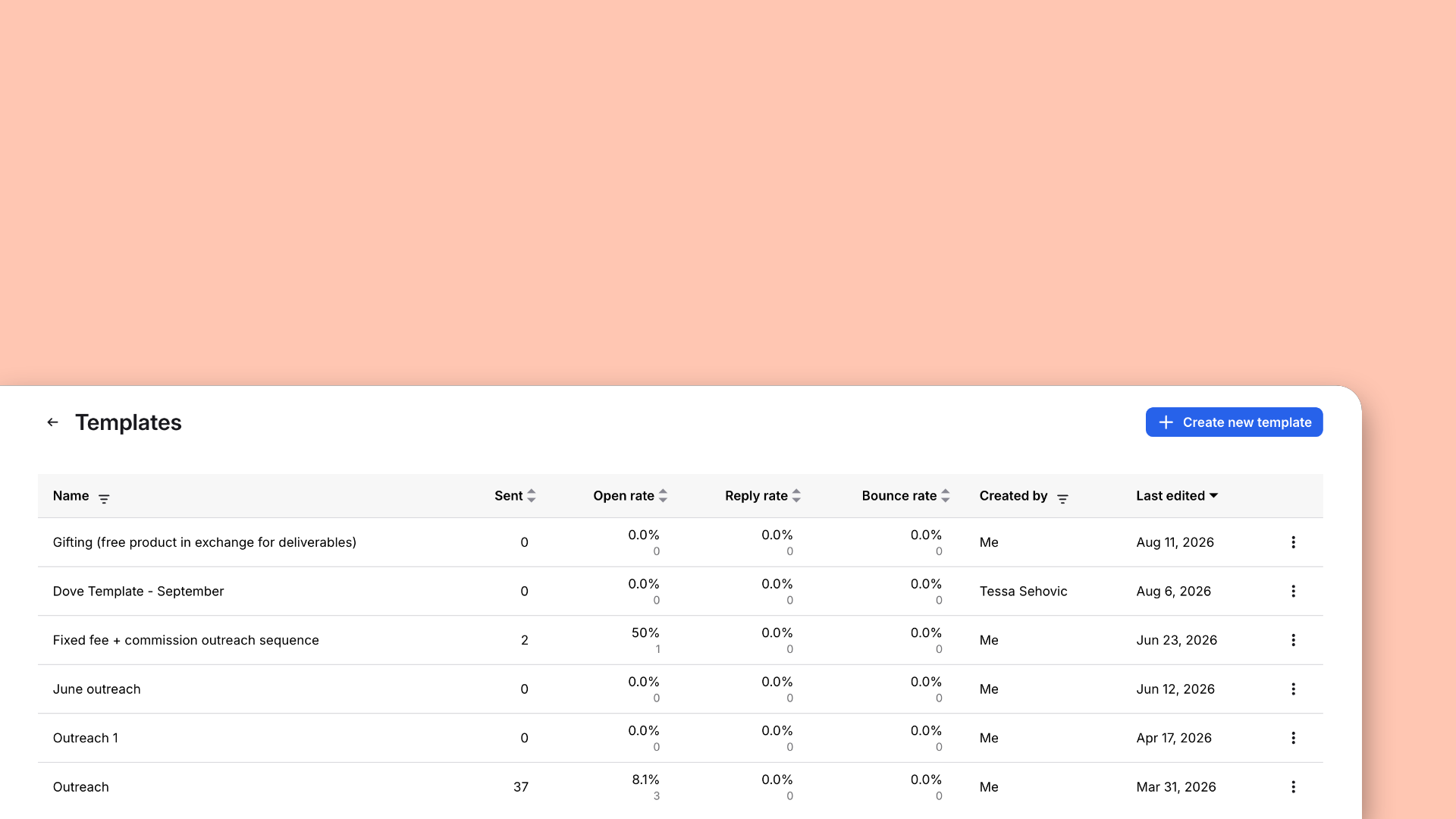
Your reply rate is a scorecard for how well you sold the opportunity, not a verdict on the creators you reached out to. If your inbox is painfully quiet after a burst of outreach, it might mean your pitch needs a bit of work.
This is where all of the above comes in – fit, concrete commission terms, an easy yes, and a follow-up cadence that’s consistent but not annoying. Getting those right and running discovery, outreach, and tracking in one place (which is what Modash is built for) means you're not vibing off gut instinct because you've actually got the data to do outreach at whatever scale you want.
Try Modash for free to find good-fit creators, personalize every pitch, and see which ones actually drive sales – all from one place.
Lead with a specific reason this creator's audience fits your product, then make the commission opportunity concrete with real numbers. Spell out the rate, attribution window, and payout timing briefly, and close with a low-effort CTA.
Yes, or at least a concrete sense of what the opportunity's worth (vague commission language is one of the main reasons affiliate pitches get ignored). You don't need pages of legal terms, but the rate itself, and roughly what it translates to per sale, should be in the first email.
Two to three follow-ups spaced about a week apart covers the initial push, after which it's worth backing off. For creators you really want to work with, extend the cadence further out with longer gaps, like a month, then three months, then six, rather than giving up entirely.
Two places to start: creators already in your orbit, like past influencer partners who've never been offered the affiliate program, and organic fans already talking about your brand online. From there, tools like Modash can help you discover and vet new creators by audience fit, engagement, and authenticity at scale.
Not strictly, but it gets hard to manage manually once you're past a handful of creators. Tracking who's been contacted, who's due a follow-up, and whether links and codes are set up correctly can get messy pretty fast if you’re using a spreadsheet. A tool isn't required to send a good email, but it makes running outreach at any real volume a lot less painful.