

More tools
Use cases




Both GoAffPro and UpPromote are popular Shopify affiliate apps for brands launching their first program. Both are priced competitively at the entry tier and cover the same core ground – referral tracking, commission rules, and creator payouts. So at first glance, picking one over the other feels like a coin flip.
But it isn’t. The two tools differ on how their pricing scales, who they integrate with, and how seriously they invest in helping you find affiliates. We’ll break all that down – and flag where both fall short if you’re trying to run influencer and affiliate programs from one tool.
GoAffPro is a better fit for brands or agencies that need flat pricing and ecommerce integrations beyond Shopify. UpPromote is more suitable for Shopify-native brands that don’t mind pricing compounding with affiliate revenue.
Both tools cover similar core ground on Shopify integration, post-checkout popups, MLM, and standard fraud protection.
Both also share the same drawbacks:
Modash handles all of that – creator discovery, content tracking, affiliate management, product gifting, and payouts – in one Shopify-native dashboard. Here’s how the three compare:
| Criteria | GoAffPro | UpPromote | Modash |
|---|---|---|---|
| Best for | Brands or agencies running affiliate programs across multiple ecommerce platforms (BigCommerce, WooCommerce, Wix, etc.) who want flat, predictable pricing | Shopify-native brands launching their first affiliate program who want automated signup fraud detection and don’t mind a sales-based performance fee | Brands running both influencer and affiliate programs who want creator discovery, content tracking, and payouts in one Shopify-native dashboard |
| Pricing | Free plan available, paid plans start at $49/month | Free plan available, paid plans start at $29.99/month (+ 2% of referral sales) | Free 14-day trial available, paid plans start at $199/month (paid annually) or $299/month (paid monthly) |
| Extra fee | None | A cut of affiliate sales | A cut of affiliate payouts |
| Ecommerce platform support | Shopify, BigCommerce, WooCommerce, Wix, Magento, and more | Shopify only | Shopify only |
| Influencer management | Doesn’t offer support beyond managing affiliate programs | Doesn’t offer support beyond managing affiliate programs | Has the full influencer and affiliate workflow — from outreach to paid collabs to affiliate links to payouts — in one dashboard |
| Affiliate network | Has 2.8M+ creators in its Recruit feature | Supports marketplace listing | 380M+ creators across Instagram, TikTok, YouTube |
| In-app chat with affiliates | Third-party widget | Native | Connects to your Gmail or Outlook inbox directly |
| Fraud detection for fake affiliate profiles | Manual review at signup | Automated signup detection (multi-IP, regional limits) | Signup-side fraud isn’t a point of concern since creators you can vet them thoroughly before partnering |
| Affiliate content tracking | Doesn’t track affiliate-generated content | Doesn’t track affiliate-generated content | Automatic collection of influencer and affiliate generated content (including Instagram Stories) |
Both GoAffPro and UpPromote offer free plans so you can test the tool before committing.
GoAffPro’s free plan includes unlimited affiliates, unlimited sales, and PayPal payouts. Paid plans begin at $49/month for Premium and start at $99/month for Business. Business scales based on affiliate sales volume in fixed tiers.

UpPromote’s free plan allows you to run one affiliate program and review 200 referrals per month. The primary difference is UpPromote takes a cut of affiliate sales in its paid plans (GoAffPro doesn’t). UpPromote’s paid plans start at $29.99/month, with 2% of approved referral sales. The sales cut keeps reducing as you upgrade your plans.
The two tools are priced for different growth patterns. GoAffPro is a flat fee that steps up at fixed sales thresholds – predictable within each tier. UpPromote is a smaller flat fee plus a percentage of every approved sale – grows continuously with affiliate revenue.
At $10K/month in affiliate sales, UpPromote’s Growth plan costs roughly $230/month while GoAffPro’s Premium stays at $99/month.
Modash takes a third option and charges you based on affiliate payouts, not affiliate sales. At $10K/month in affiliate sales with a 10% commission rate, you’d pay $50 in payout fees on Modash (5% of $1,000 in payouts) – versus $200 on UpPromote’s Growth plan (2% of $10K in sales).
Modash’s base subscription is still costlier than GoAffPro and UpPromote, but that’s because there are plenty of other additional influencer management features in addition to affiliate tools, like:
Bottom line: GoAffPro and UpPromote are both cost-effective to start. GoAffPro stays predictable as you scale, while UpPromote’s cost grows with your affiliate revenue.
GoAffPro and UpPromote handle affiliate recruitment in similar ways at the surface level. Both let you build a custom signup form, list your program in their built-in affiliate marketplace, and add a post-checkout popup that invites customers to join your affiliate program after purchase.
Both also offer multi-level marketing (MLM), which lets your existing affiliates recruit downline affiliates and earn a share of their sales.
Where the two differ is in proactive outbound recruitment. UpPromote doesn’t have one. Its primary channel is the marketplace listing – and the brand itself notes on its help center that “Our Marketplace Listings have limited affiliates, and it is just one way to find affiliates. We recommend you explore other options/features rather than relying on this feature alone.”
GoAffPro has a built-in Recruit feature with around 2.8M creators where you can search for affiliates by niche, region, country, and category, view their profile (bio, social handles, niche, location), and send a customized invite to your program.

Remember that these are the creators who have already signed up to GoAffPro (since you can invite them to your program). You don’t have access to a database of creators outside of this.
Both tools focus on inbound and marketplace-based recruitment. Neither includes a database of creators sourced from public social profiles outside their platform, which is how many influencer-led affiliate programs find new partners today – searching social platforms for creators who fit the brand, vetting their audience, and reaching out directly.
This is where Modash fits in. Modash gives you a searchable database of every creator on the planet with over 1k+ followers across Instagram, TikTok, and YouTube. That’s over 380M+ creator profiles – with filters for audience demographics, engagement rates, location, language, content topics, and previous brand collaborations.

You can also use AI search to describe the kind of creator you want in natural language, or upload an image to find creators whose content visually matches the vibe you’re looking for.

Once you’ve found fit-checked creators, you can also vet their profiles to ensure they’re a fit before reaching out or partnering with them.

Bottom line: GoAffPro and UpPromote both lean on inbound, with MLM as a way to stretch reach through existing affiliates. GoAffPro adds proactive outbound through its Recruit feature (has over 2.8M creators). You might need another discovery tool to scale affiliate discovery.
If you recruit affiliates using UpPromote or GoAffPro’s inbound options, the creator is already in the system. But if you find brand fit creators outside of these tools, you still have to ask them to get onboarded inside the software to track their performance.
This can be a friction point on the affiliate side. Every creator you want to track has to fill out a registration form, wait for approval, set a password, log into a portal they’ll likely never visit again, and copy their referral link or coupon out of it. They have to repeat that for every brand they work with – different portals, different logins, different dashboards.
Don’t forget that affiliates also need to provide payment details inside the portal before they can get paid, which means another setup step on their end. For an established creator running 5-10 brand collaborations at a time, that’s a meaningful tax on their time.
It’s also a problem on your side: you can’t track creators who are already posting about you organically without first converting them into signed-up affiliates. With seeding or gifting workflows, for example, you might want to test a creator before formalizing the relationship. But the signup requirement forces a decision earlier than you’d want.
Influencer tracking tools like Modash track affiliate performance automatically. Your creators don’t need to sign up to communicate with you or to share their content. You add the creator to a campaign, and Modash pulls in their posts, stories, mentions, and engagement data in the background.

Affiliate codes and links still work the same way as in GoAffPro or UpPromote – they’re attached to a creator and tracked through your Shopify store – but neither the content tracking nor the creator onboarding requires a signup form, portal login, or password setup on the creator’s end.
Bottom line: Both GoAffPro and UpPromote require creators to opt in through a registration form to track their performance and communicate with you.
UpPromote is built exclusively for Shopify. If you’re running a non-Shopify storefront – or you’re an agency with clients across multiple ecommerce platforms – UpPromote isn’t an option.
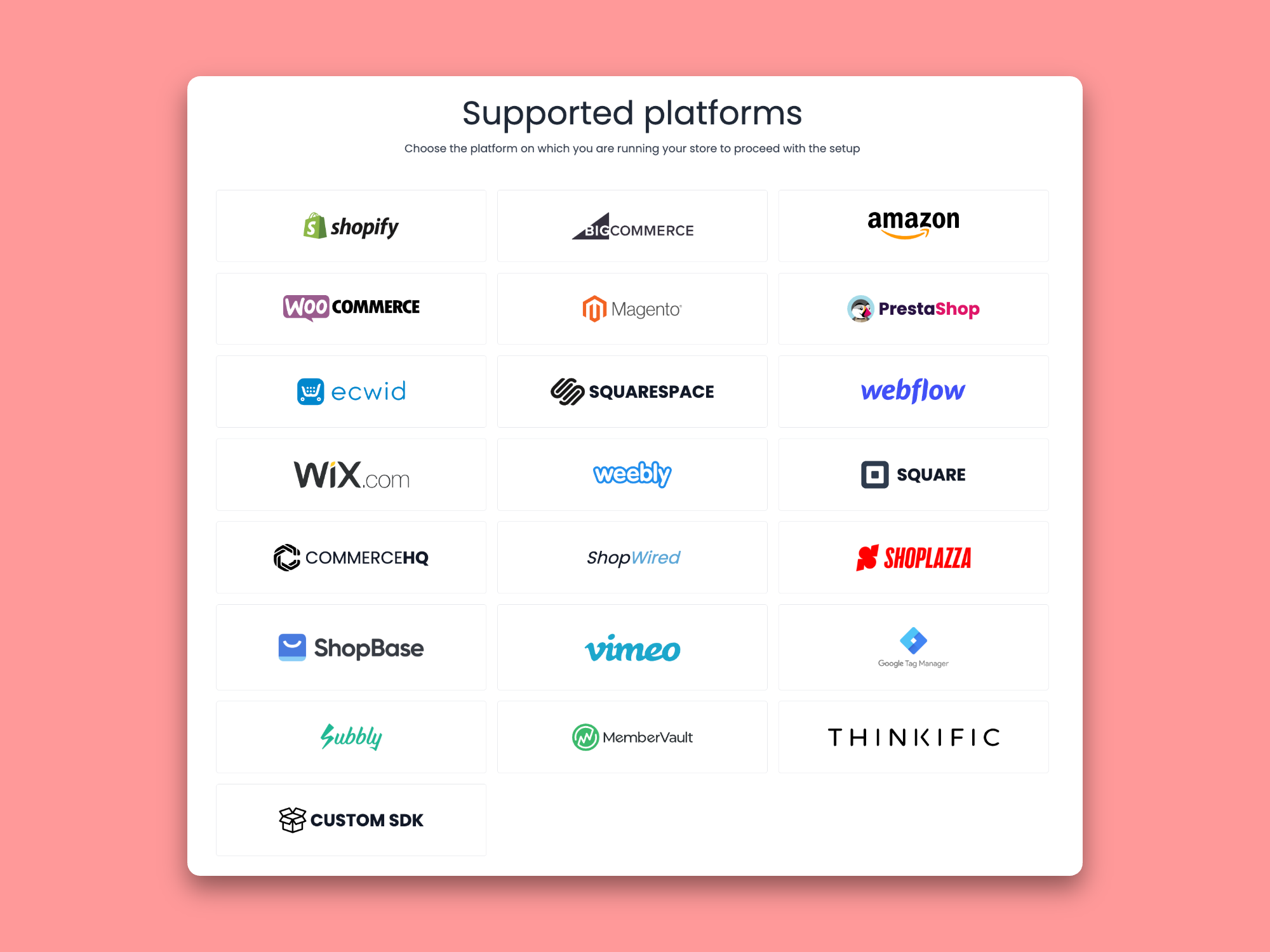
GoAffPro, on the other hand, integrates with a wide variety of ecommerce platforms – including Shopify, BigCommerce, WooCommerce, Wix, Magento, PrestaShop, Ecwid, Squarespace, Webflow, Weebly, Square, and more.
That said, breadth doesn’t mean GoAffPro's Shopify integration is shallow. Both tools support Shopify-native features like:
Bottom line: if you sell anything outside of Shopify, GoAffPro is the only choice. It integrates with a wide variety of ecommerce tools – including BigCommerce, WooCommerce, Wix, and Magento. If you’re on Shopify, both tools cover similar features.
GoAffPro and UpPromote are both purpose-built for affiliate management – referral codes, commission rules, payouts. Neither tool covers the broader influencer marketing collaborations that most D2C brands run today alongside affiliate marketing – like paid partnerships.
In practice, that means if you’re running affiliate partnerships alongside other types of creator collaborations, you’d need to stitch GoAffPro or UpPromote together with at least one other tool.
Influencer outreach happens elsewhere. Gifting workflows live in another spreadsheet or app. Content collection – knowing what your creators have posted, how it performed, and which posts to repurpose – happens manually or in a third tool. Each tool has its own data, and none of them talk to each other, so you end up reconciling performance across platforms by hand.
All-in-one tools like Modash bundle affiliate management with the rest of the influencer marketing workflow in a single platform. You can:

Bottom line: GoAffPro and UpPromote do affiliate well, but stop there. If you run giveaways, paid partnerships, or any creator program beyond pure affiliate, you’ll need to use another tool to manage them.
Both tools cover the basics on post-signup fraud – self-referral exclusion, coupon leak prevention, IP blocklists for sales attribution, etc. On the post-signup side, the protections are roughly comparable.
The difference is in detecting fraud affiliates who might sign up using your marketplace listing.
UpPromote includes automated signup-side fraud detection:
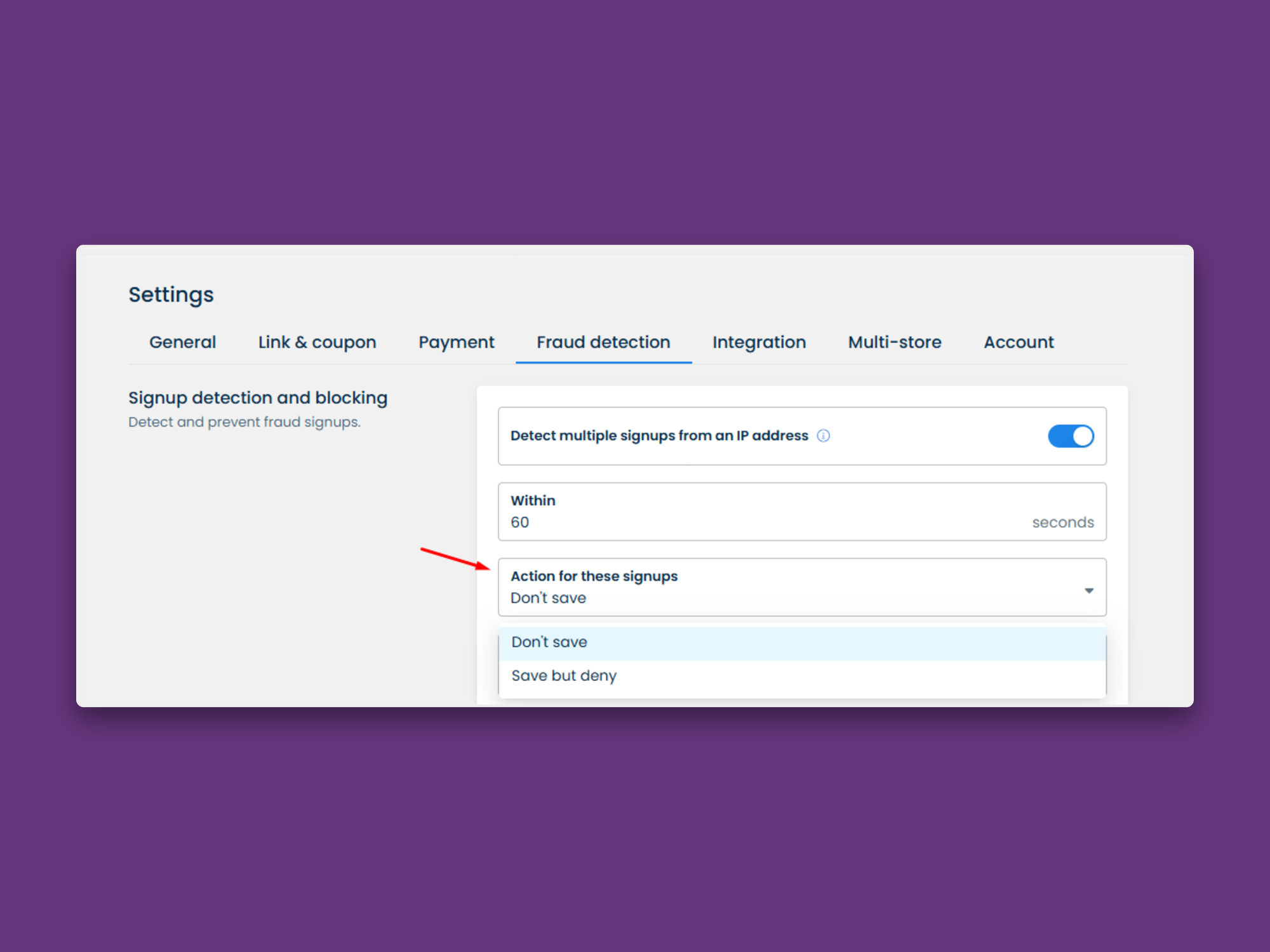
When you toggle on detecting any of these fraudulent behavior, UpPromote denies them automatically. This way, you catch fake signups before they enter your affiliate list.
GoAffPro’s signup-side protection is manual. You can disable auto-approval to review every affiliate application, add custom signup fields to gather more information, block individual affiliate accounts after they’ve registered, or disable registrations entirely.
There’s no automated IP-based detection at the signup stage – you’d have to spot patterns yourself by reviewing pending applications.
For low-volume programs where you can review every signup manually, GoAffPro’s approach works. For programs with steady inbound applications – especially through a public marketplace listing or post-purchase popup – UpPromote’s automated checks reduce the manual moderation load.
Bottom line: Post-signup fraud features (self-referral, coupon leaks, IP blocklists for sales) are roughly the same across both tools. But UpPromote also has automated signup-side fraud detection. The right tool depends on whether your program gets enough inbound signups for automated filtering to matter.
GoAffPro and UpPromote both track sales – clicks, conversions, revenue, commissions (after a creator is onboarded). Neither tracks the content your affiliates create to drive those sales.
There’s no view of what your affiliates posted on Instagram, TikTok, or YouTube. This means you can’t see:
Modash automatically collects all branded content (including Instagram Stories) from creators added to your campaigns, without requiring them to sign up.
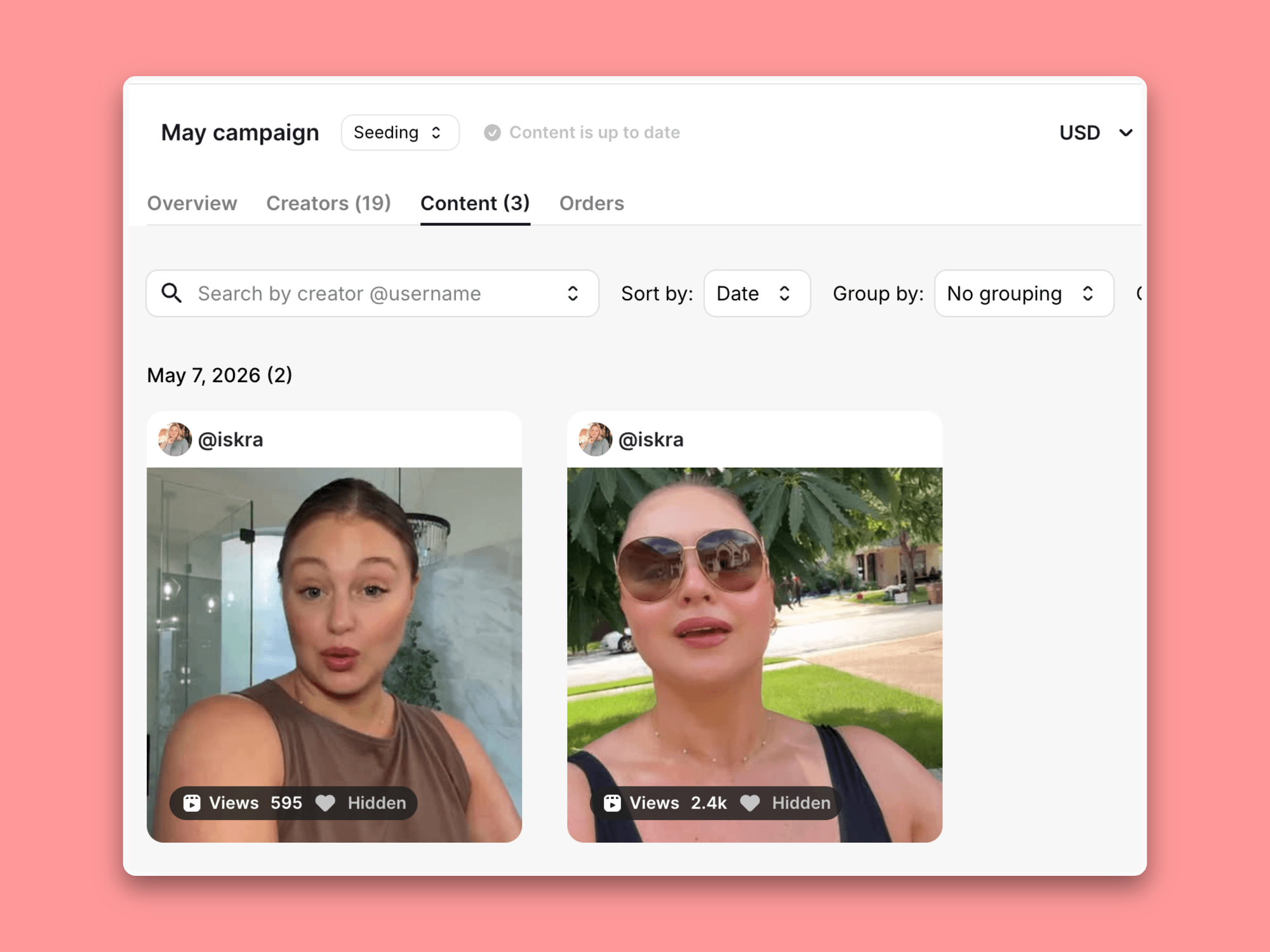
Each piece of content is tied to its creator, and metrics like views, engagement, and link clicks sit alongside the affiliate sales data from your Shopify integration. So the same dashboard shows both content performance and revenue performance per creator.
There’s also “All Content” to capture everything an affiliate is posting during a campaign period – so you don’t miss a relevant post about your brand, even if the creator forgets to tag you.
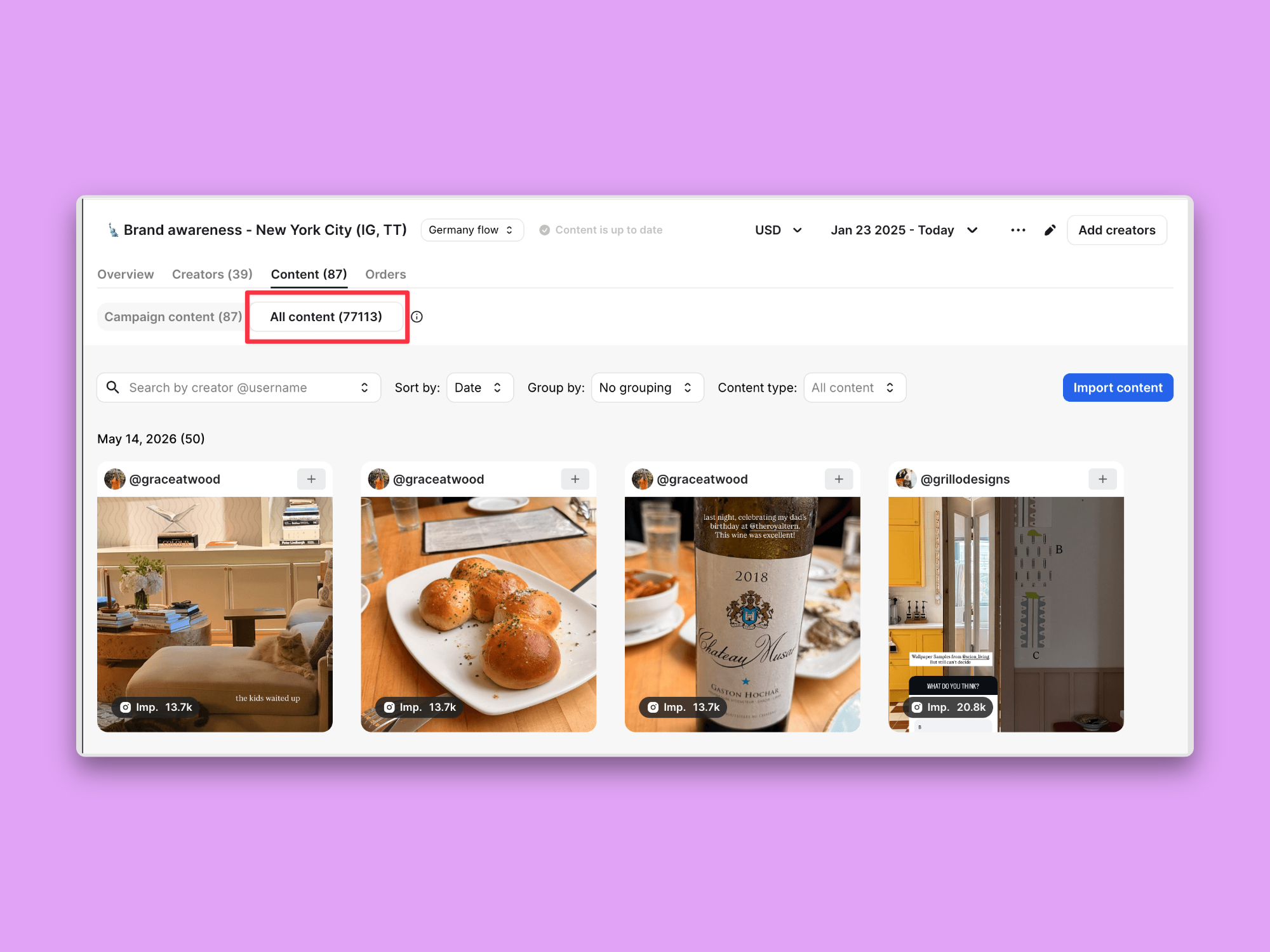
Bottom line: GoAffPro and UpPromote stop at sales tracking. If you want visibility into what your creators are actually posting – and how that content drives revenue – neither tool covers that.
UpPromote includes a built-in chat function. You can message affiliates directly inside the platform, and the chat lives inside the affiliate portal – so creators see messages when they log in to check their dashboard.
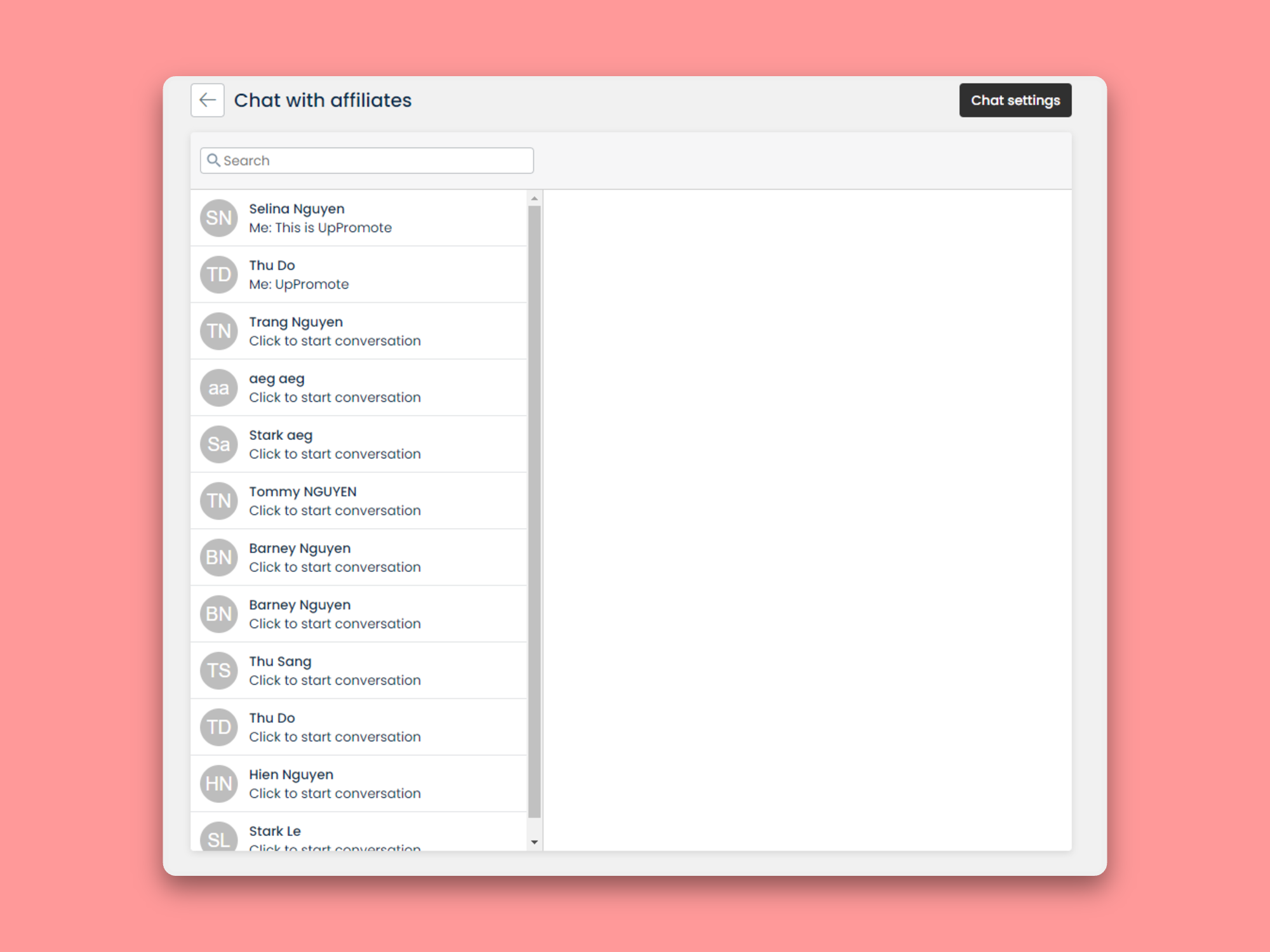
GoAffPro doesn’t have a native chat feature. You can integrate a third-party chat widget (Tawk, Crisp, Intercom, etc.) into the affiliate portal by pasting its JavaScript code into the dashboard customization section in the paid plans.
Both tools route communication through the affiliate portal. In either case, creators need to log into the portal to see your messages.
Even the email campaigns from either tool come from a generic system address, not your actual brand inbox, which means creators can’t easily reply and you lose the context of past conversations.
Modash takes a different approach by connecting directly to your Gmail or Outlook inbox. Outreach and ongoing communication happen from your real brand email, with full conversation history visible inside Modash next to the creator’s profile, content, and affiliate performance.

Creators reply where they already work (without needing to log in to a third-party portal) and you get the full context in one place.
Bottom line: UpPromote has native in-app chat and GoAffPro requires a third-party chat widget integration to enable the same feature. Both tools require creators to sign up and remember to communicate with your brand on a third-party tool that they may forget to check.
Hopefully, this article helped you get a rough idea of which tool fits your needs better.
Choose UpPromote if:
Choose GoAffPro if:
GoAffPro and UpPromote share a lot of the same drawbacks:
If you want a tool that solves all the disadvantages above, consider Modash:
Modash has monthly plans, transparent pricing, and a 14-day free trial. Take it for a test run, no credit card needed.