

More tools
Use cases




Most health and wellness influencer marketing advice stops at "work with micro-influencers" and "be authentic". We wanted to see what the biggest health and wellness brands actually do, so we pulled the 50 most recent sponsored posts for each of the most-searched health and wellness brands in the US and looked at who posted, how each deal was disclosed, and which posts took off.
Here's why health and wellness brands work with creators, the commonalities in their strategy, and a step-by-step way to run your own campaign.
Creators do a few things for health and wellness brands that ads and product pages can't:
These are the most-searched health and wellness brands in the US, according to Ahrefs. Deal types show how each post was disclosed (for example, with a paid partnership label or an ambassador hashtag). Creator tiers: micro 10k–50k followers, mid-tier 50k–500k, macro 500k+.
| Brand | What they sell | Most common deal type | Typical creator size | Signature tactic |
|---|---|---|---|---|
| Liquid I.V. | Electrolyte hydration powder packets | Paid | Micro to mid-tier | Repeat creators folding it into daily routines |
| Whoop | Wearable fitness and recovery tracker | Paid and gifted | Mid-tier to macro | Repeat creators tracking recovery long-term |
| AG1 | Daily greens and vitamin powder | Paid | Mid-tier | Podcast sponsor reads clipped for Instagram |
| Oura | Smart ring for sleep and recovery tracking | Paid and ambassador | Mid-tier | A new, smaller ring pushed across most posts |
| Ritual | Prenatal, postnatal and daily multivitamins | Paid | Mid-tier | Personal discount codes through pregnancy posts |
11 of Liquid I.V.'s 39 creators posted more than once in its last 50 sponsored posts, and most show hydration folded into something a creator already does, a cross-country move, a rollerskating warmup, a newborn's early mornings, rather than a single event. 32 of its 34 creators with a listed location are in the US, and 15 of its 39 creators have under 50k followers. Only 3 of its last 50 posts include a code.

What to take from it: Position hydration as part of something a creator already does, not a special occasion. @zioncruzz, a creator with 6k followers, called it her "travel day essential" and got 1.09M plays, more than any of Liquid I.V.'s creators with over a million followers.
12 of Whoop's 33 creators posted more than once in its last 50 sponsored posts, led by @julia.reppel with four. Its creators are spread across the UK (10), the US (9) and Ireland (6), and 7 of its last 50 posts were disclosed as gifted rather than paid. Only 4 posts include a code.

What to take from it: Give repeat creators a reason tied to their own routine, not just the product. Whoop gives @julia.reppel a standing offer, a free month for her followers, and she posts a different habit she's tracking each time she shares it.
AG1 sponsors podcasts as part of its routine pitch: Rick Rubin's Tetragrammaton reads AG1 into its episodes, and the clip from the show's own account got more likes than any other AG1 post in its last 49. 6 of its posts are disclosed as ambassador deals, mostly from creators in Germany, Australia and South Africa, and 5 posts include a discount code. 35 of its 44 creators with a listed location are in the US.

What to take from it: Sponsor the shows your buyers already listen to, and let the host read it in their own words. Tetragrammaton reads AG1 into most episodes, and the clip posted from the show's own account got 48.9k likes, more than any other AG1 post in its last 49.
18 of Oura's last 50 sponsored posts are about its new Ring 5, from unboxings to creators upgrading from Ring 4. 10 of its posts are disclosed as ambassador deals and 7 as gifted, more of each than any other brand here. Its creators are based in the US (26), Australia (7) and the UK (7), and none of its last 50 posts include a code.

What to take from it: Seed your product upgrade with the creators who already own the last version. @sarah_wolak, a creator with 471k followers, announced that her "dream ring just got 40% smaller" and got 4.9M plays, Oura's second-most-viewed post of the last 50.
14 of Ritual's last 50 sponsored posts include a discount code, more than any other brand here, often stacked on a pregnancy or postpartum update. 4 of its posts are tagged #pregnant and several more follow a creator from one trimester to the next. 37 of its 40 creators with a listed location are in the US, and 47 of its last 50 posts were disclosed as paid partnerships.

What to take from it: Stack a code on top of a life update, not just a sale. @alikicomedy, a creator with 449k followers, folded her Ritual prenatal into a pregnancy update and got 28.8k likes, the most of any Ritual post in its last 50.
Looking across all 249 posts, four patterns stand out:
Here's how to run a campaign step by step, using what the top health and wellness brands do at each stage.
Decide what the campaign is for before you pick a single creator, because the goal changes who you book, how you pay them and what you ask them to post. Health and wellness brands' posts show both goals at work. Ritual's discount-coded pregnancy posts are built to drive sales that week. Oura's Ring 5 launch and AG1's podcast sponsor reads are built for reach.
Pick one metric per campaign so you can compare creators fairly afterwards.
Follower count is the last thing to filter on. @alieurquhart, a creator with 19k followers, posted about using Whoop's journal feature to track late-night snacking and doom-scrolling, and got 3.8M plays, Whoop's most-viewed post of the last 50. Across all five brands, creators under 50k followers got about three times the likes relative to their audience.
Our survey found niche micro-creators are outperforming mega-influencers: nearly 60% of marketers said niche influencers performed better in 2025 than in 2024.

You can also find health and wellness influencers for free, for example by searching the hashtags your buyers follow.
Paid posts lead across health and wellness, but less heavily than in other categories. Ritual disclosed 47 of its last 50 posts as paid partnerships and AG1 40, while Whoop and Oura lean more on ambassador and gifted deals.
Commission-only is getting harder to sell, though. Over 23% of marketers in our survey said creators would take performance pay only if a flat fee came with it. If you run tiers, the average commission tiers in our affiliate research were 10%, 14% and 19%, and brands with more than one tier had more active affiliates.
The captions from the top health and wellness brands point to three formats that carry most of their creator content:
Whatever the format, give creators one hashtag to use every time, like #ritualpartner or #whooppartner, and list any health claims they can and can't make.
Ritual is the only brand here that leans on codes, including one in 14 of its last 50 posts, almost always stacked on a pregnancy or postpartum update. The other four send people to a link instead, and Oura used no codes at all in its last 50.
Codes also leak. In our affiliate marketing research, 47.6% of marketers said they struggle with code poaching, where a creator's code ends up on coupon sites.
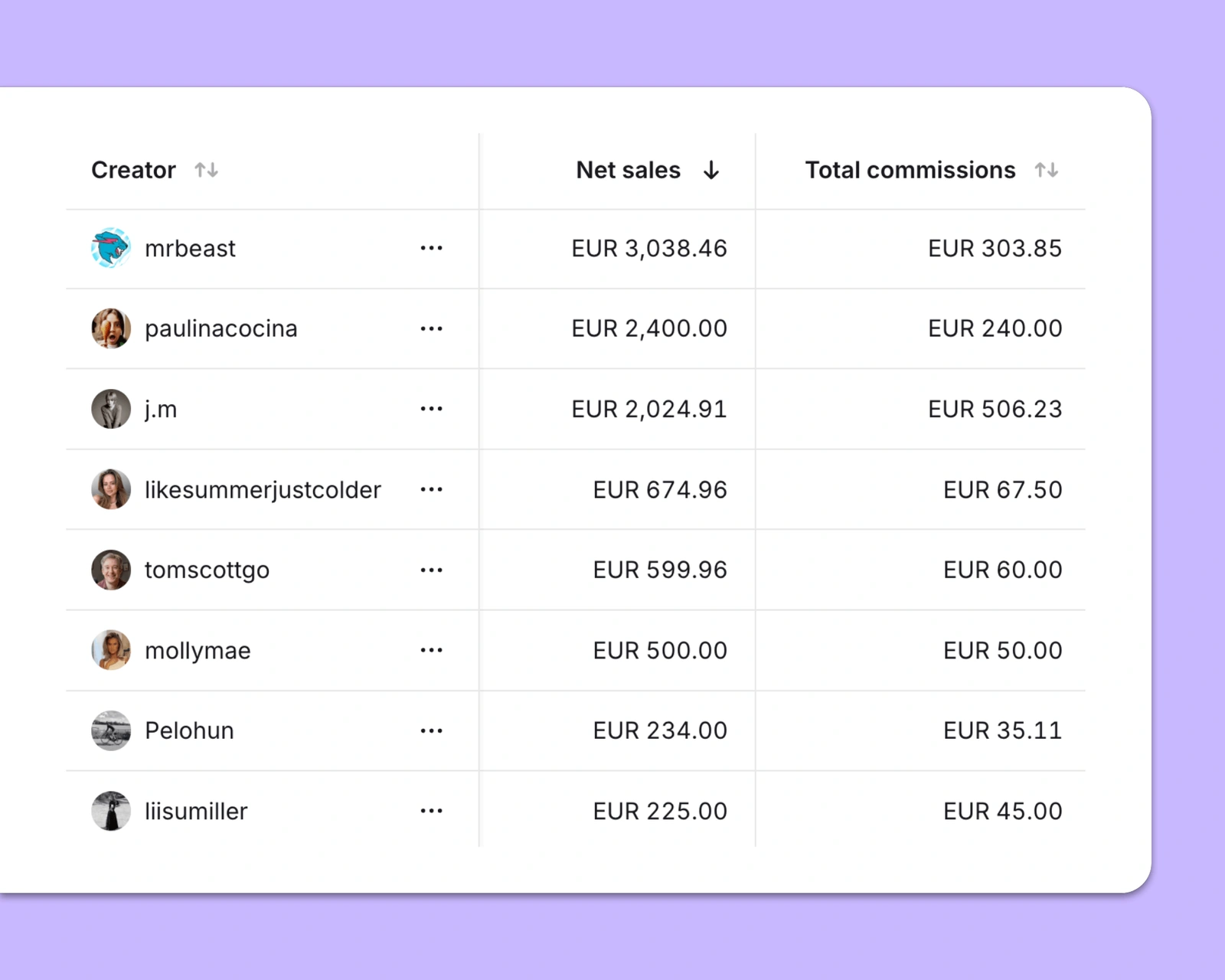
In Modash, each creator gets a tracked link and a code tied to your Shopify data, so sales from DMs, bios and stories all count toward the right person. Commission is calculated on net revenue after refunds and returns.
Health and wellness brands rebook more than most categories. 36 of 207 creators across the five posted more than once, led by Whoop (12 of 33, 36%).
Most marketers want to do more of this. In our influencer marketing trends survey, over 60% said they plan to invest more in long-term partnerships, but only 54% actually ran more of them last year.
The top brands avoid a few mistakes that trip up smaller programs:
It depends on platform, following and engagement. Micro-influencers often work for free product plus a fee in the low hundreds per post, or an affiliate commission. Larger creators charge more. Many brands start with gifting plus commission to test fit before committing to flat fees. To estimate what a specific creator is likely to charge, drop their handle into our free Instagram influencer pricing calculator.
Instagram carries most health and wellness creator work, and all five of the most-searched brands we analyzed run their programs mainly there. TikTok is worth testing too: in our survey, marketers rated TikTok videos the highest-performing deliverable (53.2%).
Liquid I.V., Whoop, AG1, Oura and Ritual are the most-searched health and wellness brands in the US, and all of them run active creator programs. See the breakdown above for who each one works with.
It depends on your goal. A launch chasing awareness leans bigger, a conversion play leans smaller and more trusted. In the health and wellness posts we analyzed, creators under 50k followers got about three times the likes relative to their audience size, so most brands should build their base with micro-influencers (10k–50k followers) and add bigger names for launches.
Track sales per creator with unique links and codes, then compare revenue against what you paid (fees, product and commission). Our engagement rate calculator and fake follower checker help you vet creators before you spend, and our guide to influencer marketing ROI covers the full calculation.
Find creators, manage relationships, pay them in 180+ countries and 36 currencies, and track every sale through Shopify – all in one place, with no fees taken out of creators' pay. Try Modash free, no credit card required.