Capabilities
Integrations







Use cases
Capabilities
Integrations
Use cases
Your creator program, minus the manual work.
Find creators, manage relationships, and track results. All in one place.

BixGrow and Affiliatly do the same core job: give each affiliate a tracked link, credit them when a referred shopper buys, and keep a running tally of what you owe. Both charge a flat monthly subscription, both start with a free plan, and both give you a 14-day trial on paid plans.
There are some differences worth noting. BixGrow runs only on Shopify and bundles a customer refer-a-friend program with multi-level affiliate recruiting. Affiliatly runs on Shopify, BigCommerce, WooCommerce, and other platforms, operates two-tier commissions and charges by how many affiliates you have.
This comparison covers platform support, recruitment, pricing, program types, tracking methods, and commission rules, then considers Modash as a third option for brands that need more than tracking.
BixGrow suits a Shopify store that wants an affiliate program and a customer refer-a-friend program in one app. Affiliatly suits a store on Shopify, BigCommerce, WooCommerce, or another platform that wants affiliate tracking priced by how many affiliates it runs.
Where they differ: BixGrow only runs on Shopify, but it adds a customer refer-a-friend program, multi-level affiliate recruiting, and per-product commission rules. Affiliatly runs on many store platforms, credits affiliates by link, coupon, email, QR code, or Shopify order tag, and can email past customers automatically to invite them as affiliates.
However, neither BixGrow nor Affiliatly offers the automated influencer content tracking available in Modash. Modash is an influencer marketing platform for Shopify brands that covers creator discovery, campaign tracking, product gifting, and affiliate payouts in one place. Here's how the three compare:
Start with the store platform you sell on, because that one fact decides whether BixGrow is an option at all. Both tools run on Shopify, and the split shows up the moment you look past it.
BixGrow is a Shopify app, and its documentation states it is available exclusively to Shopify merchants. If your store runs on anything else, or you plan to move off Shopify later, BixGrow drops out of the comparison.
Affiliatly's homepage lists integrations with Shopify, BigCommerce, and WooCommerce, and says its custom integration process covers platforms that aren't listed. Its documentation extends that list to Squarespace, Ecwid by Lightspeed, Shoplazza, Storeden, Jumpseller, Shift4Shop, CrateJoy, and HikaShop, plus custom stores. Every Affiliatly account goes through a 10-step setup from the Setup tab, and Shopify, BigCommerce, and Ecwid stores get the integration step handled automatically. Affiliatly suggests confirming the connection with a test affiliate and a test purchase, which should show up in the admin panel after about 5 minutes.
On a Shopify store, both tools handle Shopify affiliate tracking. BixGrow connects to Shopify as a native app. Affiliatly connects to Shopify automatically and treats it as one platform among many.
Modash is built for Shopify brands too, so sales attribution and affiliate commissions run through a connected Shopify store. Click tracking works on any website and content tracking doesn't need Shopify, so a brand on another platform can still measure creator clicks and posted content in Modash.
Bottom line: Affiliatly is the only one of the two that works for a BigCommerce, WooCommerce, or Squarespace store, and it is the one to pick if a platform migration is on your roadmap. BixGrow belongs on your shortlist only if your store is on Shopify and staying there.
If you need more affiliates, you want a tool that helps you find them, not just track their sales. BixGrow and Affiliatly both offer marketplace listings and affiliate signup pages, allowing potential partners to discover your program and apply. They also support proactive recruitment, including customer invitations, while BixGrow offers a beta creator-search feature. However, neither provides the same breadth of searchable creator profiles as Modash.
BixGrow recruits through three channels: a public Marketplace directory where affiliates discover, review, and apply to your program, a post-purchase widget, and MLM referrals from existing affiliates. You can auto-approve Marketplace applicants or review them by hand, and before you can list you need a program, a brand description, up to 3 business categories, and the locations where you sell. BixGrow also lets you search its network of potential partners by name and market niche, then invite them directly or by email. An embeddable affiliate portal doubles as a landing page, sign-up page, or login page for affiliates on your store.
Affiliatly covers the same two routes, describing its Marketplace as a curated directory of merchants and products that helps your program get discovered by its affiliate network. Listing is free, you enable it from Settings and submit a form, and the listing is reviewed before it appears. It supports two-tier affiliate commissions, allowing affiliates to earn from affiliates they recruit. Affiliatly's public affiliate programs page also lists programs run by brands, and visitors can register as an affiliate there.
Both tools can prompt customers after checkout, but Affiliatly adds an automated email that invites past customers to become affiliates, and that email runs on Shopify and BigCommerce stores only. Its Post Checkout Popup asks shoppers to register for your program right after they buy. Every Affiliatly account gets a dedicated link to its affiliate registration form, which you can embed on a page of your store, and you can style the form, login page, and FAQ to match your brand. Affiliatly's guidance recommends putting that link in your site footer, in store content, and in the footer of your email marketing templates.

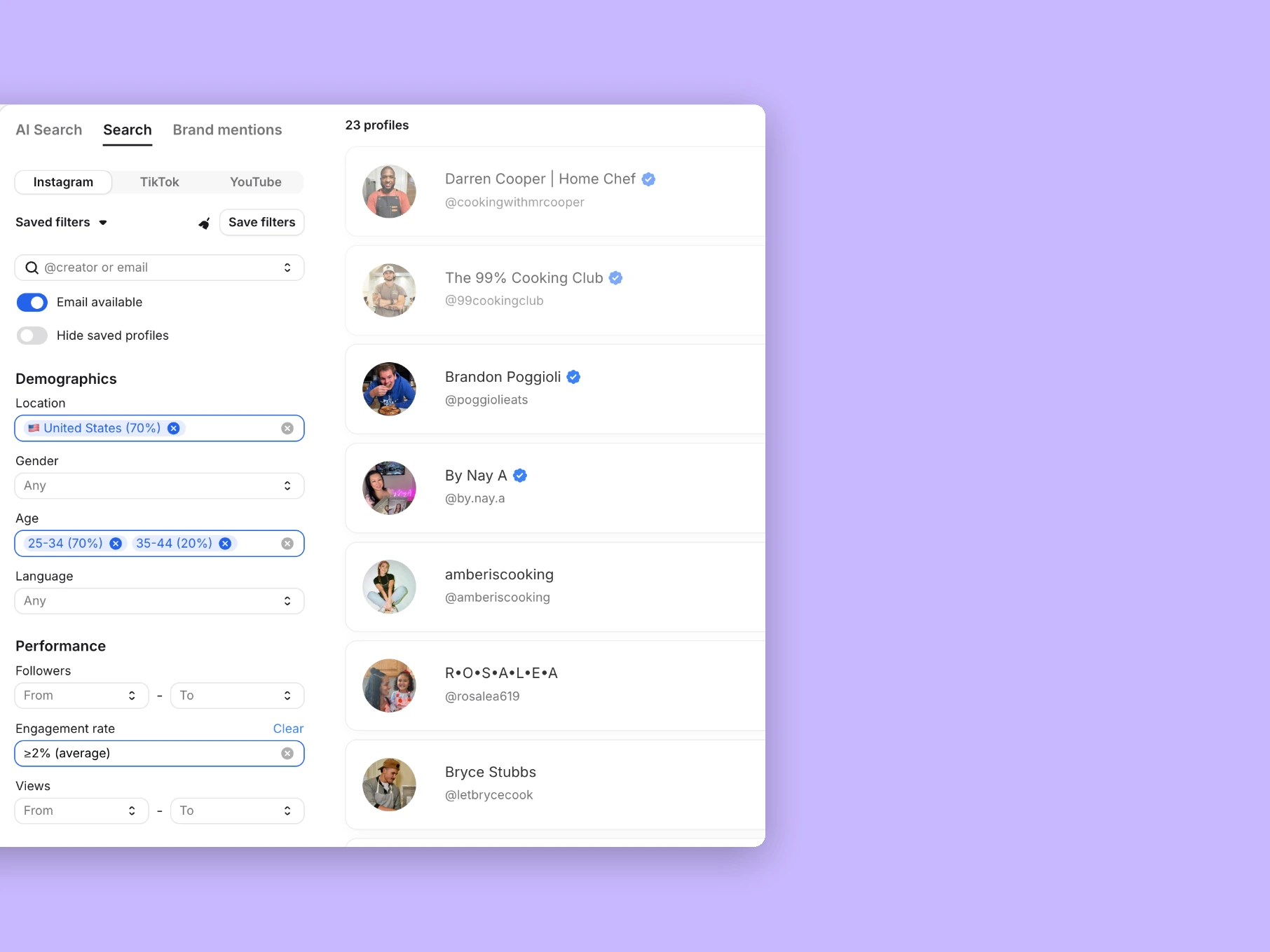
Modash starts from the other direction: you search a database of 380M+ creators and see each one's audience demographics and engagement metrics before you send a single message. That makes it closer to affiliate recruitment software than a tracker with a directory attached.
Bottom line: Affiliatly fits brands that want to turn existing customers into affiliates automatically through its post-checkout popup and automated customer invites. BixGrow fits brands that want to layer a marketplace listing, a post-purchase widget, and MLM referrals on top of a searchable partner network.
If budget decides it, the question is what you pay as your program grows. BixGrow's price climbs when you want more features, while Affiliatly's price climbs when you add more affiliates.
BixGrow lists four plans on its pricing page, running from Free at $0/month through Scale at $19.99 and Pro at $29.99 to Advanced at $49.99/month, with a 14-day trial on the paid plans. Each BixGrow tier is pitched on what it unlocks, from "essentials to launch a program" on Free to "full control to run your way" on Advanced. Paying BixGrow yearly trims the bill by 10–15%.
Affiliatly starts you on the same $0 footing but meters a different thing: its free plan covers your first 50 referred orders. Affiliatly's paid plans run from $16 to $129/month, unlocking more features and more affiliates as you scale up. Starter at $16/month caps you at 50 affiliates, Advanced at $24/month allows 200, Professional at $39/month allows 500, and the Pro tiers at $59–$129/month take you from 1,000 affiliates to unlimited. Once you hit the Pro 1000 tier ($59/month), all features are included. All of Affiliatly's paid plans include a 14-day trial, and Affiliatly states there is no charge beyond the monthly subscription.

Modash is priced for the whole creator workflow: plans run $199–$499/month for Essentials and Performance, Enterprise starts at $14,700/year, and there's a 14-day free trial that needs no credit card. Modash's usage charge is tied to what you pay affiliates, not to the revenue they generate, and on the Performance Annual plan payouts carry 0% up to $10,000 per year, with 5% applying only to the amount above that. You settle one Modash invoice and Modash handles creator payment and tax, which is the simplest way to pay affiliates without chasing individual transfers.
Bottom line: Affiliatly's bill is predictable per affiliate seat, and a program that stays under 200 affiliates runs on $16–$24/month. BixGrow charges $0–$49.99/month for features rather than headcount, so it suits a brand that would rather pay for capabilities than for affiliate capacity. Pick the meter that matches how you expect to grow.
Some brands want one app to run affiliates and a separate program for existing customers who recommend you to friends. BixGrow supports both programs within one Shopify app, while Affiliatly focuses on affiliate program management rather than offering a distinct customer referral program.
BixGrow offers two distinct programs, an Affiliate Program and a Referral Program, and you pick the one that fits your store after installing the app. BixGrow positions the Affiliate Program for working with influencers or affiliates to drive traffic, and the Referral Program for turning your current customer base into a word-of-mouth channel. Customers in the Referral Program recommend the store to their friends and earn rewards for successful referrals, and BixGrow describes it as a simpler setup than an affiliate program because it needs no marketing experience or payment methods.
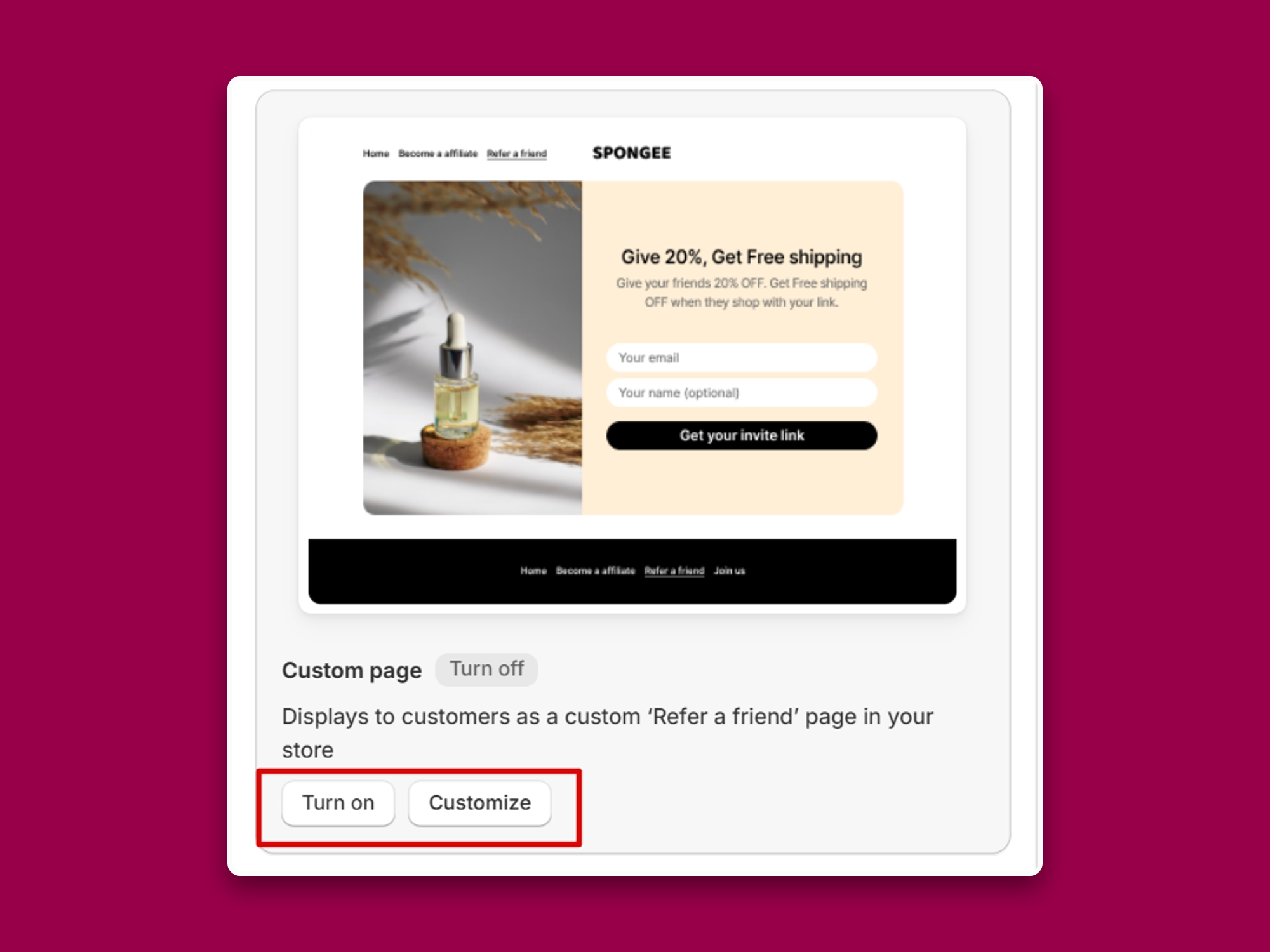
On the referral side, you can reward both the advocate and the referred friend with discount codes or Shopify store credit. You control who qualifies as an advocate (anyone, only logged-in customers, or only customers who have placed orders) and can cap the rewards one advocate earns per month. A "Refer a friend" page on the store explains the program, shows the rewards, and lets customers sign up, with colors, font sizes, and wording adjustable to match your store's design.
Multi-level marketing is the other piece BixGrow bundles into its affiliate program, where existing affiliates are encouraged to recruit new affiliates. With MLM switched on, each affiliate is paid for their own sales and also receives a network commission on sales made by the affiliates below them. BixGrow allows up to 20 levels but recommends fewer than 5 so the total commission you pay on one order stays easy to calculate.

Affiliatly focuses on affiliate management, with referral tracking via links, coupons, email addresses, and QR codes, alongside features such as two-tier affiliate commissions. However, unlike BixGrow, it doesn't appear to offer a separate, dedicated customer refer-a-friend program.
Modash handles creator discovery and campaign tracking alongside product gifting and affiliate payouts, so a Shopify brand running influencer partnerships and affiliate commissions side by side manages both from one dashboard.
Bottom line: BixGrow is the pick when you want customer referrals and multi-level affiliate recruiting bundled into the same Shopify app. Affiliatly's strength is affiliate tracking, which suits a brand that only needs a single affiliate program tracked and managed.
The job here is simple – when a shopper buys, the right affiliate gets the credit. Both apps track affiliate sales through a unique affiliate link, but Affiliatly gives you more ways to match an order to an affiliate, while BixGrow's documentation goes deeper on how the link-and-cookie window itself works.
Affiliatly lets you track affiliates by email, link, coupon, or QR code. On Shopify stores, it adds a fifth option, tag tracking, which ties an order or customer tag to one affiliate so they earn commission on every order carrying that tag. You can point Affiliatly at tags in order data, customer data, or both. That means an affiliate can still get credit for orders that never passed through a tracking link or coupon.

Whichever extra methods you switch on, link tracking in Affiliatly still works the way you'd expect – the affiliate shares a link and gets credit for the sales it drives.

BixGrow tracks every click and referral an affiliate sends your way. Each affiliate gets a unique default link at signup, and that link carries their ID so BixGrow knows which sales to credit. When a shopper clicks, BixGrow drops a cookie on their device that records which affiliate sent them and when, and the affiliate gets credit if the shopper buys inside the cookie window. You decide how long that window lasts – BixGrow points to 30 days as a standard and calls 30–90 days typical – so you can stretch it for considered purchases or shorten it for impulse buys.
Modash tracks affiliate sales through links and discount codes on a connected Shopify store, and it credits the last touch – if a shopper uses both a link and a code on one order, the code's owner gets the sale. You set the attribution window anywhere from 1 to 30 days, and because Modash doesn't lean on cookies alone, a sale can still be credited when a shopper's browser blocks them.
Bottom line: Affiliatly suits a store that wants to credit affiliates through more than a link – coupons, emails, QR codes, and, on Shopify, order tags. BixGrow centers tracking on the affiliate link and lets you set how long its cookie window stays open. Pick based on how your affiliates actually send customers your way.
You want to pay your best affiliates more as they sell more, and both tools can do that. Where they split is how much else you can tune: BixGrow's documentation covers per-product rates, customer-type rules, and bonuses on top of tiers, while Affiliatly's documentation covers tiers and tier rewards.
BixGrow starts each program with a default commission, which can be a percent of sales, a fixed amount per order, or a fixed amount per item. You can run several programs with different commission rules to group affiliates, say a standard program and a higher-rate one for your top partners.
On top of the default, BixGrow lets you override the rate for specific products or collections. Advanced rules change the rate for orders that meet a coupon, customer, or lifetime-tracking condition, so a "SUMMER" coupon can pay 15% while the default stays at 10%. Customer rules can pay a different rate for new versus returning customers, which nudges affiliates toward bringing in first-time shoppers. You also decide what counts as the commissionable sale – the Shopify sale value or the amount left after discounts, shipping, and taxes.
Tiers in BixGrow move affiliates to a higher commission-rate program automatically once they clear a threshold for total sales, commissions, orders, or commissionable sales. You can reset tiers on a recurring schedule so every affiliate drops back to Level 1 and starts again. Performance bonuses sit alongside tiers – a one-time or recurring reward when an affiliate hits a target for total sales, orders, or referred customers, and BixGrow adds it to pending commissions automatically.
Affiliatly pairs its commission tiers with a reward layer instead of extra rate rules. Once tiers are set up, tier rewards lower the bar for reaching the next tier for affiliates who hit certain results within a set time. Affiliatly's own example is that 10 days before a periodic reset, the target for the next tier drops by 15%. Affiliatly's documentation doesn't cover per-product rates, new-versus-returning rules, or performance bonuses.
Bottom line: BixGrow gives you more commission levers to pull – per-product, per-coupon, and per-customer-type rates, plus bonuses stacked on tiers. Affiliatly covers tiered progression with a reward that eases the path to the next tier. If tiers alone are enough, either works, but if you want rates that change by product or customer type, BixGrow is the one documented to do it.
If your affiliates are creators, you want to see the post that drove the sale, not just the order that came through a link. Both tools stop at the click and the order, and neither records the Instagram, TikTok, or YouTube content an affiliate publishes about you.
Modash fills that gap for you. It automatically collects the posts, Stories, and videos creators publish that match your campaign's hashtags, mentions, and keywords, so you see which content drove results without chasing screenshots. You can filter tracked content by creator, content type, and date, then sort by engagement or views to spot what's working.
Bottom line: BixGrow hands affiliates creatives and reports portal activity. Affiliatly documents creatives and keeps its panel behind a login. Neither tells you what got posted. Modash does, automatically.
Both tools stop at the click and the order, so the fork comes down to where you sell, how you recruit, and whether you'd rather pay for features vs pay for affiliate capacity.
BixGrow and Affiliatly both tell you which link or code an order came through, and both wait for affiliates to apply to your listing. Both stop at the click and the order. Neither shows you the post that drove the sale.
Modash starts earlier, at the point where you decide who to work with. You search a database of 380M+ creators and see each one's audience demographics and engagement metrics before you send a single message, so you're recruiting people whose followers already look like your customers.
Once affiliates are in your program, Modash tracks sales through links and discount codes on your connected Shopify store, credits the last touch, and automatically collects the posts, Reels, Stories, and videos creators publish about you. Sort that content by engagement or views and you can see which creator and which post actually moved product, not just which code was typed at checkout.
When it's time to pay, you settle one Modash invoice and Modash handles creator payment and tax. Modash's usage charge is tied to what you pay affiliates rather than the revenue they bring in, and on the Performance Annual plan payouts carry no fee up to $10,000 per year, with 5% applying only to the amount above that.
Plans run $199–$499/month for Essentials and Performance, and Enterprise starts at $14,700/year. You can try Modash free for 14 days, no credit card required.
Your creator program, minus the manual work.
Find creators, manage relationships, and track results. All in one place.