Capabilities
Integrations







Use cases
Capabilities
Integrations
Use cases
Your creator program, minus the manual work.
Find creators, manage relationships, and track results. All in one place.

BixGrow and Impact do the same core job: each hands your affiliates a tracking link, records the sales that link drives, and works out what every partner is owed. BixGrow does it as an app that lives inside Shopify, while Impact does it as a partnership platform that also runs creator, customer referral, and retail media programs.
Where they part ways is in where each tool records sales, which partner types it runs, and how commissions and attribution work. This comparison covers recruitment, platform support, program types, pricing and payouts, commission rules, and attribution, then looks at Modash as an alternative for creator-led Shopify brands.
BixGrow fits Shopify stores that want an affiliate and customer referral program running from the Shopify admin, on a free plan with no cut of sales. Impact fits brands and agencies running affiliate, creator, referral, and retail media programs across their own site and Amazon, with a searchable 250K+ partner pool on top.
However, neither tool automatically collects the social content affiliates post, so you see clicks and orders but not the Reel or Story that produced them. Impact can collect posts submitted as creator campaign deliverables, but does not automatically capture everything affiliates share as Modash does.
Modash is an influencer marketing platform for Shopify brands that brings creator discovery, campaign tracking, product gifting, and affiliate payouts into one place, which is why it belongs here as the route for brands whose affiliates are creators.
Where they differ: BixGrow is a Shopify-only app with a published free plan and no cut of sales, while Impact tracks conversions on any site and on Amazon, and runs four program types including a bespoke Enterprise tier. Here's how the three compare:
Before anything else, you need affiliates in the program. Both BixGrow and Impact run a public marketplace where affiliates find you and apply, and the split is whether you can also go out and search for them yourself.
BixGrow's recruitment runs through its Marketplace, a public directory where affiliates browse brands and apply to the ones they want to promote.

To get listed, you pick up to 3 business categories and write a brand description, and from then on prospective affiliates can apply straight from your listing. You decide whether those applications are approved automatically or reviewed by hand.

Outside the Marketplace, BixGrow gives you control over who gets in. You can create multiple signup pages for different campaigns or affiliate types, restrict signups to specific countries, or switch signups off entirely and add affiliates manually. Either way, the affiliate fills in your signup form, agrees to your terms, and waits for approval before they get access to their dashboard and tools.
Impact also runs a marketplace that affiliates apply to, and you can search and vet affiliates from a pool of 250K+ partners. Impact's marketplace has its own entry process for partners. A partner's marketplace application is only submitted once they complete a checklist that covers categorizing their business, connecting channels, and personalizing their profile, and Impact advises them to add at least one verified property to improve their chances of approval. Website verification matters because it makes sure promotions on that channel are attributed correctly and stops someone else from claiming credit for them. Creators can apply either to a brand's Performance program or to its creator campaign.
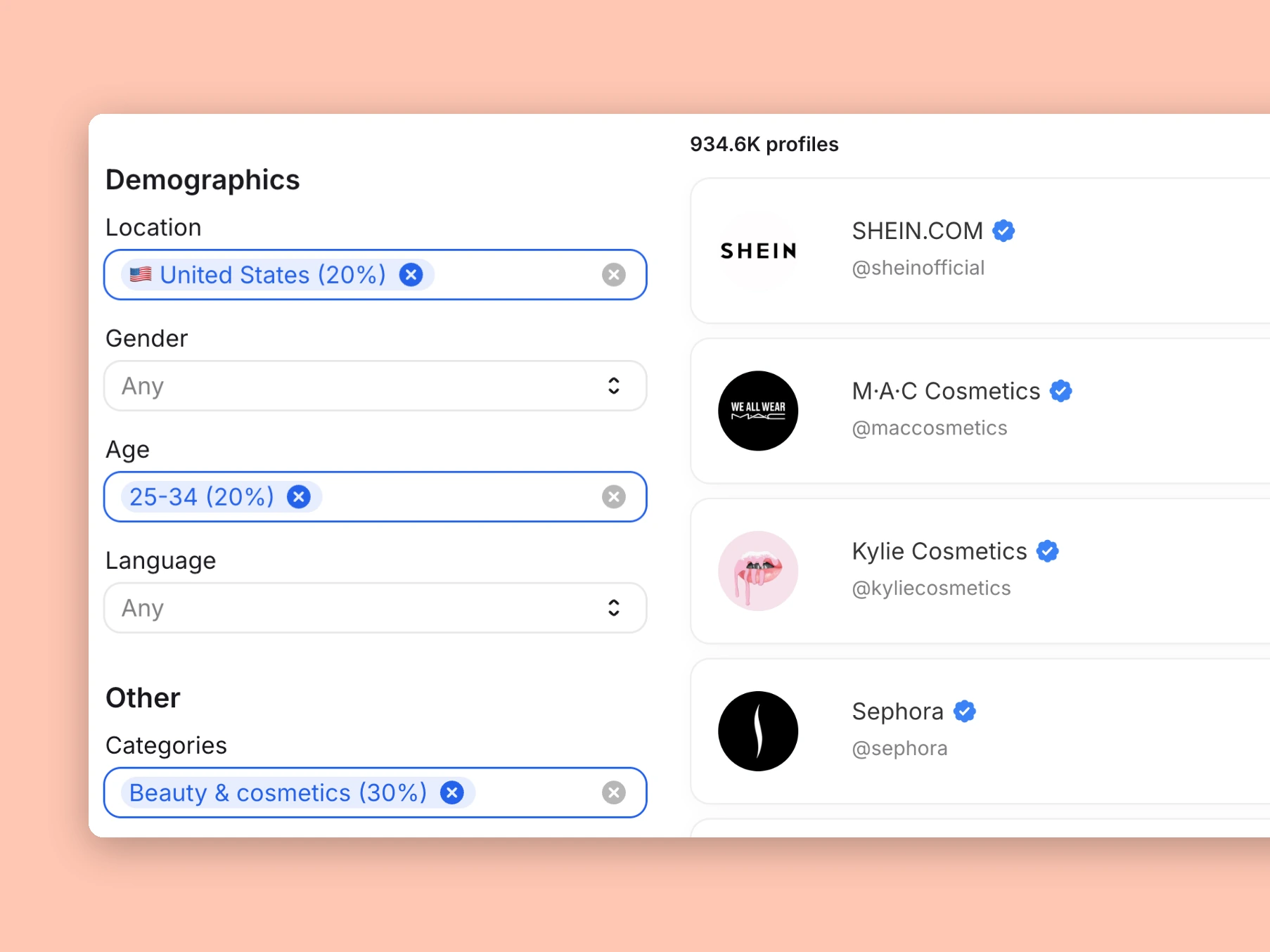
With Modash, you search a database of 380M+ creators and see audience demographics and engagement metrics before you send a single message.
Bottom line: BixGrow suits brands happy to list a program and let affiliates come to them, with approval and country controls to keep the roster clean. Impact fits brands that want inbound applications plus the option to search and vet a 250K+ partner pool themselves.
Before anything else, you need a tool that records sales where you actually sell. BixGrow does that inside Shopify and nowhere else, while Impact records conversions on your own site and on Amazon.
BixGrow is a Shopify app, and it is exclusively available for Shopify merchants. You add it through the "Add apps" option in your Shopify admin and run your affiliates from there. If your store runs on Shopify, that keeps Shopify affiliate tracking inside the admin you already use. If it doesn't, BixGrow is not an option.
Impact's tracking lives on your own site rather than in a storefront's app store. It records a sale in one of two ways: through your order confirmation page, or from sales data your systems send straight to Impact, a cookieless method Impact describes as its recommended approach. Either way the setup happens on your site, not inside a specific ecommerce platform.

If you also sell on Amazon, Impact runs an Amazon Seller program that lets brands drive affiliate traffic to their Amazon store, with partner discovery, reporting, and payouts managed in the same platform. It connects to Amazon Seller Central through a one-click integration with Amazon Attribution, so sales are tracked and credited without developer resources. The program is open to sellers and vendors who actively sell on Amazon and are enrolled in Amazon's Brand Registry. Beyond storefronts, Impact's Segment integration pulls customer data from your websites and apps into your Impact program, so that data sits in one place.
Modash gives Shopify brands a third route: connect your Shopify store and every affiliate sale is credited to the creator's tracking link.
Bottom line: BixGrow is the right fit only if your store runs on Shopify, where it is a quick install from the Shopify admin. Impact fits brands that sell on their own site, on Amazon, or both, and want one platform tracking all of it.
Some stores only need a classic affiliate program. Others want the same tool to handle customer referrals, creators, or retail media too, so it matters which partner types each one actually runs. BixGrow runs two program types, Impact lists four.
BixGrow lets you run affiliate and customer referral programs on your Shopify store. They are set up as separate programs for separate audiences, and you choose one right after installing the app, with the Affiliate Program recommended when you work with influencers or affiliates who can send meaningful traffic.
The Referral Program is for people who already buy from you, and you decide who can become an advocate: anyone, logged-in customers, or only customers who have placed an order. Both the advocate and the friend they refer can earn a reward, paid as a discount code or Shopify store credit, and you can cap what one advocate earns per month. On the affiliate side, affiliates can claim gifts such as discount codes or free products from their own dashboard.
Impact describes itself as one platform for affiliate, creator, referral, and retail media partnerships. Affiliate, influencer, and customer referral programs run side by side in a single partnership management platform, with the Creator Program and Advocate Programs going beyond the core affiliate program. Each one is still its own program, so a brand can list several in Impact's marketplace, and a partner who applies to one is not applying to the brand's others. Impact also positions the platform for agencies running partnership programs on behalf of clients.
Modash skips the separate program types entirely: creator discovery, campaign tracking, product gifting, and affiliate payouts sit in one place for Shopify brands, so the same creator can go from a gifted product to a paid affiliate link without being enrolled twice.
Bottom line: BixGrow covers the two program types a Shopify store most often needs: affiliates and customer referrals, with rewards built around discount codes and store credit. Impact adds creator and retail media programs on top, each run as its own program, which fits brands and agencies managing several partner types at once.
Before you commit to a program, you want 2 numbers: the monthly software bill and what it costs to get money to your affiliates.
BixGrow lists a free plan, a 14-day trial on paid plans, and no fee on sales, so your software bill stays the same whether affiliates drive $500 or $50,000 in orders. That is the main thing to know about its pricing: there is no cut of what your affiliates sell.
Paying affiliates happens inside the app. BixGrow lists 4 payout methods: PayPal, Shopify store credit, store coupons, or an external payout you send yourself by bank transfer or another payment service. PayPal, store credit, and store coupon payouts can run automatically once you set them up. Generating a payout only creates a record of what is owed, and before you generate one you can filter approved balances by time period, program, affiliate, minimum balance, and payment method. Affiliates see their pending, approved, and due payments in their own portal, so you spend less time answering "when do I get paid" emails.

Impact offers four paid plans. Starter costs $30/month or 2.5% revenue – whichever is greater – while the Essentials bundle comes in at $500 per month, which includes up to $2,500/mo in partner payouts. The Pro plan is priced at $2,500 per month, and includes up to $14,300/mo in partner payouts. There's also a custom Enterprise tier, which is recommended for brands driving more than $15,000,000 per year, or multi-channel operations. Higher payout volumes can incur additional charges, although the amount can change depending on contract terms.
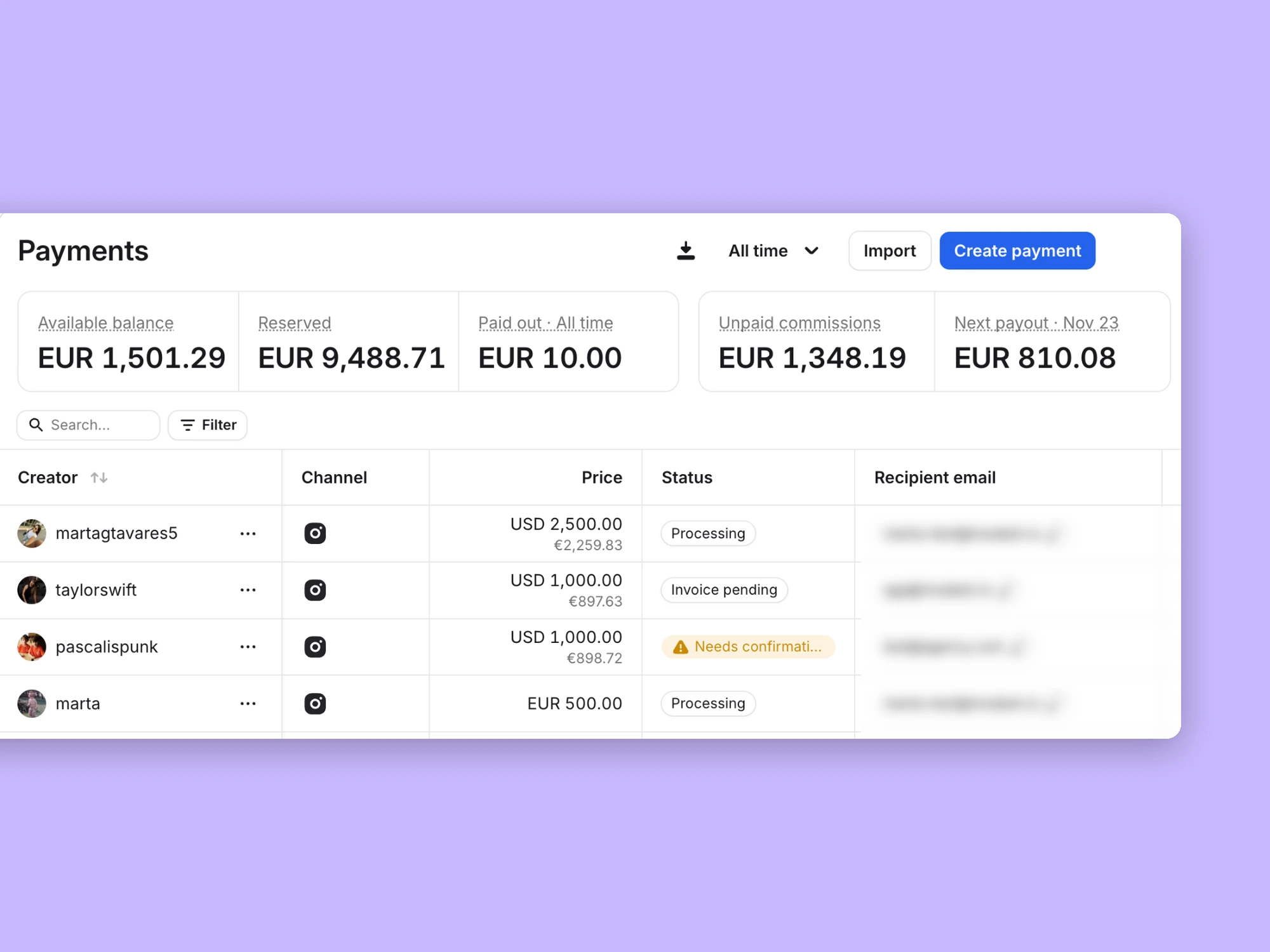
Modash costs $199–$499/month on the Essentials and Performance plans, with Enterprise from $14,700/year. Its usage fee is charged on what you pay affiliates, not on affiliate revenue, with 0% on the first $10,000 you pay out each year and 5% only on the amount above that. You pay one Modash invoice and Modash handles creator payment and tax, so you never pay affiliates one by one.
Bottom line: BixGrow tells you the price before you install and lets you pay affiliates without leaving the app. Impact offers a wide range of pricing, including a bespoke Enterprise tier. Modash sits in the open-pricing camp, and its fee is tied to creator payouts rather than your sales.
Once affiliates are recruited, you have to decide what each one earns and under what conditions. Both tools let you set rules for how you pay affiliates, but BixGrow supports commissions based on products, coupons, affiliate groups, and performance tiers, while Impact offers more granular rules that can also account for factors such as customer location, device type, and conversion attributes.
BixGrow starts with a default commission, which can be a percentage of sales, a fixed amount per order, or a fixed amount per item. From there, merchants can set special rates for individual products or collections, so a high-margin item can pay 15% while the rest of the catalog pays 10%. Advanced commission rules go a step further, applying different rates to orders that meet coupon, customer, or lifetime-tracking conditions, and these override the default rate. BixGrow's own example is a 15% commission on orders that use a "SUMMER" coupon while the default stays at 10%. Merchants can also attach an optional customer discount to affiliate coupons alongside the commission rules.
Progression is automated too. BixGrow's affiliate tiers move affiliates to a higher commission-rate program when they hit conditions such as total sales, total orders, or total commissions. Tiers can be reset on a recurring schedule, returning everyone to Level 1 so the incentive starts over. Because BixGrow lets you create multiple programs with different commission rules, you can group affiliates by program and duplicate a program's rules without moving its existing affiliates.

If you sell subscriptions, BixGrow works with Shopify subscription apps (except Shopify Subscriptions) to track recurring orders, so affiliates keep earning on every renewal while the subscription stays active.
Impact supports commission rules based on both what customers buy and how partners drive traffic. Brands can vary payouts by product, SKU, category, promo code, or customer status, and offer performance bonuses to high-performing affiliates. For cost-per-click (CPC) programs, Impact also supports more granular rules based on the visitor's browser, geographic location, or device type, allowing brands to pay different amounts for different types of clicks. Some advanced commissioning features are restricted to certain plans or add-ons.
Modash keeps this simple for Shopify brands, showing each creator's commissions in one view, so you can see what each one earned without building rule layers.
Bottom line: Both BixGrow and Impact offer granular commission rules based on products, coupons, and affiliate performance. BixGrow gives Shopify merchants control over these rules within their affiliate programs, while Impact adds advanced options, including CPC payouts that vary by browser, location, and device – useful for brands rewarding partners across different traffic sources.
Once affiliates start sending traffic, 2 questions follow. Which partner gets credit for each sale, and do your affiliate tool's numbers agree with the rest of your analytics? Both BixGrow and Impact attribute conversions within their own platforms, but they offer different reporting and attribution capabilities.
BixGrow gives affiliates trackable links, including links to individual products and other store pages. Merchants can automatically append UTM parameters to these links, with customisable values for campaign source, medium, and name. This lets Google Analytics 4 identify affiliate traffic and compare it with other marketing channels. BixGrow separately uses its own tracking and commission rules to determine which affiliates receive credit for sales.
Impact offers configurable attribution rules to determine which partner receives credit for a conversion. Last-click attribution is commonly used, but other crediting arrangements are available. Its click counts can differ from GA4 sessions because the two platforms measure different events. Impact also supports first-party tracking domains and server-to-server tracking to help improve attribution reliability.
Where Impact goes further is running several affiliate networks at once. Its Trackonomics Essentials lets you manage work across multiple affiliate networks without leaving Impact, including performance reports and tracking links.

That matters for payouts. If you promote your brand through other networks alongside Impact, more than one solution can claim the same conversion, which can lead to duplicate payouts. Impact's Optimize reporting lets you track those extra networks inside the platform, where they're set up as media sources, and set rules that control payout behavior so one sale isn't paid twice.

Modash takes the third route. Its Shopify affiliate tracking connects to your Shopify store so each order is credited to the creator whose link was clicked last, using last-touch attribution only. Pre-built UTM templates keep every creator link consistent, so the same traffic reads cleanly in GA4 too.
Bottom line: BixGrow is the simpler option for Shopify merchants who want affiliate attribution and commission tracking alongside UTM-based reporting in GA4. Impact offers more advanced attribution and deduplication controls, making it better suited to brands managing complex partnerships across multiple channels and networks.
When your affiliates are creators posting on Instagram or TikTok, you want to see the Reel or Story they published right next to the sales it drove. Here the two tools are alike rather than different: both track affiliate sales after a click, not the post that produced the click.
BixGrow describes its tracking in terms of clicks, referrals, and payouts. An affiliate's Instagram Reel shows up in BixGrow only as the link clicks and orders it generates, so you open the creator's profile yourself to see the content and check it for the right disclosures.
Impact goes further with its creator campaign tools. Its asset library collects content associated with campaign tasks, including posts, Reels, Stories, and videos, alongside captions, engagement metrics, and usage rights. Brands can view and download content without leaving the platform. However, this functionality is tied to creator campaign workflows, rather than automatically monitoring everything an affiliate publishes.
With Modash, the content arrives on its own. Modash collects the posts, Reels, Stories, and videos creators publish based on your campaign's hashtags, mentions, and keywords, so the content sits beside the sales data without anyone pasting links. It also flags posts that are missing an ad disclosure like #ad, so compliance checks happen as content comes in.
Bottom line: BixGrow tracks affiliate clicks, sales, and commissions but doesn't automatically collect social content, while Impact collects and reports on content associated with creator campaigns. However, Modash automatically monitors tracked creators' posts and flags missing campaign tags and disclosures.
BixGrow and Impact both track affiliate sales after the click. Neither automatically collects all the social content affiliates post to earn those sales, so a creator-led program means opening profiles by hand to see what went live.
Modash fills that gap for Shopify brands. Creator discovery, campaign tracking, product gifting, and affiliate payouts sit in one place, so the same creator can go from a gifted product to a paid affiliate link without you switching tools.
You pick affiliates by fit rather than by who happened to apply, because you search 380M+ creators and see audience demographics and engagement metrics on each profile before you send a message.
The content arrives on its own. Once a creator is in a campaign, Modash collects the posts, Reels, Stories, and videos they publish based on your hashtags, mentions, and keywords, and flags anything missing an ad disclosure like #ad.
Credit lands with the right creator without you reconciling anything. Affiliate sales from your connected Shopify store go to the creator whose link was clicked last, using last-touch attribution only, and any Shopify discount code embedded in a creator's link is applied at checkout without the shopper typing it in.
Pricing is public: $199–$499/month on Essentials and Performance, with Enterprise from $14,700/year. The usage fee is based on what you pay affiliates rather than on affiliate revenue, at 0% on the first $10,000 you pay out each year and 5% on the amount above that. You pay one Modash invoice and Modash handles creator payment and tax.
If your affiliates are creators and your store runs on Shopify, Modash is built for that setup, and you can test it free for 14 days with no credit card required.
Your creator program, minus the manual work.
Find creators, manage relationships, and track results. All in one place.