Capabilities
Integrations







Use cases
Capabilities
Integrations
Use cases

UpPromote and AvantLink do the same core job for an ecommerce brand. Partners sell your products for a commission; the tool tracks who earned what.
The difference is where those partners come from. UpPromote is an affiliate platform built for Shopify that gives you signup pages, a marketplace, and outreach tools to recruit your own affiliates. AvantLink is an affiliate network that you connect your store to, organized into country-specific networks for the US, Canada, and Australia.
That one choice shapes everything downstream, from how pricing works to who you end up partnering with.
Read on to learn which is right for you and whether there are any other options you should be considering...
UpPromote is for Shopify brands that want to run their own affiliate program and recruit partners using the app's signup pages, marketplace, and outreach tools. AvantLink is for stores on any ecommerce platform selling into the US, Canada, or Australia that would rather plug into an existing affiliate network.
The issue with both tools is that neither tracks the content affiliates post. You see the sale and the code that earned it, but not the Reel, Story, or video behind it, so content performance and disclosure checks stay a manual job.
If that's a problem for you, consider an alternative like Modash, an influencer marketing platform for Shopify brands that covers creator discovery, campaign tracking, product gifting, and affiliate payouts in one place, which is why it belongs alongside 2 affiliate tools. Here's how the 3 compare:
UpPromote's homepage lists multiple ways to find affiliates, including custom signup pages, a marketplace, and built-in outreach tools.
In practice, that means UpPromote hands you the recruitment job: you publish a signup page for inbound applicants, list your program in its marketplace, and use the creator discovery tools proactively search for influencers across Instagram, TikTok, and YouTube.
That makes UpPromote the self-serve option of the pair, closer to standalone affiliate recruitment software than to a network you join.
AvantLink works from the other direction. Instead of building a recruitment funnel of your own, you connect your store to a network that has spent 2+ decades accumulating affiliates.
Here's where it gets interesting. Both tools work with affiliates who are already in a network or who apply to you.
Modash starts earlier in the process: you search a database of 380M+ creators and reach out to the ones that fit, with audience demographics and engagement metrics visible on each profile before you send a single message. So you can qualify affiliates on audience fit before they ever hear from you, not after they apply.
Bottom line: Pick UpPromote if you want to own your affiliate pipeline, because it gives you the tools and leaves the recruiting to you. Pick AvantLink if you would rather join an existing pool than build your own.
UpPromote describes itself as an affiliate platform built for Shopify.
Everything from recruiting affiliates to Shopify affiliate tracking happens inside the store you already manage, so a Shopify brand adds one app and keeps one admin.
AvantLink, on the other hand, supports multiple platforms, including major ecommerce options like Adobe Commerce, BigCommerce, Shopify, and WooCommerce. So if you're not on Shopify or have plans to leave, it's a better fit and gives you more flexibility.
Modash connects to your Shopify store too, so you get affiliate tracking without moving platforms.
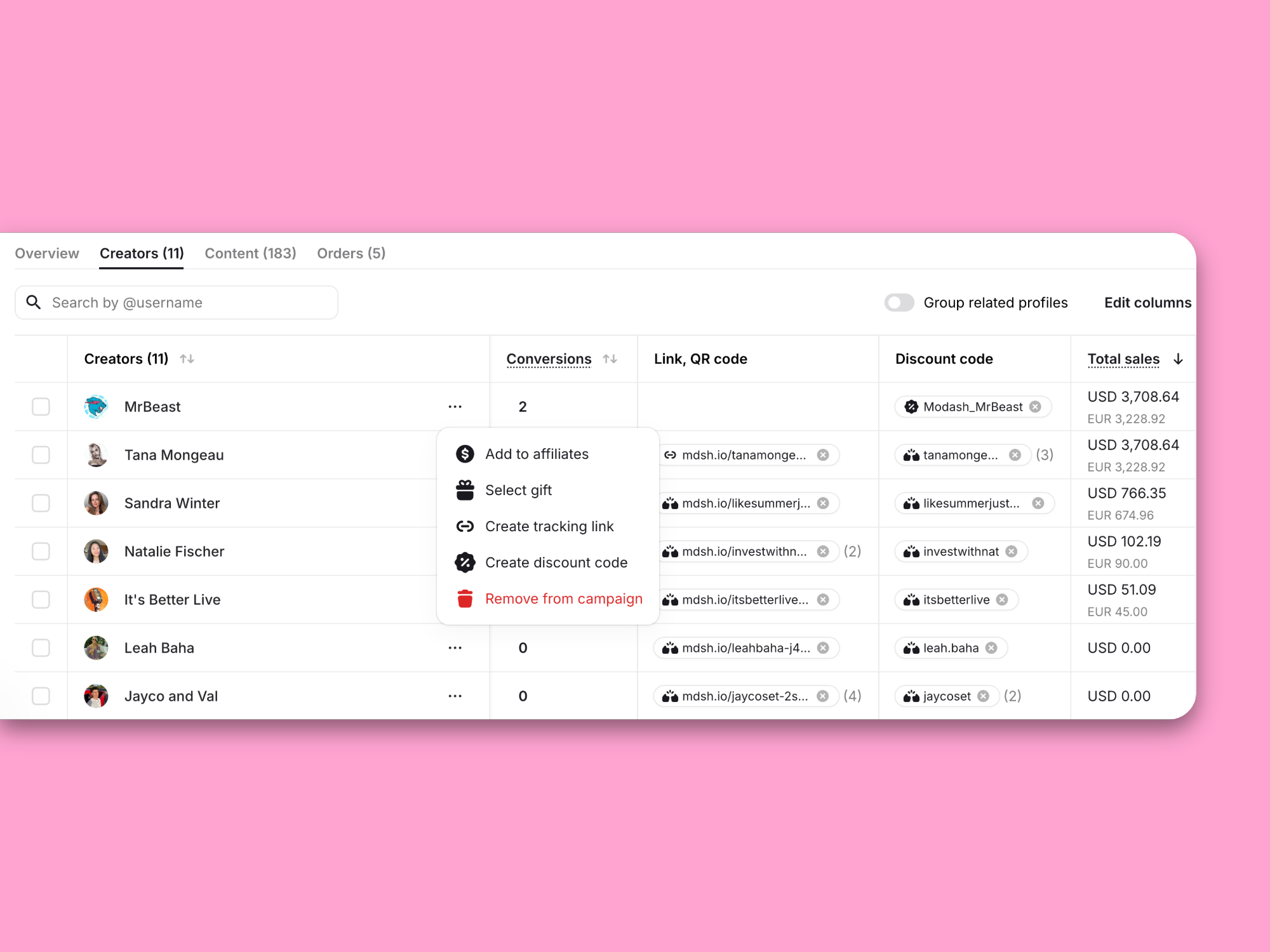
Bottom line: If you're on Shopify and want the program living inside the store admin you already use, UpPromote fits.
Once you know where you sell, the next question is what you'll pay, and here the split is simple.
Outside of its generous free offering, every UpPromote plan pairs a flat monthly fee with a cut of the affiliate sales you approve, and that cut gets smaller as the subscription gets bigger.
The Growth plan is $29.99/month plus 2% of successful referral sales, Professional is $89.99/month plus 1.5%, and Enterprise is $199.99/month plus 1%.
AvantLink's pricing is more complex. Rather than a fixed monthly subscription and/or recurring fees, it charges an upfront implementation fee. The price is unlisted though, so you'll have to reach out to learn more.
After that, you only have to pay your creators' commissions.
Actually, there's more to it, because AvantLink also offers various managed service options for brands that prefer a hands-off approach to running their affiliate program. But again, prices are unlisted, so you'll need to do your own research here.
Modash's plans start at $199/month for Essentials (or $299/month on a monthly plan), $499/month for Performance ($599/month on a monthly plan), and Enterprise from $14,700/year.
On the Performance Annual plan, the first $10,000 in affiliate commissions you pay out each year carries a 0% fee, while a 5% fee applies only to the amount above that. Creator payments and tax handling roll into one Modash invoice, so you're not chasing invoices or running payout admin on your side.
Bottom line: With UpPromote you get a published price list you can model before you install anything. AvantLink's pricing isn't on its site, so budgeting starts with a conversation.
Once you know what each tool costs, the next call is what to pay the affiliates themselves. It's one of the first decisions a new program makes, and an easy one to get wrong.
UpPromote's homepage describes an AI-powered assistant that recommends commission rates and setup structures, built on what it has learned from 50,000+ affiliate programs. In practice, a brand launching its first program gets a suggested starting rate instead of guessing.

AvantLink doesn't offer anything comparable.
Modash gets you to the same outcome another way: you set commission tiers once and can change rates whenever you like, and affiliates still earn the rate that applied when their order came in. Each tier can pay a percentage of net revenue or a fixed amount per sale, and you can add a bonus for first-time customers.
Bottom line: UpPromote hands you an AI-suggested starting point for commission rates; AvantLink doesn't.
Once commissions are set, the next question is where you read the results. The two tools answer it from different places.
With AvantLink, reporting happens in a platform called Arches. Brands can leverage customized reporting, AI-powered predictive modeling, cross-device attribution, and more.
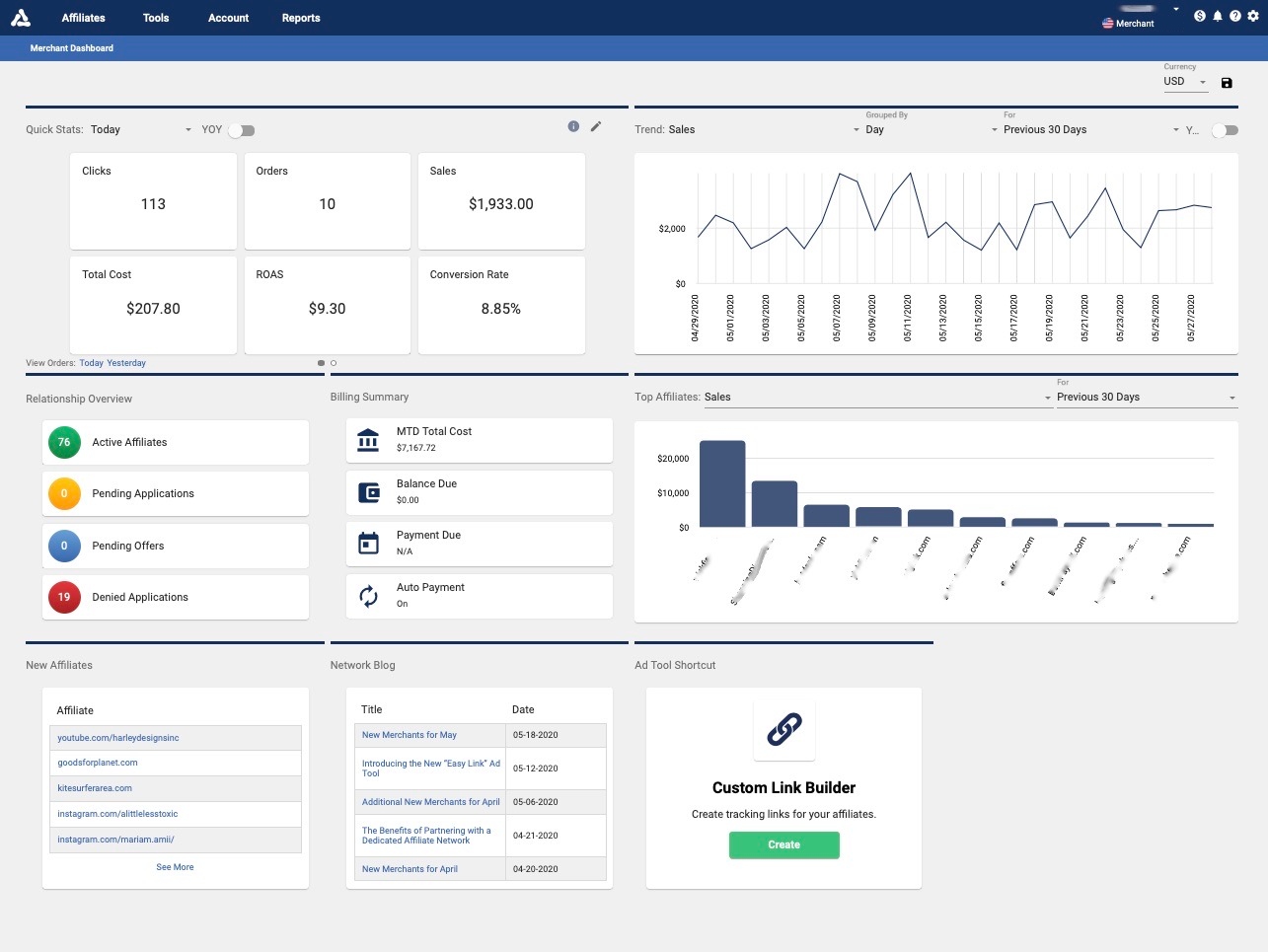
UpPromote goes the other way, keeping reporting inside the Shopify app where you already manage affiliates.
Modash shows you which creator drove each Shopify sale, order by order, so you can pull up any sale by creator or order number in seconds. Each order shows whether a code or a link earned the credit, what it was worth, and when the creator gets paid, so you can track affiliate sales and answer "who drove this, and when do they get paid?" without exporting anything.
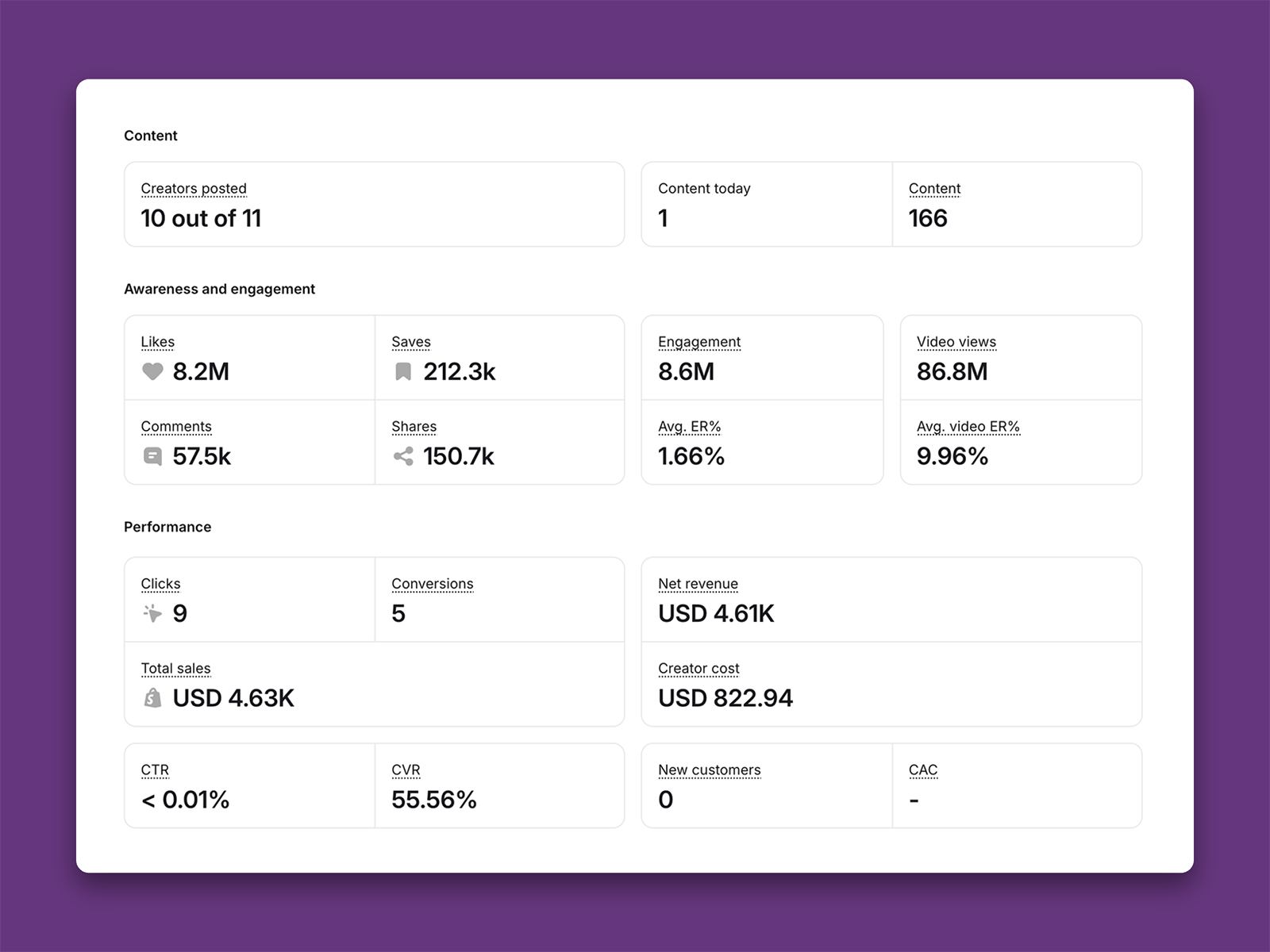
Bottom line: AvantLink houses reporting within its Arches platform, while UpPromote keeps you inside its Shopify app next to the rest of your affiliate management.
Links and codes let you track affiliate sales and decide who gets credit. They don't tell you which Reel, Story, or video sent that customer your way, how many people saw it, or whether the post disclosed the partnership.
So let's say you want to know which format performed best, reuse a strong post in your own ads, or confirm a creator actually mentioned your brand. Neither UpPromote nor AvantLink tracks the content affiliates post, so on either tool, you're asking for screenshots or hunting for the posts yourself.
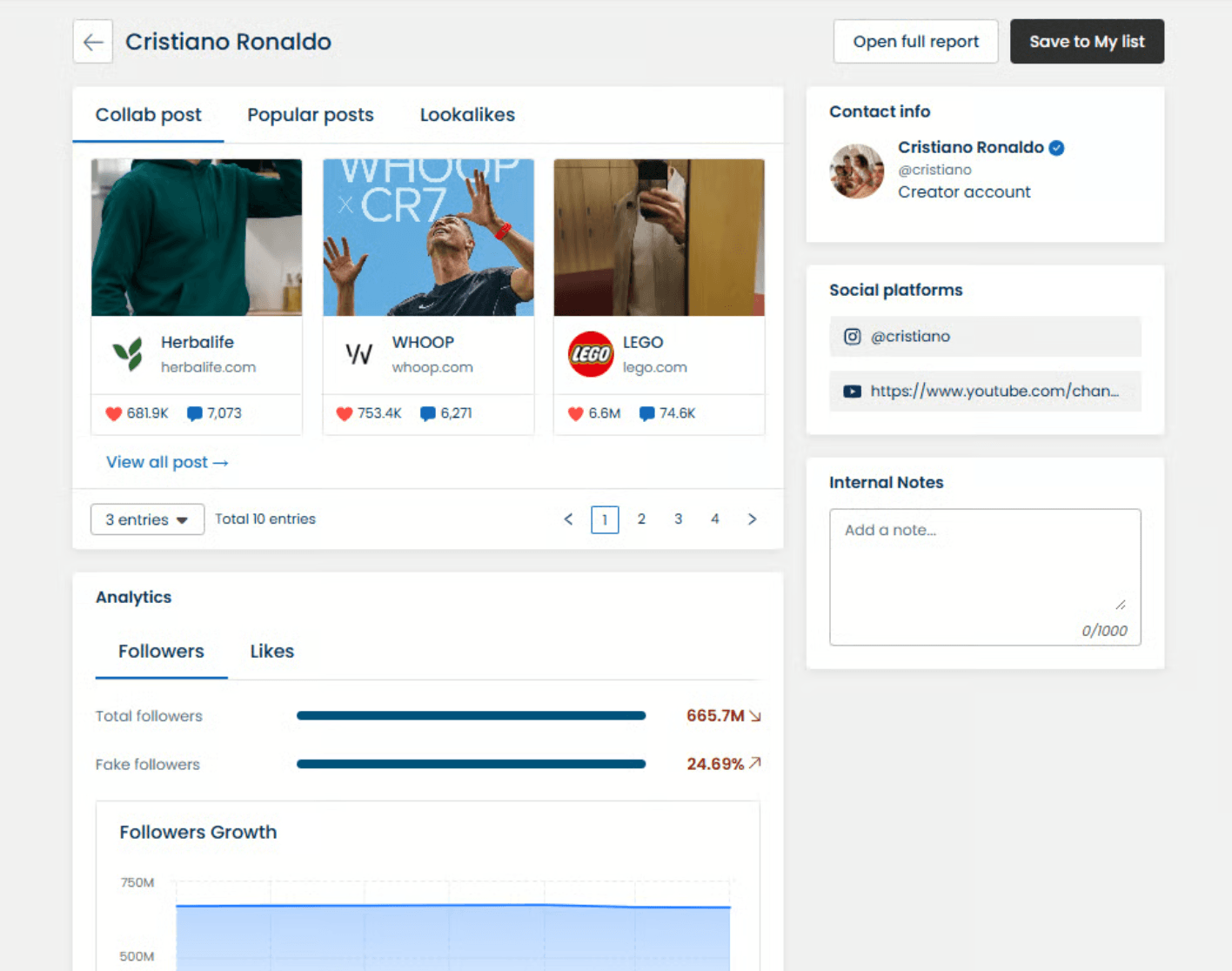
Modash closes that gap by collecting creator content automatically as it goes live, so you see the Reel behind the sale without asking for it. It picks up Instagram feed posts and Reels that match your tracking criteria, and active Stories before they expire. Posts are matched on captions, hashtags, @mentions, and brand tags, so creators don't have to submit anything.

It covers compliance too. Modash flags posts missing a required hashtag, @mention, or ad disclosure, so problems surface without you checking every post by hand.
Bottom line: On UpPromote or AvantLink, content performance stays a manual job, so ask whether chasing screenshots is a task you want to carry. Modash collects that content for you as part of the same campaign.
By now the split is clear. It comes down to where your affiliates come from, where your store lives, and how you want to pay.
Either way, you're choosing a tool that tracks the sale but not the post behind it. There is a third option that does both.
UpPromote and AvantLink both stop at the sale – a link or code earns credit, and the affiliate gets paid. Both leave the Reel behind that sale unseen, and both work with partners who are already in a network or who apply to you.
Modash starts earlier and goes further. You search 380M+ creators and see audience demographics and engagement metrics on every profile before you send a single message, so you vet on audience fit first and pitch second.
Here's where it gets interesting. Once creators post, Modash collects their content automatically. It pulls in Instagram feed posts and Reels that match your campaign settings, catches active Stories before they expire, and flags any post missing a required hashtag, @mention, or ad disclosure. You see what each creator published without chasing screenshots.
On the sales side, when a customer clicks a creator's link and later buys, that sale is credited to the creator who owns the link – Modash uses last-touch attribution, so the last link clicked gets the credit. Creators can share a Shopify discount code instead, and Modash attributes those orders too.
Paying creators runs from the same dashboard. You pay one Modash invoice and Modash handles creator payment and tax, and your fee is based on what you pay affiliates rather than the sales they generate.
Plans start at $199/month and you can try Modash free for 14 days with no credit card required.