

More tools
Use cases



Promoting your affiliate program isn’t just a case of hitting send on a launch post and adding a link to your bio (or, at least, it shouldn’t be).
If the program's been live for a while and sign-ups have gone quiet, it's tempting to think the fix is just "get more people to join." But that's usually only half the problem. You also need the right people joining, and you need the ones who do join to actually post.
There are two sides to promotion:
Most stalled programs aren’t focusing on either one on purpose – they’re just running with whatever traffic they had when they launched the program (which could have been months or even years ago).
There's a third job underneath both of these, too: activation. An affiliate who signs up and never posts isn’t helping your program in any way. So, promoting your program also means keeping the affiliates you already have engaged enough to keep posting.
This piece covers all three: how to run inbound, how to run outbound, and how to stop affiliates from going quiet after they sign-up. If you don't have a program live yet, start with how to start your affiliate program instead, as this piece assumes you already have the basics in place.
There are usually two reasons a program stalls: it's not attractive enough to join, or you're not activating the affiliates you already have. Let’s rule out both.
Before you spend any effort promoting, make sure you actually have something to promote. At the very least, check you have these:
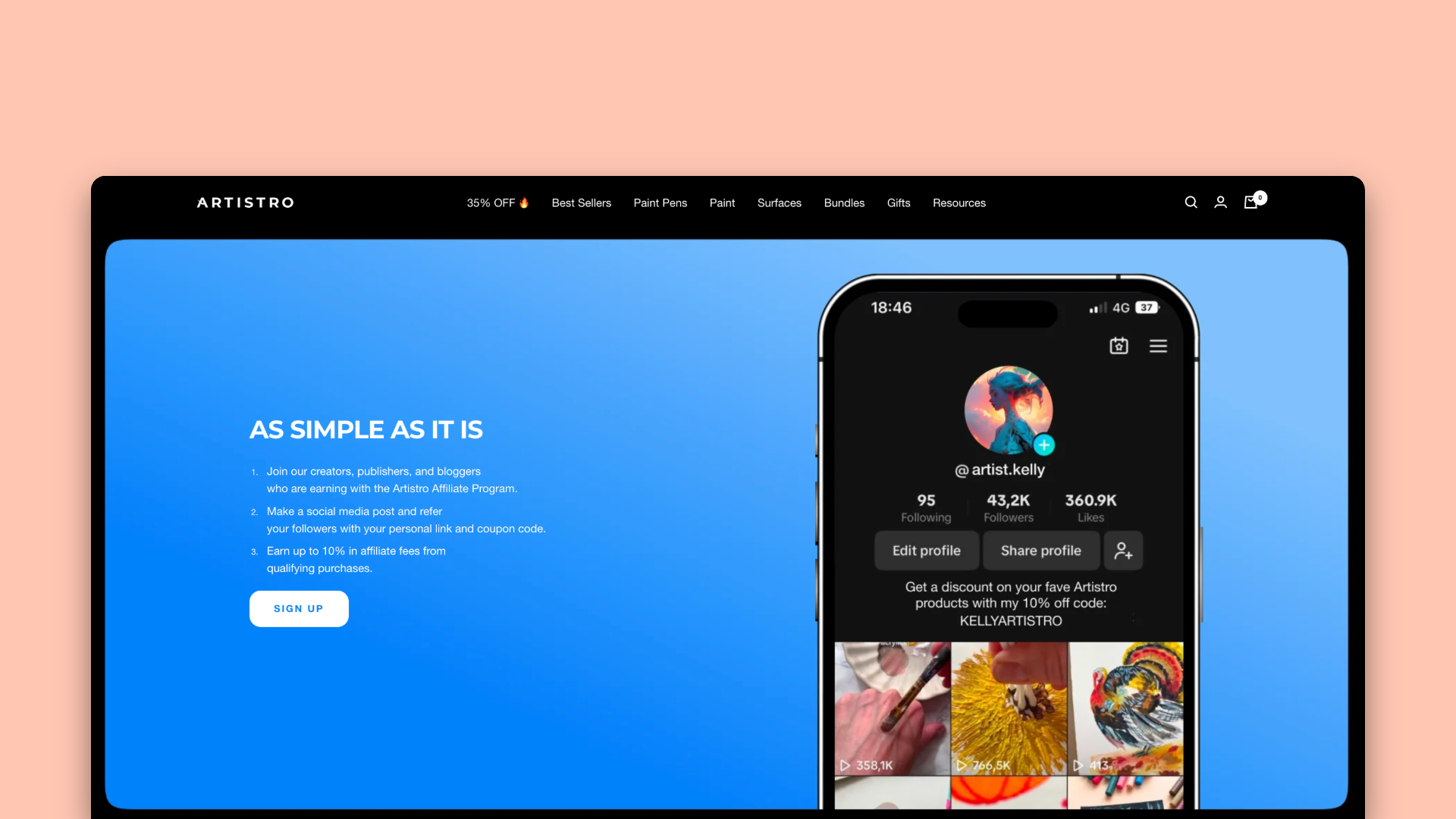
Artistro leads with the commission amount and shows affiliates exactly how they can get started with a visible link to the sign-up page.
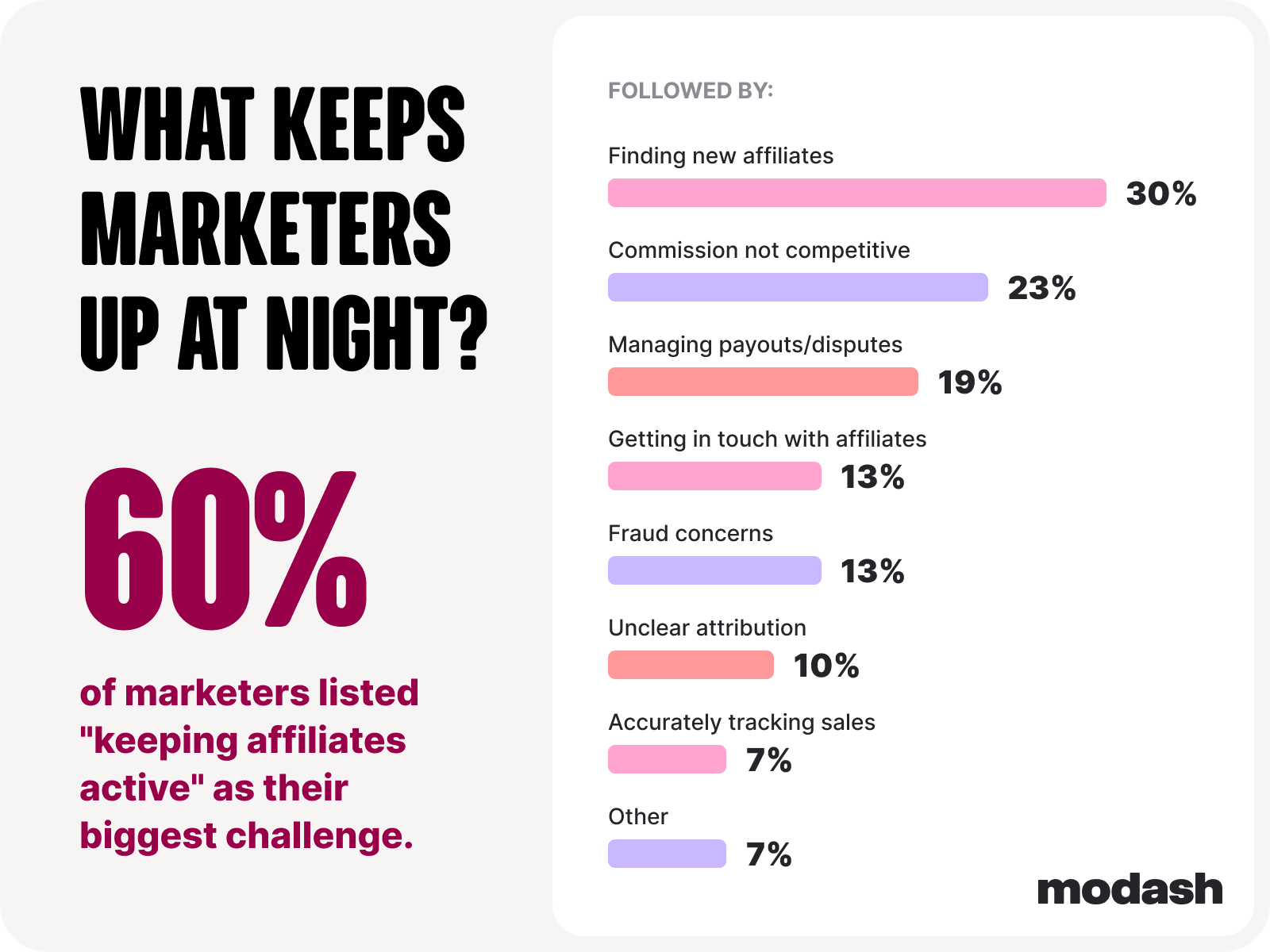
70% of marketers say affiliates are critical to their success, yet 60% say keeping them active is their single biggest challenge. So, clearly, the problem isn’t getting people in the door. It’s what happens after that which is the tricky part.
And the data shows a pretty direct line between effort and activity. Brands that describe themselves as "very involved" with their affiliates keep 71.5% of them active. "Very hands-off" brands? Just 10%.
Even going from very hands-off to somewhat hands-off roughly quadruples the active rate. Almost 30% of marketers describe their own involvement as hands-off, so if that's you, you're not alone, but the data says it's costing you affiliates who'd otherwise be posting.
"Be more involved" is a good idea, but it’s not a plan, so here's what involvement looks like in the brands that do it well, straight from our survey:
👉 Learn more about affiliate marketing strategies that can help grow your program.
Even if you're doing all of the above, you'll still need a steady flow of new affiliates coming in. Activation keeps the affiliates you have from going quiet, but it doesn't grow your program on its own, and 49.2% of marketers say they're constantly recruiting new affiliates, which tells you this isn't a one-and-done task even for brands doing everything else right. That's where proactive promotion comes in.
These tactics fall into two buckets: inbound (they come to you) and outbound (you go get them). You can run one without the other, and many brands do. But they complement each other: inbound compounds over time, while outbound lets you go after specific affiliates on demand.
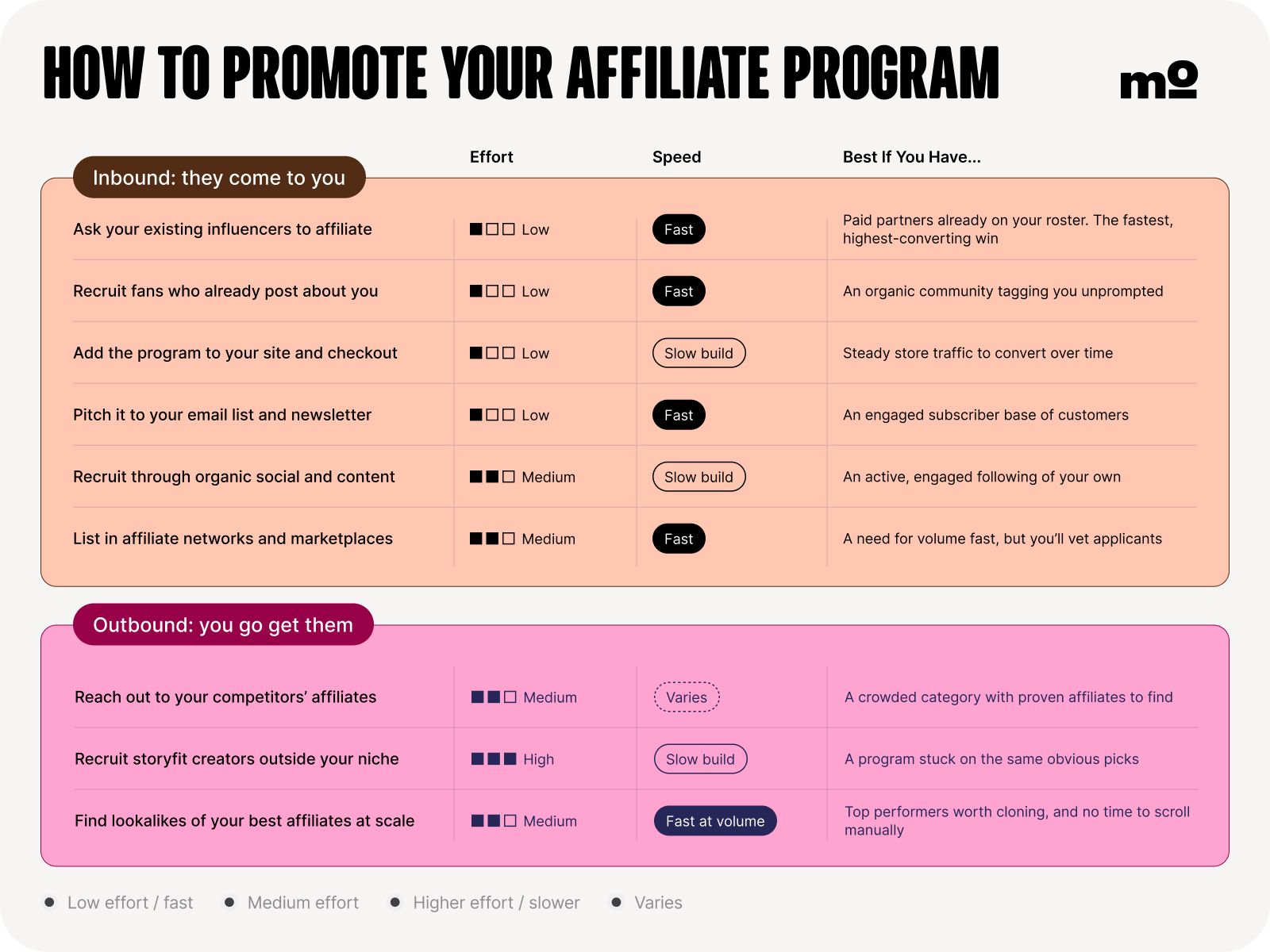
Inbound works because you're not starting cold. These are people who already know your brand and already like your product, which is a way easier sell than a cold DM to a total stranger.
Half of marketers say fewer than a quarter of their influencer partners also work as affiliates, meaning most brands are sitting on partners they could just... ask.
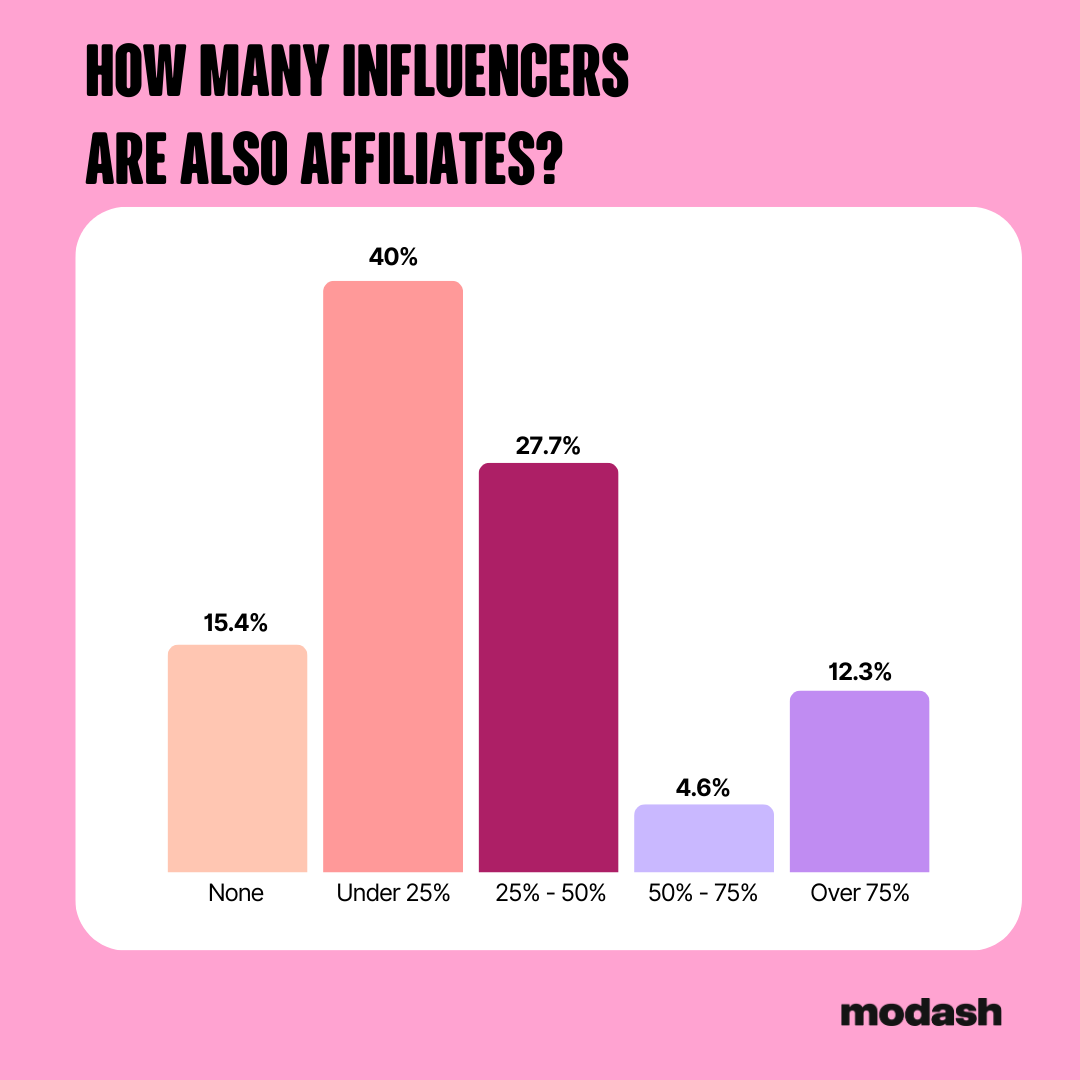
The good news is that it's not a hard sell. Over half of marketers surveyed said influencers are open to affiliate commission as an incentive.
Before you do anything else in this article, go audit your current influencer list. Odds are good there's a chunk of people on it you haven't asked yet.
There's the layer of people below your paid partners: the ones who organically post about you because they love the brand. These are some of the warmest recruits you'll ever find, because the affiliation part is basically already proven (they're already choosing to talk about you for free).
This is where Modash comes in handy. It surfaces your influential fans – aka creators who already follow or engage with your brand, so you've got a warm list to work from before even sending a single message.
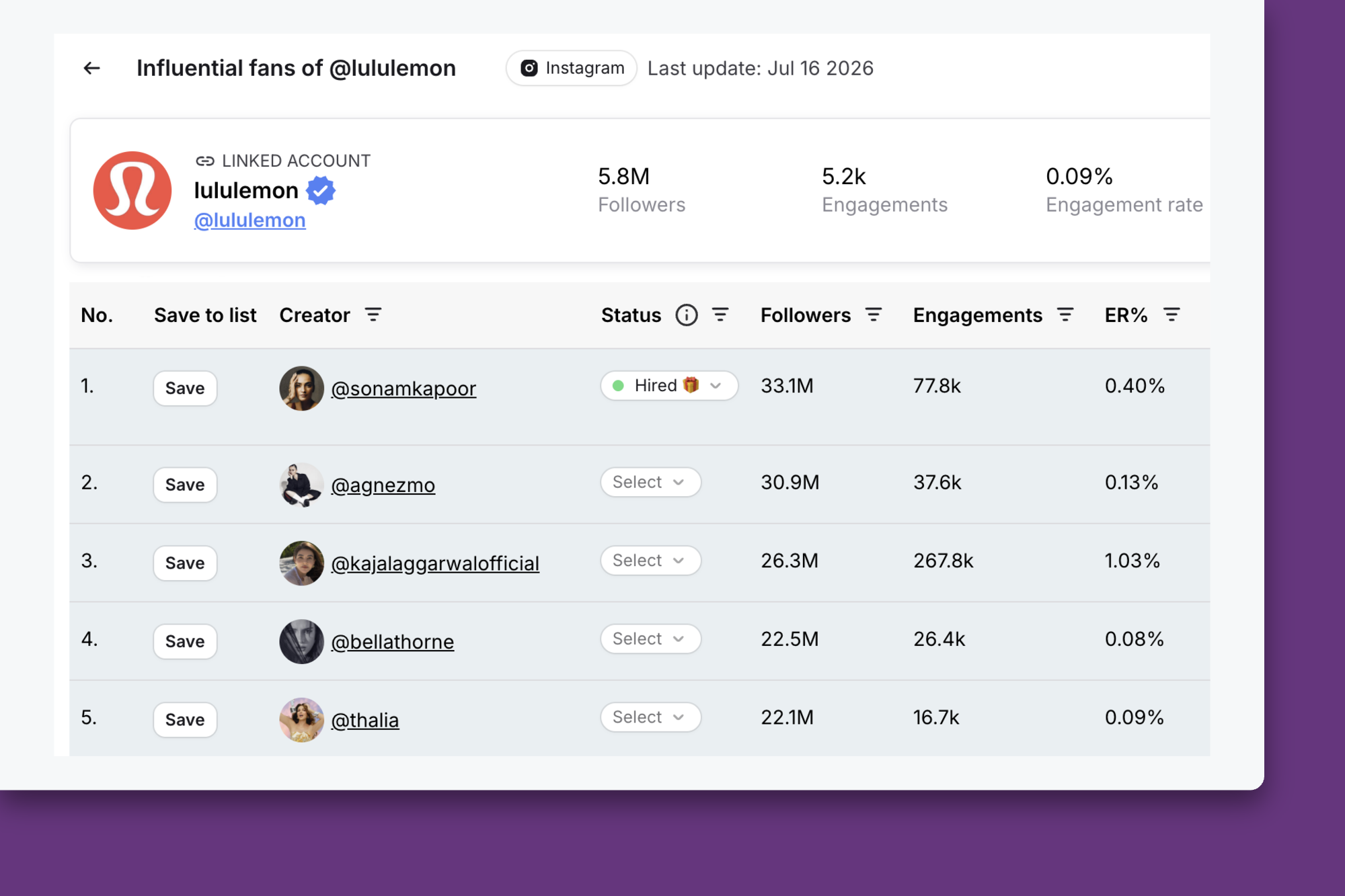
Note here that a creator posting about you organically doesn't automatically mean their audience is your audience. Our research found that audience mismatch is the #1 reason collabs underperform, and that risk doesn't disappear just because someone's a genuine fan.
Someone might love your brand and be a perfect fit for organic UGC, but if their followers look nothing like your ideal customer, turning them into an affiliate probably won't help you with sales.
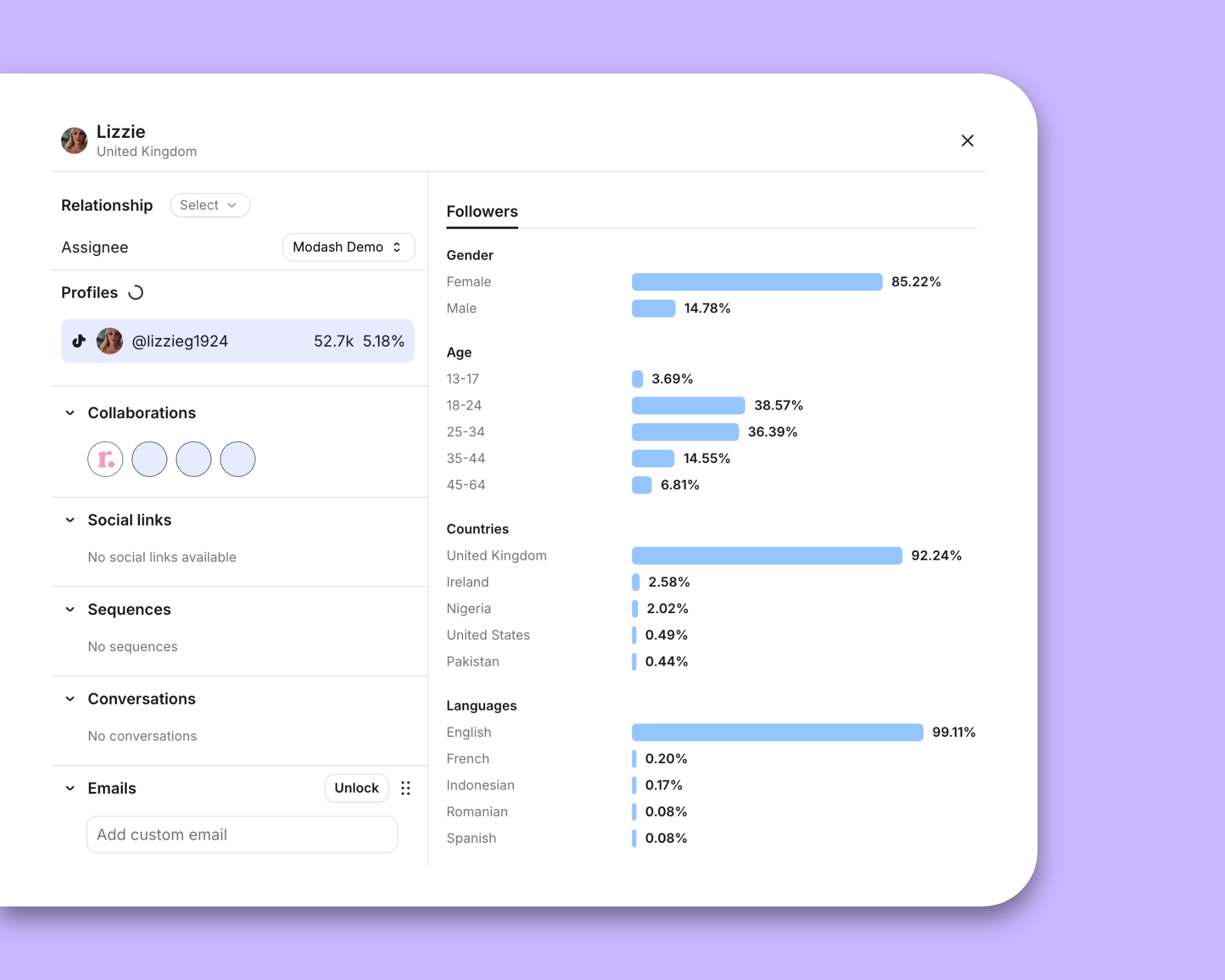
It’s worth doing a quick audience check before you hand out a code. This doesn’t have to be a full-on vetting process, but more of just a gut check that their audience roughly matches who you're trying to reach.
And with Modash, that’s easy. You can not only check a creator's audience demographics, audience interests, past collaborations, and a lot more.
You don’t want to send customers on a wild goose chase just to find out how they can become an affiliate. Put clear info about your program where they can see it ASAP, like on product pages, your website footer, a dedicated landing page, or the post-purchase/thank you page right after checkout.
A few brands doing this well:
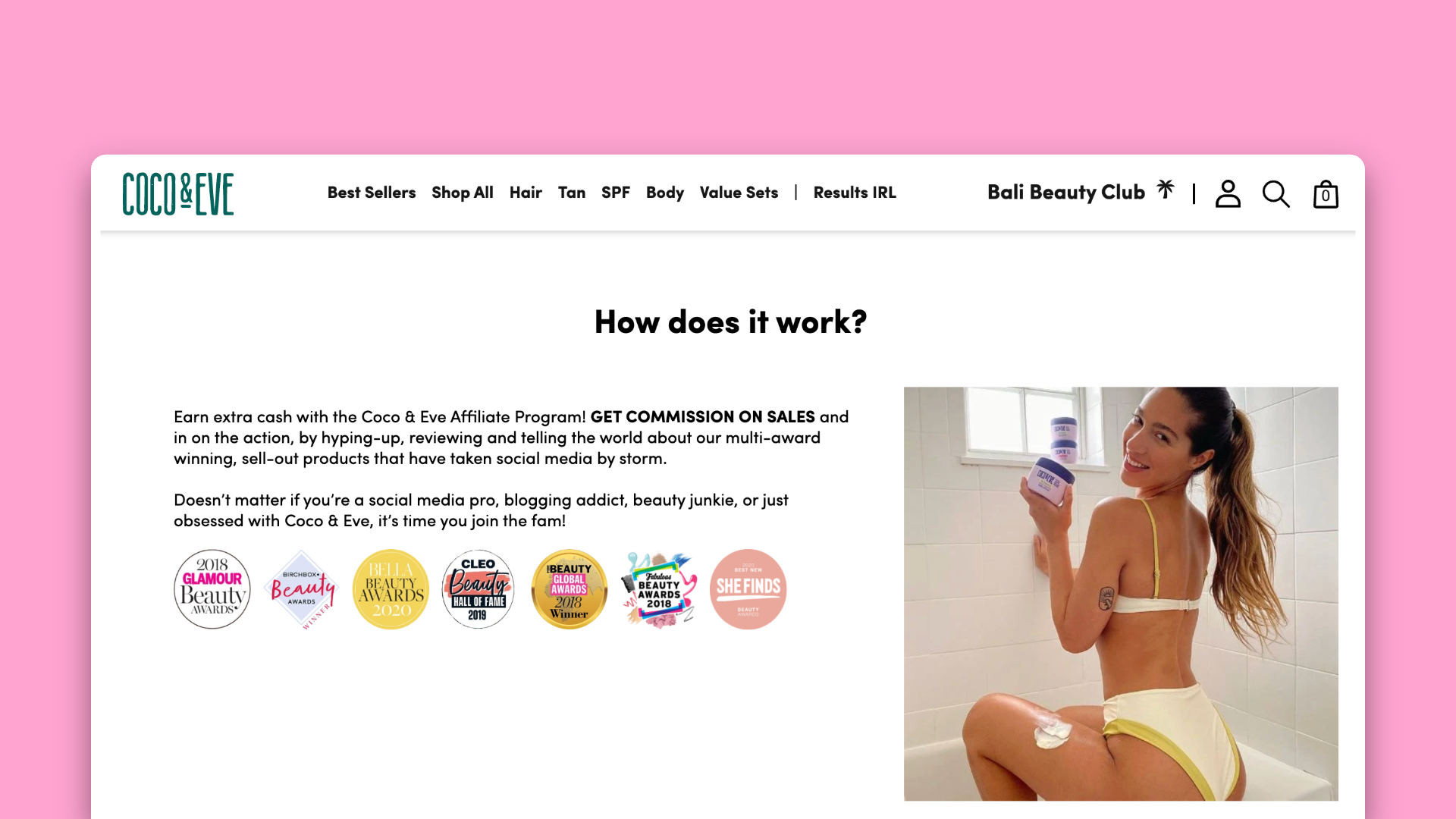
Coco & Eve have a dedicated affiliate landing page with real personality rather than just a generic form.
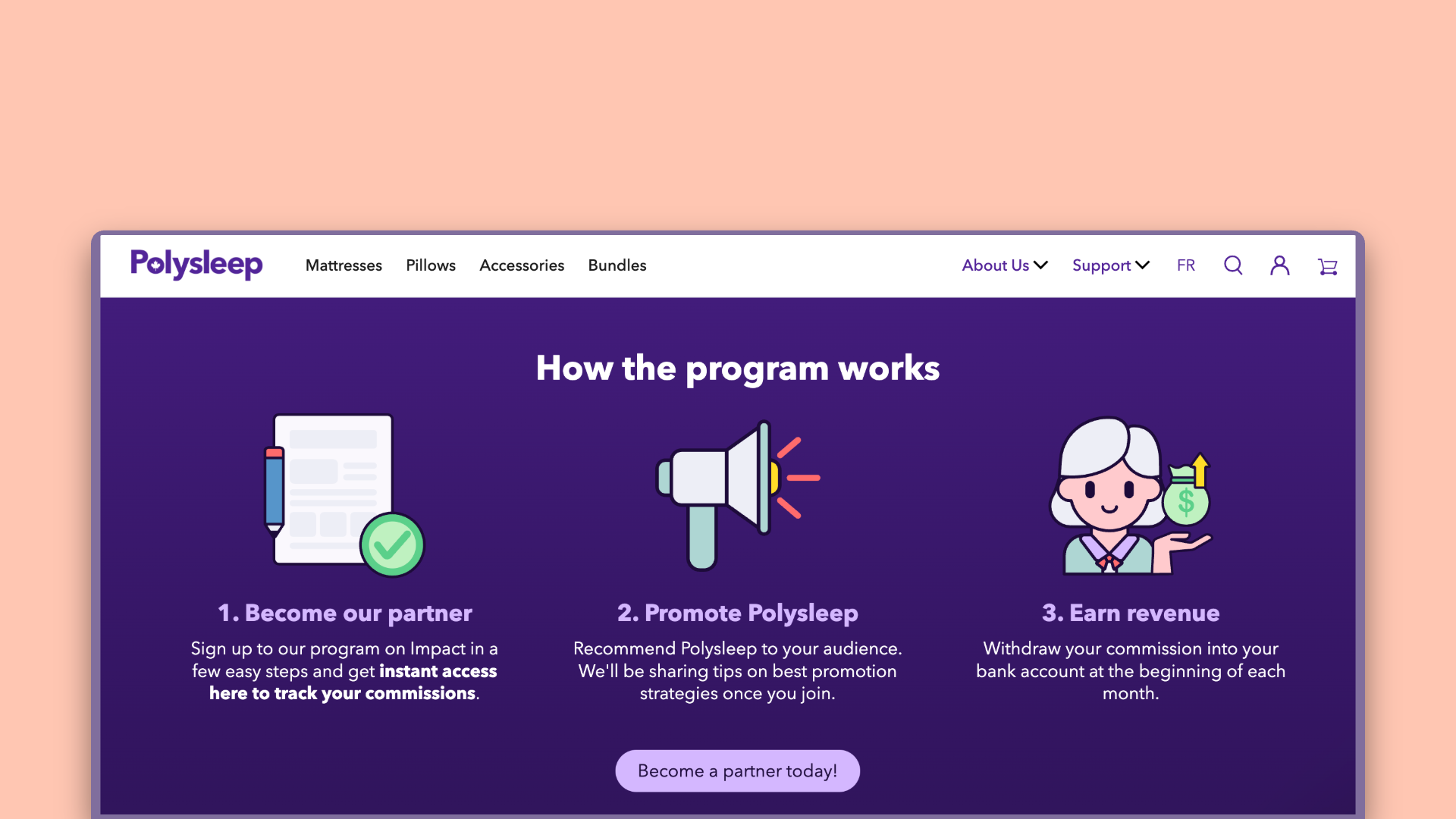
Polysleep turns everyday customers into affiliates with a simple step-by-step sign-up guide.
Graza has an ambassador-style program built for a smaller, more relationship-driven audience.
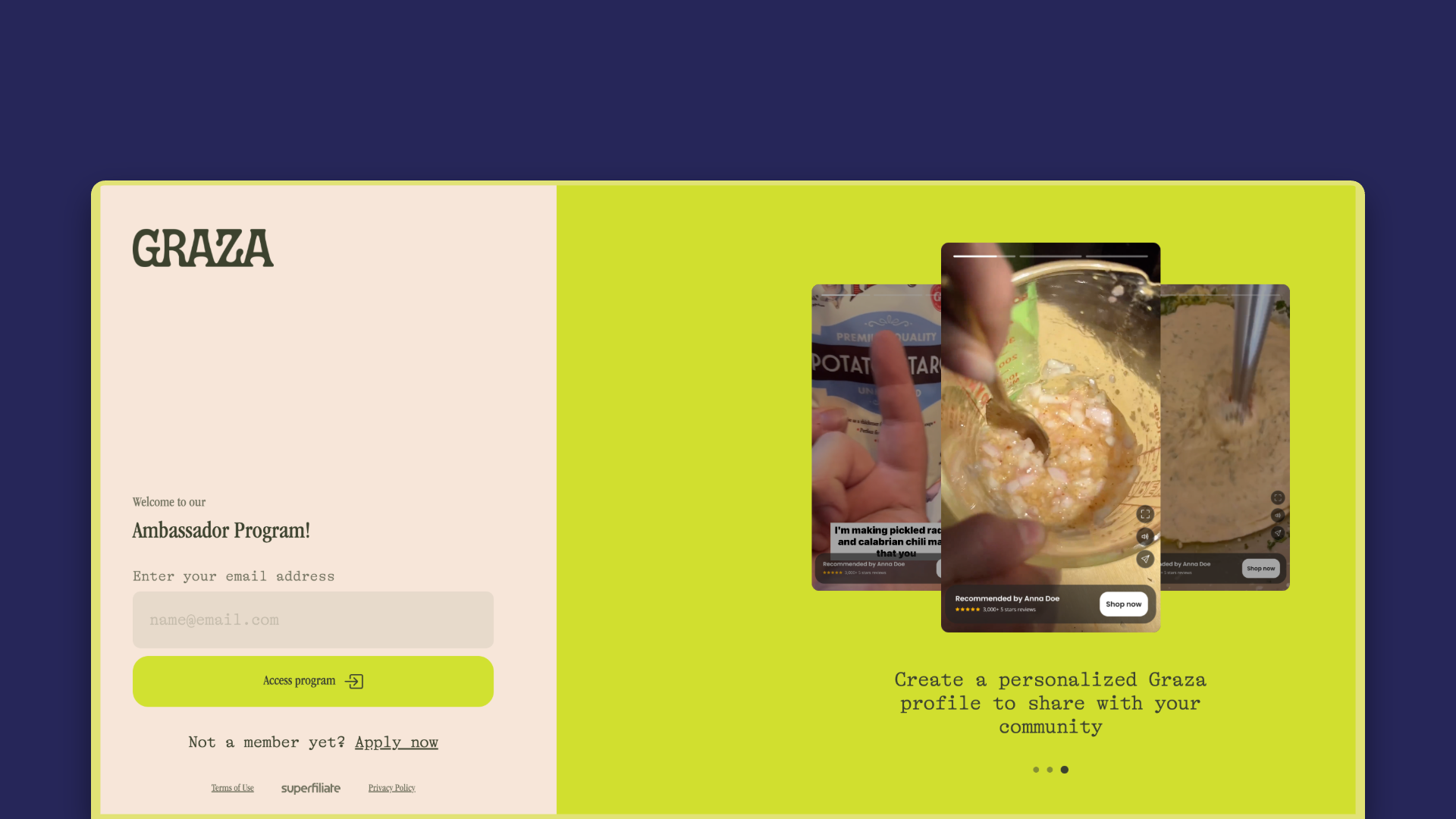
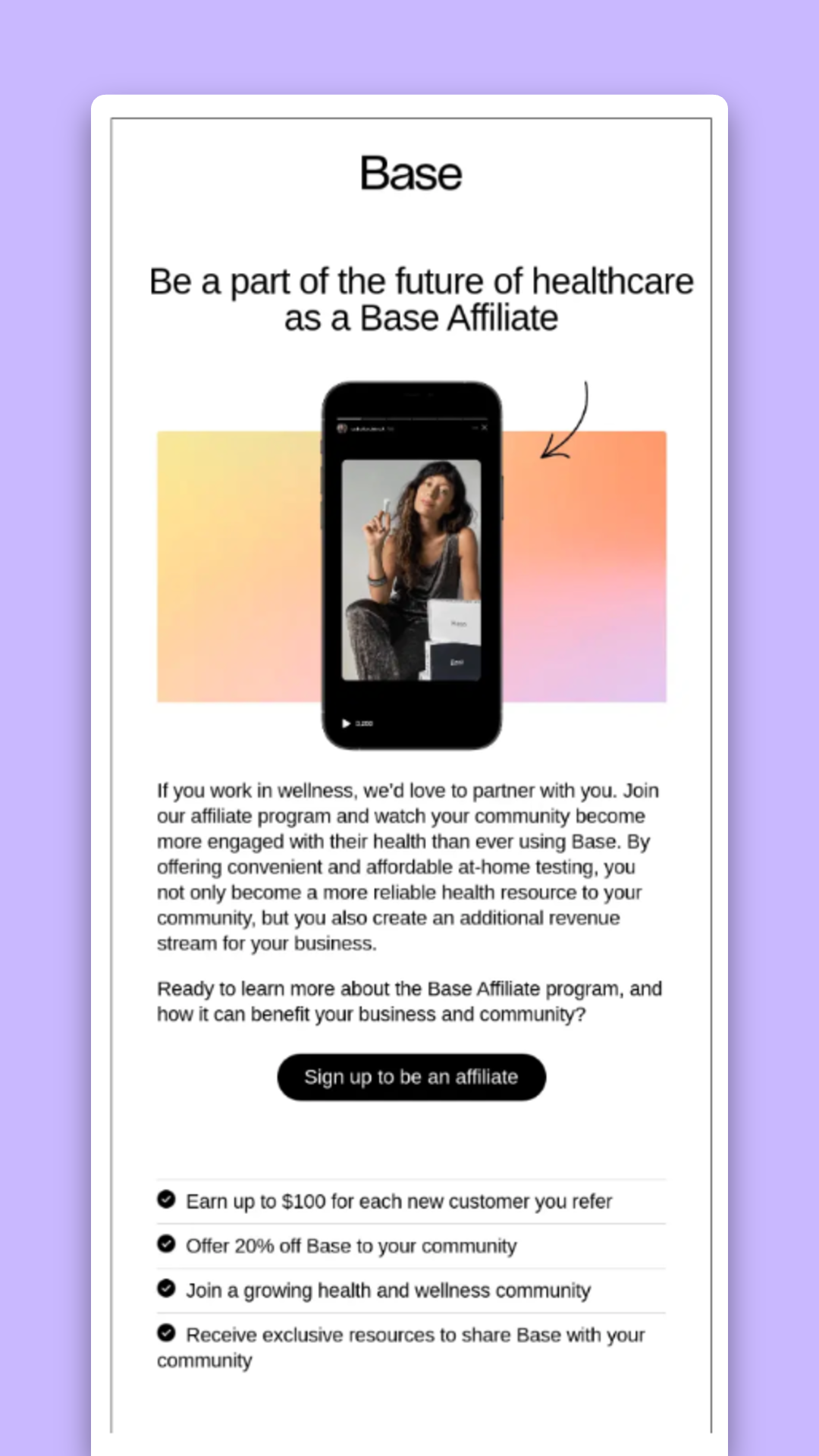
There’s a chance a decent portion of your newsletter subscribers and customers are also creators. And, with such direct access to them, your newsletter is one of the lowest-effort ways to plant the idea because you’re not asking anyone to go out of their way to see it.
Take Base, for example – they sent an email to their subscriber list encouraging folk in the wellness area to reach out and become an affiliate.
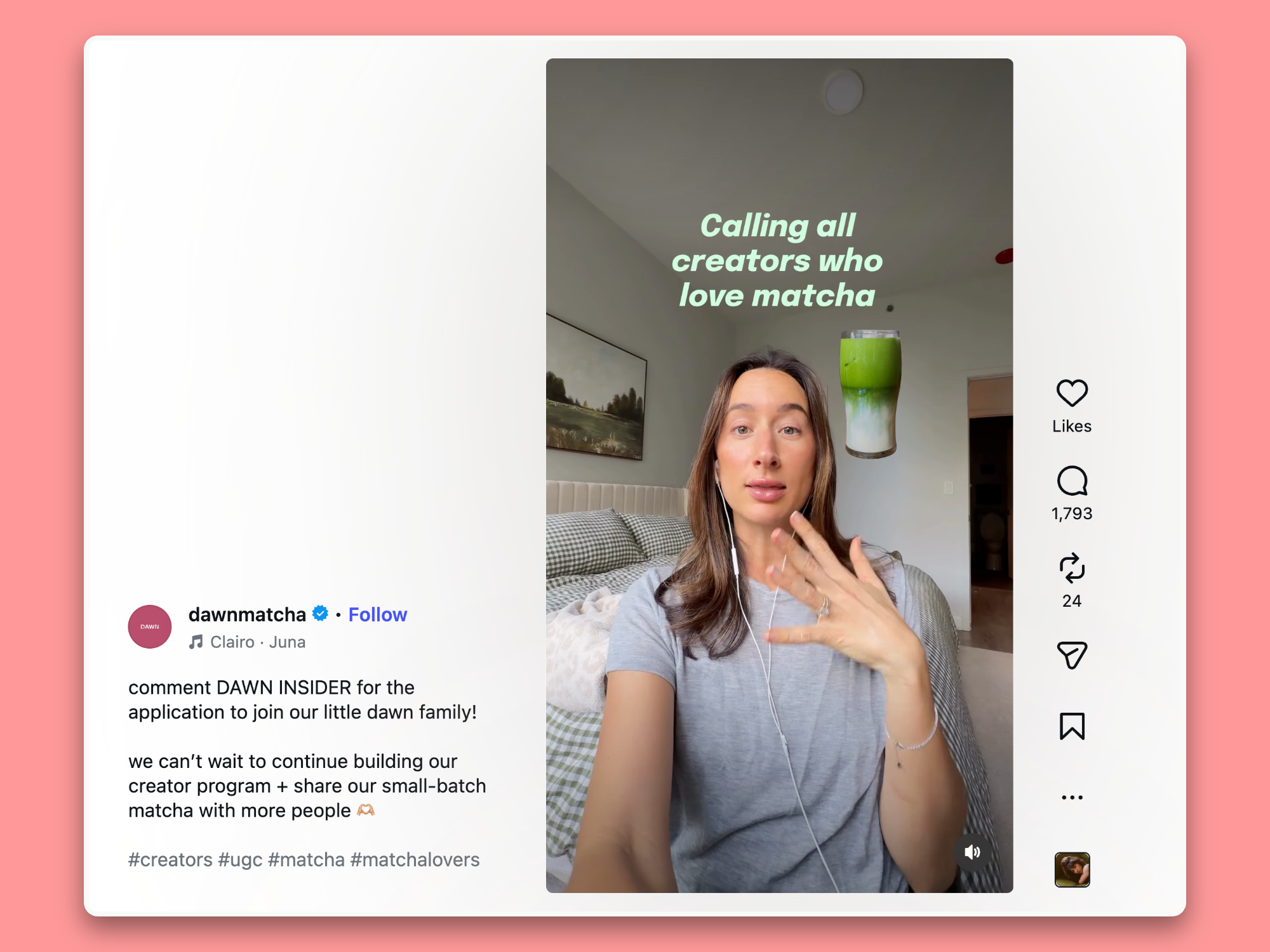
Try sharing a pinned post, a story highlight, or just a regular post recruiting affiliates directly. This can work well because you’re putting your ask right in front of people who are already paying attention to you. \
Dawn Matcha does this with a simple face-to-camera video explaining what affiliates can get and how they can join.
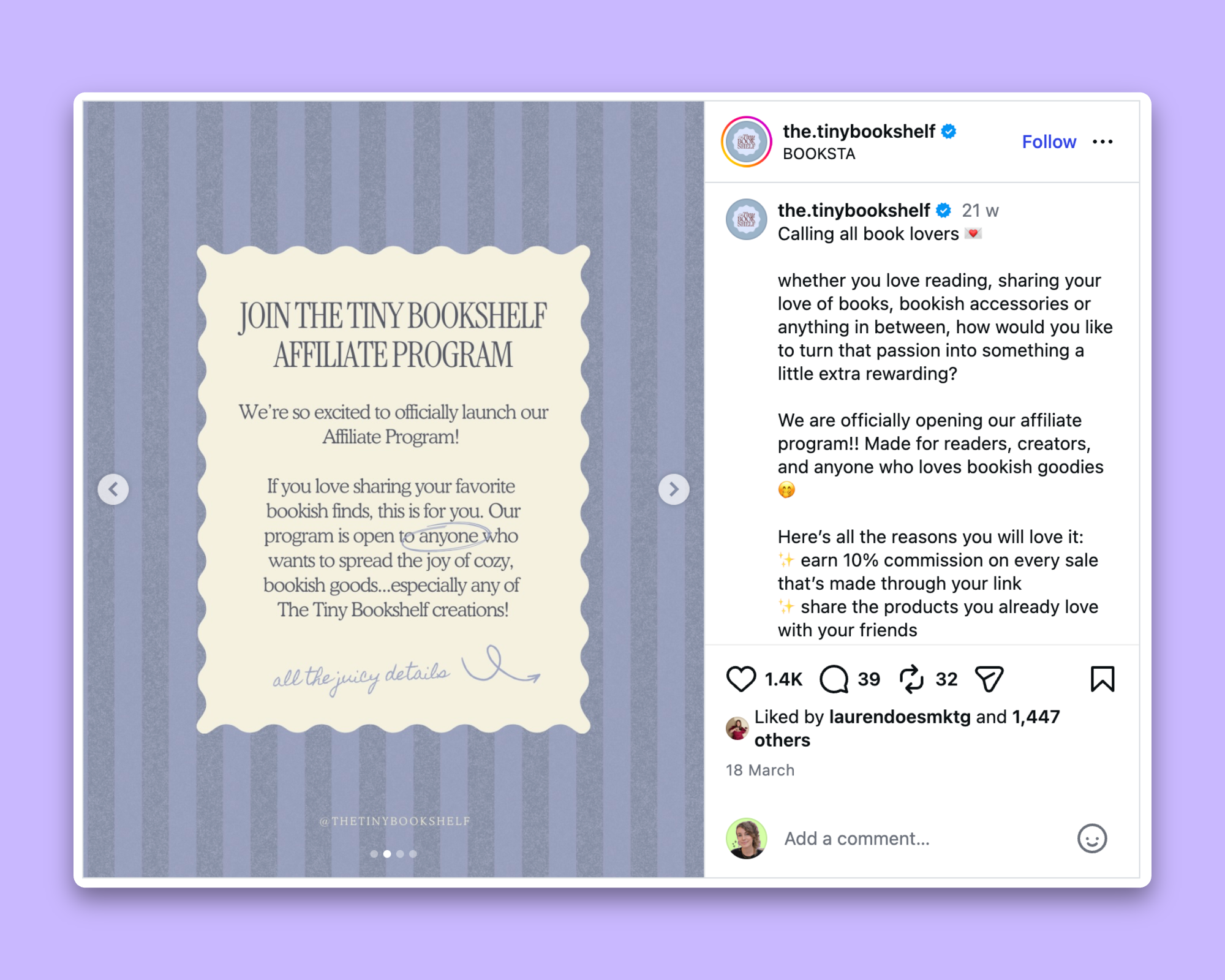
Similarly, the Tiny Bookshelf created an Instagram carousel showing the perks of becoming an affiliate and how anyone interested can get started.
One quick way to get inbound volume is to share your program on dedicated affiliate marketplaces. Networks like Awin or Shopify Collabs put your program in front of thousands of creators actively looking for programs to join.
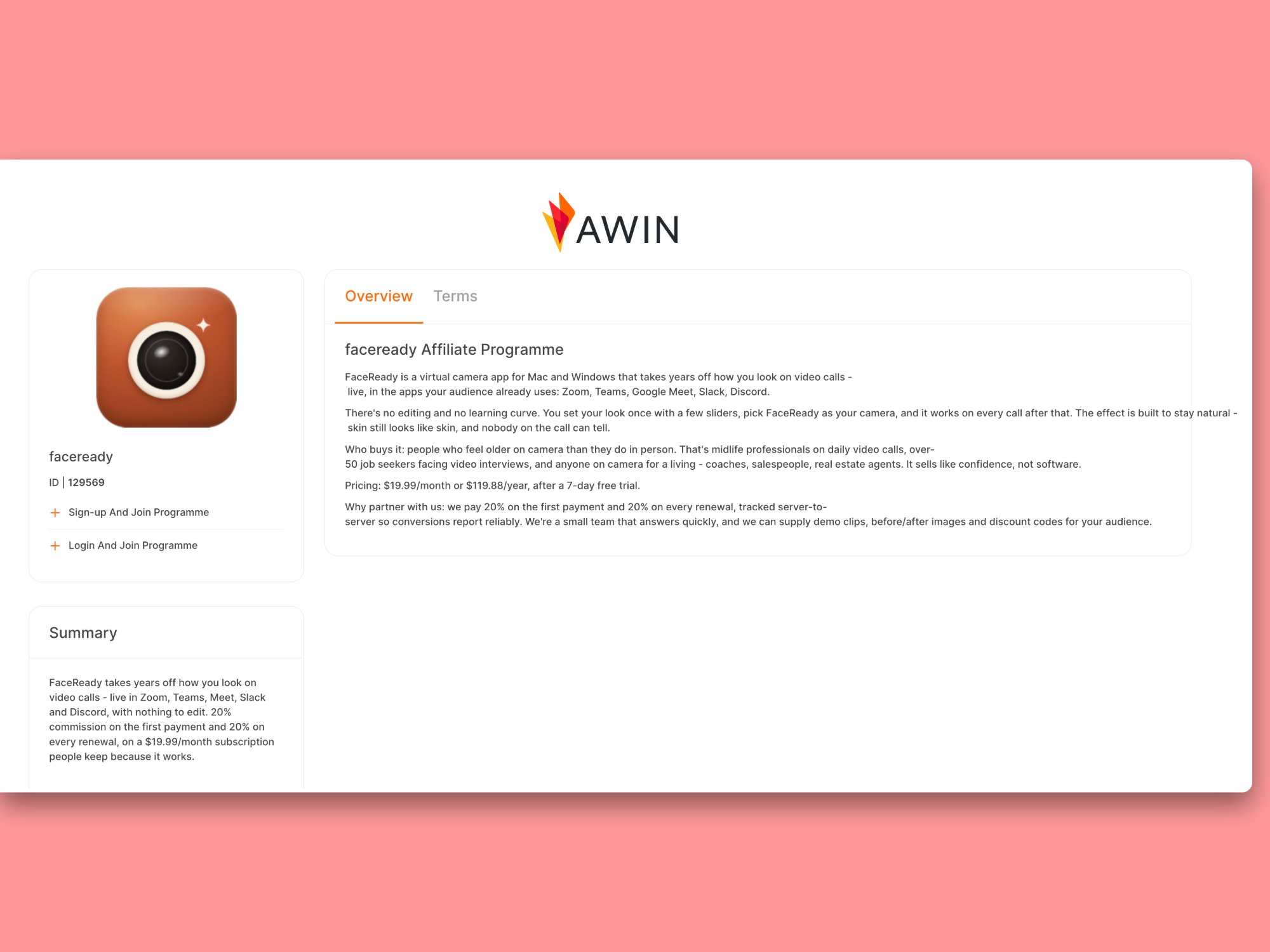
But it does come with a tradeoff: you still need to vet who applies, and you should expect some spam or low-quality sign-ups along the way.
This is why we hark on about vetting affiliates so much. Having a handful of good-fit affiliates is way more effective than having a ton of bad-fit ones. For our full vetting framework, see how to qualify affiliates.
Outbound tends to be a bit slower to get going than inbound because you're reaching out cold instead of waiting for someone to apply, but it gives you control over exactly who's in your program.
Someone promoting a brand in your category is a proven affiliate. They know how to sell this kind of product and their audience is already primed for it. So, it can be worth doing a bit of sleuthing and finding out who’s promoting your competitors and reach out to them directly.
With Modash, you don't have to do that sleuthing manually. On any creator's profile, you can see all the details about their previous collaborations:
By adding your competitors in Modash, you can also directly see whether a creator has collaborated with your rivals in the past.
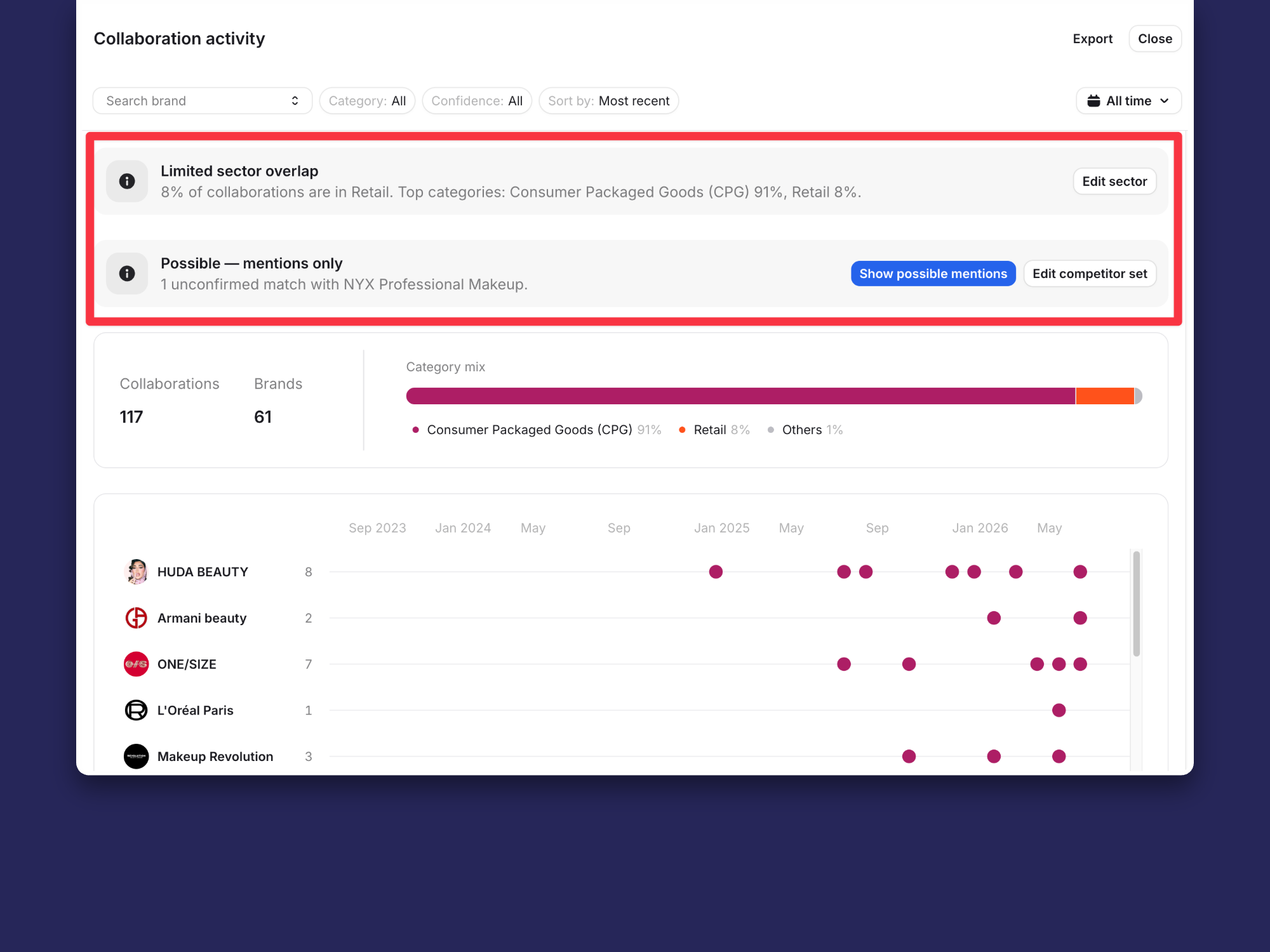
Note that poaching your competitors’ creator partners works better for some categories than others. A skincare brand can approach an affiliate who promotes three other skincare brands without too much friction because it’s common practice in that category.
But a brand with a super unique product, like a specialized piece of outdoor gear or a niche health device has a much smaller pool to poach from, and exclusivity expectations tend to be tighter. For instance, an affiliate promoting your direct competitor might not be free (or willing) to promote you too.
It's tempting to only go after the "obvious" creators, a.k.a. the ones who are already squarely in your niche. But a storyfit creator (someone with a genuine personal story that connects to your product, plus real selling ability) can outperform an on-paper "perfect" pick every time.
Burberry's partnership with creator Bemi Orojuogu (known as "Bus Aunty" for her London commuting content) is a good example of this in action. She's not a fashion influencer, but her connection to London life gave the partnership a kind of cultural authenticity a typical fashion creator couldn't have brought, because her audience already trusted her voice on that specific thing.
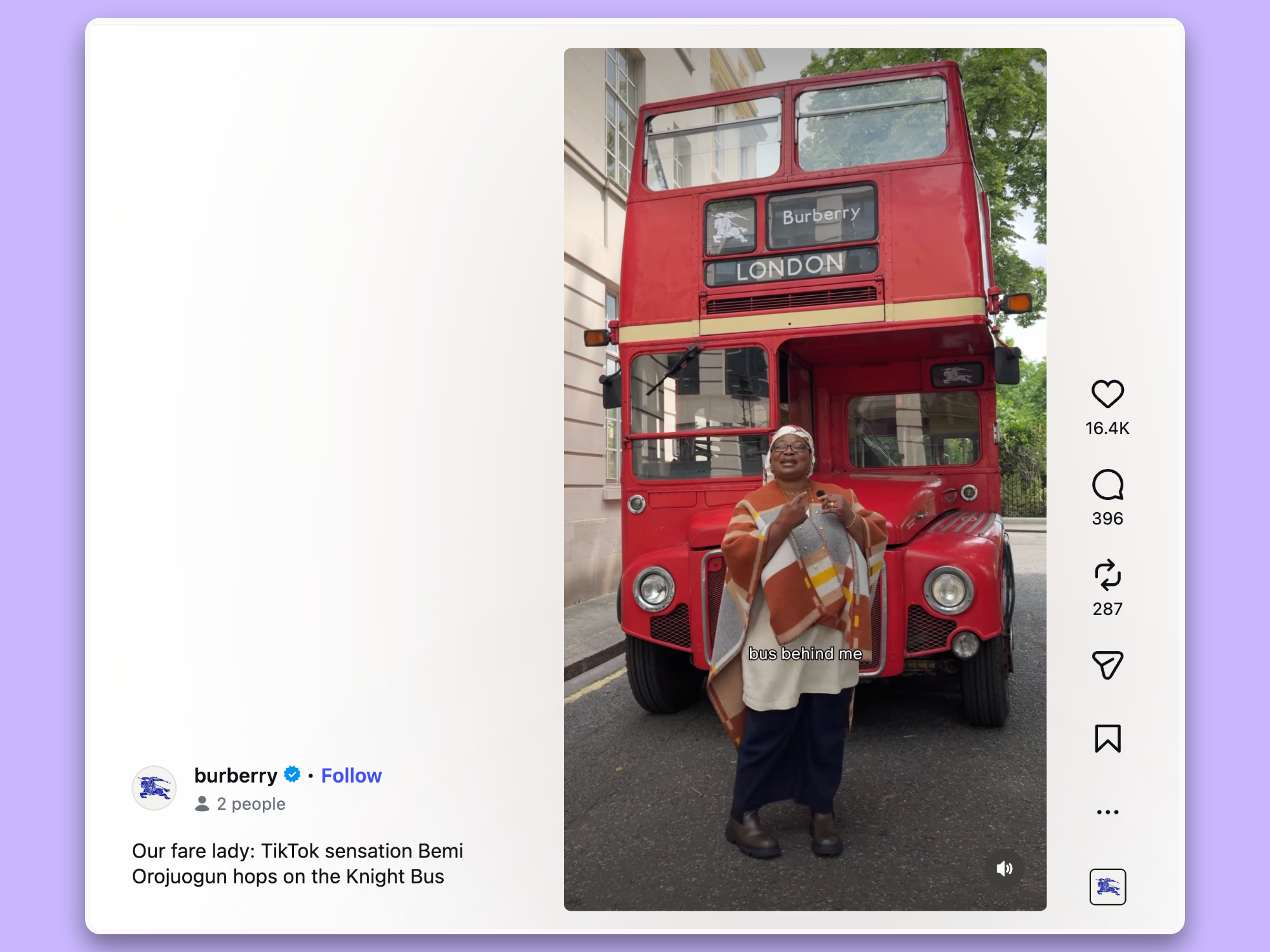
This connects back to something we found in our research: audience mismatch was the top reason marketers cited for failed partnerships. Broadening your search past the obvious niche-fit creators can actually reduce that risk, since fit is about the person and their audience, not just their content category.
The catch is that most brands aren't testing this often enough to find out it works. Our survey found the largest chunk of marketers (32.3%) only test new affiliate types quarterly, so a lot of programs aren’t acting on this insight.
Once you've exhausted the obvious channels, you'll eventually hit a ceiling. There are only so many creators you can find by manually digging through hashtags, checking who your best affiliates follow, or clicking through Instagram and TikTok's suggested accounts one profile at a time. It works, but it's slow, and it's easy to miss good-fit creators.
This is where scaling discovery helps. You could keep doing it manually, but it's a lot of clicking for a small return, and it only throws up what the platform decides to show you.
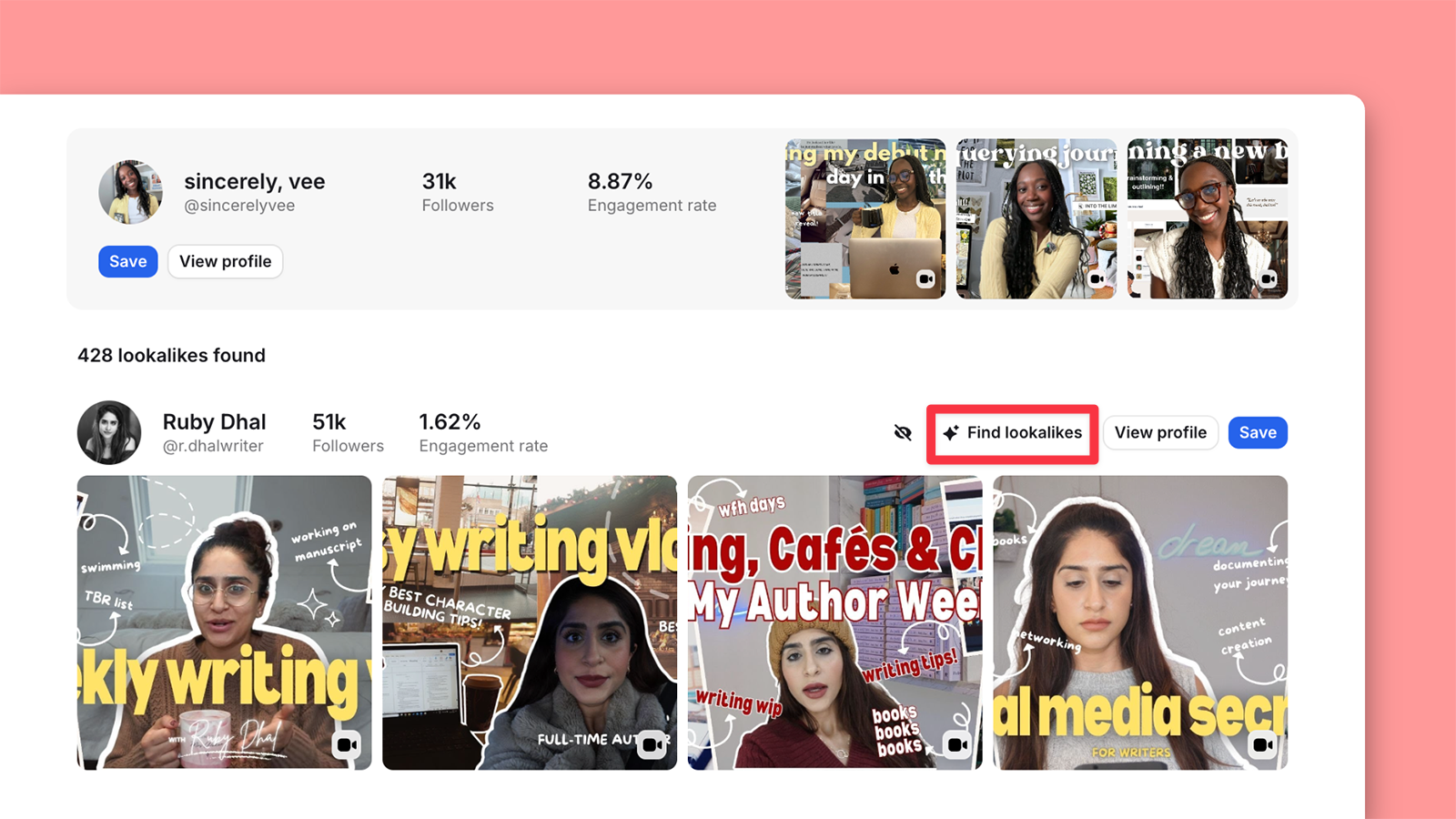
In Modash, for example, you can find lookalikes based on a creator’s audience demographics and content style in one click.
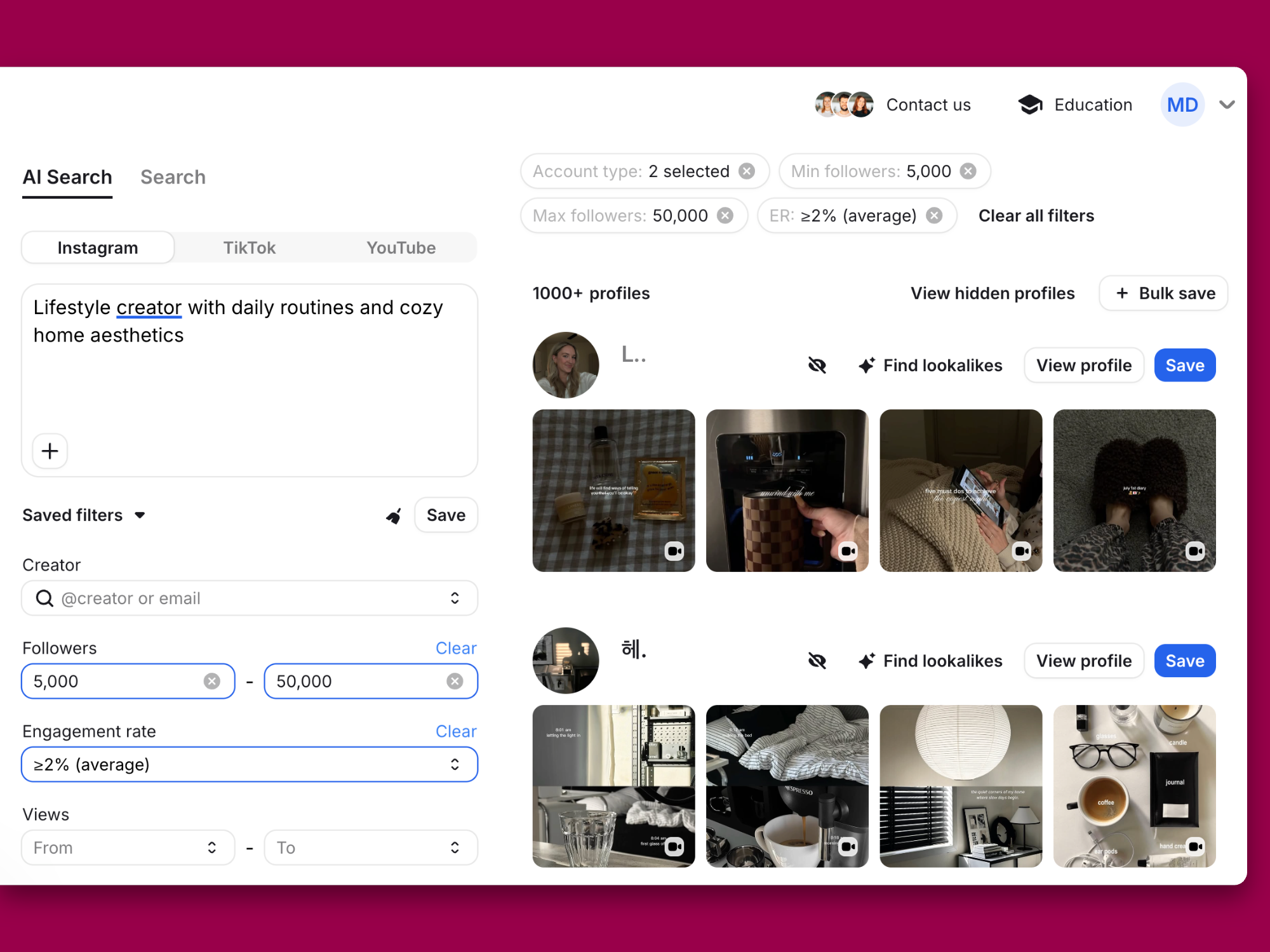
And with AI creator search, it’s also much easier to find creators based on vibe – perfect for scaling discovery, especially if you’re searching for storyfit creators.
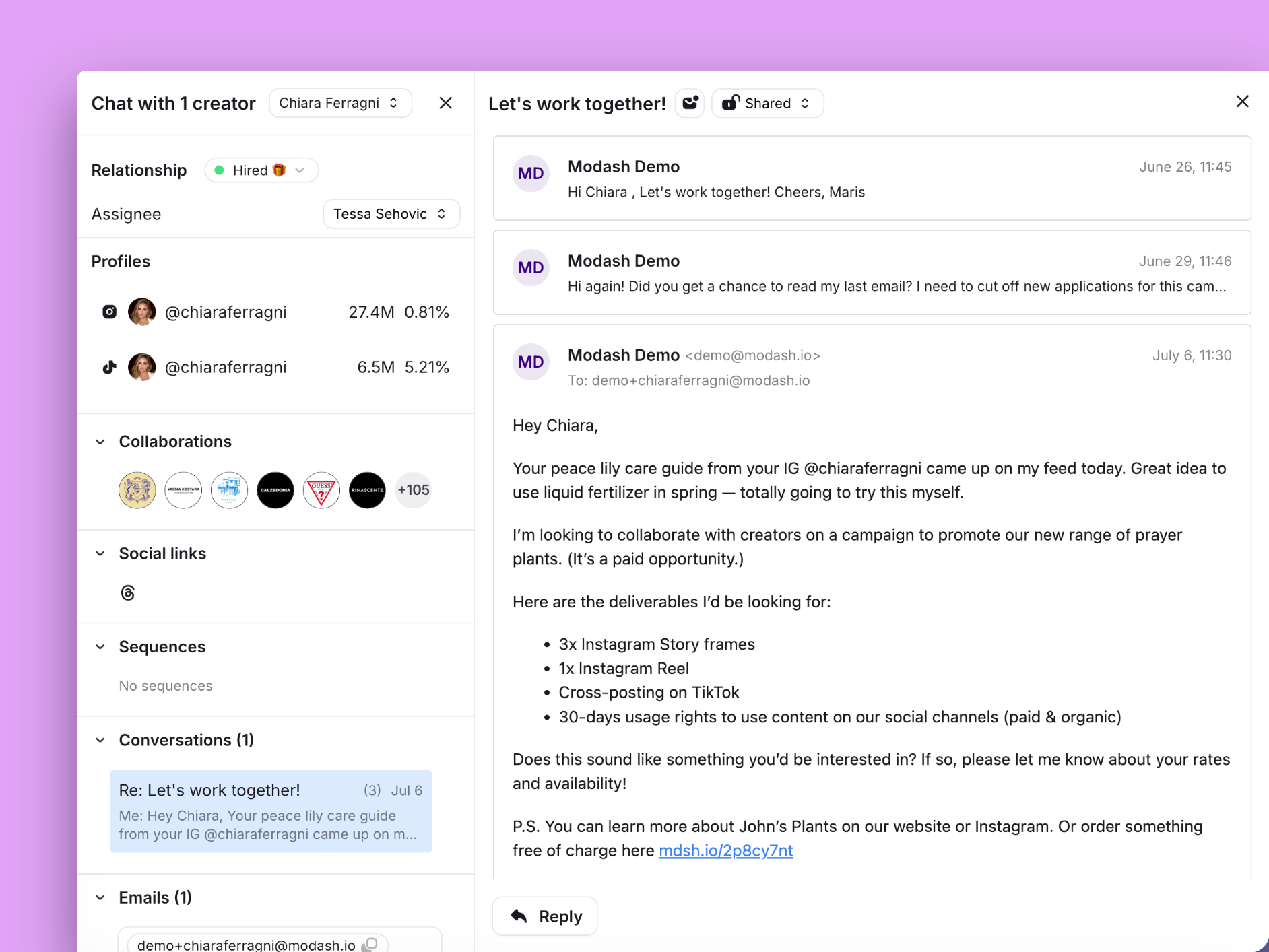
When you've found the right people, you can use the built-in outreach inbox with templated sequences to reach everyone without needing to juggle a hundred separate email threads. You just need to connect your Gmail or Outlook so it all happens in your own existing inbox. Plus, you can add notes and see all past conversations with a creator.
On the outreach itself: our outreach survey found that in most (but not all) cases, marketers prefer email over DMs for that first message, mainly because DMs get messy to track once a collab is underway. The exception is smaller creators who don't list a public email… DMs make more sense there, since it's often the only way to reach them at all.
New sign-ups feel like the obvious metric to watch, because more people joining means your promotion is working, right? Except sign-ups only tell you inbound is functioning. They say nothing about whether the affiliates joining are actually getting involved and posting. Yes, you should absolutely still watch your new sign-up numbers, but just don’t let it be the only thing you check.
Here are some other things you can track:
% of affiliates active. This tells you if promotion is working end to end, not just at the top of the funnel. According to our survey, over half of marketers consider one post a month the bar for "active", which is a pretty low bar, honestly. If you're not clearing even that with most of your affiliates, you have a much bigger problem.
Time-to-first-post. How long does it take a new affiliate to actually post something after joining? A fast first post is one of the strongest predictors of a long-term active affiliate, because the longer someone sits without posting, the more likely they are to just... never post.
This one isn't purely down to the affiliate. A lot of it comes down to how smooth your onboarding is, especially if someone has to wait days for tracking links, welcome info, or product access. See our affiliate onboarding guide for how to tighten that up.
Sales/commission generated. Obviously this is an important one to watch, but it does have a bit of a lag on it. By the time you see your sales are down or aren’t quite where you want them, one of the other metrics here should have pre-warned you.
Promotion consists of two engines (inbound and outbound), plus a third job of keeping the affiliates you've already got posting.
When you run inbound without any outbound, you might find you’re stuck waiting on whoever happens to find you. When you run outbound without inbound, you’ll end up doing all the work yourself. And if you skip activation entirely, it doesn’t matter how many people you recruit because most of them will go quiet anyway.
So, keep all three fires burning at once. There will be times you lean harder into one over the others, but they should all be ticking along in tandem if you want your program to truly succeed.
Running all three at once is a lot to juggle across spreadsheets and separate tools. Modash keeps them in one place – influential fans surfaces creators who already follow you, lookalike and AI creator search fill your outbound pipeline, a built-in inbox handles outreach, and once affiliates are in, it tracks their sales and pays them automatically.
All of this is a lot easier when it lives in one tool instead of ten tabs. Try Modash for yourself (for free for 14 days!) and see how much simpler running your affiliate program can be.
Run both inbound and outbound at once. Make the program visible on your site, checkout, and email, and proactively reach out to competitors' affiliates, your existing influencer partners, and storyfit creators outside your usual niche. Start with your existing influencer list as a lot of them are already open to it.
Sign-ups aren't the finish line and you should consider affiliate activation as a separate job. Most importantly, stay involved. Communicate more than once a month with affiliates, refresh their products regularly, and give them a commission structure with something to work toward, like a multi-tier setup.
There's no universal number, but flat rates tend to underperform because affiliates have nothing to grow toward. According to our survey, the average commission tiers marketers use are 10%, 14%, and 19%, and programs with three or more tiers see meaningfully higher active-affiliate rates than single-tier ones.
Networks and marketplaces like Awin or Shopify Collabs are the fastest way to get inbound volume. Just know you'll still need to vet who applies and expect some spam and low-quality sign-ups mixed in with the good ones.
It depends less on time and more on effort. Brands that stay hands-on with recruiting and activation see results faster than ones that run on autopilot. Watch leading indicators like time-to-first-post and % active affiliates early on, rather than waiting on sales data to tell you something's off.
Email is the default for most marketers, mainly because it's easier to keep collaboration details organized in an inbox. DMs make more sense for smaller creators who don't list a public email.