


More tools
Use cases



Affiliate marketing advice often focuses on recruiting. If you're just starting out, finding more partners will definitely be a top priority. But if you've been running an affiliate program for a while, you have to go beyond recruiting.
To grow your program, you need existing affiliates to post – and keep attracting new customers. This guide covers 19 strategies that cover the full lifecycle of your program, from recruiting and incentivizing to activating and optimizing.
We think about affiliate programs in four phases:
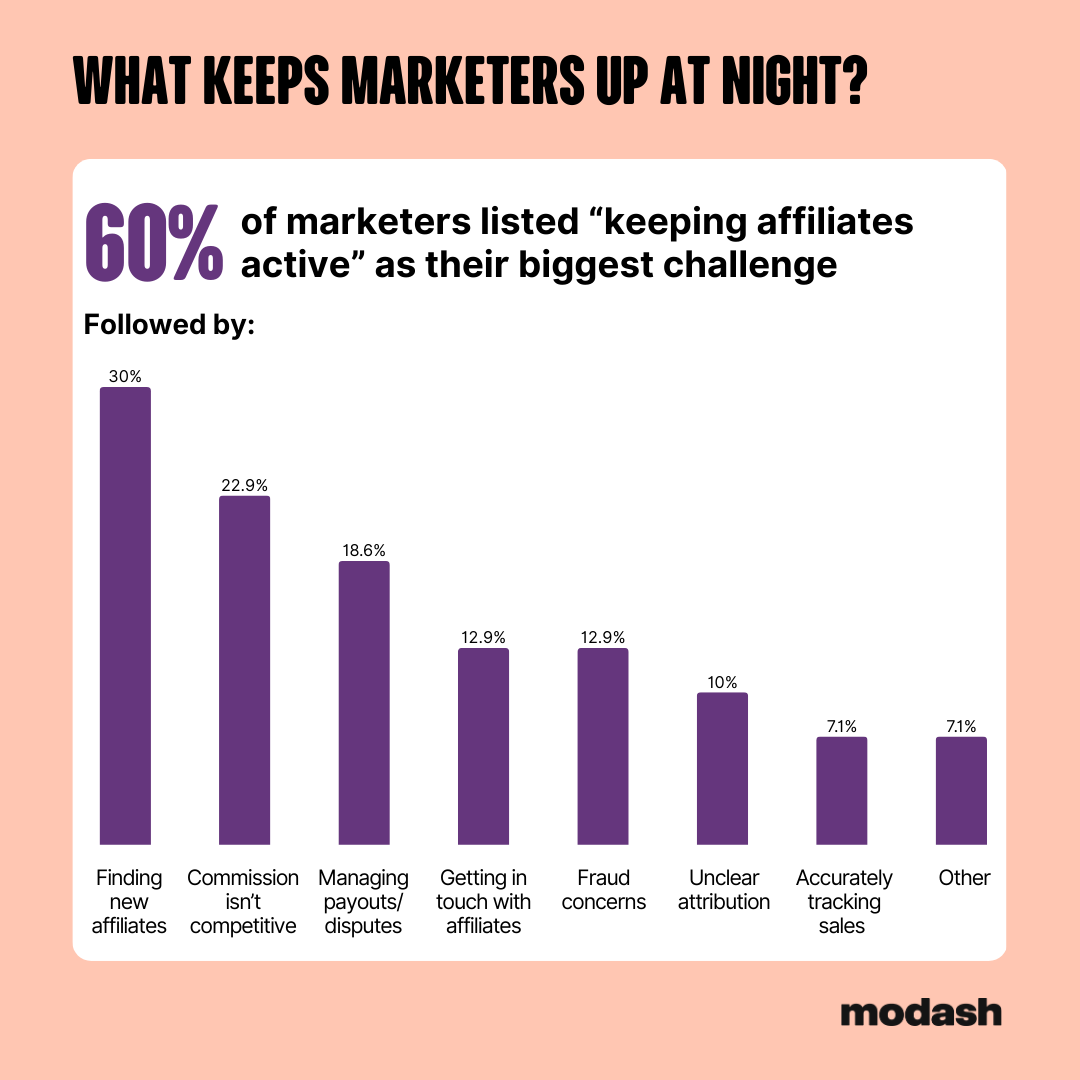
In our experience, brands often over-index on the first phase and under-index on the others. According to our survey, 49.2% of brands are always recruiting new affiliates. Meanwhile, 60% say their biggest challenge is keeping affiliates active.
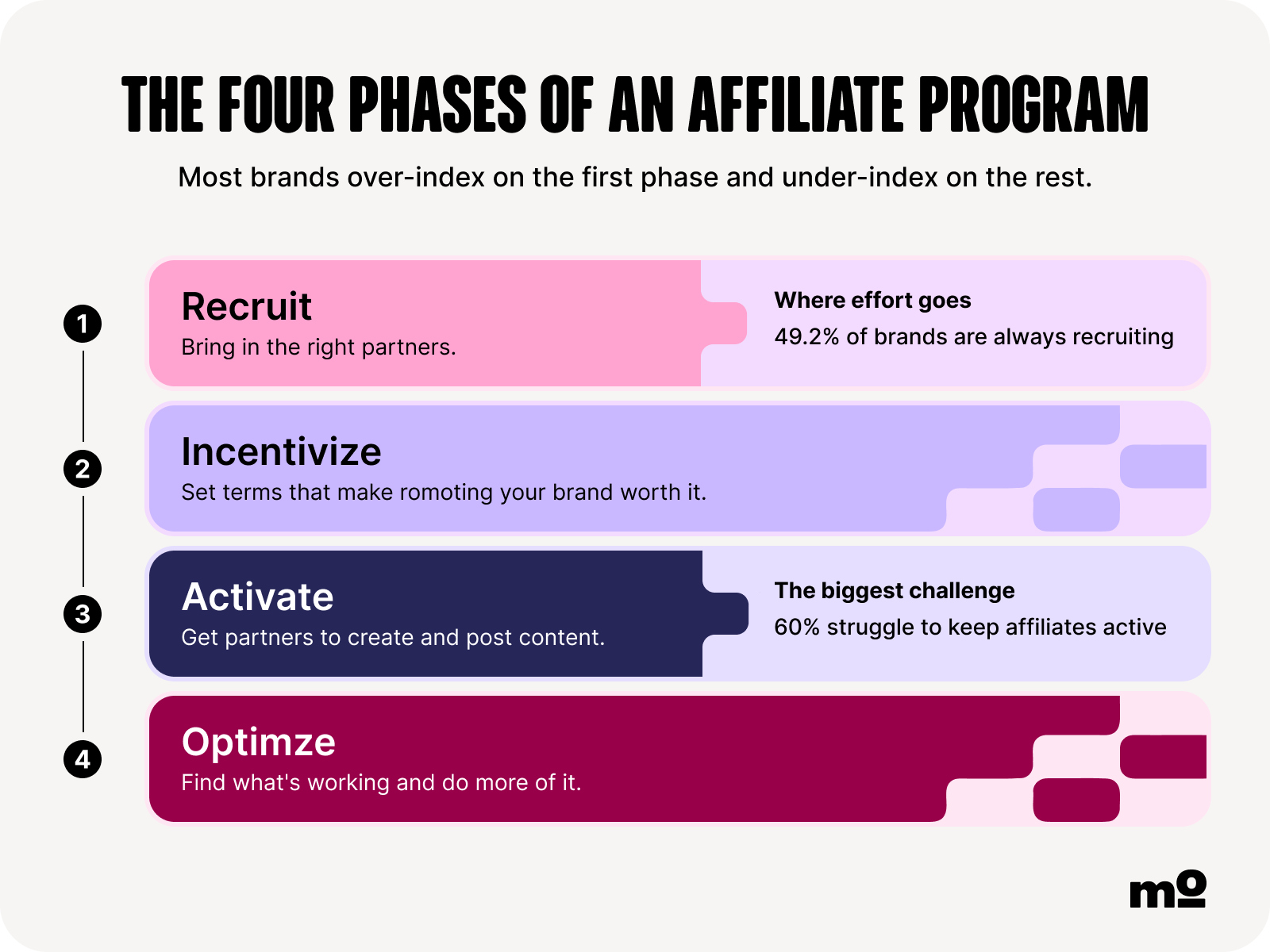
As you read the strategies below, notice where your own effort goes. If you focus mostly on recruiting, that imbalance may be holding your program back.
We've grouped these strategies by the four phases. You can work through the list in order or jump to the phase where your program needs the most help.
When recruiting, it usually pays to prioritize quality over quantity. These strategies will help you find creators whose audiences overlap with your customers, so the partners you sign are more likely to post and convert.
1. Prioritize smaller creators
Seeking out affiliates with big follower counts can be tempting. But trust usually converts better than reach does. Smaller creators tend to have closer relationships with their audiences. Their followers know them, trust them, and often engage more frequently than followers of bigger accounts.
That trust and engagement only pays off if the audience fits your brand, though. When we asked marketers why their affiliate collabs flopped, the top reason (41.8%) was audience mismatch.
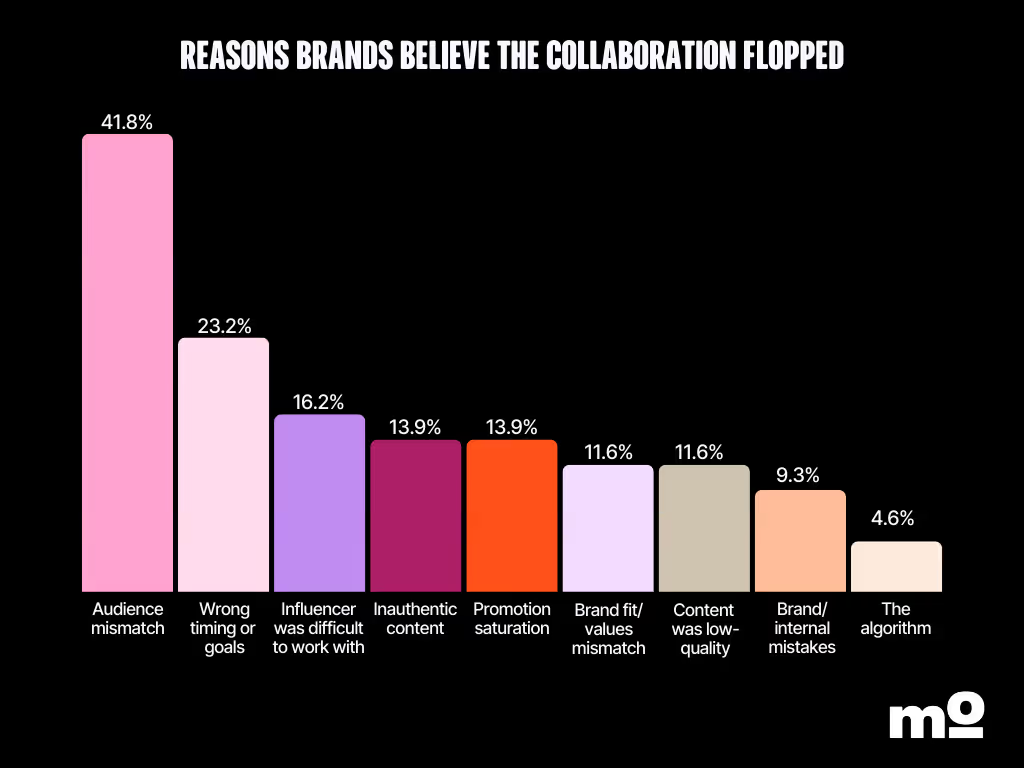
When a creator's followers look nothing like your customers, they won't drive sales, no matter how engaged they are.
So when you're vetting creators, look for an audience that overlaps with your ideal customer profile (ICP) on demographics, location, and interests. You also want engagement that shows people are paying attention.
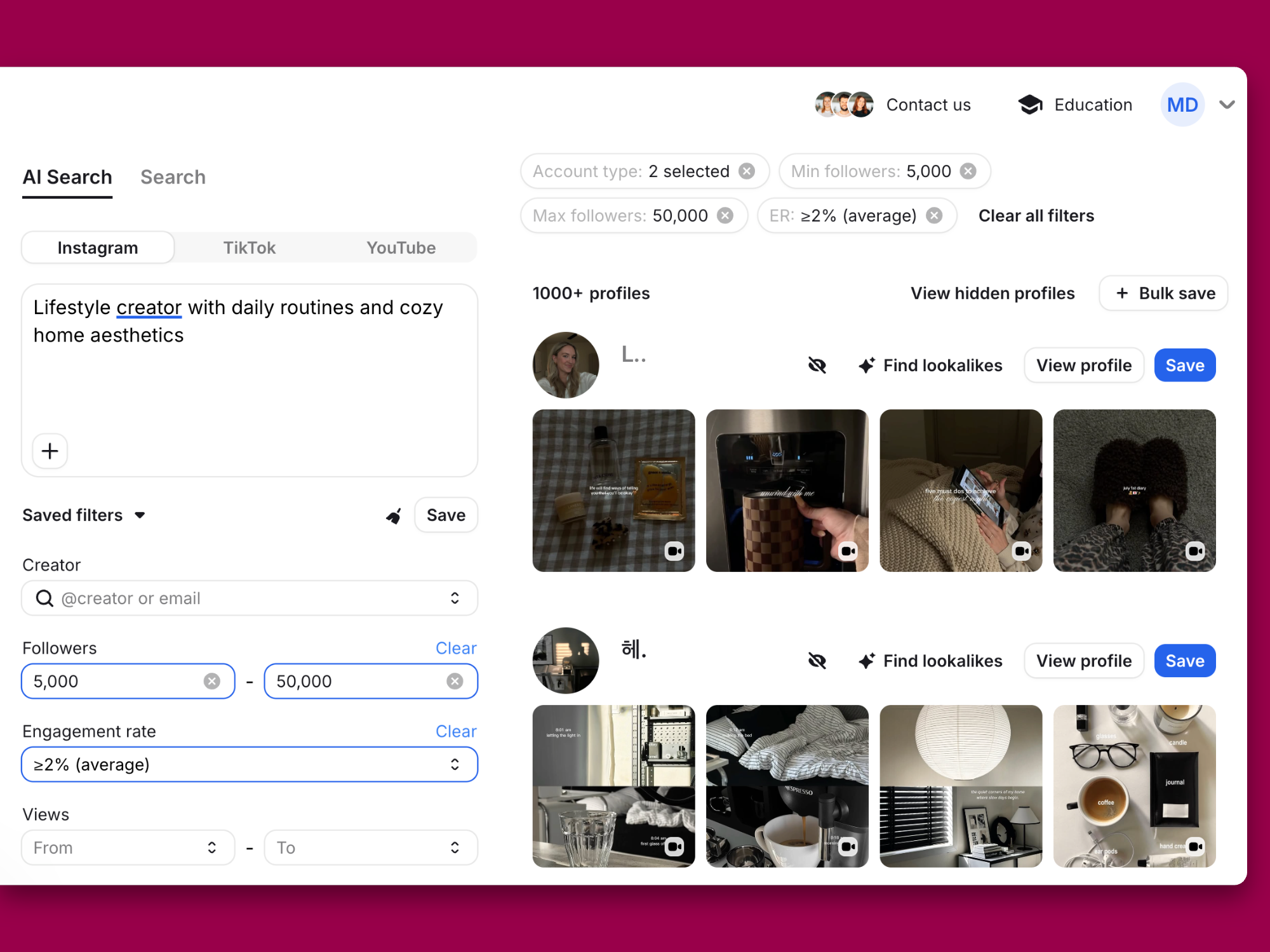
Modash makes this part easier. You can search every creator with over 1k+ followers across Instagram, TikTok, and YouTube – that’s over 380M+ creator profiles! Use filters like fake followers, engagement rate, location, and audience demographics to find creators who match your criteria perfectly. That way, you have a good sense whether an affiliate is a brand fit before you ever reach out.
2. Turn existing influencers and fans into affiliates
The easiest affiliates to activate are the people who already like your brand. This might include influencers you've partnered with before. Or customers who tag you, comment, and buy without being paid to do so.
Both groups come pre-sold. That makes the pitch easier and the content more genuine.
As easy as it is, few brands make full use of this strategy. In our survey, 55.4% of marketers said under a quarter of their influencer partners also act as affiliates. That's a group of proven collaborators, at least some of whom would also be great affiliates.
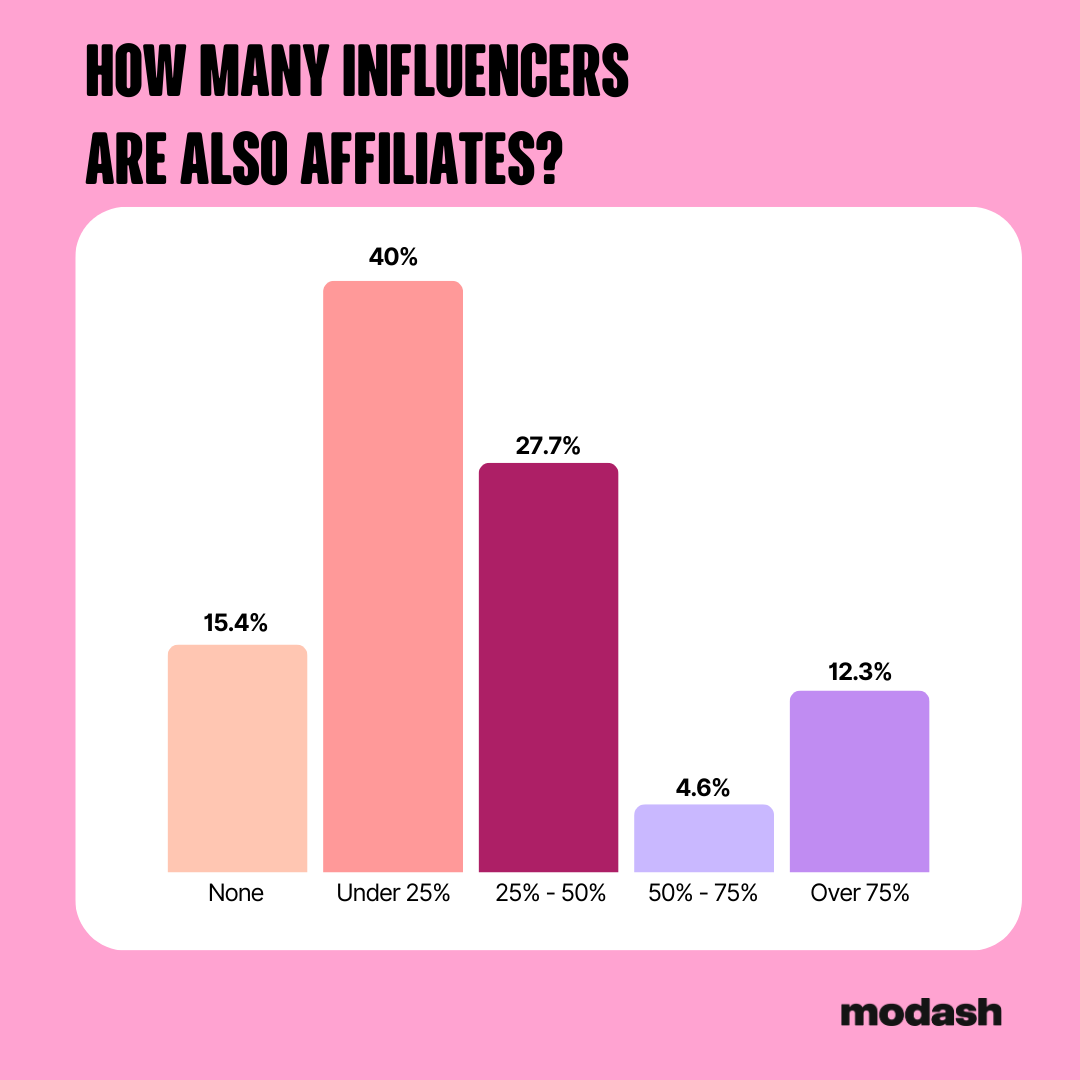
Start with your past and current influencer partners, since you already know which ones drove results. Then look at your organic mentions and follower list to find creators who talk about you unprompted.
Modash handles the second part for you. It scans your audience and identifies influential people who already follow your brand – so you can invite a warm pool of creators who are already familiar with your brand.
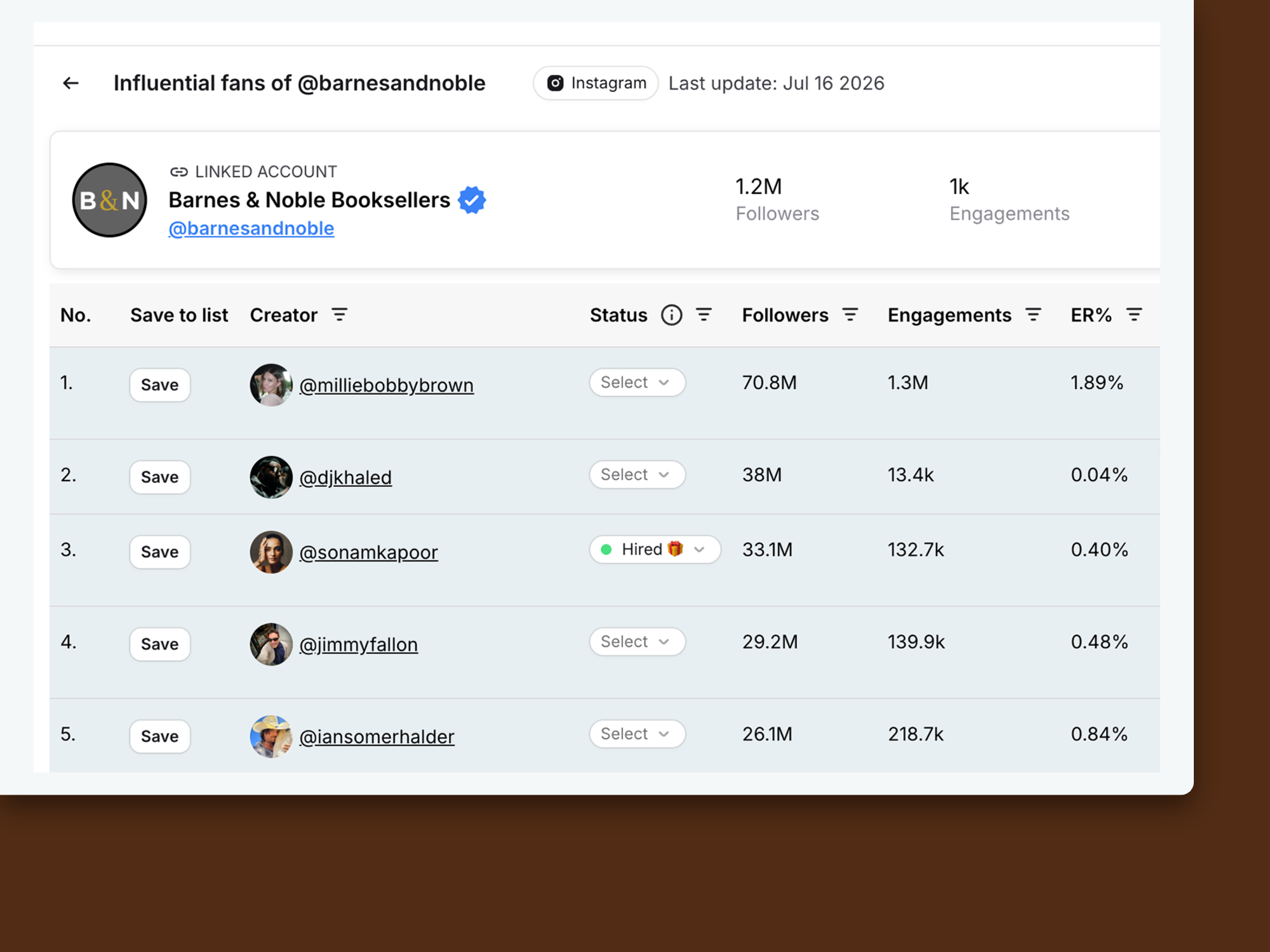
3. Diversify your partner mix (across funnel stages and categories)
If every affiliate in your program has the same approach, you'll only ever reach buyers at one point in their journey. For example, a roster full of discount code creators will mostly capture people who were already going to buy. And a roster full of big awareness accounts will get you seen but struggle to convert.
To cover the whole funnel, you need a healthier mix. You want some partners who introduce your brand to new audiences, others who build consideration through reviews and tutorials, and a few who close with codes and links.
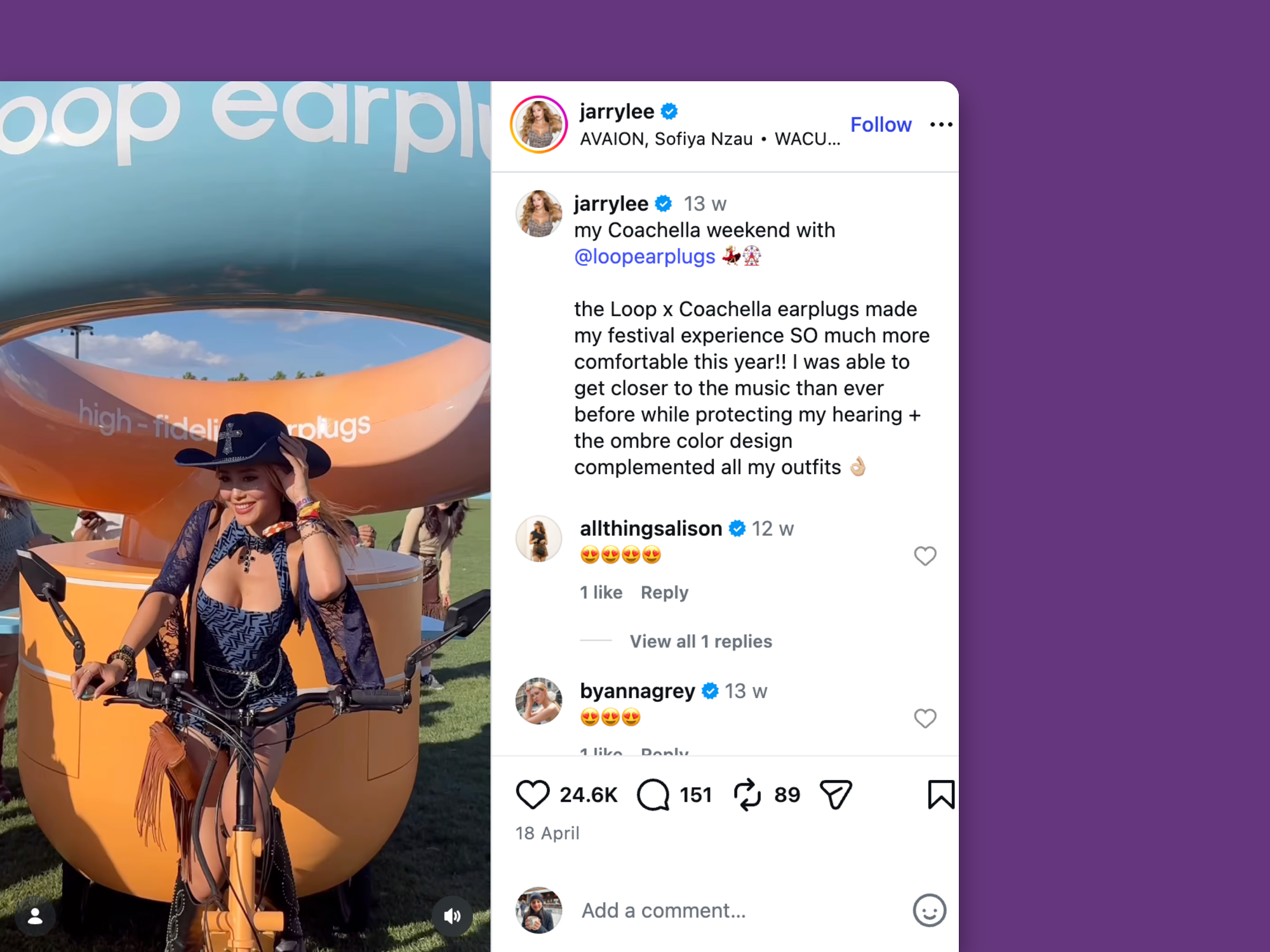
For example, Loop Earplugs partnered with creators like Jarry Lee to run an awareness campaign during the Coachella music festival.
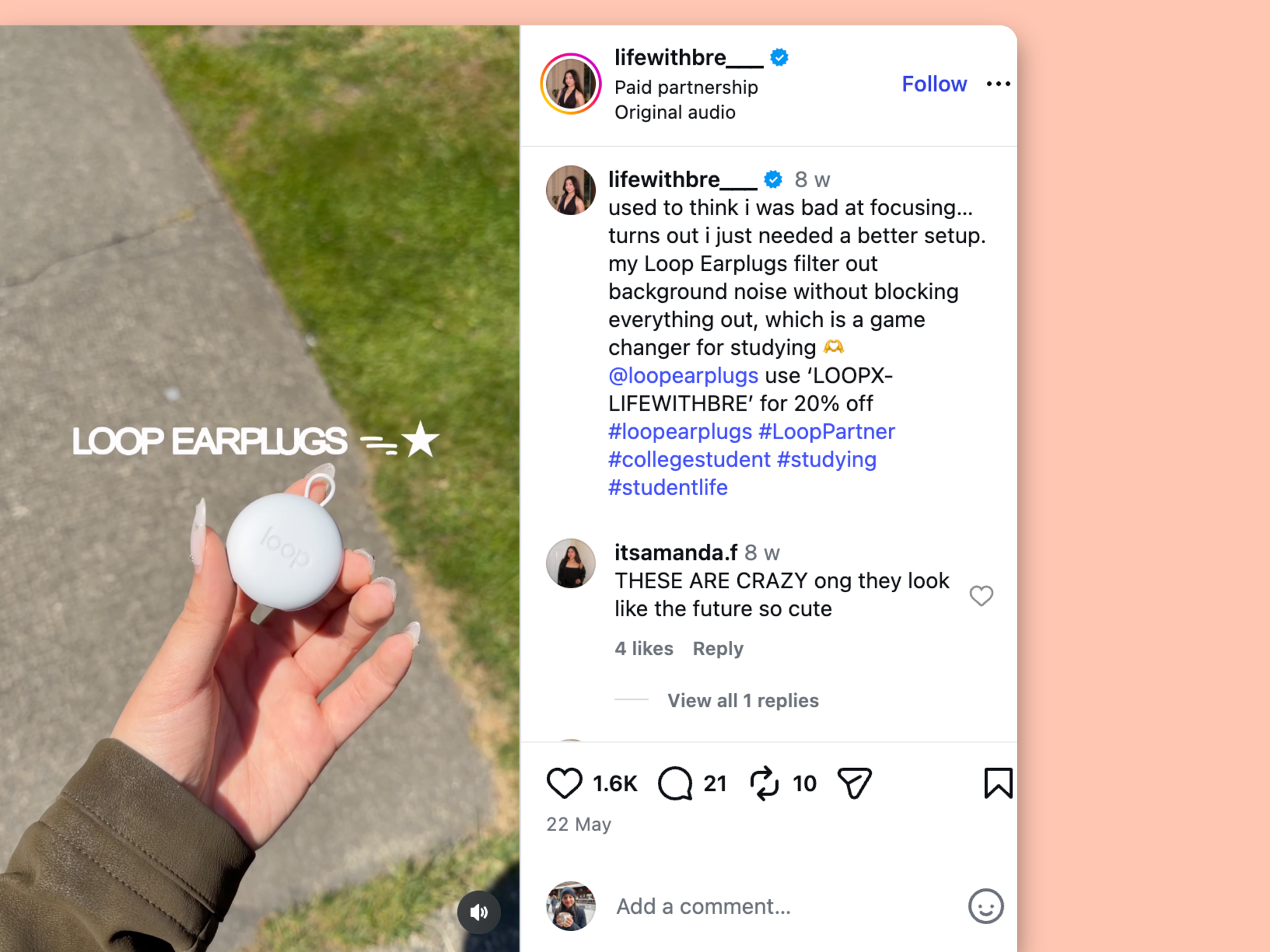
At the other end, they run ongoing discount-code partnerships with affiliates like Breanna XinYi Ho, aimed squarely at converting people who are close to buying.
Neither type does the other's job: the awareness creators wouldn't convert on their own, and the code partners wouldn't reach new audiences. You need both.
Funnel stage is one axis to diversify on. The type of creator is another, and it's easy to be too picky here. Our survey found nearly two-thirds of marketers feel they've passed on collaborations that could have worked great because a creator didn't fit their stringent criteria.
Storyfit creators are a good example. They might not match your product category on paper, but they're good at working your brand into their own content, so it comes across as part of their story rather than an ad.
Take Mariona’s partnership with Preply – she's a fashion and lifestyle creator, not a self-improvement or language influencer, so on paper she's an odd match for a language-learning app.
But that's what makes it work: she talks about using Preply to learn her partner's native language, right down to words that have no direct translation. It's a personal story a category-fit reviewer would never tell, so the product feels like part of her life rather than an ad.

4. Use AI and lookalike discovery to recruit at scale
Vetting creators one at a time is manageable when you need a handful of affiliates – but less so when you need 100. When you need to recruit affiliates at that scale, lookalikes and AI creator search are your best bets.
The simplest starting point is your existing roster. Take your best-performing affiliates and find other creators with similar audiences, content, and engagement. You already know how well the original creator performs, so you're scaling a proven pattern instead of guessing.
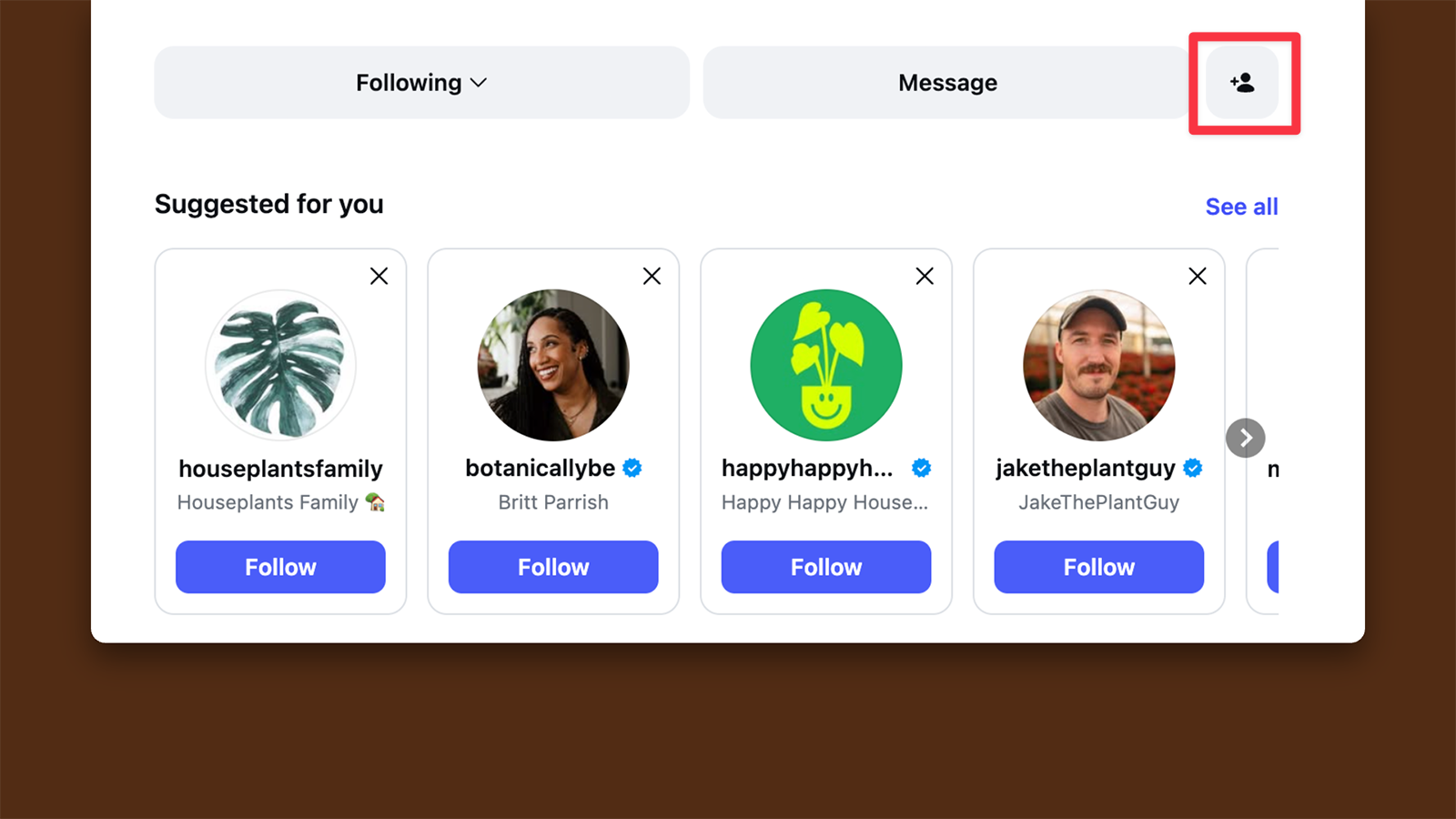
You can do this manually on social platforms like Instagram and TikTok. Go to any creator’s profile, click the plus icon, and scroll through (and follow) the suggested profiles.
It’s much faster to use a tool like Modash to identify similar creators – not only can you find them at scale, but the tool shares similar creators in terms of audience and content style instead of the algorithm. and you can find them based on audience and content overlap, not the algorithm.
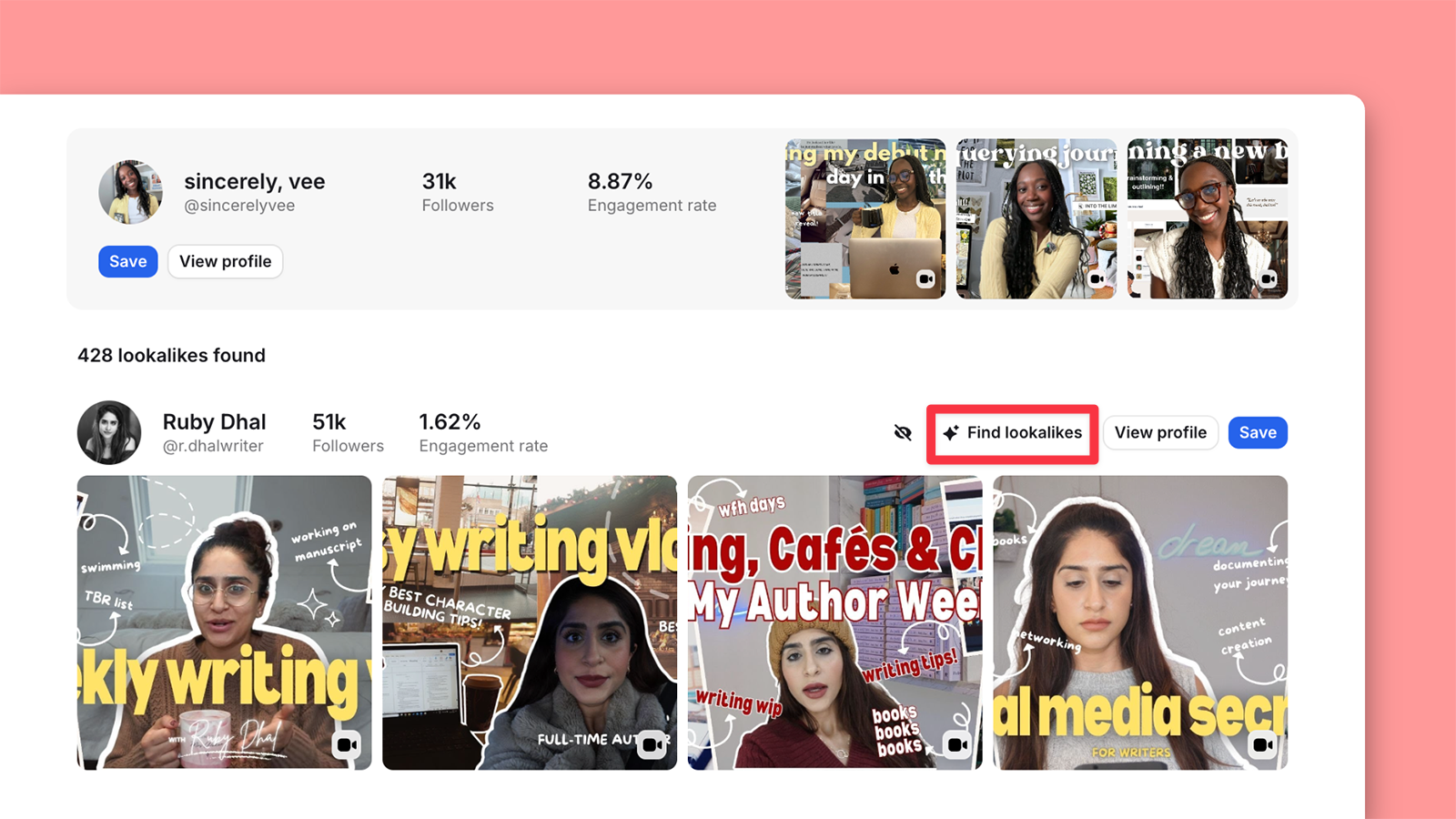
And when you're searching for a creator with a specific vibe rather than a lookalike, Modash’s AI creator search comes to the rescue. Just describe your ideal partner or content in plain language, the way you'd brief a colleague.
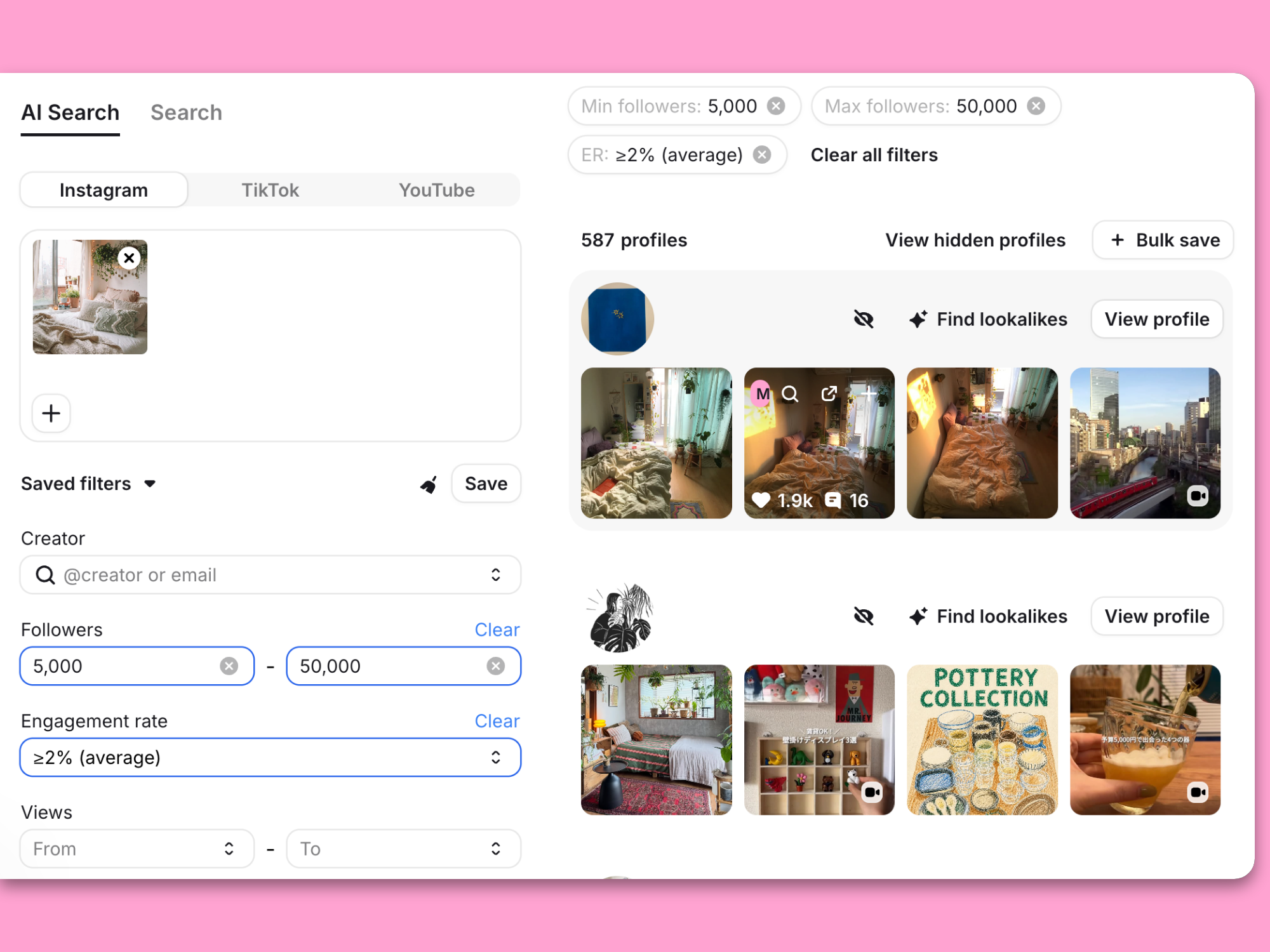
The AI can even work visually: upload a reference image and it'll find creators with a matching aesthetic. For the example below, I attached the visual of a cozy room and layered some filters to find creators who match the requirements perfectly.
5. Make your program discoverable
Outreach doesn't have to be the only way partners find you. Plenty of creators go looking for programs to join. If yours doesn't show up in that search, they might join a competitor's instead.
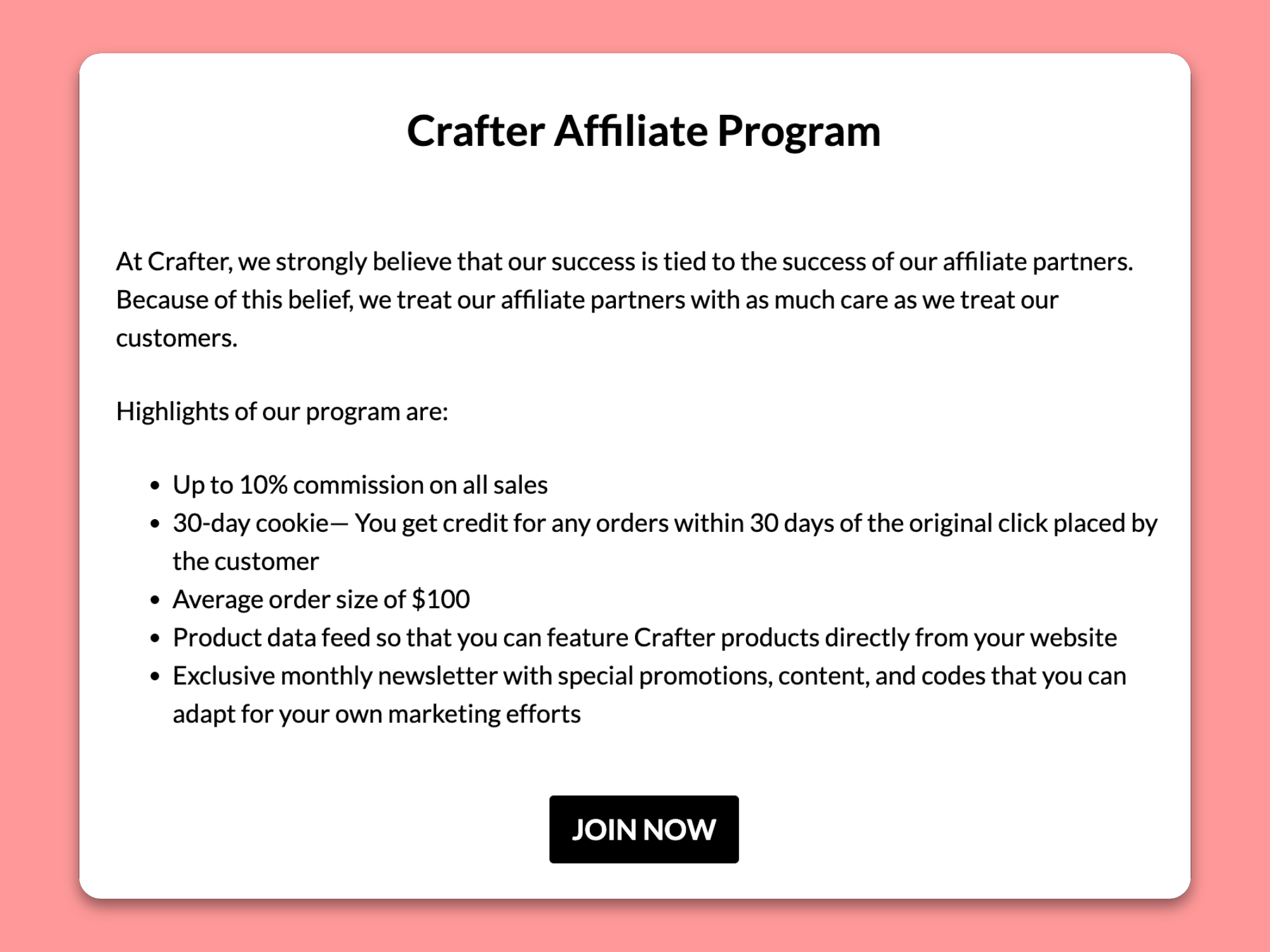
A dedicated affiliate landing page can help your brand appear in relevant searches. When creators search for "[your category] affiliate program," they should land on a page that answers their questions and lets them apply on the spot. Plus, share details about your affiliate program on your socials so interested creators know where to apply.
A good one covers:
In addition to the points above, Crafter's affiliate program mentions the brand's average order size – which is helpful for affiliates to calculate how much they could earn per sale.
Affiliates typically promote the brands that pay them well and make it worth their time. These strategies will help you develop offers that motivate partners without eating your margin.
6. Match commission structure to your margin
When paying commission to creators, you can choose from a few different structures. You can pay:
Here’s how the three compare:
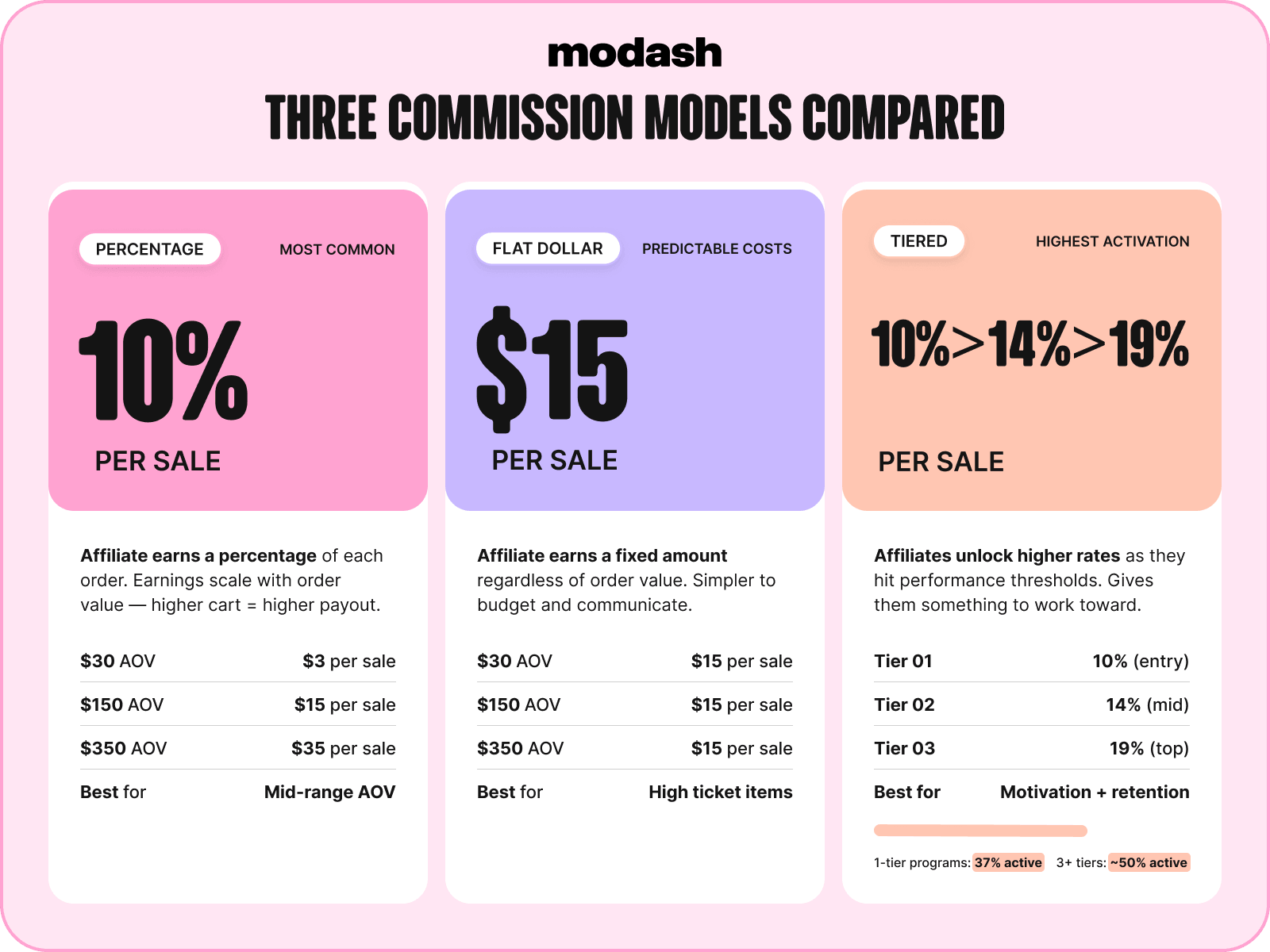
Each has its own pull for creators (more on that in the next strategy), but whichever model you lean toward, remember the deciding factor is your margin.
Work out what you make on a typical order after costs, and then decide how much of that you can share with affiliates while staying profitable. Here’s a visual explaining how to calculate what’s left after accounting for your margins and discounts:
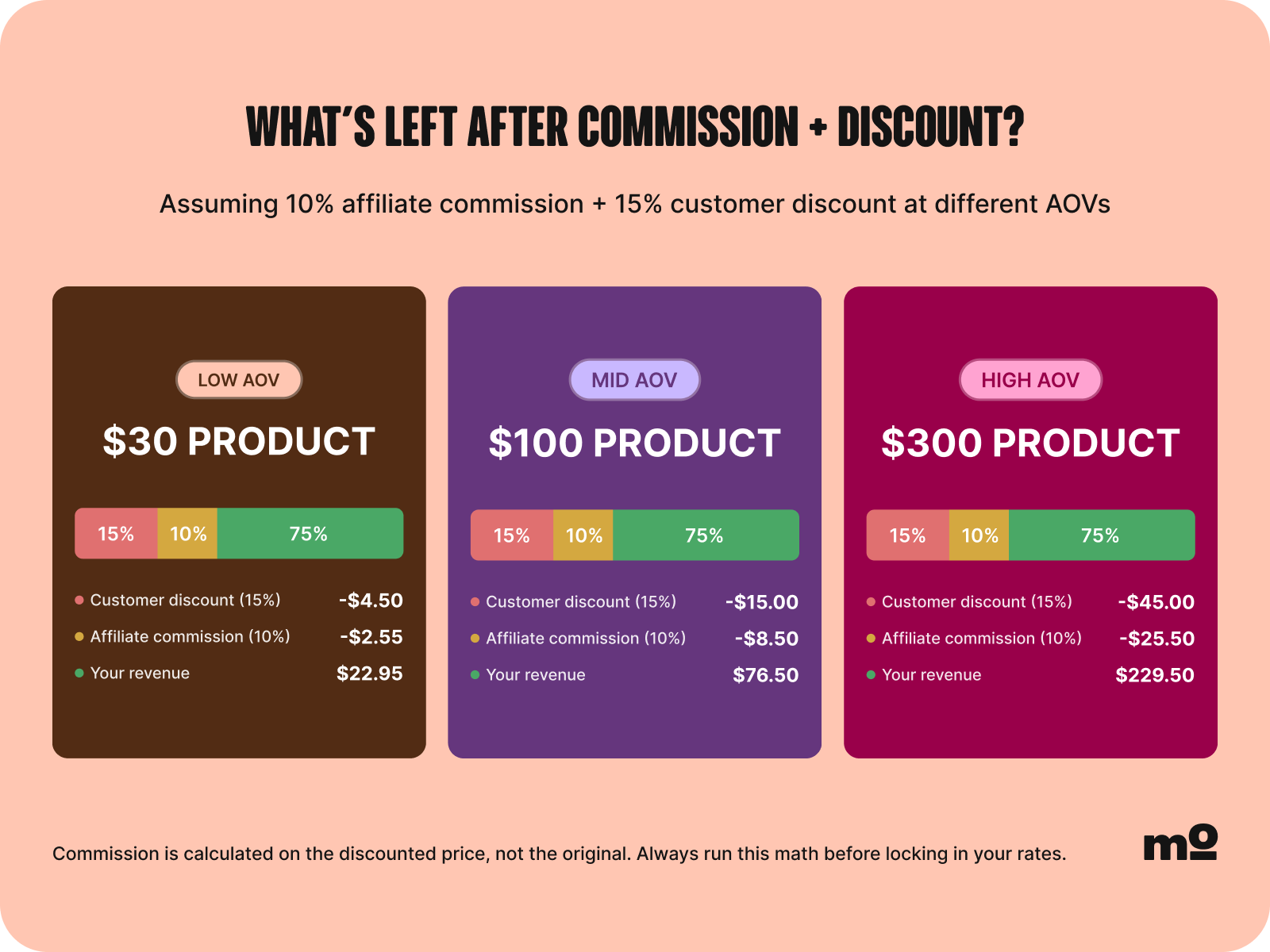
Be careful about copying a competitor's rate, since what's sustainable for their margins might be a loss on yours.
Leave yourself some headroom, too. If your base rate is at the very top of what your margin allows, there's nothing left for tiers, bonuses, gifting, or discounts.
For a deeper look at rates and payment models, see our guide on how to pay affiliates.
7. Reward top performers with tiers and bonuses
A flat rate pays all affiliates the same amount, which can limit motivation. Your top partners have no reason to push past their current output. Yet in our survey, 55.4% of marketers said they only offer a flat-rate program.
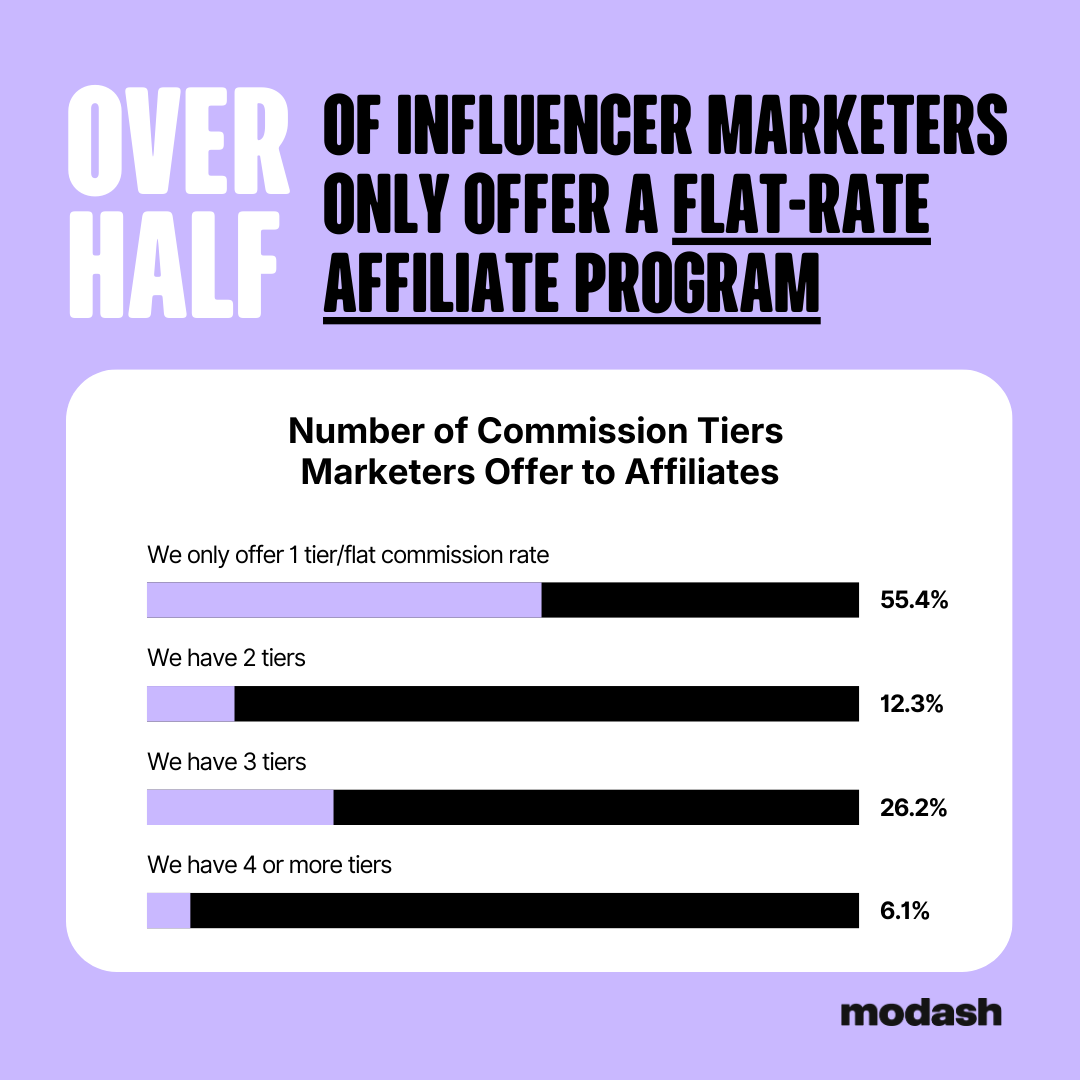
Tiers give affiliates an incentive to work toward. Set two or more performance thresholds, and raise the commission as affiliates cross them. Keep the structure simple enough to explain in one sentence.
You can set up commission tiers directly in Modash. Create tiers (percentages or fixed rates) and reward structures (first sale or repeat sale) and assign each affiliate to one.
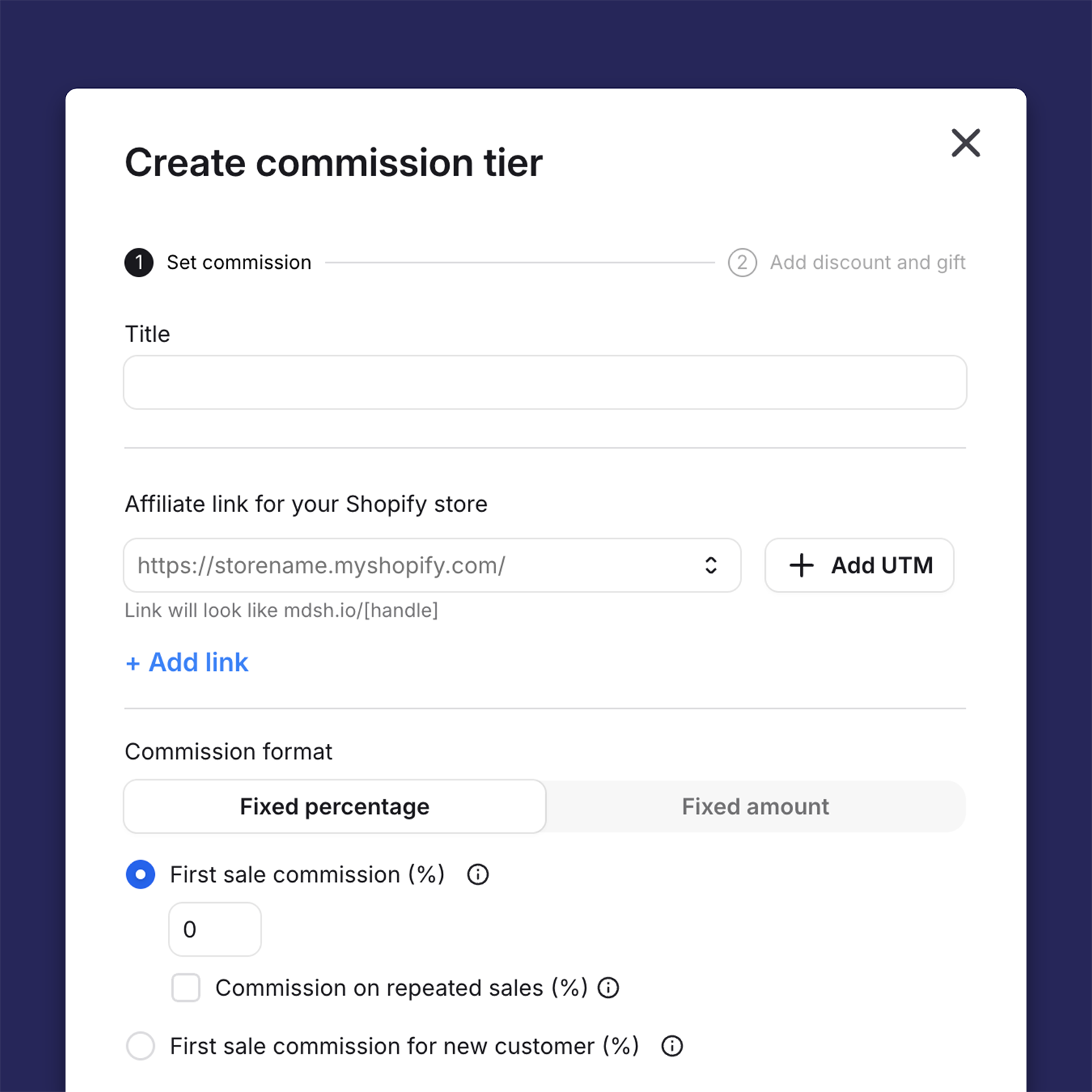
You can also put a low, no-minimums entry rate at the bottom of that ladder, so new affiliates start earning from their first sale and prove themselves before they climb. The ones who never get going cost you almost nothing.
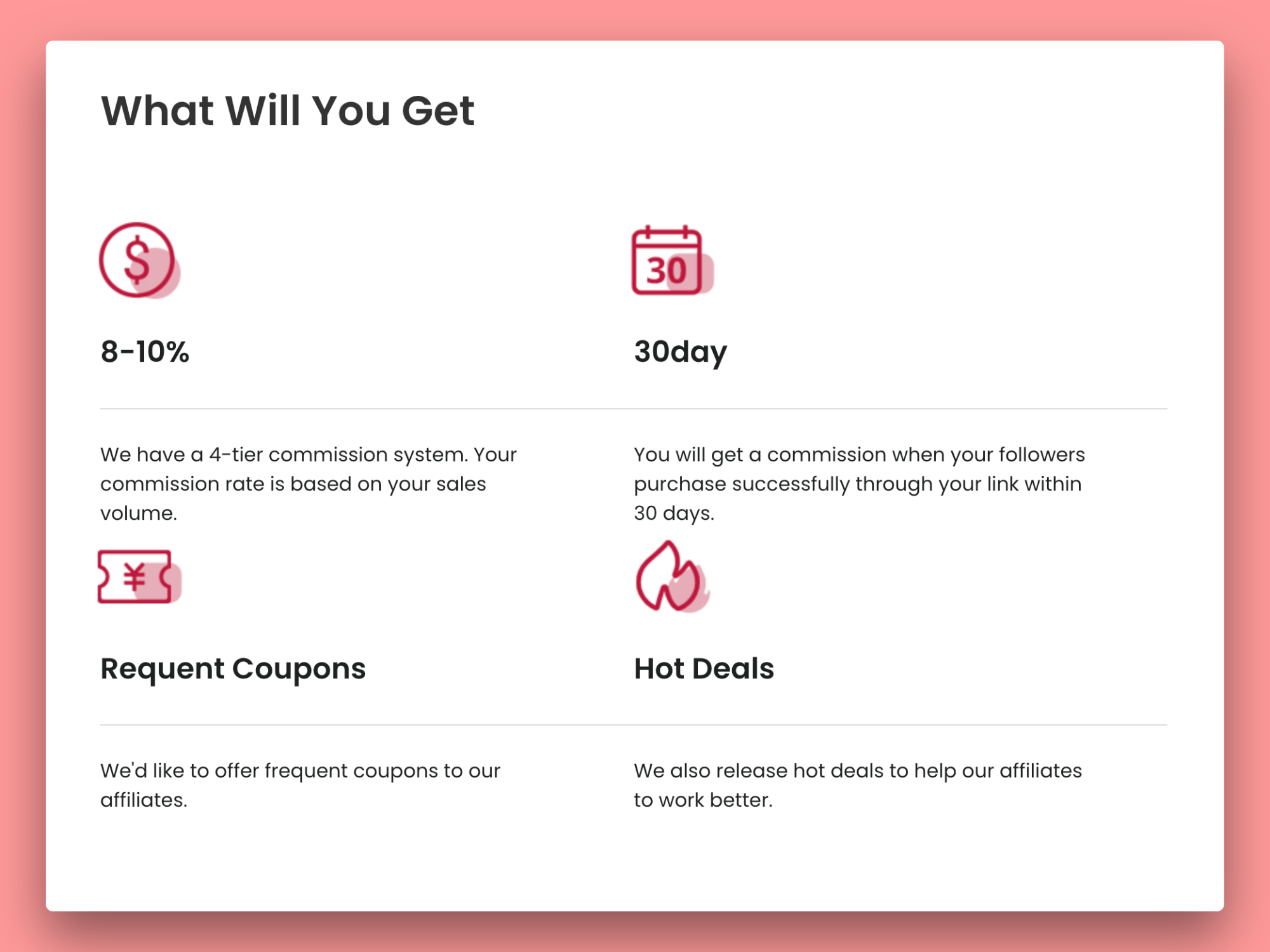
For instance, Amiro's affiliate program has a four-tier commission structure based on sales volume.
While tiers reward sustained performance over months, bonuses create short bursts of effort. For example, you might offer a bonus for hitting 10 sales during a launch week.
8. Use non-cash incentives
Commissions aren't the only thing affiliates care about. Free products, early access to launches, and exclusive perks all motivate partners. In many cases, these perks cost you far less than a commission bump.
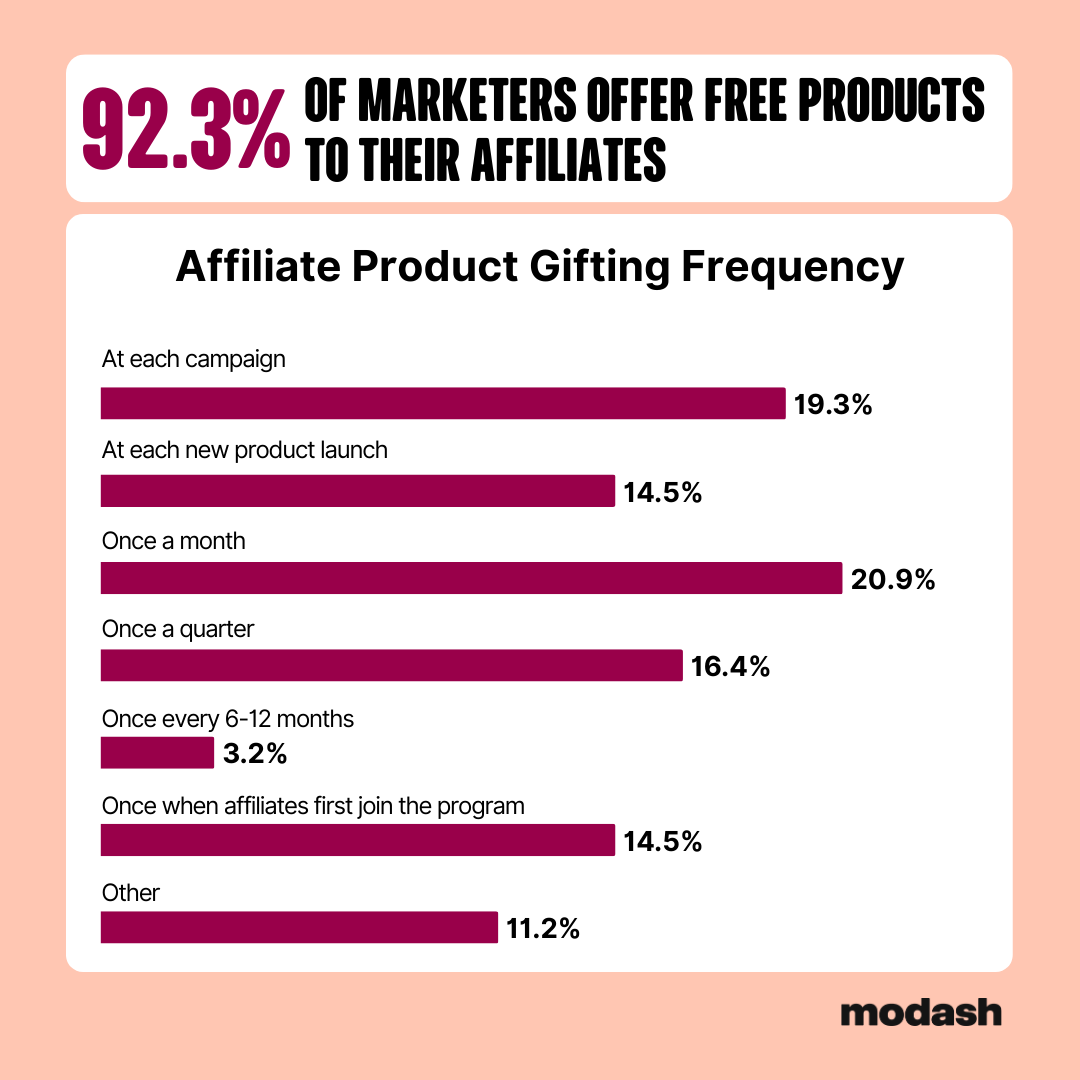
Gifting is by far the most common incentive. Our survey found that 92.3% of marketers offer free products to their affiliates.
But there's a catch: a one-time gift at signup fades fast – once the product runs out or the novelty wears off, so does the reason to keep posting. Replenishing it, sending refills, new launches, or seasonal products, keeps your brand in their hands and in their content.
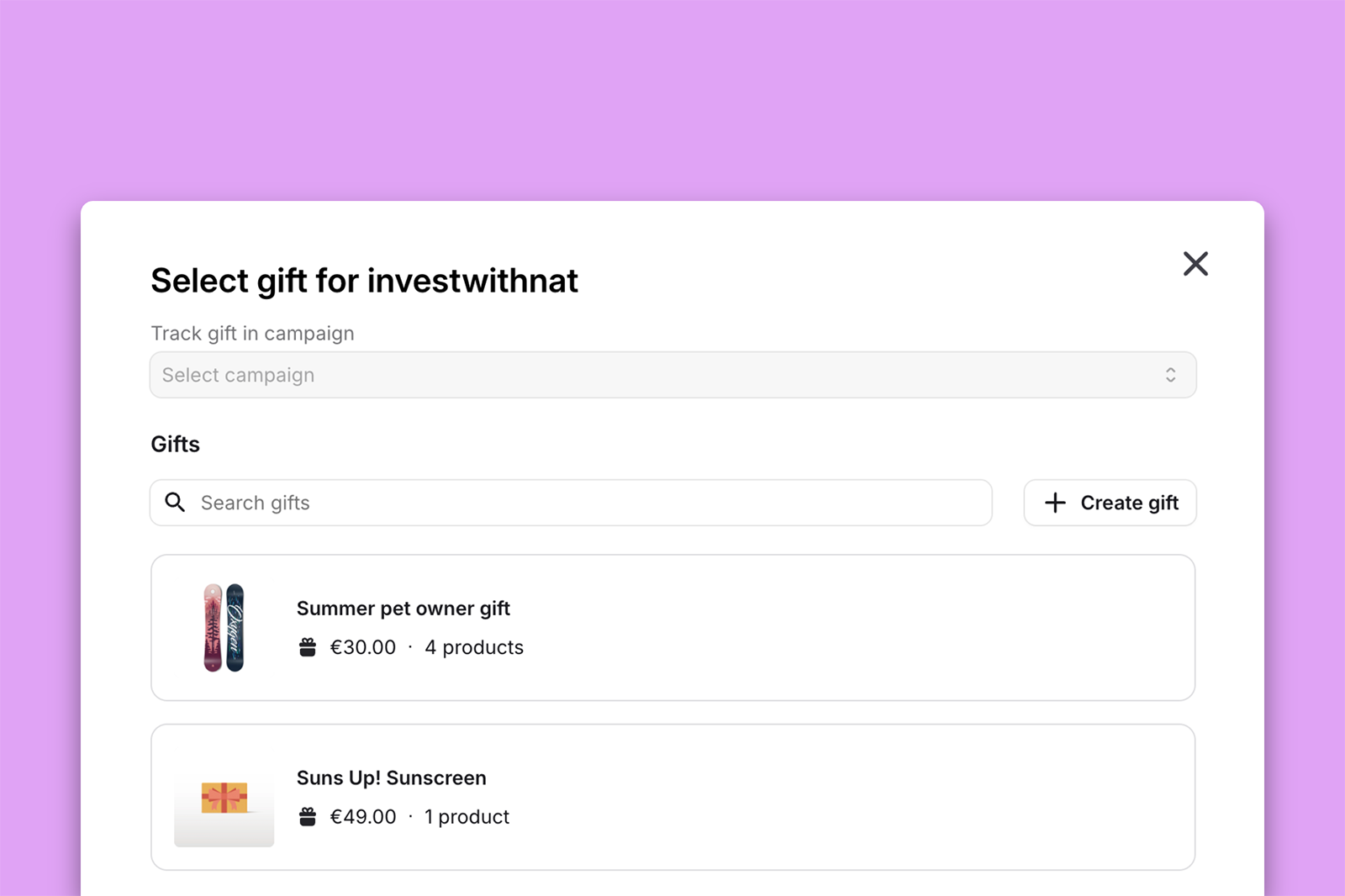
Modash makes regular gifting easier to sustain. With your Shopify store connected, you can create product orders (with budget limits) in a few clicks and send creators a link to select their own item, size, and shipping details. This way, you don’t have to worry about updating a spreadsheet or going back and forth with affiliates.
Beyond product, the perks that land hardest are the ones that make a creator feel like a part of your team. Give your best partners first access to unreleased products, feature them on your brand's channels, or hand their audience a code no one else has.
Perks like these signal the relationship goes beyond the payout – and they give creators something fresh and a little exclusive to post about.
9. Run time-boxed promotions and contests
Limited-time promotions add urgency to your incentives, encouraging affiliates to prioritize your brand. Consider raising the commission for a two-week window, offering a bonus for sales during a launch, or running a contest with prizes for the top performers.
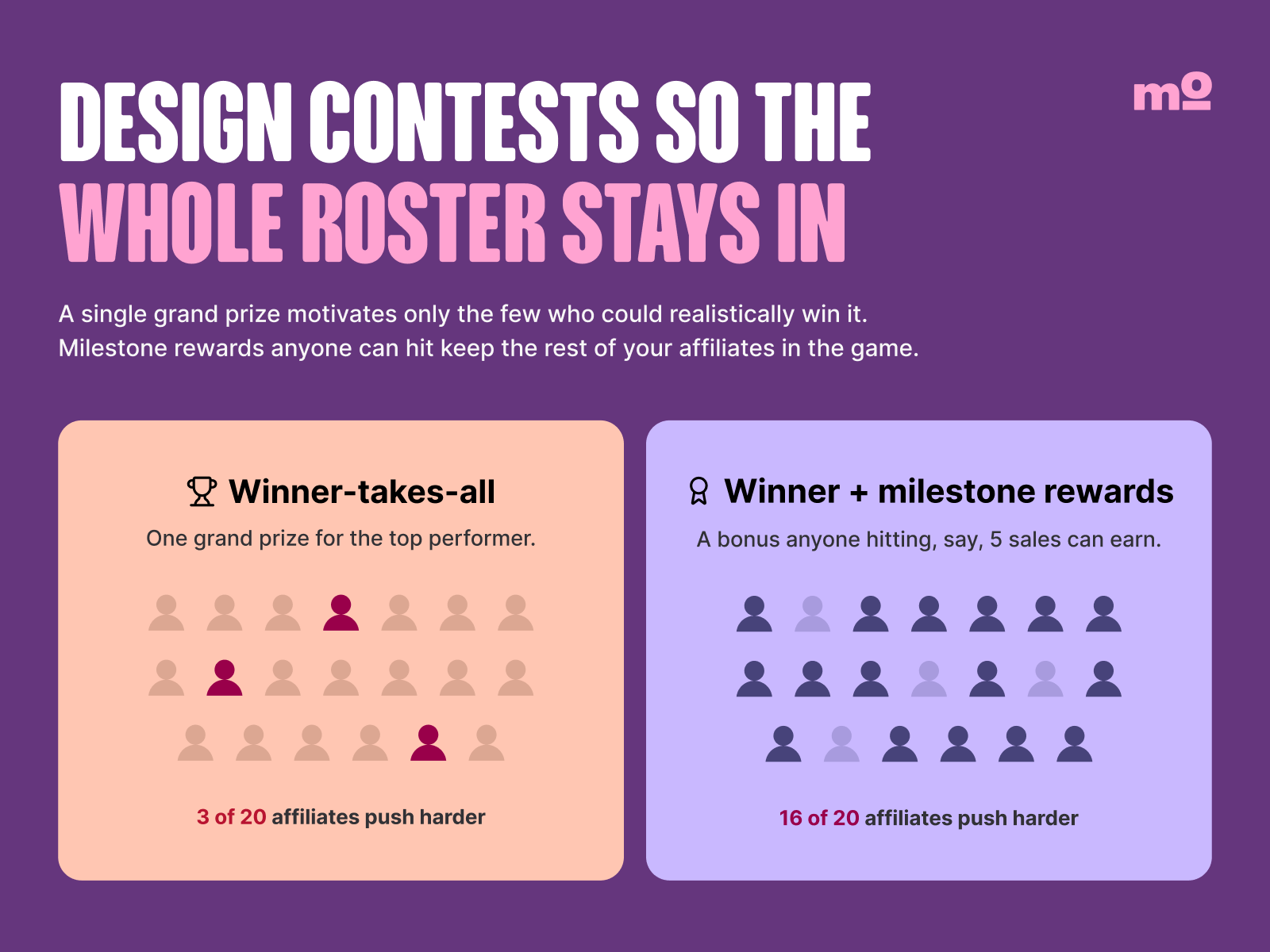
If you run a contest, consider not making it winner-takes-all. A single grand prize tends to motivate only the two or three affiliates who could plausibly win it. Adding milestone rewards that anyone can hit – like a bonus payout for every affiliate who makes five sales during the window – keeps the rest of your roster in the game.
Timing helps, too. Schedule these pushes when affiliates are already planning content – like around product launches, seasonal peaks, and Black Friday. Announce the promotion a few weeks in advance so affiliates can prepare, and send a reminder before the window closes.
For most brands, keeping affiliates active is the single biggest challenge. These strategies help get the partners you already have to create and post.
10. Onboard and brief so creators post
If your program has plateaued, start by fixing your onboarding process. Our survey shows that many brands stop short here, which prevents affiliates from making the leap from signing up to publishing.
While 58.6% of marketers send over new products to get affiliates started, less than half (40%) send a welcome package with brand materials. And less than a third (30%) sign up new partners for an affiliate newsletter – which misses an important opportunity to keep them in the loop.
Successful onboarding should cover three things:
Pair that with suggestions for their first post. Share content angles that convert for your brand, examples from affiliates who are doing well, and what to avoid.
Don’t forget to include humanity in your briefs. Anna Klappenbach elaborates:
Add humanity, make them feel like they're a person that you (as the brand) are proud of welcoming to the team. Show how excited you are to work with them instead of treating them like a money-making machine.

11. Give creators ready-to-use assets
Creating content from scratch takes time, and your affiliates are likely juggling partnerships with several brands. The less work it takes to promote your brand, the more likely they are to do it.
Do the heavy lifting for them. A useful asset pack includes:
Keep these materials one click away. If getting your assets means logging into a portal and digging through folders, many affiliates won't take the time.
Refresh these materials regularly. Stale assets can hurt conversions and miss opportunities.
12. Encourage full-funnel content
Brief your affiliates to create content for every stage of the buying journey. Here’s how this could work for a skincare brand:
The stages complement each other. This means a follower who watches an affiliate's honest review one week may convert easily when the affiliate posts a discount code the next week.
13. Keep in touch with your affiliates
Affiliates tend to promote the brands they have a relationship with (I know, shocker!). If your only touchpoint is the monthly payout notification, you're relying on partners to stay motivated on their own.
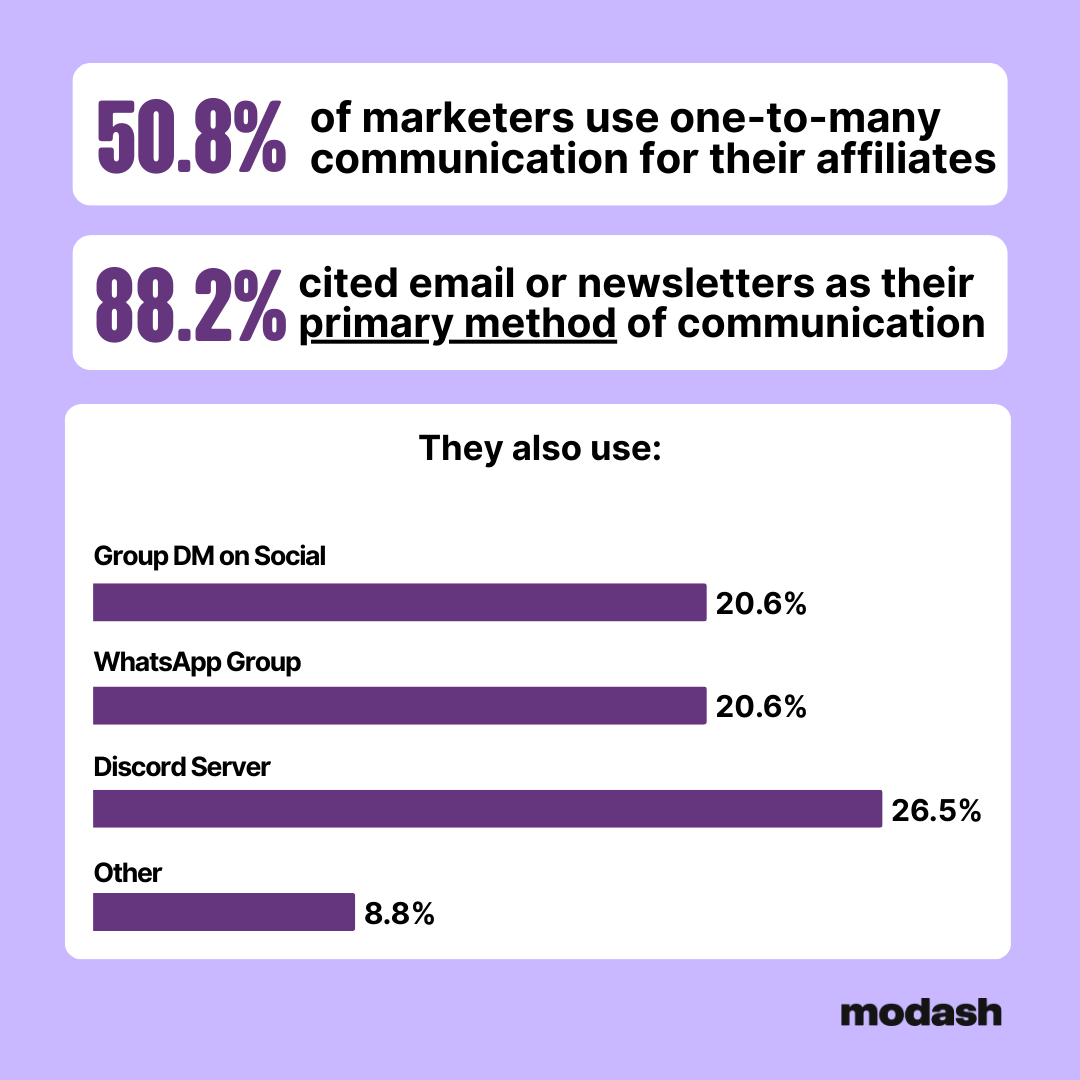
Our survey found that 88.2% of marketers cite email or newsletters as their primary method of communication – which also means most marketers connect with affiliate partners infrequently. Nearly half (44.6%) of marketers communicate with affiliates monthly, and almost a quarter (21.5%) only do so quarterly.
This doesn't mean you need to overwhelm affiliates with daily messages. Instead, create a steady rhythm of useful touchpoints.
Share product news, content that's performing well, and upcoming promotions – plus the occasional personal check-in with your top partners. Give affiliates something they can act on, not just a newsletter for the sake of one.
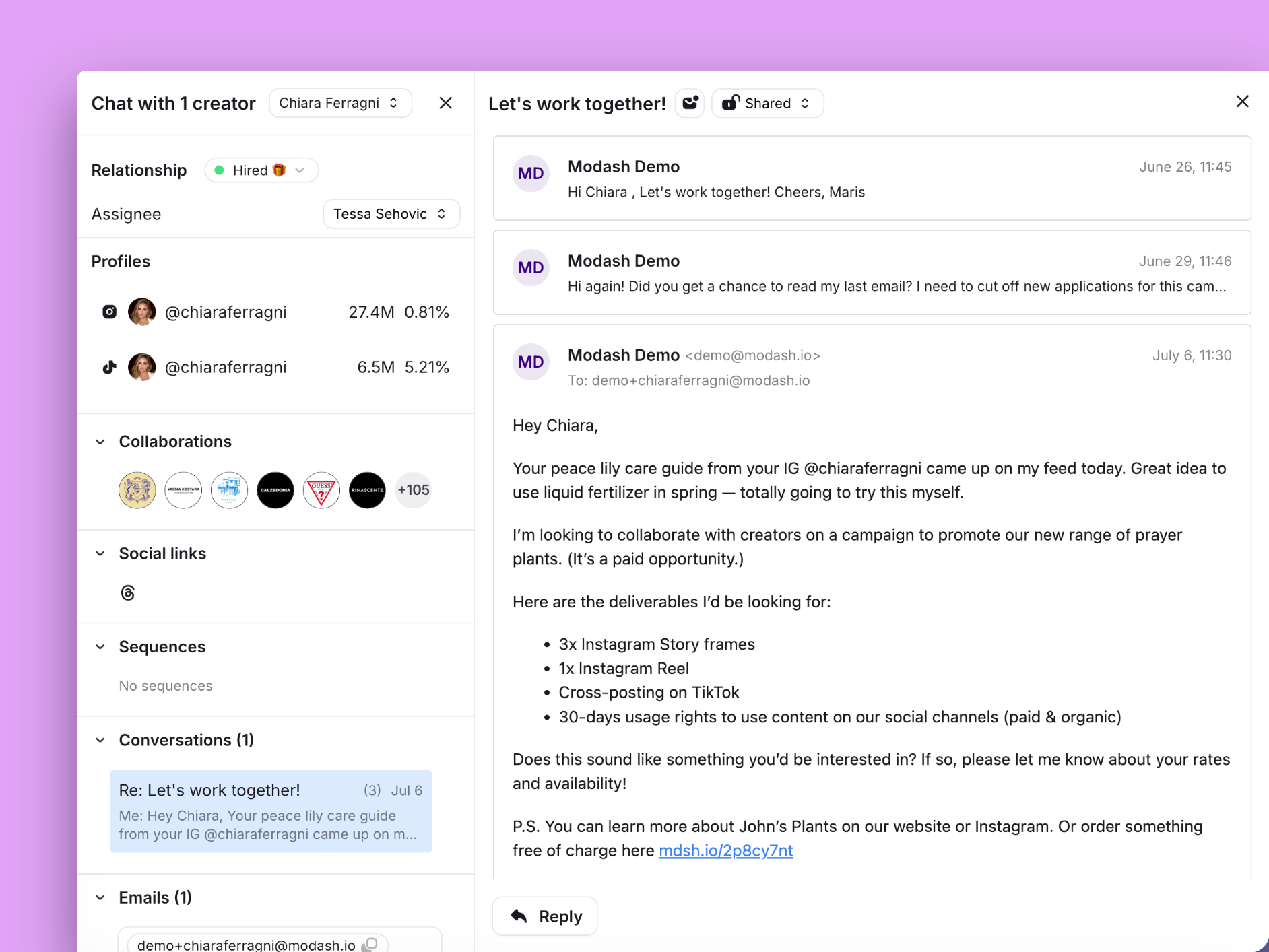
Modash helps you manage affiliate comms in one place. Outreach and ongoing relationship messages stay together instead of scattering across inboxes, so everyone on your team can track the status and work together to build relationships.
14. Connect with creators offline
As helpful as emails and DMs can be for ongoing communication, they certainly aren't your only option. Meeting your affiliates in person takes the partnership to another level. It sets you apart from the many brands they only know as a name in their inbox, which can turn a commercial arrangement into a genuine connection.
Passenger Clothing does a lot of offline events with its creators – helping them share their stories, what they’re working on, and info that can help their whole community. Here’s an example of Sophie Gordon promoting the brand and her cookbook at the Big Feastival.
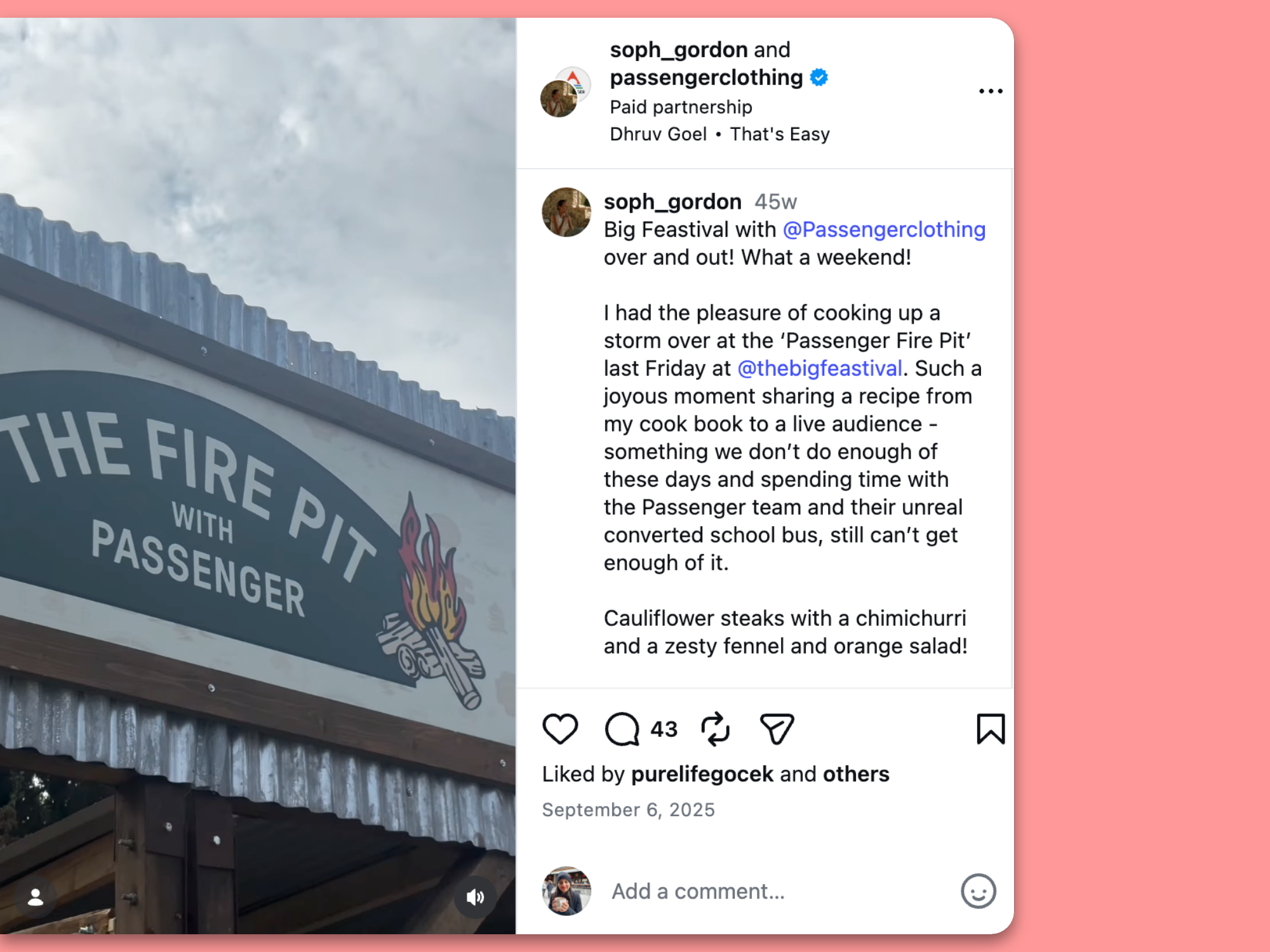
The important thing to note here is that the brand doesn’t build these events around a sales pitch or a content quota. The activities themselves gave creators something to experience and share. When you focus on giving creators a memorable experience and building relationships, the content tends to follow.
You don't need a big budget to start. A dinner for your top 10 affiliates or a small workshop in one city can work at any program size.
👉 Learn more about how Nell Kravitz (Global Community Manager at Passenger Clothing) does standout affiliate marketing in our webinar.
Once your affiliates are active, you can see which ones drive sales. These strategies help you use that performance data to invest more in your top performers, the same way you'd manage any other growth channel.
15. Get attribution right
To reward the affiliates who drive sales, you first need to know who they are. Give every affiliate a unique discount code and tracking link, so each sale connects back to the partner behind it – with a tool like Modash, that happens automatically for every creator through your Shopify store, and clicks, conversions, and revenue show up per creator.
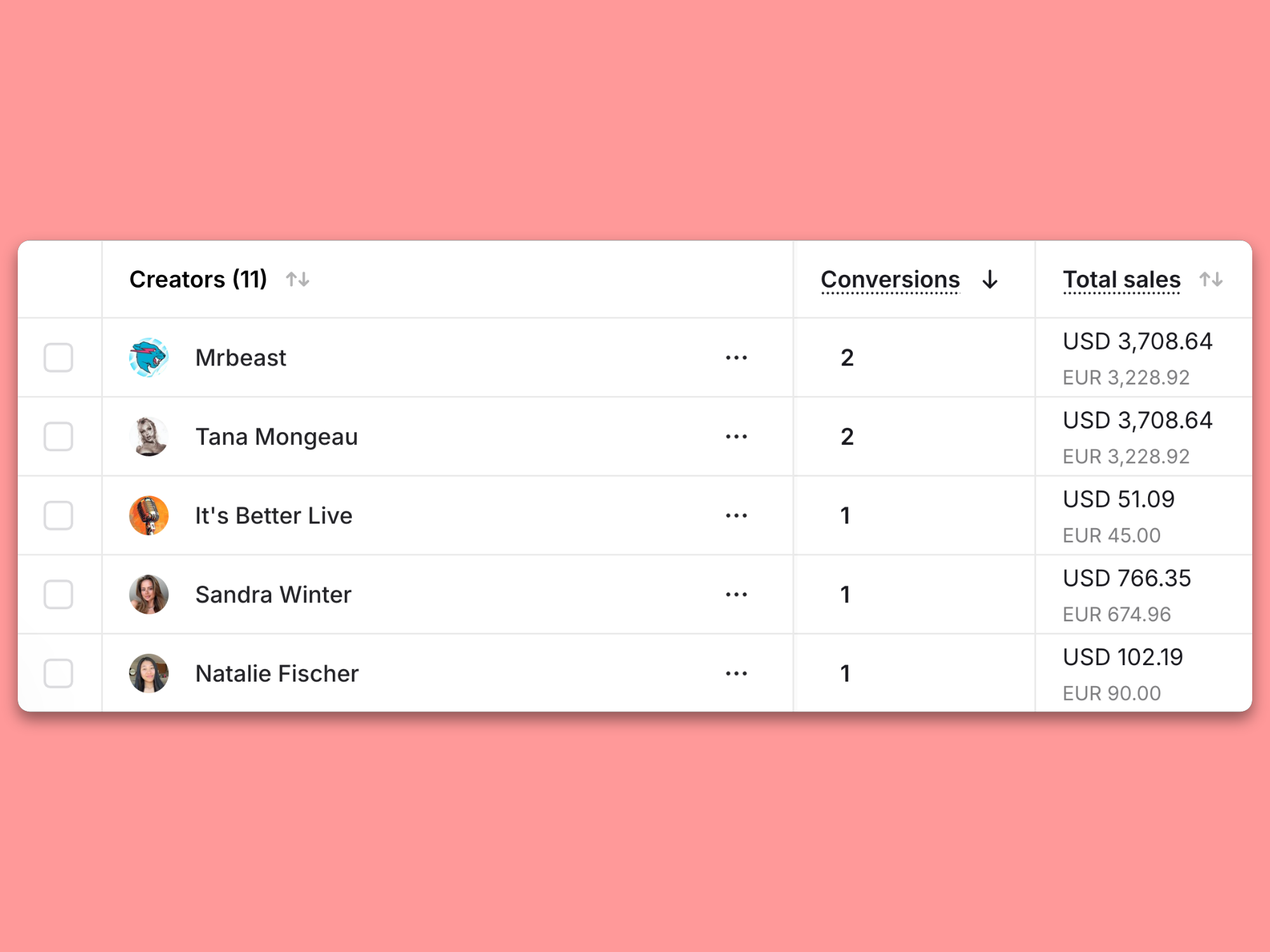
But tracking is only half of it. You also have to decide how to assign credit. Most programs use last-click – crediting whoever the buyer touched last – which is simple and works fine for a lot of programs, but it can undersell the creators who built demand earlier in the journey.
Which model fits depends on your program's size and how your customers buy. Our guide to affiliate attribution models walks through the options and how to choose.
16. Track activation rate closely
Total affiliate count is a vanity metric. If you have 500 signed partners but only 40 of them regularly post, your program is much smaller than you might think.
To build a successful affiliate program, focus on activation rate instead. Divide the number of affiliates who posted in a given window – say the last 90 days – by your total roster. A low rate suggests your efforts should go to activation, since the program has untapped potential.
If your rate is on the low side, you aren’t alone. Our survey found that less than 20% of affiliates are active for over a third of markers. And 60% of marketers say keeping affiliates active is their biggest challenge.
A low activation rate usually isn't a sign your creators are lazy – it's a sign the program isn't giving them enough reason or support to post. That's actually good news, because it's the part you control.
Nearly every lever sits on your side: onboarding that gets them to a first post, briefs and assets that make posting easy, regular communication, and fresh reasons to show up like new product or timely promotions.
So treat the number as a diagnostic. Watch how it moves: if it drops after a burst of recruiting, your onboarding isn't keeping up with your outreach. If it climbs after you refresh your briefs or assets, you've found a lever worth pulling again. And if it's low across the board, the fix is upstream – revisit the activation strategies earlier in this list before you sign anyone new.
17. Double down on winners
Pull up your revenue by affiliate (super easy via Modash), and you'll probably find a small group driving the bulk of it. Your instinct might be to leave those partners alone because they're already performing well. In practice, the opposite often works better.
Your winners have proven they can sell your product. Extra investment in them can pay off at a higher rate than the same investment elsewhere. Consider giving them better commission terms, early access to launches, or first pick of new campaign opportunities.
Make this a habit rather than a one-off. Review performance monthly or quarterly, and reallocate budget toward the partners climbing the leaderboard. This is also your chance to prune inactive affiliates.
18. Amplify top content with paid campaigns
When an affiliate's post performs well organically, treat it as a cue to spend on paid campaigns. The content has already proven it resonates, so putting paid budget behind it is far less risky than boosting something untested.
Ask creators for permission to run their post as an ad from their handle – also known as influencer whitelisting. This way, the content looks native while you control targeting and spend. You extend the reach of a proven message to audiences the affiliate could never hit alone.
Even better, strong paid results give you helpful data. Use it to build a case to bring to leadership when you ask for more program budget.
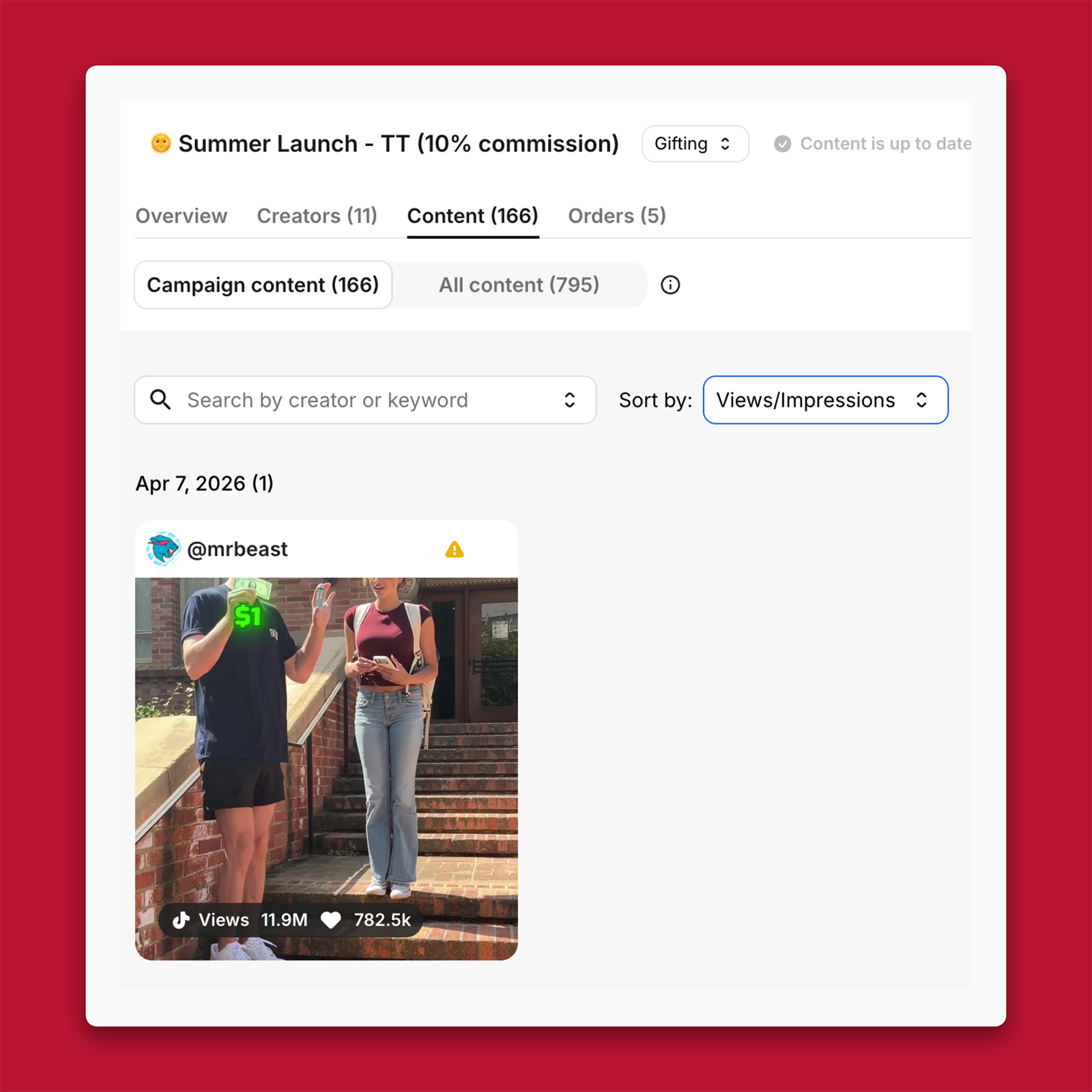
The catch is that you can't amplify what you never saw. Modash automatically collects all the content your creators post, including Stories that would otherwise vanish in 24 hours. You can rest assured that your affiliates' best-performing posts won't slip past you.
19. Test and iterate continuously
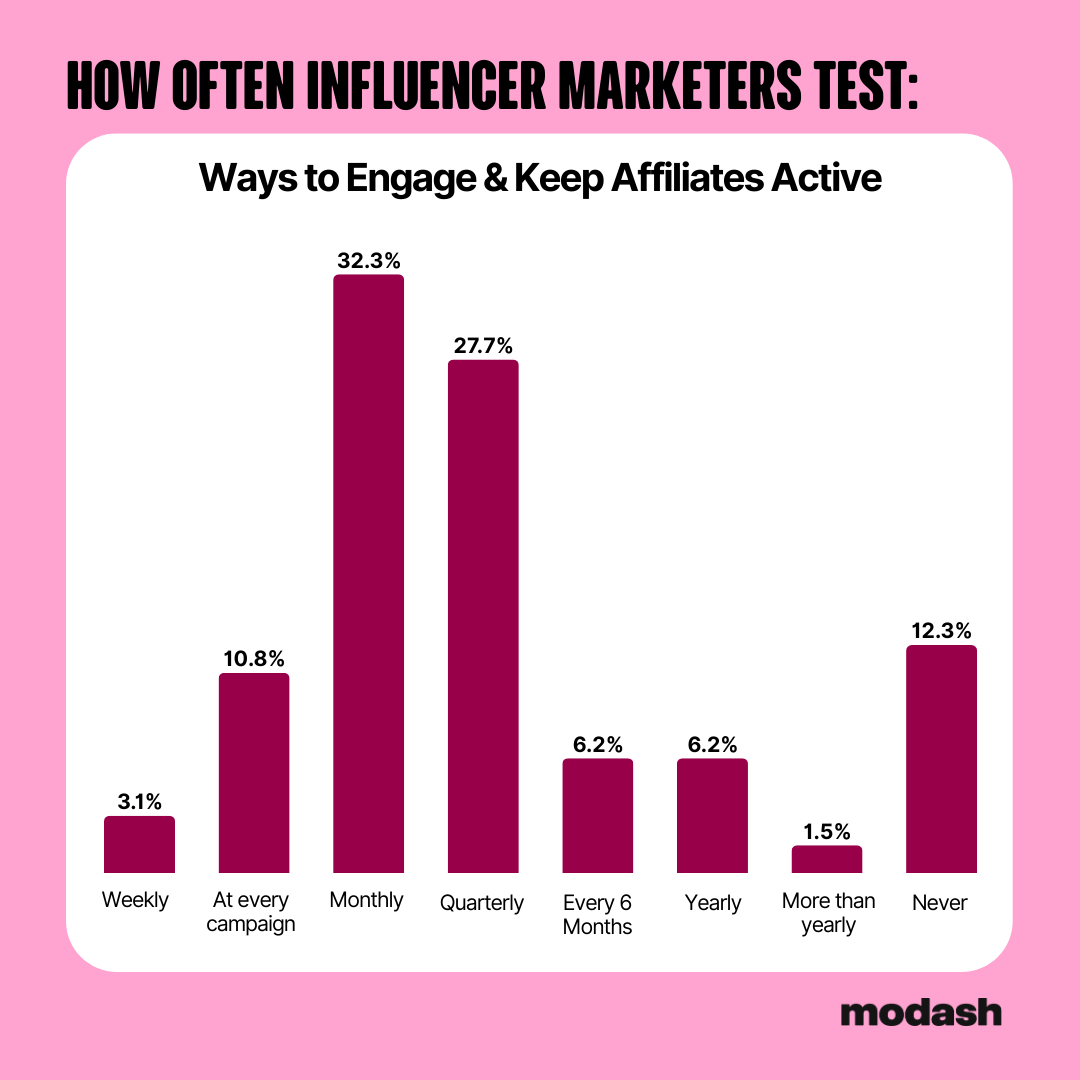
Almost every aspect of your affiliate program is worth testing, from incentives and bonuses to types of partners and engagement strategies. Trial a change with a segment of your affiliates first, then compare the results against your current setup. If the numbers improve, roll it out to the rest of the program.
There's plenty of room for most brands to test more often. Our survey found that only 10.8% of marketers test at every campaign. The majority test either monthly (32.3%) or quarterly (27.7%). Each test teaches you something about who your ideal affiliates are or what motivates your partners, so a faster cadence means faster learning.
It helps to budget for experiments up front, recommends Nell Kravitz:
Keep a little of your budget – say 10% – to try new things. Play around, get out of your comfort zone. This is where we've seen a lot of real growth and real viral moments happen.

Setting that money aside means you can test new affiliates and engagement strategies instead of waiting for leftover budget.
If you take one thing from this list, make it the order of operations. Before you spend another month on outreach, look at what the partners you already have are doing.
Modash gives you the tools for every phase, from finding brand fit creators among 380M+ profiles to tracking who posts, what performs, and which partners deserve more of your budget. Try Modash free for 14 days and see where your program's effort should go.
The usual culprit is inactive affiliates. Over a third of marketers have less than 20% active affiliates for their brand. Check what percentage of your signed partners posted in the last 90 days. If that number is low, fix activation with better onboarding, briefs, and ongoing communication before you recruit anyone new.
Make posting easy and worth affiliates' time. Onboard every affiliate properly, gift products, and give them ready-to-use assets like swipe copy and product angles. Then stay in touch with regular communication, and offer incentives like bonuses or early access.
Prioritize recruiting for a new program and focus on activation for a program with a lot of affiliates who aren't posting. Once your existing partners are posting consistently, every new recruit contributes to your growth instead of joining the inactive pile.
Start from your margin and work back to a base commission rate you can sustain. Make sure you still have sufficient margin for gifting products and offering bonuses and discounts, too.
Get attribution in place first so you can see clicks, conversions, and revenue per affiliate. Then review on a regular cadence and look for partners who drive new demand rather than just closing last-click sales. Reallocate budget and attention toward those partners, while pruning the ones who stay inactive after a reengagement attempt.