


More tools
Use cases



If performance-based influencer marketing sounds like the safest way to work with creators, you're not wrong. But someone still has to carry the risk if a campaign flops… and with this model, that's the creator, not you.
Hardly fair, especially when a post underperforms for reasons that have nothing to do with the creator, like:
None of that is the creator's doing. But in a pure performance deal, they're the one who are paying for it (by not getting paid).
That said, performance-based influencer marketing can absolutely work, but only if you do the unglam stuff first, like picking the right creators, setting up decent tracking, and offering hybrid deals rather than commission-only, so creators aren't taking on all the risk themselves.
Here’s how it works.
The gap between flat fee and performance-based is really about risk. Flat fee, you carry it. Performance-based, the creator does. Hybrid (the third sweet middle spot) splits it. Here's how the three compare:
A flat fee is guaranteed money, which makes it the bet you place when you're already fairly sure it'll pay off – a creator you've worked with, an audience that clearly fits, content you trust to do the job.
You pay up front for that confidence, and you take on the risk that comes with it. If the post lands flat, you've still paid. It's also the only real option when there's no sale to pay against in the first place, like an awareness push or a launch where you're buying reach rather than conversions.
Performance-based is the other side of that bet. When you're less sure a creator or product will convert, you stop guaranteeing anything and only pay when a sale actually happens. For brands the appeal is obvious – your CAC is baked into the deal from day one, and there's no world where you hand a creator $1k for a post that gets 3 likes and zero sales.
But a post's performance rides on a pile of factors, and plenty of them sit on your side of the table, not the creator's:
Add the fact that influencer marketing is hard to attribute cleanly at the best of times, and you can see why performance-only can feel unfair from the creator's seat. They can do everything right, hand over their time, and still walk away with next to nothing because of something they never controlled.
So neither model is the “right” one. They reward different things and suit different situations, which is exactly why so many brands land in the middle with a hybrid deal – a smaller guaranteed fee plus commission on each sale.
Nacho Selma agrees:
The hybrid model not only helps me stay within budget but also motivates the influencer to put in more effort, as their earnings increase based on the campaign's success.

Learn how to structure a hybrid deal that works for you and your creators: How to Use Hybrid Influencer Payments to Improve Your ROI
Our survey found that 61% of marketers used some form of performance-based compensation to pay influencers. And it doesn’t look like a blip.
Affiliate marketing is increasingly being treated as a subset of creator marketing rather than a separate discipline. This is largely because it's easier to prove its impact and simpler to track than a standard sponsored post.
Leslie Belen adds:
Every brand is under so much pressure to prove ROI that in 2026, we'll pivot almost entirely to small-retainer-plus-high-commission structures, signaling the end of the flat-fee model's dominance.

And while I get the low-risk, high-reward appeal, I also think it’s somewhat oversold – especially when performance based influencer marketing is not done right:
Not to mention: Creators are increasingly wary of performance-only pay because it’s unpredictable and often out of their control.
So the appeal is very real, but so are the catches. The good news is that none of them are unsolvable, you just need to get the setup right from the get-go.
Before we get into the nitty-gritty of setting up performance-based deals, it’s worth remembering “performance-based” can have various kinds of structures. Here are the three that come up the most:
Most performance-based programs end up running a mix of these – commission for your core affiliates, a hybrid structure for creators you want to work with long-term, and pay-per-lead if and when you want to focus on leads and clicks rather than cold, hard sales.
The model you pick matters less than what you do before launch. Here are four things to get right first:
Asking whether a creator has the chops to sell your product isn’t a simple yes/no question you can answer by eyeballing their profile.
In fact, there are actually two separate layers to consider here:
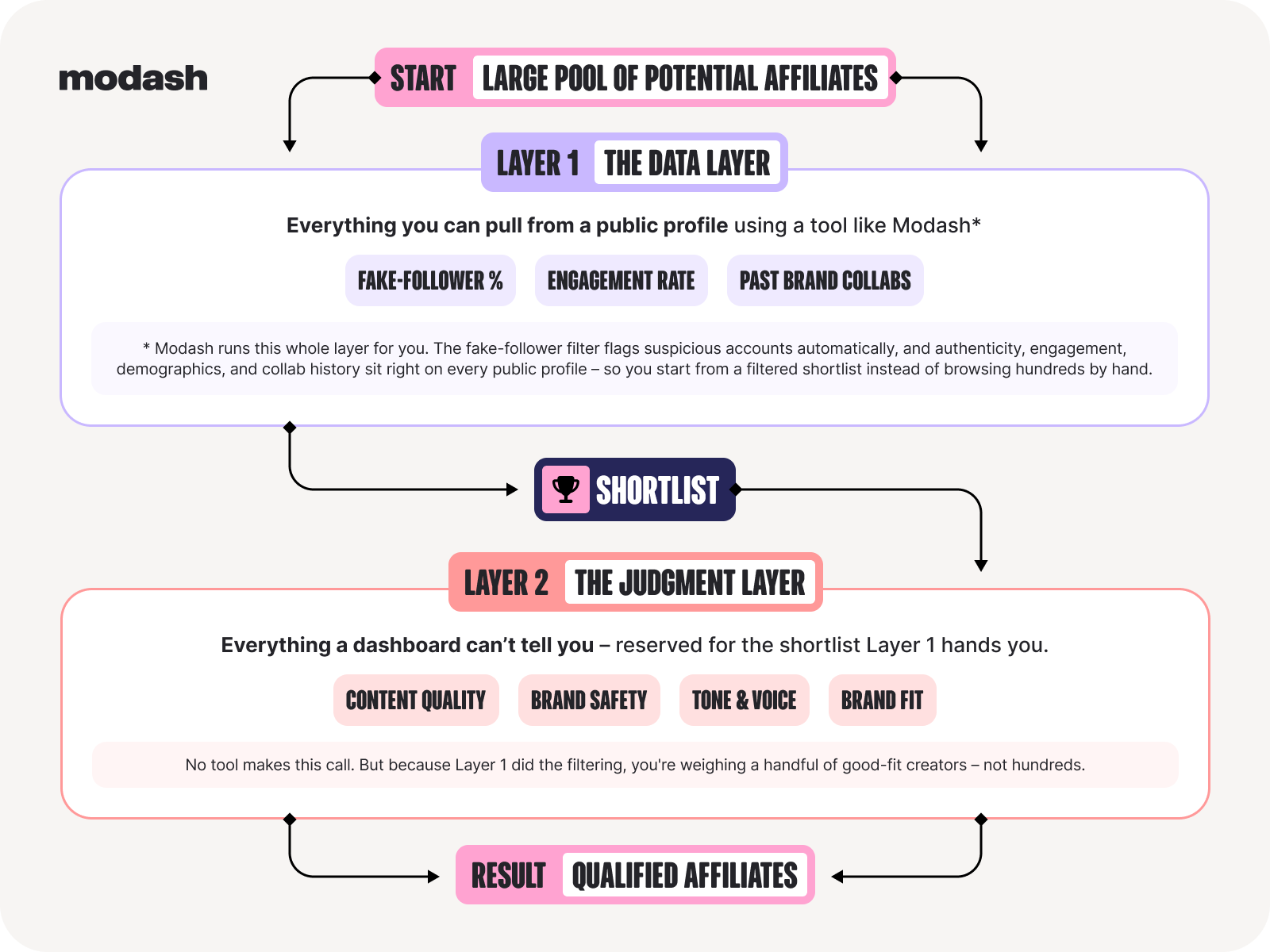
Look at the data first, then use your eagle-eyed judgment, and you should have a decent mix of creators who have the numbers and the right ✨vibe ✨.
The data layer is the tedious part to do by hand, and it's what an influencer analysis tool is for. In Modash, for example, each creator profile has a deep dive on their audience metrics like:
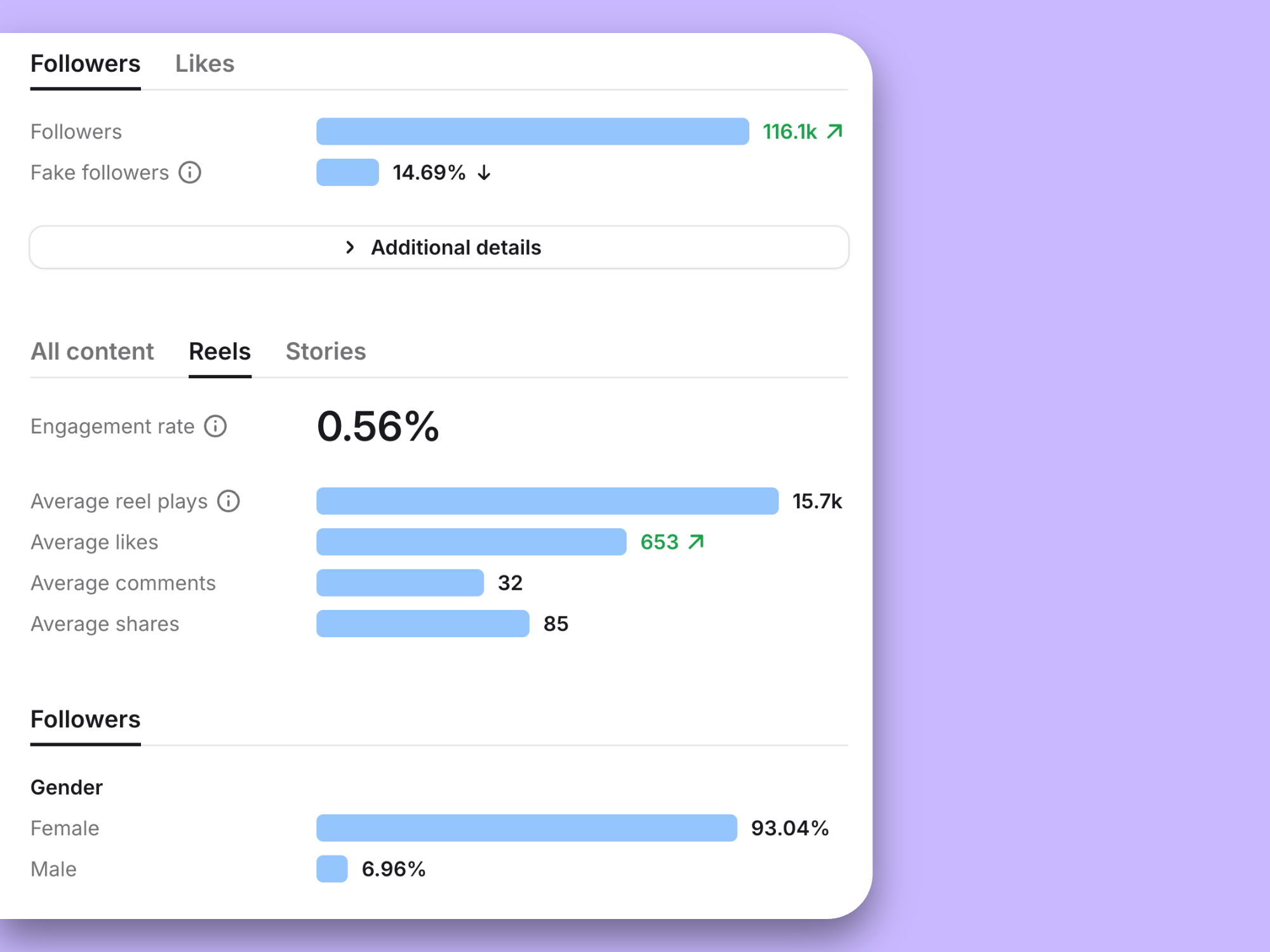
This helps you clear the data layer at a glance and gives your judgment call something real to work from.
👉 Dive deep into this two layer creator vetting framework.
If you set up tracking after your first affiliate goes live, your “results” are already compromised. You need this locked down first.
Two of the usual suspects behind dodgy tracking:
👎 Code leaking. When codes end up on coupon sites and browser extensions like Honey, getting used by people who were already going to buy. In these instances, the code isn't generating a new sale, it's just gnawing away at your margin and inflating a creator's numbers.
👎 Complicated cross-device sales. Someone clicks an affiliate link on their phone, gets distracted, and buys on desktop three days later. The sale doesn’t get attributed to the link so the creator doesn’t get credit.
Note that neither method is perfect on its own, which is why you shouldn't rely on just one..
In Modash, you can assign every creator a unique link and a discount code that’s tied directly to your Shopify data.
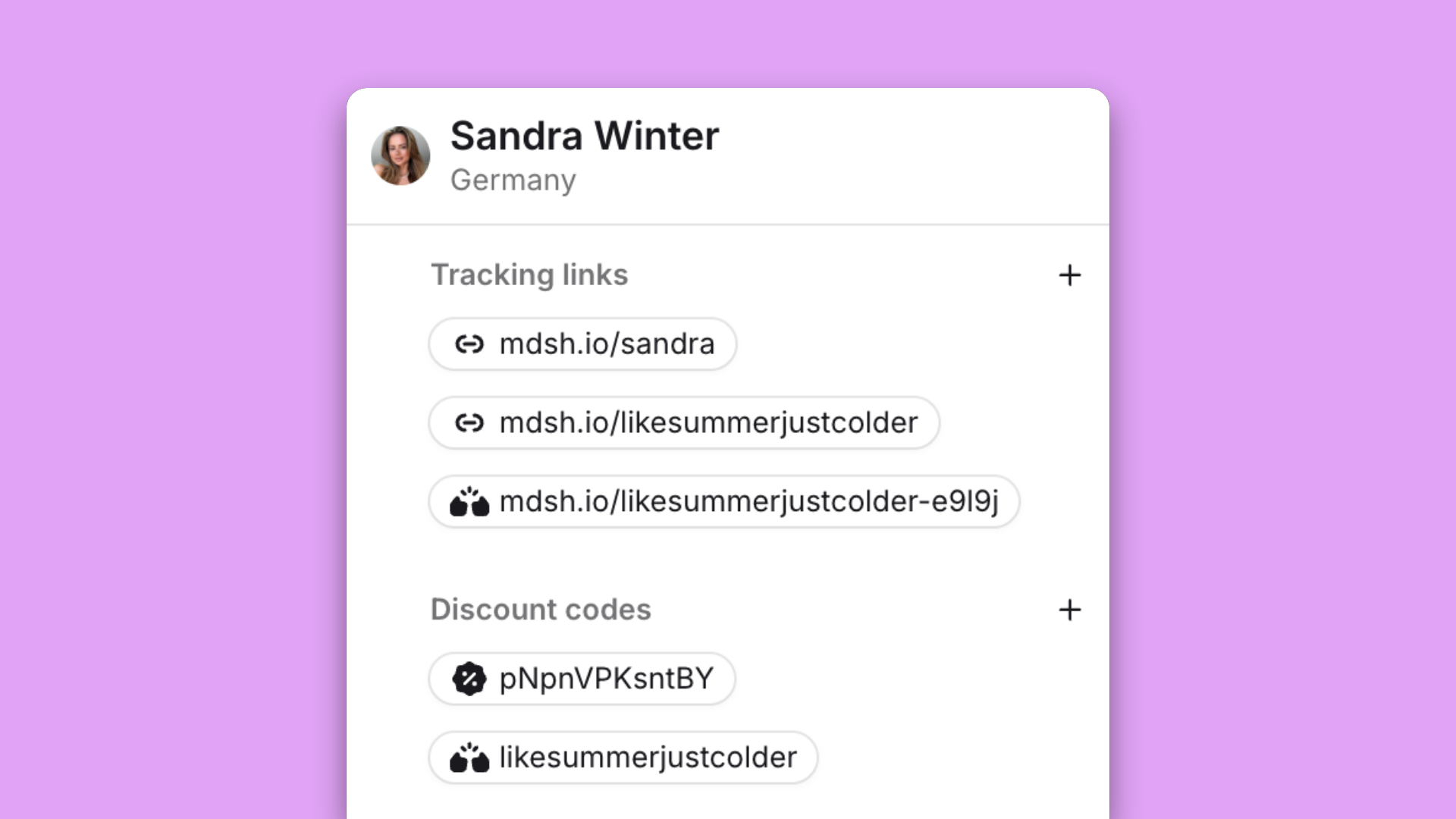
If a keen bean uses both the link and the code on the same order, Modash gives the code priority. And, if a code leaks, you can rotate it or replace it without losing any attribution history.
Rate alone won’t have creators biting your hand off to work with you. The structure of your commission is equally as important.
Start with a flat percentage or flat dollar amount as your entry rate (most ecom brands tend to go for something between 10-14%, climbing past 15%+ for higher-margin or top-tier products).
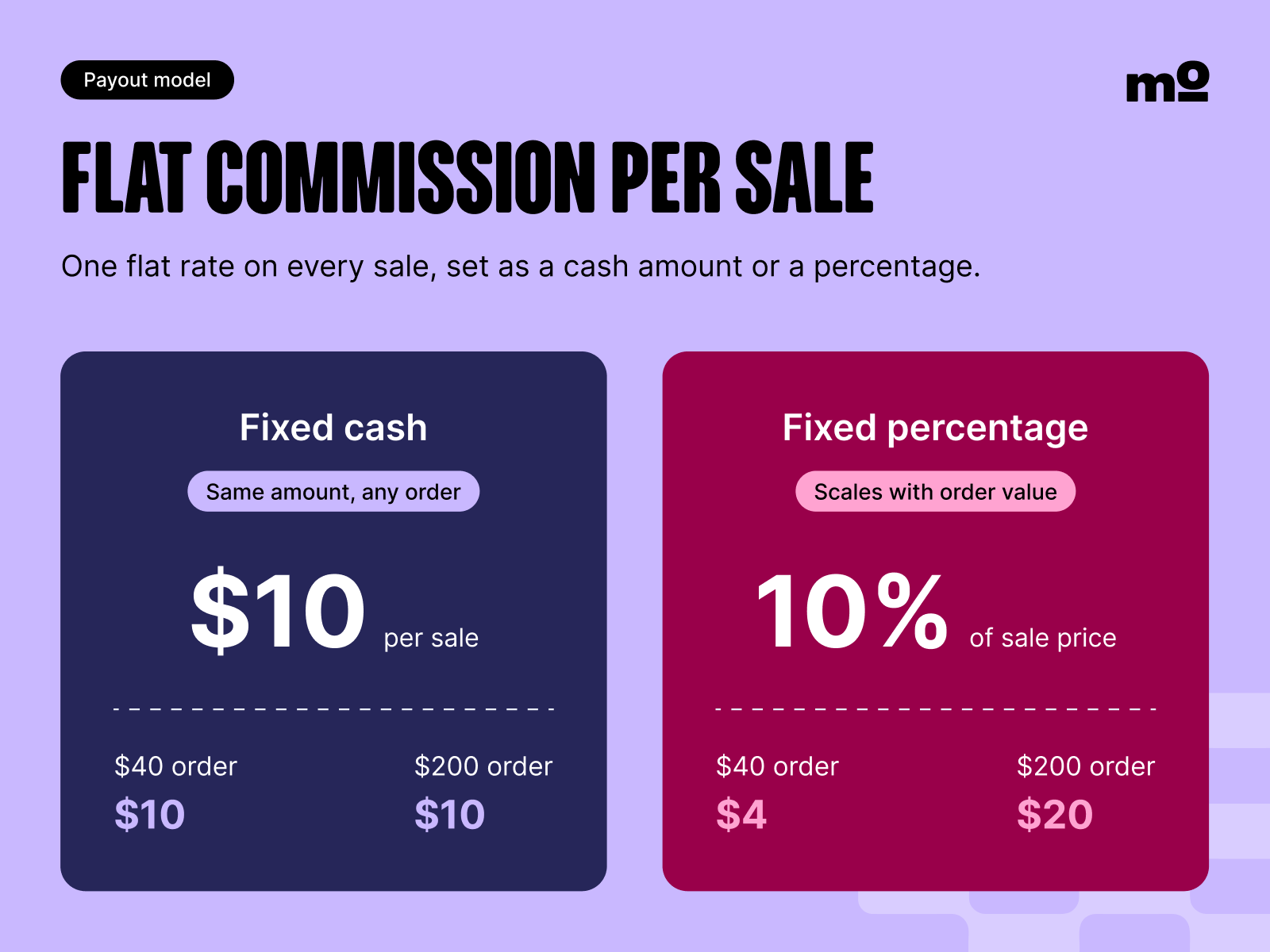
Then, work backwards from your margin, so if your net margin is 30%, a ~15% top-tier commission is realistic without wiping out your profit.
But… obviously it’s not that simple 😅
A single flat rate does the job, but it doesn’t give creators something to work toward. This is where tiered commissions can be a good shout – basically, affiliates unlock a higher rate as they hit sales milestones. It looks something like this:
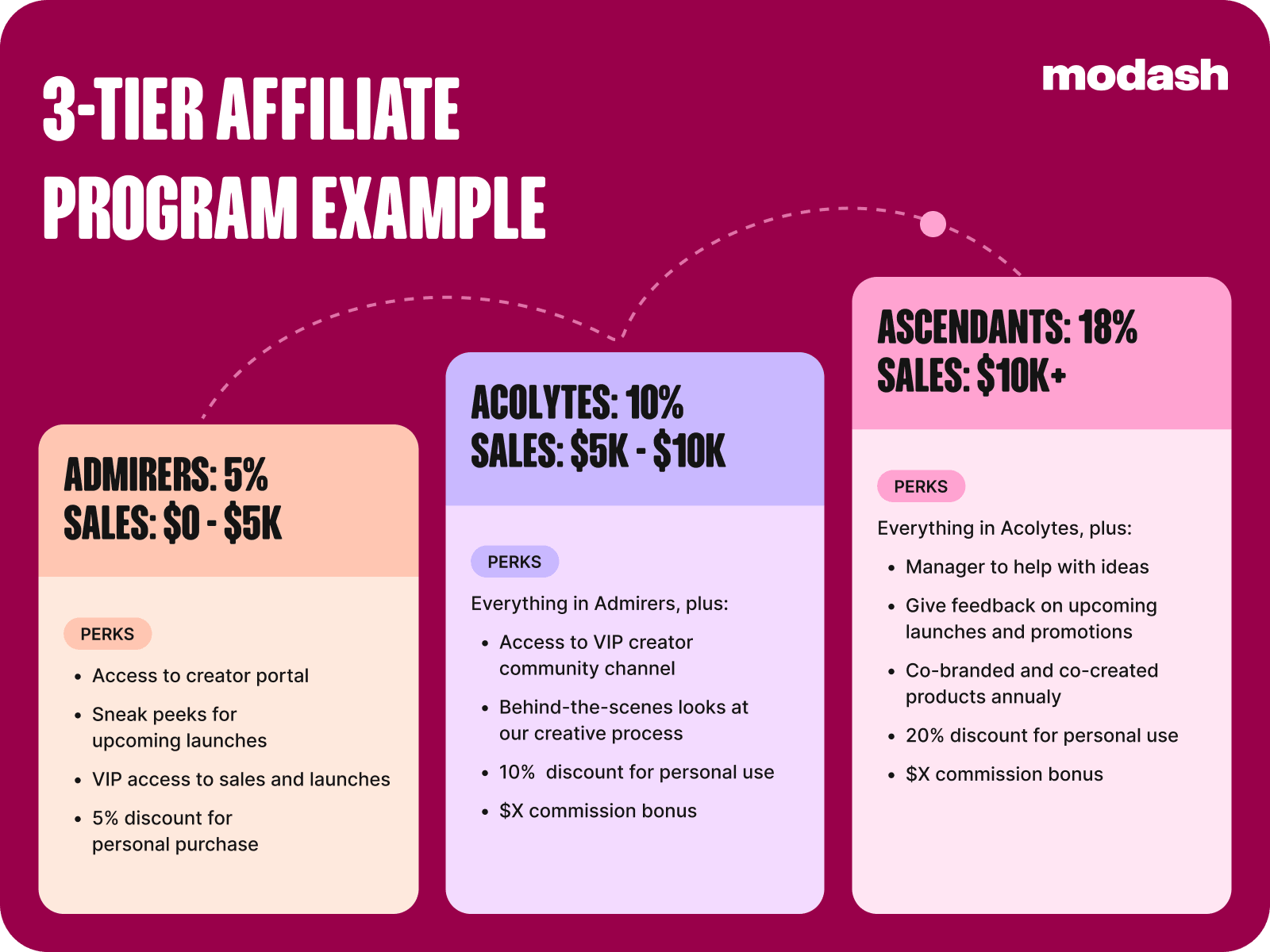
The tiered approach consistently outperforms flat structures. Our survey found that brands running three commission tiers see 30% more active creators than brands stuck on a single flat rate.
The catch: managing a handful of flat rates is one thing, but juggling first-sale, repeat, and new-customer commissions across tiers, for potentially dozens of affiliates, gets real messy real fast if you're doing it in a spreadsheet.
You only have to miss one update or misclassify one tiny, lonely sale and you might find a creator questioning whether your numbers (and your intentions) can be trusted.
This is where dedicated affiliate management tools can be a huge help. Modash is built to handle all of this natively. You can set first-sale, repeat, and new-customer commissions separately, then assign creators to tiers so your top performers automatically earn more as they hit targets.

Onboarding is the squeaky spot where a lot of otherwise-solid programs fall to pieces. Brands often pour a ton of effort into recruitment, send a lone, sparse welcome email, and then… crickets.
At the absolute bare minimum, a proper welcome email should cover all the must-knows:
Ideally, you’ll have more of a sequence for onboarding than a lonely old email. Include creative assets, your expectations around posting, and an early milestone bonus to give creators a nudge to get that first post out. Then, check-in somewhere between one and two weeks to chivvy up anyone who’s gone quiet.
👉 Learn more about how you can set your creators (and by extension, your campaign) up for success by acing their onboarding.
When you use Modash to pay creators, they get their own portal showing their assigned links, codes, commission rates, and payout status all live and in one place.
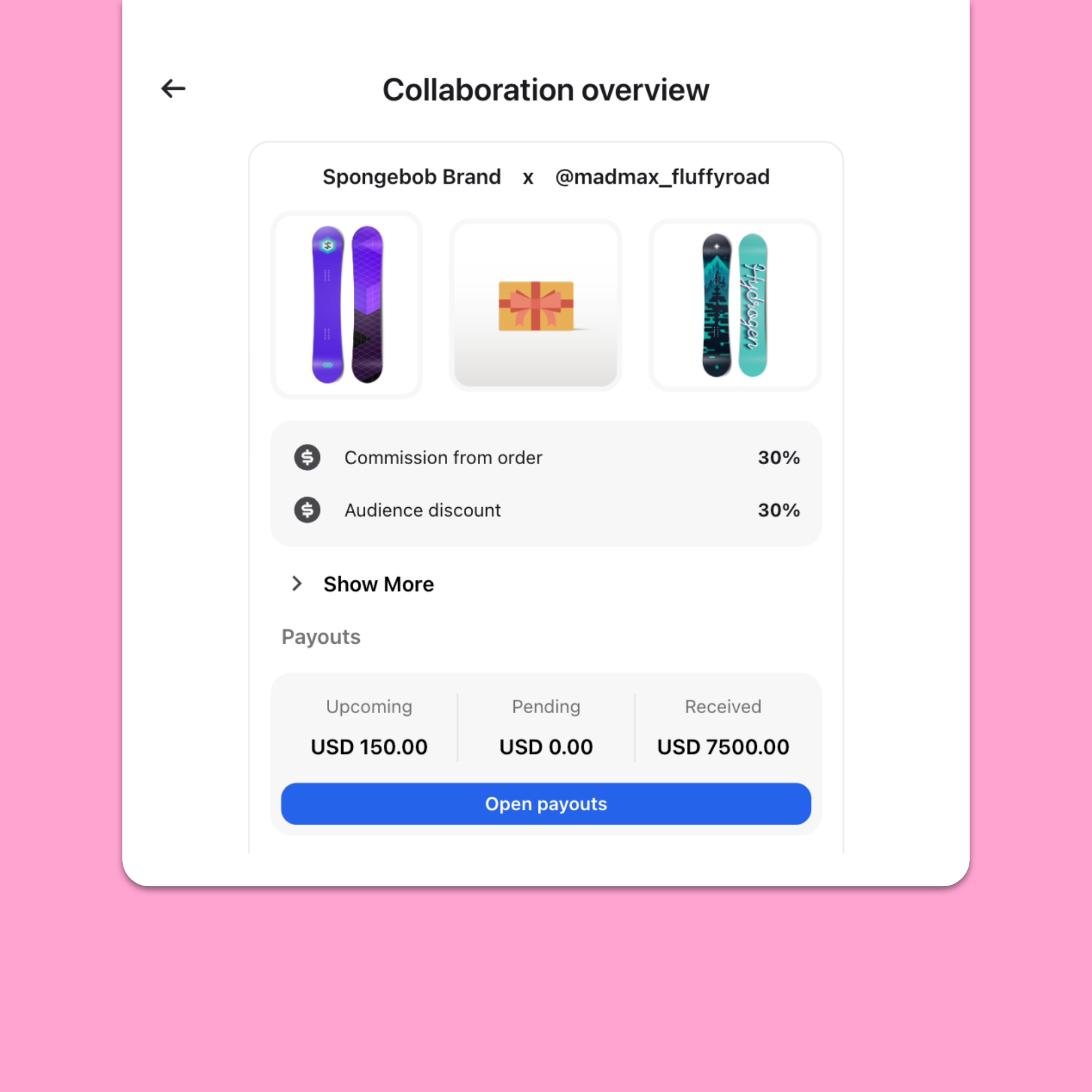
This transparency plays a big role in keeping affiliates active.
Getting the program live is a big, but albeit easy, milestone. Keeping it working is the actual job, and it comes down to three things you stay on top of.
Screwing up a creator’s first payment (or any payment, for that matter) is a really great way to make sure it’s their last.
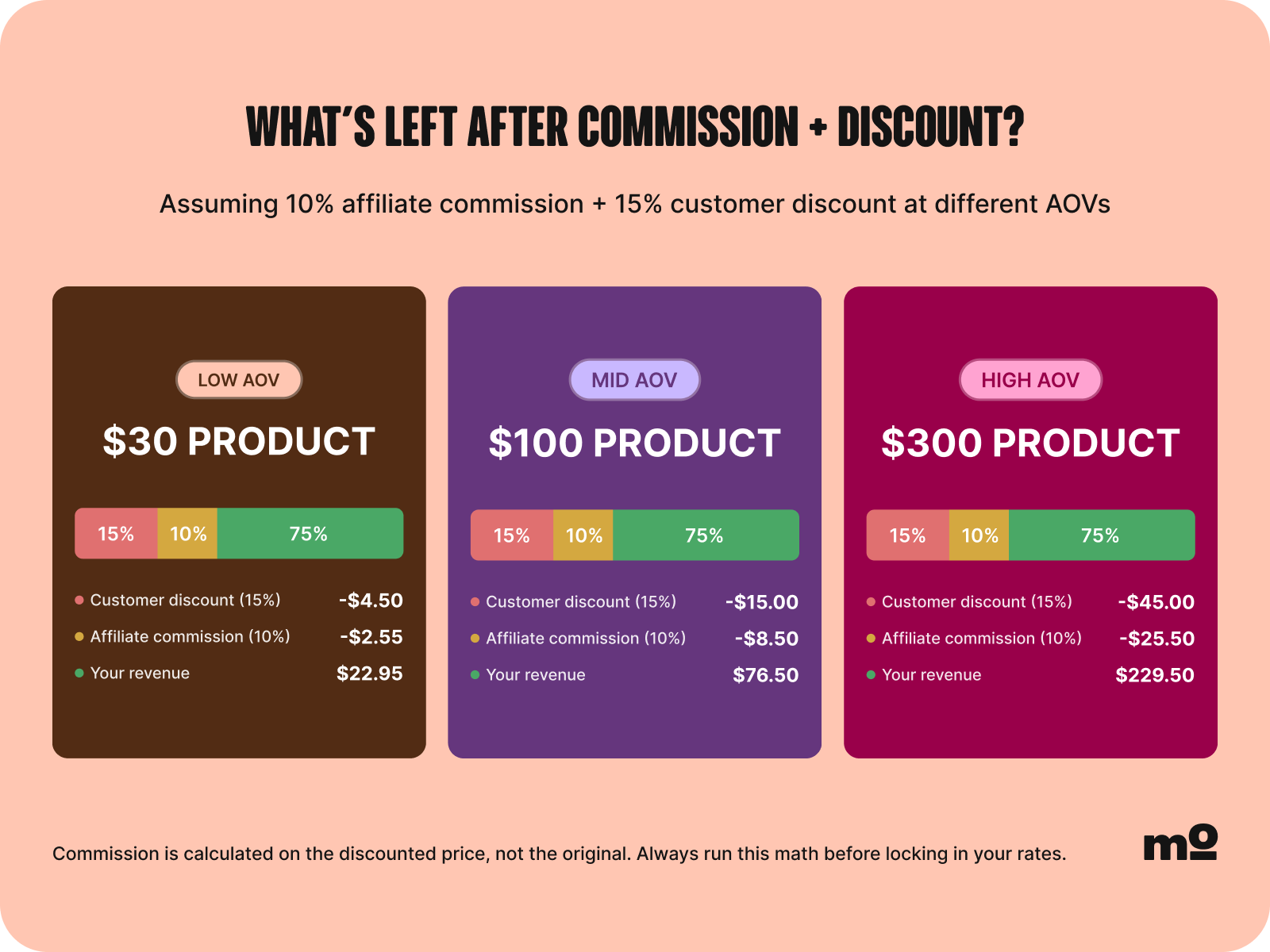
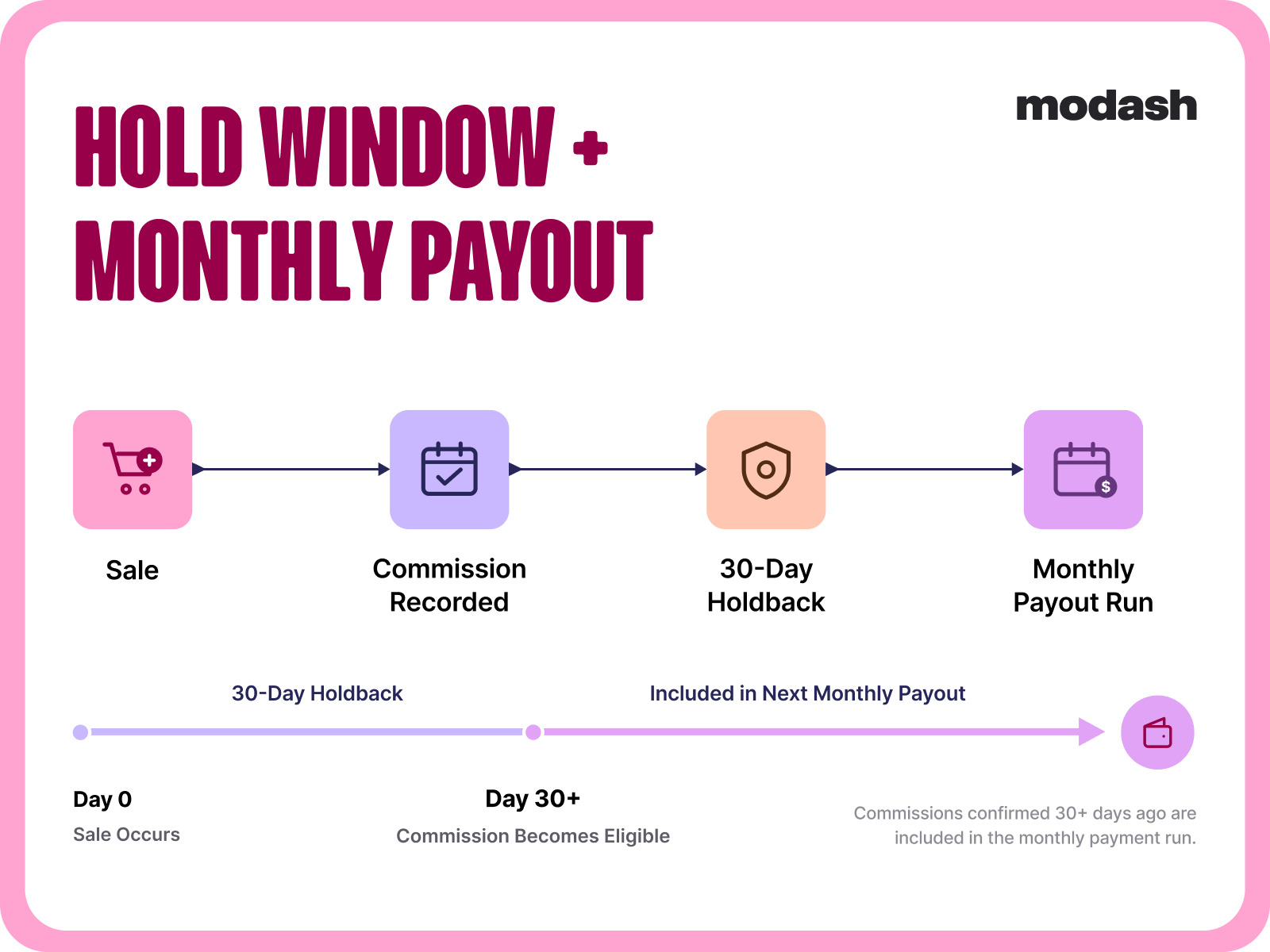
With Shopify connected to Modash, sales record against each creator automatically, and commission is calculated on net revenue after refunds and returns, so the number you pay out already accounts for both rules.
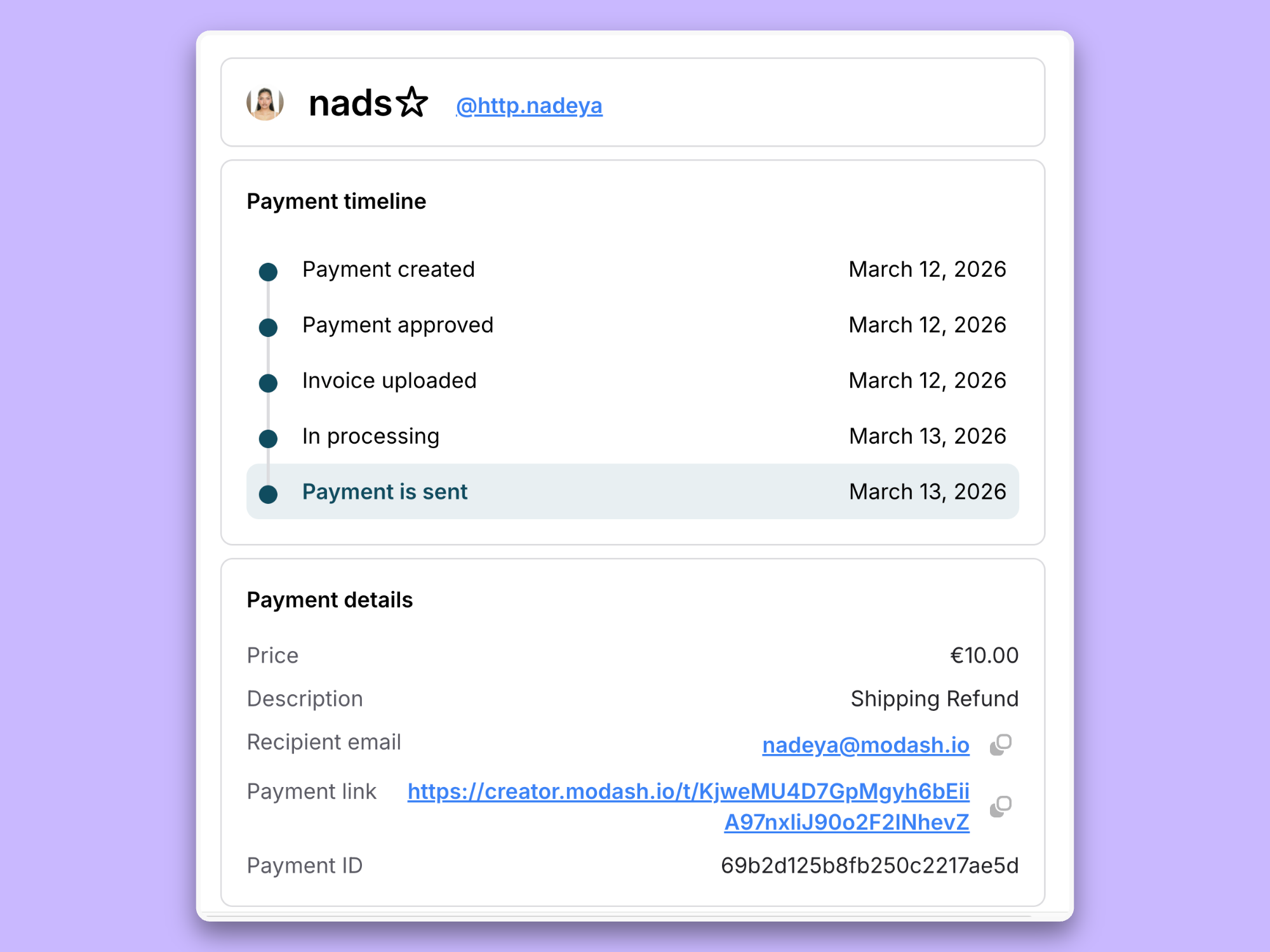
The best part? All you have to pay is the Modash invoice. We ensure every creator you work with gets paid what they’re owed on time, every time.
👉 Explore Modash for paying your creators with zero fees.
Not every creator earns their keep in the same way and, you know what? That’s totally fine.
Some creators are fab at entertaining, building awareness, and getting loads of eyeballs on your brand… but their audience are watchers not buyers. It’s not necessarily a bad thing, but it can help to give their content a second life elsewhere, e.g., paid social campaigns, product pages, wherever, just to make the most of it.
(In fact, here are 7 ways to repurpose that gold creator content.)
Then you’ve got the creators whose audience trusts them enough to buy pretty much anything they shine a spotlight on.
Unfortunately, you can’t always know which creator falls into which bracket before you start working with them. It’s more a case of looking at their numbers over time and acting accordingly.
Modash helps, though.
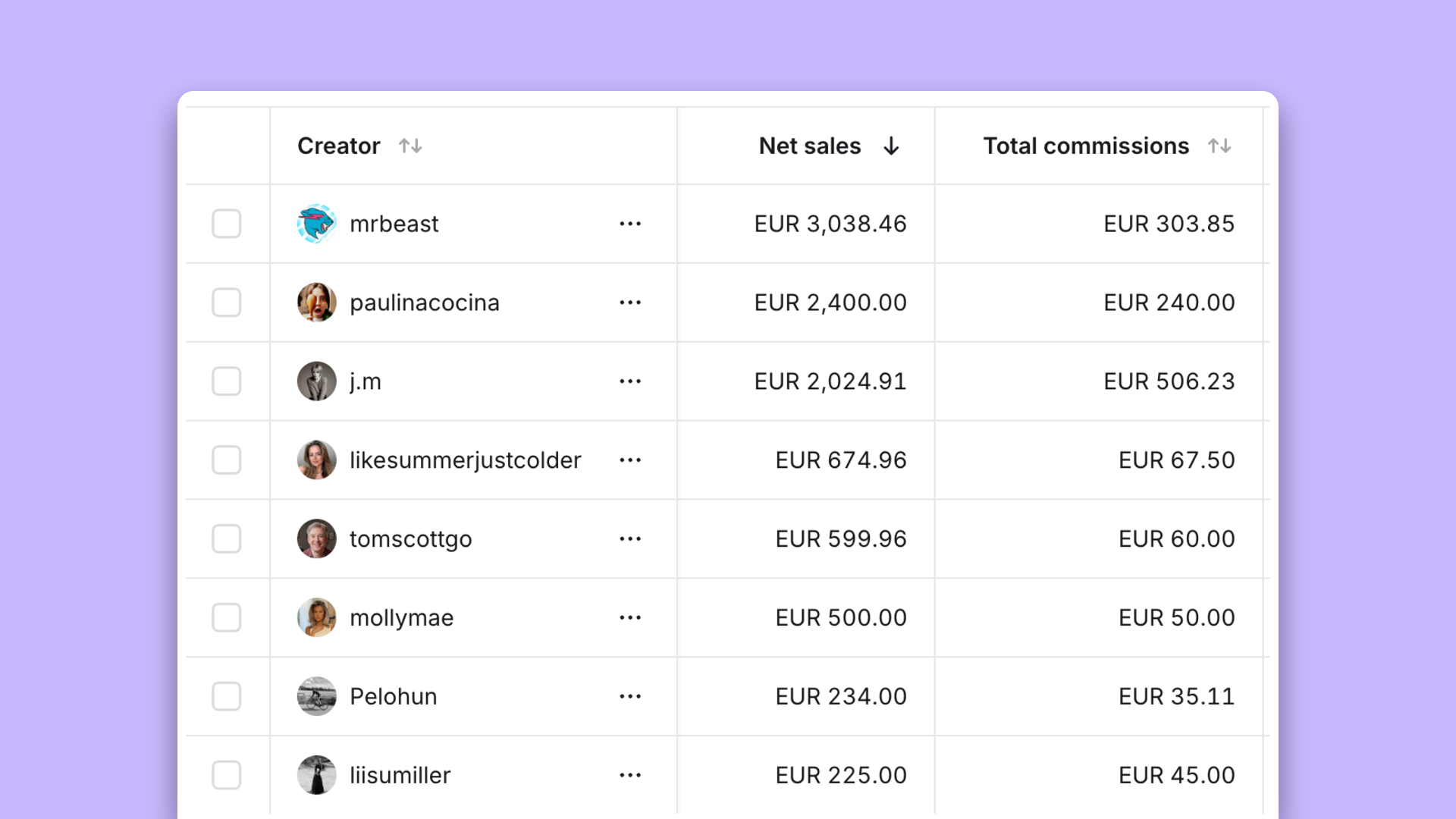
The campaign dashboard shows revenue, net revenue, orders, and ROAS per creator, so you can see who’s driving sales. And once you’ve got your hands on that data, turning it into something leadership will gobble up is its own special kind of skill (we’ve got something to help you with that here).
Pure commission works nicely, right up until it doesn't. At some point your best creators start wondering why the brand that relies on them won't commit to an ongoing rate.
And fair enough – the creators with the most leverage are the ones who can say no to 100% performance pay… so, ultimately, a commission-only program for the rest of time will limit you to creators who have the least negotiating power.
This is your cue to switch to a hybrid structure (which, FYI, is a very popular option). Over half of marketers already combine a fixed fee with performance incentives, according to our findings.
A guaranteed base (your fixed fee) gives creators some breathing room, while commission still maps part of your spend to visible results.
Valerija Somi, Influencer Manager at Kyra, offers some advice for when you go down this route:
Demonstrate how a hybrid payment structure would benefit them in the long run, especially with affiliate commission. You can even show them examples from similar influencers who highly benefited from this form of payment.

It's also a handy negotiation lever. If a creator's holding out for a flat fee higher than you want to pay, hybrid gives you a middle ground: offer a smaller guaranteed fee, then show how the commission on top can take them past that number if the campaign performs.
We've covered more negotiation tactics like this here: 7 Effective Ways To Negotiate With Influencers (Without Being Unfair)
Performance-based marketing isn't the right fit for every creator, product, or campaign. Here's where it strains, and when to reach for a flat or hybrid deal instead.
The creator absorbs 100% of the risk with a pure performance deal. If they don’t make a sale, they don’t get paid. Simple. And while, yes, that might be because their audience isn’t ready to buy, it could also be down to a million and one other things, as we’ve discussed.
Established creators are well aware of this, which is why a lot of them will say “heck, no!” to a performance-only deal. This isn’t out of pure stubbornness, it’s down to good old supply and demand.
Yes, it’s true that as more people become creators without a matching rise in brand deals, affiliate partnerships have become a fave fallback option. But just because it’s a “fave fallback option”, doesn’t mean it’s universally accepted. The creators with real clout can still just… decline. Or take up one of the many other offers they have on the table.
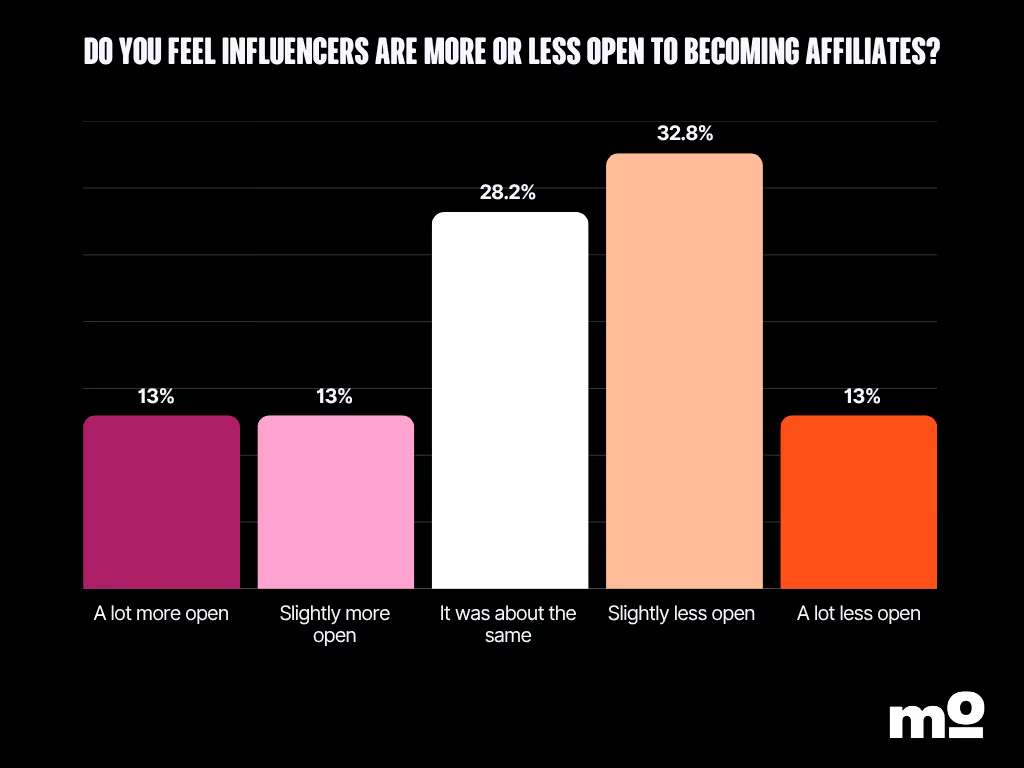
The numbers are not telling porkies here. In 2024, over 63% of marketers said influencers were open to becoming affiliates. By 2025 that had dropped to 26%, and more than 45% say creators are less open than they were a year ago. If you’re pitching commission-only to a creator with options, don’t be surprised when the answer’s a polite (or maybe a not-so-polite) no.
Even when a creator does say yes to a performance-based deal, it’s not always so cut and dry in the dashboard.
Take cross-device sales for example. Someone might tap a link on their phone on the train, forget about it entirely, and then finish the purchase on their laptop three days later. As far as your tracking’s concerned, that sale happened in a vacuum. Even though the creator had everything to do with it, they get zero credit.
Or take codes – sweet, well-intentioned little codes, made to reward a creator’s audience, and within a week they’re on a scammy coupon site being redeemed by strangers who were going to buy the product anyway.
Or take the popular last-touch attribution method, which is a bit like the person who shows up at the end of a group project and takes all the credit. It doesn’t always reward the right person, especially if someone found your product through one creator and then after a series of other events, decided to buy using the code of another.
None of this means tracking’s a totally lost cause. It just means “results” are a best estimate rather than a court-admissable fact and treating them as gospel is a great way to end up in a commission dispute with your favorite creator who’s convinced your numbers are wrong (spoiler: they might be right).
There are entire categories where pure performance is the wrong tool for the job, not just a riskier one:
Performance-based influencer marketing isn't the free lunch it's often pitched as, but it's not a gimmick either. It does reward results, you just have to earn those results by:
Get those right, and performance-based marketing becomes one of the most defensible channels in your marketing mix.
That's also the whole idea behind how Modash approaches it: finding creators whose audience actually buys, tying each sale to the creator who earned it through Shopify, and handling commissions and payouts in one place, so the three things that make performance-based work aren't three separate systems you're stitching together. You can try it free for 14 days.
It's a payment model where creators earn based on results (usually sales) rather than a flat fee for posting content. It typically means commission per sale, though it can also cover pay-per-click or pay-per-lead structures.
It can, but only when three things are in place: the right creators, tracking you actually trust, and pay structured in a way that’s tempting for creators.
Most commonly through commission on sales (a percentage or flat amount per conversion), tracked via a unique link or discount code. Many brands pair this with a smaller flat fee to create a hybrid structure, especially for creators who don’t want to work on commission-only.
Most ecommerce brands go for something between 10–14%, climbing past 15%+ for higher-margin or top-tier products. Work backwards from your margin rather than picking a number out of thin air. Your margin has to be able to absorb it!
Yes, via a unique tracking link, though links alone often miss cross-device sales. Using both a link and a code together gives you more reliable tracking.
Neither is objectively better, they just reward different things. Flat fee is good for awareness plays, launches, and unproven products, while performance-based suits proven products with high-intent audiences and solid tracking already in place.
Some will, but established creators with leverage often won't, since it puts 100% of the risk on them. Many are open to performance-based pay only when it's paired with a flat fee upfront, which is why hybrid structures have become so common.